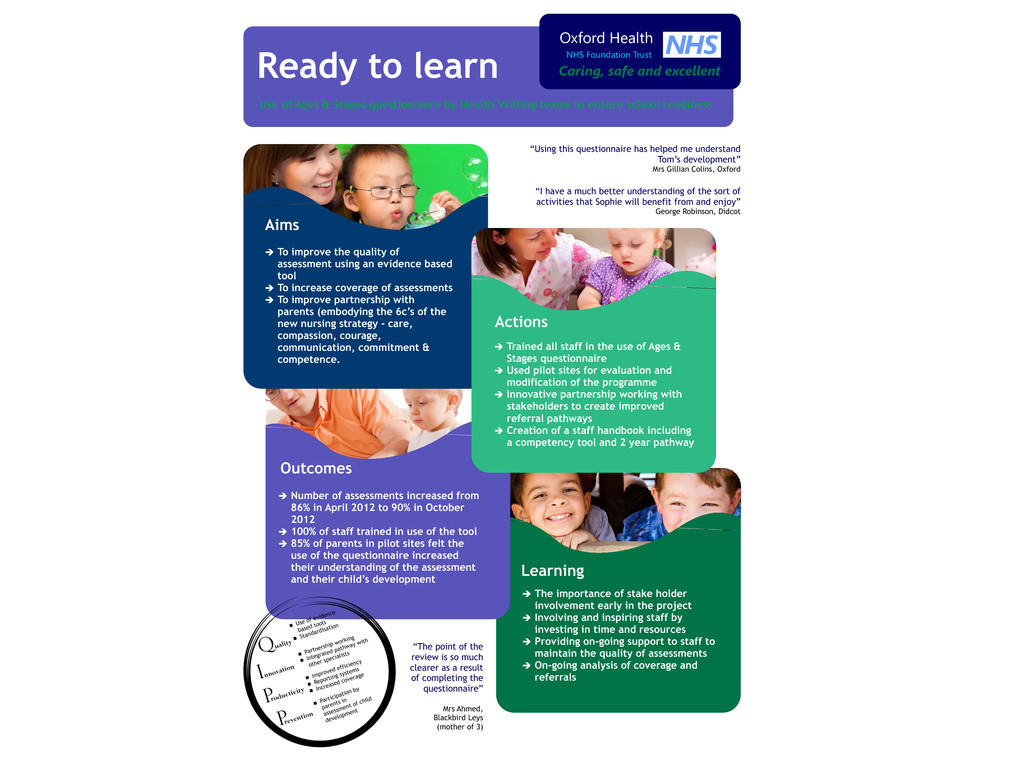
Ready to learn Use of Ages & Stages questionnaire by Health Visiting teams to ensure school readiness Aims Actions Outcomes Learning è To improve the quality of assessment using an evidence based tool è To increase coverage of assessments è To improve partnership with parents (embodying the 6c’s of the new nursing strategy - care, compassion, courage, communication, commitment & competence. è Trained all staff in the use of Ages & Stages questionnaire è Used pilot sites for evaluation and modification of the programme è Innovative partnership working with stakeholders to create improved referral pathways è Creation of a staff handbook including a competency tool and 2 year pathway è Number of assessments increased from 86% in April 2012 to 90% in October 2012 è 100% of staff trained in use of the tool è 85% of parents in pilot sites felt the use of the questionnaire increased their understanding of the assessment and their child’s development è The importance of stake holder involvement early in the project è Involving and inspiring staff by investing in time and resources è Providing on-going support to staff to maintain the quality of assessments è On-going analysis of coverage and referrals “Using this questionnaire has helped me understand Tom’s development” Mrs Gillian Colins, Oxford Quality Innovation P roductivity P revention n Use of evidence based tools n Standardisation n Partnership working n Integrated pathway with other specialists n Improved efficiency n Reporting systems n Increased coverage n Participation by parents in assessment of child development “The point of the review is so much clearer as a result of completing the questionnaire” Mrs Ahmed, Blackbird Leys (mother of 3) “I have a much better understanding of the sort of activities that Sophie will benefit from and enjoy” George Robinson, Didcot
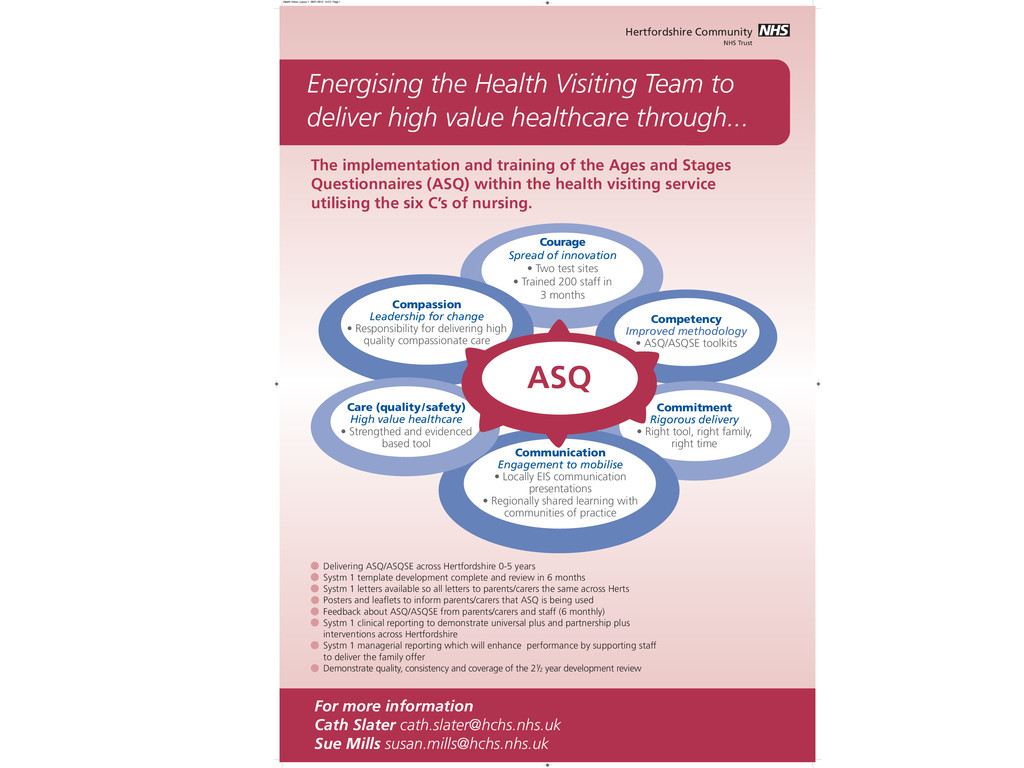
template development complete and review in 6 months • Systm 1 letters available so all letters to parents/carers the same across Herts • Posters and leaflets to inform parents/carers that ASQ is being used • Feedback about ASQ/ASQSE from parents/carers and staff (6 monthly) • Systm 1 clinical reporting to demonstrate universal plus and partnership plus interventions across Hertfordshire • Systm 1 managerial reporting which will enhance performance by supporting staff to deliver the family offer • Demonstrate quality, consistency and coverage of the 21 /2 year development review Courage Spread of innovation • Two test sites • Trained 200 staff in 3 months The implementation and training of the Ages and Stages Questionnaires (ASQ) within the health visiting service utilising the six C’s of nursing. For more information Cath Slater [email protected] Sue Mills [email protected] Competency Improved methodology • ASQ/ASQSE toolkits Commitment Rigorous delivery • Right tool, right family, right time Communication Engagement to mobilise • Locally EIS communication presentations • Regionally shared learning with communities of practice Hertfordshire Community NHS Trust n Energising the Health Visiting Team to deliver high value healthcare through... Compassion Leadership for change • Responsibility for delivering high quality compassionate care Care (quality/safety) High value healthcare • Strengthed and evidenced based tool ASQ Health Visitor_Layout 1 08/01/2013 14:33 Page 1
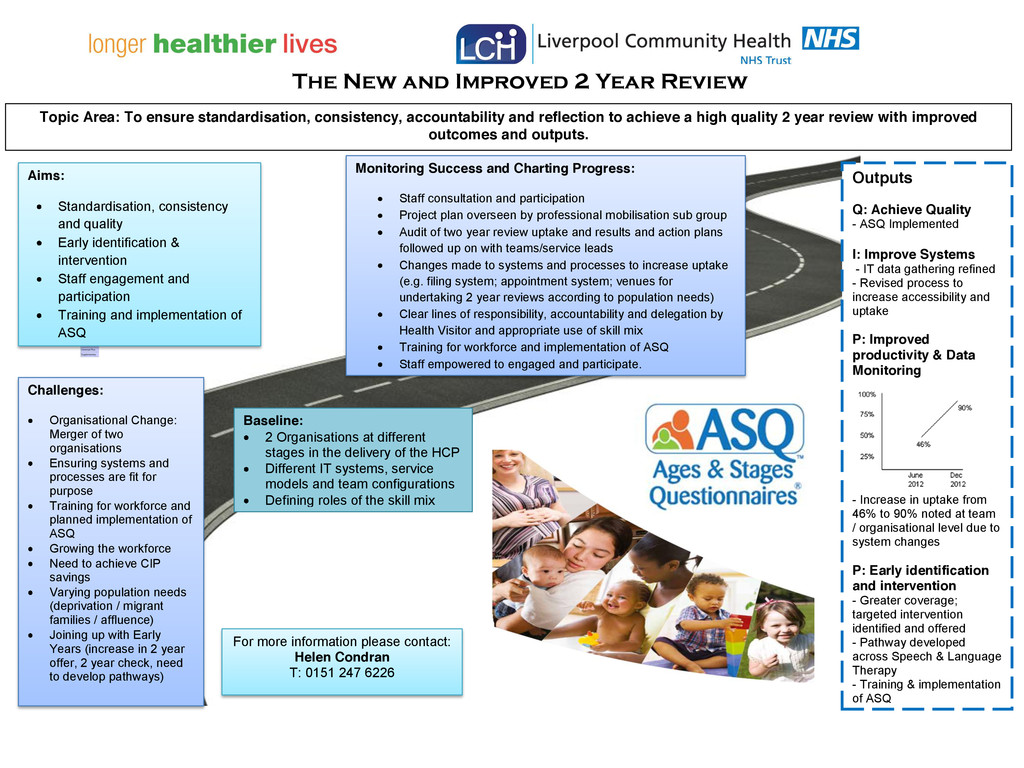
need and enable appropriate placement of additional health visiting staff as part of growing the workforce programme Health Visitor Workforce Planner Challenges To redevelop workforce planning model across merged organisation. To ensure appropriate resource in the right place to deliver Healthy Child Programme and meet population need. To mobilise workforce to be flexible to manage in times of crisis and to manage vacancies/maternity leave To achieve CIP savings Aims The right staff in the right place to deliver services targeted to population need. Appropriate level and use of skill mix. Flexibility to manage in times of crises and to manage staff shortages/vacancies. Engaged, flexible and informed workforce. CIP savings identified. Service gaps identified. Prediction of future service needs. Evidence to support on-going recruitment and placement of additional staff. Staff aware, informed and engaged in process Baseline Tool previously used in Sefton - good understanding of value and use. Lack of clear co-ordinated picture of staffing according to need across new organisation. Subjective methods used to identify need. Challenges with regard to retention and recruitment in some areas. Need to align/harmonise services – workforce review programme initiated to run alongside HVWP project. From previous use of tool there was confidence that 34% of the service had the correct staffing levels to meet population need (i.e. previous Sefton area) QIPP Q – Staffing resource aligned to deliver Healthy Child Programme I – Practical application of workforce tool to manage optimum staffing levels P – The right resource in the right place based on population need – surplus resource redirected P – Equitable service delivery based on population need linked to inequalities/deprivation indices For more information please contact Jane Banks Email:[email protected] Telephone: 0151 247 6229 Monitoring success and charting progress: Clear project plan enabled vision for future. Team leaders and service managers engaged and positive about planner. Tool developed and tailored to local area. Clarity re staff resource identified and enabling decisions to be made re future change. Alignment with healthy child programme – identify resource needed to deliver in areas based on population need – more objective view of population need - detailed to teams/areas 100% of caseloads reviewed to identify staffing requirement based on population need Inequity in distribution of staffing identified with 12 teams (43%) identified to be targeted for increased staffing resource. Clear picture identified of where additional health visiting resource needs to be placed. Topic Area: To ensure standardisation, consistency, accountability and reflection to achieve a high quality 2 year review with improved outcomes and outputs. Aims: Standardisation, consistency and quality Early identification & intervention Staff engagement and participation Training and implementation of ASQ Challenges: Organisational Change: Merger of two organisations Ensuring systems and processes are fit for purpose Training for workforce and planned implementation of ASQ Growing the workforce Need to achieve CIP savings Varying population needs (deprivation / migrant families / affluence) Joining up with Early Years (increase in 2 year offer, 2 year check, need to develop pathways) Monitoring Success and Charting Progress: Staff consultation and participation Project plan overseen by professional mobilisation sub group Audit of two year review uptake and results and action plans followed up on with teams/service leads Changes made to systems and processes to increase uptake (e.g. filing system; appointment system; venues for undertaking 2 year reviews according to population needs) Clear lines of responsibility, accountability and delegation by Health Visitor and appropriate use of skill mix Training for workforce and implementation of ASQ Staff empowered to engaged and participate. Outputs Q: Achieve Quality - ASQ Implemented I: Improve Systems - IT data gathering refined - Revised process to increase accessibility and uptake P: Improved productivity & Data Monitoring - Increase in uptake from 46% to 90% noted at team / organisational level due to system changes P: Early identification and intervention - Greater coverage; targeted intervention identified and offered - Pathway developed across Speech & Language Therapy - Training & implementation of ASQ For more information please contact: Helen Condran T: 0151 247 6226 Baseline: 2 Organisations at different stages in the delivery of the HCP Different IT systems, service models and team configurations Defining roles of the skill mix The New and Improved 2 Year Review
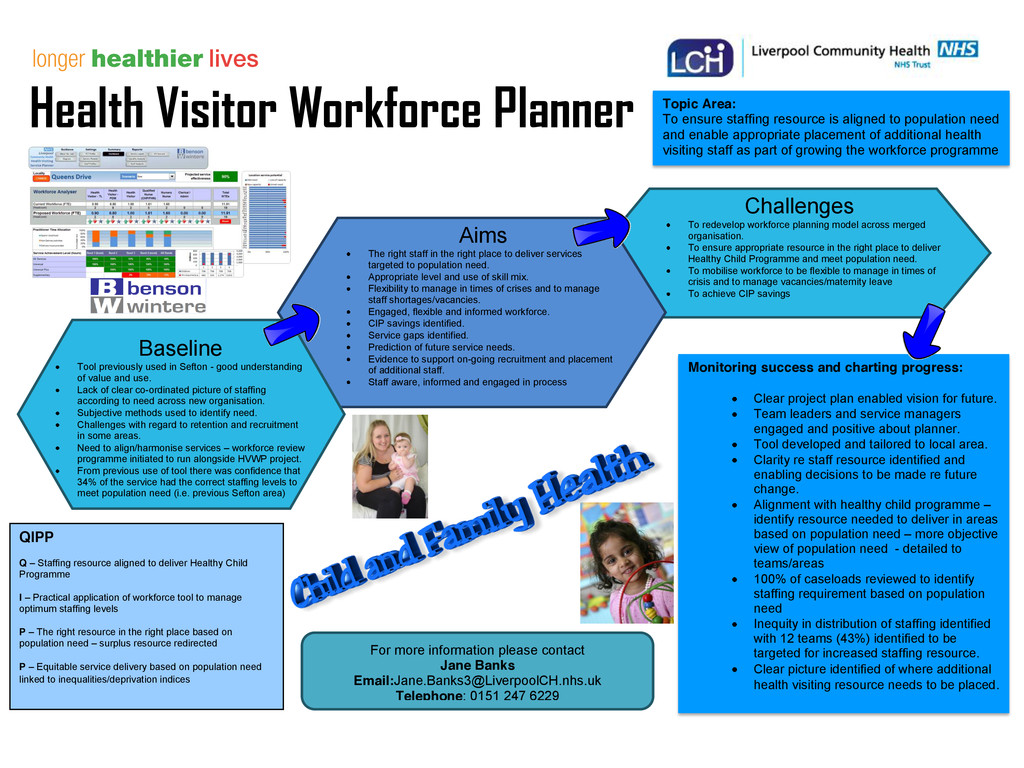
need and enable appropriate placement of additional health visiting staff as part of growing the workforce programme Health Visitor Workforce Planner Challenges To redevelop workforce planning model across merged organisation. To ensure appropriate resource in the right place to deliver Healthy Child Programme and meet population need. To mobilise workforce to be flexible to manage in times of crisis and to manage vacancies/maternity leave To achieve CIP savings Aims The right staff in the right place to deliver services targeted to population need. Appropriate level and use of skill mix. Flexibility to manage in times of crises and to manage staff shortages/vacancies. Engaged, flexible and informed workforce. CIP savings identified. Service gaps identified. Prediction of future service needs. Evidence to support on-going recruitment and placement of additional staff. Staff aware, informed and engaged in process Baseline Tool previously used in Sefton - good understanding of value and use. Lack of clear co-ordinated picture of staffing according to need across new organisation. Subjective methods used to identify need. Challenges with regard to retention and recruitment in some areas. Need to align/harmonise services – workforce review programme initiated to run alongside HVWP project. From previous use of tool there was confidence that 34% of the service had the correct staffing levels to meet population need (i.e. previous Sefton area) QIPP Q – Staffing resource aligned to deliver Healthy Child Programme I – Practical application of workforce tool to manage optimum staffing levels P – The right resource in the right place based on population need – surplus resource redirected P – Equitable service delivery based on population need linked to inequalities/deprivation indices For more information please contact Jane Banks Email:[email protected] Telephone: 0151 247 6229 Monitoring success and charting progress: Clear project plan enabled vision for future. Team leaders and service managers engaged and positive about planner. Tool developed and tailored to local area. Clarity re staff resource identified and enabling decisions to be made re future change. Alignment with healthy child programme – identify resource needed to deliver in areas based on population need – more objective view of population need - detailed to teams/areas 100% of caseloads reviewed to identify staffing requirement based on population need Inequity in distribution of staffing identified with 12 teams (43%) identified to be targeted for increased staffing resource. Clear picture identified of where additional health visiting resource needs to be placed.
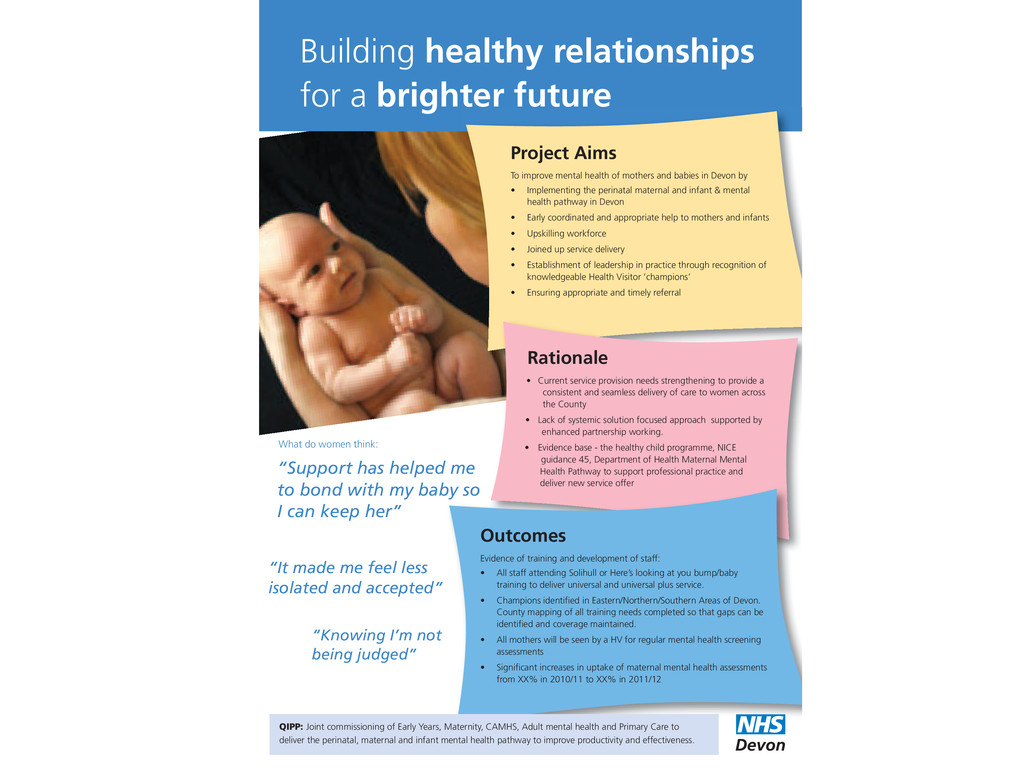
training and development of staff: All staff attending Solihull or Here’s looking at you bump/baby • training to deliver universal and universal plus service. Champions identified in Eastern/Northern/Southern Areas of Devon. • County mapping of all training needs completed so that gaps can be identified and coverage maintained. All mothers will be seen by a HV for regular mental health screening • assessments Significant increases in uptake of maternal mental health assessments • from XX% in 2010/11 to XX% in 2011/12 “Support has helped me to bond with my baby so I can keep her” “It made me feel less isolated and accepted” “Knowing I’m not being judged” Project Aims To improve mental health of mothers and babies in Devon by Implementing the perinatal maternal and infant & mental • health pathway in Devon Early coordinated and appropriate help to mothers and infants • Upskilling workforce • Joined up service delivery • Establishment of leadership in practice through recognition of • knowledgeable Health Visitor ‘champions’ Ensuring appropriate and timely referral • Rationale Current service provision needs strengthening to provide a • consistent and seamless delivery of care to women across the County Lack of systemic solution focused approach supported by • enhanced partnership working. Evidence base - the healthy child programme, NICE • guidance 45, Department of Health Maternal Mental Health Pathway to support professional practice and deliver new service offer QIPP: Joint commissioning of Early Years, Maternity, CAMHS, Adult mental health and Primary Care to deliver the perinatal, maternal and infant mental health pathway to improve productivity and effectiveness. What do women think:
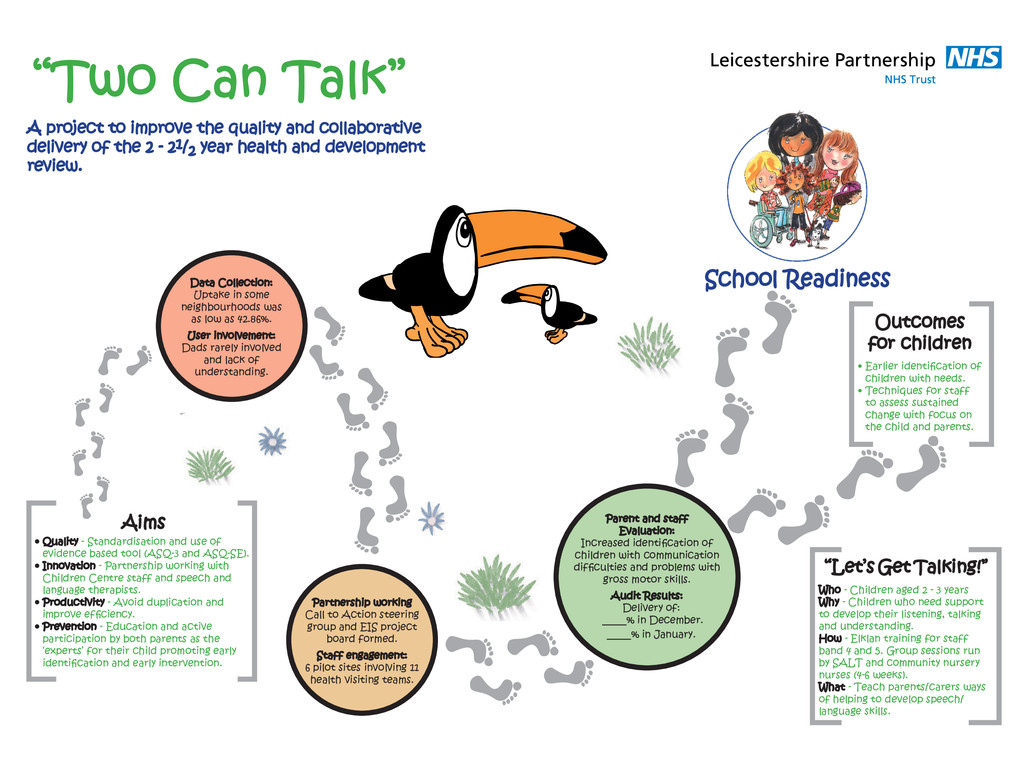
low as 42.86%. User involvement: User involvement: Dads rarely involved and lack of understanding. Partnership working Partnership working Call to Action steering group and EIS project board formed. Staff engagement: Staff engagement: 6 pilot sites involving 11 health visiting teams. Parent and staff Parent and staff Evaluation: Evaluation: Increased identifi cation of children with communication diffi culties and problems with gross motor skills. Audit Results: Audit Results: Delivery of: % in December. % in January. Aims Aims • • Quality Quality - Standardisation and use of evidence based tool (ASQ-3 and ASQ-SE). • • Innovation Innovation - Partnership working with Children Centre staff and speech and language therapists. • • Productivity Productivity - Avoid duplication and improve effi ciency. • • Prevention Prevention - Education and active participation by both parents as the ‘experts’ for their child promoting early identifi cation and early intervention. Outcomes Outcomes for children for children • Earlier identifi cation of children with needs. • Techniques for staff to assess sustained change with focus on the child and parents. “Two Can Talk” “Two Can Talk” A project to improve the quality and collaborative A project to improve the quality and collaborative delivery of the 2 - 2 delivery of the 2 - 21/2 year health and development year health and development review. review. School Readiness School Readiness “Let’s Get Talking!” “Let’s Get Talking!” Who Who - Children aged 2 - 3 years Why Why - Children who need support to develop their listening, talking and understanding. How How - Elklan training for staff band 4 and 5. Group sessions run by SALT and community nursery nurses (4-6 weeks). What What - Teach parents/carers ways of helping to develop speech/ language skills.


 chriscoyier
 denniskardys
 tmiket
 zakiyama
 aleyda
 honzajavorek
 vanstee
 addyosmani
 katiecoart
 rkendrick25
 destraynor
 marktimemedia