Upgrade to Pro — share decks privately, control downloads, hide ads and more …

Why No Flush Urinals Are the Future of Green Sa...

Avatar for Ekam Eco Solutions Ekam Eco Solutions
March 11, 2026
0

Why No Flush Urinals Are the Future of Green Sanitation

Modern sanitation is evolving toward smarter and more sustainable systems. Technologies from Ekam Eco Solutions and Zerodor are helping businesses reduce water usage, improve hygiene, and create environmentally responsible restroom infrastructure. Innovative urinal solutions designed with advanced odor control and efficient drainage offer a practical path toward cleaner and greener sanitation systems.

Avatar for Ekam Eco Solutions

Ekam Eco Solutions

March 11, 2026

Transcript

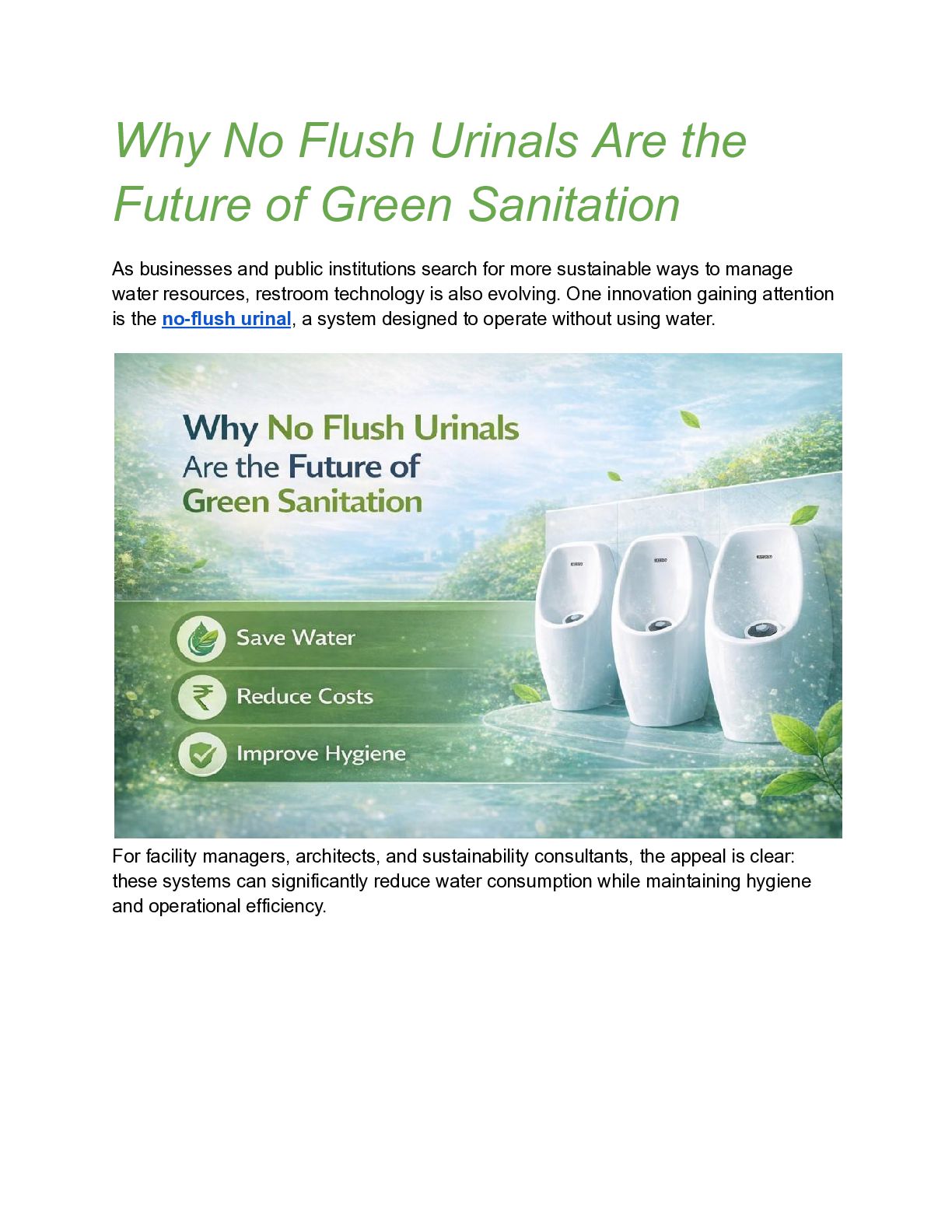
  1. Why No Flush Urinals Are the Future of Green Sanitation

    As businesses and public institutions search for more sustainable ways to manage water resources, restroom technology is also evolving. One innovation gaining attention is the no-flush urinal, a system designed to operate without using water. For facility managers, architects, and sustainability consultants, the appeal is clear: these systems can significantly reduce water consumption while maintaining hygiene and operational efficiency.
  2. This article explores how no-flush urinals work, why they are

    becoming more common in commercial buildings, and how they contribute to greener sanitation practices. What Is a No-Flush Urinal? A no-flush urinal—often called a waterless urinal—is a restroom fixture designed to function without the need for flushing water. Instead of using water to push waste through the plumbing system, these urinals rely on a specially engineered drainage design. The system allows liquid to flow naturally into the drain while preventing odors from returning through the pipe. The result is a restroom fixture that performs its function effectively while eliminating the need for constant water use. How the Technology Works Modern waterless urinals use a combination of simple engineering and specialized components to maintain hygiene and odor control. 1. Sloped Bowl Design The interior of the urinal is shaped to guide liquid smoothly toward the drain. This gravity-based design ensures efficient flow without requiring water pressure. 2. Odor Control Mechanism A key component is the sealing system inside the drain. Many models use a cartridge or sealing liquid that creates a barrier, preventing sewer gases from escaping back into the restroom. 3. Direct Drainage Since the system does not rely on flushing, waste flows directly into the plumbing system, reducing both water consumption and mechanical complexity. These design elements allow the urinal to remain clean and odor-free when maintained properly. How Much Water Can Be Saved? To understand the impact, consider a simple example.
  3. Imagine an office building with 10 traditional urinals. If each

    one is used about 150 times per day, and each flush consumes 2 liters of water, the daily water usage becomes: 10 × 150 × 2 = 3,000 liters per day Over the course of a year, that adds up to more than one million liters of water. Replacing traditional units with waterless systems can dramatically reduce this consumption. Solutions offered by companies such as Zerodor aim to help facilities achieve significant water savings while maintaining effective sanitation. Environmental Advantages Waterless urinals support sustainability goals in several ways. Water Conservation By eliminating flush water entirely, these systems can reduce a building’s water footprint. Lower Chemical Use Since there is no flush system to maintain, cleaning processes often require fewer harsh chemicals. Reduced Energy Demand Less water usage means less energy required for pumping, heating, and treatment in the overall water supply system. Sustainable Building Practices Many green building initiatives encourage technologies that minimize resource consumption. Waterless sanitation systems support these environmental objectives. Organizations focused on eco-friendly sanitation solutions—including those developed by Ekam Eco Solutions—are helping businesses move toward more sustainable infrastructure. Hygiene and Maintenance
  4. A common question about waterless urinals is whether they remain

    hygienic without flushing. Modern systems are specifically designed to address this concern. Less Splashing Without high-pressure flushing water, splashing is often reduced, which can help keep surrounding surfaces cleaner. Effective Odor Control The built-in trap system blocks unpleasant odors from escaping the drain. Simple Maintenance Routine maintenance usually involves standard restroom cleaning and periodic replacement of the internal cartridge or seal component. Compared with complex flush valves and plumbing components, maintenance can sometimes be simpler. Why Businesses Are Adopting Waterless Systems Many organizations are choosing waterless urinals not only for environmental reasons but also for operational benefits. Lower Water Bills Eliminating flush water can significantly reduce monthly utility costs. Fewer Mechanical Components Traditional urinals require flush valves, water lines, and additional plumbing hardware. Waterless systems remove much of this complexity. Long-Term Cost Efficiency With fewer moving parts, there is typically less wear and tear, which can reduce maintenance and repair costs over time. Sustainability Reputation Companies that adopt environmentally responsible infrastructure often strengthen their sustainability image with customers and stakeholders.
  5. Technologies supported by brands like Zerodor aim to provide solutions

    that balance efficiency, hygiene, and environmental responsibility. Where These Systems Are Being Used Waterless urinals are already installed in a wide range of facilities. Corporate Offices Companies implementing green building strategies are increasingly adopting water-saving restroom technologies. Shopping Malls High visitor traffic makes water conservation especially valuable in retail environments. Airports and Transport Facilities These locations experience heavy restroom usage, making waterless solutions highly practical. Educational Institutions Schools and universities are integrating sustainable infrastructure into campus design. Hotels Hospitality businesses use modern sanitation systems to maintain cleanliness while managing operational costs. Why Interest in Waterless Sanitation Is Growing Several global trends are driving the adoption of waterless restroom technologies: •​ Growing awareness of water scarcity​ •​ Rising utility and infrastructure costs​ •​ Increased focus on green building standards​
  6. •​ Corporate commitments to environmental sustainability​ As a result, architects

    and facility planners are increasingly considering waterless urinals during building design and renovation projects. The Future of Sustainable Sanitation Restroom technology continues to evolve alongside broader environmental goals. Future systems are likely to integrate smarter designs, more durable materials, and improved odor-control mechanisms. Waterless urinals represent one step toward more efficient sanitation infrastructure. As more organizations prioritize resource conservation, these systems are likely to become a common feature in modern commercial buildings. Steps Businesses Can Take to Transition Organizations interested in upgrading their restroom systems can begin with a few practical steps: 1.​ Review current water usage in restroom facilities.​ 2.​ Explore waterless sanitation technologies available on the market.​ 3.​ Consult with sanitation solution providers regarding installation requirements.​ 4.​ Consider starting with pilot installations in high-traffic restrooms.​ 5.​ Track water savings and maintenance performance over time.​ Taking these steps can help facilities gradually transition to more efficient and environmentally responsible sanitation systems. Frequently Asked Questions (FAQs) 1. Are waterless urinals hygienic? Yes. Modern designs include advanced drainage and odor control technologies that help maintain a clean and sanitary restroom environment.
  7. 2. How much water can businesses save? Depending on usage,

    a single urinal can save thousands of liters of water each year compared to traditional flushing systems. 3. Do waterless urinals require special maintenance? Routine cleaning and periodic cartridge replacement are typically required, but overall maintenance is often simpler than traditional systems. 4. Can these systems be installed in existing buildings? Yes. Most waterless urinals can be installed in existing restroom infrastructure with minimal plumbing modifications. 5. Are they suitable for high-traffic facilities? Yes. Many airports, malls, and commercial buildings use waterless urinals because they handle heavy usage efficiently. Disclaimer This article is intended for informational purposes only and is based on general sanitation technology concepts and publicly available information regarding modern restroom solutions. Actual performance, maintenance requirements, and water savings may vary depending on installation conditions and usage patterns. Organizations should consult professional sanitation providers or product specialists before implementing new systems.