Share
Embed
Transcript
69 slides
-
The End of SEO as We Know It Michael King
(@iPullRank) -
The End of SEO as We Know It Michael King
(@iPullRank) This is the condensed version. Get the long form: https://speakerdeck.com/ipullrank -
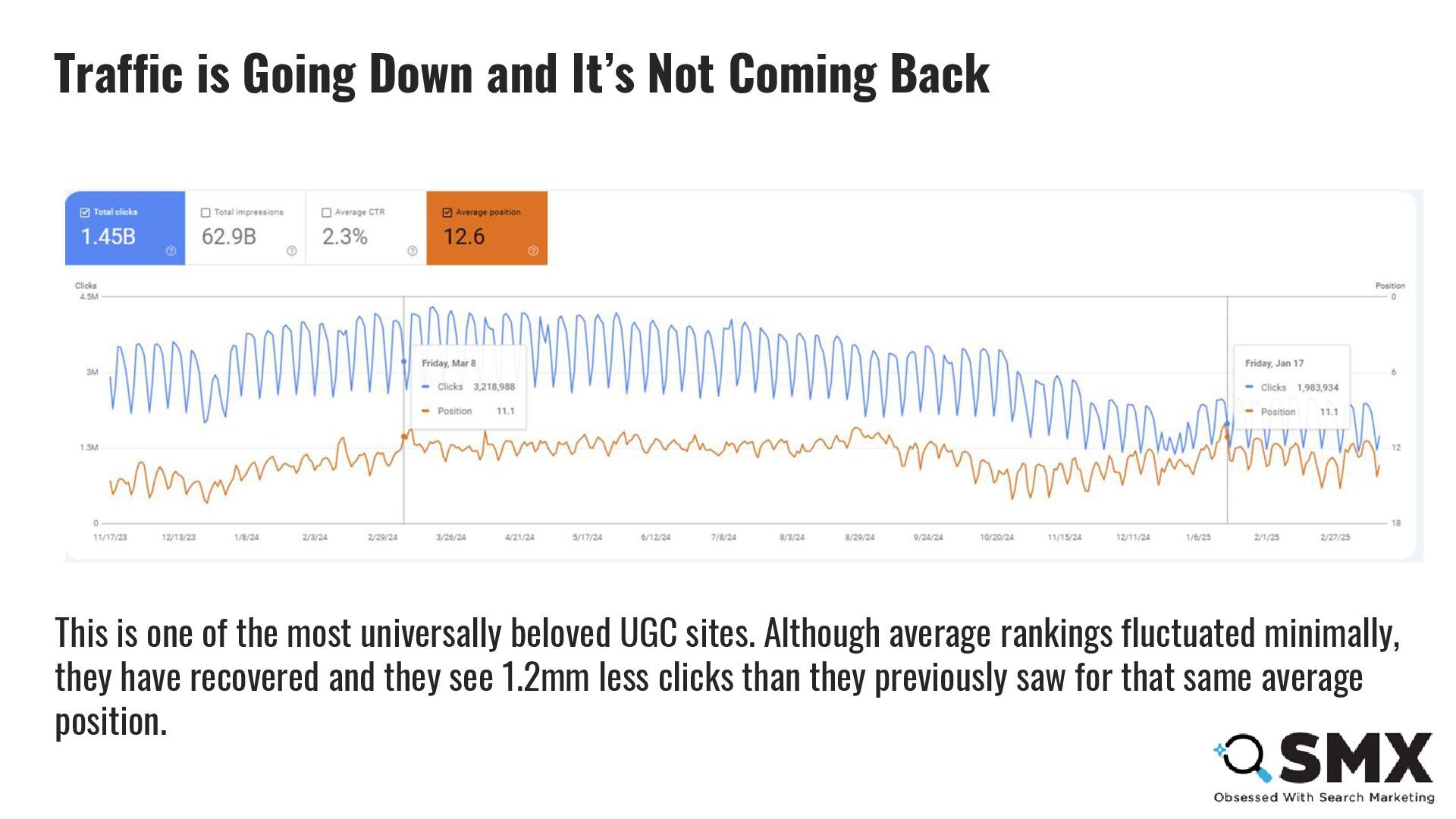
This is one of the most universally beloved UGC sites.
Although average rankings fluctuated minimally, they have recovered and they see 1.2mm less clicks than they previously saw for that same average position. Traffic is Going Down and It’s Not Coming Back -
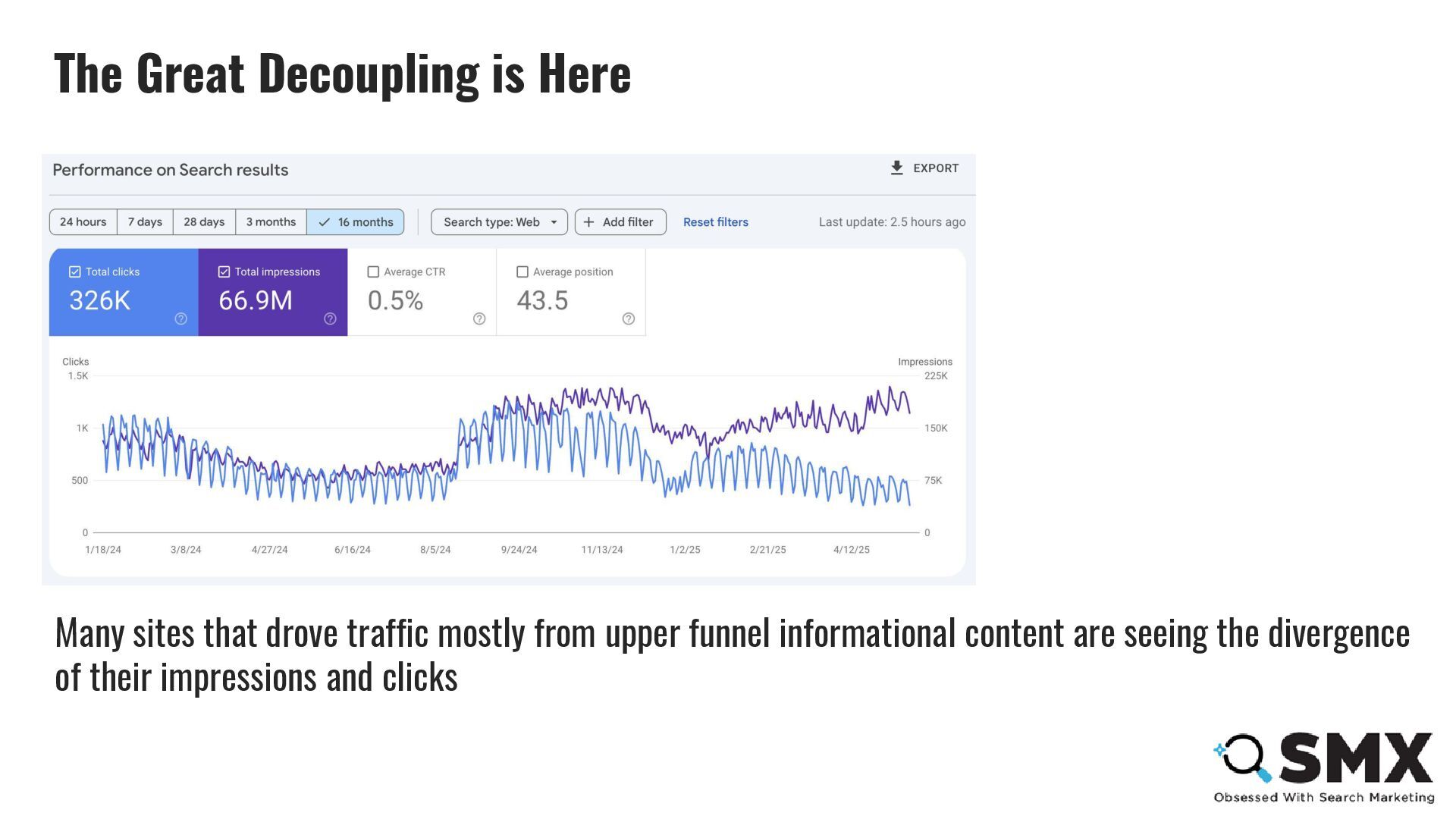
Many sites that drove traffic mostly from upper funnel informational
content are seeing the divergence of their impressions and clicks The Great Decoupling is Here -
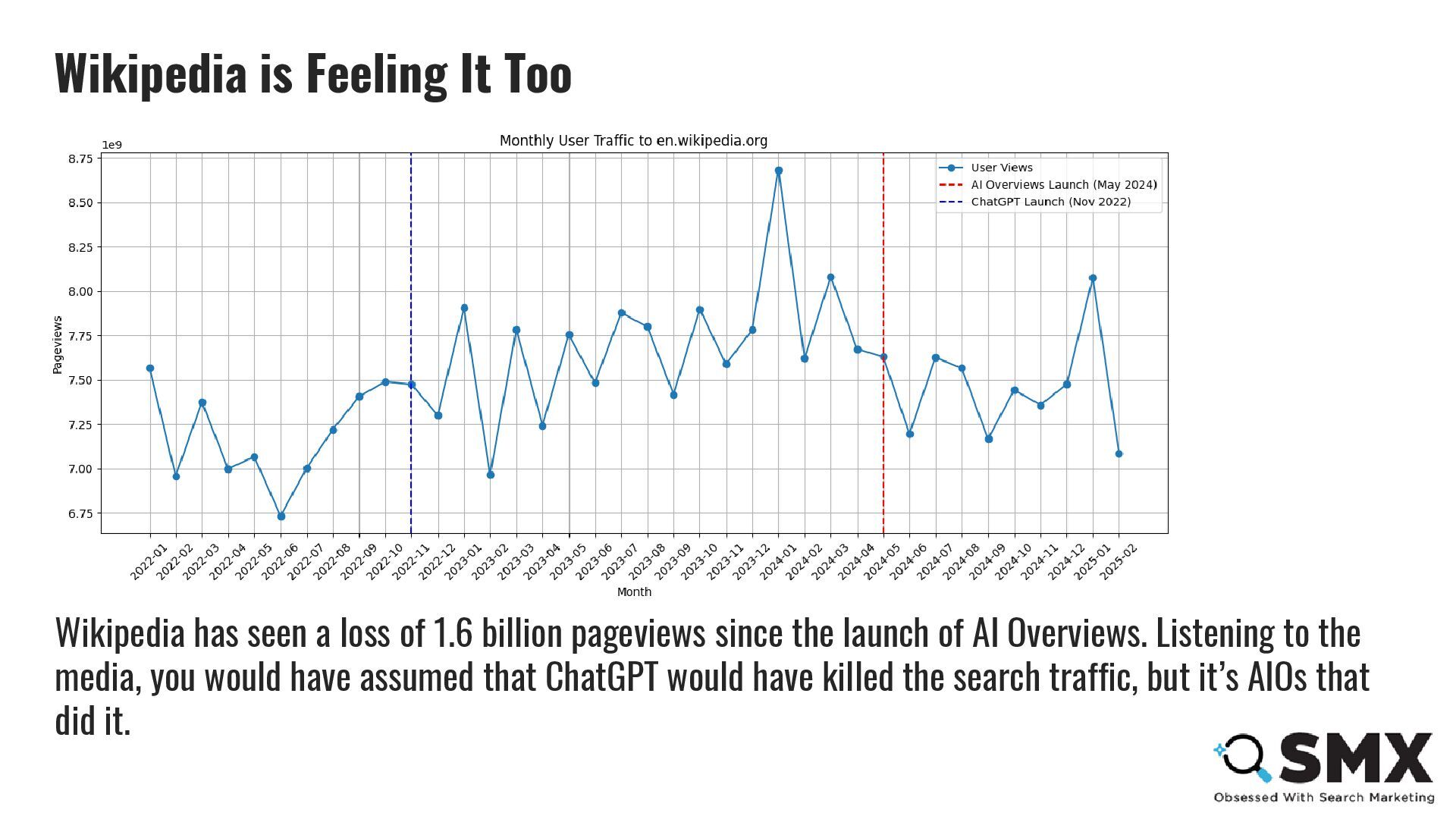
Wikipedia has seen a loss of 1.6 billion pageviews since
the launch of AI Overviews. Listening to the media, you would have assumed that ChatGPT would have killed the search traffic, but it’s AIOs that did it. Wikipedia is Feeling It Too -
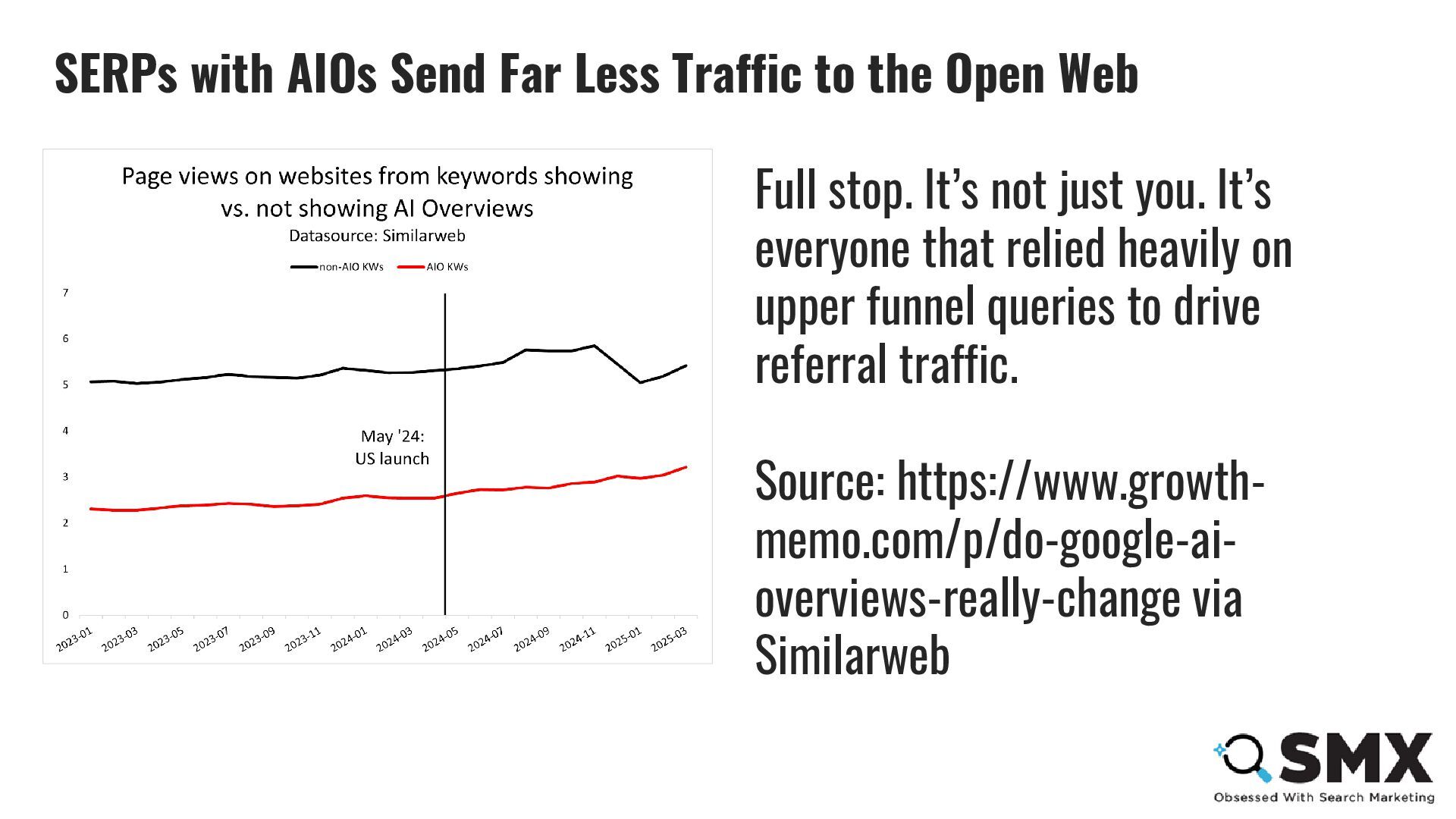
Full stop. It’s not just you. It’s everyone that relied
heavily on upper funnel queries to drive referral traffic. Source: https://www.growth- memo.com/p/do-google-ai- overviews-really-change via Similarweb SERPs with AIOs Send Far Less Traffic to the Open Web -
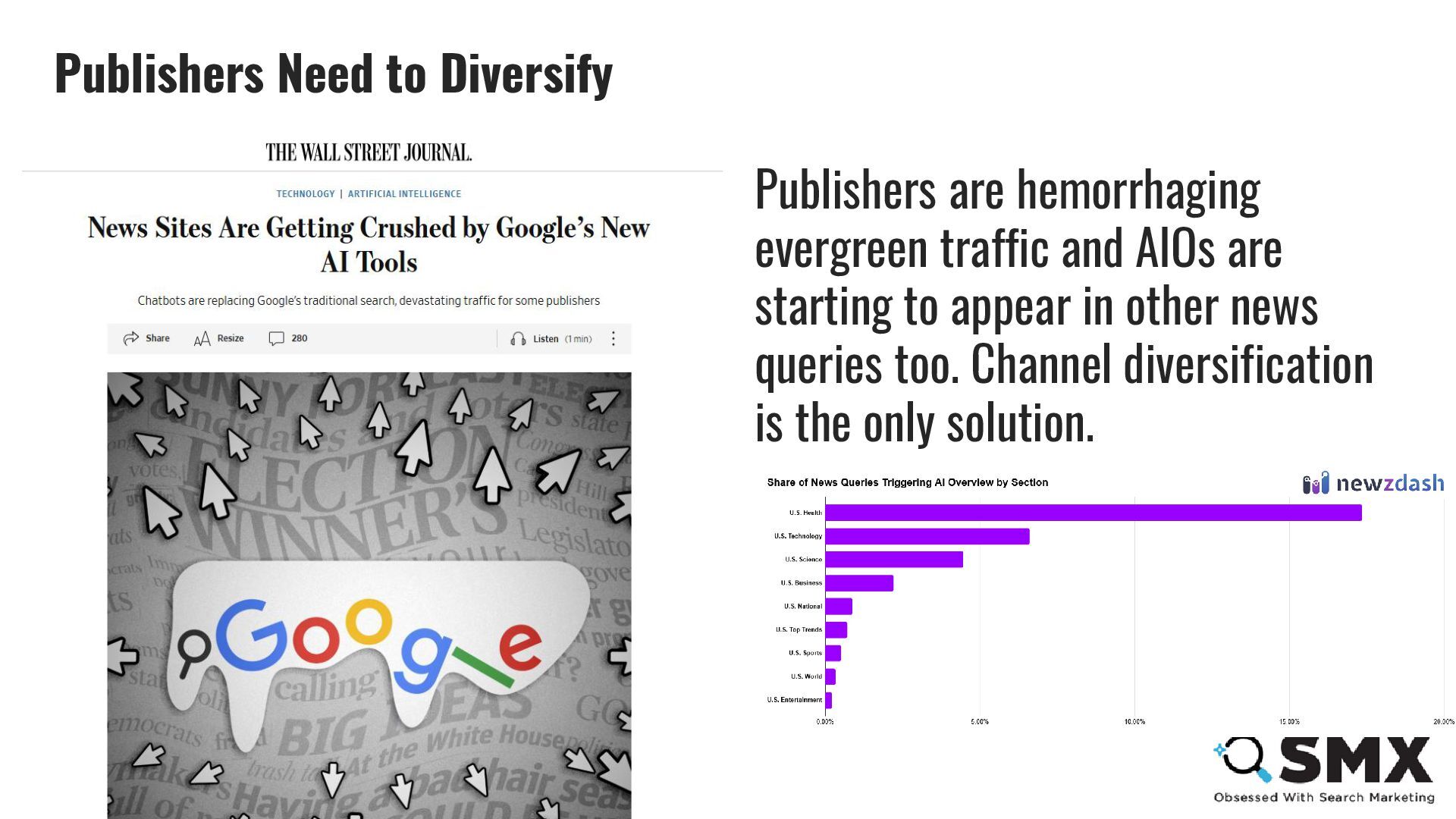
Publishers are hemorrhaging evergreen traffic and AIOs are starting to
appear in other news queries too. Channel diversification is the only solution. Publishers Need to Diversify -
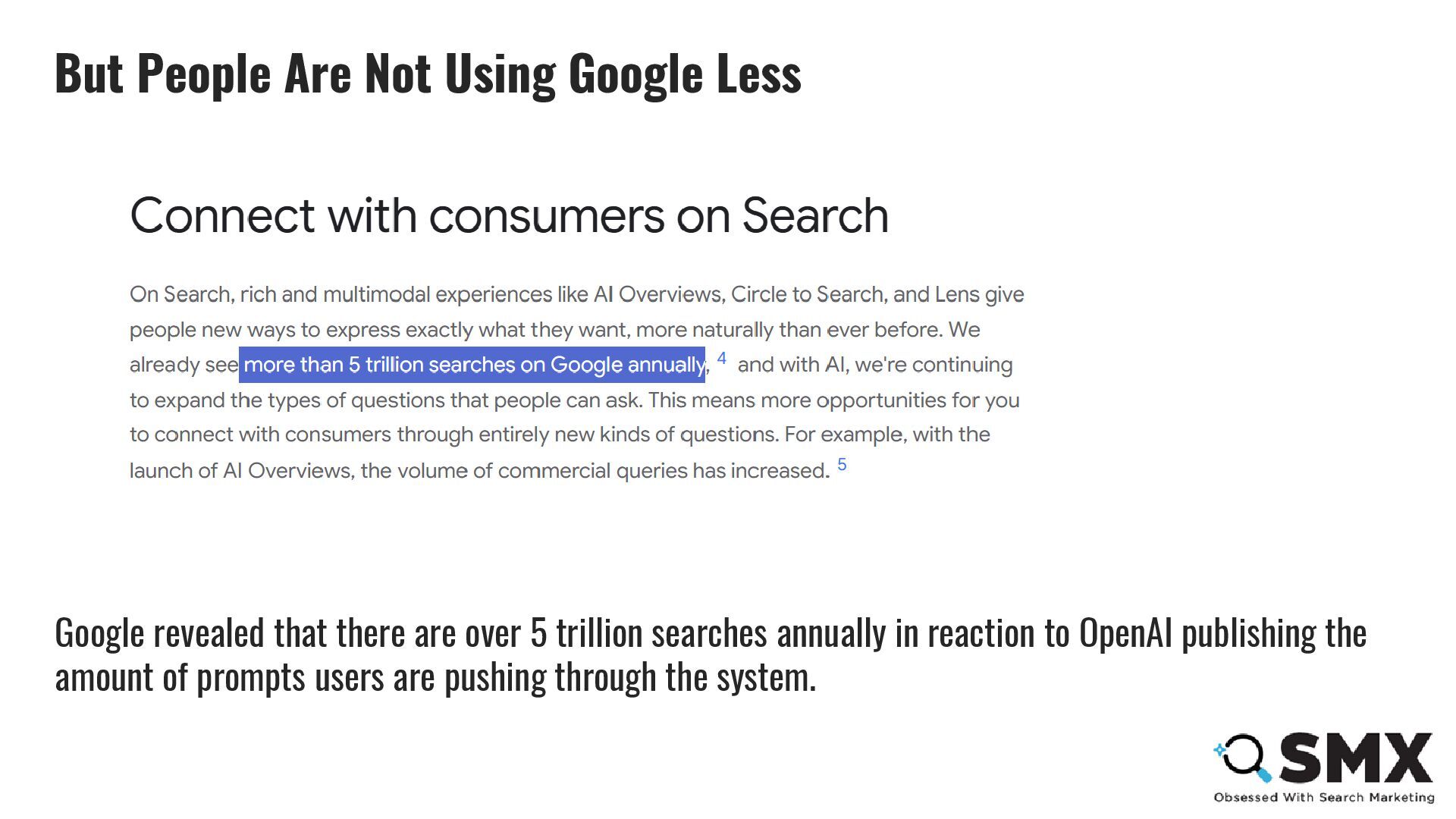
Google revealed that there are over 5 trillion searches annually
in reaction to OpenAI publishing the amount of prompts users are pushing through the system. But People Are Not Using Google Less -
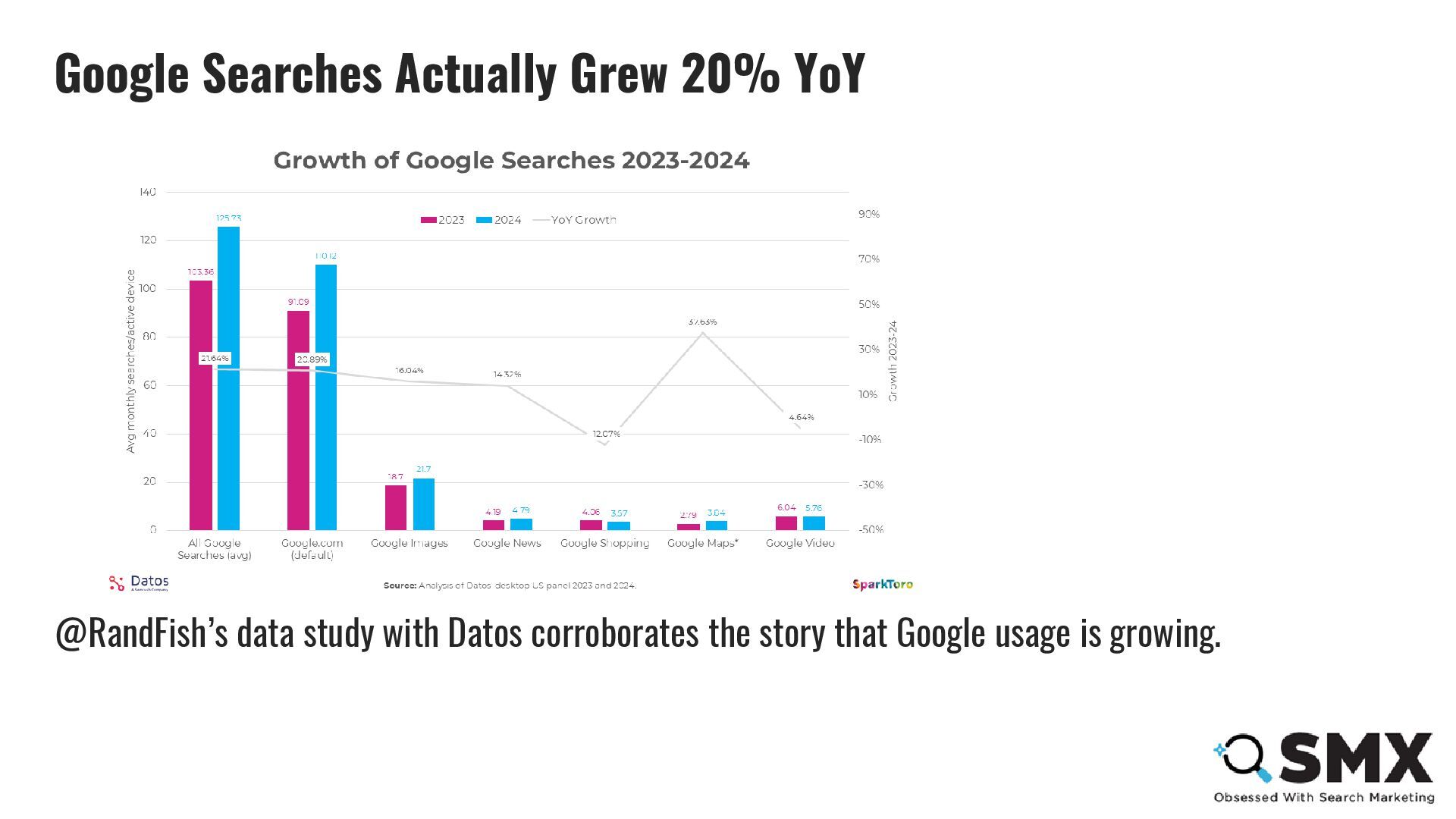
@RandFish’s data study with Datos corroborates the story that Google
usage is growing. Google Searches Actually Grew 20% YoY -
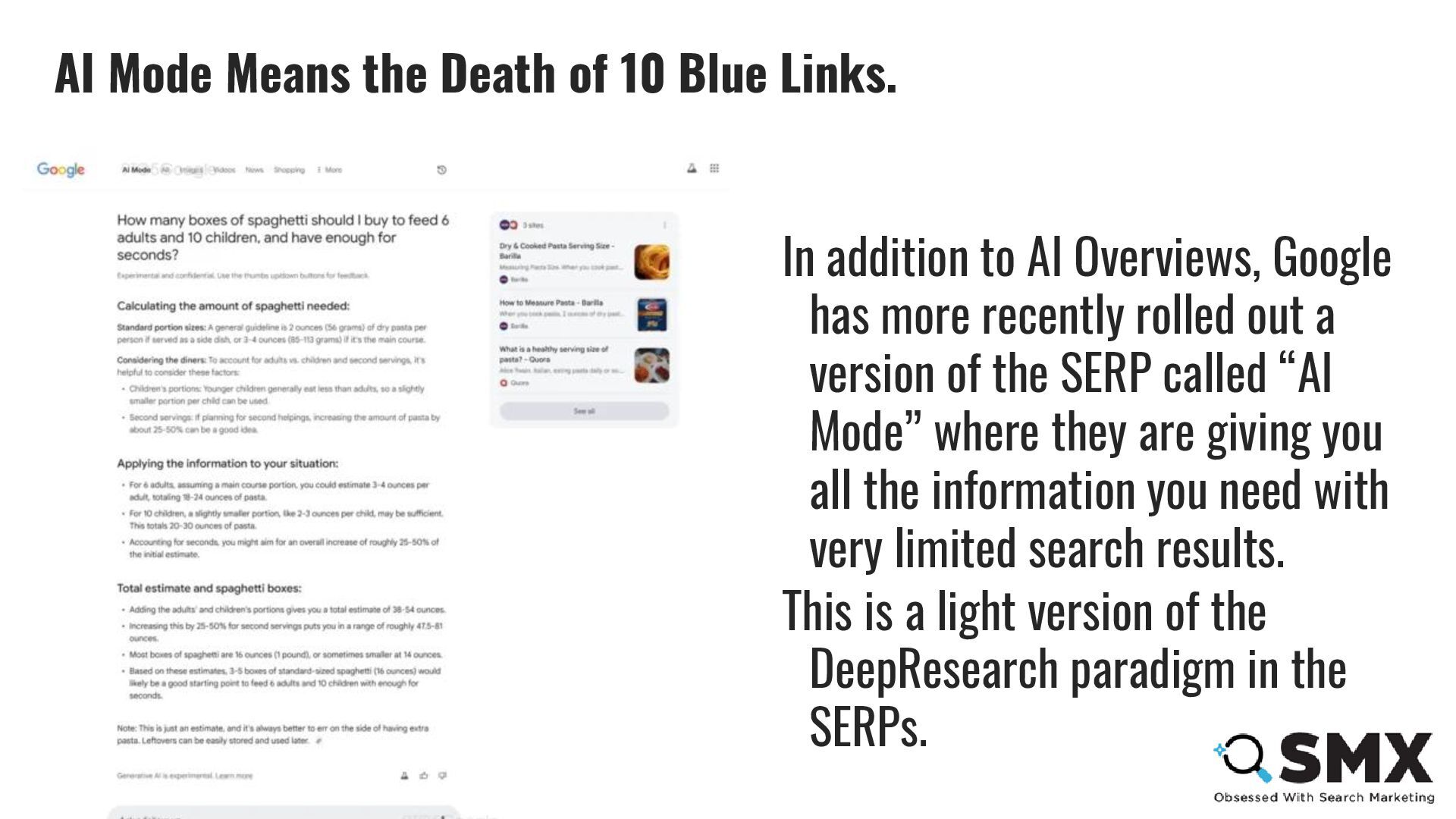
In addition to AI Overviews, Google has more recently rolled
out a version of the SERP called “AI Mode” where they are giving you all the information you need with very limited search results. This is a light version of the DeepResearch paradigm in the SERPs. AI Mode Means the Death of 10 Blue Links. -
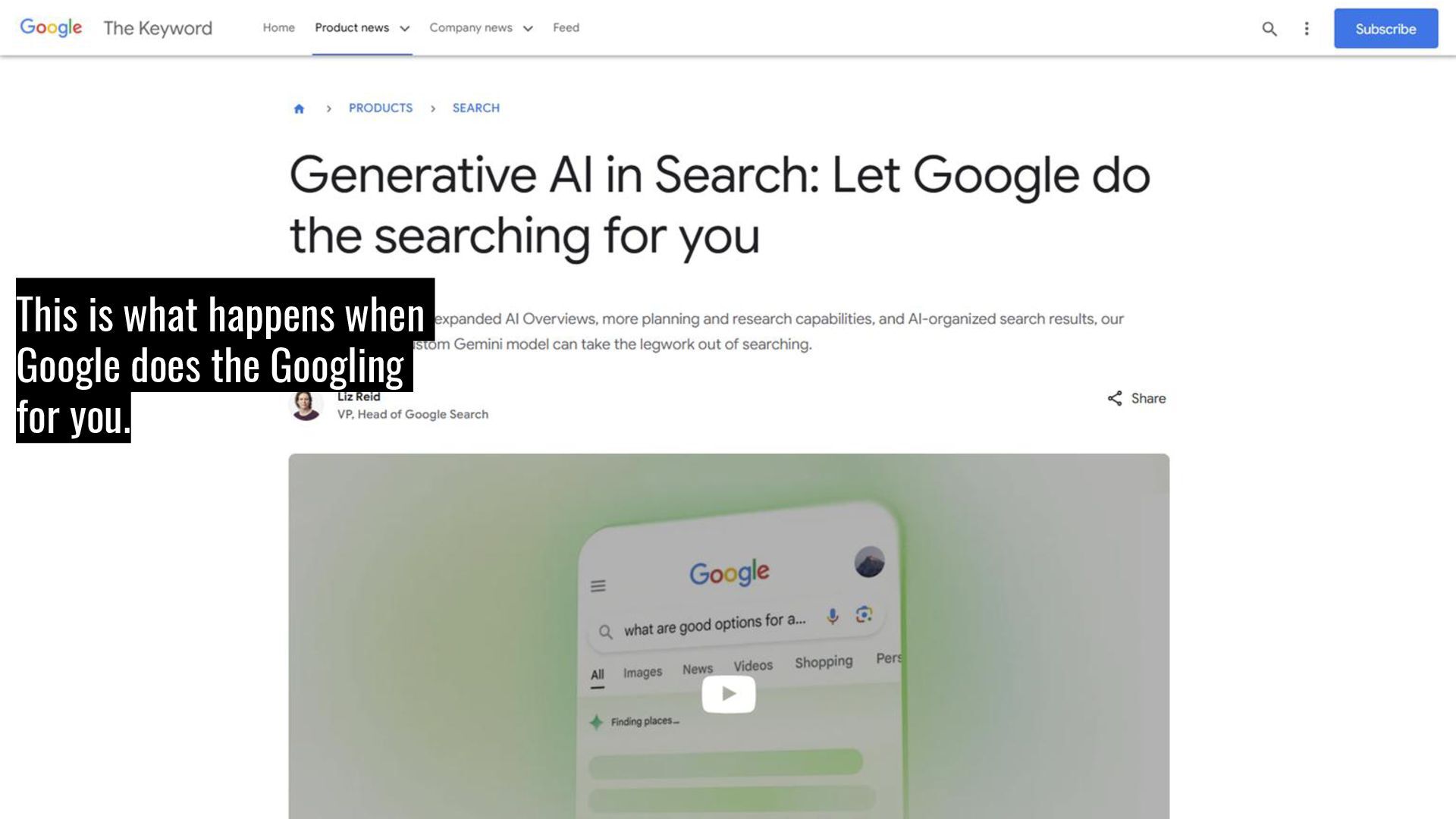
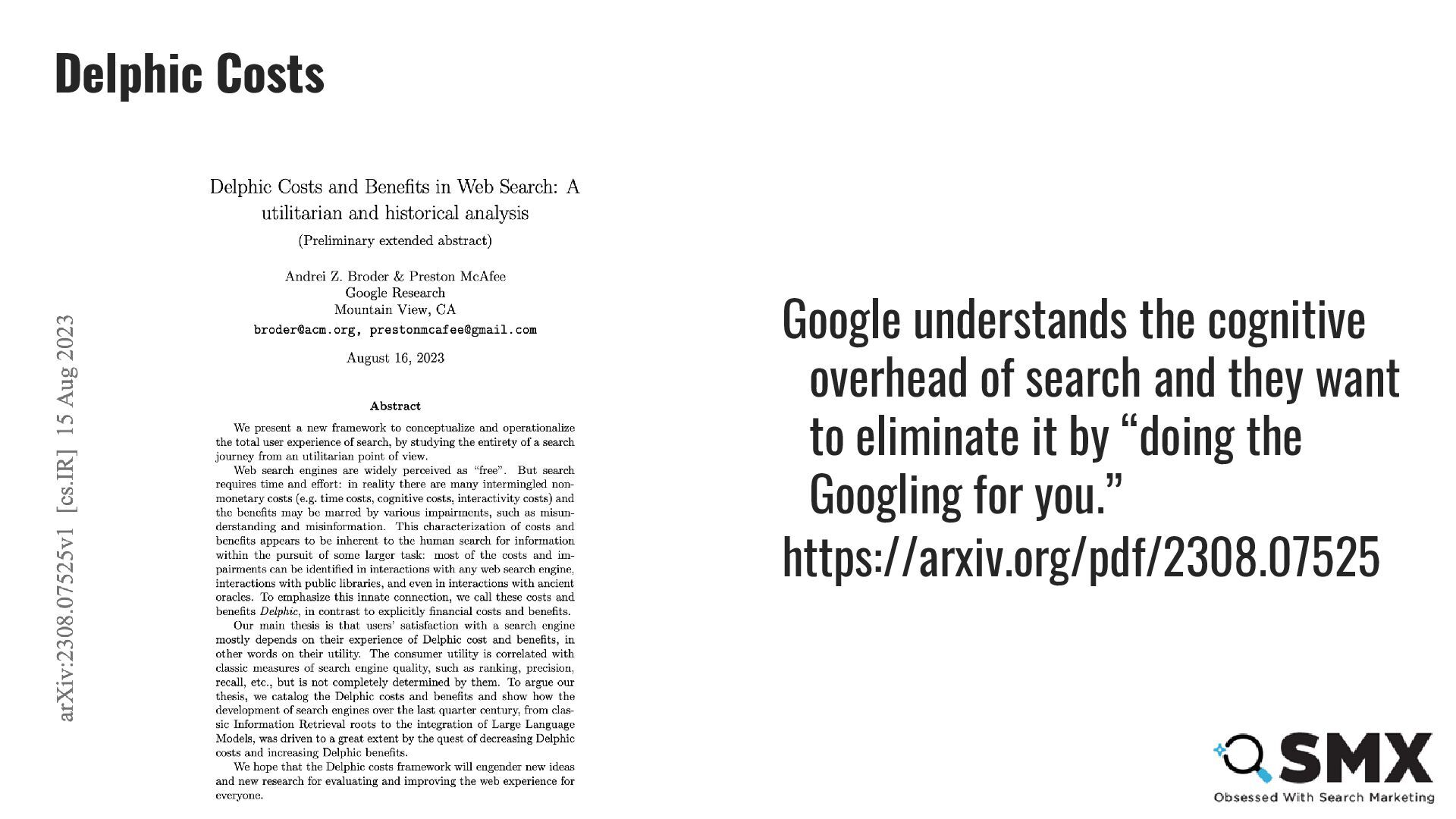
Google understands the cognitive overhead of search and they want
to eliminate it by “doing the Googling for you.” https://arxiv.org/pdf/2308.07525 Delphic Costs -
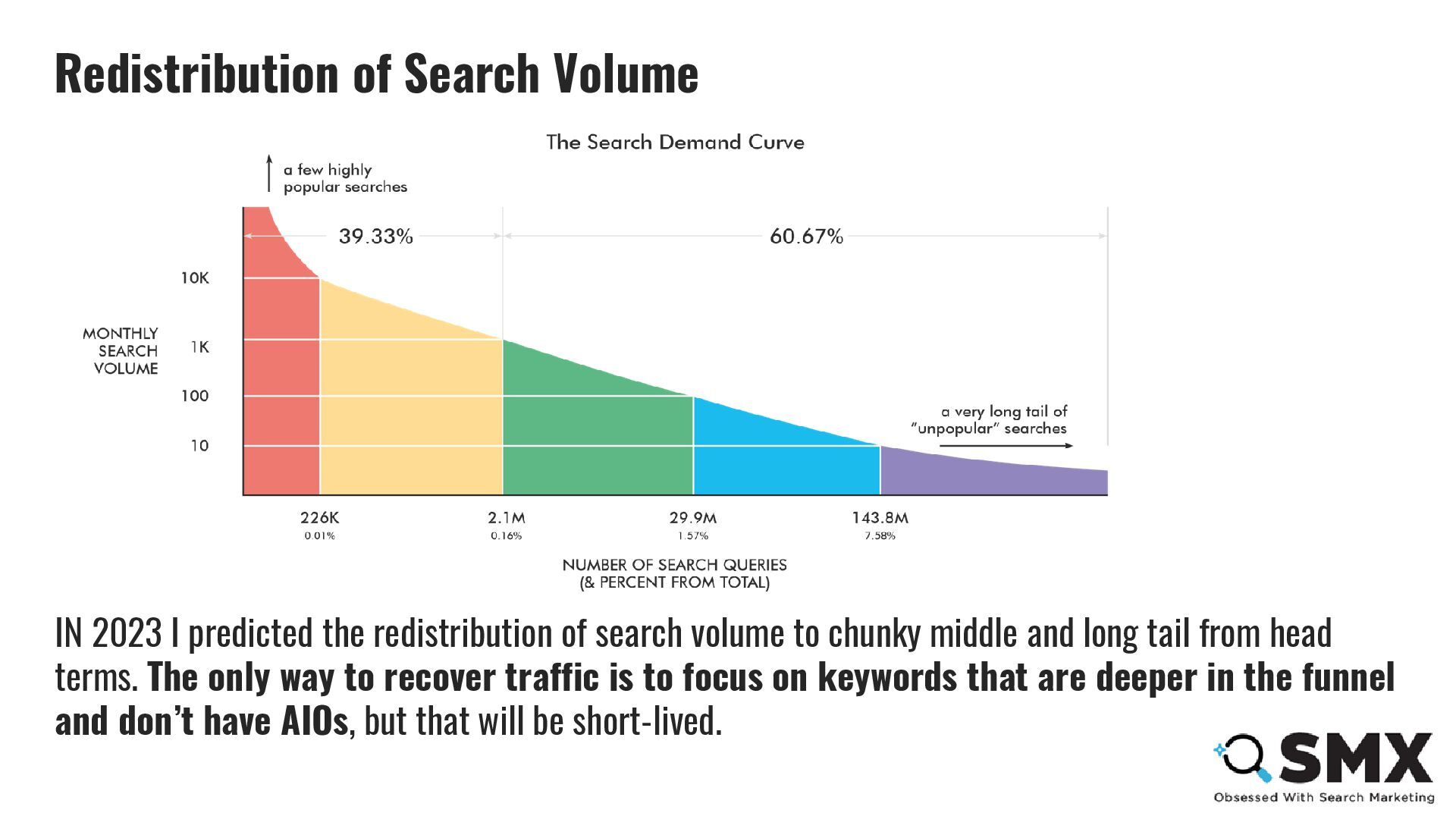
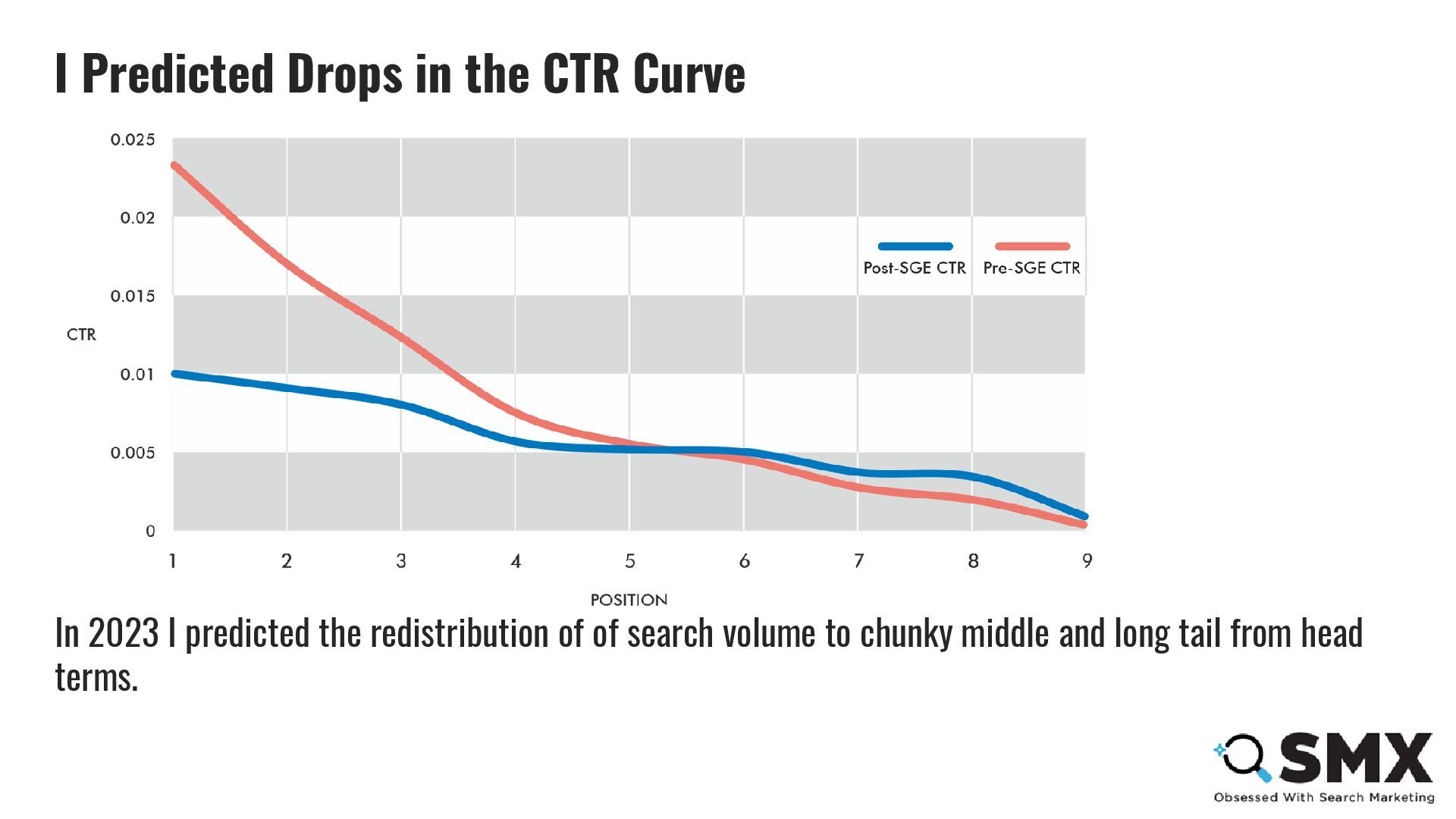
IN 2023 I predicted the redistribution of search volume to
chunky middle and long tail from head terms. The only way to recover traffic is to focus on keywords that are deeper in the funnel and don’t have AIOs, but that will be short-lived. Redistribution of Search Volume -
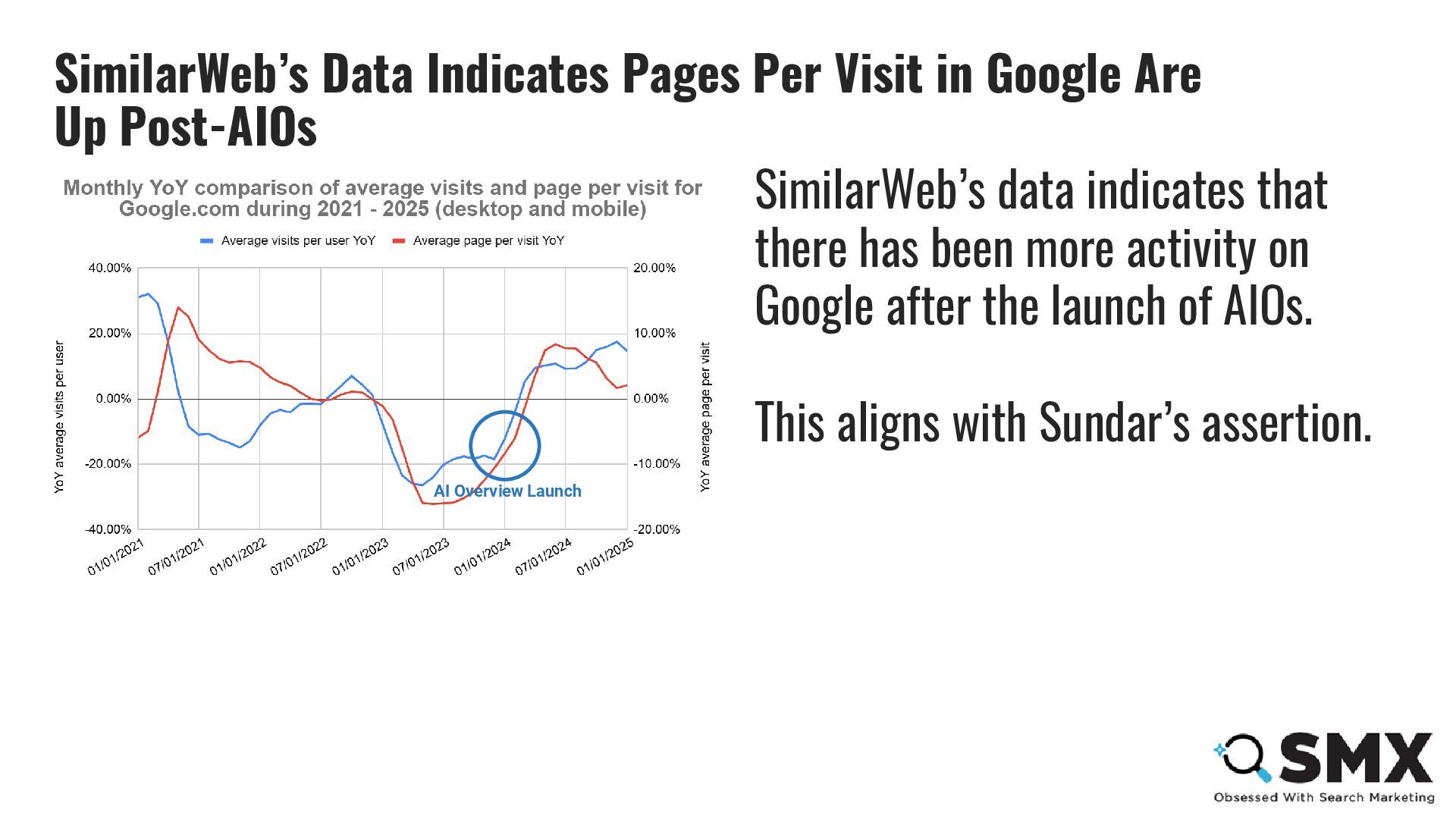
“...we are seeing an increase in search usage among people
who use the new AI overviews as well as increased user satisfaction with the results.” -
SimilarWeb’s data indicates that there has been more activity on
Google after the launch of AIOs. This aligns with Sundar’s assertion. SimilarWeb’s Data Indicates Pages Per Visit in Google Are Up Post-AIOs AI Overview Launch -
In 2023 I predicted the redistribution of of search volume
to chunky middle and long tail from head terms. I Predicted Drops in the CTR Curve -
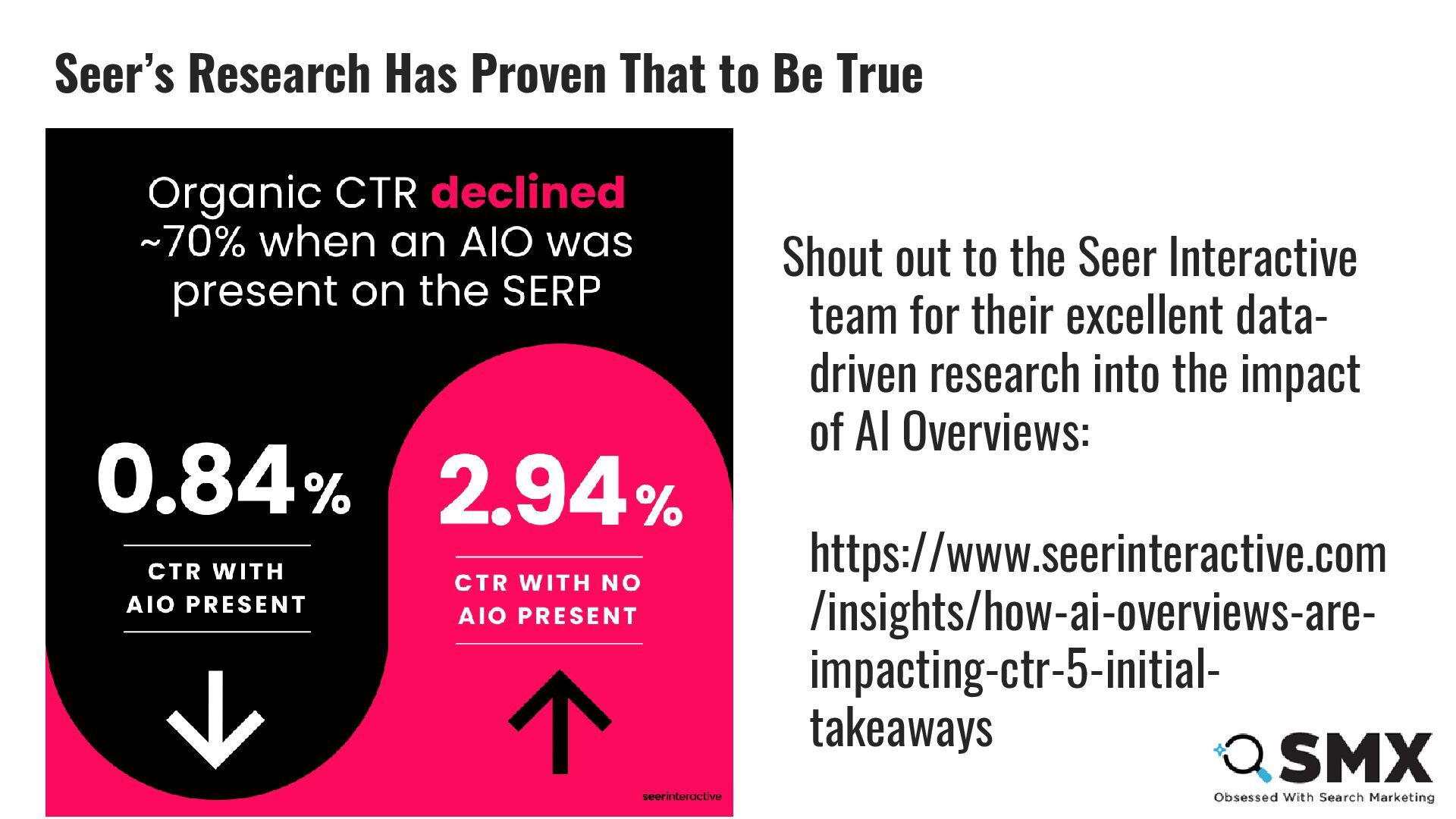
Shout out to the Seer Interactive team for their excellent
data- driven research into the impact of AI Overviews: https://www.seerinteractive.com /insights/how-ai-overviews-are- impacting-ctr-5-initial- takeaways Seer’s Research Has Proven That to Be True -
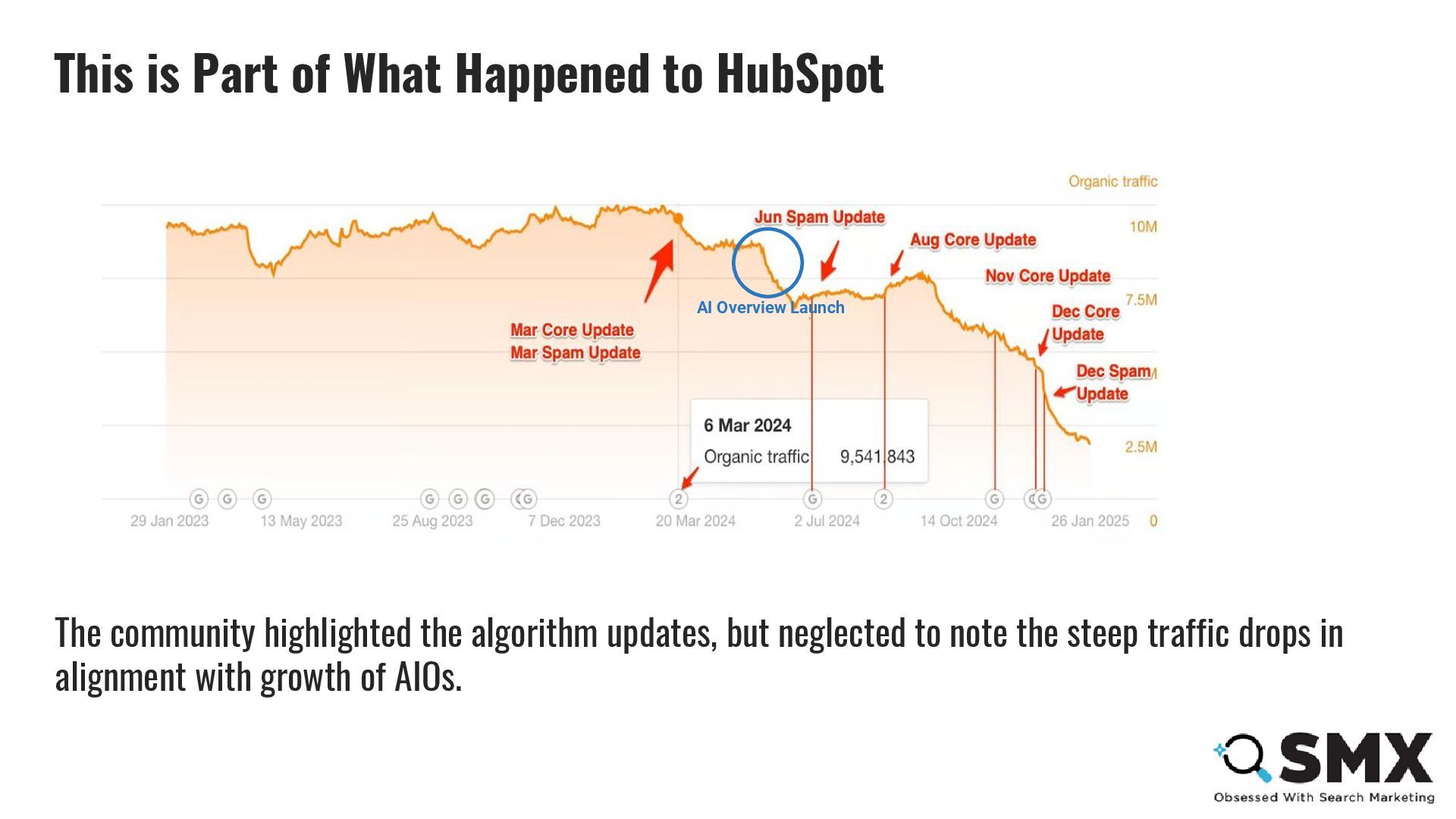
The community highlighted the algorithm updates, but neglected to note
the steep traffic drops in alignment with growth of AIOs. This is Part of What Happened to HubSpot AI Overview Launch -
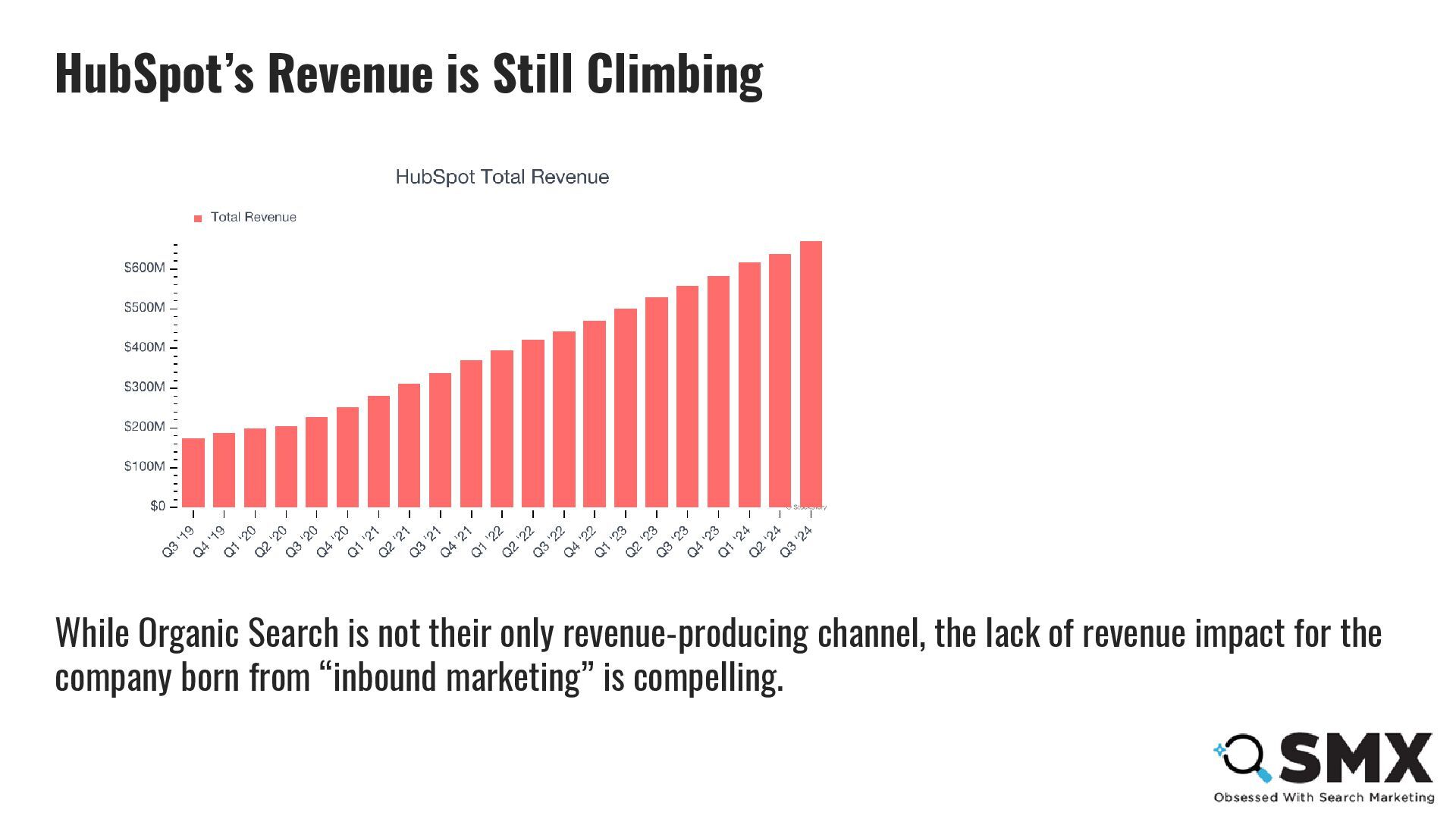
While Organic Search is not their only revenue-producing channel, the
lack of revenue impact for the company born from “inbound marketing” is compelling. HubSpot’s Revenue is Still Climbing -
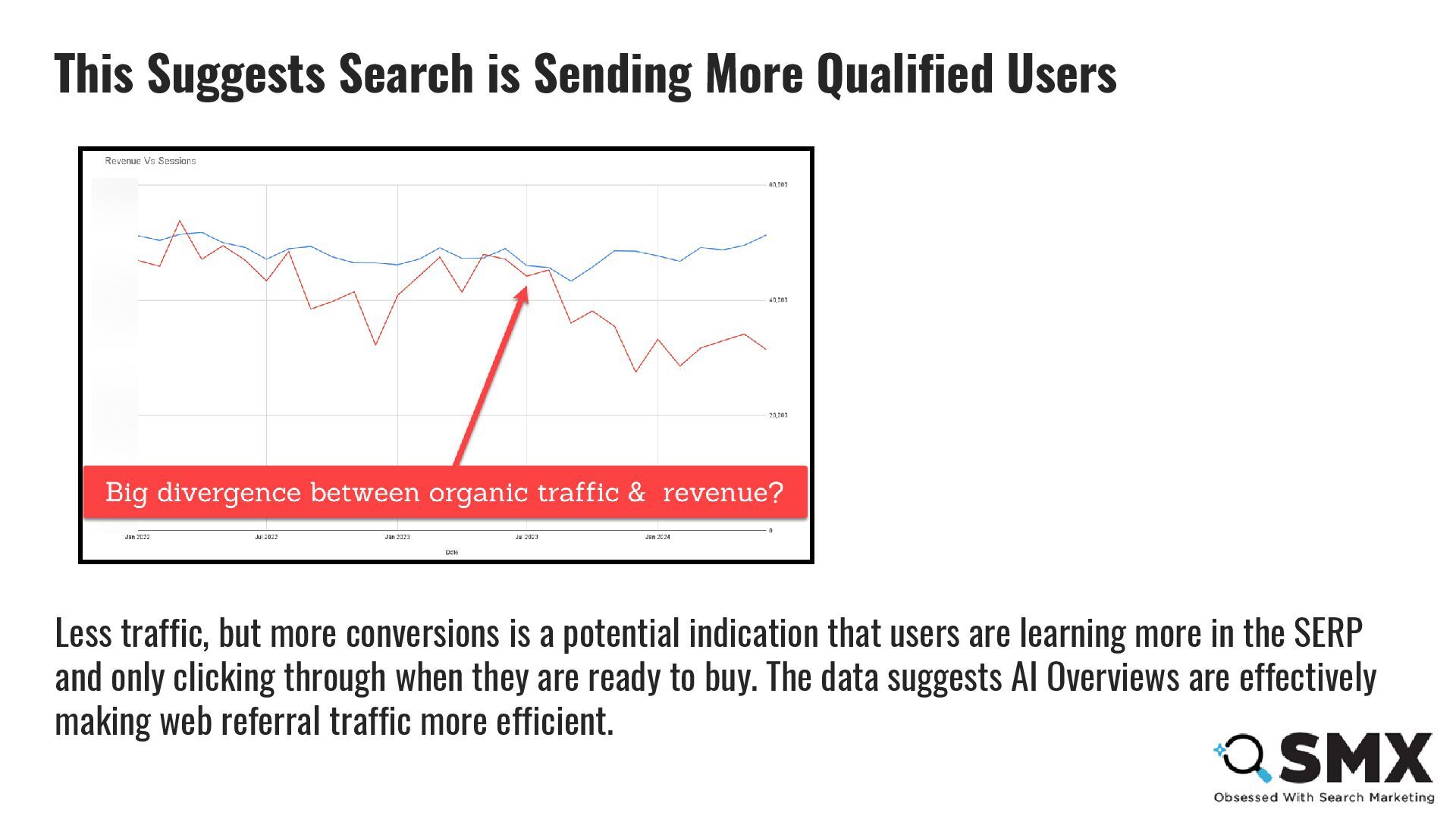
Less traffic, but more conversions is a potential indication that
users are learning more in the SERP and only clicking through when they are ready to buy. The data suggests AI Overviews are effectively making web referral traffic more efficient. This Suggests Search is Sending More Qualified Users -
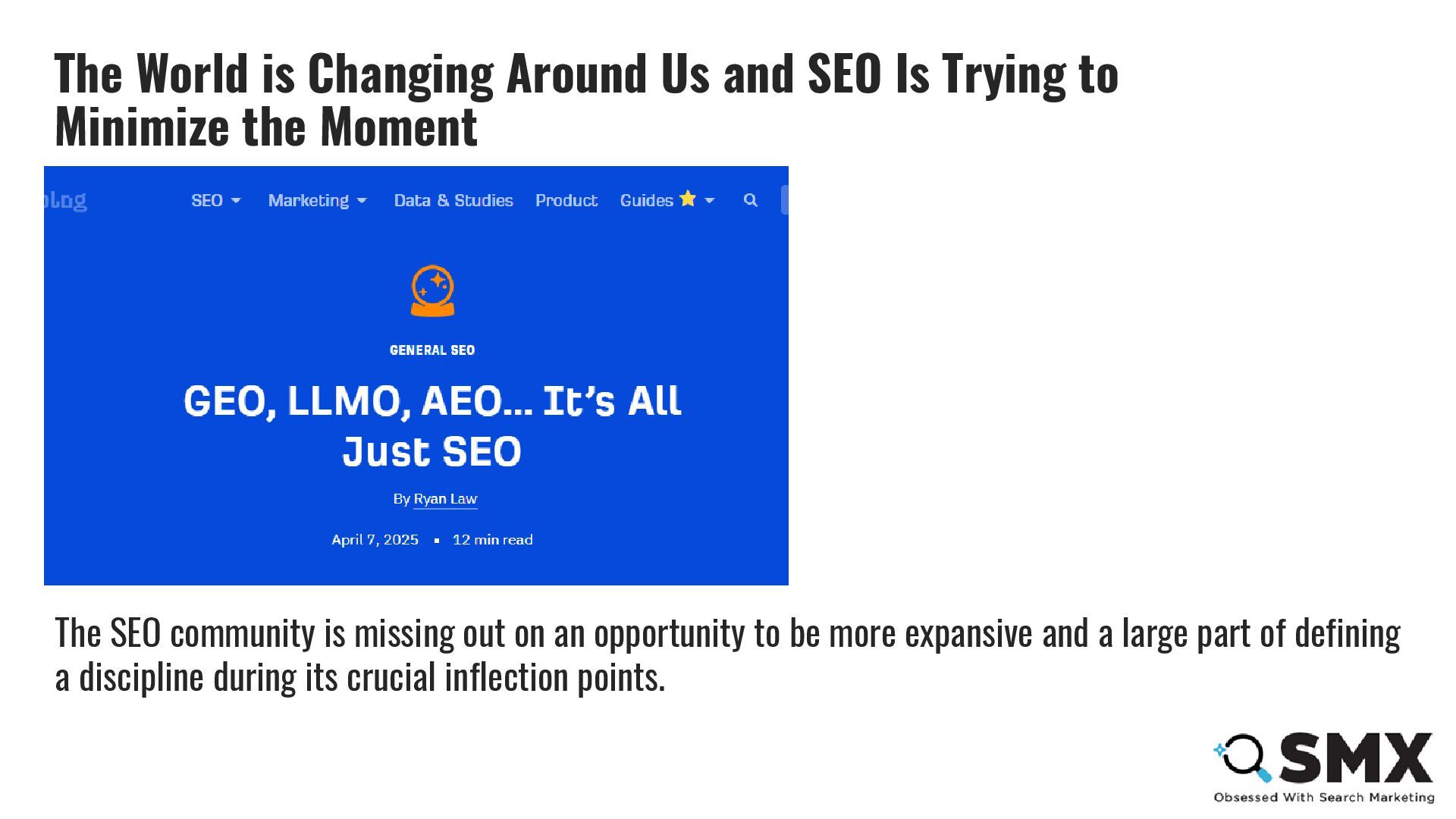
The SEO community is missing out on an opportunity to
be more expansive and a large part of defining a discipline during its crucial inflection points. The World is Changing Around Us and SEO Is Trying to Minimize the Moment -
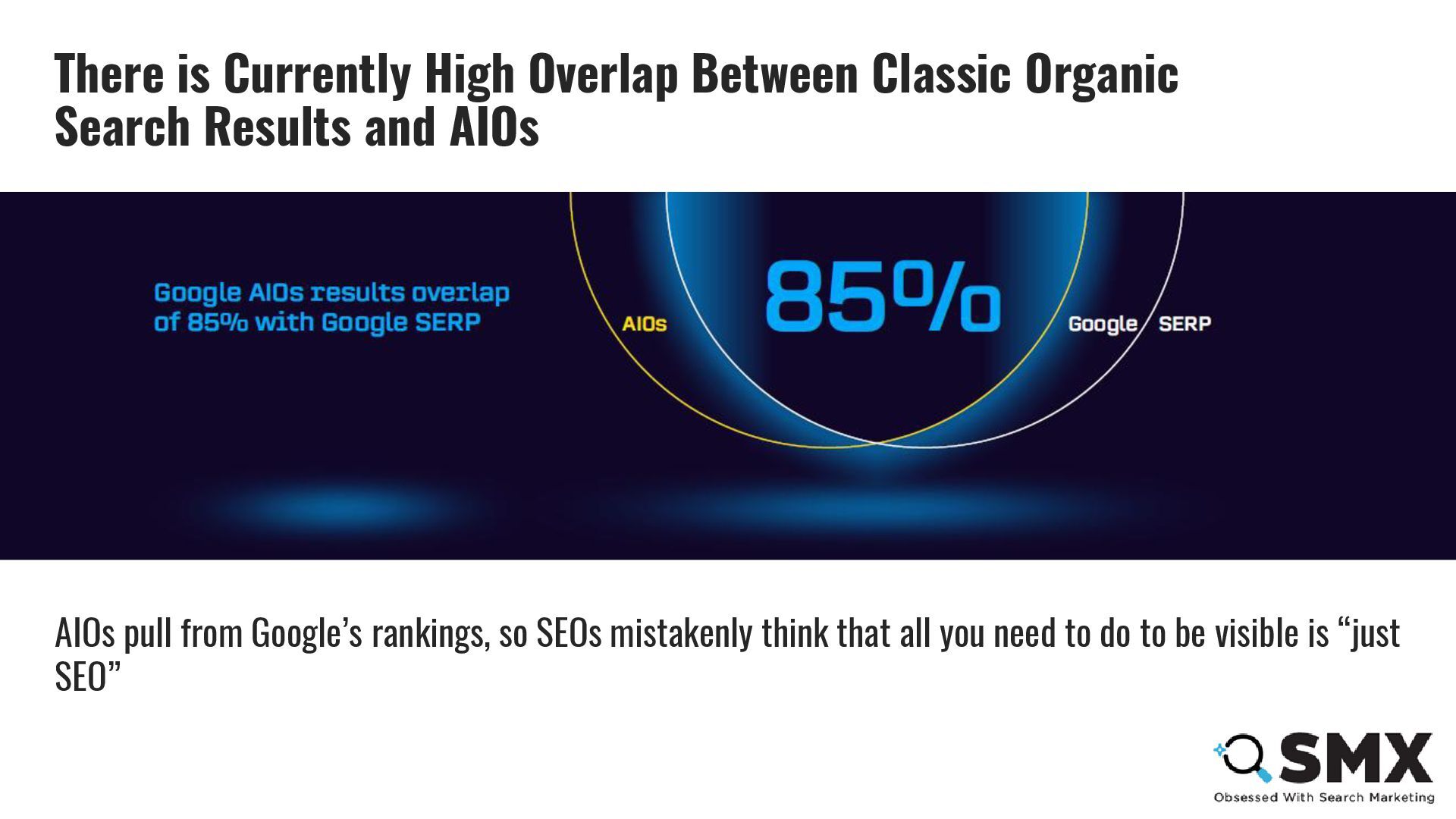
AIOs pull from Google’s rankings, so SEOs mistakenly think that
all you need to do to be visible is “just SEO” There is Currently High Overlap Between Classic Organic Search Results and AIOs -
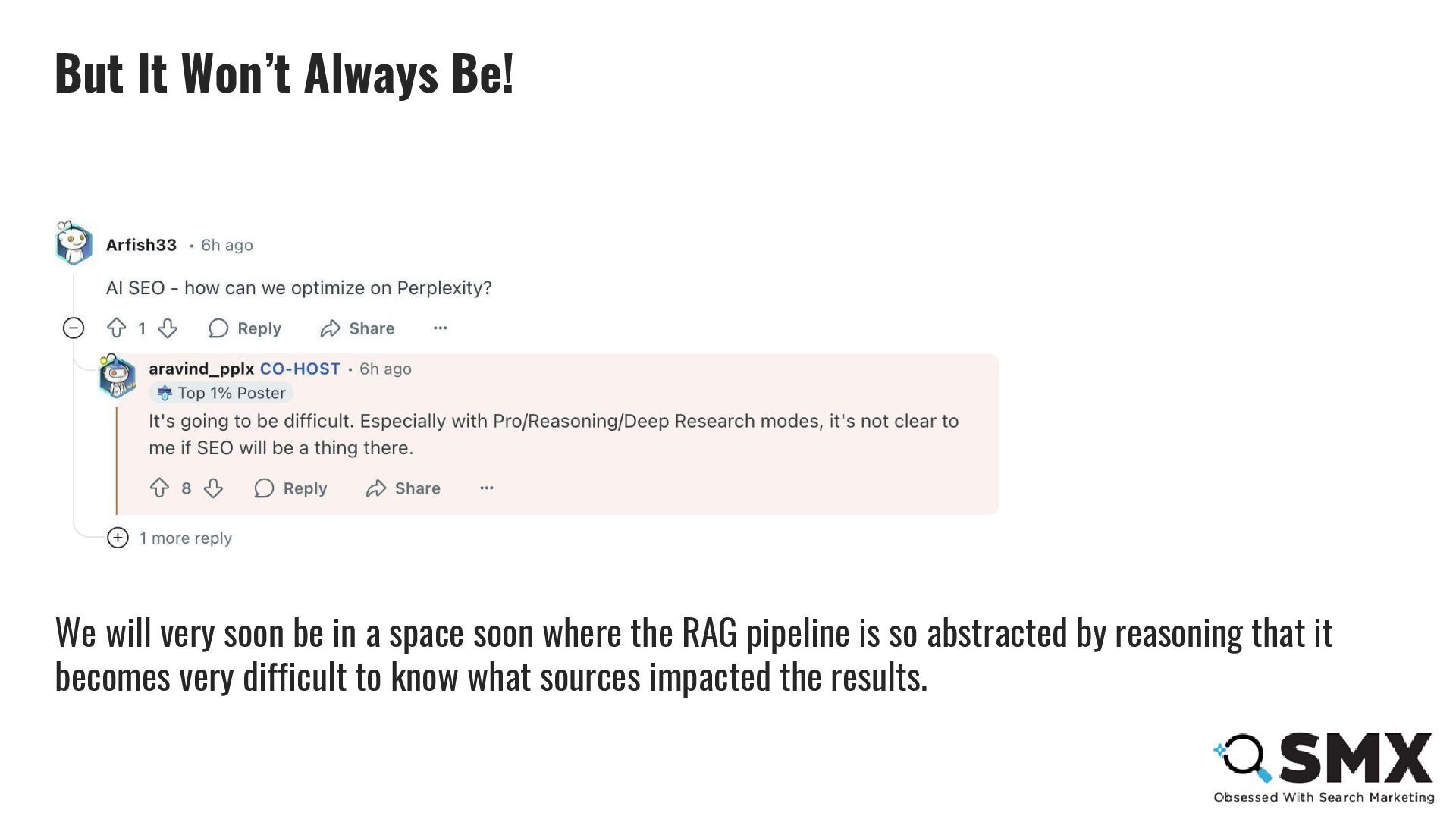
We will very soon be in a space soon where
the RAG pipeline is so abstracted by reasoning that it becomes very difficult to know what sources impacted the results. But It Won’t Always Be! -
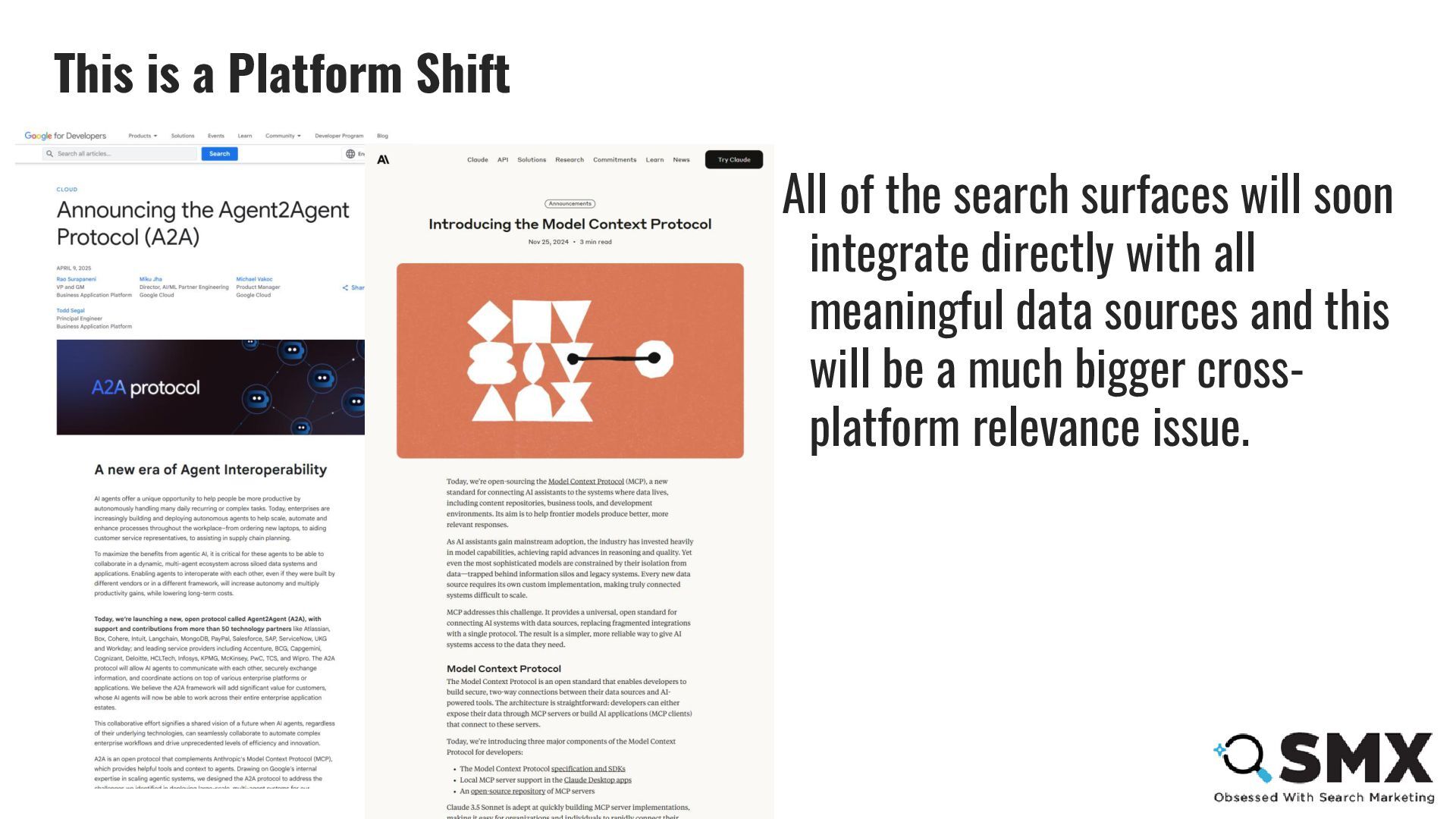
All of the search surfaces will soon integrate directly with
all meaningful data sources and this will be a much bigger cross- platform relevance issue. This is a Platform Shift -
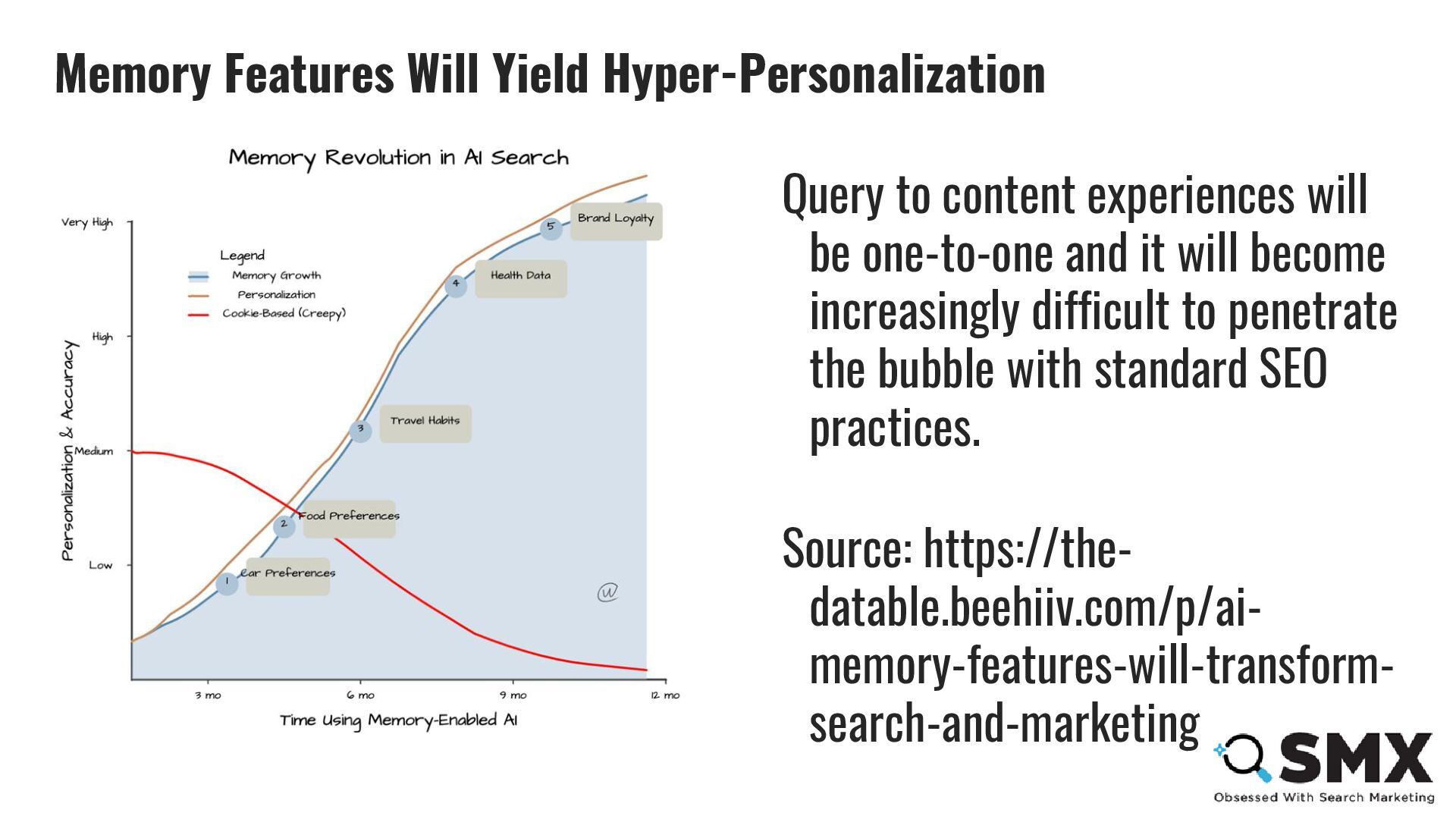
Query to content experiences will be one-to-one and it will
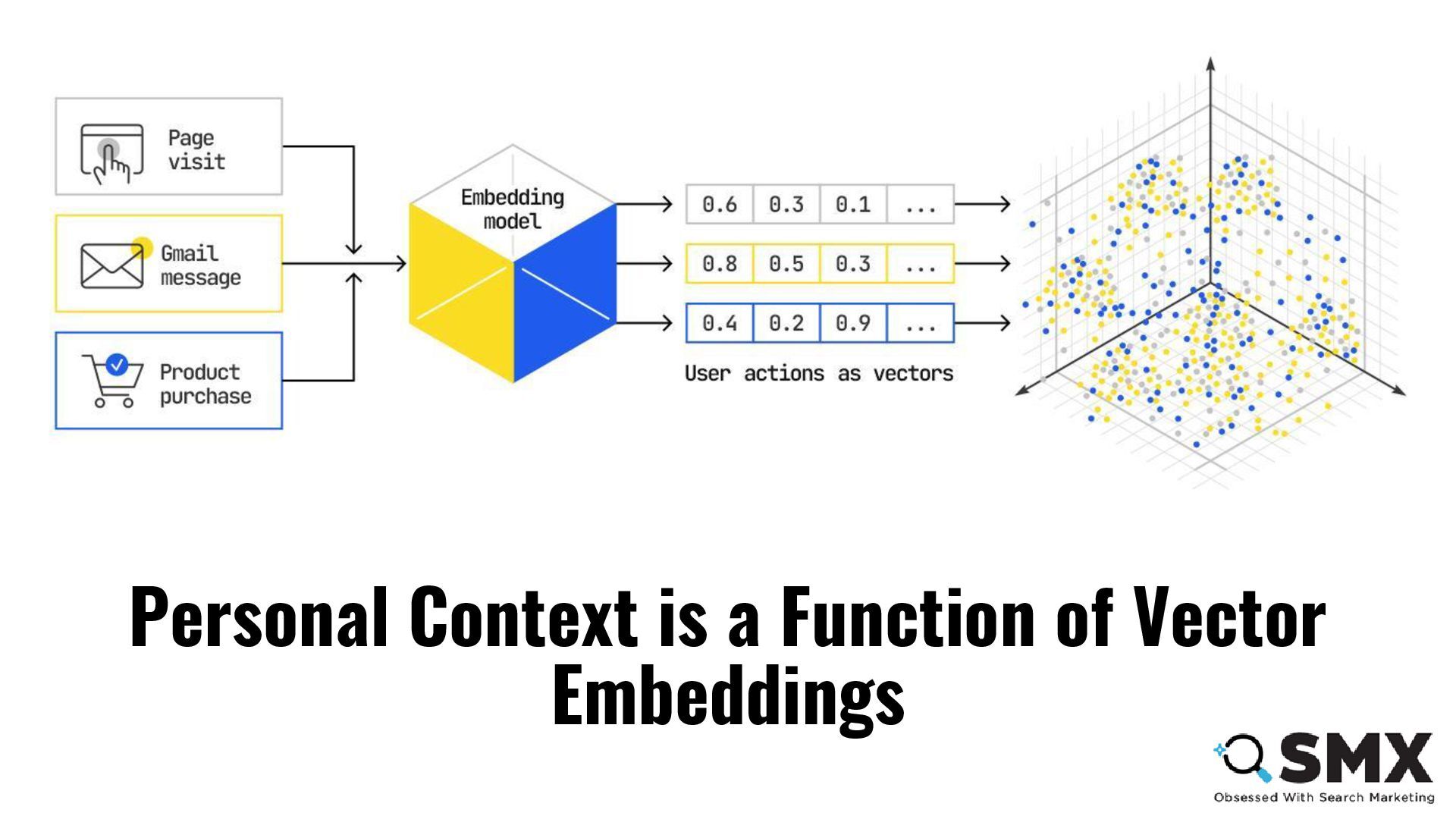
become increasingly difficult to penetrate the bubble with standard SEO practices. Source: https://the- datable.beehiiv.com/p/ai- memory-features-will-transform- search-and-marketing Memory Features Will Yield Hyper-Personalization -
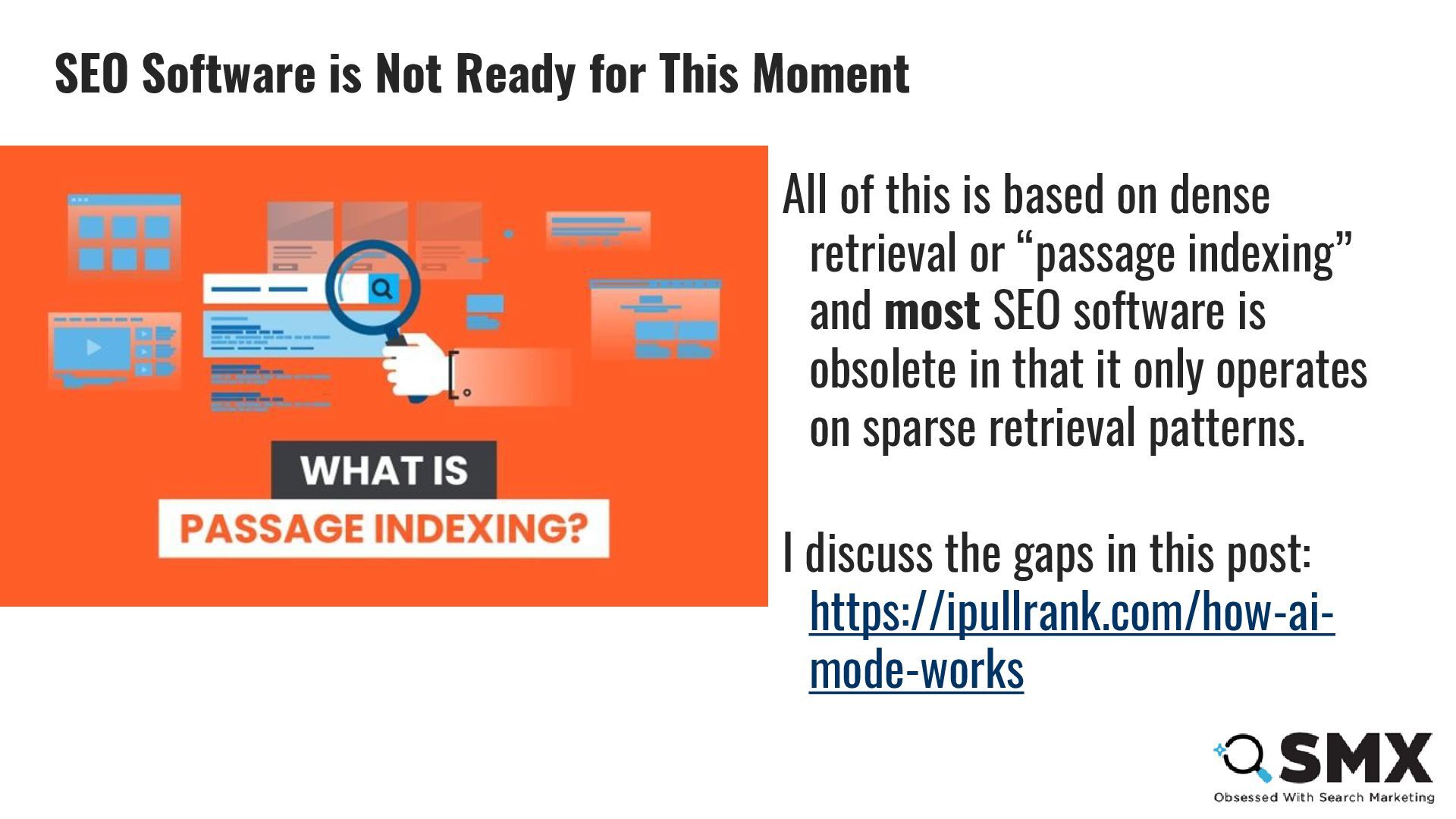
All of this is based on dense retrieval or “passage
indexing” and most SEO software is obsolete in that it only operates on sparse retrieval patterns. I discuss the gaps in this post: https://ipullrank.com/how-ai- mode-works SEO Software is Not Ready for This Moment -
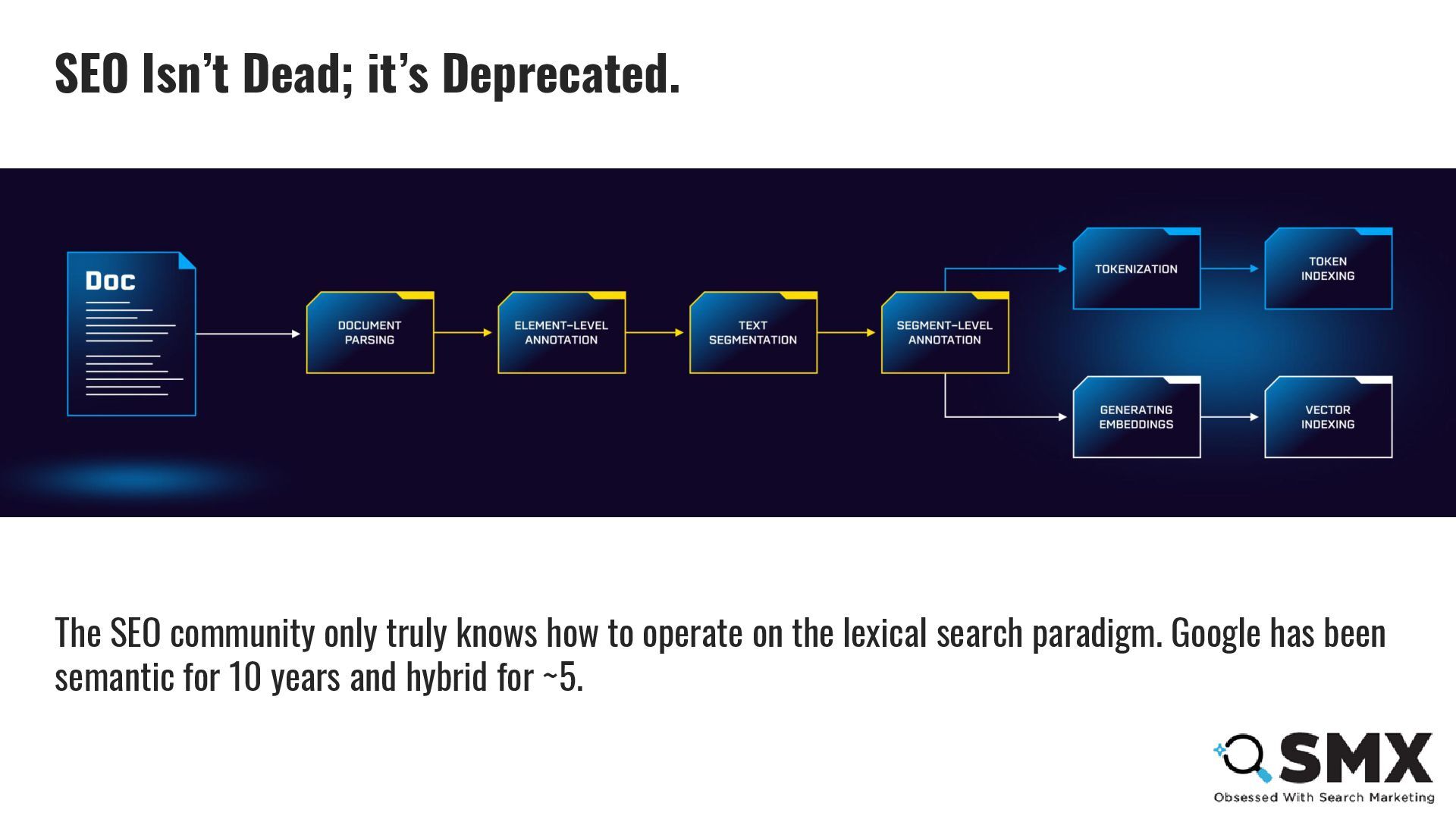
The SEO community only truly knows how to operate on
the lexical search paradigm. Google has been semantic for 10 years and hybrid for ~5. SEO Isn’t Dead; it’s Deprecated. -
The common refrain I hear in sales calls lately is
that incumbent agencies are “too old school” and “don’t know what to do for AI Search.” Your SEO Agency Is Not Ready for this Moment -
Rank tracking, Google Search Console, and our SEO input metrics
need to evolve to support measurement of these channels. SEO Measurement is Not Ready for This Moment -
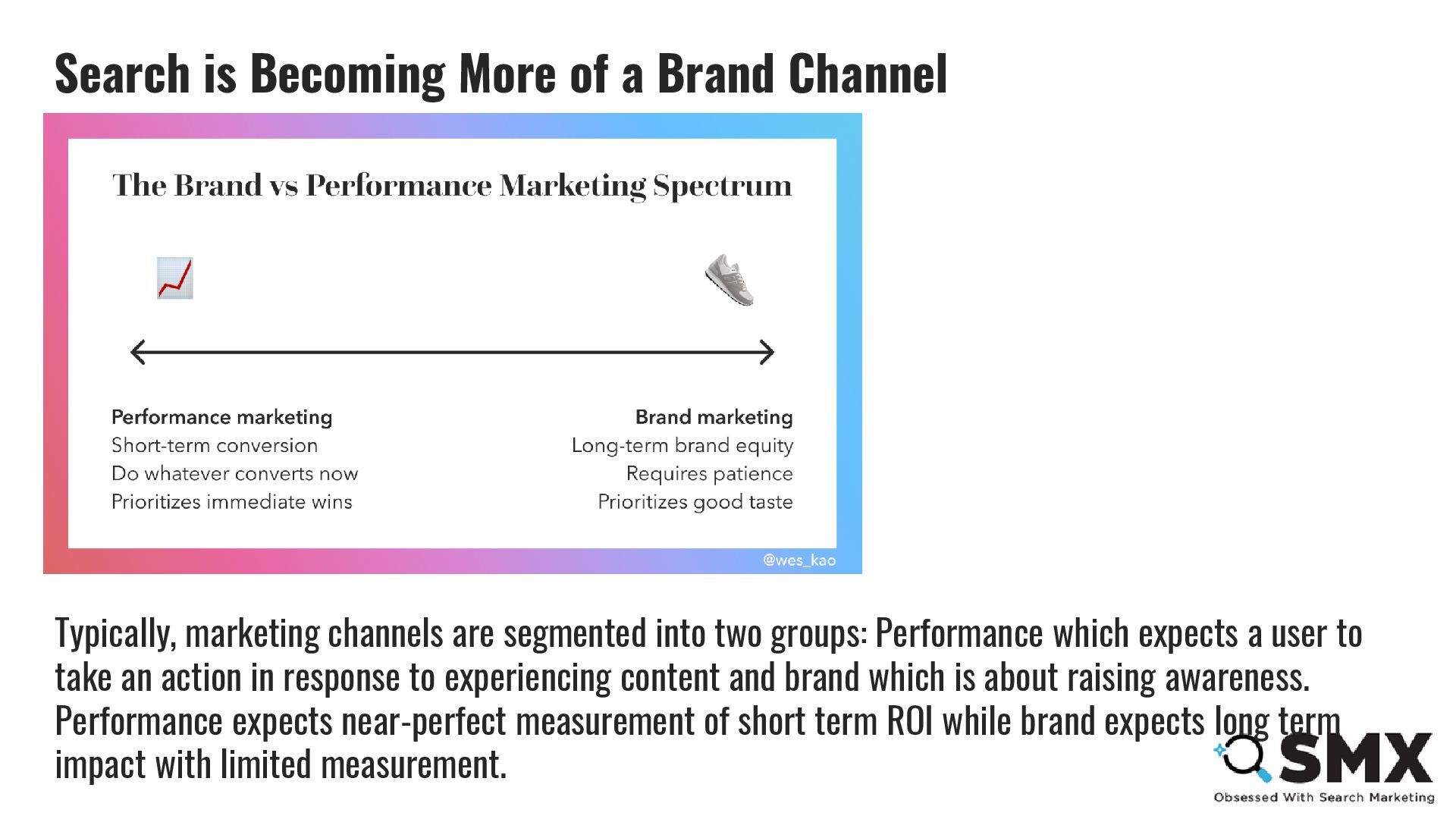
Typically, marketing channels are segmented into two groups: Performance which
expects a user to take an action in response to experiencing content and brand which is about raising awareness. Performance expects near-perfect measurement of short term ROI while brand expects long term impact with limited measurement. Search is Becoming More of a Brand Channel -
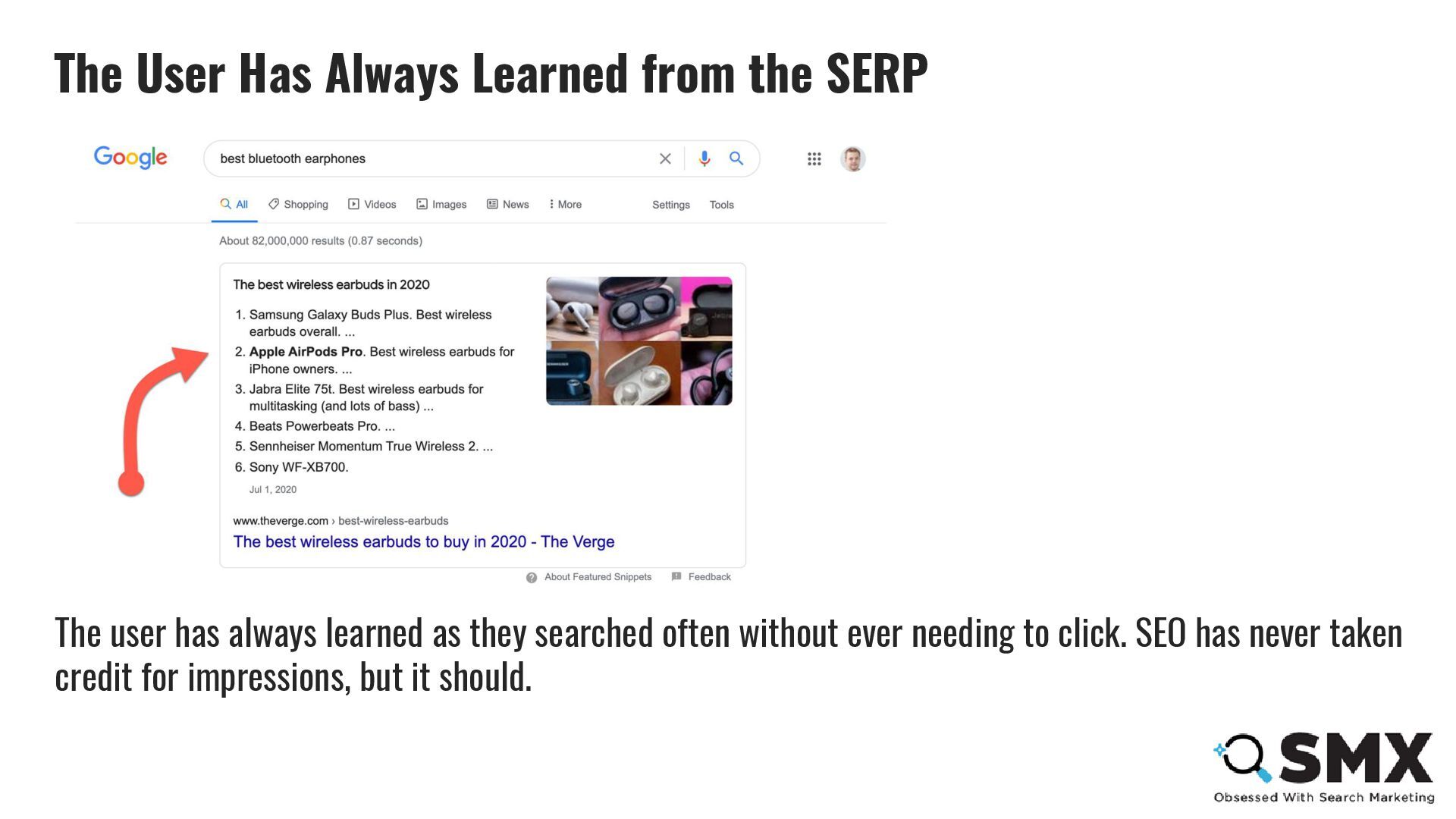
The user has always learned as they searched often without
ever needing to click. SEO has never taken credit for impressions, but it should. The User Has Always Learned from the SERP -
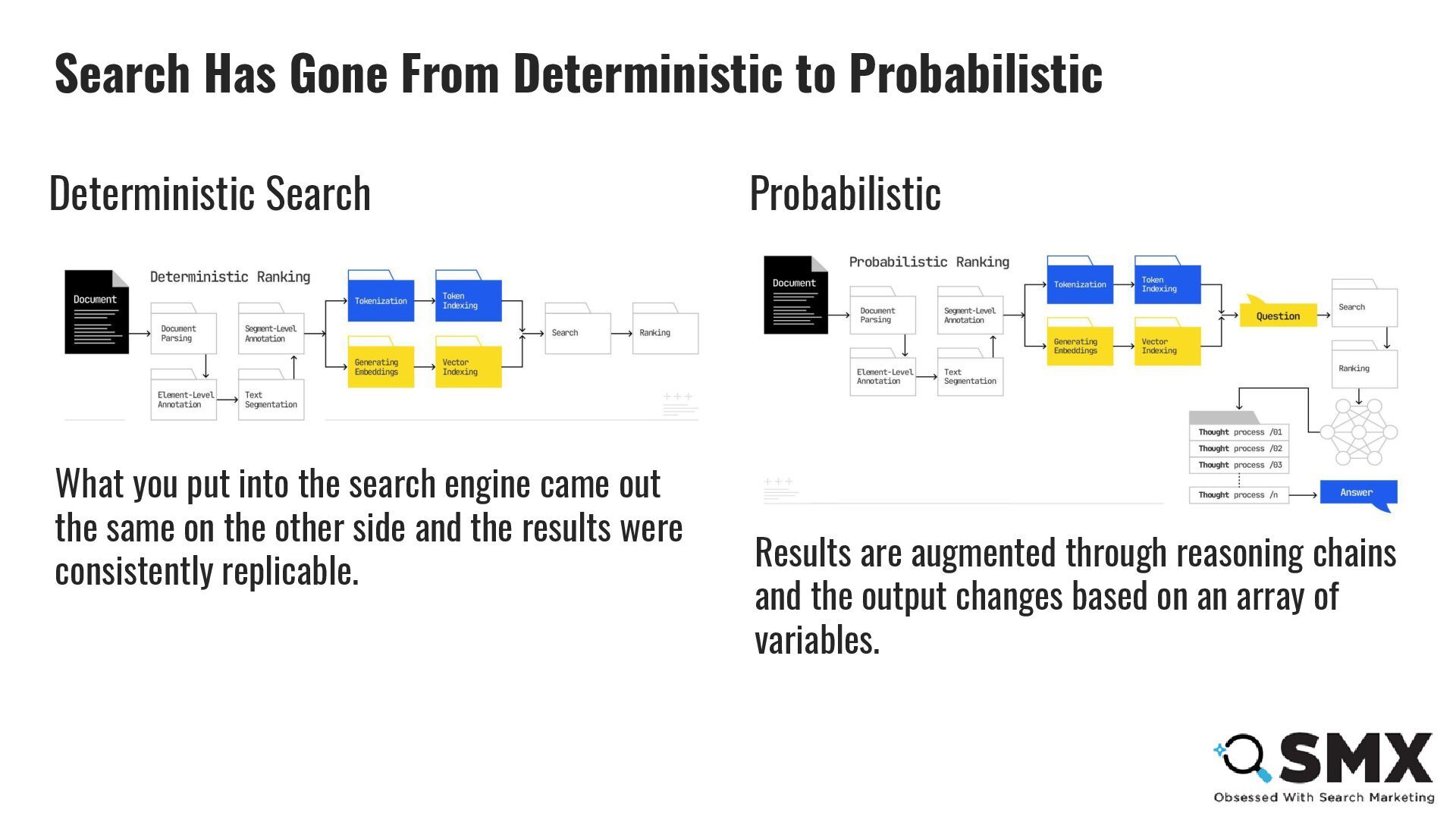
Deterministic Search Probabilistic What you put into the search engine
came out the same on the other side and the results were consistently replicable. Results are augmented through reasoning chains and the output changes based on an array of variables. Search Has Gone From Deterministic to Probabilistic -
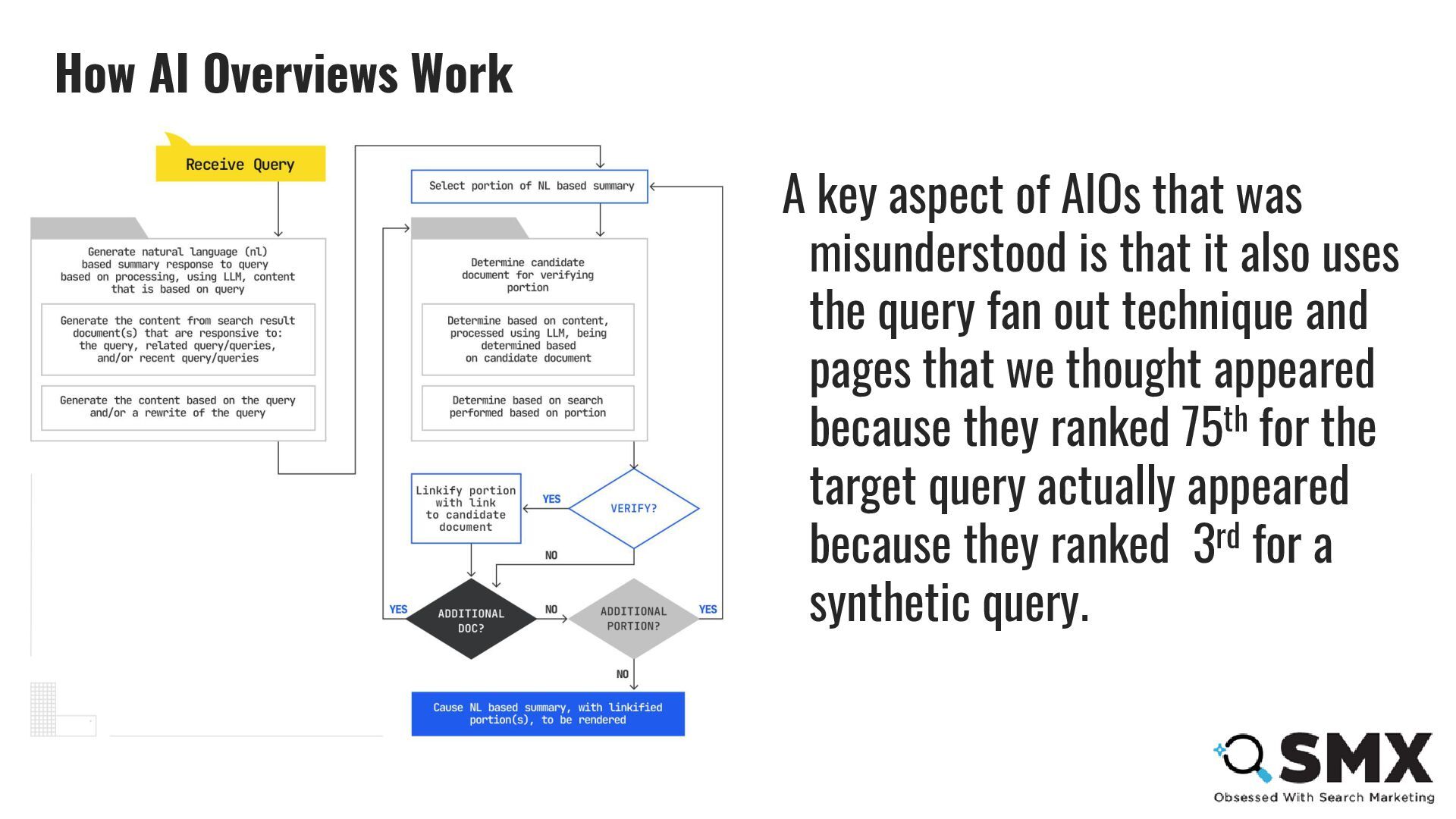
A key aspect of AIOs that was misunderstood is that
it also uses the query fan out technique and pages that we thought appeared because they ranked 75th for the target query actually appeared because they ranked 3rd for a synthetic query. How AI Overviews Work -
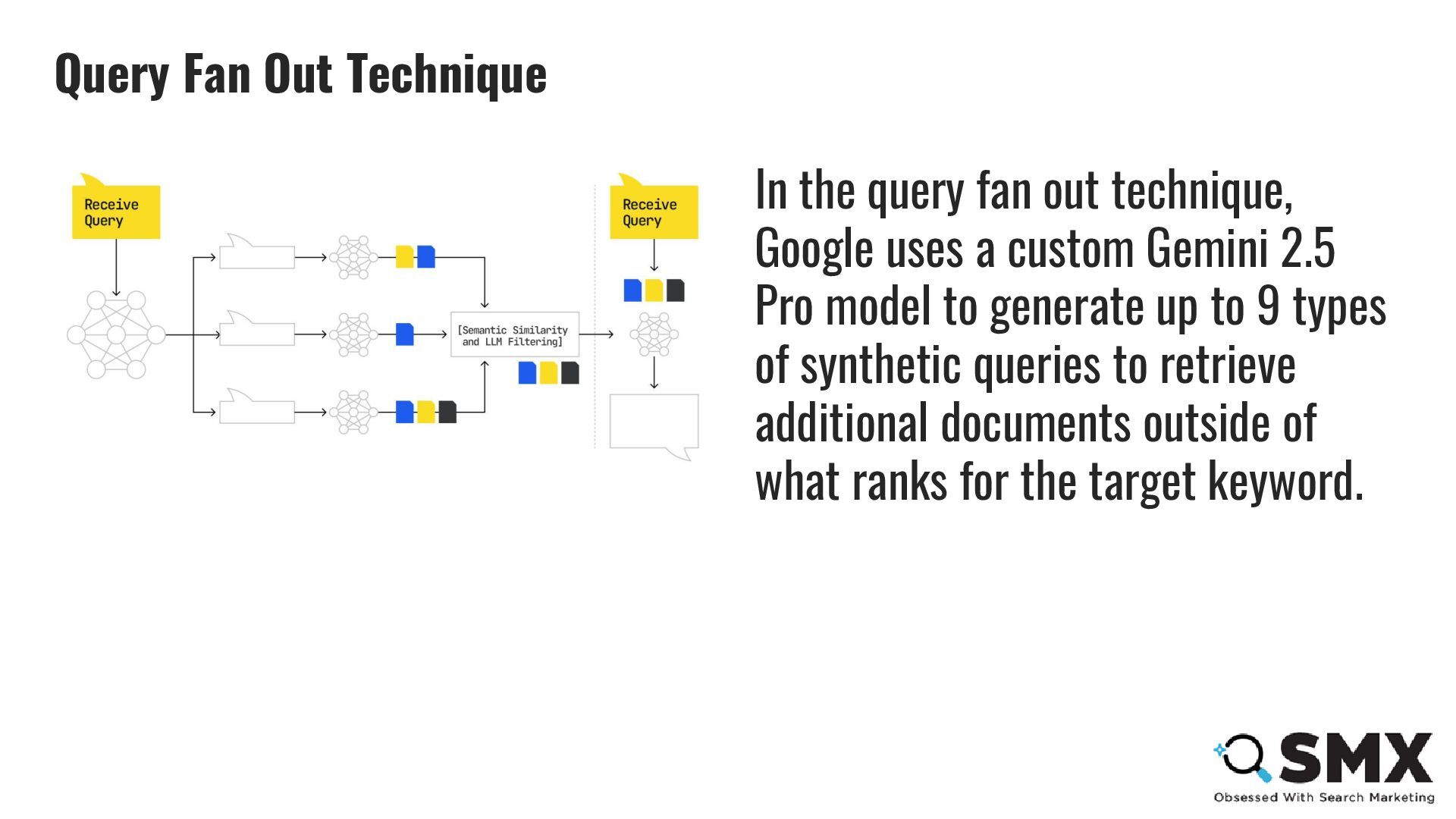
In the query fan out technique, Google uses a custom
Gemini 2.5 Pro model to generate up to 9 types of synthetic queries to retrieve additional documents outside of what ranks for the target keyword. Query Fan Out Technique -
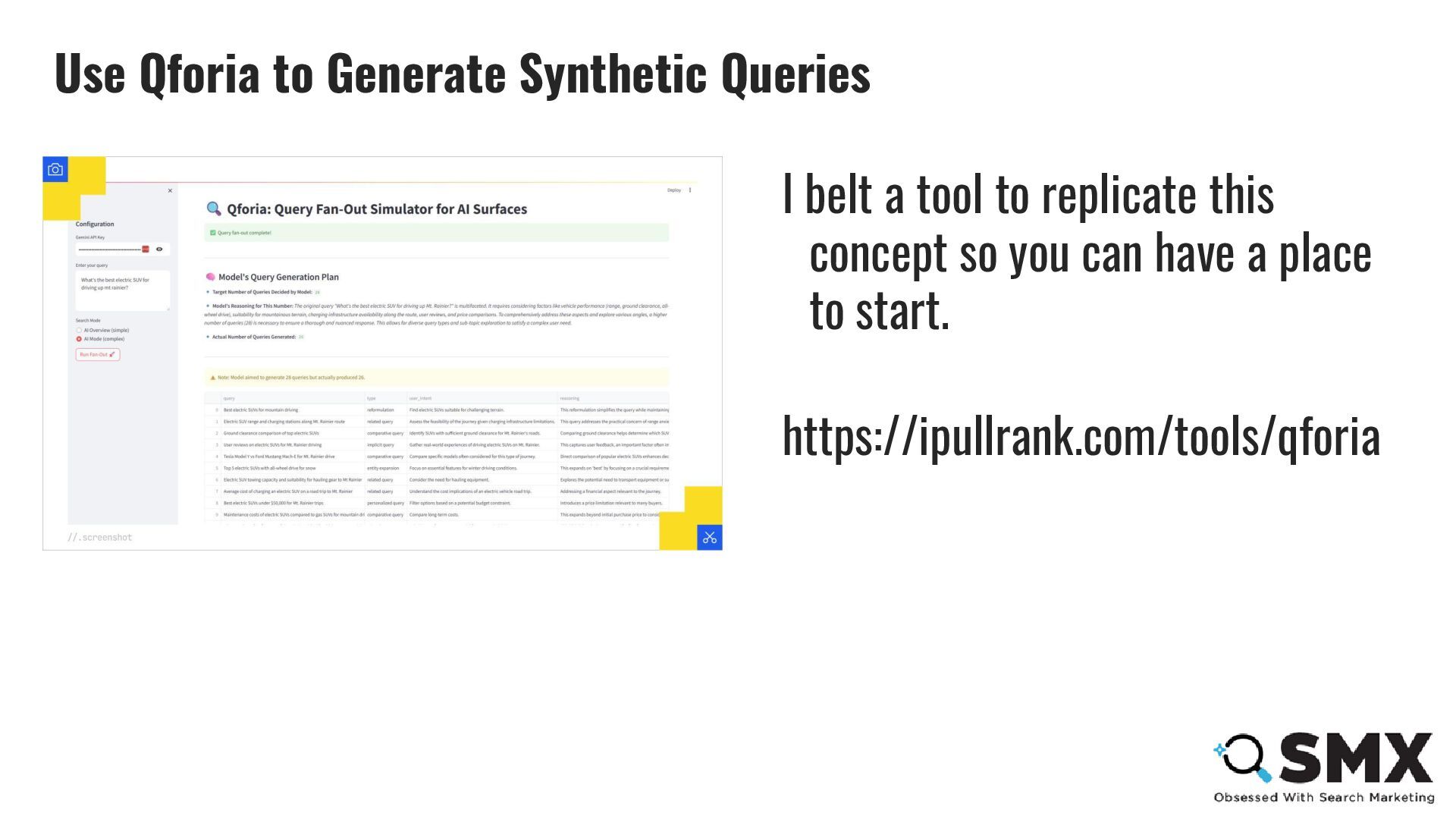
I belt a tool to replicate this concept so you
can have a place to start. https://ipullrank.com/tools/qforia Use Qforia to Generate Synthetic Queries -
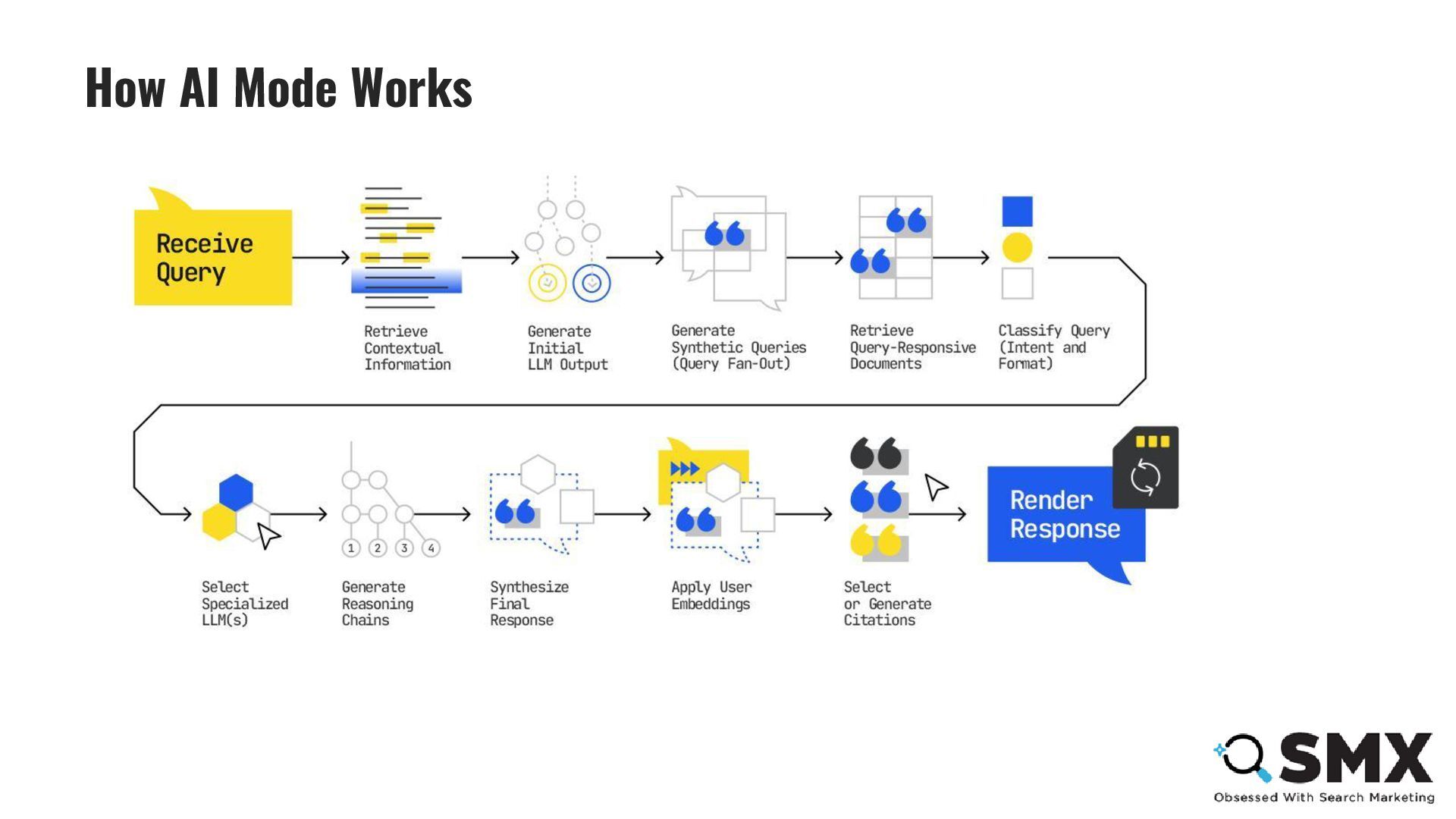
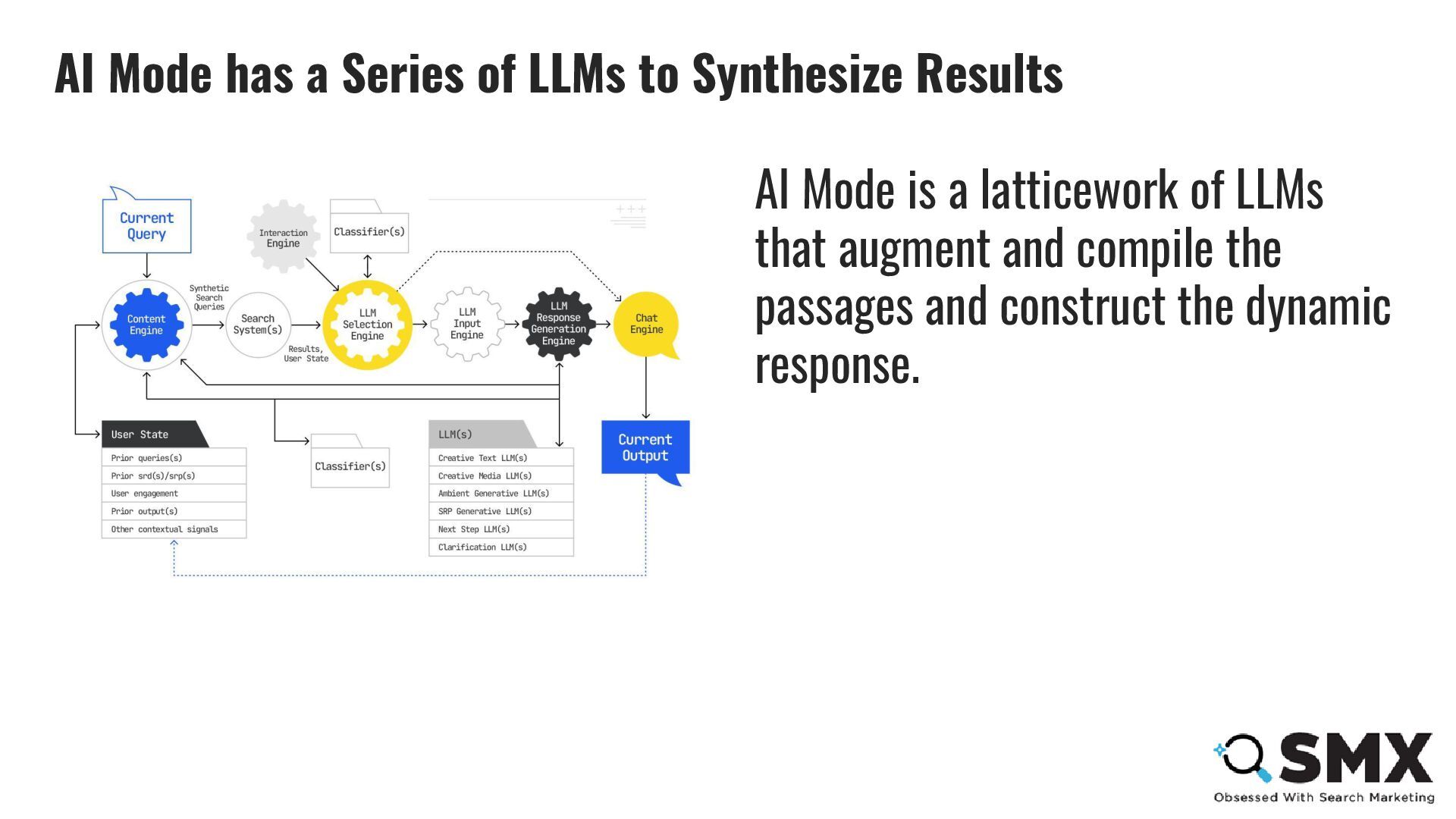
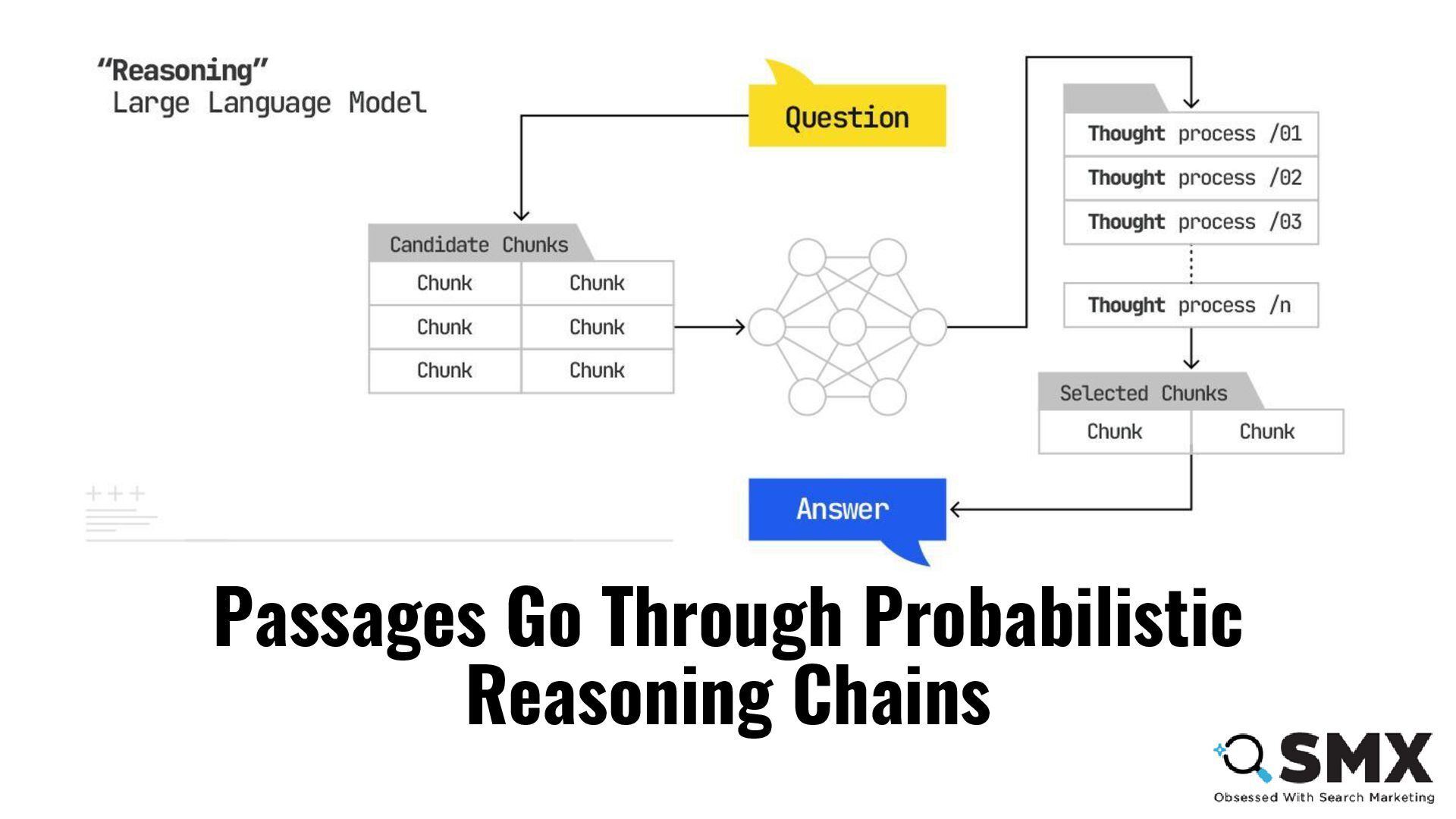
AI Mode is a latticework of LLMs that augment and
compile the passages and construct the dynamic response. AI Mode has a Series of LLMs to Synthesize Results -
However, because it’s probabilistic, the best you can do is
give yourself as many candidate passages as possible. -
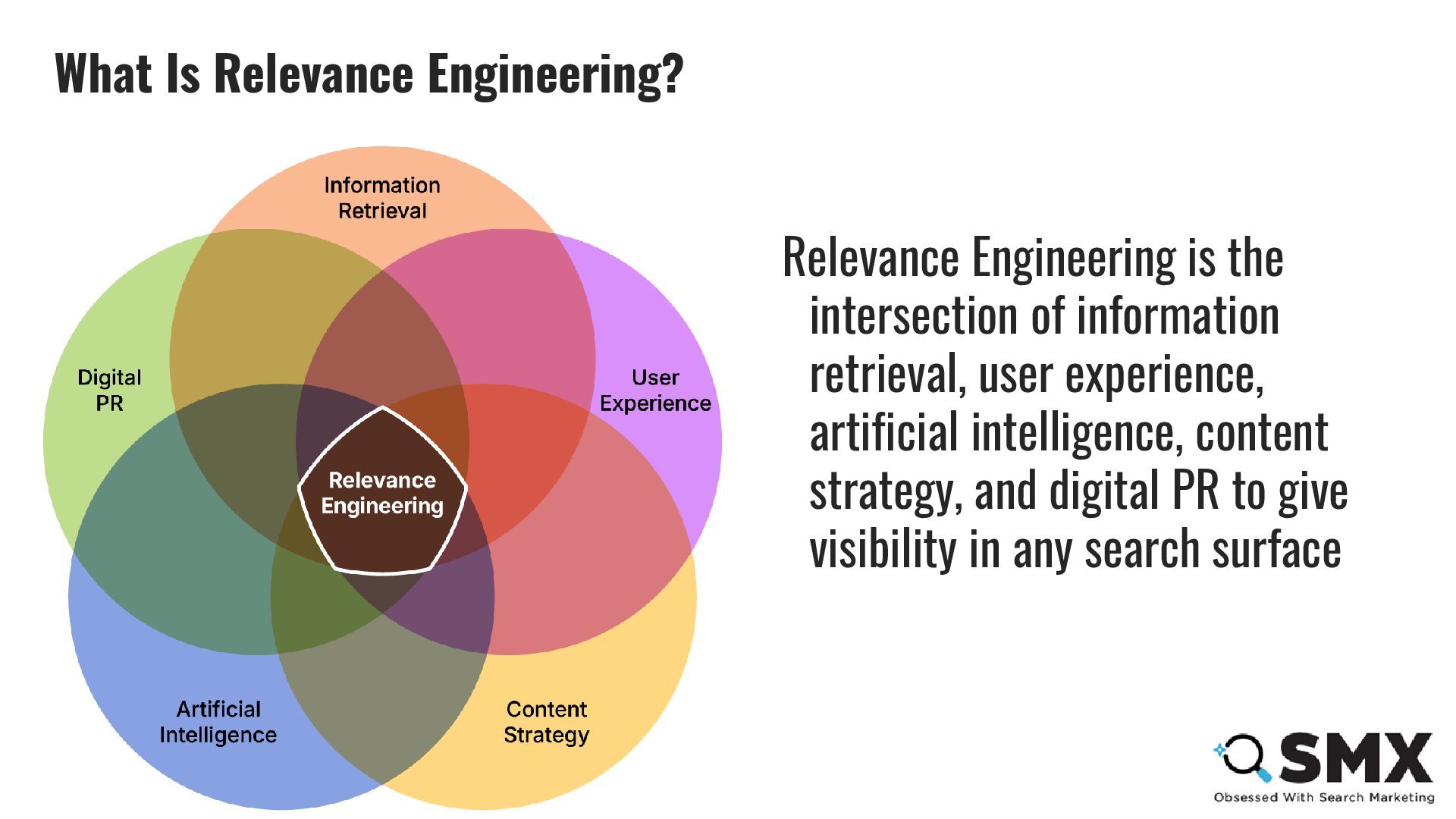
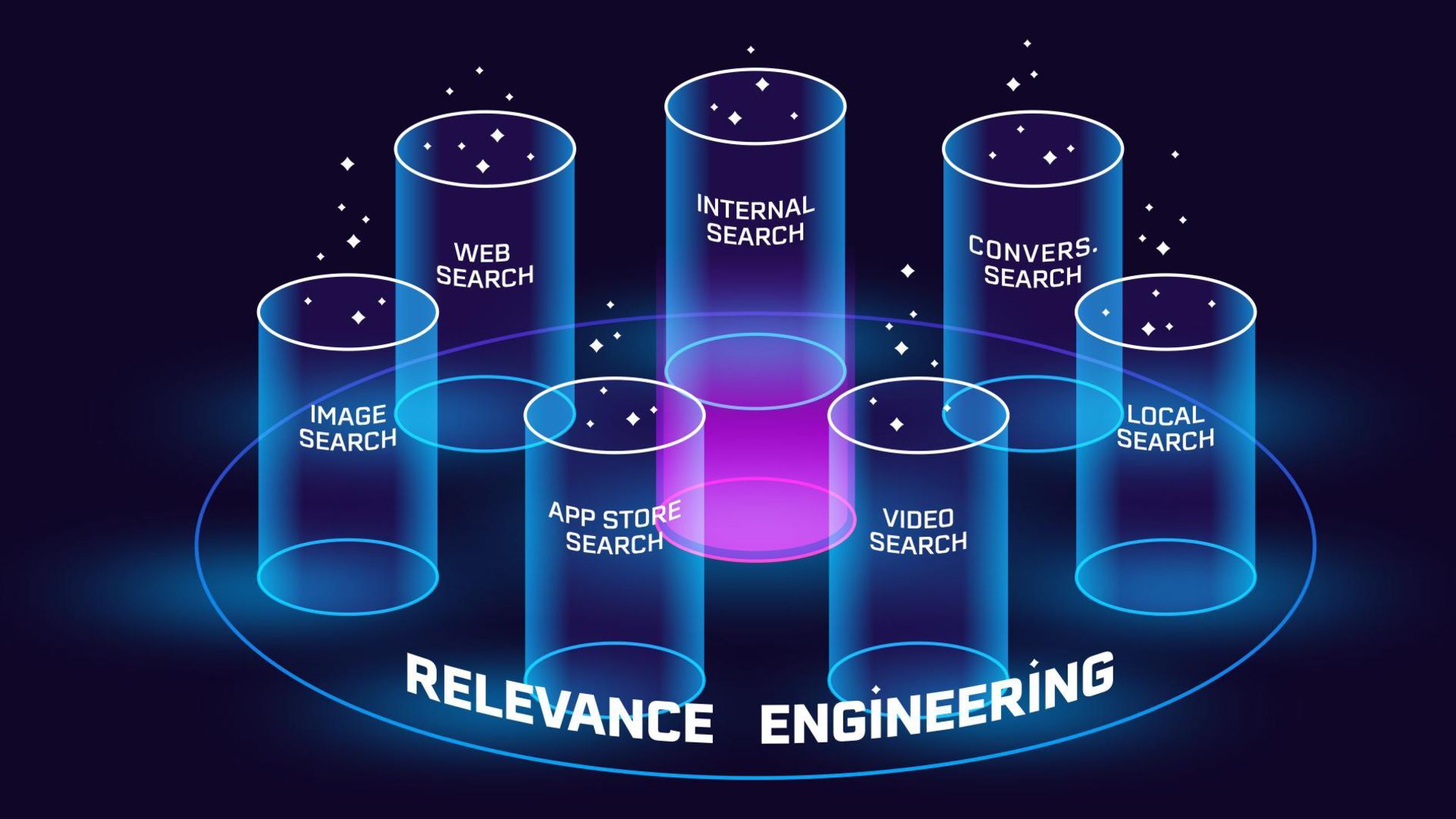
Relevance Engineering is the intersection of information retrieval, user experience,
artificial intelligence, content strategy, and digital PR to give visibility in any search surface What Is Relevance Engineering? -
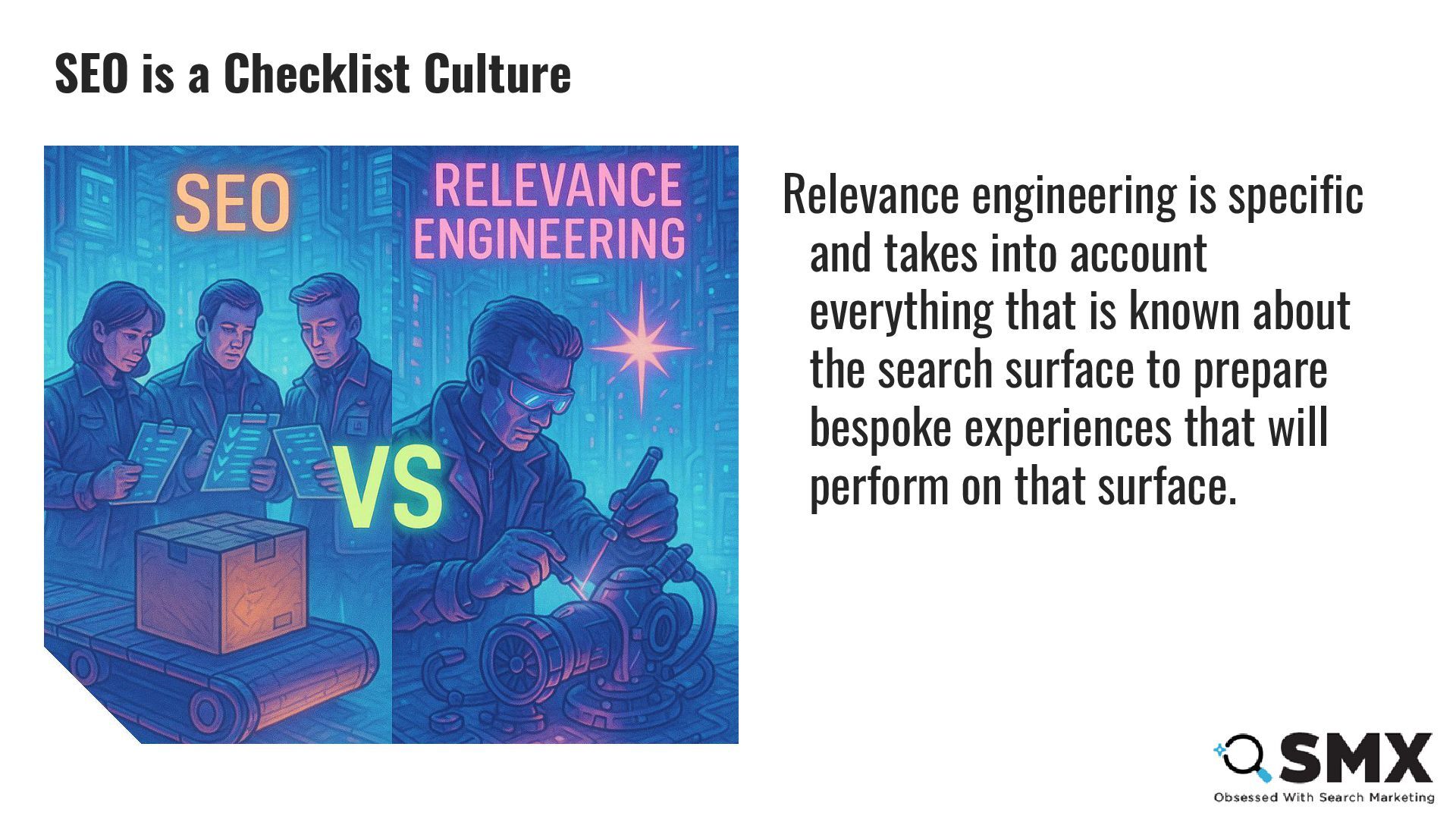
Relevance engineering is specific and takes into account everything that
is known about the search surface to prepare bespoke experiences that will perform on that surface. SEO is a Checklist Culture -
Getting visibility for conversational search is more akin to a
Reputation Management campaign. -
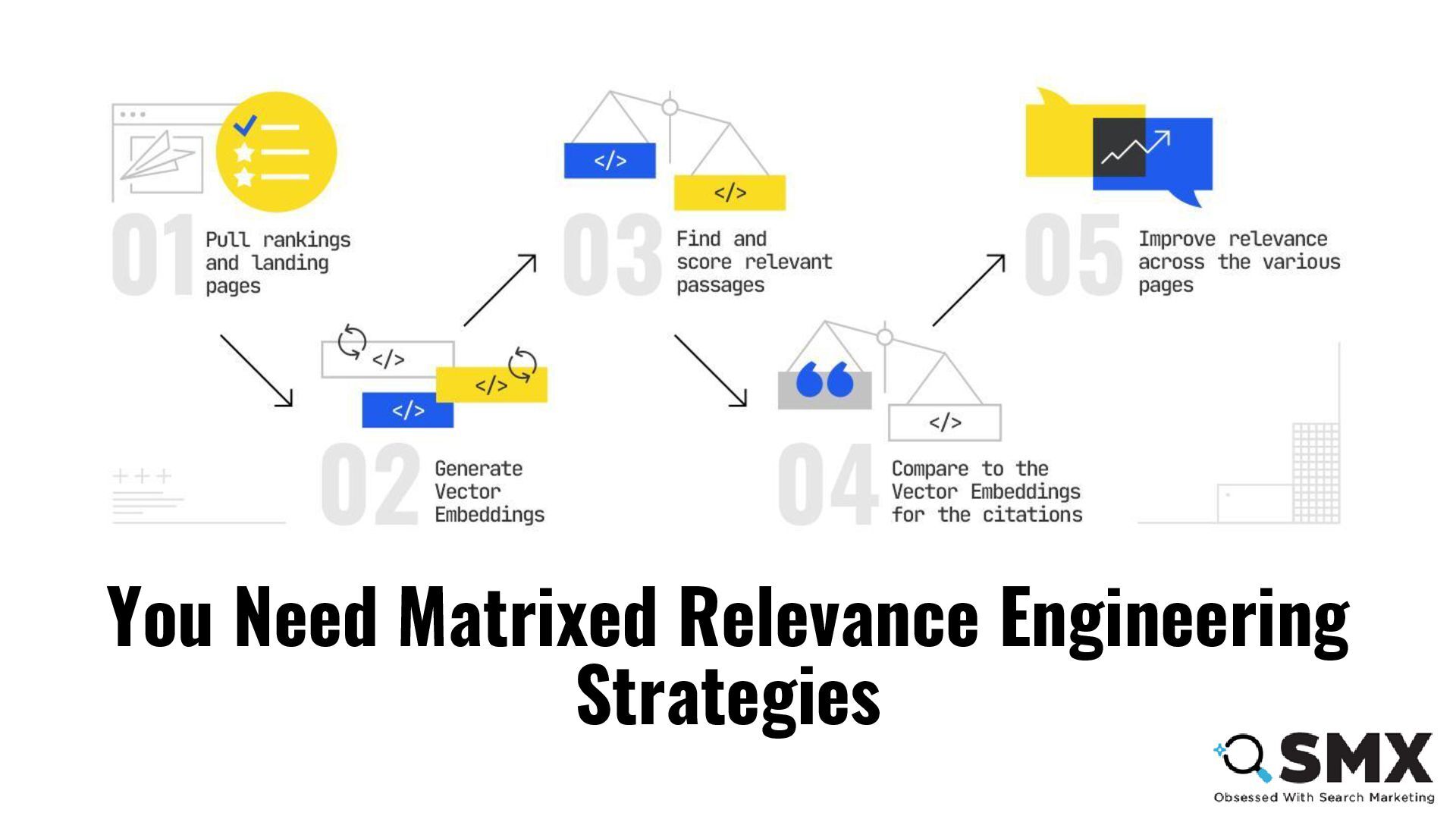
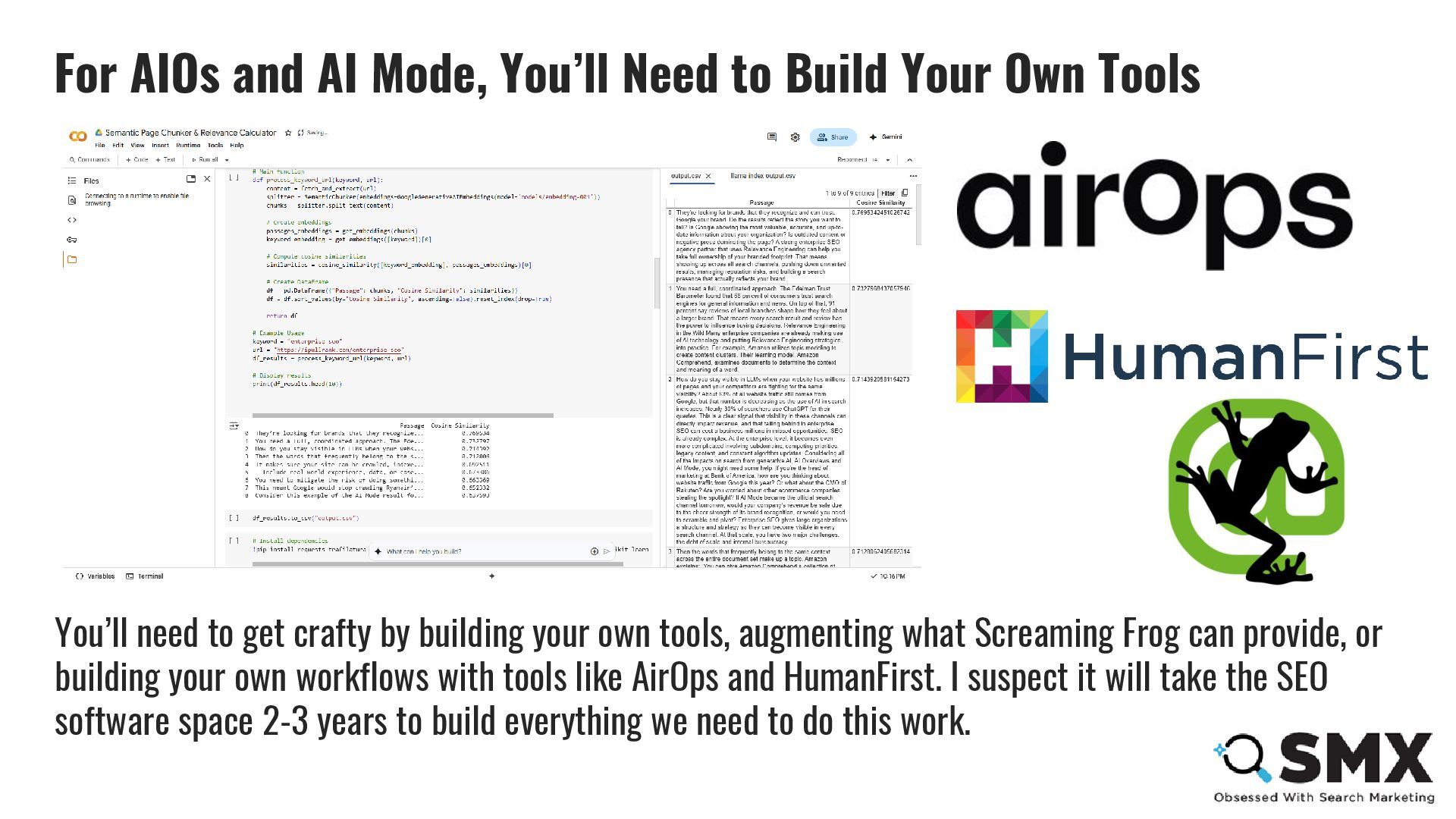
You’ll need to get crafty by building your own tools,
augmenting what Screaming Frog can provide, or building your own workflows with tools like AirOps and HumanFirst. I suspect it will take the SEO software space 2-3 years to build everything we need to do this work. For AIOs and AI Mode, You’ll Need to Build Your Own Tools -
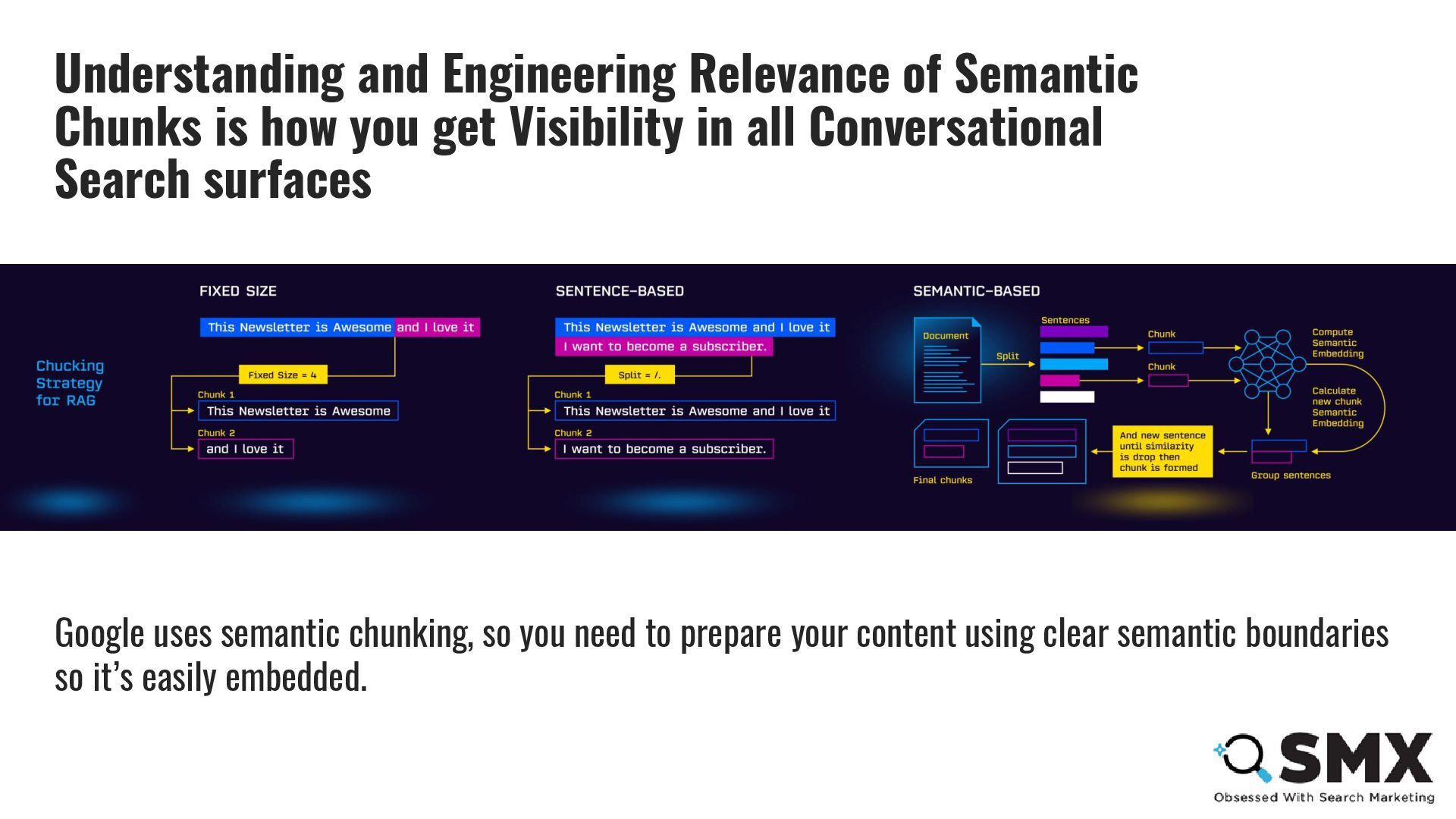
Google uses semantic chunking, so you need to prepare your
content using clear semantic boundaries so it’s easily embedded. Understanding and Engineering Relevance of Semantic Chunks is how you get Visibility in all Conversational Search surfaces -
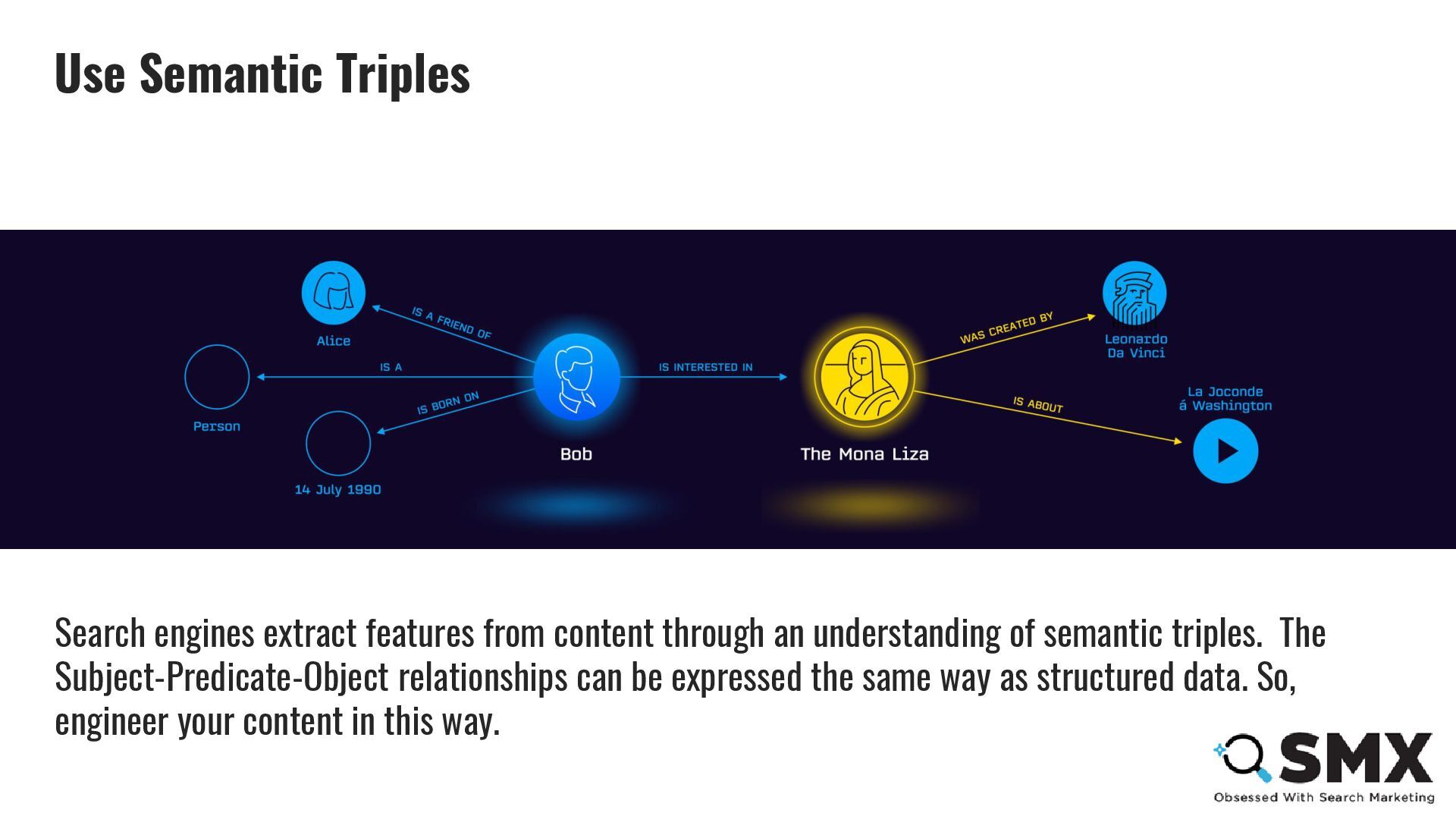
Search engines extract features from content through an understanding of
semantic triples. The Subject-Predicate-Object relationships can be expressed the same way as structured data. So, engineer your content in this way. Use Semantic Triples -
LLMs retrieve and reason over small chunks of text—not whole
documents. Large, undifferentiated text blocks confuse chunking algorithms and lead to retrieval failures. Breaking content into clearly marked sections, paragraphs, and headings ensures more meaningful and retrievable units. Break Your Content Into Clear Semantic Units -
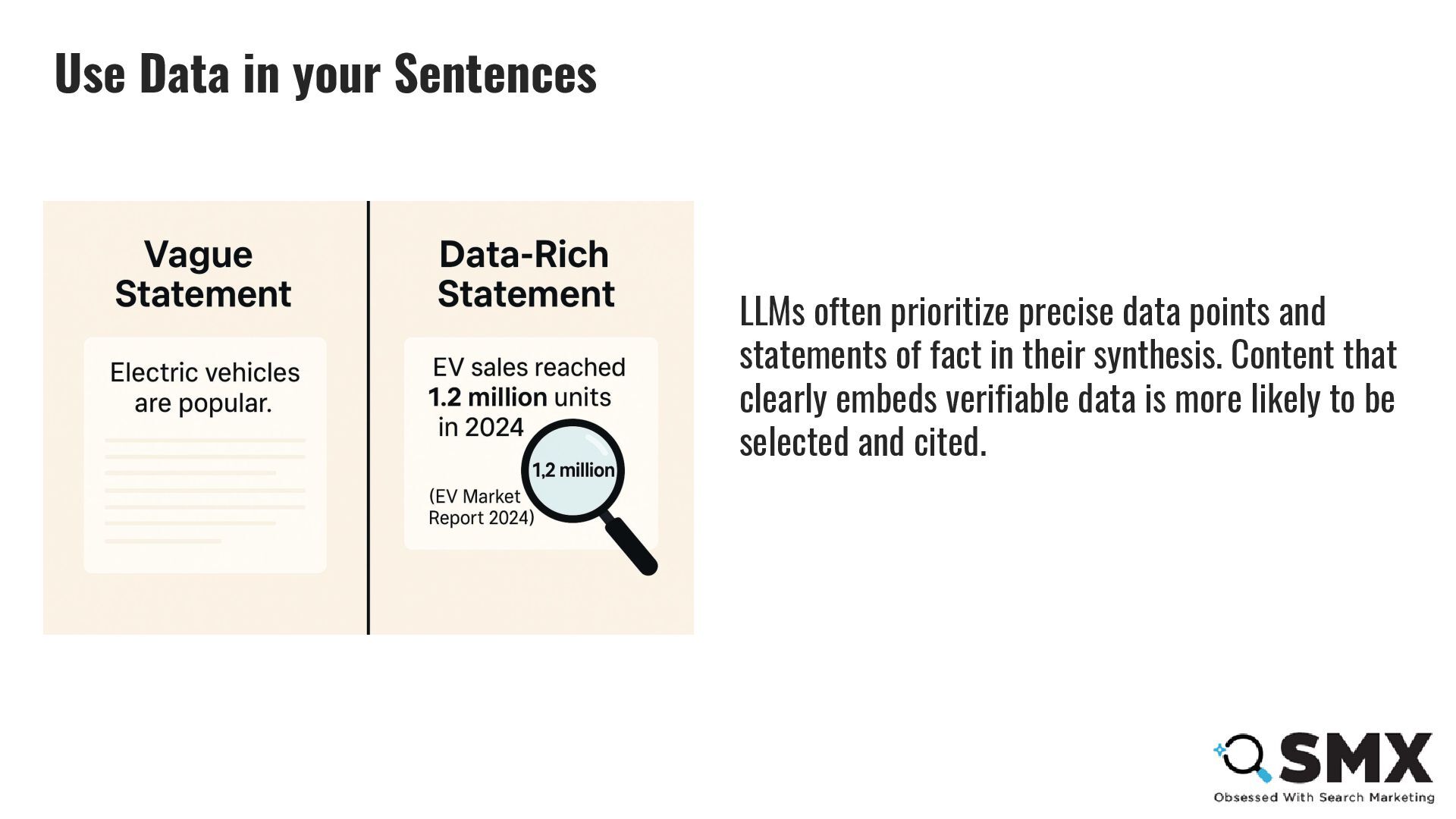
LLMs often prioritize precise data points and statements of fact
in their synthesis. Content that clearly embeds verifiable data is more likely to be selected and cited. Use Data in your Sentences -
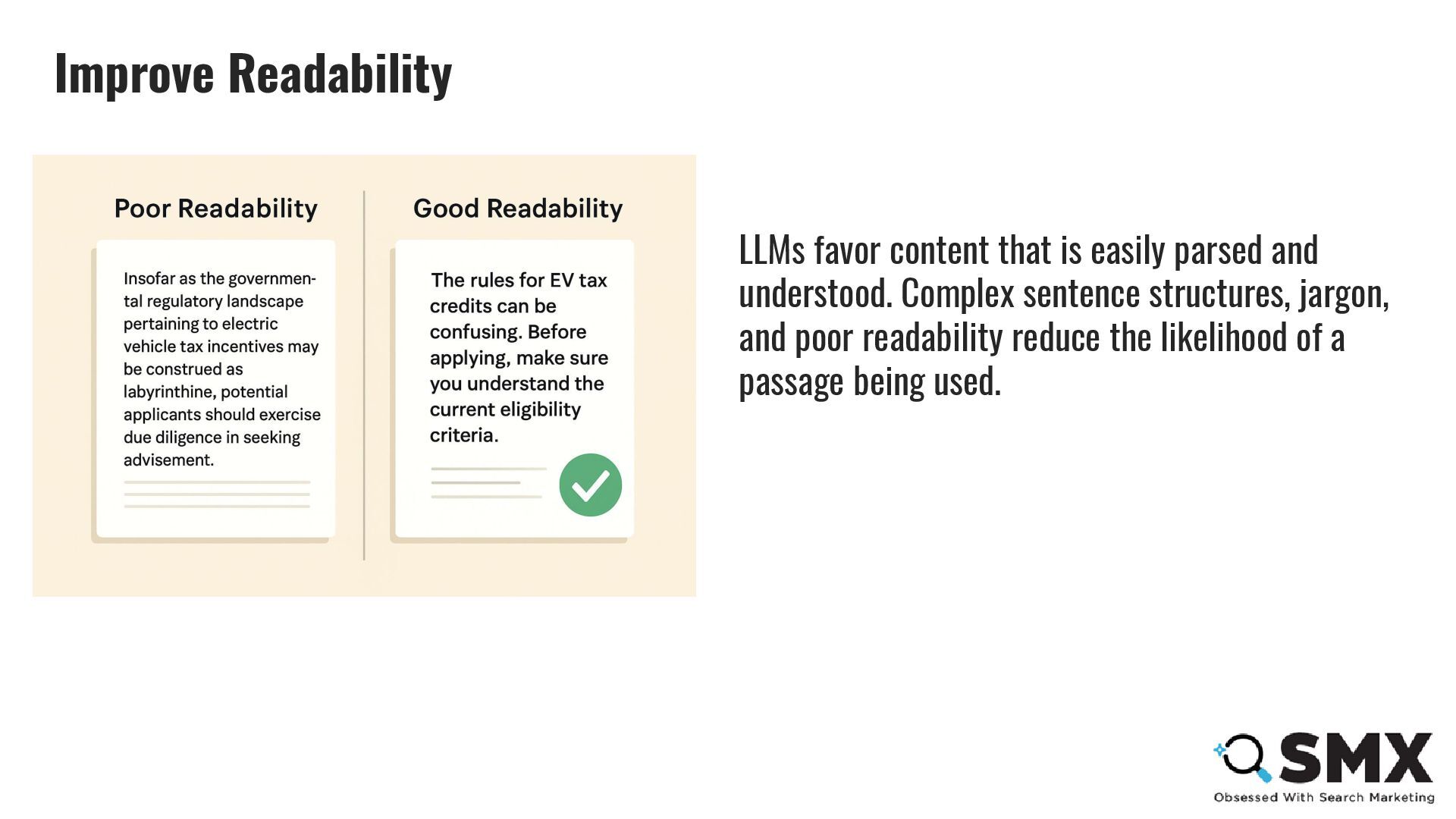
LLMs favor content that is easily parsed and understood. Complex
sentence structures, jargon, and poor readability reduce the likelihood of a passage being used. Improve Readability -
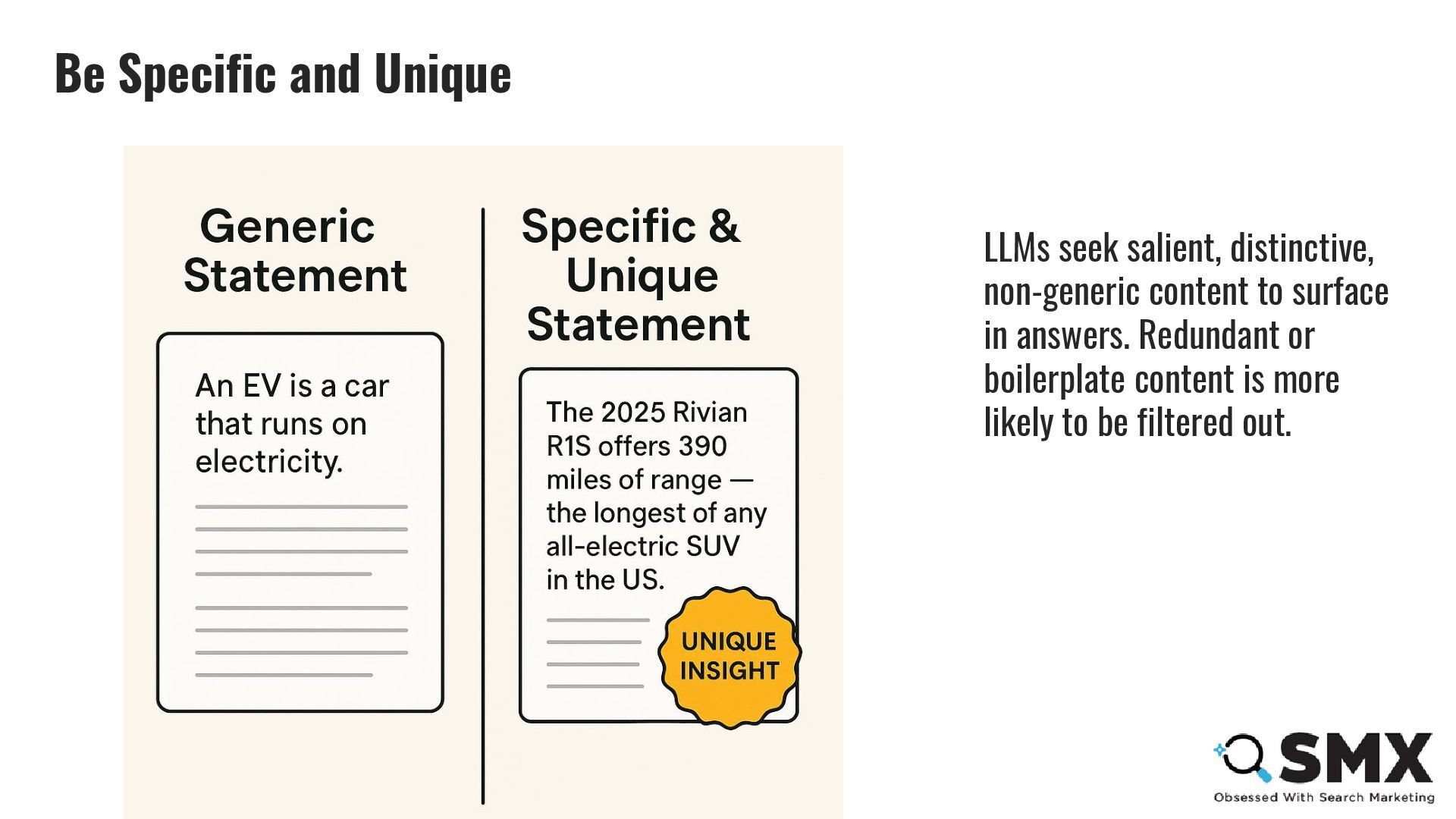
LLMs seek salient, distinctive, non-generic content to surface in answers.
Redundant or boilerplate content is more likely to be filtered out. Be Specific and Unique -
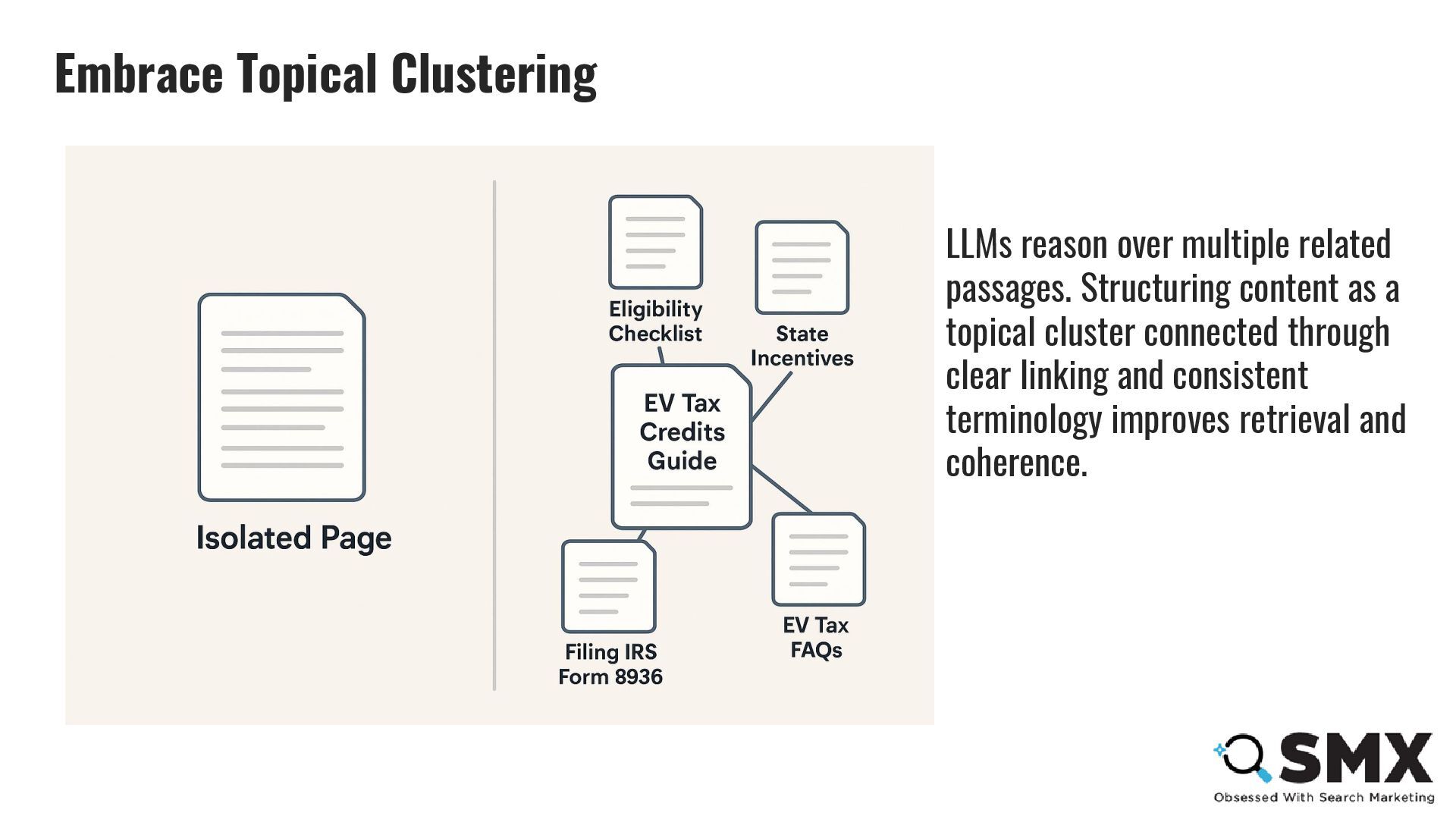
LLMs reason over multiple related passages. Structuring content as a
topical cluster connected through clear linking and consistent terminology improves retrieval and coherence. Embrace Topical Clustering -
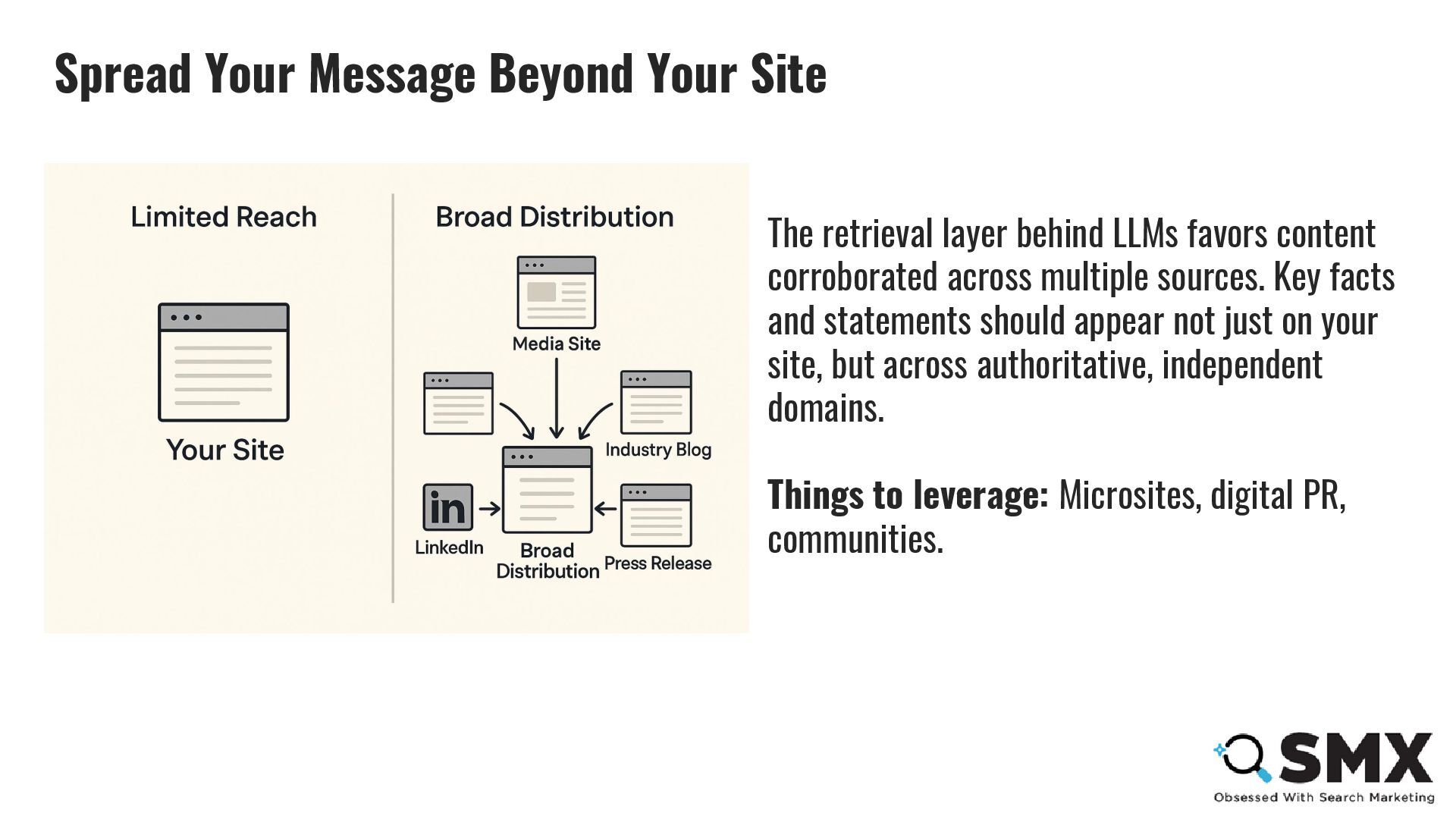
The retrieval layer behind LLMs favors content corroborated across multiple
sources. Key facts and statements should appear not just on your site, but across authoritative, independent domains. Things to leverage: Microsites, digital PR, communities. Spread Your Message Beyond Your Site -
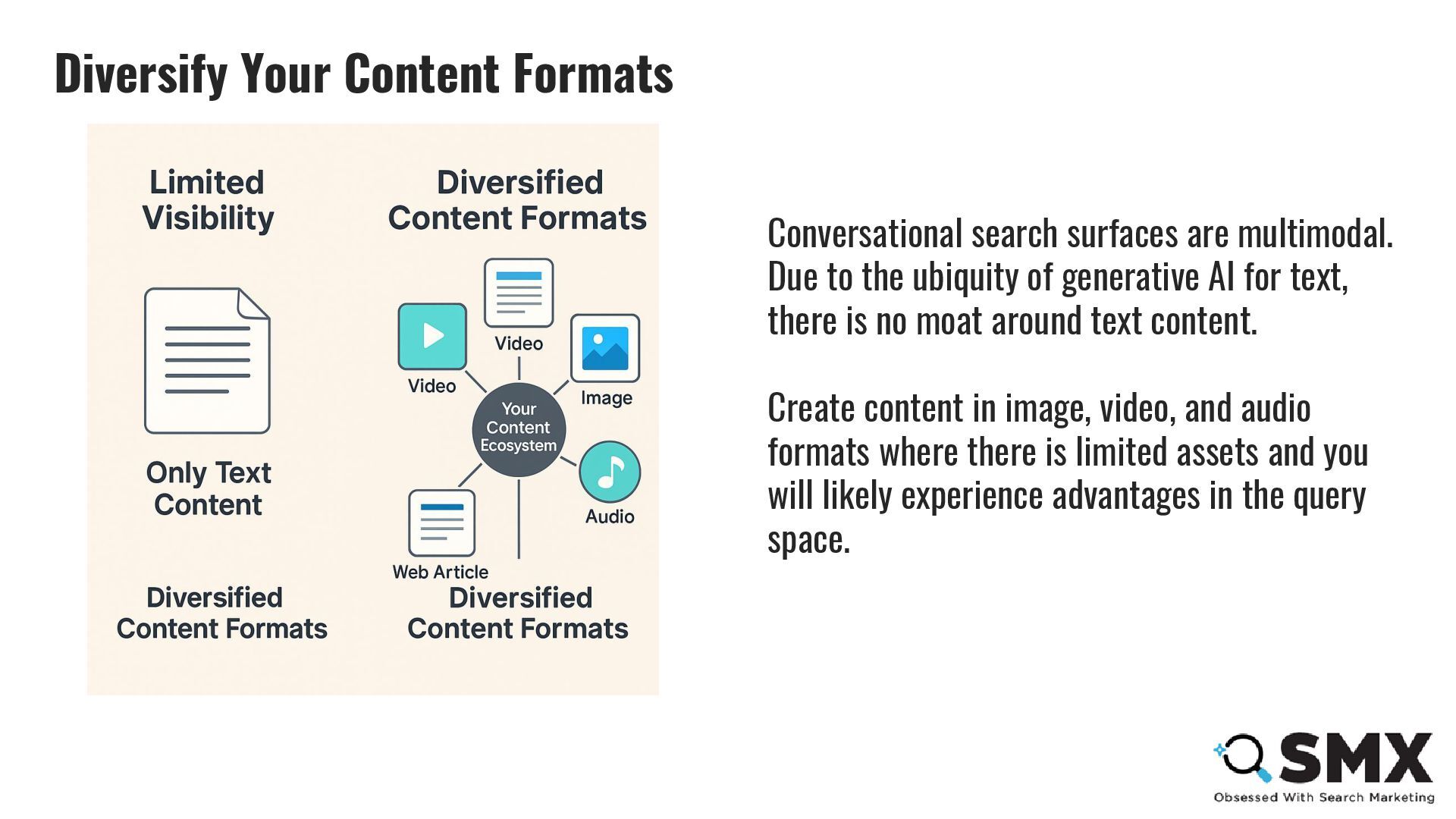
Conversational search surfaces are multimodal. Due to the ubiquity of
generative AI for text, there is no moat around text content. Create content in image, video, and audio formats where there is limited assets and you will likely experience advantages in the query space. Diversify Your Content Formats -
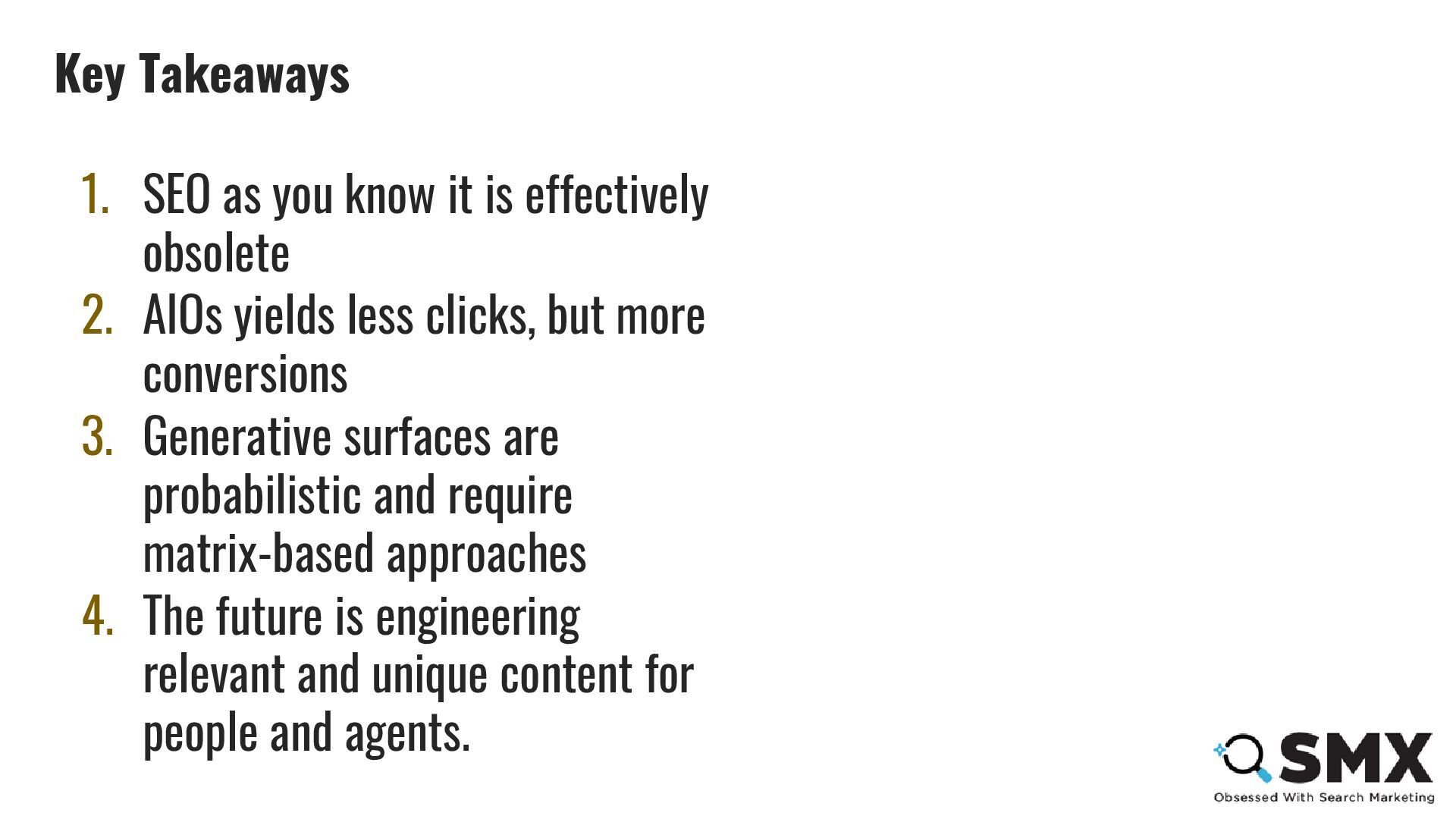
1. SEO as you know it is effectively obsolete 2.
AIOs yields less clicks, but more conversions 3. Generative surfaces are probabilistic and require matrix-based approaches 4. The future is engineering relevant and unique content for people and agents. Key Takeaways -
Thank You | Q&A [email protected] Award Winning, #GirlDad Featured by
Give us a shout for help in navigating the future of search Mike King Chief Executive Officer @iPullRank