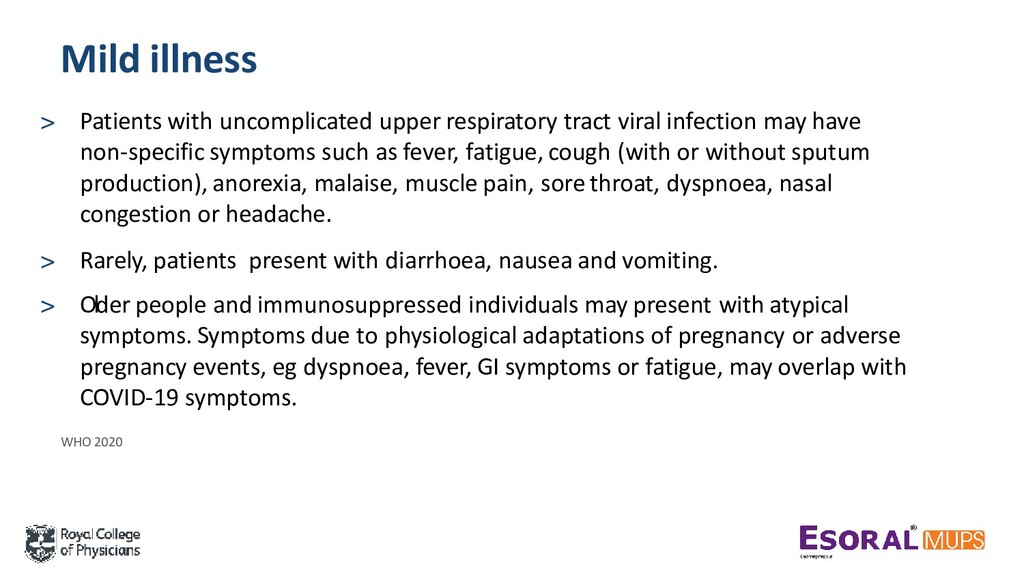
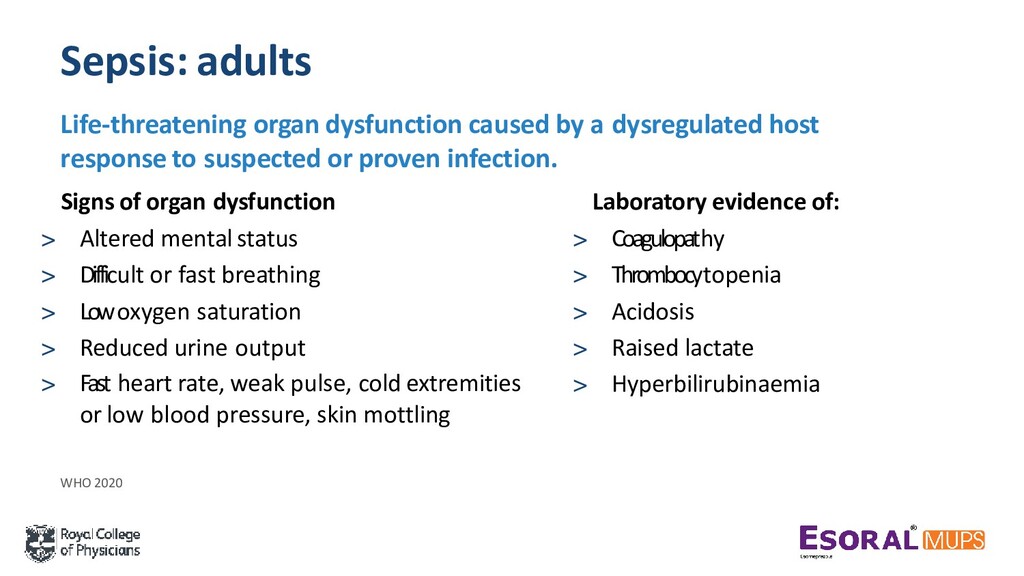
infection may have non-specific symptoms such as fever, fatigue, cough (with or without sputum production), anorexia, malaise, muscle pain, sore throat, dyspnoea, nasal congestion or headache. > Rarely, patients present with diarrhoea, nausea and vomiting. > Older people and immunosuppressed individuals may present with atypical symptoms. Symptoms due to physiological adaptations of pregnancy or adverse pregnancy events, eg dyspnoea, fever, GI symptoms or fatigue, may overlap with COVID-19 symptoms. WHO 2020
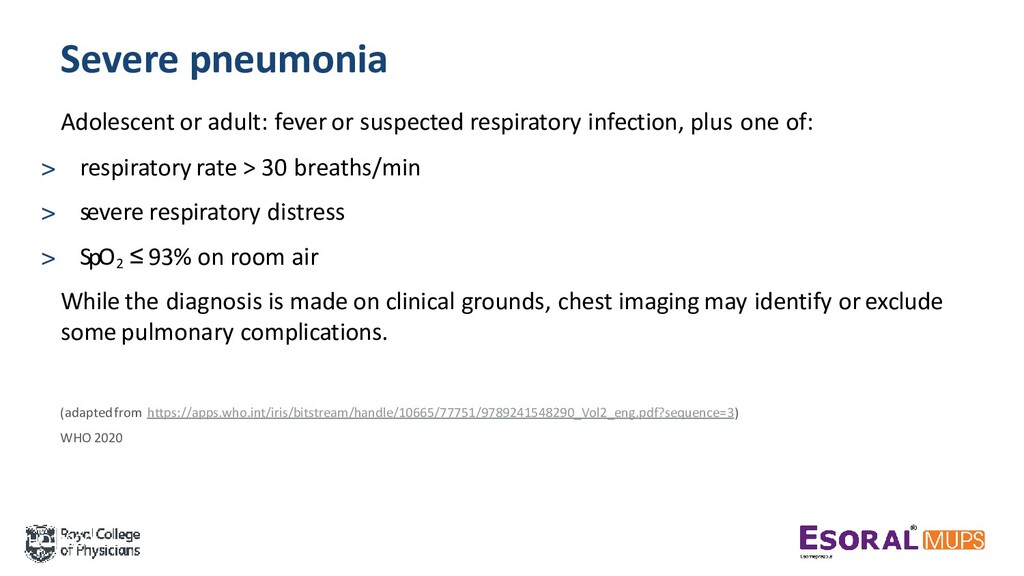
plus one of: > respiratory rate > 30 breaths/min > severe respiratory distress > SpO2 ≤ 93% on room air While the diagnosis is made on clinical grounds, chest imaging may identify or exclude some pulmonary complications. (adaptedfrom https://apps.who.int/iris/bitstream/handle/10665/77751/9789241548290_Vol2_eng.pdf?sequence=3) WHO 2020 HO 2020
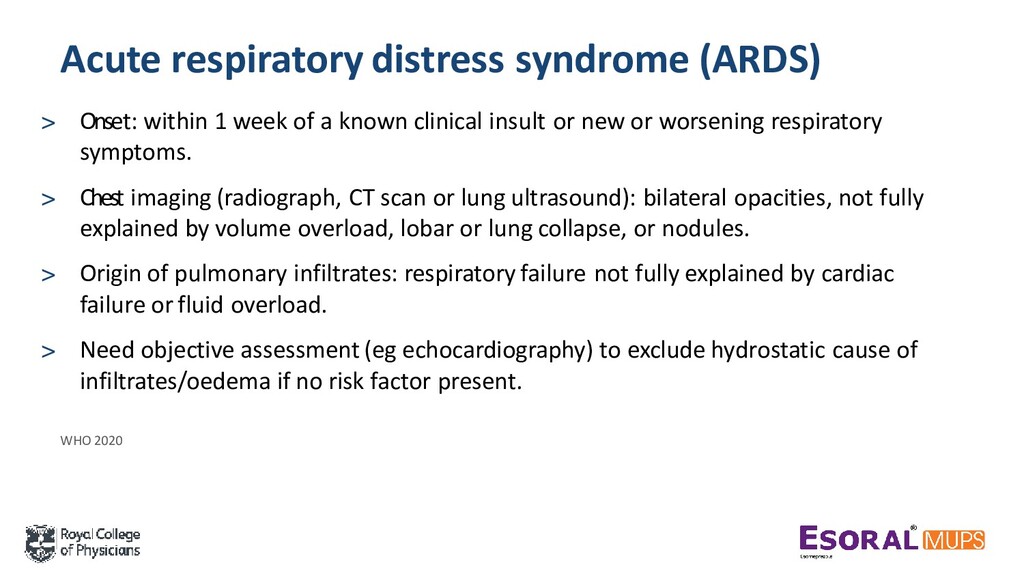
of a known clinical insult or new or worsening respiratory symptoms. > Chest imaging (radiograph, CT scan or lung ultrasound): bilateral opacities, not fully explained by volume overload, lobar or lung collapse, or nodules. > Origin of pulmonary infiltrates: respiratory failure not fully explained by cardiac failure or fluid overload. > Need objective assessment (eg echocardiography) to exclude hydrostatic cause of infiltrates/oedema if no risk factor present. WHO 2020
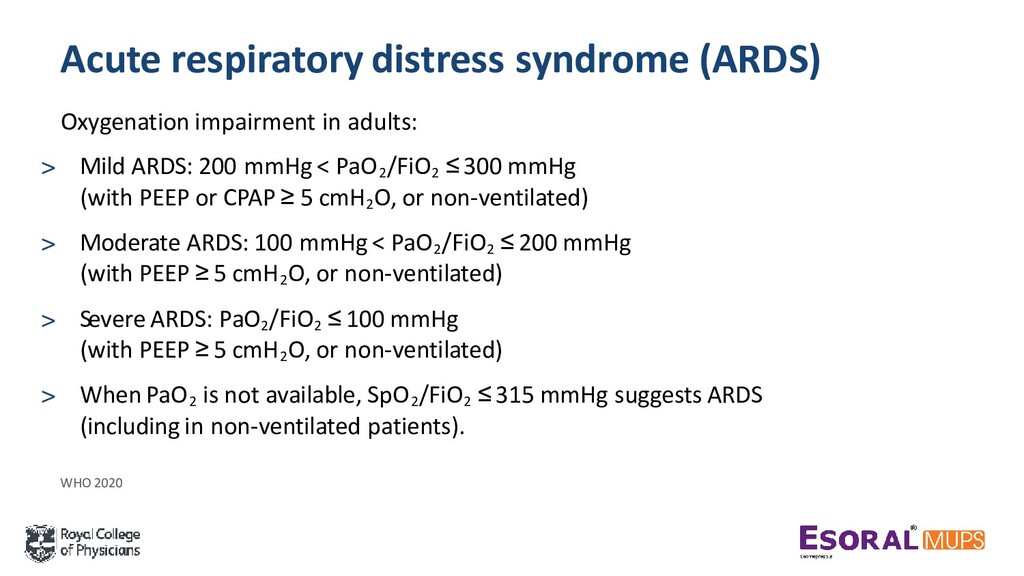
adults: > Mild ARDS: 200 mmHg < PaO2 /FiO2 ≤ 300 mmHg (with PEEP or CPAP ≥ 5 cmH2 O, or non-ventilated) > Moderate ARDS: 100 mmHg < PaO2 /FiO2 ≤ 200 mmHg (with PEEP ≥ 5 cmH2 O, or non-ventilated) > Severe ARDS: PaO2 /FiO2 ≤ 100 mmHg (with PEEP ≥ 5 cmH2 O, or non-ventilated) > When PaO2 is not available, SpO2 /FiO2 ≤ 315 mmHg suggests ARDS (including in non-ventilated patients).
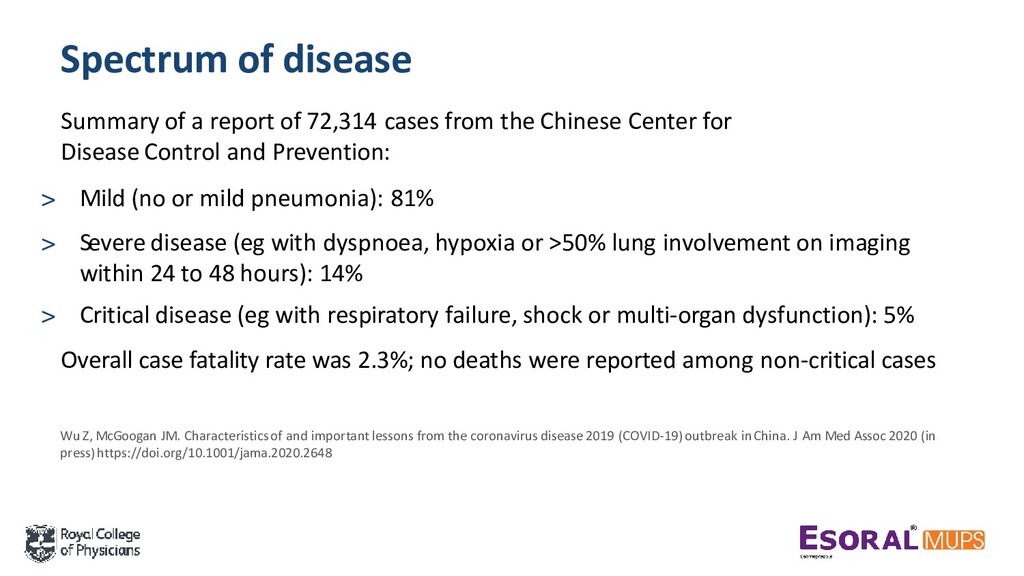
cases from the Chinese Center for Disease Control and Prevention: > Mild (no or mild pneumonia): 81% > Severe disease (eg with dyspnoea, hypoxia or >50% lung involvement on imaging within 24 to 48 hours): 14% > Critical disease (eg with respiratory failure, shock or multi-organ dysfunction): 5% Overall case fatality rate was 2.3%; no deaths were reported among non-critical cases Wu Z, McGoogan JM. Characteristicsof and important lessons from the coronavirus disease 2019 (COVID-19) outbreak inChina. J Am Med Assoc 2020 (in
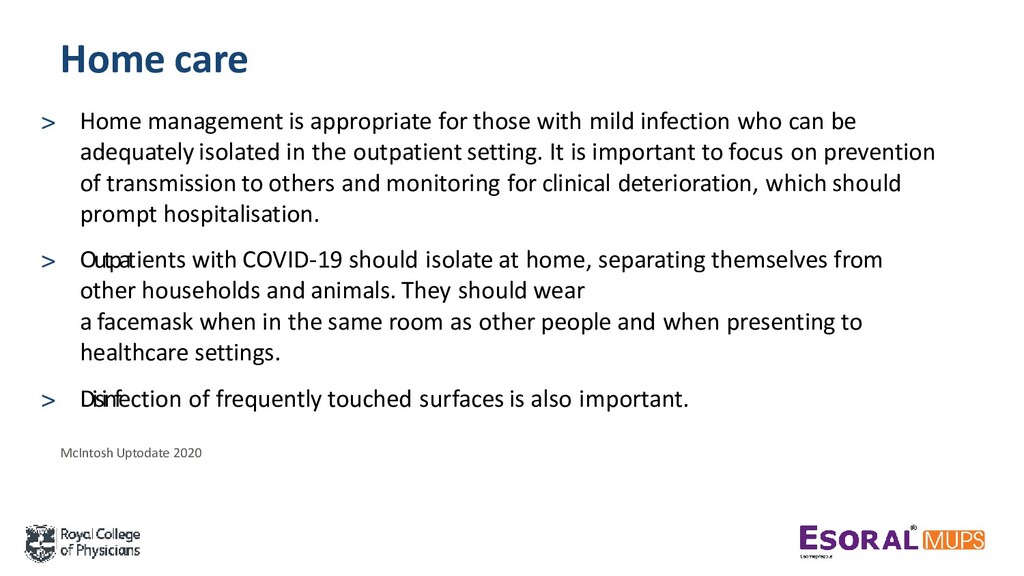
for those with mild infection who can be adequately isolated in the outpatient setting. It is important to focus on prevention of transmission to others and monitoring for clinical deterioration, which should prompt hospitalisation. > Outpatients with COVID-19 should isolate at home, separating themselves from other households and animals. They should wear a facemask when in the same room as other people and when presenting to healthcare settings. > Disinfection of frequently touched surfaces is also important.
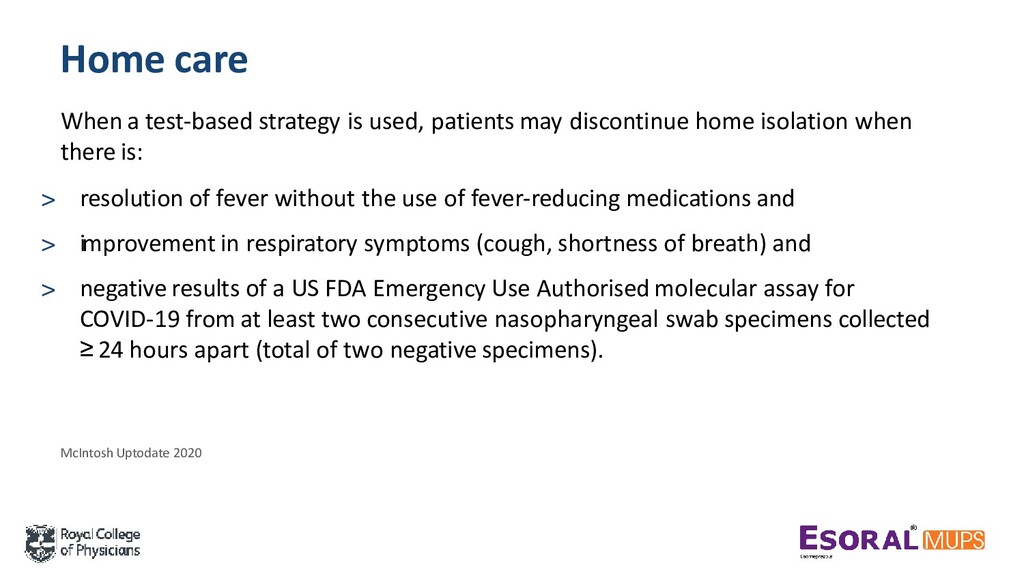
used, patients may discontinue home isolation when there is: > resolution of fever without the use of fever-reducing medications and > improvement in respiratory symptoms (cough, shortness of breath) and > negative results of a US FDA Emergency Use Authorised molecular assay for COVID-19 from at least two consecutive nasopharyngeal swab specimens collected ≥ 24 hours apart (total of two negative specimens).
used, patients may discontinue home isolation when the following criteria are met: > at least 7 days have passed since symptoms first appeared and > at least 72 hours have passed since recovery of symptoms (defined as resolution of fever without the use of fever-reducing medications and improvement in respiratory symptoms (cough, shortness of breath))
have severe disease requiring hospital care. > Management of such patients consists of ensuring appropriate infection control. > Patients with severe disease often need oxygenation support. > The safety of high-flow oxygen and non-invasive positive pressure ventilation in these measures is uncertain, and they should be considered aerosol-generating procedures that warrant specific isolation precautions. > Ifpatients develop acute respiratory distress syndrome, intubation with mechanical ventilation will be needed. > ECMO(extracorporeal membrane oxygenation) may be indicated in patients with refractory hypoxia. McIntosh Uptodate 2020
hospital should be assessed for frailty irrespective of COVID-19 status. Risks and benefits and likely outcomes should be discussed with patients, carers or advocates and families using decision-support tools (where available) so that they can make informed decisions about their treatment wherever possible. For patients with confirmed COVID-19, decisions about critical care admission should be made on the basis of medical benefit and should take into account the likelihood that the person will recover to an outcome that is acceptable to them and within a period of time consistent with the diagnosis.
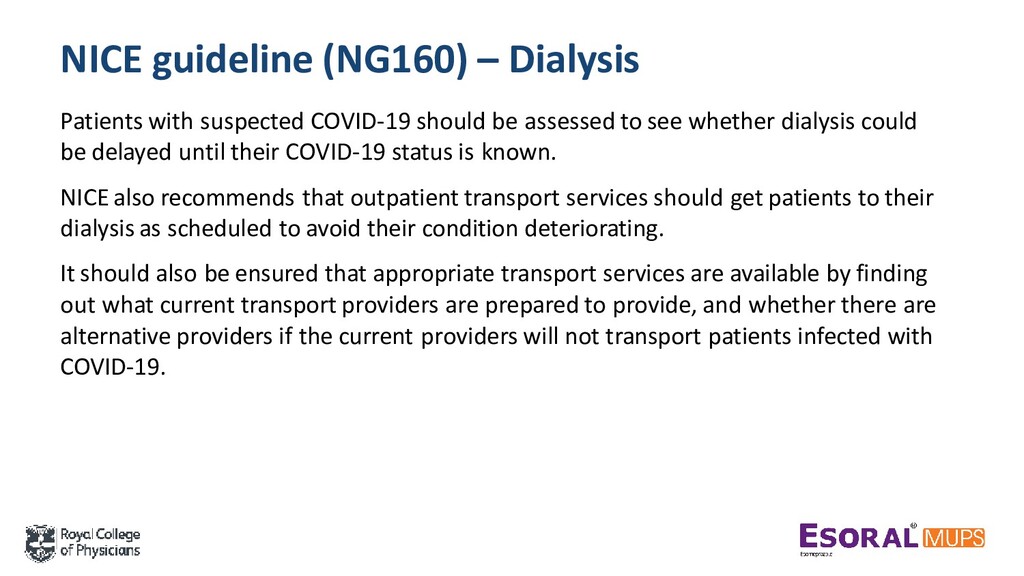
be assessed to see whether dialysis could be delayed until their COVID-19 status is known. NICE also recommends that outpatient transport services should get patients to their dialysis as scheduled to avoid their condition deteriorating. It should also be ensured that appropriate transport services are available by finding out what current transport providers are prepared to provide, and whether there are alternative providers if the current providers will not transport patients infected with COVID-19.
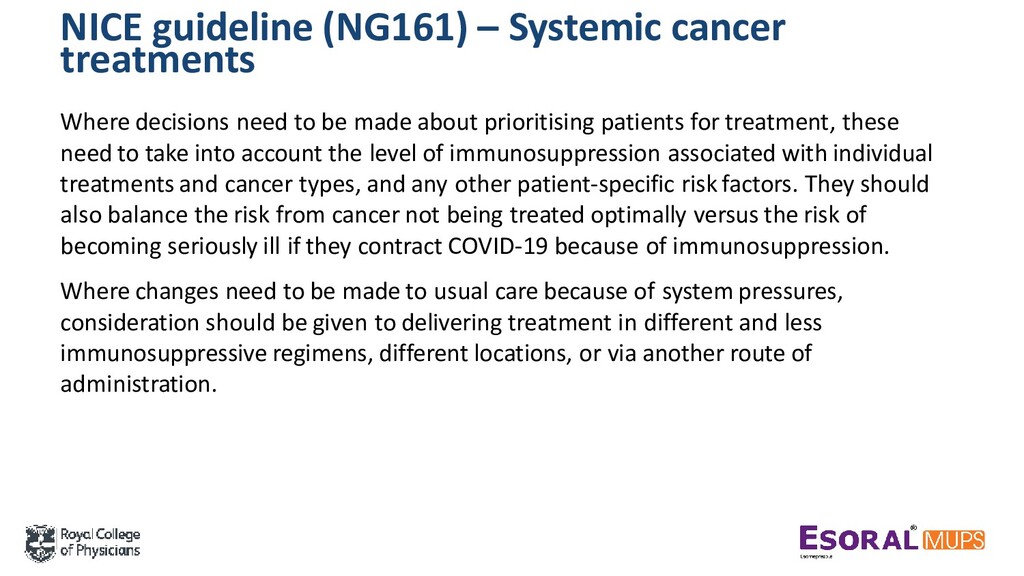
to be made about prioritising patients for treatment, these need to take into account the level of immunosuppression associated with individual treatments and cancer types, and any other patient-specific risk factors. They should also balance the risk from cancer not being treated optimally versus the risk of becoming seriously ill if they contract COVID-19 because of immunosuppression. Where changes need to be made to usual care because of system pressures, consideration should be given to delivering treatment in different and less immunosuppressive regimens, different locations, or via another route of administration.
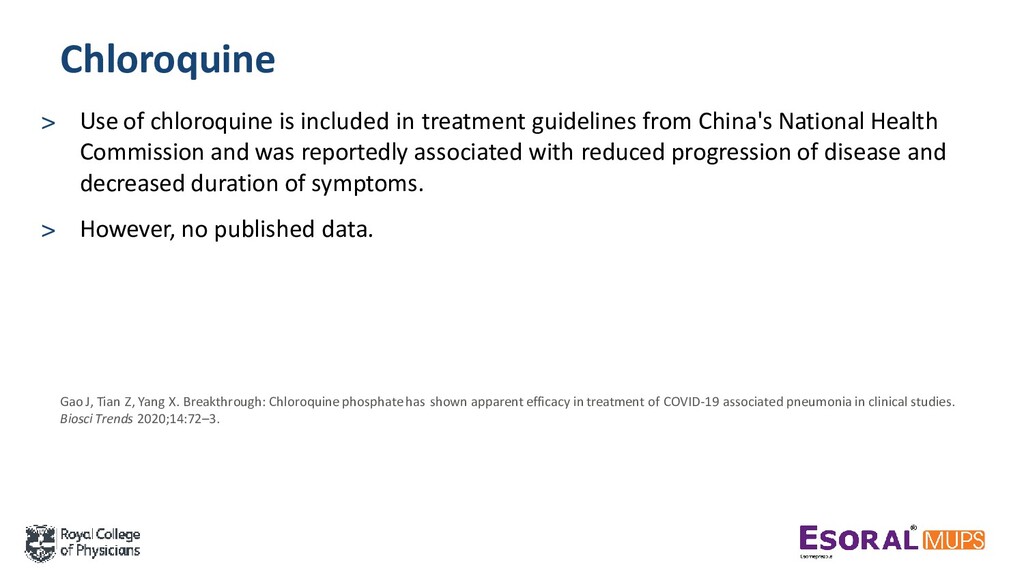
from China's National Health Commission and was reportedly associated with reduced progression of disease and decreased duration of symptoms. > However, no published data. GaoJ, Tian Z, Yang X. Breakthrough: Chloroquine phosphatehas shown apparent efficacy intreatment of COVID-19 associated pneumonia in clinical studies. Biosci Trends 2020;14:72–3.
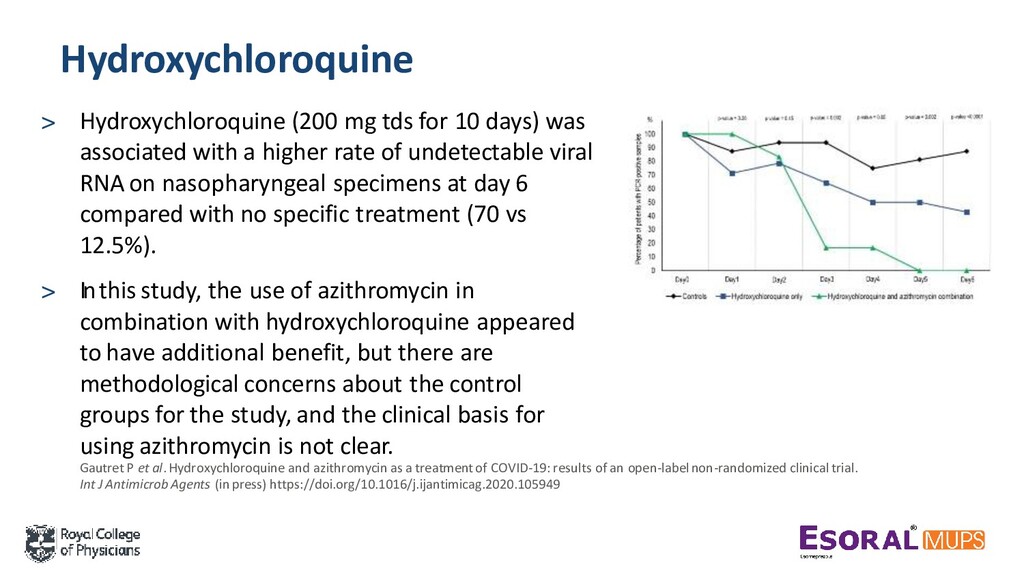
associated with a higher rate of undetectable viral RNA on nasopharyngeal specimens at day 6 compared with no specific treatment (70 vs 12.5%). > Inthis study, the use of azithromycin in combination with hydroxychloroquine appeared to have additional benefit, but there are methodological concerns about the control groups for the study, and the clinical basis for using azithromycin is not clear. GautretP et al.Hydroxychloroquine and azithromycin as a treatmentof COVID-19: results of an open-labelnon-randomized clinical trial. Int J Antimicrob Agents (inpress) https://doi.org/10.1016/j.ijantimicag.2020.105949
the use of NSAIDs early in the course of disease may have a negative impact on disease outcome (Day BMJ 2020;368:m1086. Epub 17 Mar 2020). These are based on anecdotal reports of a few young patients who received NSAIDs early in the course of infection and experienced severe disease. There is also the concern that the anti-inflammatory properties associated with NSAIDs could have a negative impact on the patient's immune response. > Use paracetamol (acetaminophen) in place of NSAIDs for reduction of fever. > However, the European Medicines Agency (EMA) and the WHO do not recommend that NSAIDs be avoided when clinically indicated. McIntosh Uptodate 2020
corticosteroids are not to be used in patients with COVID-19 pneumonia unless there are other indications (eg exacerbation of COPD). > Corticosteroids have been associated with an increased risk of mortality in patients with influenza and delayed viral clearance in patients with Middle East respiratory syndrome coronavirus (MERS-CoV) infection. > Thoughwidely used in management of severe acute respiratory syndrome (SARS), there was no good evidence for benefit, and there was persuasive evidence of adverse harm in the short and long term. McIntosh Uptodate 2020
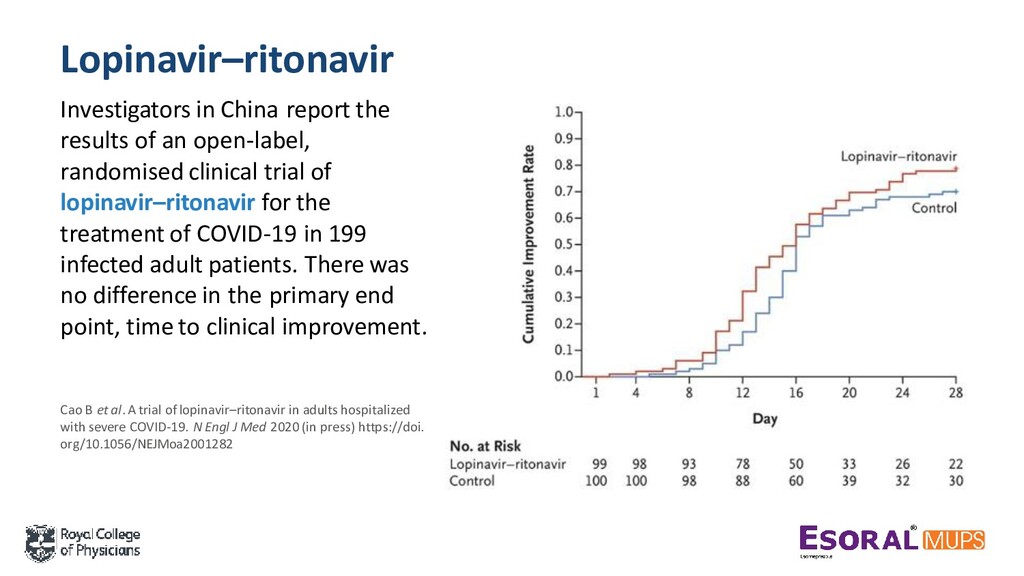
clinical trial of lopinavir–ritonavir for the treatment of COVID-19 in 199 infected adult patients. There was no difference in the primary end point, time to clinical improvement. Cao B et al.A trial of lopinavir–ritonavir in adults hospitalized with severe COVID-19. N Engl J Med 2020 (in press) https://doi. org/10.1056/NEJMoa2001282 Lopinavir–ritonavir
the efficacy of remdesivir for moderate or severe COVID-19. > It has activity against SARS-CoV-2 in vitro, SARS and MERS-CoV, both in vitro and in animal studies. > The compassionate use of remdesivir through an investigational new drug application was described in a case report of one of the US patients with COVID-19. > Any clinical impact of the drug on COVID-19 is awaited. Holshue ML et al.First case of 2019 novel coronavirus in the United States. N Engl J Med 2020;382:929–36.
the IL-6 inhibitor tocilizumab for patients with severe COVID-19 and elevated IL-6 levels. > A clinical trial is under way. Reuters. China approves use of Roche drug in battle againstcoronavirus complications. www.reuters.com/article/us-health-coronavirus-china-roche-hldg/ china-approves-use-of-roche-arthritis-drug-for-coronavirus-patients-idUSKBN20R0LF [Accessed on 21 March 2020].
decide on home or hospital care. > Treat each syndrome accordingly. > Use paracetamol as fever-lowering agent. > Use hydroxychloroquine for most patients. > Avoid corticosteroids and NSAIDs.


 signer
 sciencetokyo
 madhuri28
 terazawa
 hiola
 pawan_pharm
 ainischool
 cbtlibrary
 geoffreycrofte
 aleyda
 inesmontani
 shpigford
 frankvandijk
 tmiket
 reverentgeek
 chrislema
 axbom
 danielanewman
 popppiees