Concepts − How to work with concourse ▪ Concourse in Production − Learnings and problems ▪ Whats up in the Future − Concourse v7 – Pull Request / feature branches Workflow − Roadmap to v10 2
and dependencies − Config hidden behind UI flags − Unclear who change what and why − State management on workers Why was concourse made? 4 Writing software to manage CI instead of developing the product
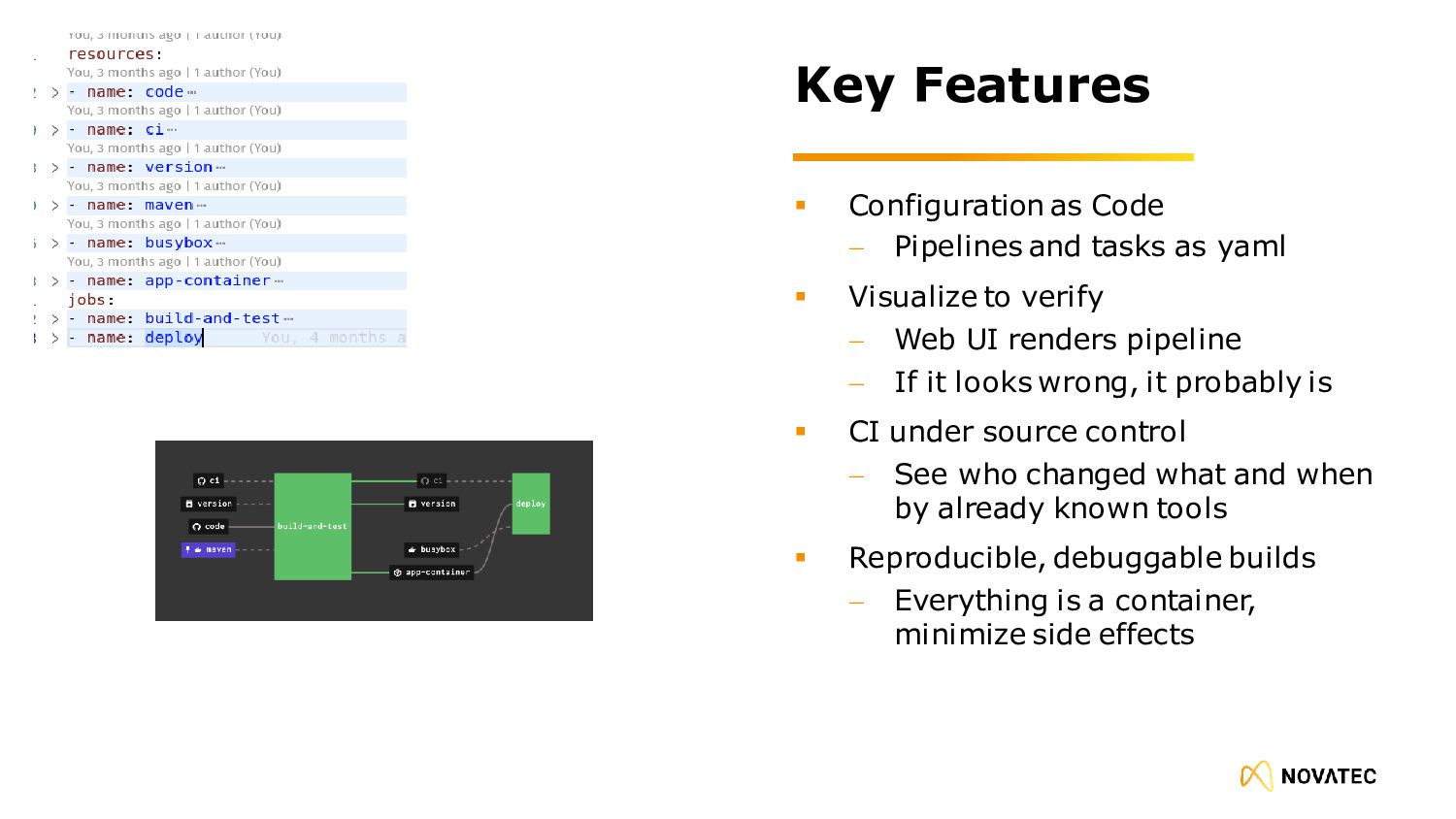
▪ Visualize to verify − Web UI renders pipeline − If it looks wrong, it probably is ▪ CI under source control − See who changed what and when by already known tools ▪ Reproducible, debuggable builds − Everything is a container, minimize side effects Key Features 6
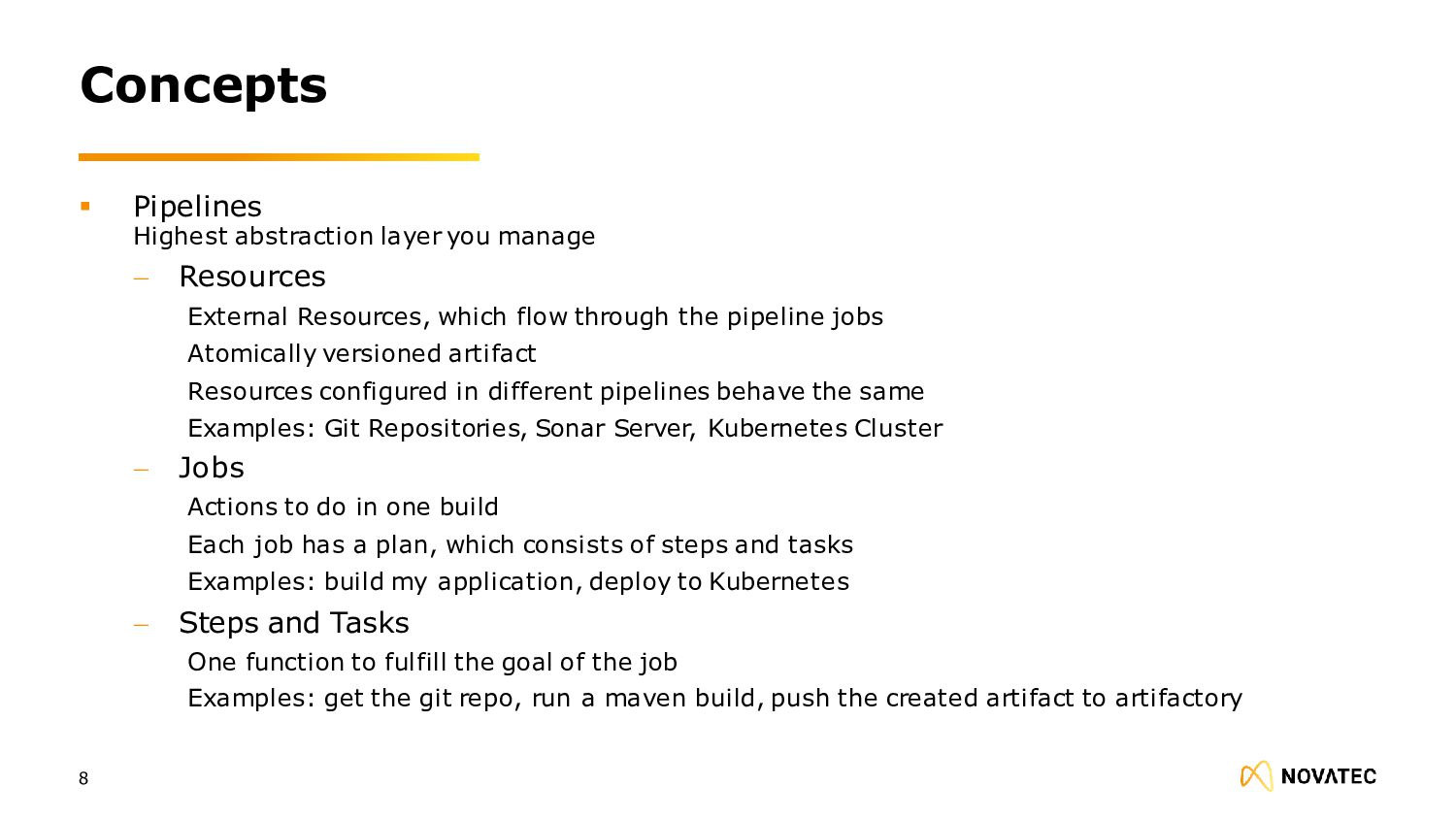
Resources External Resources, which flow through the pipeline jobs Atomically versioned artifact Resources configured in different pipelines behave the same Examples: Git Repositories, Sonar Server, Kubernetes Cluster − Jobs Actions to do in one build Each job has a plan, which consists of steps and tasks Examples: build my application, deploy to Kubernetes − Steps and Tasks One function to fulfill the goal of the job Examples: get the git repo, run a maven build, push the created artifact to artifactory
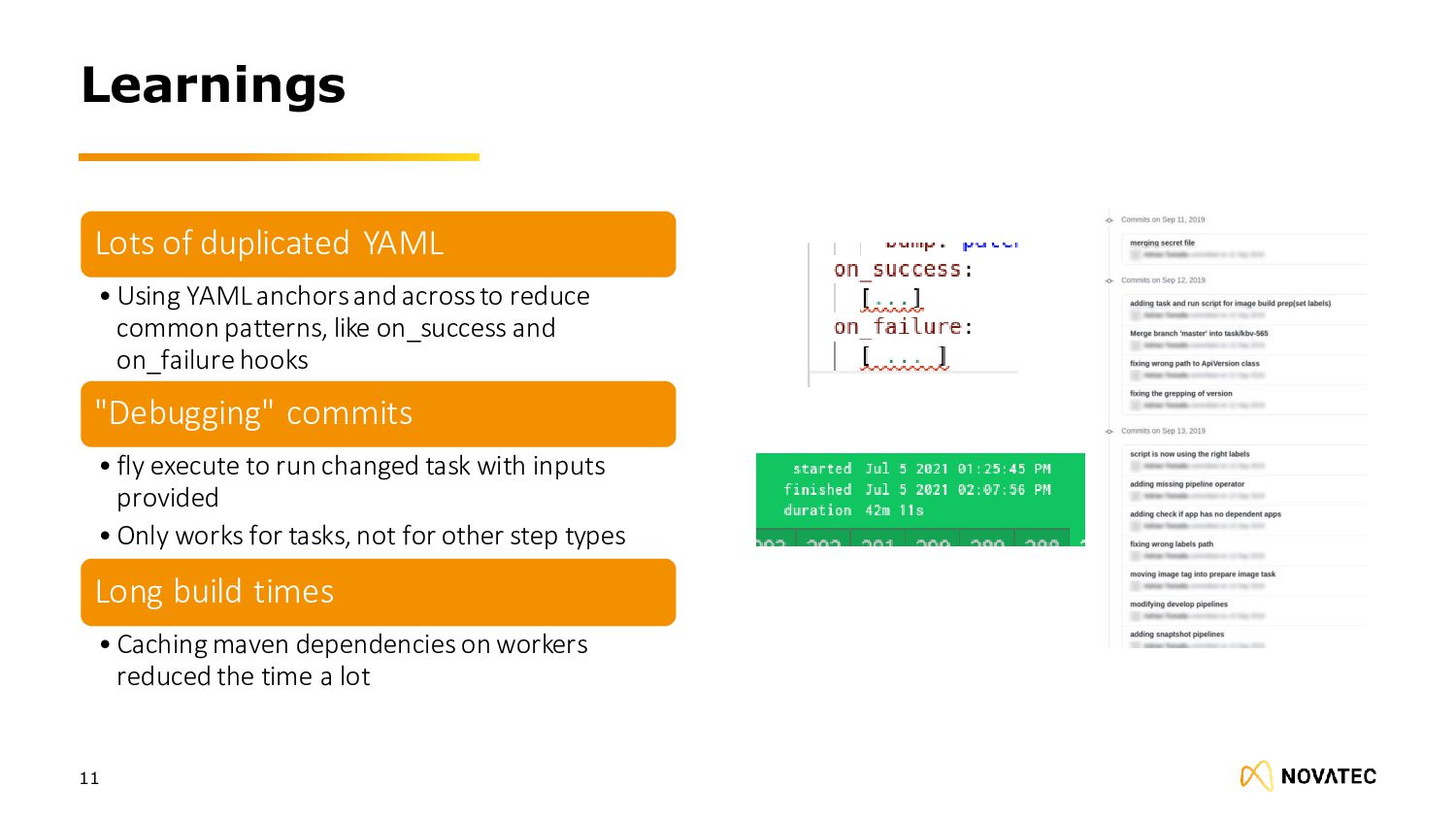
to reduce common patterns, like on_success and on_failure hooks "Debugging" commits •fly execute to run changed task with inputs provided •Only works for tasks, not for other step types Long build times •Caching maven dependencies on workers reduced the time a lot
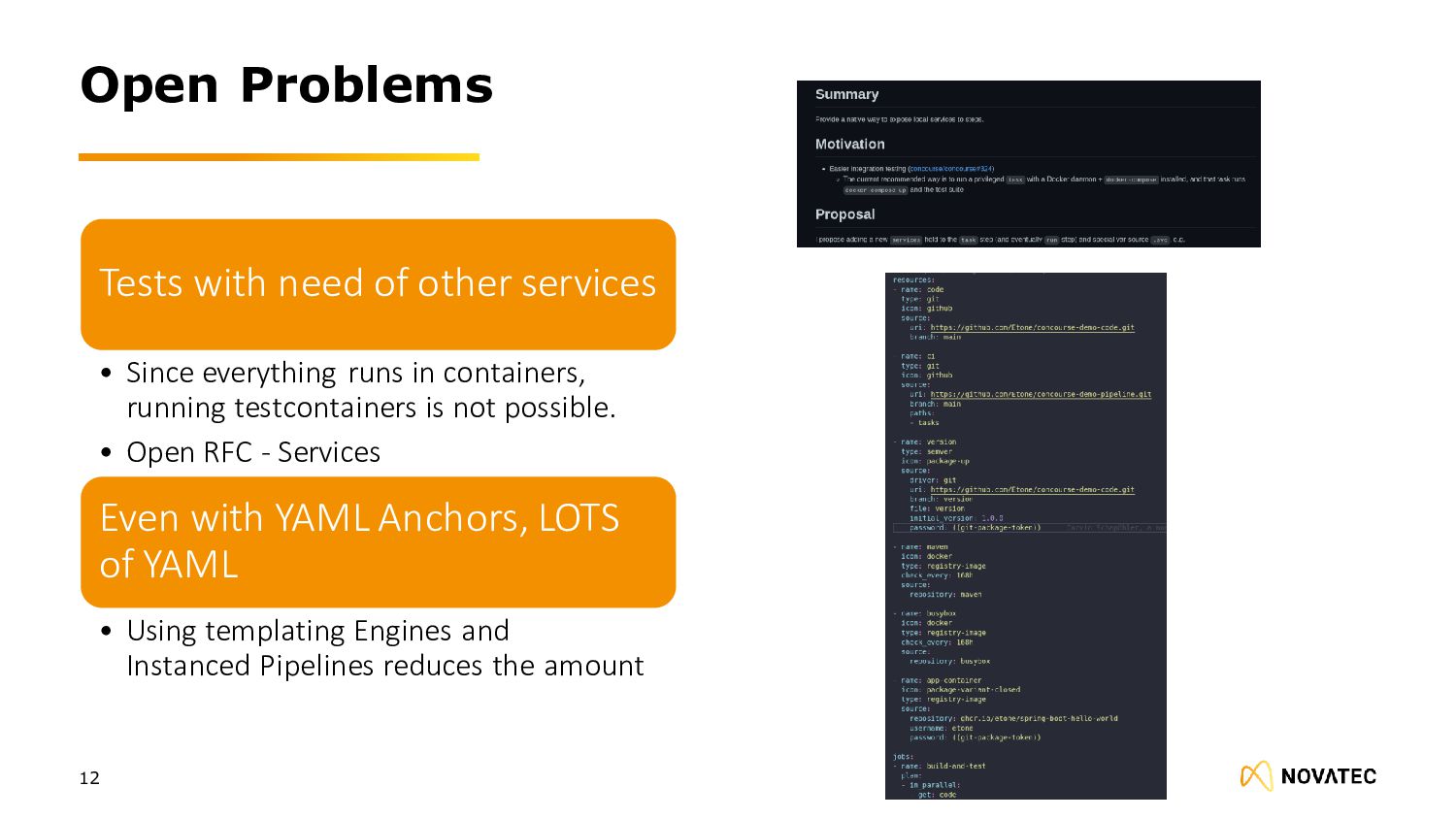
Since everything runs in containers, running testcontainers is not possible. • Open RFC - Services Even with YAML Anchors, LOTS of YAML • Using templating Engines and Instanced Pipelines reduces the amount
▪ Instanced pipelines ▪ Create pipelines from templates as instances ▪ Set_pipeline step ▪ Manage pipelines in pipelines ▪ Prototypes − Reusable tasks and smaller resource checks ▪ Projects − Namespaced resources and pipelines Future Steps and open RFCs 14 This Photo by Unknown author is licensed under CC BY-NC-ND.


 etone
etone
 marcelosomers
 nmsamuel
 mraible
 tamaranovitovic
 codingconduct
 morganepeng
 tmiket
 marcduiker
 orderedlist
 jlugia
 mayatellez
 addyosmani