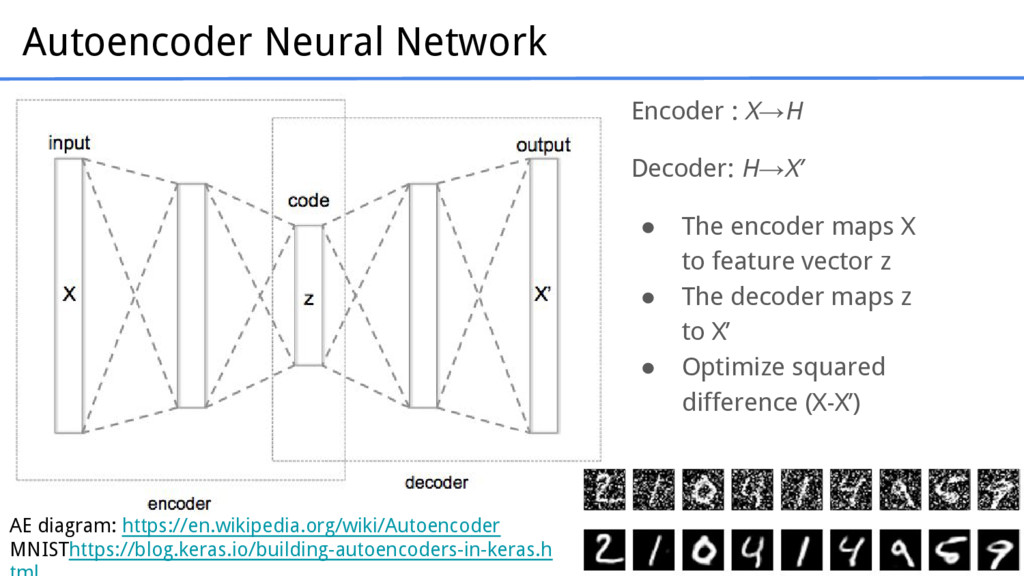
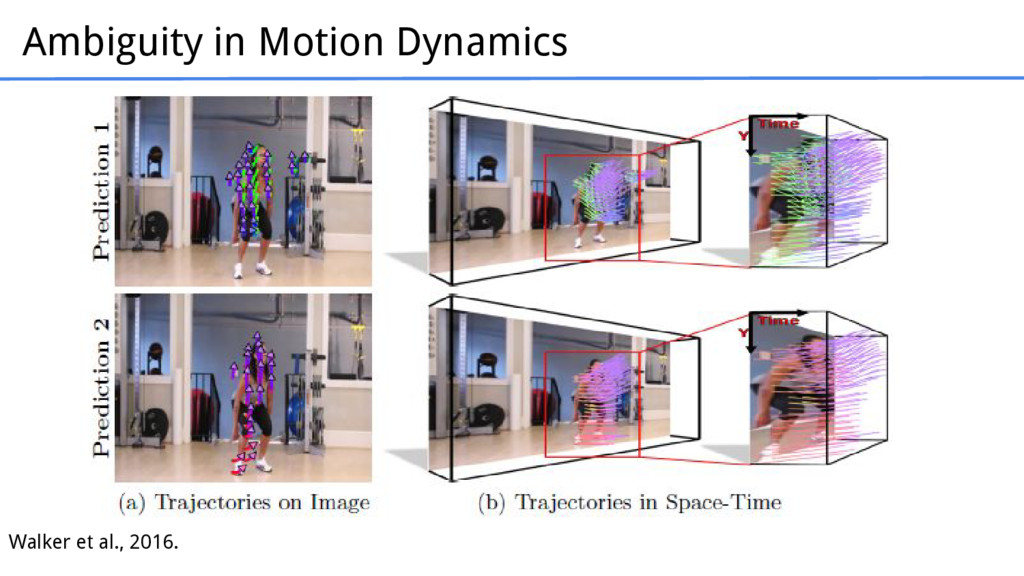
encoder maps X to feature vector z • The decoder maps z to X’ • Optimize squared difference (X-X’) AE diagram: https://en.wikipedia.org/wiki/Autoencoder MNISThttps://blog.keras.io/building-autoencoders-in-keras.h
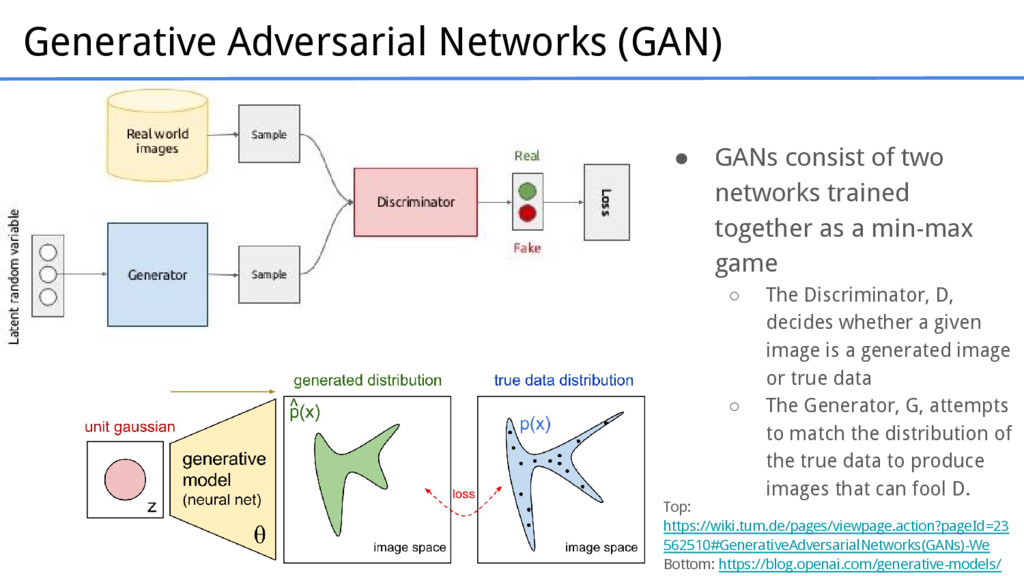
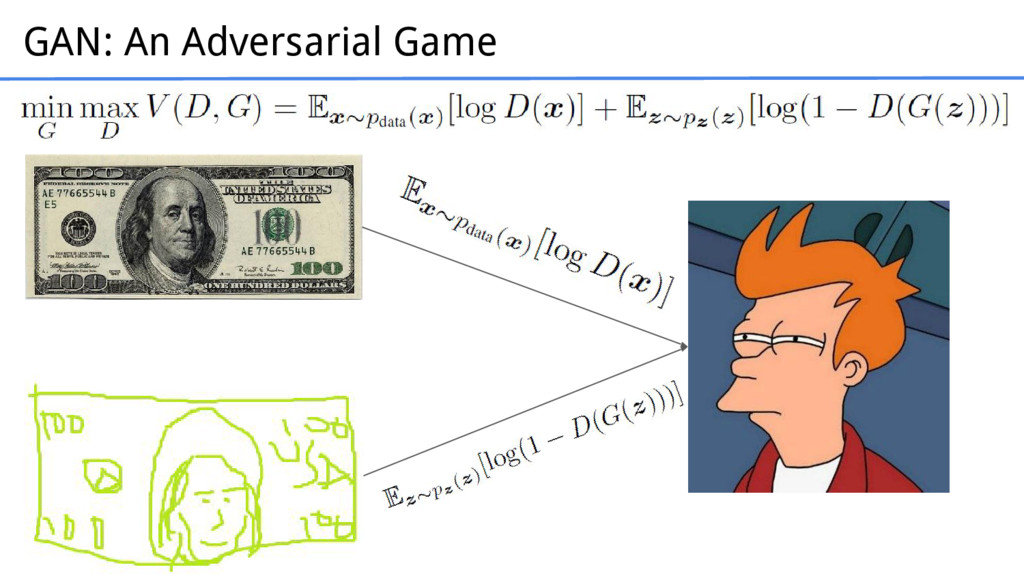
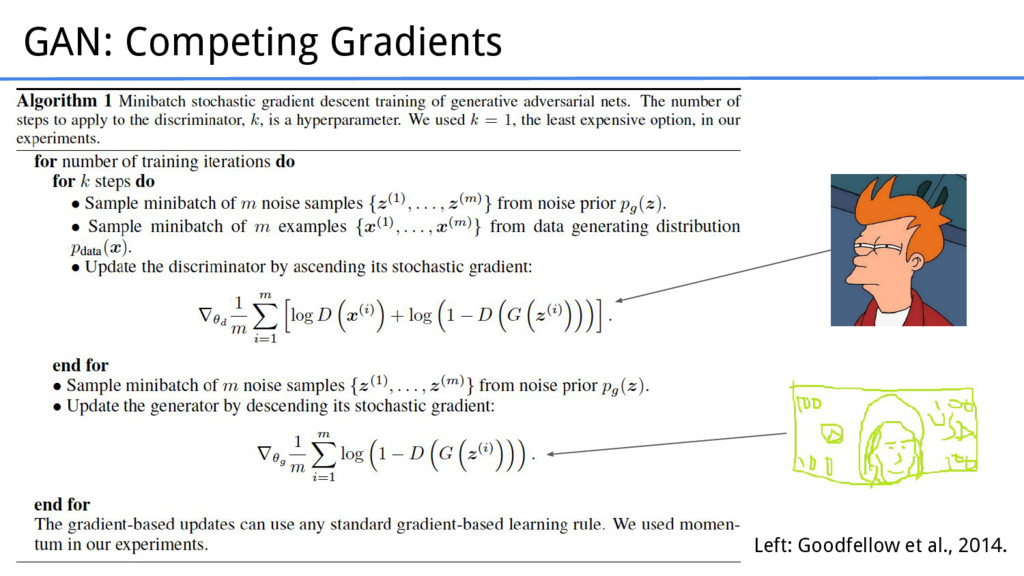
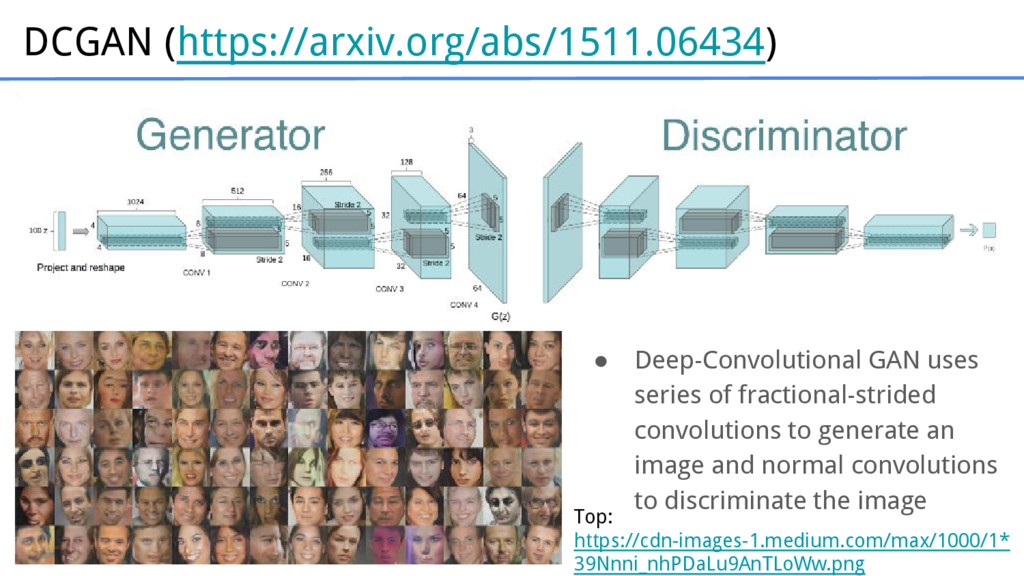
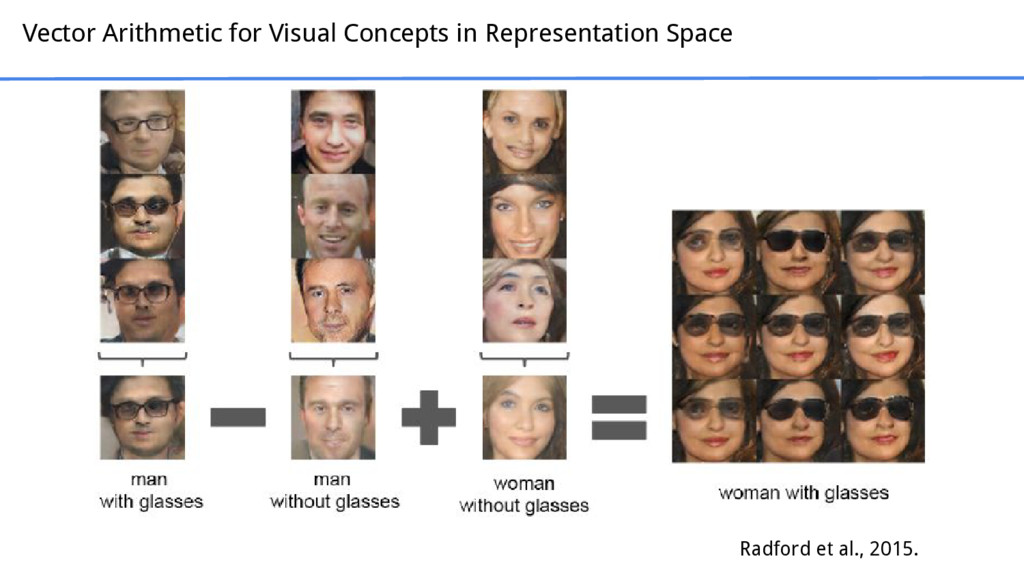
trained together as a min-max game ◦ The Discriminator, D, decides whether a given image is a generated image or true data ◦ The Generator, G, attempts to match the distribution of the true data to produce images that can fool D. Top: https://wiki.tum.de/pages/viewpage.action?pageId=23 562510#GenerativeAdversarialNetworks(GANs)-We Bottom: https://blog.openai.com/generative-models/
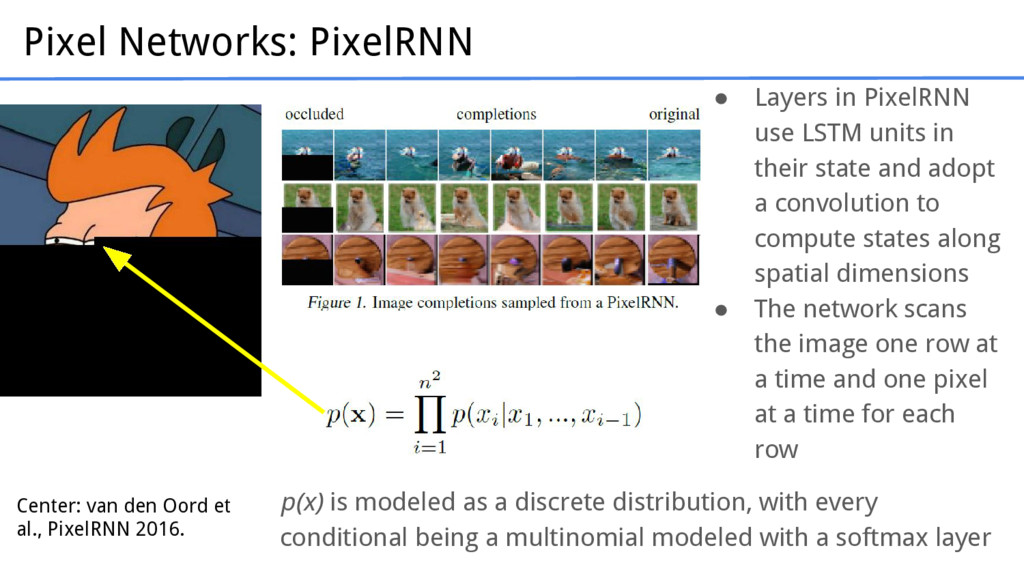
in their state and adopt a convolution to compute states along spatial dimensions • The network scans the image one row at a time and one pixel at a time for each row Center: van den Oord et al., PixelRNN 2016. p(x) is modeled as a discrete distribution, with every conditional being a multinomial modeled with a softmax layer
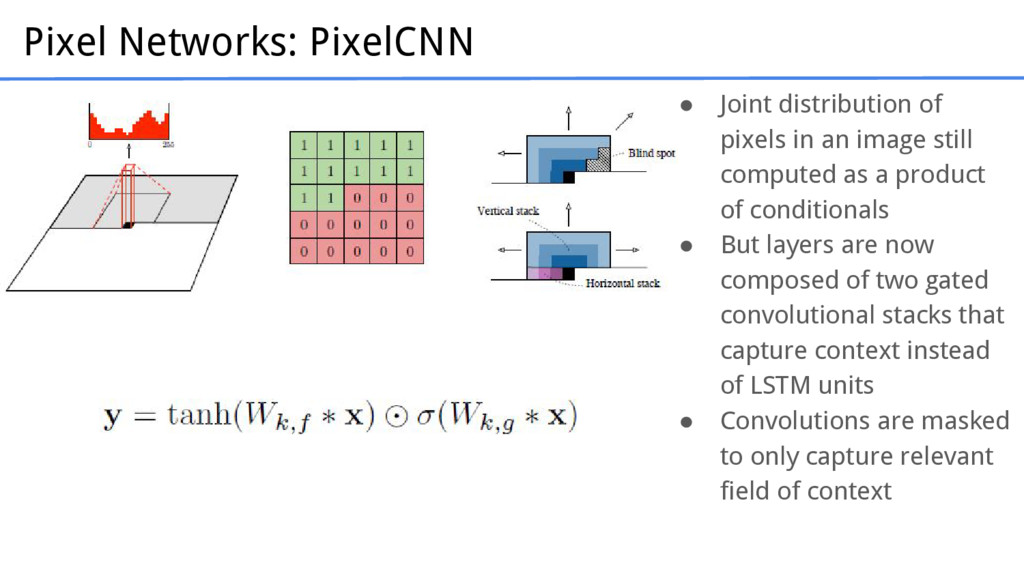
image still computed as a product of conditionals • But layers are now composed of two gated convolutional stacks that capture context instead of LSTM units • Convolutions are masked to only capture relevant field of context
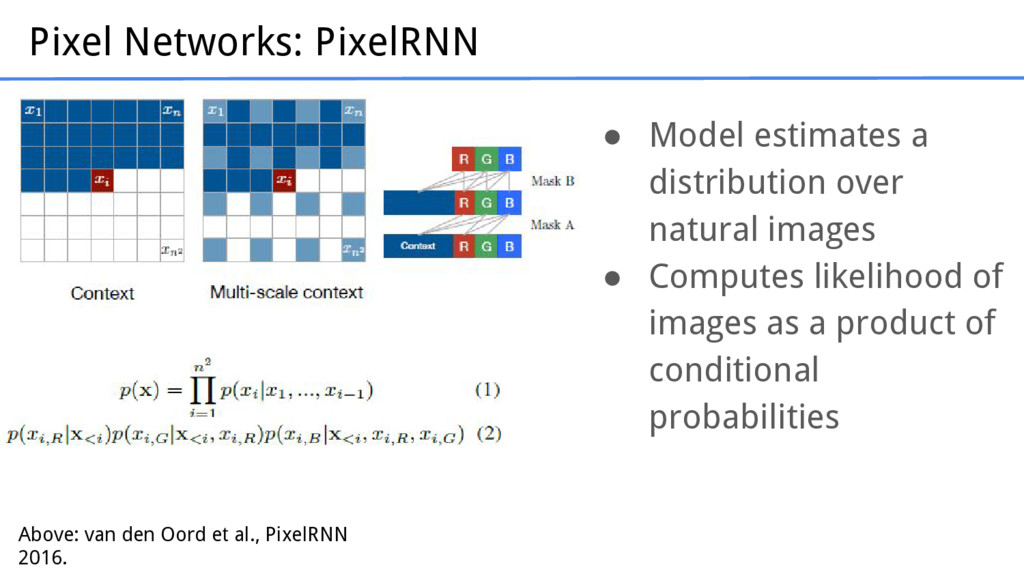
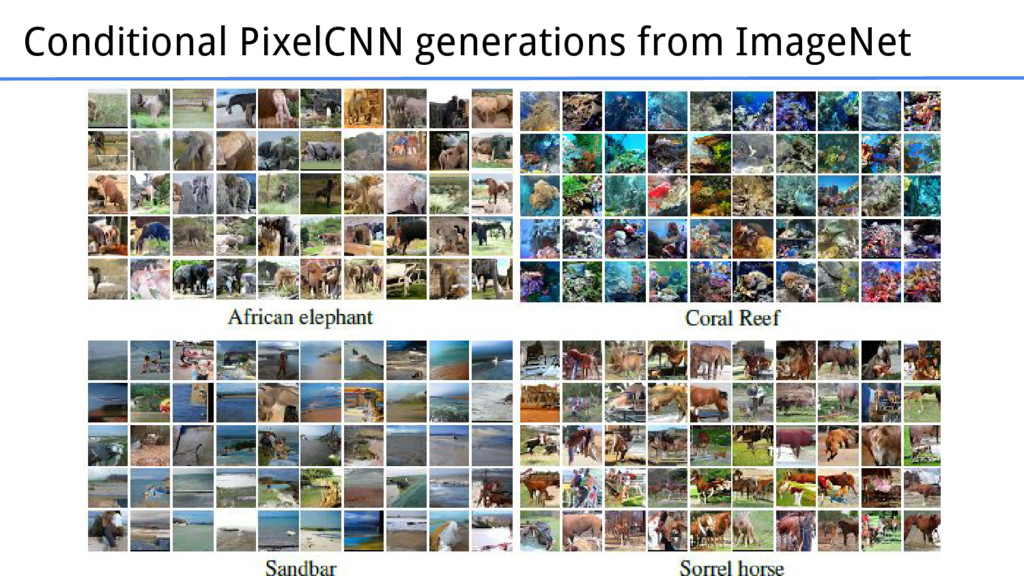
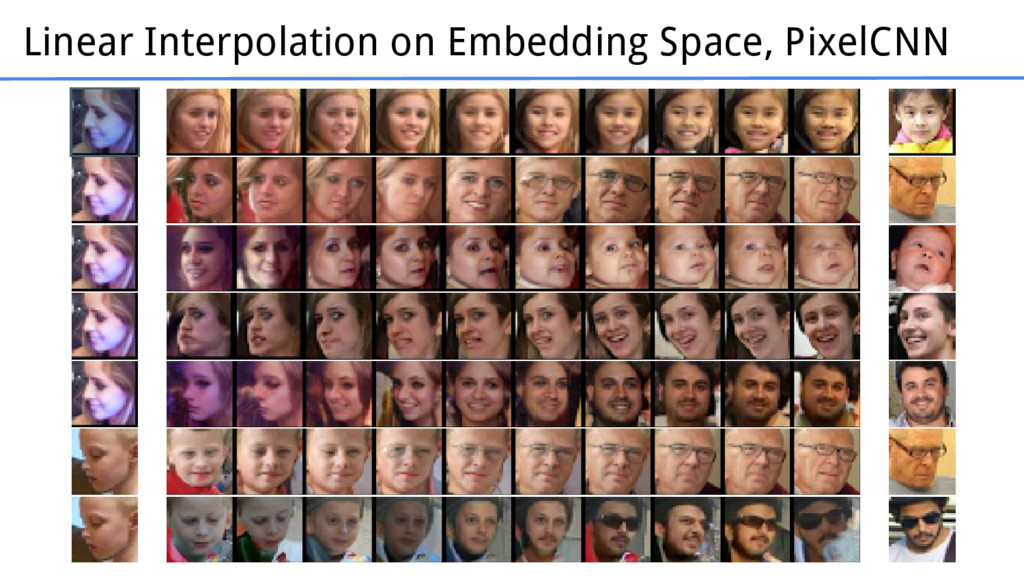
samples from directly optimizing log likelihood • State-of-the-art performance on various benchmarks (binarized MNIST, CIFAR-10), as well as a new benchmark for generative image modeling on ImageNet • PixelCNN can be used as a powerful decoder on latent space learned by other models
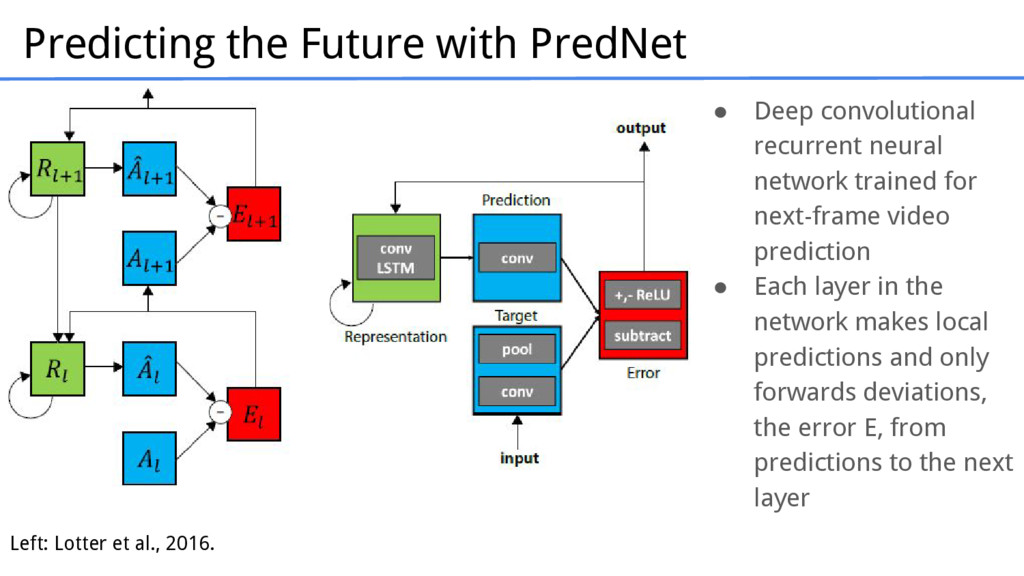
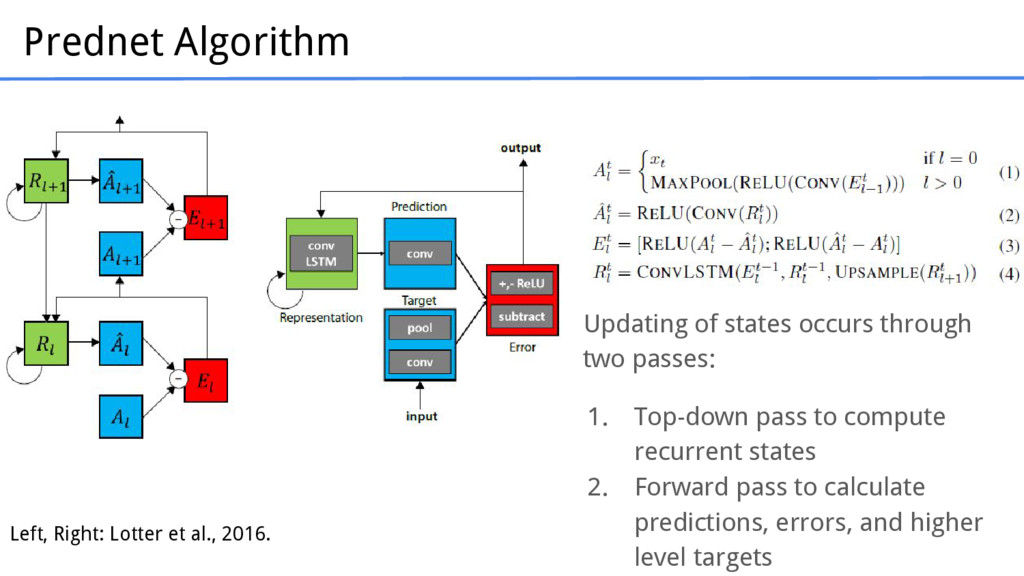
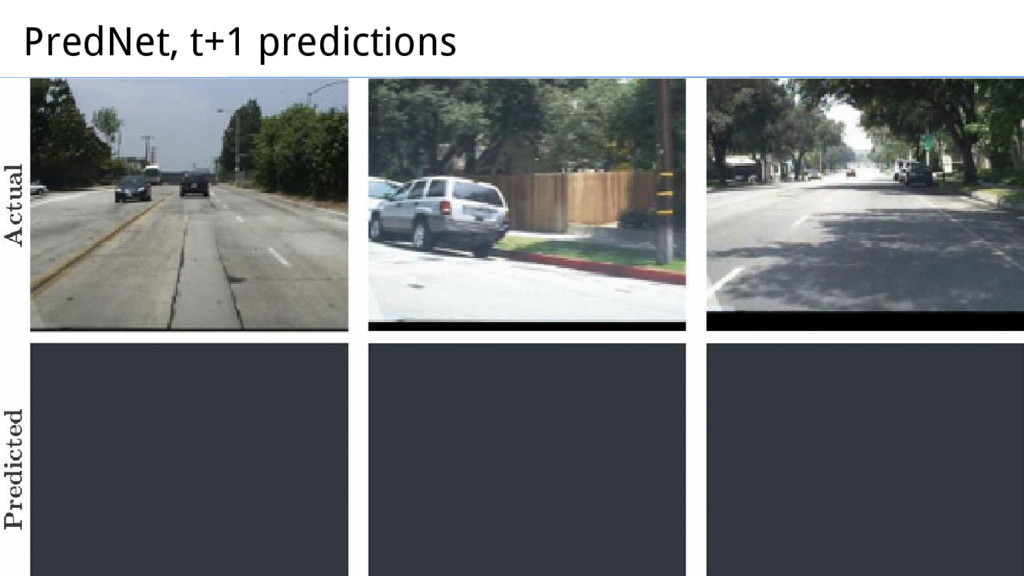
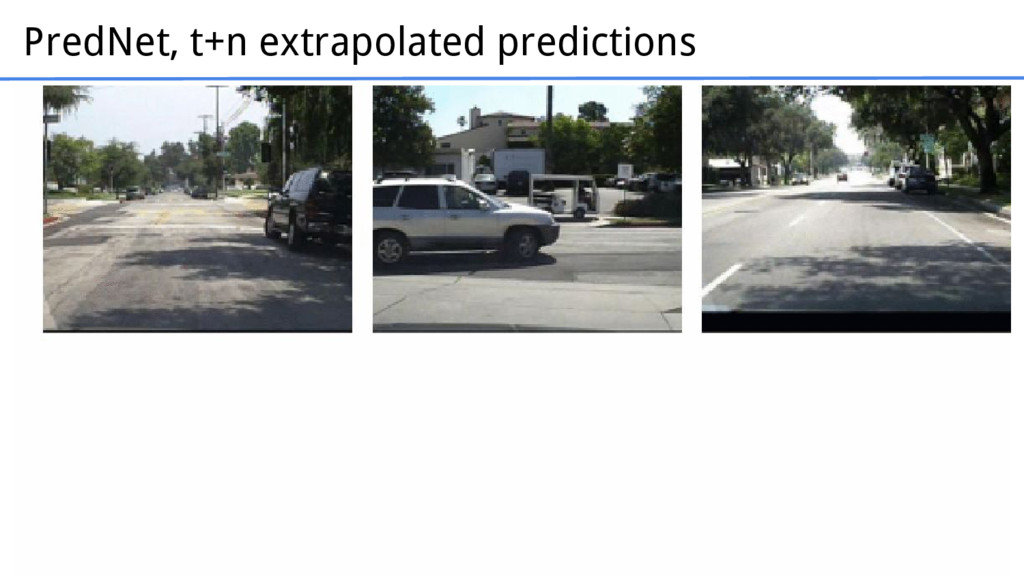
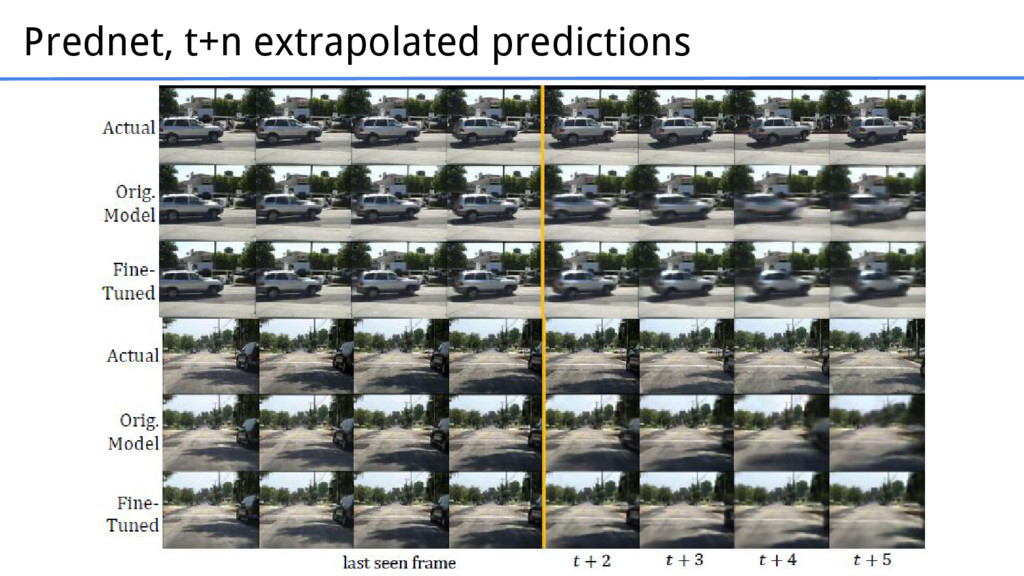
network trained for next-frame video prediction • Each layer in the network makes local predictions and only forwards deviations, the error E, from predictions to the next layer Left: Lotter et al., 2016.
states occurs through two passes: 1. Top-down pass to compute recurrent states 2. Forward pass to calculate predictions, errors, and higher level targets
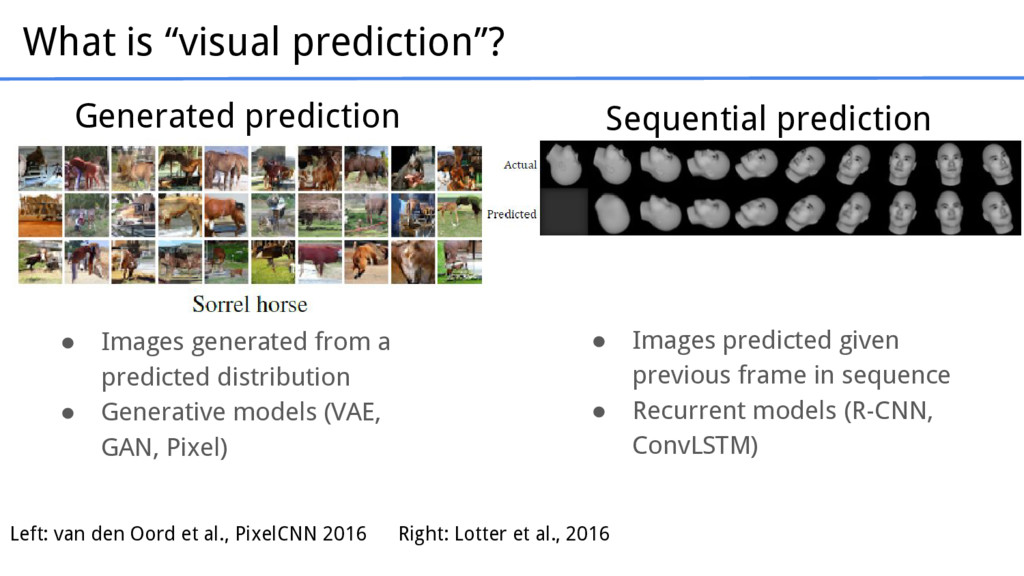
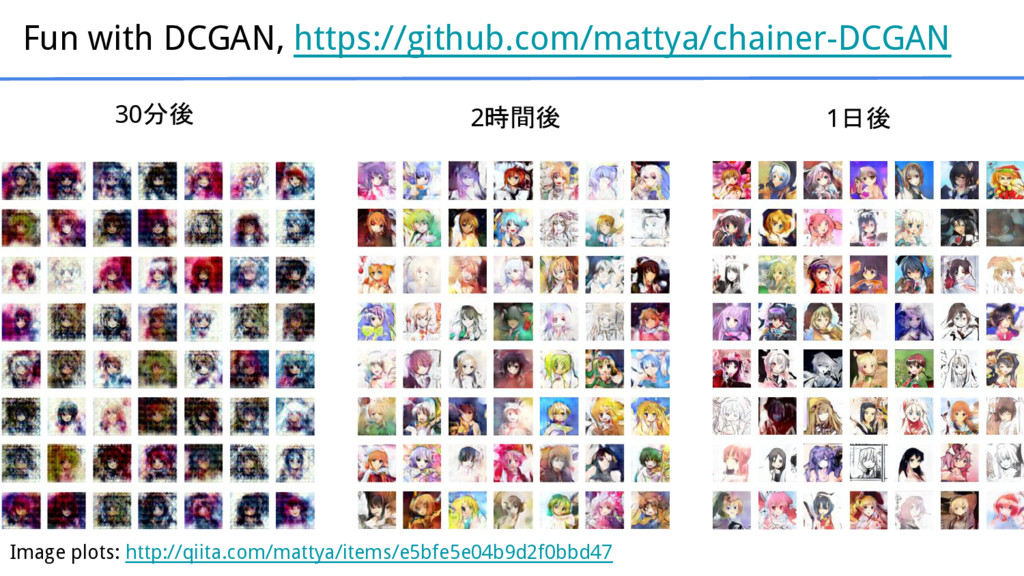
learning is the future • It’s fun working with generated samples • Many applications: ◦ Generated images, deblurring/denoising, text-to-image, domain-synthesis, future frame prediction, latent space modeling
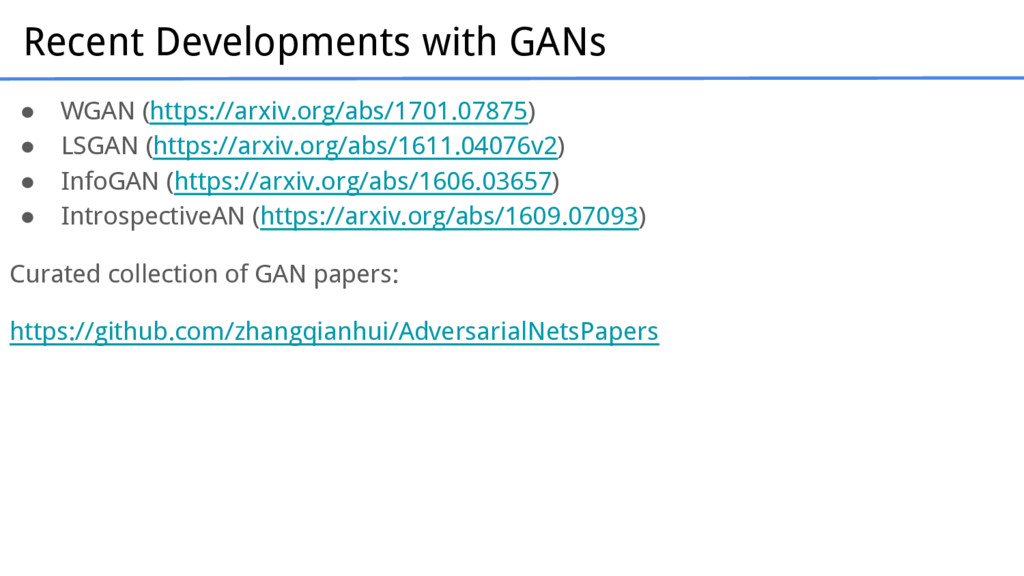
Networks” 2014: https://arxiv.org/abs/1406.2661 • Alec Radford, et al., “Unsupervised Representation Learning with Deep Convolutional Generative Adversarial Networks” 2015: https://arxiv.org/abs/1511.06434 • Aaron van den Oord, et al. “Pixel Recurrent Neural Networks” 2016: https://arxiv.org/abs/1601.06759 • Aaron van den Oord, et al. “Conditional Image Generation with PixelCNN Decoders” 2016: https://arxiv.org/abs/1606.05328 • William Lotter, et al. “Deep Predictive Coding Networks for Video Prediction and Unsupervised Learning” 2016: https://arxiv.org/abs/1605.08104 • Jacob Walker, et al. “An Uncertain Future: Forecasting from Static Images using Variational Autoencoders” 2016: https://arxiv.org/abs/1606.07873


 namiki64
 pfn
 gionn
 terurou
 takonda
 takuroabe
 teamlab
 tomokusaba
 kaminashi
 ivry_presentationmaterials
 kentapapa
 honnibal
 khoart
 aleyda
 addyosmani
 swwweet
 notwaldorf
 marktimemedia
 bkeepers
 jakevdp
 eileencodes
 livdayseo
 vanstee