Upgrade to Pro — share decks privately, control downloads, hide ads and more …

Effective Mentoring (Beta Version)

Avatar for feliperli feliperli
February 29, 2024
14

Effective Mentoring (Beta Version)

Avatar for feliperli

feliperli

February 29, 2024
Tweet

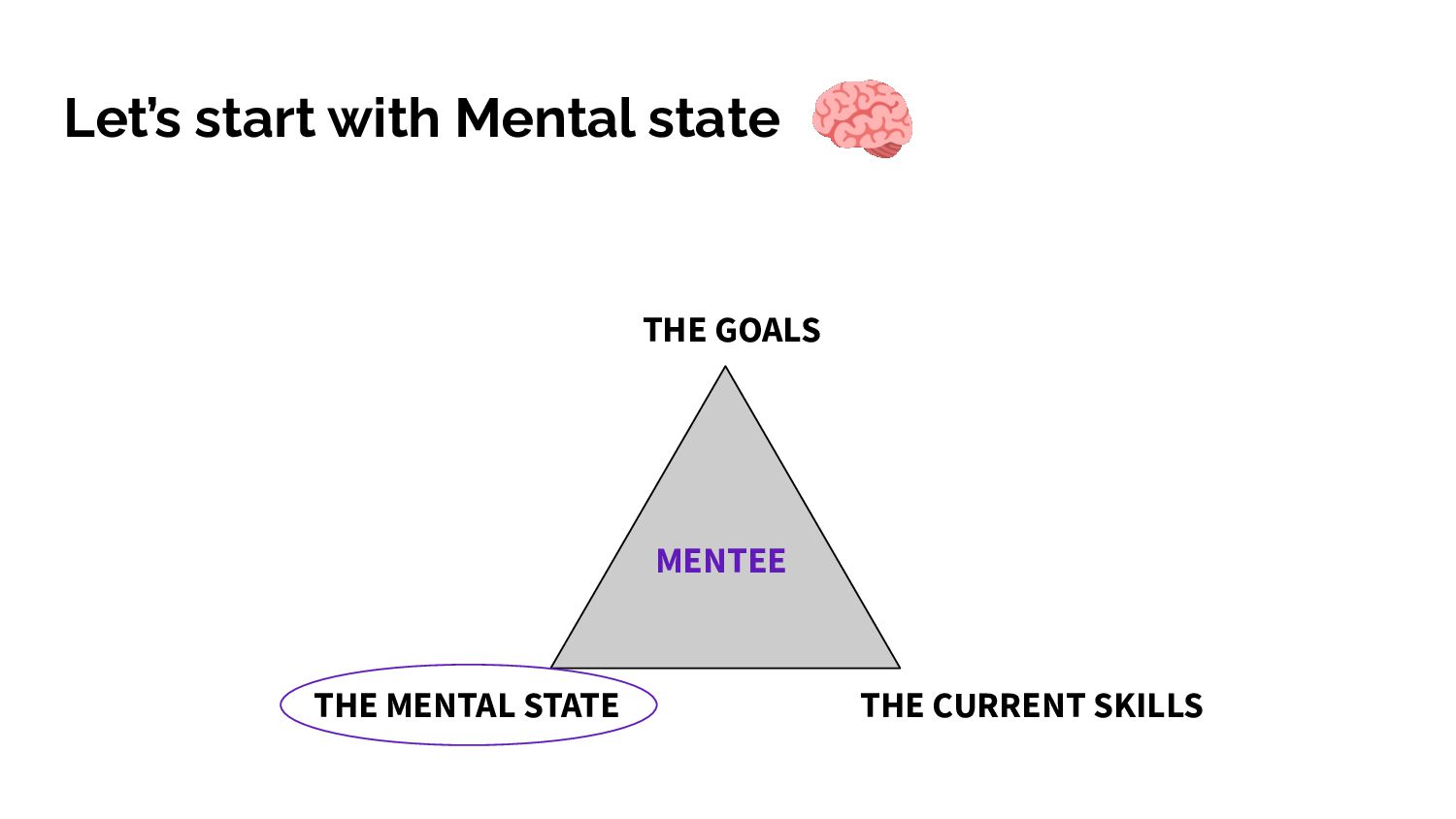
Transcript

  1. After some time working for your company, you gained enough

    experience to take care of someone less experienced than you
  2. But I mean you gotta have something that you can

    pull of your experience to teach, right?
  3. But still, it’s too little. The more junior your mentee

    is, the more you’re responsible for guiding their first steps
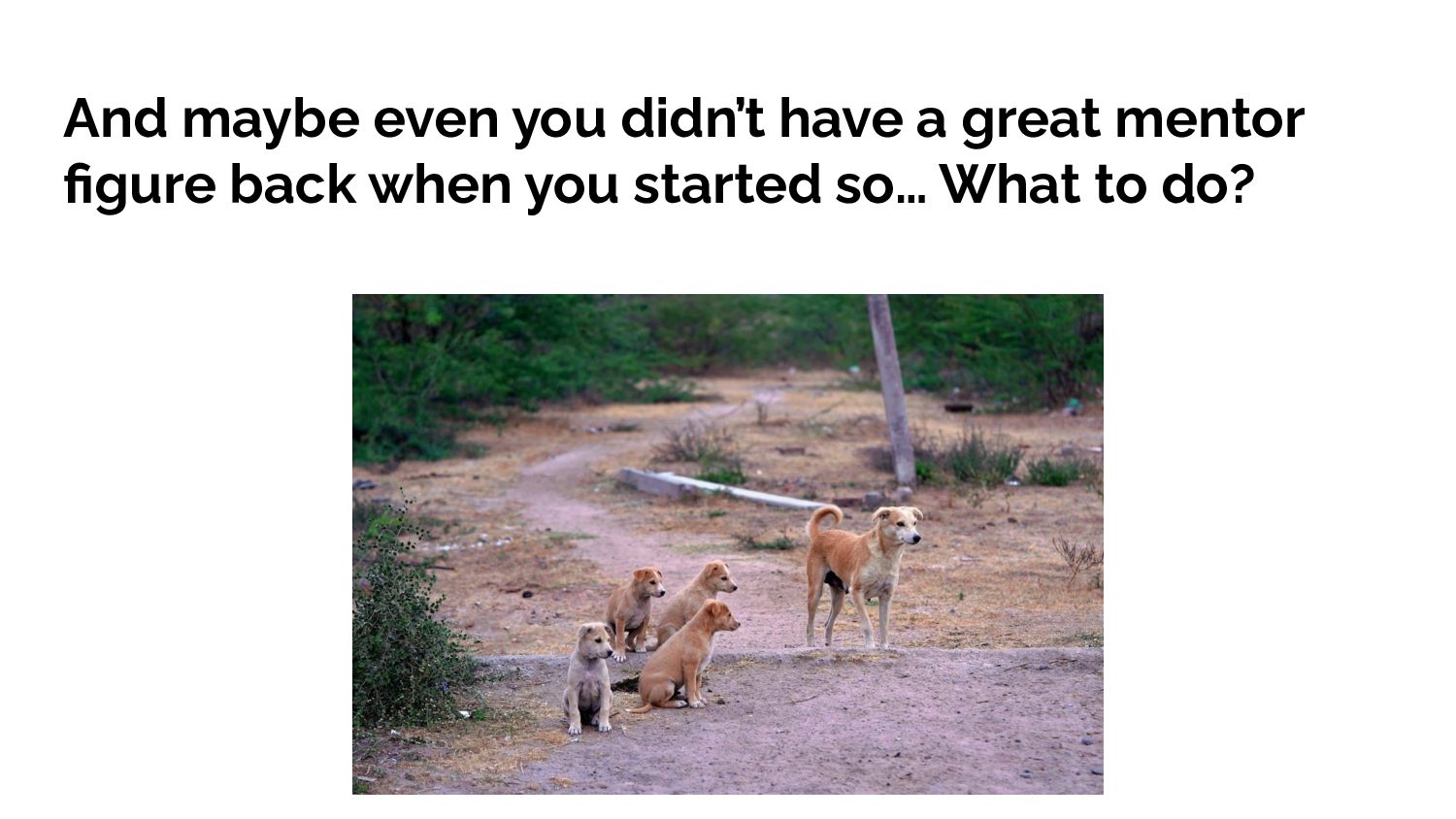
  4. And maybe even you didn’t have a great mentor figure

    back when you started so… What to do?
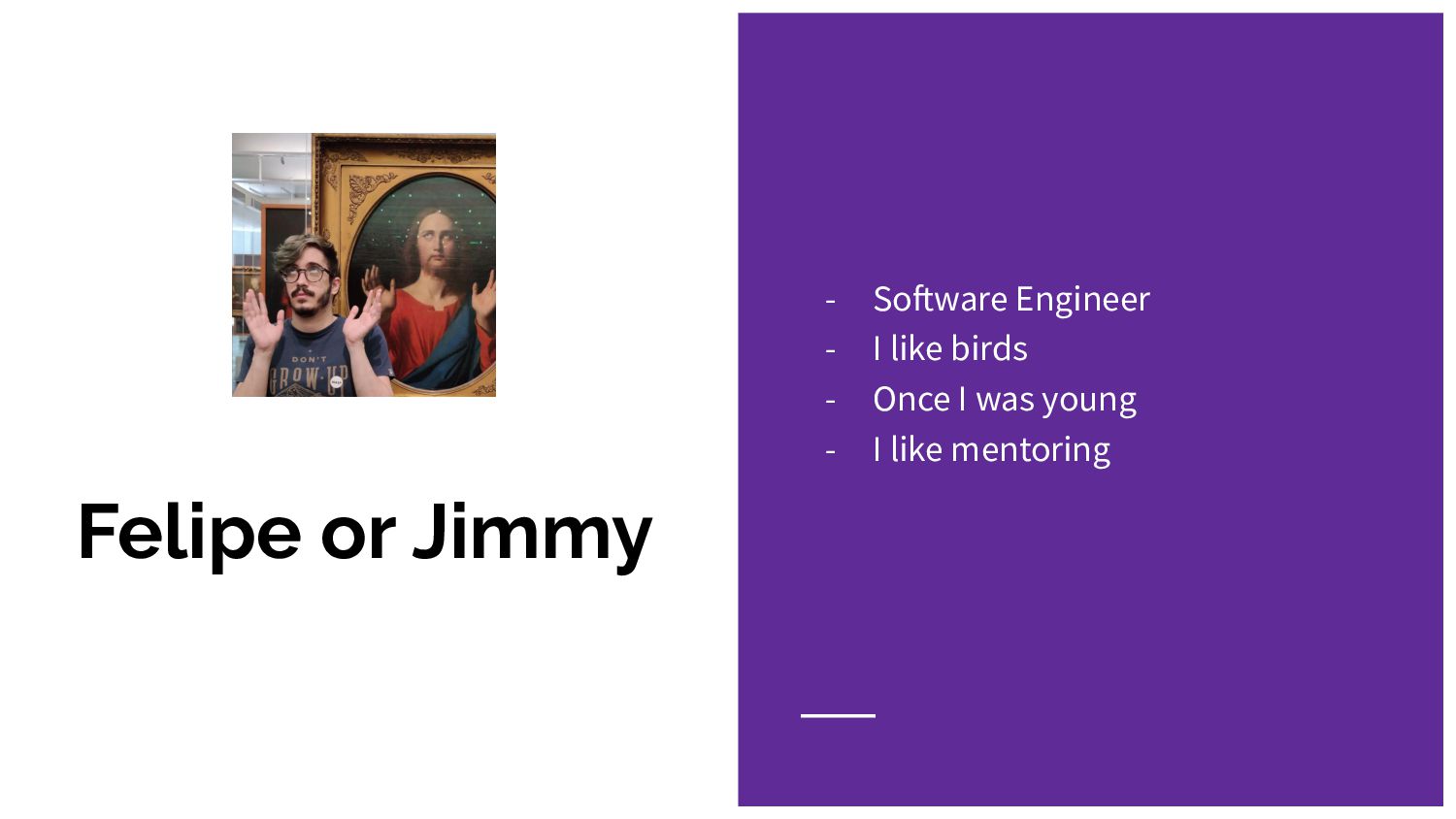
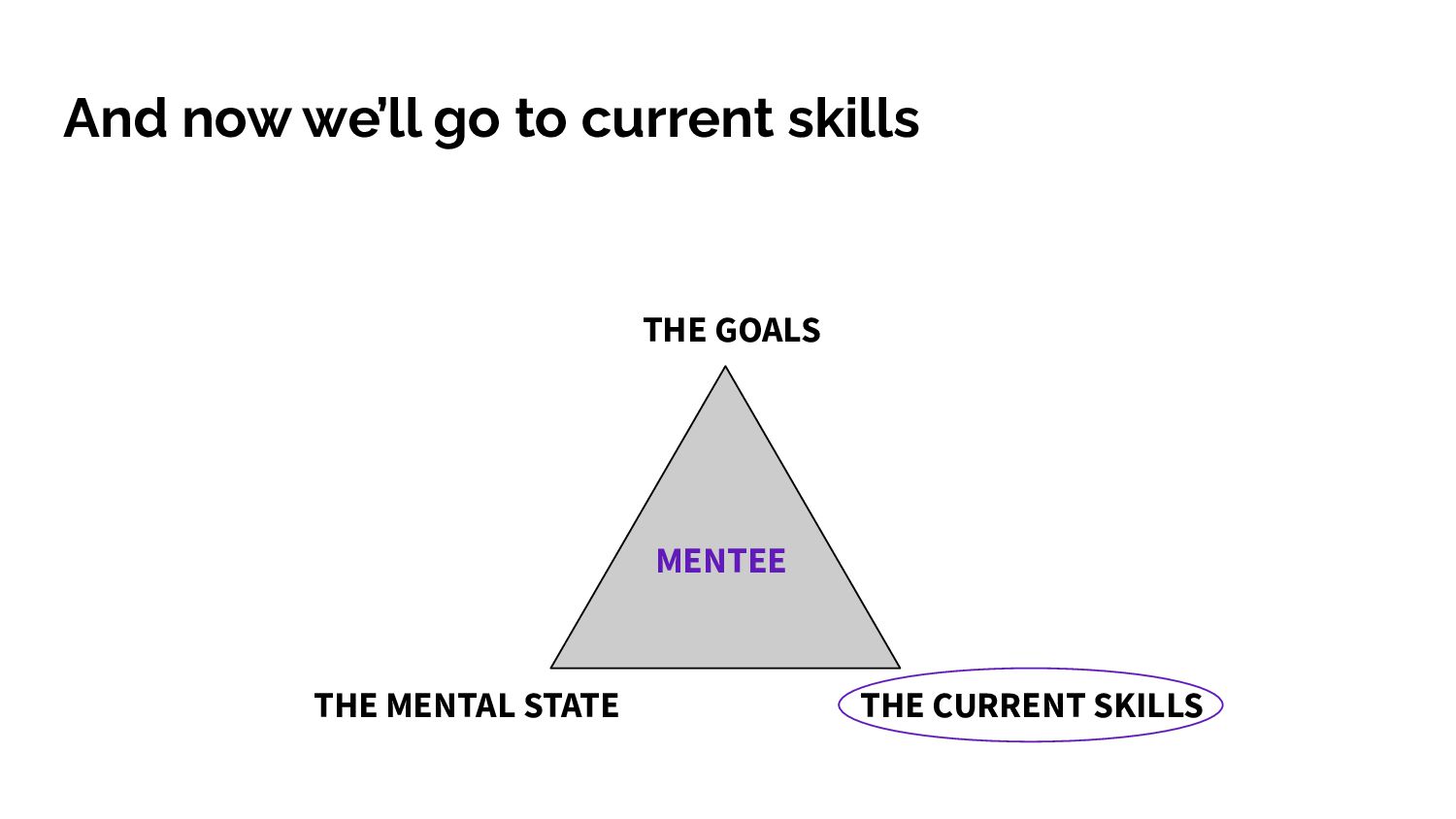
  5. Felipe or Jimmy - Software Engineer - I like birds

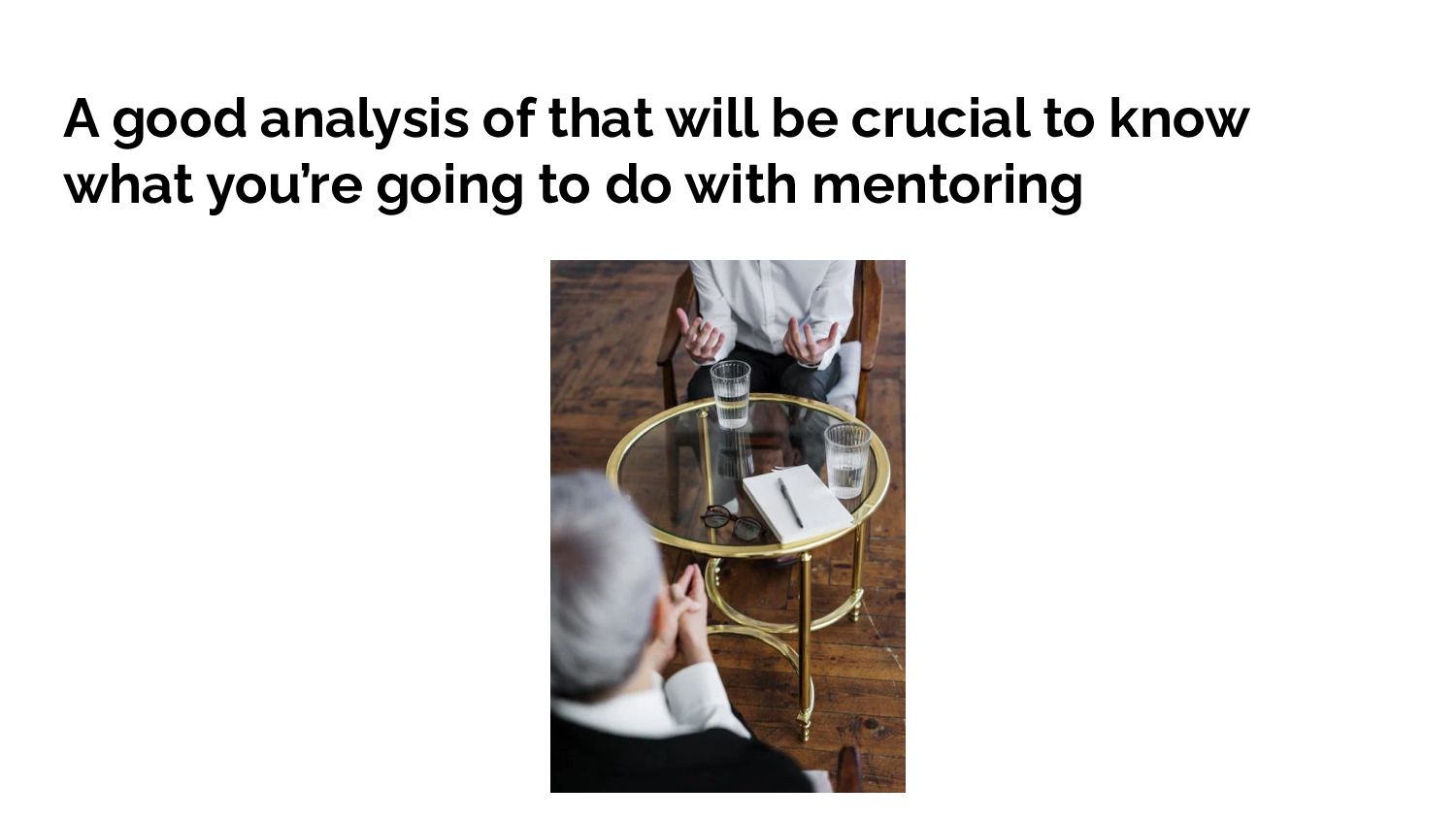
    - Once I was young - I like mentoring
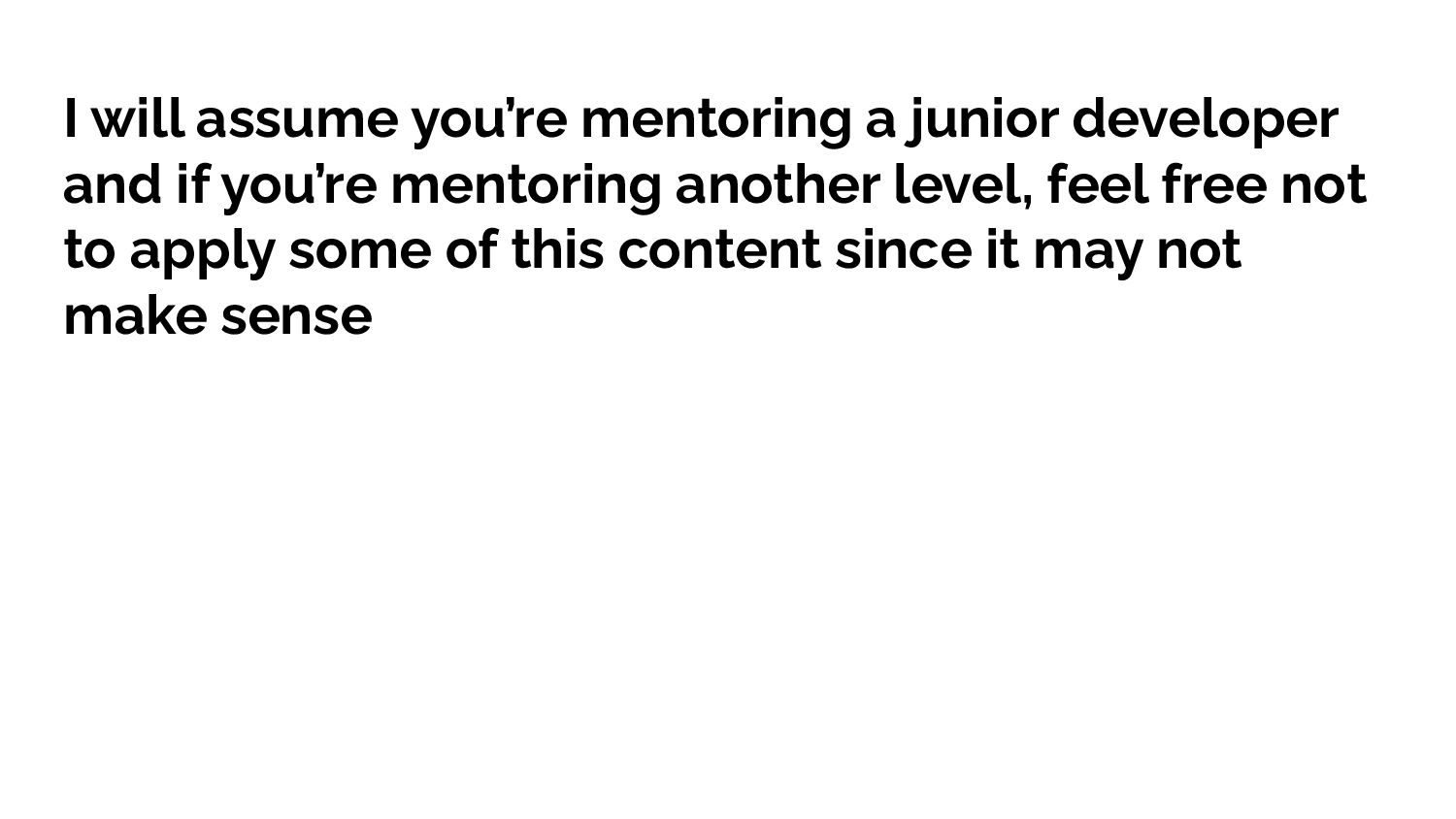
  6. I will assume you’re mentoring a junior developer and if

    you’re mentoring another level, feel free not to apply some of this content since it may not make sense
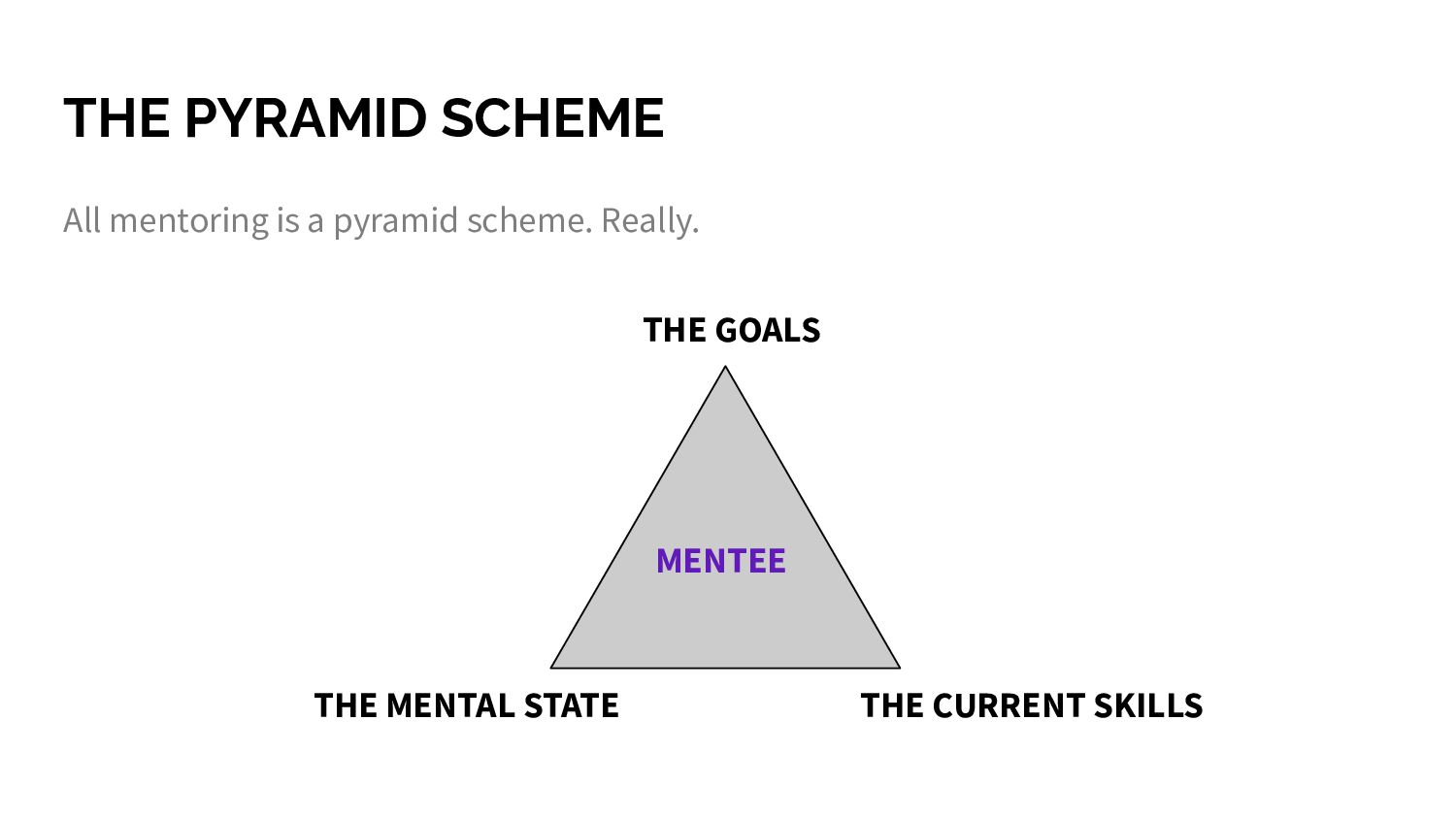
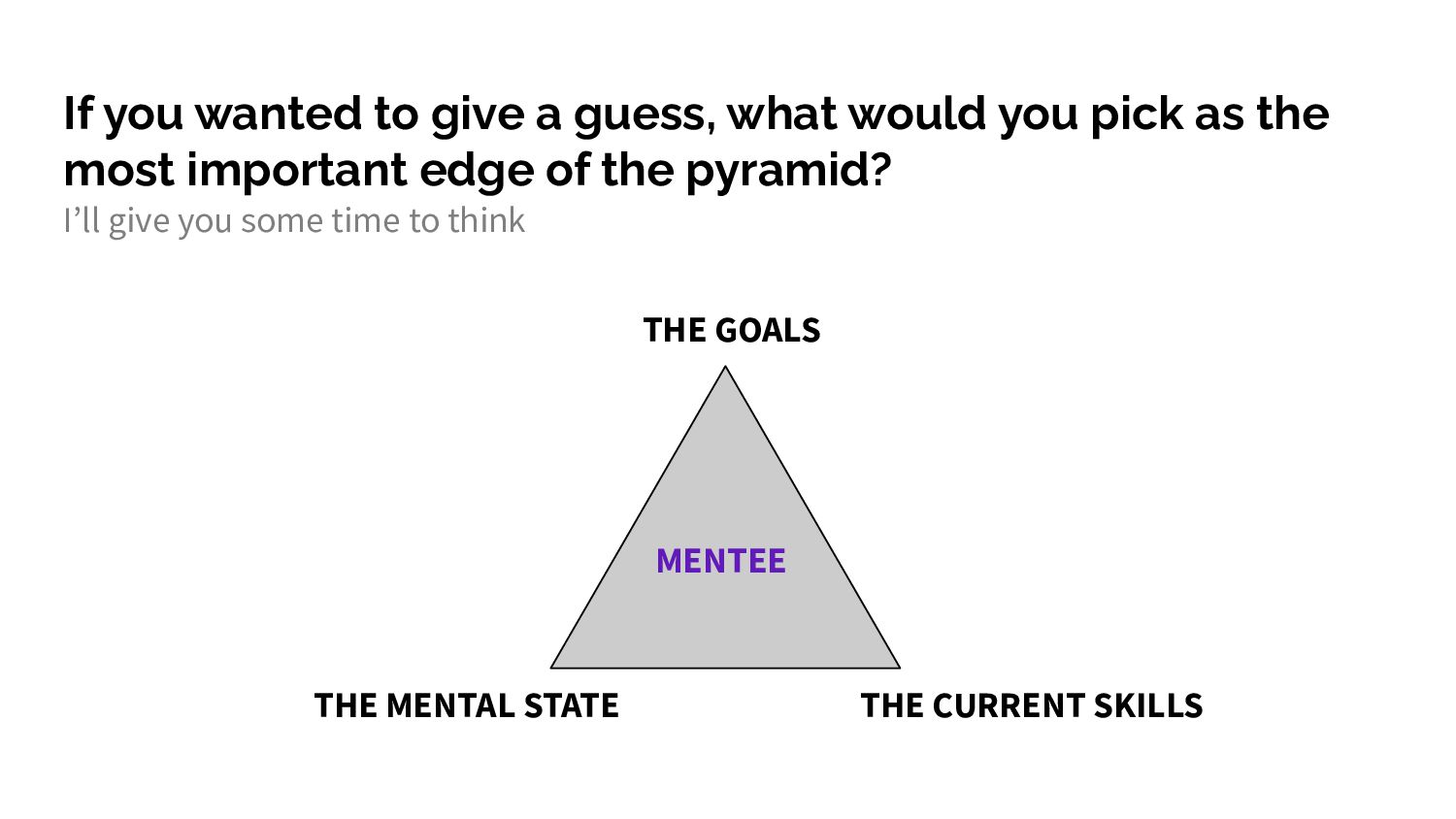
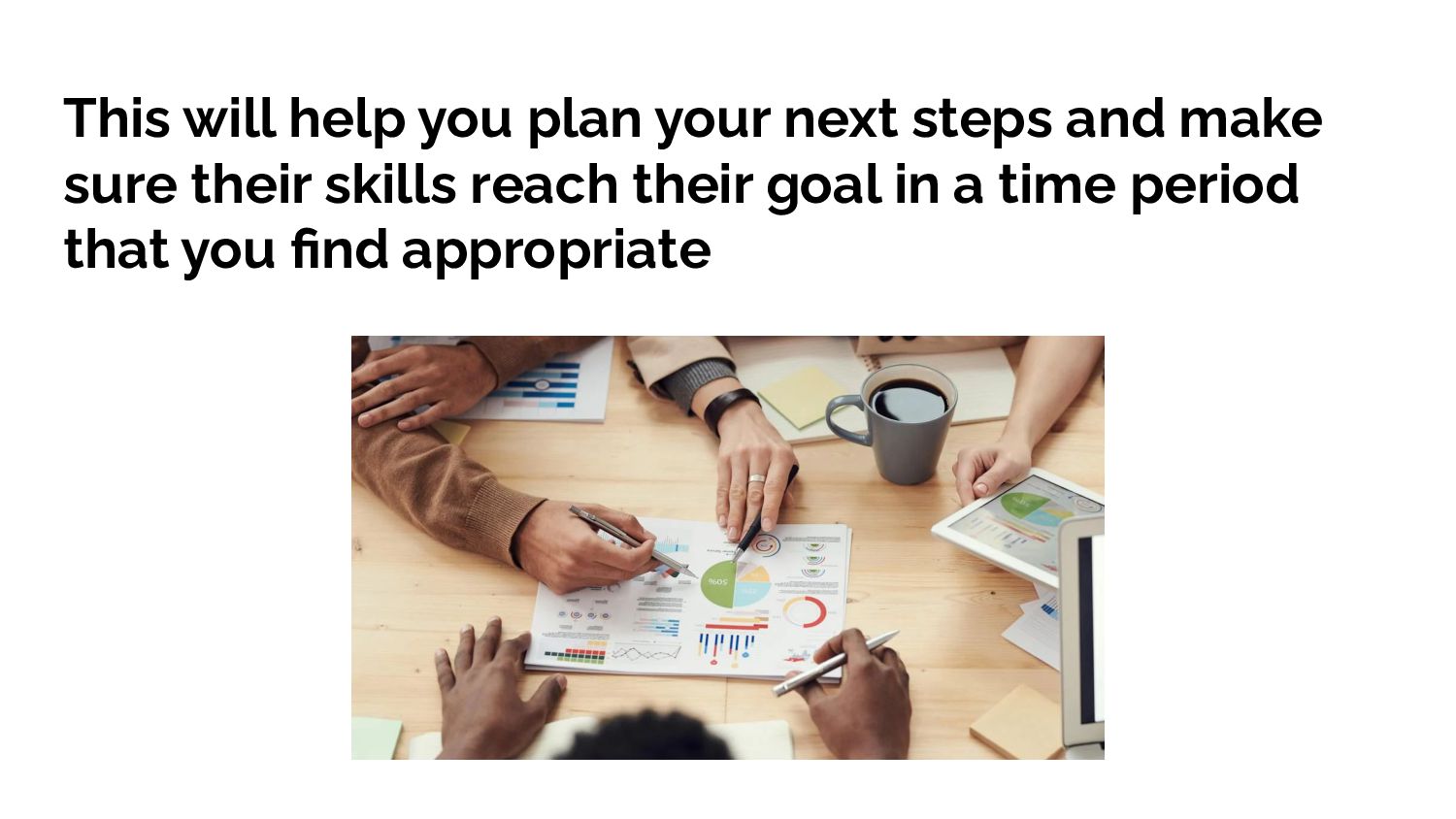
  7. THE PYRAMID SCHEME All mentoring is a pyramid scheme. Really.

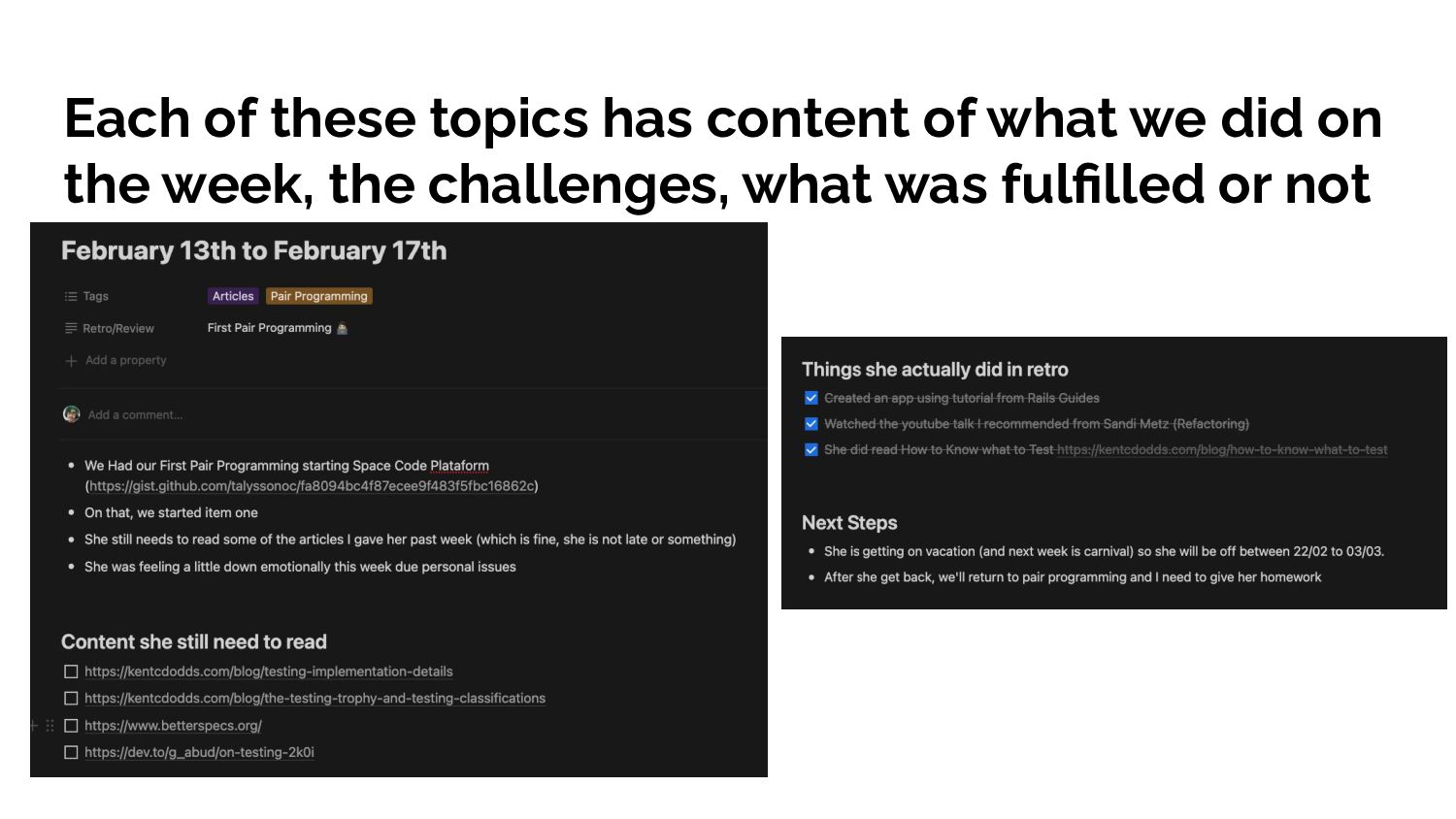
    THE GOALS THE CURRENT SKILLS THE MENTAL STATE MENTEE
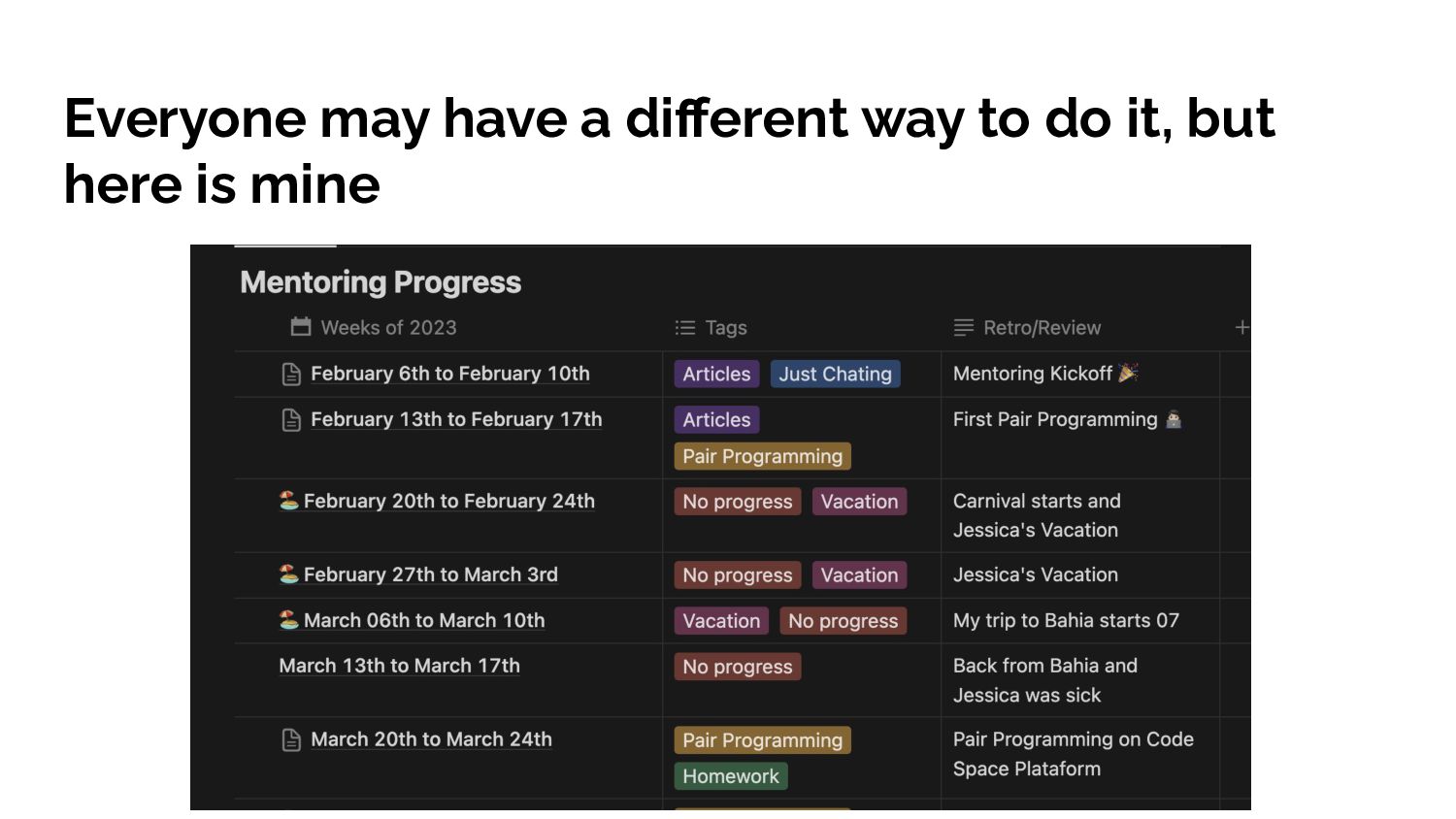
  8. If you wanted to give a guess, what would you

    pick as the most important edge of the pyramid? Iʼll give you some time to think THE GOALS THE CURRENT SKILLS THE MENTAL STATE MENTEE
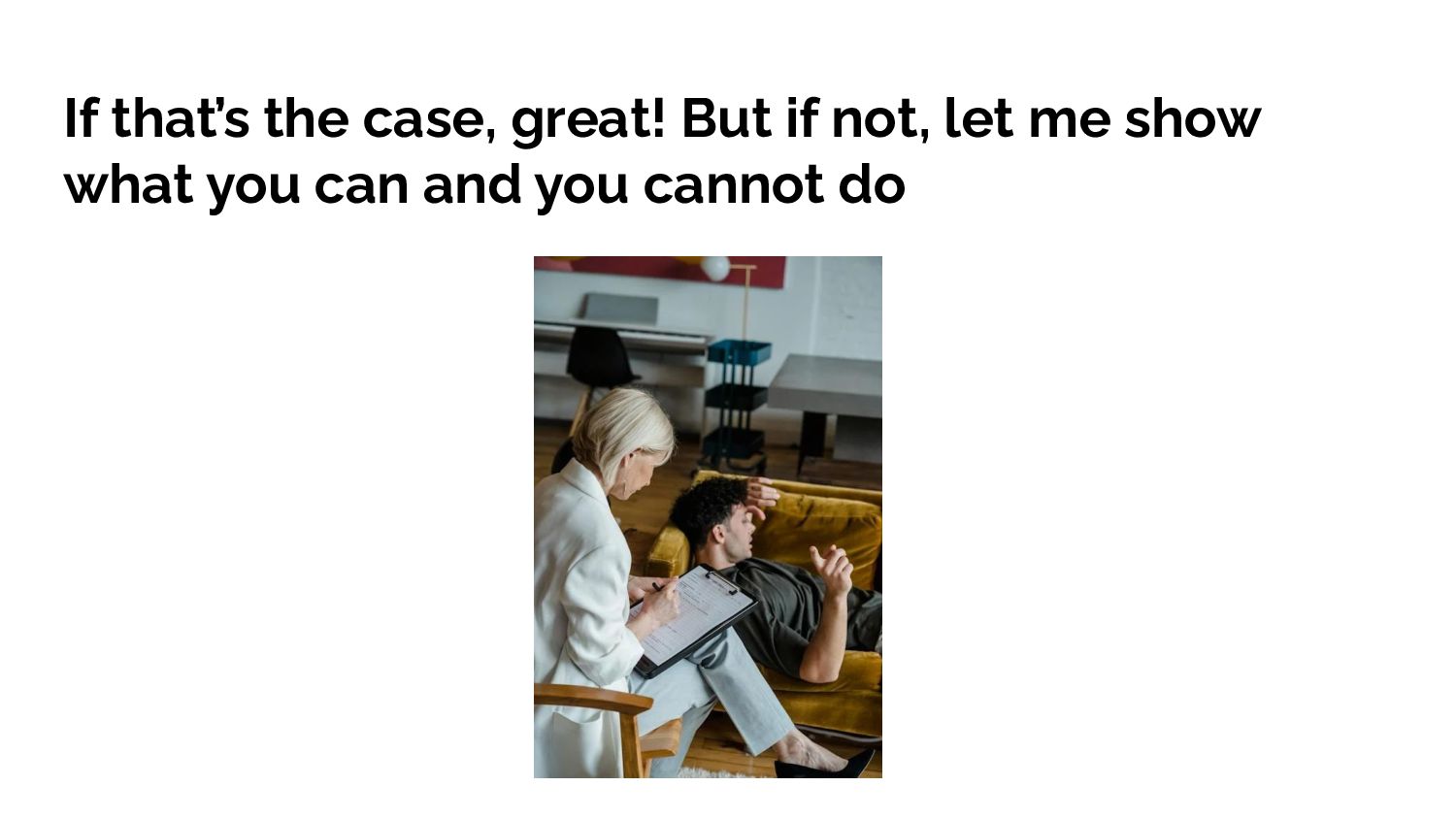
  9. If that’s the case, great! But if not, let me

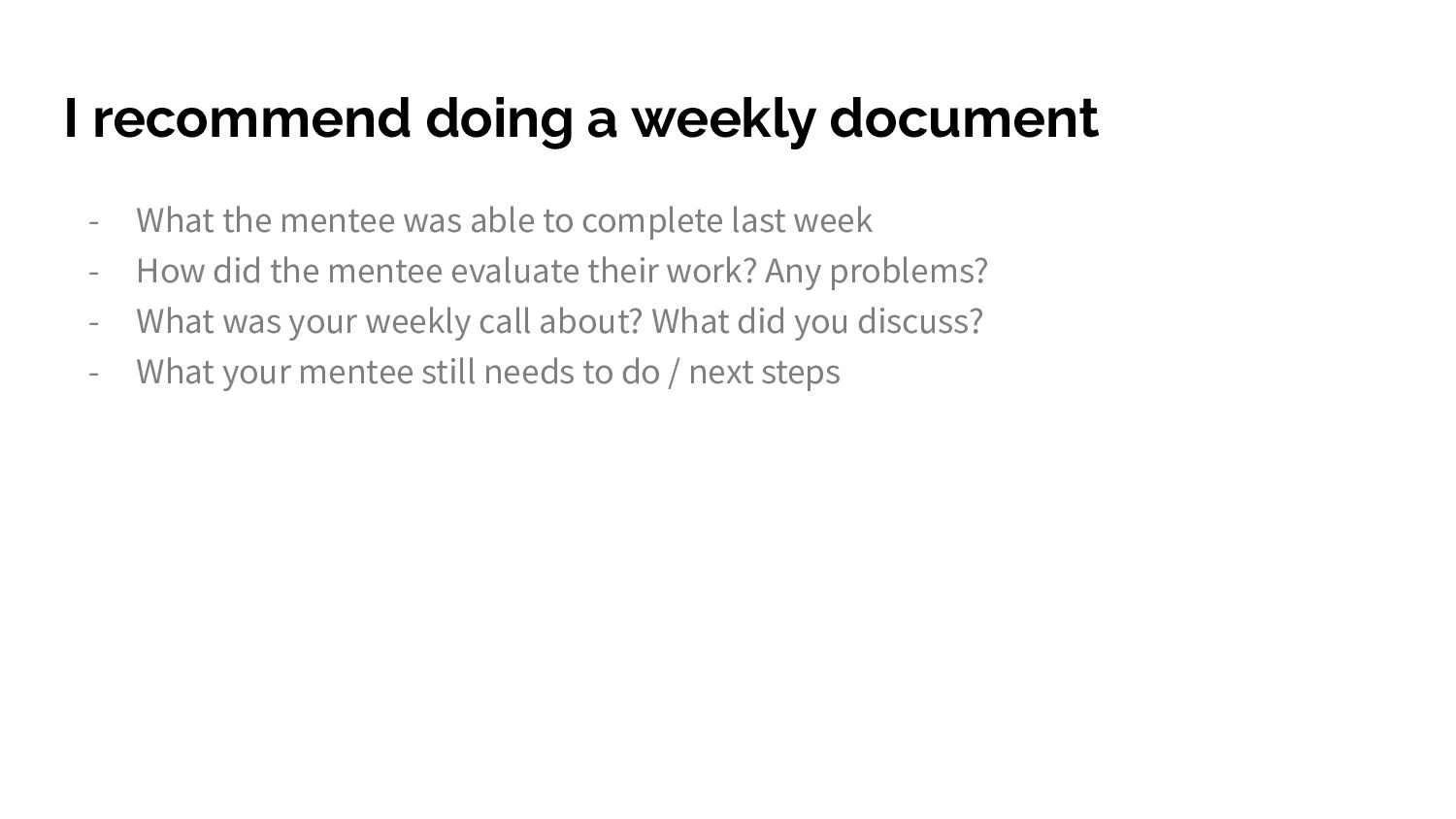
    show what you can and you cannot do
  10. The mental state You can: - Help talking about how

    was your menteeʼs week; - Give work related advices; - Curse the world with your mentee to vent anger; - If your mentee has mental conditions like anxiety, depression, ADHD, etc you can check if theyʼre giving proper attention to it and incentivize them to pursue mental health care. You canʼt: - Diagnose your mentee. Donʼt “oh youʼre too anxious” without actually knowing if thatʼs the case; - Assume you know whatʼs best. You can listen and give advice, at maximum giving a “I had a similar experience, and I worked that way” but at the end of the day your mentee is the one to decide whatʼs best for them.
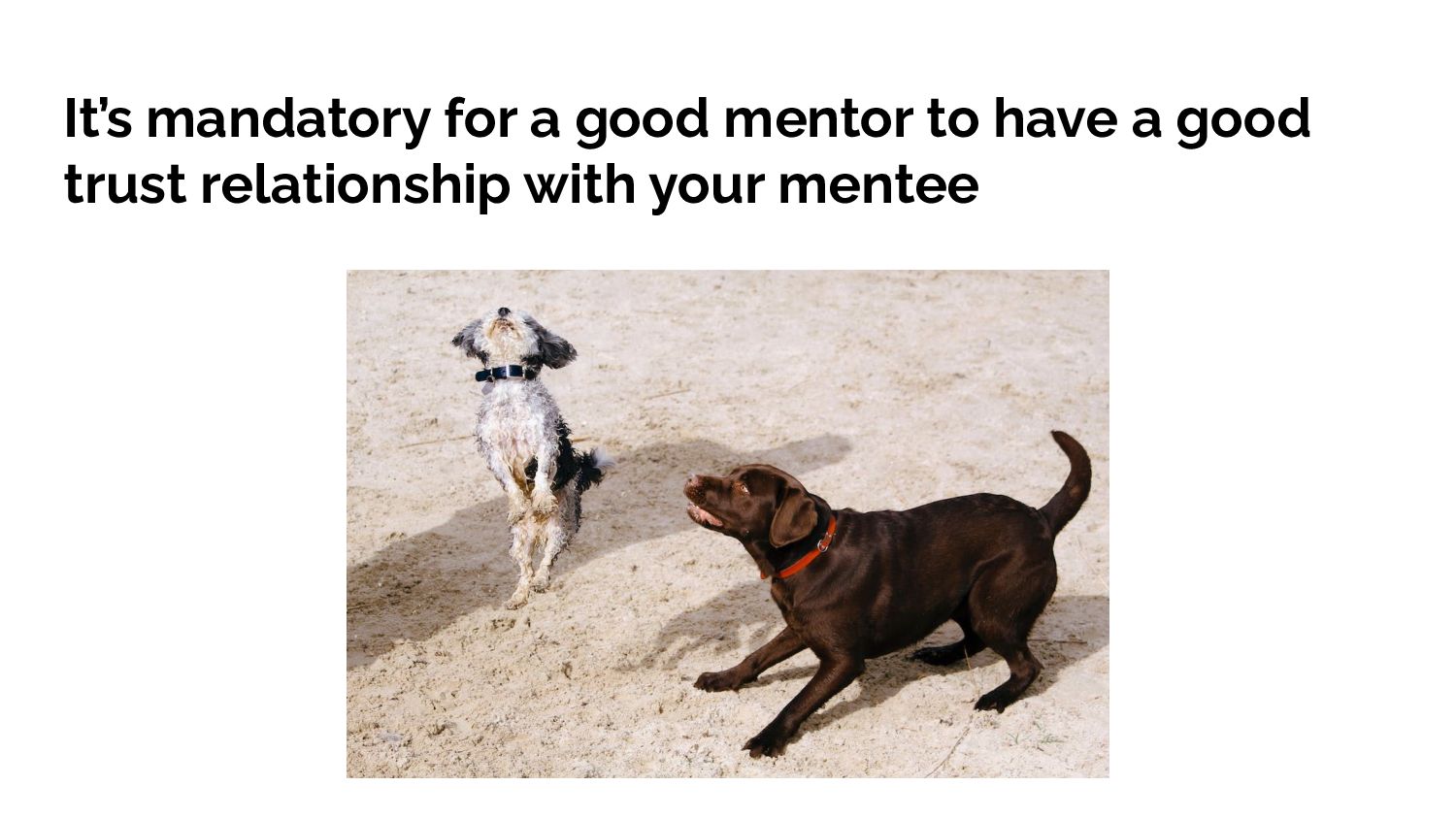
  11. It’s mandatory for a good mentor to have a good

    trust relationship with your mentee
  12. If your mentee is afraid of judgement, chances are you

    won’t know everything you need to know and that’s the worst-case scenario because your guiding will be compromised
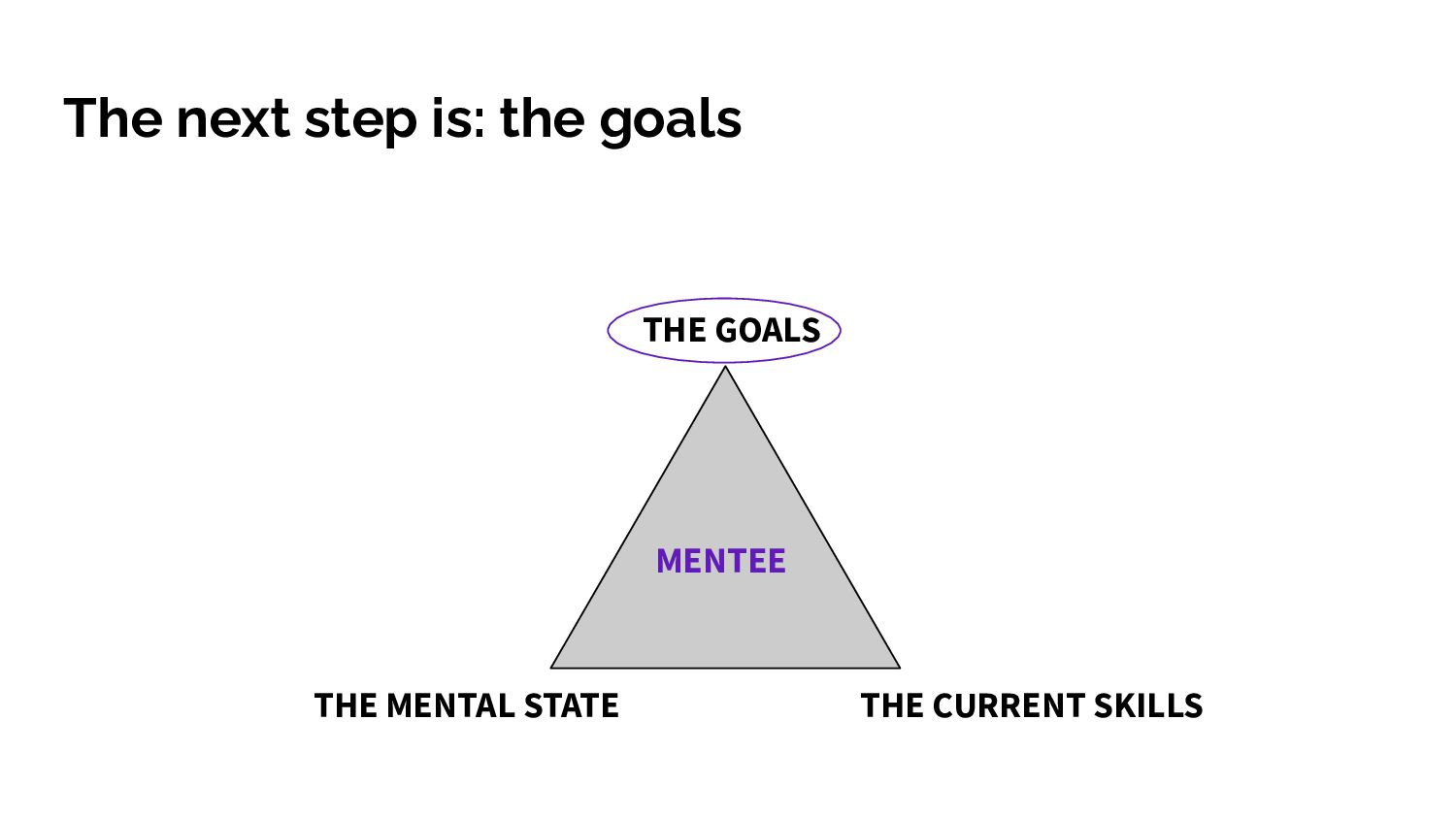
  13. The next step is: the goals THE GOALS THE CURRENT

    SKILLS THE MENTAL STATE MENTEE
  14. And I do hope your mentees are exactly where they

    wanna be, with a job that they actually enjoy
  15. When the two things are not aligned, this may be

    a problem for motivation. Let’s say your company wants your mentee to learn more backend, but they’re more interested in frontend
  16. How would you deal with this? Your mentee needs their

    job to pay the bills, but if you focus into backend you may have problems motivating
  17. The solution is to be honest and also flexible. Make

    your mentee study backend, create an API, read articles while you create a frontend for their work, and share with them the whole process. That way, you can put 80% of your efforts into making your mentee learn backend, but still, they will learn a thing or two about their true interest
  18. This was just an example, but there are several ways

    to do this. Be creative, but most of all be flexible while things don’t align.
  19. And now we’ll go to current skills THE GOALS THE

    CURRENT SKILLS THE MENTAL STATE MENTEE
  20. A good analysis of that will be crucial to know

    what you’re going to do with mentoring
  21. The exercises, articles, videos, talks, and everything that you’re going

    to throw up to your mentee needs, to be evaluated first by checking their skills
  22. So my advice would be to start with something basic

    like an exercise and measure their performance of doing it
  23. This will help you plan your next steps and make

    sure their skills reach their goal in a time period that you find appropriate
  24. And for that, I will give an example using my

    most recent mentee, Jessica
  25. Each of these topics has content of what we did

    on the week, the challenges, what was fulfilled or not
  26. Without a good tracking history, it’s easy to get lost

    in where you were last week and how things are evolving
  27. So the process will not be as efficient as it

    should be, and that’s probably your fault
  28. I recommend doing a weekly document - What the mentee

    was able to complete last week - How did the mentee evaluate their work? Any problems? - What was your weekly call about? What did you discuss? - What your mentee still needs to do / next steps
  29. And rememider: mentoring someone is an act of responsibility that

    may impact deeply in their career and life. It’s okay to be afraid of not doing a good job
  30. And if it’s not working for some reason, talk with

    your mentee. Maybe you can adjust the process or find someone else for the job