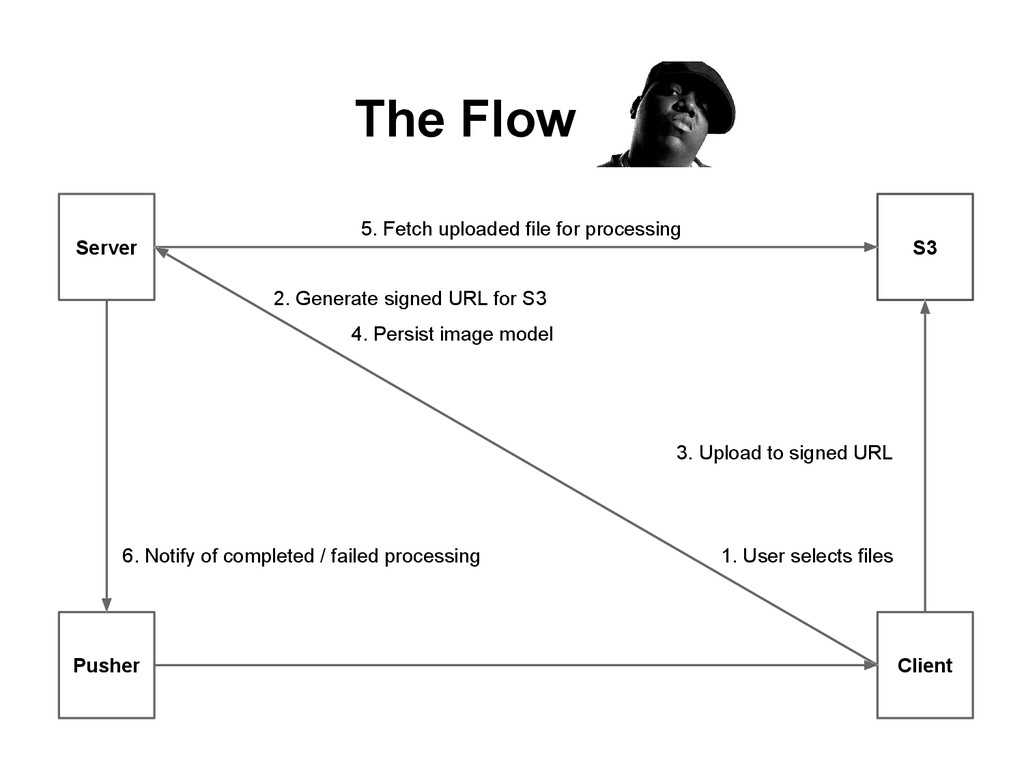
Generate signed URL for S3 4. Persist image model 6. Notify of completed / failed processing 5. Fetch uploaded file for processing The Flow 1. User selects files
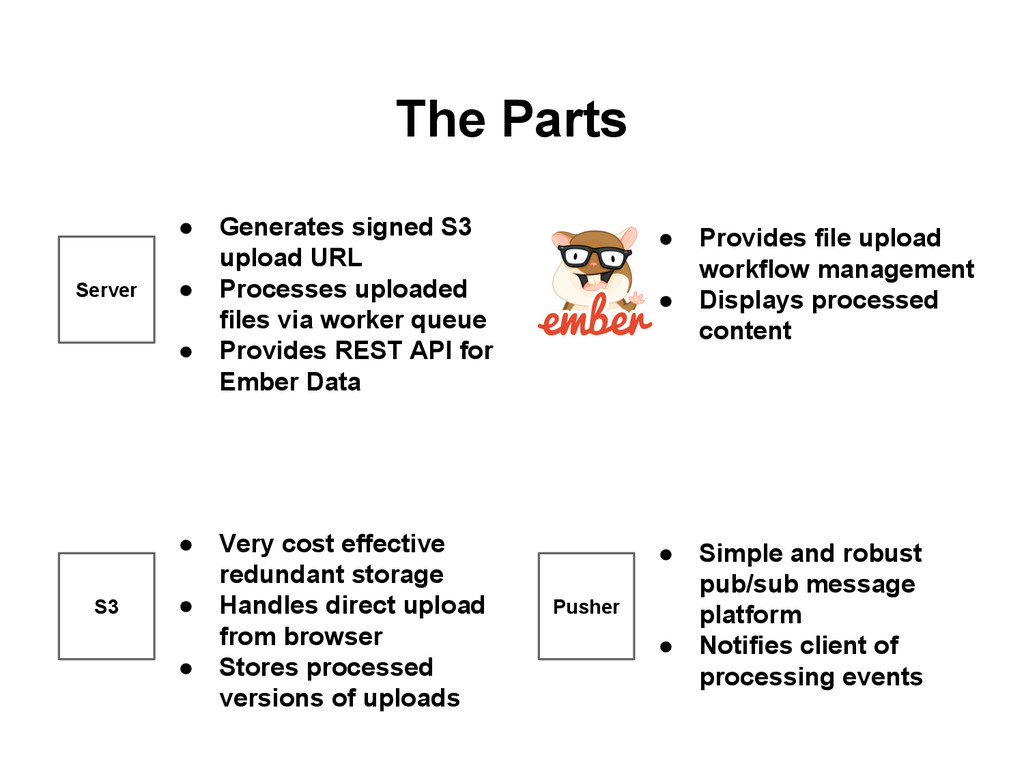
The Parts Server S3 Pusher • Generates signed S3 upload URL • Processes uploaded files via worker queue • Provides REST API for Ember Data • Very cost effective redundant storage • Handles direct upload from browser • Stores processed versions of uploads • Simple and robust pub/sub message platform • Notifies client of processing events
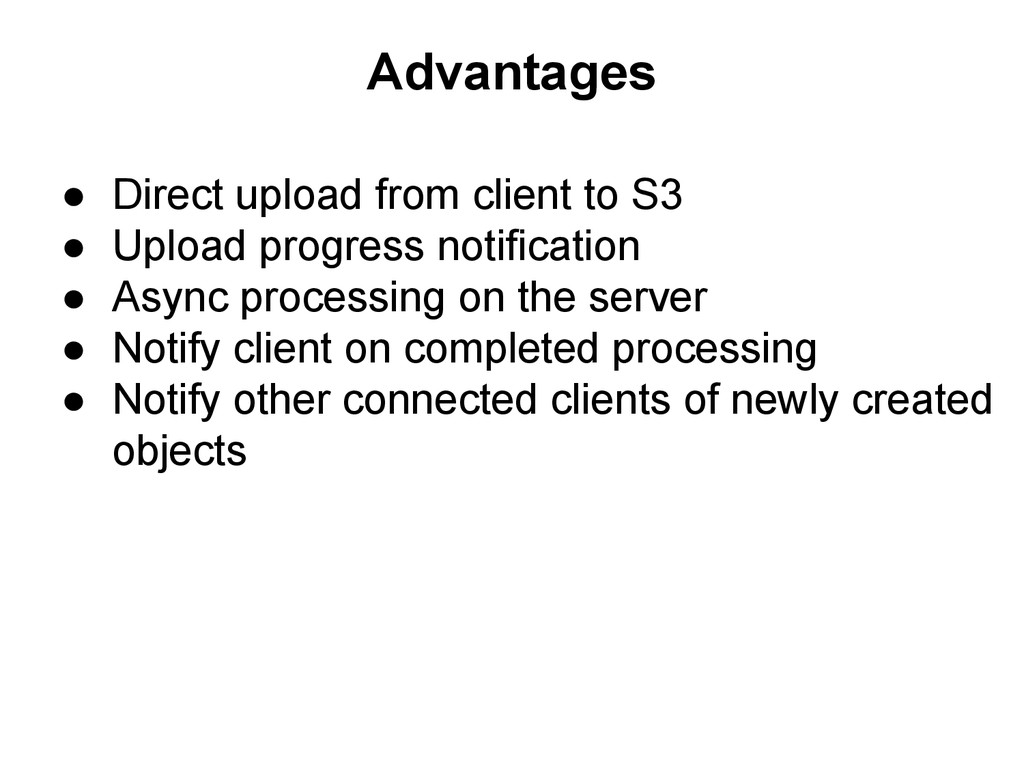
progress notification • Async processing on the server • Notify client on completed processing • Notify other connected clients of newly created objects
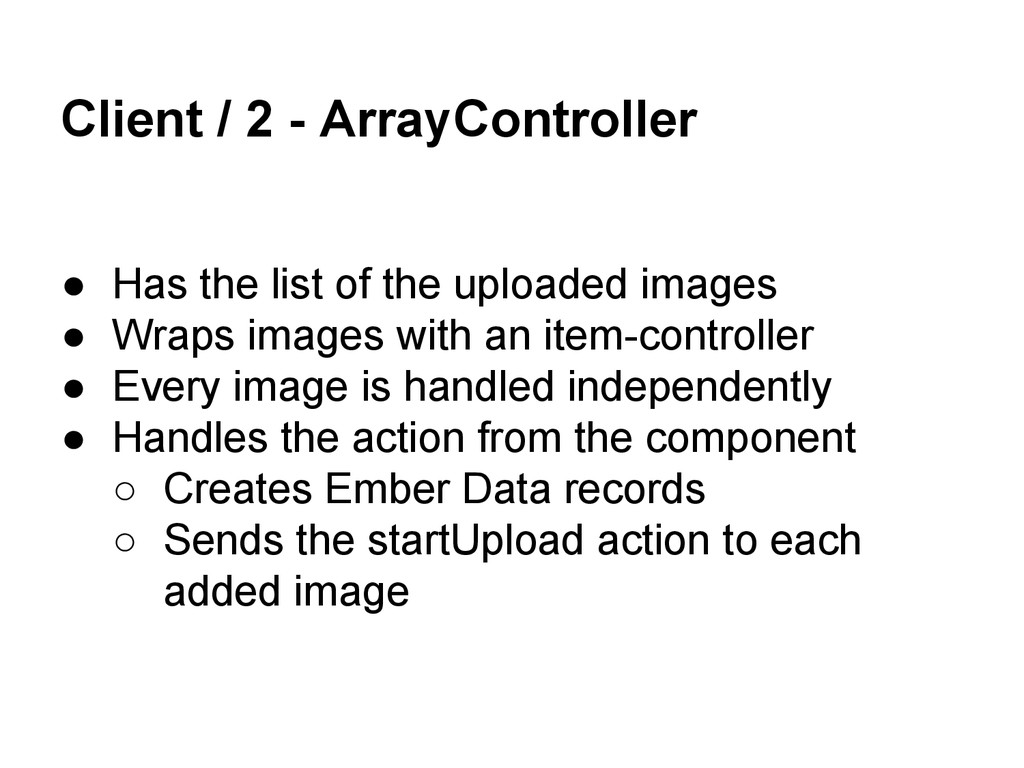
the uploaded images • Wraps images with an item-controller • Every image is handled independently • Handles the action from the component ◦ Creates Ember Data records ◦ Sends the startUpload action to each added image
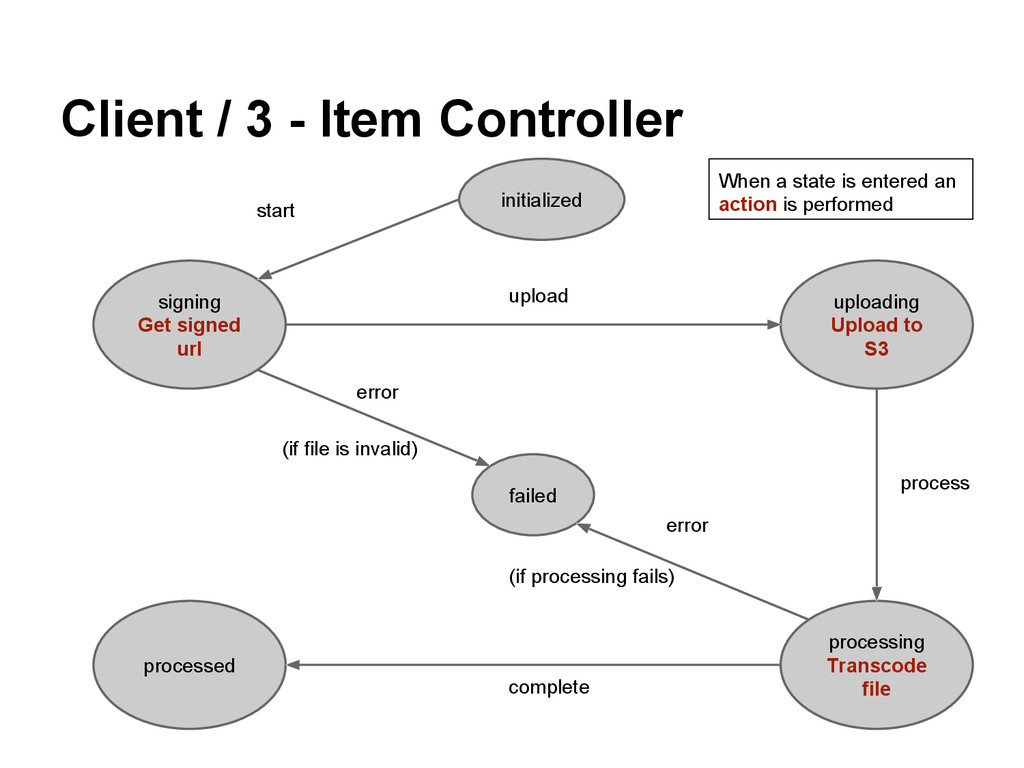
signing Get signed url processing Transcode file processed failed initialized start upload process complete error error (if file is invalid) (if processing fails) When a state is entered an action is performed
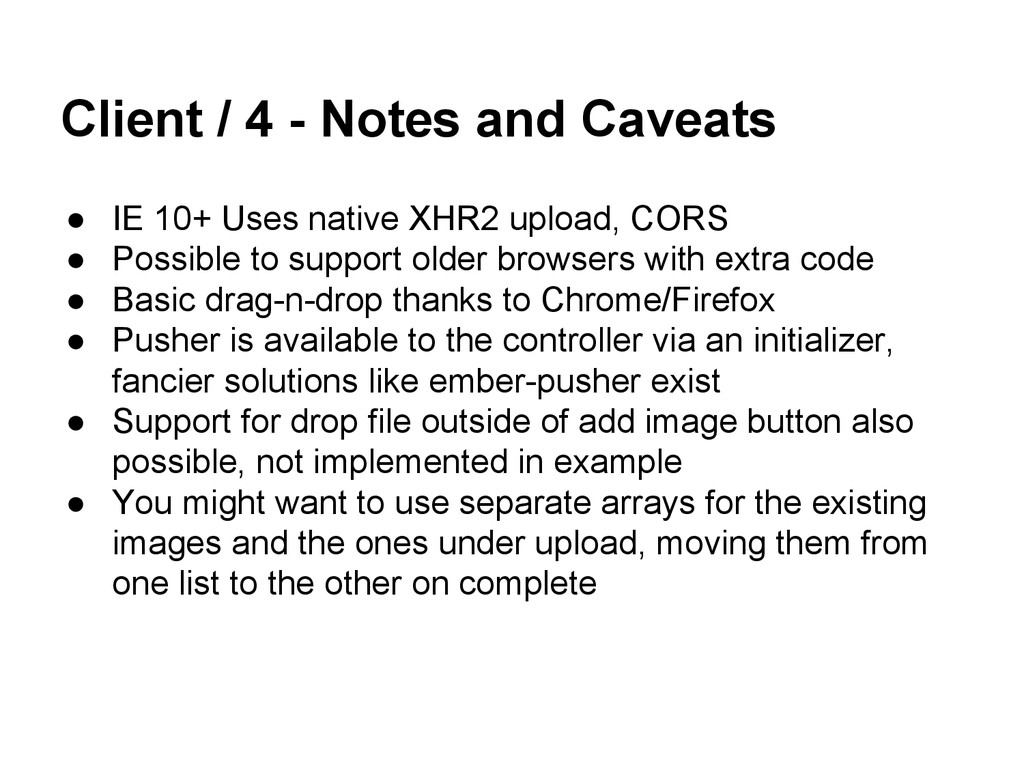
Uses native XHR2 upload, CORS • Possible to support older browsers with extra code • Basic drag-n-drop thanks to Chrome/Firefox • Pusher is available to the controller via an initializer, fancier solutions like ember-pusher exist • Support for drop file outside of add image button also possible, not implemented in example • You might want to use separate arrays for the existing images and the ones under upload, moving them from one list to the other on complete
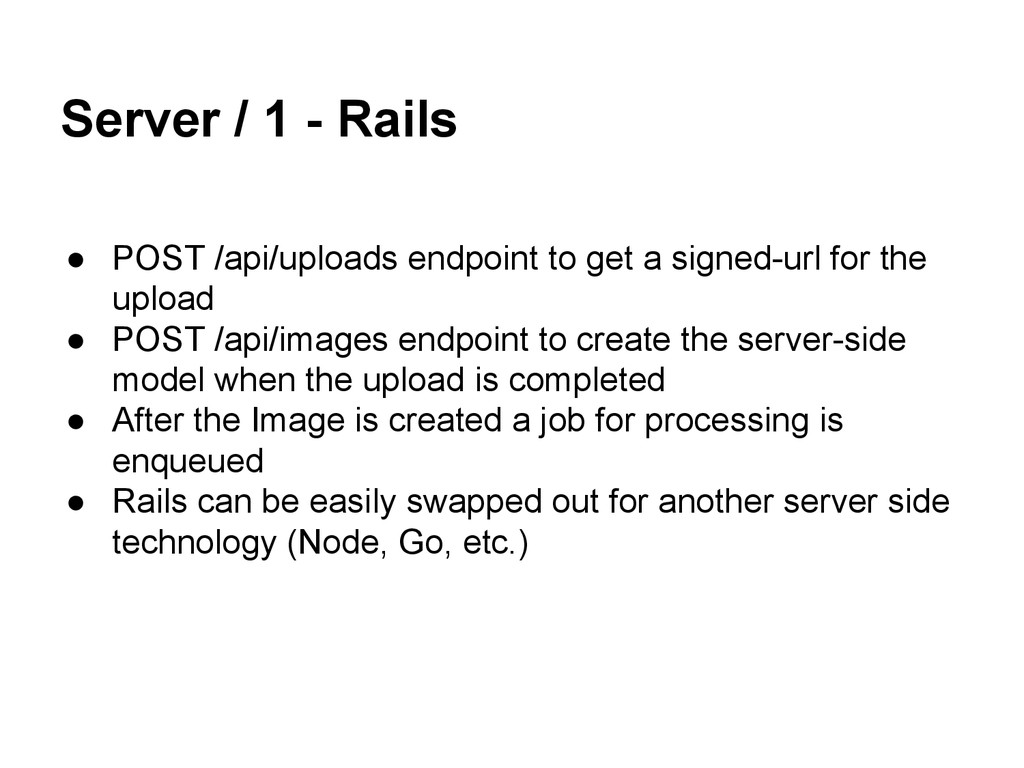
get a signed-url for the upload • POST /api/images endpoint to create the server-side model when the upload is completed • After the Image is created a job for processing is enqueued • Rails can be easily swapped out for another server side technology (Node, Go, etc.)
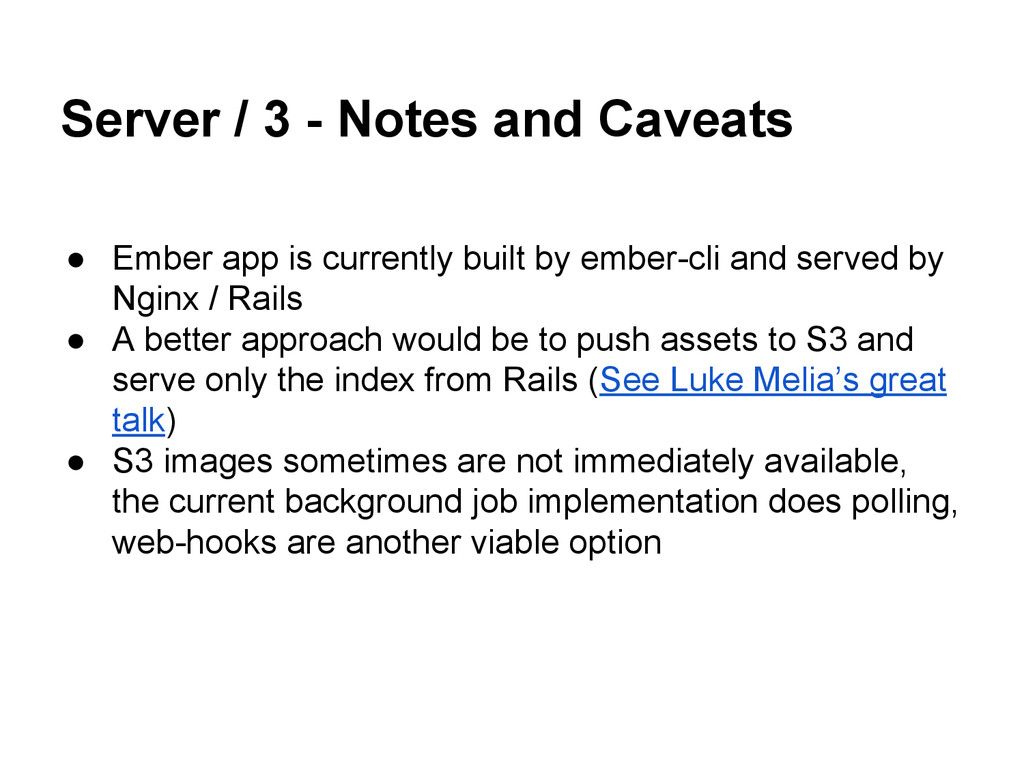
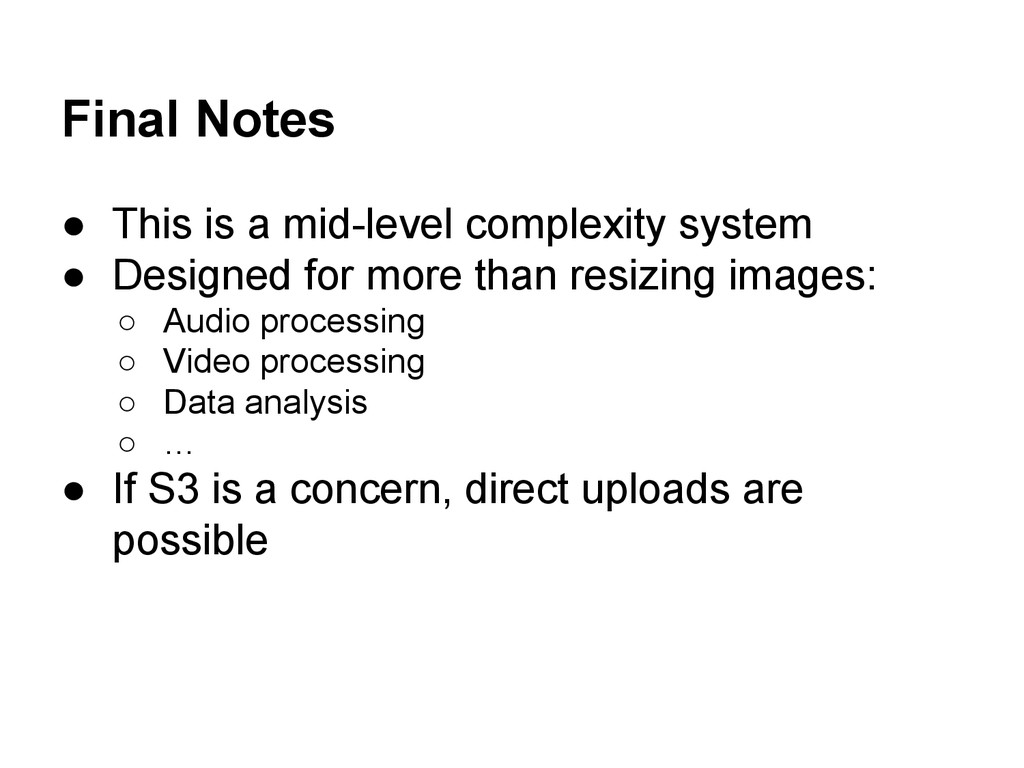
is currently built by ember-cli and served by Nginx / Rails • A better approach would be to push assets to S3 and serve only the index from Rails (See Luke Melia’s great talk) • S3 images sometimes are not immediately available, the current background job implementation does polling, web-hooks are another viable option
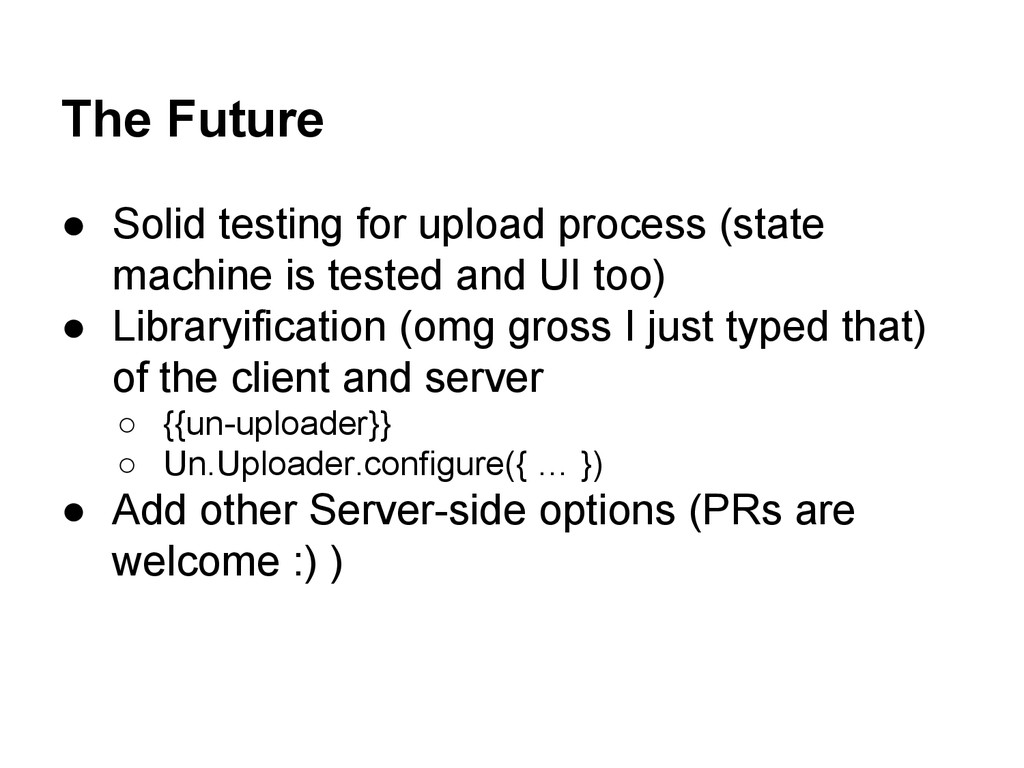
is tested and UI too) • Libraryification (omg gross I just typed that) of the client and server ◦ {{un-uploader}} ◦ Un.Uploader.configure({ … }) • Add other Server-side options (PRs are welcome :) )


 ghedamat
 kishida
 ivargrimstad
 yosuke_furukawa
 shoheimitani
 allegrogiken
 kosukesaigusa
 naruogram
 onozaty
 kumaiu
 inariku
 akihisaikeda
 chigichan24
 rkendrick25
 sergeychernyshev
 asonas
 chriscoyier
 427marketing
 helenjbeal
 kimpetersen
 wjessup
 frankvandijk
 mkilby
 keithpitt