Upgrade to Pro
— share decks privately, control downloads, hide ads and more …
Speaker Deck
Sign up for free
Menu
Search
Features
All features
Private URLs
Password Protection
Custom URLS
Scheduled publishing
Remove Branding
Restrict embedding
Deck Collections
Notes
Features
All features
Private URLs
Password Protection
Custom URLS
Scheduled publishing
Remove Branding
Restrict embedding
Deck Collections
Notes
Explore
Featured decks
Featured speakers
Programming
Technology
Storyboards
Explore
Featured decks
Featured speakers
Programming
Technology
Storyboards
Pricing
Search
Sign in
Sign up for free
T
Search
Cath Grealy
March 24, 2026
1
0
Share
Embed
Copy iframe code
Copy JS code
Copy link
Start on current slide
T
Cath Grealy
March 24, 2026
Featured
See All Featured
Measuring & Analyzing Core Web Vitals
bluesmoon
9
1k
Typedesign – Prime Four
hannesfritz
42
3.2k
Evolving SEO for Evolving Search Engines
ryanjones
0
330
Thoughts on Productivity
jonyablonski
76
5.4k
Distributed Sagas: A Protocol for Coordinating Microservices
caitiem20
333
23k
How to Align SEO within the Product Triangle To Get Buy-In & Support - #RIMC
aleyda
2
1.8k
The Myth of the Modular Monolith - Day 2 Keynote - Rails World 2024
eileencodes
28
3.7k
Believing is Seeing
oripsolob
1
240
The Invisible Side of Design
smashingmag
301
52k
The Hidden Cost of Media on the Web [PixelPalooza 2025]
tammyeverts
2
530
Tell your own story through comics
letsgokoyo
1
1.1k
New Earth Scene 8
popppiees
4
2.7k
Transcript
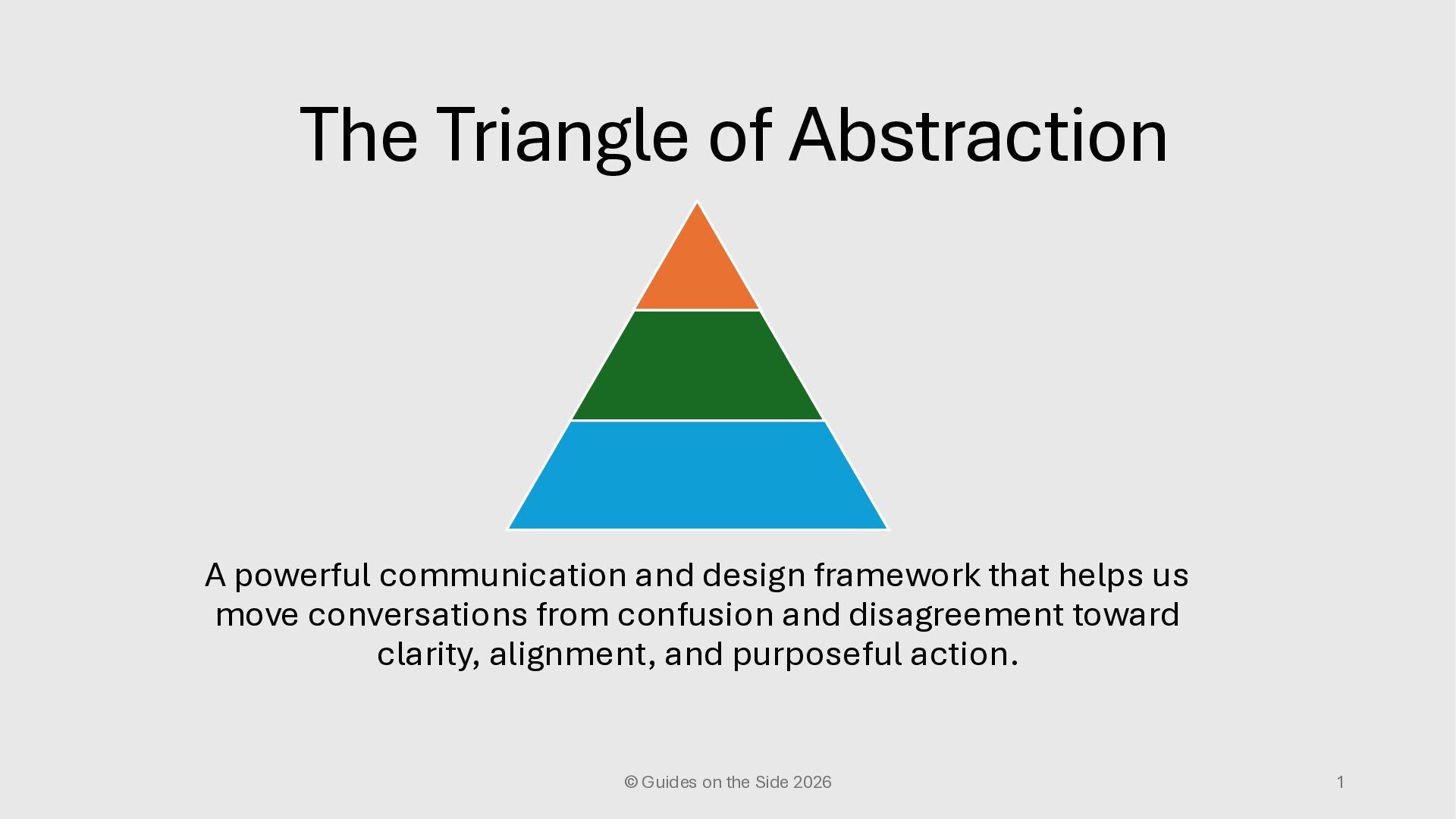
The Triangle of Abstraction A powerful communication and design framework
that helps us move conversations from confusion and disagreement toward clarity, alignment, and purposeful action. © Guides on the Side 2026 1
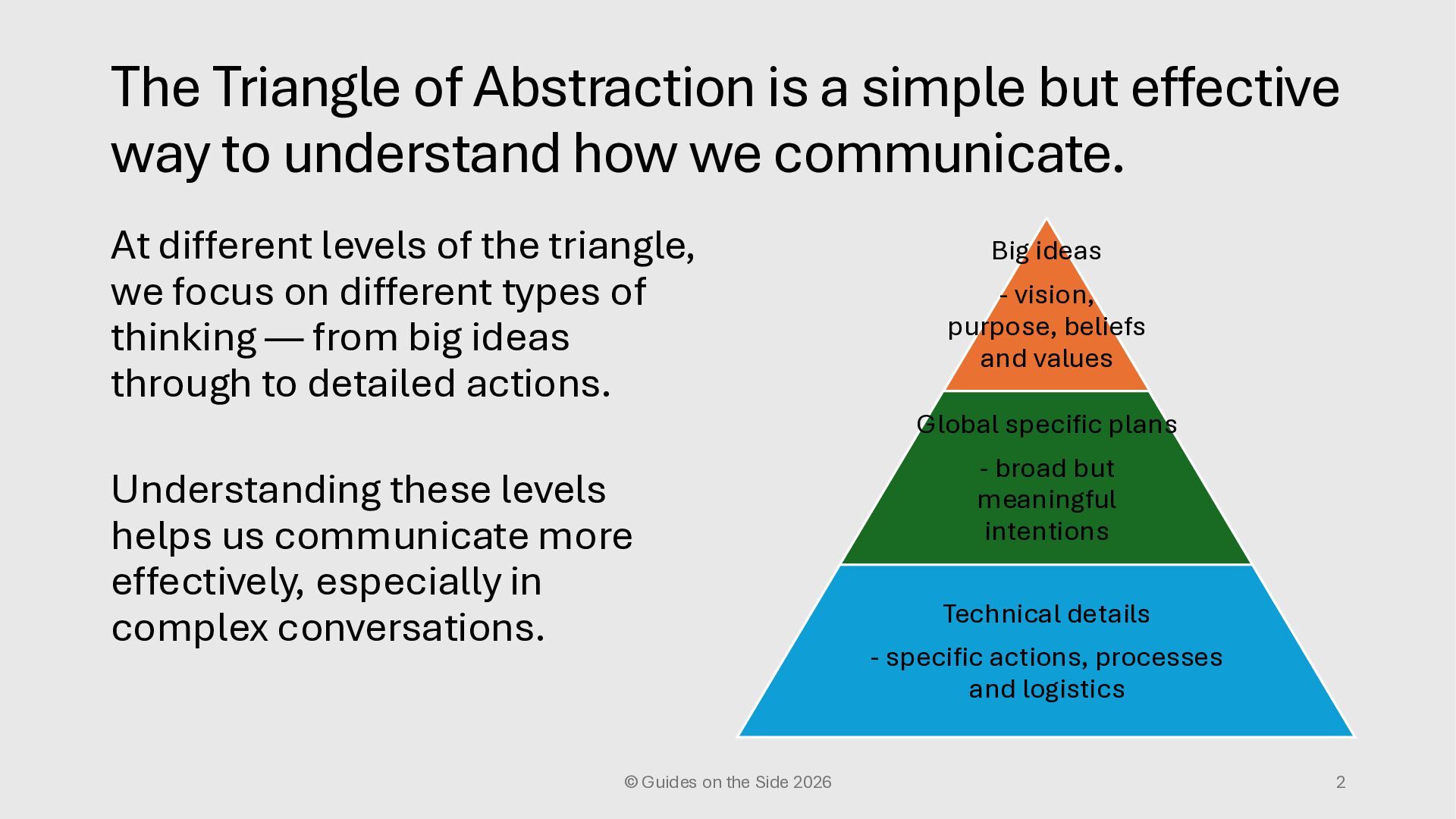
The Triangle of Abstraction is a simple but effective way
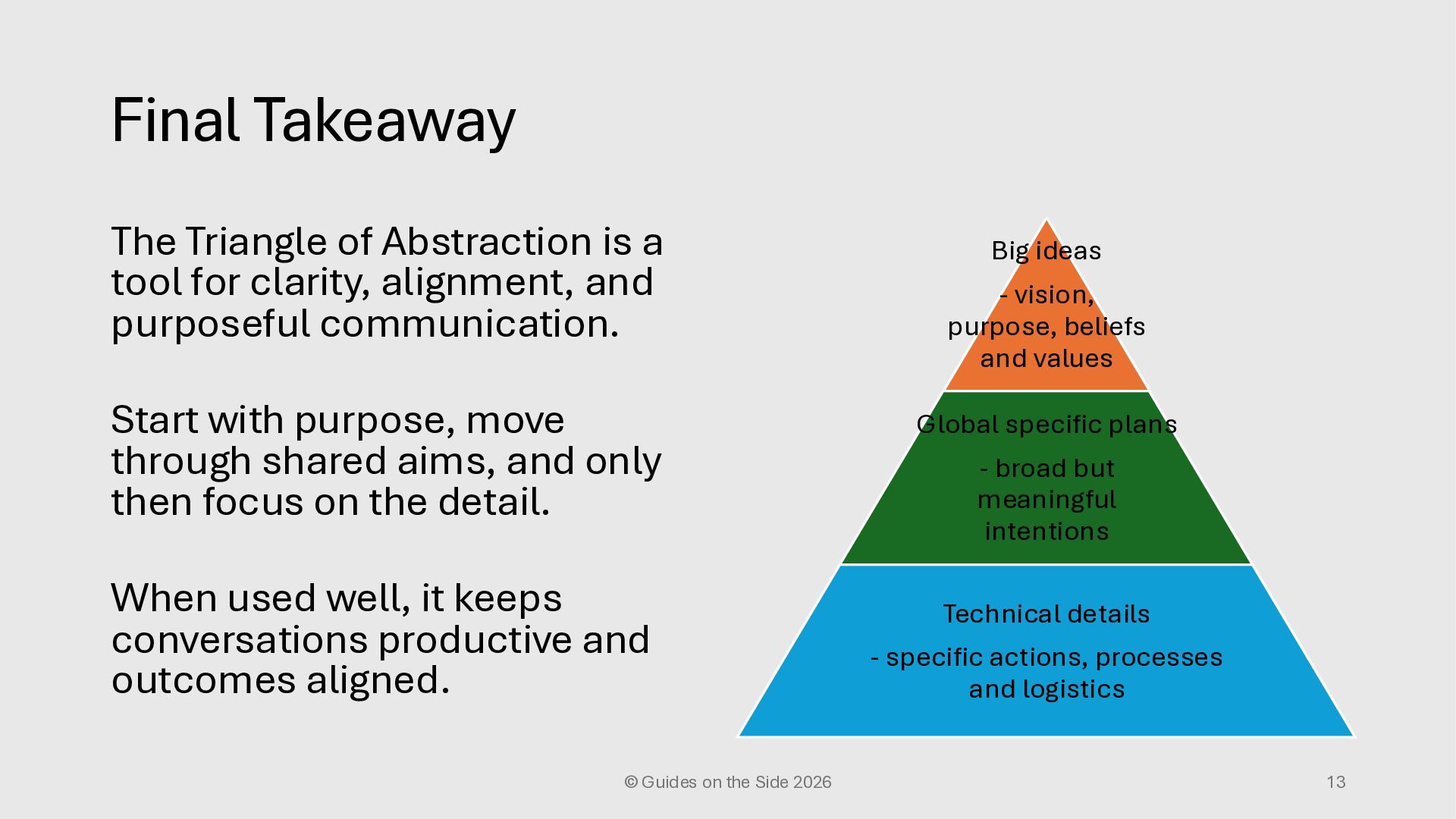
to understand how we communicate. At different levels of the triangle, we focus on different types of thinking — from big ideas through to detailed actions. Understanding these levels helps us communicate more effectively, especially in complex conversations. Big ideas - vision, purpose, beliefs and values Global specific plans - broad but meaningful intentions Technical details - specific actions, processes and logistics © Guides on the Side 2026 2
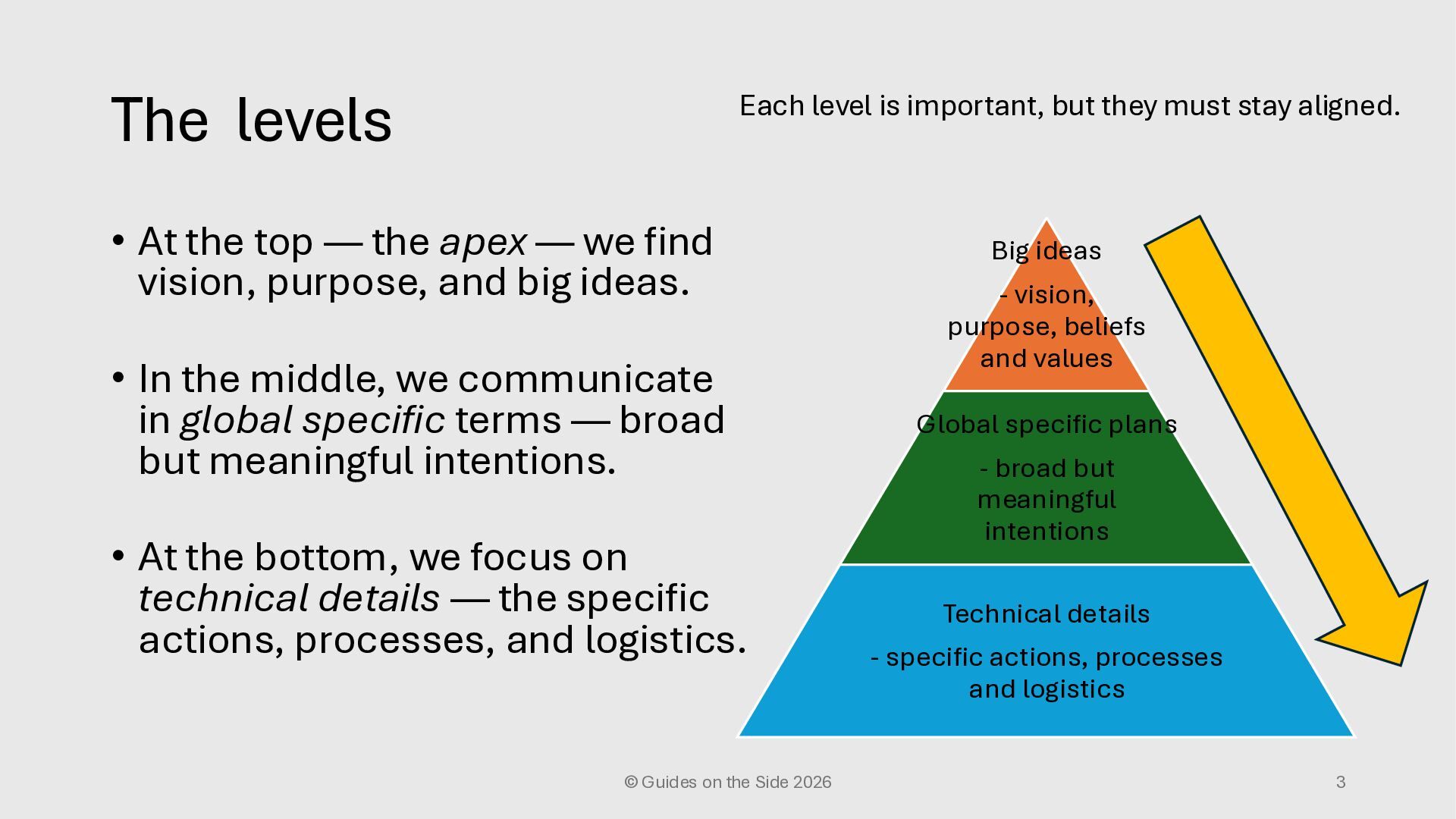
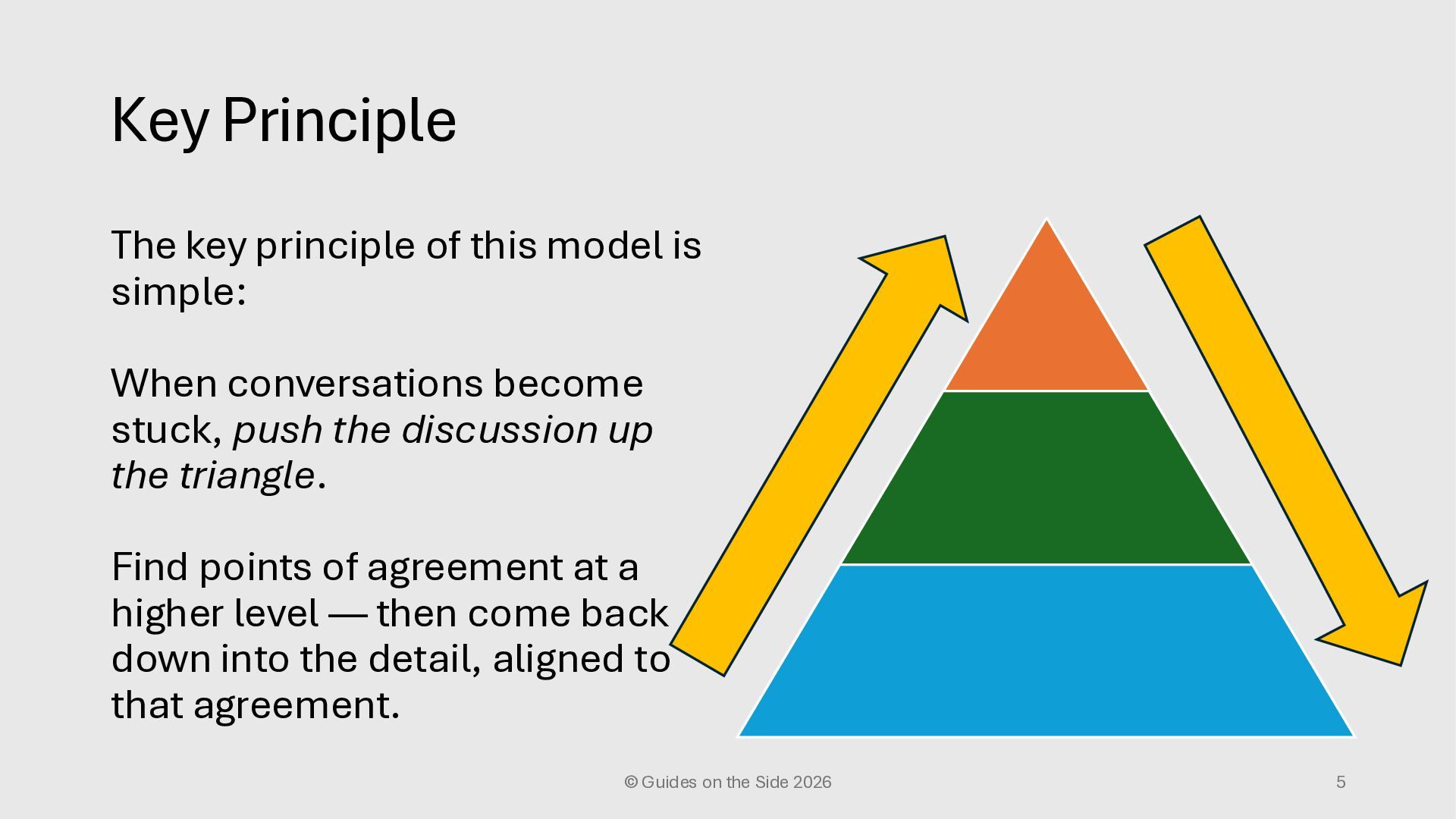
The levels • At the top — the apex —
we find vision, purpose, and big ideas. • In the middle, we communicate in global specific terms — broad but meaningful intentions. • At the bottom, we focus on technical details — the specific actions, processes, and logistics. © Guides on the Side 2026 3 Big ideas - vision, purpose, beliefs and values Global specific plans - broad but meaningful intentions Technical details - specific actions, processes and logistics Each level is important, but they must stay aligned.
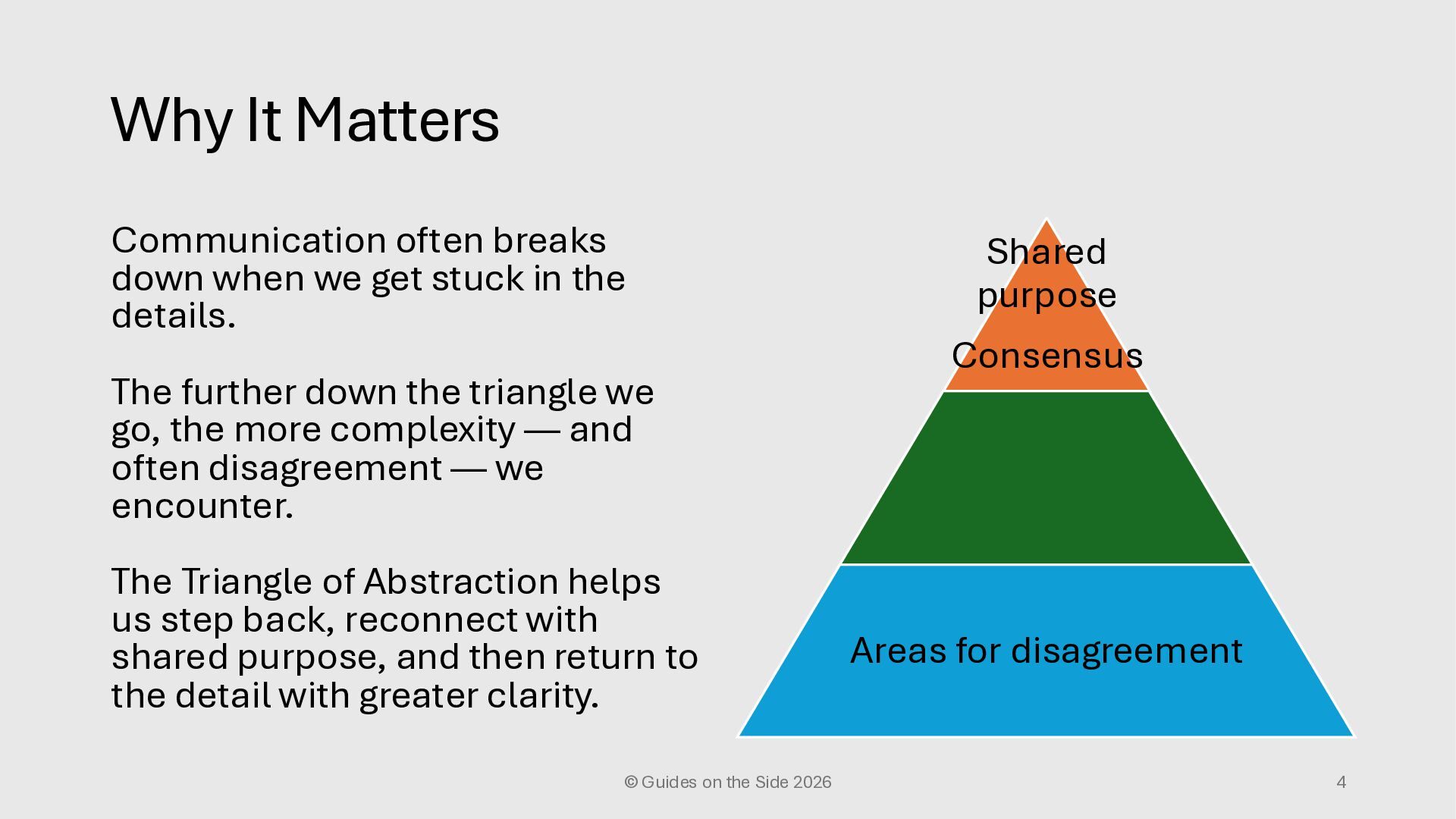
Why It Matters Communication often breaks down when we get
stuck in the details. The further down the triangle we go, the more complexity — and often disagreement — we encounter. The Triangle of Abstraction helps us step back, reconnect with shared purpose, and then return to the detail with greater clarity. Shared purpose Consensus Areas for disagreement © Guides on the Side 2026 4
Key Principle The key principle of this model is simple:
When conversations become stuck, push the discussion up the triangle. Find points of agreement at a higher level — then come back down into the detail, aligned to that agreement. © Guides on the Side 2026 5
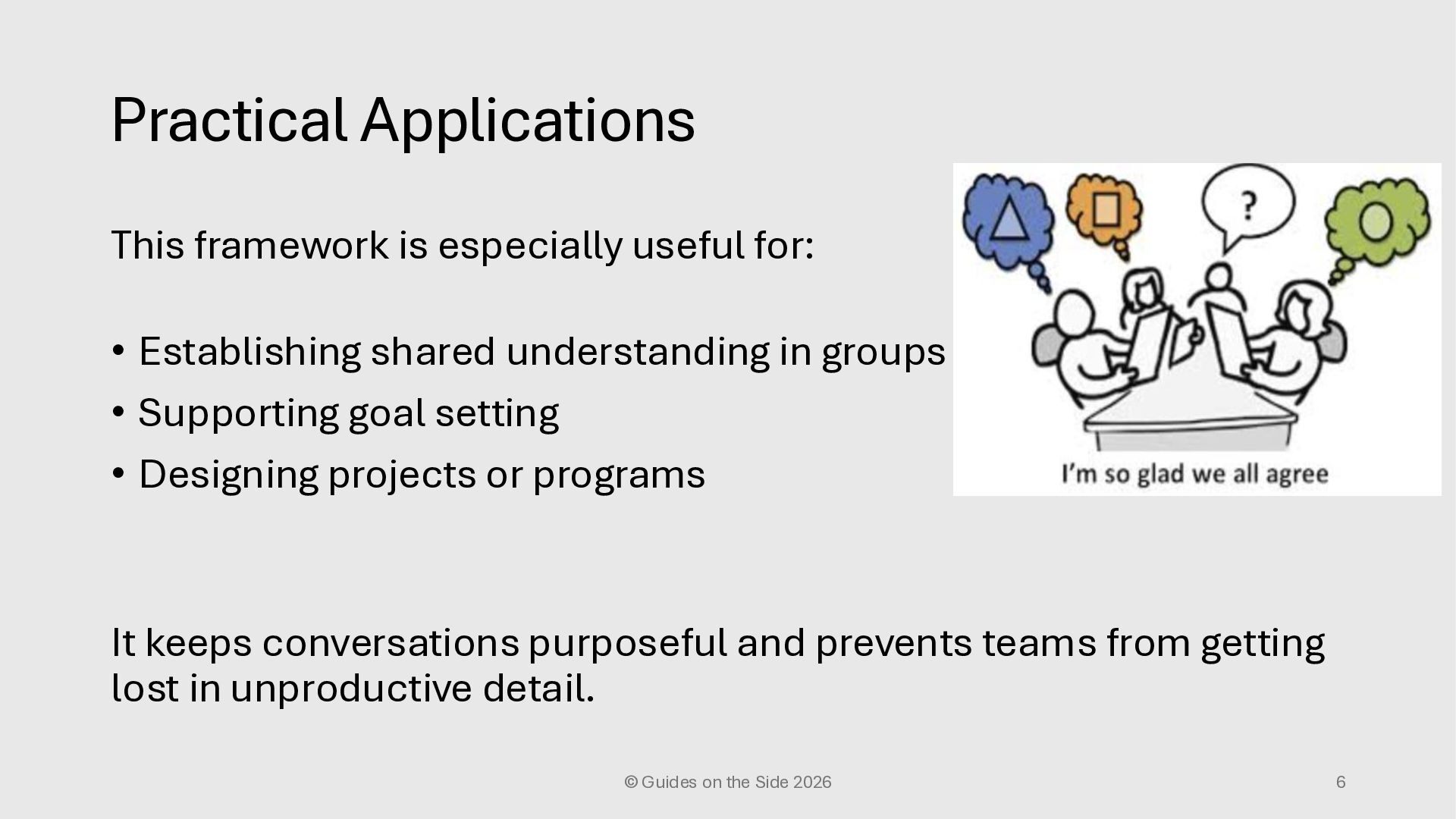
Practical Applications This framework is especially useful for: • Establishing
shared understanding in groups • Supporting goal setting • Designing projects or programs It keeps conversations purposeful and prevents teams from getting lost in unproductive detail. © Guides on the Side 2026 6
Starting with Purpose In any design process, we start at
the top — with purpose. This is the “why” behind what we’re doing. While it can be challenging to define, once the purpose is clear, everything else can be aligned to it. © Guides on the Side 2026 7
From Purpose to Aims After clarifying purpose, we move to
aims — expressed in global specific terms. These are still broad, but more focused. For example, an aim might be to engage participants or strengthen professional connections. © Guides on the Side 2026 8
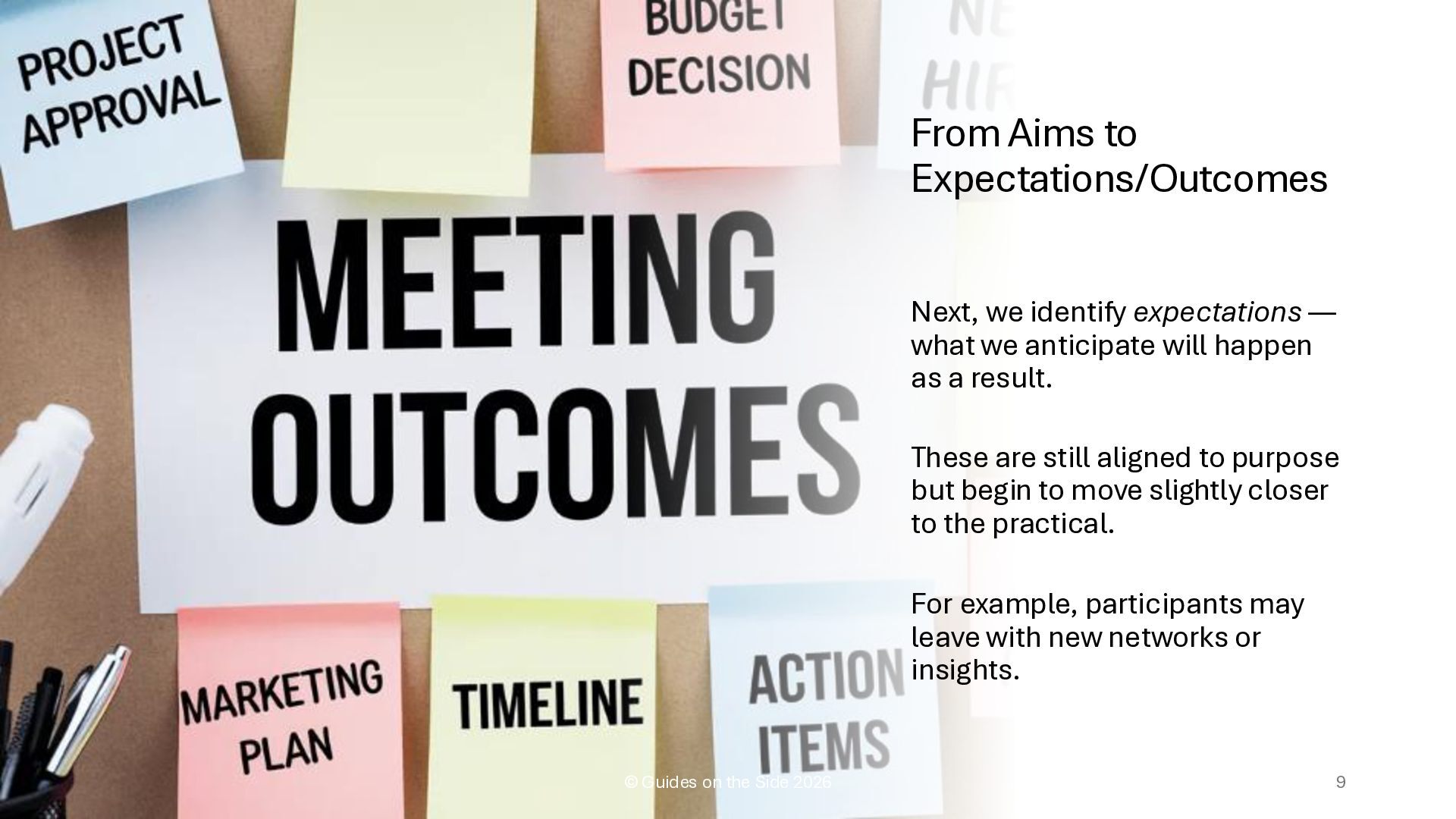
From Aims to Expectations/Outcomes Next, we identify expectations — what
we anticipate will happen as a result. These are still aligned to purpose but begin to move slightly closer to the practical. For example, participants may leave with new networks or insights. © Guides on the Side 2026 9
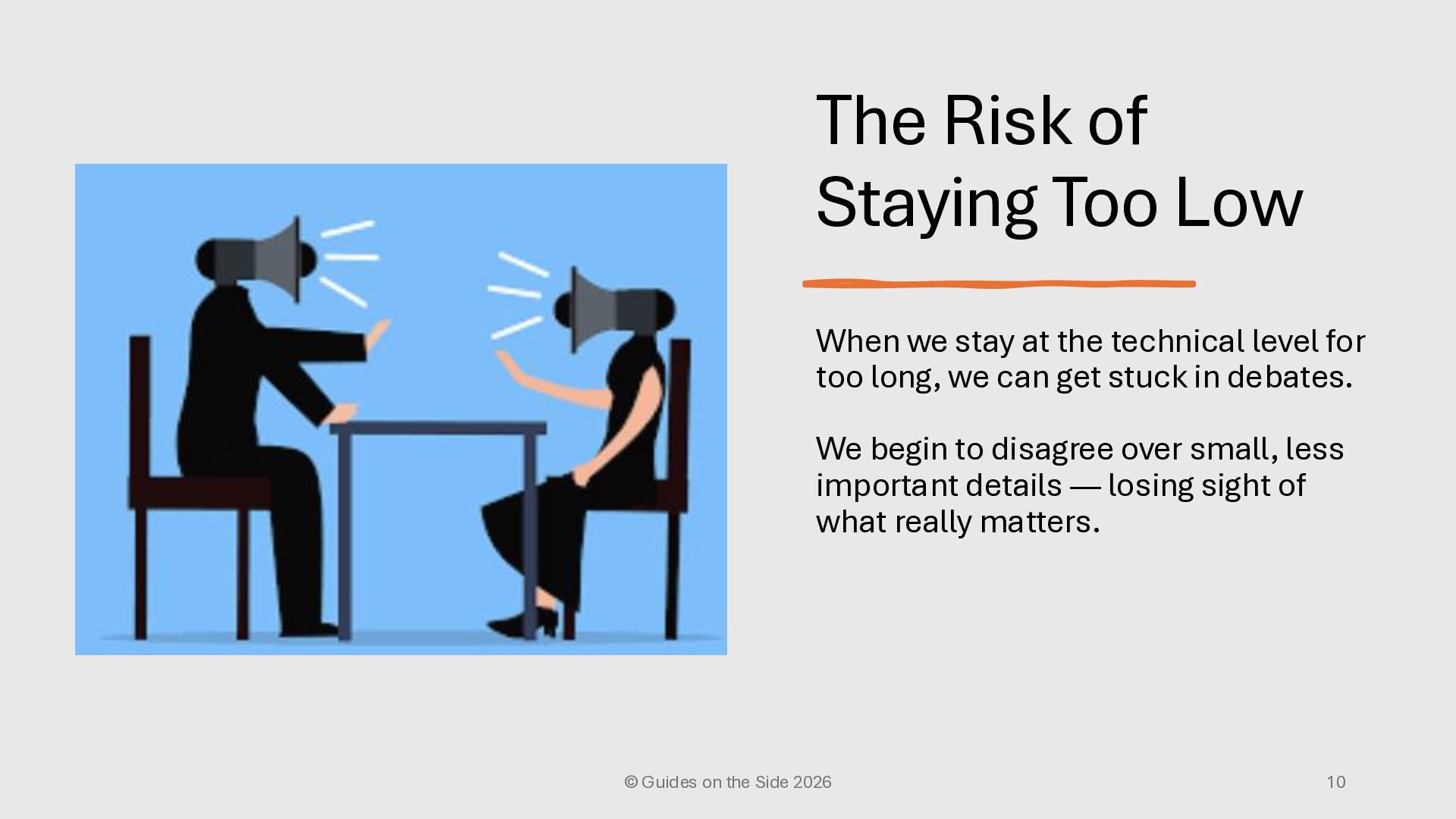
The Risk of Staying Too Low When we stay at
the technical level for too long, we can get stuck in debates. We begin to disagree over small, less important details — losing sight of what really matters. © Guides on the Side 2026 10
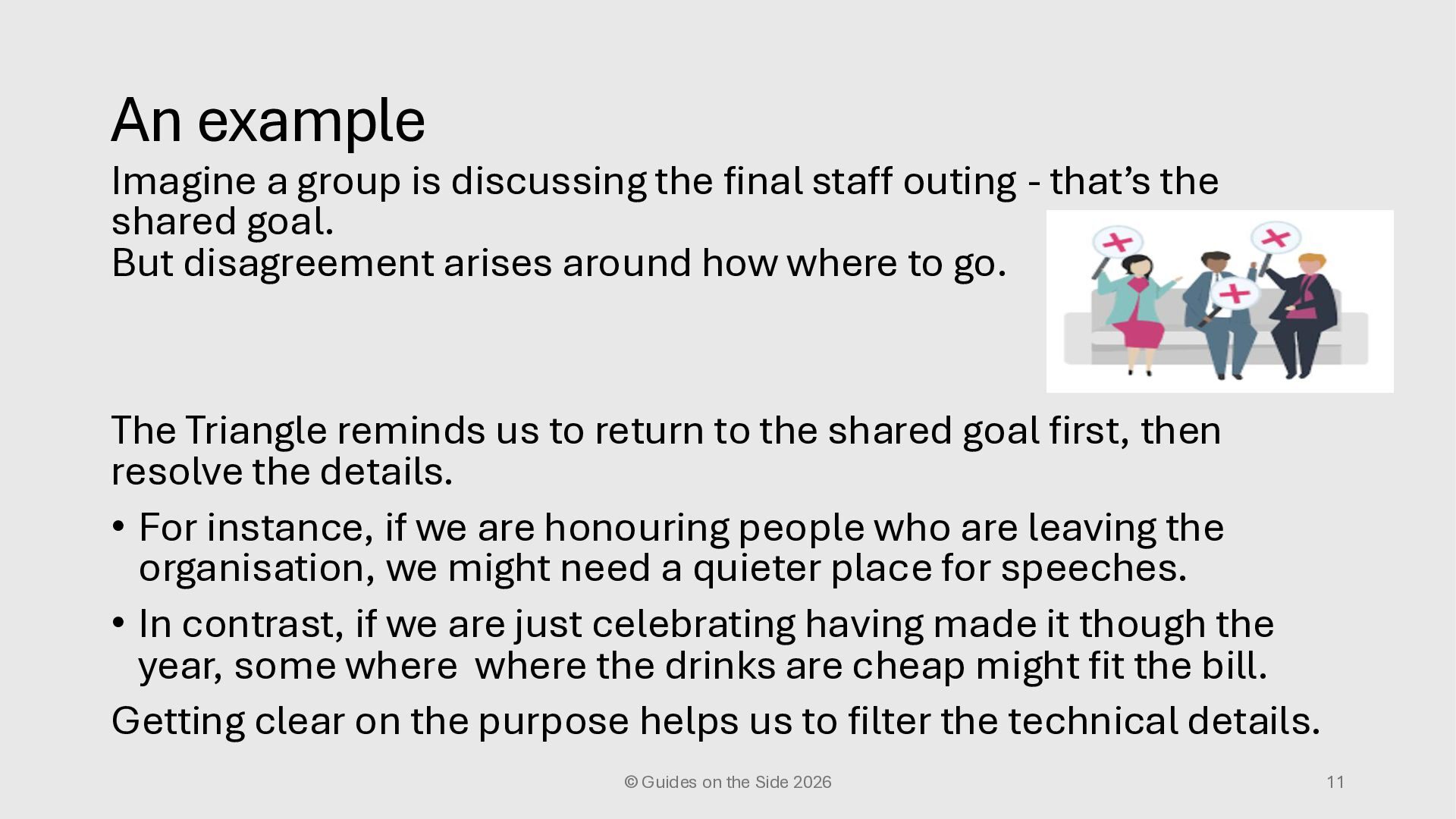
An example Imagine a group is discussing the final staff
outing - that’s the shared goal. But disagreement arises around how where to go. The Triangle reminds us to return to the shared goal first, then resolve the details. • For instance, if we are honouring people who are leaving the organisation, we might need a quieter place for speeches. • In contrast, if we are just celebrating having made it though the year, some where where the drinks are cheap might fit the bill. Getting clear on the purpose helps us to filter the technical details. © Guides on the Side 2026 11
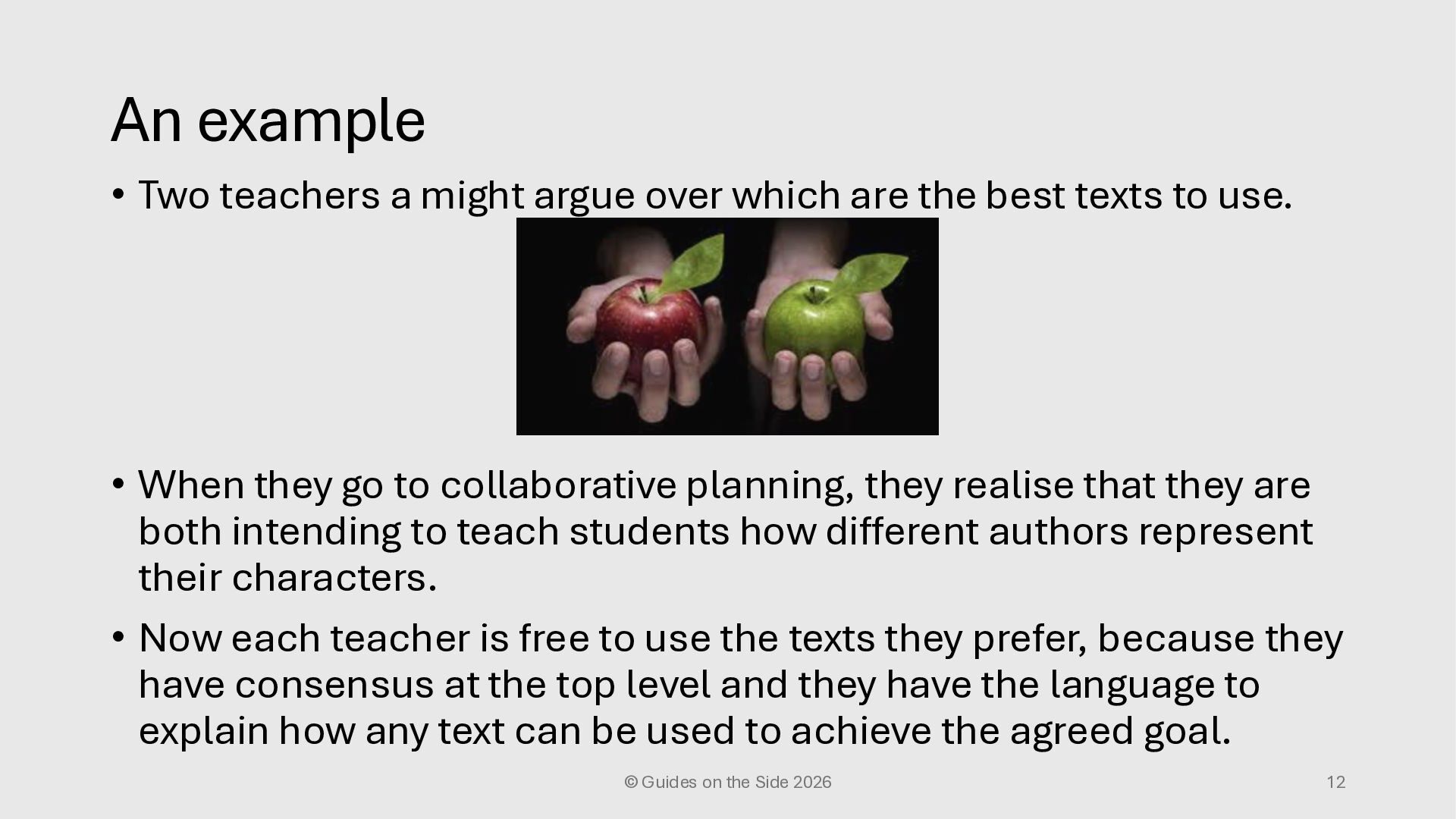
An example • Two teachers a might argue over which
are the best texts to use. • When they go to collaborative planning, they realise that they are both intending to teach students how different authors represent their characters. • Now each teacher is free to use the texts they prefer, because they have consensus at the top level and they have the language to explain how any text can be used to achieve the agreed goal. © Guides on the Side 2026 12
Final Takeaway The Triangle of Abstraction is a tool for
clarity, alignment, and purposeful communication. Start with purpose, move through shared aims, and only then focus on the detail. When used well, it keeps conversations productive and outcomes aligned. © Guides on the Side 2026 13 Big ideas - vision, purpose, beliefs and values Global specific plans - broad but meaningful intentions Technical details - specific actions, processes and logistics


 bluesmoon
 hannesfritz
 ryanjones
 jonyablonski
 caitiem20
 aleyda
 eileencodes
 oripsolob
 smashingmag
 tammyeverts
 letsgokoyo
 popppiees