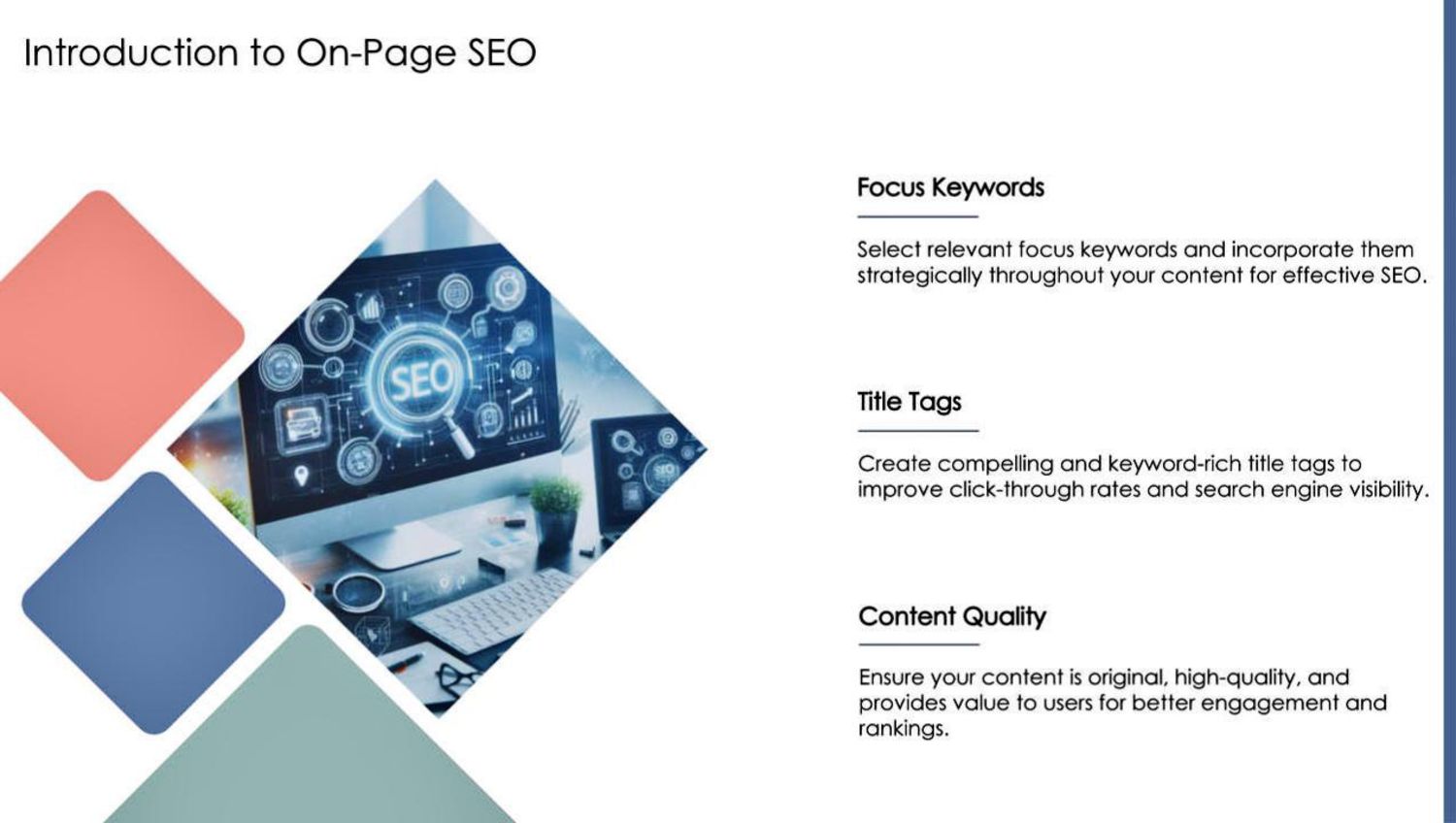
and incorporate them strategically throughout your content for effective SEO. SEO Title Tags Create compeling andkeyword-rich title tagsto improve click-throughrates andsearch engine visibility. ContentQuality Ensure your content is original, high-quality, and provides value to Users for better engagementand rankings.
experience through structured content, increases website load speed,boosts mobile responsiveness, and lowers bounce rates, leading to higher engagement andconversions. Regular updates and optimizations ensure that websites stay relevant and competitive in search rankings.
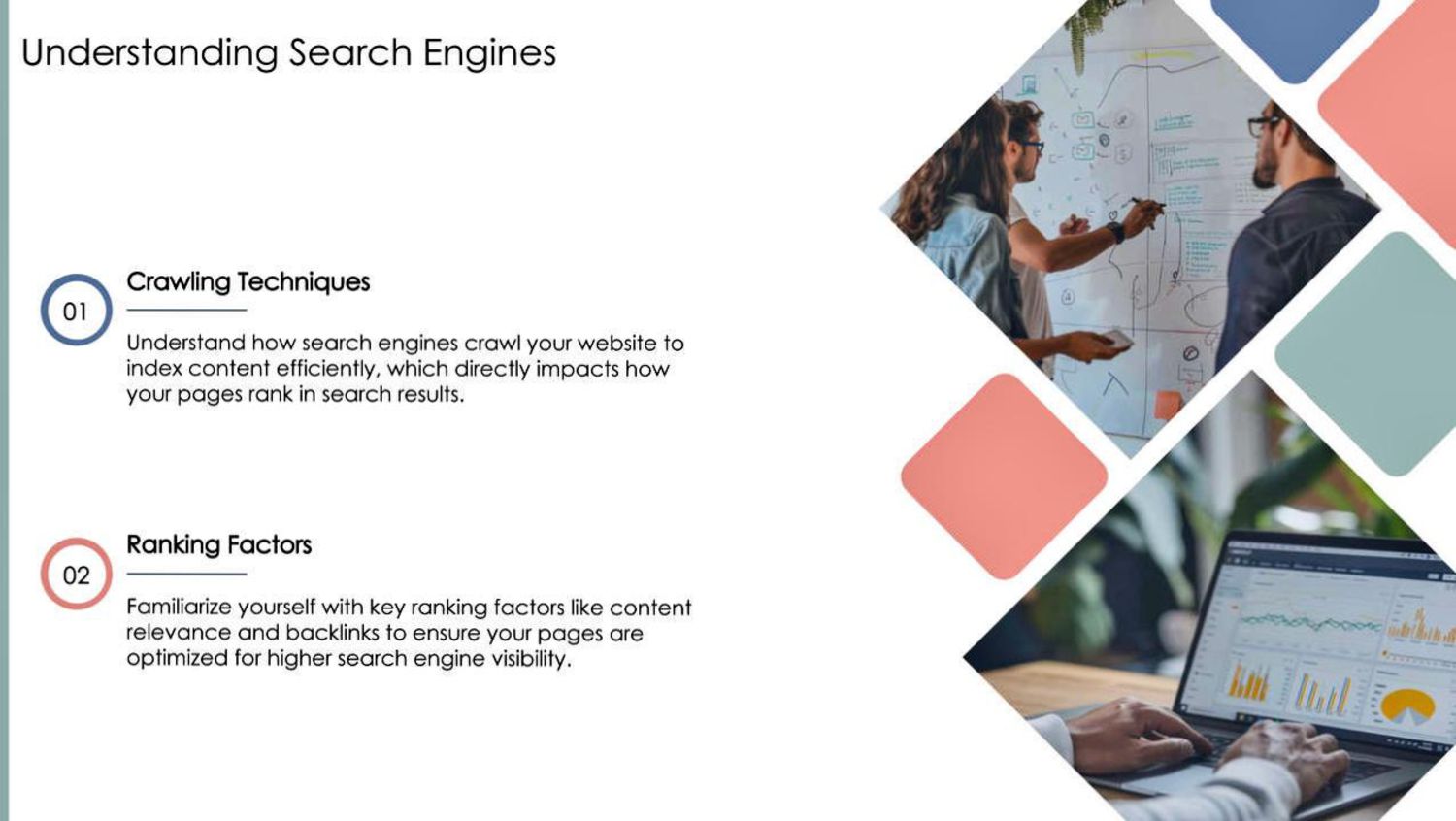
crawl your website to index content efficiently, which directly impacts how your pages rank in search results. 02 Ranking Factors Familiarize yourself with key ranking factorslike content relevance and backlinksto ensureyour pages are optimized for higher search engine visibility.
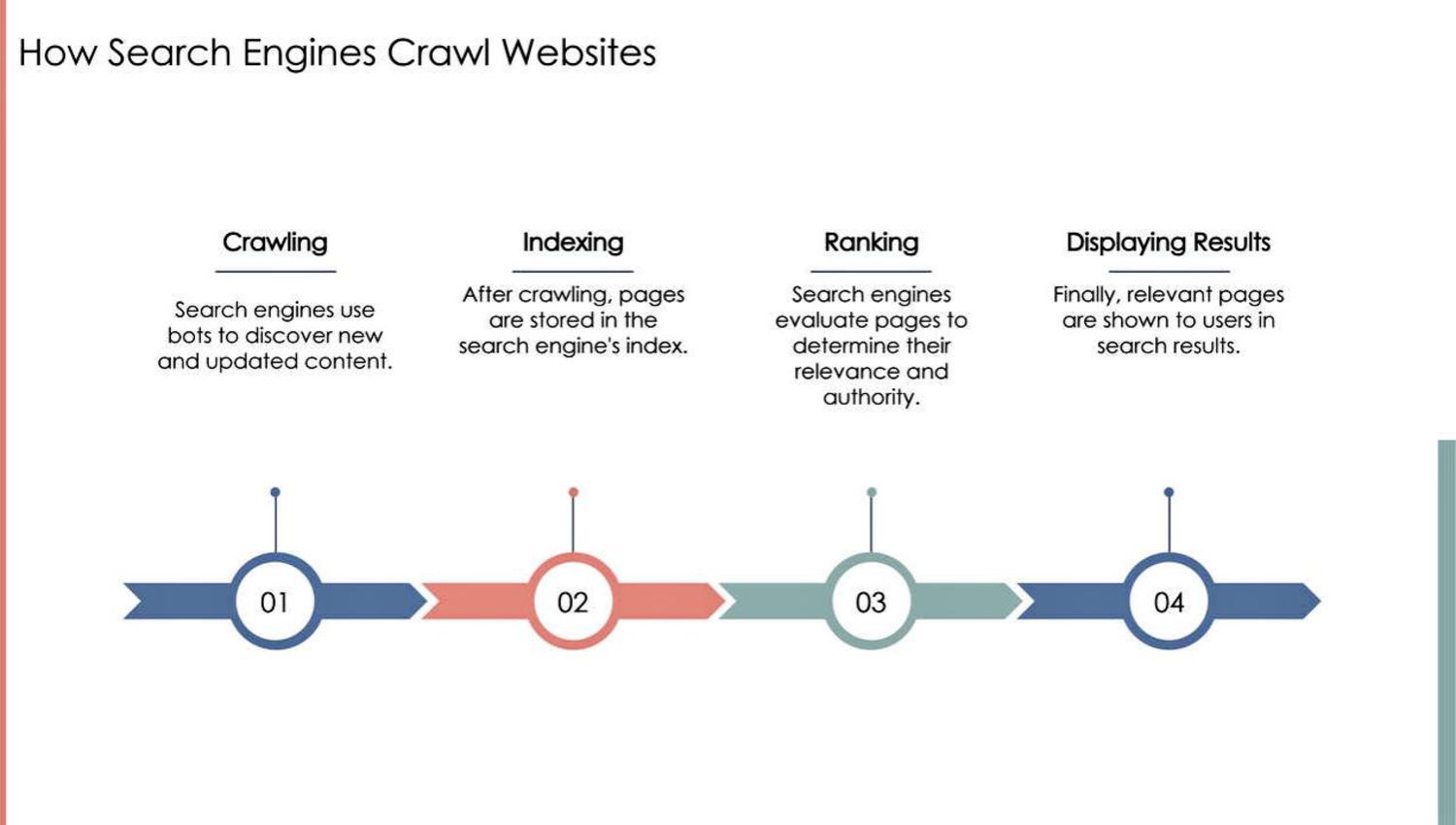
Search engines Use bots to discover new and updated content. Aftercrawling. pages are stored in the search engine's index. Search engines evaluatepages to determine their relevanceand authority. Finally, relevant pages are shown to users in search results. 02 03 04
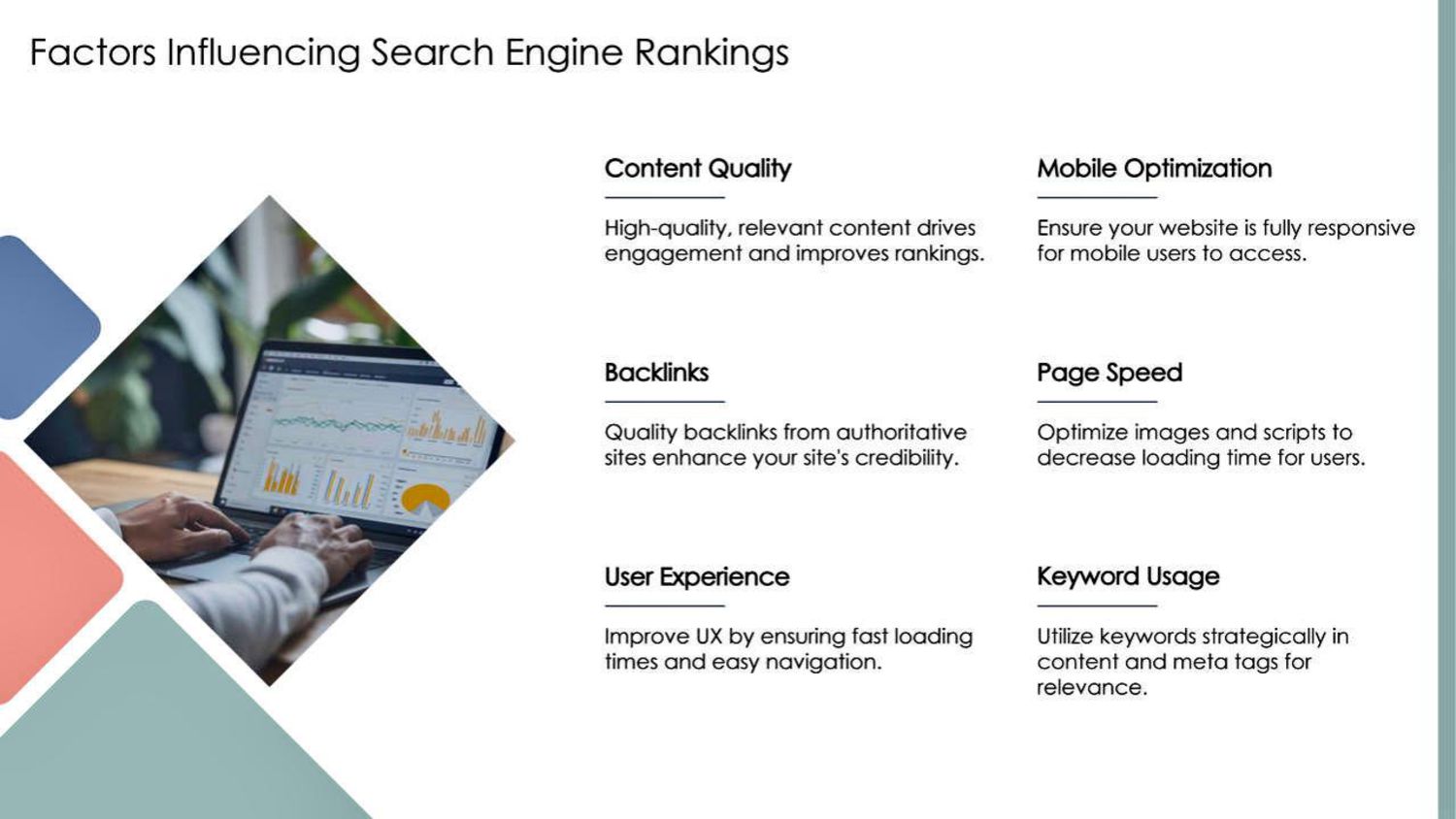
content drives engagementand improvesrankings. Ensure your website is fully responsive for mobile usersto access. Backlinks Page Speed Qualitybacklinks from authoritative sites enhance yoursite's credibility. Optimize images and scripts to decrease loading time for users. User Experience Keyword Usage Improve UX by ensuring fast loading fimes andeasy navigation. Utilize keywords strategically in Content and meta tags for relevance.
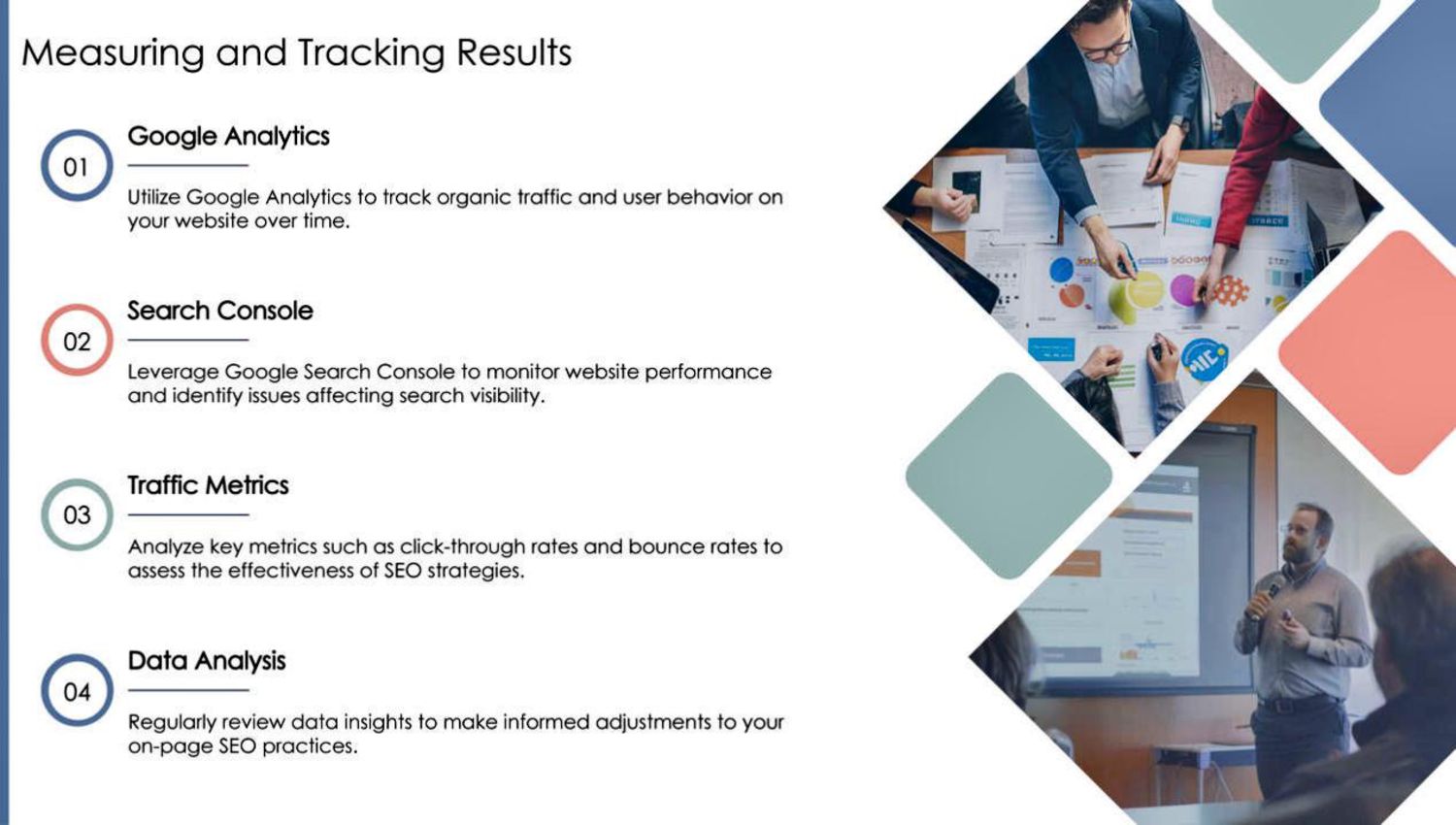
to track organic traffic and user behavior on yourwebsite over time. 02 SearchConsole Leverage Google Search Console to monitorwebsiteperformance and identify issues affecting search visibility. 03 TrafficMetrics Analyze key metrics sUch asclick-through rates and bounce rates to assess the effectiveness of SEO strategies. 04 Data Analysis Regularly review data insights to make informed adjustmentsto yOUr on-page SEO practices.
the H1tag represents the main topic and contains the primary keyword to enhance relevance. H2 forSubtopics TRENOS Utilize H2 tagsto define sectionswithin thecontent, making it easierto read and organized. H3 for Details Incorporate H3tags for subsections under H2, allowing for a clear hierarchy and better user navigation.
between 50 to 60 characters. Place primarykeywords towards the beginning of the title. Uniqueness Branding Ensure each title tag is unique for every page. Includeyour brand name attheend of the title tag. Action Words Readability Use compelling action words to engage users. Make titles easy to read and understand quickly. Avoid Spam Do not overstuff keywords to avoid penalties.
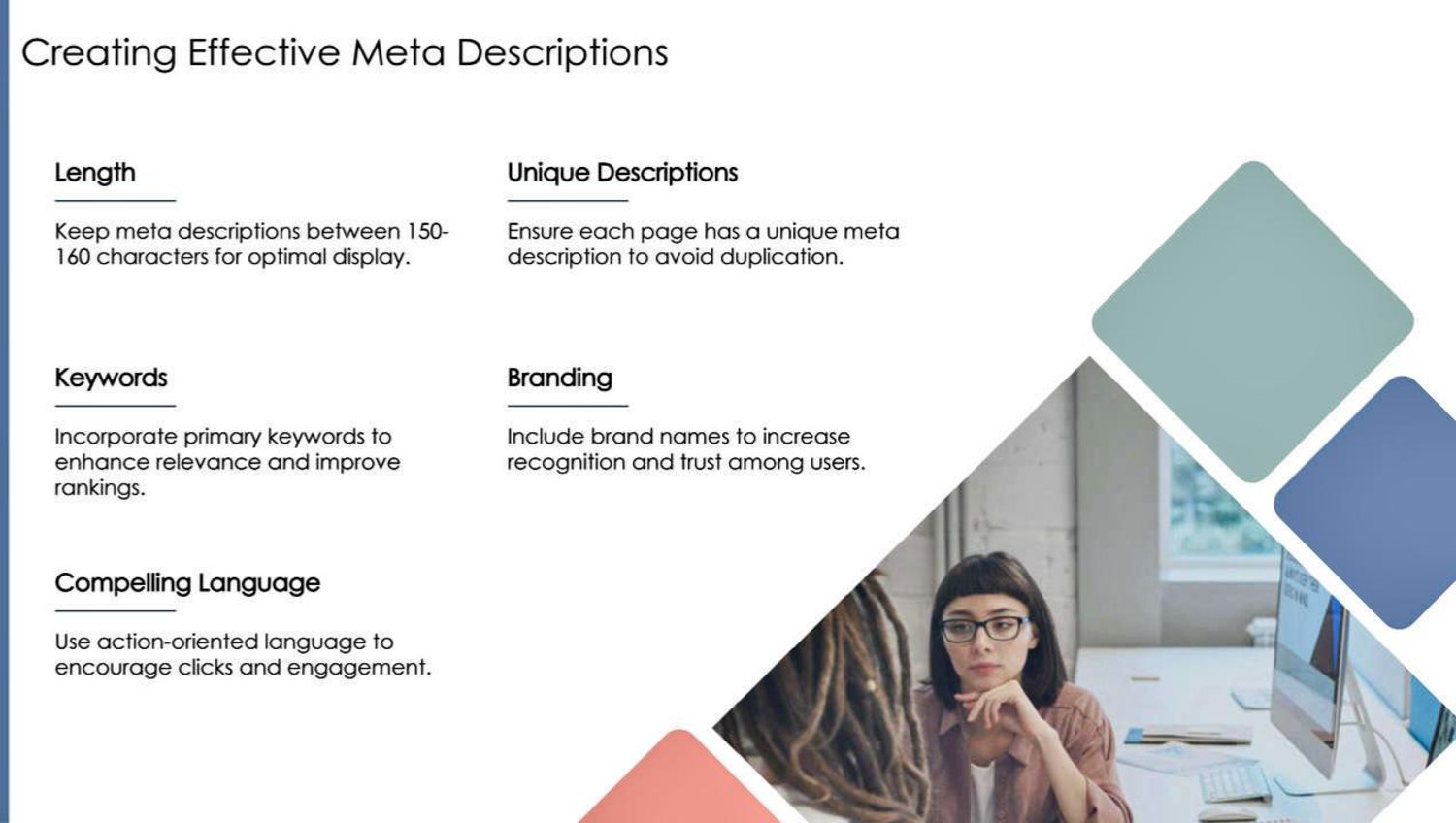
150 160characters foroptimal display. Ensure eachpage has a unique meta descriptionto avoid duplication. Keywords Branding Incorporate primary keywords to enhance relevance and improve rankings. Include brand namesto increase recognition and trust aong users. Compelling Language Use action-oriented language to encourage clicks and engagement.


 reverentgeek
 skipperchong
 aleyda
 greggifford
 chriscoyier
 62gerente
 eileencodes
 427marketing
 katarinadahlin
 productmarketing
 jnunemaker