websites, web applications, web services and web resources. Aims to alleviate the overhead associated with common activities performed in web development. Gathering libraries for database access, caching, and session management (plus much more), and they often promote code reuse.
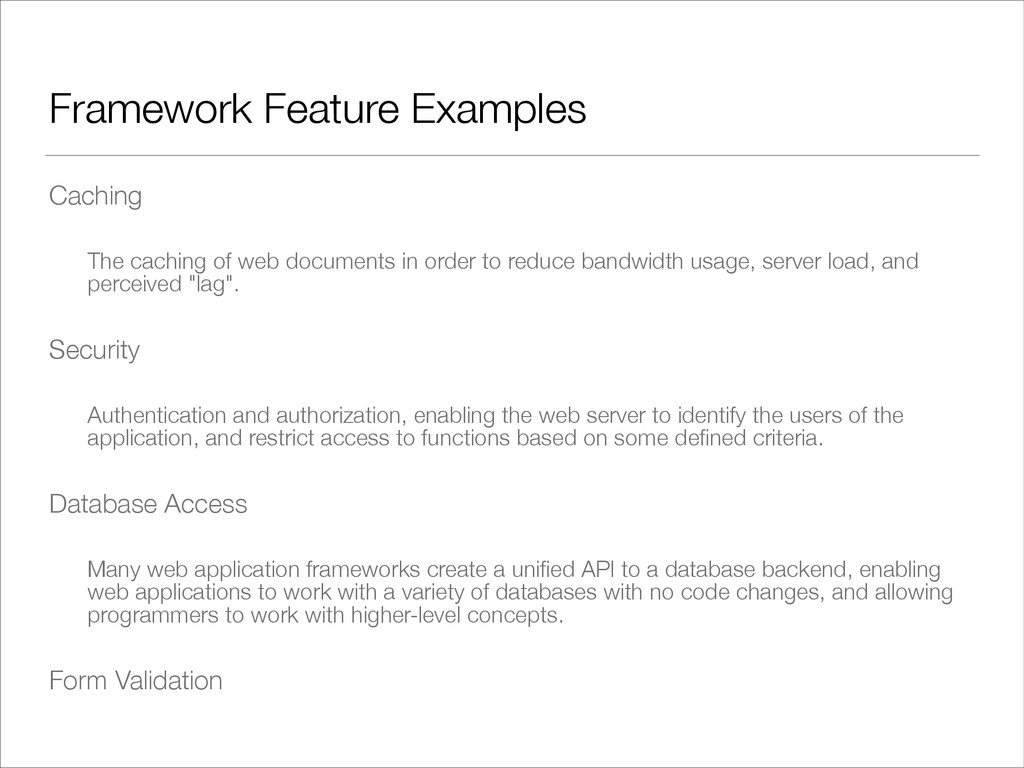
order to reduce bandwidth usage, server load, and perceived "lag". Security Authentication and authorization, enabling the web server to identify the users of the application, and restrict access to functions based on some defined criteria. Database Access Many web application frameworks create a unified API to a database backend, enabling web applications to work with a variety of databases with no code changes, and allowing programmers to work with higher-level concepts. Form Validation
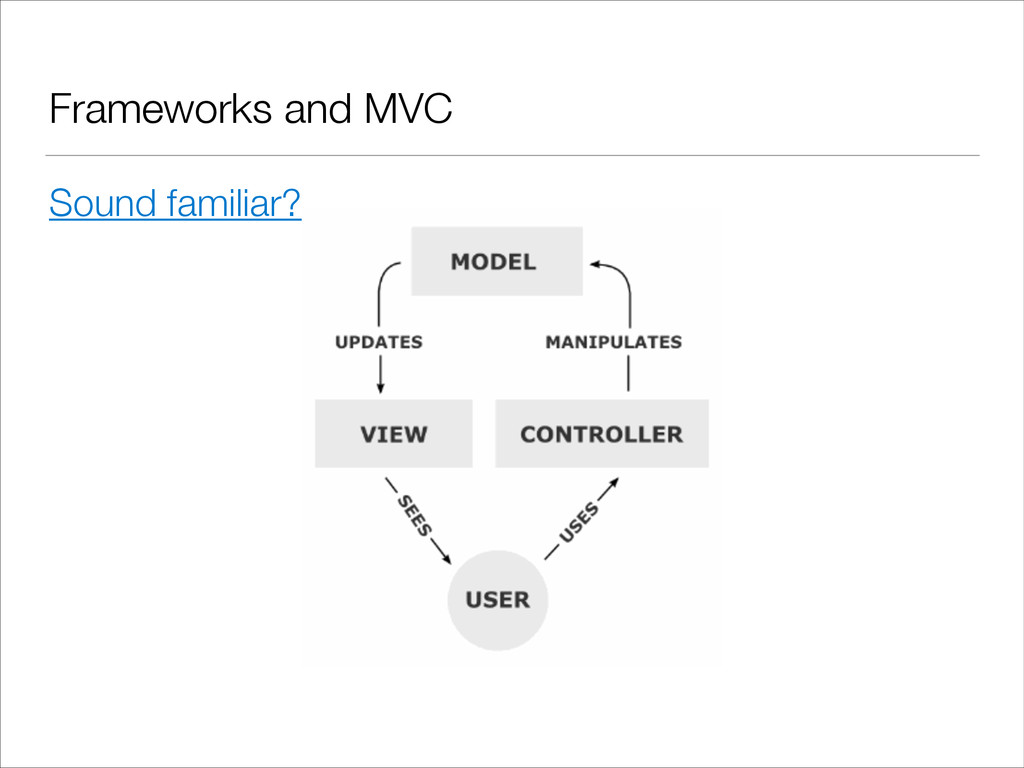
representation of information from the user's interaction with it. The model consists of application data, business rules, logic, and functions. A view can be any output representation of data, such as a chart or a diagram. The controller mediates input, converting it to commands for the model or view.
a program's internal functions to the outside world in a limited fashion. Defines exactly how a program will interact with the rest of the software world.
a library that includes specifications for routines, data structures, object classes, and variables. Sound familiar? Dronestagram Twitter API Pinterest API? Not Yet. (7/31/2013) Pinterest for Developers (11/14/2013)
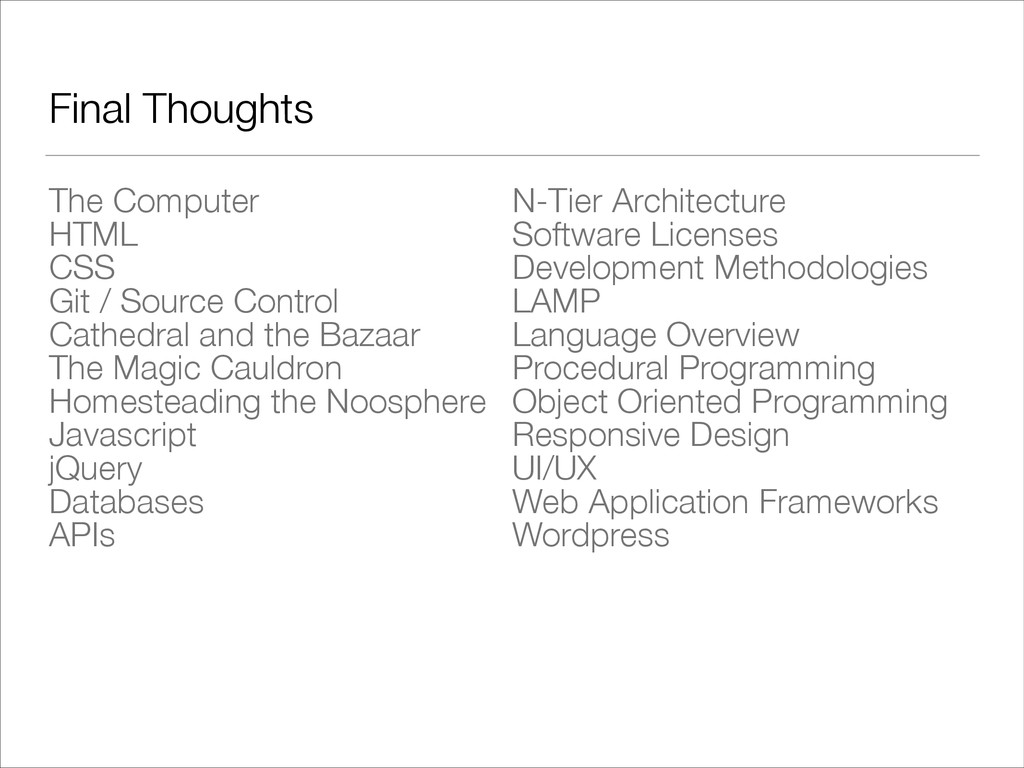
Cathedral and the Bazaar The Magic Cauldron Homesteading the Noosphere Javascript jQuery Databases APIs N-Tier Architecture Software Licenses Development Methodologies LAMP Language Overview Procedural Programming Object Oriented Programming Responsive Design UI/UX Web Application Frameworks Wordpress


 ianlukekane
 pfn
pfn
 occhi
occhi
 syuchimu
 kenichiodo
 recruitengineers
 kash1064
 maimyyym
 ykanoh
 namiki64
 y0hgi
y0hgi
 shuta13
 irinanazarova
 jonoalderson
 frankvandijk
 schroneko
 tammyeverts
 destraynor
 mlcsv
mlcsv
 orderedlist
 reverentgeek
 jdejongh
 cassininazir
 gurzu
gurzu