Upgrade to Pro
— share decks privately, control downloads, hide ads and more …
Speaker Deck
Sign up for free
Menu
Search
Features
All features
Private URLs
Password Protection
Custom URLS
Scheduled publishing
Remove Branding
Restrict embedding
Deck Collections
Notes
Features
All features
Private URLs
Password Protection
Custom URLS
Scheduled publishing
Remove Branding
Restrict embedding
Deck Collections
Notes
Explore
Featured decks
Featured speakers
Programming
Technology
Storyboards
Explore
Featured decks
Featured speakers
Programming
Technology
Storyboards
Pricing
Search
Sign in
Sign up for free
ASCII vs. Unicode in Python 2
Search
Sponsored
·
Your Podcast. Everywhere. Effortlessly.
Share. Educate. Inspire. Entertain. You do you. We'll handle the rest.
→
Jessica McElroy
November 03, 2014
250
0
Share
Embed
Copy iframe code
Copy JS code
Copy link
Start on current slide
ASCII vs. Unicode in Python 2
Jessica McElroy
November 03, 2014
Featured
See All Featured
Cheating the UX When There Is Nothing More to Optimize - PixelPioneers
stephaniewalter
287
14k
The Cult of Friendly URLs
andyhume
79
7k
実際に使うSQLの書き方 徹底解説 / pgcon21j-tutorial
soudai
PRO
203
77k
[Rails World 2023 - Day 1 Closing Keynote] - The Magic of Rails
eileencodes
38
3.1k
How to Create Impact in a Changing Tech Landscape [PerfNow 2023]
tammyeverts
56
3.5k
Crafting Experiences
bethany
1
380
WENDY [Excerpt]
tessaabrams
14
40k
Exploring the relationship between traditional SERPs and Gen AI search
raygrieselhuber
PRO
4
4.4k
The State of eCommerce SEO: How to Win in Today's Products SERPs - #SEOweek
aleyda
2
12k
Redefining SEO in the New Era of Traffic Generation
szymonslowik
1
480
Everyday Curiosity
cassininazir
0
350
[RailsConf 2023 Opening Keynote] The Magic of Rails
eileencodes
31
10k
Transcript
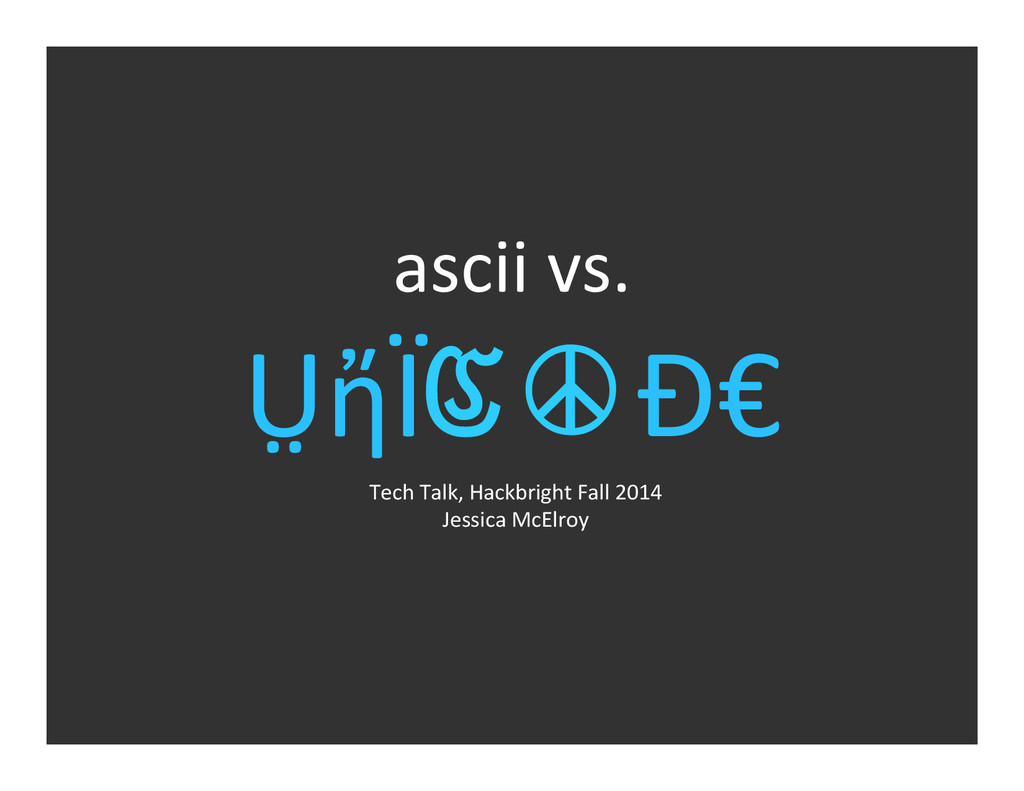
ascii vs. ṲἤЇℭ☮Ѐ Tech Talk, Hackbright Fall 2014
Jessica McElroy
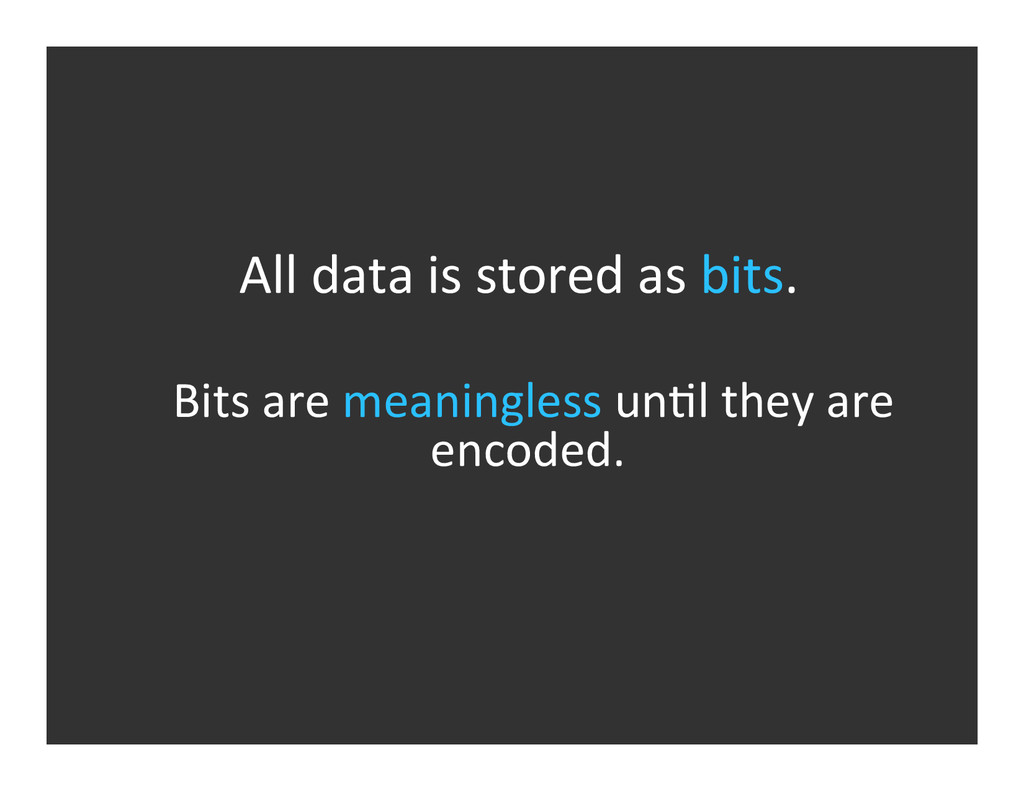
All data is stored as bits. Bits are
meaningless unHl they are encoded.
Historically, ASCII has been the most common standard
for encoding bits into text.
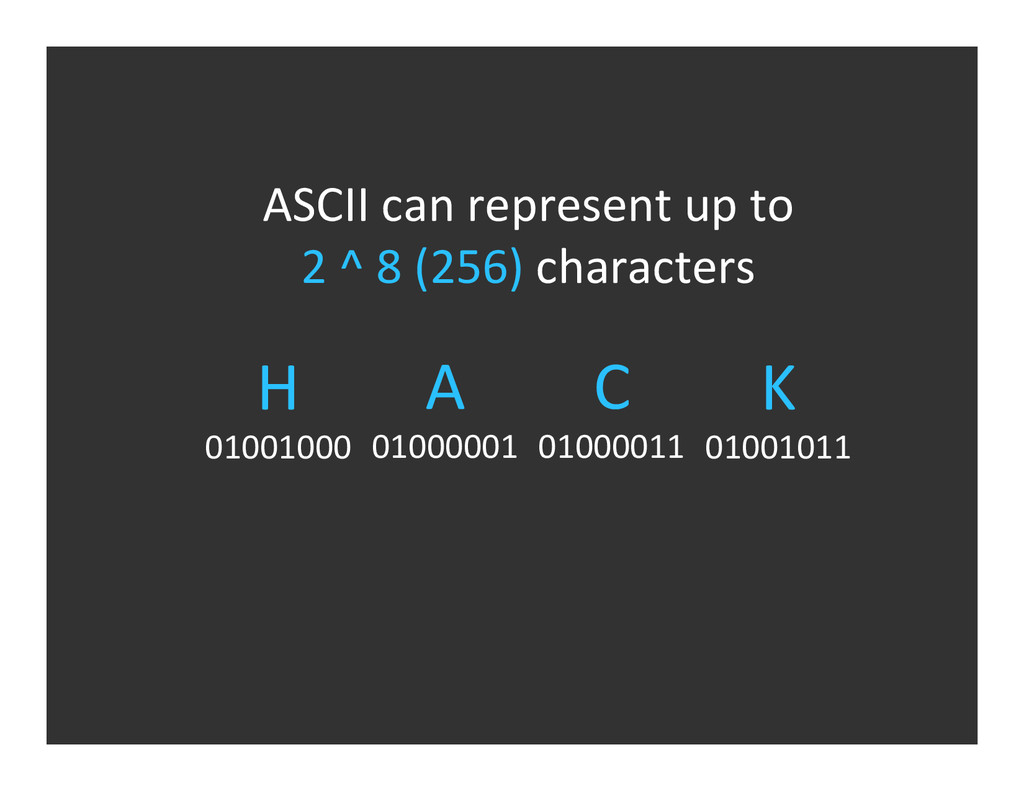
H 01001000 A 01000001
C 01000011 K 01001011 ASCII can represent up to 2 ^ 8 (256) characters
But the world needs more than 256 characters!
Enter unicode: The universal character set!
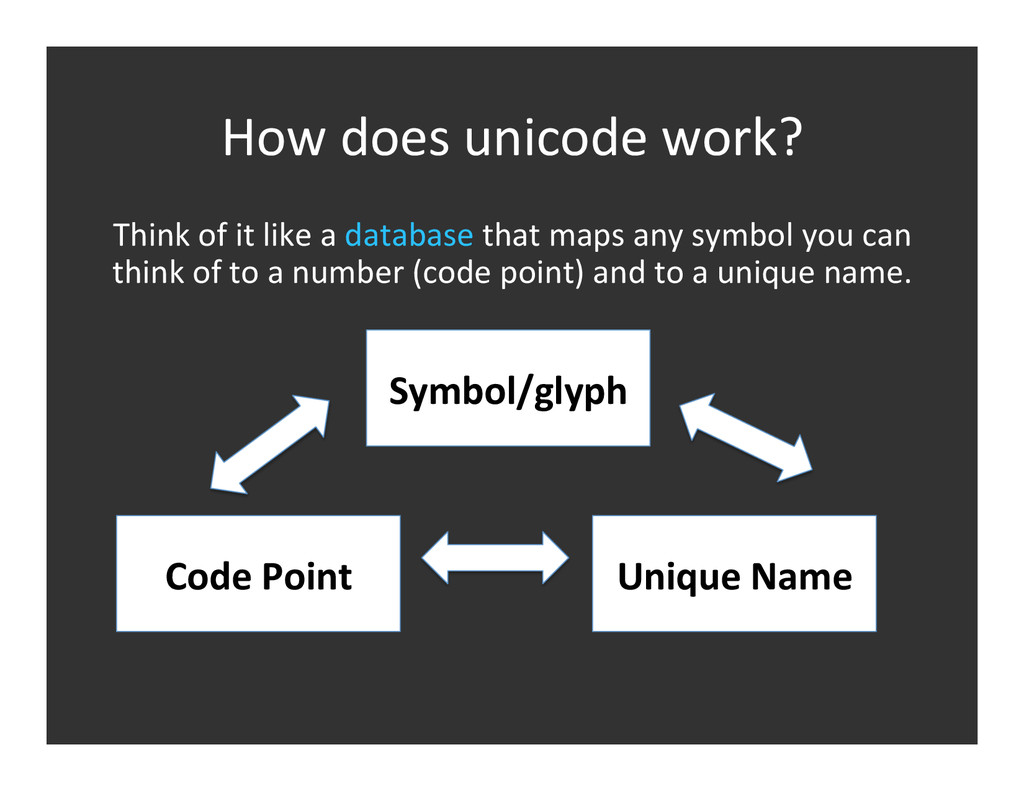
How does unicode work? Think of it like a
database that maps any symbol you can think of to a number (code point) and to a unique name. Symbol/glyph Code Point Unique Name
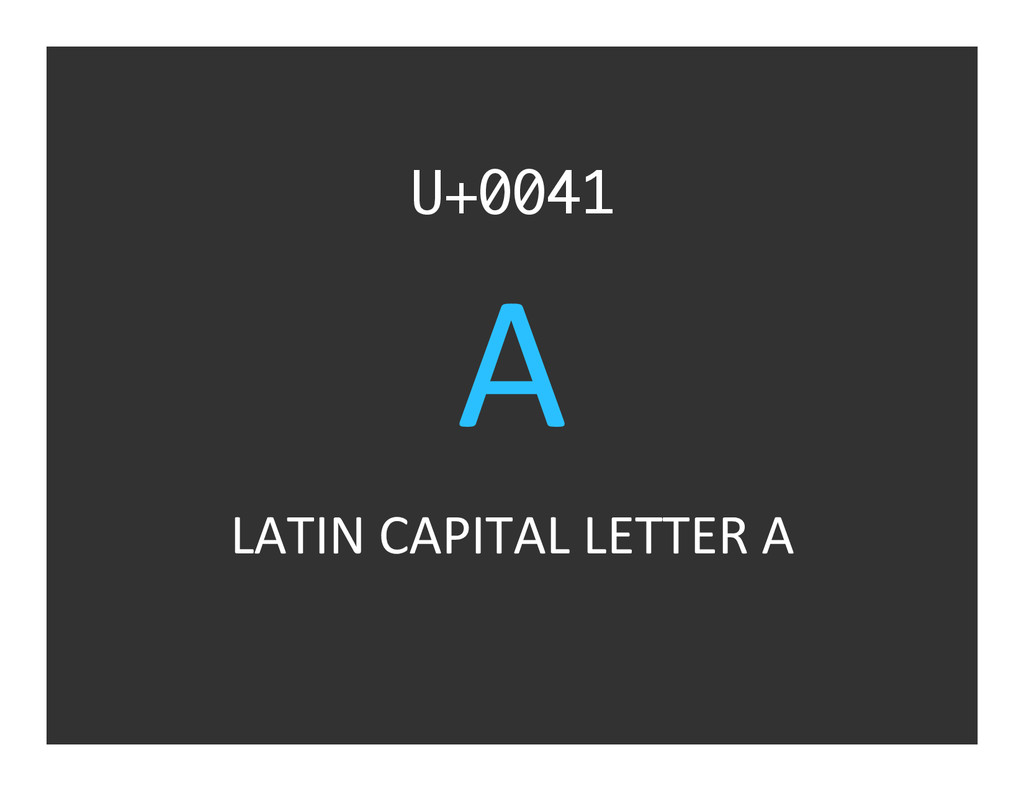
U+0041 A LATIN CAPITAL LETTER A
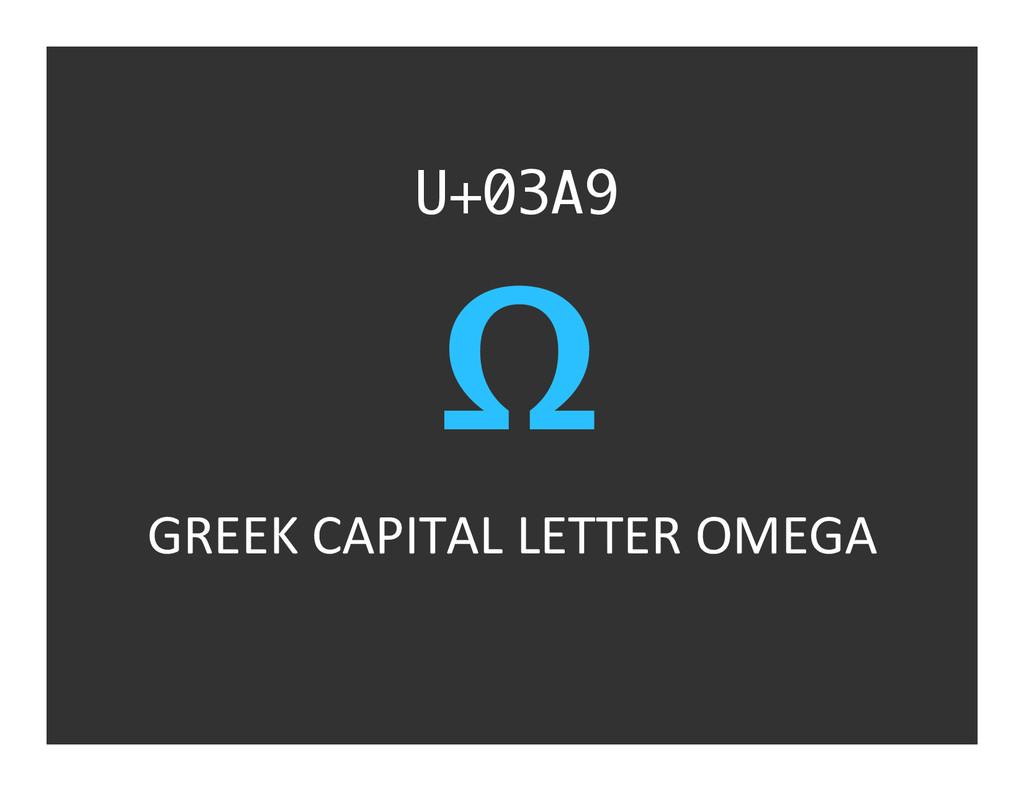
U+03A9 GREEK CAPITAL LETTER OMEGA Ω
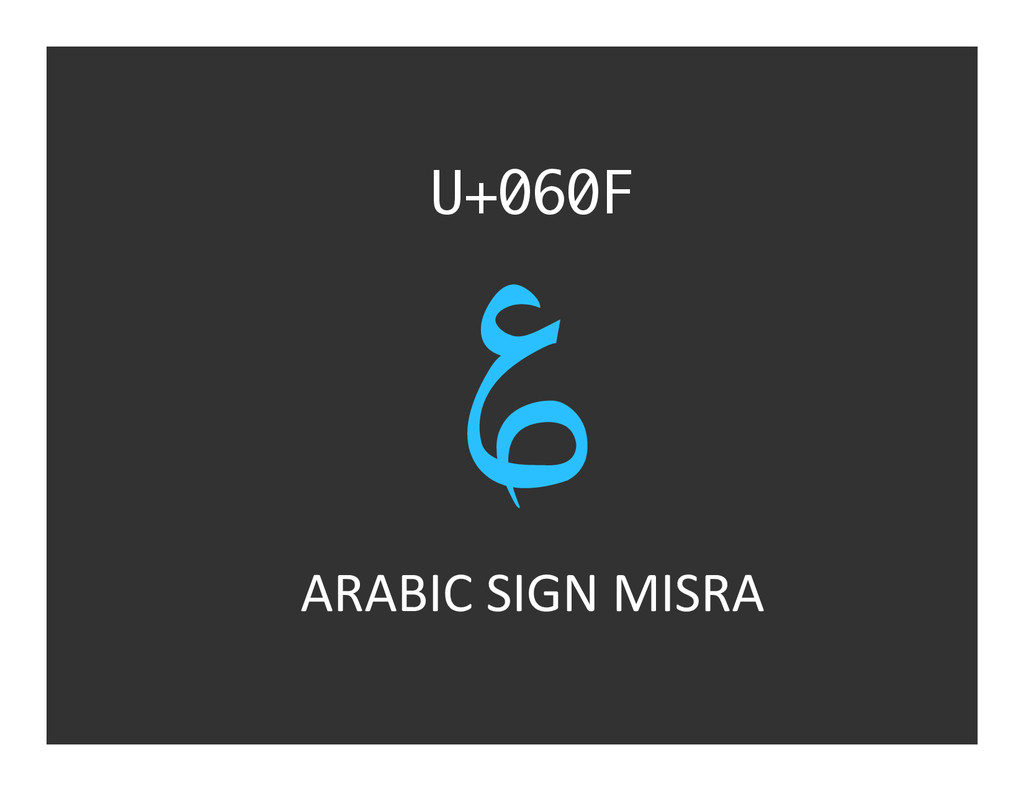
U+060F ARABIC SIGN MISRA ؏
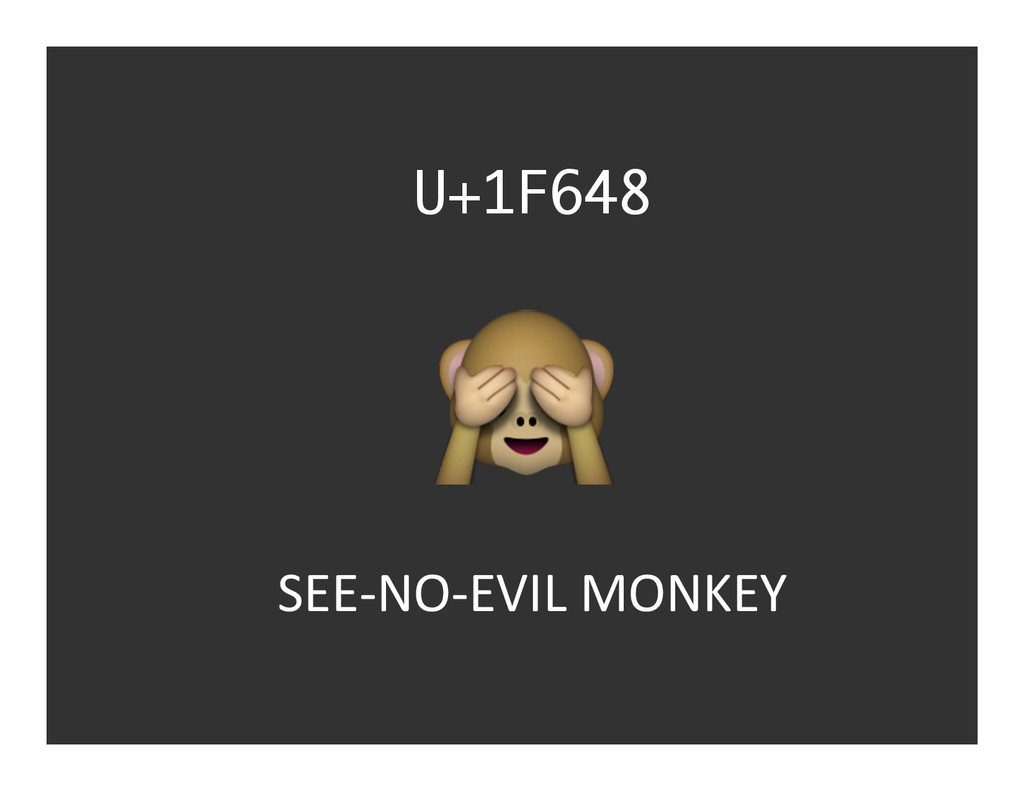
U+1F648 SEE-‐NO-‐EVIL MONKEY
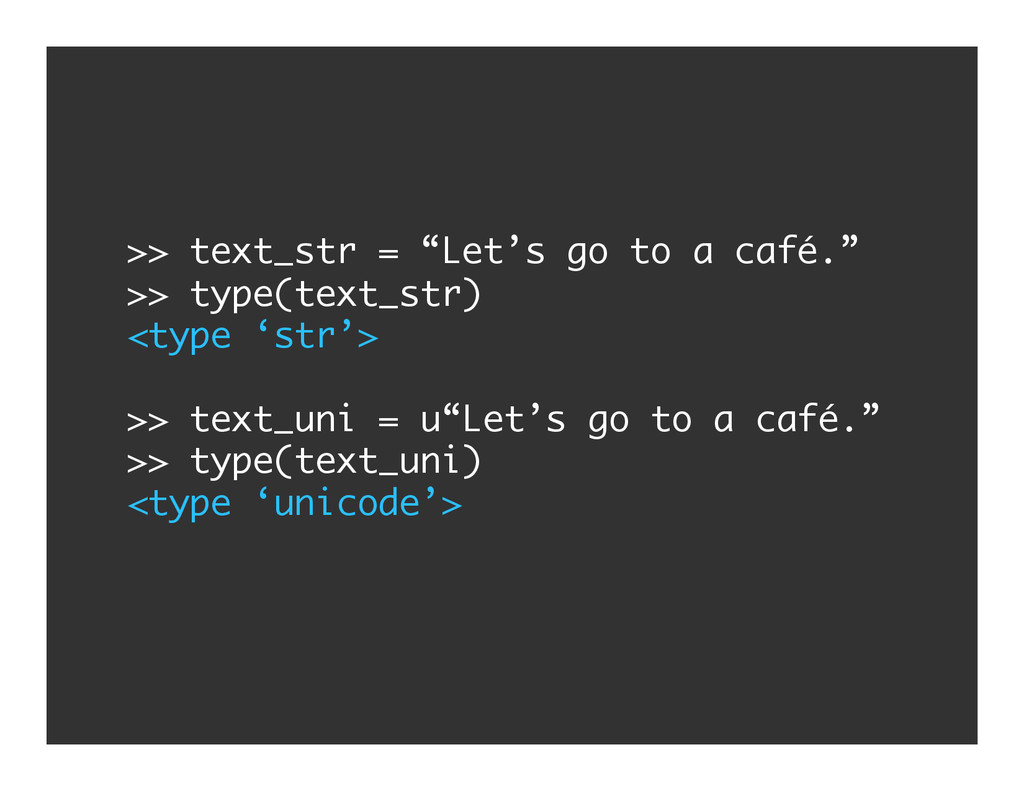
Python 2 has two different built-‐in types
for text.
>> text_str = “Let’s go to a café.” >>
type(text_str) <type ‘str’> >> text_uni = u“Let’s go to a café.” >> type(text_uni) <type ‘unicode’>
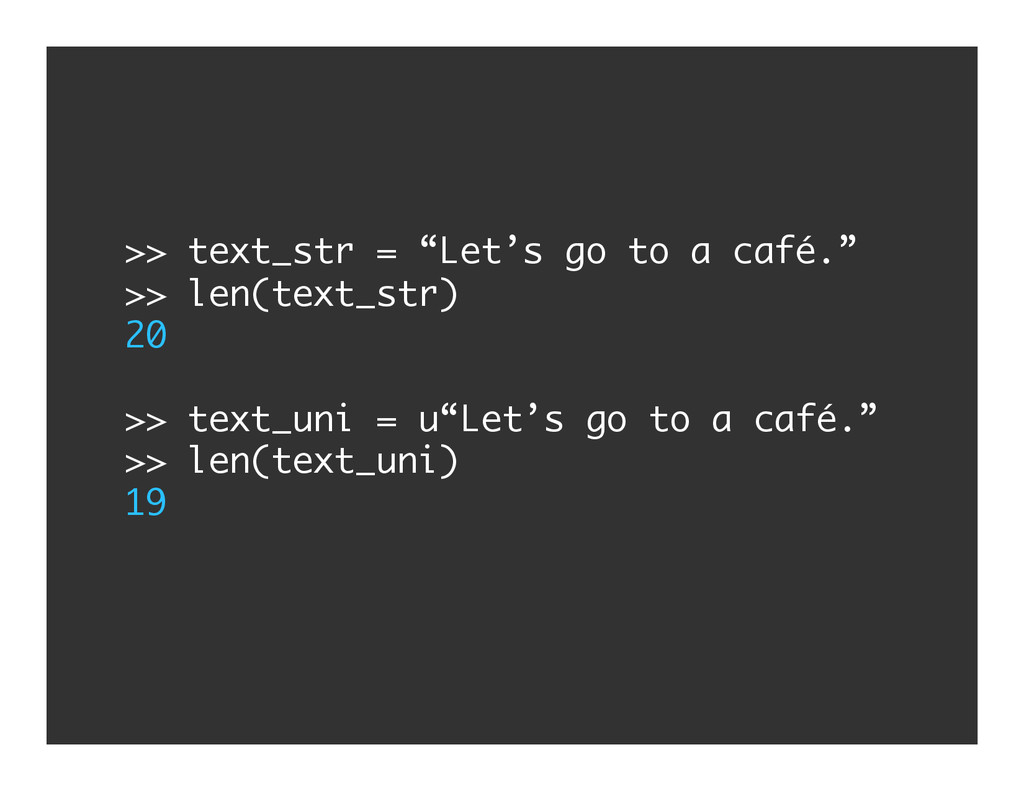
Unicode tends to be more accurate.
>> text_str = “Let’s go to a café.” >>
len(text_str) 20 >> text_uni = u“Let’s go to a café.” >> len(text_uni) 19
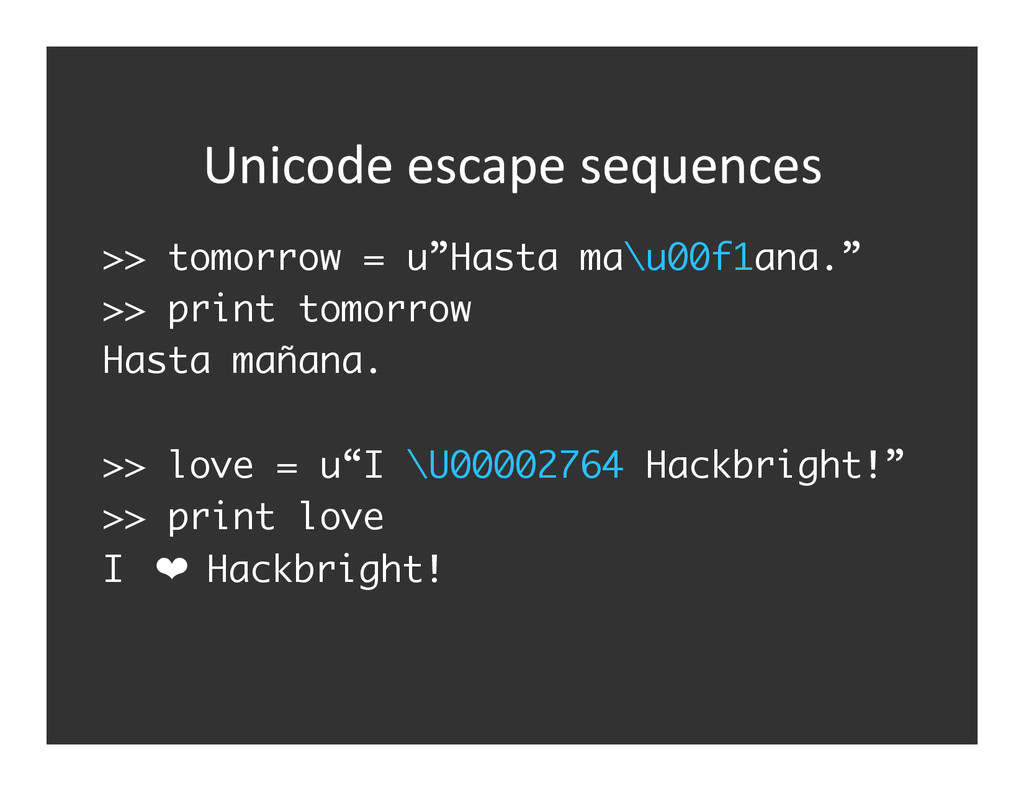
>> tomorrow = u”Hasta ma\u00f1ana.” >> print tomorrow Hasta mañana.
>> love = u“I \U00002764 Hackbright!” >> print love I ❤ Hackbright! Unicode escape sequences
ASCII to Unicode and back
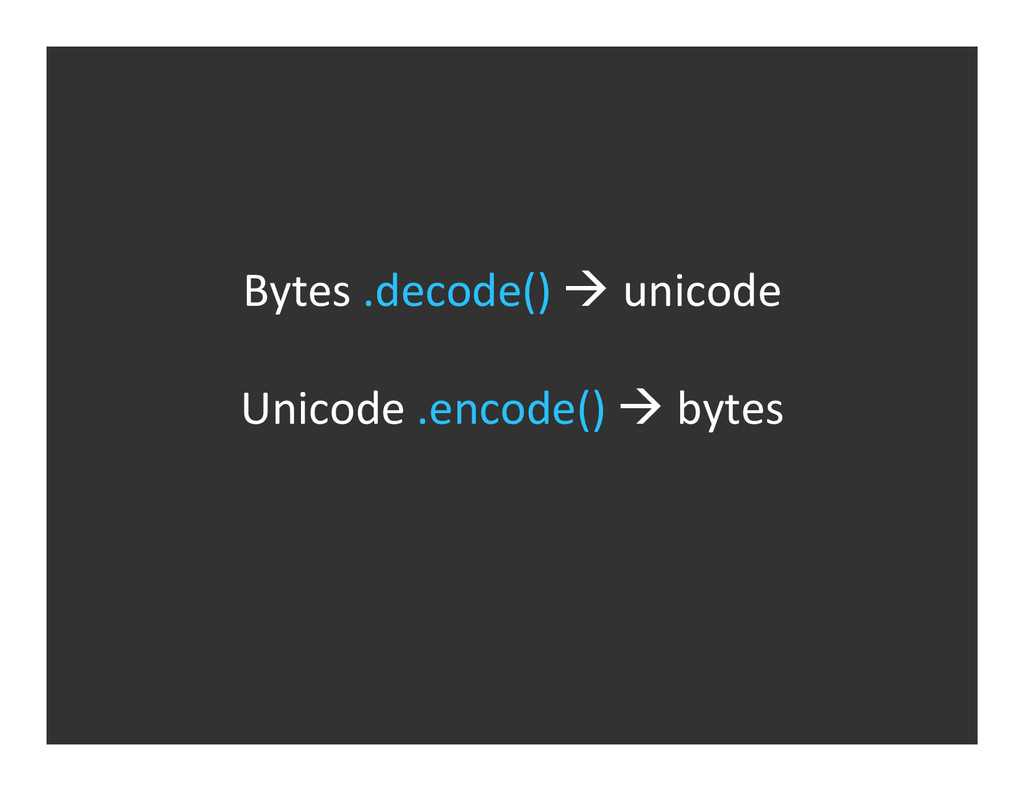
Bytes .decode() à unicode Unicode .encode() à bytes
Tips for unicode-‐aware programs
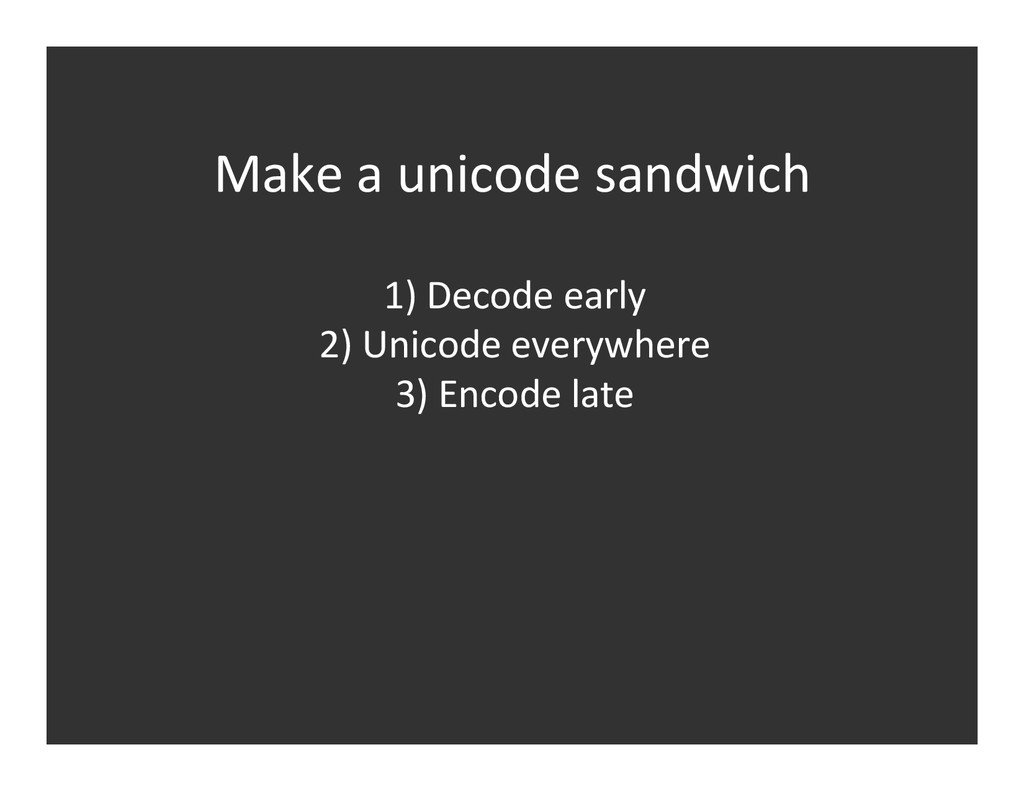
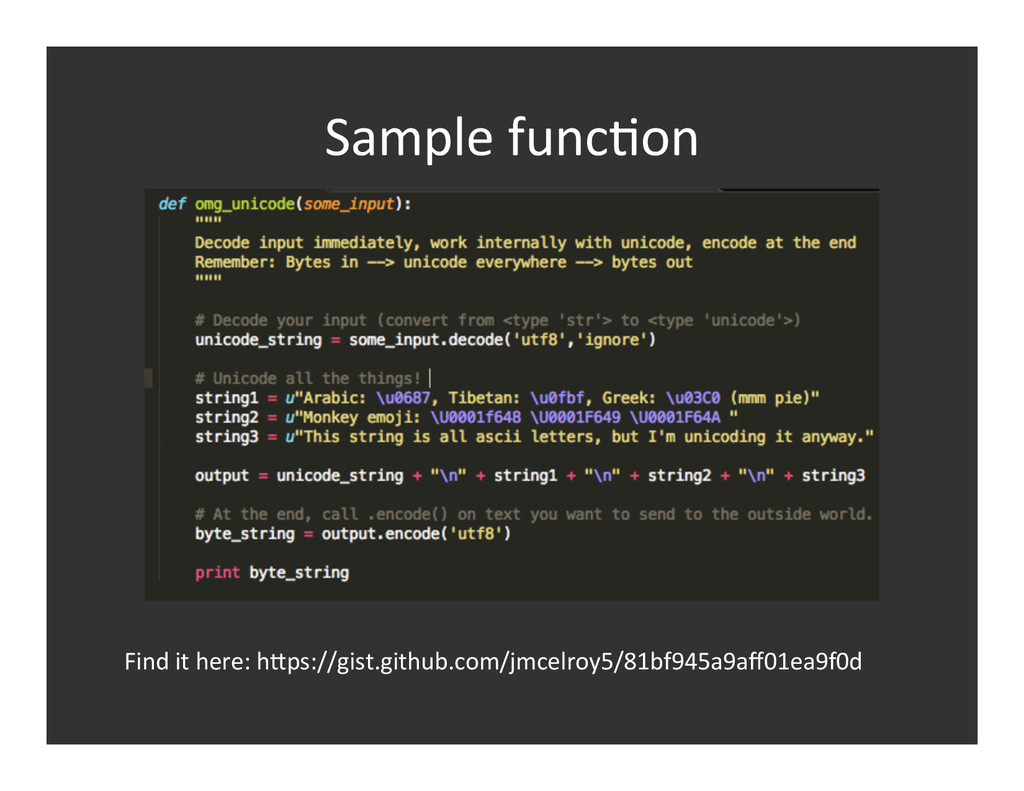
Make a unicode sandwich 1) Decode early 2)
Unicode everywhere 3) Encode late
Sample funcHon Find it here: hhps://gist.github.com/jmcelroy5/81bf945a9aff01ea9f0d
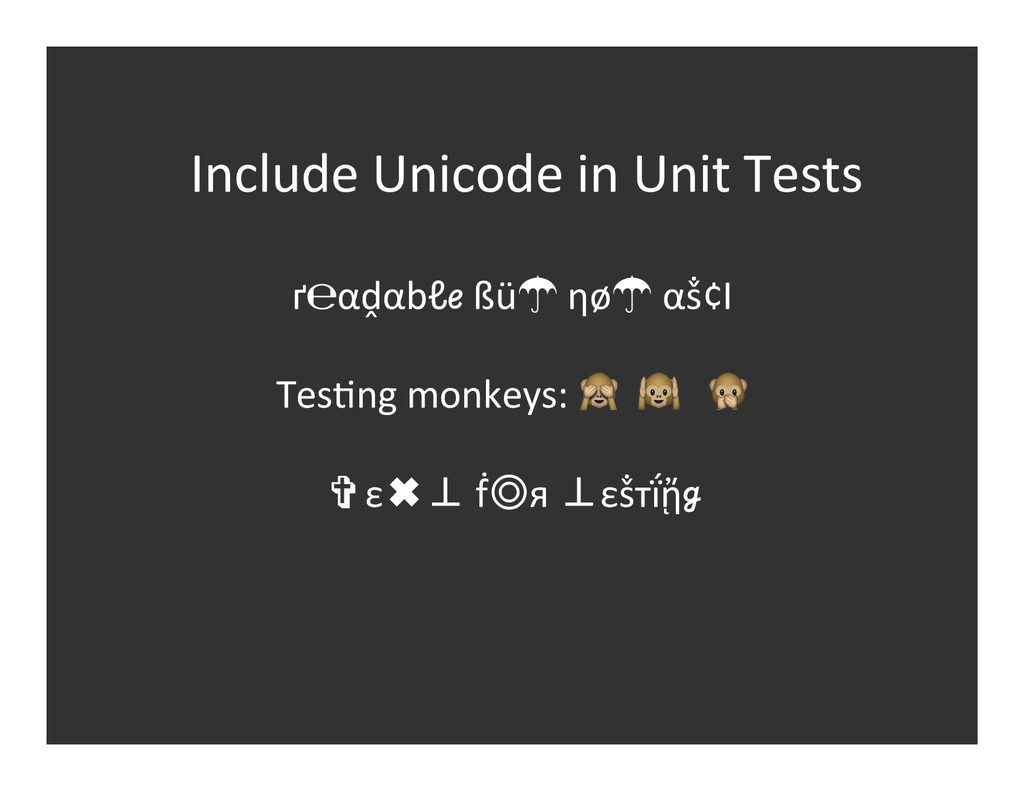
Include Unicode in Unit Tests ґ℮αḓαbℓℯ ßü☂ ηø☂ αṧ¢I
TesHng monkeys: ✞ε✖⊥ ḟ◎я ⊥εṧтḯᾔℊ
Hang in there – Python 3 fixes the
unicode problem!
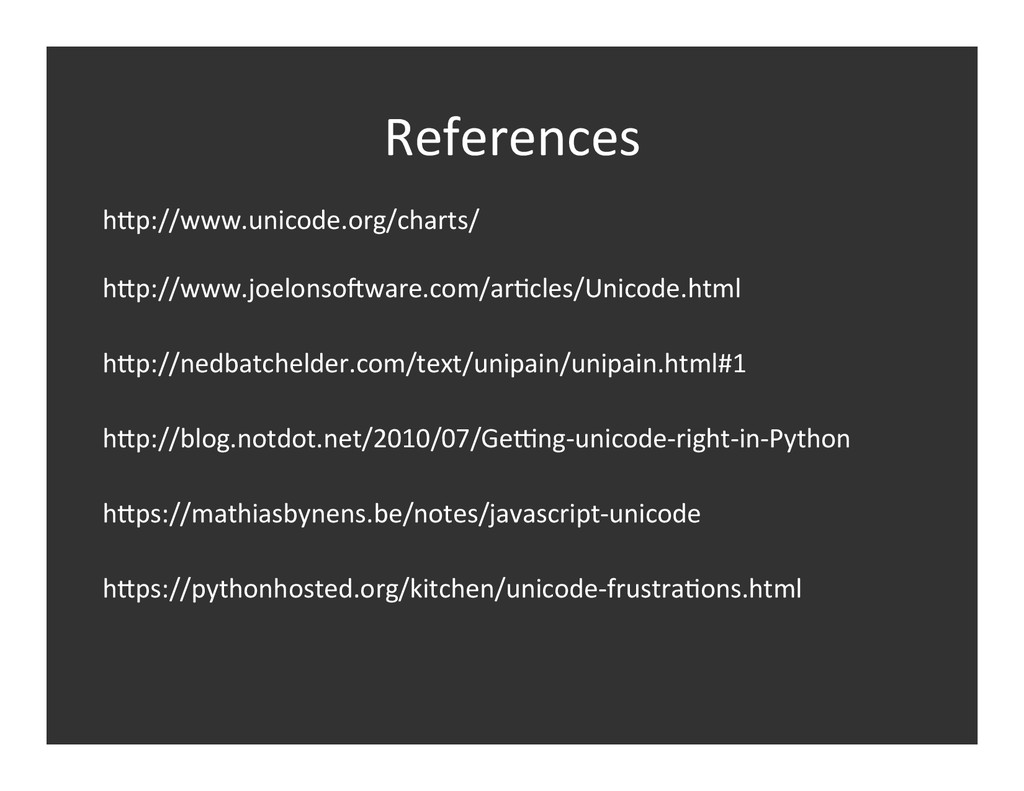
References hhp://www.unicode.org/charts/ hhp://www.joelonso•ware.com/arHcles/Unicode.html hhp://nedbatchelder.com/text/unipain/unipain.html#1
hhp://blog.notdot.net/2010/07/Ge‚ng-‐unicode-‐right-‐in-‐Python hhps://mathiasbynens.be/notes/javascript-‐unicode hhps://pythonhosted.org/kitchen/unicode-‐frustraHons.html


 stephaniewalter
 andyhume
 soudai
 eileencodes
 tammyeverts
 bethany
 tessaabrams
 raygrieselhuber
 aleyda
 szymonslowik
 cassininazir