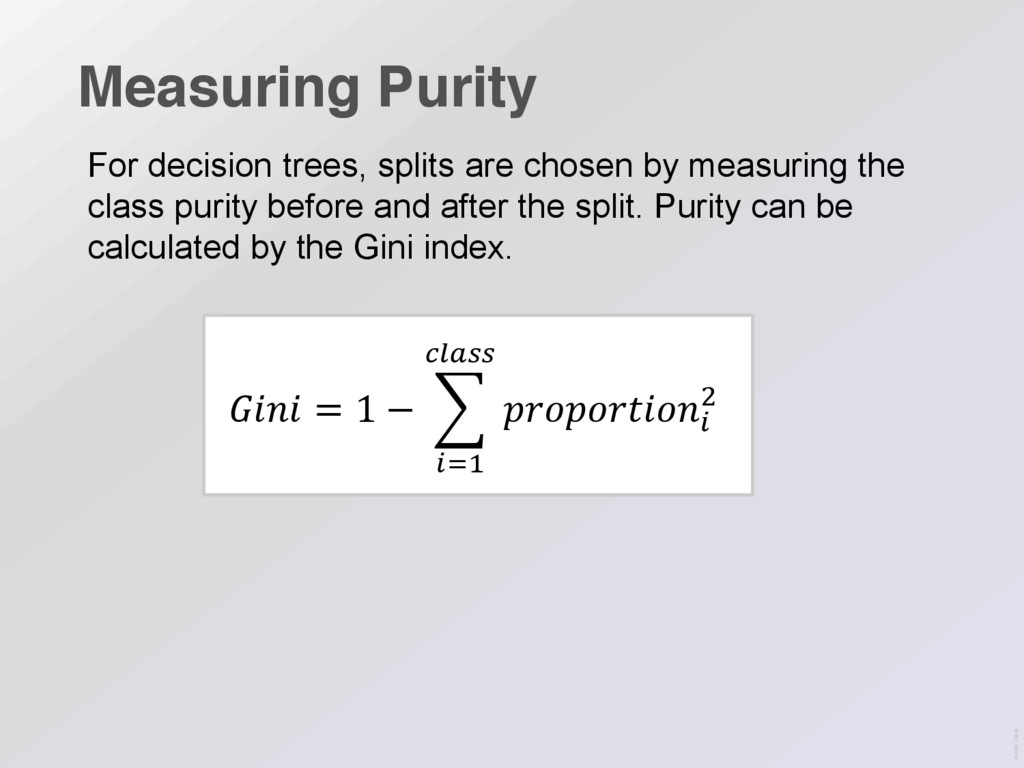
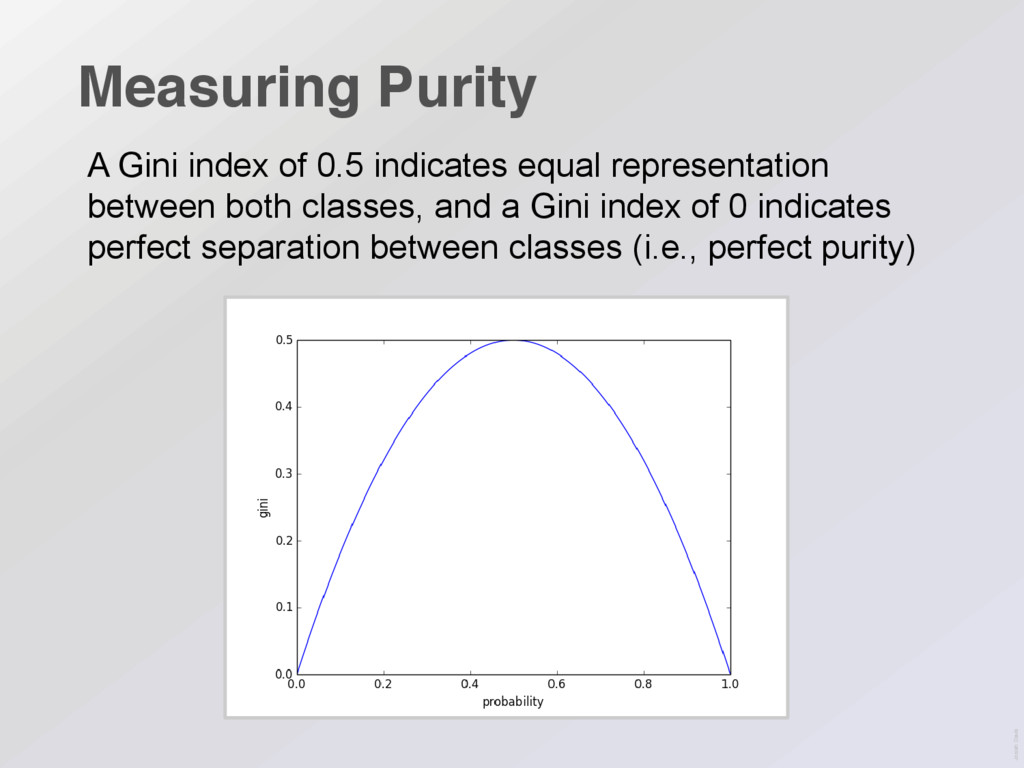
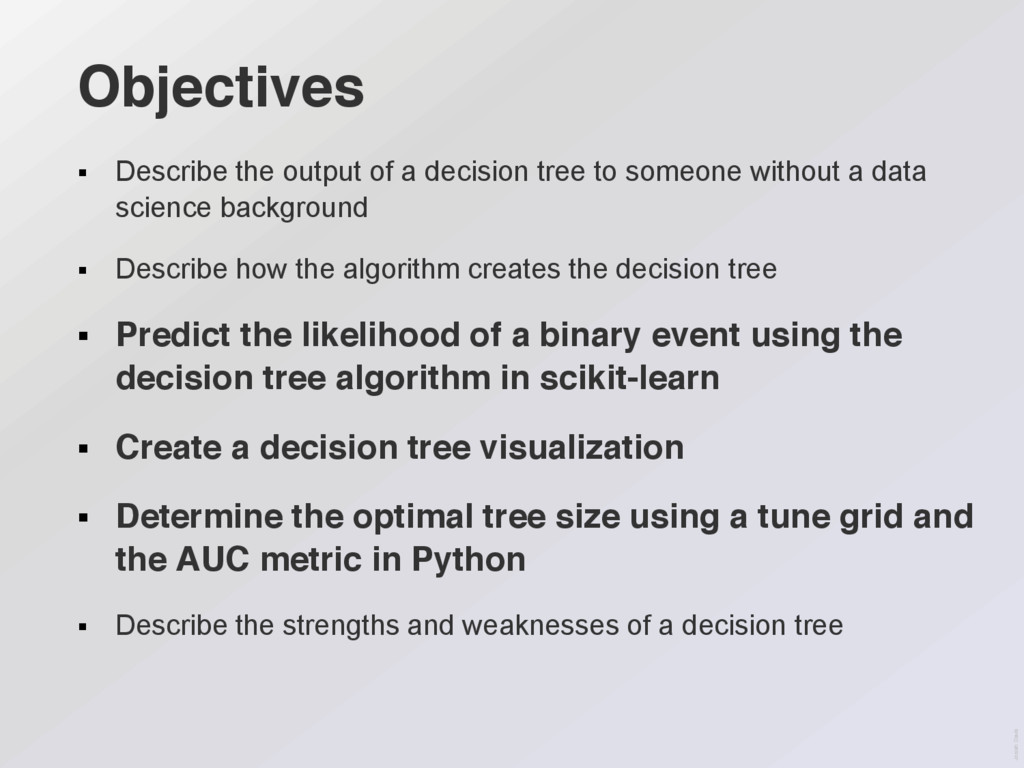
tree to someone without a data science background Describe how the algorithm creates the decision tree Predict the likelihood of a binary event using the decision tree algorithm in scikit-learn Create a decision tree visualization Determine the optimal tree size using a tune grid and the AUC metric in Python Describe the strengths and weaknesses of a decision tree
tree to someone without a data science background Describe how the algorithm creates the decision tree Predict the likelihood of a binary event using the decision tree algorithm in scikit-learn Create a decision tree visualization Determine the optimal tree size using a tune grid and the AUC metric in Python Describe the strengths and weaknesses of a decision tree
used for discrete and continuous output. Visually engaging and easy to interpret. Excellent model for someone transitioning into the world of data science. What are decision trees?
used for discrete and continuous output. Visually engaging and easy to interpret. Excellent model for someone transitioning into the world of data science. Foundational to learning some very powerful techniques. What are decision trees?
used for discrete and continuous output. Visually engaging and easy to interpret. Excellent model for someone transitioning into the world of data science. Foundational to learning some very powerful techniques. Are prone towards high-variance. What are decision trees?
used for discrete and continuous output. Visually engaging and easy to interpret. Excellent model for someone transitioning into the world of data science. Foundational to learning some very powerful techniques. Are prone towards high-variance. We will focus on the CART algorithm. What are decision trees?
to include on the tree? How does the algorithm choose where variables should be located on the tree? How does the algorithm choose when to stop the tree? This raises questions
tree to someone without a data science background Describe how the algorithm creates the decision tree Predict the likelihood of a binary event using the decision tree algorithm in Python Create a decision tree visualization Determine the optimal tree size using a tune grid and the AUC metric in Python Describe the strengths and weaknesses of a decision tree
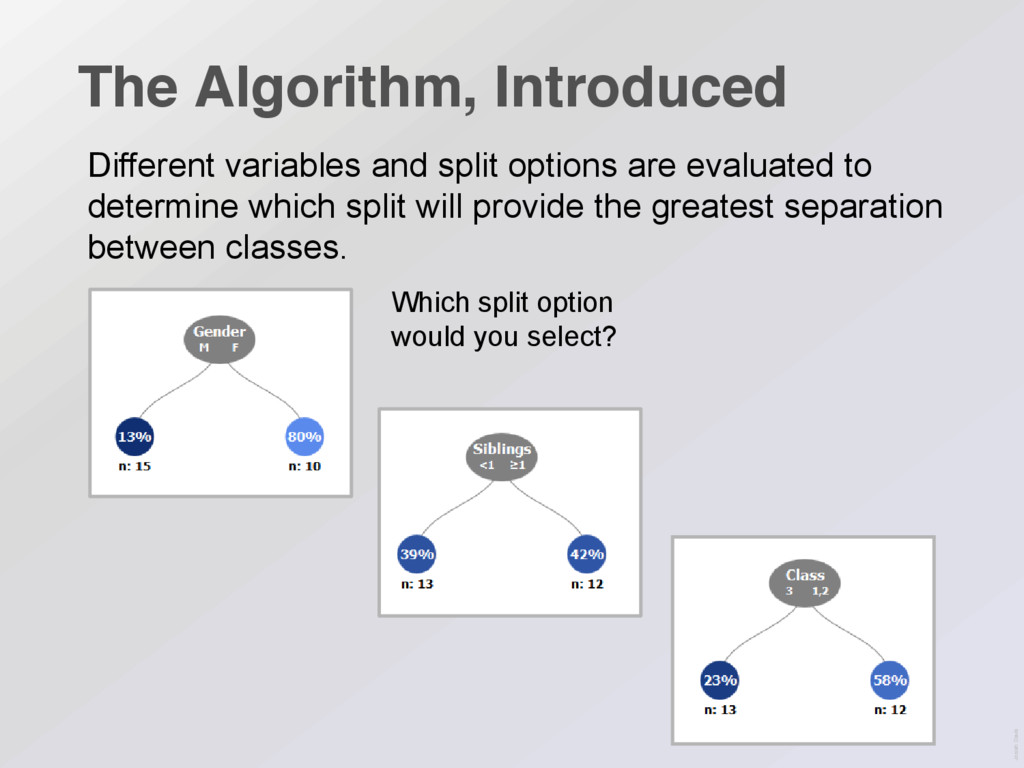
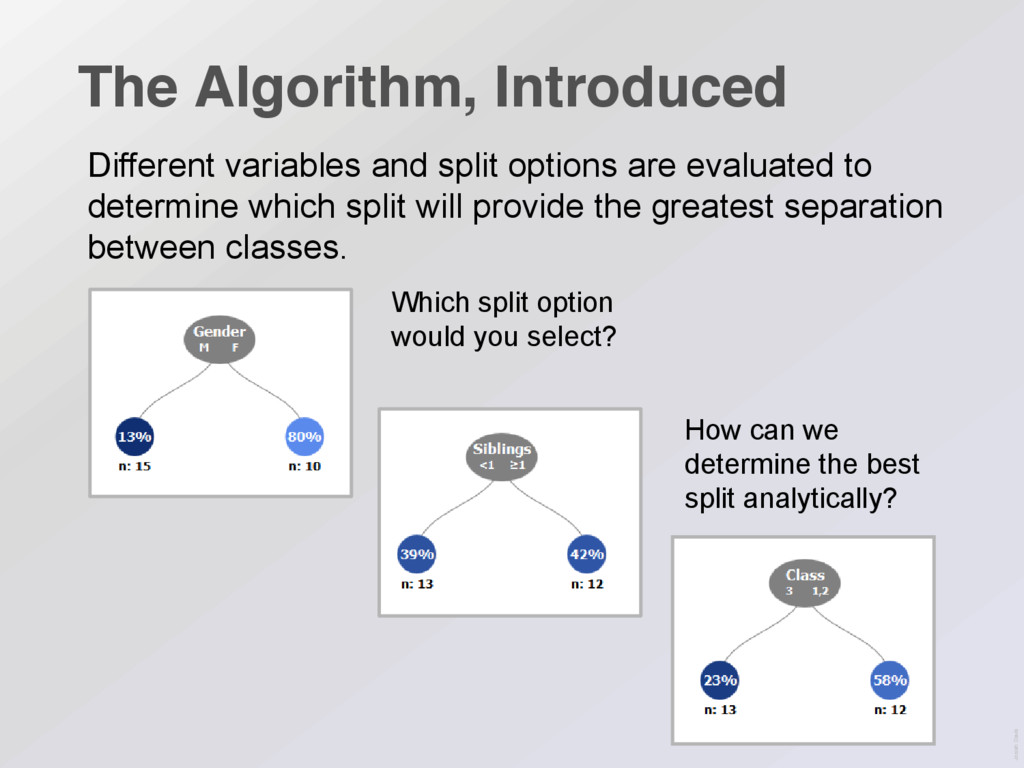
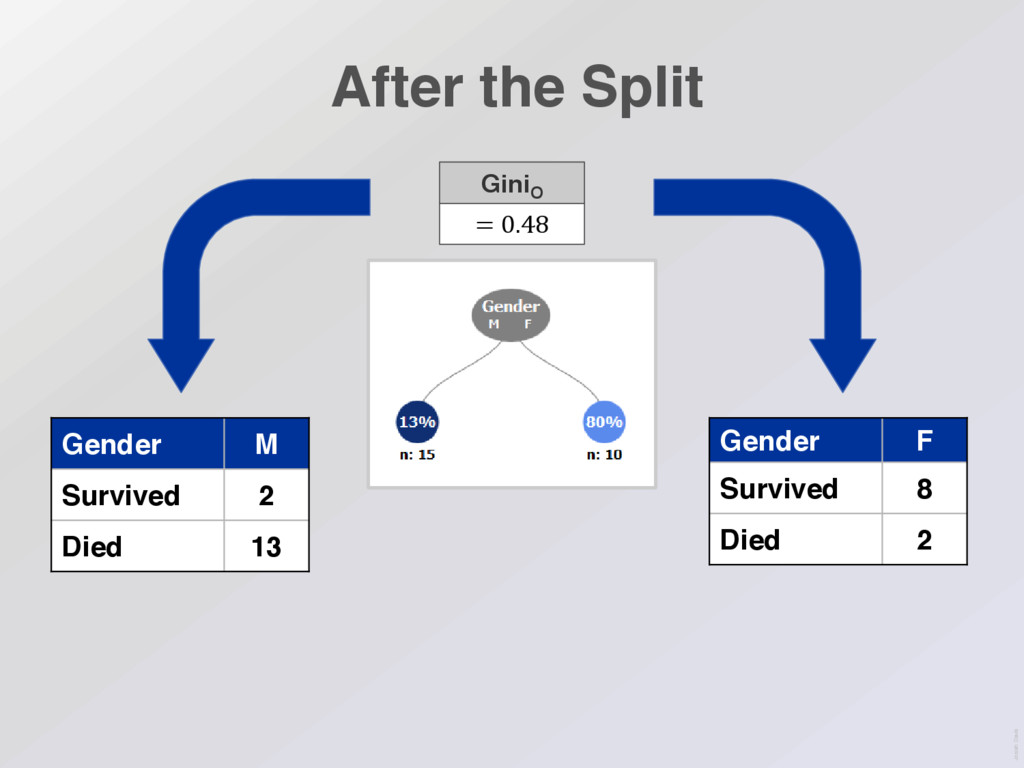
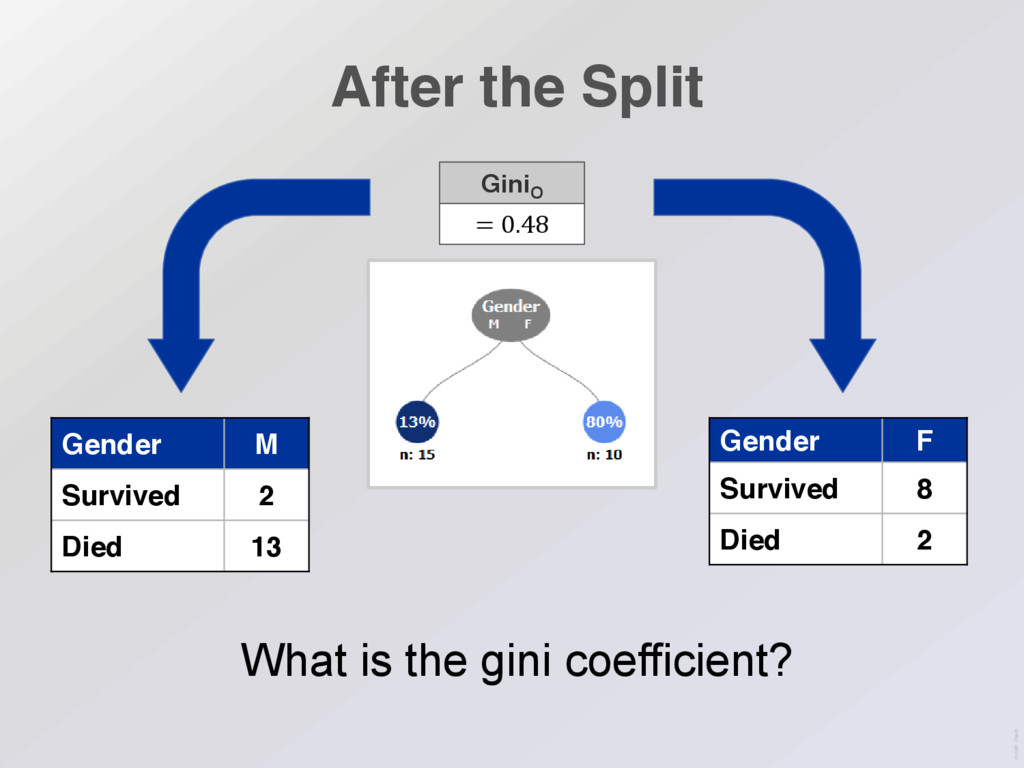
determine which split will provide the greatest separation between classes. The Algorithm, Introduced How can we determine the best split analytically? Which split option would you select?
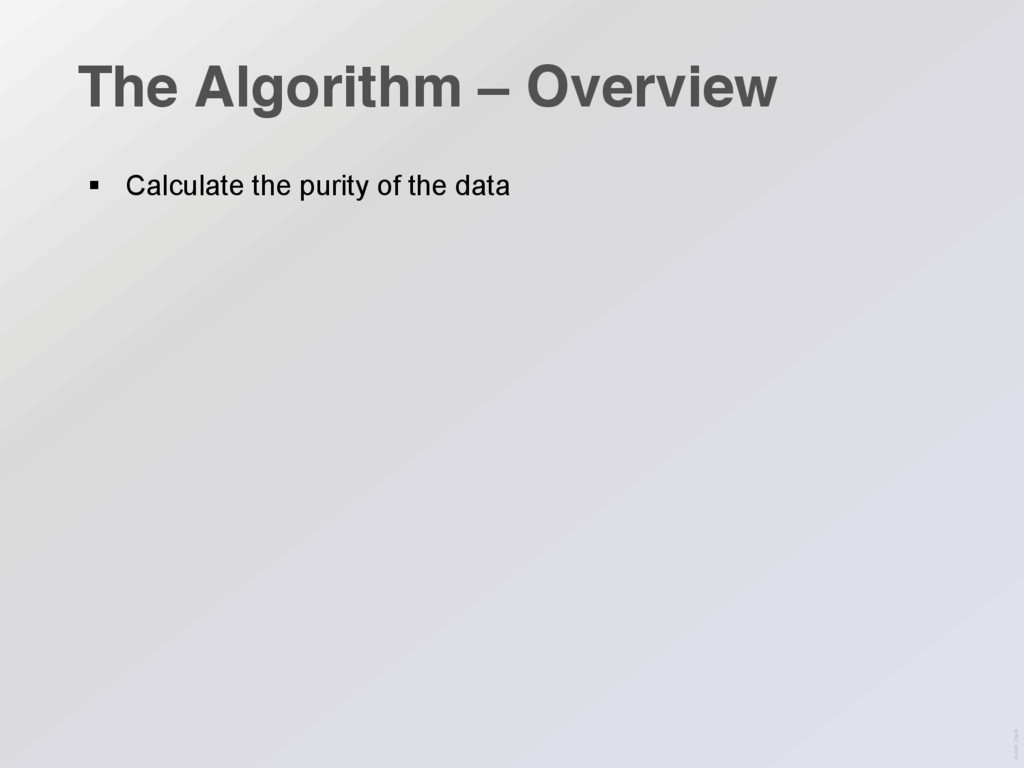
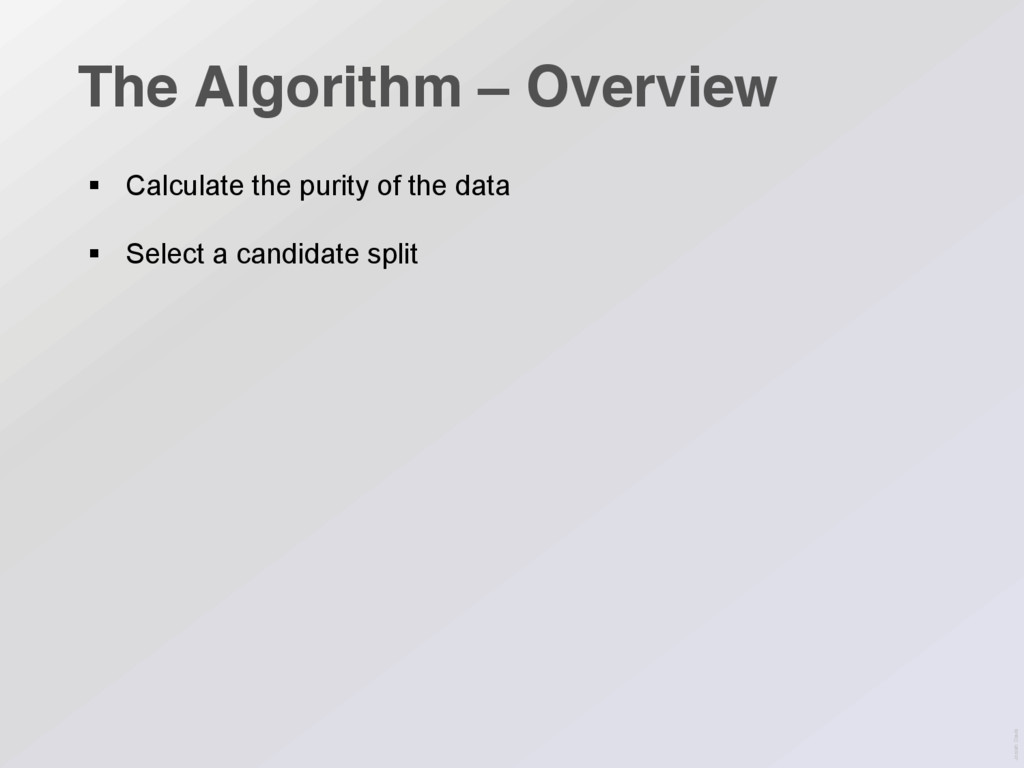
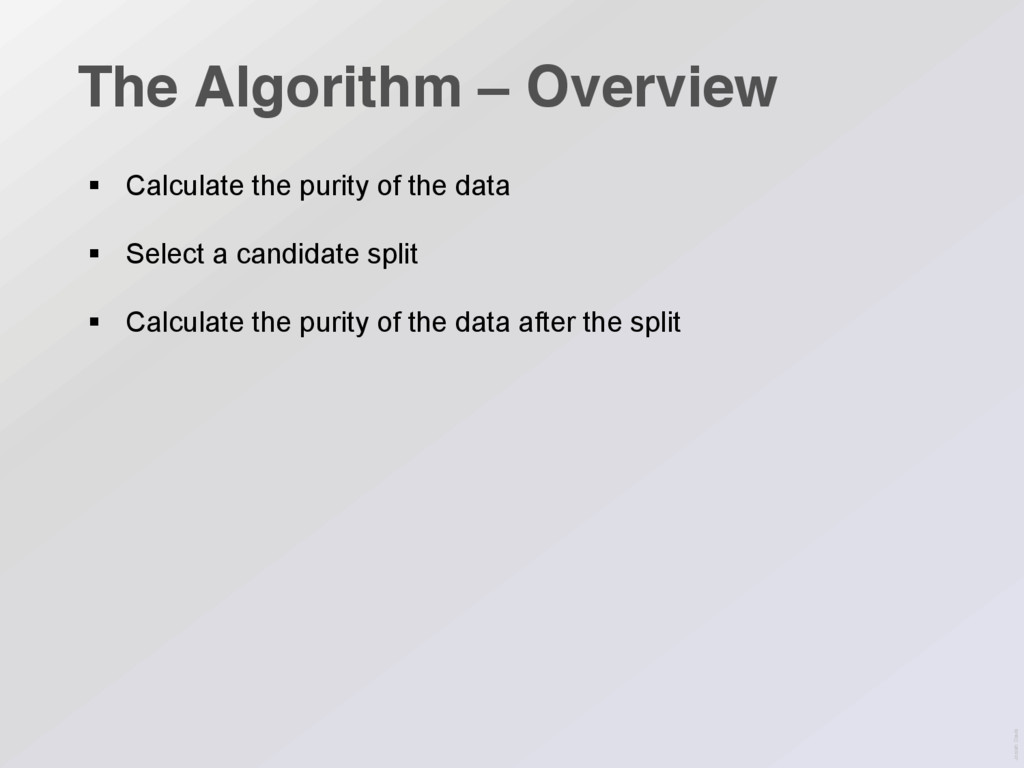
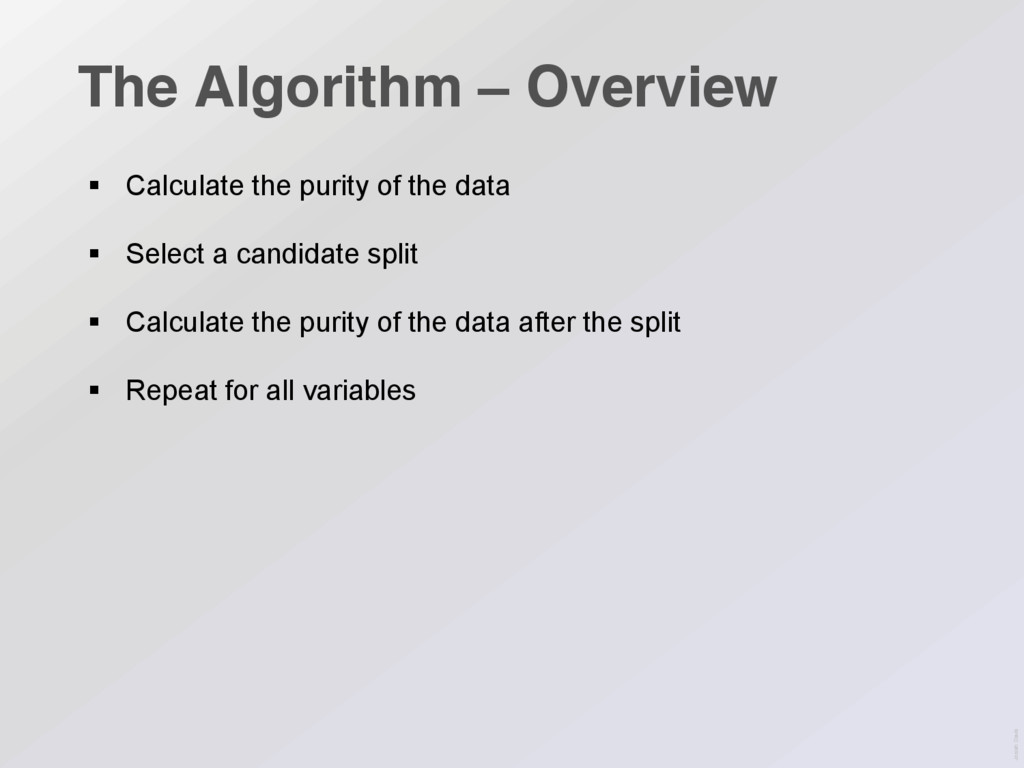
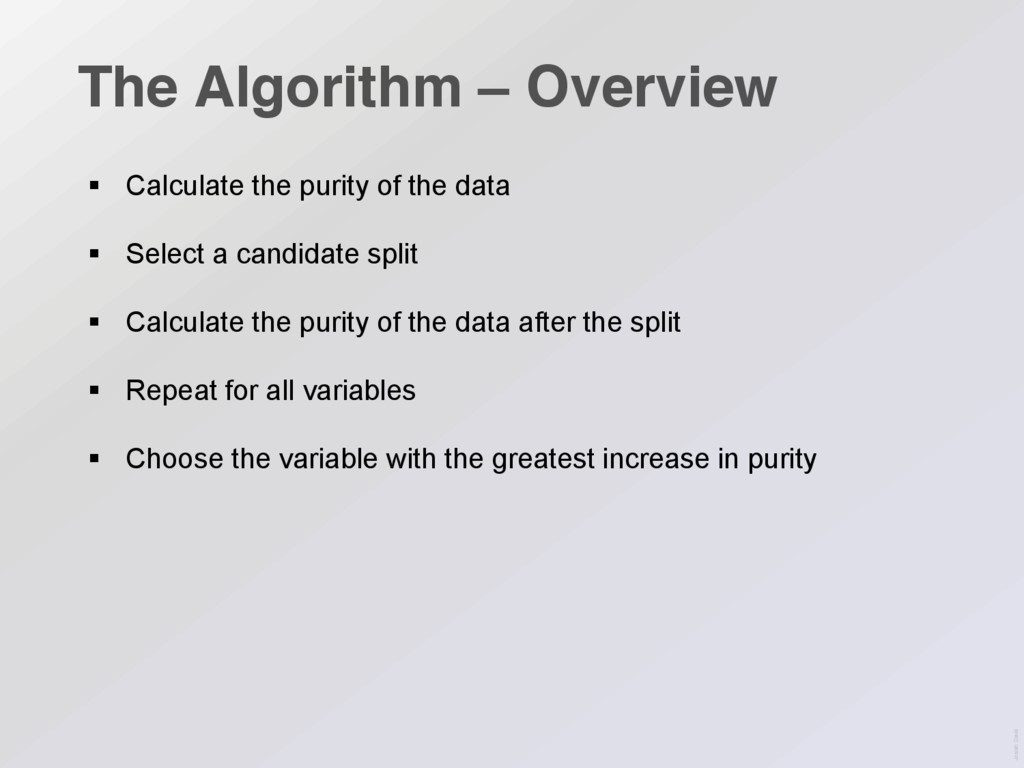
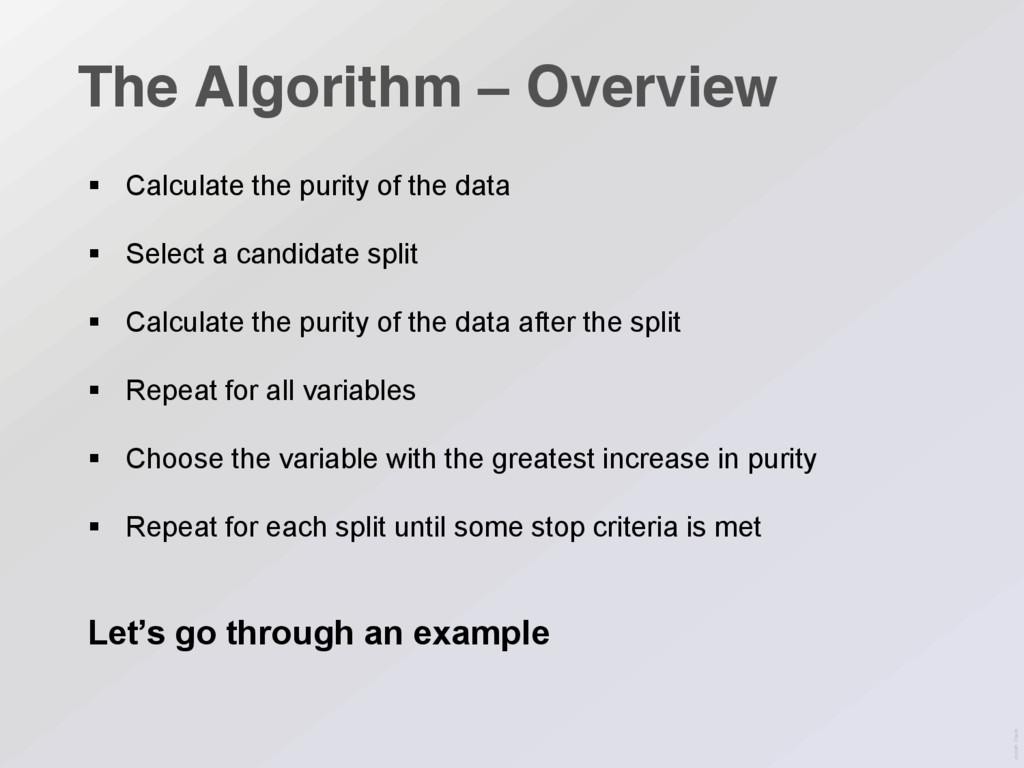
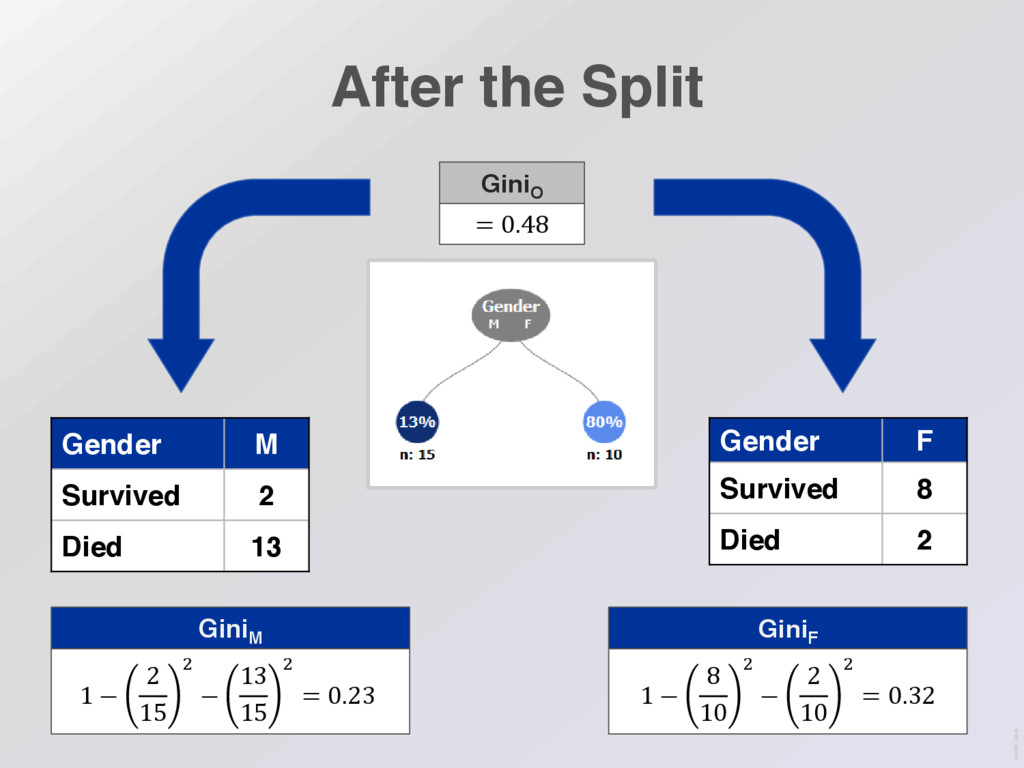
of the data Select a candidate split Calculate the purity of the data after the split Repeat for all variables Choose the variable with the greatest increase in purity
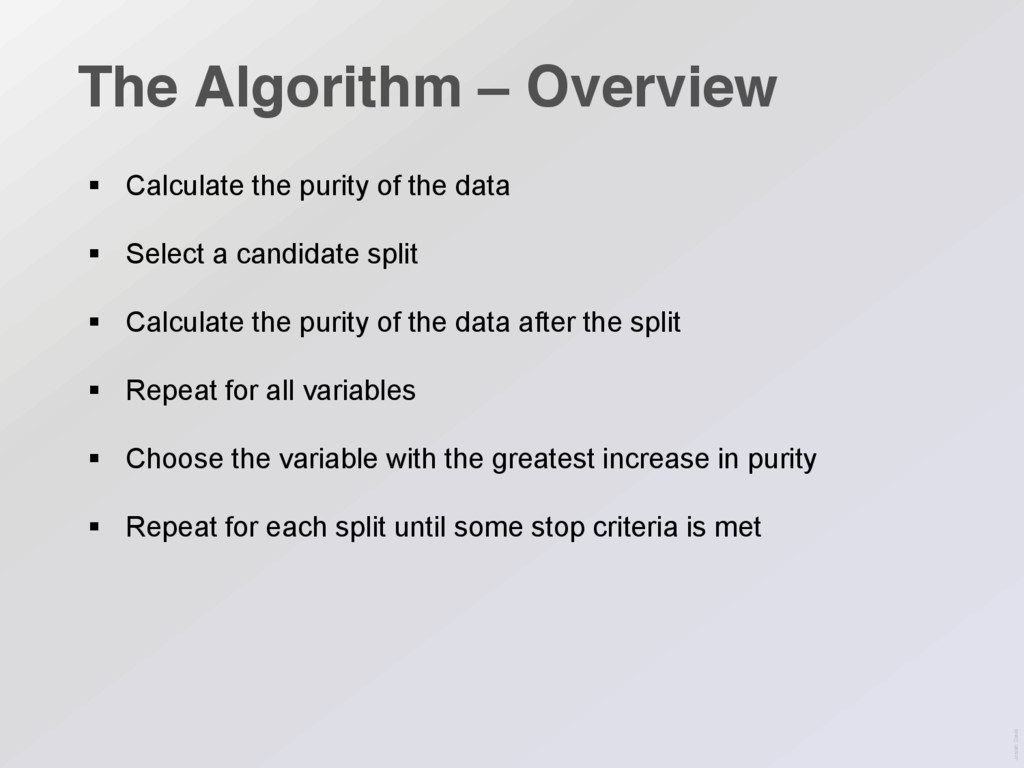
of the data Select a candidate split Calculate the purity of the data after the split Repeat for all variables Choose the variable with the greatest increase in purity Repeat for each split until some stop criteria is met
of the data Select a candidate split Calculate the purity of the data after the split Repeat for all variables Choose the variable with the greatest increase in purity Repeat for each split until some stop criteria is met Let’s go through an example
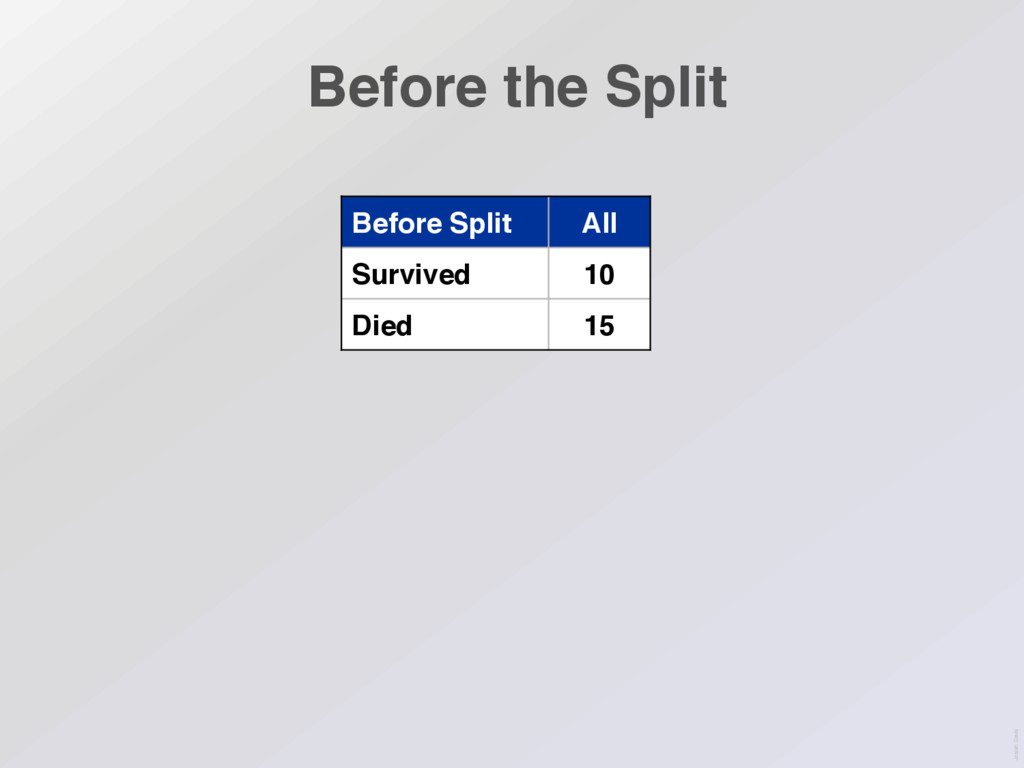
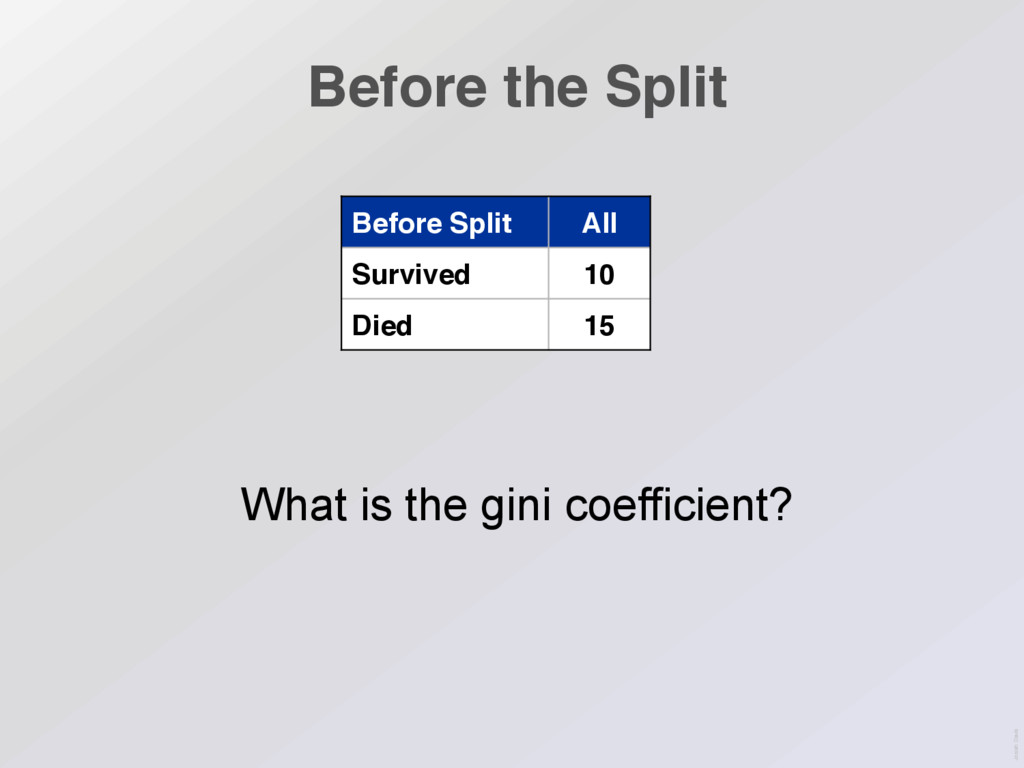
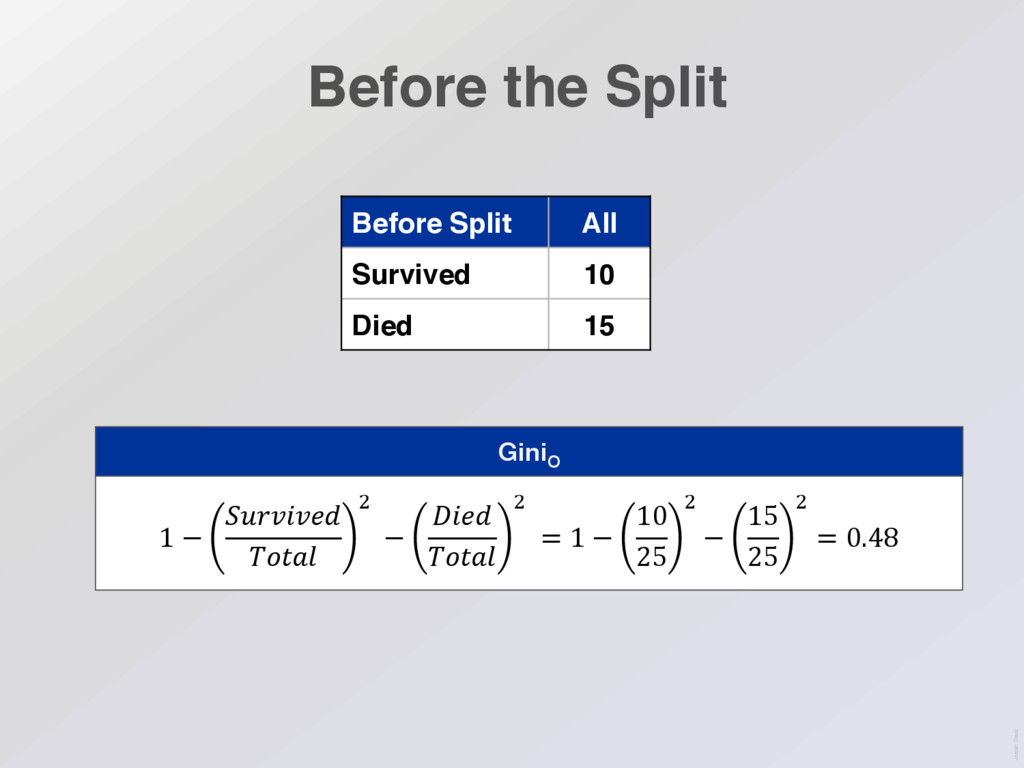
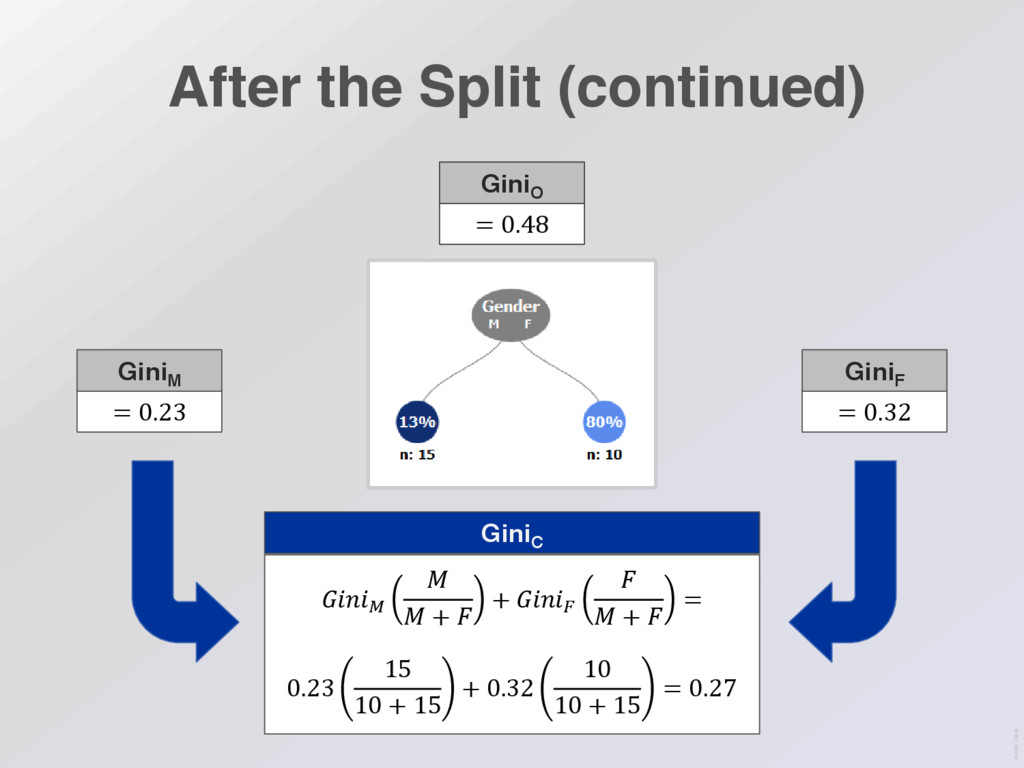
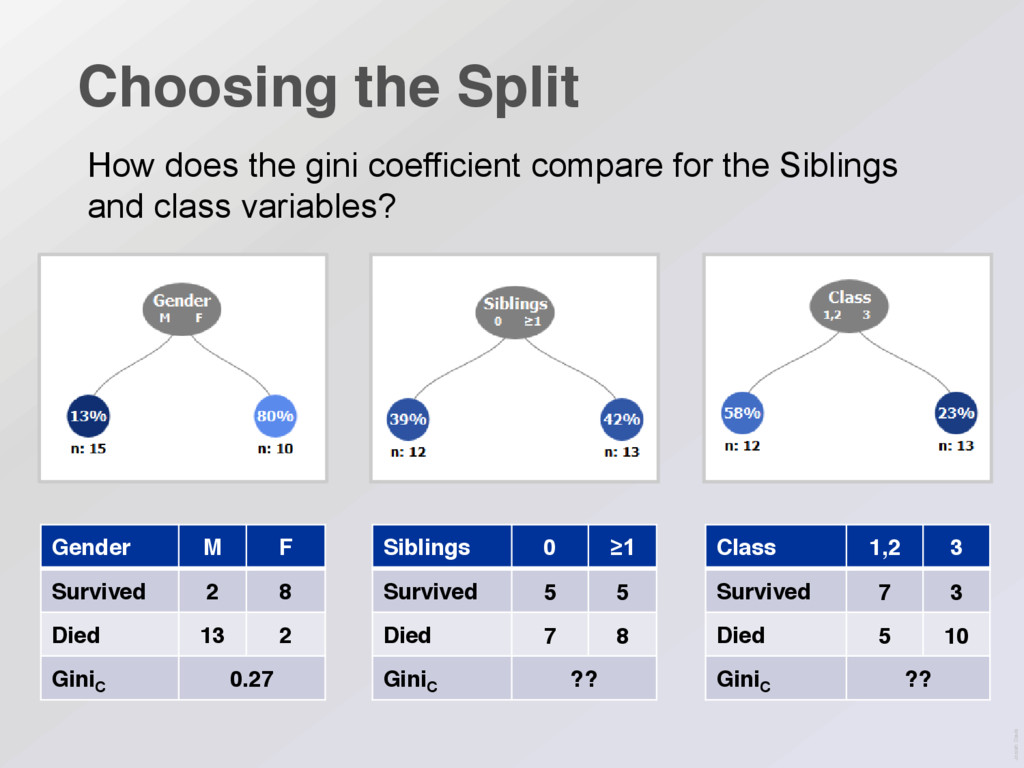
Siblings and class variables? Gender M F Survived 2 8 Died 13 2 GiniC 0.27 Siblings 0 ≥1 Survived 5 5 Died 7 8 GiniC ?? Class 1,2 3 Survived 7 3 Died 5 10 GiniC ?? Choosing the Split
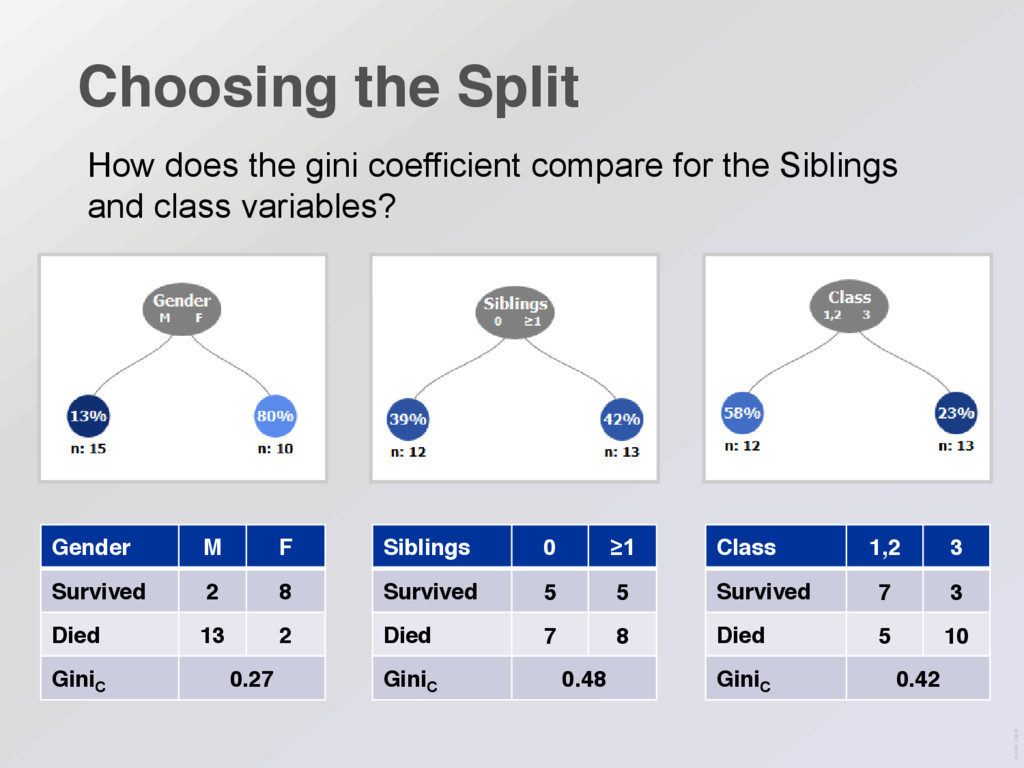
Siblings and class variables? Gender M F Survived 2 8 Died 13 2 GiniC 0.27 Choosing the Split Siblings 0 ≥1 Survived 5 5 Died 7 8 GiniC 0.48 Class 1,2 3 Survived 7 3 Died 5 10 GiniC 0.42
tree to someone without a data science background Describe how the algorithm creates the decision tree Predict the likelihood of a binary event using the decision tree algorithm in scikit-learn Create a decision tree visualization Determine the optimal tree size using a tune grid and the AUC metric in Python Describe the strengths and weaknesses of a decision tree
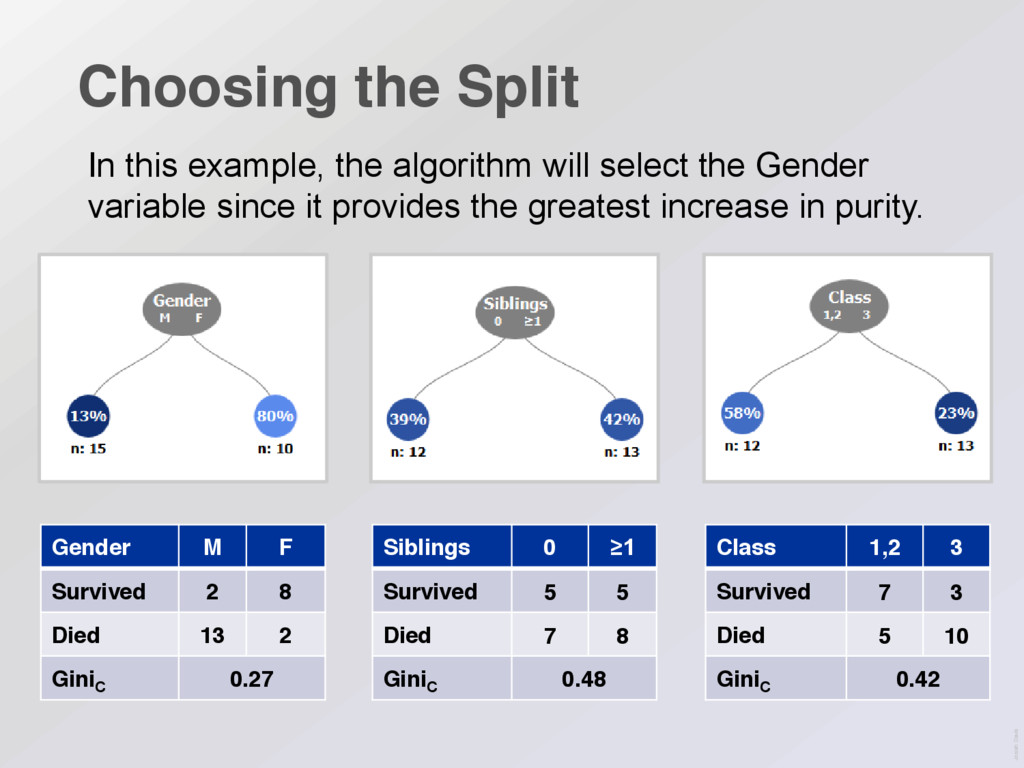
Gender variable since it provides the greatest increase in purity. Gender M F Survived 2 8 Died 13 2 GiniC 0.27 Siblings 0 ≥1 Survived 5 5 Died 7 8 GiniC 0.48 Class 1,2 3 Survived 7 3 Died 5 10 GiniC 0.42 Choosing the Split
tree to someone without a data science background Describe how the algorithm creates the decision tree Predict the likelihood of a binary event using the decision tree algorithm in scikit-learn Create a decision tree visualization Determine the optimal tree size using a tune grid and the AUC metric in Python Describe the strengths and weaknesses of a decision tree
provides the decision tree algorithm with a degree of interpretability that other more complex algorithms don’t provide Understanding how the decision Tree works is foundational to understanding how more complex, and widely-used models work, such as random forests and boosted trees.
provides the decision tree algorithm with a degree of interpretability that other more complex algorithms don’t provide Understanding how the decision Tree works is foundational to understanding how more complex, and widely-used models work, such as random forests and boosted trees. Disadvantages: The decision Tree tends to perform worse than more sophisticated modeling techniques due to their unstability


 willnet
 teamlab
 yut0naga1_fa
 nttcom
 occhi
 pfn
 carta_engineering
 kizawa2020
 tokuty
 satomasahiro2005
 sansantech
 ludicmind
 leimatthew05
 62gerente
 marktimemedia
 cassininazir
 jnunemaker
 seathinner
 michielstock
 reverentgeek
 konakalab
 jonoalderson
 letsgokoyo
 danielanewman