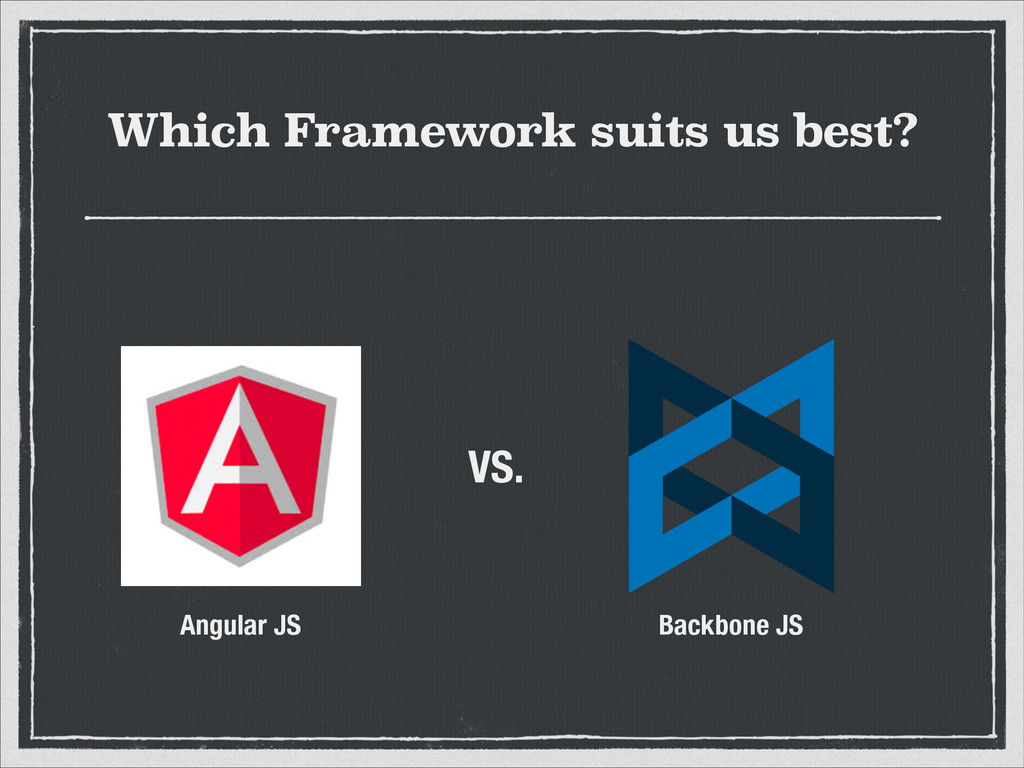
a better support community AngularJS is a MVC open-source framework built by Google. Out of the box features include: filtering, sorting, routing, conditional templating. It has really good support, an active development roadmap and has been around since 2009. Companies using Angularjs: Netflix, Youtube, Salesforce.
it’s name suggests is just a backbone, you need to build everything on top of it. It’s great for bigger teams who need to build specific components to fit in with their application architecture. Backbone has been around since 2010. Companies using backbone: USA Today, Hulu, Gilt.
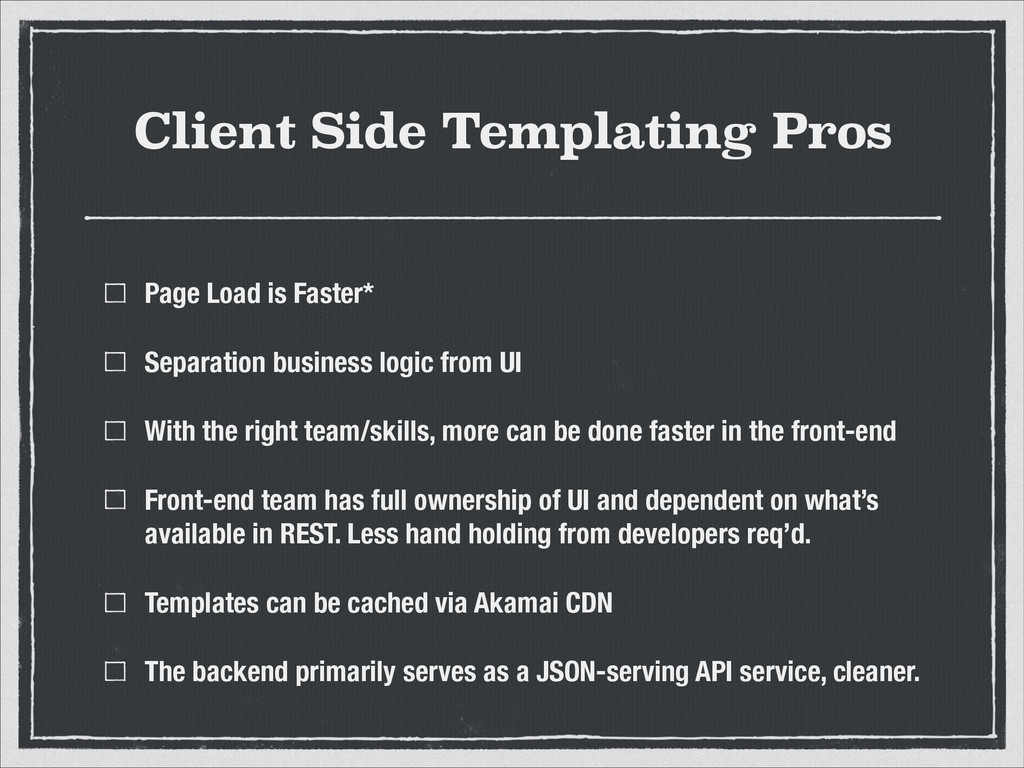
logic from UI With the right team/skills, more can be done faster in the front-end Front-end team has full ownership of UI and dependent on what’s available in REST. Less hand holding from developers req’d. Templates can be cached via Akamai CDN The backend primarily serves as a JSON-serving API service, cleaner.
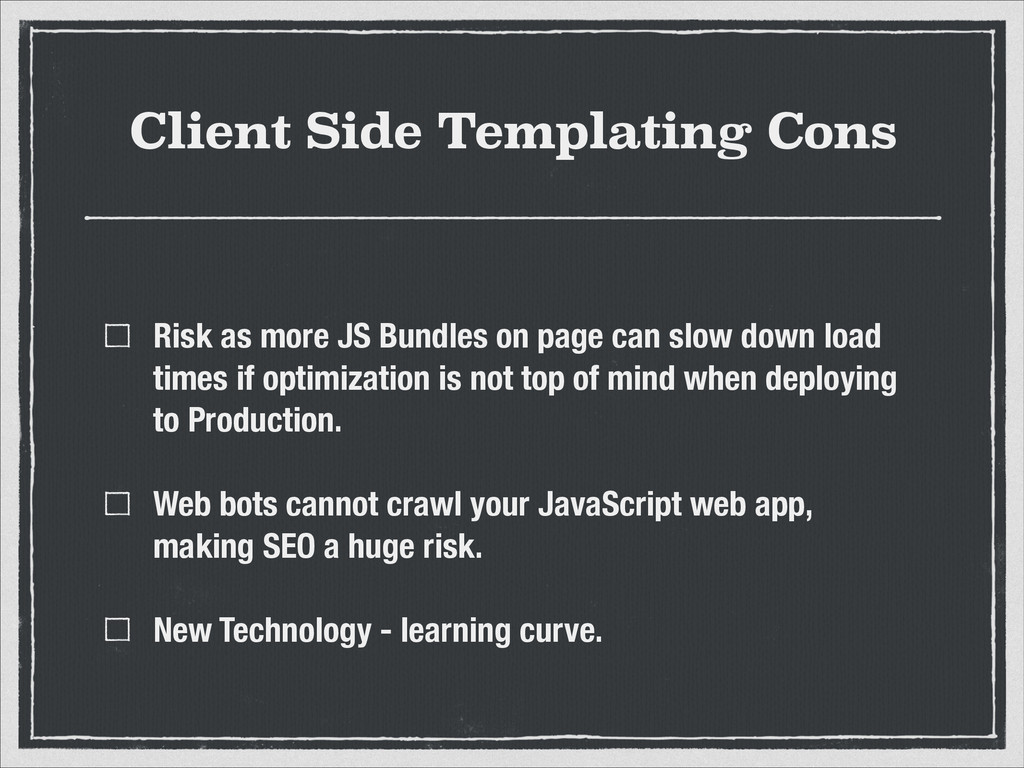
page can slow down load times if optimization is not top of mind when deploying to Production. Web bots cannot crawl your JavaScript web app, making SEO a huge risk. New Technology - learning curve.
organized to provide modules that can be used across countries and brands. DRY “Dont Repeat Yourself”. Optimization - Use tools such as GruntJS to create development and build versions of code for optimization. Unit Testing - JavaScript Unit Testing using GruntJS, similar to the Back- end Jenkins Continuous Integration JavaScript Knowledge - Need more spread across teams. JavaScript becoming more than just a scripting language for DOM manipulation. Node.js is really pushing the boundaries of what can be done in JavaScript.


 sh_fk2
 puhitaku
 persolserverworks
 tomokusaba
 yamanoku
 codmoninc
 akitoshiga
 recruitengineers
 masakiokuda
 ueponx
 nealle
 codingconduct
 samlambert
 marktimemedia
 carmenintech
 jct
 reverentgeek
 danielanewman
 mongodb
 jakevdp
 brad_frost