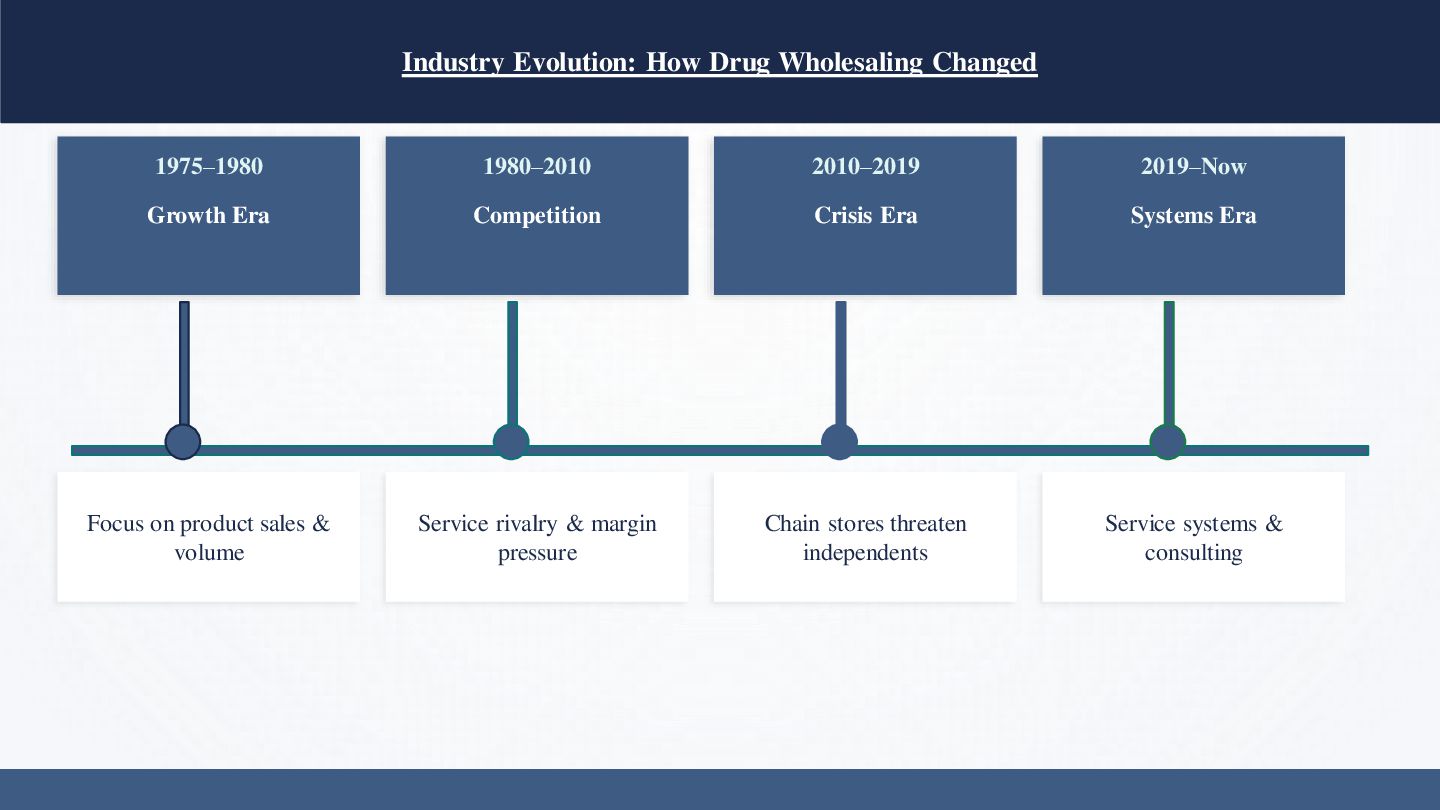
on product sales & volume 1980–2010 Competition Service rivalry & margin pressure 2010–2019 Crisis Era Chain stores threaten independents 2019–Now Systems Era Service systems & consulting
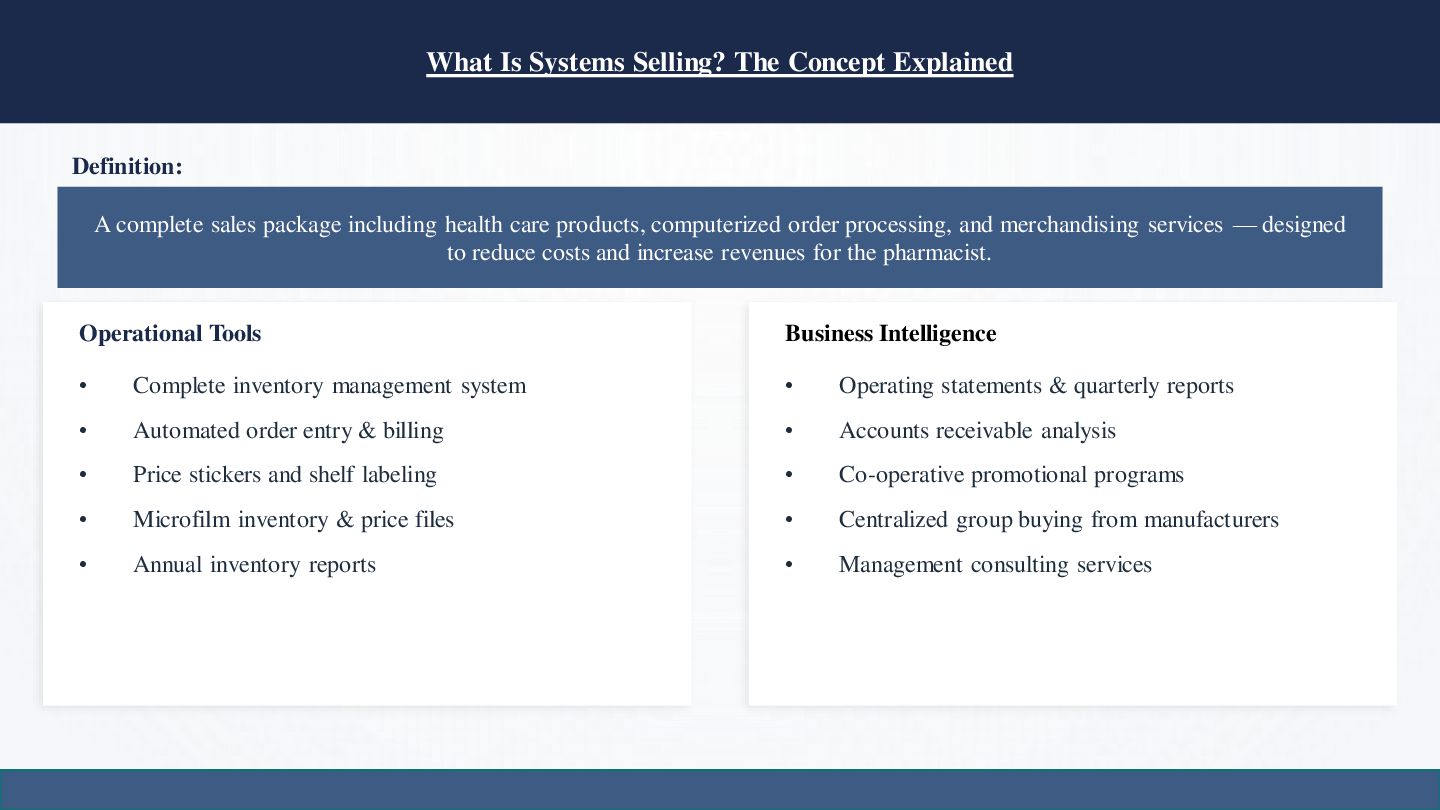
sales package including health care products, computerized order processing, and merchandising services — designed to reduce costs and increase revenues for the pharmacist. Operational Tools Business Intelligence • Complete inventory management system • Automated order entry & billing • Price stickers and shelf labeling • Microfilm inventory & price files • Annual inventory reports • Operating statements & quarterly reports • Accounts receivable analysis • Co-operative promotional programs • Centralized group buying from manufacturers • Management consulting services
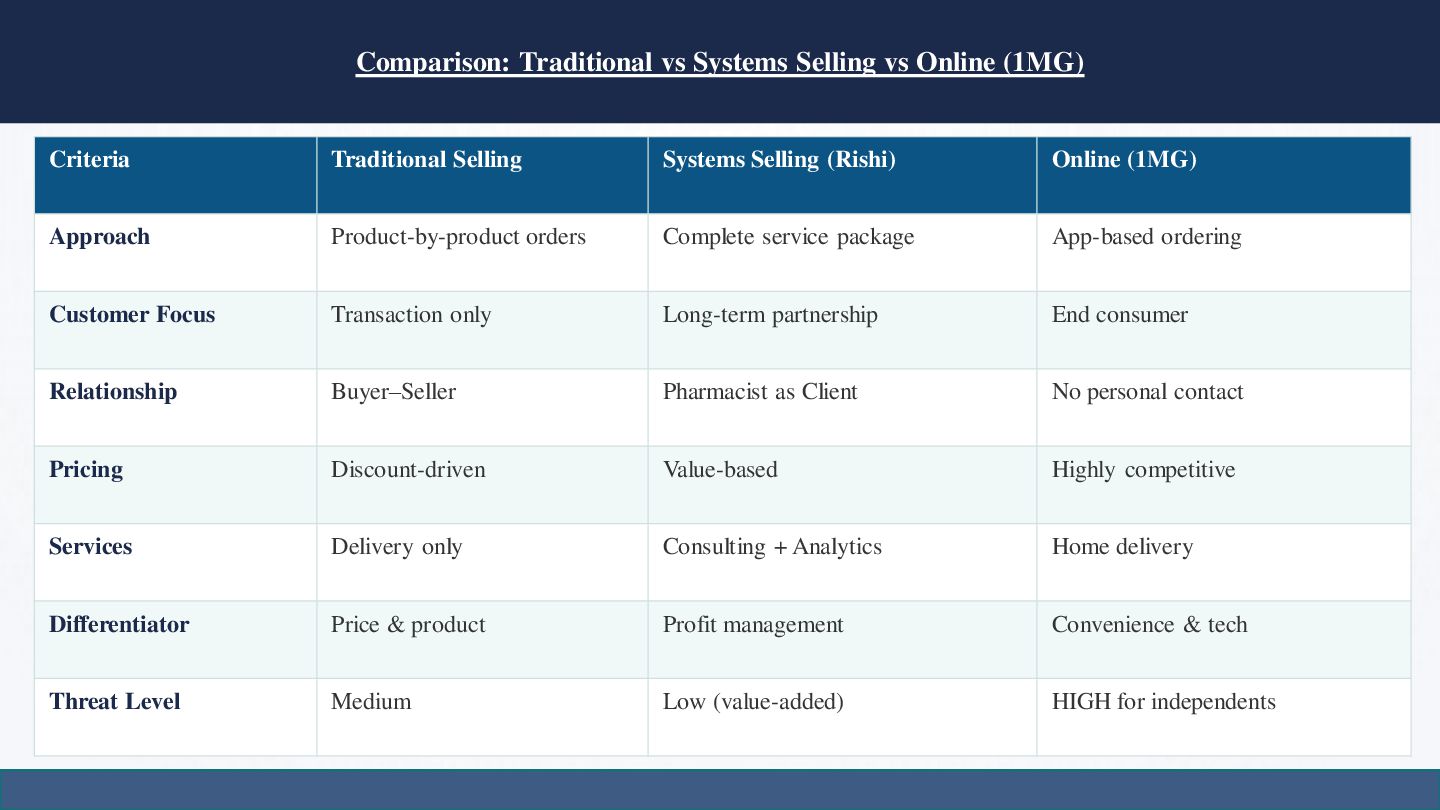
Selling Systems Selling (Rishi) Online (1MG) Approach Product-by-product orders Complete service package App-based ordering Customer Focus Transaction only Long-term partnership End consumer Relationship Buyer–Seller Pharmacist as Client No personal contact Pricing Discount-driven Value-based Highly competitive Services Delivery only Consulting + Analytics Home delivery Differentiator Price & product Profit management Convenience & tech Threat Level Medium Low (value-added) HIGH for independents
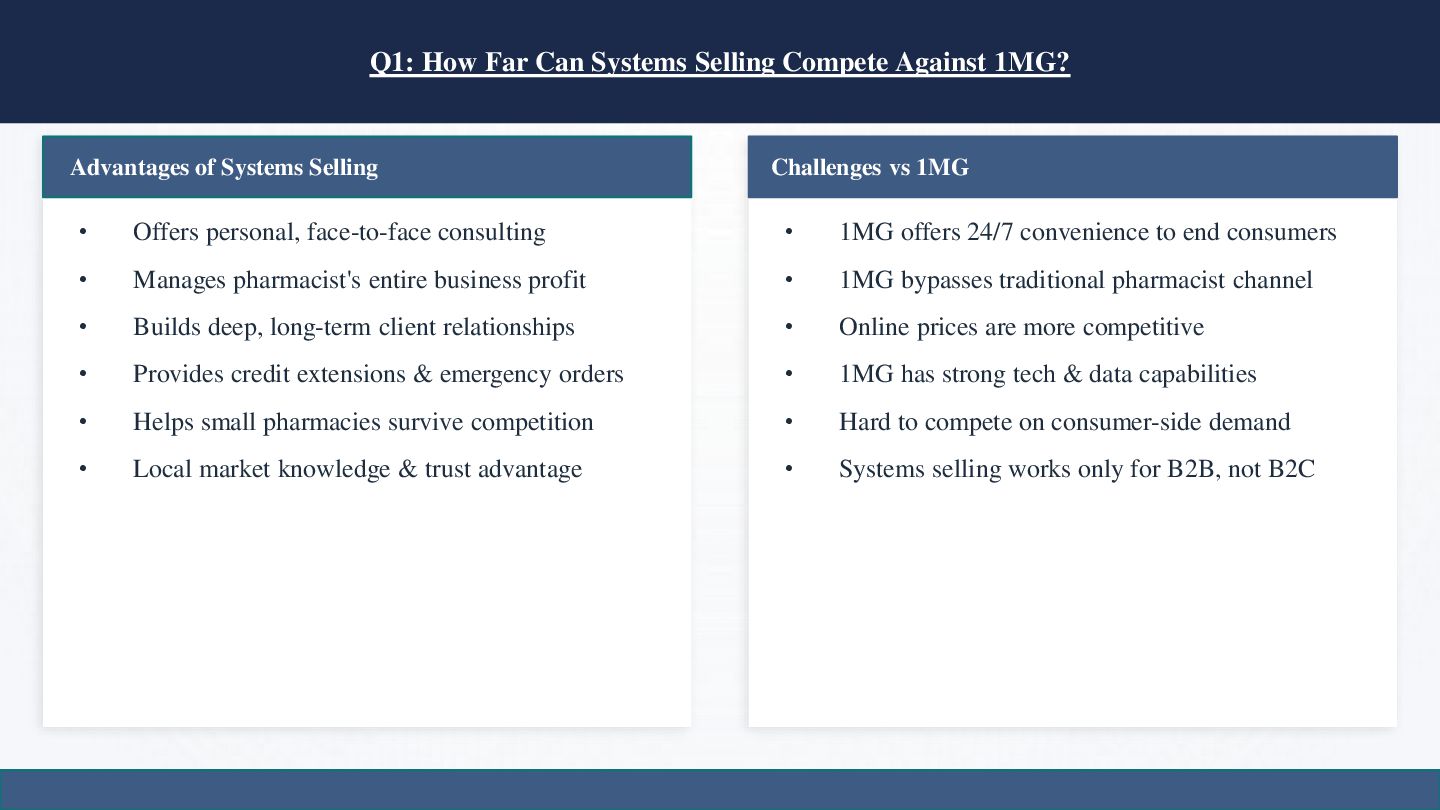
of Systems Selling Challenges vs 1MG • Offers personal, face-to-face consulting • Manages pharmacist's entire business profit • Builds deep, long-term client relationships • Provides credit extensions & emergency orders • Helps small pharmacies survive competition • Local market knowledge & trust advantage • 1MG offers 24/7 convenience to end consumers • 1MG bypasses traditional pharmacist channel • Online prices are more competitive • 1MG has strong tech & data capabilities • Hard to compete on consumer-side demand • Systems selling works only for B2B, not B2C
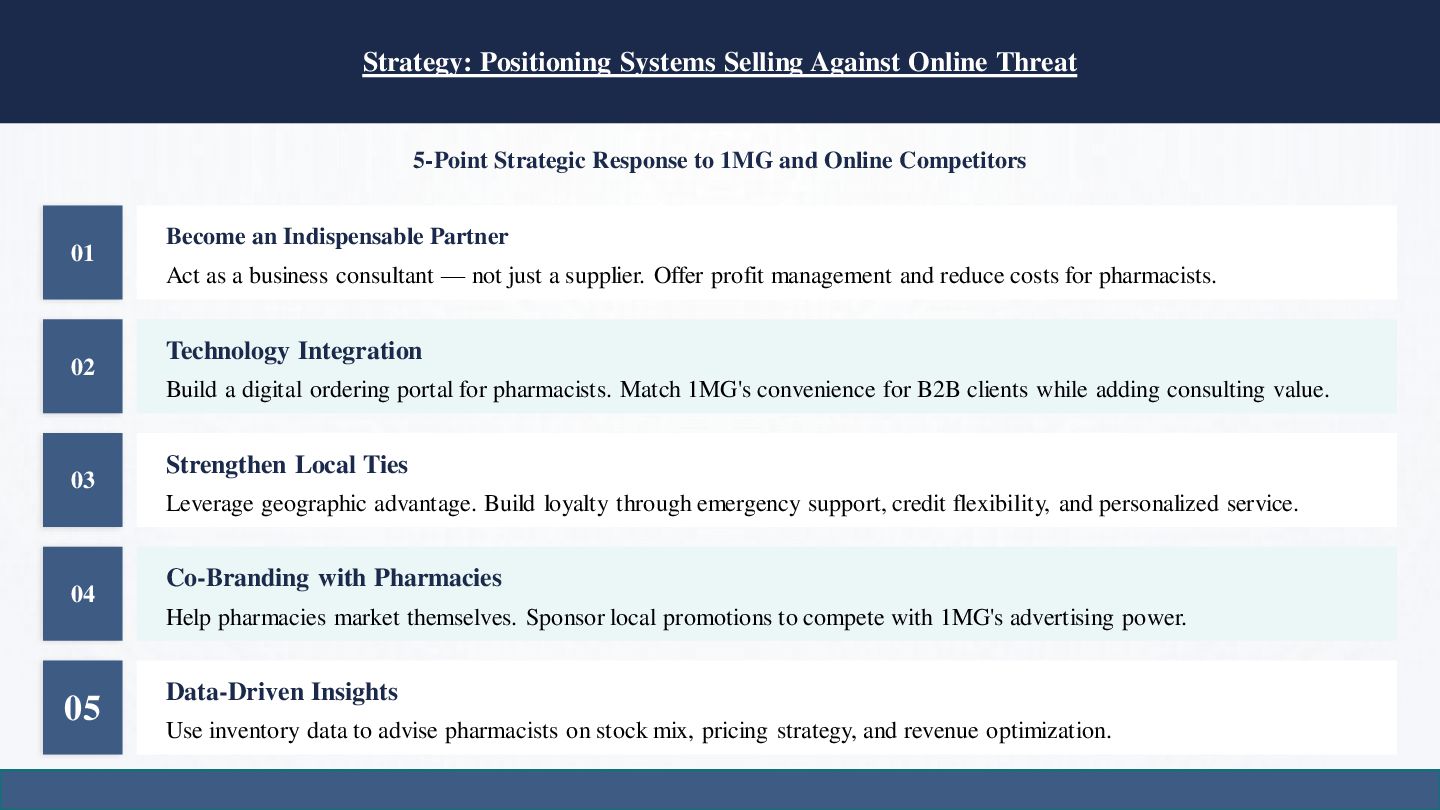
to 1MG and Online Competitors 01 Become an Indispensable Partner Act as a business consultant — not just a supplier. Offer profit management and reduce costs for pharmacists. 02 Technology Integration Build a digital ordering portal for pharmacists. Match 1MG's convenience for B2B clients while adding consulting value. 03 Strengthen Local Ties Leverage geographic advantage. Build loyalty through emergency support, credit flexibility, and personalized service. 04 Co-Branding with Pharmacies Help pharmacies market themselves. Sponsor local promotions to compete with 1MG's advertising power. 05 Data-Driven Insights Use inventory data to advise pharmacists on stock mix, pricing strategy, and revenue optimization.
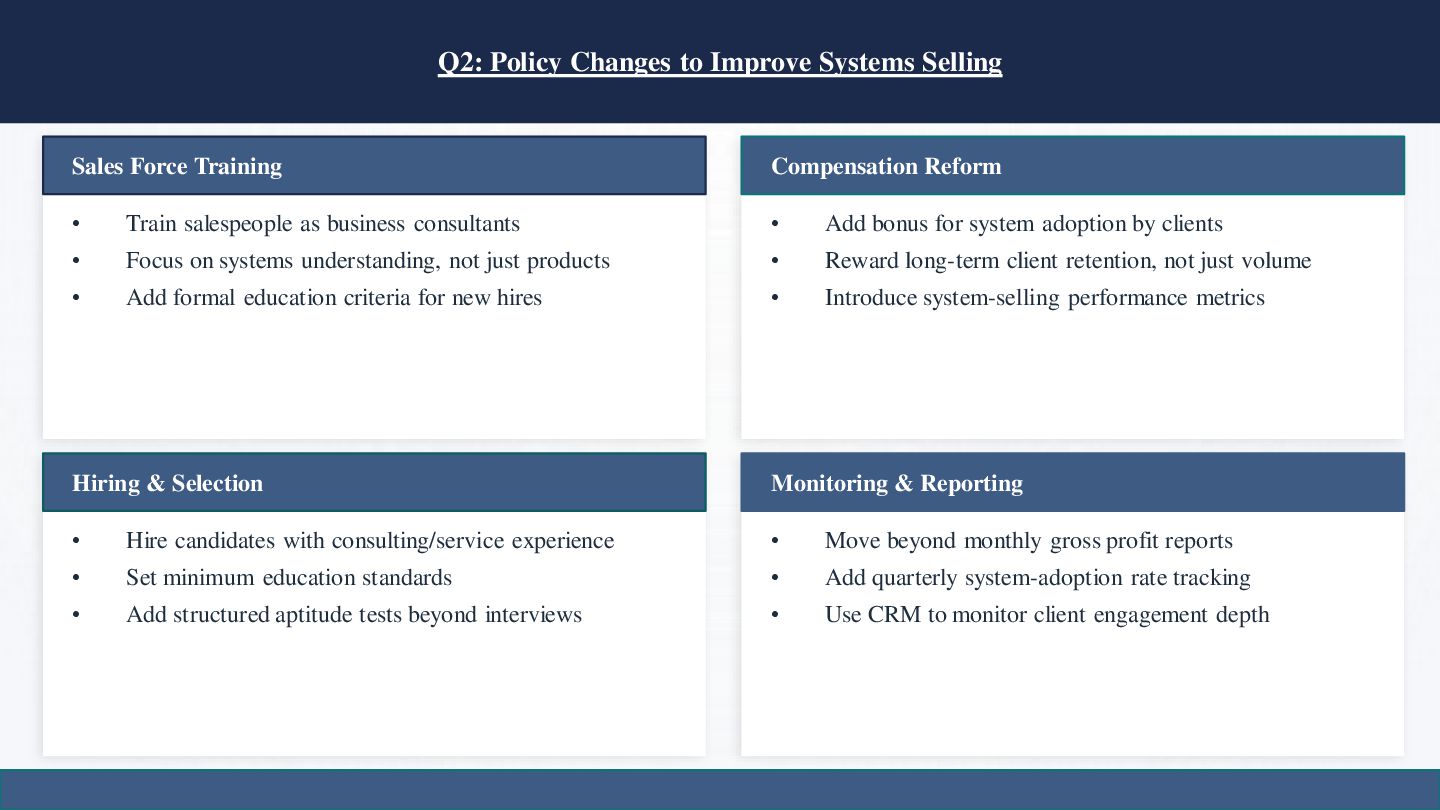
• Train salespeople as business consultants • Focus on systems understanding, not just products • Add formal education criteria for new hires Compensation Reform • Add bonus for system adoption by clients • Reward long-term client retention, not just volume • Introduce system-selling performance metrics Hiring & Selection • Hire candidates with consulting/service experience • Set minimum education standards • Add structured aptitude tests beyond interviews Monitoring & Reporting • Move beyond monthly gross profit reports • Add quarterly system-adoption rate tracking • Use CRM to monitor client engagement depth
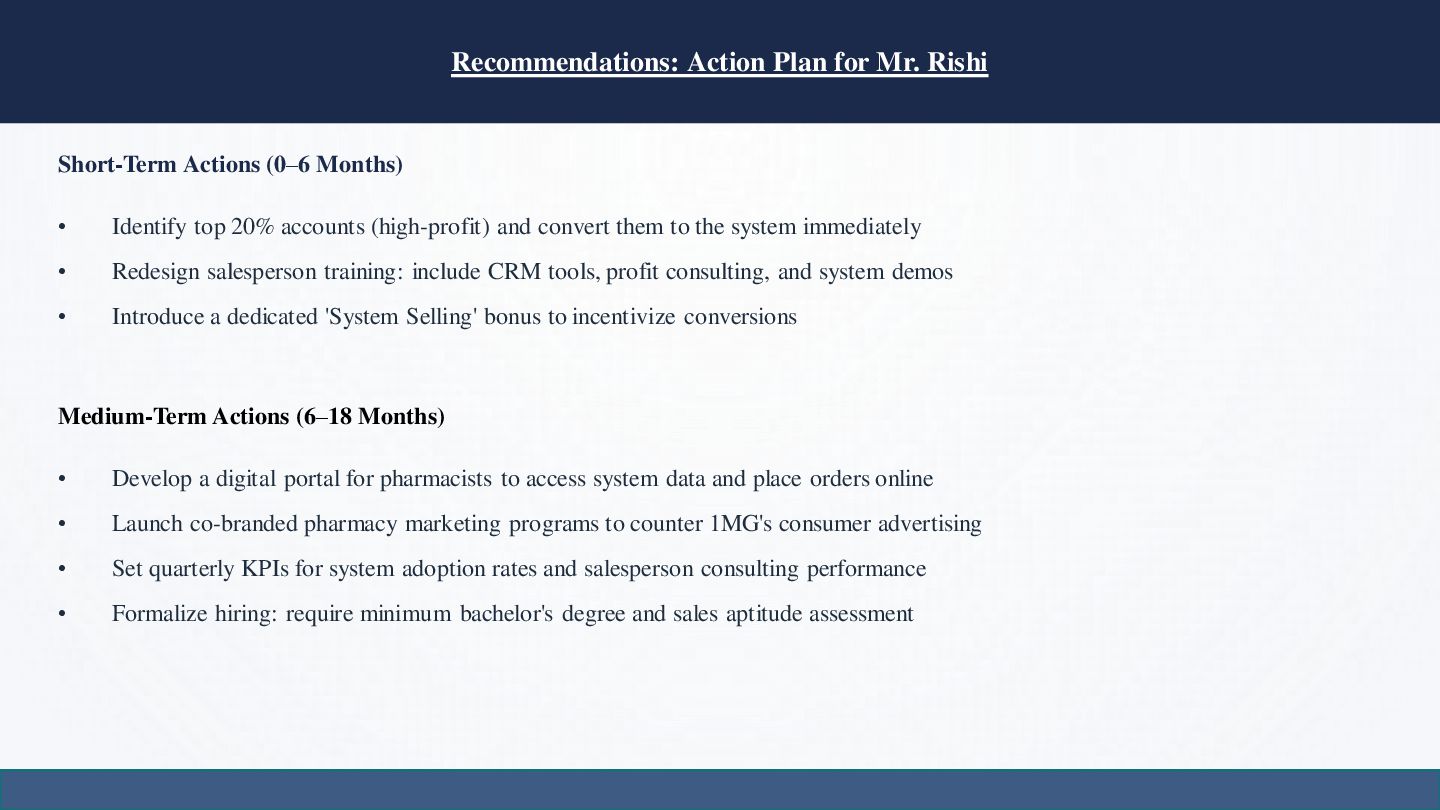
• Identify top 20% accounts (high-profit) and convert them to the system immediately • Redesign salesperson training: include CRM tools, profit consulting, and system demos • Introduce a dedicated 'System Selling' bonus to incentivize conversions Medium-Term Actions (6–18 Months) • Develop a digital portal for pharmacists to access system data and place orders online • Launch co-branded pharmacy marketing programs to counter 1MG's consumer advertising • Set quarterly KPIs for system adoption rates and salesperson consulting performance • Formalize hiring: require minimum bachelor's degree and sales aptitude assessment
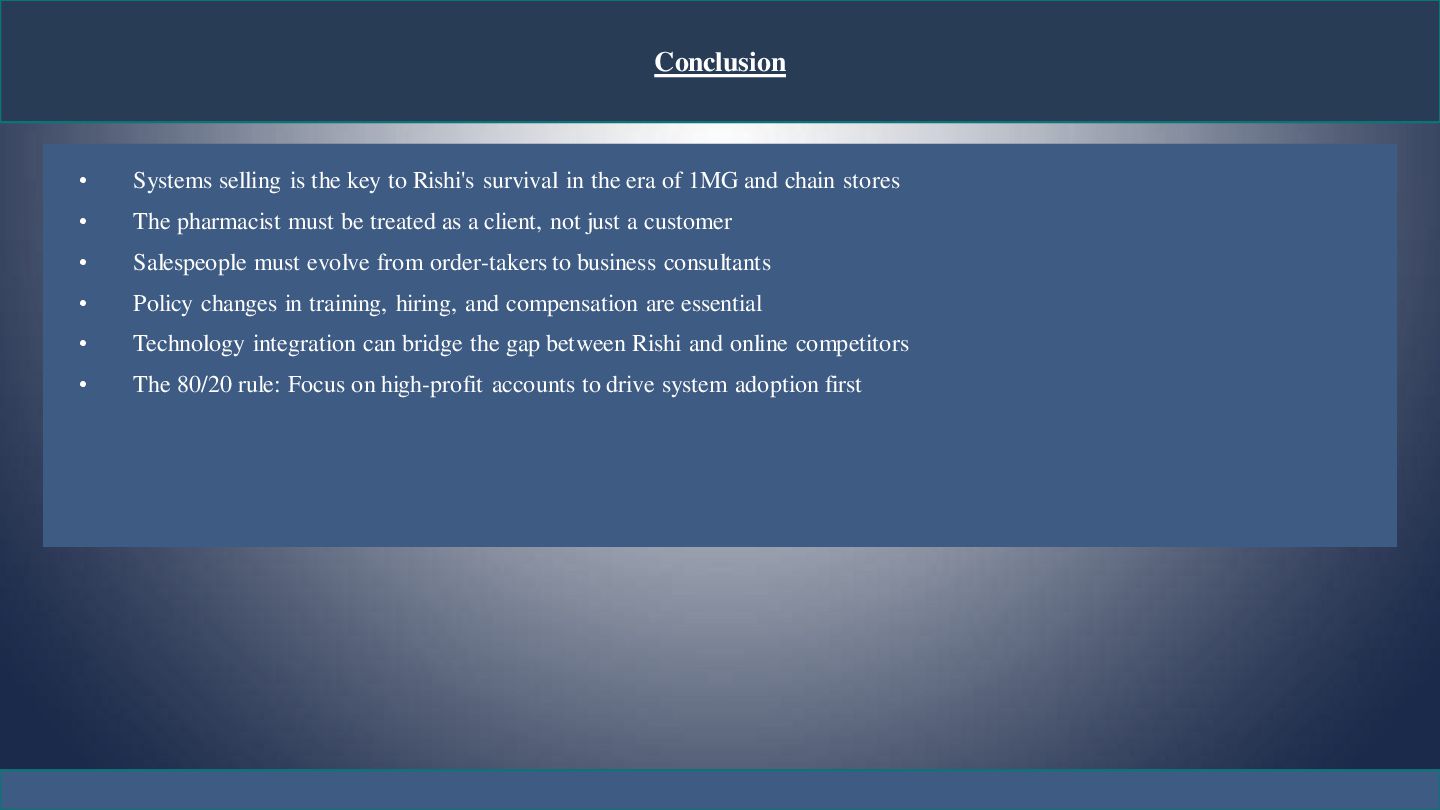
in the era of 1MG and chain stores • The pharmacist must be treated as a client, not just a customer • Salespeople must evolve from order-takers to business consultants • Policy changes in training, hiring, and compensation are essential • Technology integration can bridge the gap between Rishi and online competitors • The 80/20 rule: Focus on high-profit accounts to drive system adoption first


 minecr
 sarafernandez
 aleyda
 62gerente
 inesmontani
 addyosmani
 stephenakadiri
 twada
 leimatthew05
 thirion
 hannesfritz