Waste tires are not simply a disposal problem. Once they enter a recycling facility, the real challenge is turning a mixed and difficult feedstock into a material that can be used consistently by another industry.
A tire contains rubber, steel wire and textile materials. These components are tightly combined during tire manufacturing, so producing clean rubber crumb requires more than simply reducing the tire into smaller pieces.
For many recycling projects, the process becomes more practical when size reduction, steel separation, screening and fiber removal are treated as connected stages rather than separate operations.
A properly configured tire rubber crumb plant can provide a controlled route from prepared tire material to uniform rubber granules for further use.
Why Rubber Crumb Production Requires Several Processing Stages
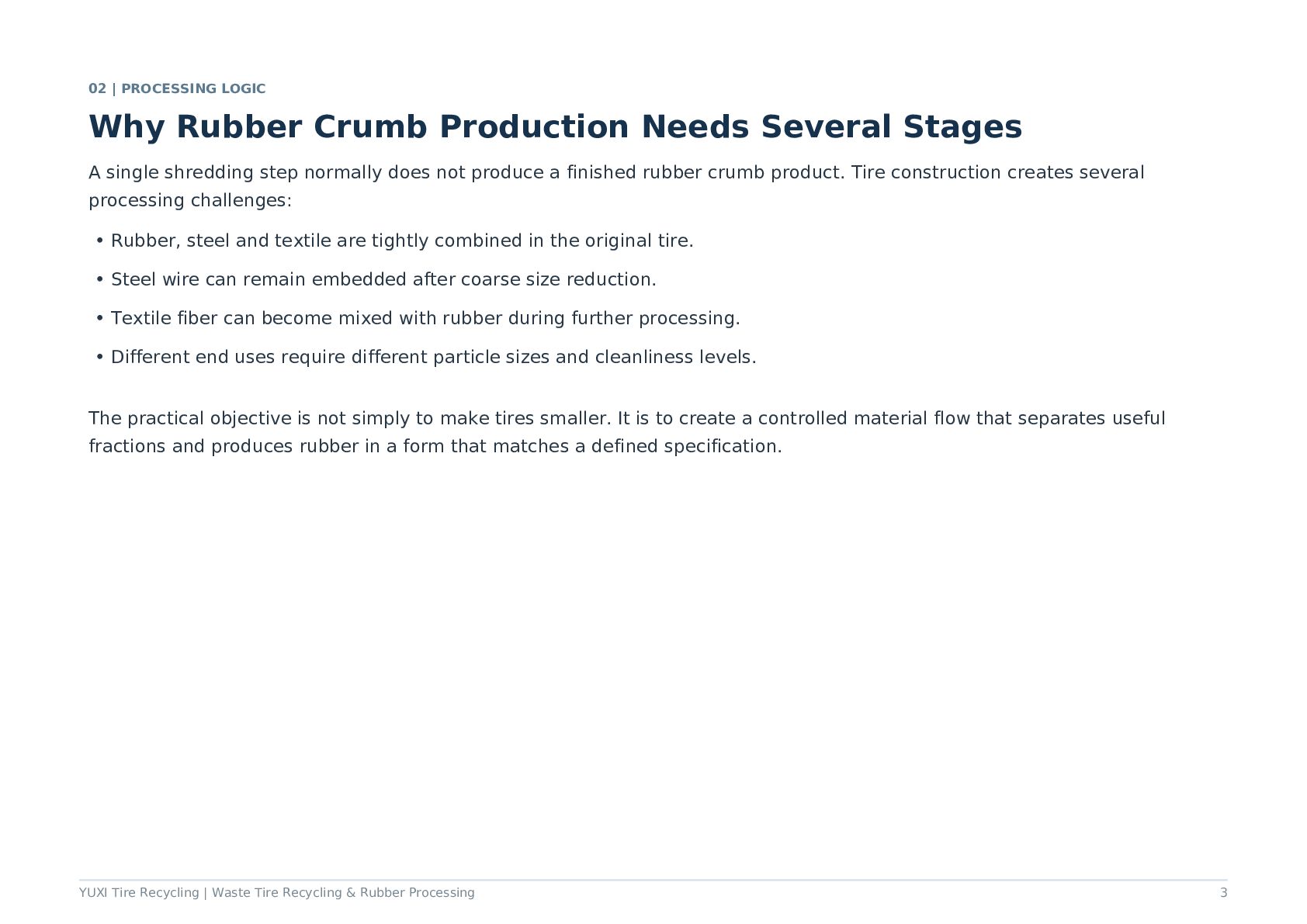
The structure of a waste tire makes the recycling process different from ordinary rubber crushing. Steel wire can remain embedded in the rubber, while textile fiber becomes mixed with the material as the tire is reduced in size.
If the material is only shredded once, the result may still contain large rubber pieces, exposed steel and textile contamination. For applications that require more consistent rubber particles, additional processing is normally necessary.
This is why a recycling line usually combines several pieces of equipment. Each stage has a specific job, and the performance of one stage affects the conditions of the next.
From Tire Chips to Rubber Granules
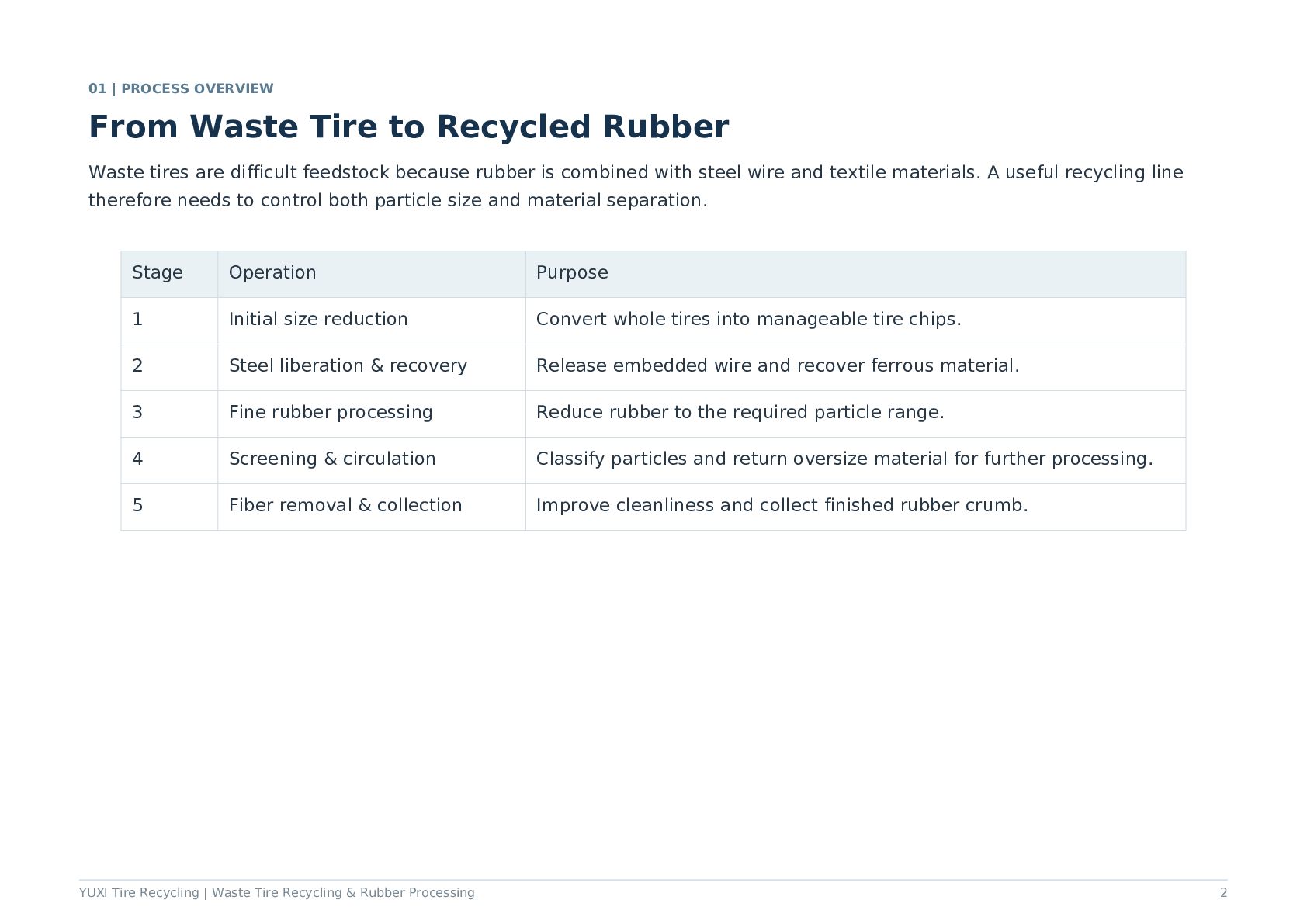
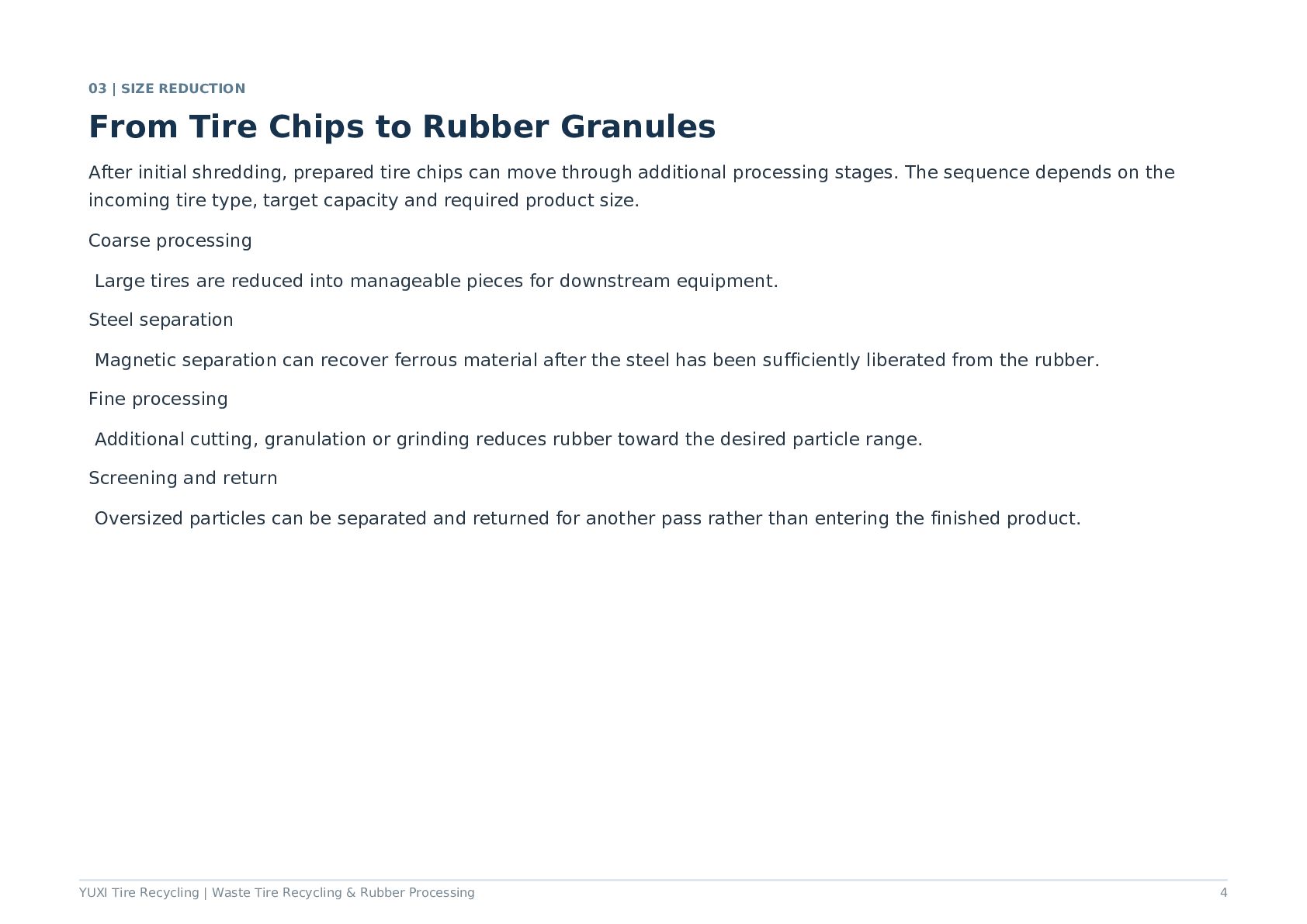
After the initial size reduction stage, tire chips can be processed further to release steel wire from the rubber matrix. Magnetic separation can then recover ferrous material before the rubber enters finer processing equipment.
The rubber is subsequently reduced to smaller particles. Screening helps classify the material and allows oversized pieces to return for additional processing instead of becoming part of the finished product.
This circulation is useful because recycled rubber does not always break into exactly the same particle size during one pass. A return loop gives the line another opportunity to bring oversized material into the required range.
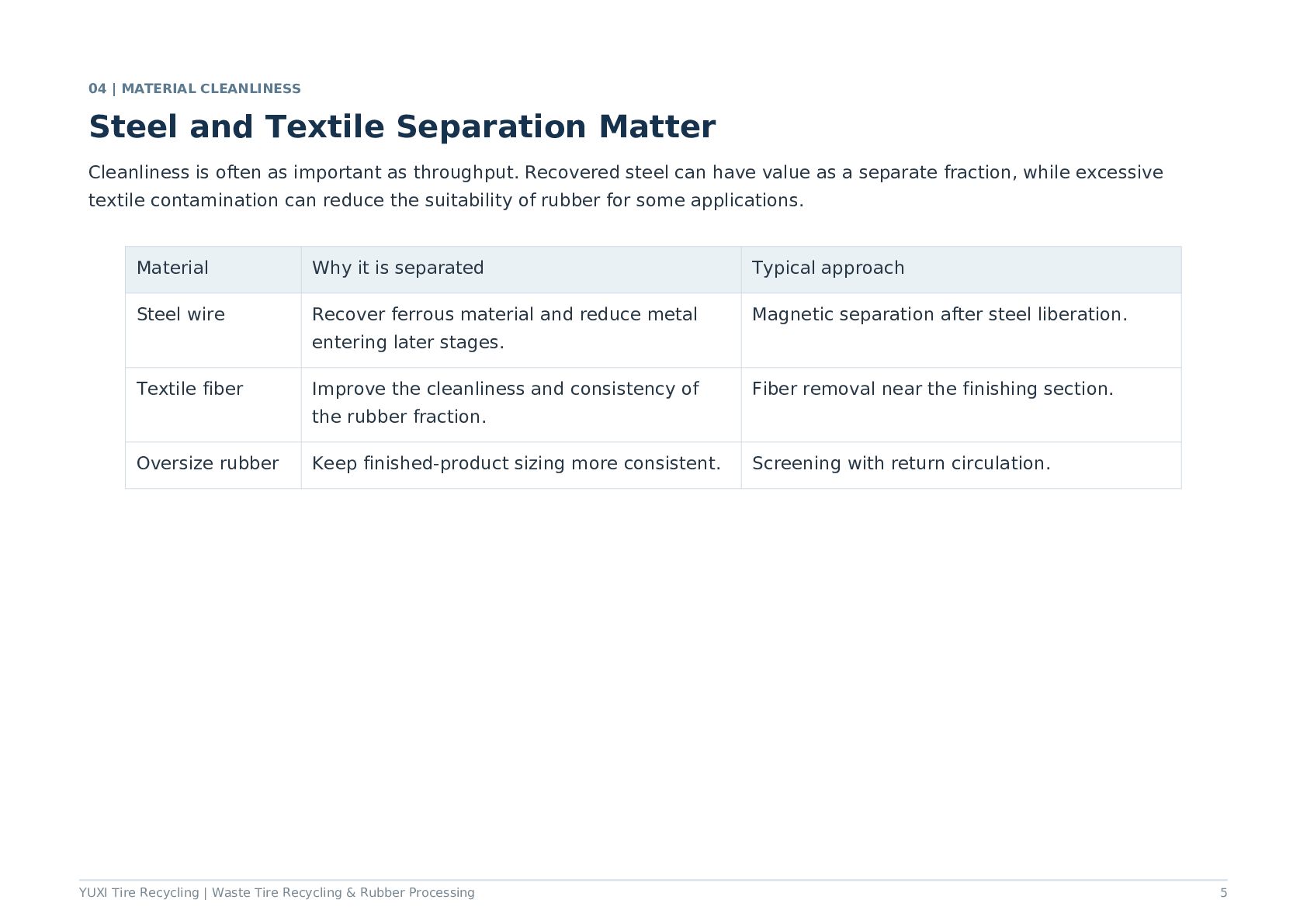
Why Steel and Textile Separation Matter
Clean rubber is often more useful than simply producing a large quantity of shredded material. Residual steel can affect downstream equipment, while excessive textile fiber can change the appearance and handling characteristics of the finished rubber.
For this reason, magnetic separation is commonly positioned after stages where steel has been liberated from the rubber. Fiber separation can also be included near the finishing section to improve the cleanliness of the final material.
The exact number of separation stages depends on the incoming tire type and the specification of the finished crumb. Passenger tires, truck tires and other heavy tires can behave differently during processing.
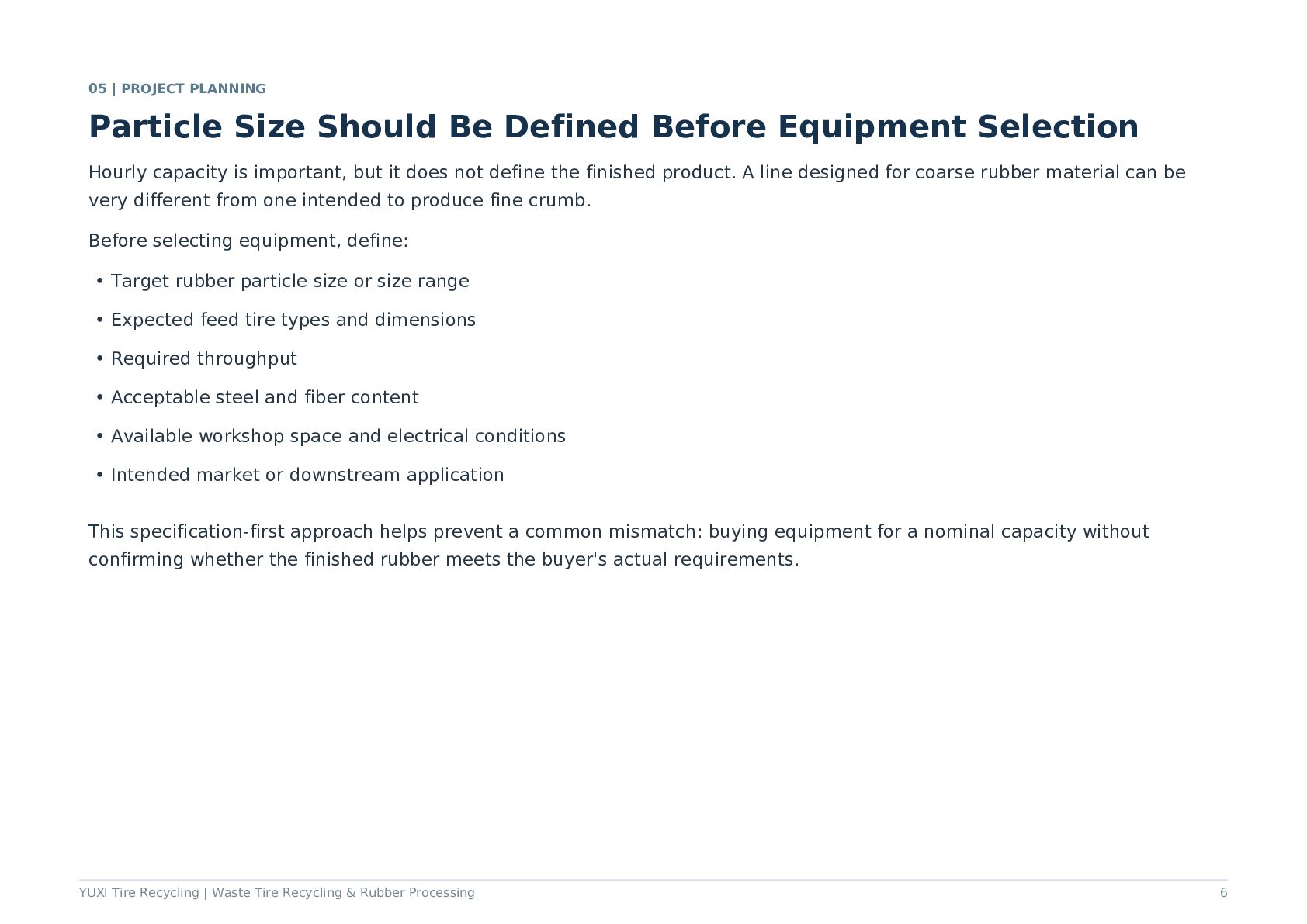
Particle Size Should Be Decided Before Equipment Selection
One mistake in recycling projects is choosing equipment only according to hourly capacity. Capacity matters, but it does not define the finished product.
A plant producing relatively coarse rubber material has different requirements from a line producing fine crumb. The screen configuration, cutting stages, return conveyors and separation equipment all need to match the intended particle size.
For example, a project supplying rubber crumb for molded products may have different requirements from a project supplying material for sports surfaces or rubberized asphalt. The buyer should therefore define the desired product before finalizing the process configuration.
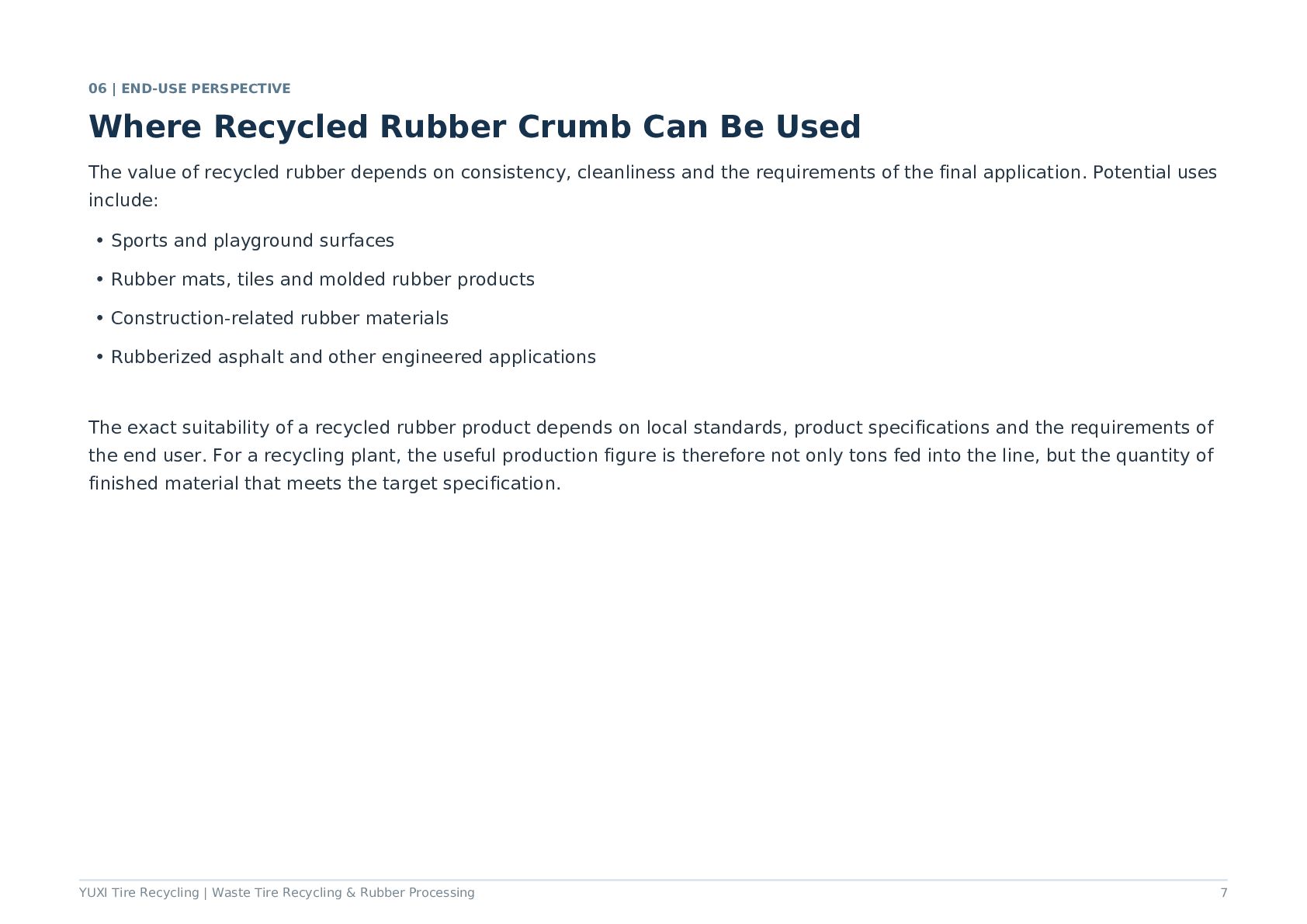
Where Recycled Rubber Crumb Can Be Used
Rubber crumb can become a useful secondary raw material when its particle size and cleanliness match the requirements of the end user.
Typical applications include sports and playground surfaces, rubber mats and tiles, molded rubber products, construction materials and rubberized asphalt. The suitability of the material depends on local standards and the technical requirements of the buyer.
This is also why recycling plants should not focus only on the amount of material entering the line. The more useful production figure is the quantity of finished material that meets the customer's specification.
Planning a Rubber Crumb Recycling Line
Before selecting equipment, a recycling project should collect several basic pieces of information. These include the type and size of waste tires, expected hourly capacity, target rubber particle size, acceptable steel and fiber content, available workshop space and local electrical conditions.
The starting point also makes a significant difference. A plant receiving whole tires requires a larger front-end processing section than a project that already has clean wire-free tire chips available.
A phased approach can also be considered. Some operators begin with coarse tire processing and later add additional separation, granulation or grinding equipment when demand for higher-value recycled rubber products becomes clearer.
A Practical Approach to Tire Recycling
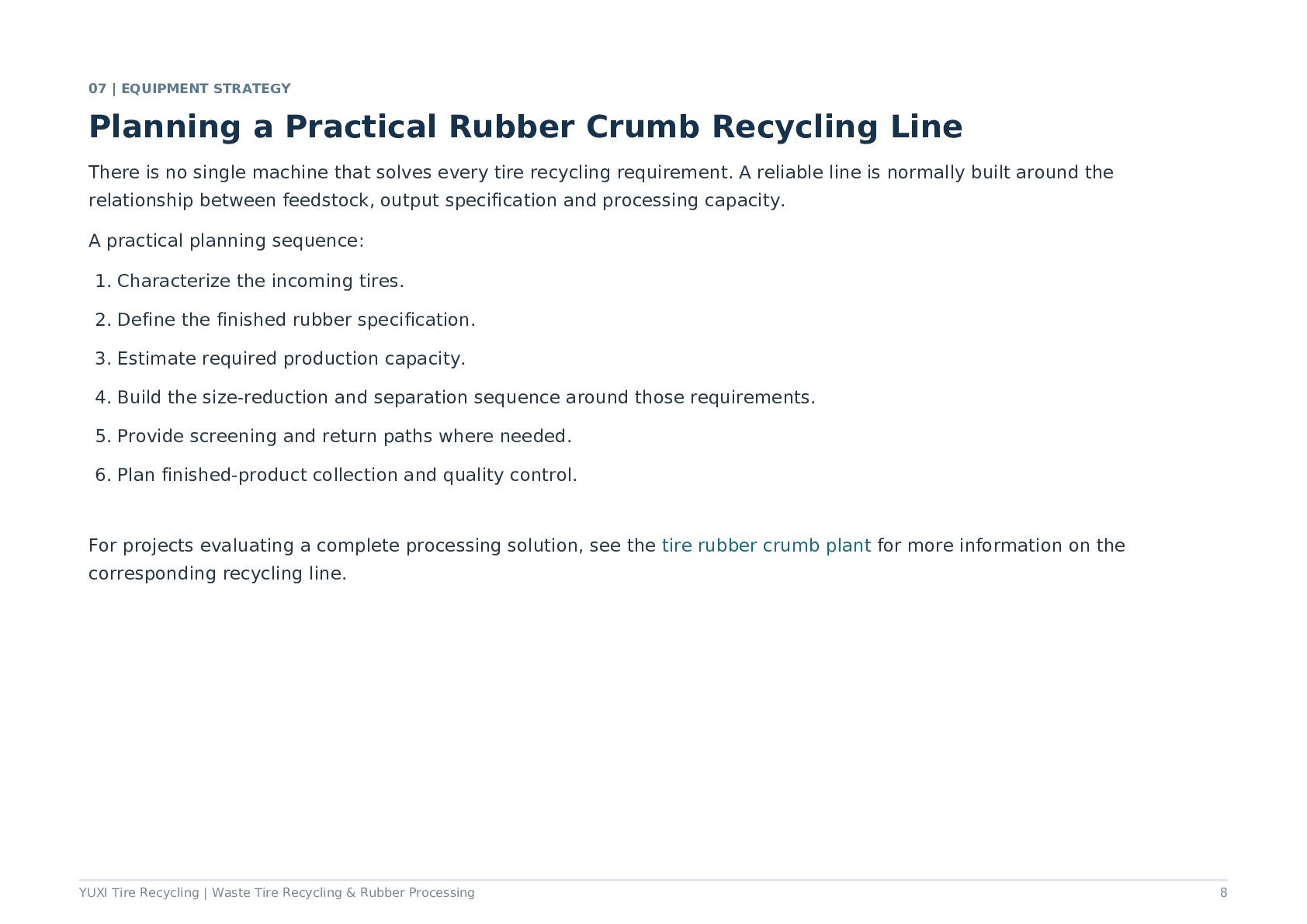
There is no single machine that solves every tire recycling requirement. A reliable system is usually the result of matching the feed material, output specification and processing capacity with the appropriate sequence of equipment.
For buyers evaluating a rubber crumb project, it is useful to look beyond the machine itself and examine the complete material flow. Feeding, size reduction, steel recovery, screening, fiber removal and finished-product collection all influence the final result.
When these stages are planned together, waste tires can move from a difficult disposal material toward a more consistent recycled rubber resource.
Conclusion
Rubber crumb production is essentially a controlled separation and size-reduction process. The objective is not simply to make waste tires smaller, but to recover rubber in a form that can meet a defined product requirement.
For this reason, equipment selection should begin with the intended market and finished particle specification. Once those requirements are clear, the recycling process can be designed around the actual material flow rather than around a single machine.


 inesmontani
 kevinliebholz
 tenderlove
 jonoalderson
 aleyda
 davidcarrasco
 stephenakadiri
 mkilby
 honnibal
 garrettdimon
 kneath
 tomoyanonymous