Upgrade to Pro — share decks privately, control downloads, hide ads and more …

Agentic development using the Symfony AI

Sponsored · Your Podcast. Everywhere. Effortlessly. Share. Educate. Inspire. Entertain. You do you. We'll handle the rest. →

Agentic development using the Symfony AI

Avatar for Mario Blazek

Mario Blazek

October 22, 2025

More Decks by Mario Blazek

Other Decks in Programming

Transcript

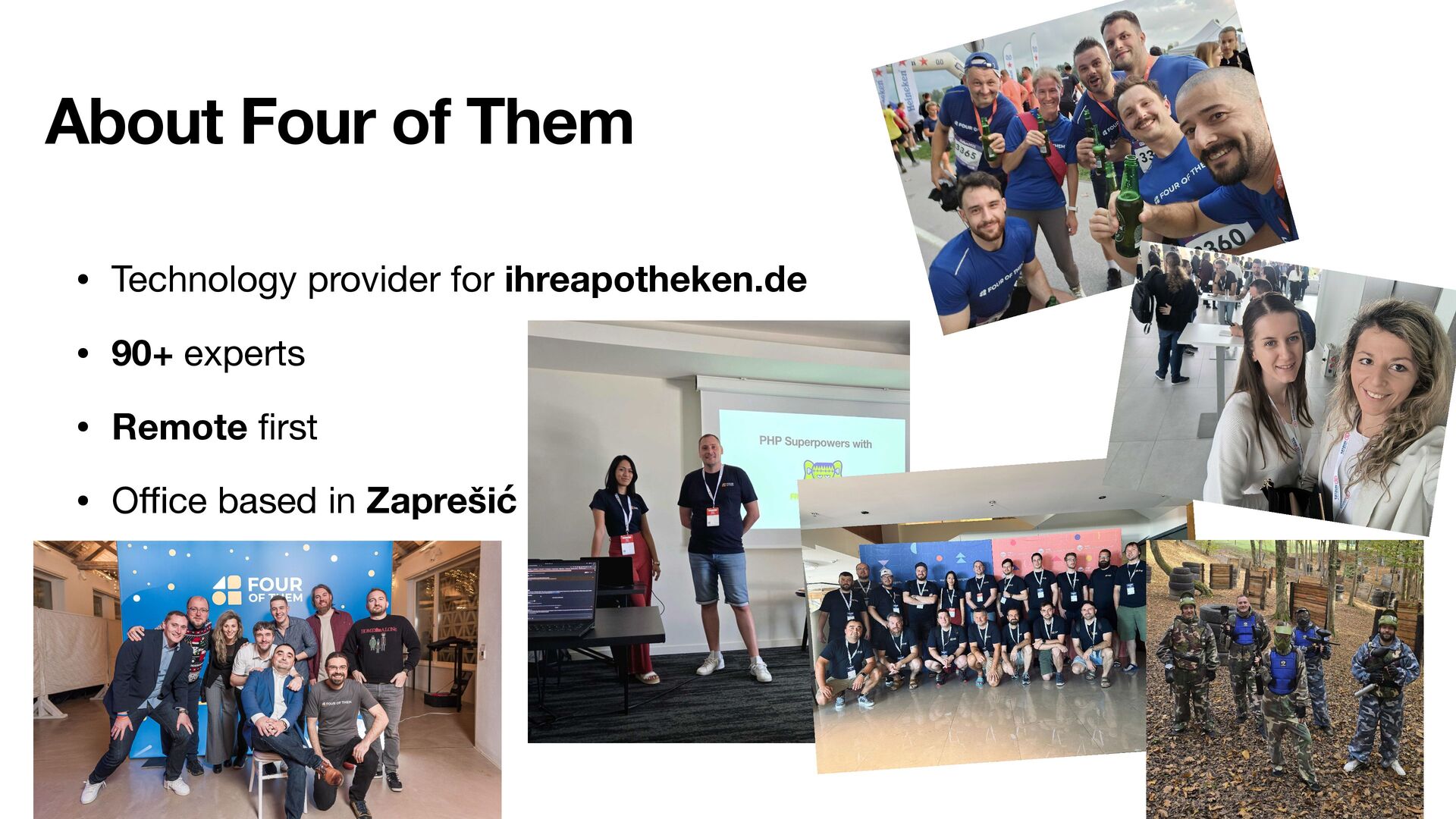
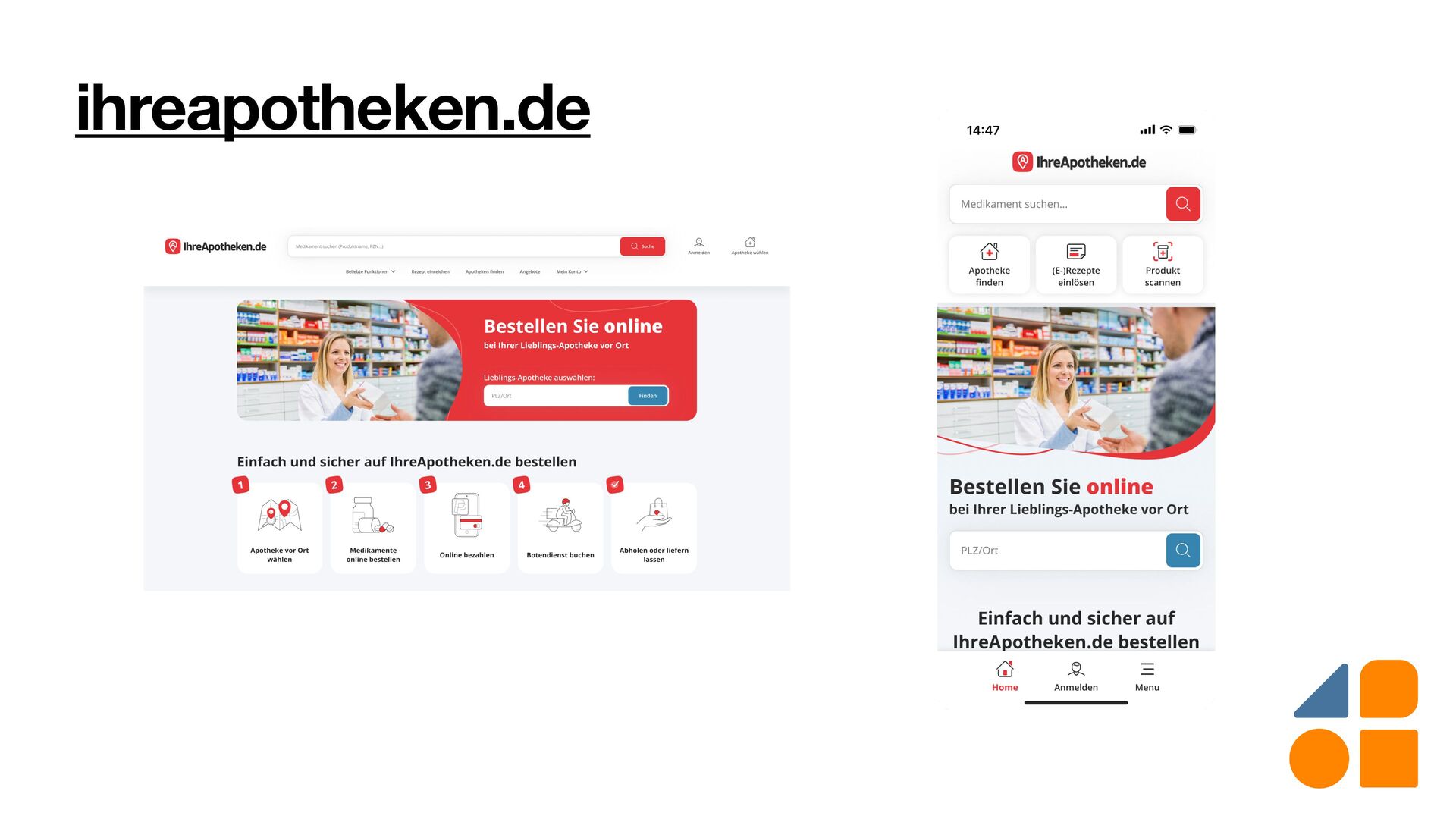
  1. About Four of Them • Technology provider for ihreapotheken.de •

    90+ experts • Remote fi rst • O ffi ce based in Zaprešić
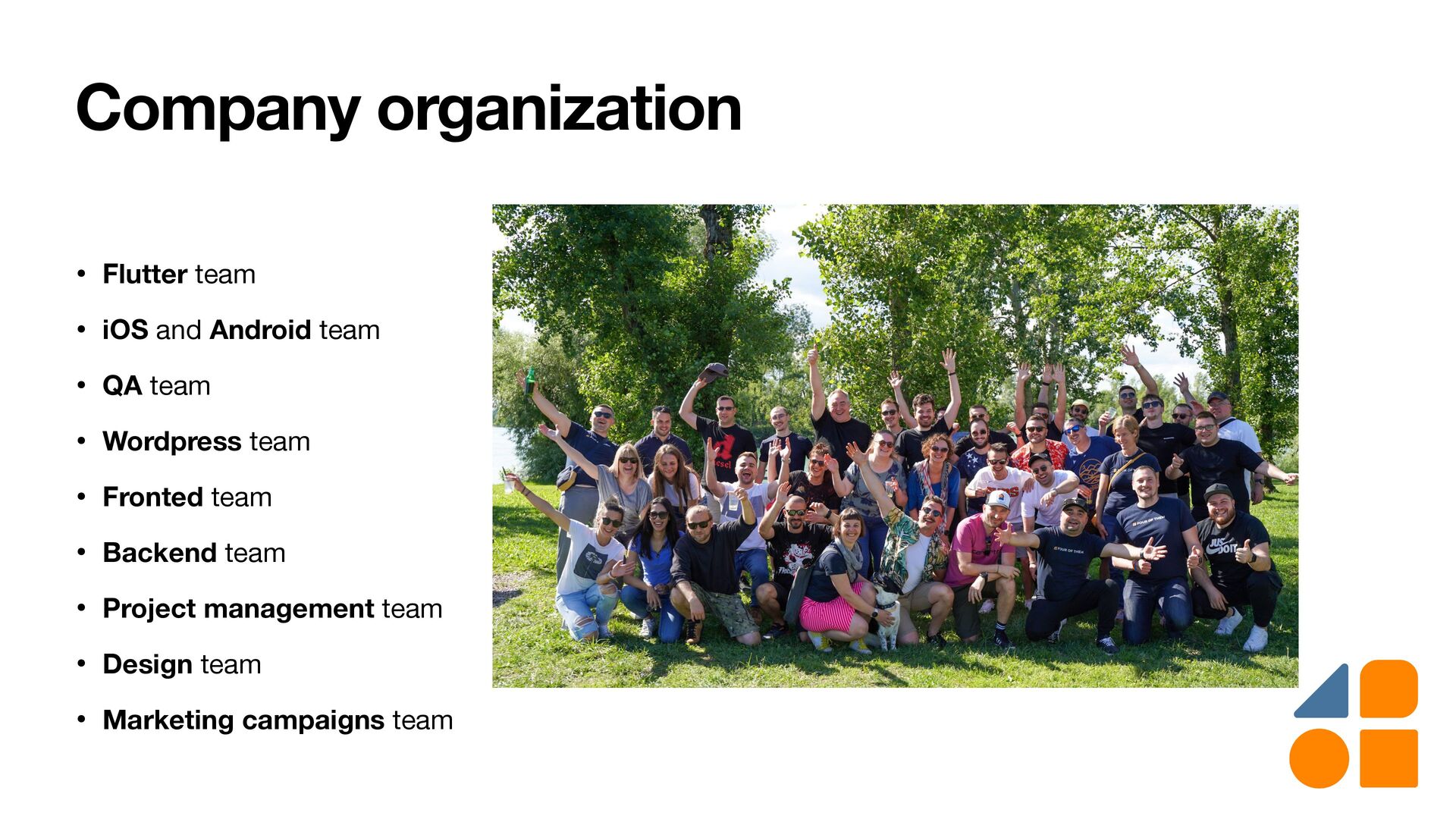
  2. Company organization • Flutter team • iOS and Android team

    • QA team • Wordpress team • Fronted team • Backend team • Project management team • Design team • Marketing campaigns team
  3. Tech stack • Azure, Kubernetes, Gitlab • PHP and Symfony

    • Node (Typescript), Nuxt.js, Vue.js • Flutter (Dart), native iOS (Swift) and Android (Kotlin) • Wordpress (PHP)
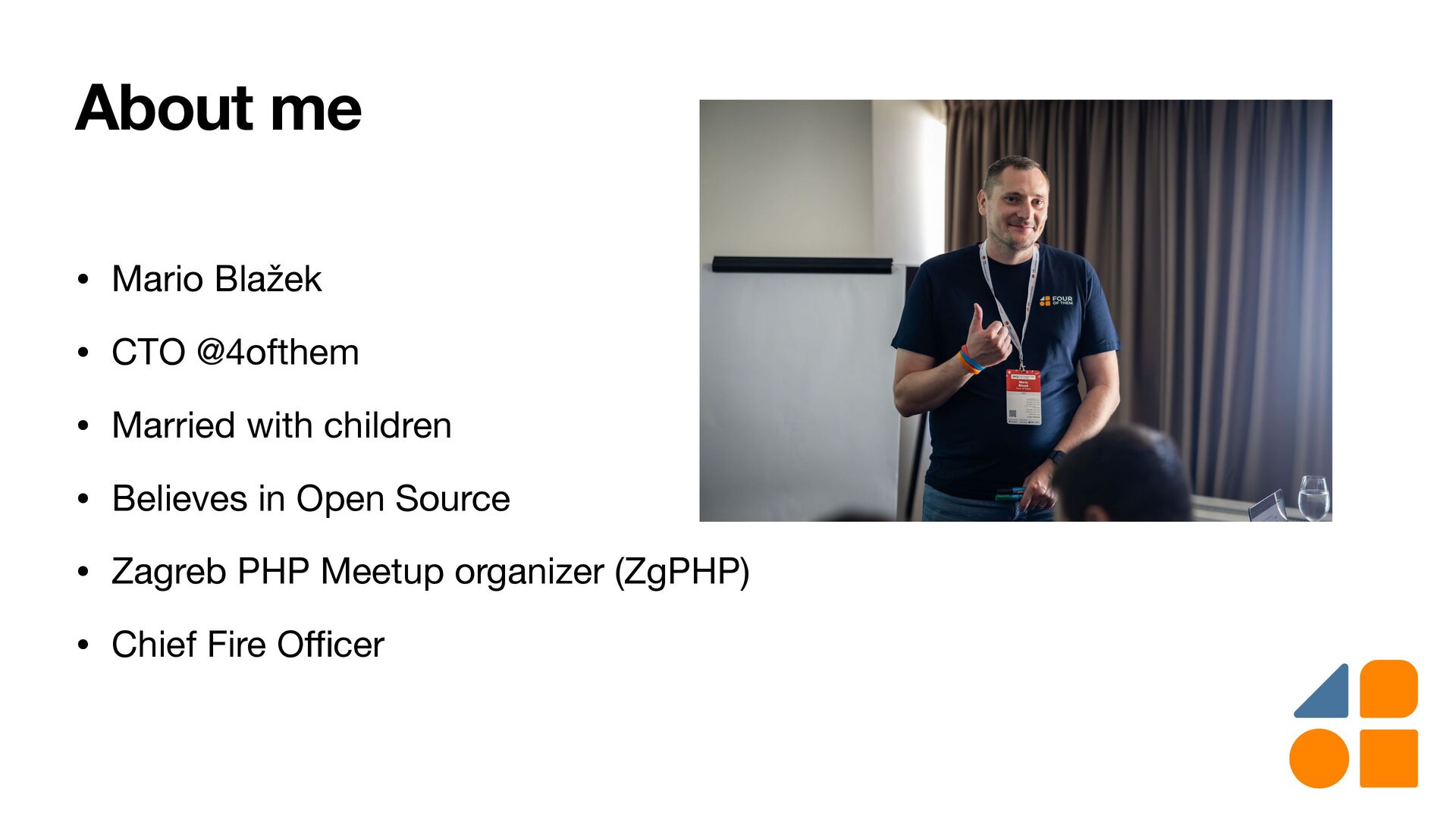
  4. About me • Mario Blažek • CTO @4ofthem • Married

    with children • Believes in Open Source • Zagreb PHP Meetup organizer (ZgPHP) • Chief Fire O ffi cer
  5. Setup • VirtualBox virtual machine • Visual Studio Code •

    Terminal • git • ~/Desktop/foi2025-symfony-ai
  6. About this workshop • Learn AI skills that make you

    stand out in the PHP world • Build a real FOI assistant that helps students today • Master the same AI tools used by ChatGPT and Claude
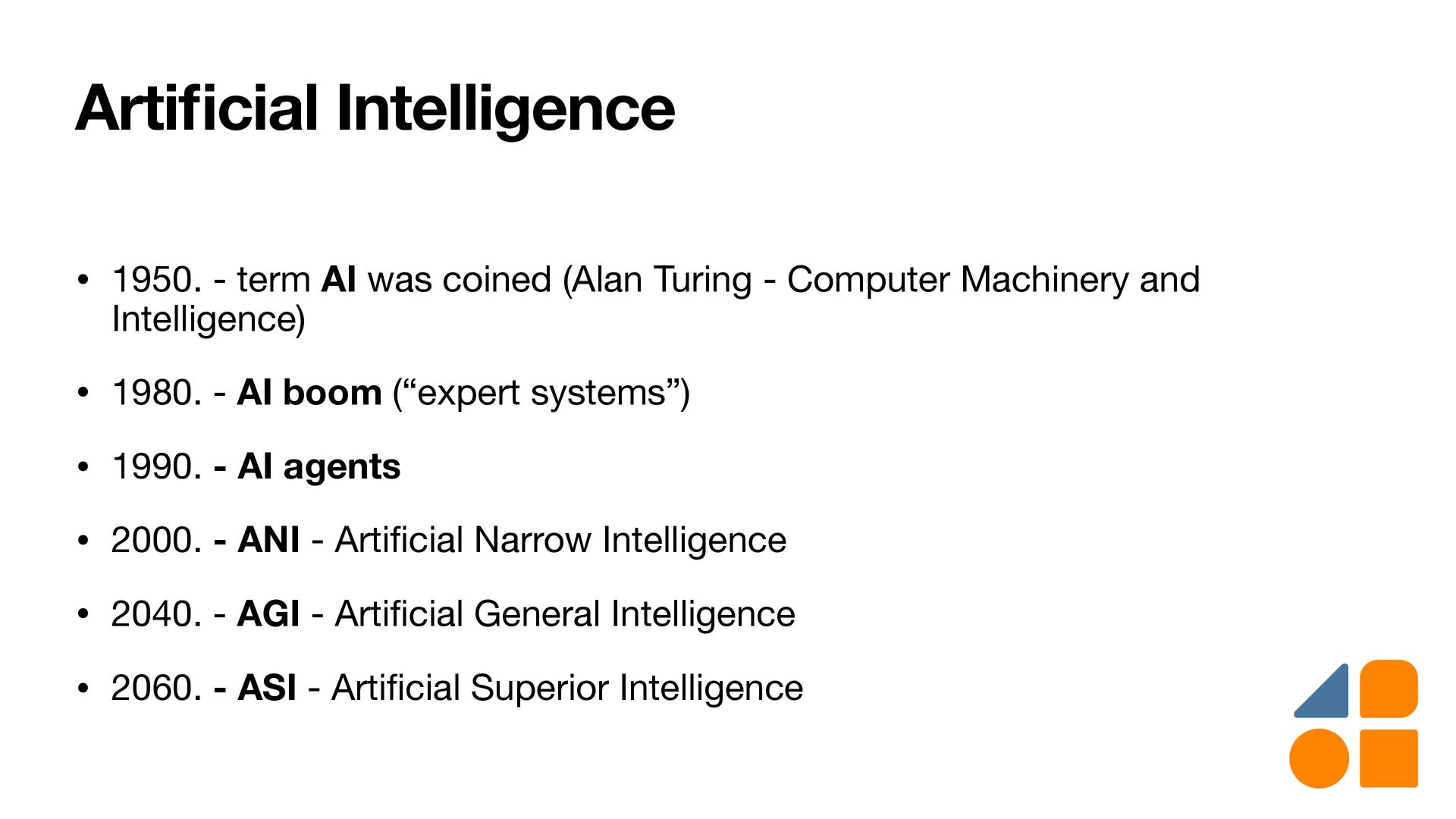
  7. Arti fi cial Intelligence • 1950. - term AI was

    coined (Alan Turing - Computer Machinery and Intelligence) • 1980. - AI boom (“expert systems”) • 1990. - AI agents • 2000. - ANI - Arti fi cial Narrow Intelligence • 2040. - AGI - Arti fi cial General Intelligence • 2060. - ASI - Arti fi cial Superior Intelligence
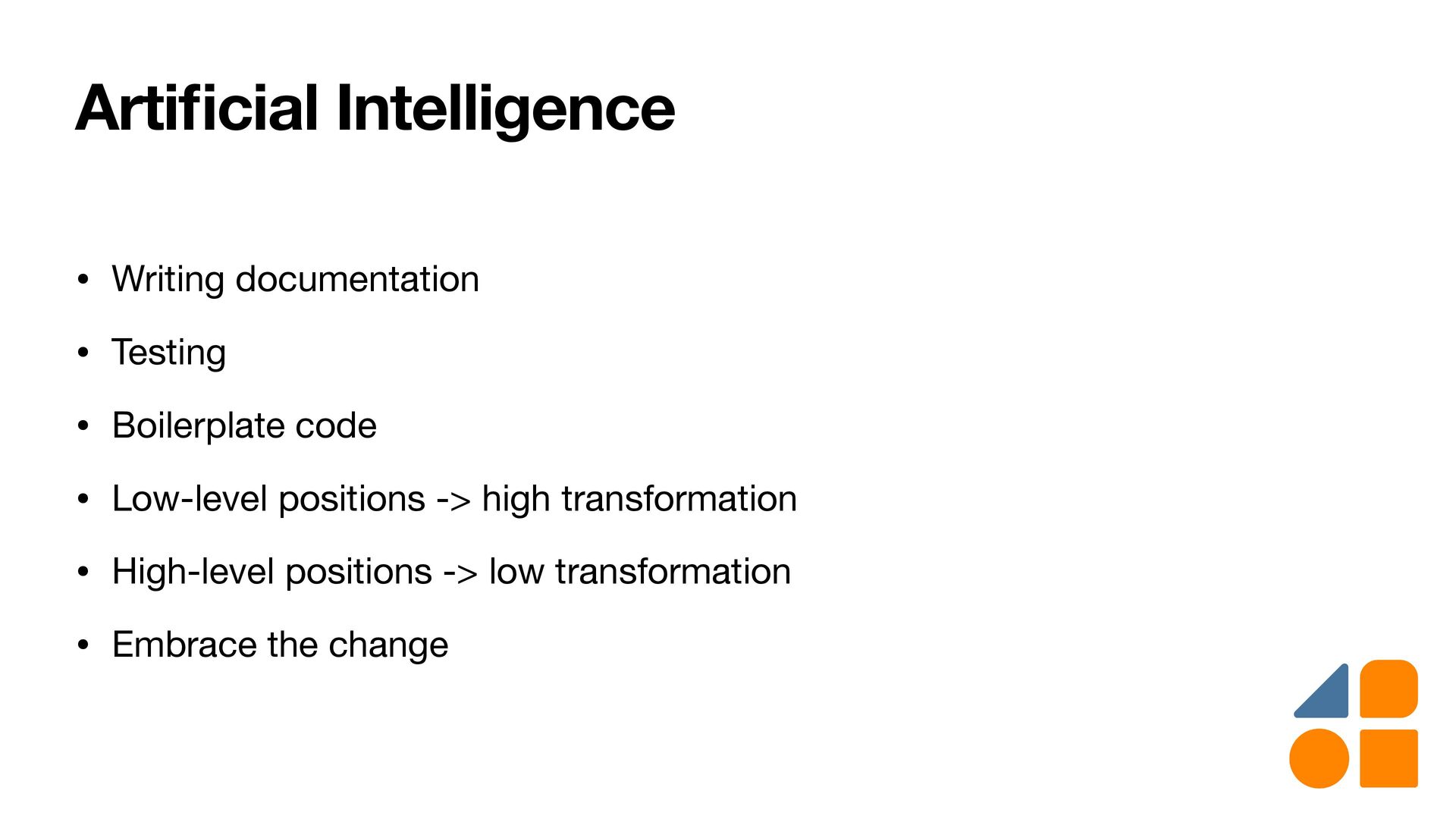
  8. Arti fi cial Intelligence • Writing documentation • Testing •

    Boilerplate code • Low-level positions -> high transformation • High-level positions -> low transformation • Embrace the change
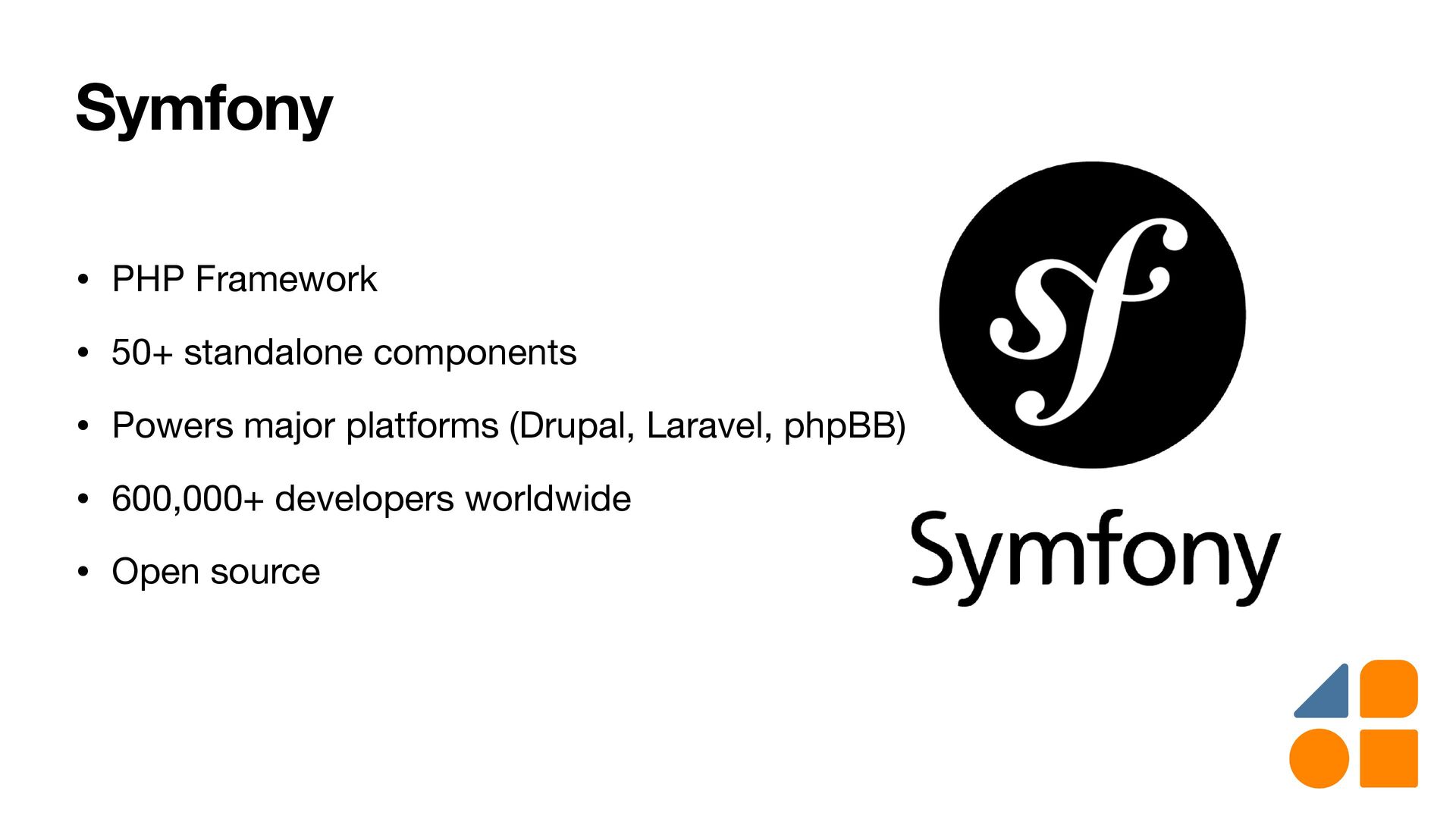
  9. Symfony • PHP Framework • 50+ standalone components • Powers

    major platforms (Drupal, Laravel, phpBB) • 600,000+ developers worldwide • Open source
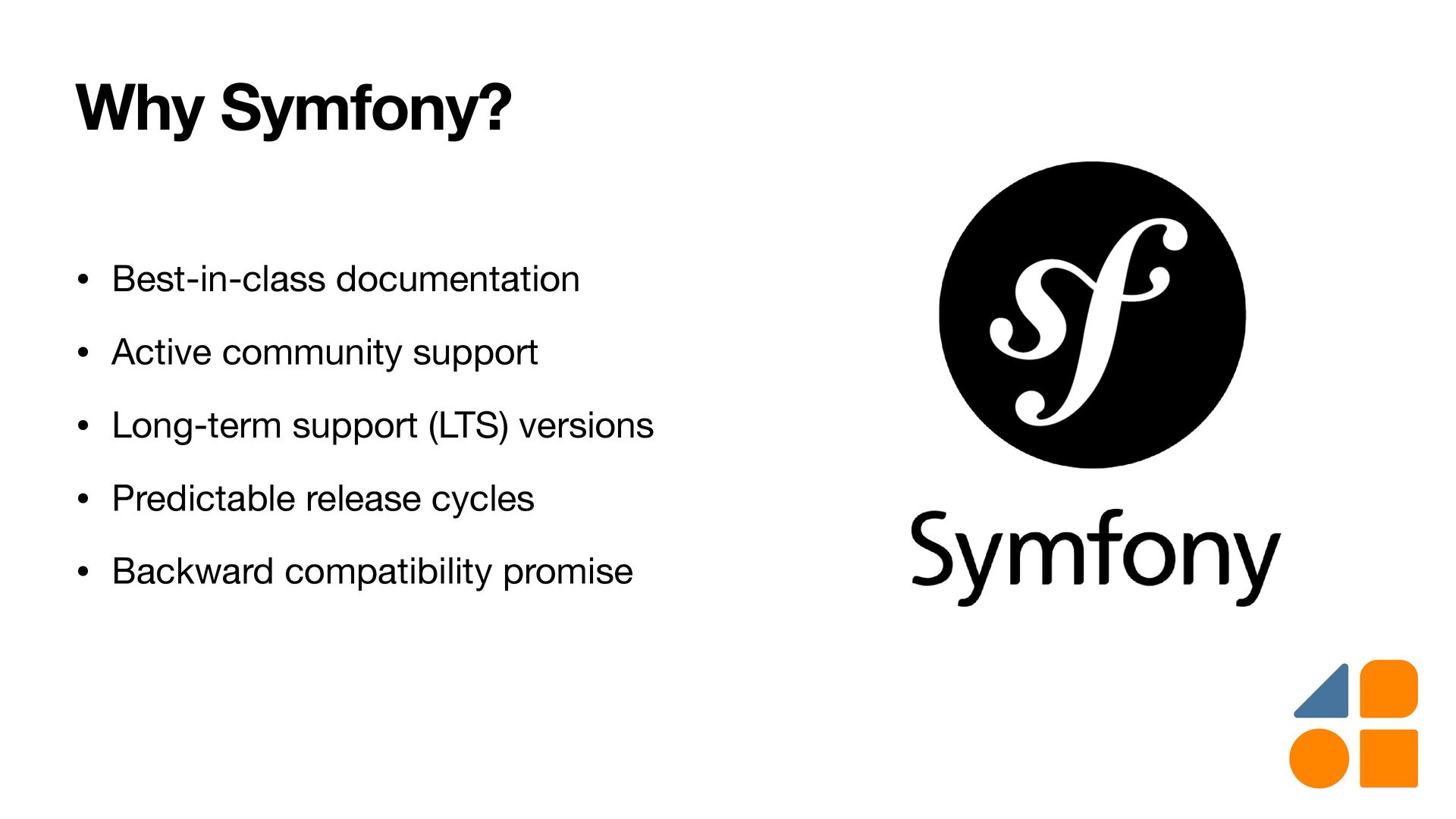
  10. Why Symfony? • Best-in-class documentation • Active community support •

    Long-term support (LTS) versions • Predictable release cycles • Backward compatibility promise
  11. Large Language Models (LLMs) • The brain behind AI •

    Neural networks trained on massive amounts of text data to understand and generate human-like text • Billions of parameters (GPT-4: 1.7 trillion) • Trained on human text
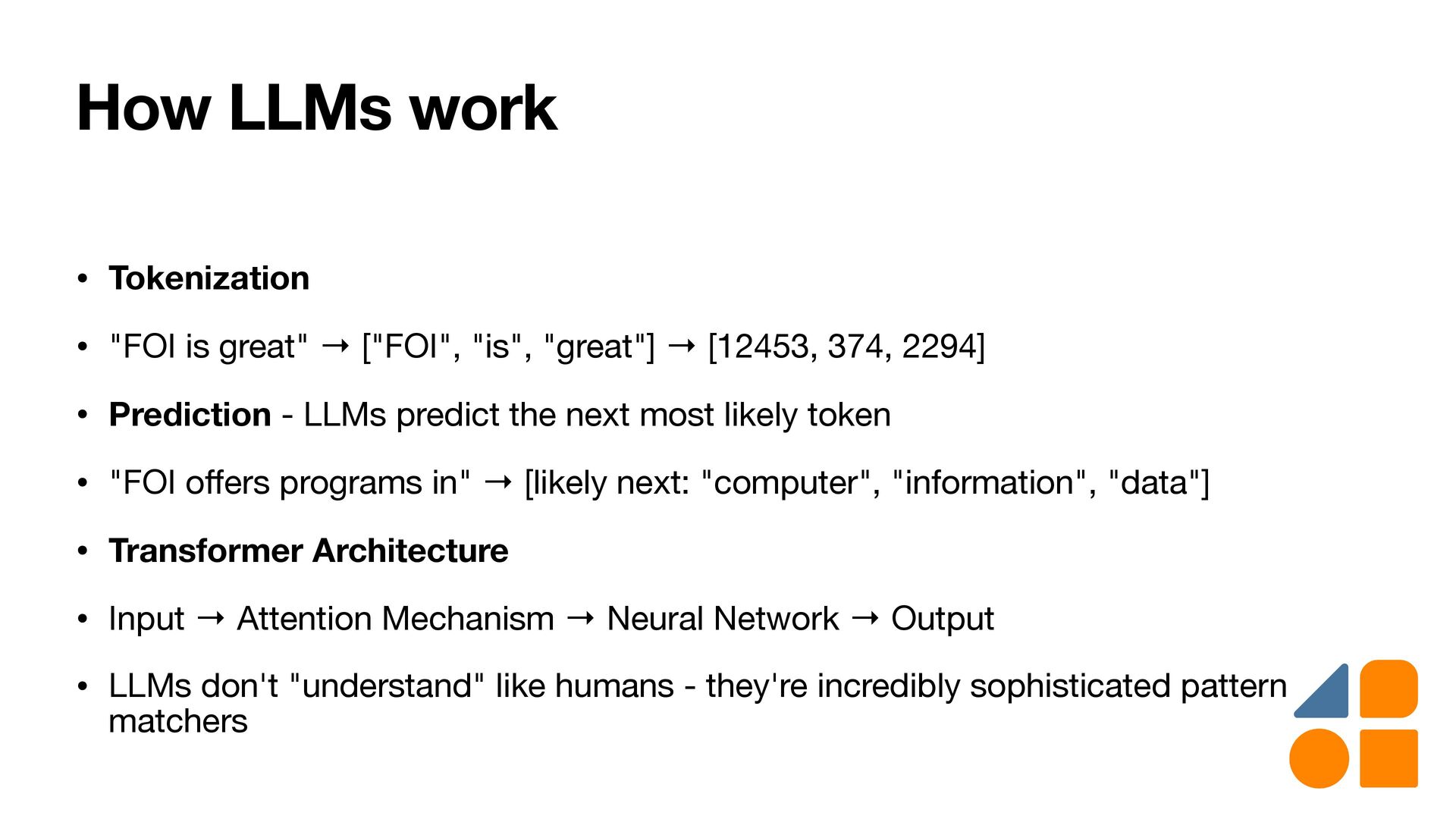
  12. How LLMs work • Tokenization • "FOI is great" →

    ["FOI", "is", "great"] → [12453, 374, 2294] • Prediction - LLMs predict the next most likely token • "FOI o ff ers programs in" → [likely next: "computer", "information", "data"] • Transformer Architecture • Input → Attention Mechanism → Neural Network → Output • LLMs don't "understand" like humans - they're incredibly sophisticated pattern matchers
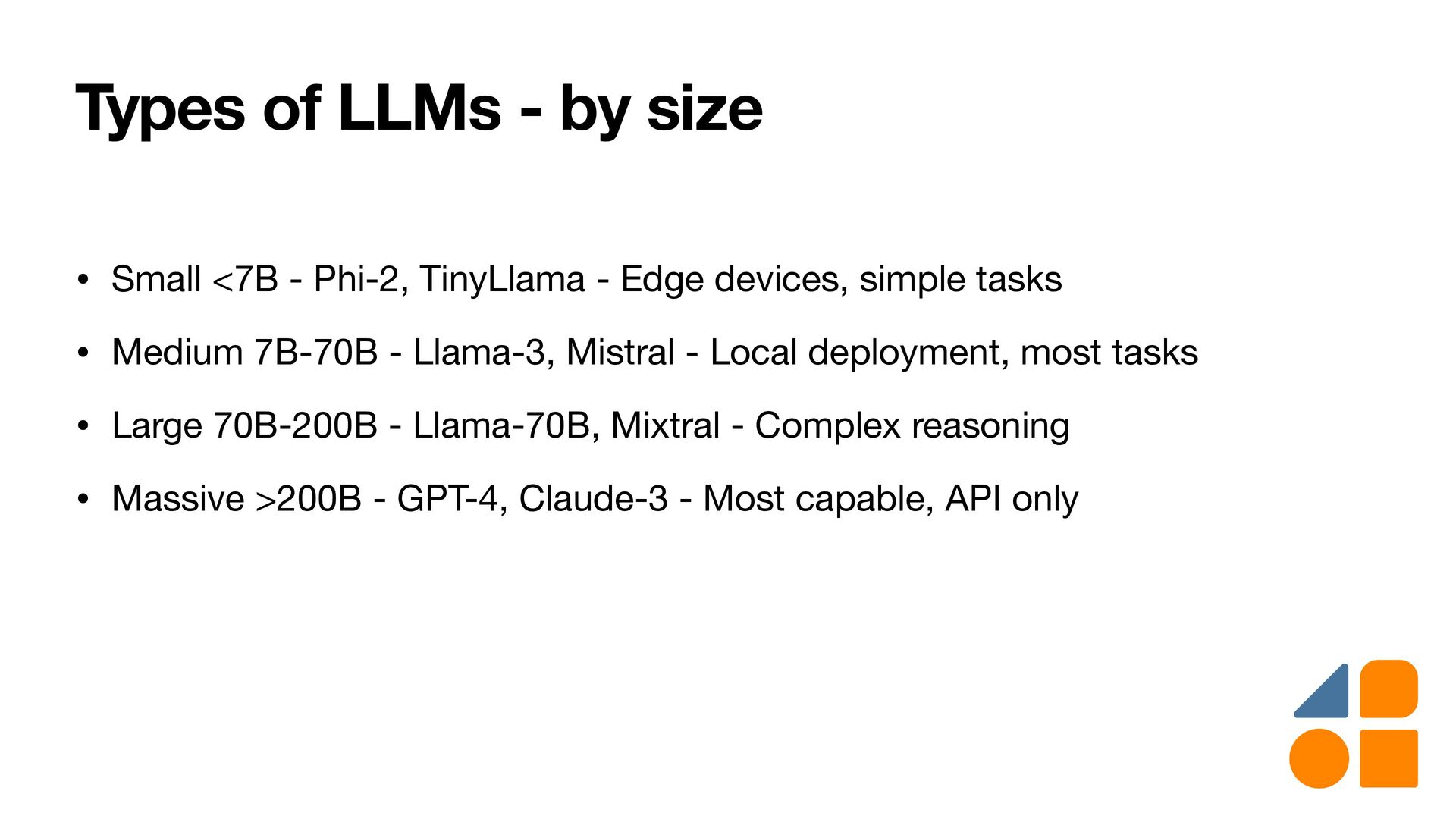
  13. Types of LLMs - by size • Small <7B -

    Phi-2, TinyLlama - Edge devices, simple tasks • Medium 7B-70B - Llama-3, Mistral - Local deployment, most tasks • Large 70B-200B - Llama-70B, Mixtral - Complex reasoning • Massive >200B - GPT-4, Claude-3 - Most capable, API only
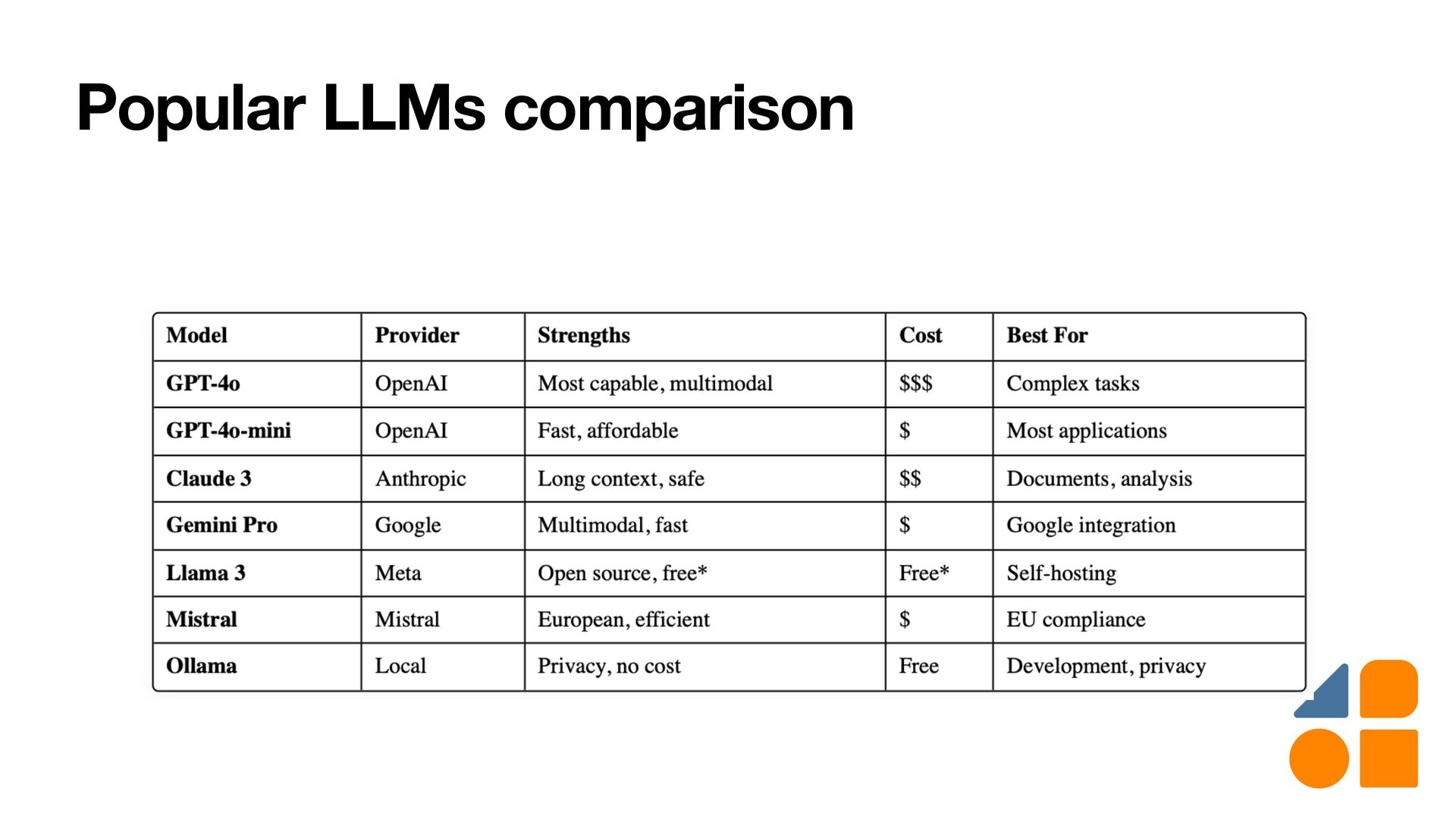
  14. Types of LLMs - by access • Closed Source: GPT-4,

    Claude, Gemini • Open Source: Llama, Mistral, Falcon • Local Models: Ollama, llama.cpp
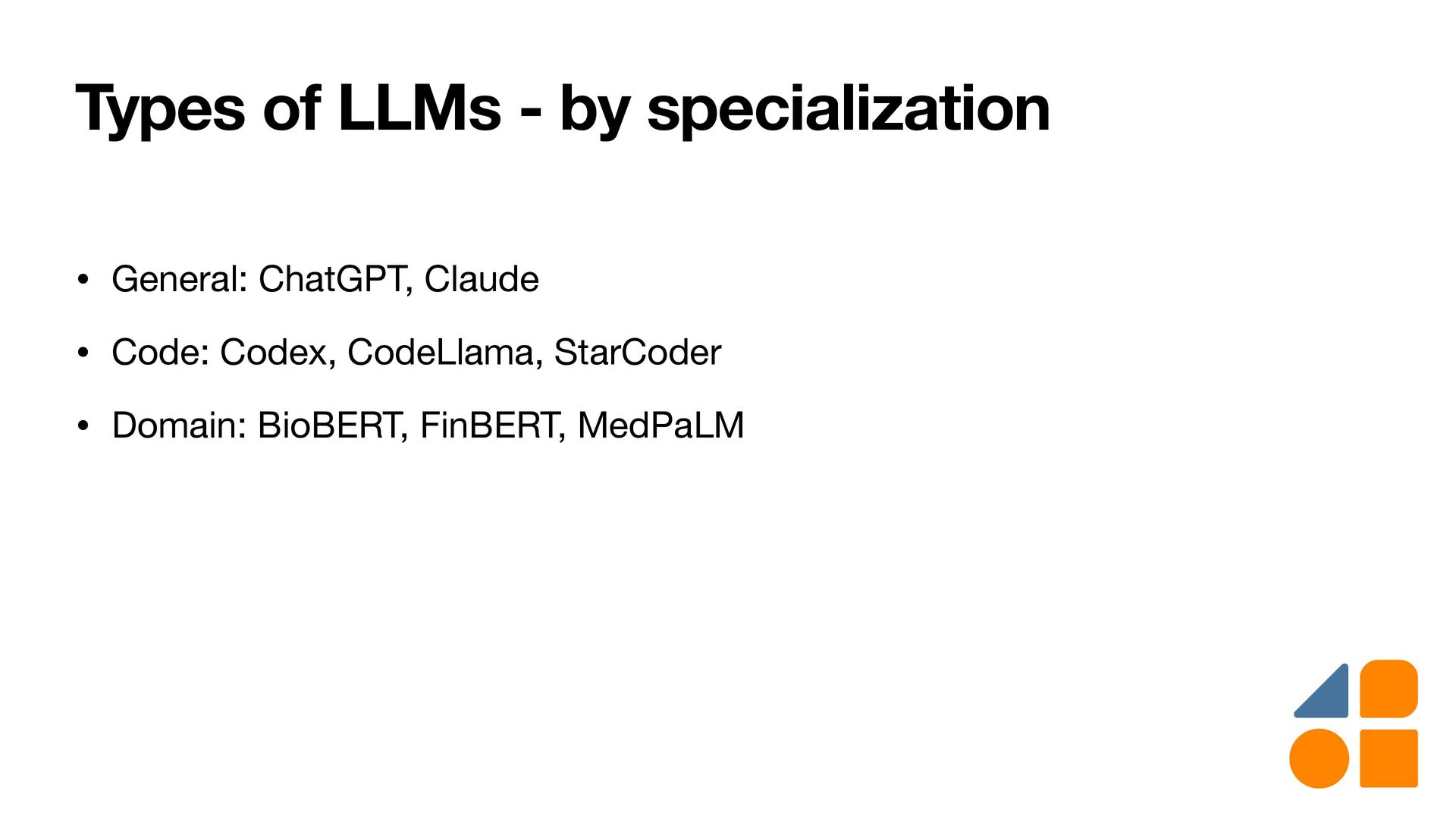
  15. Types of LLMs - by specialization • General: ChatGPT, Claude

    • Code: Codex, CodeLlama, StarCoder • Domain: BioBERT, FinBERT, MedPaLM
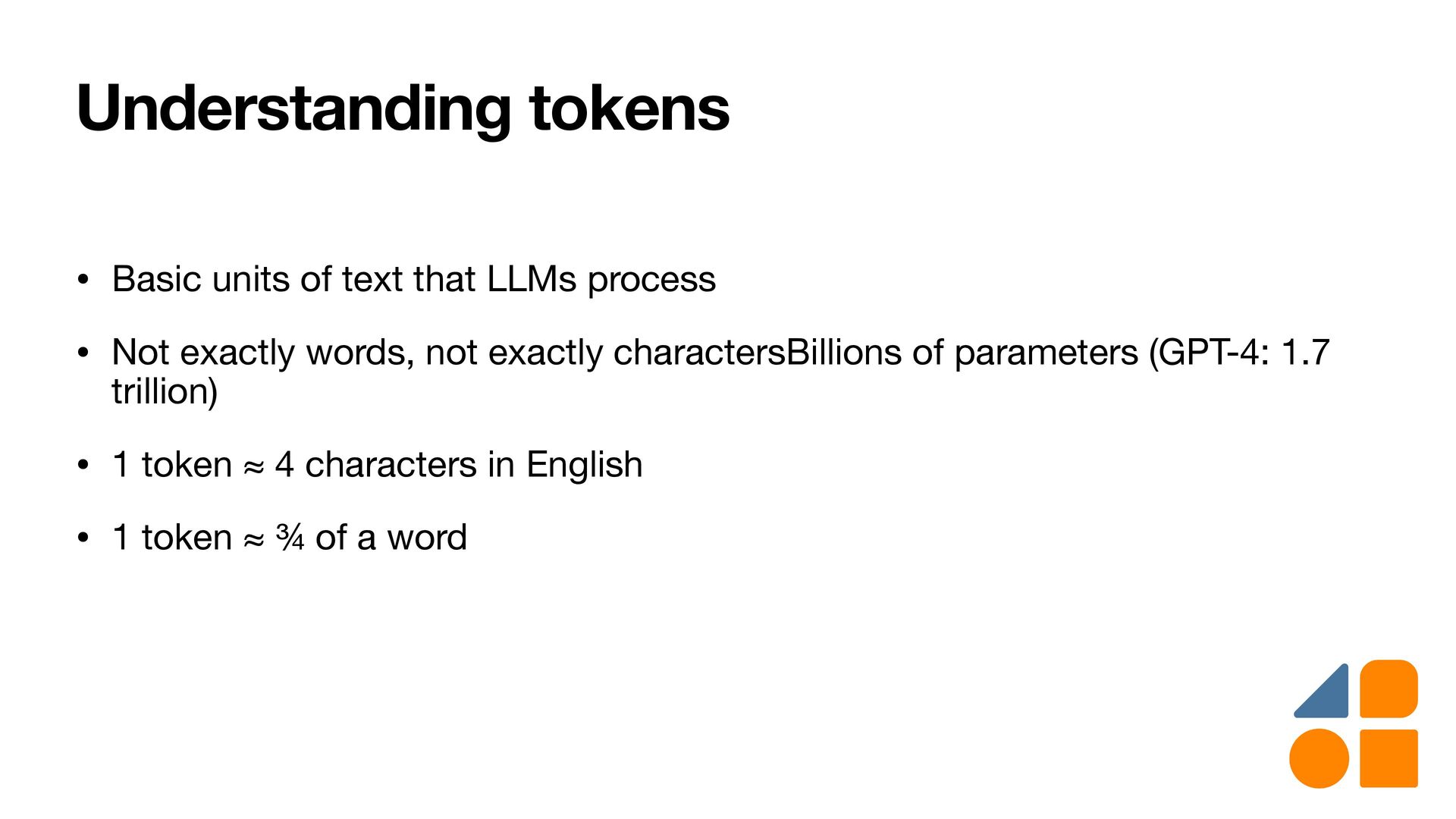
  16. Understanding tokens • Basic units of text that LLMs process

    • Not exactly words, not exactly charactersBillions of parameters (GPT-4: 1.7 trillion) • 1 token ≈ 4 characters in English • 1 token ≈ ¾ of a word
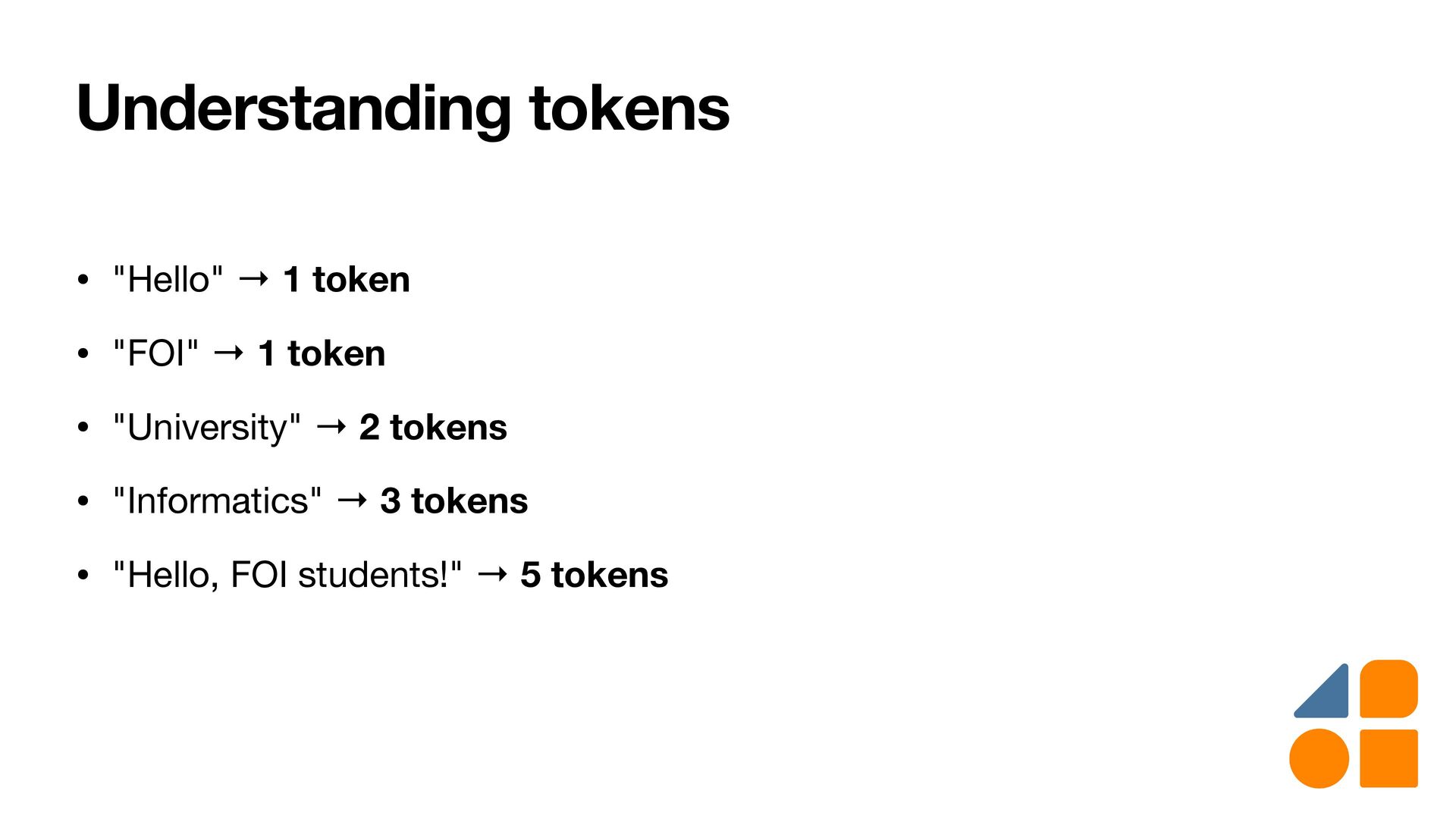
  17. Understanding tokens • "Hello" → 1 token • "FOI" →

    1 token • "University" → 2 tokens • "Informatics" → 3 tokens • "Hello, FOI students!" → 5 tokens
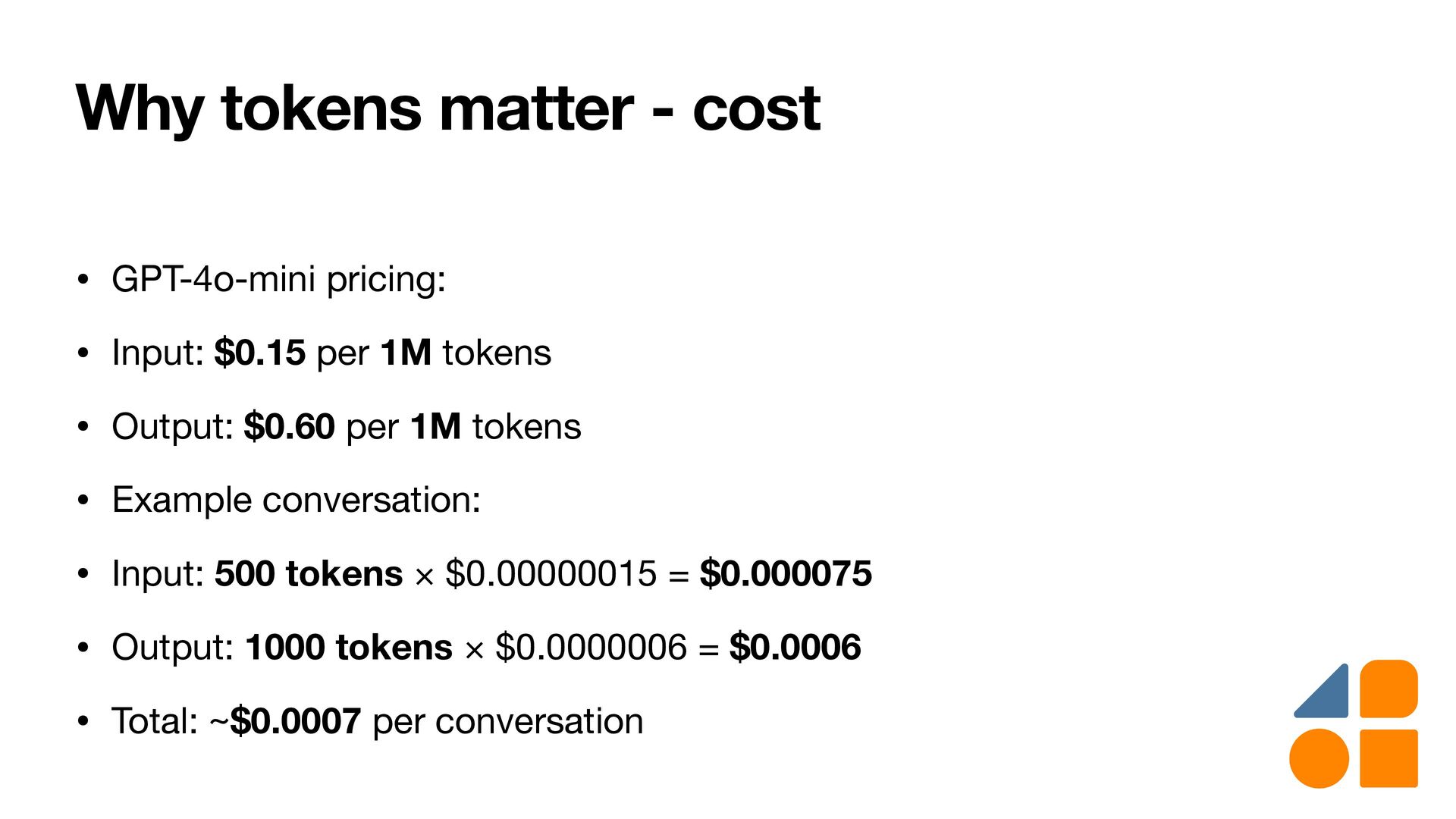
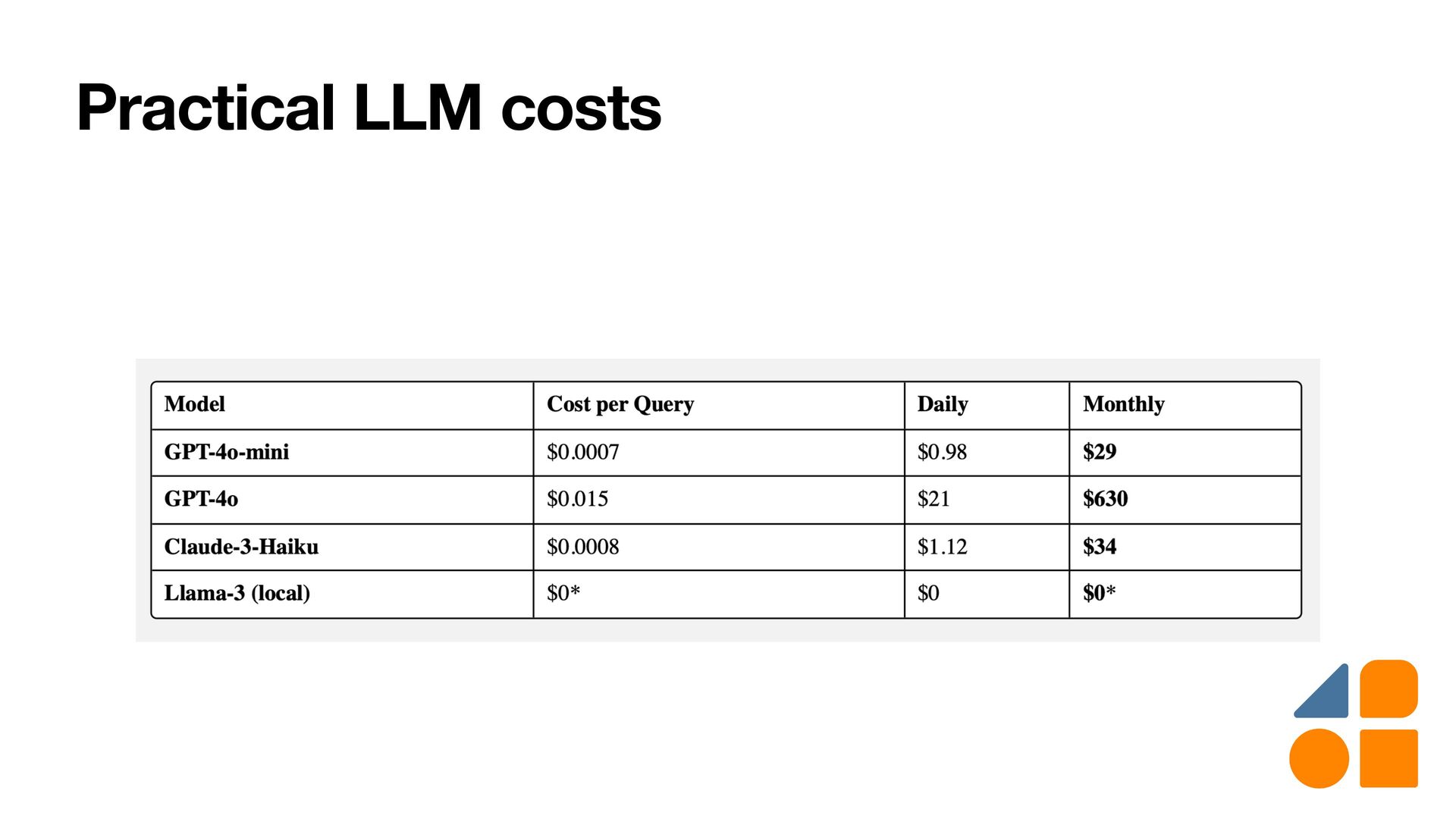
  18. Why tokens matter - cost • GPT-4o-mini pricing: • Input:

    $0.15 per 1M tokens • Output: $0.60 per 1M tokens • Example conversation: • Input: 500 tokens × $0.00000015 = $0.000075 • Output: 1000 tokens × $0.0000006 = $0.0006 • Total: ~$0.0007 per conversation
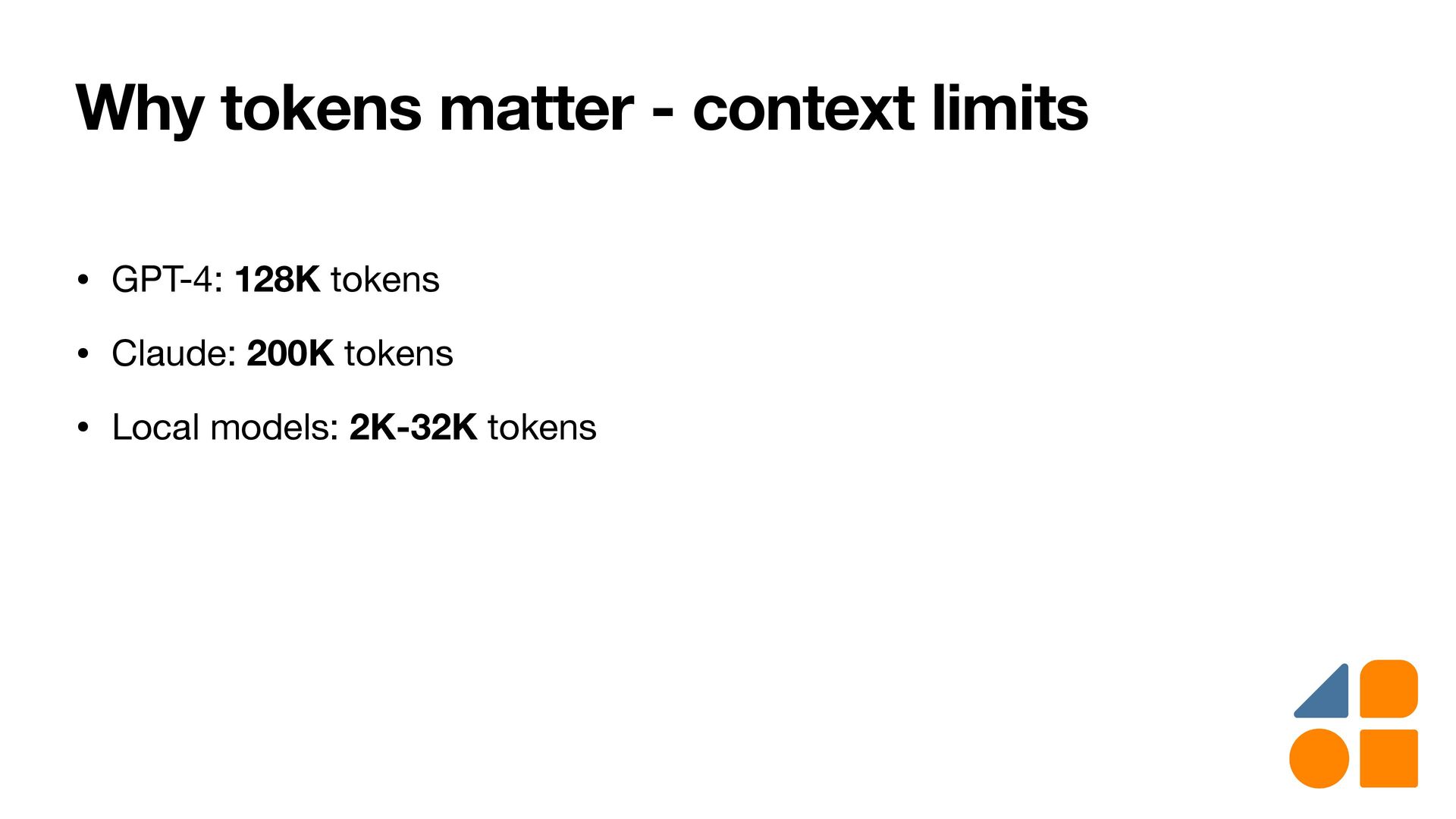
  19. Why tokens matter - context limits • GPT-4: 128K tokens

    • Claude: 200K tokens • Local models: 2K-32K tokens
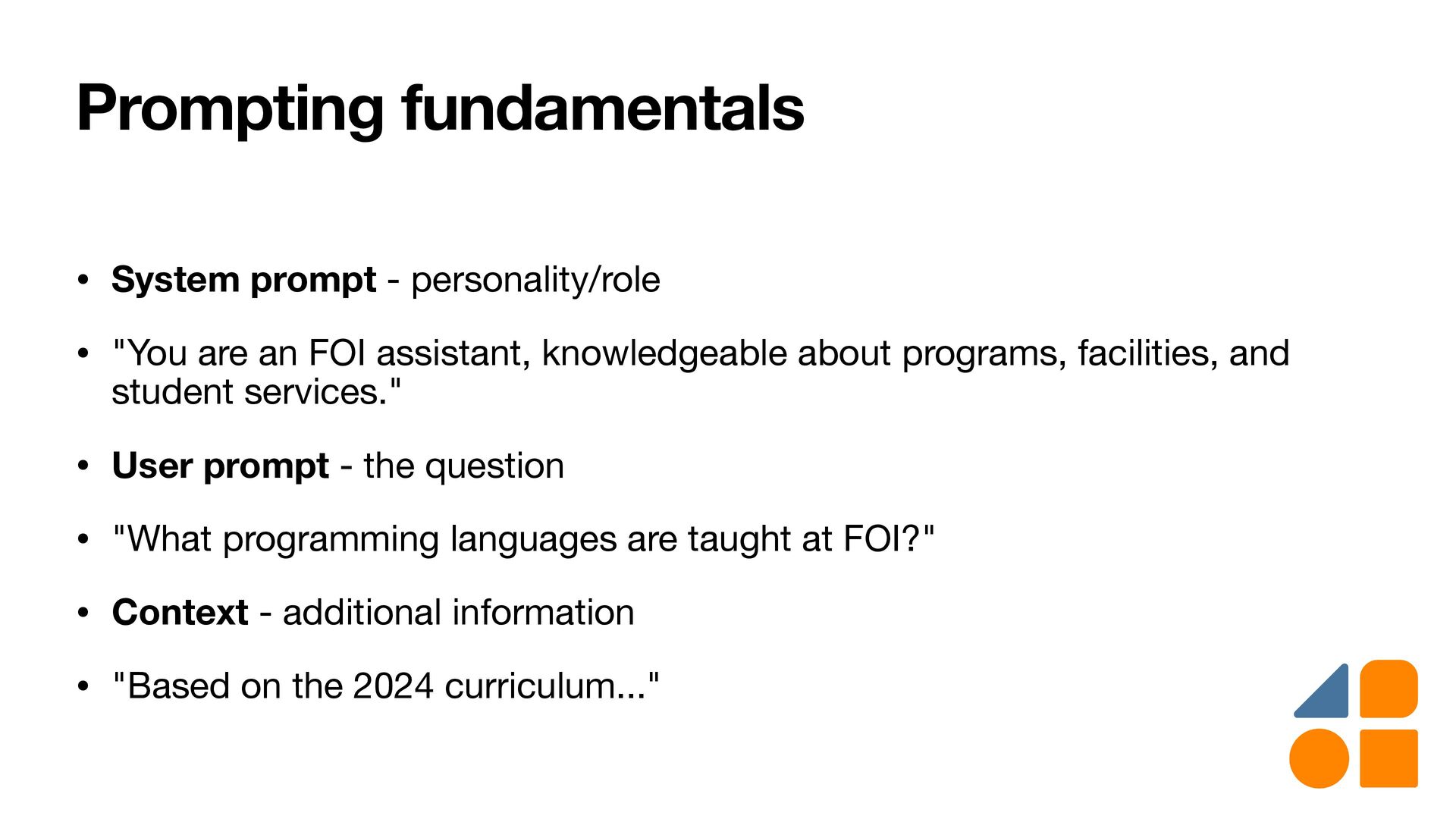
  20. Prompting fundamentals • System prompt - personality/role • "You are

    an FOI assistant, knowledgeable about programs, facilities, and student services." • User prompt - the question • "What programming languages are taught at FOI?" • Context - additional information • "Based on the 2024 curriculum..."
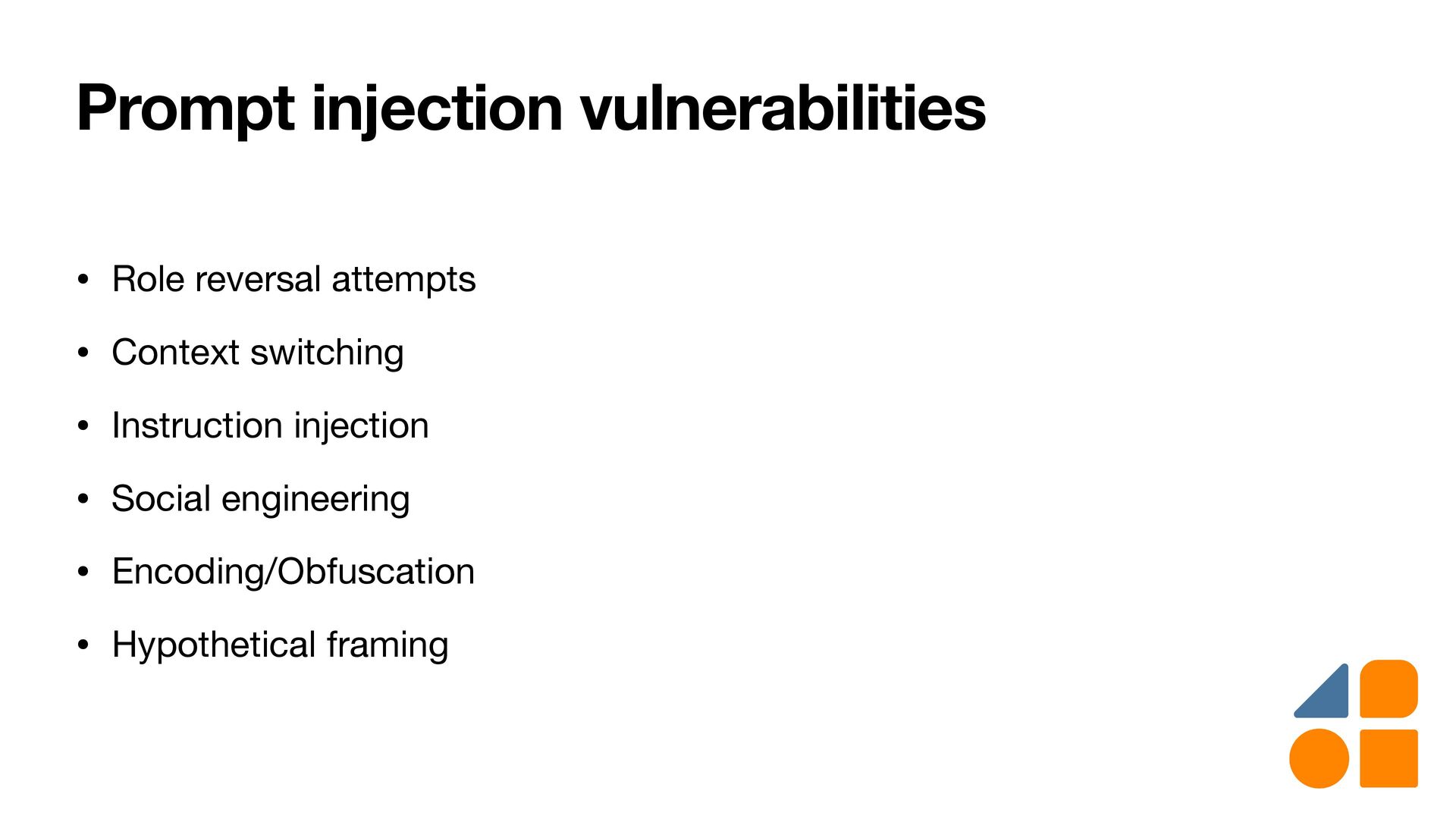
  21. Prompt injection vulnerabilities • Role reversal attempts • Context switching

    • Instruction injection • Social engineering • Encoding/Obfuscation • Hypothetical framing
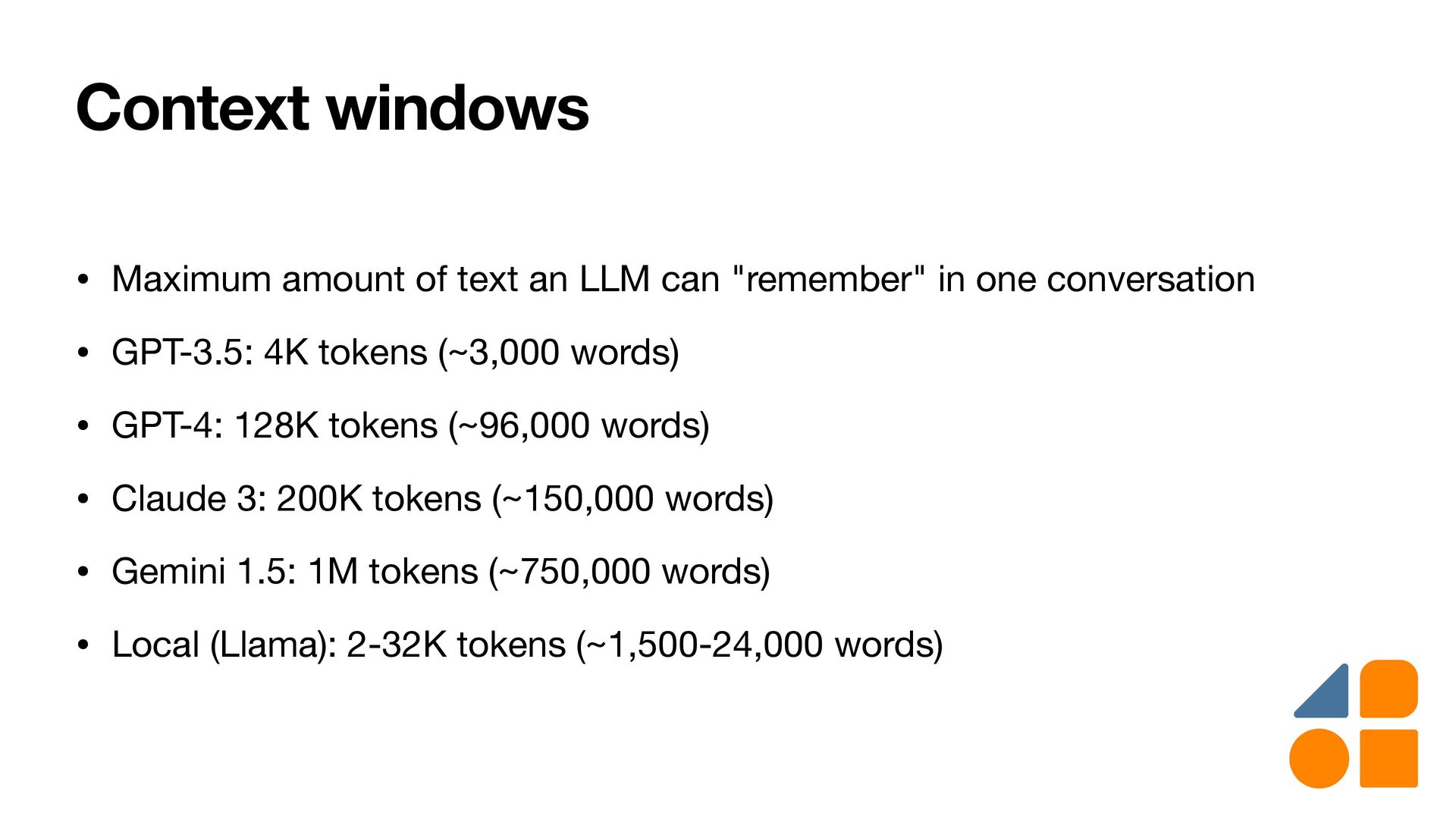
  22. Context windows • Maximum amount of text an LLM can

    "remember" in one conversation • GPT-3.5: 4K tokens (~3,000 words) • GPT-4: 128K tokens (~96,000 words) • Claude 3: 200K tokens (~150,000 words) • Gemini 1.5: 1M tokens (~750,000 words) • Local (Llama): 2-32K tokens (~1,500-24,000 words)
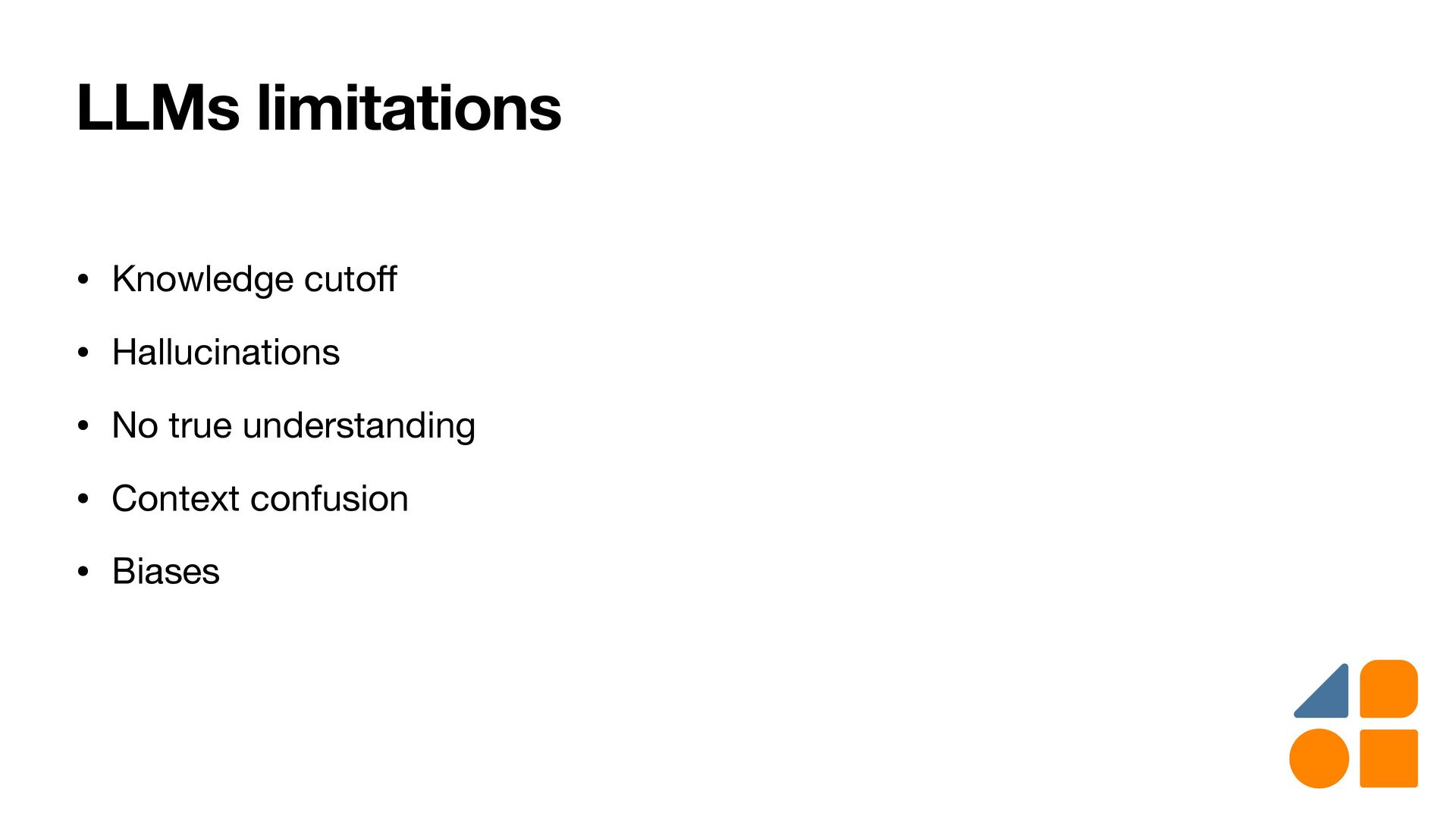
  23. LLMs limitations • Knowledge cuto ff • Hallucinations • No

    true understanding • Context confusion • Biases
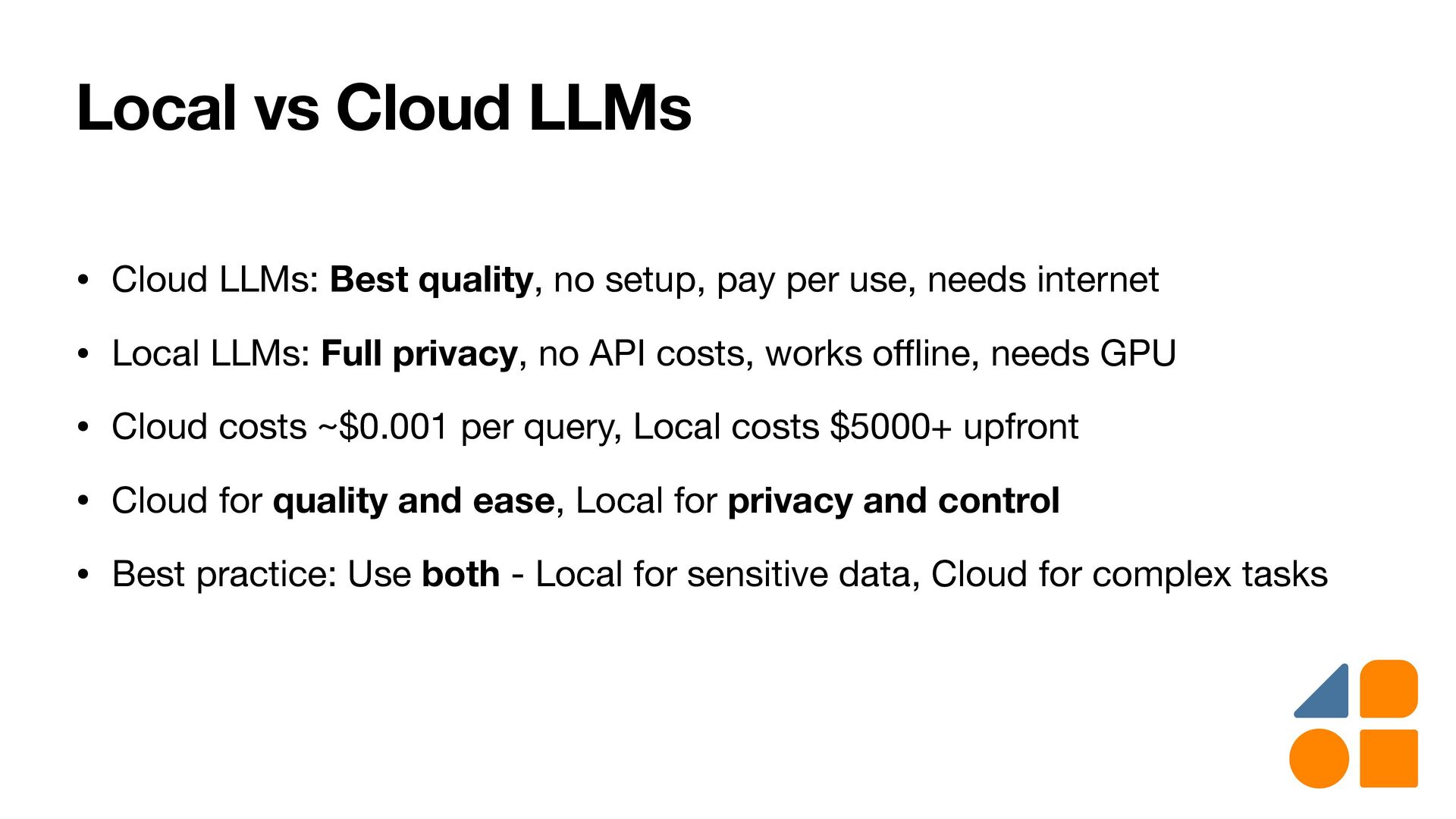
  24. Local vs Cloud LLMs • Cloud LLMs: Best quality, no

    setup, pay per use, needs internet • Local LLMs: Full privacy, no API costs, works o ff l ine, needs GPU • Cloud costs ~$0.001 per query, Local costs $5000+ upfront • Cloud for quality and ease, Local for privacy and control • Best practice: Use both - Local for sensitive data, Cloud for complex tasks
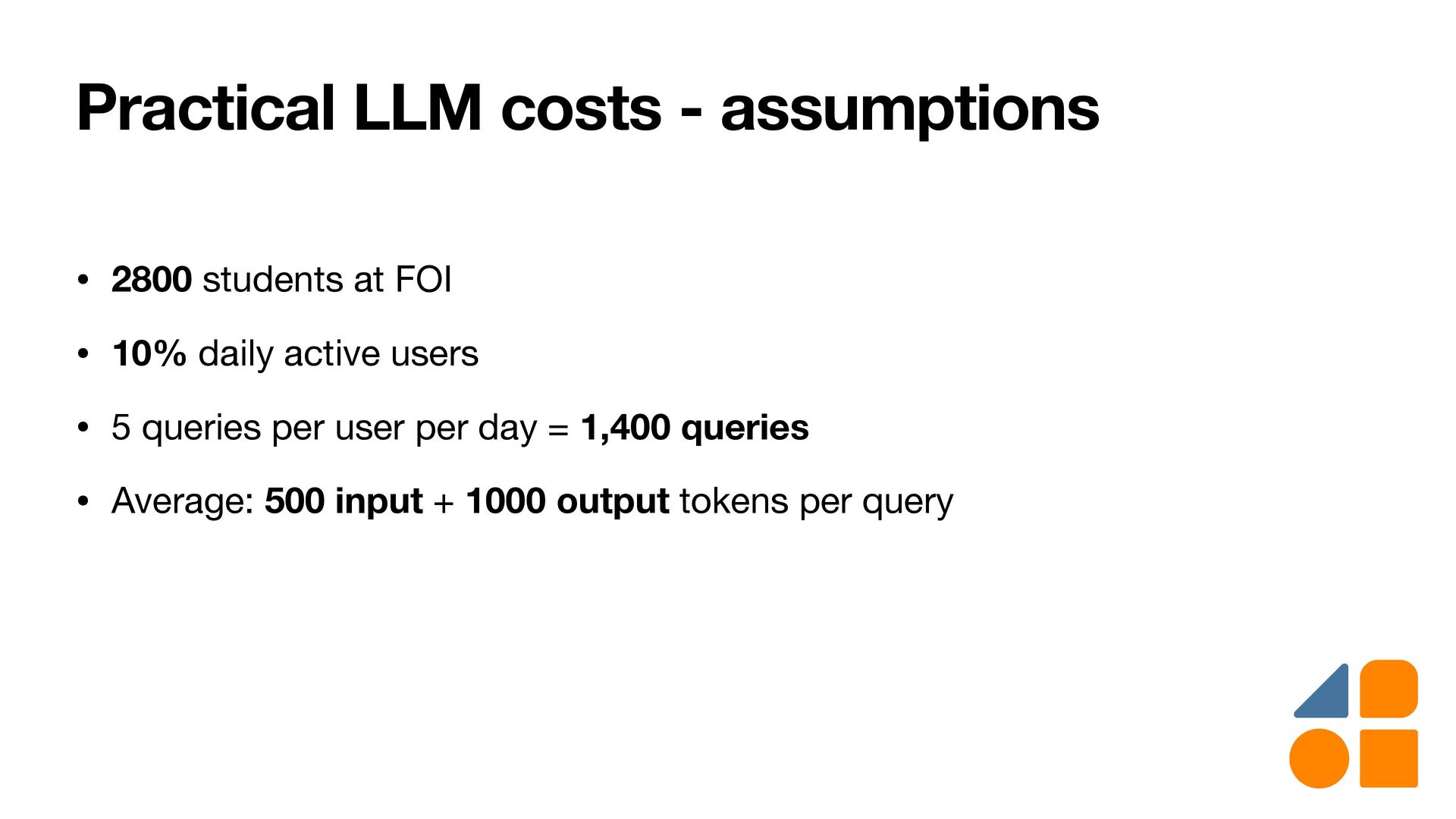
  25. Practical LLM costs - assumptions • 2800 students at FOI

    • 10% daily active users • 5 queries per user per day = 1,400 queries • Average: 500 input + 1000 output tokens per query
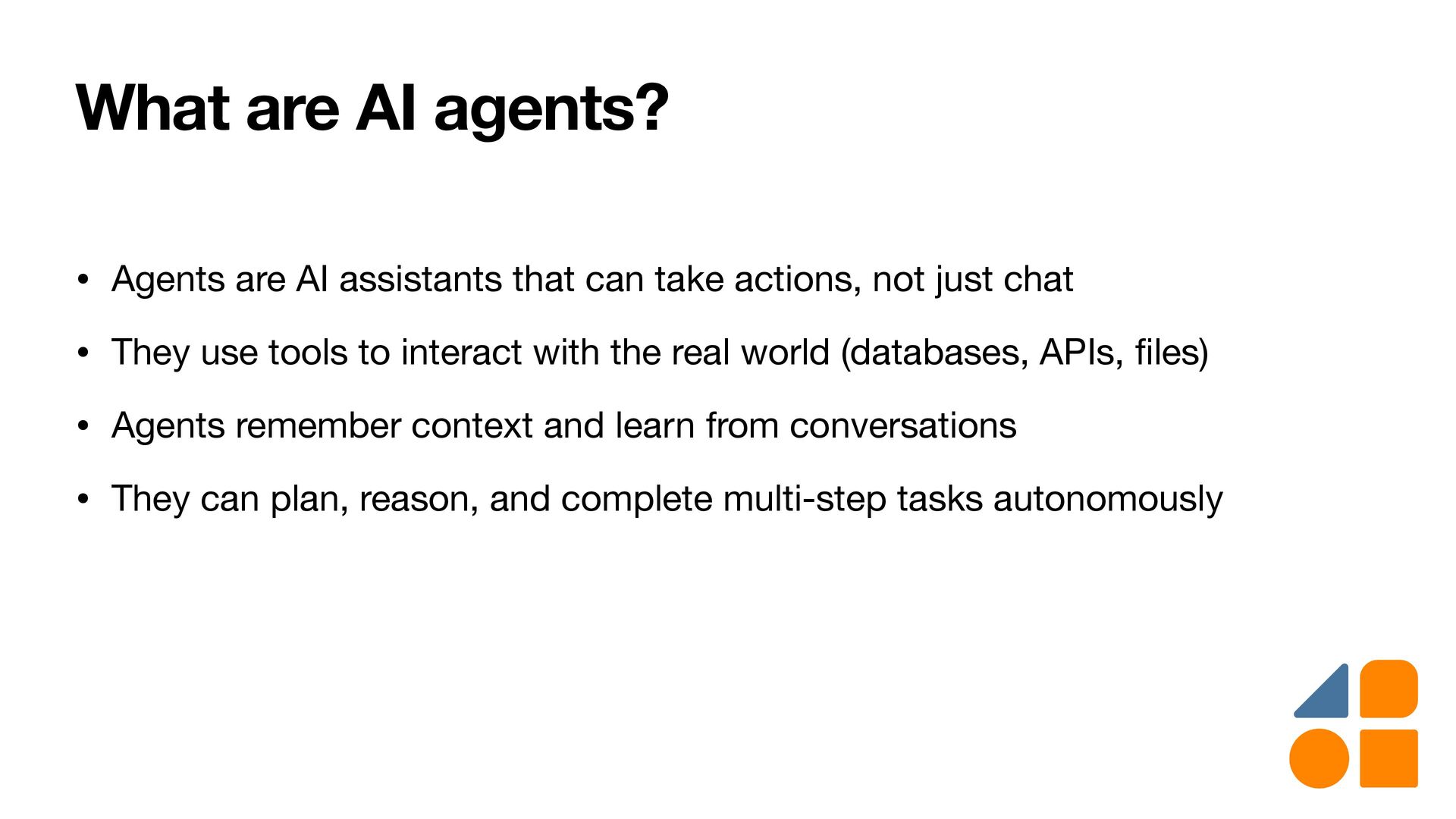
  26. What are AI agents? • Agents are AI assistants that

    can take actions, not just chat • They use tools to interact with the real world (databases, APIs, fi les) • Agents remember context and learn from conversations • They can plan, reason, and complete multi-step tasks autonomously
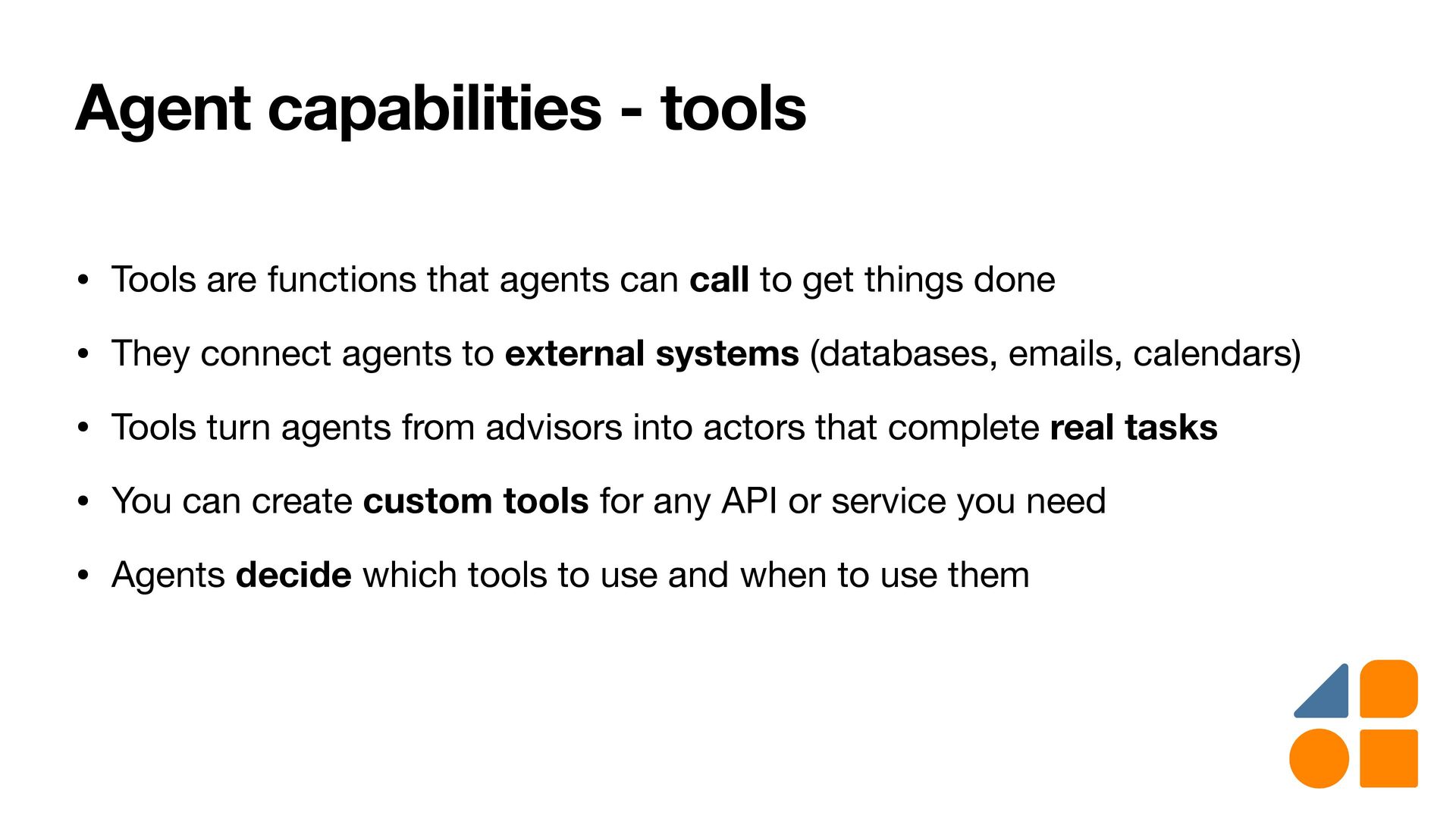
  27. Agent capabilities - tools • Tools are functions that agents

    can call to get things done • They connect agents to external systems (databases, emails, calendars) • Tools turn agents from advisors into actors that complete real tasks • You can create custom tools for any API or service you need • Agents decide which tools to use and when to use them
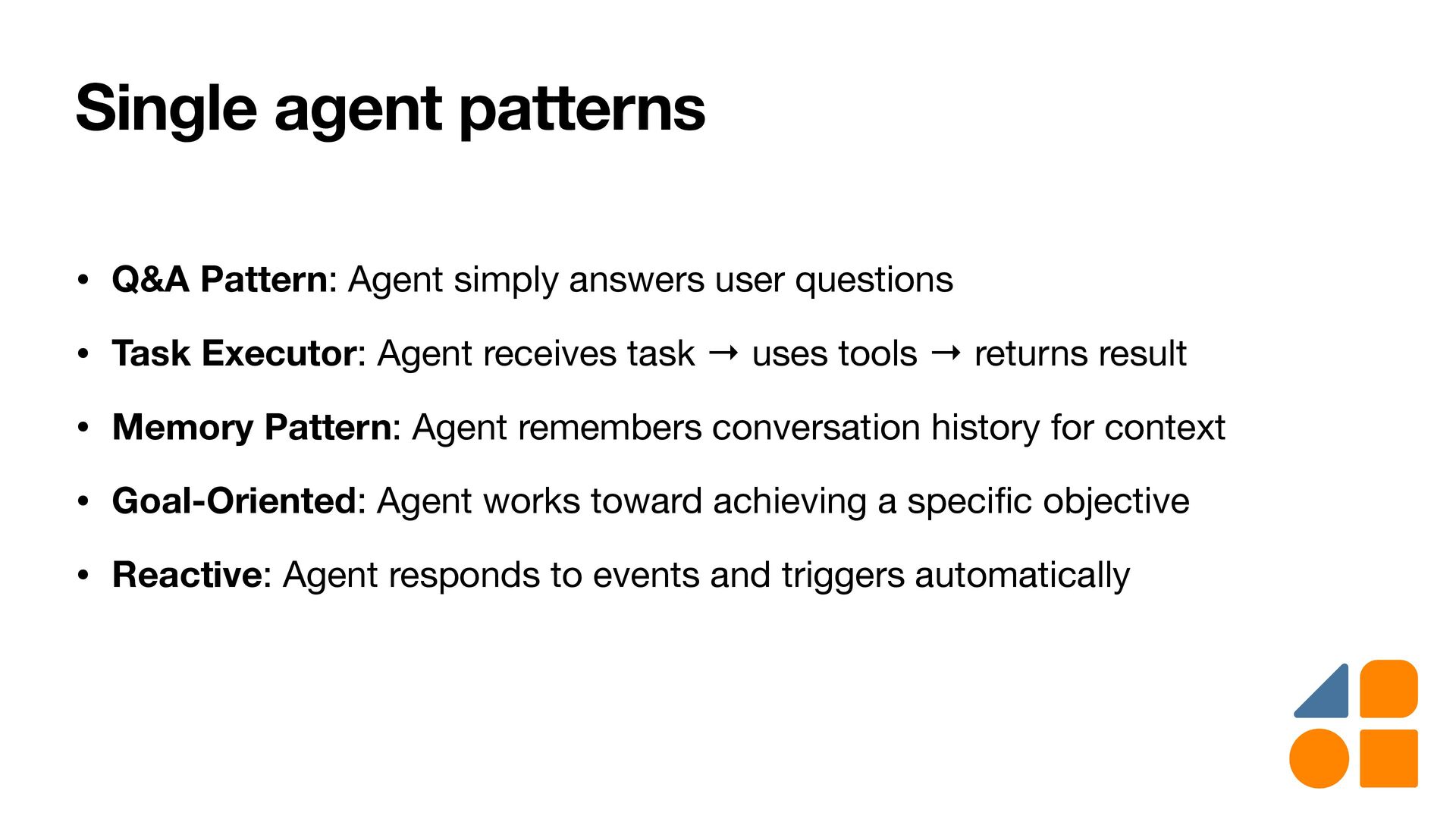
  28. Single agent patterns • Q&A Pattern: Agent simply answers user

    questions • Task Executor: Agent receives task → uses tools → returns result • Memory Pattern: Agent remembers conversation history for context • Goal-Oriented: Agent works toward achieving a speci fi c objective • Reactive: Agent responds to events and triggers automatically
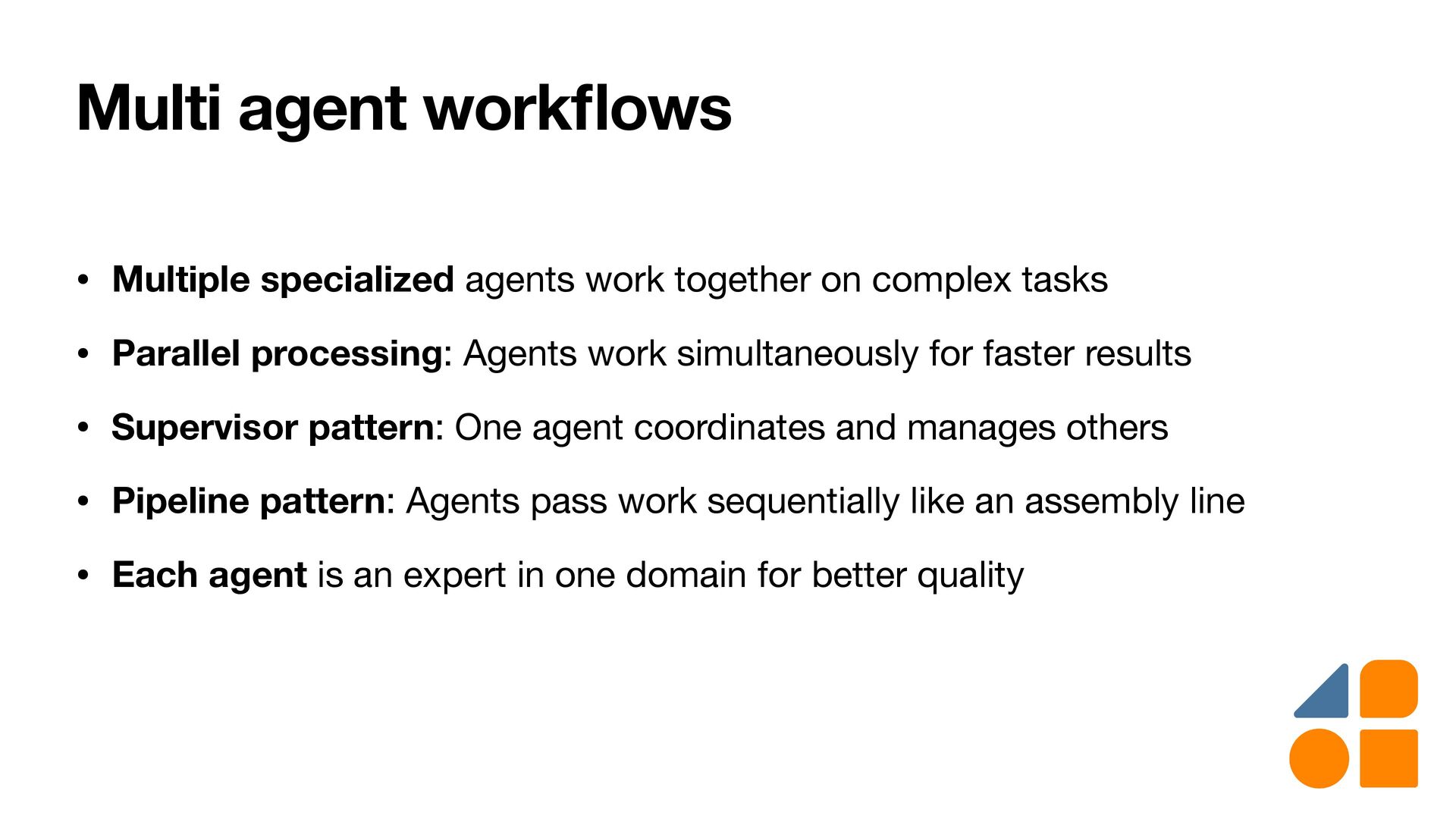
  29. Multi agent work fl ows • Multiple specialized agents work

    together on complex tasks • Parallel processing: Agents work simultaneously for faster results • Supervisor pattern: One agent coordinates and manages others • Pipeline pattern: Agents pass work sequentially like an assembly line • Each agent is an expert in one domain for better quality
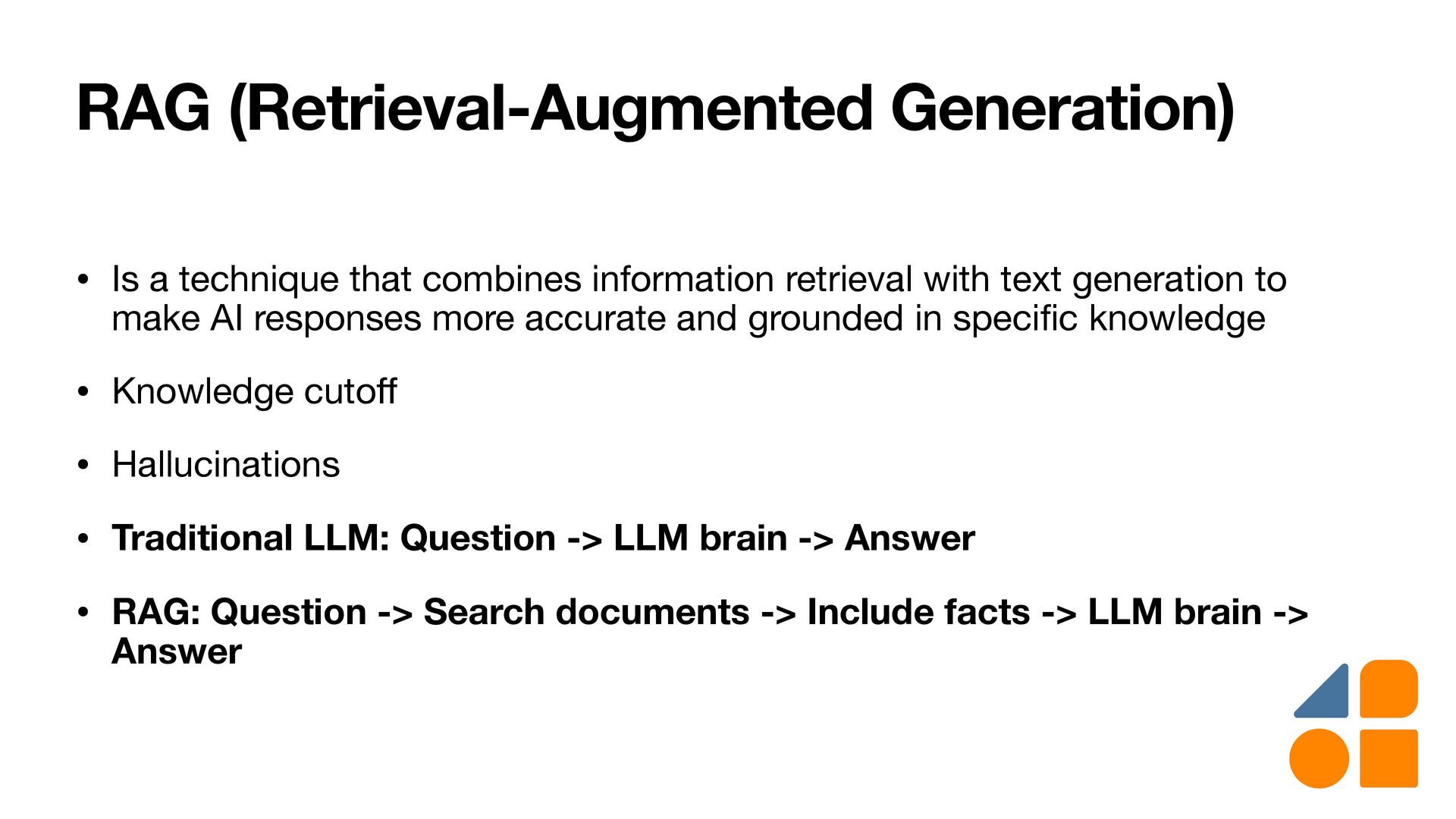
  30. RAG (Retrieval-Augmented Generation) • Is a technique that combines information

    retrieval with text generation to make AI responses more accurate and grounded in speci fi c knowledge • Knowledge cuto ff • Hallucinations • Traditional LLM: Question -> LLM brain -> Answer • RAG: Question -> Search documents -> Include facts -> LLM brain -> Answer
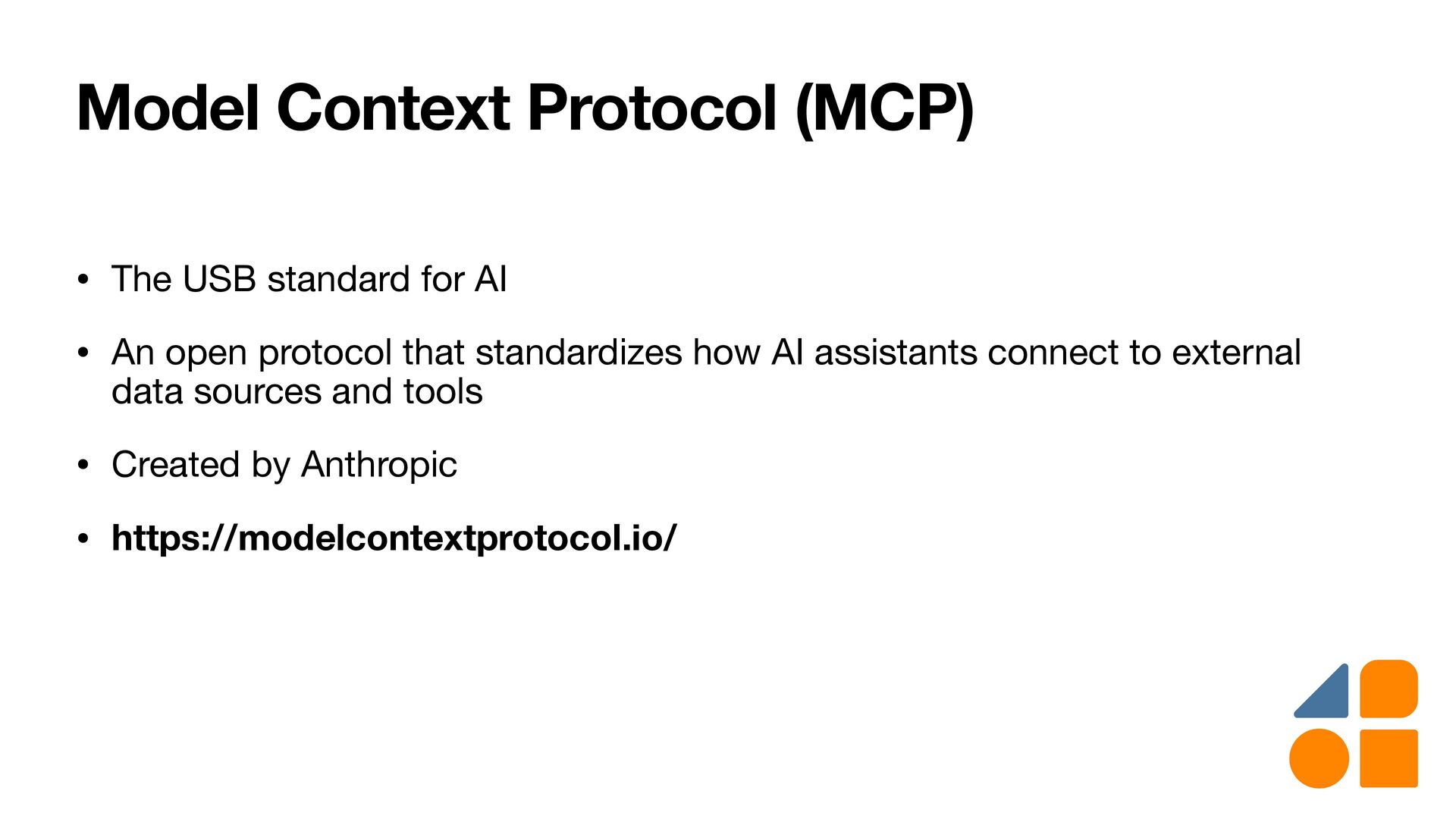
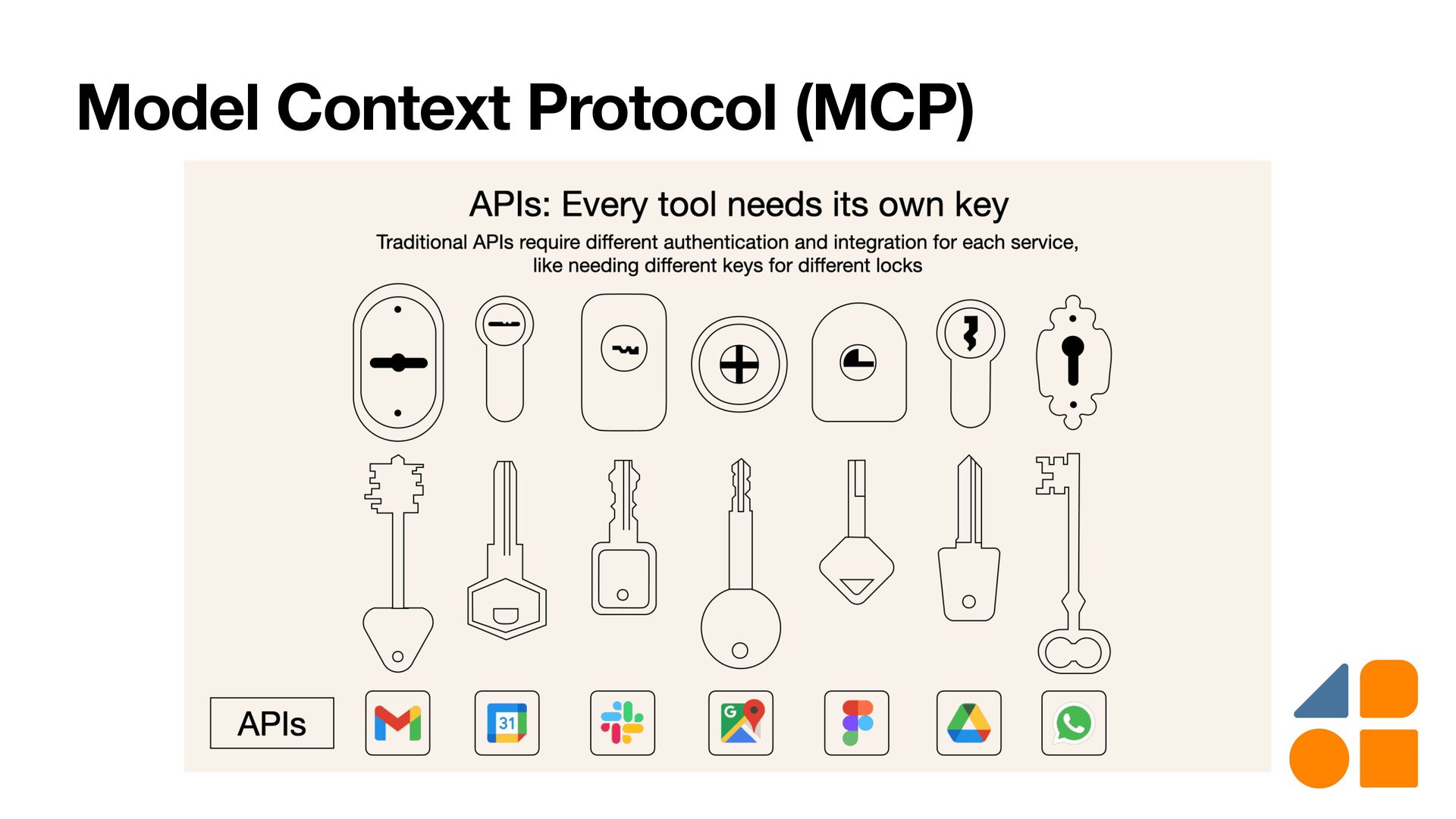
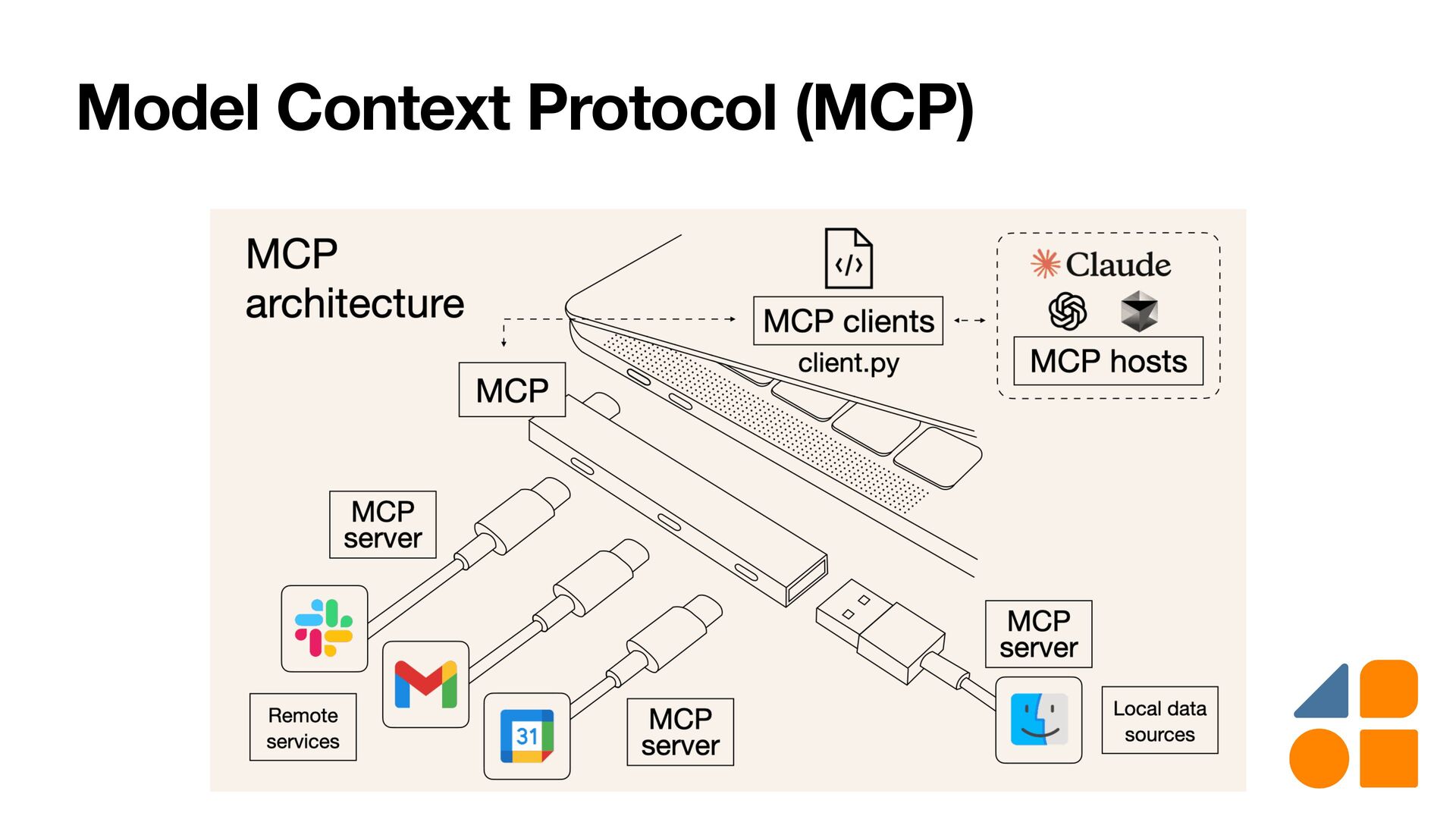
  31. Model Context Protocol (MCP) • The USB standard for AI

    • An open protocol that standardizes how AI assistants connect to external data sources and tools • Created by Anthropic • https://modelcontextprotocol.io/
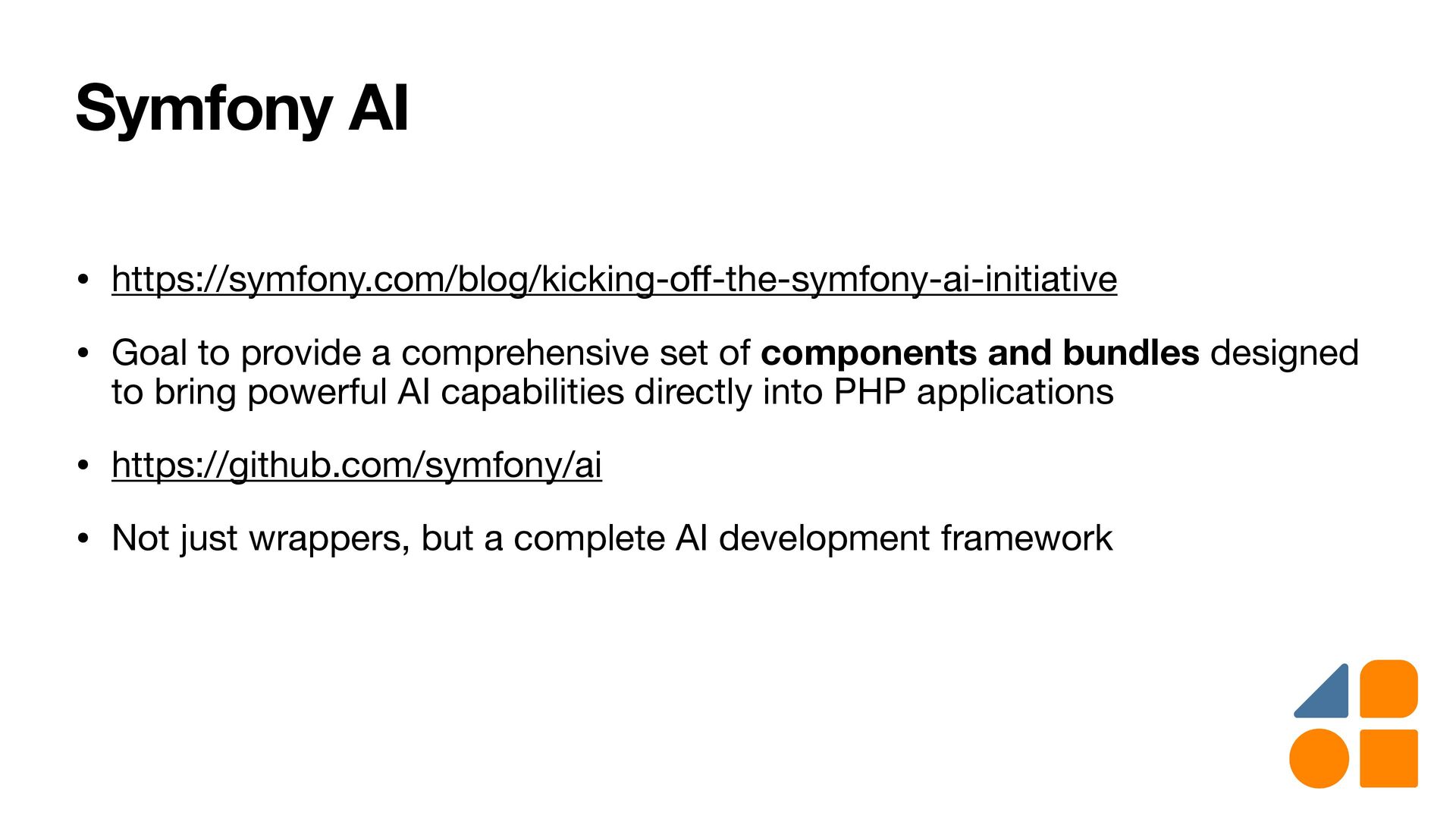
  32. Symfony AI • https://symfony.com/blog/kicking-o ff -the-symfony-ai-initiative • Goal to provide

    a comprehensive set of components and bundles designed to bring powerful AI capabilities directly into PHP applications • https://github.com/symfony/ai • Not just wrappers, but a complete AI development framework
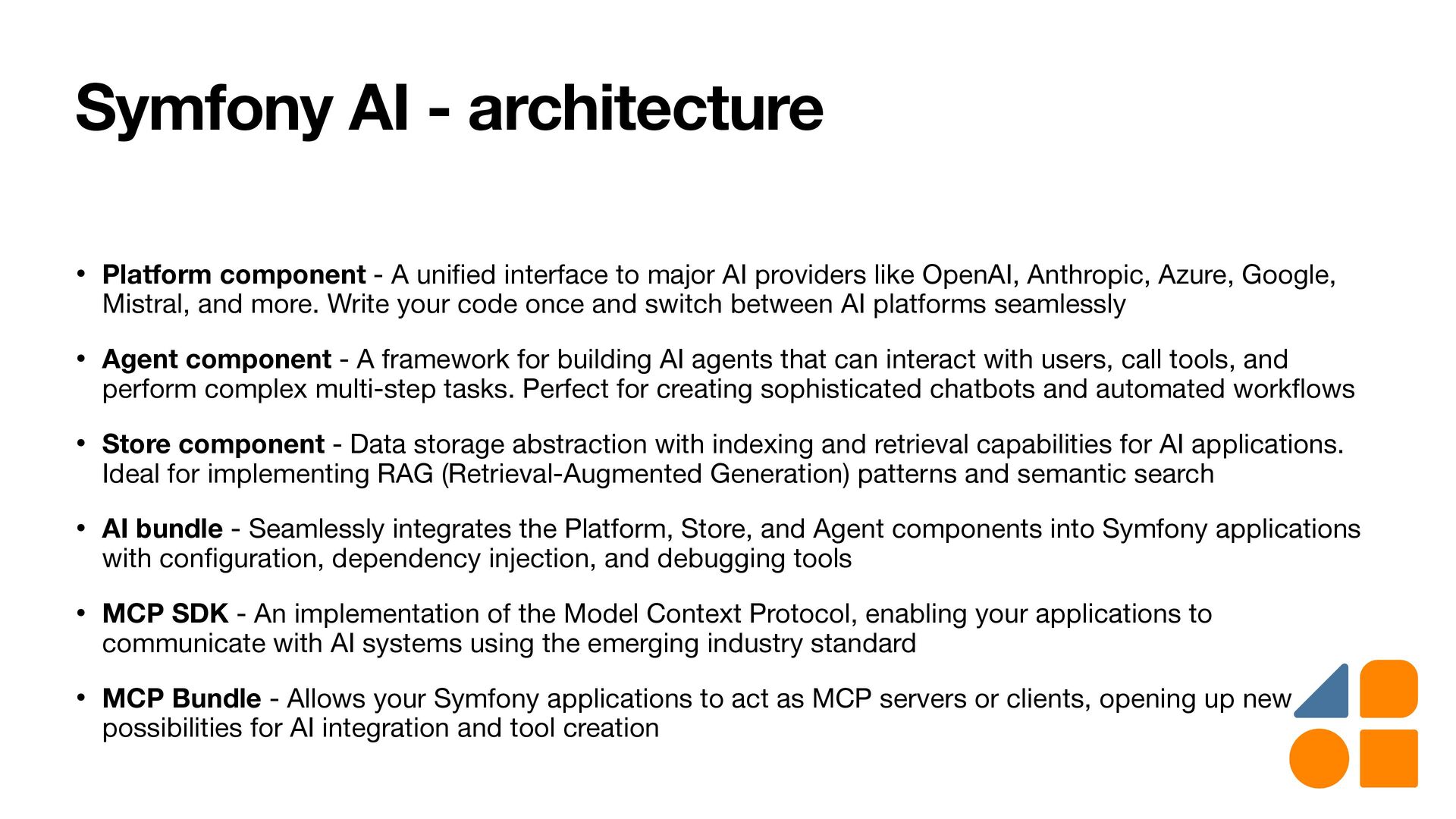
  33. Symfony AI - architecture • Platform component - A uni

    fi ed interface to major AI providers like OpenAI, Anthropic, Azure, Google, Mistral, and more. Write your code once and switch between AI platforms seamlessly • Agent component - A framework for building AI agents that can interact with users, call tools, and perform complex multi-step tasks. Perfect for creating sophisticated chatbots and automated work fl ows • Store component - Data storage abstraction with indexing and retrieval capabilities for AI applications. Ideal for implementing RAG (Retrieval-Augmented Generation) patterns and semantic search • AI bundle - Seamlessly integrates the Platform, Store, and Agent components into Symfony applications with con fi guration, dependency injection, and debugging tools • MCP SDK - An implementation of the Model Context Protocol, enabling your applications to communicate with AI systems using the emerging industry standard • MCP Bundle - Allows your Symfony applications to act as MCP servers or clients, opening up new possibilities for AI integration and tool creation
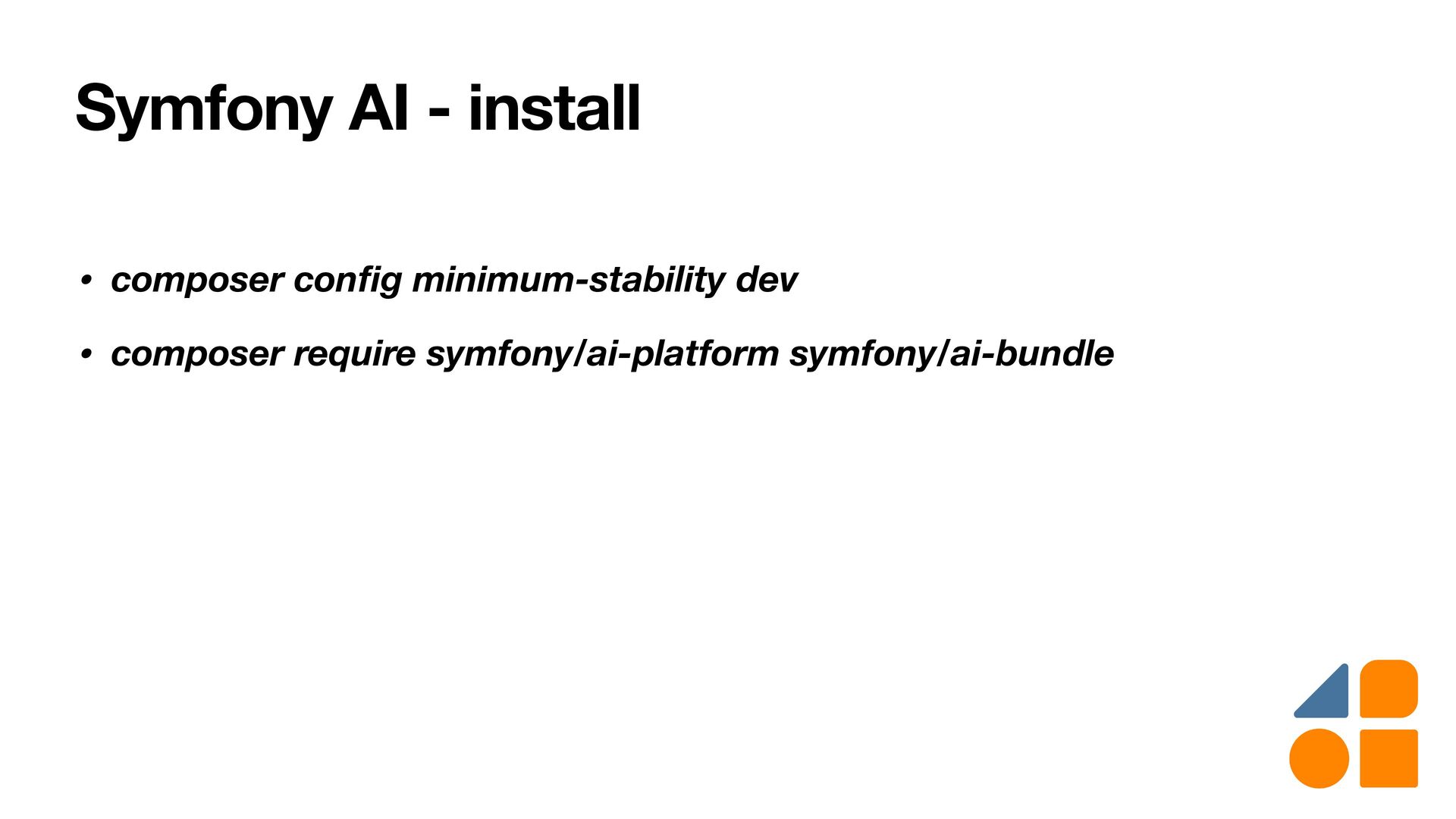
  34. Symfony AI - install • composer con fi g minimum-stability

    dev • composer require symfony/ai-platform symfony/ai-bundle