Slides from an internal talk at my company about adopting better SEV managment practices and how we might use chaos engineering to test our infrastructure regularly.
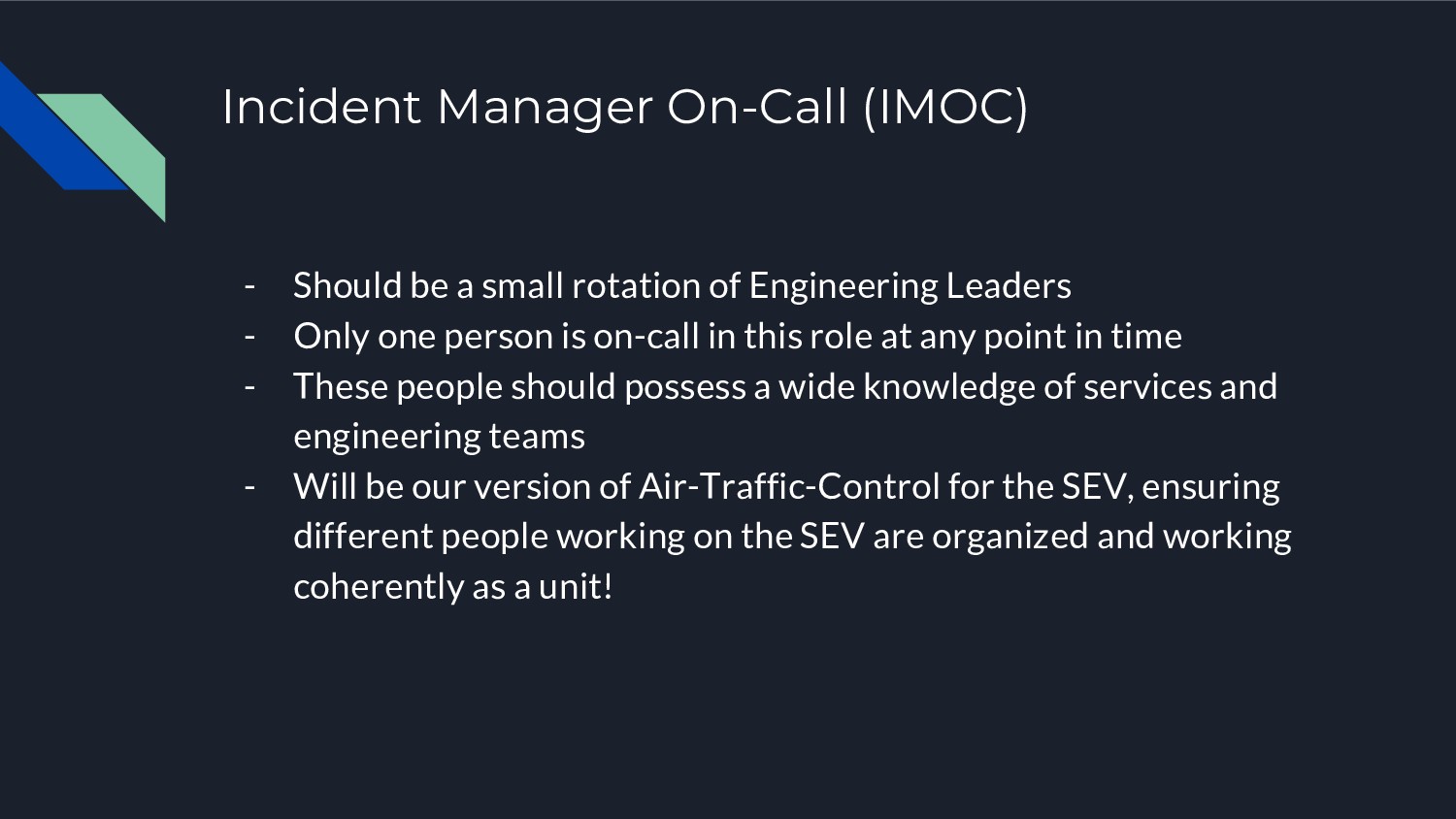
of Engineering Leaders - Only one person is on-call in this role at any point in time - These people should possess a wide knowledge of services and engineering teams - Will be our version of Air-Traffic-Control for the SEV, ensuring different people working on the SEV are organized and working coherently as a unit!
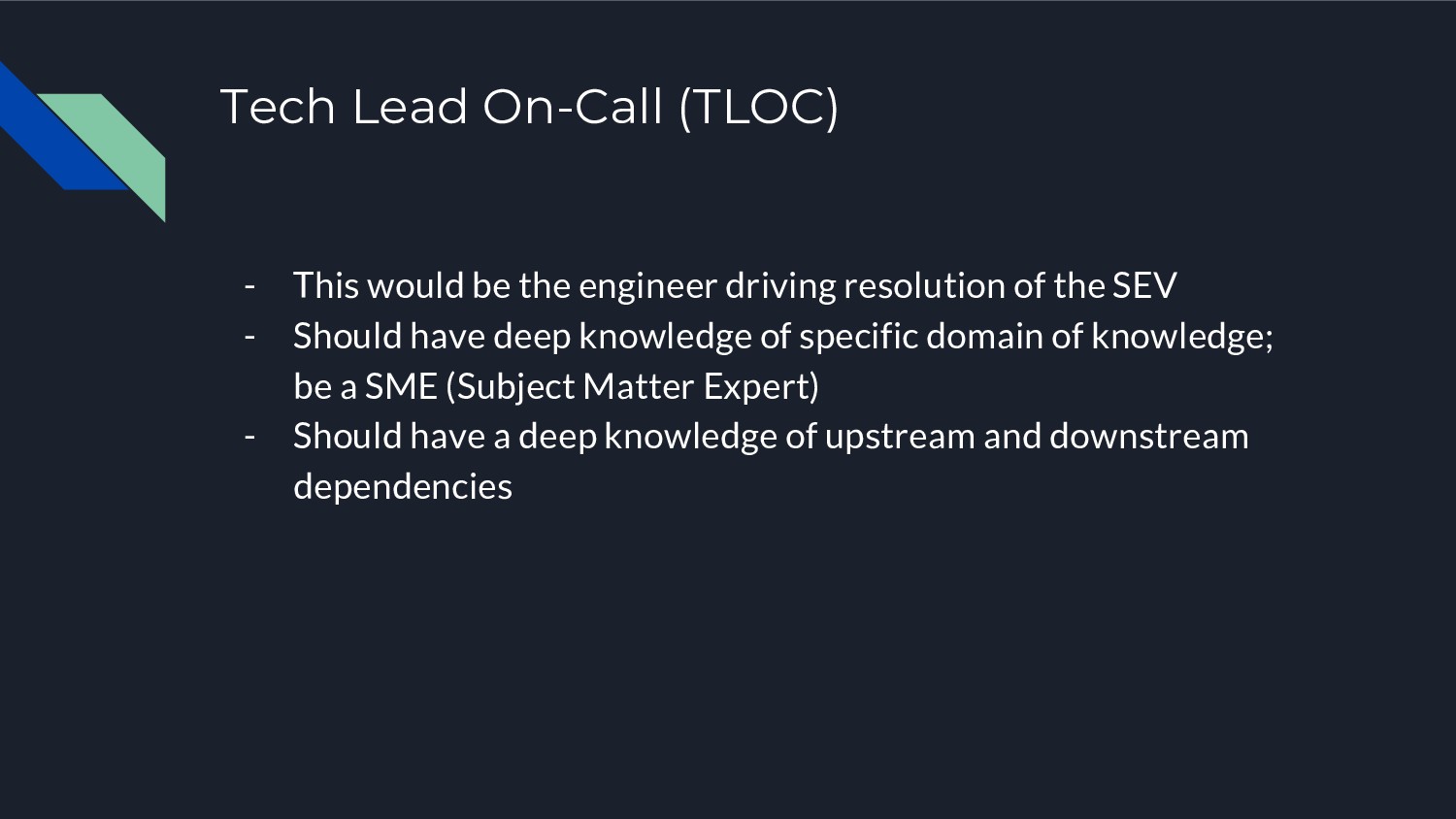
driving resolution of the SEV - Should have deep knowledge of specific domain of knowledge; be a SME (Subject Matter Expert) - Should have a deep knowledge of upstream and downstream dependencies
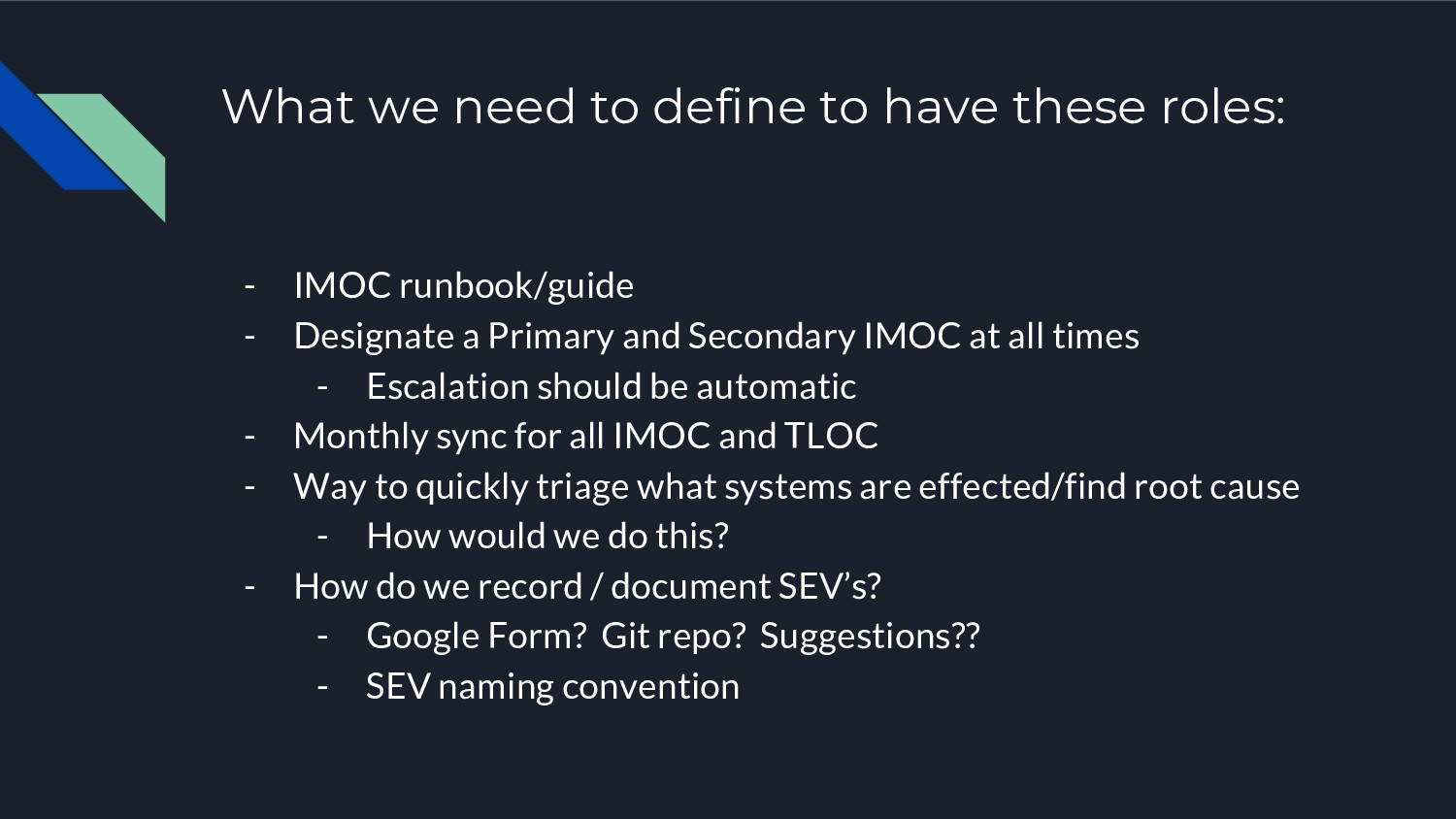
IMOC runbook/guide - Designate a Primary and Secondary IMOC at all times - Escalation should be automatic - Monthly sync for all IMOC and TLOC - Way to quickly triage what systems are effected/find root cause - How would we do this? - How do we record / document SEV’s? - Google Form? Git repo? Suggestions?? - SEV naming convention
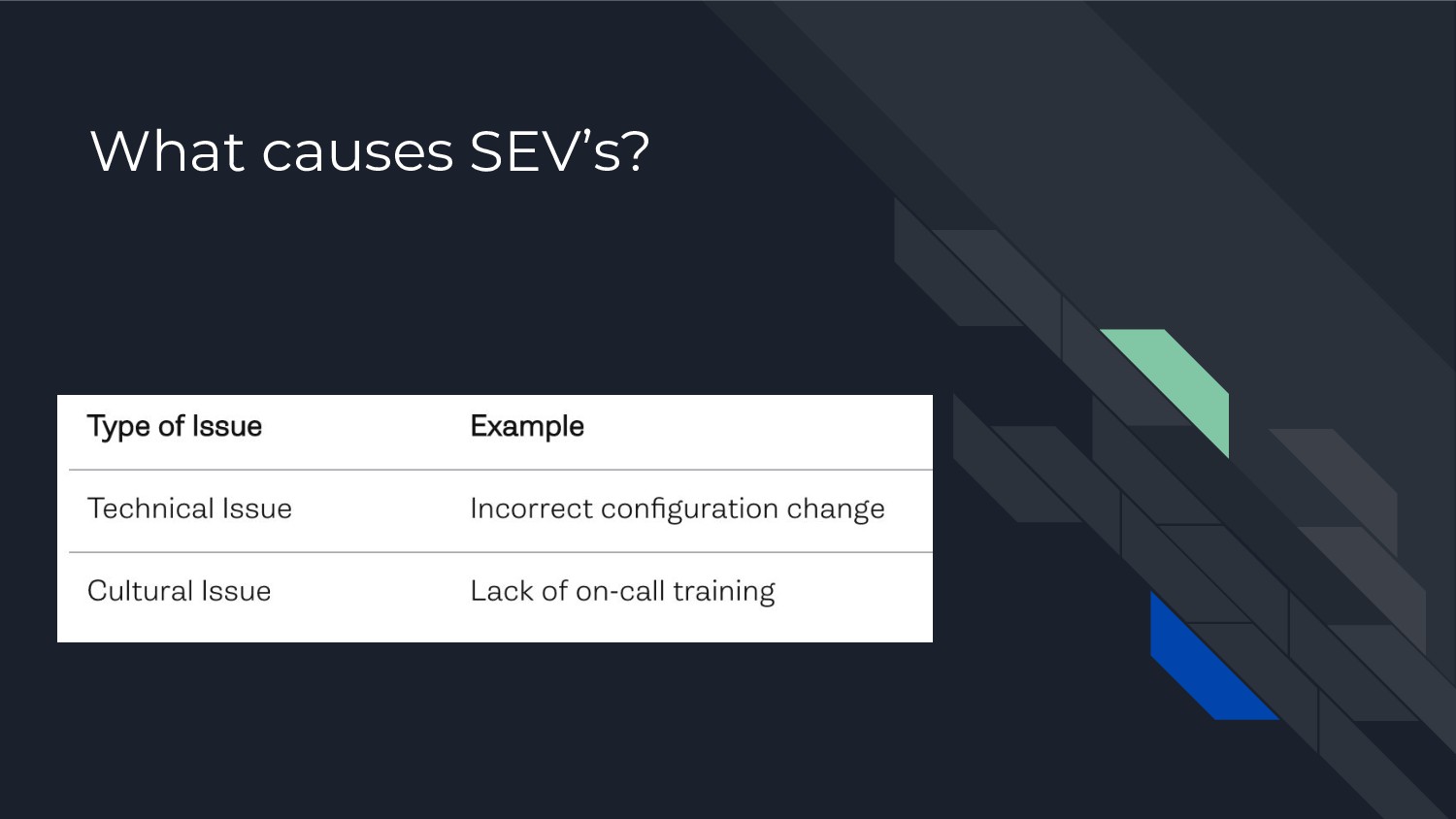
knowledge handover • Lack of on-call training • Lack of chaos engineering • Lack of a high severity incident management program • Lack of documentation and playbooks • Lack of alerts and pages • Lack of effective alerting thresholds • Lack of backup strategy
Netflix created the Chaos Monkey which can wreak havoc in AWS at will deleting instances (but fully customizable/controllable) -- this is OSS as of 2012 • 2011 - Netflix creates the Simian Army--a host of chaos tools to test failure modes in your infrastructure and applications • 2014 - the Role of Chaos Engineer is created at Netflix
https://github.com/tammybutow/chaos_engineering_bootcamp - https://www.usenix.org/conference/srecon17americas/program/presentation/andrus They did a cool workshop about Chaos Engineering with hands-on labs at SREcon this year. If you like this notion of chaos, more of us should go next year! #notjustforSRE


 hiracky16
 namiki64
 yazm
 codmoninc
 teamlab
 pfn
 terapyon
 sansantech
 sudoakiy
 kzkhykw1991
 occhi
 bkeepers
 eitanlees
 tonyrice
 andyhume
 techseoconnect
 sonatard
 leimatthew05
 davetheseo
 pwiseman
 nikkihalliwell
 trishagee
 raygrieselhuber