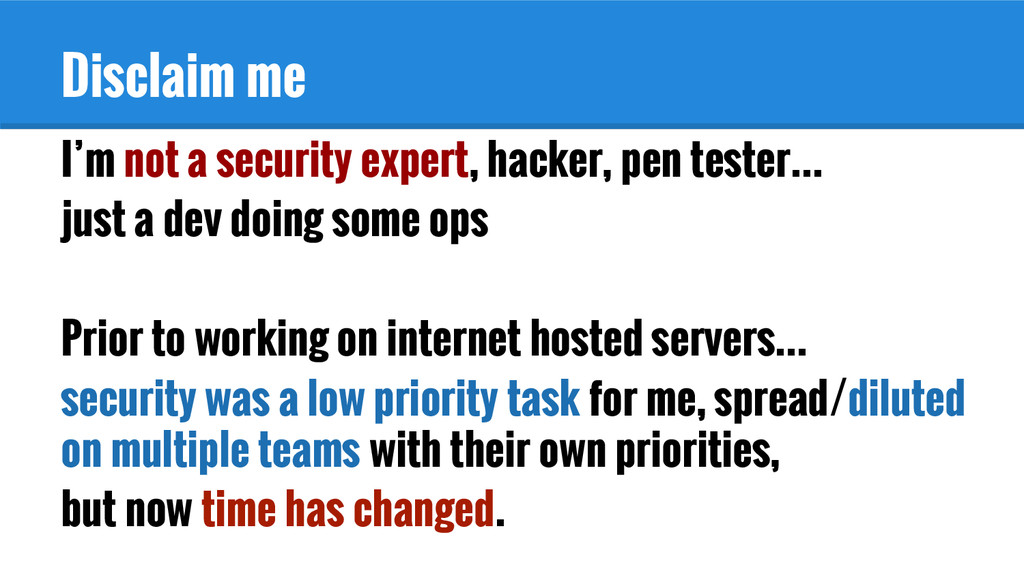
just a dev doing some ops Prior to working on internet hosted servers… security was a low priority task for me, spread/diluted on multiple teams with their own priorities, but now time has changed.
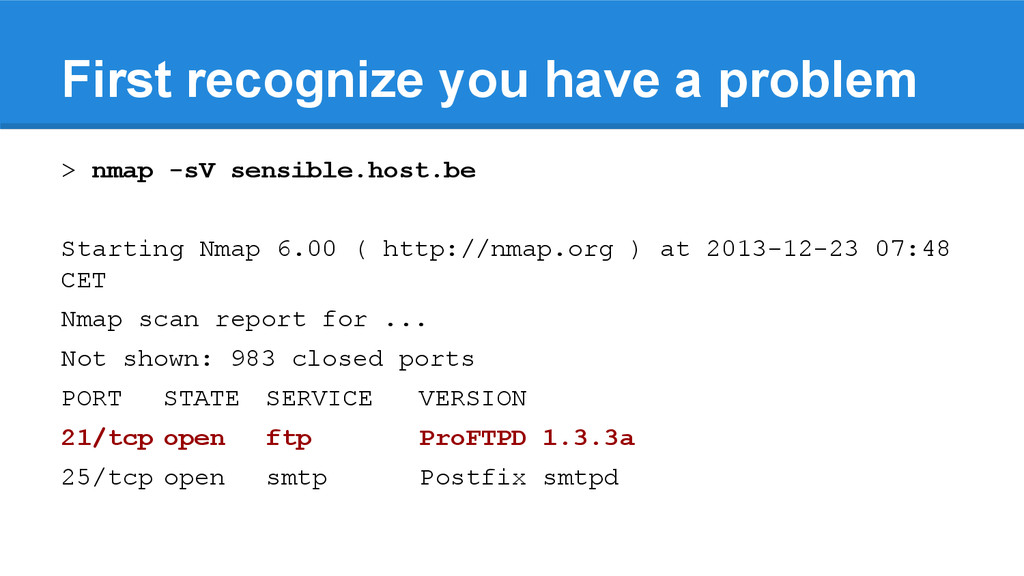
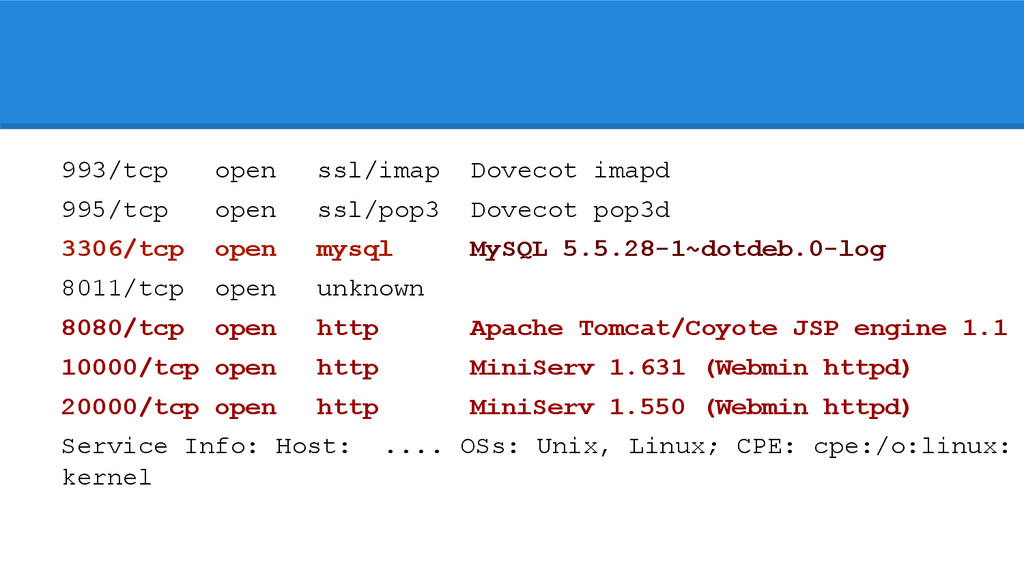
Starting Nmap 6.00 ( http://nmap.org ) at 2013-12-23 07:48 CET Nmap scan report for ... Not shown: 983 closed ports PORT STATE SERVICE VERSION 21/tcp open ftp ProFTPD 1.3.3a 25/tcp open smtp Postfix smtpd
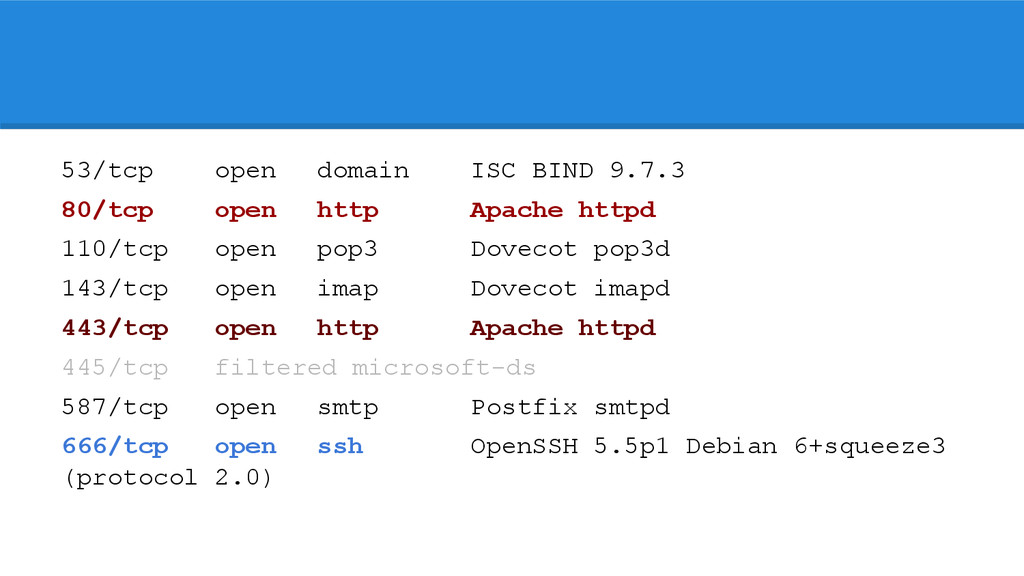
3306/tcp open mysql MySQL 5.5.28-1~dotdeb.0-log 8011/tcp open unknown 8080/tcp open http Apache Tomcat/Coyote JSP engine 1.1 10000/tcp open http MiniServ 1.631 (Webmin httpd) 20000/tcp open http MiniServ 1.550 (Webmin httpd) Service Info: Host: .... OSs: Unix, Linux; CPE: cpe:/o:linux: kernel
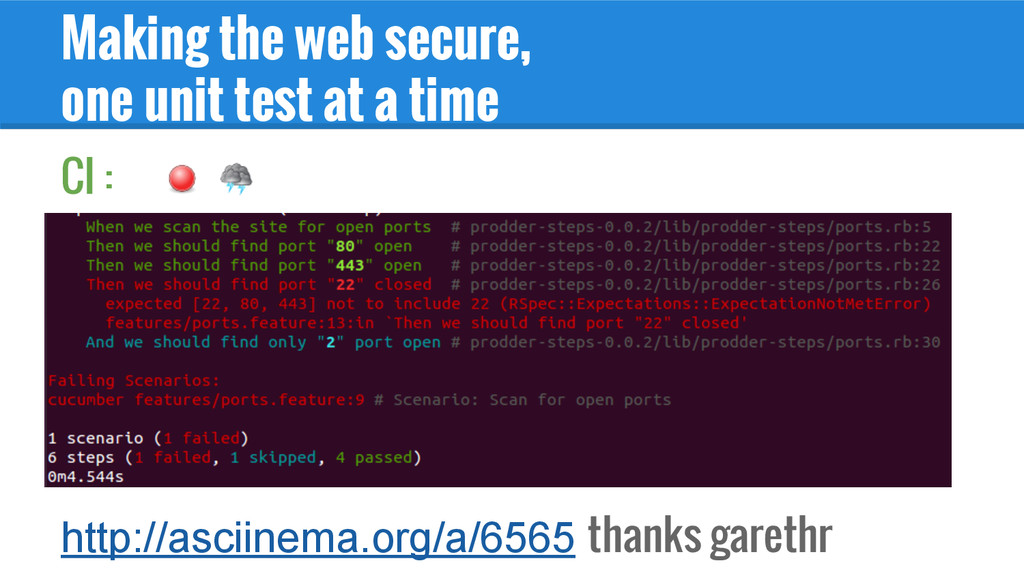
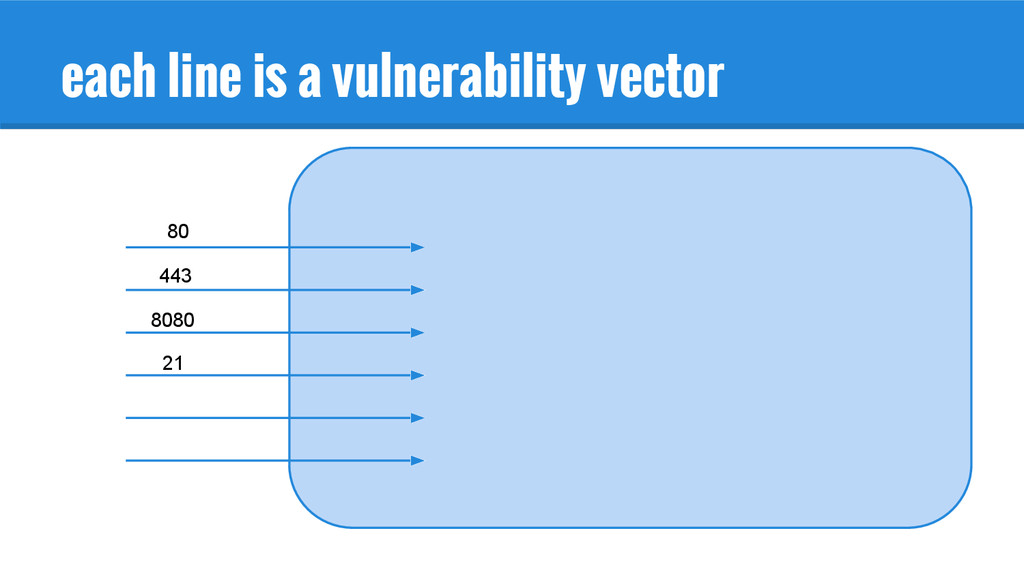
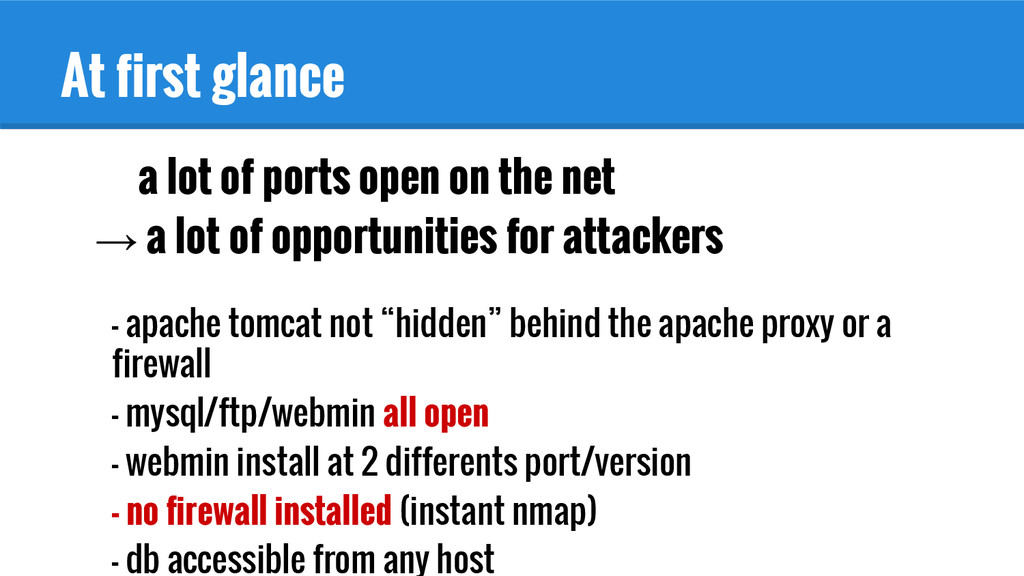
net → a lot of opportunities for attackers - apache tomcat not “hidden” behind the apache proxy or a firewall - mysql/ftp/webmin all open - webmin install at 2 differents port/version - no firewall installed (instant nmap) - db accessible from any host
sensible.host.be. 220 ProFTPD 1.3.3a Server (Debian) • ftp is insecure by nature, use sftp • exploitable : https://github.com/rapid7/metasploit- framework/blob/master/modules/exploits/linux/ftp/proftp _telnet_iac.rb
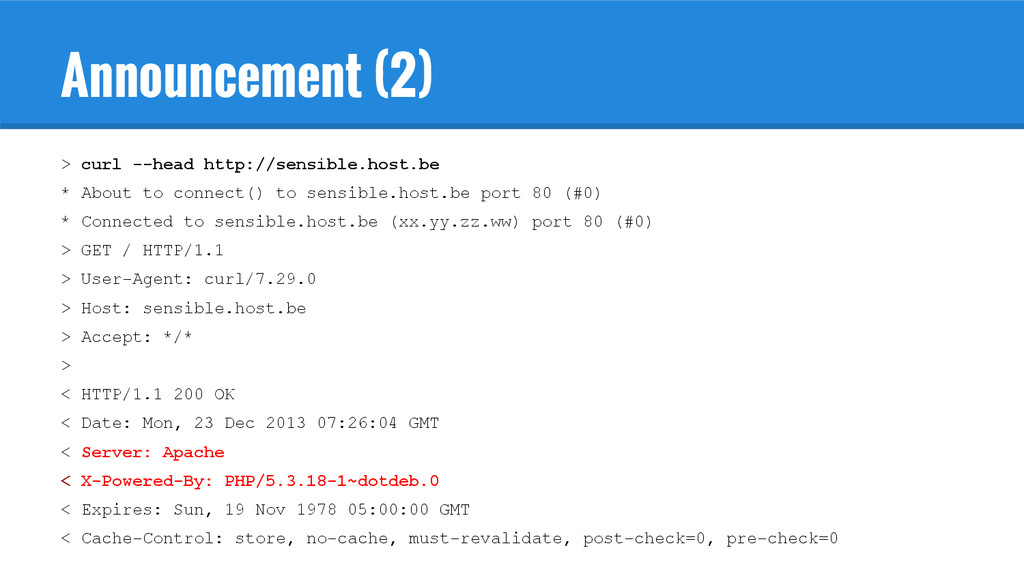
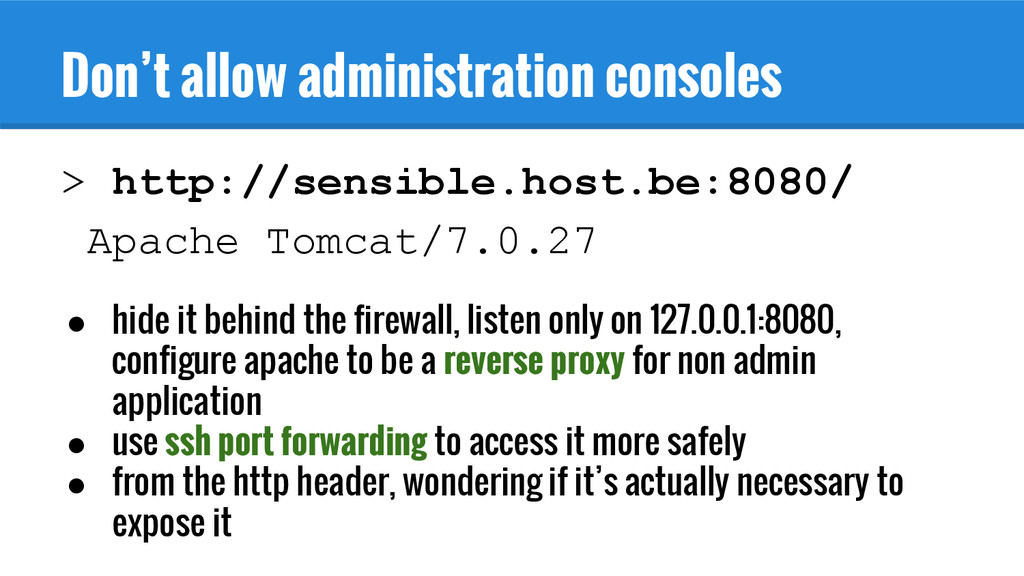
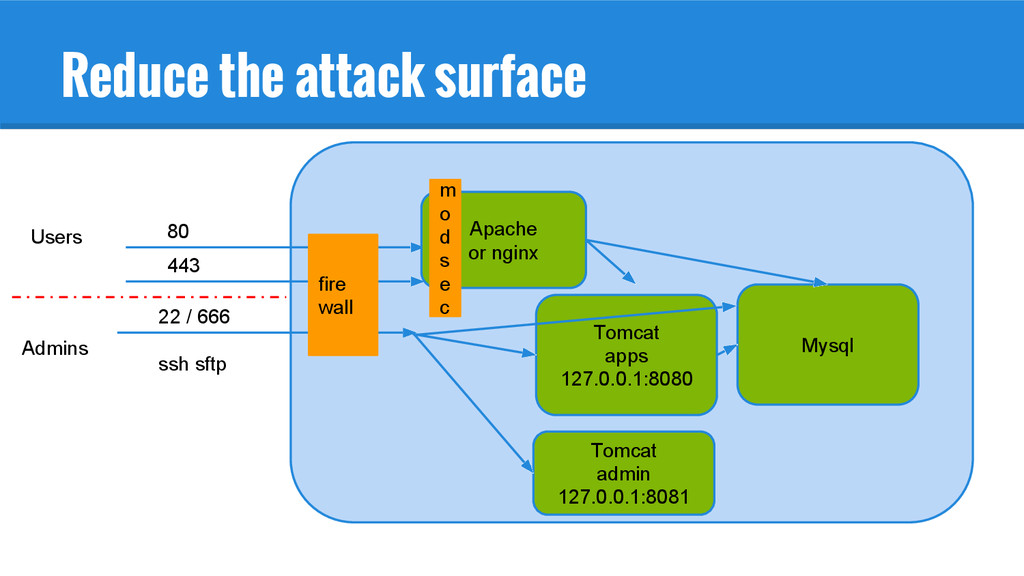
it behind the firewall, listen only on 127.0.0.1:8080, configure apache to be a reverse proxy for non admin application • use ssh port forwarding to access it more safely • from the http header, wondering if it’s actually necessary to expose it
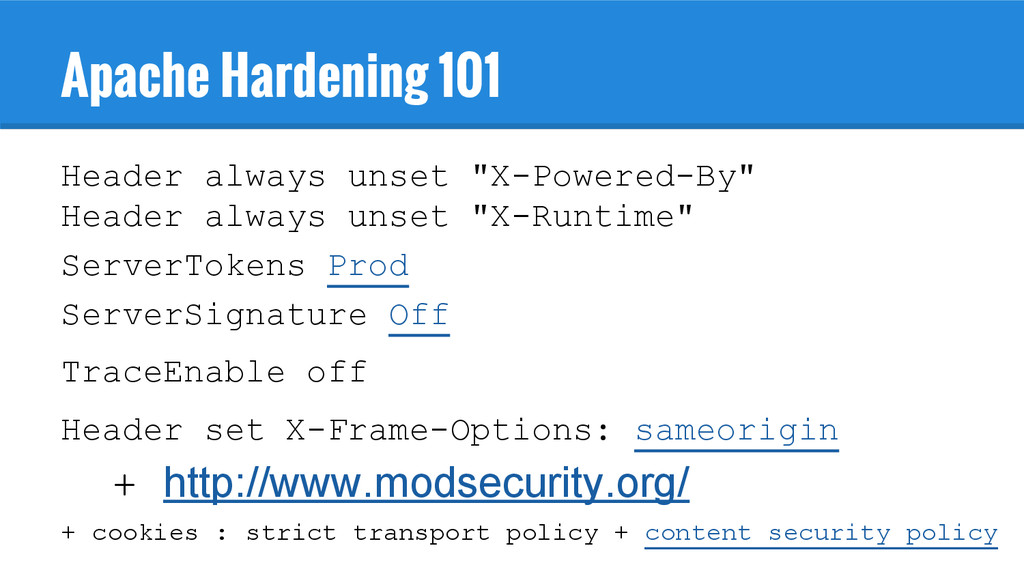
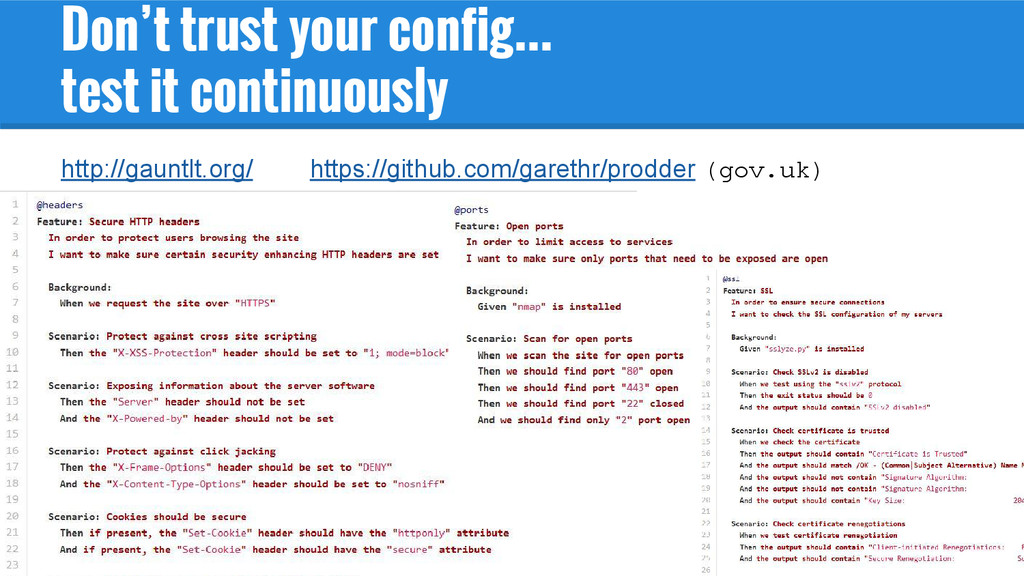
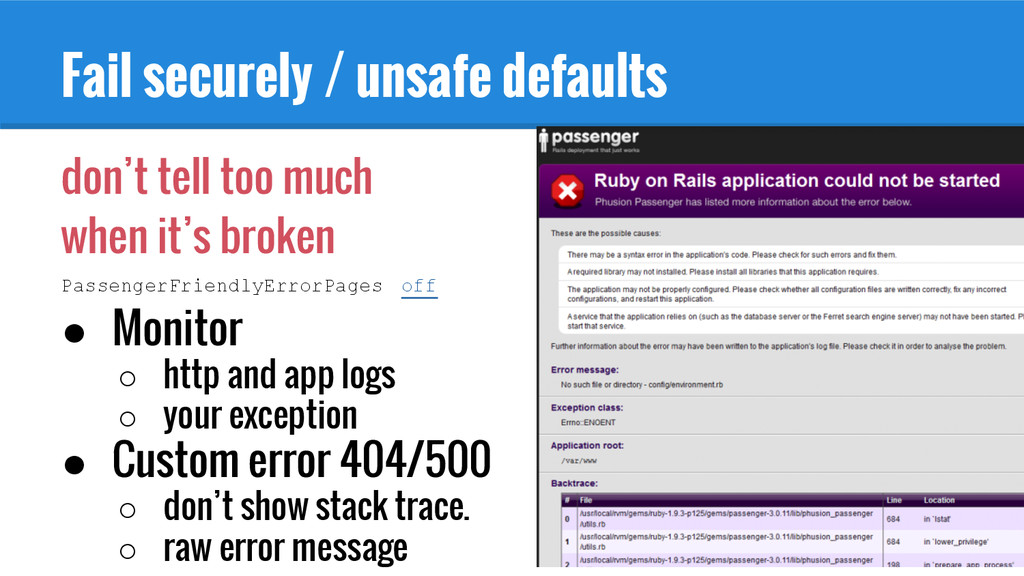
"X-Runtime" ServerTokens Prod ServerSignature Off TraceEnable off Header set X-Frame-Options: sameorigin + http://www.modsecurity.org/ + cookies : strict transport policy + content security policy
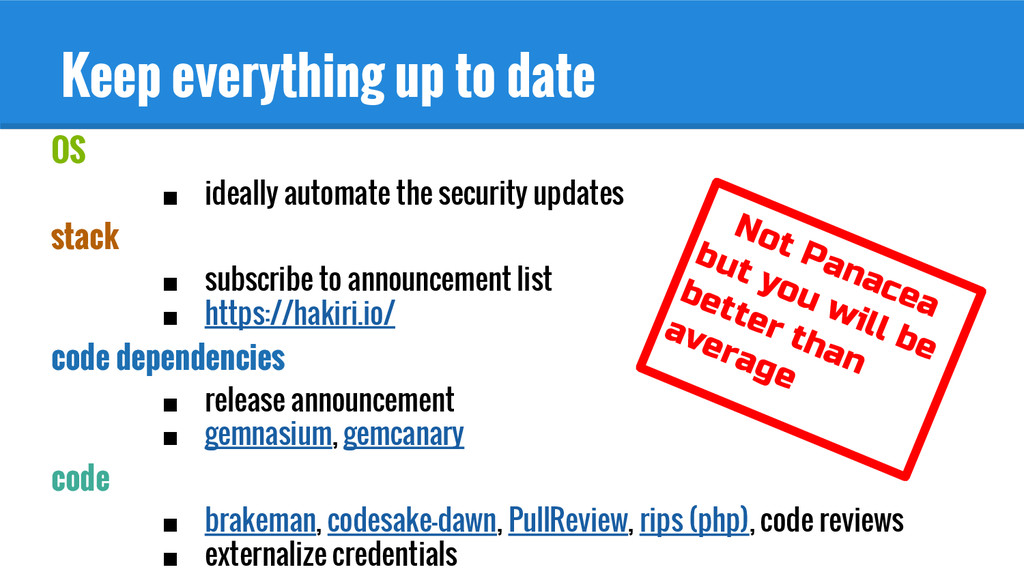
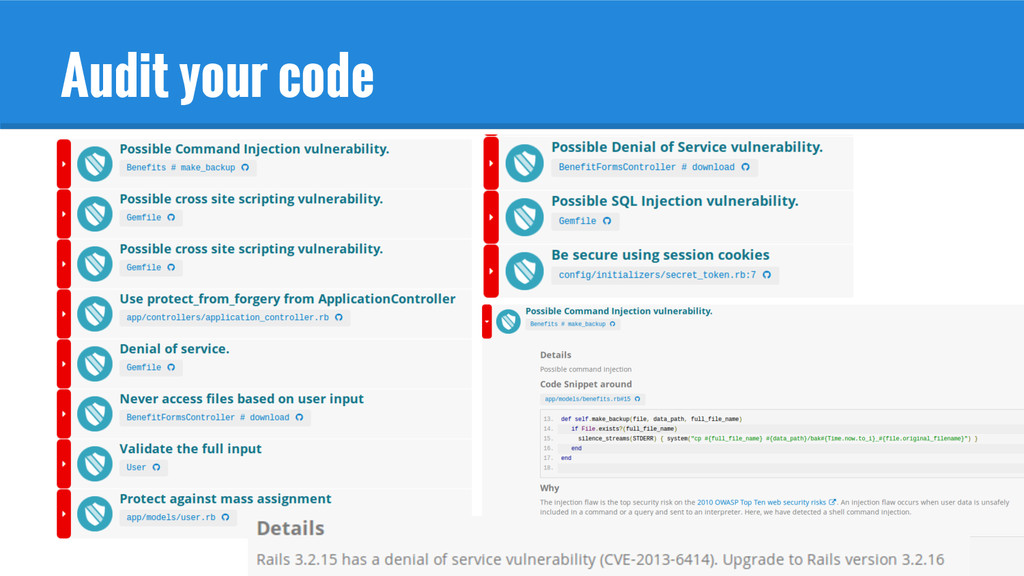
security updates stack ▪ subscribe to announcement list ▪ https://hakiri.io/ code dependencies ▪ release announcement ▪ gemnasium, gemcanary code ▪ brakeman, codesake-dawn, PullReview, rips (php), code reviews ▪ externalize credentials Not Panacea but you will be better than average
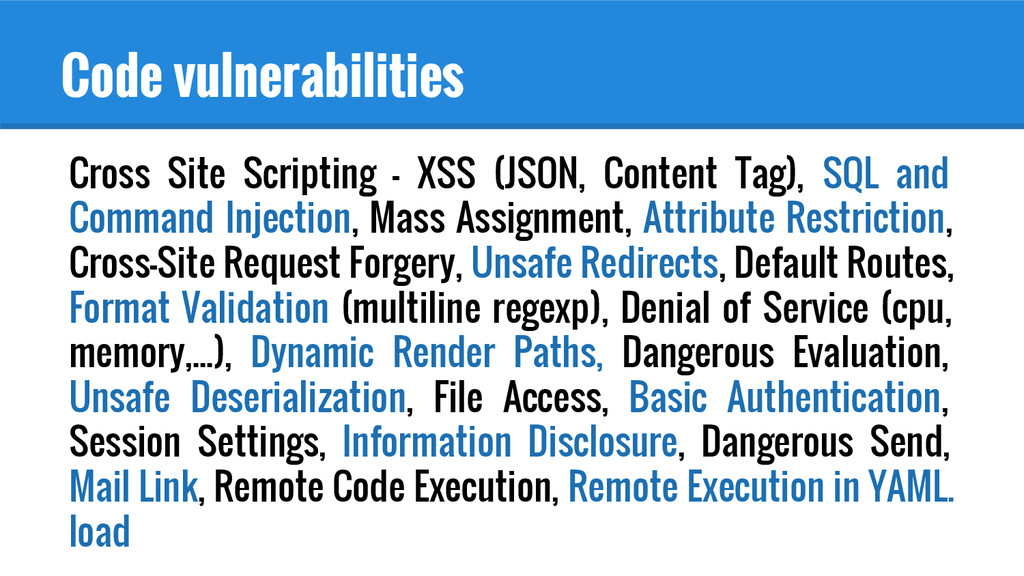
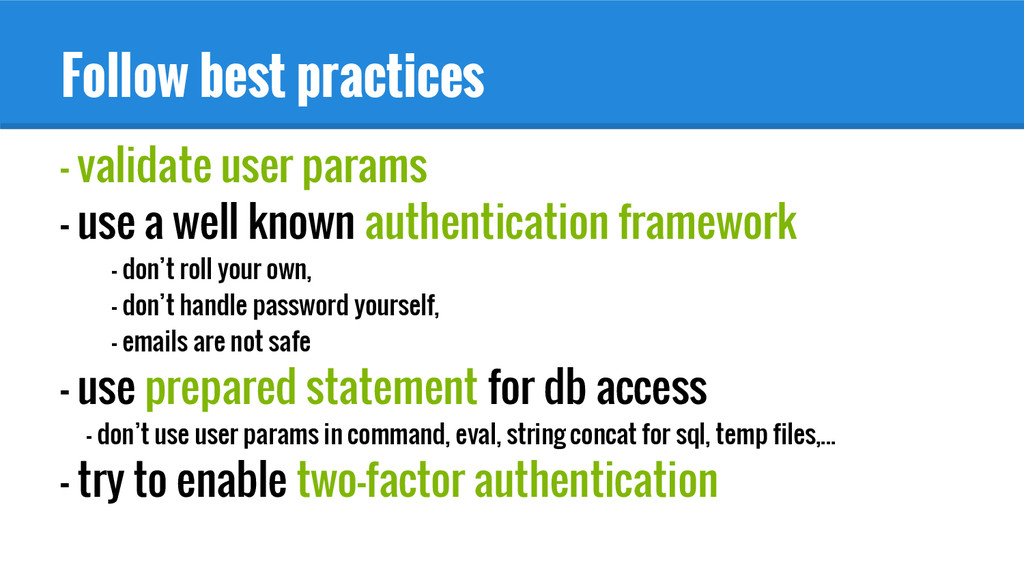
well known authentication framework - don’t roll your own, - don’t handle password yourself, - emails are not safe - use prepared statement for db access - don’t use user params in command, eval, string concat for sql, temp files,... - try to enable two-factor authentication
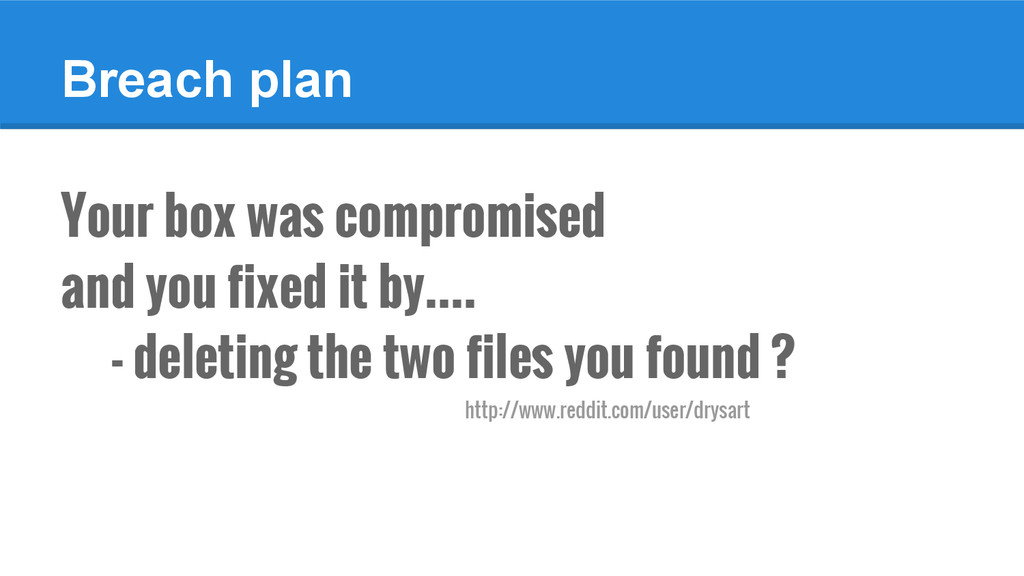
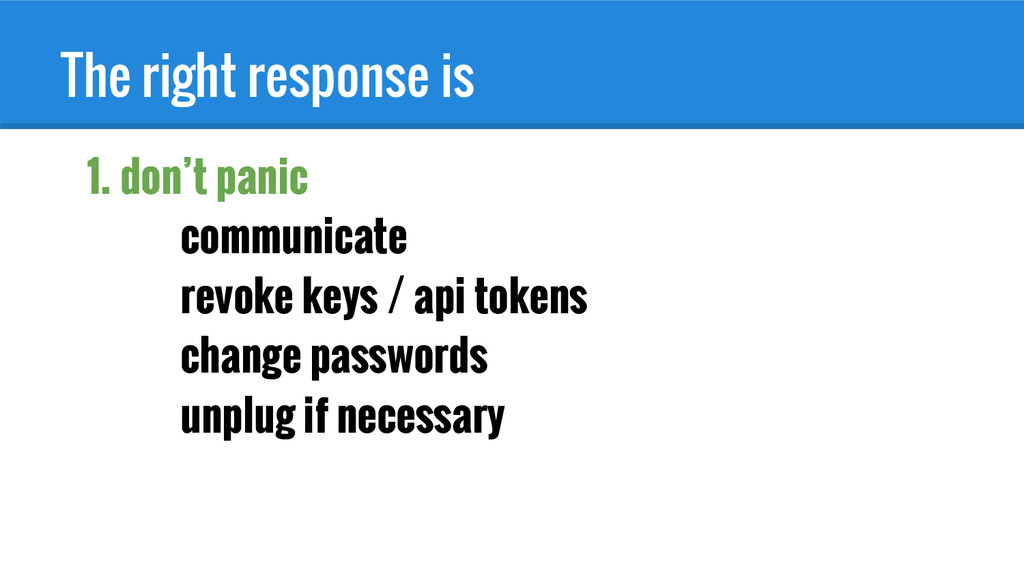
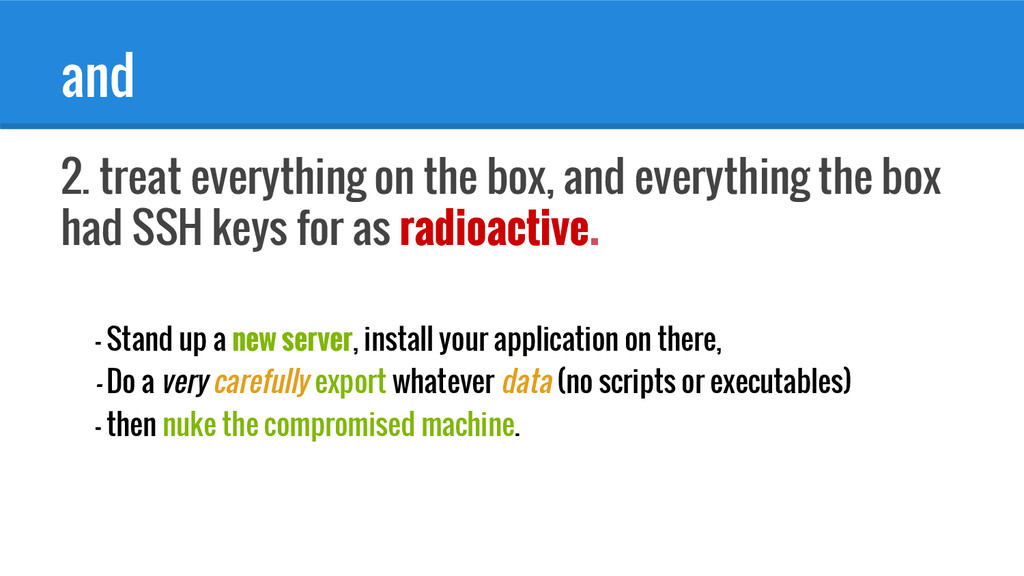
box had SSH keys for as radioactive. - Stand up a new server, install your application on there, - Do a very carefully export whatever data (no scripts or executables) - then nuke the compromised machine.
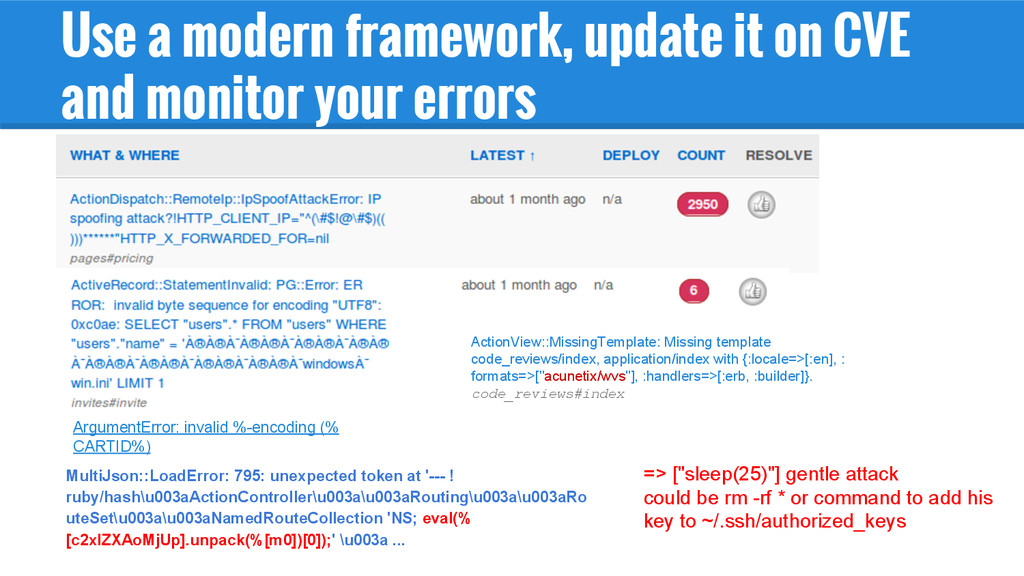
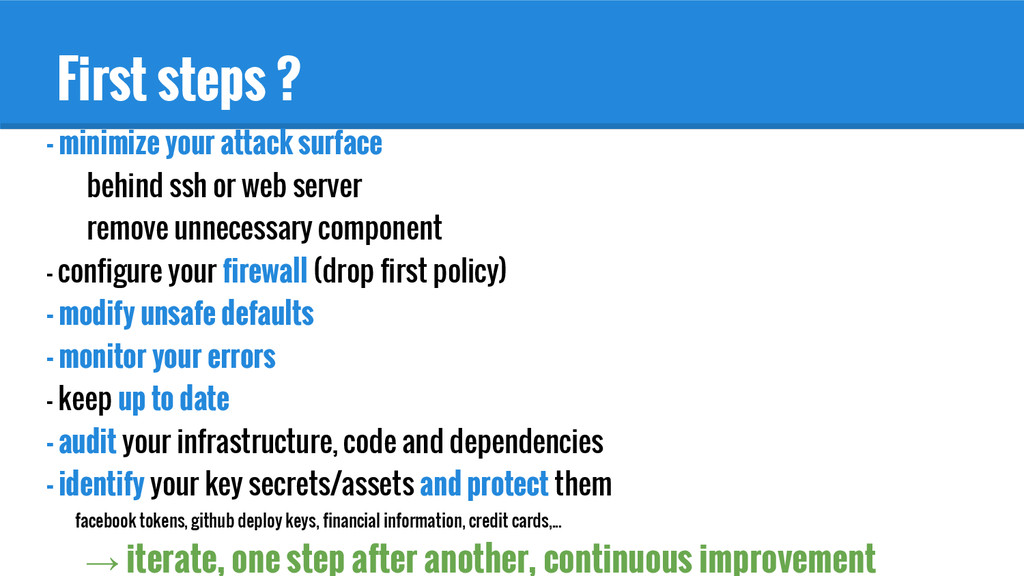
or web server remove unnecessary component - configure your firewall (drop first policy) - modify unsafe defaults - monitor your errors - keep up to date - audit your infrastructure, code and dependencies - identify your key secrets/assets and protect them facebook tokens, github deploy keys, financial information, credit cards,... → iterate, one step after another, continuous improvement
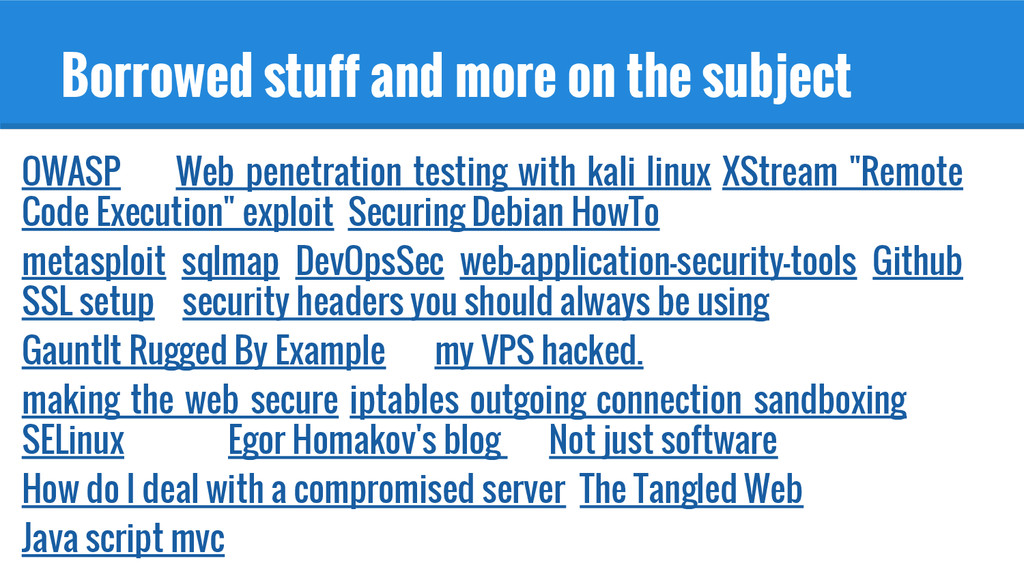
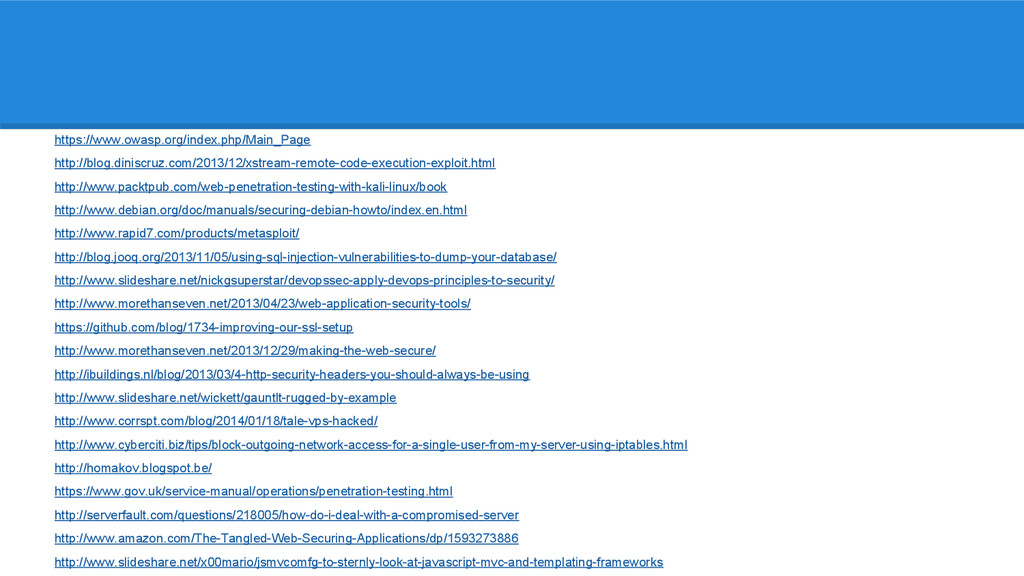
testing with kali linux XStream "Remote Code Execution" exploit Securing Debian HowTo metasploit sqlmap DevOpsSec web-application-security-tools Github SSL setup security headers you should always be using Gauntlt Rugged By Example my VPS hacked. making the web secure iptables outgoing connection sandboxing SELinux Egor Homakov's blog Not just software How do I deal with a compromised server The Tangled Web Java script mvc


 mestachs
 puhitaku
 grimoh
 riyaamemiya
 codmoninc
 akhino
 jyouryuusui
 takonda
 tetsuya28
 ivry_presentationmaterials
 shuta13
 pfn
pfn
 recruitengineers
 marktimemedia
 tamaranovitovic
 keithpitt
 aleyda
 uxyall
 tomoyanonymous
 marcduiker
 minecr
 ryanjones
 rkaga
rkaga
 mayunak












![Announcement helps the bad guys > ftp ftp://username:[email protected] Connected to](https://files.speakerdeck.com/presentations/efaf63a0754e01312ebb1a125ab0a9e4/slide_18.jpg)