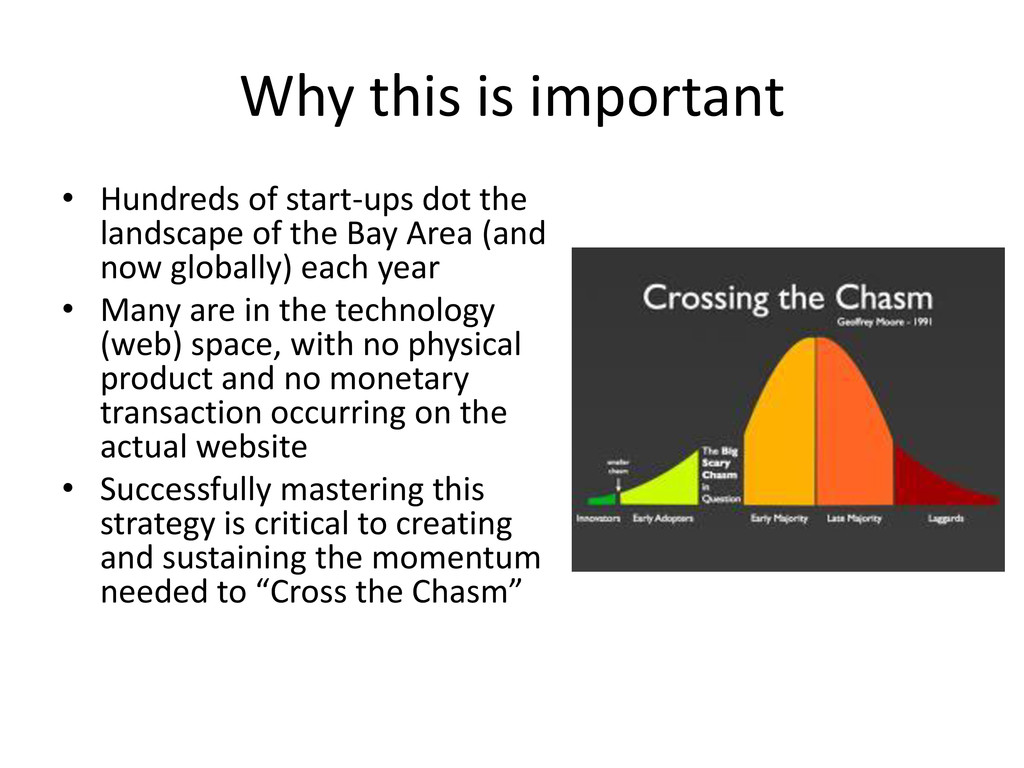
landscape of the Bay Area (and now globally) each year • Many are in the technology (web) space, with no physical product and no monetary transaction occurring on the actual website • Successfully mastering this strategy is critical to creating and sustaining the momentum needed to “Cross the Chasm”
at all existing brands that are highly trusted and develop a set of criteria that determines why they are successful or trusted to get a sense for the common characteristics – I will focus a lot on the services and technology space in particular • Second I will take a look at five of the major tech companies and ascertain how they expanded their footprint to develop trust over time. (Apple opened Apple Stores to get in front of consumers when retailers were not giving them shelf space – a move that puzzled but ultimately rewarded.) • Third, I will look at existing start-ups and determine what really drove their adoption and trust in terms of the service they provide, as well as what could create pitfalls (Facebook was “Trusted” but “Privacy” threatened it)
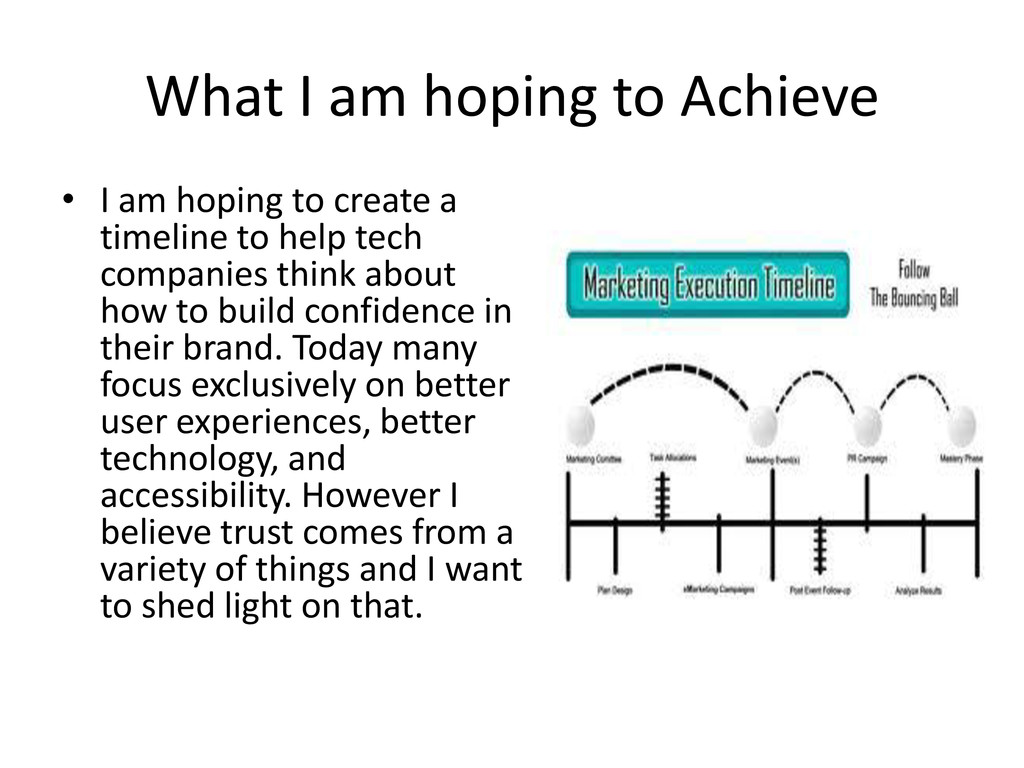
to create a timeline to help tech companies think about how to build confidence in their brand. Today many focus exclusively on better user experiences, better technology, and accessibility. However I believe trust comes from a variety of things and I want to shed light on that.
policies that ensure users are protected, children are safe, and data is encrypted and privacy rights are ensured • Density – Your subgroup or areas of interest need to be thoroughly covered so you are getting the best content or experience (think about Pinterest and cooking recipes) • Portability – Most users don’t like closed ecosystems although Apple has overcome this- how can a company balance the need to restrict portability while inspiring confidence and assurance that users are not stuck to their platform forever and will pay high rents • Permeability – Not just from the web, but from mobile devices, tangibility in retail or on the media – there are effective strategies to touch retail locations (FourSquare partnerships for example)
the following • Framework for Thinking about Brand Trust in an early-stage context • Empirical Examples that supplement the framework • Analysis on what a selected company can do to execute on this strategy (with consent of Professor Aaker)


 mhj
mhj
 aleyda
 khoart
 cassininazir
 jakevdp
 lfama
lfama
 nmsamuel
 chriscoyier
 michielstock
 skoyamalab
 mfonobong
 swwweet
 ryanjones