Upgrade to Pro — share decks privately, control downloads, hide ads and more …

FOXG1 Deck Sample

Avatar for Nasha Fitter Nasha Fitter
August 16, 2017
120

FOXG1 Deck Sample

Avatar for Nasha Fitter

Nasha Fitter

August 16, 2017

Transcript

  1. 2 Introduction to the potential of FOXG1 research: FOXG1 Syndrome

    is a neurological disorder caused by a mutation in the FOXG1 gene, similar to RETT Syndrome. Previously called Brain Factor 1, FOXG1 is one of the first and most critical genes formed during human development. It tells our brain how to work. Because of its critical importance, Scientists believe a cure for FOXG1 Syndrome will help cure major brain-related disorders like schizophrenia, autism, brain tumors and brain cancer.
  2. 3 We are in a new era of science. This

    year, gene therapies are being used to cure Leukemia, Batten’s Disease, RETT Syndrome, Canavan Disease and many more. Scientists believe gene therapies can cure FOXG1 Syndrome. And they are interested in its great potential to cure other brain diseases. If we can raise $5 million now for animal trials, our kids could partake in human clinical trials in two years. We are looking for anchor donors to launch this research.
  3. 4 We can actually saves lives together. Our anchor donors

    will be part of something extremely important... You can launch the research that saves the lives of the current and future children with FOXG1 Syndrome. You can be pioneers with us to change the face of all genetic and brain-related disorders. We hope this presentation explains the impact we can make together and the exciting time we are in to make this happen. Thank you for spending the time to understand more.
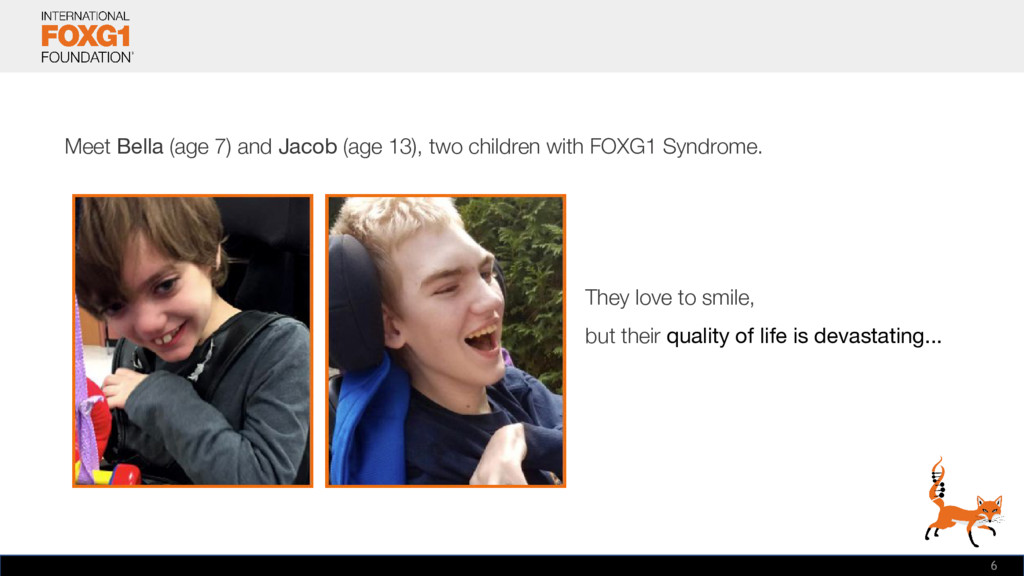
  4. 6 Meet Bella (age 7) and Jacob (age 13), two

    children with FOXG1 Syndrome. They love to smile, but their quality of life is devastating...
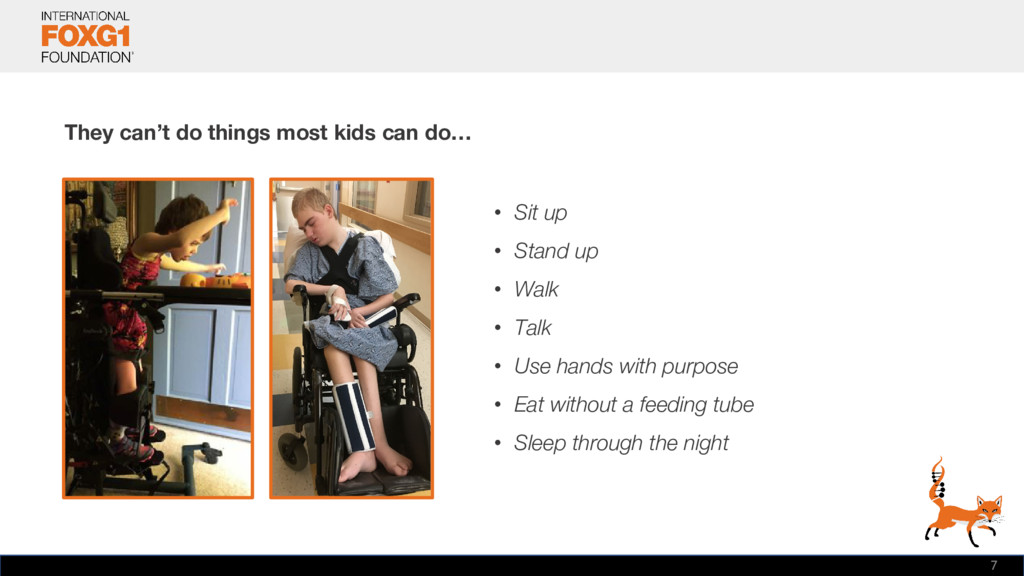
  5. 7 They can’t do things most kids can do… •

    Sit up • Stand up • Walk • Talk • Use hands with purpose • Eat without a feeding tube • Sleep through the night
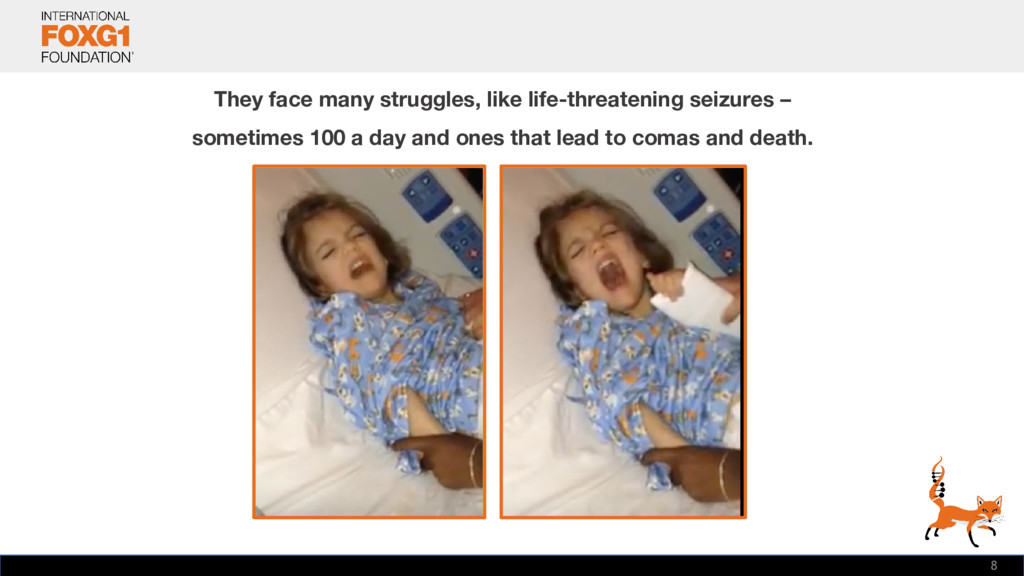
  6. 8 They face many struggles, like life-threatening seizures – sometimes

    100 a day and ones that lead to comas and death.
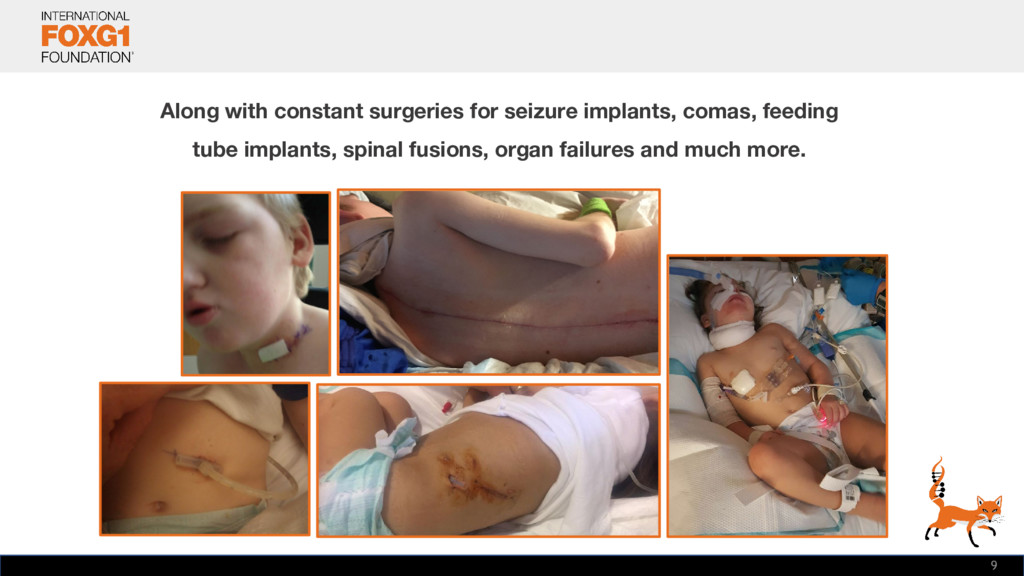
  7. 9 Along with constant surgeries for seizure implants, comas, feeding

    tube implants, spinal fusions, organ failures and much more.
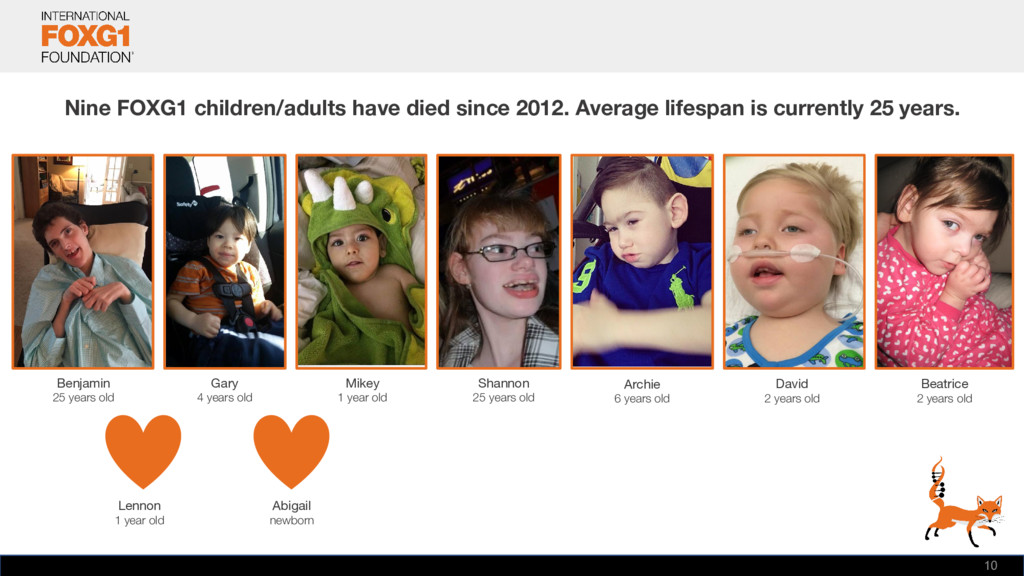
  8. 10 Nine FOXG1 children/adults have died since 2012. Average lifespan

    is currently 25 years. Benjamin 25 years old Gary 4 years old Mikey 1 year old Shannon 25 years old Archie 6 years old David 2 years old Beatrice 2 years old Lennon 1 year old Abigail newborn
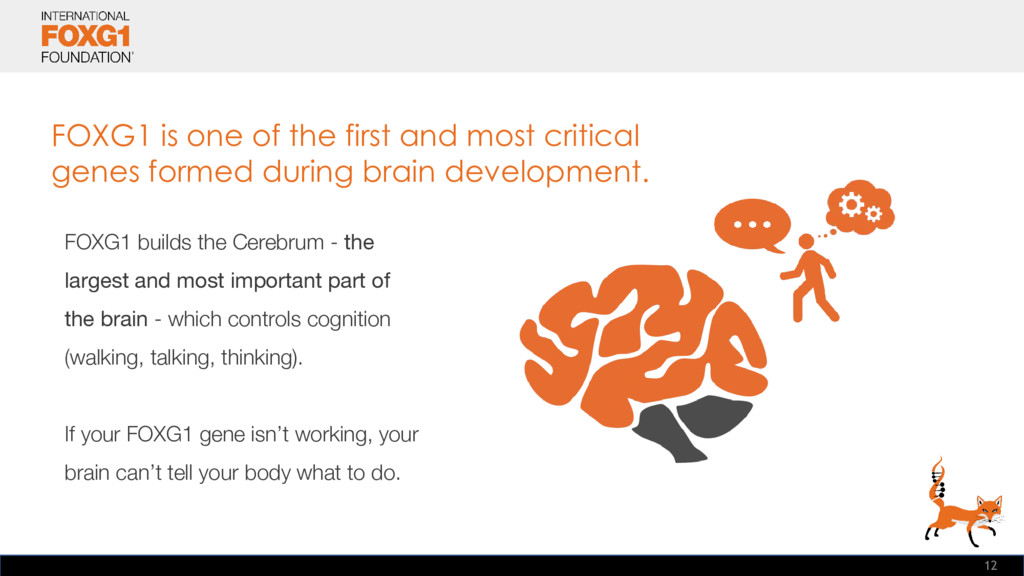
  9. 12 FOXG1 is one of the first and most critical

    genes formed during brain development. FOXG1 builds the Cerebrum - the largest and most important part of the brain - which controls cognition (walking, talking, thinking). If your FOXG1 gene isn’t working, your brain can’t tell your body what to do.
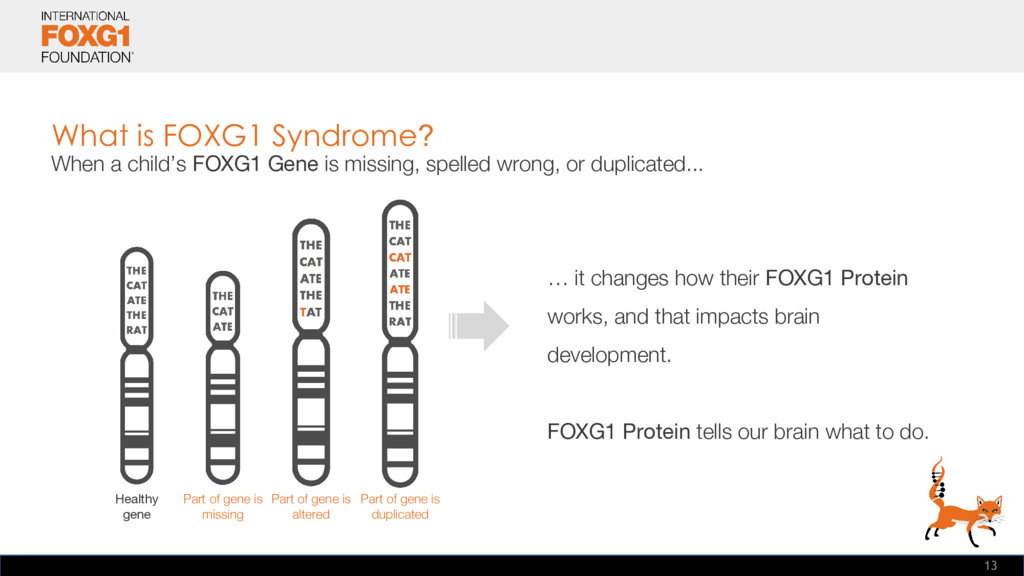
  10. 13 What is FOXG1 Syndrome? When a child’s FOXG1 Gene

    is missing, spelled wrong, or duplicated... … it changes how their FOXG1 Protein works, and that impacts brain development. FOXG1 Protein tells our brain what to do. Healthy gene Part of gene is missing Part of gene is altered Part of gene is duplicated
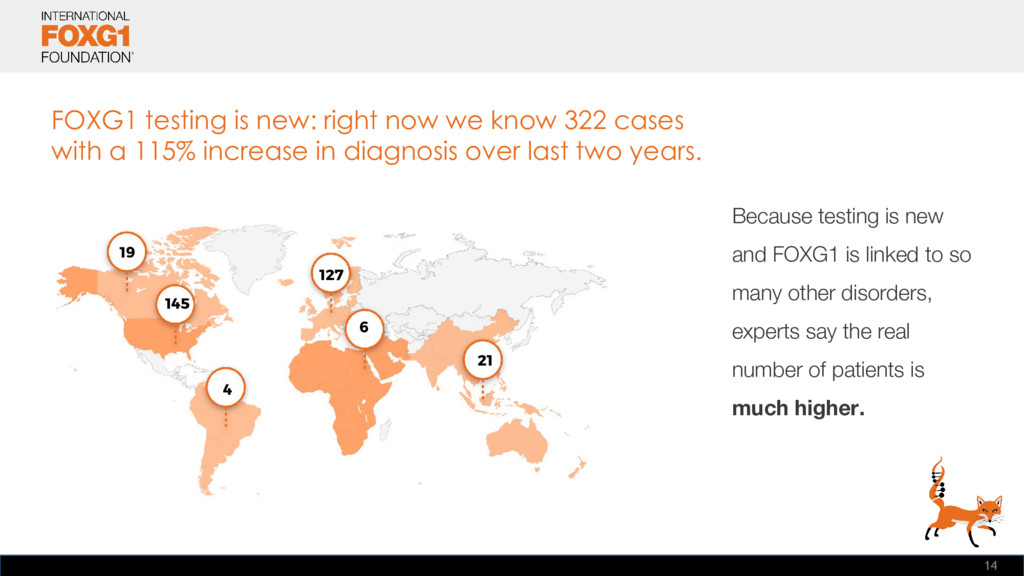
  11. 14 FOXG1 testing is new: right now we know 322

    cases with a 115% increase in diagnosis over last two years. Because testing is new and FOXG1 is linked to so many other disorders, experts say the real number of patients is much higher. 19 145 4 127 21 6
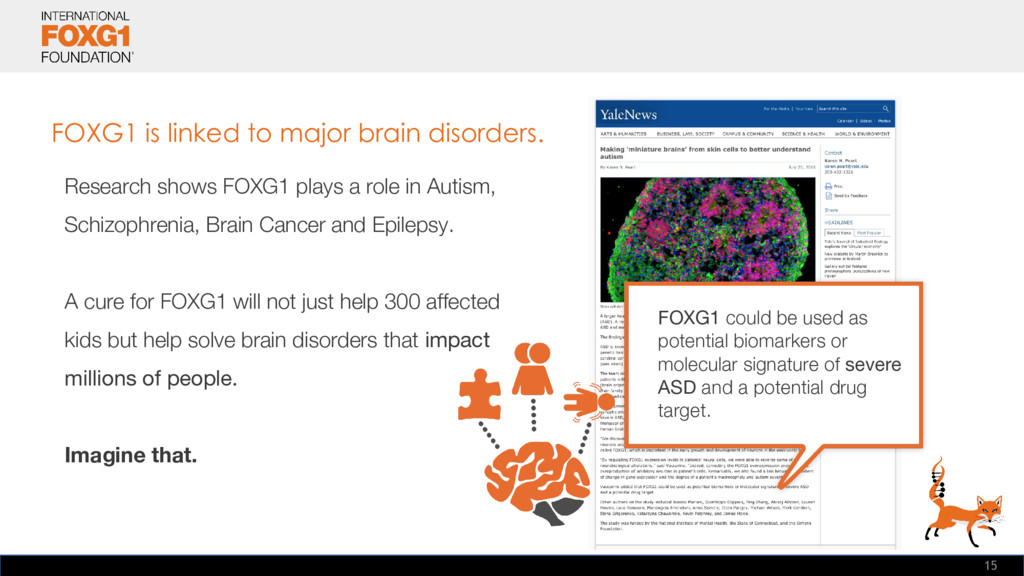
  12. 15 FOXG1 is linked to major brain disorders. Research shows

    FOXG1 plays a role in Autism, Schizophrenia, Brain Cancer and Epilepsy. A cure for FOXG1 will not just help 300 affected kids but help solve brain disorders that impact millions of people. Imagine that. FOXG1 could be used as potential biomarkers or molecular signature of severe ASD and a potential drug target.
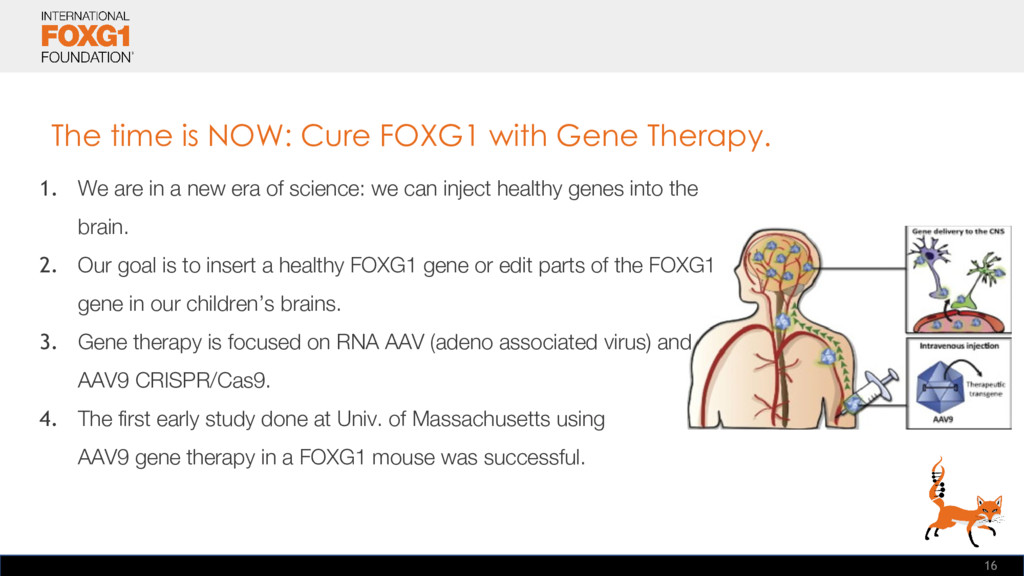
  13. 16 The time is NOW: Cure FOXG1 with Gene Therapy.

    1. We are in a new era of science: we can inject healthy genes into the brain. 2. Our goal is to insert a healthy FOXG1 gene or edit parts of the FOXG1 gene in our children’s brains. 3. Gene therapy is focused on RNA AAV (adeno associated virus) and AAV9 CRISPR/Cas9. 4. The first early study done at Univ. of Massachusetts using AAV9 gene therapy in a FOXG1 mouse was successful.
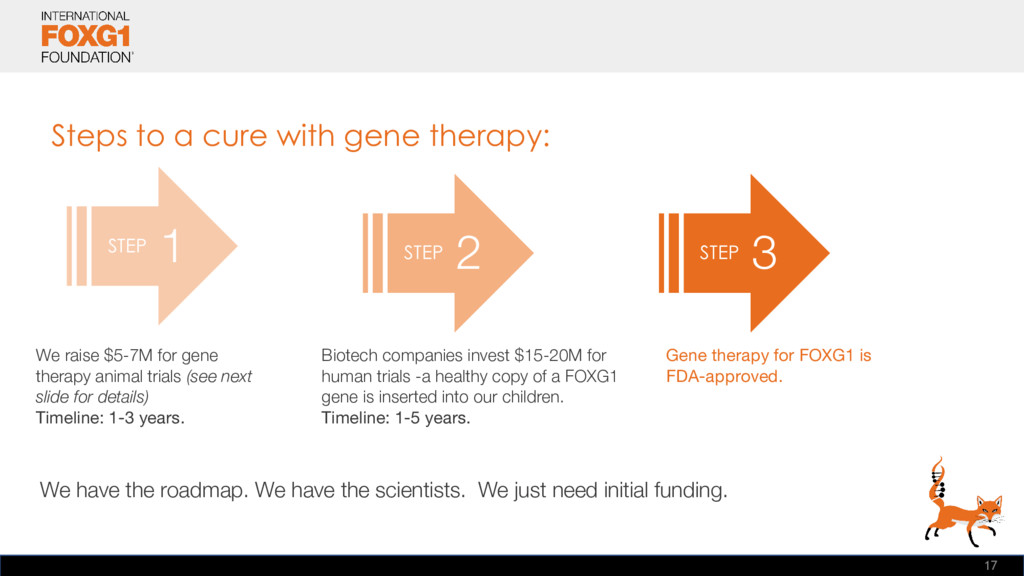
  14. 17 Steps to a cure with gene therapy: STEP 1

    STEP 2 STEP 3 We raise $5-7M for gene therapy animal trials (see next slide for details) Timeline: 1-3 years. Biotech companies invest $15-20M for human trials -a healthy copy of a FOXG1 gene is inserted into our children. Timeline: 1-5 years. Gene therapy for FOXG1 is FDA-approved. We have the roadmap. We have the scientists. We just need initial funding.
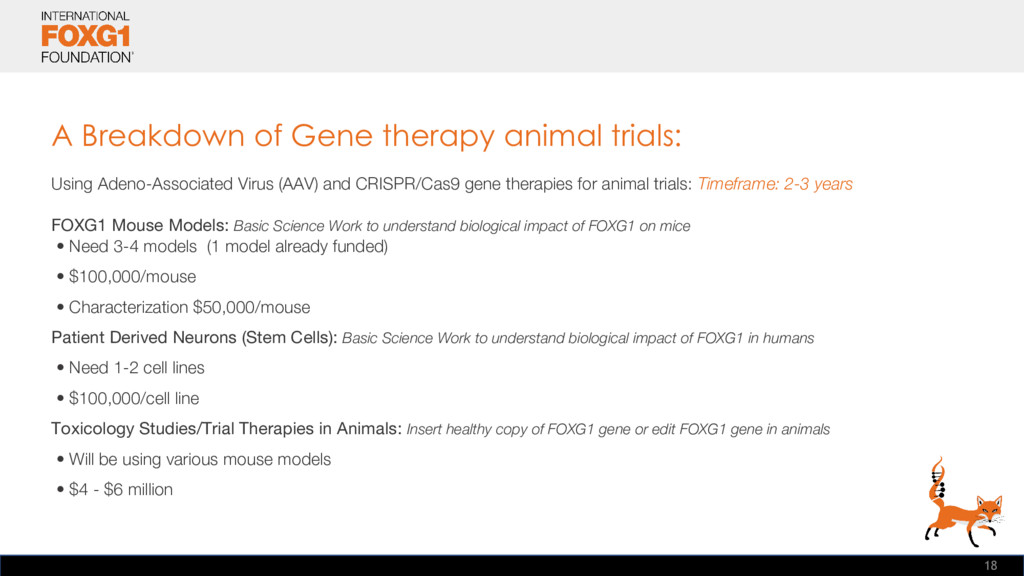
  15. 18 A Breakdown of Gene therapy animal trials: Using Adeno-Associated

    Virus (AAV) and CRISPR/Cas9 gene therapies for animal trials: Timeframe: 2-3 years FOXG1 Mouse Models: Basic Science Work to understand biological impact of FOXG1 on mice • Need 3-4 models (1 model already funded) • $100,000/mouse • Characterization $50,000/mouse Patient Derived Neurons (Stem Cells): Basic Science Work to understand biological impact of FOXG1 in humans • Need 1-2 cell lines • $100,000/cell line Toxicology Studies/Trial Therapies in Animals: Insert healthy copy of FOXG1 gene or edit FOXG1 gene in animals • Will be using various mouse models • $4 - $6 million
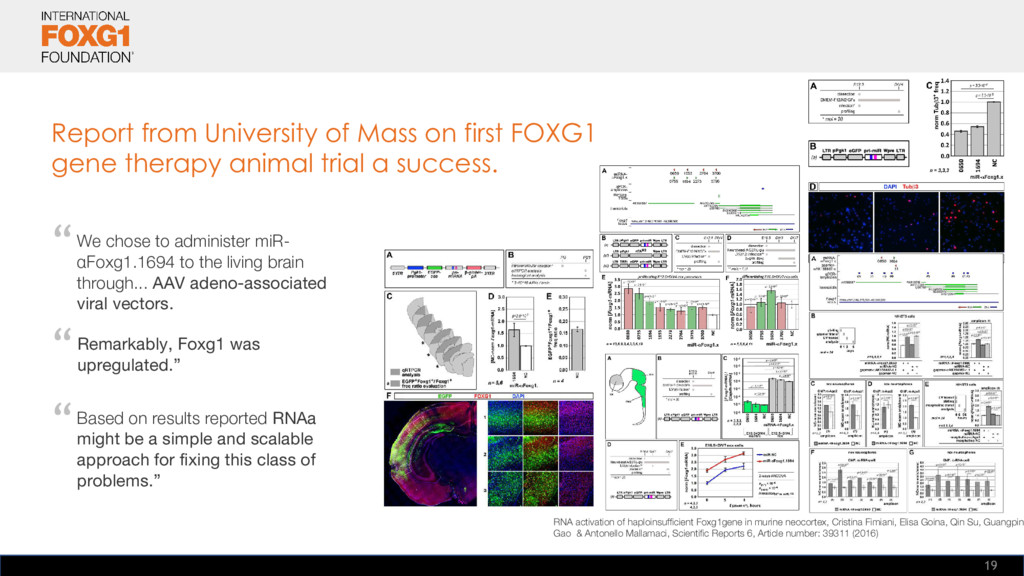
  16. 19 Report from University of Mass on first FOXG1 gene

    therapy animal trial a success. We chose to administer miR- αFoxg1.1694 to the living brain through... AAV adeno-associated viral vectors. Remarkably, Foxg1 was upregulated.” Based on results reported RNAa might be a simple and scalable approach for fixing this class of problems.” “ “ “ RNA activation of haploinsufficient Foxg1gene in murine neocortex, Cristina Fimiani, Elisa Goina, Qin Su, Guangpin Gao & Antonello Mallamaci, Scientific Reports 6, Article number: 39311 (2016)
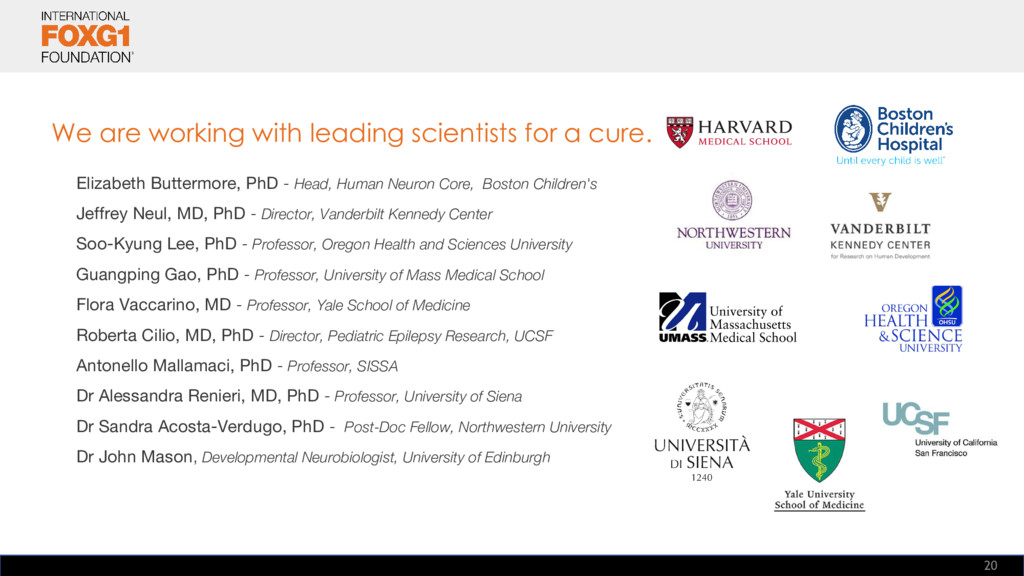
  17. 20 We are working with leading scientists for a cure.

    Elizabeth Buttermore, PhD - Head, Human Neuron Core, Boston Children's Jeffrey Neul, MD, PhD - Director, Vanderbilt Kennedy Center Soo-Kyung Lee, PhD - Professor, Oregon Health and Sciences University Guangping Gao, PhD - Professor, University of Mass Medical School Flora Vaccarino, MD - Professor, Yale School of Medicine Roberta Cilio, MD, PhD - Director, Pediatric Epilepsy Research, UCSF Antonello Mallamaci, PhD - Professor, SISSA Dr Alessandra Renieri, MD, PhD - Professor, University of Siena Dr Sandra Acosta-Verdugo, PhD - Post-Doc Fellow, Northwestern University Dr John Mason, Developmental Neurobiologist, University of Edinburgh
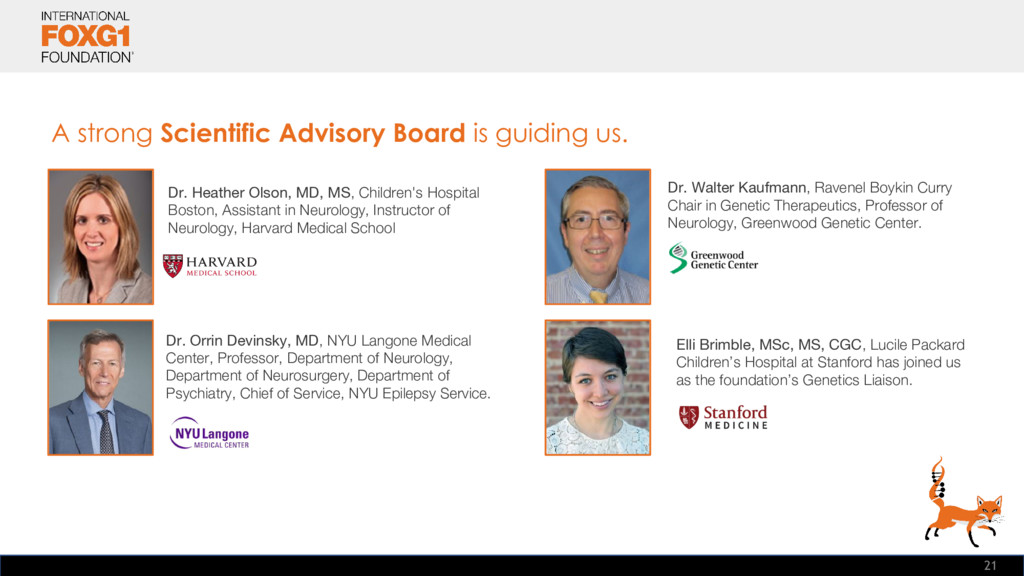
  18. 21 A strong Scientific Advisory Board is guiding us. Dr.

    Heather Olson, MD, MS, Children's Hospital Boston, Assistant in Neurology, Instructor of Neurology, Harvard Medical School Dr. Orrin Devinsky, MD, NYU Langone Medical Center, Professor, Department of Neurology, Department of Neurosurgery, Department of Psychiatry, Chief of Service, NYU Epilepsy Service. Dr. Walter Kaufmann, Ravenel Boykin Curry Chair in Genetic Therapeutics, Professor of Neurology, Greenwood Genetic Center. Elli Brimble, MSc, MS, CGC, Lucile Packard Children’s Hospital at Stanford has joined us as the foundation’s Genetics Liaison.
  19. 22 A cure for FOXG1 Syndrome will transform life for

    our kids and possibly millions of people suffering from brain related disorders. Imagine being a part of the research that leads to a cure for millions. The potential is tremendous. This could be groundbreaking. Join us at this early stage as an anchor donor to pioneer the most exciting research in human history.