Upgrade to Pro — share decks privately, control downloads, hide ads and more …

In-memory computing with Akka, Spark and Cassandra

In-memory computing with Akka, Spark and Cassandra

Avatar for Natalino Busa

Natalino Busa

February 02, 2016

Other Decks in Technology

Transcript

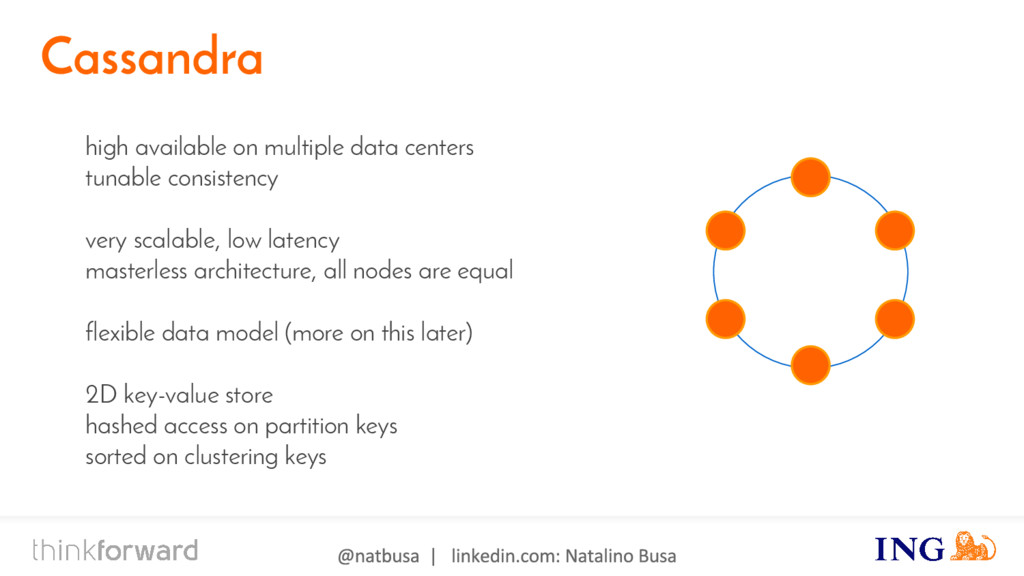
  1. high available on multiple data centers tunable consistency very scalable,

    low latency masterless architecture, all nodes are equal flexible data model (more on this later) 2D key-value store hashed access on partition keys sorted on clustering keys Cassandra
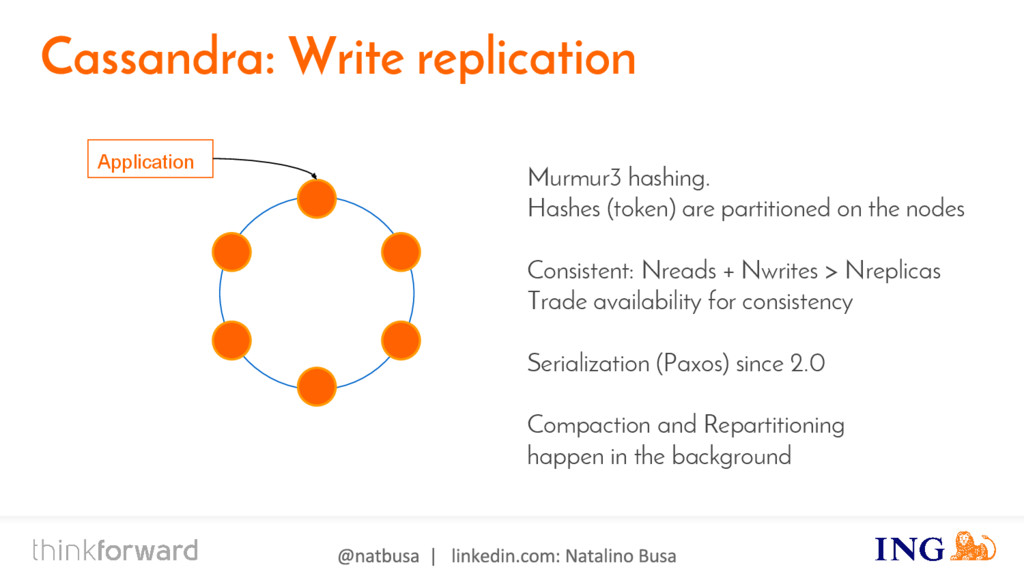
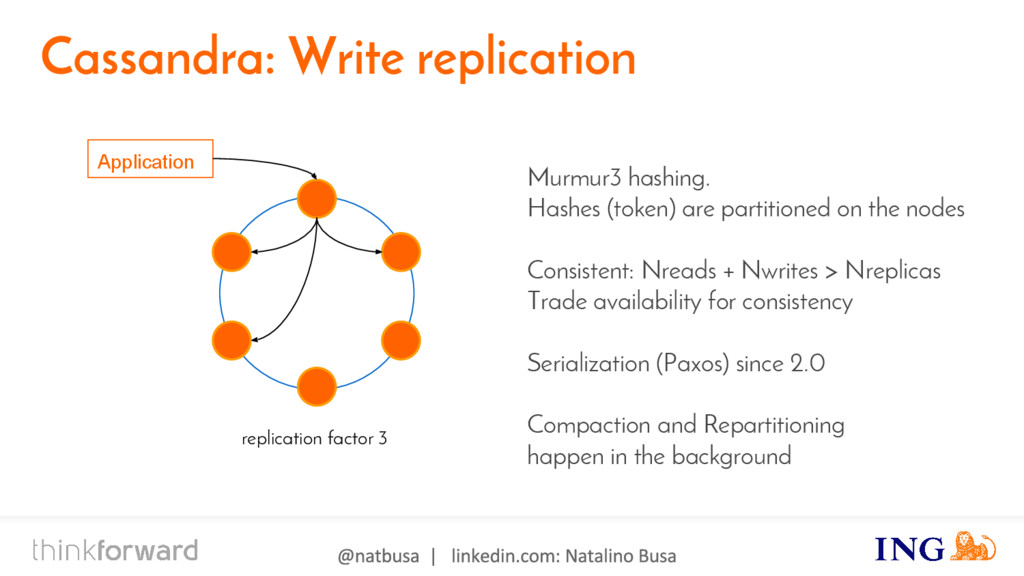
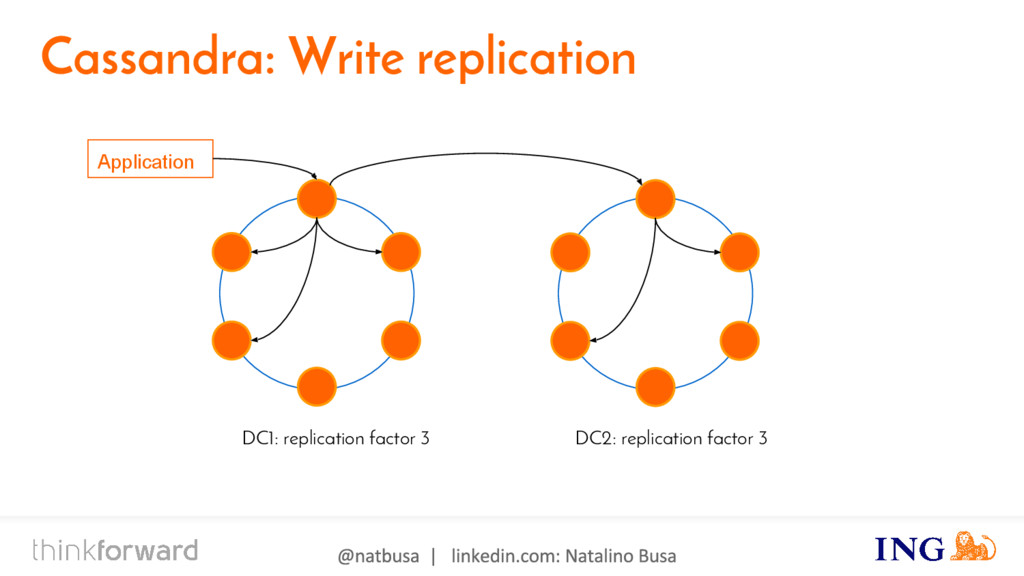
  2. Cassandra: Write replication Application Murmur3 hashing. Hashes (token) are partitioned

    on the nodes Consistent: Nreads + Nwrites > Nreplicas Trade availability for consistency Serialization (Paxos) since 2.0 Compaction and Repartitioning happen in the background
  3. Application replication factor 3 Cassandra: Write replication Murmur3 hashing. Hashes

    (token) are partitioned on the nodes Consistent: Nreads + Nwrites > Nreplicas Trade availability for consistency Serialization (Paxos) since 2.0 Compaction and Repartitioning happen in the background
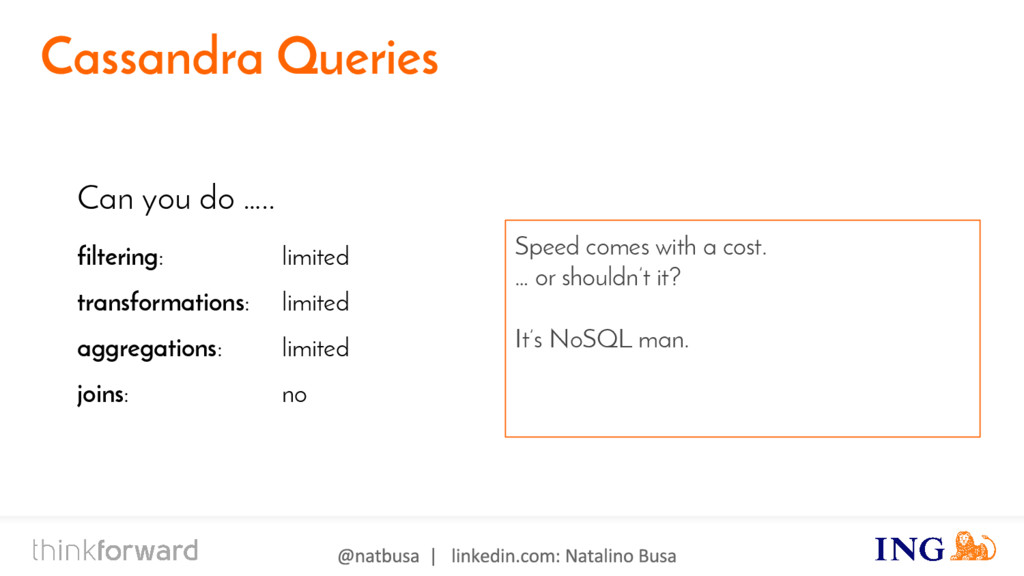
  4. Cassandra Queries Can you do ….. filtering: limited transformations: limited

    aggregations: limited joins: no Speed comes with a cost. … or shouldn’t it? It’s NoSQL man.
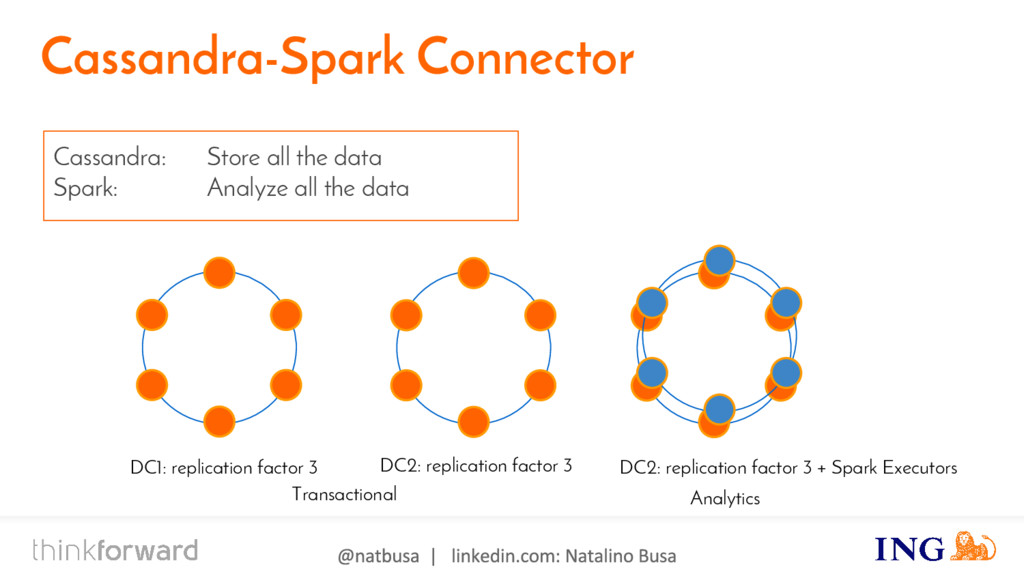
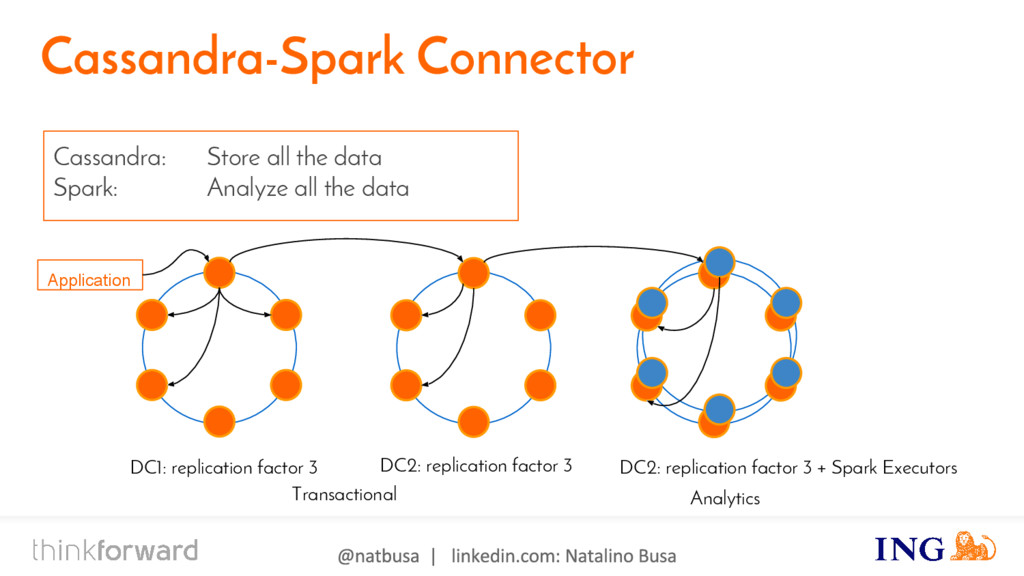
  5. Cassandra-Spark Connector Cassandra: Store all the data Spark: Analyze all

    the data DC1: replication factor 3 DC2: replication factor 3 DC2: replication factor 3 + Spark Executors Transactional Analytics
  6. Cassandra-Spark Connector Cassandra: Store all the data Spark: Analyze all

    the data DC1: replication factor 3 DC2: replication factor 3 DC2: replication factor 3 + Spark Executors Transactional Analytics Application
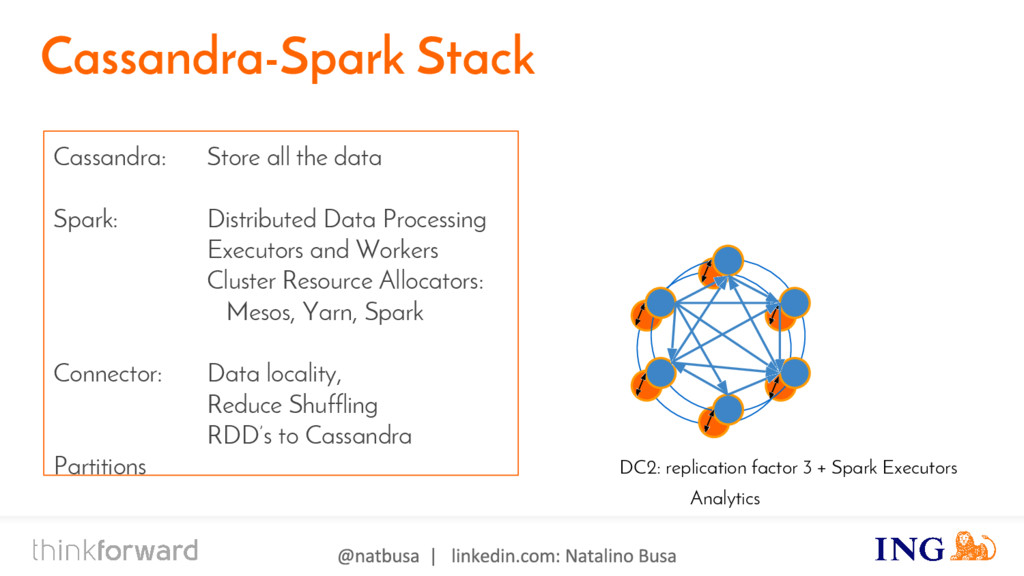
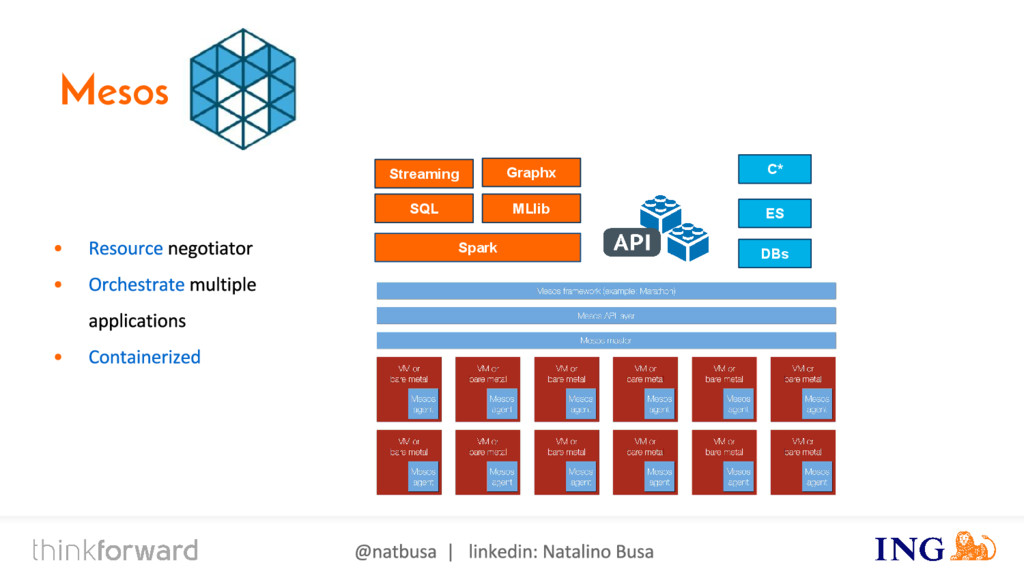
  7. Cassandra-Spark Stack Cassandra: Store all the data Spark: Distributed Data

    Processing Executors and Workers Cluster Resource Allocators: Mesos, Yarn, Spark Connector: Data locality, Reduce Shuffling RDD’s to Cassandra Partitions DC2: replication factor 3 + Spark Executors Analytics
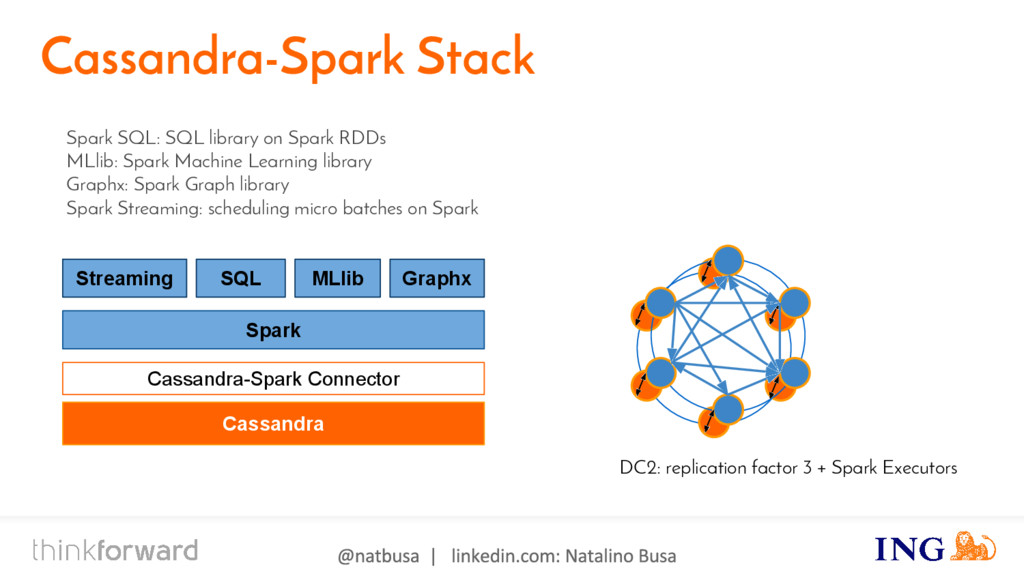
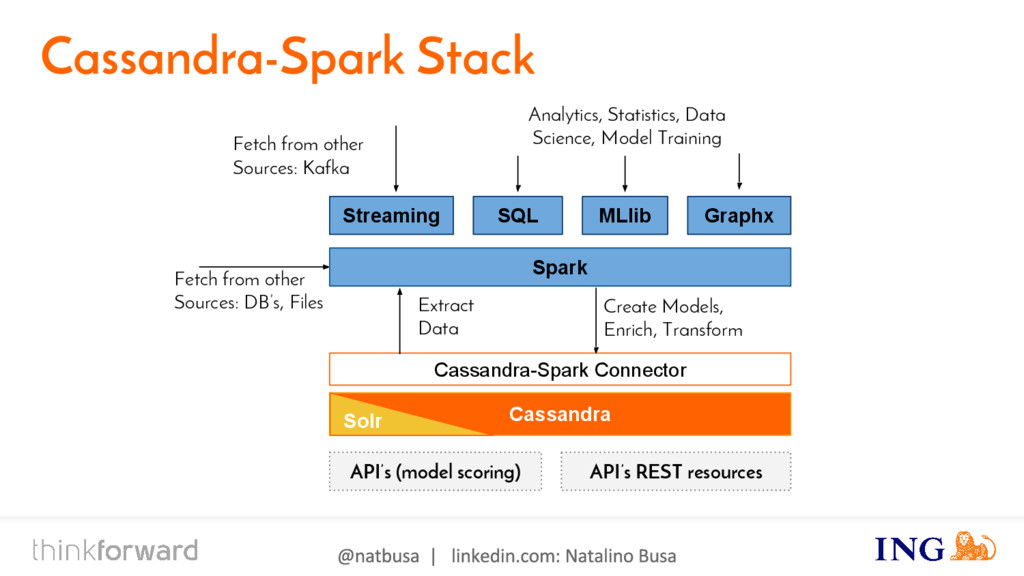
  8. Cassandra-Spark Stack Cassandra-Spark Connector Cassandra Spark Streaming SQL MLlib Graphx

    Spark SQL: SQL library on Spark RDDs MLlib: Spark Machine Learning library Graphx: Spark Graph library Spark Streaming: scheduling micro batches on Spark DC2: replication factor 3 + Spark Executors
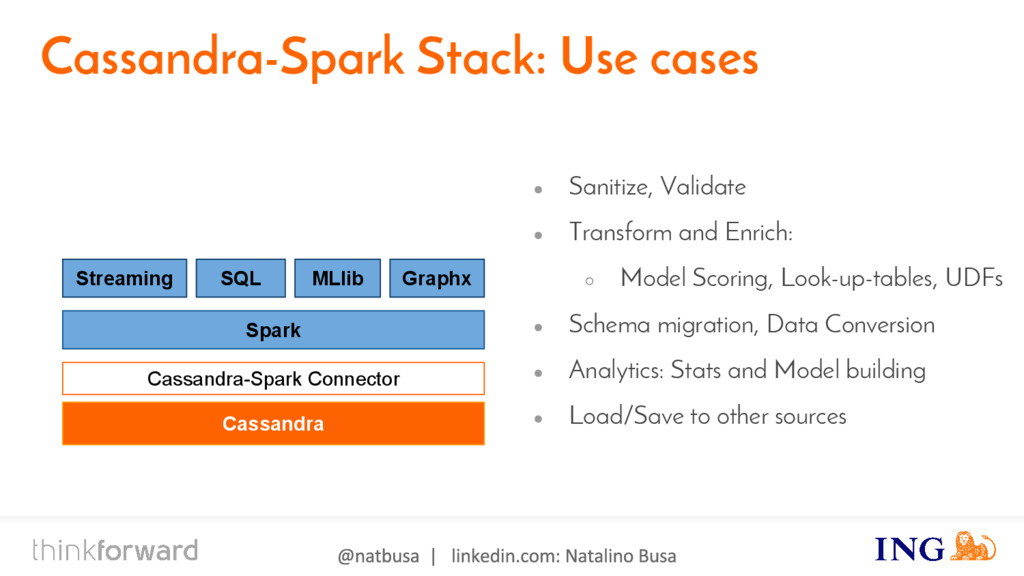
  9. Cassandra-Spark Stack: Use cases Cassandra-Spark Connector Cassandra Spark Streaming SQL

    MLlib Graphx • Sanitize, Validate • Transform and Enrich: ◦ Model Scoring, Look-up-tables, UDFs • Schema migration, Data Conversion • Analytics: Stats and Model building • Load/Save to other sources
  10. Cassandra-Spark Stack Cassandra-Spark Connector Cassandra Spark Streaming SQL MLlib Graphx

    Extract Data Create Models, Enrich, Transform Fetch from other Sources: Kafka Fetch from other Sources: DB’s, Files API’s REST resources API’s (model scoring) Analytics, Statistics, Data Science, Model Training Solr
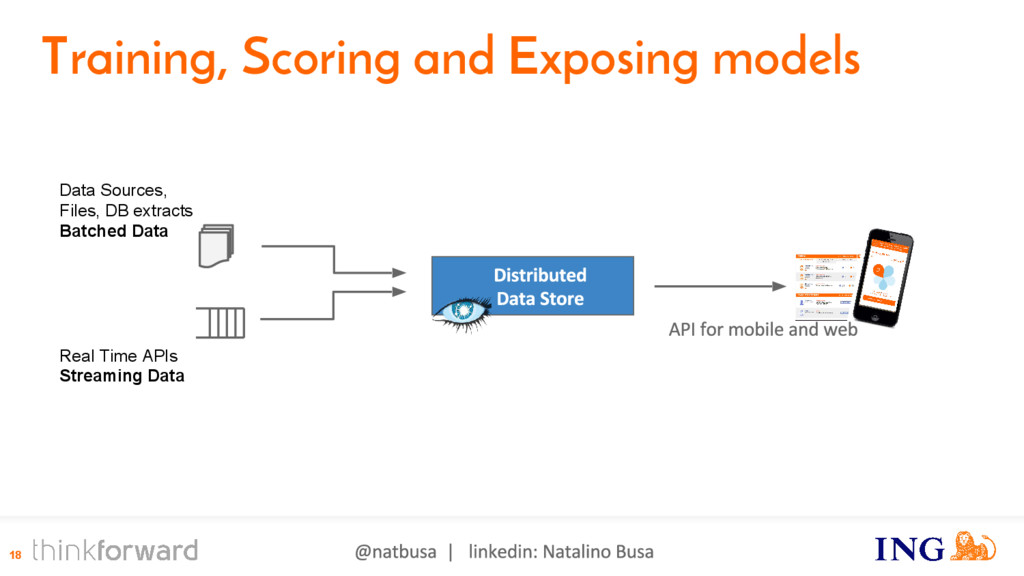
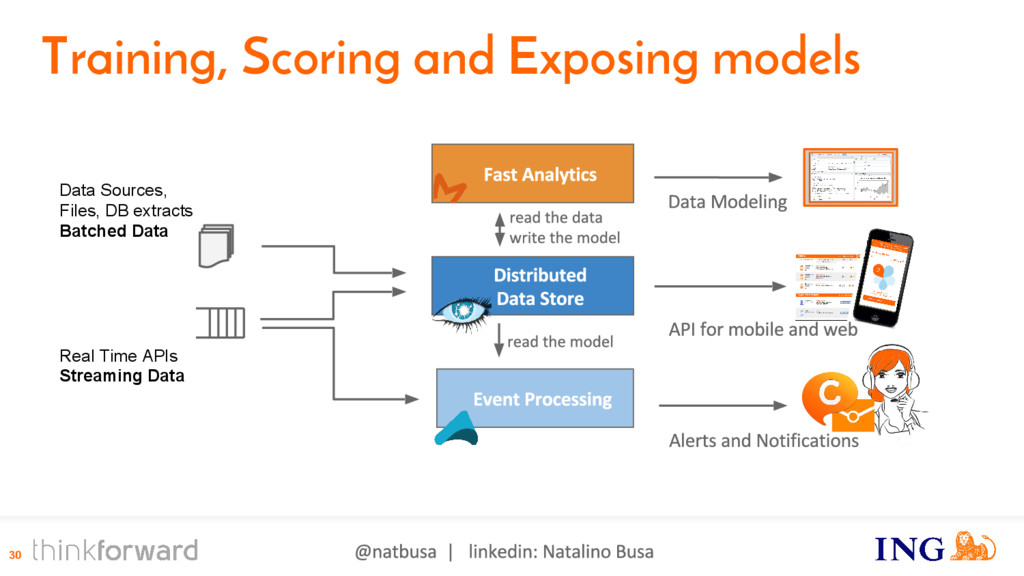
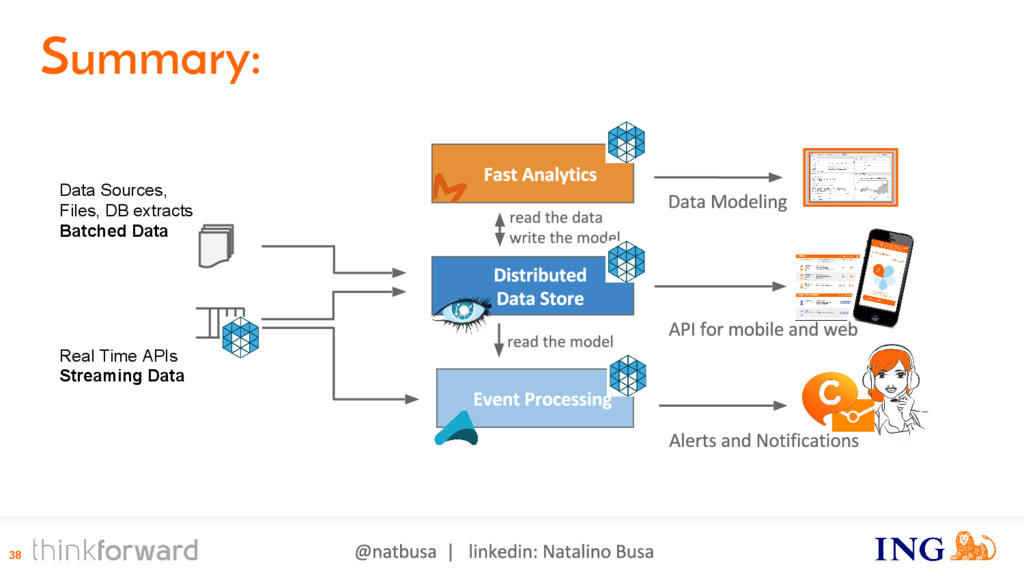
  11. 18 Real Time APIs Streaming Data Data Sources, Files, DB

    extracts Batched Data Training, Scoring and Exposing models
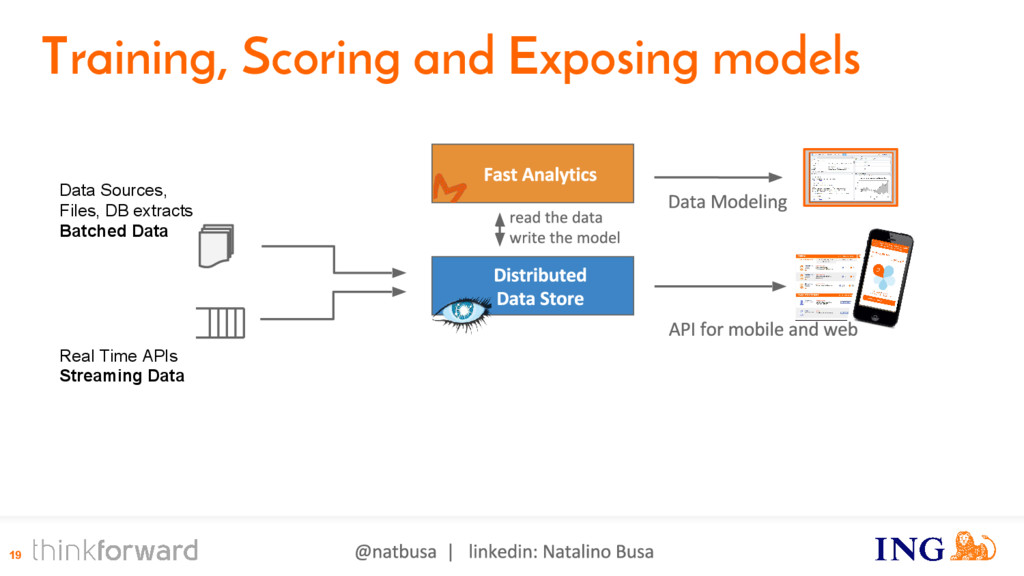
  12. 19 Real Time APIs Streaming Data Data Sources, Files, DB

    extracts Batched Data Training, Scoring and Exposing models
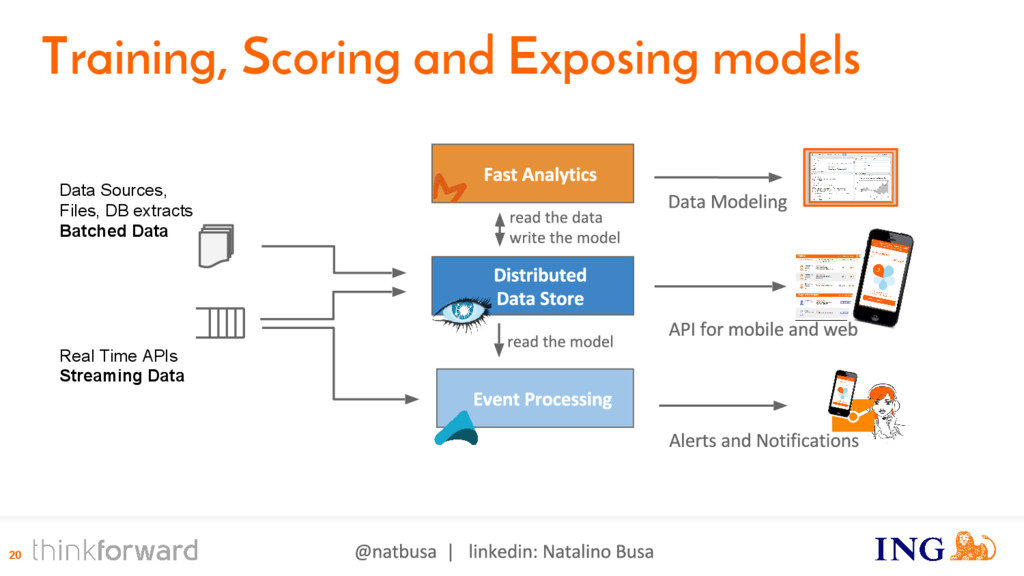
  13. 20 Real Time APIs Streaming Data Data Sources, Files, DB

    extracts Batched Data Training, Scoring and Exposing models
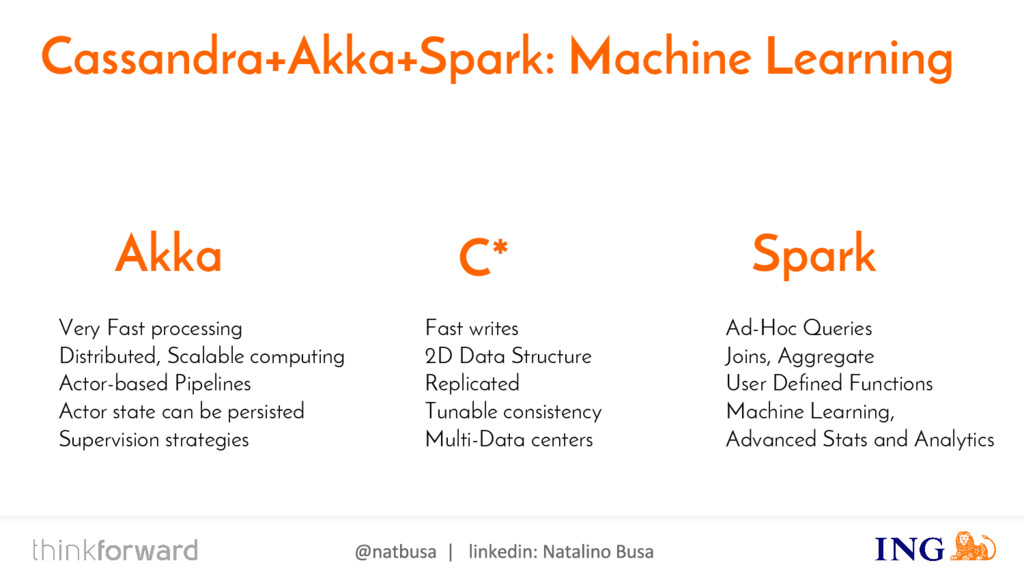
  14. Cassandra+Akka+Spark: Machine Learning Fast writes 2D Data Structure Replicated Tunable

    consistency Multi-Data centers C* Akka Spark Very Fast processing Distributed, Scalable computing Actor-based Pipelines Actor state can be persisted Supervision strategies Ad-Hoc Queries Joins, Aggregate User Defined Functions Machine Learning, Advanced Stats and Analytics
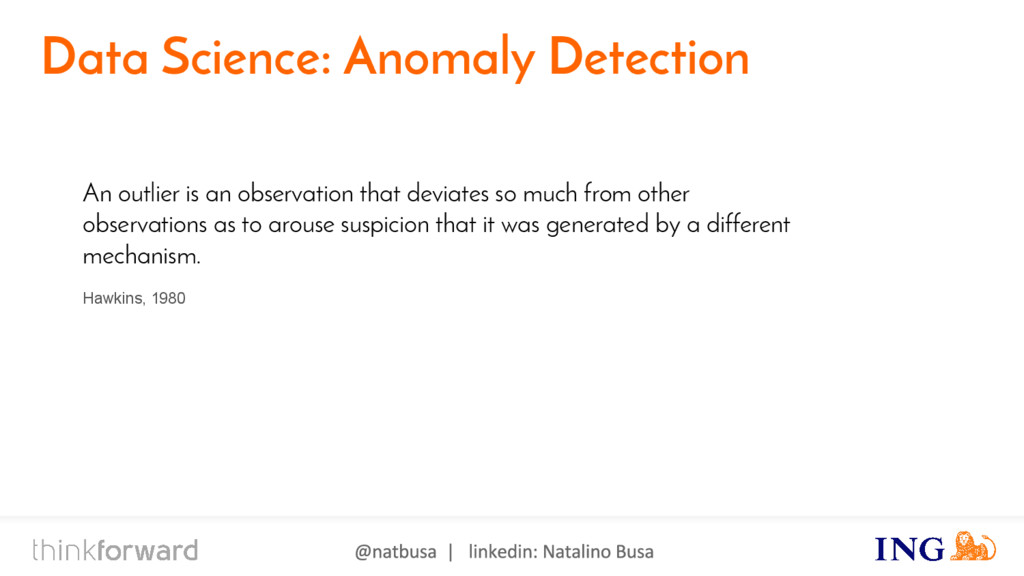
  15. Data Science: Anomaly Detection An outlier is an observation that

    deviates so much from other observations as to arouse suspicion that it was generated by a different mechanism. Hawkins, 1980
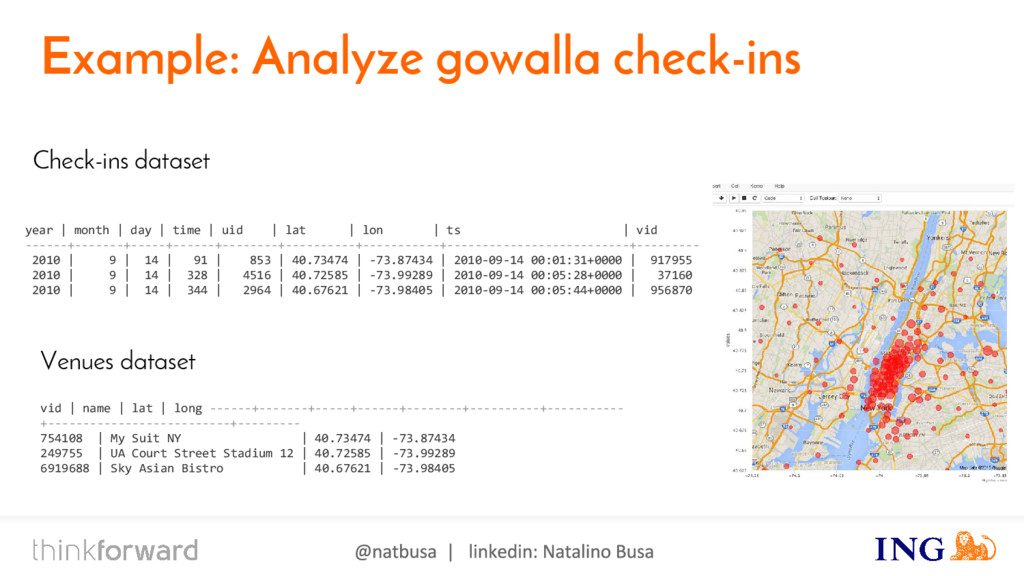
  16. Example: Analyze gowalla check-ins year | month | day |

    time | uid | lat | lon | ts | vid ------+-------+-----+------+--------+----------+-----------+--------------------------+--------- 2010 | 9 | 14 | 91 | 853 | 40.73474 | -73.87434 | 2010-09-14 00:01:31+0000 | 917955 2010 | 9 | 14 | 328 | 4516 | 40.72585 | -73.99289 | 2010-09-14 00:05:28+0000 | 37160 2010 | 9 | 14 | 344 | 2964 | 40.67621 | -73.98405 | 2010-09-14 00:05:44+0000 | 956870 Check-ins dataset Venues dataset vid | name | lat | long ------+-------+-----+------+--------+----------+----------- +--------------------------+--------- 754108 | My Suit NY | 40.73474 | -73.87434 249755 | UA Court Street Stadium 12 | 40.72585 | -73.99289 6919688 | Sky Asian Bistro | 40.67621 | -73.98405
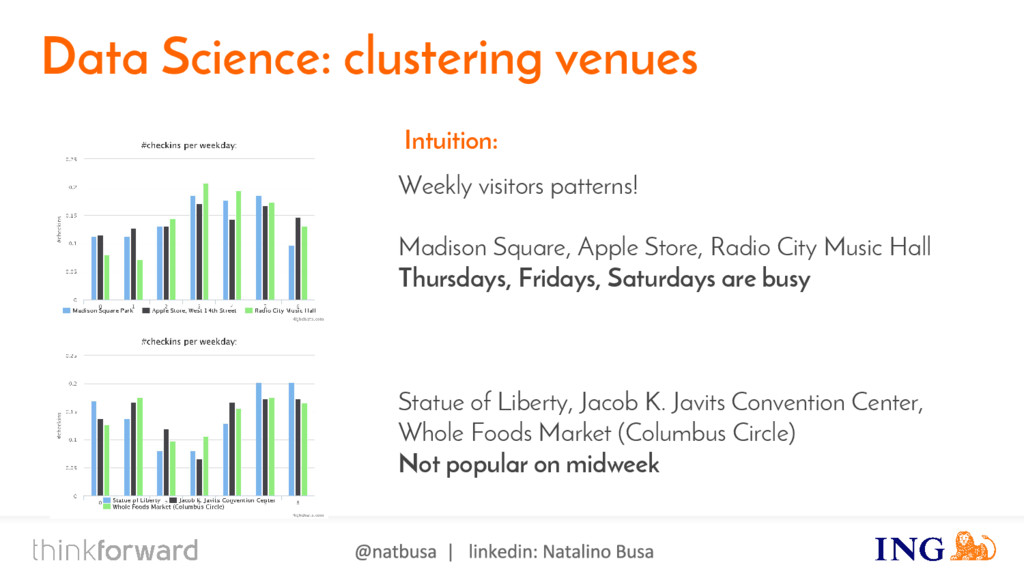
  17. Data Science: clustering venues Weekly visitors patterns! Madison Square, Apple

    Store, Radio City Music Hall Thursdays, Fridays, Saturdays are busy Statue of Liberty, Jacob K. Javits Convention Center, Whole Foods Market (Columbus Circle) Not popular on midweek Intuition:
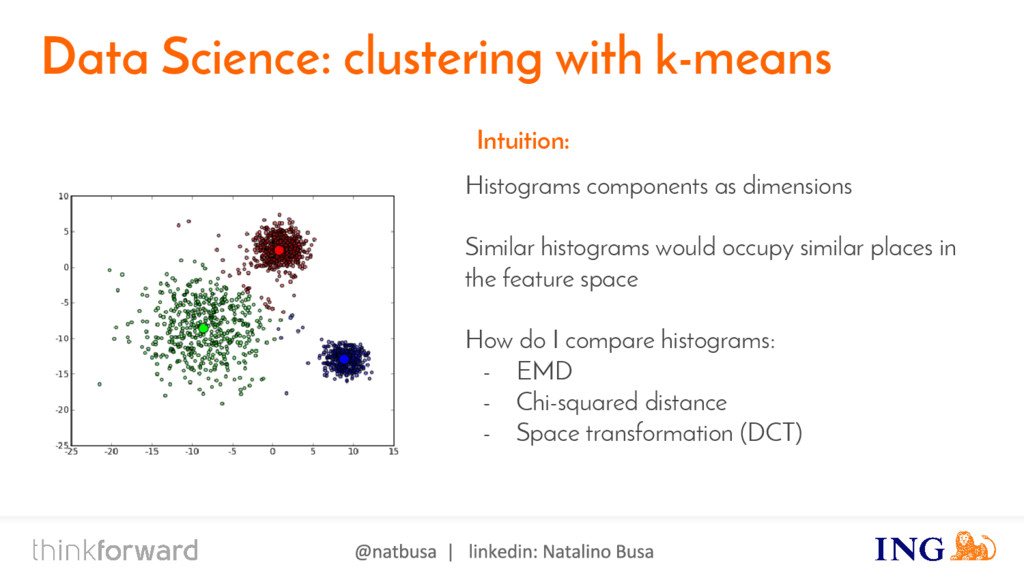
  18. Data Science: clustering with k-means Histograms components as dimensions Similar

    histograms would occupy similar places in the feature space How do I compare histograms: - EMD - Chi-squared distance - Space transformation (DCT) Intuition:
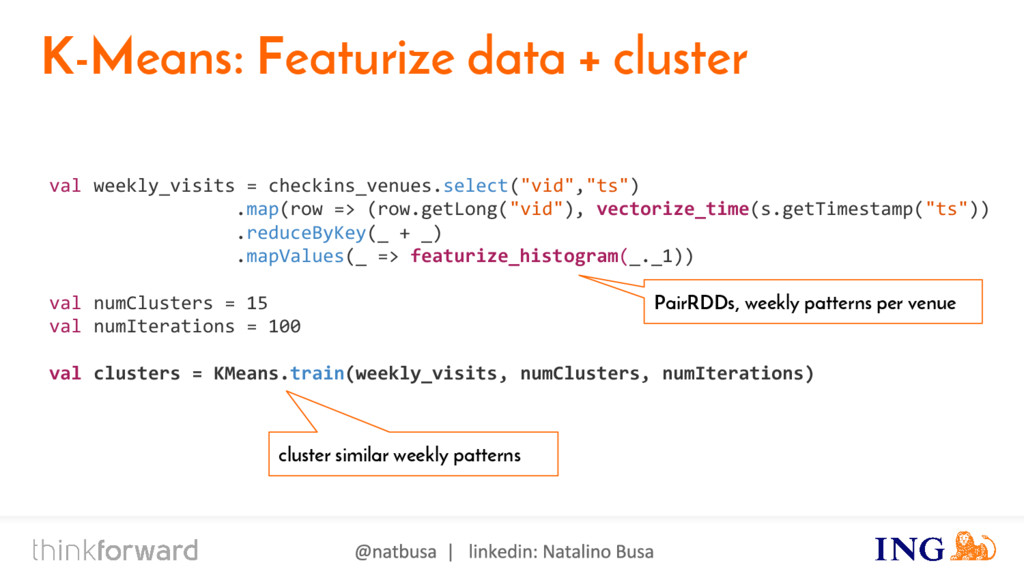
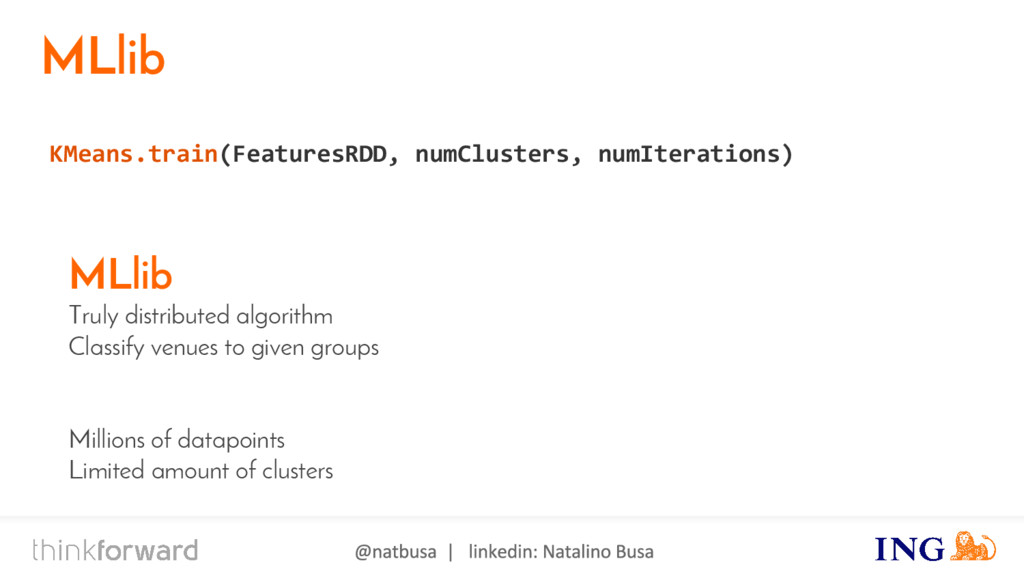
  19. K-Means: Featurize data + cluster val weekly_visits = checkins_venues.select("vid","ts") .map(row

    => (row.getLong("vid"), vectorize_time(s.getTimestamp("ts")) .reduceByKey(_ + _) .mapValues(_ => featurize_histogram(_._1)) val numClusters = 15 val numIterations = 100 val clusters = KMeans.train(weekly_visits, numClusters, numIterations) PairRDDs, weekly patterns per venue cluster similar weekly patterns
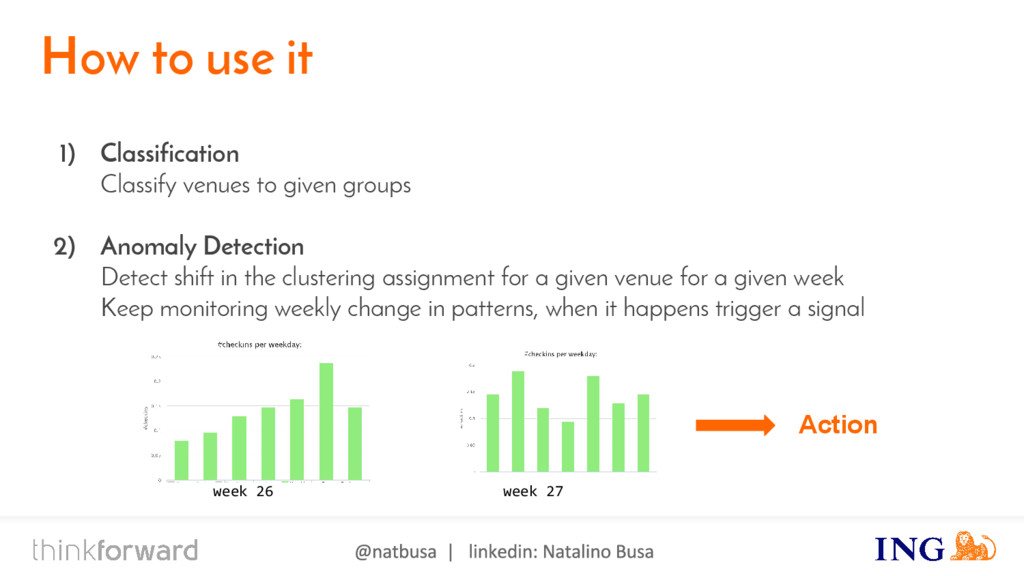
  20. How to use it 1) Classification Classify venues to given

    groups 2) Anomaly Detection Detect shift in the clustering assignment for a given venue for a given week Keep monitoring weekly change in patterns, when it happens trigger a signal week 26 week 27 Action
  21. 30 Real Time APIs Streaming Data Data Sources, Files, DB

    extracts Batched Data Training, Scoring and Exposing models
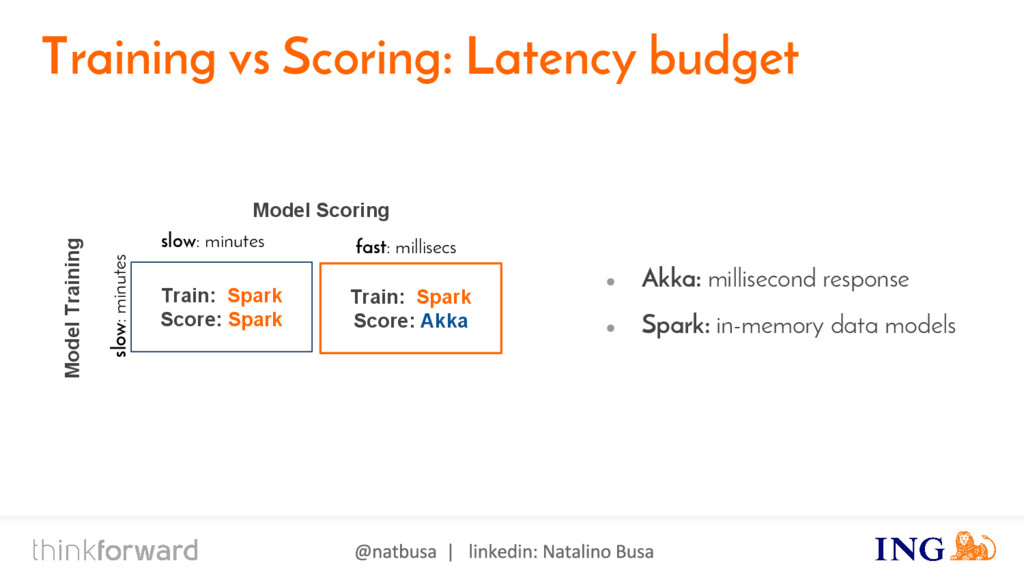
  22. Training vs Scoring: Latency budget • Akka: millisecond response •

    Spark: in-memory data models Train: Spark Score: Spark Train: Spark Score: Akka slow: minutes fast: millisecs Model Scoring Model Training slow: minutes
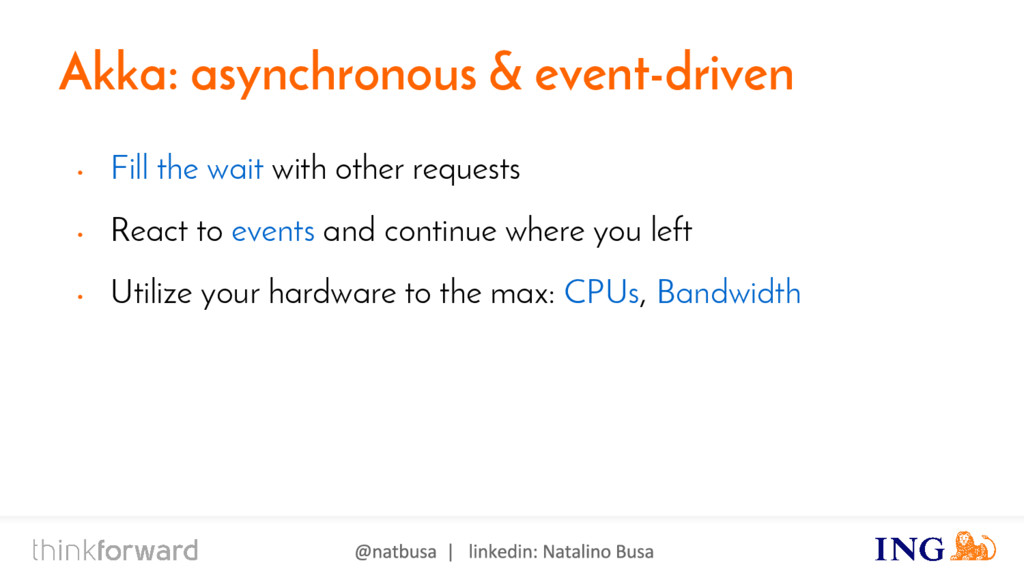
  23. Akka: asynchronous & event-driven • Fill the wait with other

    requests • React to events and continue where you left • Utilize your hardware to the max: CPUs, Bandwidth
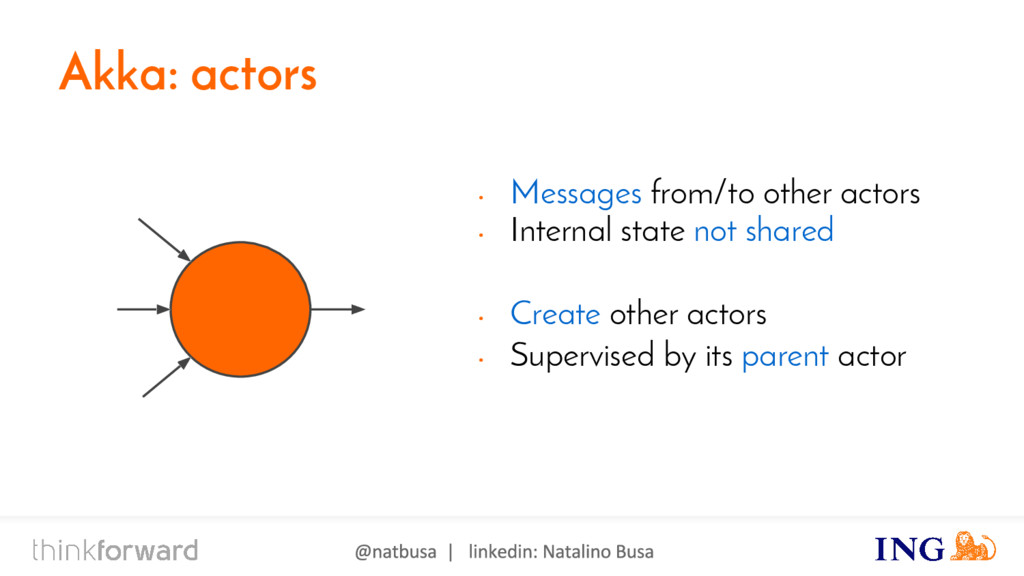
  24. Akka: actors • Messages from/to other actors • Internal state

    not shared • Create other actors • Supervised by its parent actor
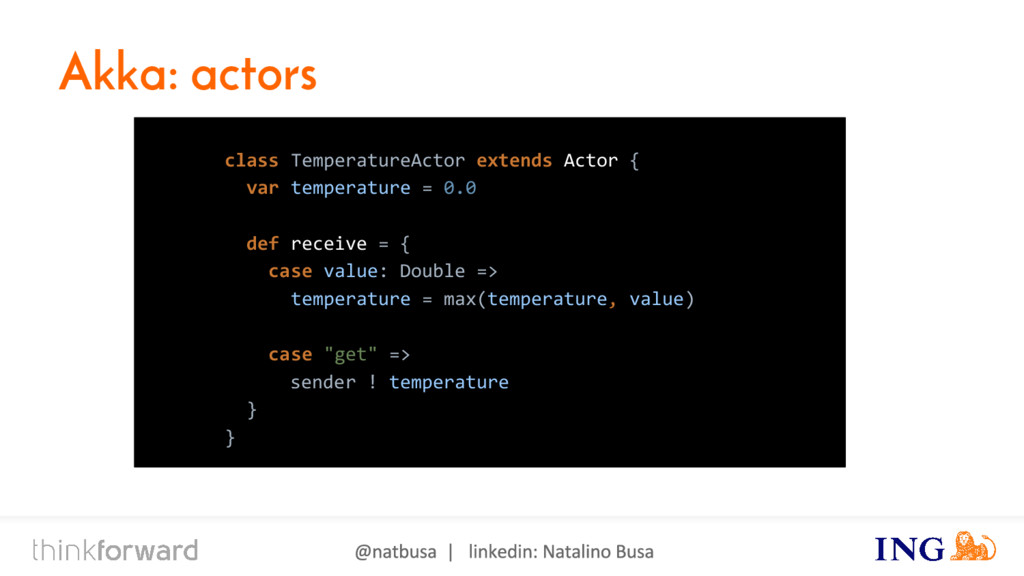
  25. class TemperatureActor extends Actor { var temperature = 0.0 def

    receive = { case value: Double => temperature = max(temperature, value) case "get" => sender ! temperature } } Akka: actors
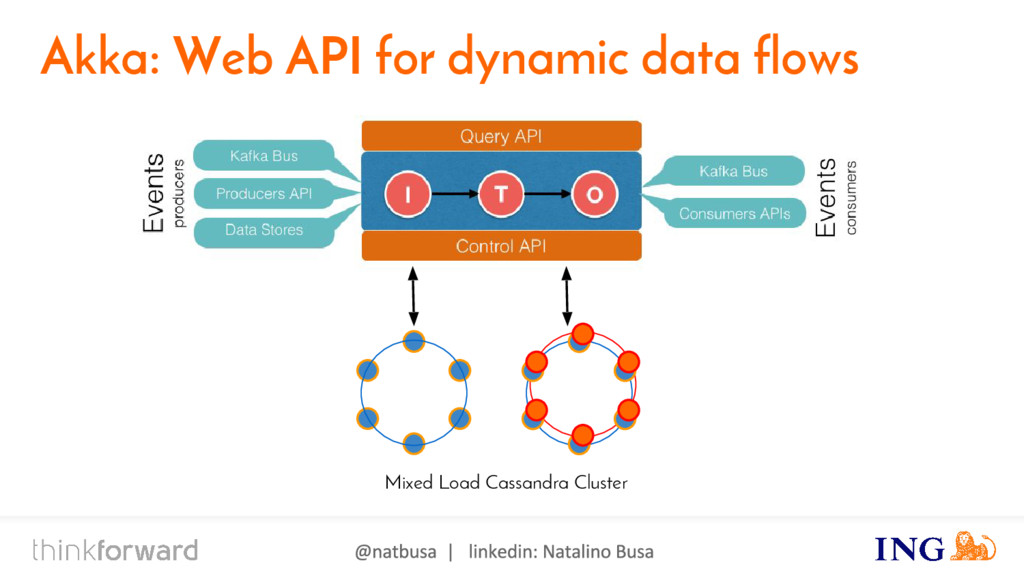
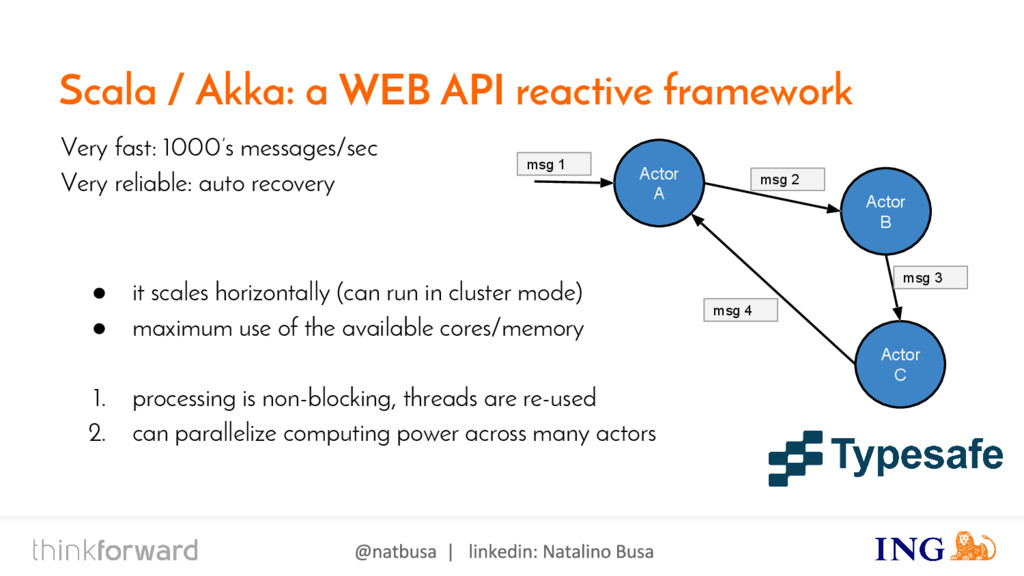
  26. Scala / Akka: a WEB API reactive framework Actor A

    Actor B Actor C msg 1 msg 2 msg 3 msg 4 • it scales horizontally (can run in cluster mode) • maximum use of the available cores/memory 1. processing is non-blocking, threads are re-used 2. can parallelize computing power across many actors Very fast: 1000’s messages/sec Very reliable: auto recovery