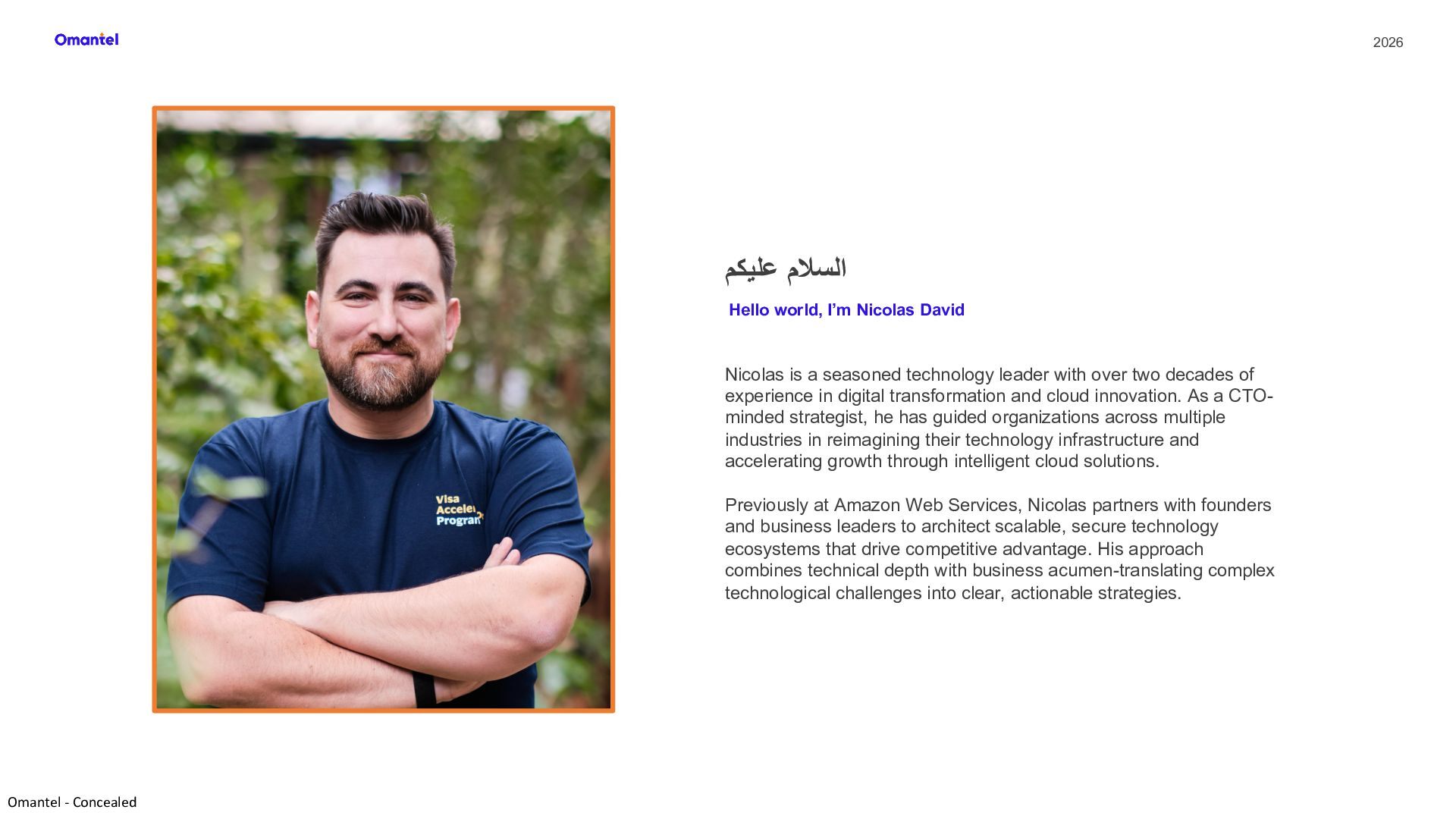
ﯾ ﻛ م Hello world, I’m Nicolas David Nicolas is a seasoned technology leader with over two decades of experience in digital transformation and cloud innovation. As a CTO- minded strategist, he has guided organizations across multiple industries in reimagining their technology infrastructure and accelerating growth through intelligent cloud solutions. Previously at Amazon Web Services, Nicolas partners with founders and business leaders to architect scalable, secure technology ecosystems that drive competitive advantage. His approach combines technical depth with business acumen-translating complex technological challenges into clear, actionable strategies. 2026
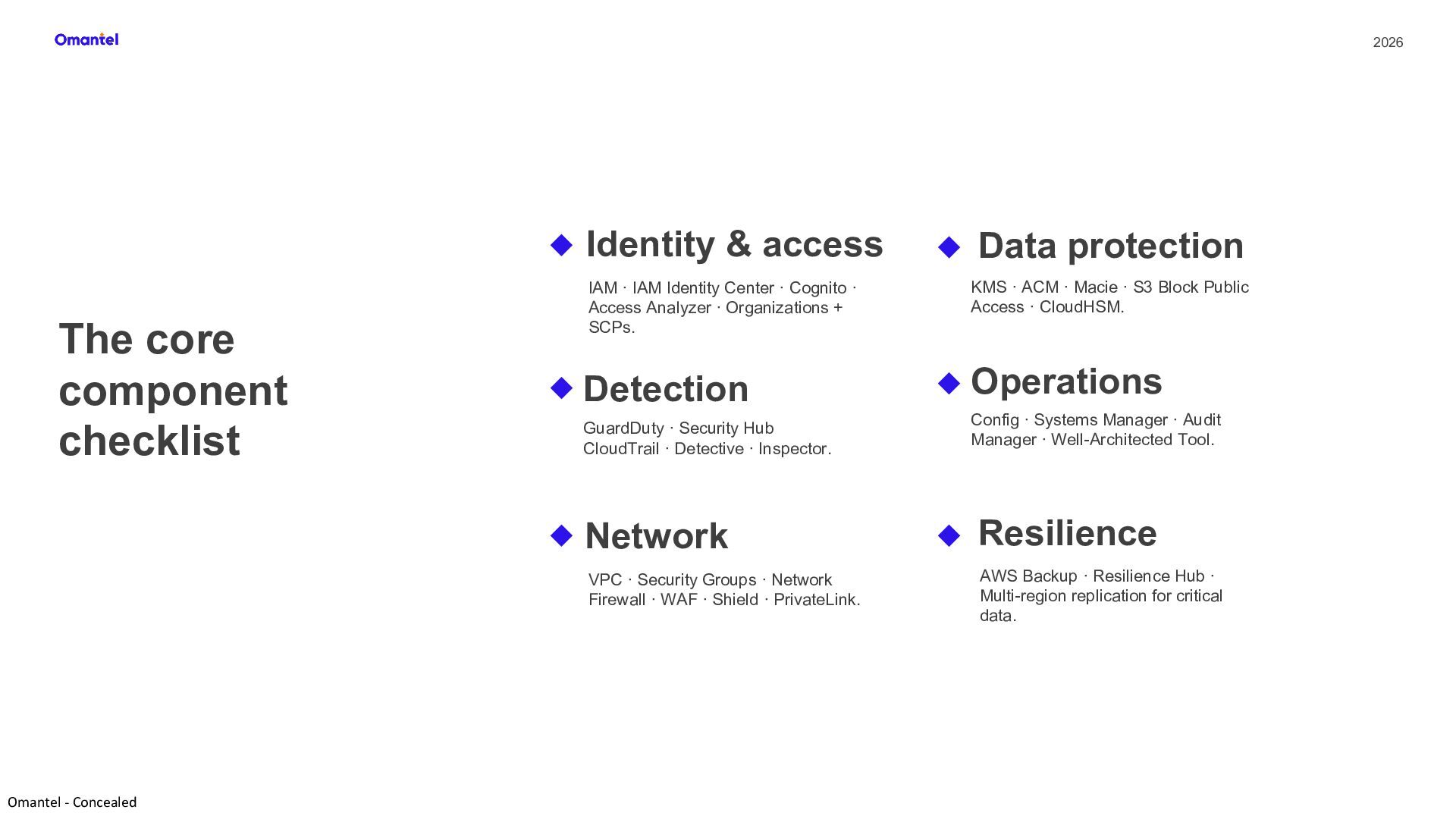
CDK or Terraform repository. A reference architecture That cost startups their next funding round. Three failure modes For the next 12 months - by stage. A staged enablement plan What you'll leave with today 2026
one and very expensive in year three. Build the multi-account skeleton before you write your second microservice. 01 Single blast radius. A compromised dev key takes prod with it. Investors notice; auditors fail you. One AWS account 02 IAM users for humans, static keys in CI, SSO bolted on later. Cleanup costs scale linearly with headcount. Identity sprawl 03 No CloudTrail in dev, retention < 1 year, logs in same account they're auditing. Forensics impossible. Logging-as-an- afterthought
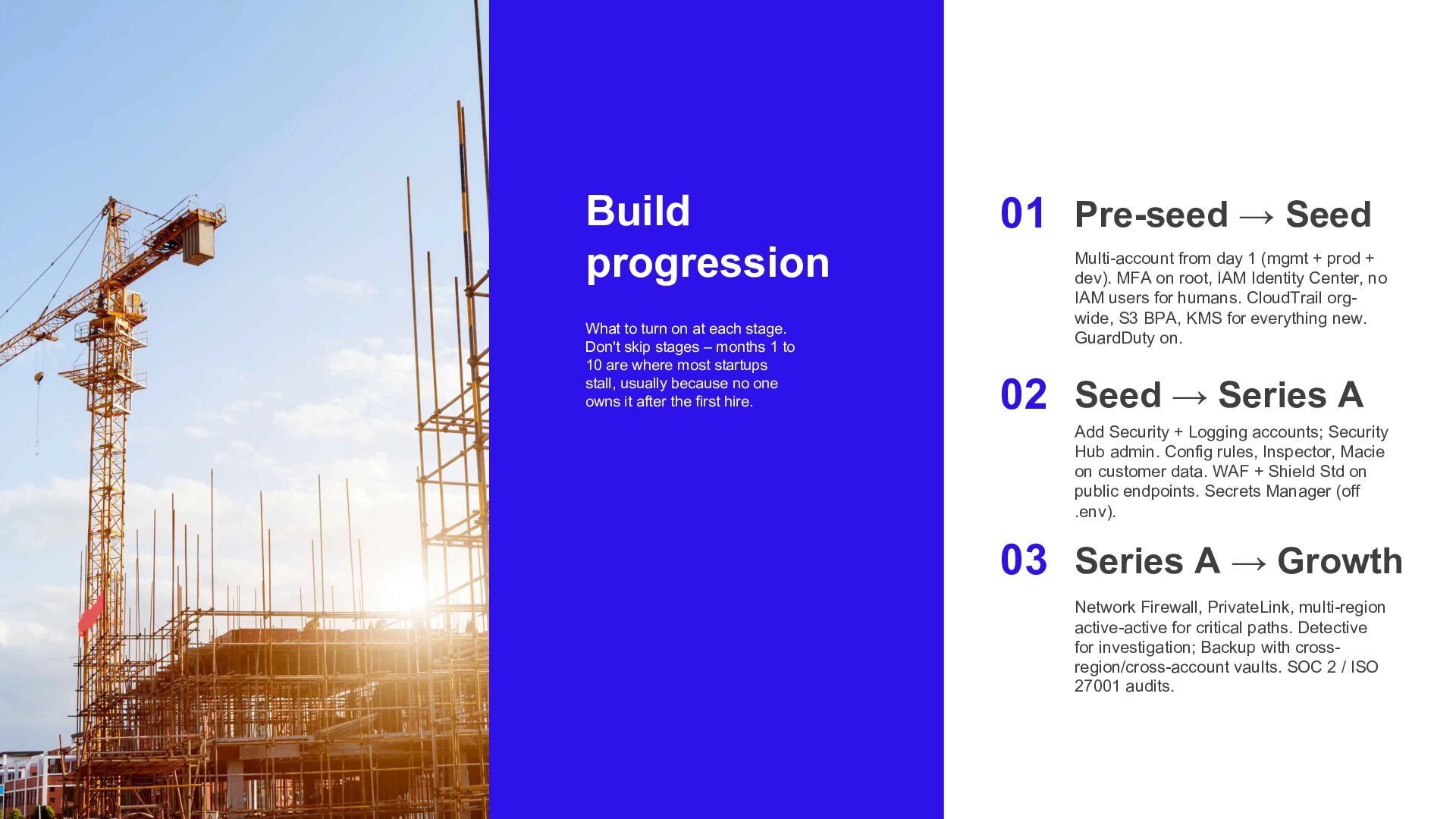
each stage. Don't skip stages – months 1 to 10 are where most startups stall, usually because no one owns it after the first hire. 01 Multi-account from day 1 (mgmt + prod + dev). MFA on root, IAM Identity Center, no IAM users for humans. CloudTrail org- wide, S3 BPA, KMS for everything new. GuardDuty on. Pre-seed → Seed 02 Add Security + Logging accounts; Security Hub admin. Config rules, Inspector, Macie on customer data. WAF + Shield Std on public endpoints. Secrets Manager (off .env). Seed → Series A 03 Network Firewall, PrivateLink, multi-region active-active for critical paths. Detective for investigation; Backup with cross- region/cross-account vaults. SOC 2 / ISO 27001 audits. Series A → Growth
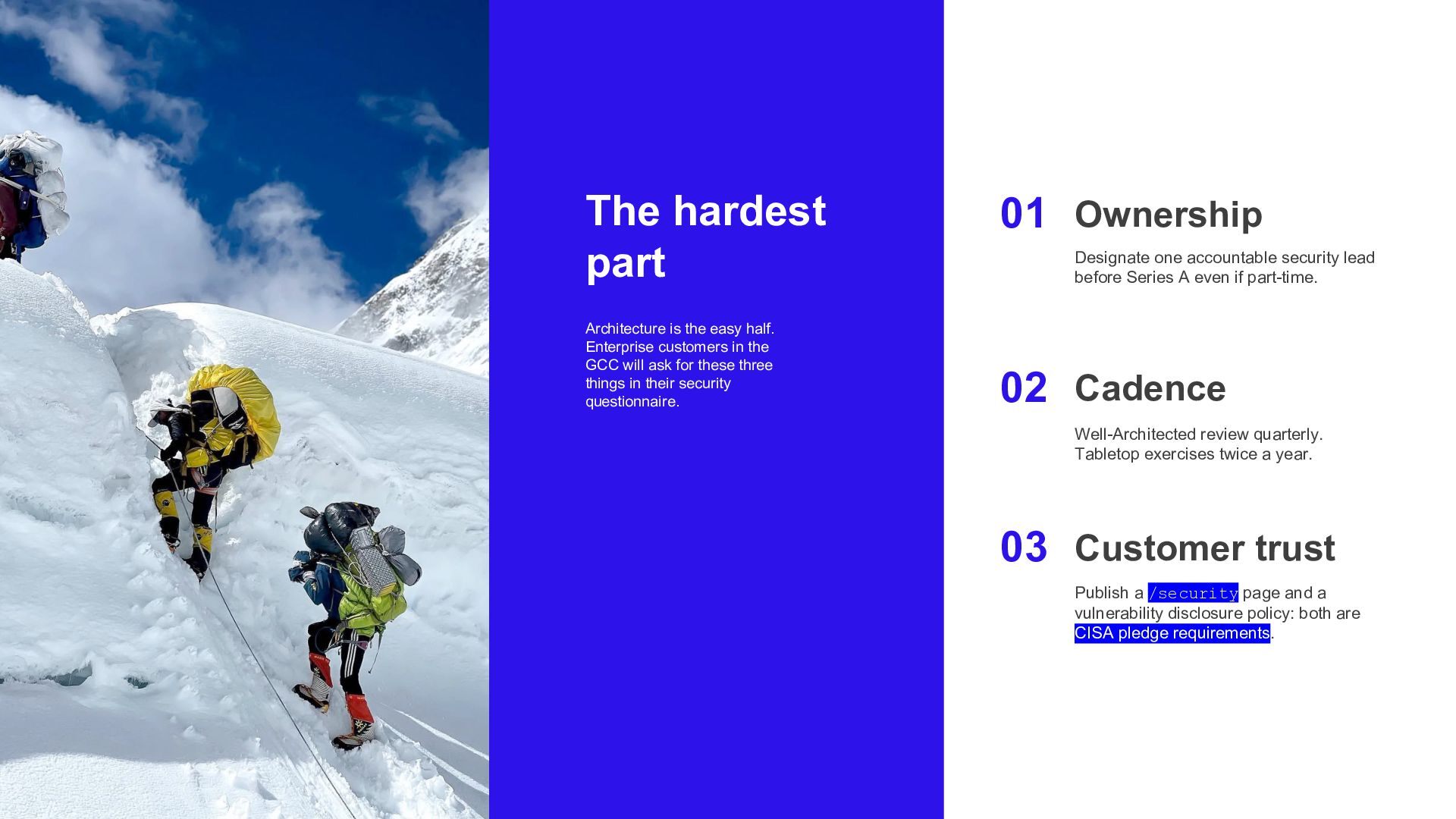
half. Enterprise customers in the GCC will ask for these three things in their security questionnaire. 01 Designate one accountable security lead before Series A even if part-time. Ownership 02 Well-Architected review quarterly. Tabletop exercises twice a year. Cadence 03 Publish a /security page and a vulnerability disclosure policy: both are CISA pledge requirements. Customer trust
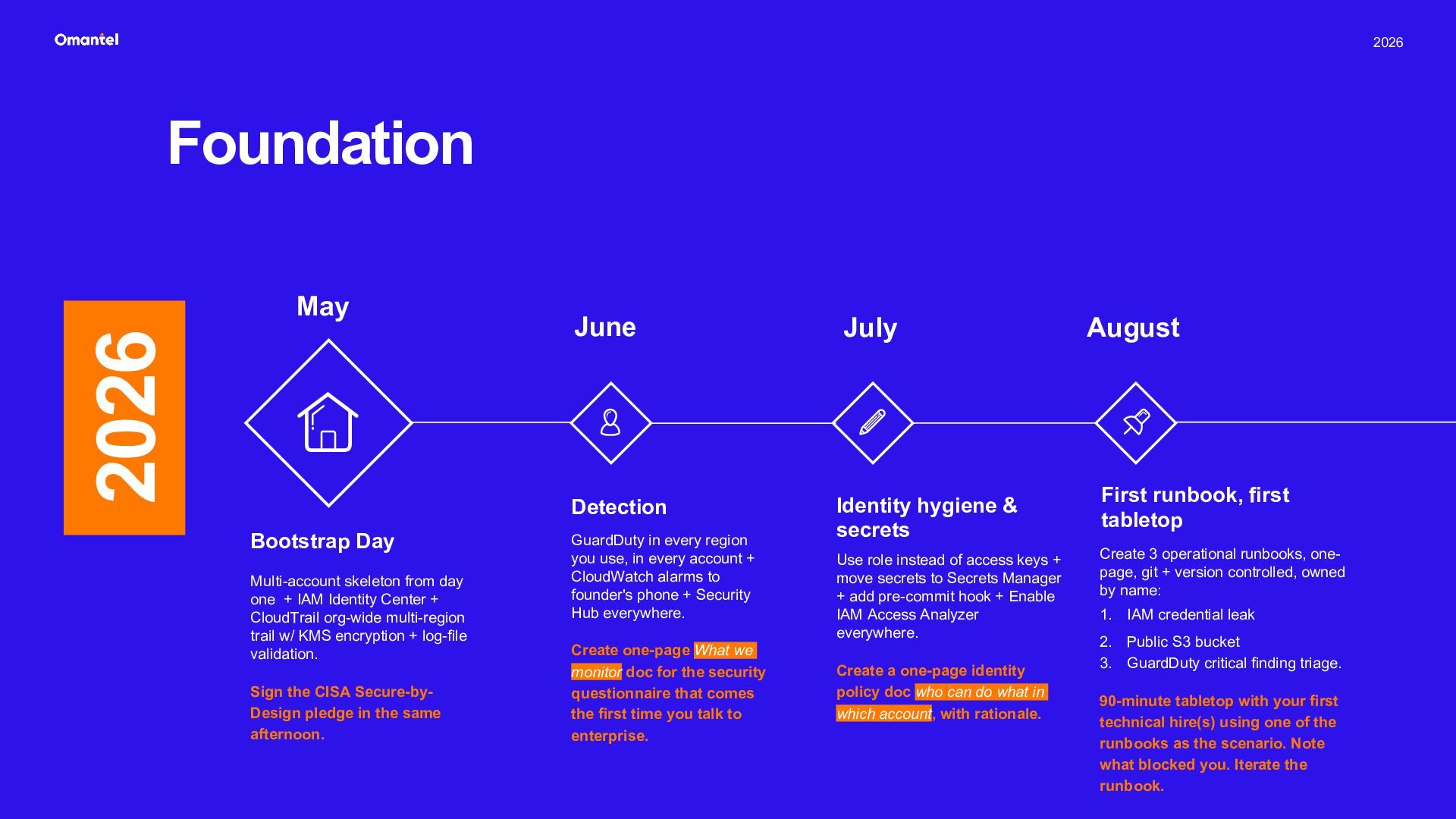
region you use, in every account + CloudWatch alarms to founder's phone + Security Hub everywhere. Create one-page What we monitor doc for the security questionnaire that comes the first time you talk to enterprise. Identity hygiene & secrets Use role instead of access keys + move secrets to Secrets Manager + add pre-commit hook + Enable IAM Access Analyzer everywhere. Create a one-page identity policy doc who can do what in which account, with rationale. First runbook, first tabletop Create 3 operational runbooks, one- page, git + version controlled, owned by name: 1. IAM credential leak 2. Public S3 bucket 3. GuardDuty critical finding triage. 90-minute tabletop with your first technical hire(s) using one of the runbooks as the scenario. Note what blocked you. Iterate the runbook. Multi-account skeleton from day one + IAM Identity Center + CloudTrail org-wide multi-region trail w/ KMS encryption + log-file validation. Sign the CISA Secure-by- Design pledge in the same afternoon. May 2026 Foundation Bootstrap Day 2026
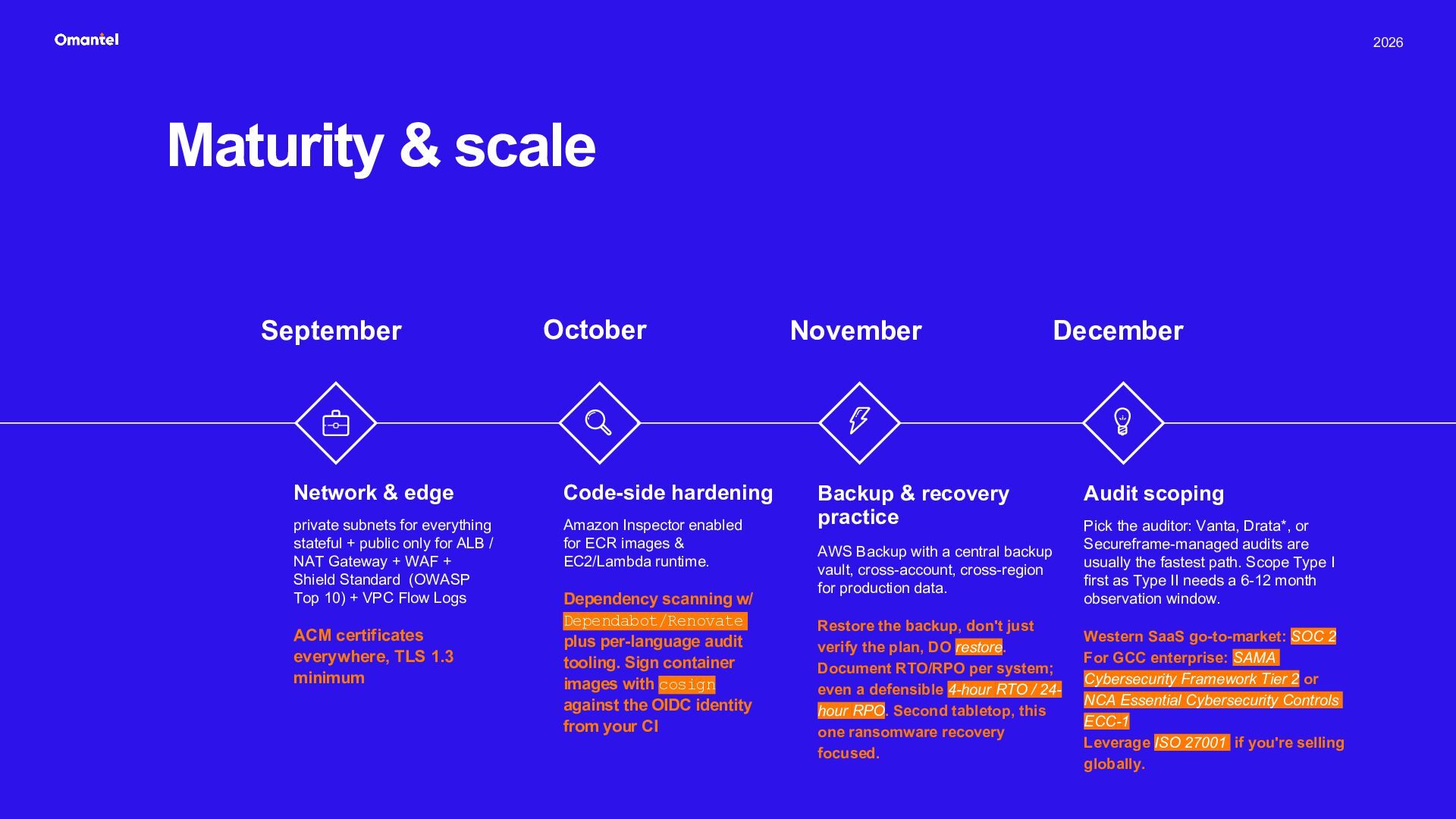
private subnets for everything stateful + public only for ALB / NAT Gateway + WAF + Shield Standard (OWASP Top 10) + VPC Flow Logs ACM certificates everywhere, TLS 1.3 minimum Code-side hardening Amazon Inspector enabled for ECR images & EC2/Lambda runtime. Dependency scanning w/ Dependabot/Renovate plus per-language audit tooling. Sign container images with cosign against the OIDC identity from your CI Backup & recovery practice AWS Backup with a central backup vault, cross-account, cross-region for production data. Restore the backup, don't just verify the plan, DO restore. Document RTO/RPO per system; even a defensible 4-hour RTO / 24- hour RPO. Second tabletop, this one ransomware recovery focused. Audit scoping Pick the auditor: Vanta, Drata*, or Secureframe-managed audits are usually the fastest path. Scope Type I first as Type II needs a 6-12 month observation window. Western SaaS go-to-market: SOC 2 For GCC enterprise: SAMA Cybersecurity Framework Tier 2 or NCA Essential Cybersecurity Controls ECC-1 Leverage ISO 27001 if you're selling globally. 2026 Maturity & scale
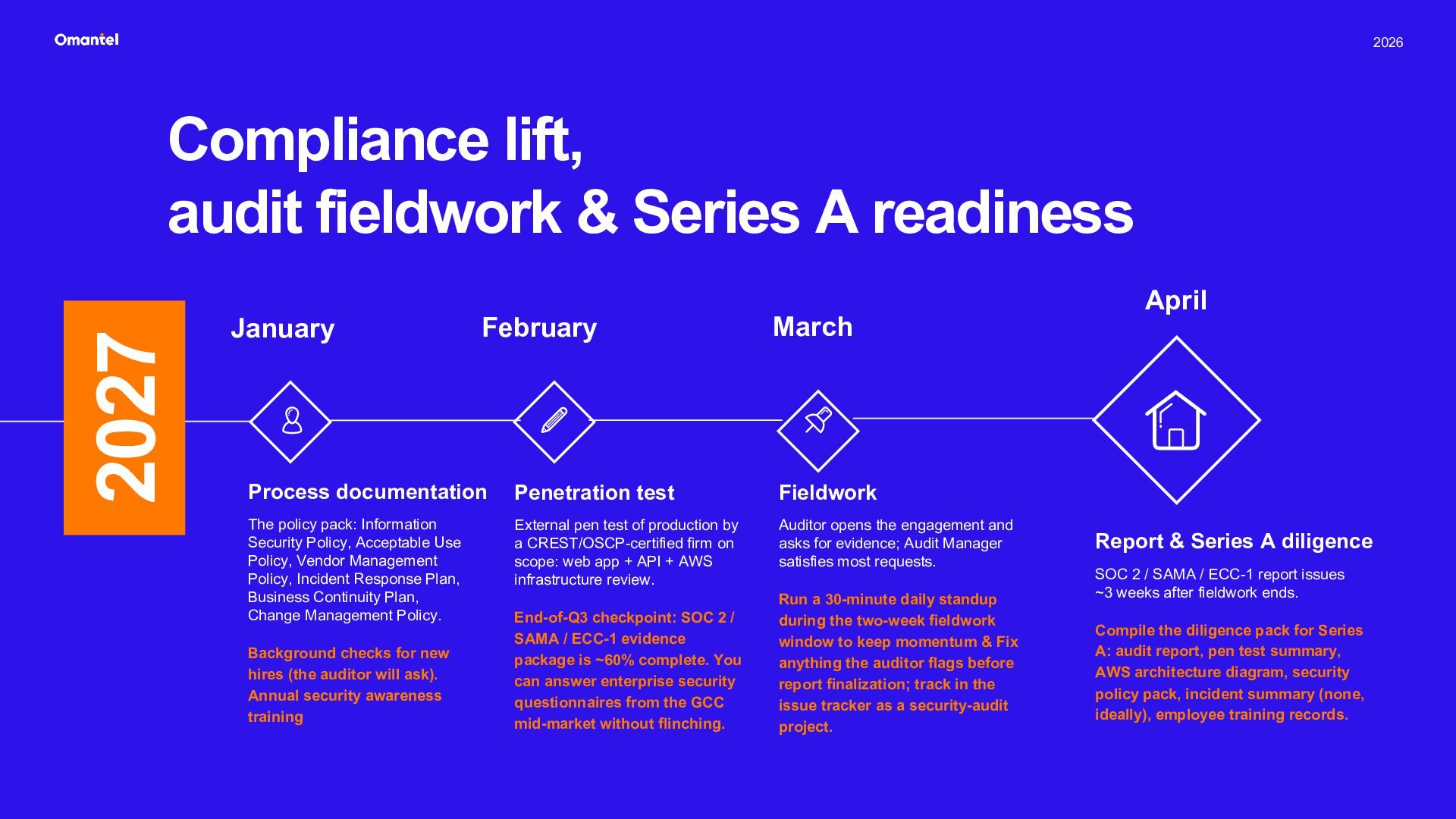
pack: Information Security Policy, Acceptable Use Policy, Vendor Management Policy, Incident Response Plan, Business Continuity Plan, Change Management Policy. Background checks for new hires (the auditor will ask). Annual security awareness training Penetration test External pen test of production by a CREST/OSCP-certified firm on scope: web app + API + AWS infrastructure review. End-of-Q3 checkpoint: SOC 2 / SAMA / ECC-1 evidence package is ~60% complete. You can answer enterprise security questionnaires from the GCC mid-market without flinching. Fieldwork Auditor opens the engagement and asks for evidence; Audit Manager satisfies most requests. Run a 30-minute daily standup during the two-week fieldwork window to keep momentum & Fix anything the auditor flags before report finalization; track in the issue tracker as a security-audit project. April 2026 Compliance lift, audit fieldwork & Series A readiness 2027 Report & Series A diligence SOC 2 / SAMA / ECC-1 report issues ~3 weeks after fieldwork ends. Compile the diligence pack for Series A: audit report, pen test summary, AWS architecture diagram, security policy pack, incident summary (none, ideally), employee training records.
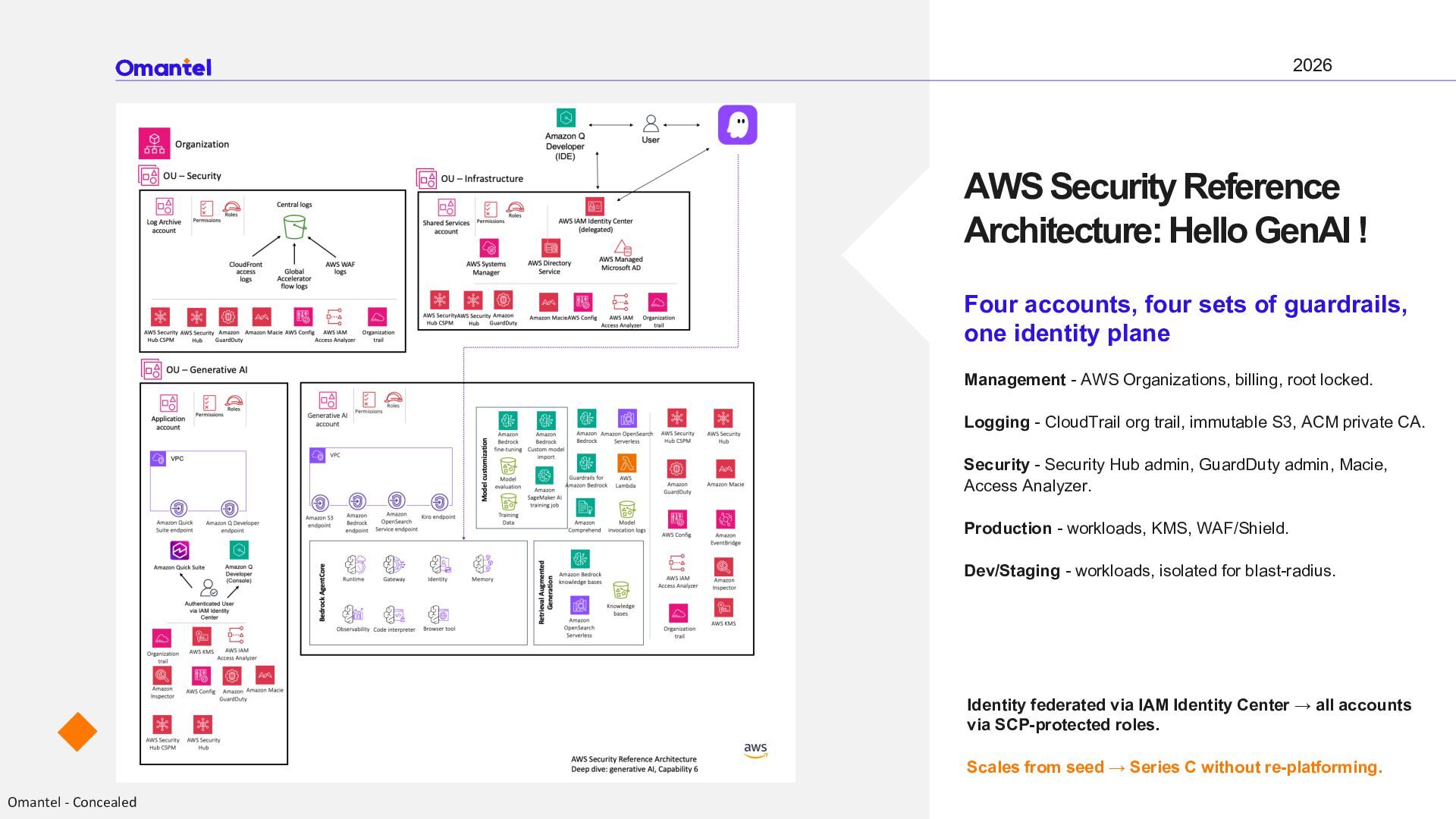
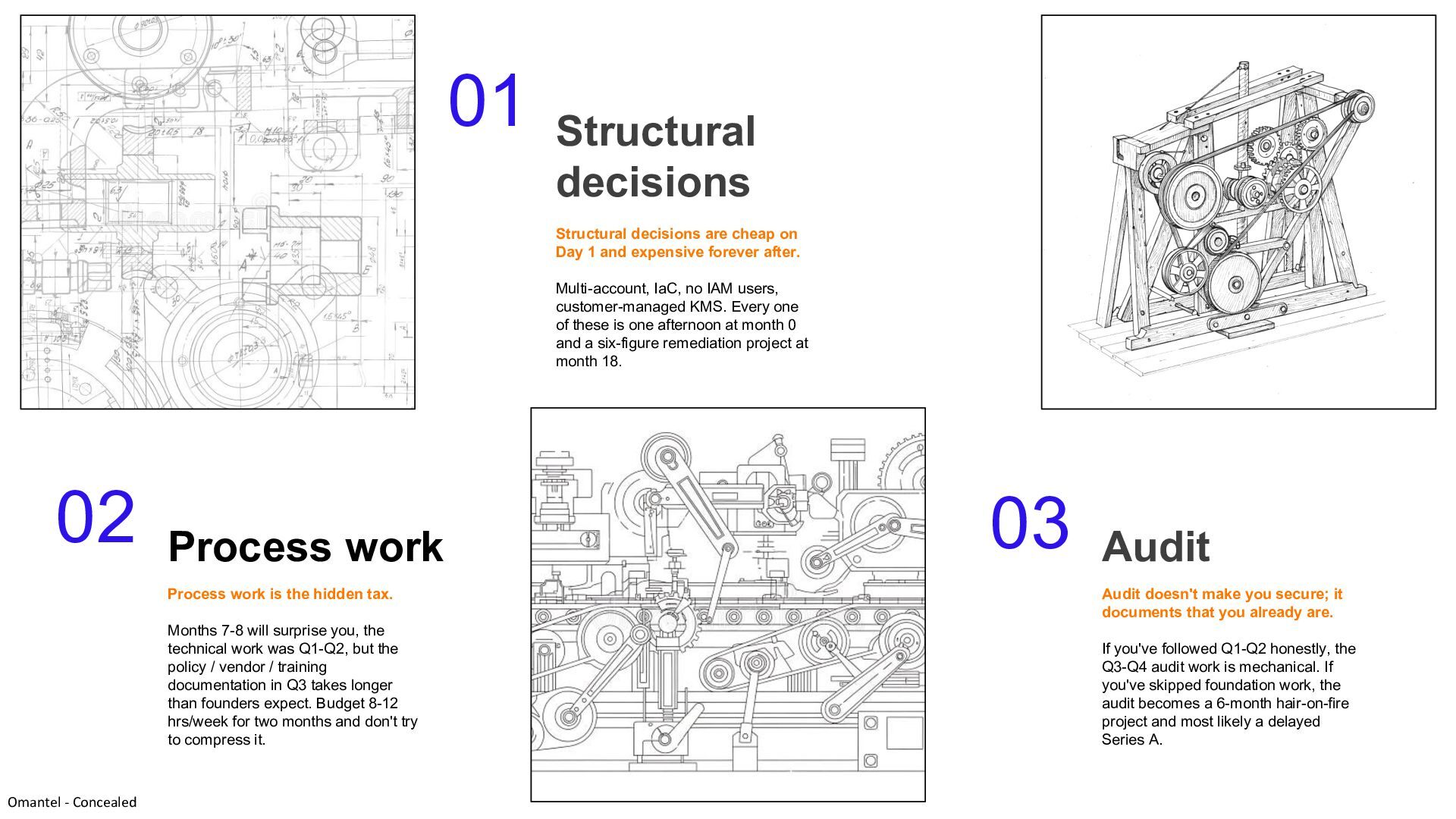
on Day 1 and expensive forever after. Multi-account, IaC, no IAM users, customer-managed KMS. Every one of these is one afternoon at month 0 and a six-figure remediation project at month 18. 02 Process work Process work is the hidden tax. Months 7-8 will surprise you, the technical work was Q1-Q2, but the policy / vendor / training documentation in Q3 takes longer than founders expect. Budget 8-12 hrs/week for two months and don't try to compress it. 03 Audit Audit doesn't make you secure; it documents that you already are. If you've followed Q1-Q2 honestly, the Q3-Q4 audit work is mechanical. If you've skipped foundation work, the audit becomes a 6-month hair-on-fire project and most likely a delayed Series A.


 nuage_ninja
 ipullrank
 denniskardys
 keavy
keavy
 akademiya2063
 asonas
 popppiees
 axbom
axbom
 reverentgeek
 skipperchong
 morganepeng
 palkan