Upgrade to Pro — share decks privately, control downloads, hide ads and more …

Web2Day 2016: Clearing the fog in fog architect...

Web2Day 2016: Clearing the fog in fog architecture or distributed computing as an IoT enabler

IoT is at the height of the hype cycle. But only now is starting to get serious. This talk is an overview on how enterprise level projects in IoT are done. The gateway and the edge network are essential categories. This type of network architecture goes by the name of fog computing. What's in it? How do "serious" IoT projects are setup?

Avatar for António Almeida

António Almeida

June 15, 2016

More Decks by António Almeida

Other Decks in Technology

Transcript

  1. Clearing the fog in fog architecture or distributed computing as

    an IoT enabler Web2Day Nantes Antonio Almeida developer & product evangelist at relayr [email protected] June 15, 2016
  2. IoT 101: constrained devices low computing power: CPU, memory, etc

    unreliable networking: mesh, 6LoWPAN, BLE low power consumption: small duty cycle RFC 7228
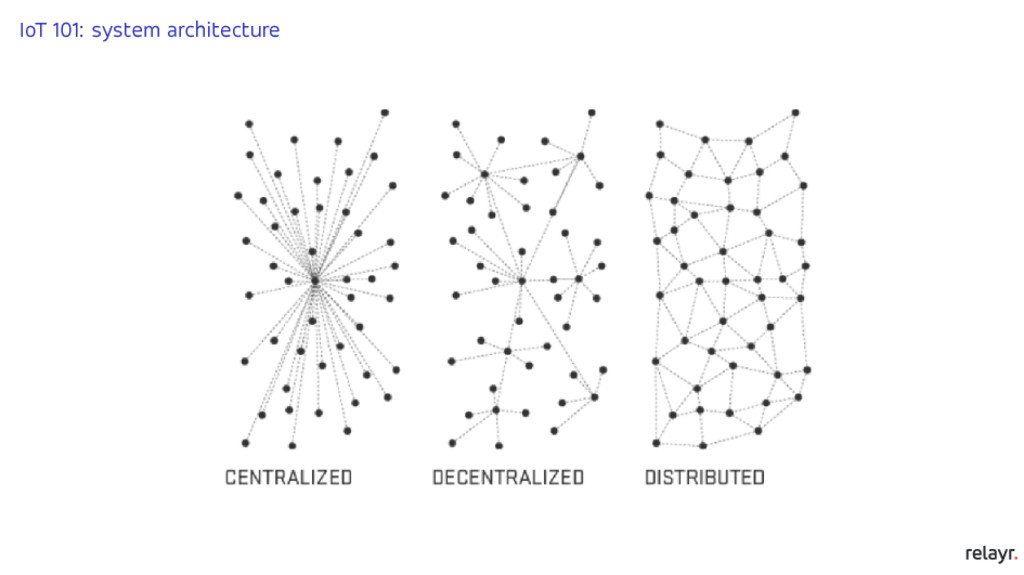
  3. problem I: cloud centric architecture device to cloud communication centralized
    cloud to cloud distributed a lot of implicit assumptions
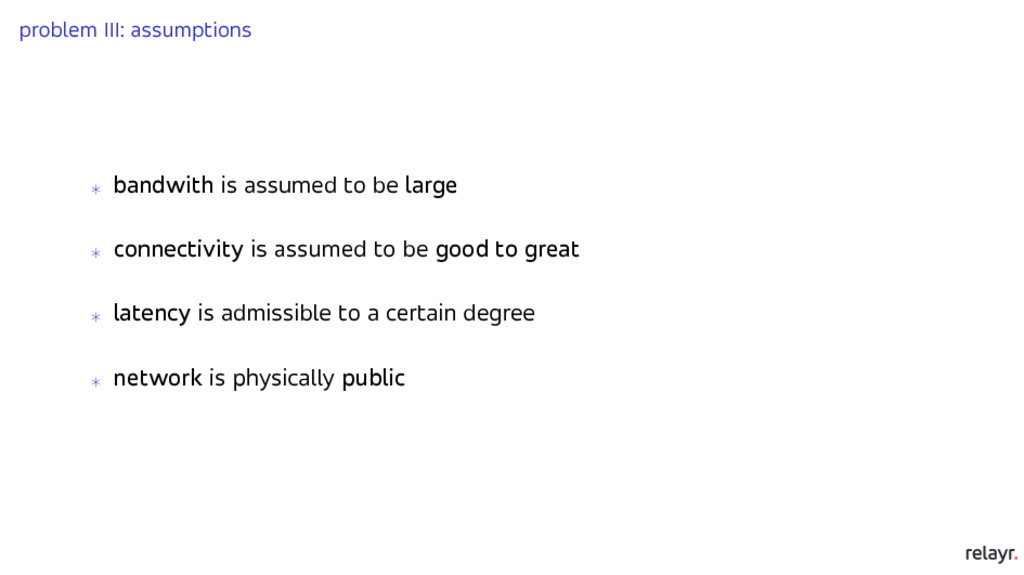
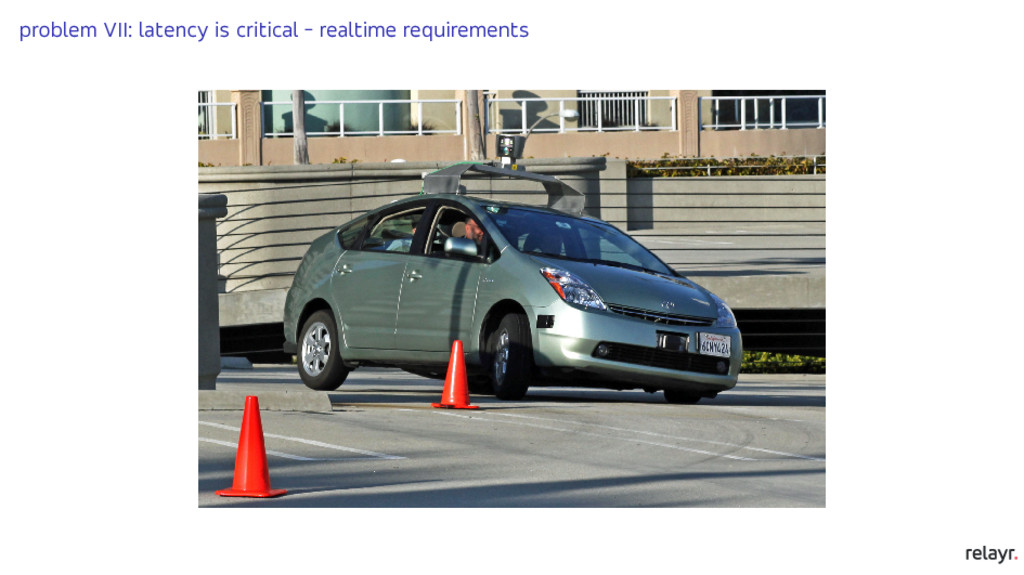
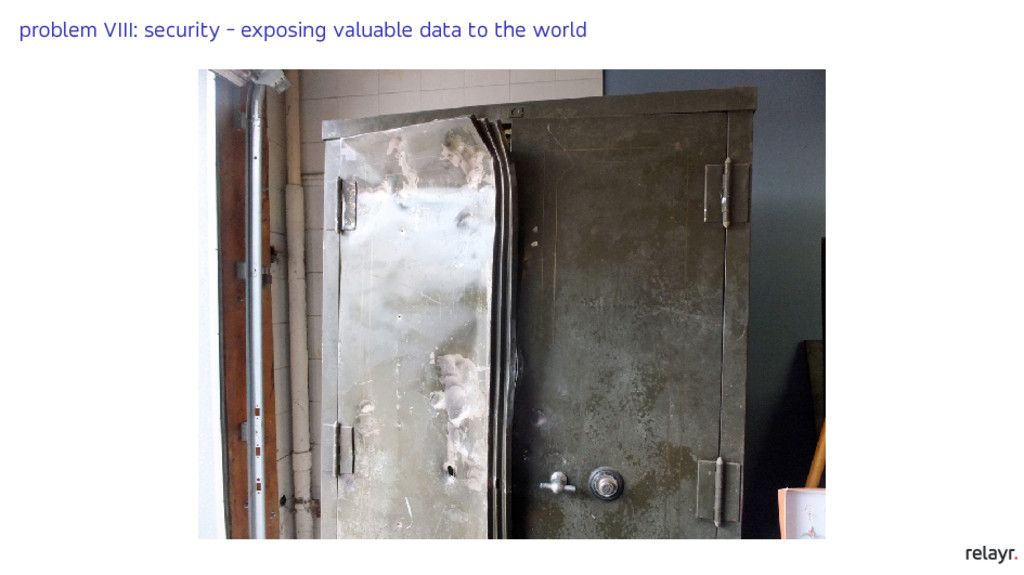
  4. problem III: assumptions bandwith is assumed to be large connectivity

    is assumed to be good to great latency is admissible to a certain degree network is physically public
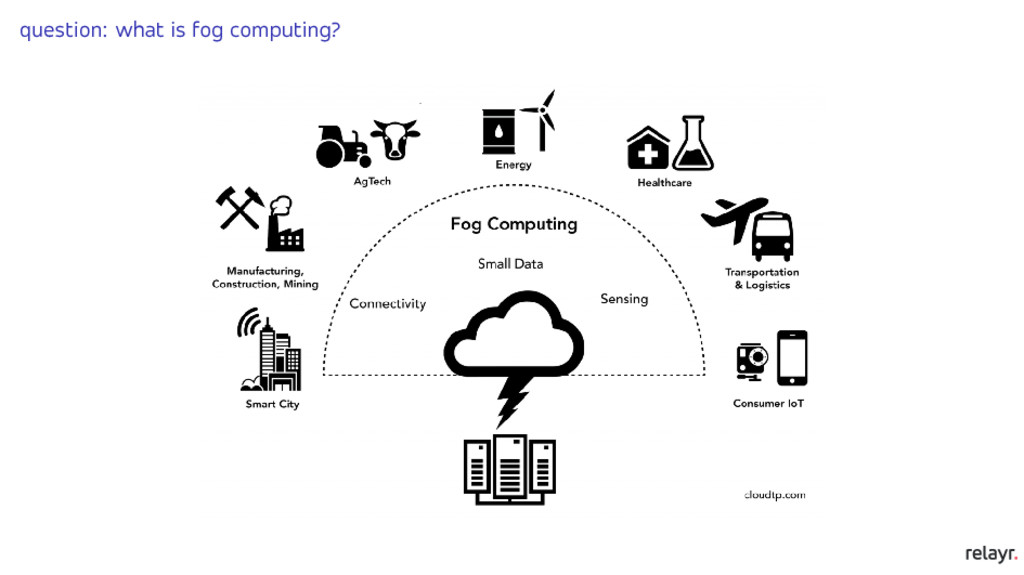
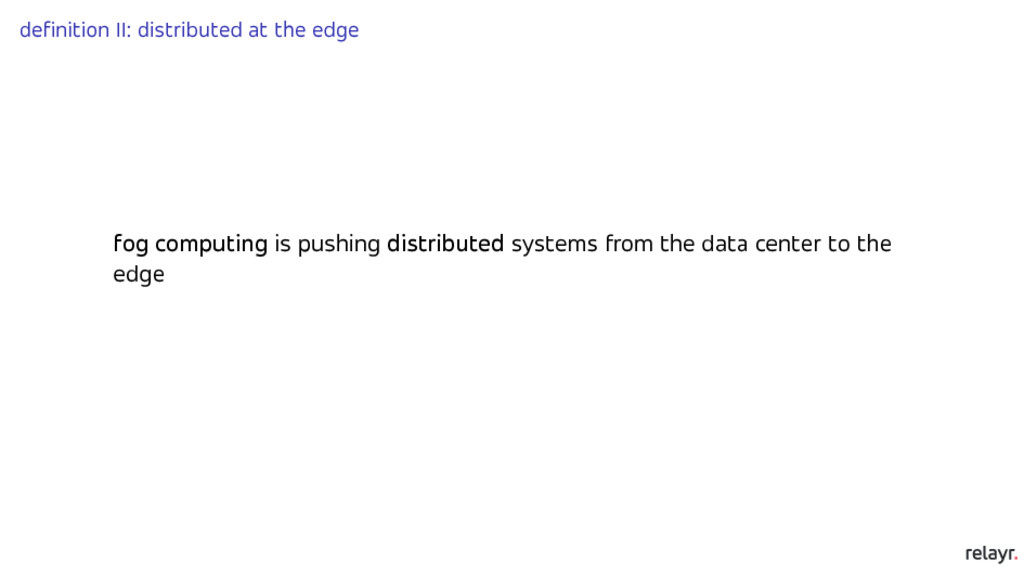
  5. definition II: distributed at the edge fog computing is pushing

    distributed systems from the data center to the edge
  6. definition III: physical world fog computing is about reactive systems

    that interact with the physical world from the data center to the edge
  7. the future is already here The future is already here

    — it’s just not very evenly distributed. William Gibson
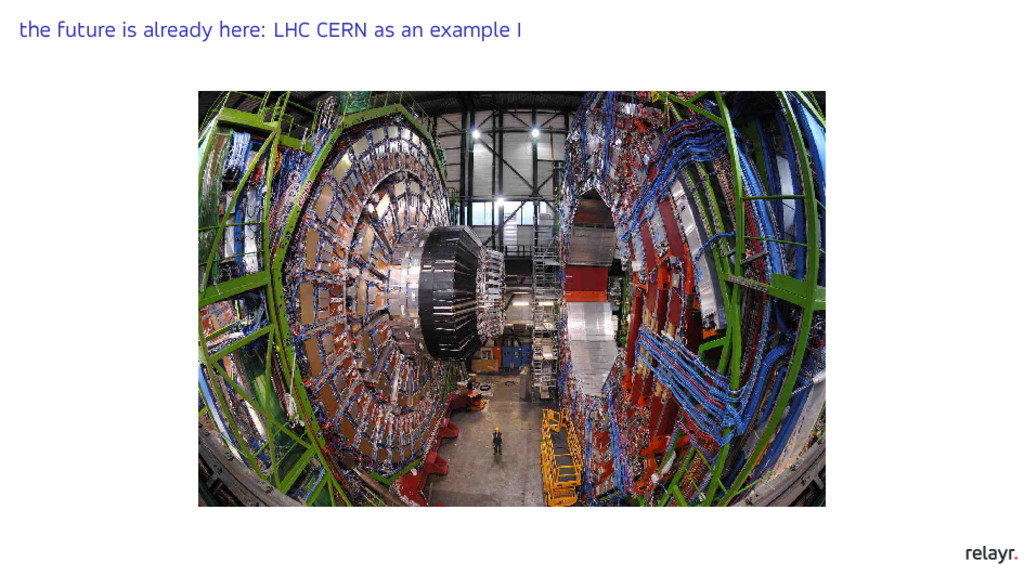
  8. the future is already here: LHC CERN as an example

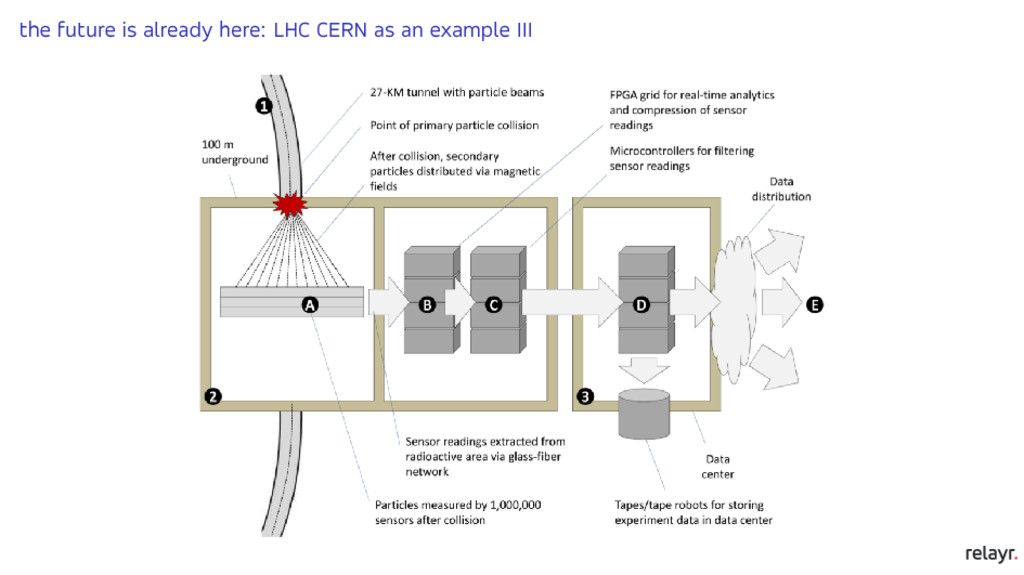
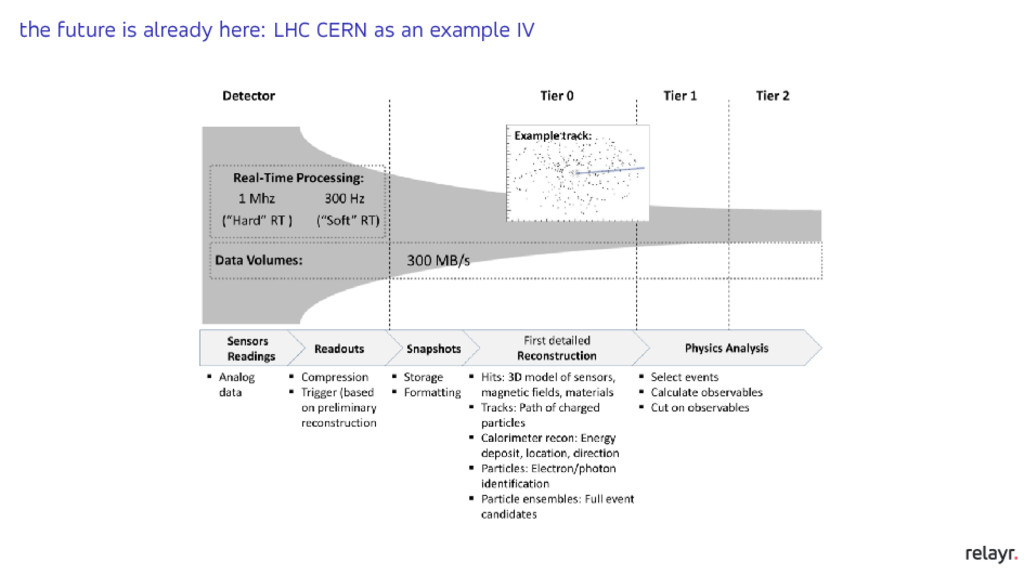
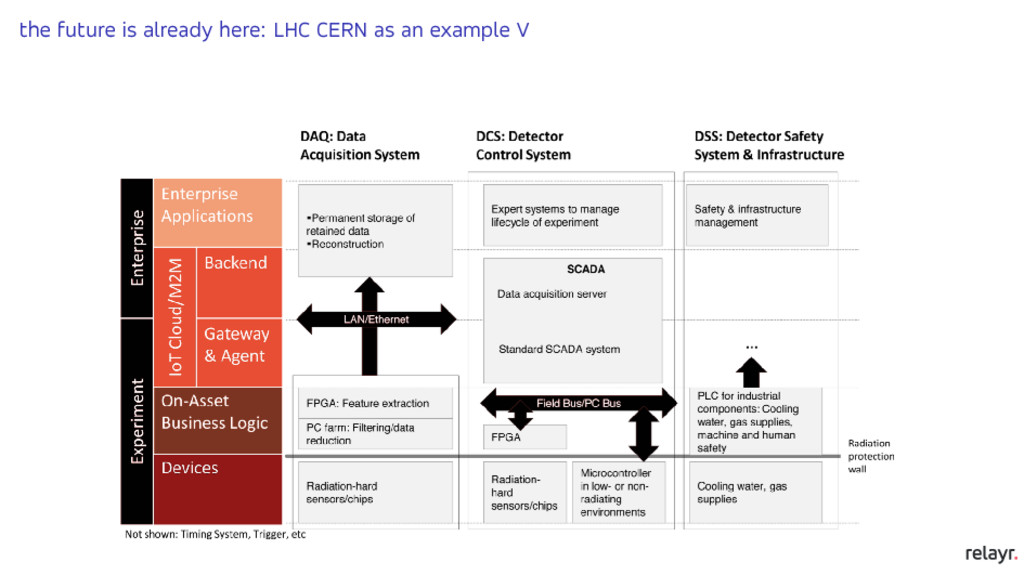
    II the largest machine in the world built for testing hypotheses of particle and high-energy physics generates tens of petabytes (10005 bytes) per year requires very well thought out data sensing, operation control and asset management scheme
  9. design: peer to peer new approach to designing the system

    peer to peer (p2p) client-server node distinction gets fuzzy
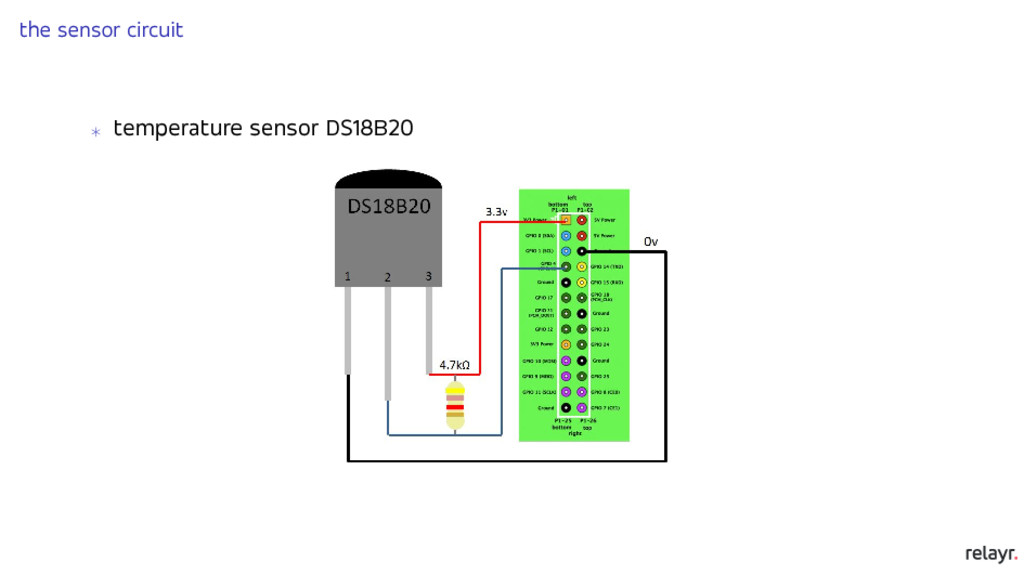
  10. practice: building a simple sensor node build a sensor node

    that uses CoAP acts both as a client and a server coding time in Lua
  11. now the gateway remember distributed computing we’re going to apply

    the same ideas micro-service based architecture multiple services that talk among themselves through an event bus
  12. components I: event bus must be lightweight - lighter than

    Apache Kafka all messages are put on the bus the relevant service selects what is for it like a data river
  13. components II: local data store if the uplink to the

    cloud is down if we want to accumulate messages to send in batch if we want to use the data as is being collected if we want to provide better (distributed) data integrity
  14. components III: authentication & authorization control access to devices from

    other devices control access to data streams (sensors) control the access to devices from the outside control access to actuators
  15. components IV: device registry & management update the firmware on

    the devices list device capabilities have overview of device availability (healthcheck) update code running on top of the firmware - if applicable
  16. components V: output filters to provide data compression to provide

    data in multiple serialization formats to inject metadata into the output data stream to convert between different units between edge and cloud
  17. components VI: rules engine to allow us to control certain

    actuators to take the appropriate action for the given event to allow for basic filtering of data to execute self-heal processes based on certain activated rules
  18. components VII: analytics - streaming data to actuate based on

    collected data on the edge to reason about the processes being monitored to extract valuable information as the data is collected to avoid over-dimensioned data warehousing with all associated costs
  19. components VIII: firewall & bridge to protect data streams from

    external access to implement private clouds at the edge to convert between different protocols (e.g. 6LoWPAN vs IPv6) to allow access from the outside to particular devices - with or without NAT (IPv6)
  20. a simple solution use a CoAP to HTTP proxy this

    allows to immplement all services as ReSTful web services leverage all free software out there written for implementing web based nicroservices,
  21. hands-on: build first layer CoAP to HTTP proxy: bidirectional modify

    it to include the necessary headers we have the first component of the gateway now