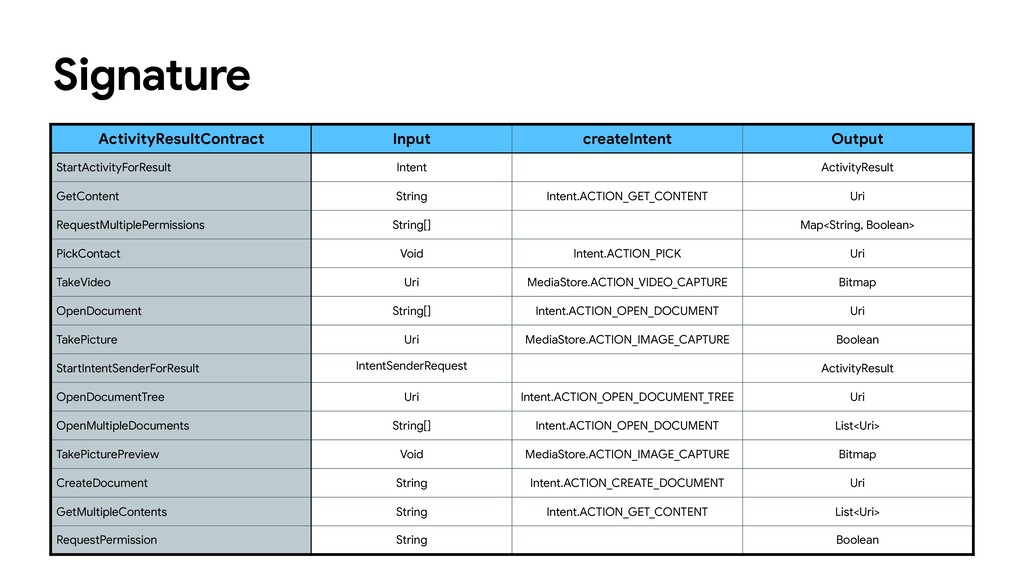
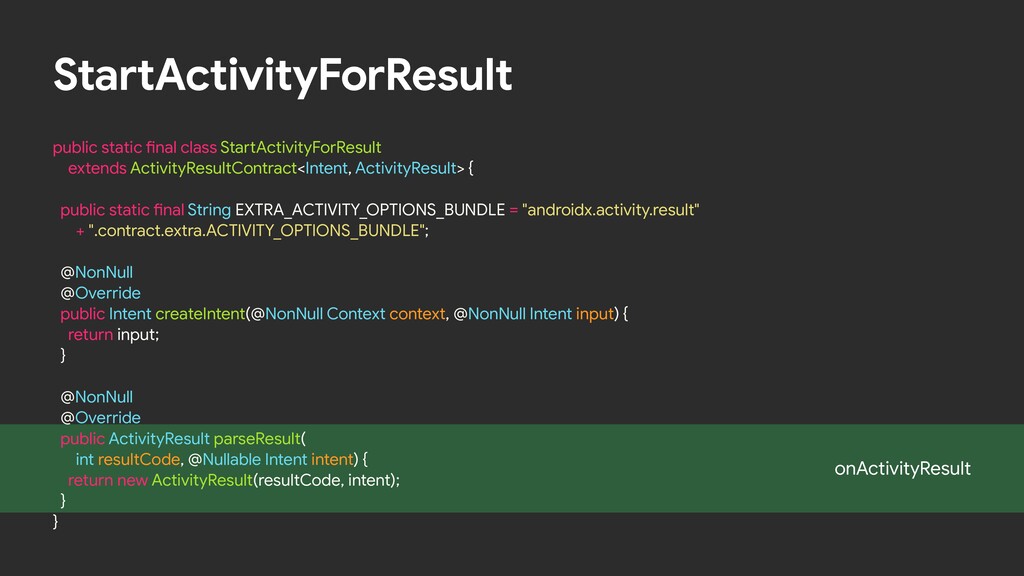
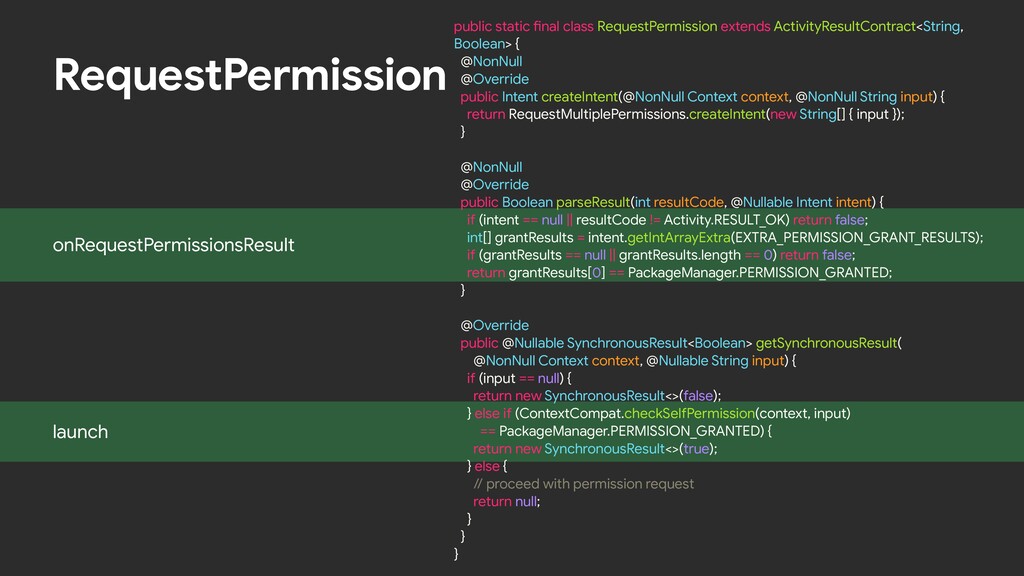
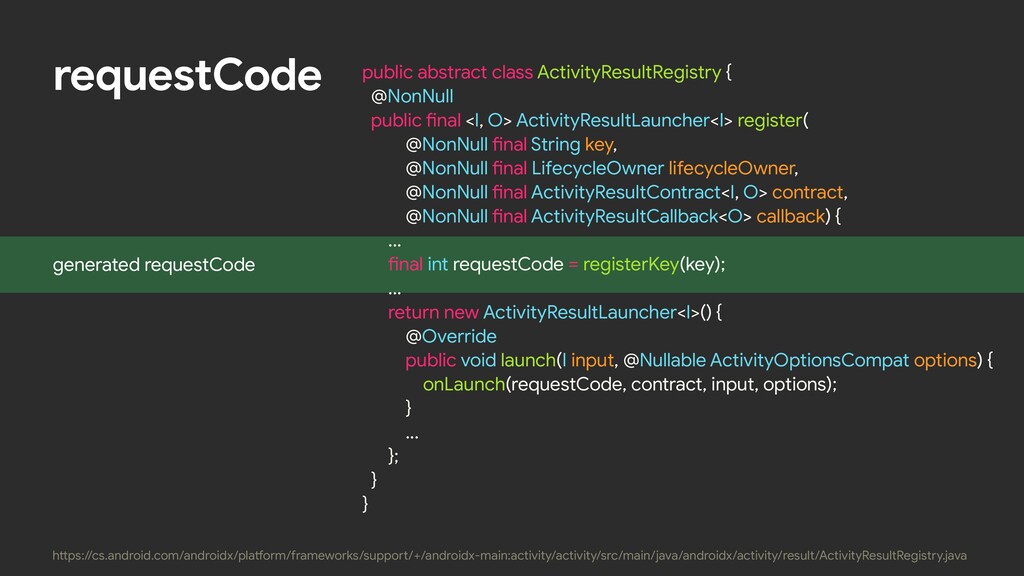
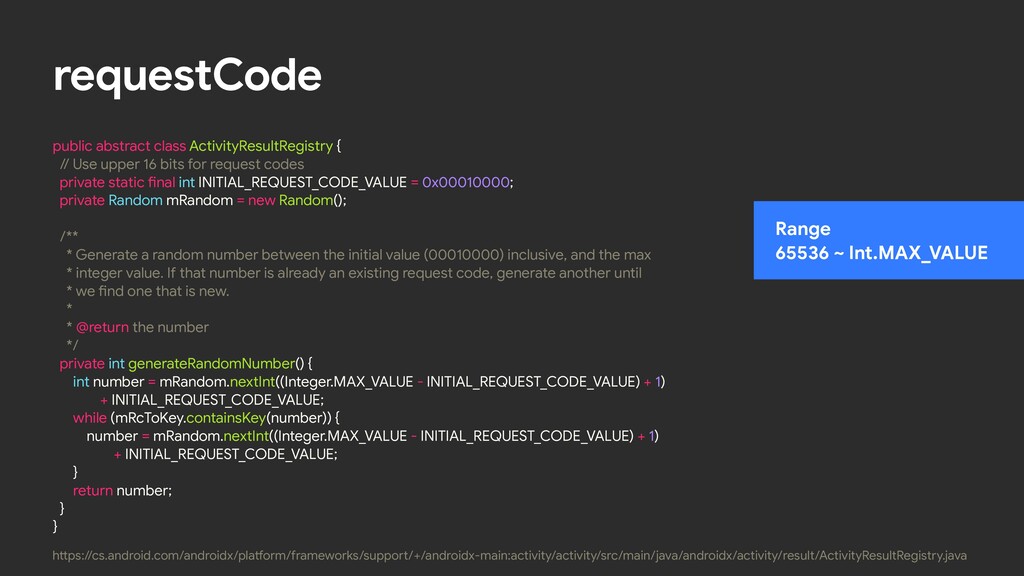
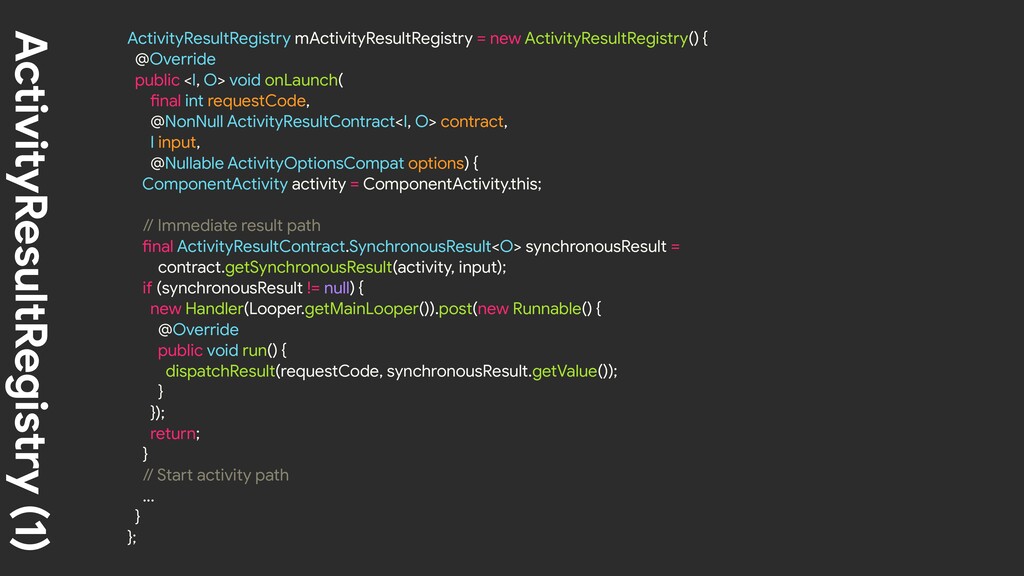
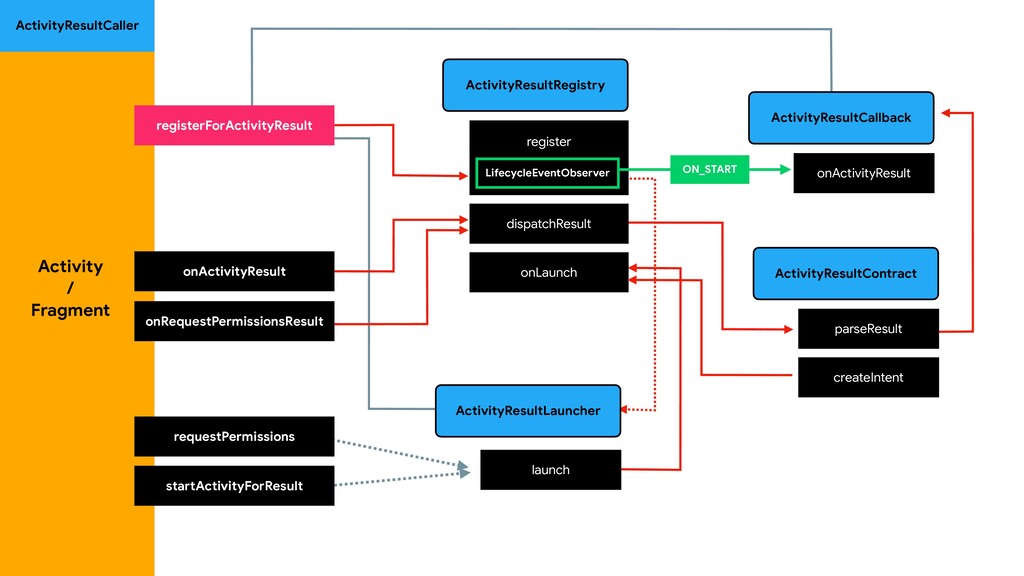
bits for request codes private static fi nal int INITIAL_REQUEST_CODE_VALUE = 0x00010000; private Random mRandom = new Random(); /** * Generate a random number between the initial value (00010000) inclusive, and the max * integer value. If that number is already an existing request code, generate another until * we fi nd one that is new. * * @return the number */ private int generateRandomNumber() { int number = mRandom.nextInt((Integer.MAX_VALUE - INITIAL_REQUEST_CODE_VALUE) + 1) + INITIAL_REQUEST_CODE_VALUE; while (mRcToKey.containsKey(number)) { number = mRandom.nextInt((Integer.MAX_VALUE - INITIAL_REQUEST_CODE_VALUE) + 1) + INITIAL_REQUEST_CODE_VALUE; } return number; } } Range 65536 ~ Int.MAX_VALUE h tt ps://cs.android.com/androidx/pla tf orm/frameworks/suppo rt /+/androidx-main:activity/activity/src/main/java/androidx/activity/result/ActivityResultRegistry.java
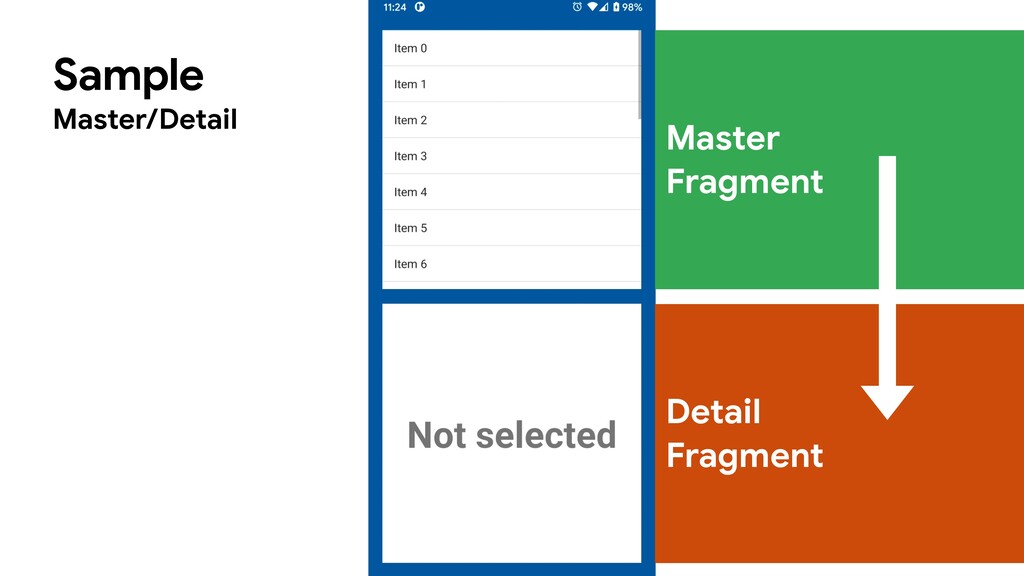
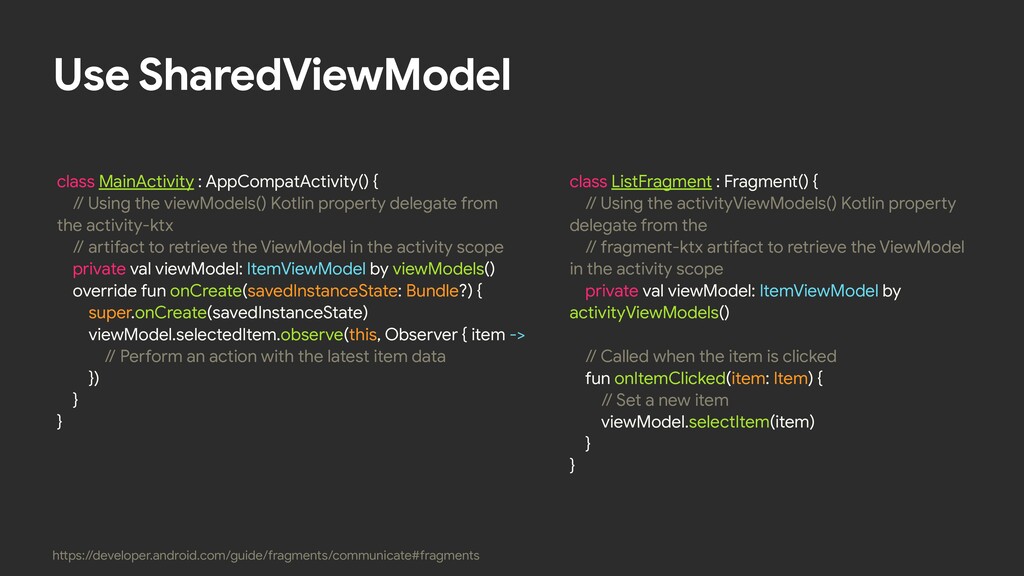
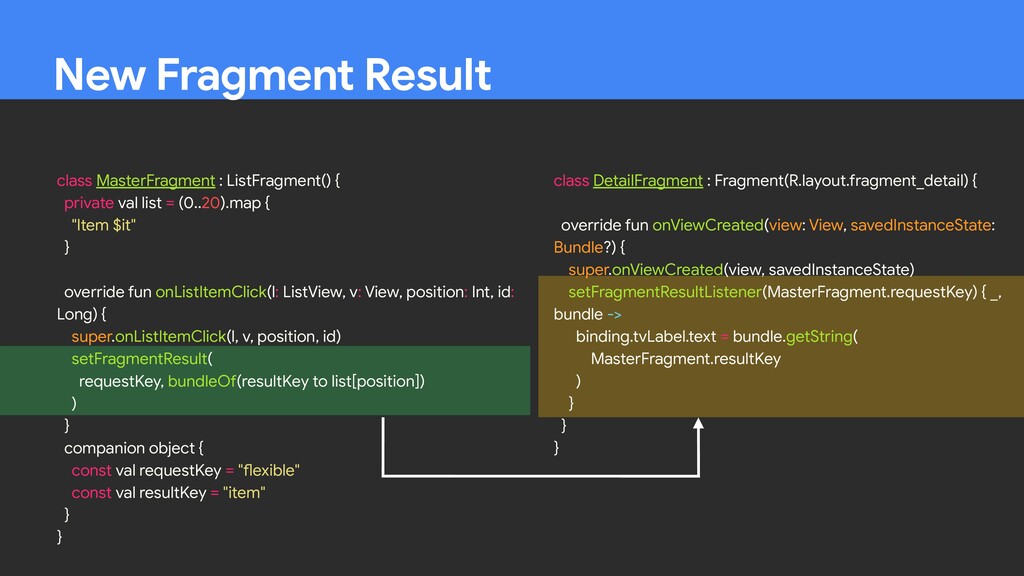
activityViewModels() Kotlin prope rt y delegate from the // fragment-ktx a rt ifact to retrieve the ViewModel in the activity scope private val viewModel: ItemViewModel by activityViewModels() // Called when the item is clicked fun onItemClicked(item: Item) { // Set a new item viewModel.selectItem(item) } } class MainActivity : AppCompatActivity() { // Using the viewModels() Kotlin prope rt y delegate from the activity-ktx // a rt ifact to retrieve the ViewModel in the activity scope private val viewModel: ItemViewModel by viewModels() override fun onCreate(savedInstanceState: Bundle?) { super.onCreate(savedInstanceState) viewModel.selectedItem.observe(this, Observer { item -> // Pe rf orm an action with the latest item data }) } } h tt ps://developer.android.com/guide/fragments/communicate#fragments
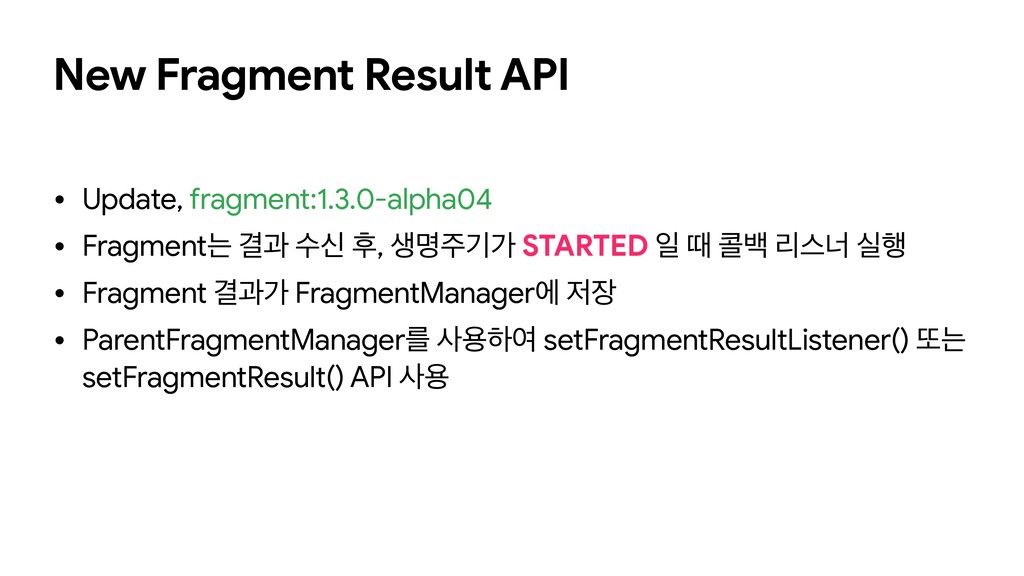
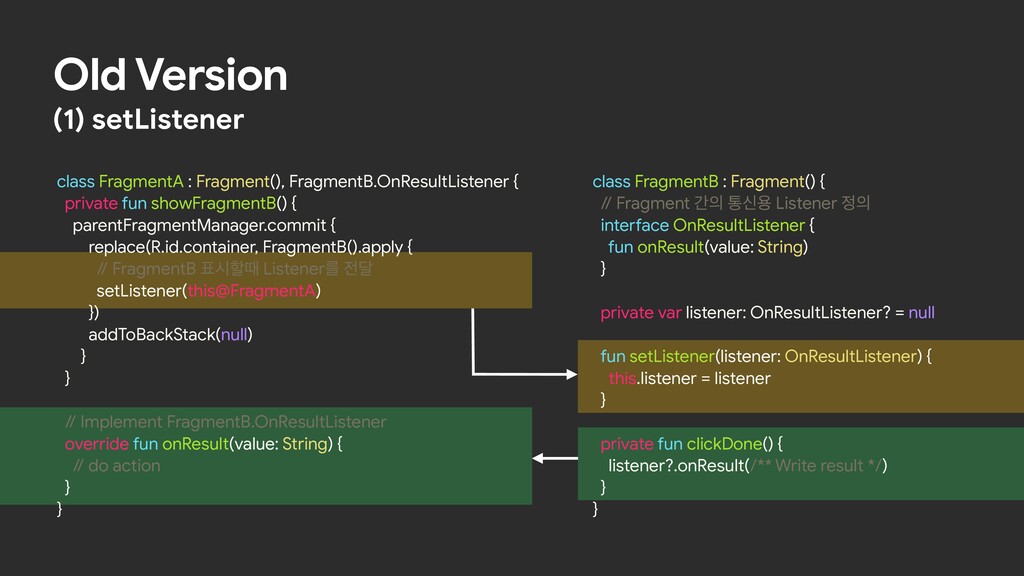
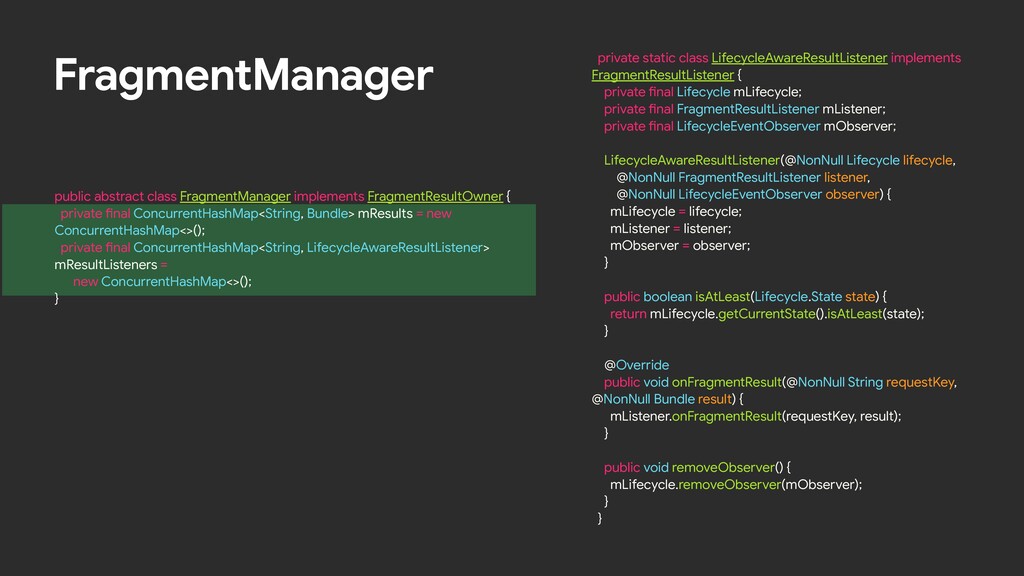
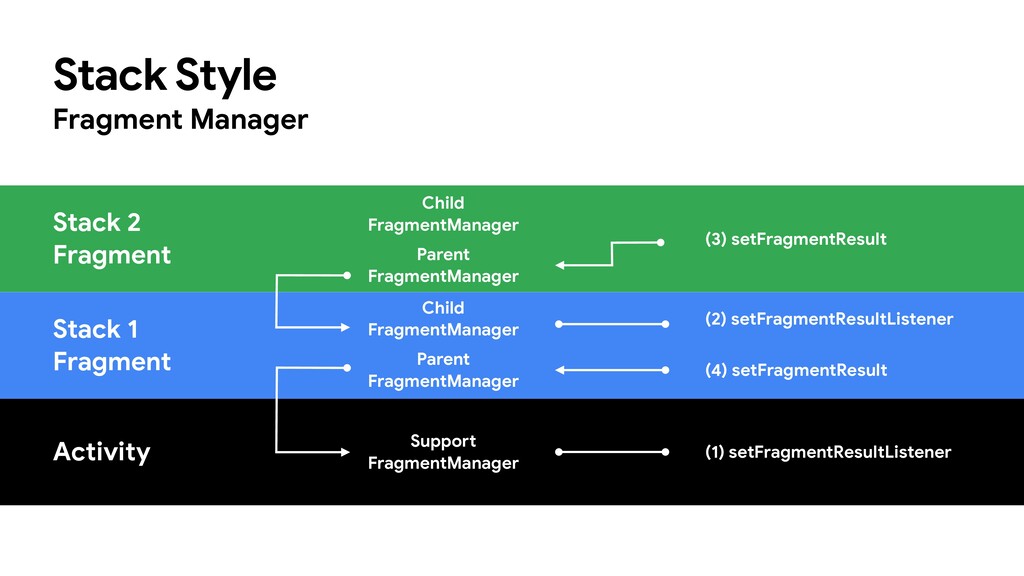
Bundle result) { if (result == null) { // if the given result is null, remove the result mResults.remove(requestKey); return; } // Check if there is a listener waiting for a result with this key LifecycleAwareResultListener resultListener = mResultListeners.get(requestKey); // if there is and it is sta rt ed, fi re the callback if (resultListener != null && resultListener.isAtLeast(Lifecycle.State.STARTED)) { resultListener.onFragmentResult(requestKey, result); } else { // else, save the result for later mResults.put(requestKey, result); } } @SuppressLint("SyntheticAccessor") @Override public fi nal void setResultListener(@NonNull fi nal String requestKey, @NonNull fi nal LifecycleOwner lifecycleOwner, @Nullable fi nal FragmentResultListener listener) { if (listener == null) { mResultListeners.remove(requestKey); return; } fi nal Lifecycle lifecycle = lifecycleOwner.getLifecycle(); if (lifecycle.getCurrentState() == Lifecycle.State.DESTROYED) { return; } LifecycleEventObserver observer = new LifecycleEventObserver() { @Override public void onStateChanged(@NonNull LifecycleOwner source, @NonNull Lifecycle.Event event) { if (event == Lifecycle.Event.ON_START) { Bundle storedResult = mResults.get(requestKey); if (storedResult != null) { listener.onFragmentResult(requestKey, storedResult); setResult(requestKey, null); } } if (event == Lifecycle.Event.ON_DESTROY) { lifecycle.removeObserver(this); mResultListeners.remove(requestKey); } } }; lifecycle.addObserver(observer); mResultListeners.put(requestKey, new LifecycleAwareResultListener(lifecycle, listener)); }
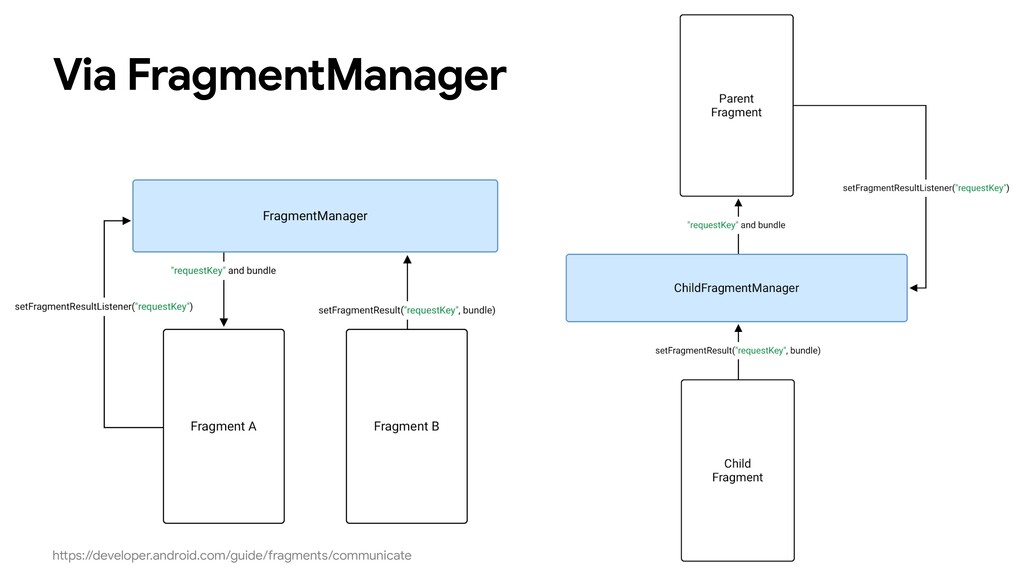
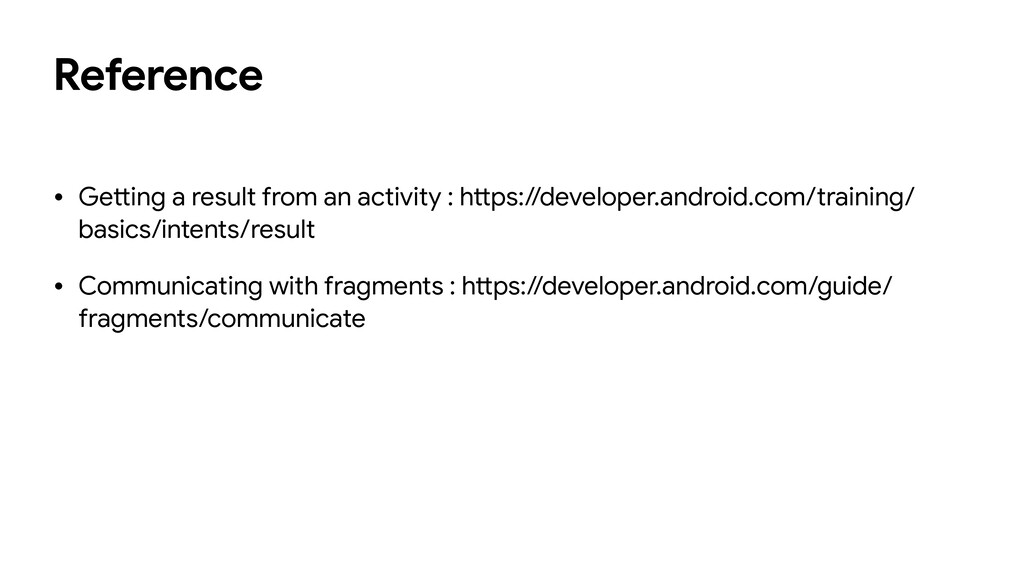
: h tt ps://developer.android.com/training/ basics/intents/result • Communicating with fragments : h tt ps://developer.android.com/guide/ fragments/communicate


 pluu
pluu
 akkeylab
 sts11142
 rkaga
rkaga
 petamoriken
 htkym
htkym
 ivargrimstad
 yukiny
 lynnswap
 gonta
gonta
 findyinc
 reimaru
 h1d3mun3
 kimpetersen
 mayunak
 marketingsoph
 mojombo
 kneath
 tonyrice
 holman
 asonas
 jakevdp
 axbom
axbom
 reverentgeek
.png) helenjbeal
helenjbeal