services, headquartered in Bengaluru, India Blockchain is a decentralized, distributed ledger technology that records transactions across multiple computers, ensuring data security and transparency. Introduction
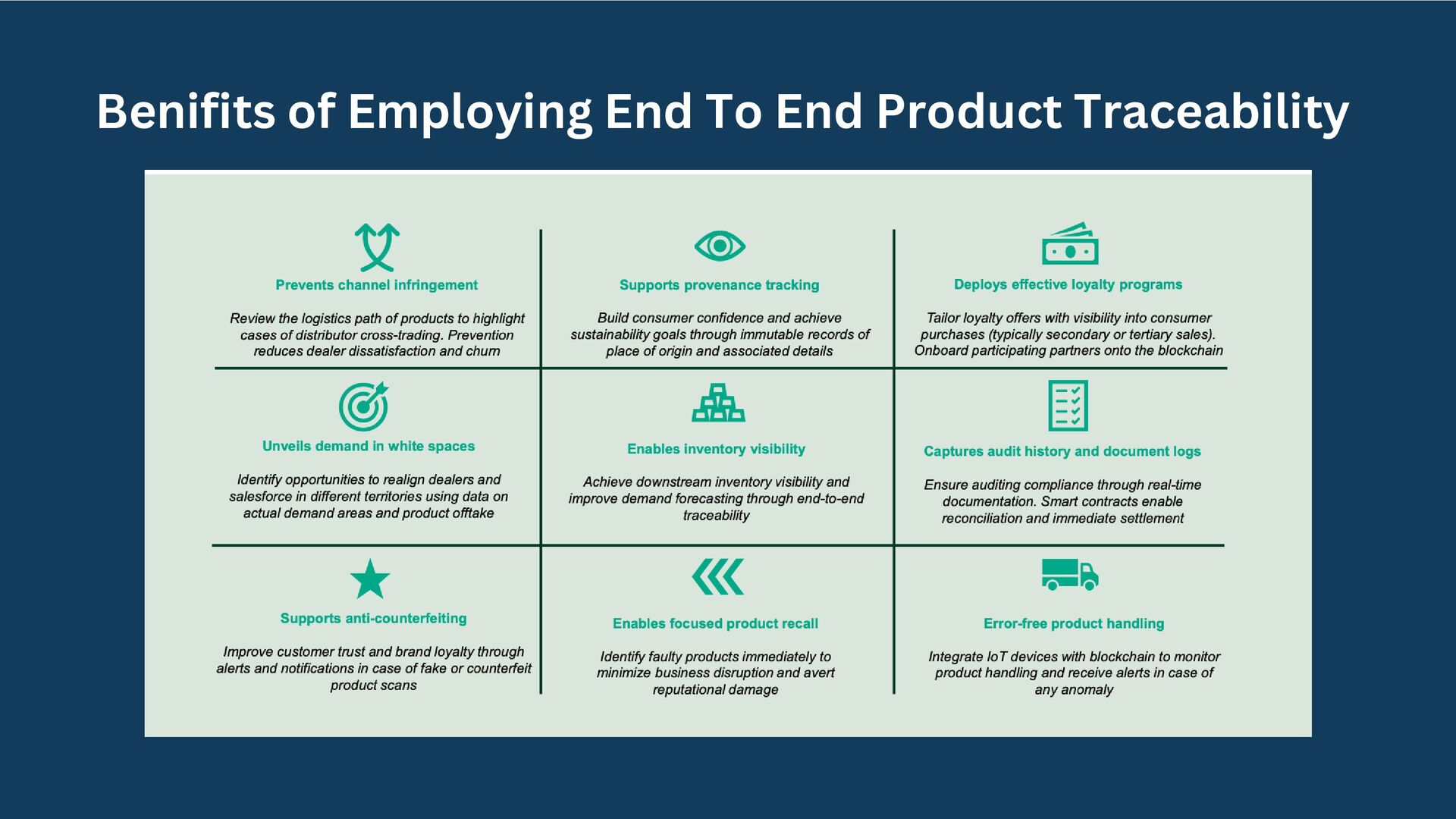
a transparent and immutable record of a product's journey from its origin to the consumer. By leveraging blockchain's distributed ledger system,businesses can create a secure and tamper-proof chain of custody, ensuring the authenticity and integrity of products. Blockchain For Product Traceability Application 1
a complete and transparent view of the product's supply chain, enabling consumers to verify its origin and history. Security: The decentralised nature of blockchain makes it highly secure, protecting against counterfeiting and fraud. Efficiency: Blockchain can streamline supply chain operations by reducing paperwork and manual processes. Sustainability: By tracking the environmental impact of each product, blockchain can help businesses promote sustainability and ethical sourcing.
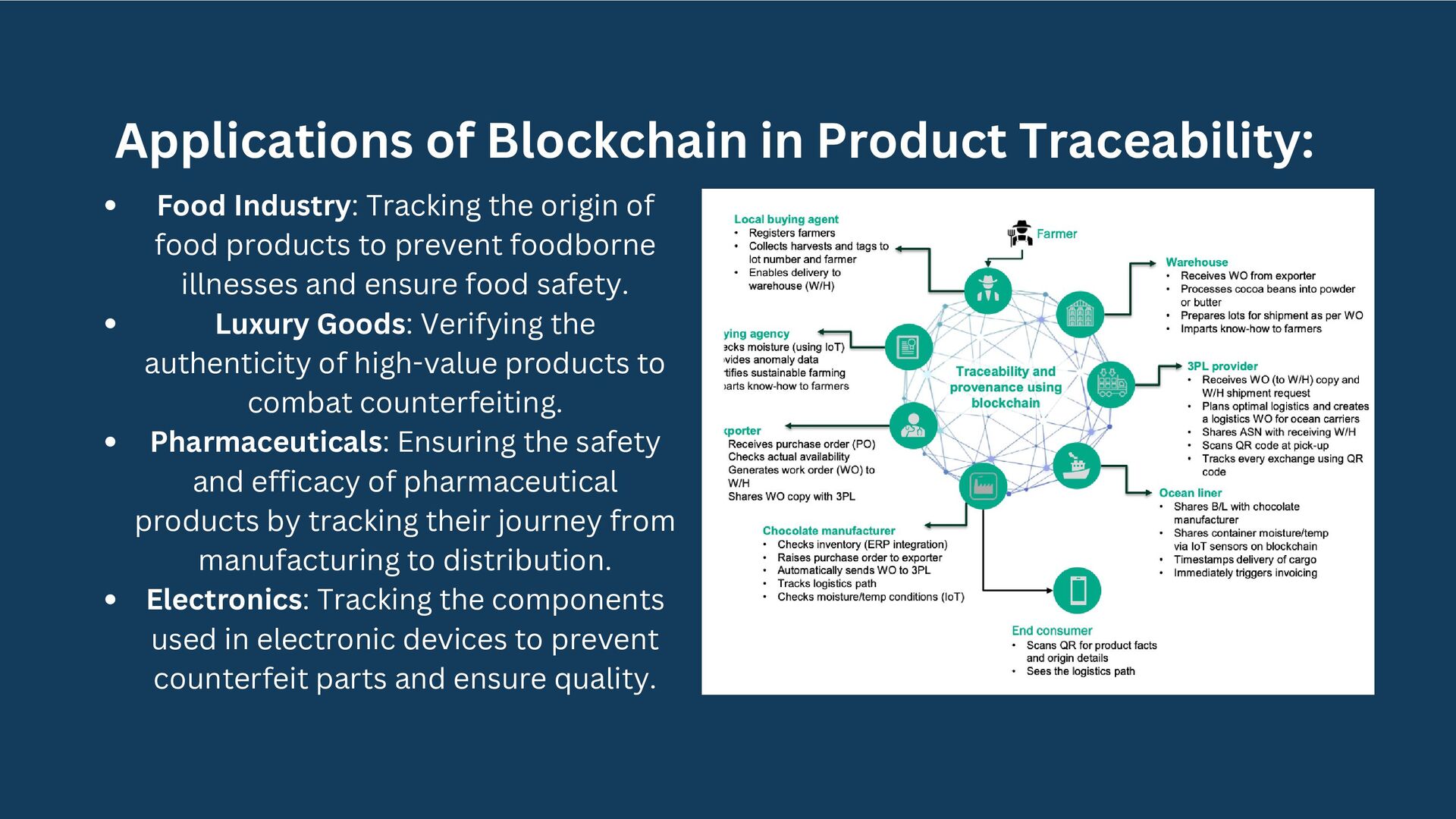
foodborne illnesses and ensure food safety. Luxury Goods: Verifying the authenticity of high-value products to combat counterfeiting. Pharmaceuticals: Ensuring the safety and efficacy of pharmaceutical products by tracking their journey from manufacturing to distribution. Electronics: Tracking the components used in electronic devices to prevent counterfeit parts and ensure quality. Applications of Blockchain in Product Traceability:
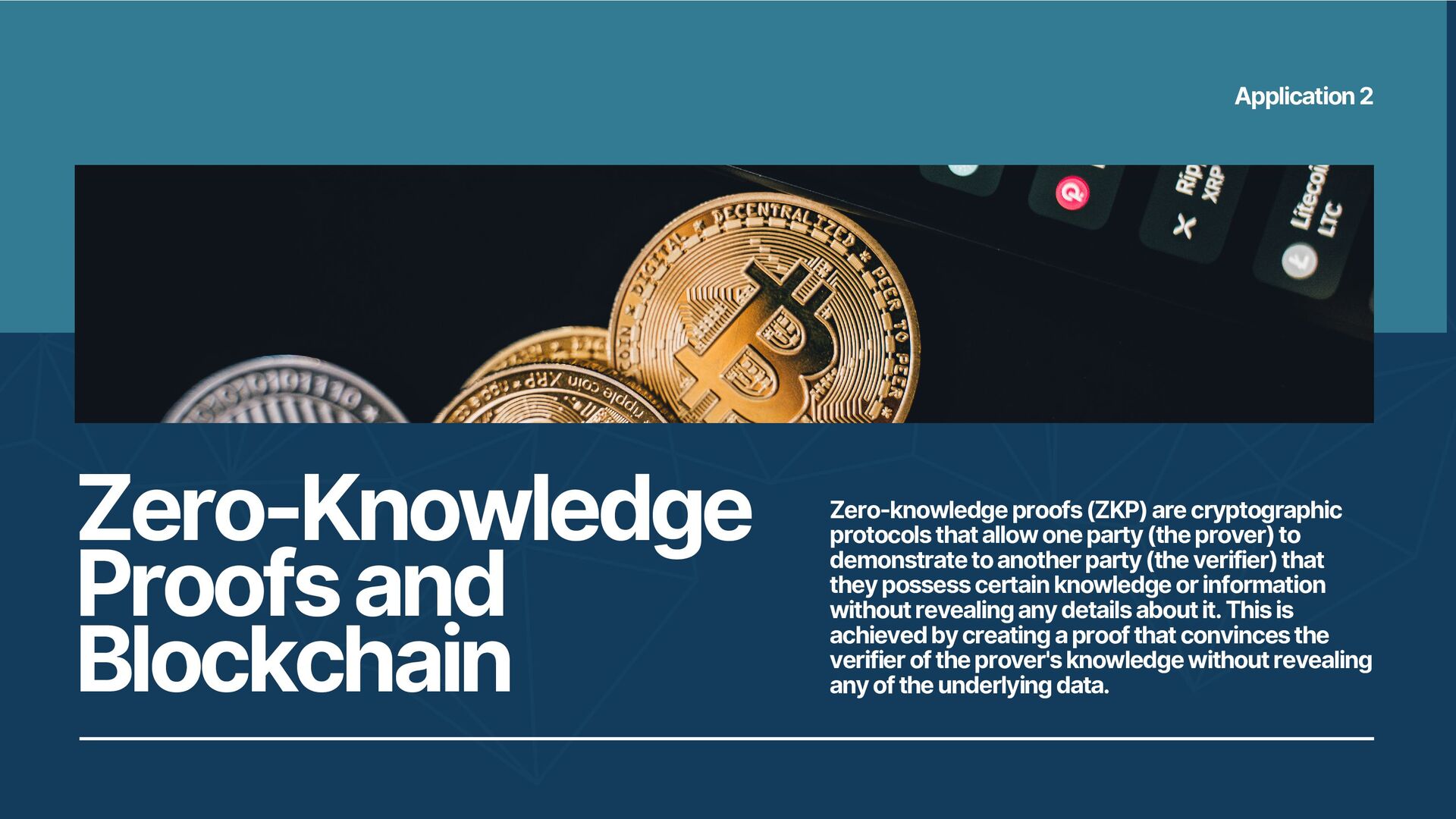
(the prover) to demonstrate to another party (the verifier) that they possess certain knowledge or information without revealing any details about it. This is achieved by creating a proof that convinces the verifier of the prover's knowledge without revealing any of the underlying data. Zero-Knowledge Proofs and Blockchain Application 2
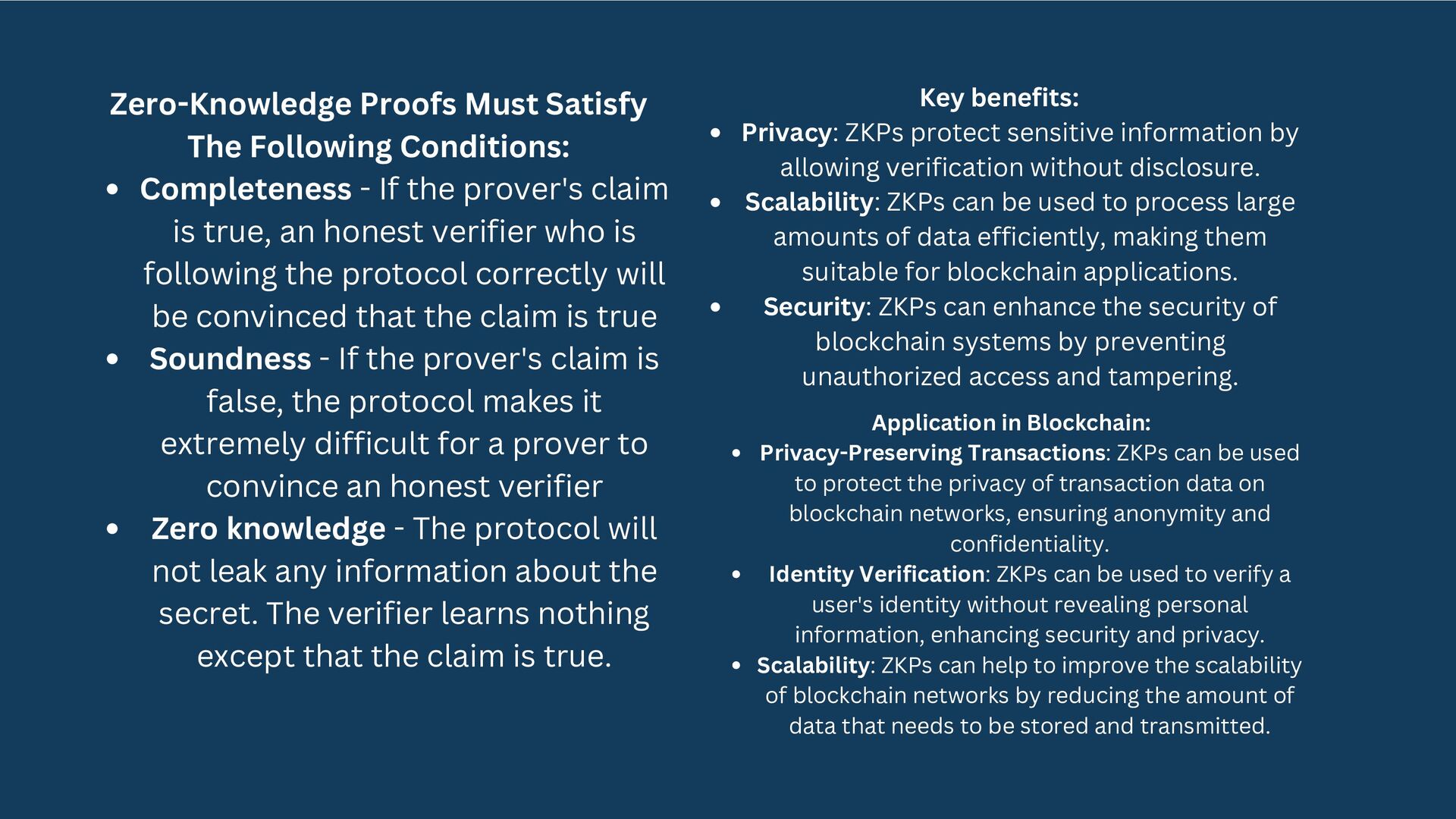
the prover's claim is true, an honest verifier who is following the protocol correctly will be convinced that the claim is true Soundness - If the prover's claim is false, the protocol makes it extremely difficult for a prover to convince an honest verifier Zero knowledge - The protocol will not leak any information about the secret. The verifier learns nothing except that the claim is true. Key benefits: Privacy: ZKPs protect sensitive information by allowing verification without disclosure. Scalability: ZKPs can be used to process large amounts of data efficiently, making them suitable for blockchain applications. Security: ZKPs can enhance the security of blockchain systems by preventing unauthorized access and tampering. Application in Blockchain: Privacy-Preserving Transactions: ZKPs can be used to protect the privacy of transaction data on blockchain networks, ensuring anonymity and confidentiality. Identity Verification: ZKPs can be used to verify a user's identity without revealing personal information, enhancing security and privacy. Scalability: ZKPs can help to improve the scalability of blockchain networks by reducing the amount of data that needs to be stored and transmitted.
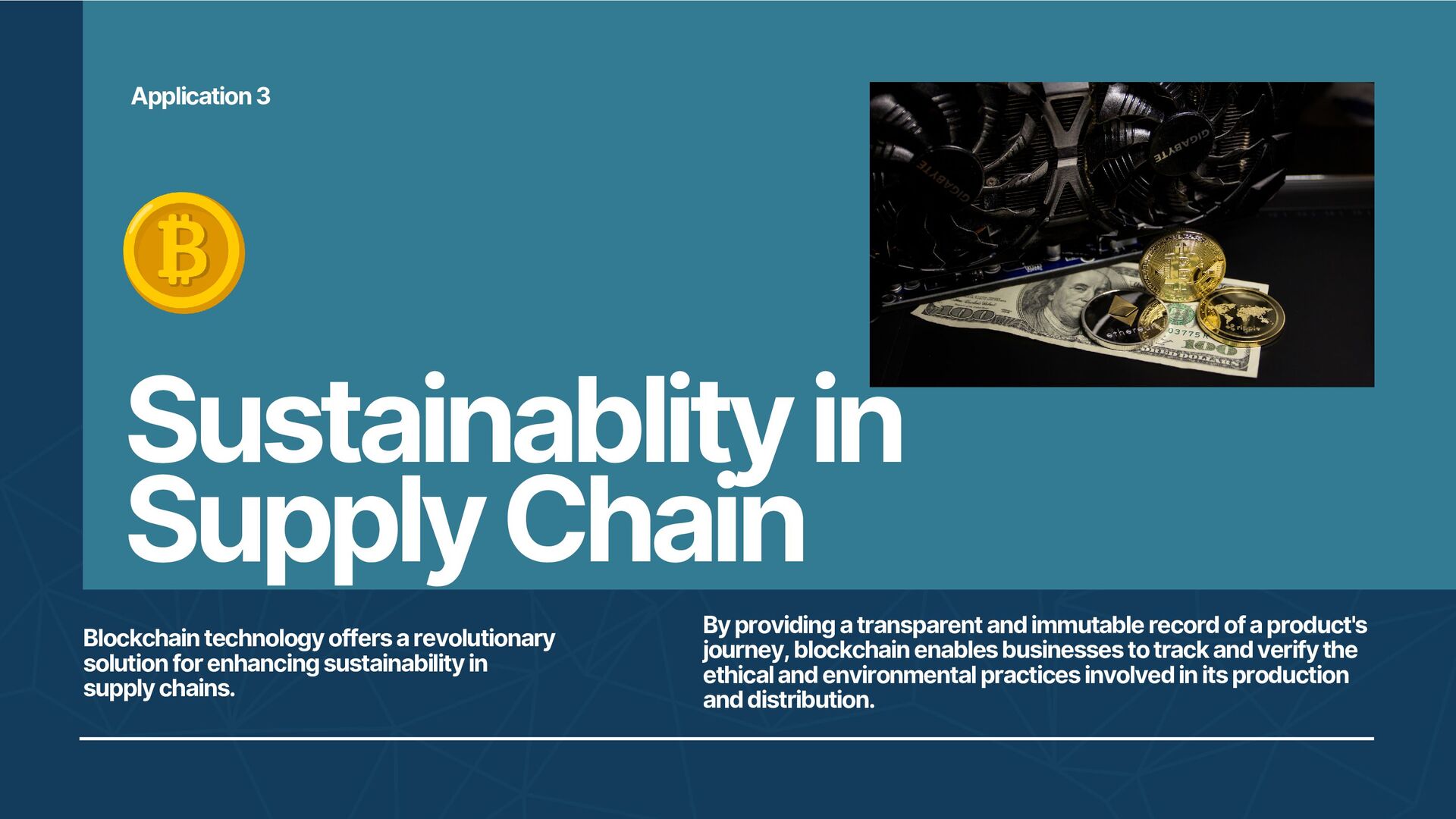
supply chains. By providing a transparent and immutable record of a product's journey, blockchain enables businesses to track and verify the ethical and environmental practices involved in its production and distribution. Sustainablity in Supply Chain Application 3
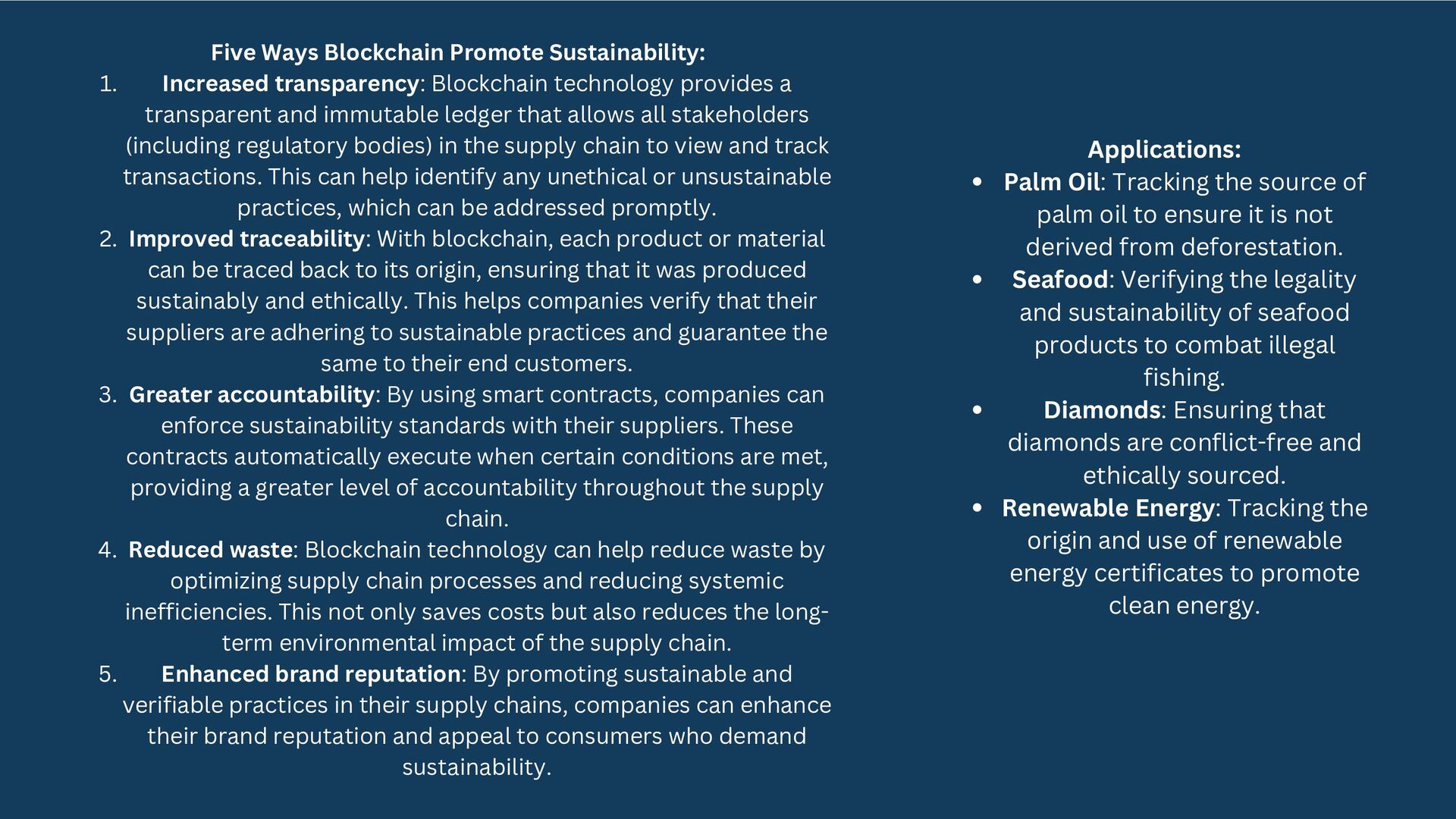
a transparent and immutable ledger that allows all stakeholders (including regulatory bodies) in the supply chain to view and track transactions. This can help identify any unethical or unsustainable practices, which can be addressed promptly. 1. Improved traceability: With blockchain, each product or material can be traced back to its origin, ensuring that it was produced sustainably and ethically. This helps companies verify that their suppliers are adhering to sustainable practices and guarantee the same to their end customers. 2. Greater accountability: By using smart contracts, companies can enforce sustainability standards with their suppliers. These contracts automatically execute when certain conditions are met, providing a greater level of accountability throughout the supply chain. 3. Reduced waste: Blockchain technology can help reduce waste by optimizing supply chain processes and reducing systemic inefficiencies. This not only saves costs but also reduces the long- term environmental impact of the supply chain. 4. Enhanced brand reputation: By promoting sustainable and verifiable practices in their supply chains, companies can enhance their brand reputation and appeal to consumers who demand sustainability. 5. Applications: Palm Oil: Tracking the source of palm oil to ensure it is not derived from deforestation. Seafood: Verifying the legality and sustainability of seafood products to combat illegal fishing. Diamonds: Ensuring that diamonds are conflict-free and ethically sourced. Renewable Energy: Tracking the origin and use of renewable energy certificates to promote clean energy.
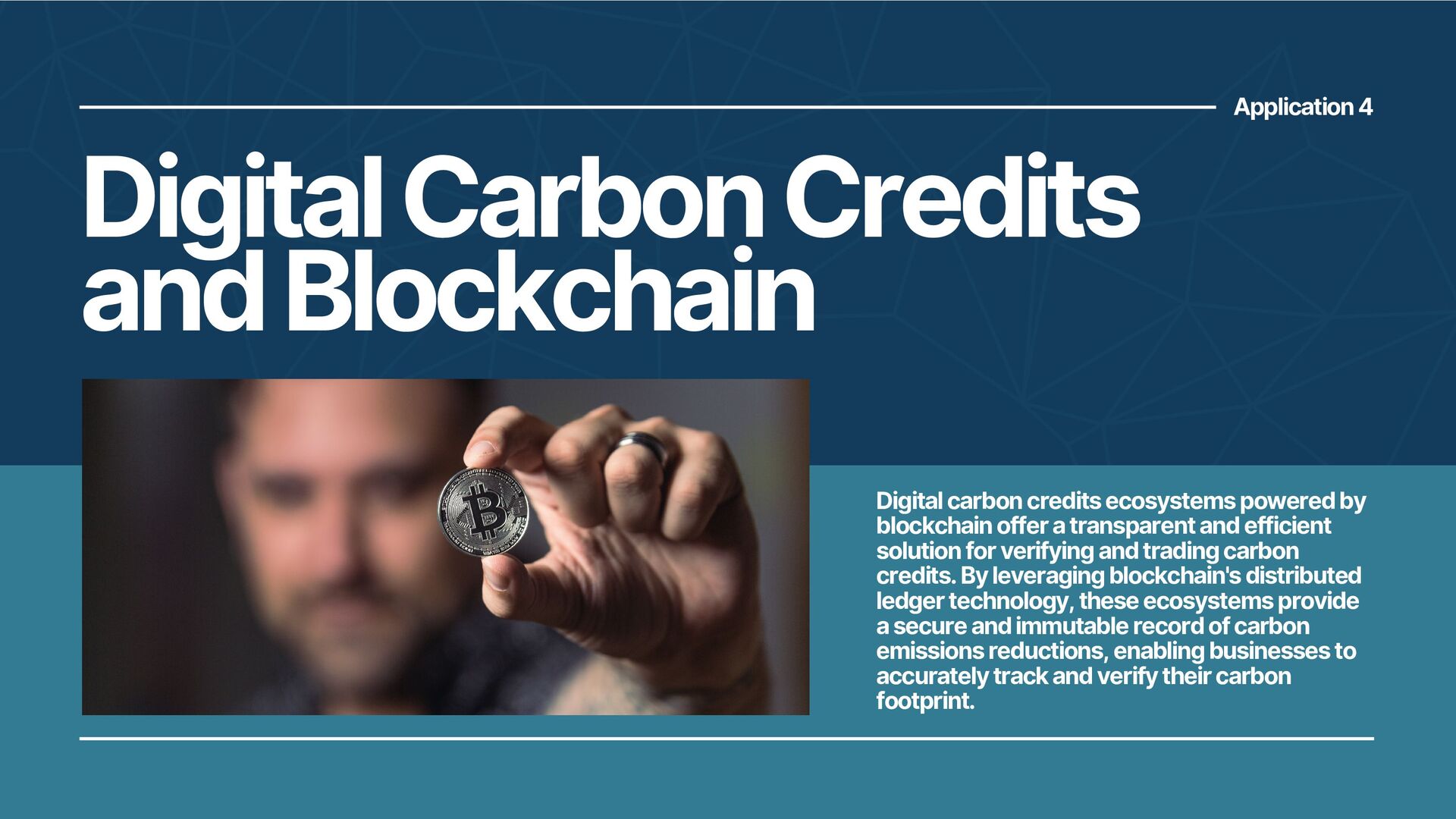
and efficient solution for verifying and trading carbon credits. By leveraging blockchain's distributed ledger technology, these ecosystems provide a secure and immutable record of carbon emissions reductions, enabling businesses to accurately track and verify their carbon footprint. Digital Carbon Credits and Blockchain Application 4
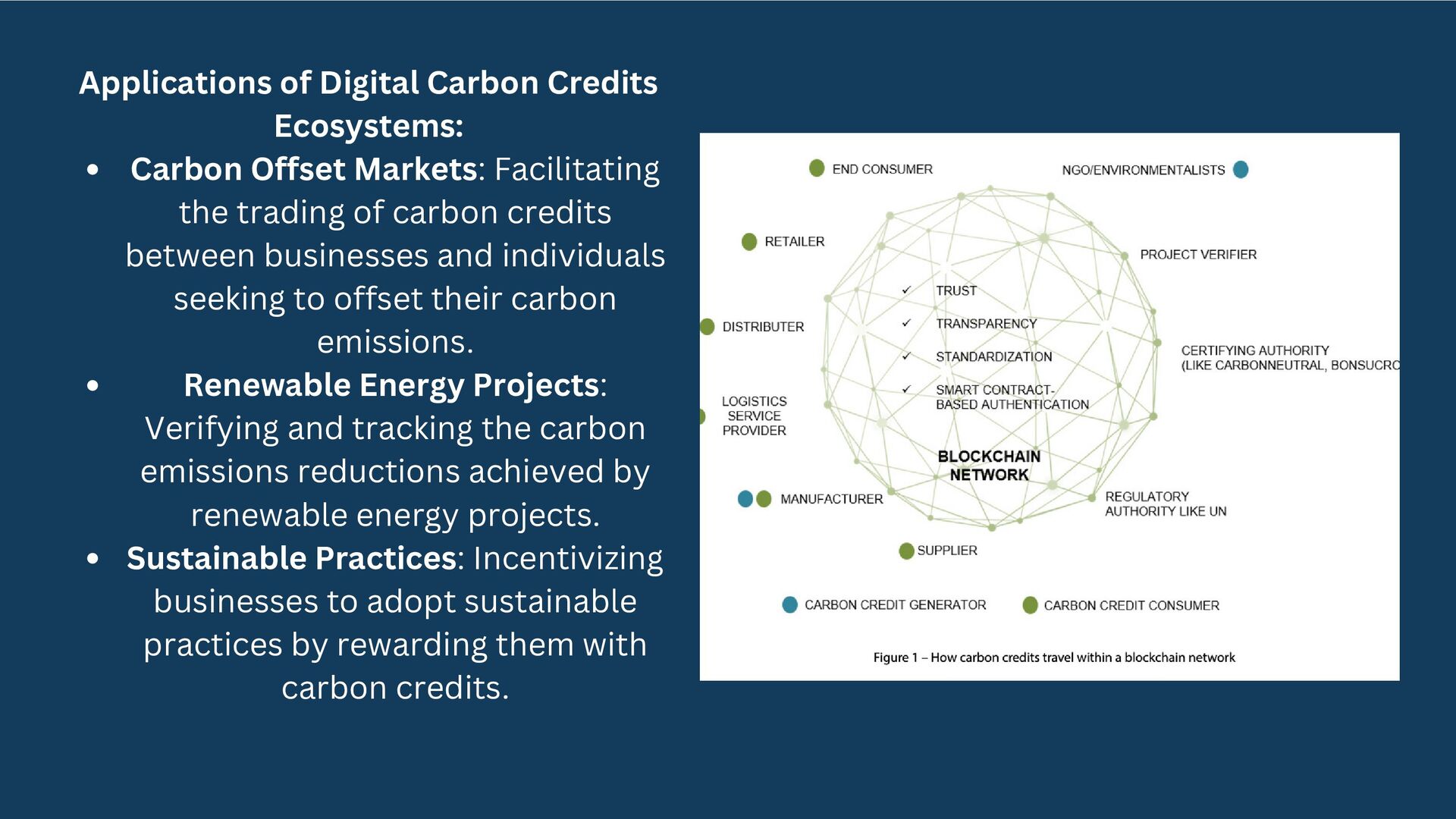
the trading of carbon credits between businesses and individuals seeking to offset their carbon emissions. Renewable Energy Projects: Verifying and tracking the carbon emissions reductions achieved by renewable energy projects. Sustainable Practices: Incentivizing businesses to adopt sustainable practices by rewarding them with carbon credits.
way to improve governance across various sectors.By providing a decentralized and tamper-proof record of an individual's identity, blockchain can enhance transparency,accountability, and trust. Improving Governance Through Digital Identities with Blockchain Application 5
makes it highly secure, protecting against identity theft and fraud. Efficiency: Blockchain can streamline identity verification processes, reducing administrative costs and improving efficiency. Transparency: Blockchain provides a transparent and verifiable record of identity information, enhancing accountability and trust. Inclusivity: Blockchain-based digital identities can provide access to services for individuals who may be excluded from traditional identity systems. Applications: Voter Registration: Ensuring the integrity of voter rolls and preventing voter fraud. Supply Chain Transparency: Tracking the origin and journey of products to prevent counterfeiting and ensure ethical sourcing. Land Registration: Preventing land fraud and ensuring secure property ownership. Social Programs: Verifying eligibility for social programs to reduce fraud and improve efficiency.


 tonyrice
 akihiro_kokubo
 eileencodes
 trallard
 wayneb77
 addyosmani
 baasie
 jlugia
 sarafernandez
 speakerdeck
 schlessera