in Collegeville, Pennsylvania and lead by Chief Supply Chain Officer, Chris Evert. • Newly-imposed Affordable Care Act (ACA) Medical Device Excise Tax of 2.3% of revenue causing an over 10% reduction in profits. • Risks of annual bonuses or layoffs and CFO, Peter Sampras is asking for major cost savings through Supply Chain.
off-site • Adjusting their inventory management. Example: trunk stock, carrying costs and forecasting • Change supply chain from strictly distributors to also include direct customers • Reduction in sales representatives or their pay plan for commissions • All of these recommendations would help with cost-savings, logistics reduction and a more efficient ordering process for customers.
hours transit from the manufacturer to the plant and then 24 hours sterilization. From there it is another 48 hours transit back to the manufacturer for distribution. This addition of 5 days causes conflict for the customer because it adds an extra week to their products getting to them timely. It does not allow for much flexibility when there are emergencies. Taking sterilization on-site would allow for better quality of products as there would be a lessened chance for damage and lost product due to transit. Even though the initial implementation of the process would cost MTC a considerable amount of money the savings would offset this. The machinery is a one-time purchase and would be closely monitored for maintenance. MTC would also know if there was a problem right away with products or sterilization because it is in the warehouse rather than off-site where it would take time to communicate and produce a plan. Lastly, the elimination of transit back and forth from the warehouse to the plant would save a lot of money. Less hands, movement and less time from manufacturer to customer
lot of stock and allowing for trunk stock to be available to the sales representatives. The implementation of smart kiosks can help manage inventory for the customer and allow them to reduce emergencies with running out of product. Carrying too much inventory is very expensive and can cause an expiration problem. Expired product is also costly as there is a price to destroy the product. Ensuring a leaner inventory allows the product to flow to customers “first in, first out” and reduce overhead costs. Trunk stock is also difficult to maintain and doesn’t allow for a system to be in place to check stock and expiration. There are many issues with trunk stock as it carries a cost to have a vehicle, insurance for both the vehicle and product and the time the sales representative takes to service the customer. This change would save on costs for both the manufacturer and the customer so they don’t have to carry too much and can be right on time.
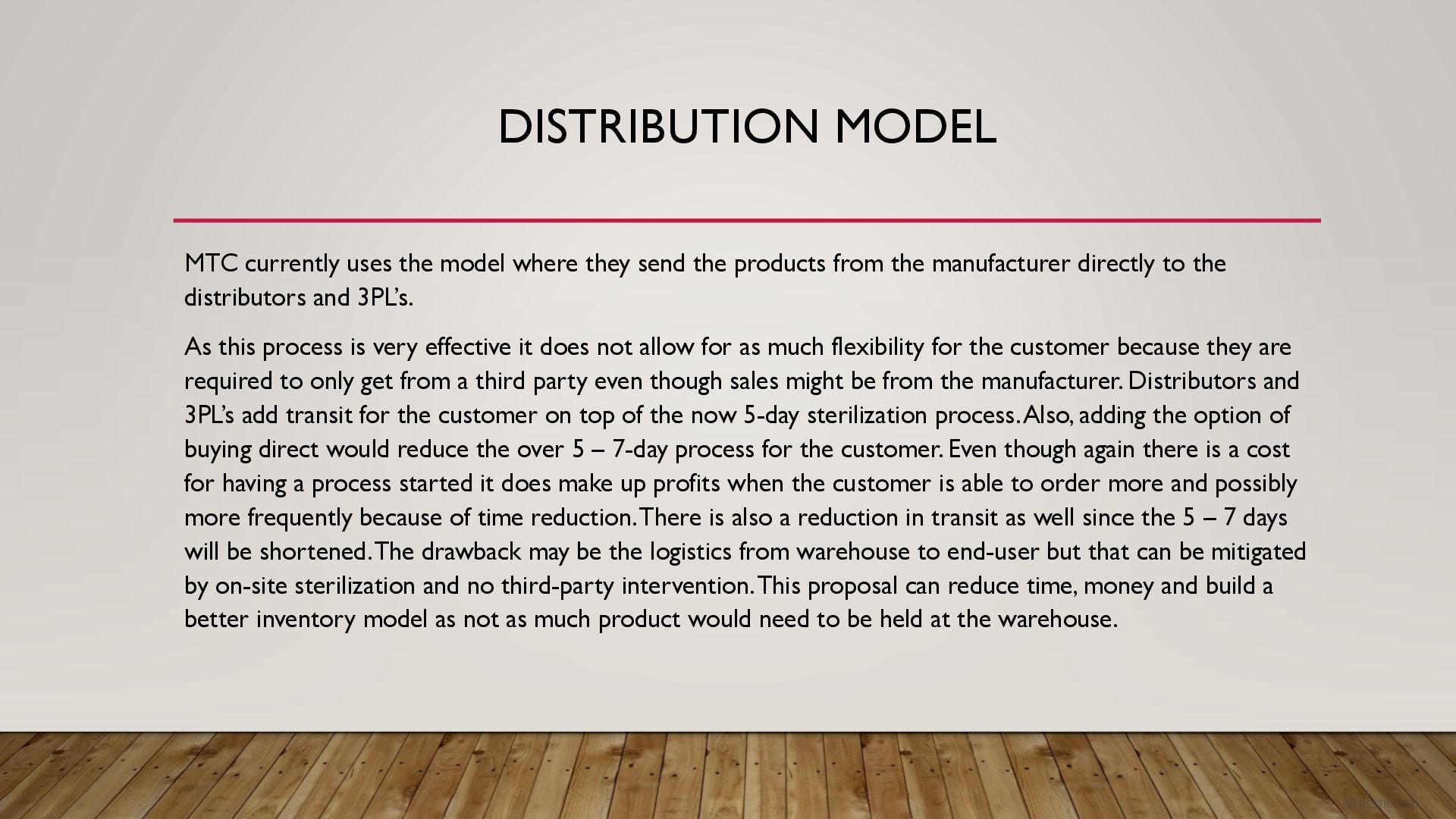
the products from the manufacturer directly to the distributors and 3PL’s. As this process is very effective it does not allow for as much flexibility for the customer because they are required to only get from a third party even though sales might be from the manufacturer. Distributors and 3PL’s add transit for the customer on top of the now 5-day sterilization process. Also, adding the option of buying direct would reduce the over 5 – 7-day process for the customer. Even though again there is a cost for having a process started it does make up profits when the customer is able to order more and possibly more frequently because of time reduction. There is also a reduction in transit as well since the 5 – 7 days will be shortened. The drawback may be the logistics from warehouse to end-user but that can be mitigated by on-site sterilization and no third-party intervention. This proposal can reduce time, money and build a better inventory model as not as much product would need to be held at the warehouse.
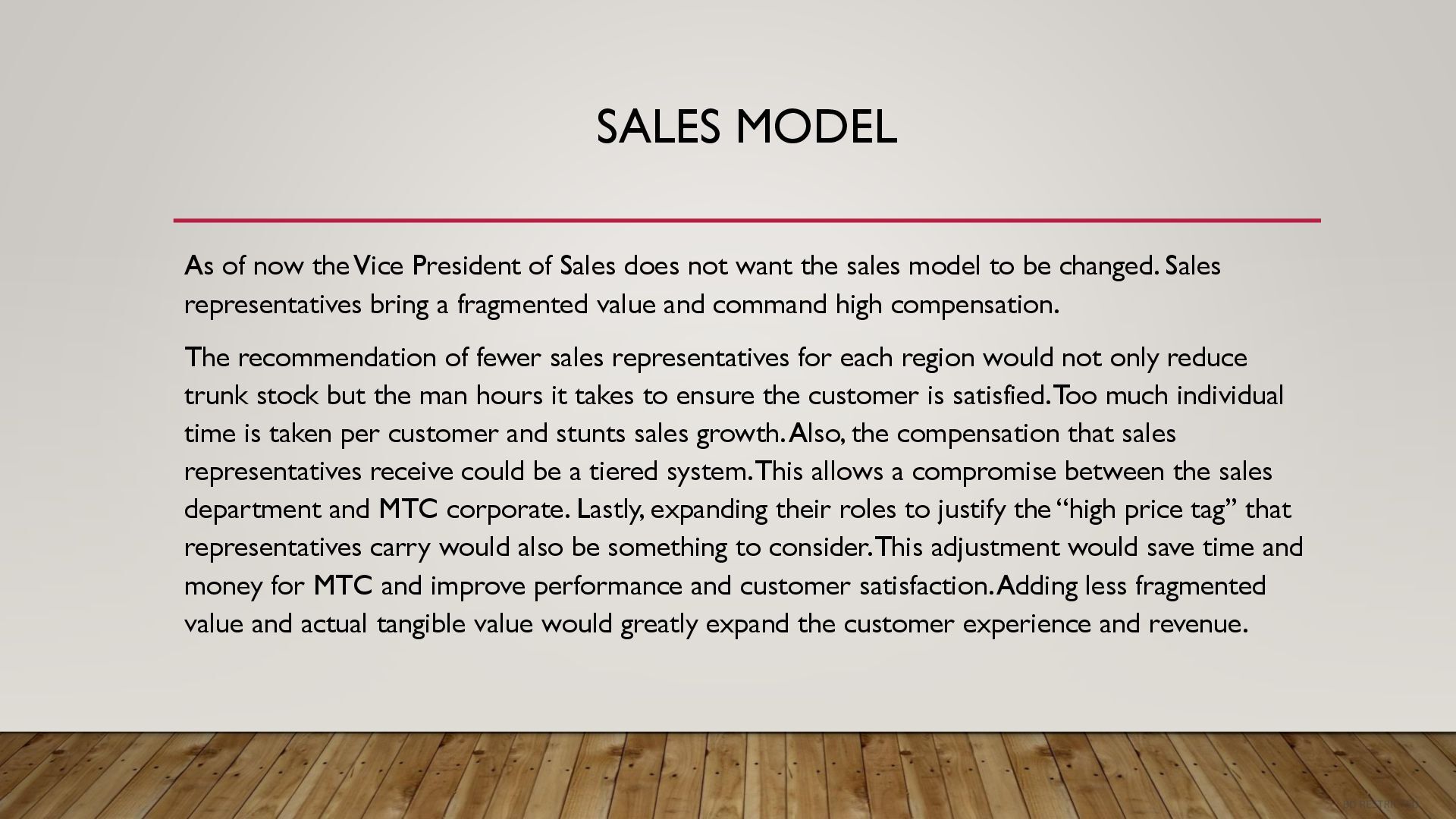
does not want the sales model to be changed. Sales representatives bring a fragmented value and command high compensation. The recommendation of fewer sales representatives for each region would not only reduce trunk stock but the man hours it takes to ensure the customer is satisfied. Too much individual time is taken per customer and stunts sales growth. Also, the compensation that sales representatives receive could be a tiered system. This allows a compromise between the sales department and MTC corporate. Lastly, expanding their roles to justify the “high price tag” that representatives carry would also be something to consider. This adjustment would save time and money for MTC and improve performance and customer satisfaction. Adding less fragmented value and actual tangible value would greatly expand the customer experience and revenue.
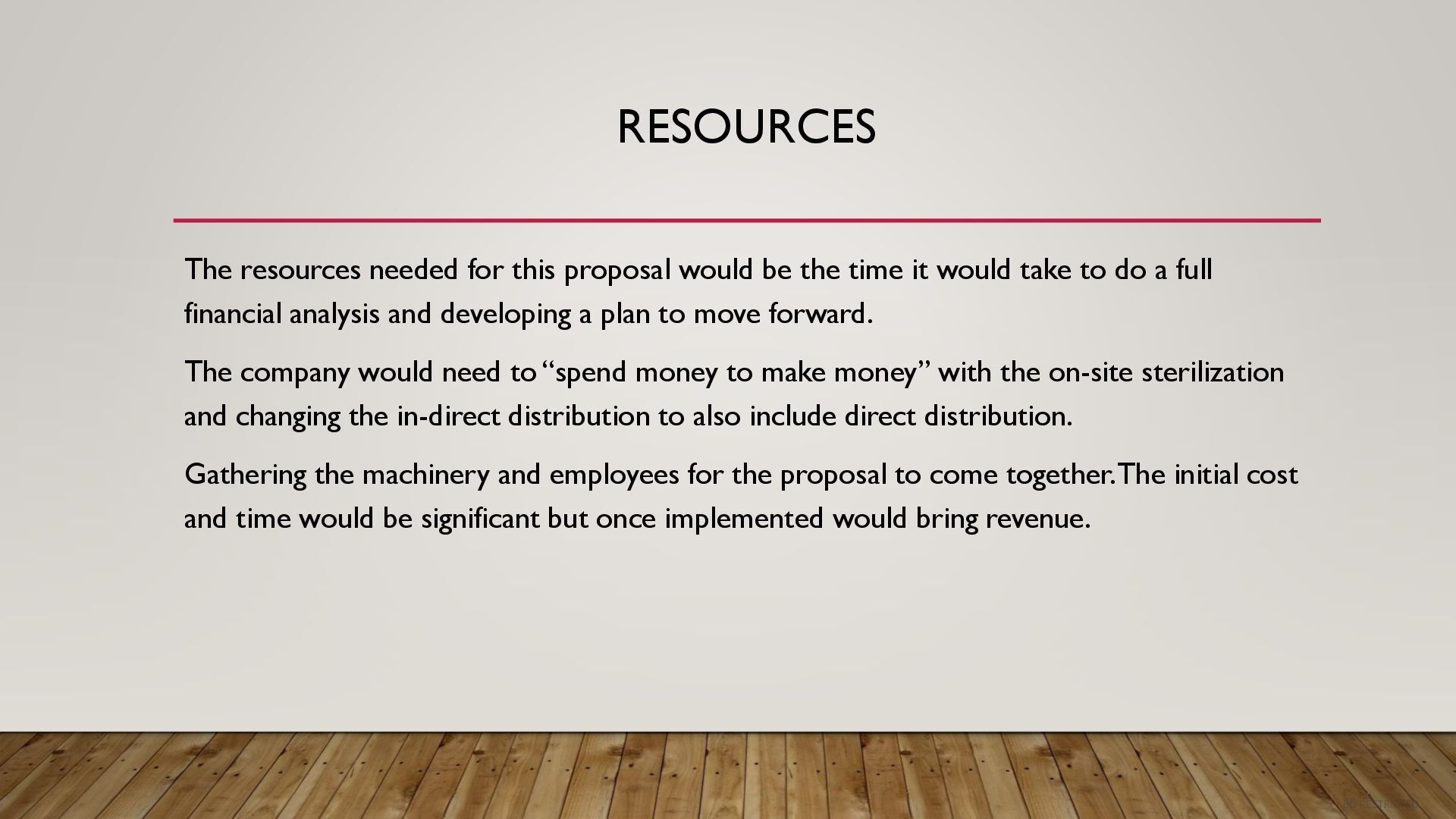
time it would take to do a full financial analysis and developing a plan to move forward. The company would need to “spend money to make money” with the on-site sterilization and changing the in-direct distribution to also include direct distribution. Gathering the machinery and employees for the proposal to come together.The initial cost and time would be significant but once implemented would bring revenue.
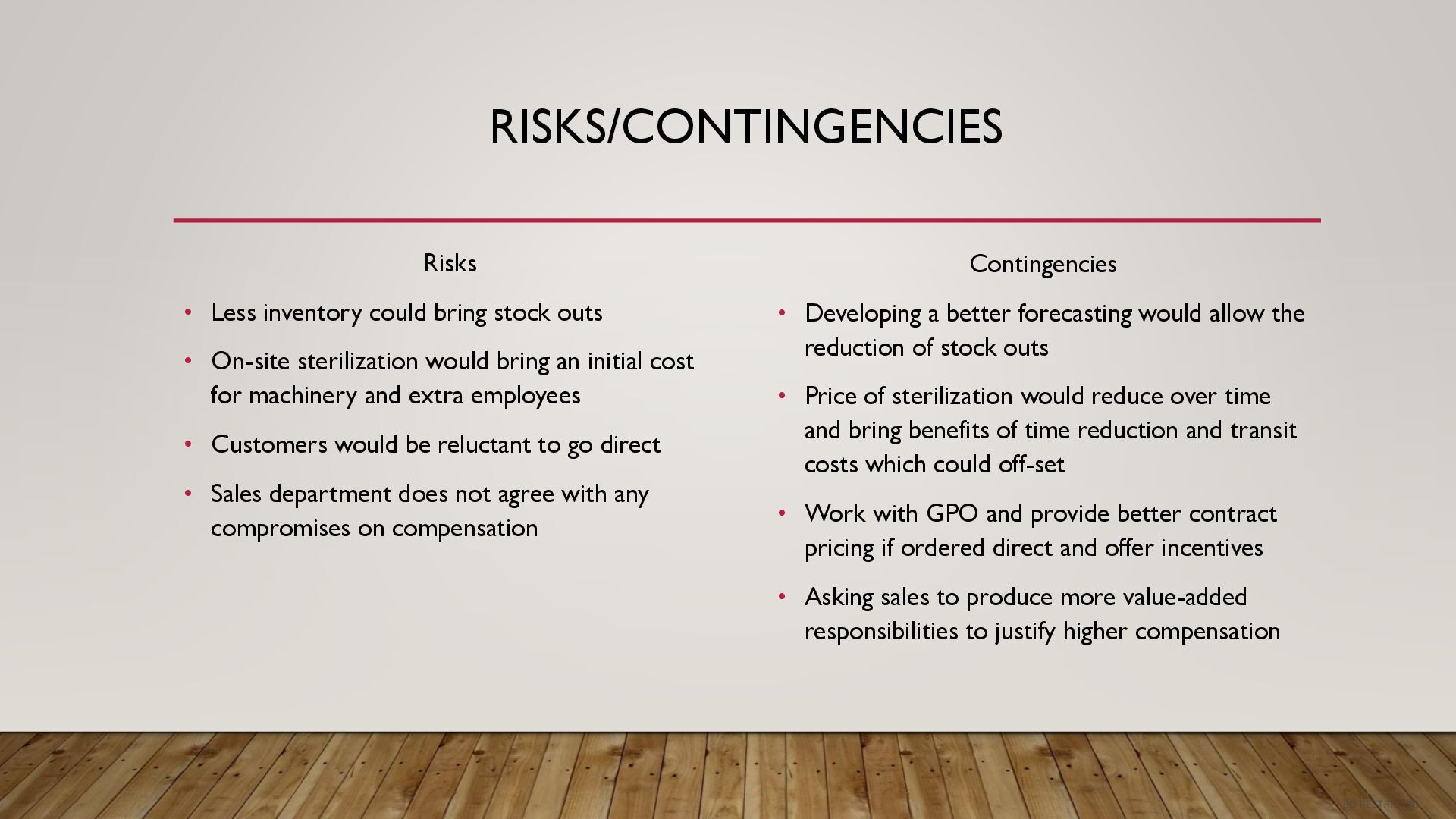
On-site sterilization would bring an initial cost for machinery and extra employees • Customers would be reluctant to go direct • Sales department does not agree with any compromises on compensation Contingencies • Developing a better forecasting would allow the reduction of stock outs • Price of sterilization would reduce over time and bring benefits of time reduction and transit costs which could off-set • Work with GPO and provide better contract pricing if ordered direct and offer incentives • Asking sales to produce more value-added responsibilities to justify higher compensation


 jnunemaker
 cargoodrich
 kneath
 brad_frost
 chikuwait
 denniskardys
 cassininazir
 akashhashmi
 pedronauck
 davidcarrasco
 chriscoyier
 smashingmag