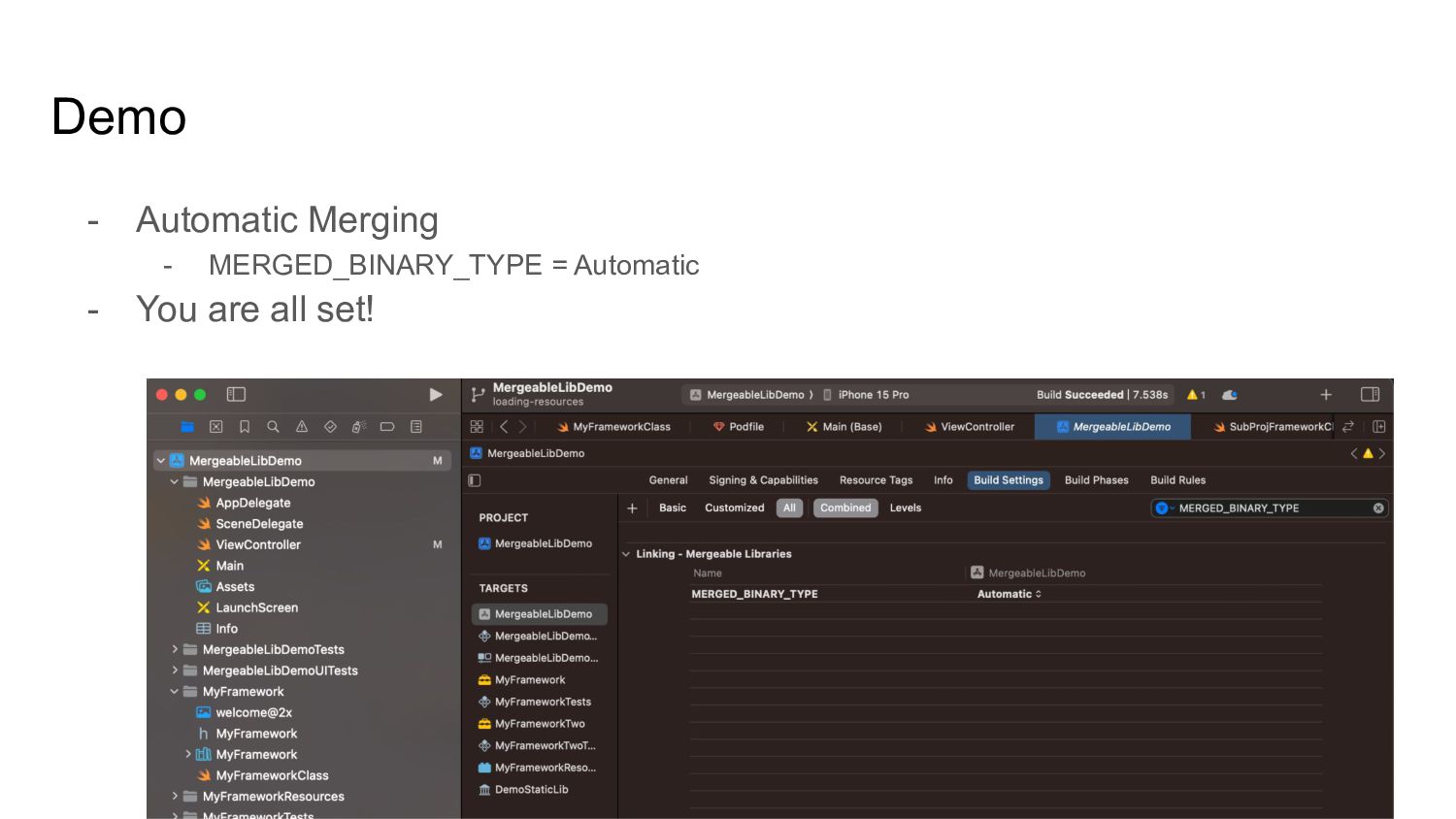
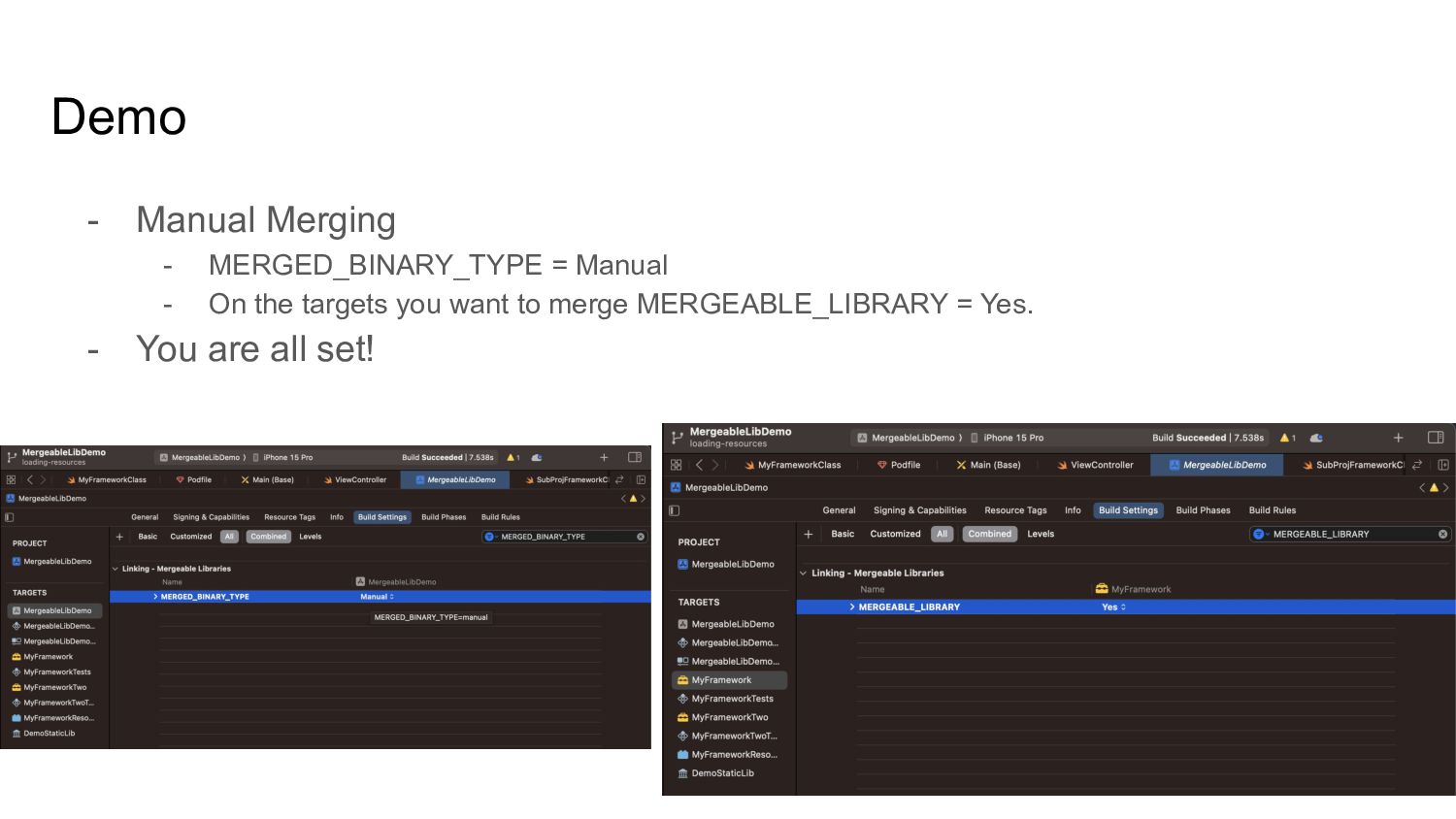
Cons of Static Libs vs Dynamic Frameworks • Mergeable libraries - Xcode 15 ◦ Automatic merging ◦ Manual merging • Load resources from mergeable libs • Use otool to inspect app binary • How can you leverage mergeable libraries • Q & A
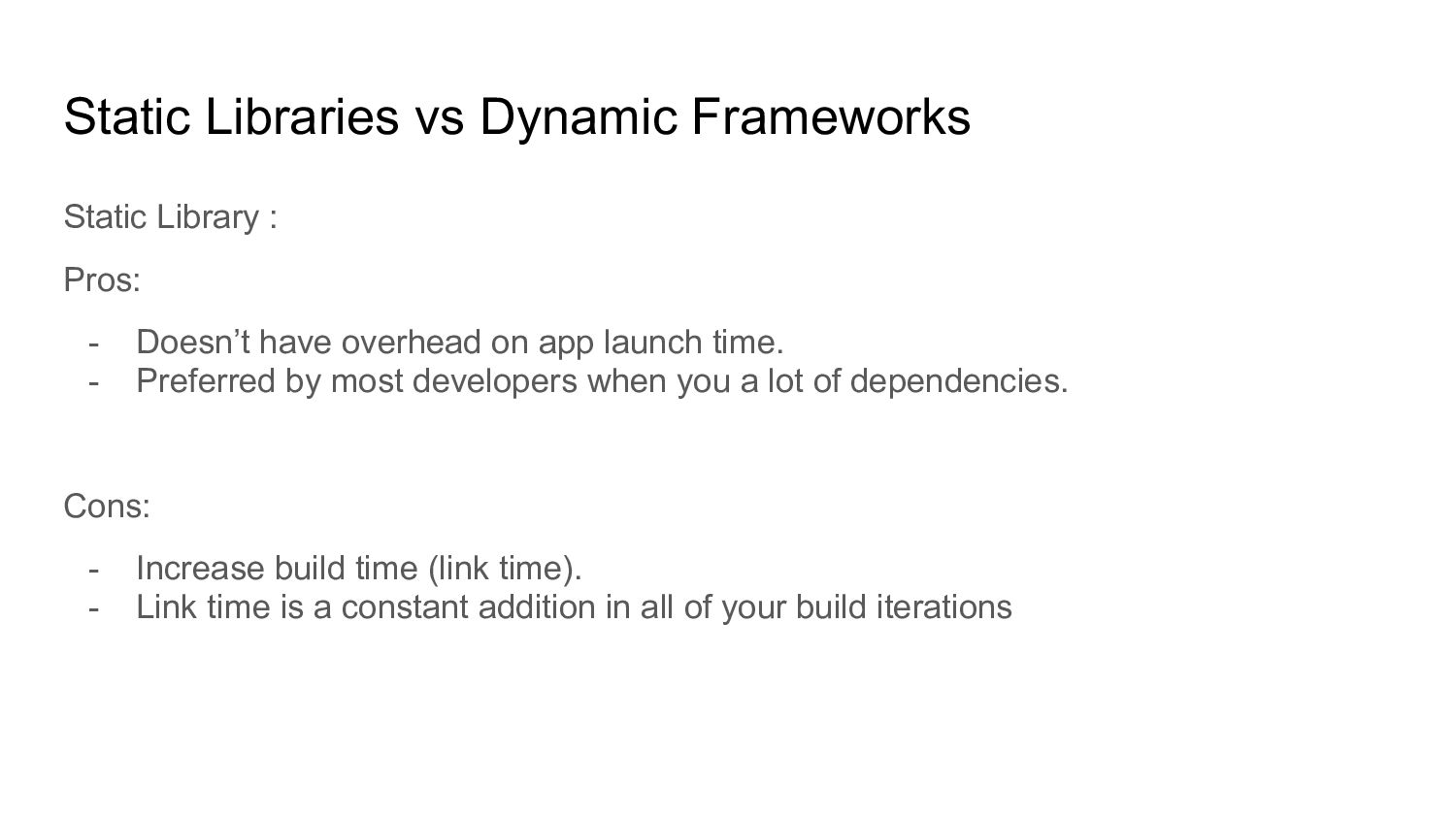
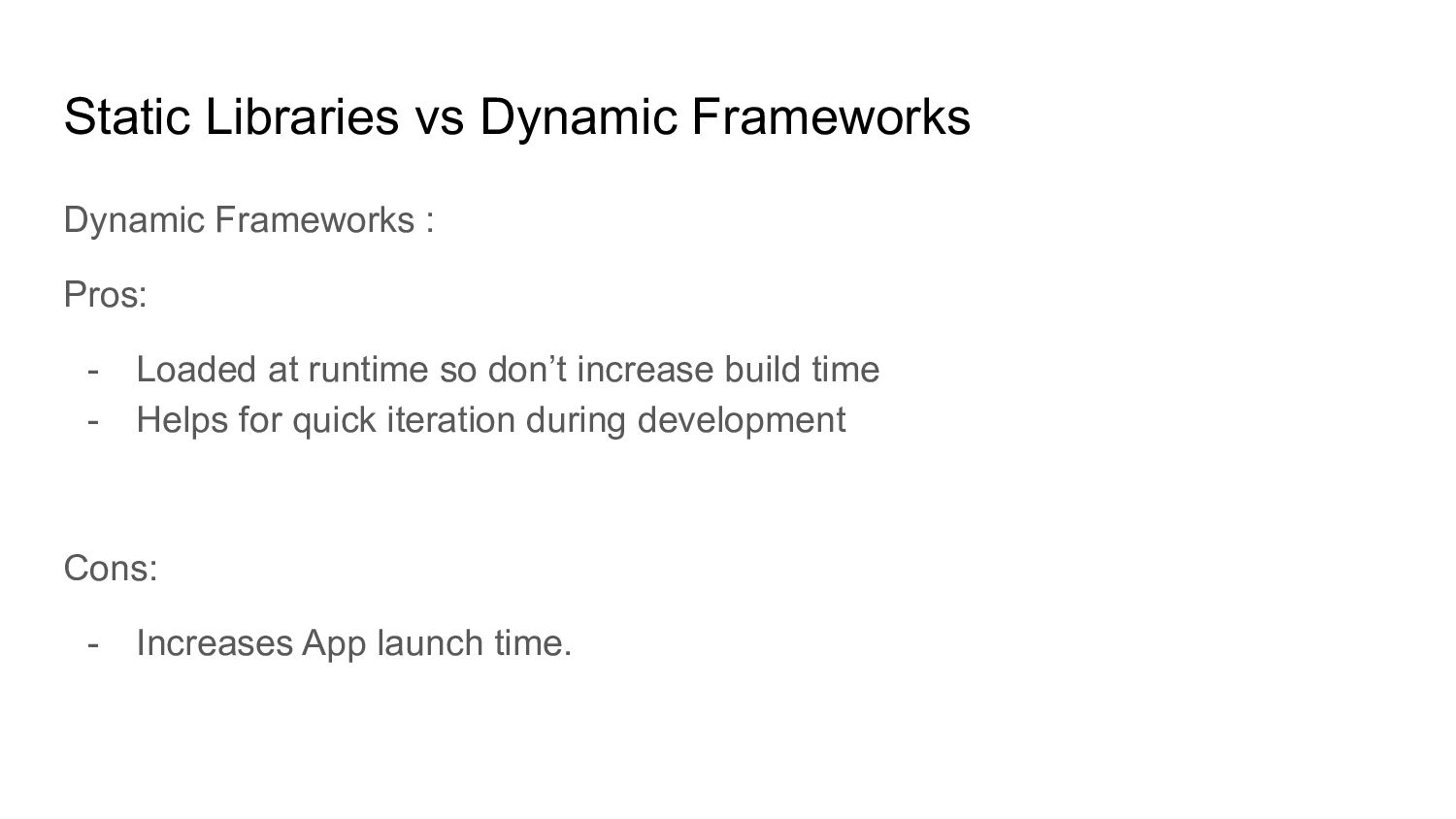
Doesn’t have overhead on app launch time. - Preferred by most developers when you a lot of dependencies. Cons: - Increase build time (link time). - Link time is a constant addition in all of your build iterations
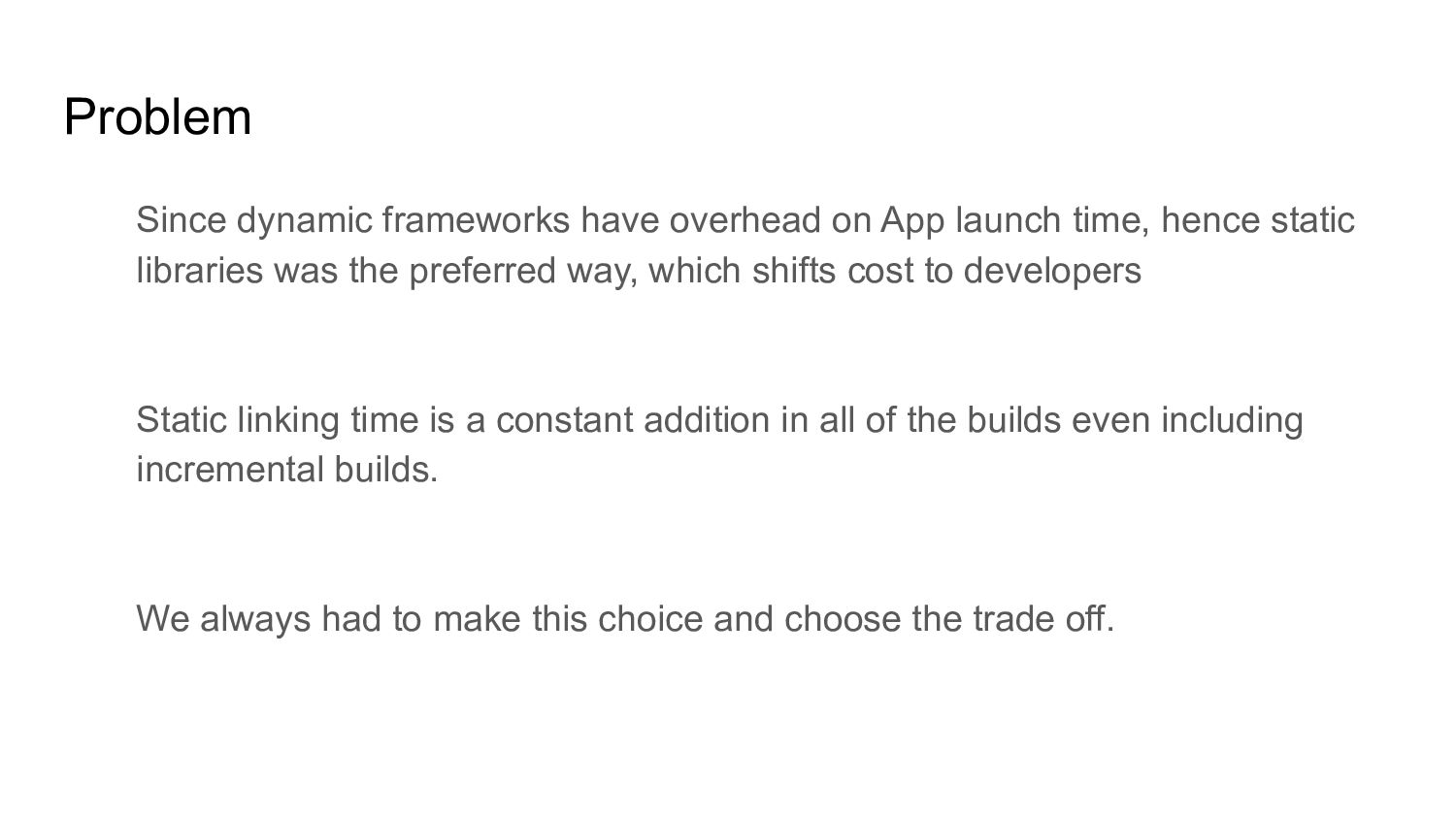
hence static libraries was the preferred way, which shifts cost to developers Static linking time is a constant addition in all of the builds even including incremental builds. We always had to make this choice and choose the trade off.
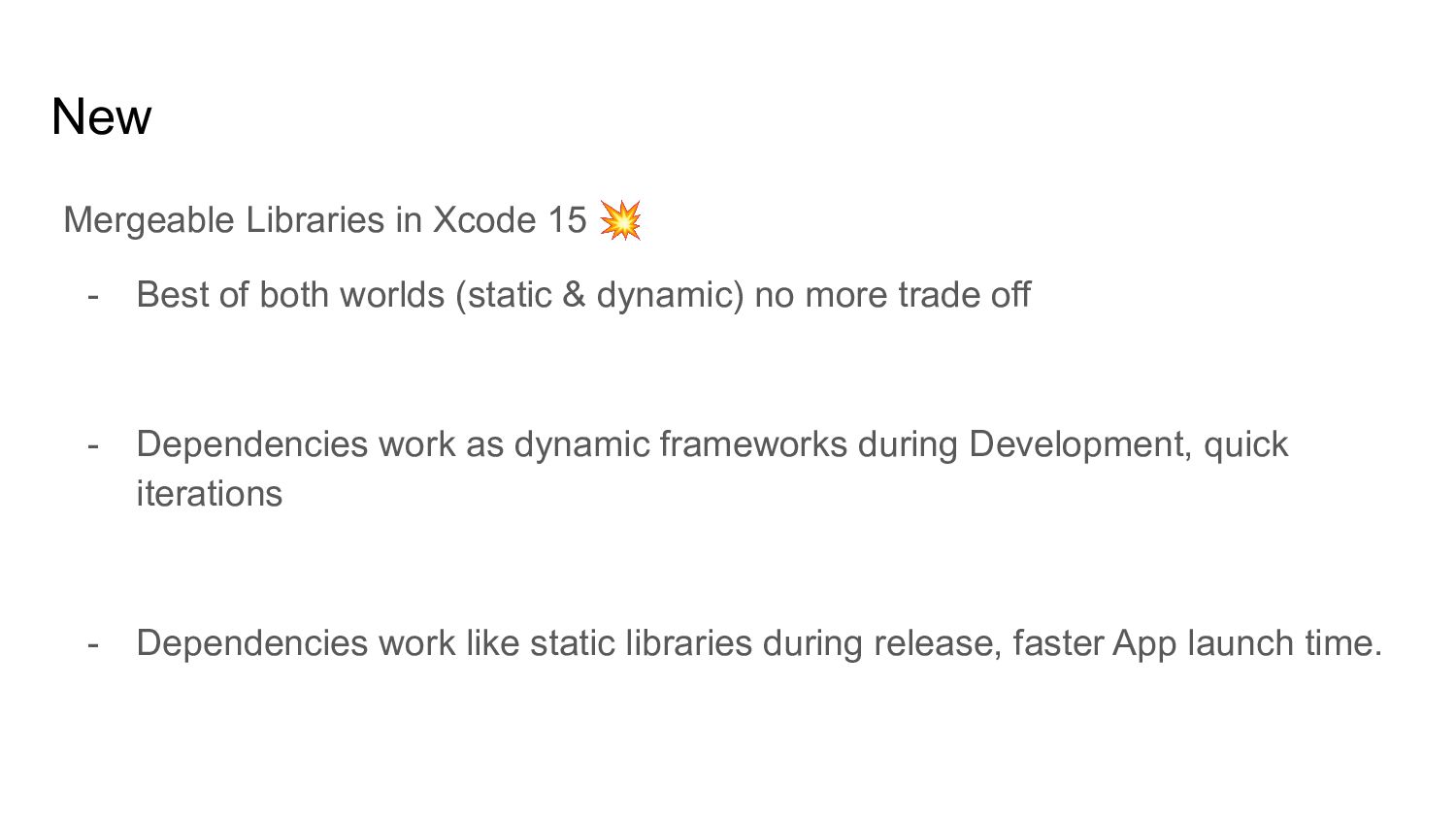
both worlds (static & dynamic) no more trade off - Dependencies work as dynamic frameworks during Development, quick iterations - Dependencies work like static libraries during release, faster App launch time.
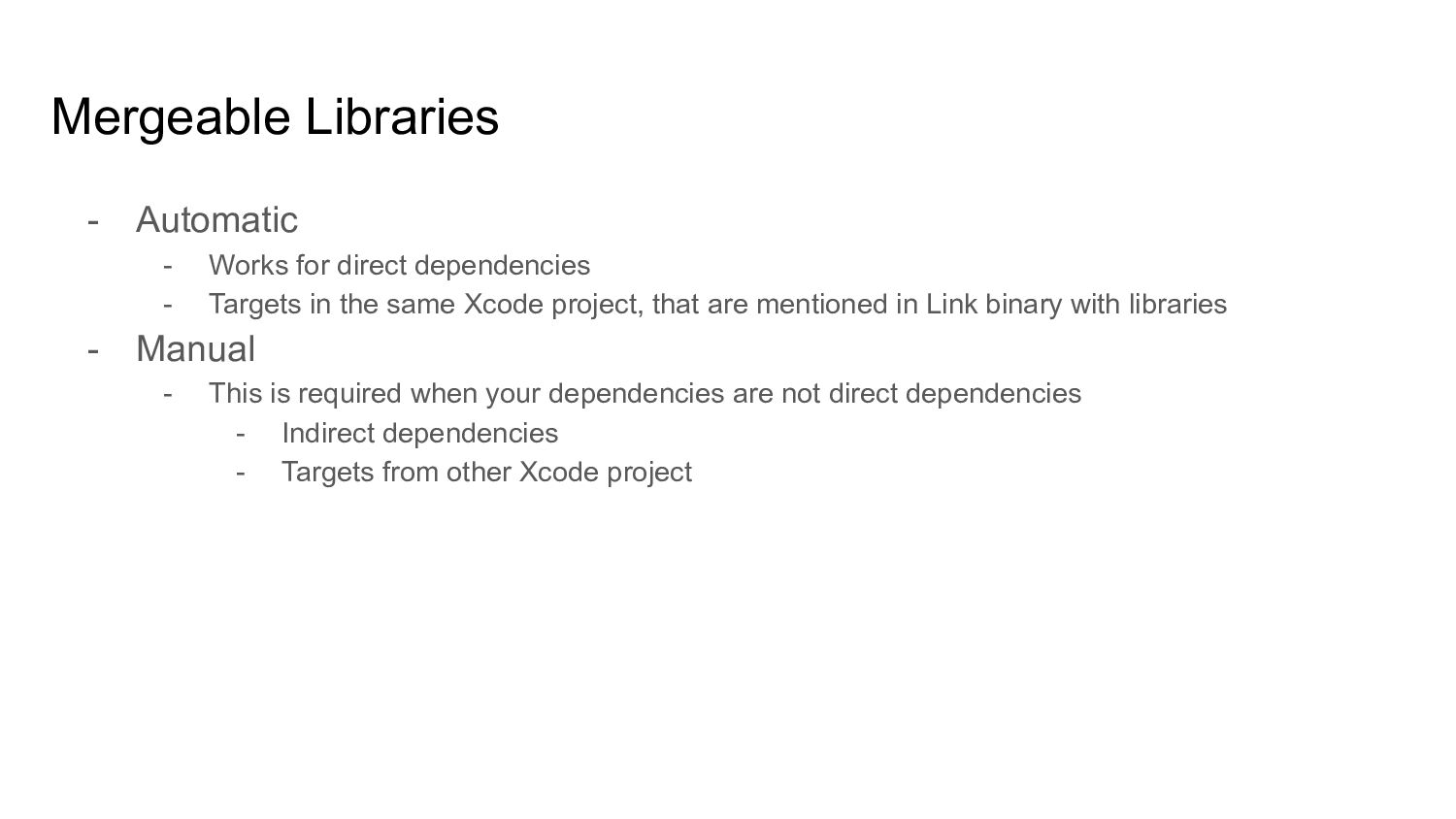
Targets in the same Xcode project, that are mentioned in Link binary with libraries - Manual - This is required when your dependencies are not direct dependencies - Indirect dependencies - Targets from other Xcode project
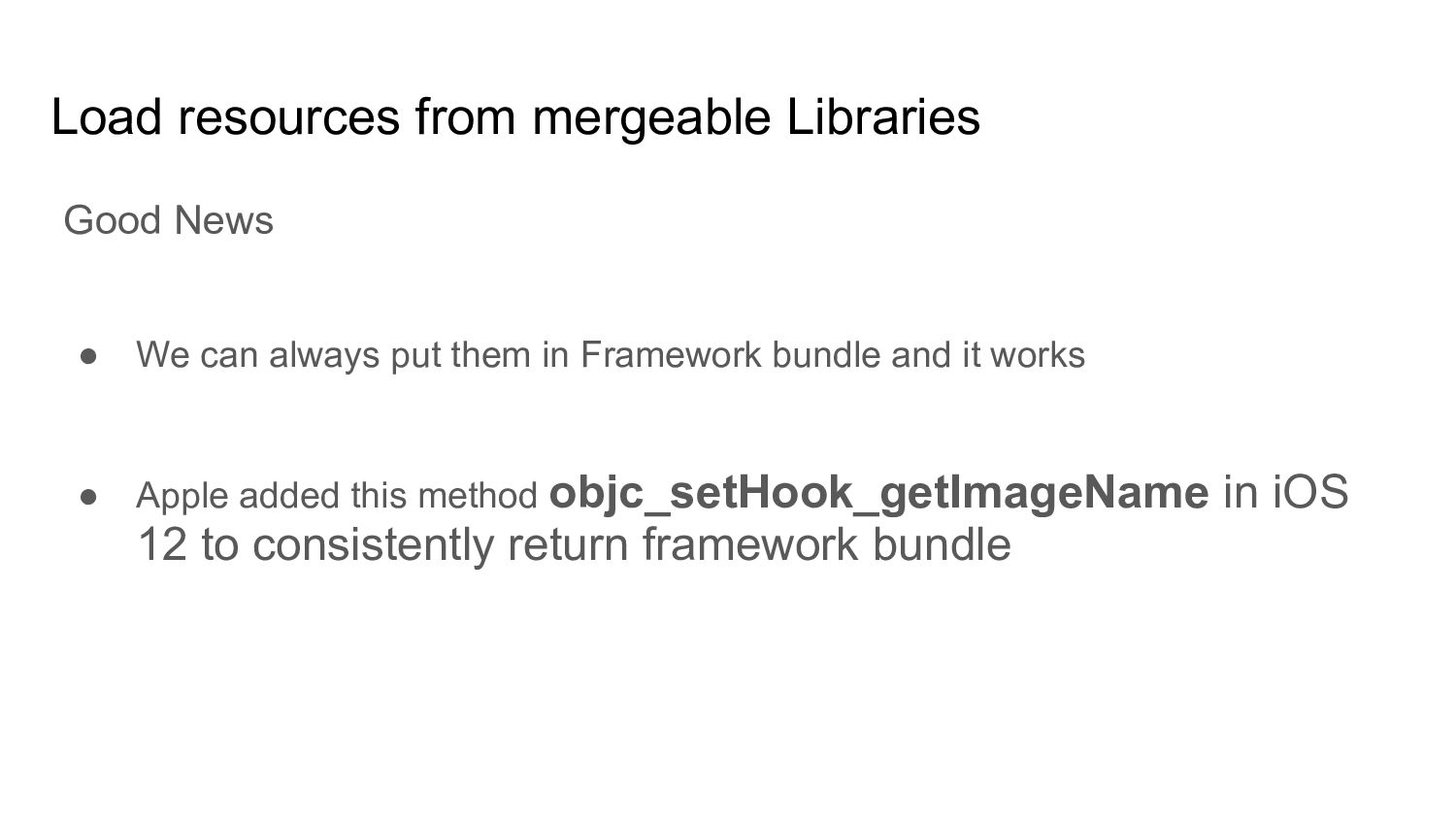
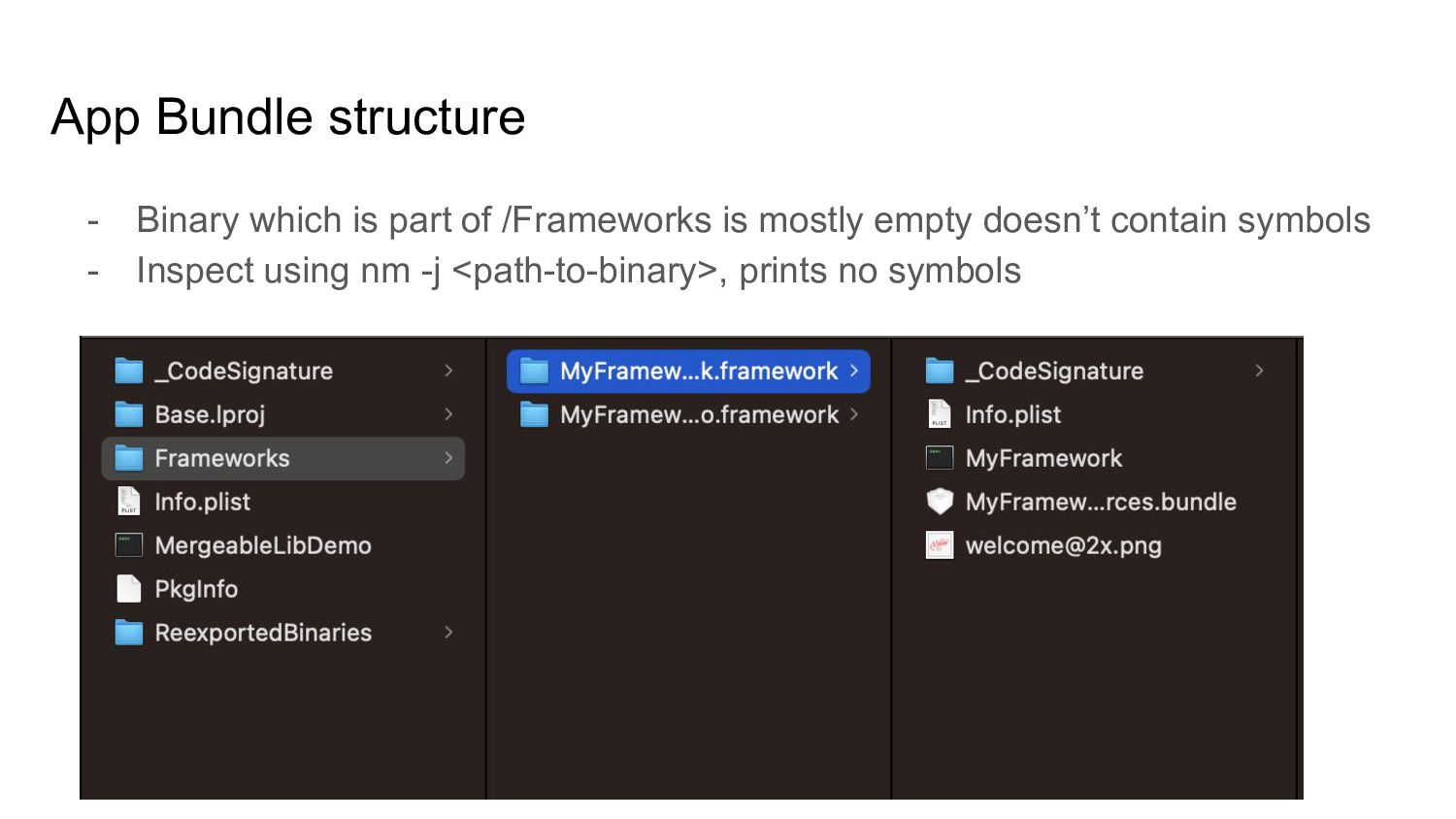
resources in framework bundle - For static libs we create a resource bundle - Mergeable libraries behaves as dynamic framework during development and static lib during release Where to put resources?
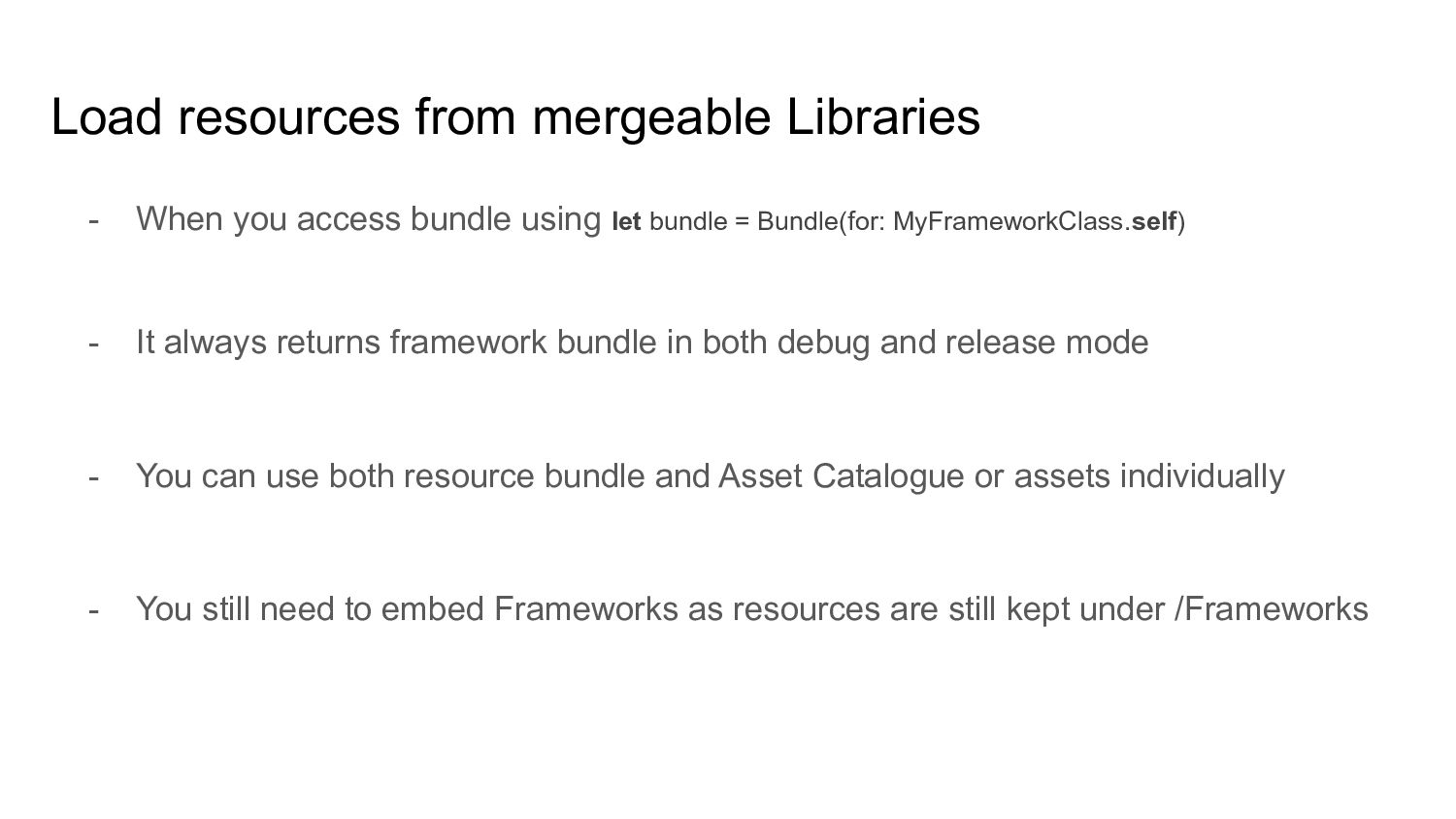
using let bundle = Bundle(for: MyFrameworkClass.self) - It always returns framework bundle in both debug and release mode - You can use both resource bundle and Asset Catalogue or assets individually - You still need to embed Frameworks as resources are still kept under /Frameworks
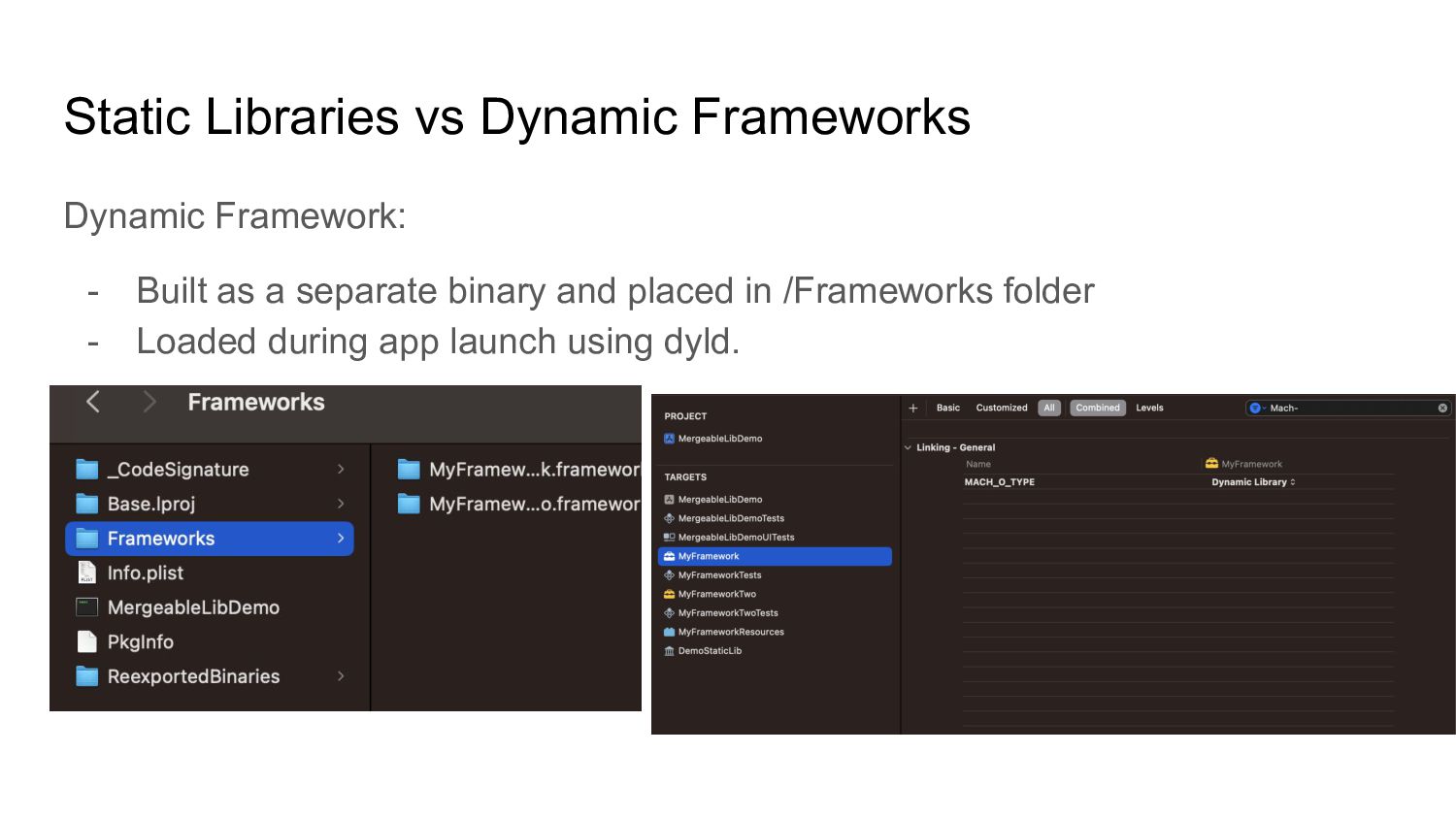
Launch time is ~400 ms. - You can measure App launch time using instruments - https://developer.apple.com/videos/play/wwdc2019/423/ - Dynamic frameworks are loaded using dyld which is part of the pre-main


 lara
lara
 iamctodd
 codingconduct
 szymonslowik
 stuffmc
 twada
twada
 retrage
 jonoalderson
 eileencodes
 mfonobong