AI systems ▹ Only as good as humans building them ▹ Human biases infiltrate them ▹ Amplify existing prejudices ▹ Represent people who build them, not people they serve 2
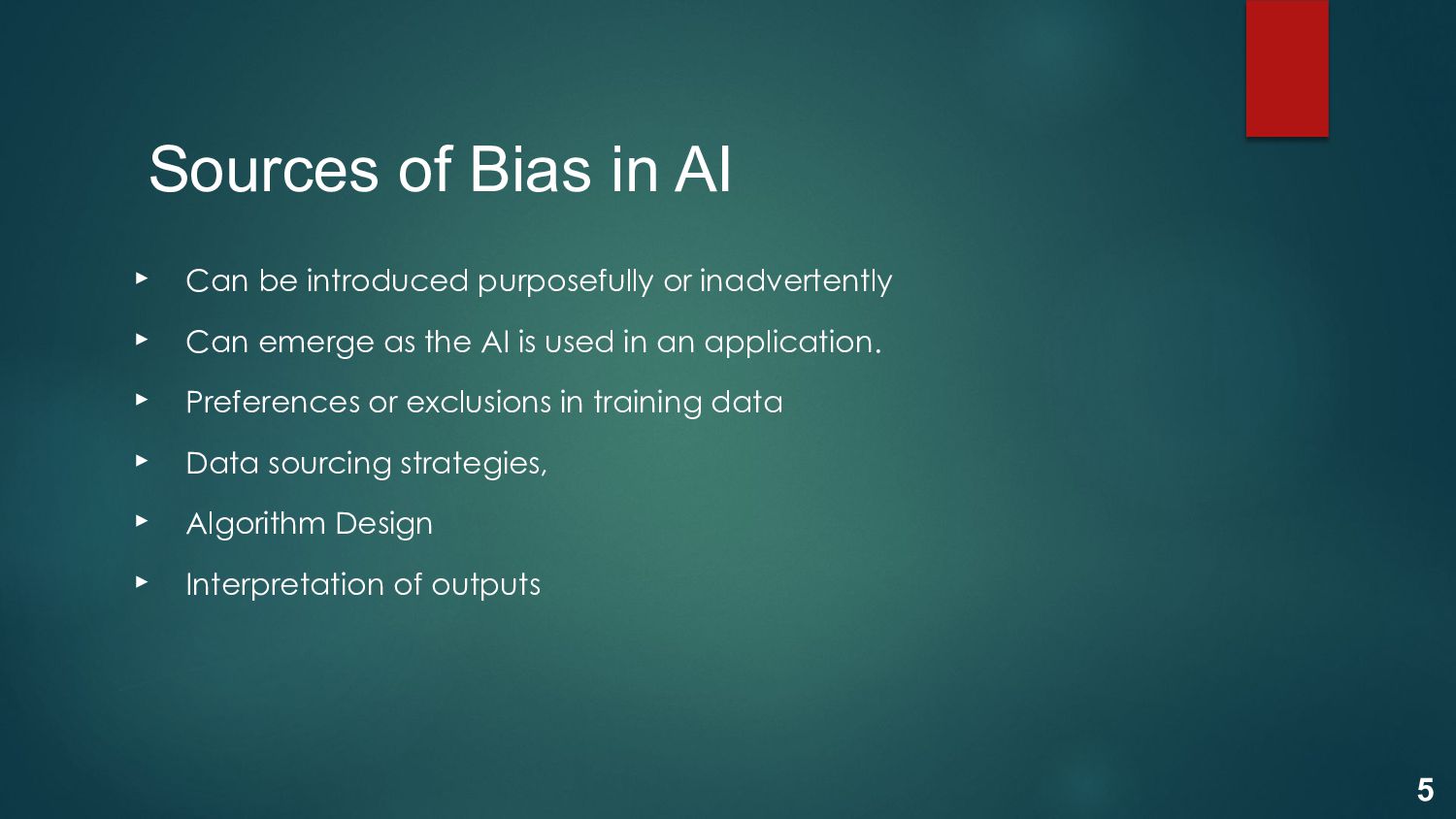
or inadvertently ▸ Can emerge as the AI is used in an application. ▸ Preferences or exclusions in training data ▸ Data sourcing strategies, ▸ Algorithm Design ▸ Interpretation of outputs 5
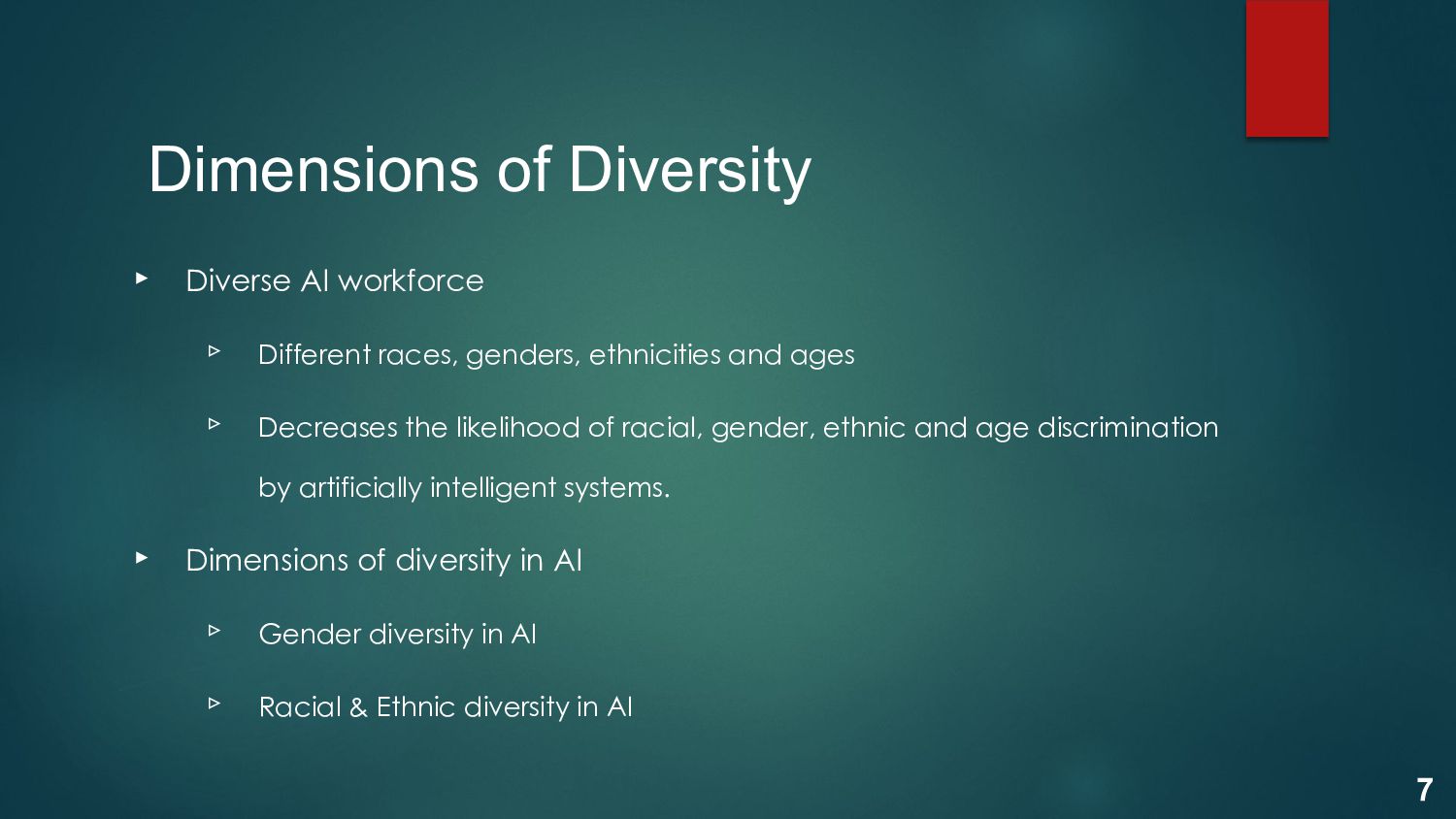
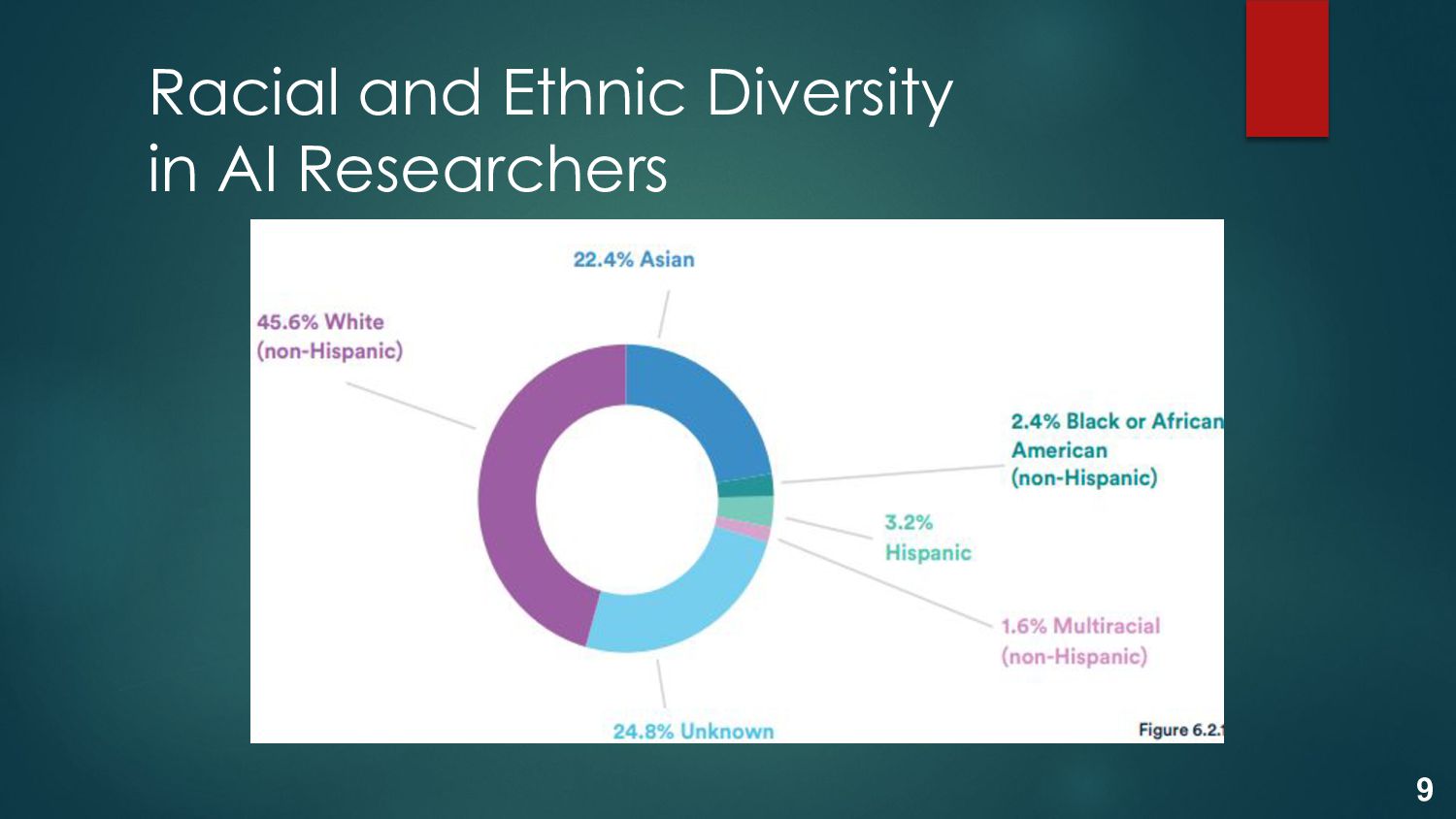
genders, ethnicities and ages ▹ Decreases the likelihood of racial, gender, ethnic and age discrimination by artificially intelligent systems. ▸ Dimensions of diversity in AI ▹ Gender diversity in AI ▹ Racial & Ethnic diversity in AI 7
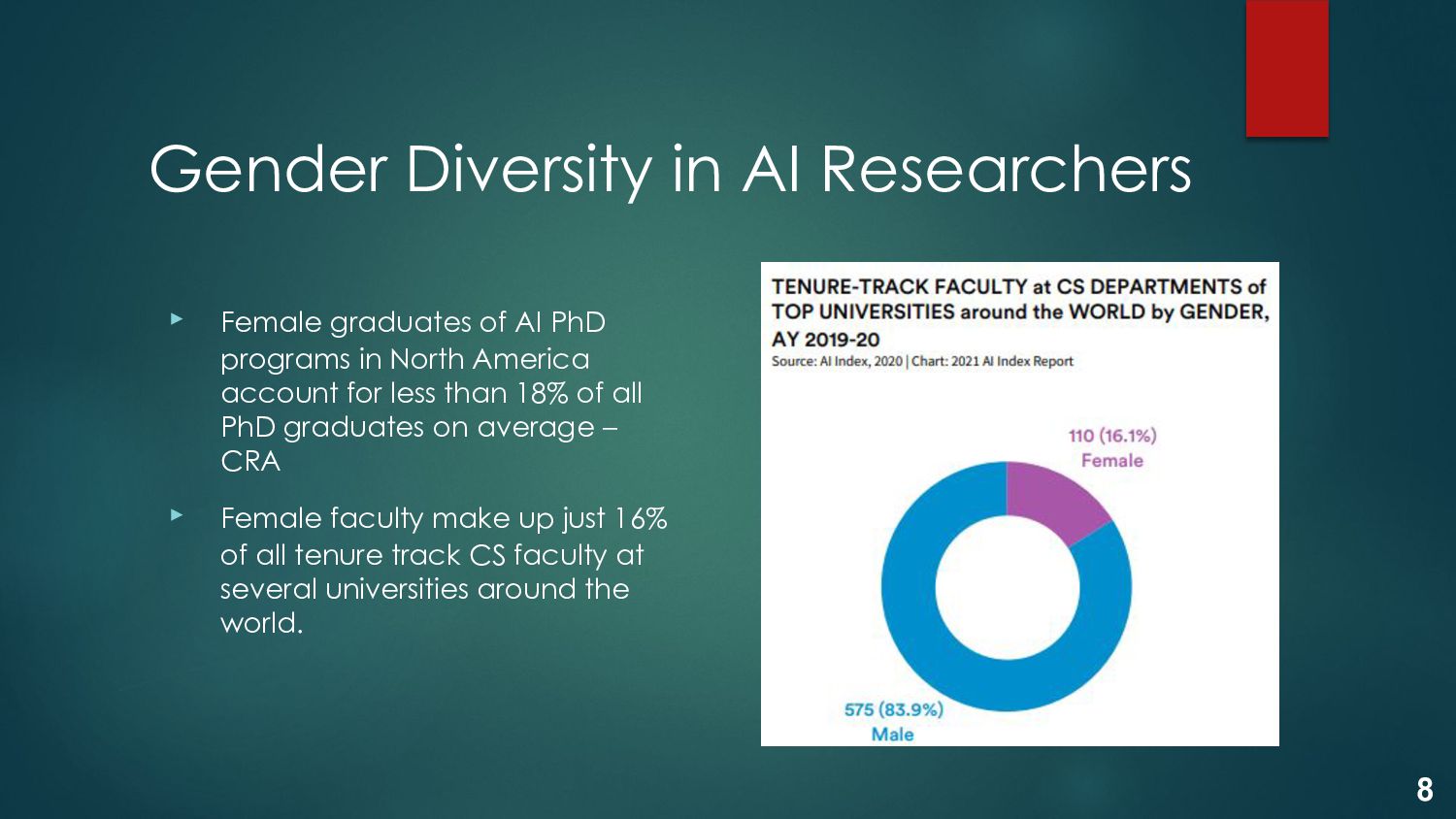
PhD programs in North America account for less than 18% of all PhD graduates on average – CRA ▸ Female faculty make up just 16% of all tenure track CS faculty at several universities around the world. 8
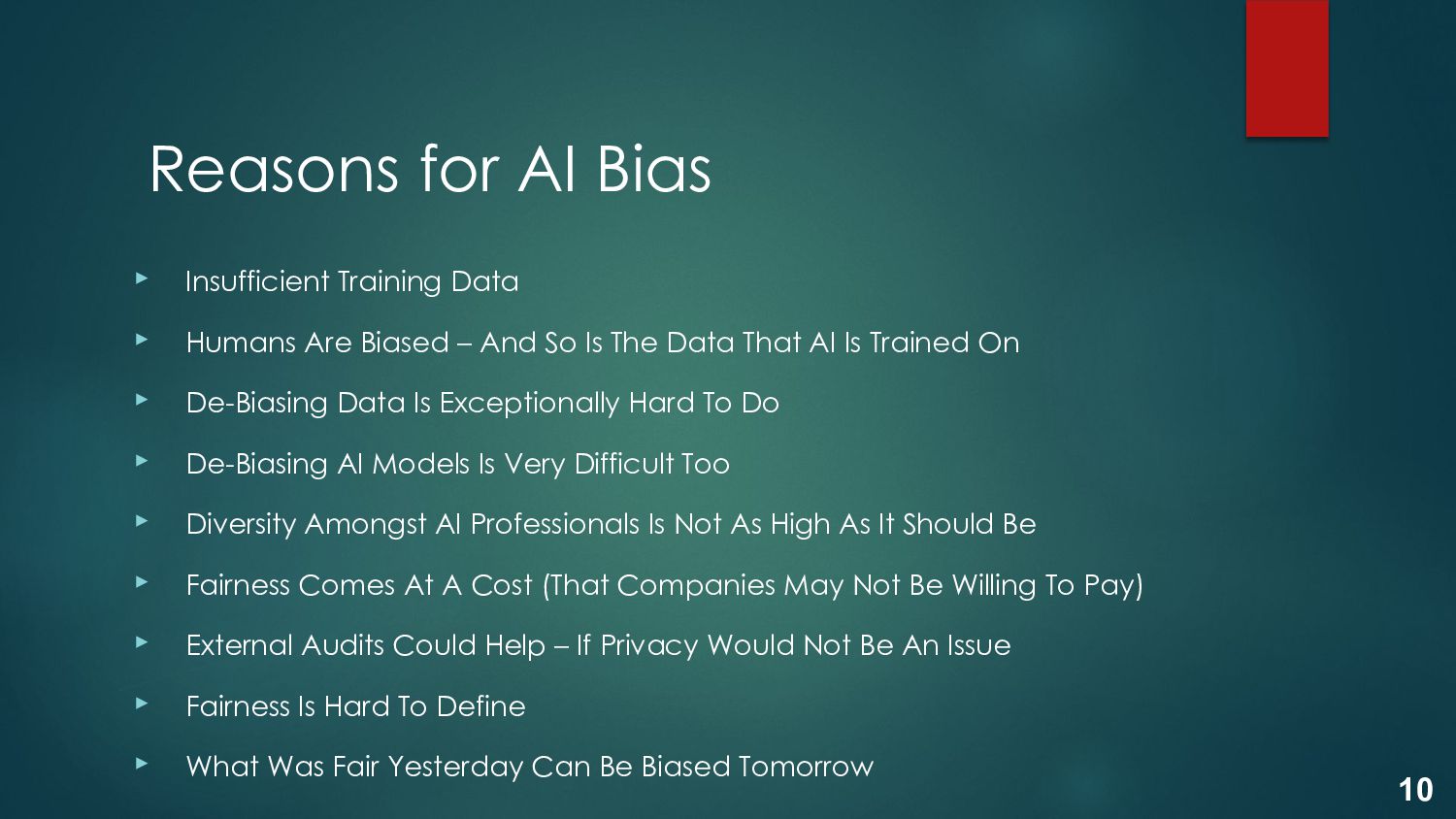
Are Biased – And So Is The Data That AI Is Trained On ▸ De-Biasing Data Is Exceptionally Hard To Do ▸ De-Biasing AI Models Is Very Difficult Too ▸ Diversity Amongst AI Professionals Is Not As High As It Should Be ▸ Fairness Comes At A Cost (That Companies May Not Be Willing To Pay) ▸ External Audits Could Help – If Privacy Would Not Be An Issue ▸ Fairness Is Hard To Define ▸ What Was Fair Yesterday Can Be Biased Tomorrow 10
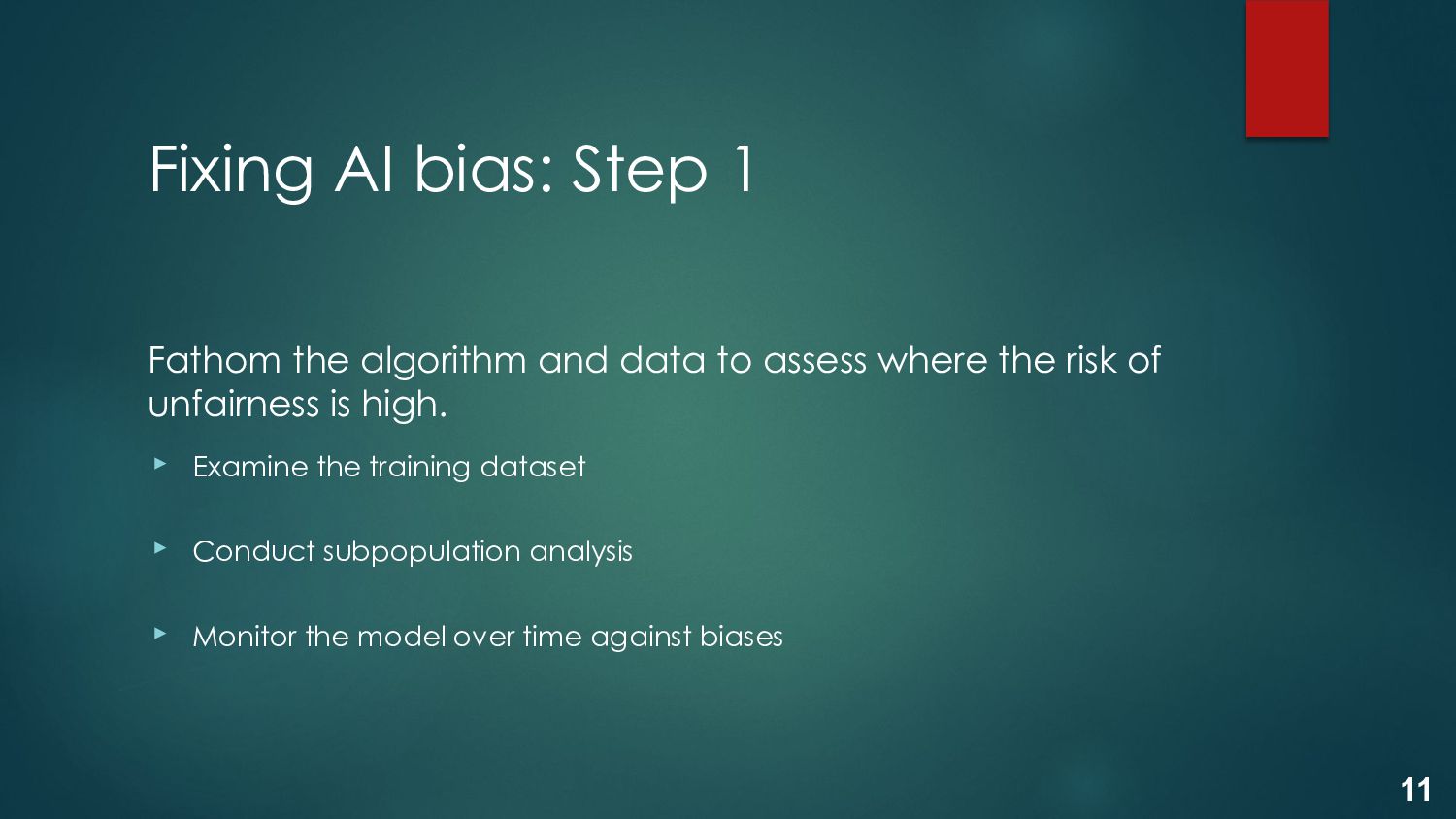
to assess where the risk of unfairness is high. ▸ Examine the training dataset ▸ Conduct subpopulation analysis ▸ Monitor the model over time against biases 11
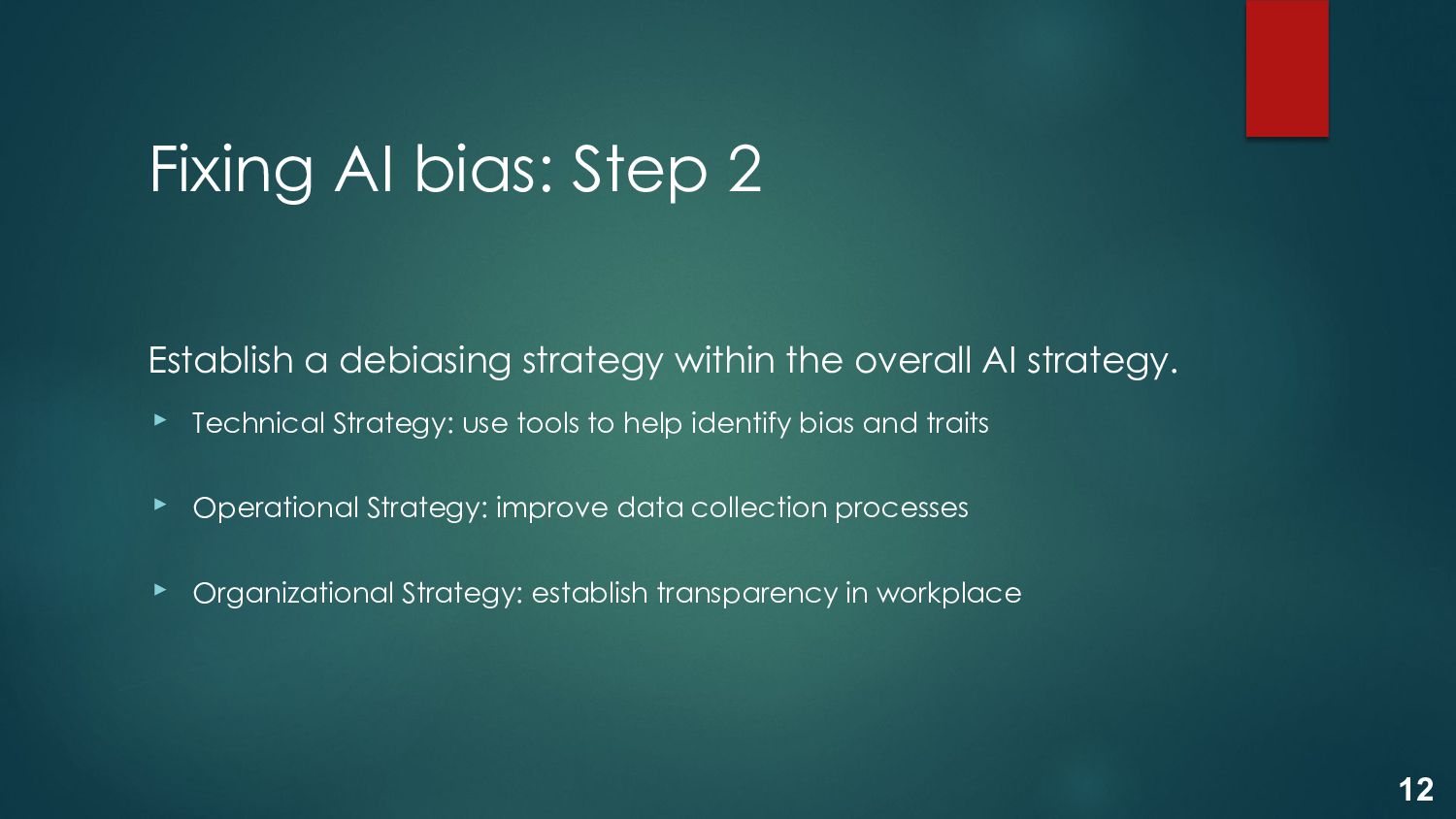
the overall AI strategy. ▸ Technical Strategy: use tools to help identify bias and traits ▸ Operational Strategy: improve data collection processes ▸ Organizational Strategy: establish transparency in workplace 12
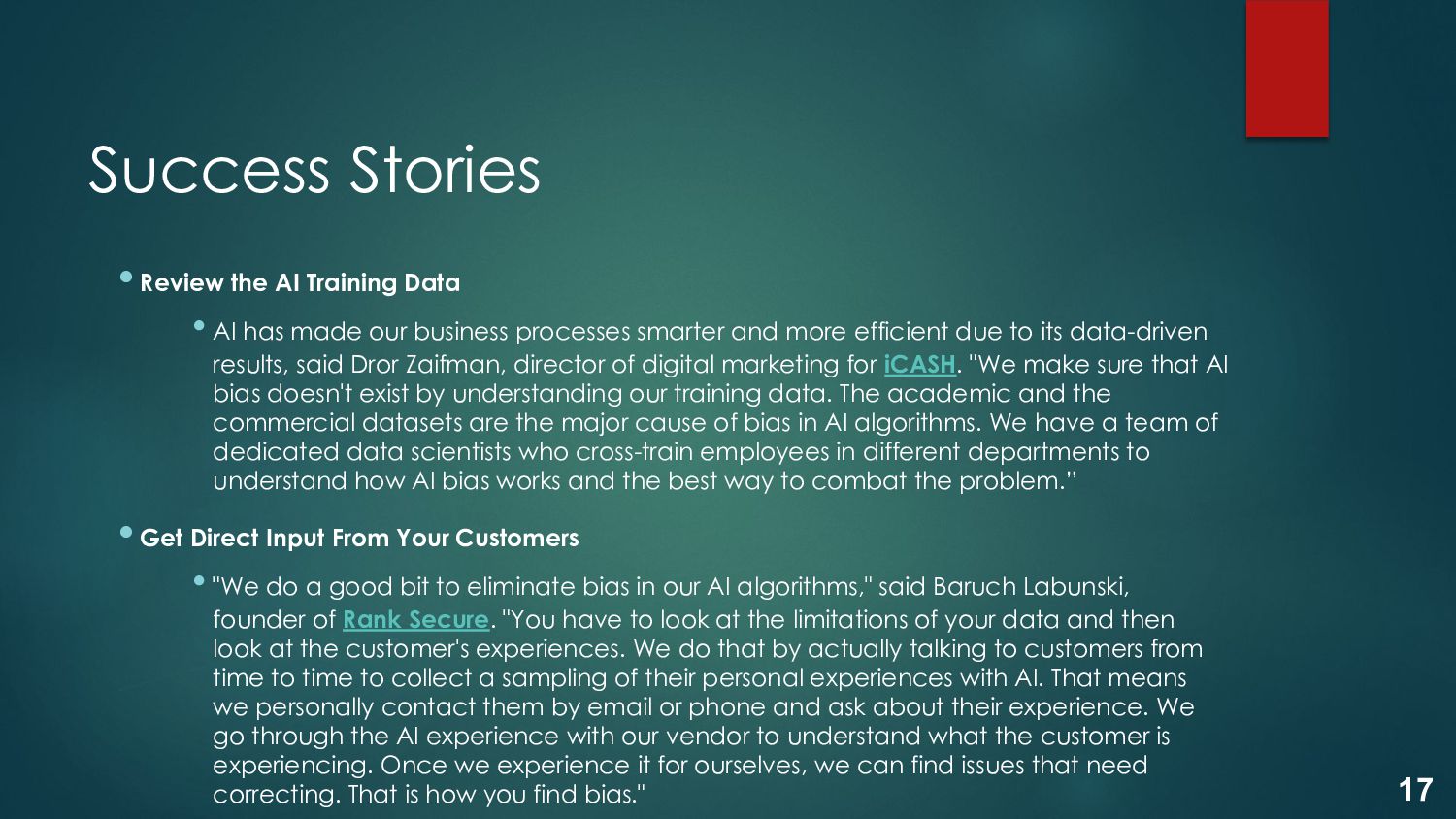
has made our business processes smarter and more efficient due to its data-driven results, said Dror Zaifman, director of digital marketing for iCASH. "We make sure that AI bias doesn't exist by understanding our training data. The academic and the commercial datasets are the major cause of bias in AI algorithms. We have a team of dedicated data scientists who cross-train employees in different departments to understand how AI bias works and the best way to combat the problem.” • Get Direct Input From Your Customers • "We do a good bit to eliminate bias in our AI algorithms," said Baruch Labunski, founder of Rank Secure. "You have to look at the limitations of your data and then look at the customer's experiences. We do that by actually talking to customers from time to time to collect a sampling of their personal experiences with AI. That means we personally contact them by email or phone and ask about their experience. We go through the AI experience with our vendor to understand what the customer is experiencing. Once we experience it for ourselves, we can find issues that need correcting. That is how you find bias." 17
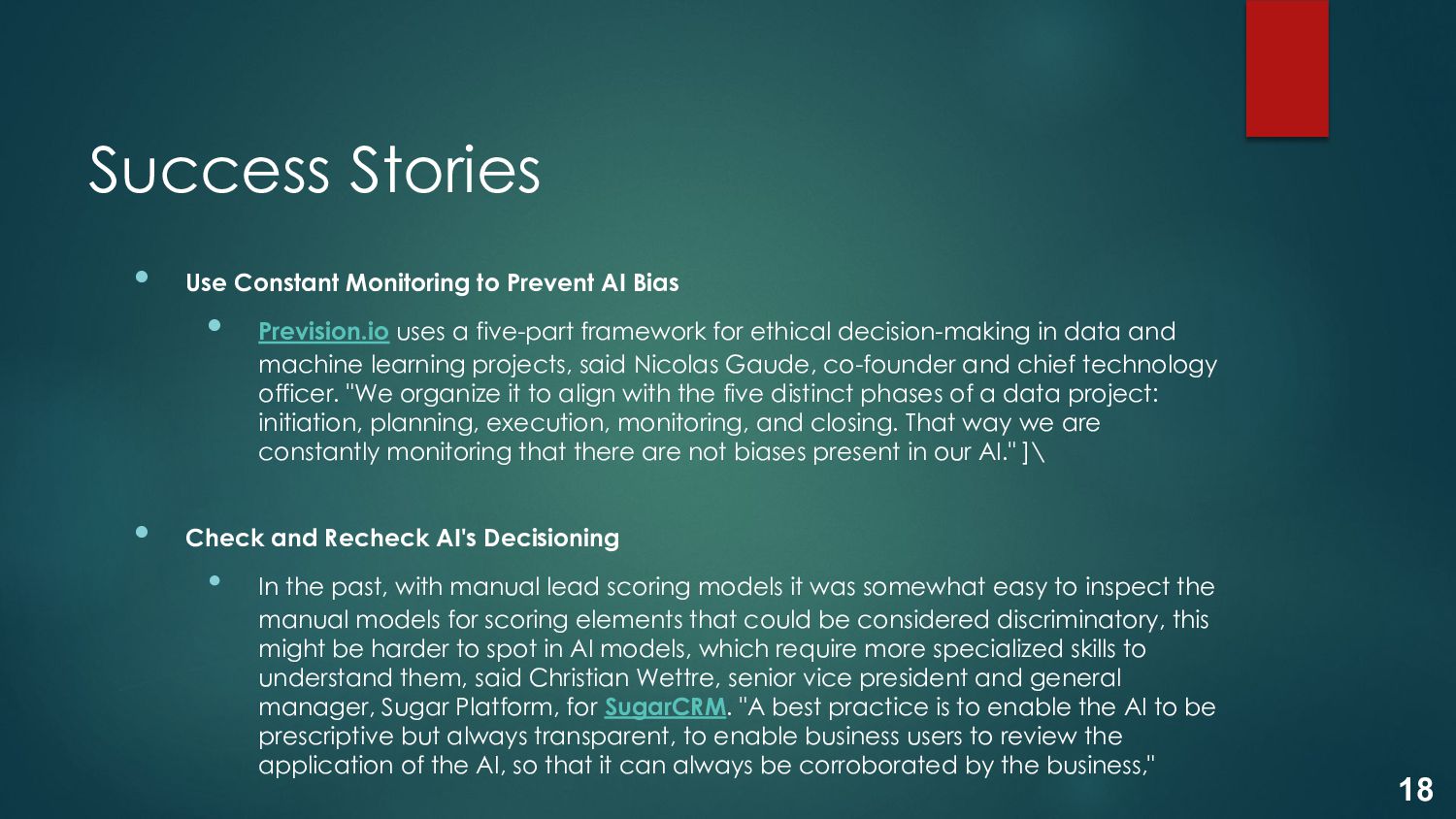
• Prevision.io uses a five-part framework for ethical decision-making in data and machine learning projects, said Nicolas Gaude, co-founder and chief technology officer. "We organize it to align with the five distinct phases of a data project: initiation, planning, execution, monitoring, and closing. That way we are constantly monitoring that there are not biases present in our AI." ]\ • Check and Recheck AI's Decisioning • In the past, with manual lead scoring models it was somewhat easy to inspect the manual models for scoring elements that could be considered discriminatory, this might be harder to spot in AI models, which require more specialized skills to understand them, said Christian Wettre, senior vice president and general manager, Sugar Platform, for SugarCRM. "A best practice is to enable the AI to be prescriptive but always transparent, to enable business users to review the application of the AI, so that it can always be corroborated by the business," 18
▸ An AI system can be as good as the quality of its input data. ▸ If we can clean the training dataset from conscious and unconscious assumptions on race, gender, or other ideological concepts, you are able to build an AI system that makes unbiased data-driven decisions. 19
the real world, not any time soon. ▸ There are numerous human biases and ongoing identification of new biases is increasing the total number constantly. ▸ Therefore, it may not be possible to have a completely unbiased human mind like the AI system. ▸ After all, humans are creating the biased data while humans and human-made algorithms are checking the data to identify and remove biases. 20


 sirmorya3ank
 twada
twada
 mfonobong
 baasie
 rabernat
 lcolladotor
 tonyrice
 akashhashmi
 cassininazir
 pedronauck
 kimpetersen
 emna__ayadi