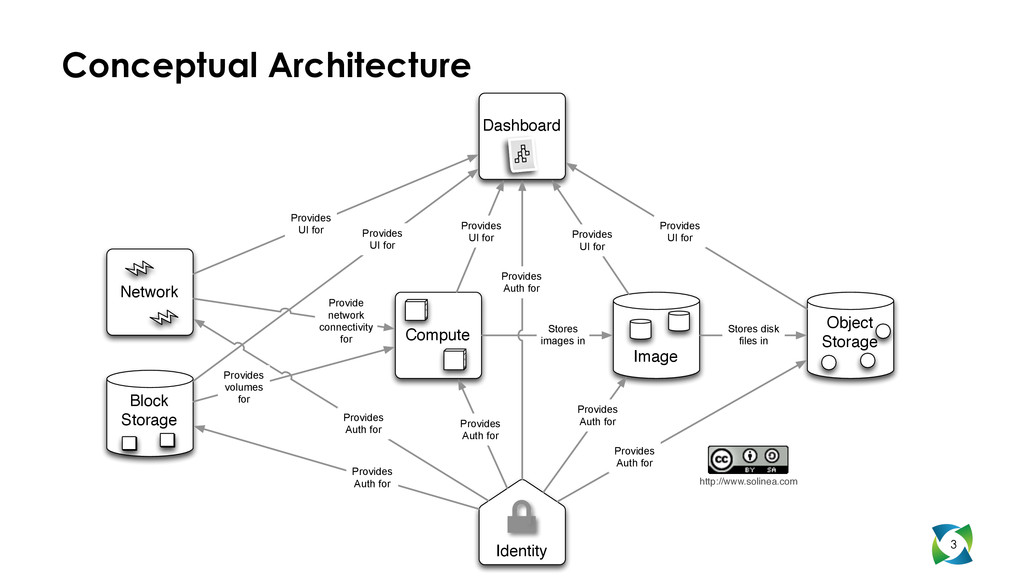
Storage Network Provides UI for Provides UI for Provides UI for Provides UI for Provides UI for Provides Auth for Provides Auth for Provides Auth for Provides Auth for Provides Auth for Provides Auth for Provides volumes for Provide network connectivity for Stores images in Stores disk files in http://www.solinea.com
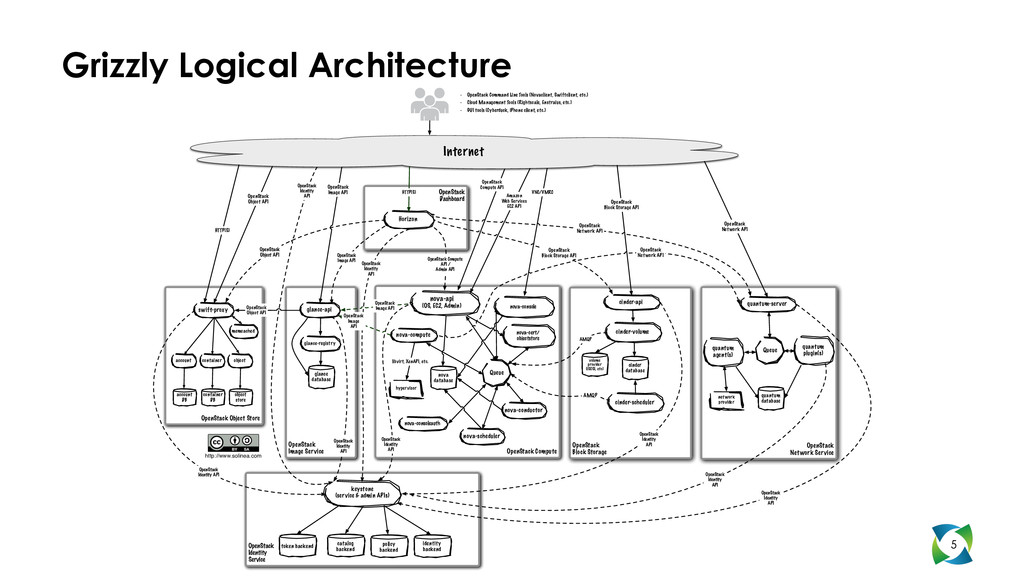
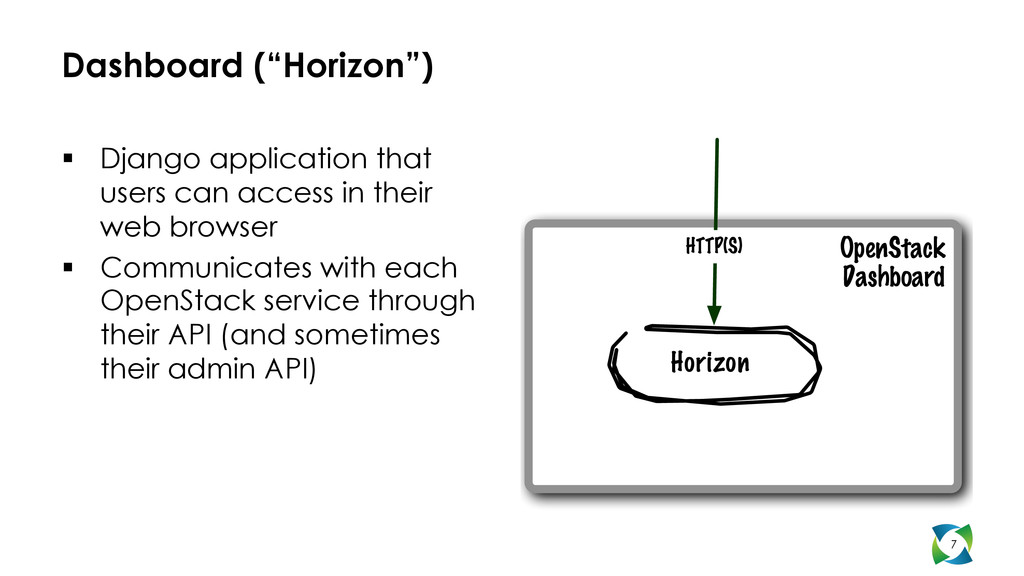
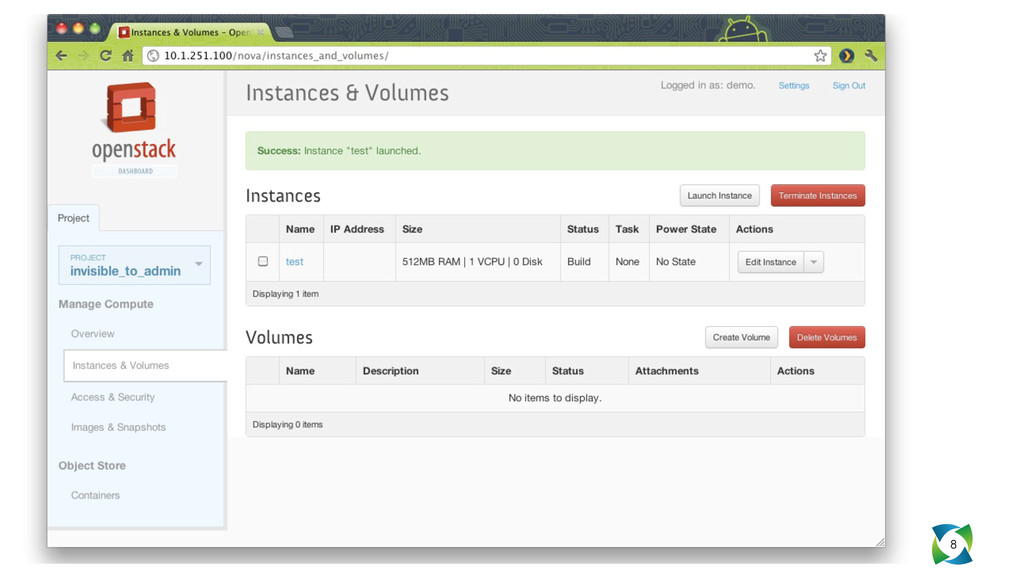
users can interact through a common web interface (Horizon) or directly to each service through their API All services authenticate through a common source Individual services interact with each other through their public APIs * Most daemons implemented WSGI middleware (Paste) – Used extensively in OpenStack – Configured through *-paste.ini files 4
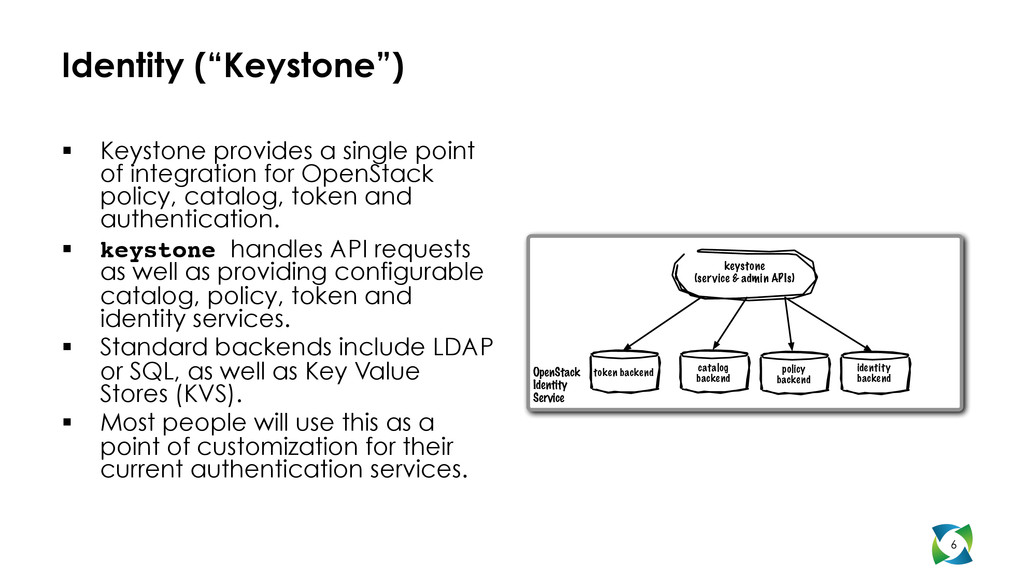
for OpenStack policy, catalog, token and authentication. keystone handles API requests as well as providing configurable catalog, policy, token and identity services. Standard backends include LDAP or SQL, as well as Key Value Stores (KVS). Most people will use this as a point of customization for their current authentication services. OpenStack Identity Service keystone (service & admin APIs) identity backend catalog backend token backend policy backend 6
object store account DB container DB memcached 9 Stores and serves objects (files) Employs object level replication to safeguard data Accepts client requests via Objectstore API or HTTP from clients through swift-proxy Maintains distributed account and container databases Stores objects according the ring layout on filesystem with extended attributes (XFS, EXT4, etc.)
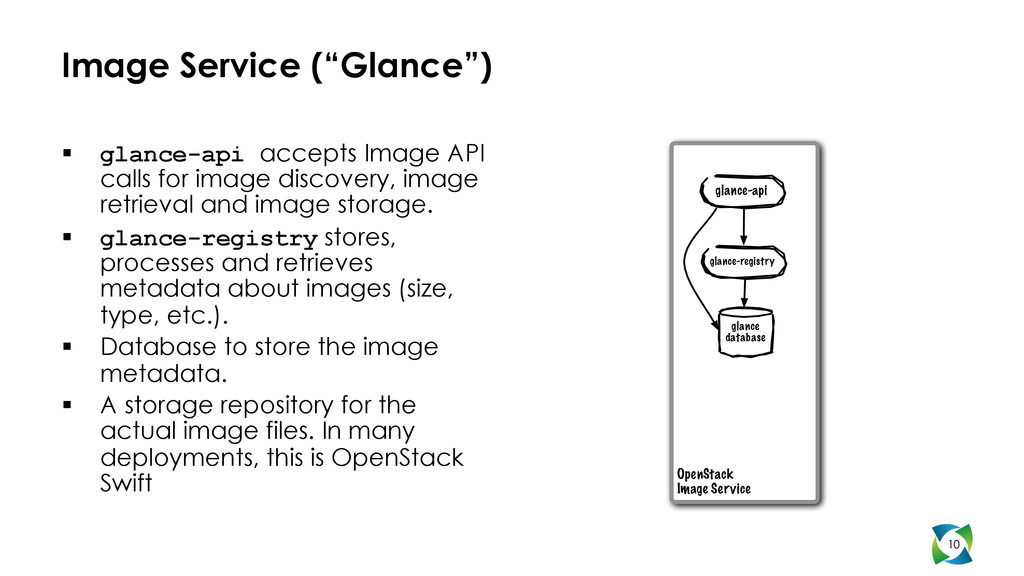
image discovery, image retrieval and image storage. glance-registry stores, processes and retrieves metadata about images (size, type, etc.). Database to store the image metadata. A storage repository for the actual image files. In many deployments, this is OpenStack Swift OpenStack Image Service glance-api glance-registry glance database 10
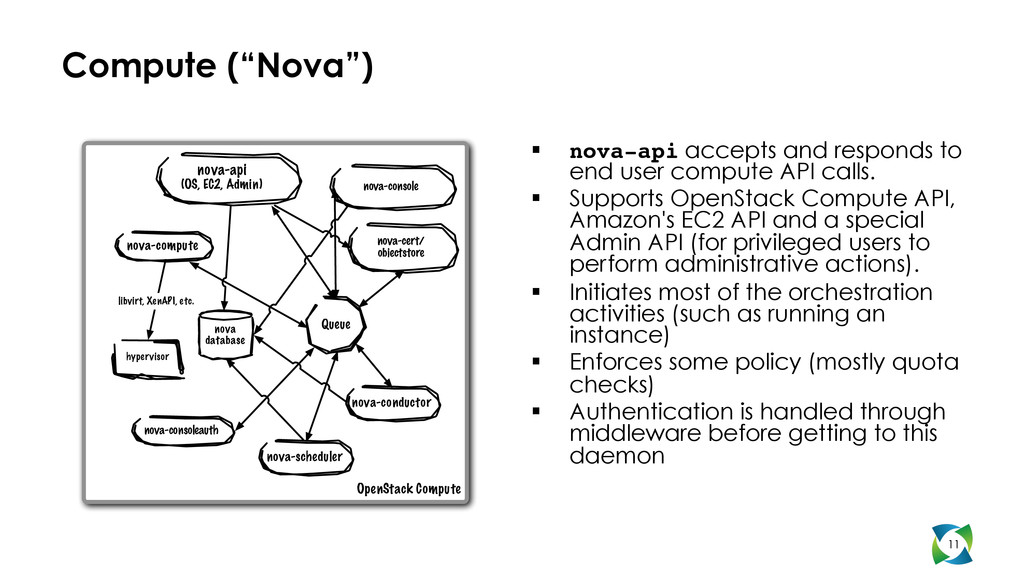
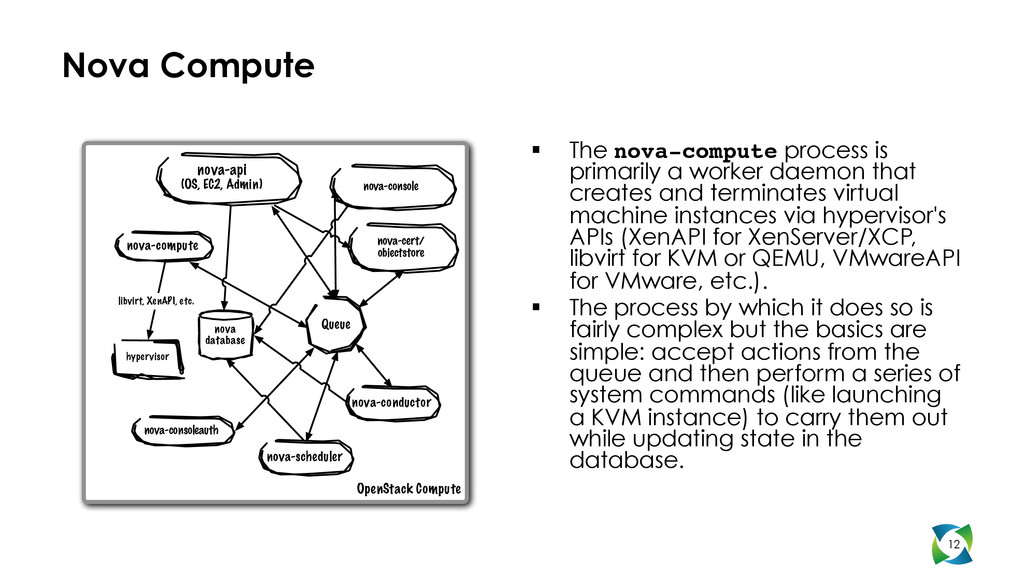
objectstore nova-console Queue nova-compute nova-scheduler nova database hypervisor libvirt, XenAPI, etc. nova-conductor 11 nova-api accepts and responds to end user compute API calls. Supports OpenStack Compute API, Amazon's EC2 API and a special Admin API (for privileged users to perform administrative actions). Initiates most of the orchestration activities (such as running an instance) Enforces some policy (mostly quota checks) Authentication is handled through middleware before getting to this daemon
objectstore nova-console Queue nova-compute nova-scheduler nova database hypervisor libvirt, XenAPI, etc. nova-conductor 12 The nova-compute process is primarily a worker daemon that creates and terminates virtual machine instances via hypervisor's APIs (XenAPI for XenServer/XCP, libvirt for KVM or QEMU, VMwareAPI for VMware, etc.). The process by which it does so is fairly complex but the basics are simple: accept actions from the queue and then perform a series of system commands (like launching a KVM instance) to carry them out while updating state in the database.
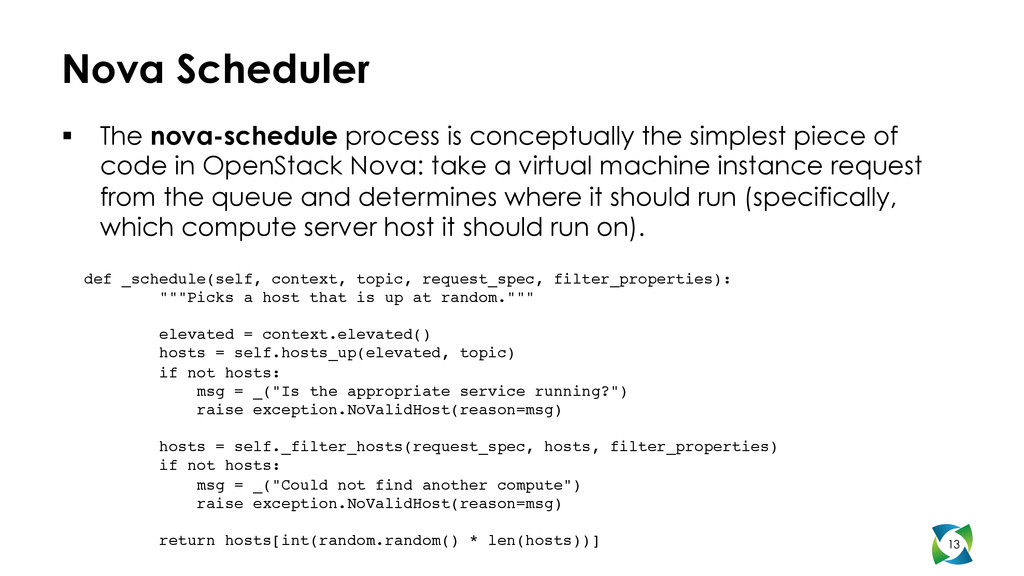
piece of code in OpenStack Nova: take a virtual machine instance request from the queue and determines where it should run (specifically, which compute server host it should run on). 13 def _schedule(self, context, topic, request_spec, filter_properties):! """Picks a host that is up at random."""! ! elevated = context.elevated()! hosts = self.hosts_up(elevated, topic)! if not hosts:! msg = _("Is the appropriate service running?")! raise exception.NoValidHost(reason=msg)! ! hosts = self._filter_hosts(request_spec, hosts, filter_properties)! if not hosts:! msg = _("Could not find another compute")! raise exception.NoValidHost(reason=msg)! ! return hosts[int(random.random() * len(hosts))]!
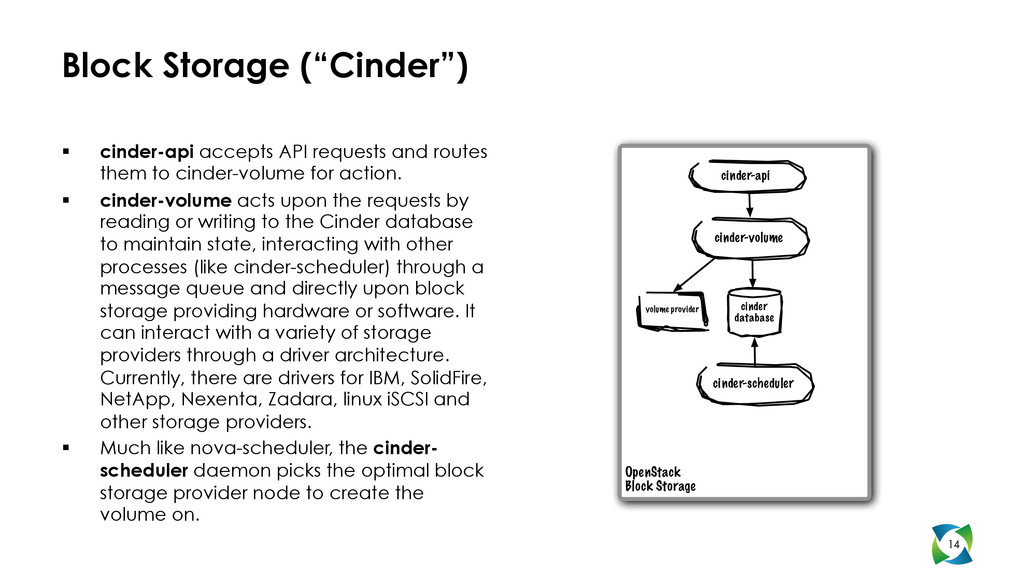
them to cinder-volume for action. cinder-volume acts upon the requests by reading or writing to the Cinder database to maintain state, interacting with other processes (like cinder-scheduler) through a message queue and directly upon block storage providing hardware or software. It can interact with a variety of storage providers through a driver architecture. Currently, there are drivers for IBM, SolidFire, NetApp, Nexenta, Zadara, linux iSCSI and other storage providers. Much like nova-scheduler, the cinder- scheduler daemon picks the optimal block storage provider node to create the volume on. 14 OpenStack Block Storage cinder-api cinder-volume cinder-scheduler cinder database volume provider
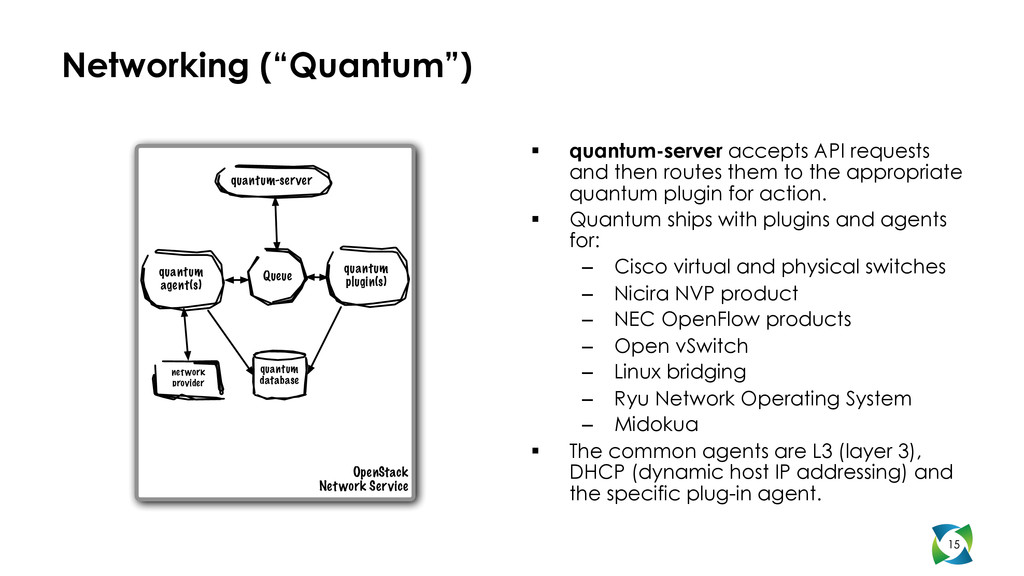
Queue quantum database quantum agent(s) quantum-server accepts API requests and then routes them to the appropriate quantum plugin for action. Quantum ships with plugins and agents for: – Cisco virtual and physical switches – Nicira NVP product – NEC OpenFlow products – Open vSwitch – Linux bridging – Ryu Network Operating System – Midokua The common agents are L3 (layer 3), DHCP (dynamic host IP addressing) and the specific plug-in agent. 15
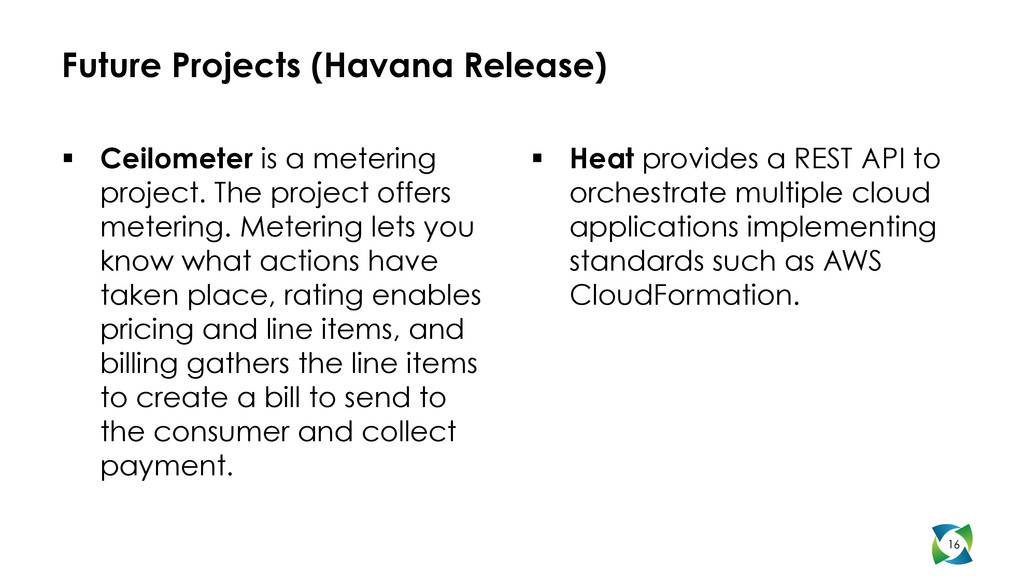
The project offers metering. Metering lets you know what actions have taken place, rating enables pricing and line items, and billing gathers the line items to create a bill to send to the consumer and collect payment. Heat provides a REST API to orchestrate multiple cloud applications implementing standards such as AWS CloudFormation. 16


 kentapapa
 kash1064
 kenichiodo
 rfdnxbro
 yut0naga1_fa
 akitoshiga
 camiha
 carta_engineering
 grimoh
 sudoakiy
 recruitengineers
 tokuty
 bkeepers
 apolaine
 badams
 aarron
 minecr
 rkaga
 rasmusluckow
 schroneko
 ipullrank
 carmenintech
 raygrieselhuber
 katarinadahlin