Upgrade to Pro — share decks privately, control downloads, hide ads and more …

Pneumatic Drifter: Working Principle, Applicati...

Swastic Drillng
October 24, 2026
6

Pneumatic Drifter: Working Principle, Applications & Benefits

Discover how a pneumatic drifter works and its role in rock drilling operations across mining, quarrying, tunnelling and construction. This presentation explains the working principle of pneumatic rock drilling machines, including percussion, rotation, feed and flushing systems. Learn about essential drifter components, industrial applications, equipment selection factors and maintenance practices. A practical technical resource for mining professionals, drilling contractors and equipment buyers seeking to understand pneumatic drifter technology and rock drilling systems.

Swastic Drillng

October 24, 2026

Transcript

10 slides
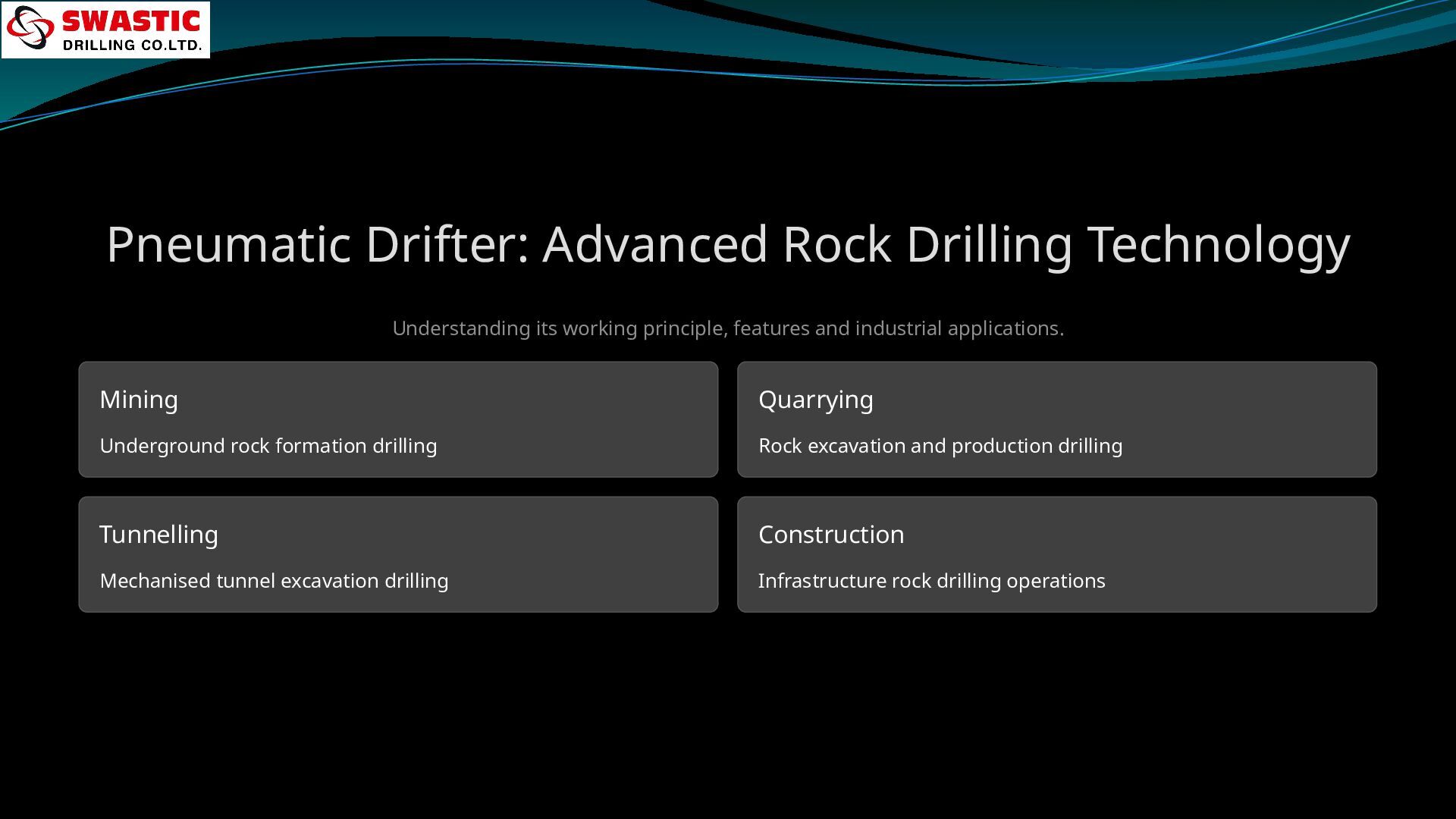
  1. Pneumatic Drifter: Advanced Rock Drilling Technology Understanding its working principle,

    features and industrial applications. Mining Quarrying Underground rock formation drilling Rock excavation and production drilling Tunnelling Construction Mechanised tunnel excavation drilling Infrastructure rock drilling operations
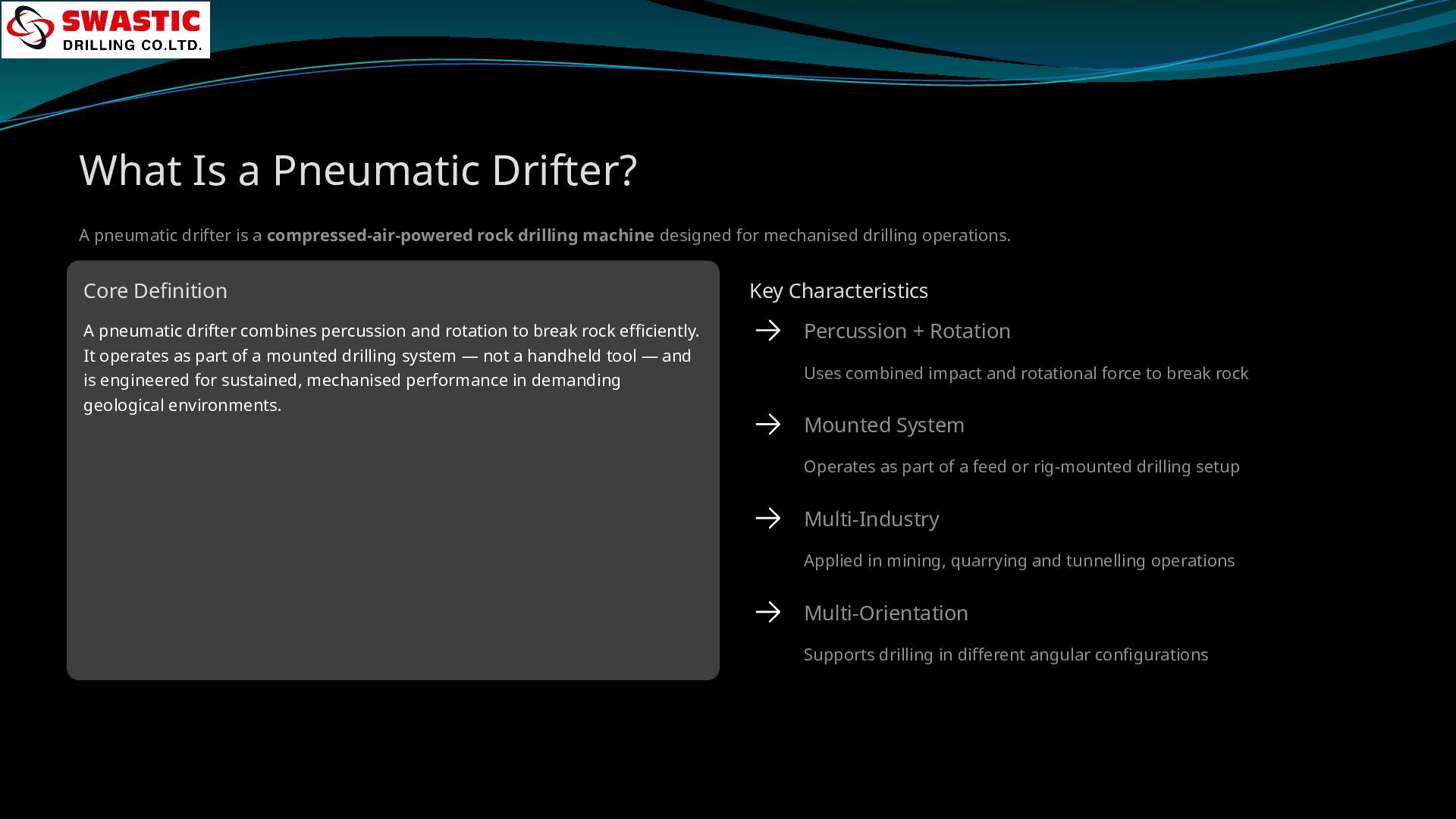
  2. What Is a Pneumatic Drifter? A pneumatic drifter is a

    compressed-air-powered rock drilling machine designed for mechanised drilling operations. Core Definition A pneumatic drifter combines percussion and rotation to break rock efficiently. It operates as part of a mounted drilling system — not a handheld tool — and is engineered for sustained, mechanised performance in demanding geological environments. Key Characteristics Percussion + Rotation Uses combined impact and rotational force to break rock Mounted System Operates as part of a feed or rig-mounted drilling setup Multi-Industry Applied in mining, quarrying and tunnelling operations Multi-Orientation Supports drilling in different angular configurations
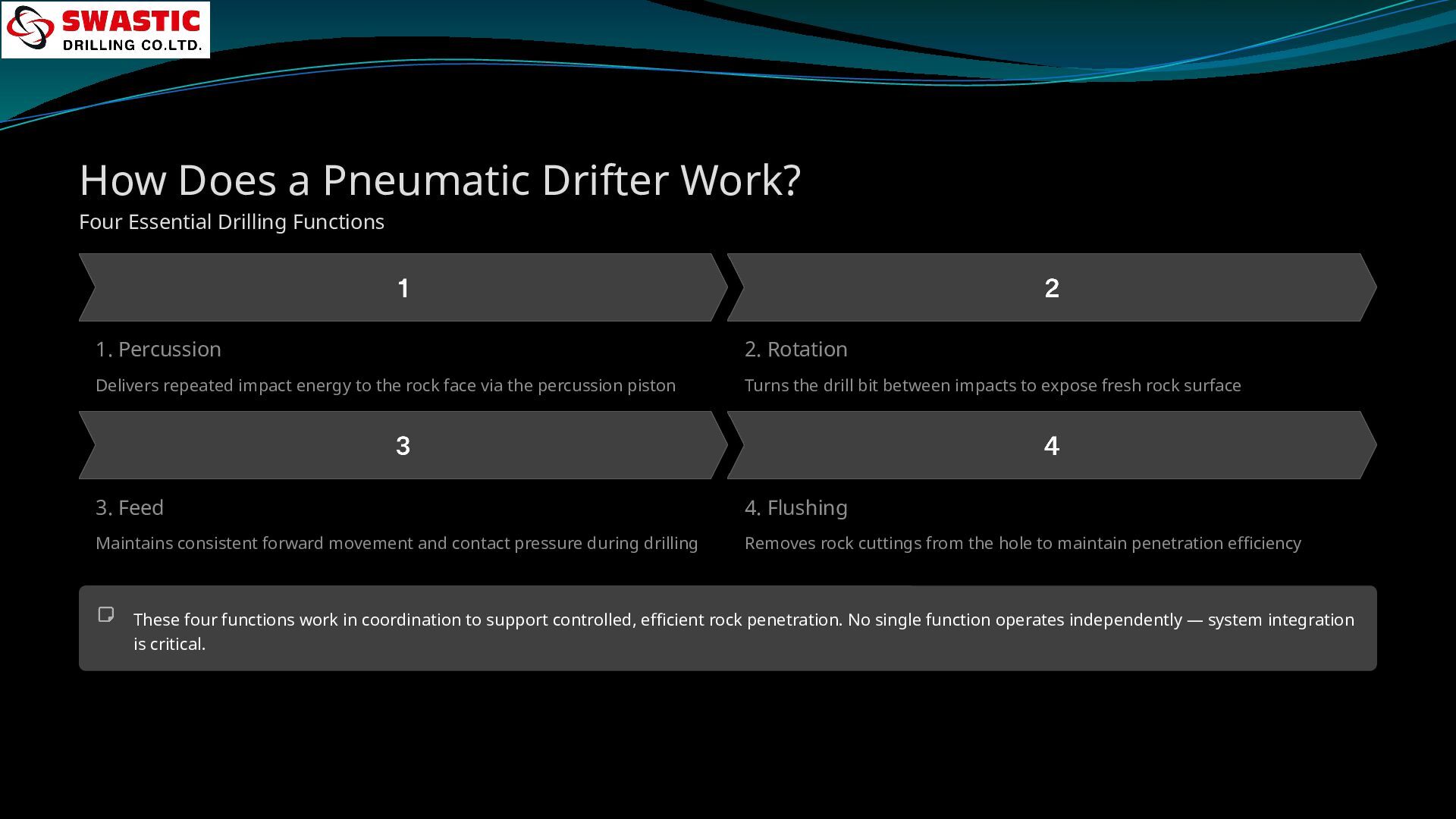
  3. How Does a Pneumatic Drifter Work? Four Essential Drilling Functions

    1. Percussion 2. Rotation Delivers repeated impact energy to the rock face via the percussion piston Turns the drill bit between impacts to expose fresh rock surface 3. Feed 4. Flushing Maintains consistent forward movement and contact pressure during drilling Removes rock cuttings from the hole to maintain penetration efficiency These four functions work in coordination to support controlled, efficient rock penetration. No single function operates independently — system integration is critical.
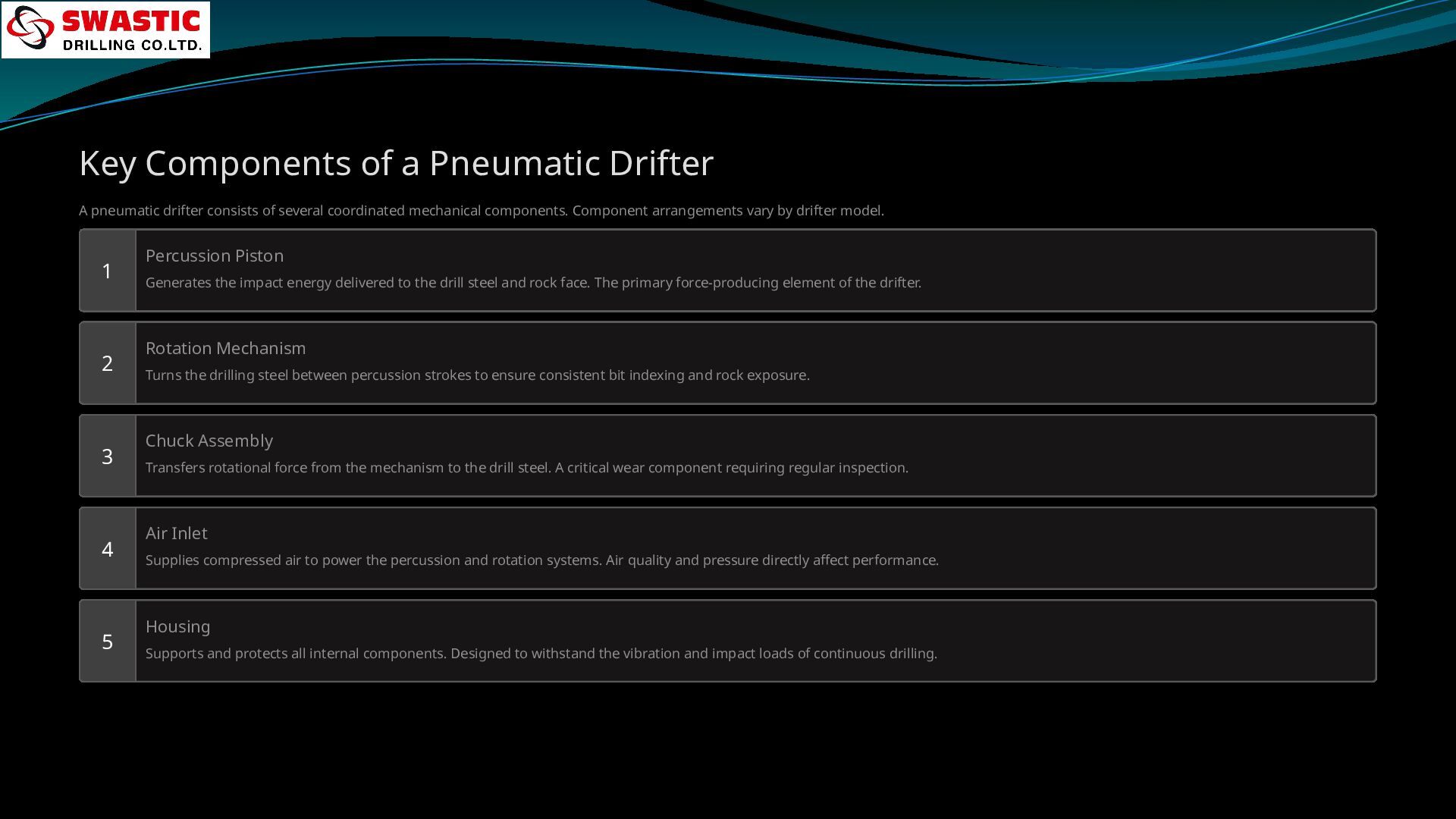
  4. Key Components of a Pneumatic Drifter A pneumatic drifter consists

    of several coordinated mechanical components. Component arrangements vary by drifter model. 1 2 3 4 5 Percussion Piston Generates the impact energy delivered to the drill steel and rock face. The primary force-producing element of the drifter. Rotation Mechanism Turns the drilling steel between percussion strokes to ensure consistent bit indexing and rock exposure. Chuck Assembly Transfers rotational force from the mechanism to the drill steel. A critical wear component requiring regular inspection. Air Inlet Supplies compressed air to power the percussion and rotation systems. Air quality and pressure directly affect performance. Housing Supports and protects all internal components. Designed to withstand the vibration and impact loads of continuous drilling.
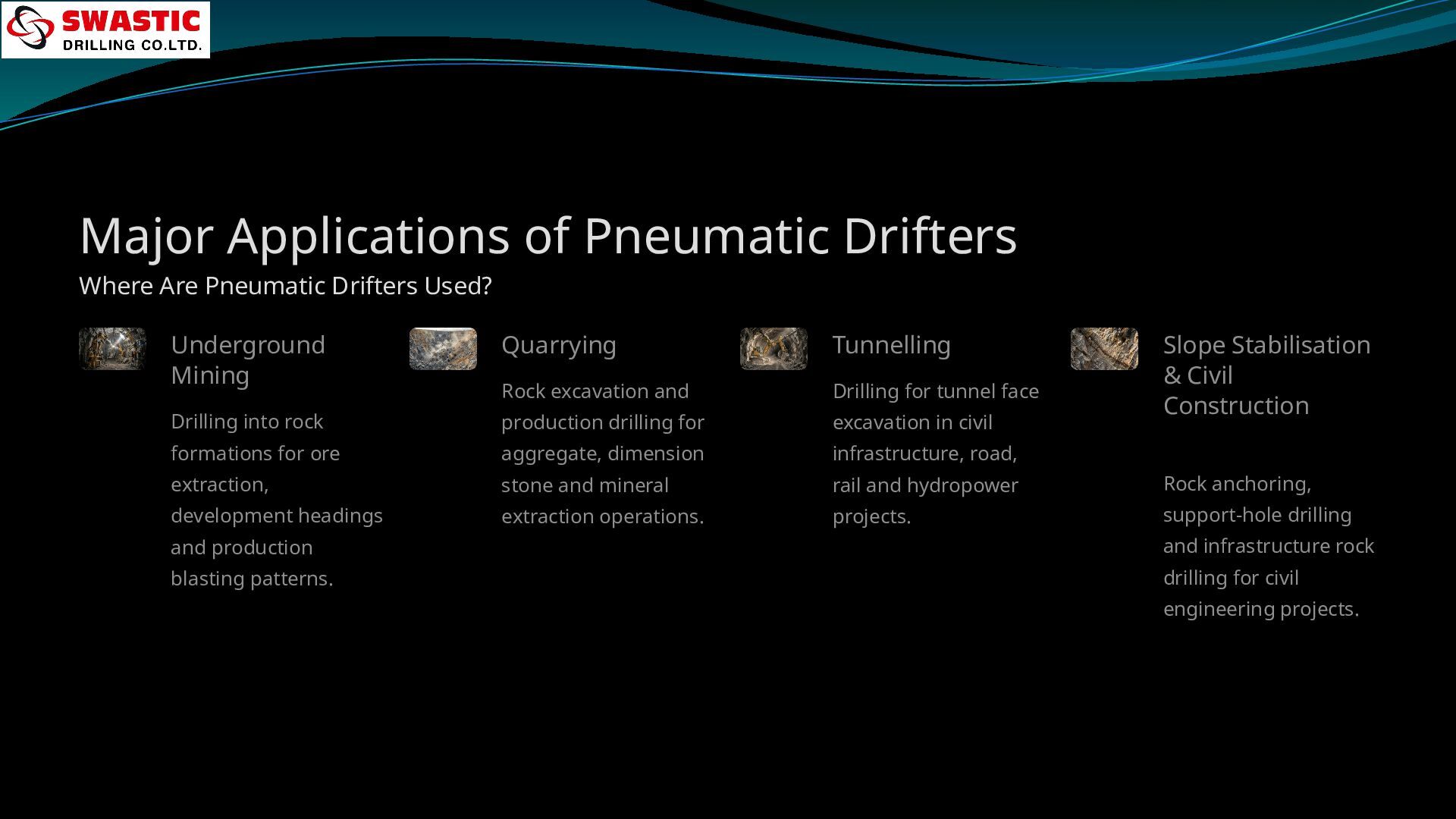
  5. Major Applications of Pneumatic Drifters Where Are Pneumatic Drifters Used?

    Underground Mining Quarrying Tunnelling Slope Stabilisation & Civil Construction Rock excavation and Drilling for tunnel face Drilling into rock production drilling for excavation in civil formations for ore aggregate, dimension infrastructure, road, extraction, stone and mineral rail and hydropower Rock anchoring, development headings extraction operations. projects. support-hole drilling and production and infrastructure rock blasting patterns. drilling for civil engineering projects.
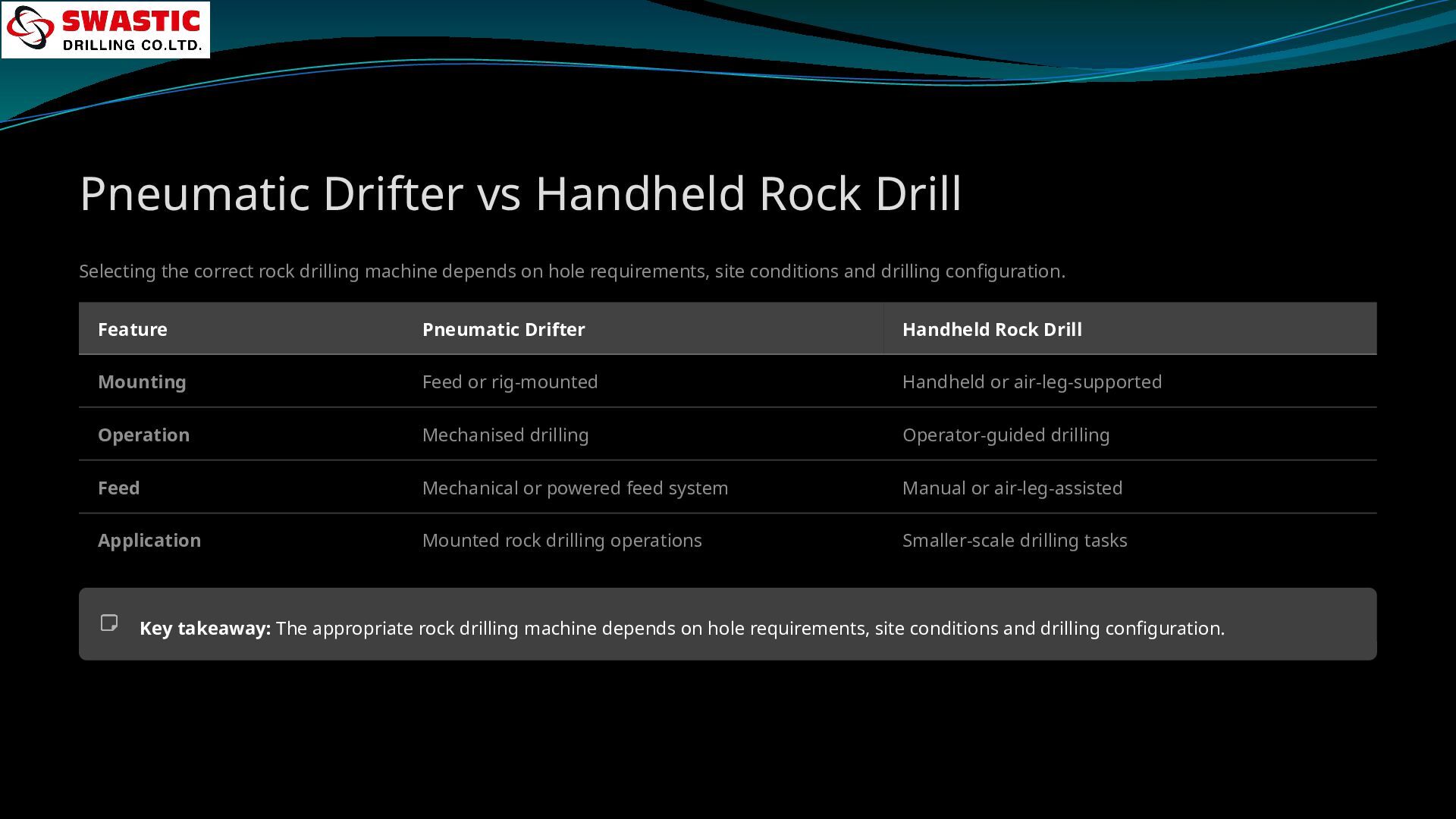
  6. Pneumatic Drifter vs Handheld Rock Drill Selecting the correct rock

    drilling machine depends on hole requirements, site conditions and drilling configuration. Feature Pneumatic Drifter Handheld Rock Drill Mounting Feed or rig-mounted Handheld or air-leg-supported Operation Mechanised drilling Operator-guided drilling Feed Mechanical or powered feed system Manual or air-leg-assisted Application Mounted rock drilling operations Smaller-scale drilling tasks Key takeaway: The appropriate rock drilling machine depends on hole requirements, site conditions and drilling configuration.
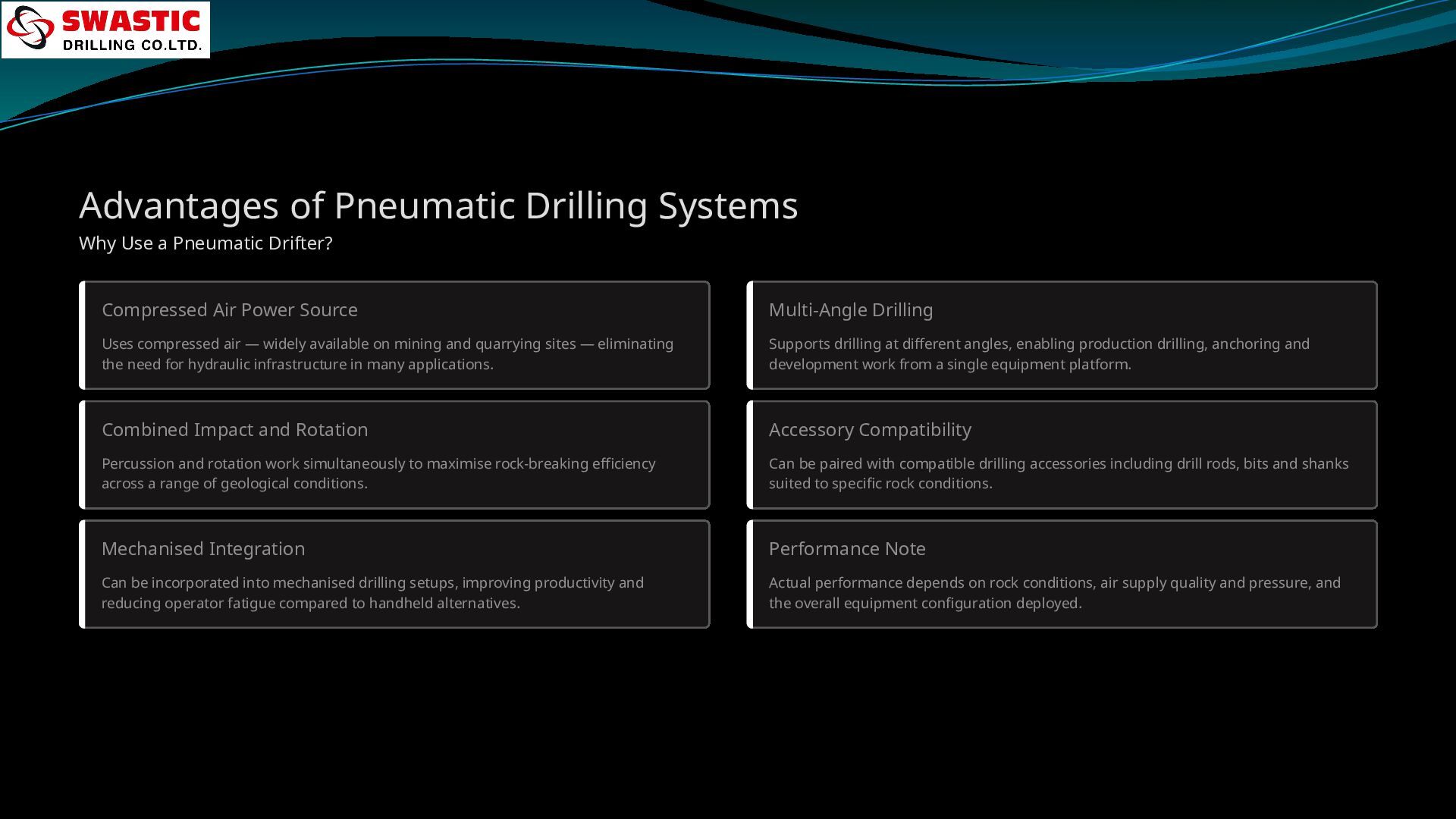
  7. Advantages of Pneumatic Drilling Systems Why Use a Pneumatic Drifter?

    Compressed Air Power Source Multi-Angle Drilling Uses compressed air — widely available on mining and quarrying sites — eliminating the need for hydraulic infrastructure in many applications. Supports drilling at different angles, enabling production drilling, anchoring and development work from a single equipment platform. Combined Impact and Rotation Accessory Compatibility Percussion and rotation work simultaneously to maximise rock-breaking efficiency across a range of geological conditions. Can be paired with compatible drilling accessories including drill rods, bits and shanks suited to specific rock conditions. Mechanised Integration Performance Note Can be incorporated into mechanised drilling setups, improving productivity and reducing operator fatigue compared to handheld alternatives. Actual performance depends on rock conditions, air supply quality and pressure, and the overall equipment configuration deployed.
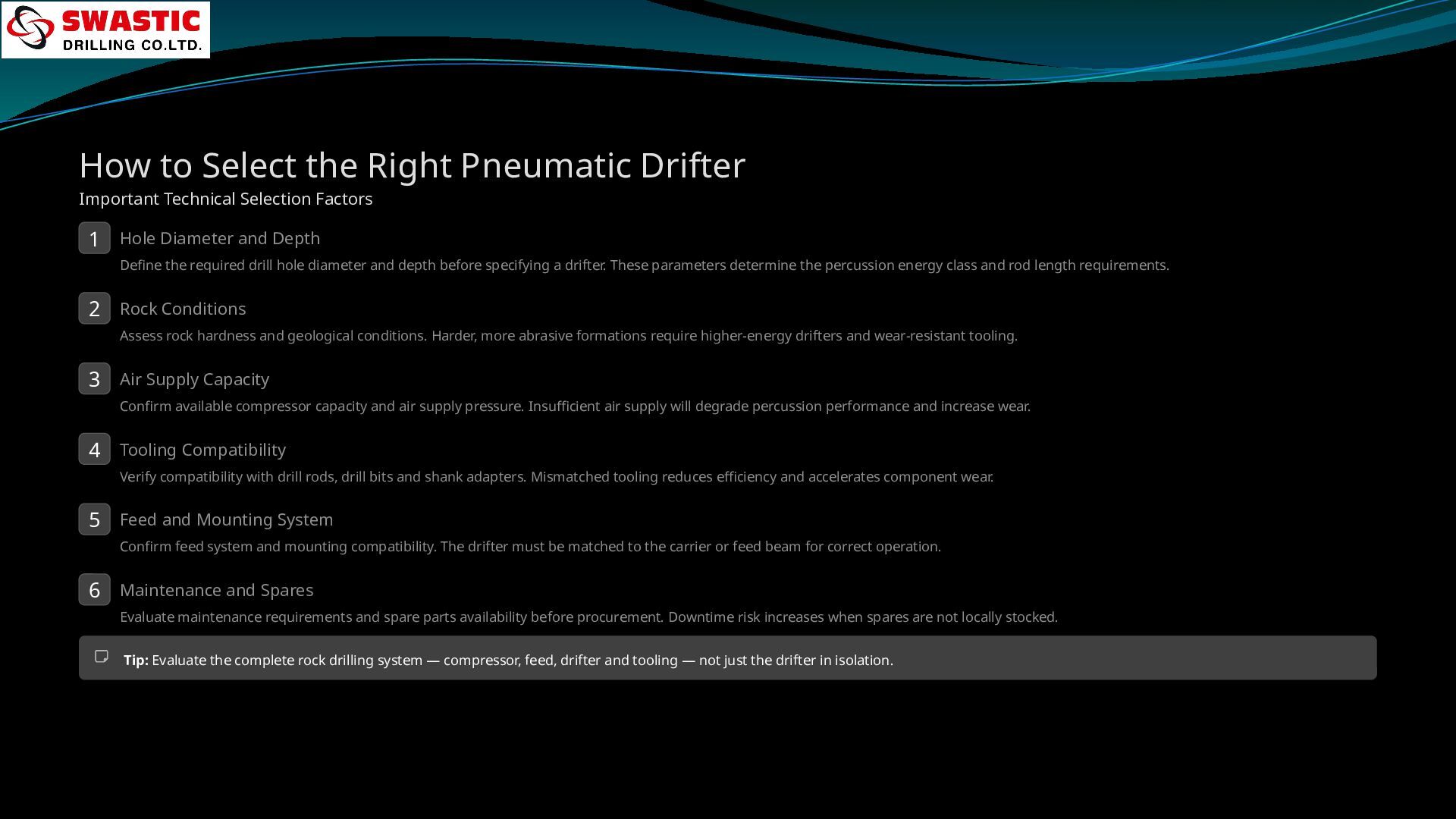
  8. How to Select the Right Pneumatic Drifter Important Technical Selection

    Factors 1 Hole Diameter and Depth Define the required drill hole diameter and depth before specifying a drifter. These parameters determine the percussion energy class and rod length requirements. 2 Rock Conditions Assess rock hardness and geological conditions. Harder, more abrasive formations require higher-energy drifters and wear-resistant tooling. 3 Air Supply Capacity Confirm available compressor capacity and air supply pressure. Insufficient air supply will degrade percussion performance and increase wear. 4 Tooling Compatibility Verify compatibility with drill rods, drill bits and shank adapters. Mismatched tooling reduces efficiency and accelerates component wear. 5 Feed and Mounting System Confirm feed system and mounting compatibility. The drifter must be matched to the carrier or feed beam for correct operation. 6 Maintenance and Spares Evaluate maintenance requirements and spare parts availability before procurement. Downtime risk increases when spares are not locally stocked. Tip: Evaluate the complete rock drilling system — compressor, feed, drifter and tooling — not just the drifter in isolation.
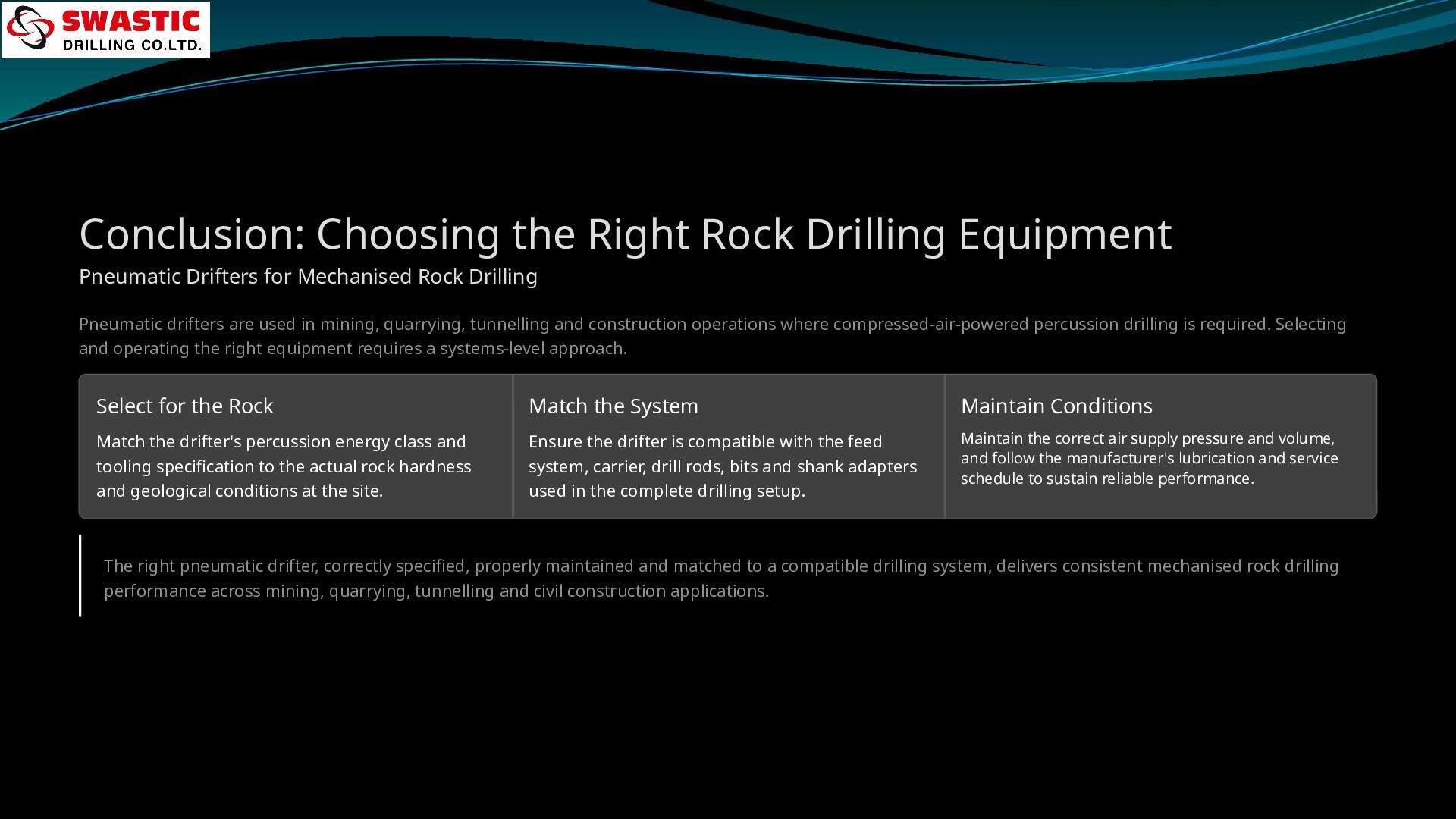
  9. Conclusion: Choosing the Right Rock Drilling Equipment Pneumatic Drifters for

    Mechanised Rock Drilling Pneumatic drifters are used in mining, quarrying, tunnelling and construction operations where compressed-air-powered percussion drilling is required. Selecting and operating the right equipment requires a systems-level approach. Select for the Rock Match the System Maintain Conditions Match the drifter's percussion energy class and tooling specification to the actual rock hardness and geological conditions at the site. Ensure the drifter is compatible with the feed system, carrier, drill rods, bits and shank adapters used in the complete drilling setup. Maintain the correct air supply pressure and volume, and follow the manufacturer's lubrication and service schedule to sustain reliable performance. The right pneumatic drifter, correctly specified, properly maintained and matched to a compatible drilling system, delivers consistent mechanised rock drilling performance across mining, quarrying, tunnelling and civil construction applications.
  10. THANK YOU Thank you for joining us today. We hope

    you found this presentation valuable. For more information, or visit our website:- Drillmanindia