Upgrade to Pro — share decks privately, control downloads, hide ads and more …

Button Bits for Rock Drilling – Tapered vs Thre...

Sponsored · Your Podcast. Everywhere. Effortlessly. Share. Educate. Inspire. Entertain. You do you. We'll handle the rest. →
Swastic Drillng
November 21, 2026
7

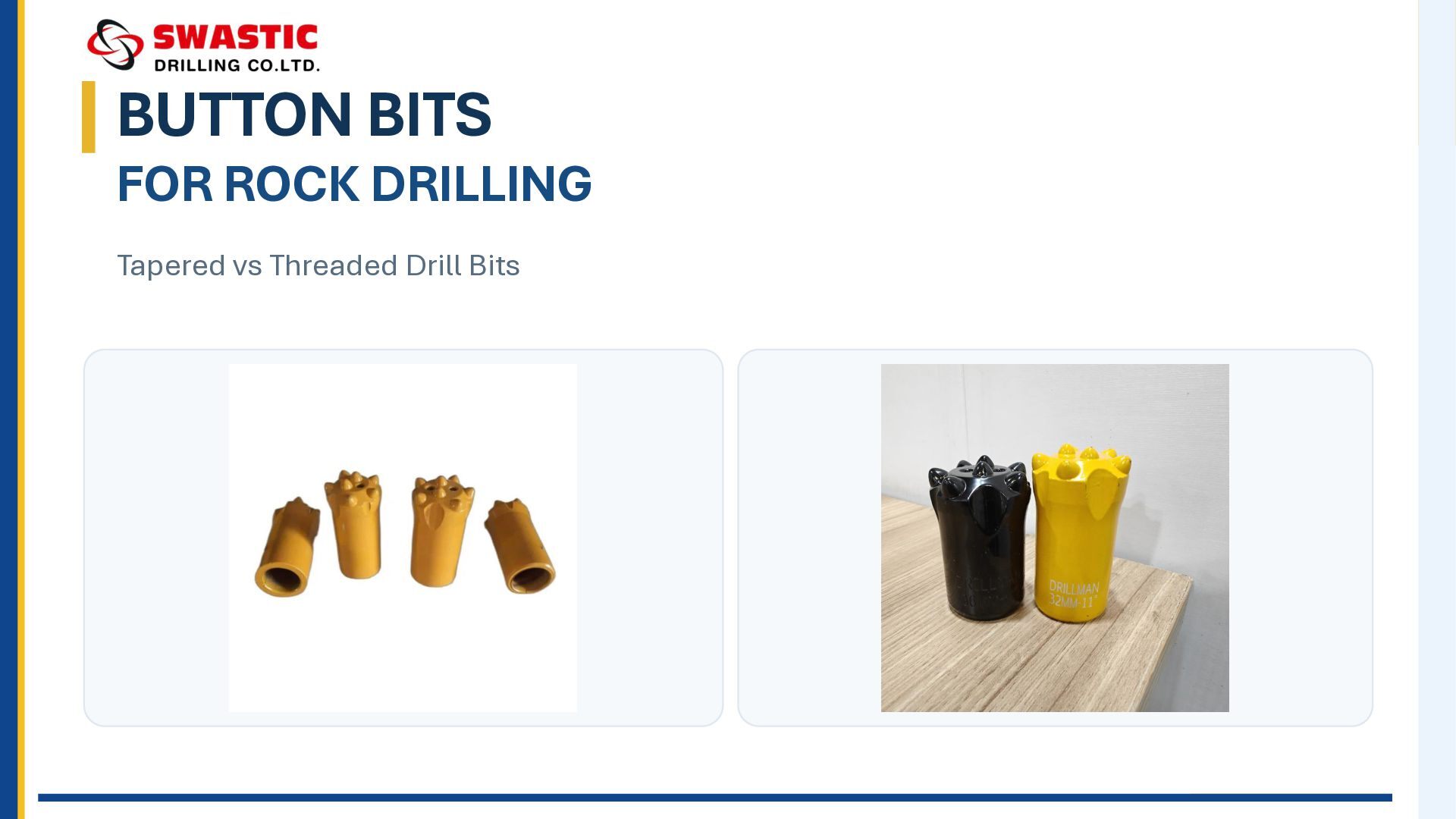
Button Bits for Rock Drilling – Tapered vs Threaded Drill Bits

Explore the differences between tapered and threaded button bits used in rock drilling, mining and quarrying. This presentation covers tungsten carbide button bits, their key features, applications, selection criteria and maintenance tips to help improve drilling efficiency and tool life.

Swastic Drillng

November 21, 2026

Transcript

10 slides
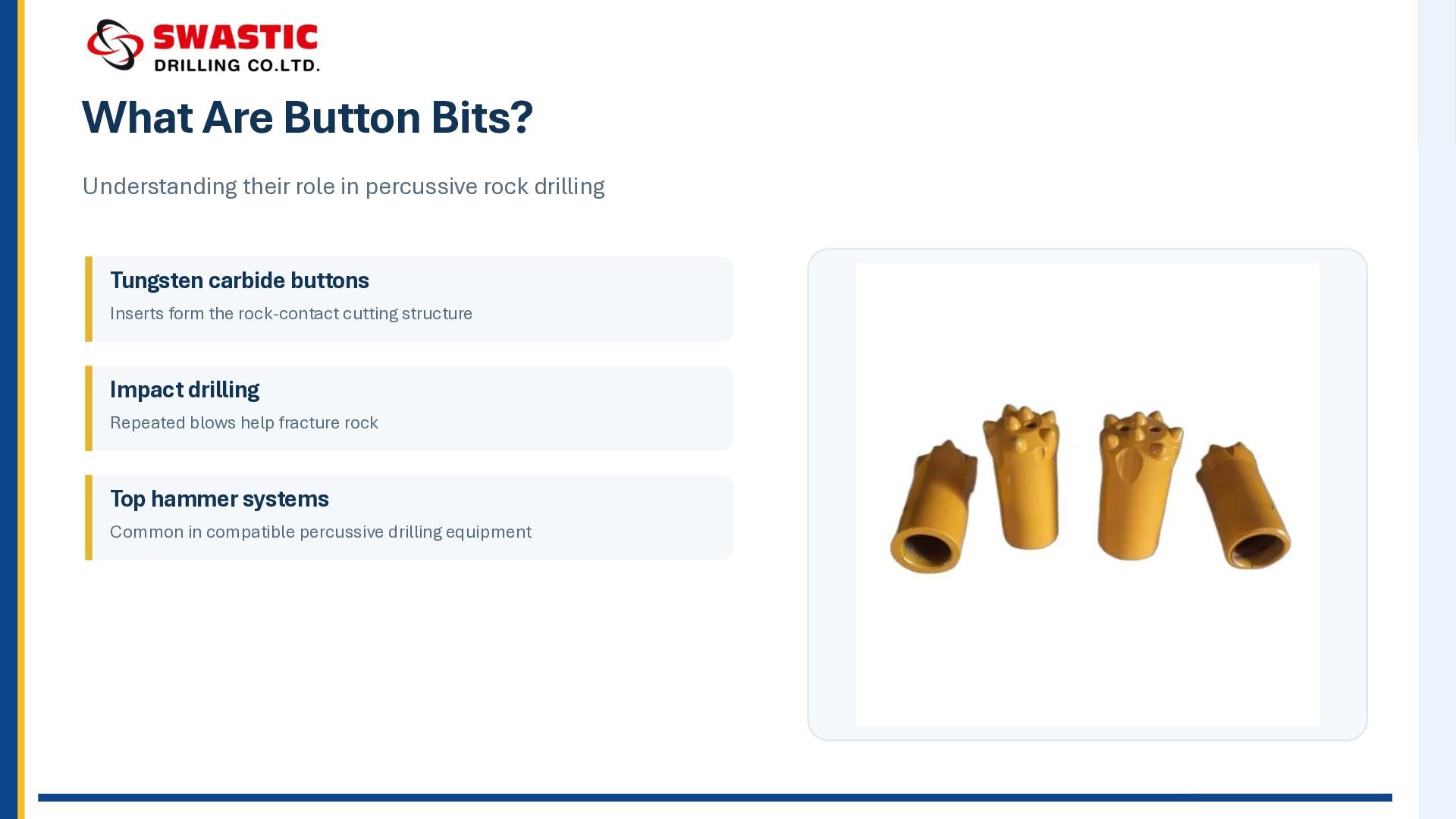
  1. What Are Button Bits? Understanding their role in percussive rock

    drilling Tungsten carbide buttons Inserts form the rock-contact cutting structure Impact drilling Repeated blows help fracture rock Top hammer systems Common in compatible percussive drilling equipment
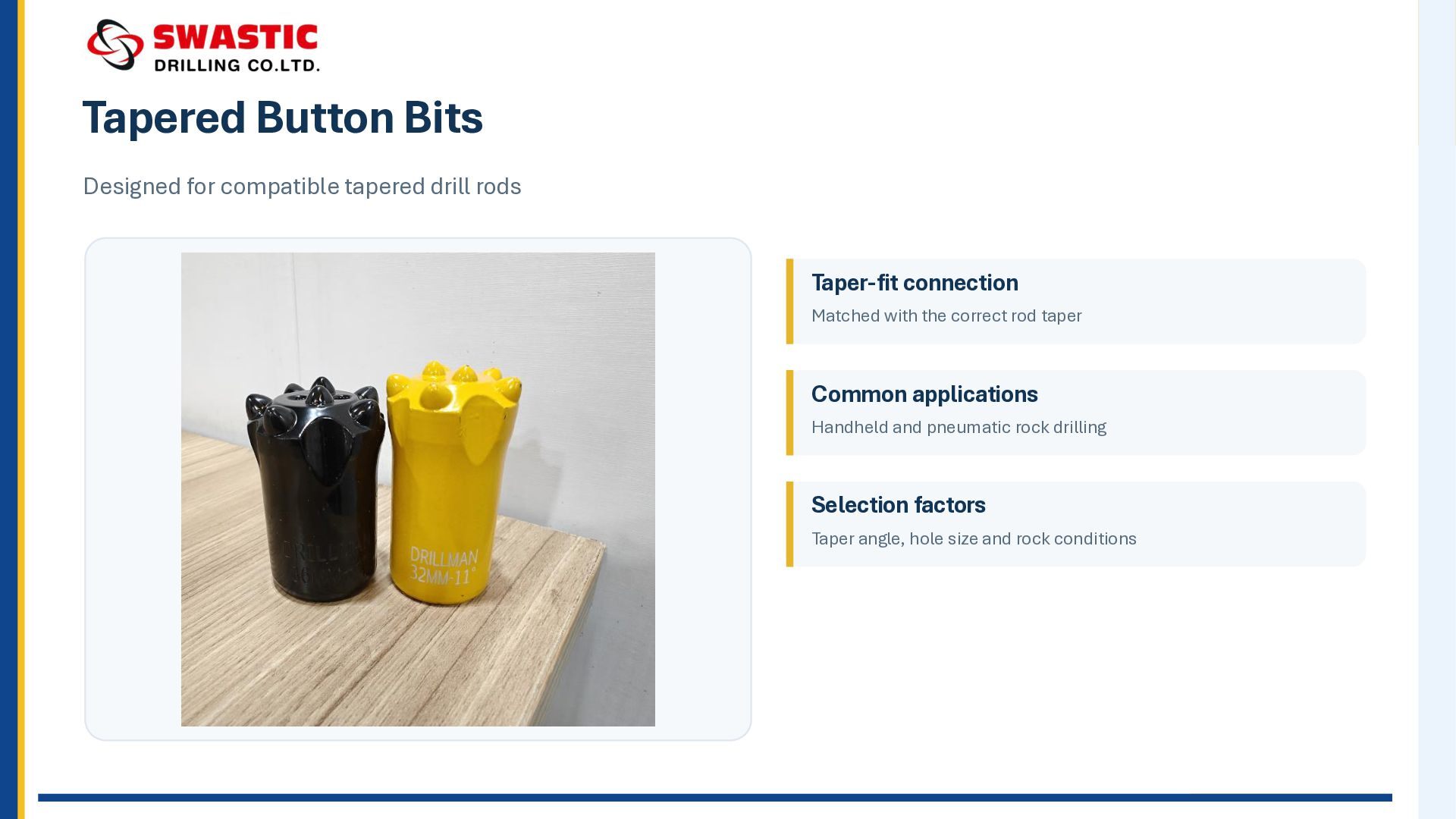
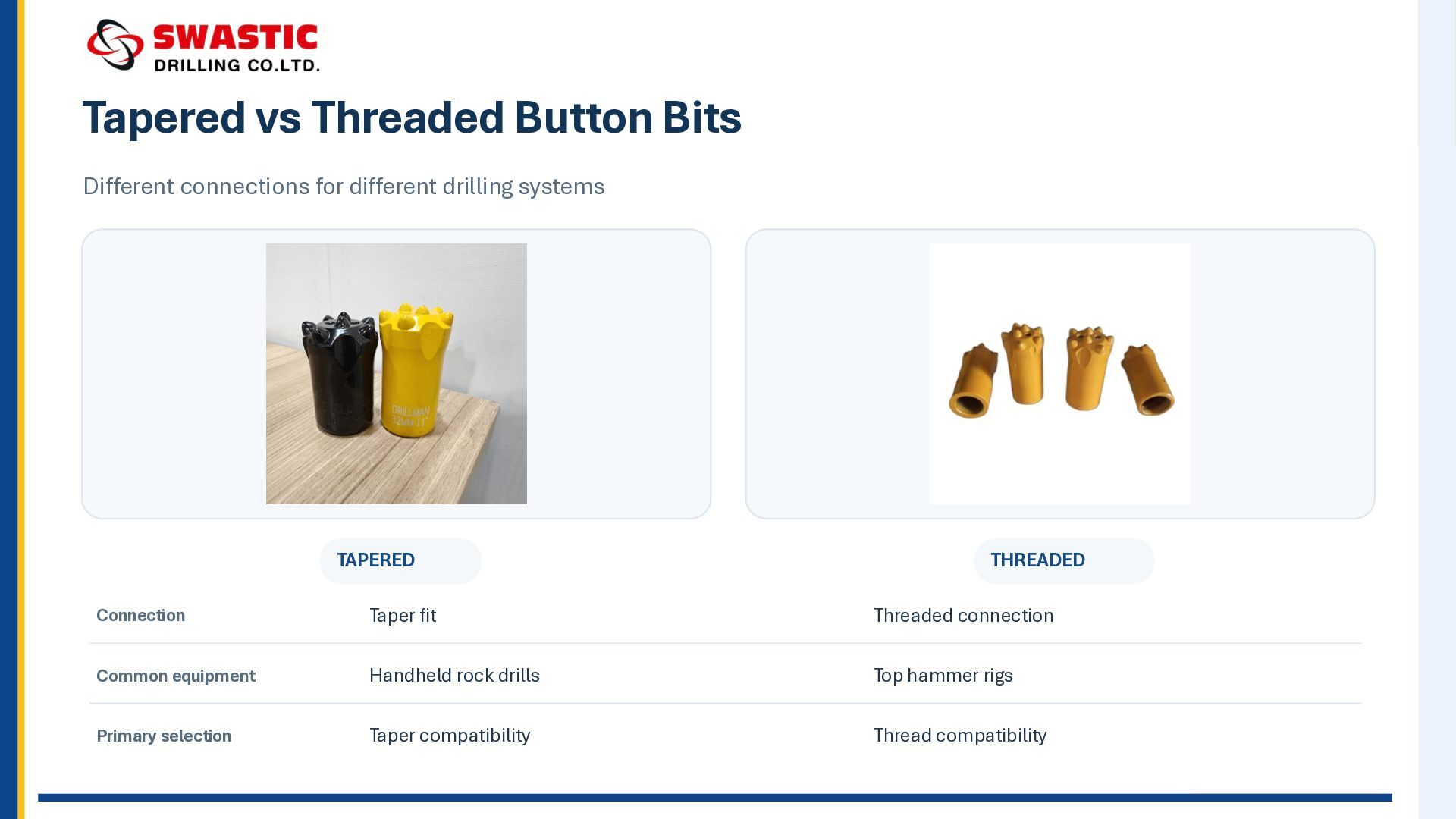
  2. Tapered Button Bits Designed for compatible tapered drill rods Taper-fit

    connection Matched with the correct rod taper Common applications Handheld and pneumatic rock drilling Selection factors Taper angle, hole size and rock conditions
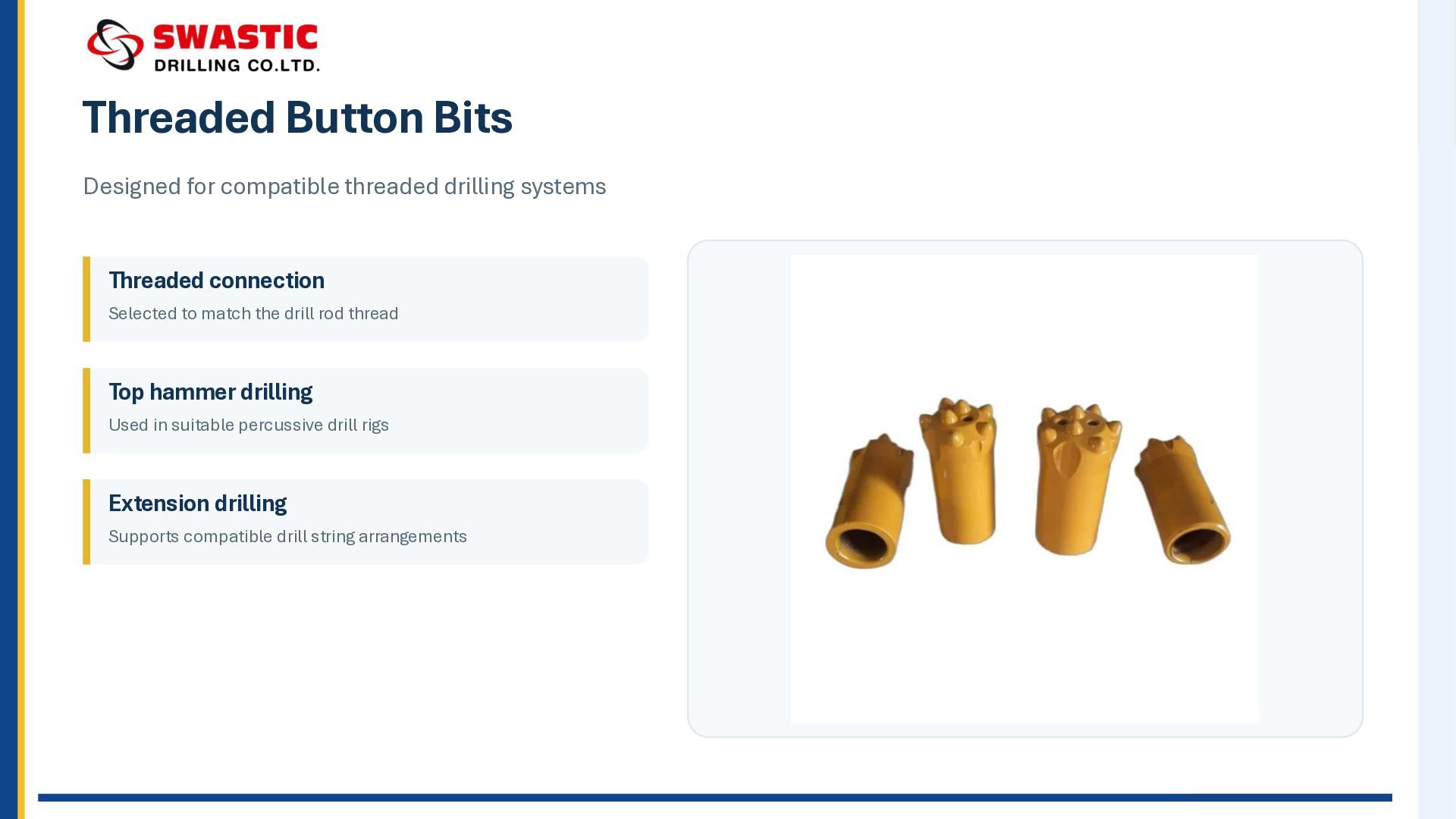
  3. Threaded Button Bits Designed for compatible threaded drilling systems Threaded

    connection Selected to match the drill rod thread Top hammer drilling Used in suitable percussive drill rigs Extension drilling Supports compatible drill string arrangements
  4. Tapered vs Threaded Button Bits Different connections for different drilling

    systems TAPERED THREADED Connection Taper fit Threaded connection Common equipment Handheld rock drills Top hammer rigs Primary selection Taper compatibility Thread compatibility
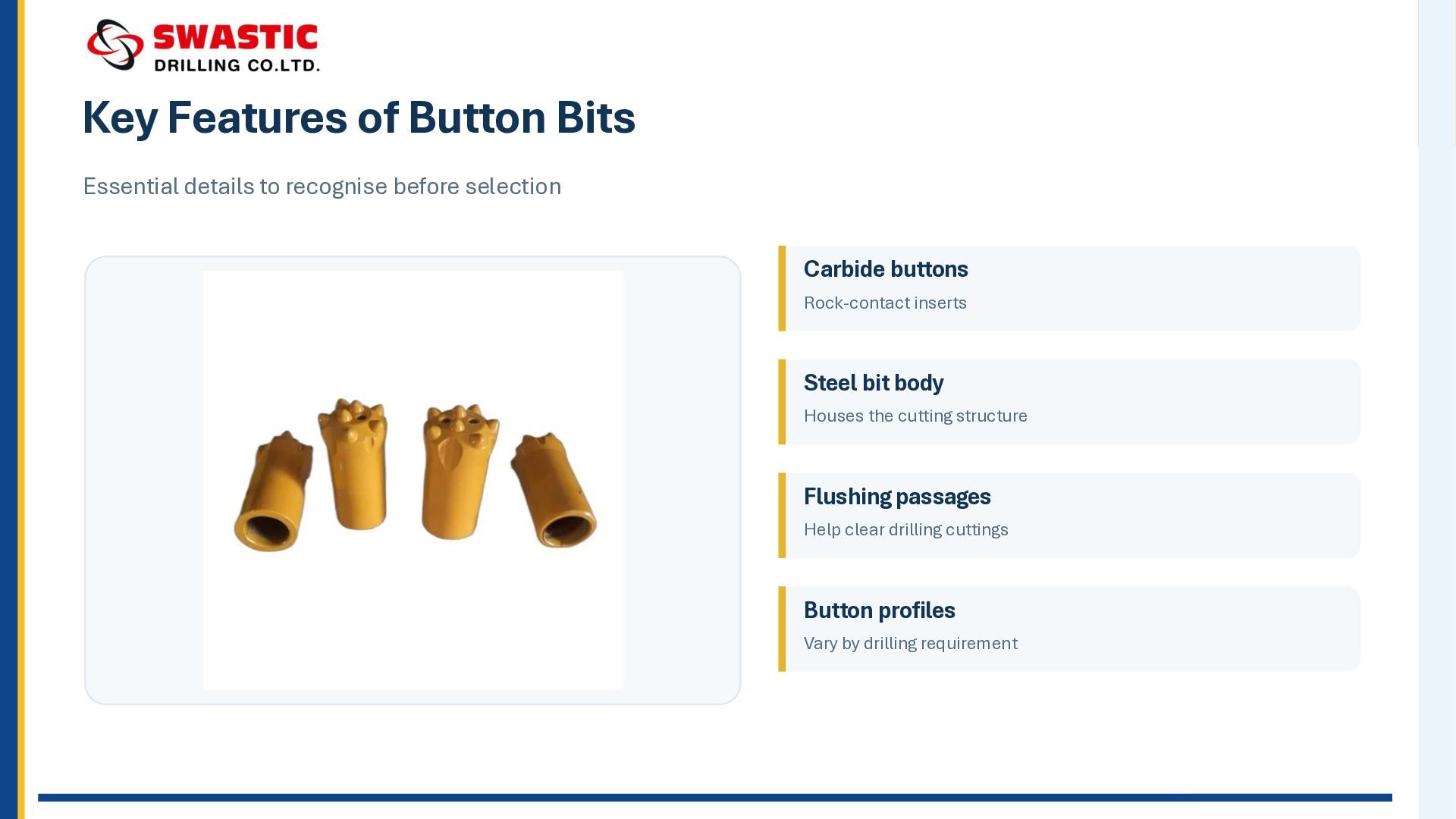
  5. Key Features of Button Bits Essential details to recognise before

    selection Carbide buttons Rock-contact inserts Steel bit body Houses the cutting structure Flushing passages Help clear drilling cuttings Button profiles Vary by drilling requirement
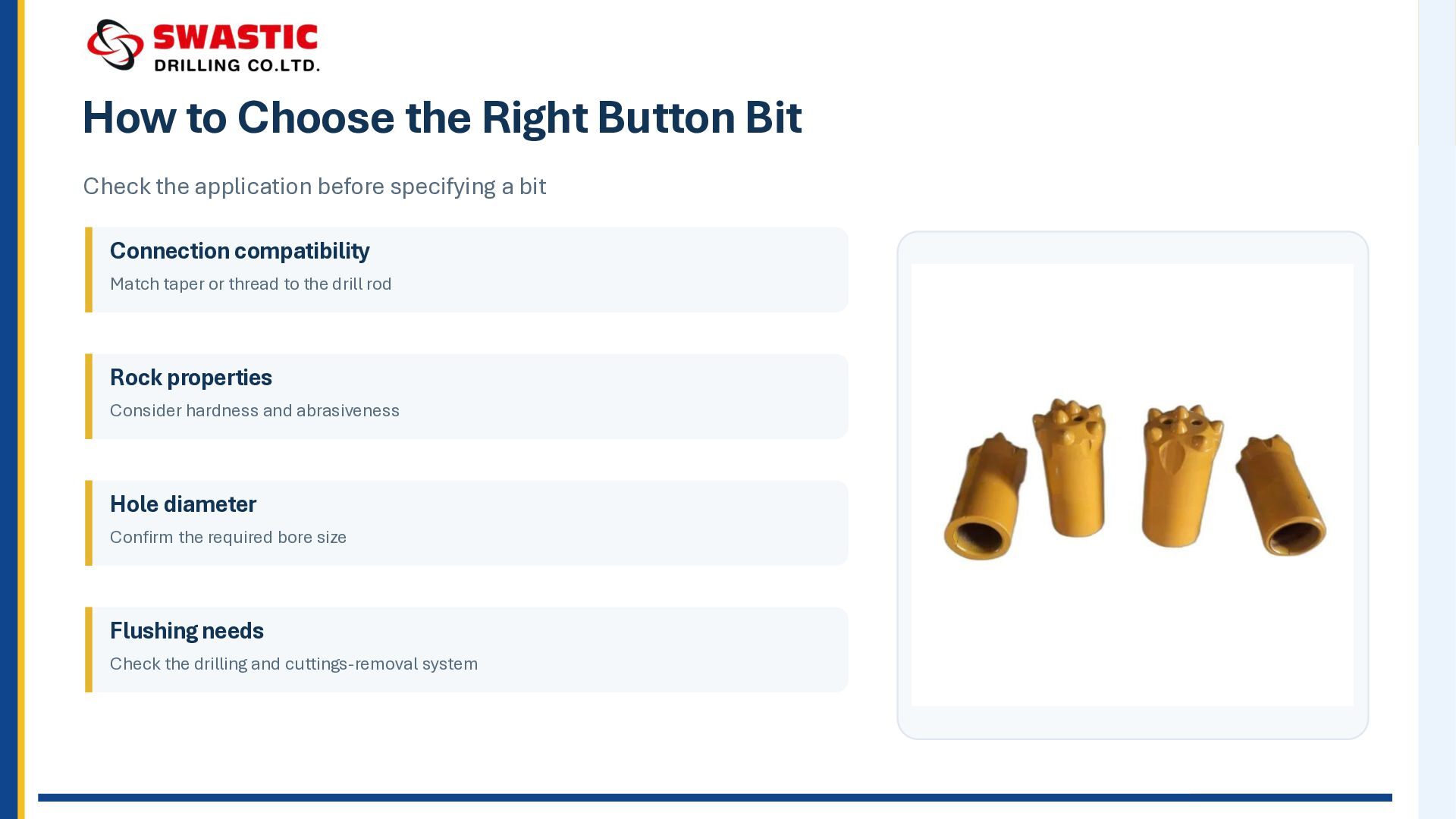
  6. How to Choose the Right Button Bit Check the application

    before specifying a bit Connection compatibility Match taper or thread to the drill rod Rock properties Consider hardness and abrasiveness Hole diameter Confirm the required bore size Flushing needs Check the drilling and cuttings-removal system
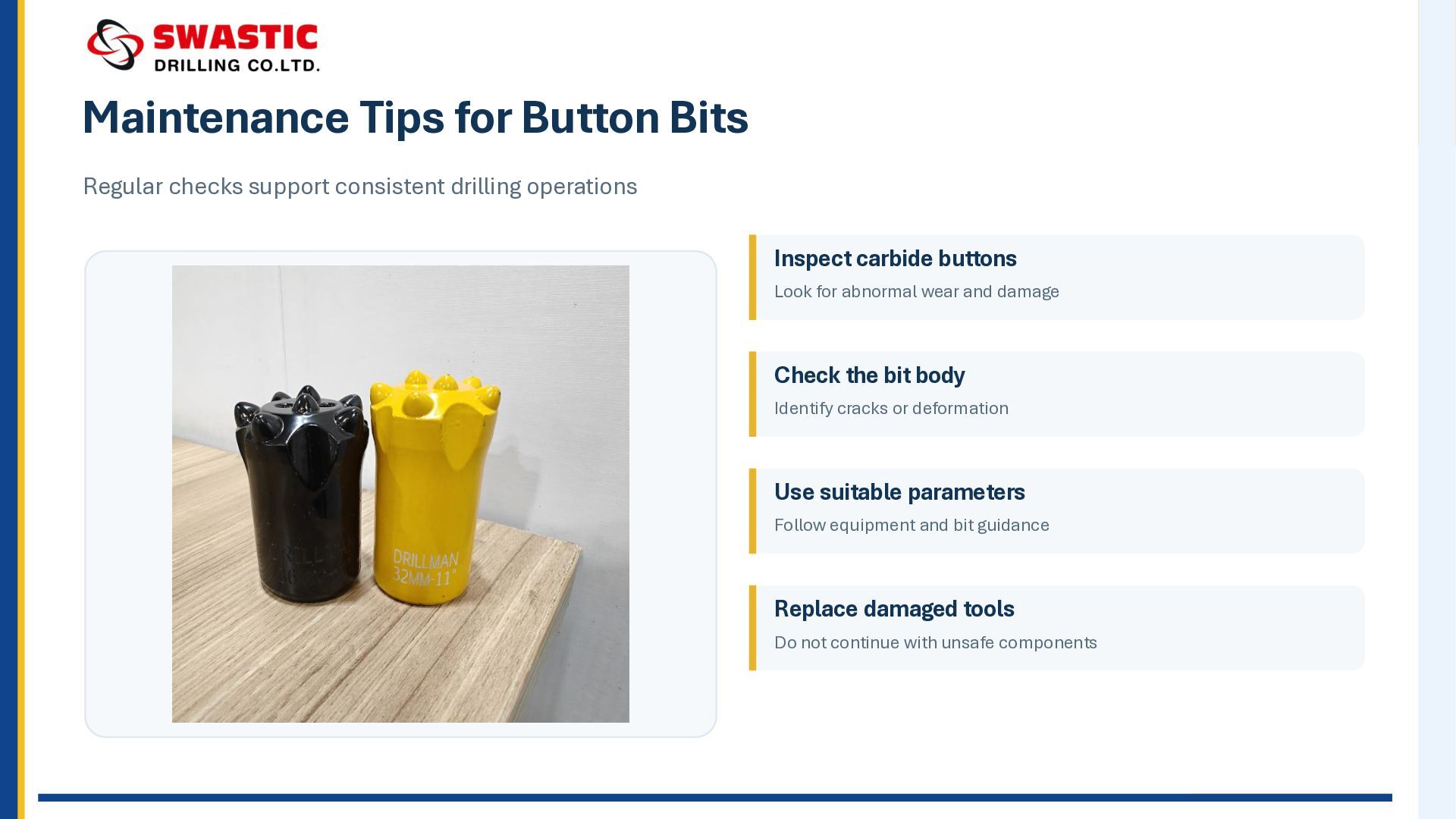
  7. Maintenance Tips for Button Bits Regular checks support consistent drilling

    operations Inspect carbide buttons Look for abnormal wear and damage Check the bit body Identify cracks or deformation Use suitable parameters Follow equipment and bit guidance Replace damaged tools Do not continue with unsafe components
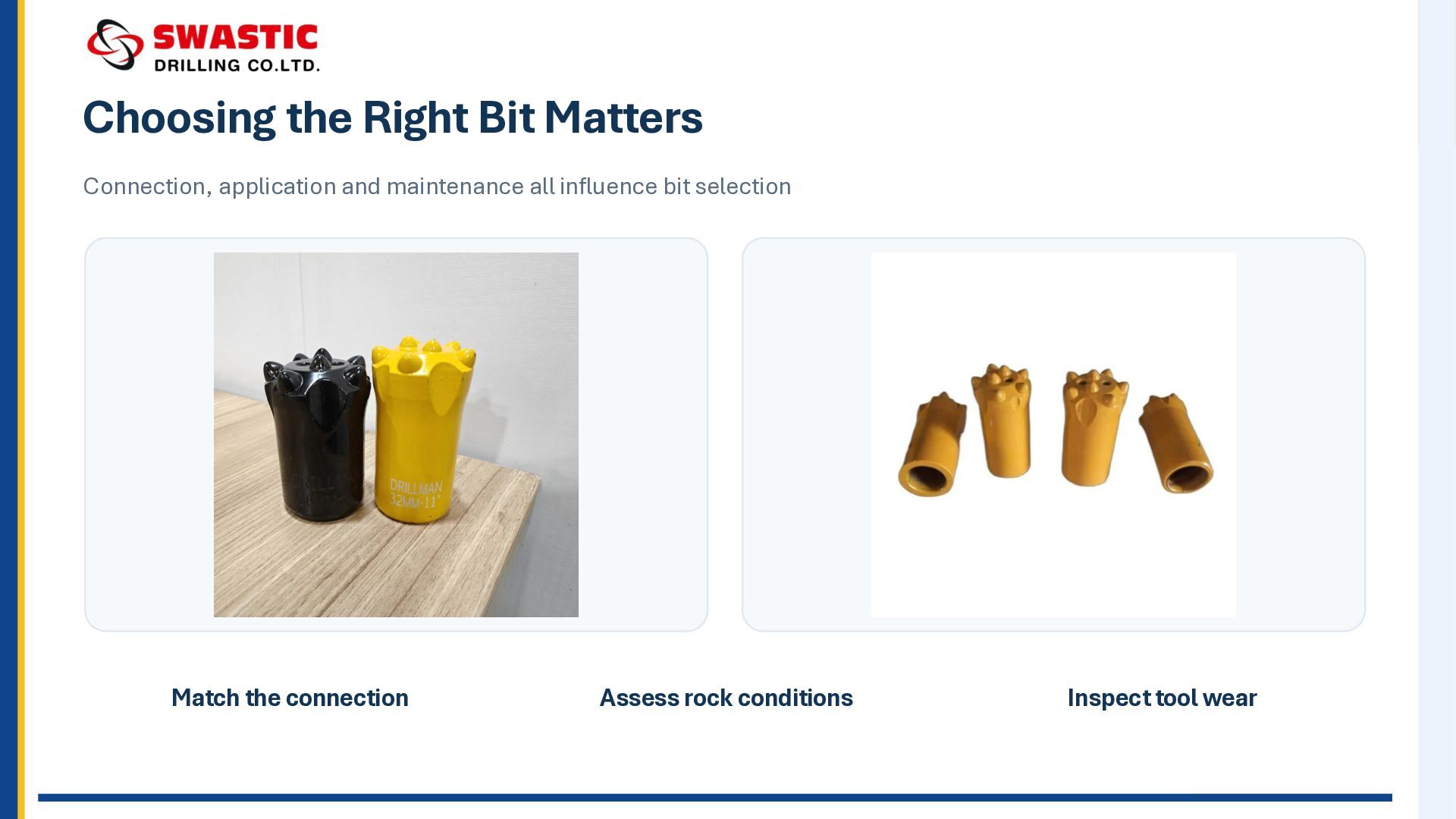
  8. Choosing the Right Bit Matters Connection, application and maintenance all

    influence bit selection Match the connection Assess rock conditions Inspect tool wear
  9. THANK YOU Thank you for joining us today. We hope

    you found this presentation valuable. For more information, or visit our website:- Drillmanindia