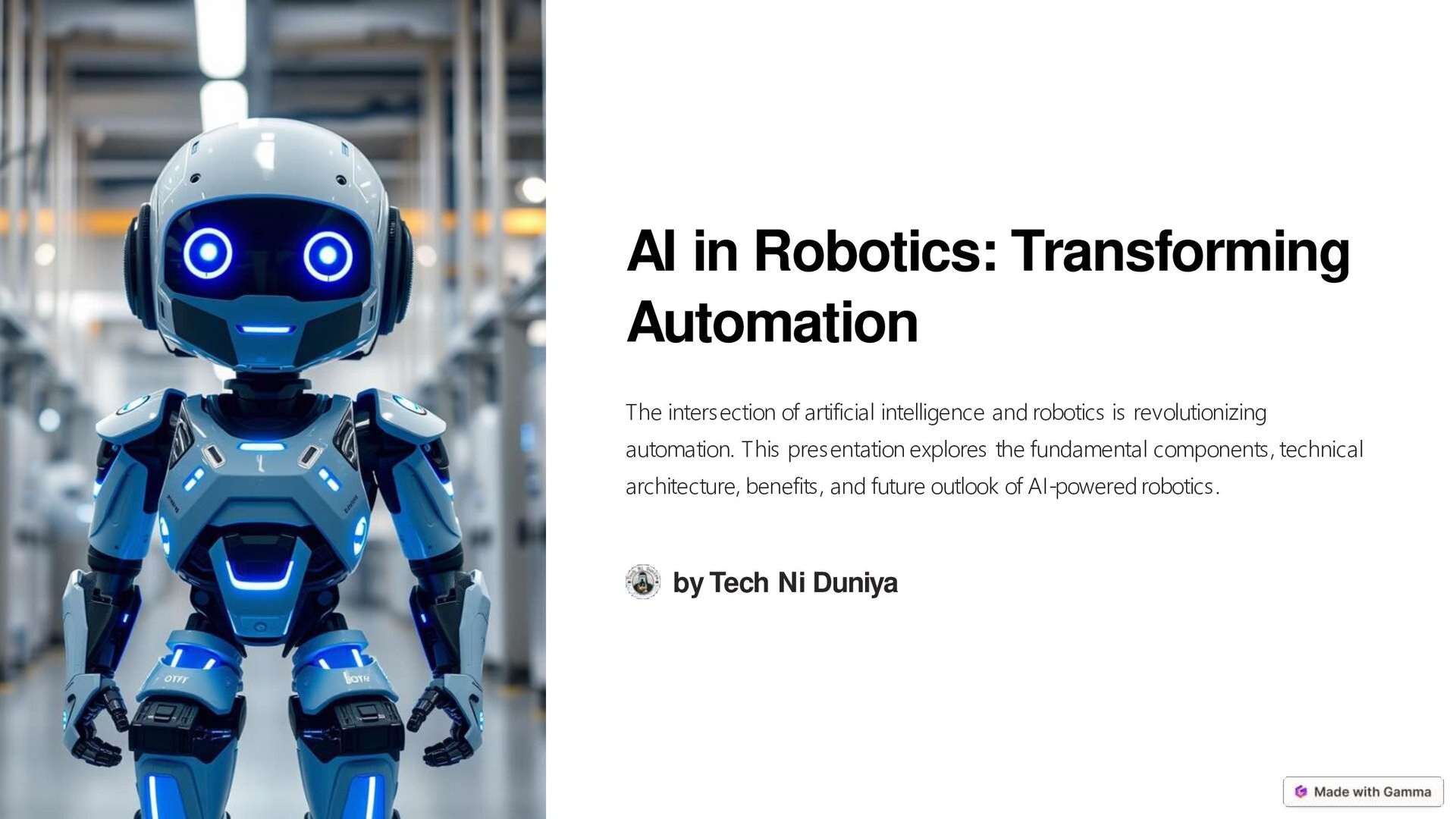
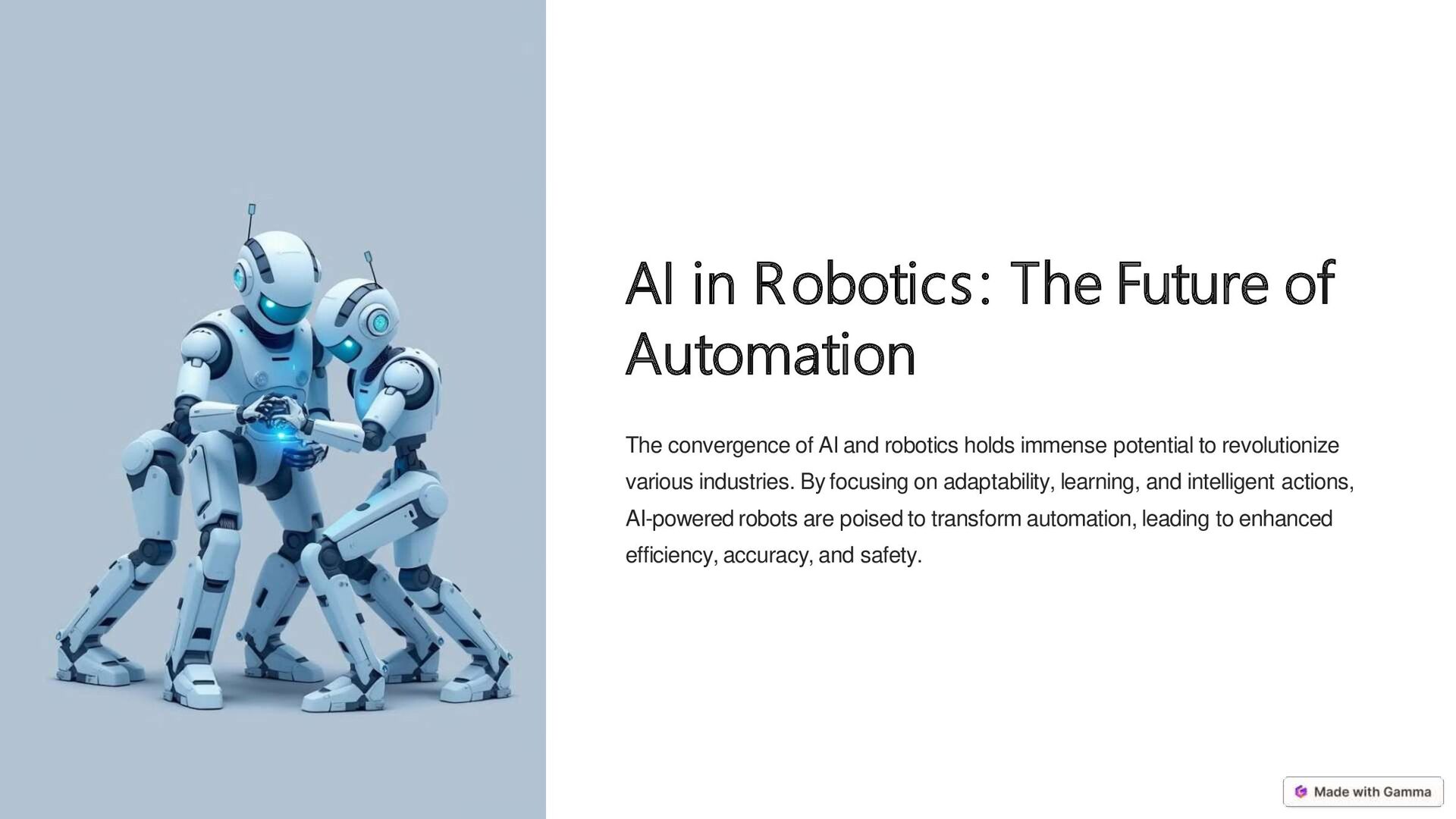
and robotics is revolutionizing automation. This presentation explores the fundamental components, technical architecture, benefits, and future outlook of AI-powered robotics. by Tech Ni Duniya
perceive their surroundings. They gather visual and audio data, enabling them to understand their environment. Fusion and Interpretation Sensor fusion combines data from multiple sources, like cameras and accelerometers. Advanced algorithms process this information to create a comprehensive real-time understanding.
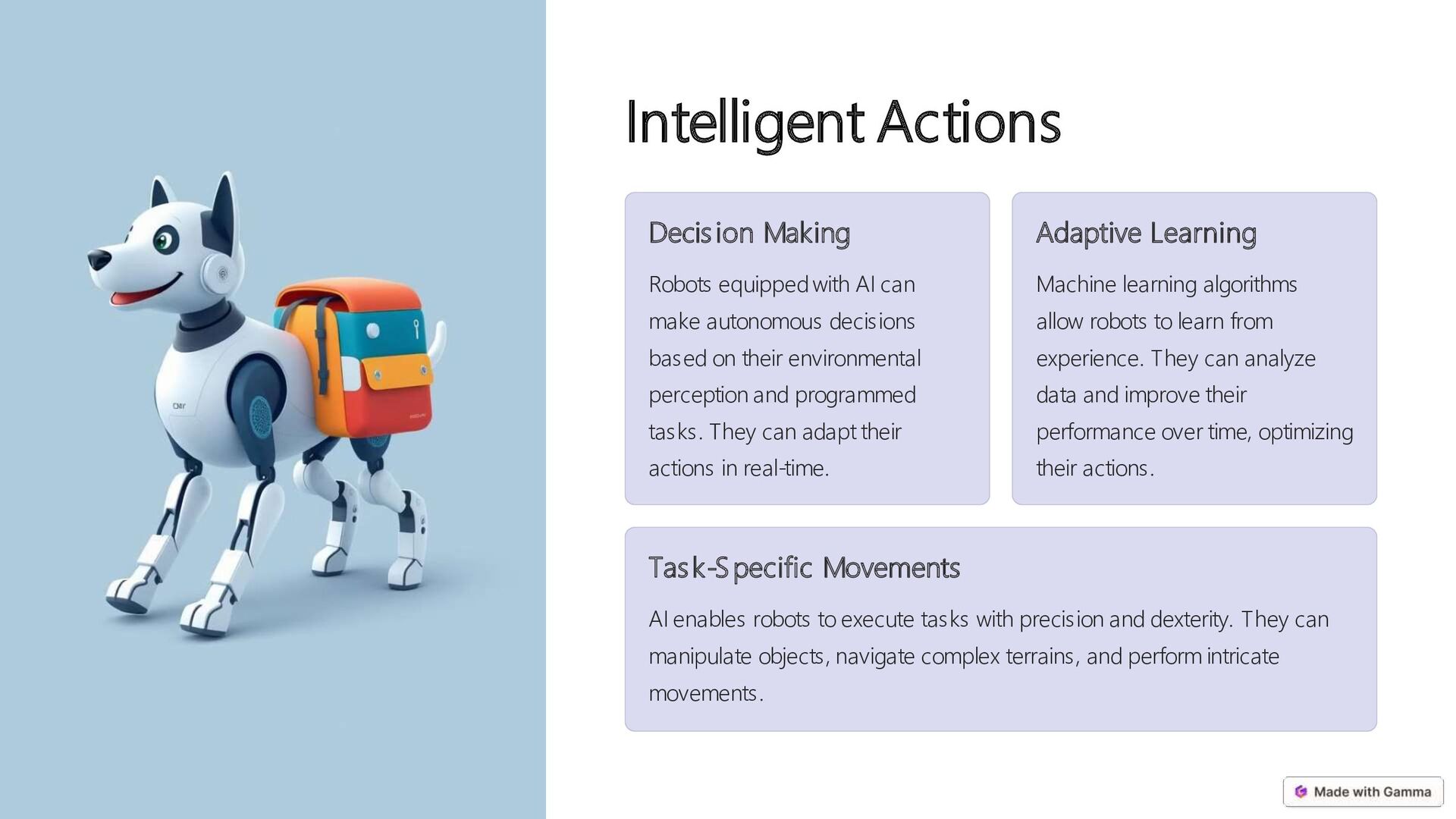
autonomous decisions based on their environmental perception and programmed tasks. They can adapt their actions in real-time. Adaptive Learning Machine learning algorithms allow robots to learn from experience. They can analyze data and improve their performance over time, optimizing their actions. Task-Specific Movements AI enables robots to execute tasks with precision and dexterity. They can manipulate objects, navigate complex terrains, and perform intricate movements.
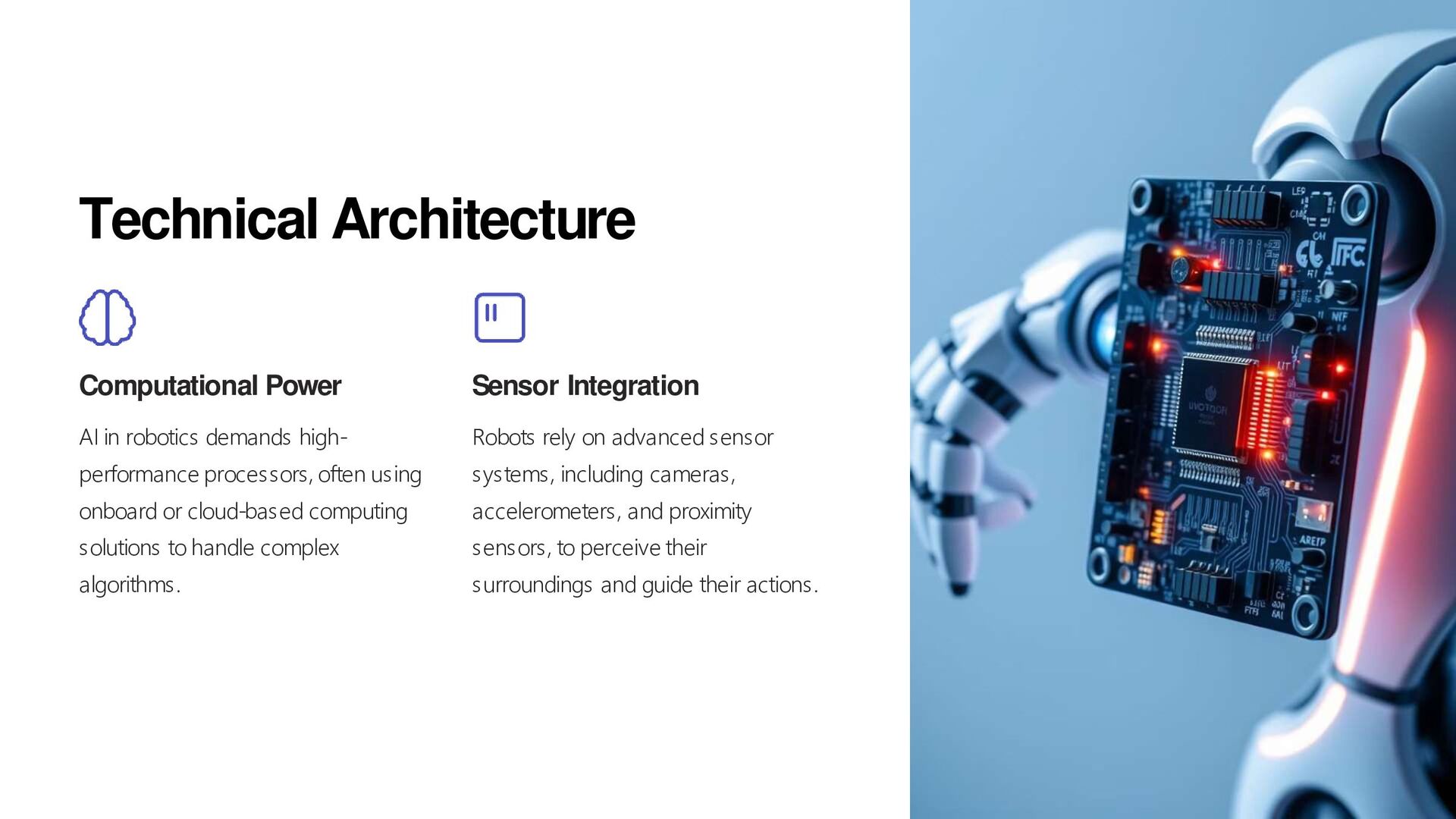
processors, often using onboard or cloud-based computing solutions to handle complex algorithms. Sensor Integration Robots rely on advanced sensor systems, including cameras, accelerometers, and proximity sensors, to perceive their surroundings and guide their actions.
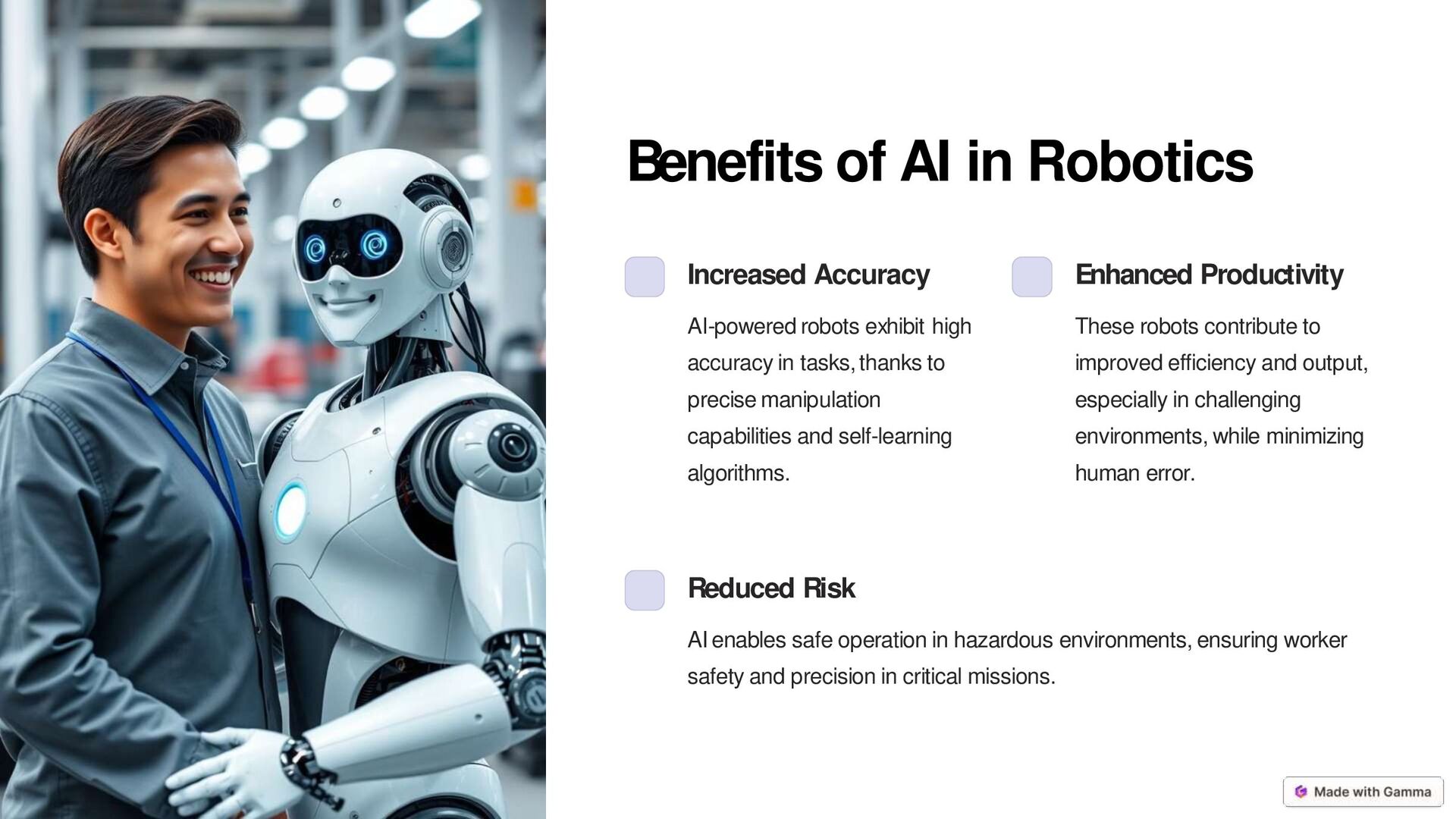
high accuracy in tasks, thanks to precise manipulation capabilities and self-learning algorithms. Enhanced Productivity These robots contribute to improved efficiency and output, especially in challenging environments, while minimizing human error. Reduced Risk AI enables safe operation in hazardous environments, ensuring worker safety and precision in critical missions.
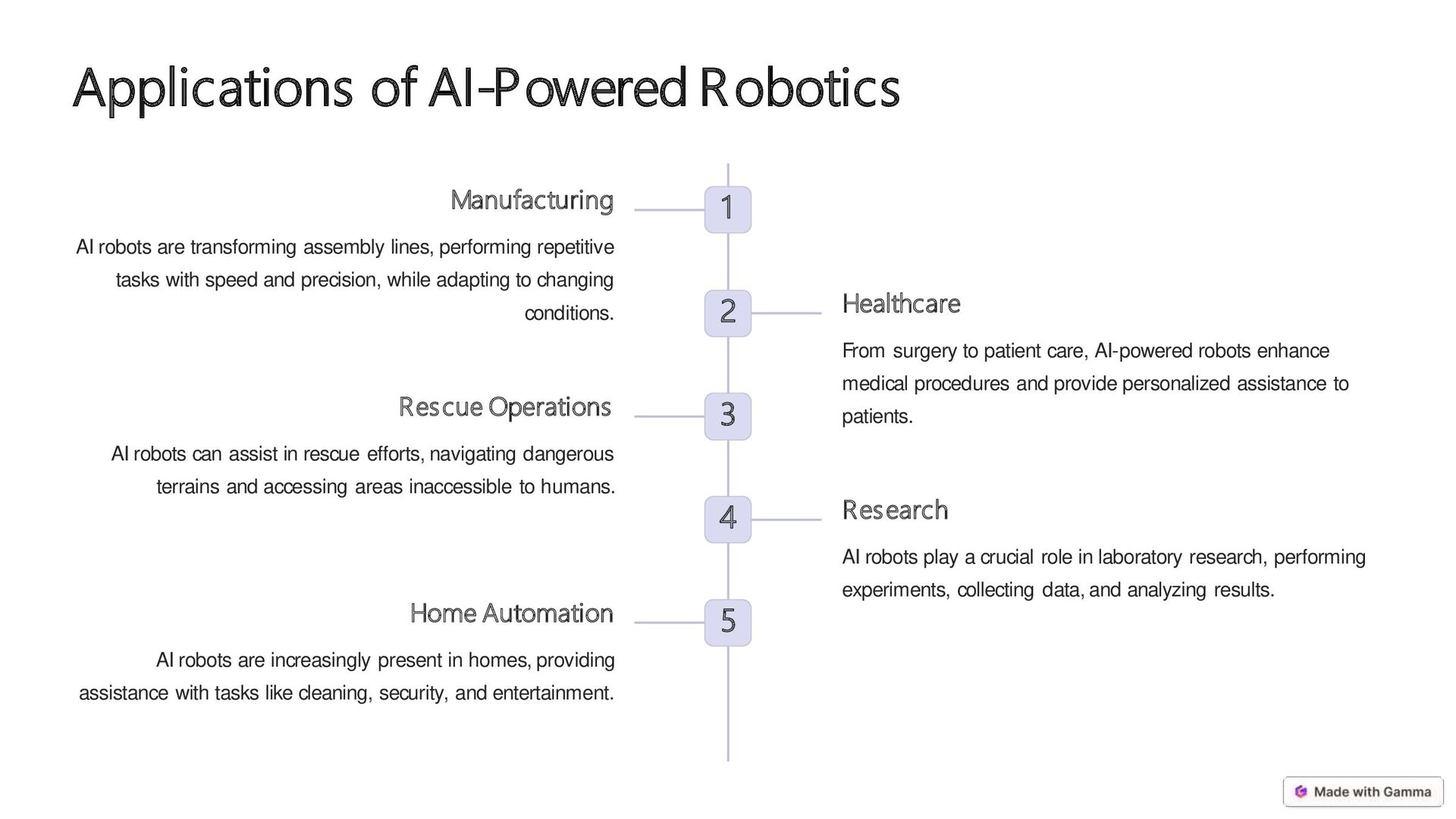
assembly lines, performing repetitive tasks with speed and precision, while adapting to changing conditions. 2 Healthcare From surgery to patient care, AI-powered robots enhance medical procedures and provide personalized assistance to patients. 3 Rescue Operations AI robots can assist in rescue efforts, navigating dangerous terrains and accessing areas inaccessible to humans. 4 Research AI robots play a crucial role in laboratory research, performing experiments, collecting data, and analyzing results. 5 Home Automation AI robots are increasingly present in homes, providing assistance with tasks like cleaning, security, and entertainment.
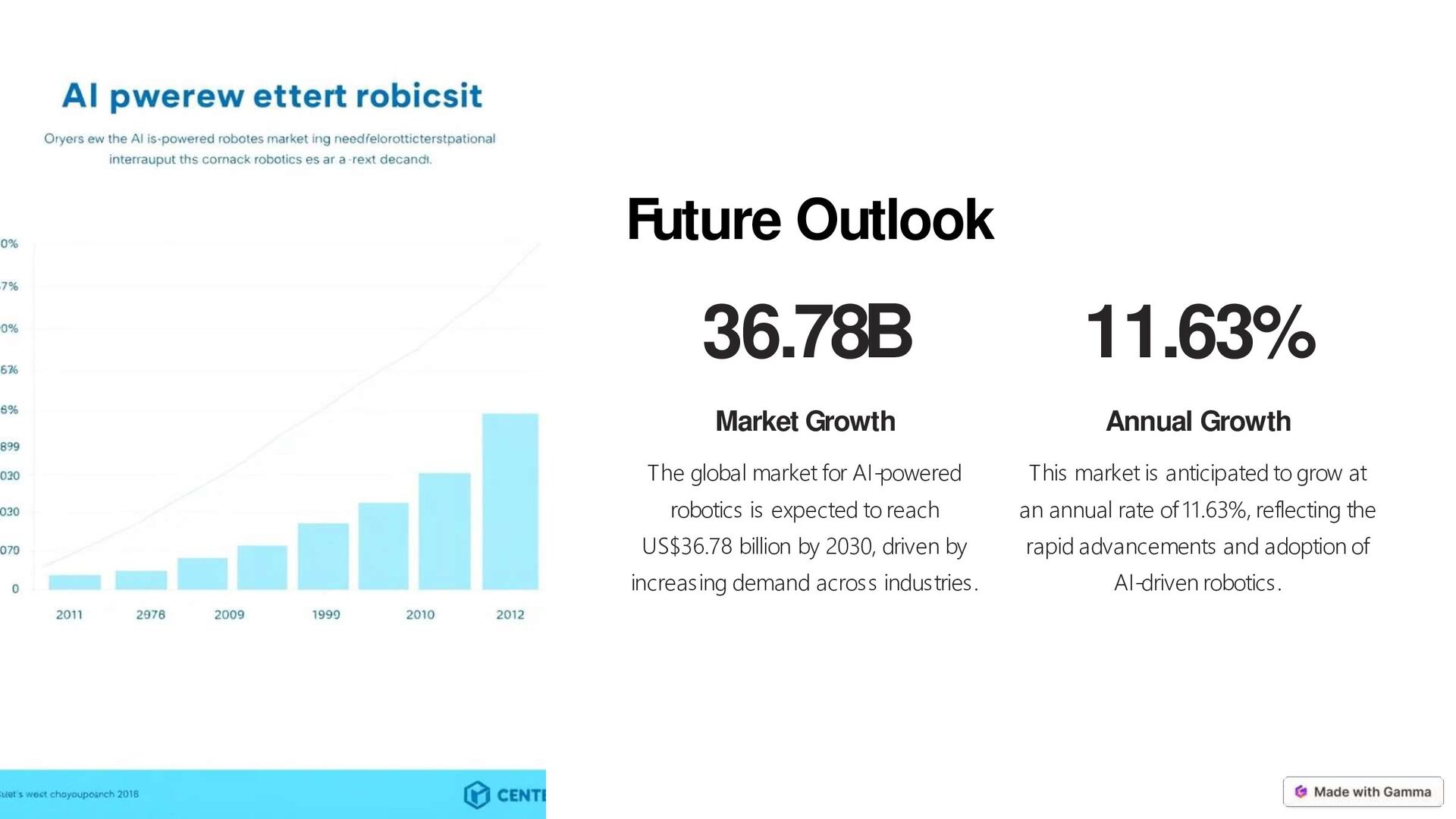
robotics is expected to reach US$36.78 billion by 2030, driven by increasing demand across industries. 11.63% Annual Growth This market is anticipated to grow at an annual rate of 11.63%, reflecting the rapid advancements and adoption of AI-driven robotics.
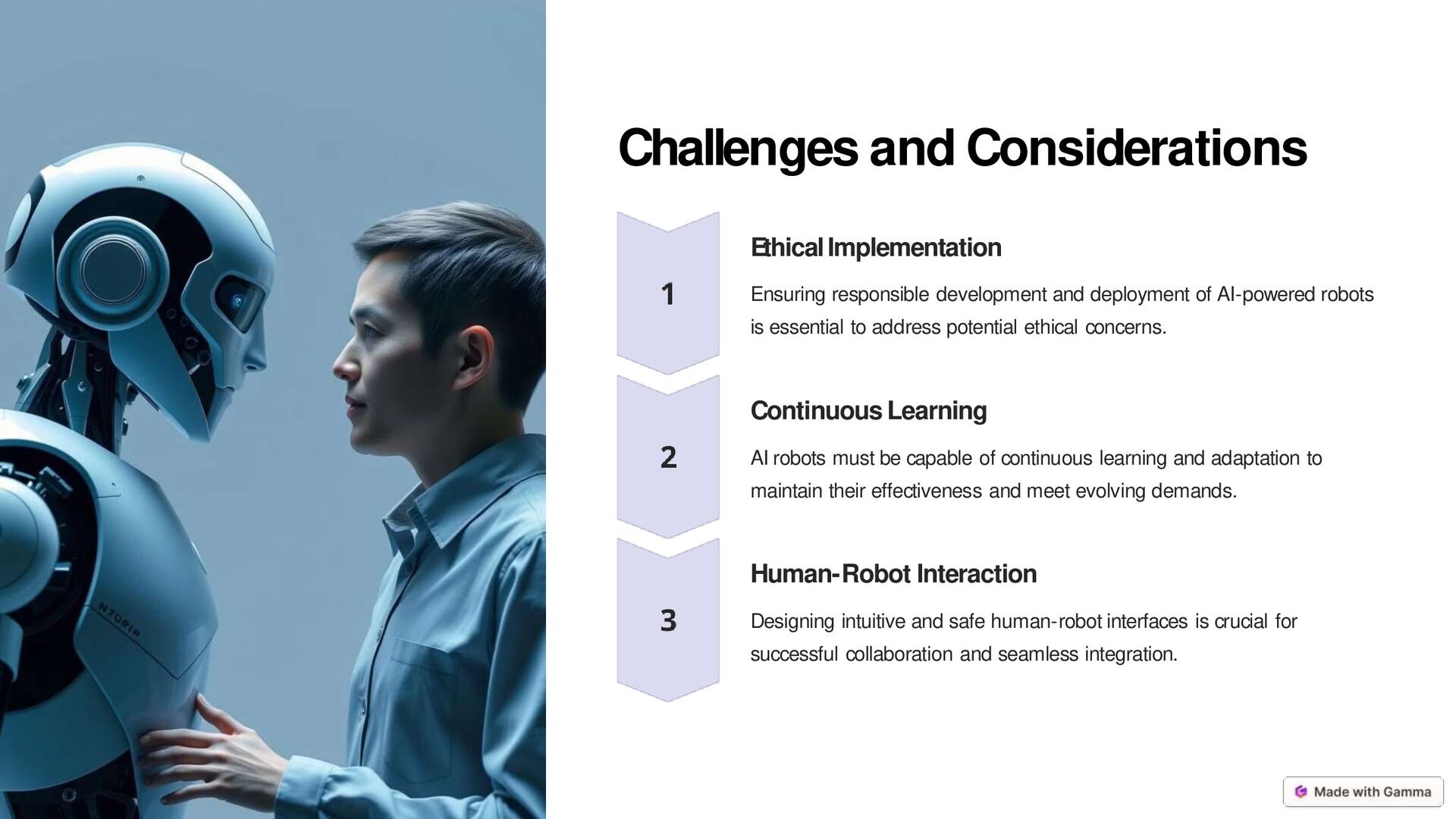
of AI-powered robots is essential to address potential ethical concerns. Continuous Learning AI robots must be capable of continuous learning and adaptation to maintain their effectiveness and meet evolving demands. Human-Robot Interaction Designing intuitive and safe human-robot interfaces is crucial for successful collaboration and seamless integration.
AI and robotics holds immense potential to revolutionize various industries. By focusing on adaptability, learning, and intelligent actions, AI-powered robots are poised to transform automation, leading to enhanced efficiency, accuracy, and safety.


 jlugia
 sergeychernyshev
 reverentgeek
 akosma
 katarinadahlin
 madoxten
 maggiecrowley
 thoeni
 speakerdeck
 dougneiner
 rocio
rocio
 matthewcrist