Upgrade to Pro — share decks privately, control downloads, hide ads and more …

Feb. CORE Summary Slides

Sponsored · Your Podcast. Everywhere. Effortlessly. Share. Educate. Inspire. Entertain. You do you. We'll handle the rest. →
Avatar for Jarl Nischan Jarl Nischan
February 25, 2013
72

Feb. CORE Summary Slides

Key slides, minus graphics.

Avatar for Jarl Nischan

Jarl Nischan

February 25, 2013

Transcript

  1. 2013 CORE Intent Share knowledge and skills that: accelerate our

    transition to thriving, and work reliably for everyone who is willing to do the “5 yagaddas” • yagadda wanna • yagadda know how • yagadda use what you know • yagadda notice how well you are succeeding • yagadda be flexible & change until you get it right
  2. The Five Tasks (See Handout) 1. Revive your ability to

    function safely 2. Recover your trust, unity, caring, and commitment 3. Refocus your story 4. Revitalize your life-dreams 5. Re-create your life They are not “steps” or “stages,” but a “hierarchy.”
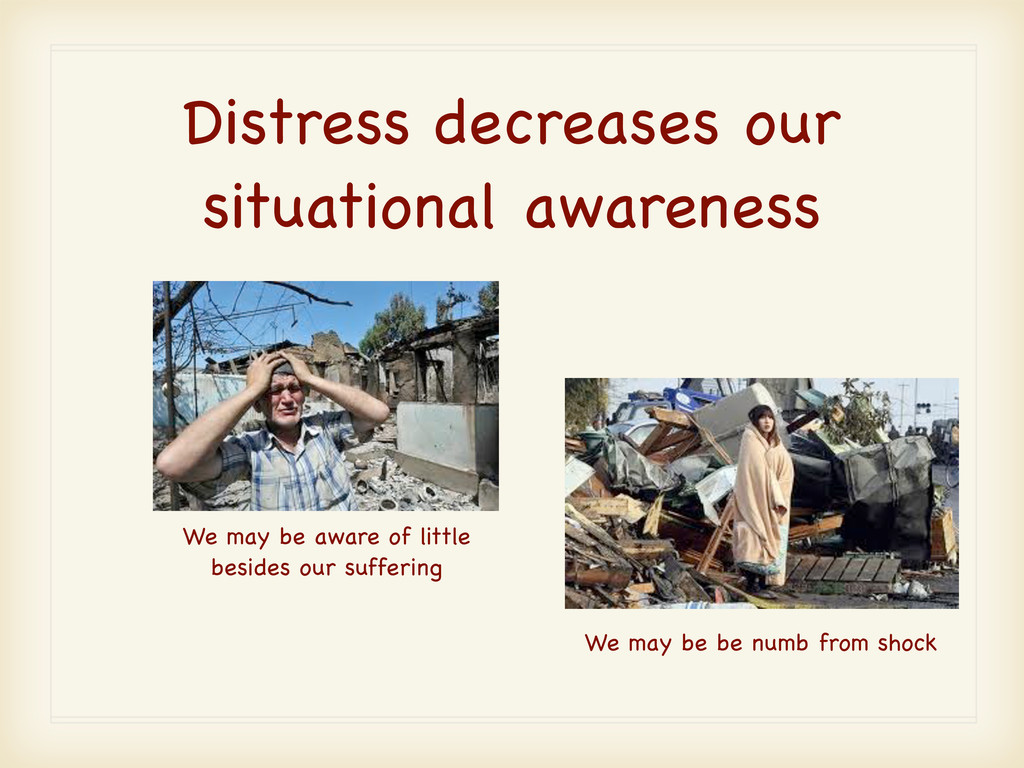
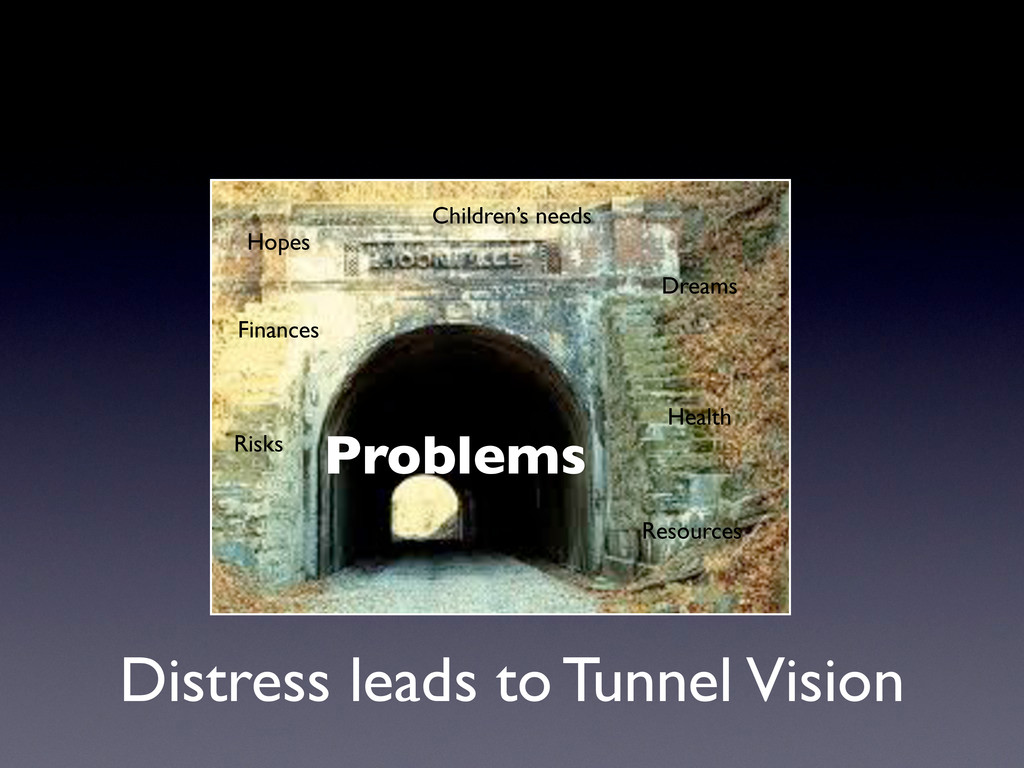
  3. Distress decreases our situational awareness We may be aware of

    little besides our suffering We may be be numb from shock
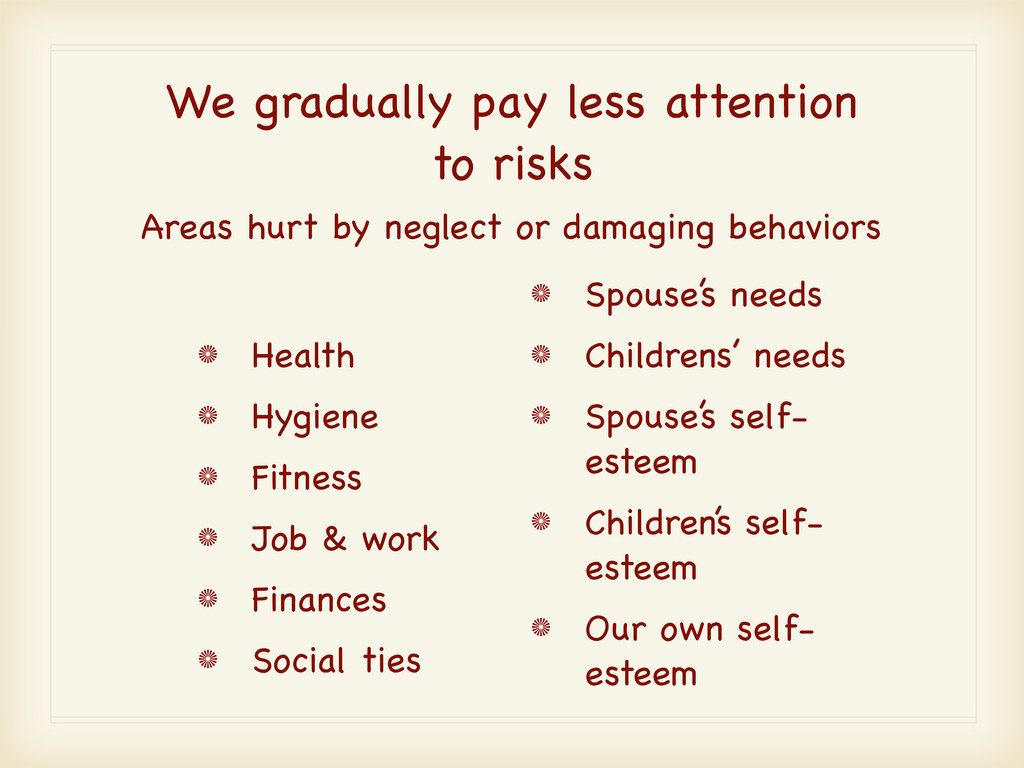
  4. We gradually pay less attention to risks Health Hygiene Fitness

    Job & work Finances Social ties Spouse’s needs Childrens’ needs Spouse’s self- esteem Children’s self- esteem Our own self- esteem Areas hurt by neglect or damaging behaviors
  5. Why Bother? • See the 8-page ‘sampler’ of marriage benefits

    on lansingcore.wordpress.com; search “CORE Handouts” • Wow!
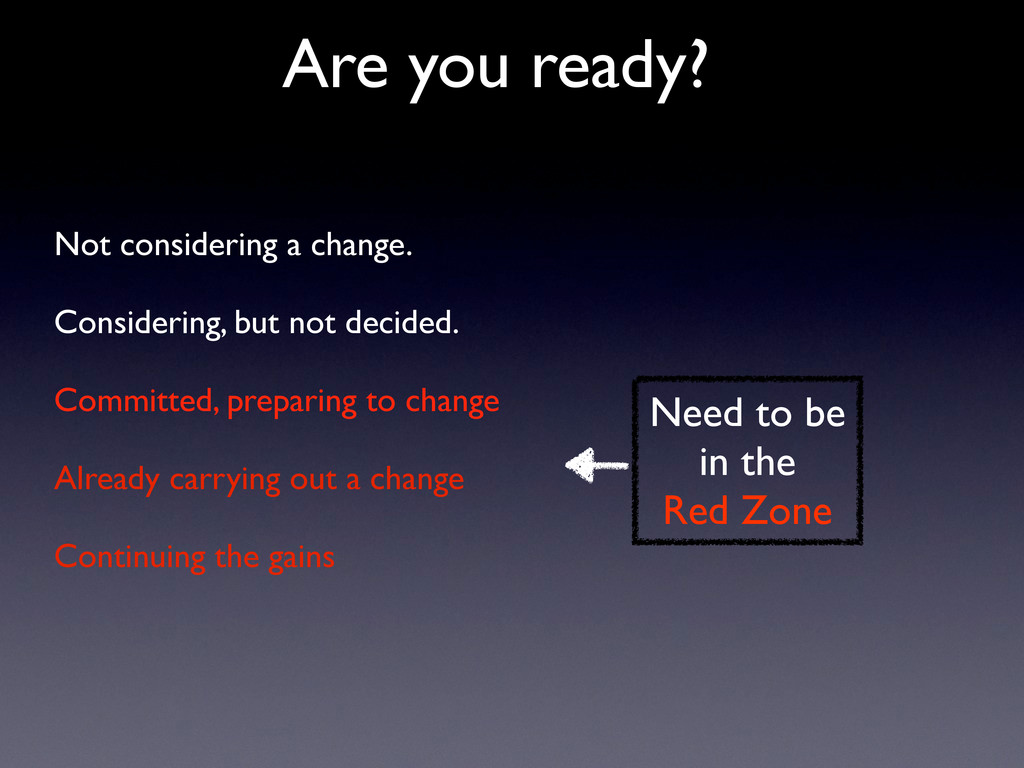
  6. Are you ready? Not considering a change. Considering, but not

    decided. Committed, preparing to change Already carrying out a change Continuing the gains Need to be in the Red Zone
  7. The Focus Stop making things worse: Agree to end behaviors

    and circumstances that damage our marriage and family. Remember - safety first!
  8. The core work of this task: • Do not try

    to resolve the larger “relationship issues” before attending to safety. Safety first. • Agree to end behaviors and circumstances that damage our marriage and family.
  9. Develop Agreements Some actions I must do alone; I agree

    to do it and be accountable to my spouse. Some actions require guidelines for how we act in some area of life; we agree on guidelines and hold ourselves accountable to each other. Failure to restore safe functioning will undermine our other work on thriving.
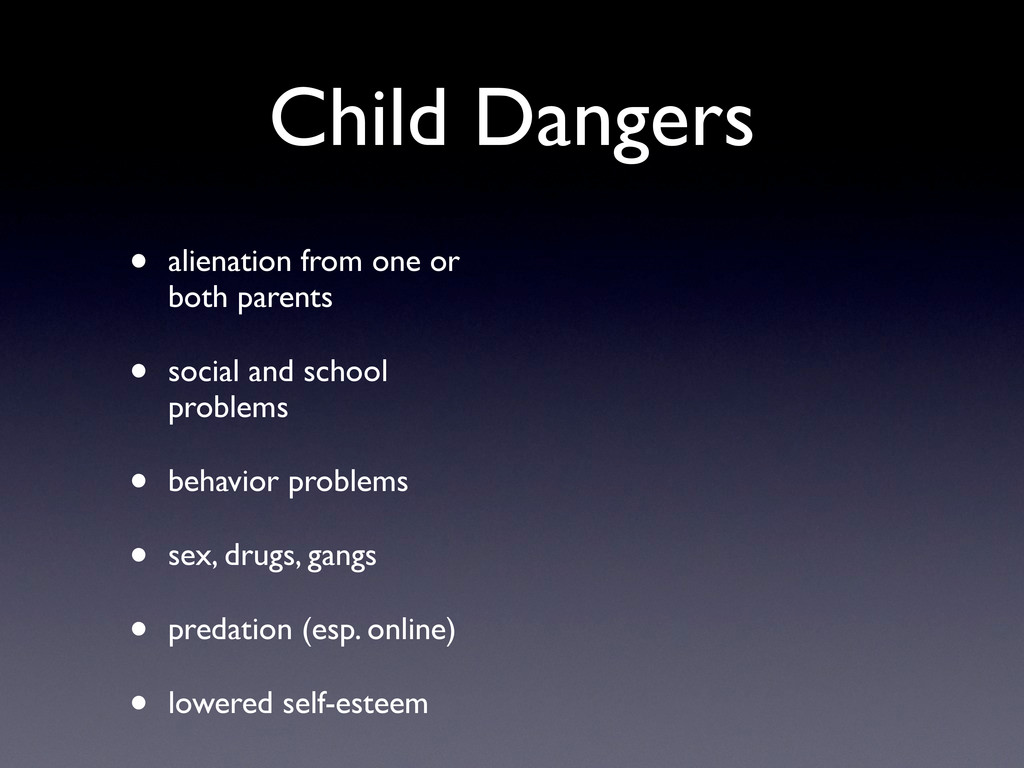
  10. Child Dangers • alienation from one or both parents •

    social and school problems • behavior problems • sex, drugs, gangs • predation (esp. online) • lowered self-esteem
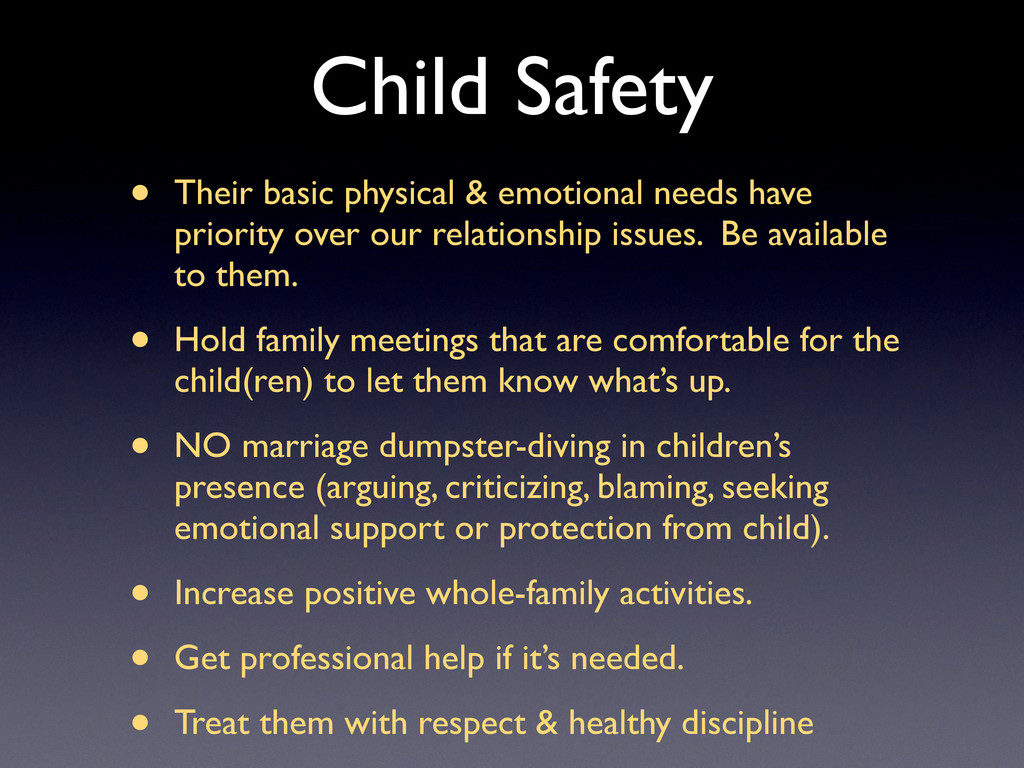
  11. Child Safety • Their basic physical & emotional needs have

    priority over our relationship issues. Be available to them. • Hold family meetings that are comfortable for the child(ren) to let them know what’s up. • NO marriage dumpster-diving in children’s presence (arguing, criticizing, blaming, seeking emotional support or protection from child). • Increase positive whole-family activities. • Get professional help if it’s needed. • Treat them with respect & healthy discipline
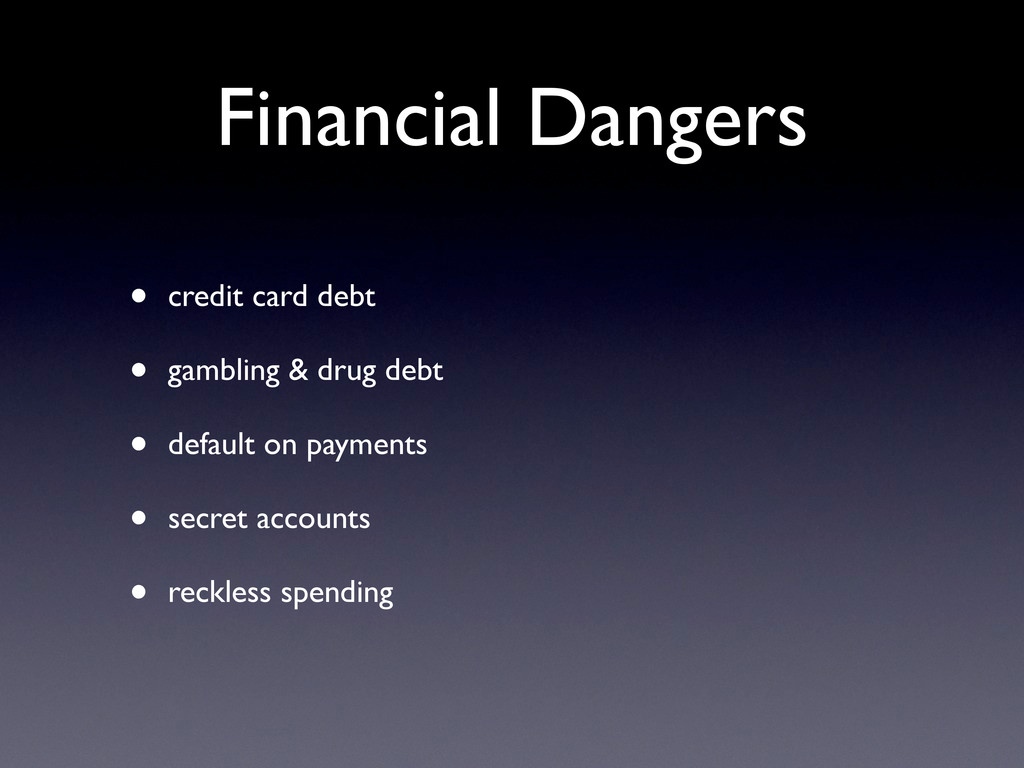
  12. Financial Dangers • credit card debt • gambling & drug

    debt • default on payments • secret accounts • reckless spending
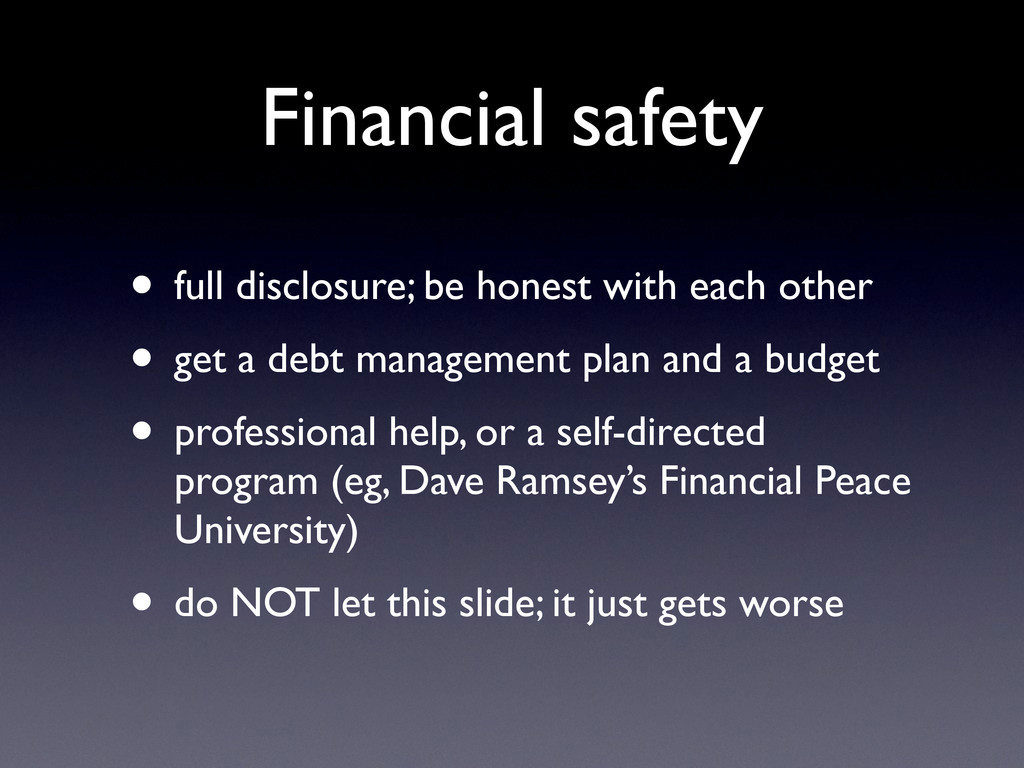
  13. Financial safety • full disclosure; be honest with each other

    • get a debt management plan and a budget • professional help, or a self-directed program (eg, Dave Ramsey’s Financial Peace University) • do NOT let this slide; it just gets worse
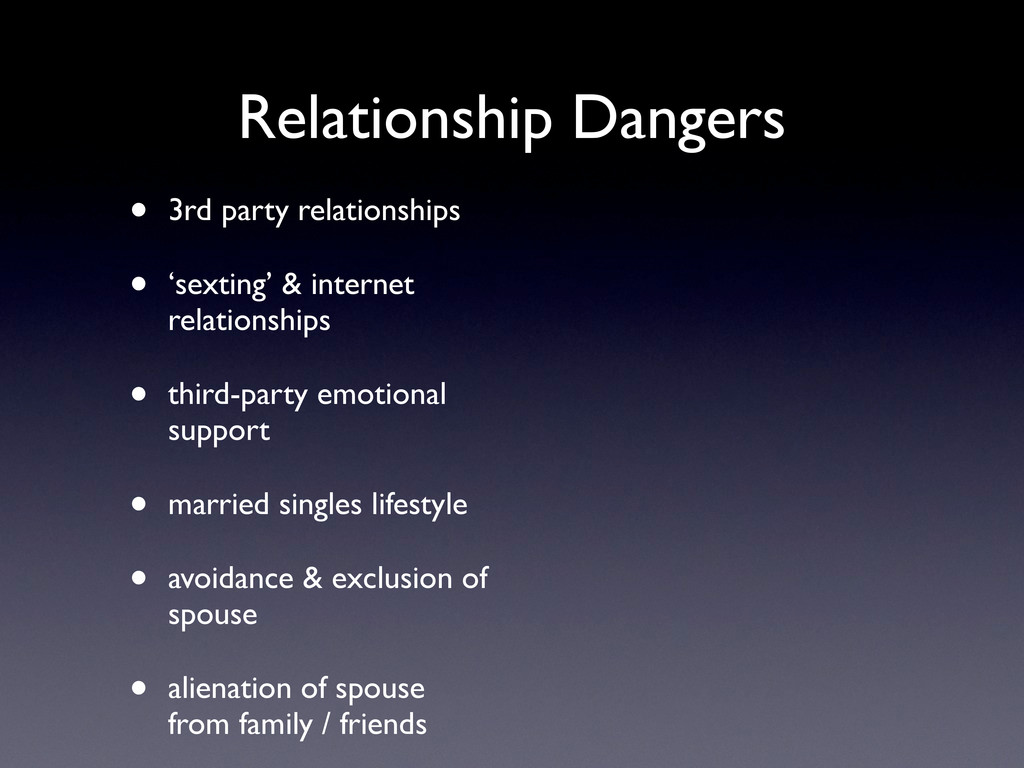
  14. Relationship Dangers • 3rd party relationships • ‘sexting’ & internet

    relationships • third-party emotional support • married singles lifestyle • avoidance & exclusion of spouse • alienation of spouse from family / friends
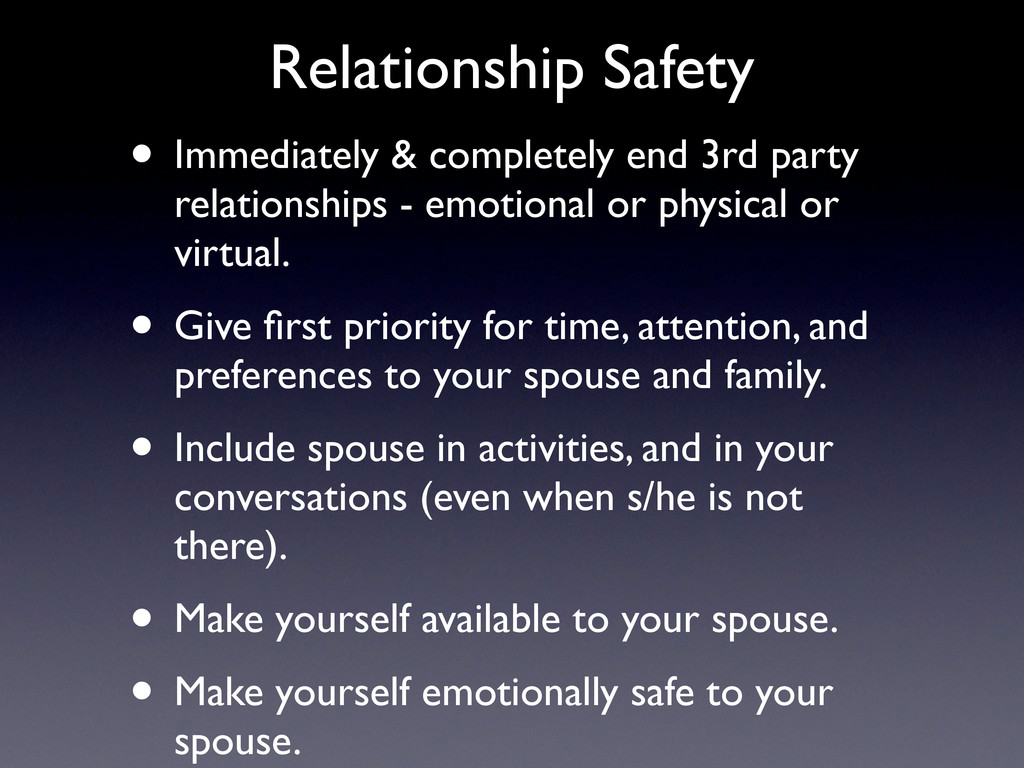
  15. Relationship Safety • Immediately & completely end 3rd party relationships

    - emotional or physical or virtual. • Give first priority for time, attention, and preferences to your spouse and family. • Include spouse in activities, and in your conversations (even when s/he is not there). • Make yourself available to your spouse. • Make yourself emotionally safe to your spouse.
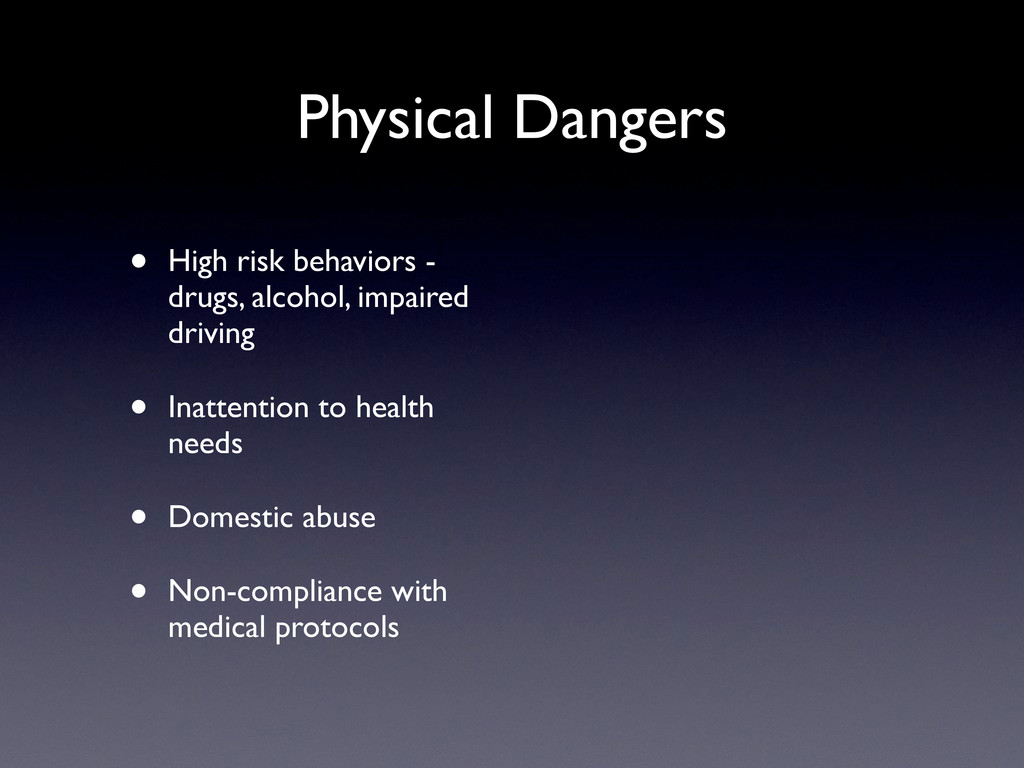
  16. Physical Dangers • High risk behaviors - drugs, alcohol, impaired

    driving • Inattention to health needs • Domestic abuse • Non-compliance with medical protocols
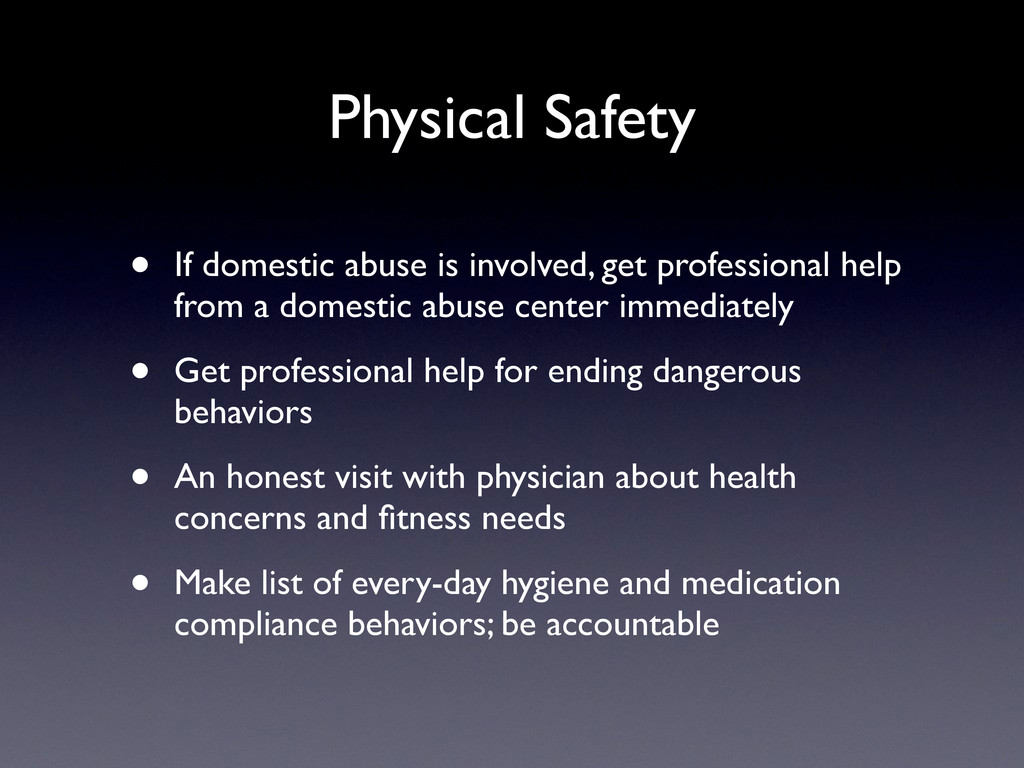
  17. Physical Safety • If domestic abuse is involved, get professional

    help from a domestic abuse center immediately • Get professional help for ending dangerous behaviors • An honest visit with physician about health concerns and fitness needs • Make list of every-day hygiene and medication compliance behaviors; be accountable
  18. Household Risks • Maintenance deficits • Child safety hazards •

    Household chore neglect • Fire safety hazards
  19. Emotional Dangers • Tearing down spouse’s reputation to others &

    attacking his/her self-esteem. • Distrusting spouse’s motivation • Self-defeating behavior • Reinforcing negative stories about spouse • More frequently experiencing negative emotions and interactions (5:1)
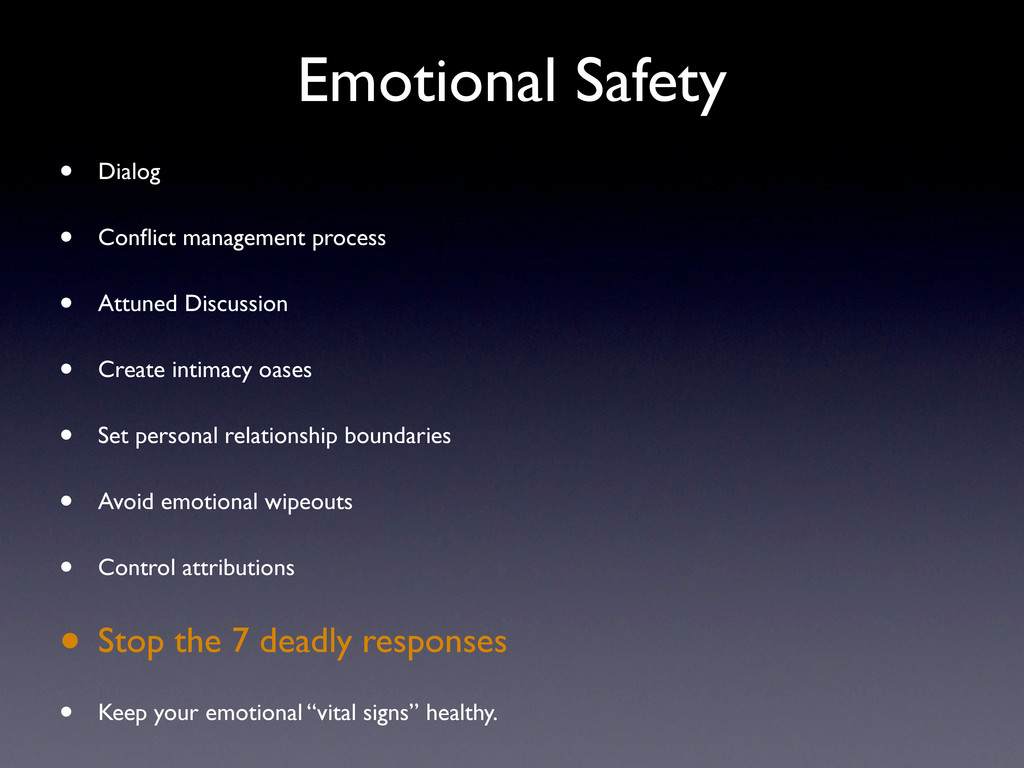
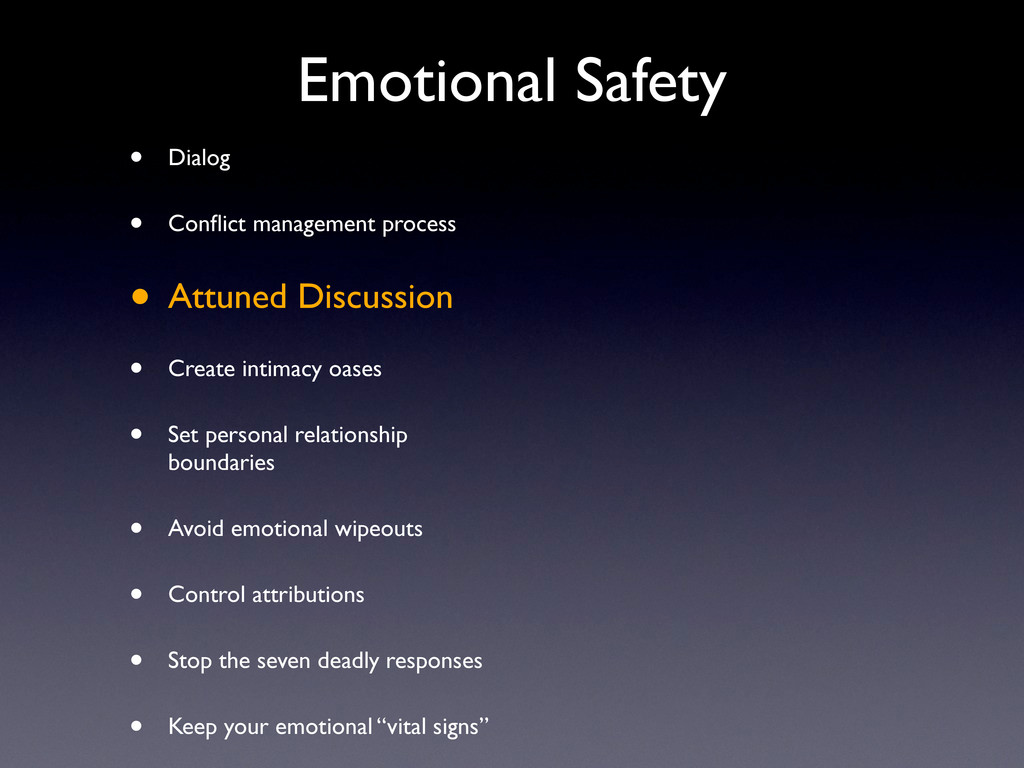
  20. Emotional Safety • Dialog • Conflict management process • Attuned

    Discussion • Create intimacy oases • Set personal relationship boundaries • Avoid emotional wipeouts • Control attributions • Stop the seven deadly responses • Keep your emotional “vital signs” healthy.
  21. Emotional Safety • Dialog • Conflict management process • Attuned

    Discussion • Create intimacy oases • Set personal relationship boundaries • Avoid emotional wipeouts • Control attributions • Stop the seven deadly responses • Keep your emotional “vital signs”
  22. Create Intimacy Oases (Agree on specific parts of the day

    that will be guaranteed safety zones) during meals 15 minutes after entering house from work when children are present 30 minutes before bedtime Purpose: protect relationship from unrestricted conflict. Pick suitable, specific time for discussing issues.
  23. Emotional Safety • Dialog • Conflict management process • Attuned

    Discussion • Create intimacy oases • Set personal relationship boundaries • Avoid emotional wipeouts • Control attributions • Stop the seven deadly responses • Keep your emotional “vital signs” healthy.
  24. Set Appropriate Boundaries on Personal Relationships • Make yourself accountable

    to each other • Don’t let grievances accumulate; talk about them often with each other • Treat your marriage as a “going concern,” not a neglected concern • Avoid (as much as possible) being alone with opposite sex • Channel all flirting to your spouse • Don’t discuss your marriage with someone of the opposite sex, and don’t let opposite sex discuss theirs with you
  25. Set Appropriate Boundaries on Personal Relationships • Avoid pornography •

    Don’t tease spouse about intimate things, esp. in public • Don’t let friendships develop into emotional affairs: • s/he knows more about your interior life than your spouse does • your spouse doesn’t know what you & friend do & talk about • you keep secrets about the friendship • Let your spouse be the barometer of what is appropriate • Pray for purity for yourself and your spouse
  26. Emotional Safety • Dialog • Conflict management process • Attuned

    Discussion • Create intimacy oases • Set personal relationship boundaries • Avoid emotional wipeouts • Control attributions • Stop the seven deadly responses • Keep your emotional “vital signs” healthy.
  27. Avoid Emotional Wipeouts • Use the time out rule •

    Learn to recognize your “triggers” • Slow down: “stop, look, & listen” instead of “stop, drop, & roll.”
  28. Emotional Safety • Dialog • Conflict management process • Attuned

    Discussion • Create intimacy oases • Set personal relationship boundaries • Avoid emotional wipeouts • Control attributions • Stop the seven deadly responses • Keep your emotional “vital signs” healthy.
  29. Control Attributions “A thought or judgement about the intent or

    meaning of something your spouse said or did.” 1. Correct your misguided thinking: explore the possibilities. 2. Ask for an alternative: “When you ___, I feel ____, would you be willing to do ______ instead?” And discuss as needed.
  30. Emotional Safety • Dialog • Conflict management process • Attuned

    Discussion • Create intimacy oases • Set personal relationship boundaries • Avoid emotional wipeouts • Control attributions • Stop the 7 deadly responses • Keep your emotional “vital signs” healthy.
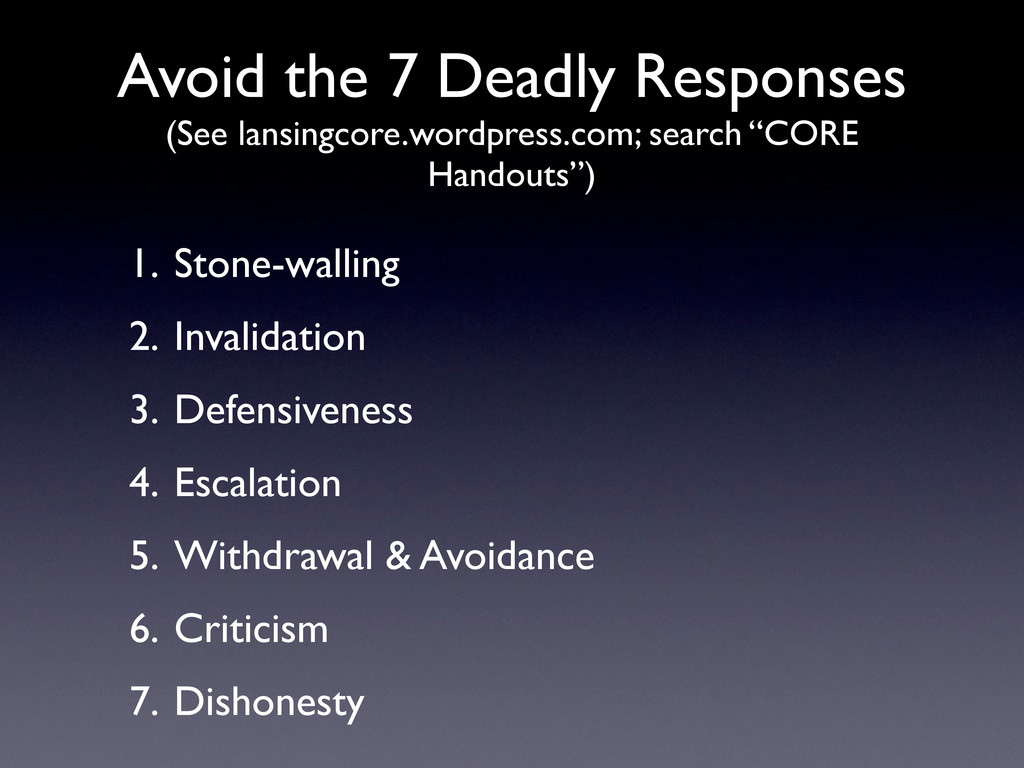
  31. Avoid the 7 Deadly Responses (See lansingcore.wordpress.com; search “CORE Handouts”)

    1. Stone-walling 2. Invalidation 3. Defensiveness 4. Escalation 5. Withdrawal & Avoidance 6. Criticism 7. Dishonesty
  32. Emotional Safety • Dialog • Conflict management process • Attuned

    Discussion • Create intimacy oases • Set personal relationship boundaries • Avoid emotional wipeouts • Control attributions • Stop the seven deadly responses • Keep your emotional “vital signs” healthy.
  33. Emotional Safety • Dialog • Conflict management process • Attuned

    Discussion • Create intimacy oases • Set personal relationship boundaries • Avoid emotional wipeouts • Control attributions • Stop the seven deadly responses • Keep your emotional “vital signs”
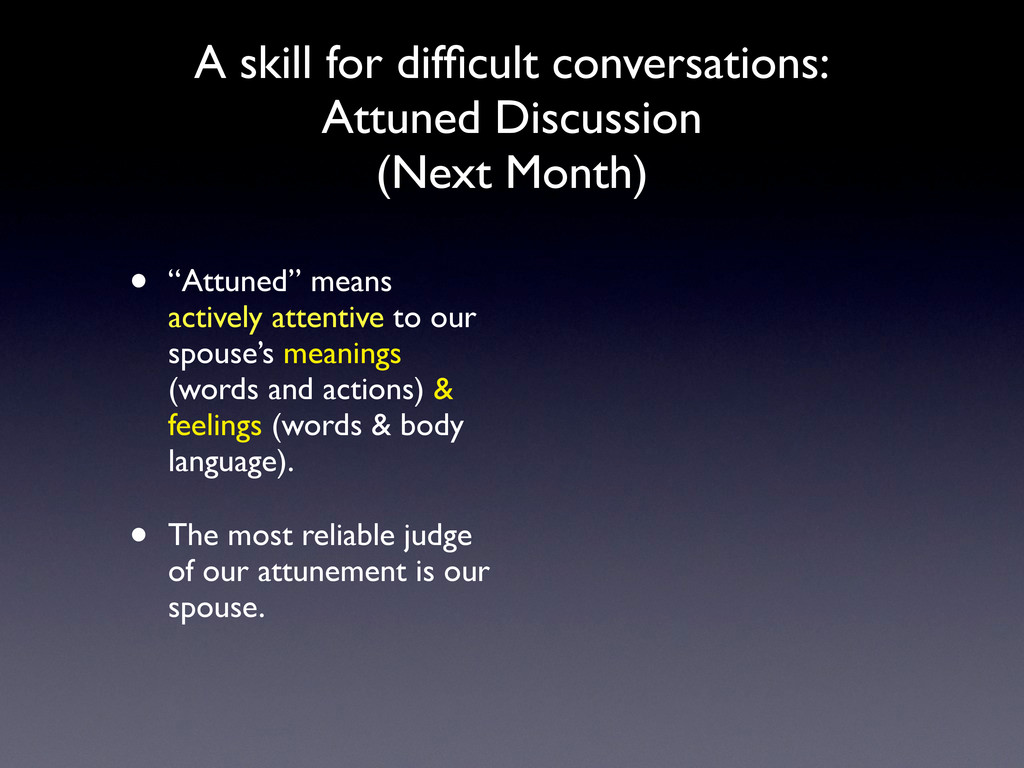
  34. A skill for difficult conversations: Attuned Discussion (Next Month) •

    “Attuned” means actively attentive to our spouse’s meanings (words and actions) & feelings (words & body language). • The most reliable judge of our attunement is our spouse.
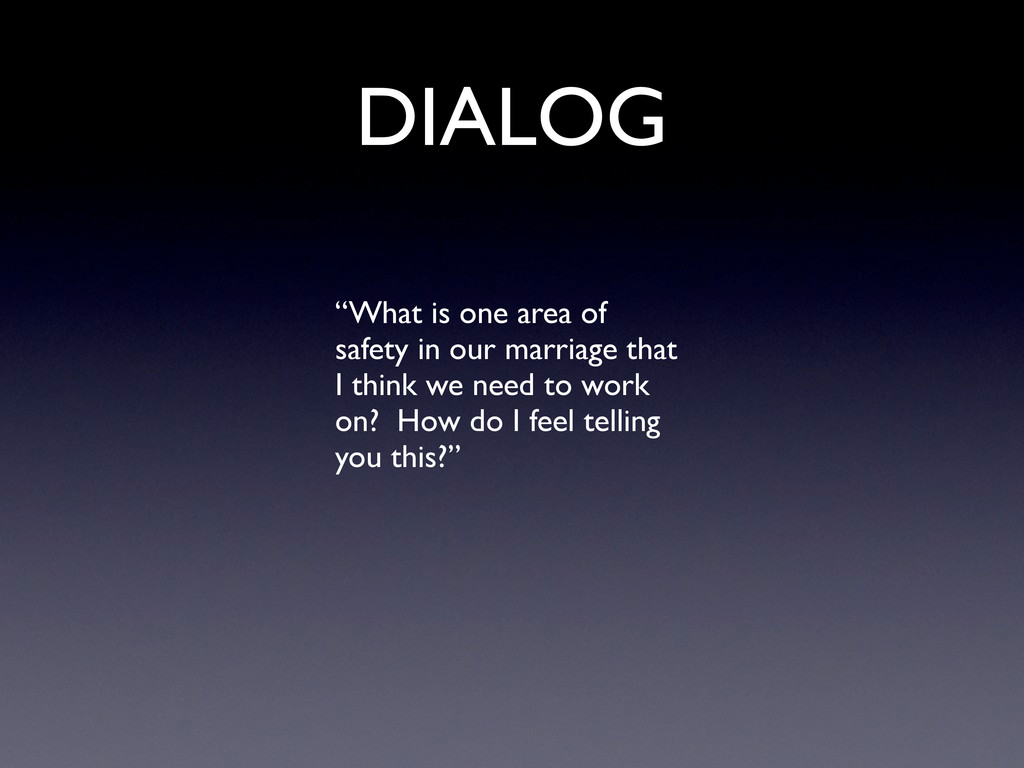
  35. DIALOG “What is one area of safety in our marriage

    that I think we need to work on? How do I feel telling you this?”