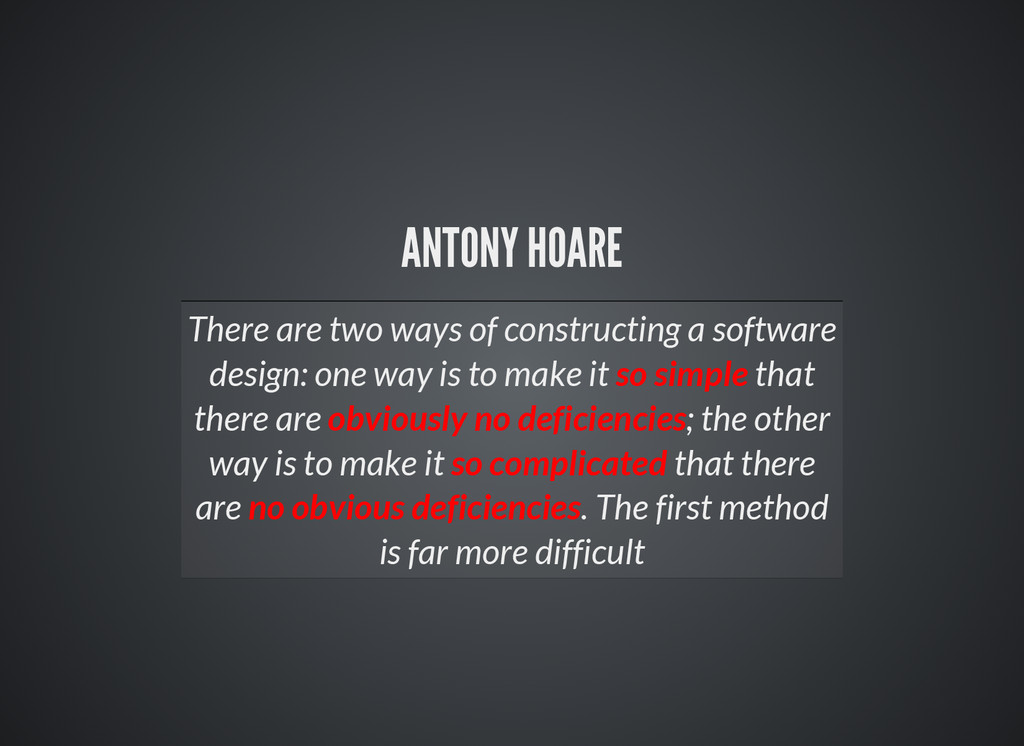
design: one way is to make it so simple that there are obviously no deficiencies; the other way is to make it so complicated that there are no obvious deficiencies. The first method is far more difficult
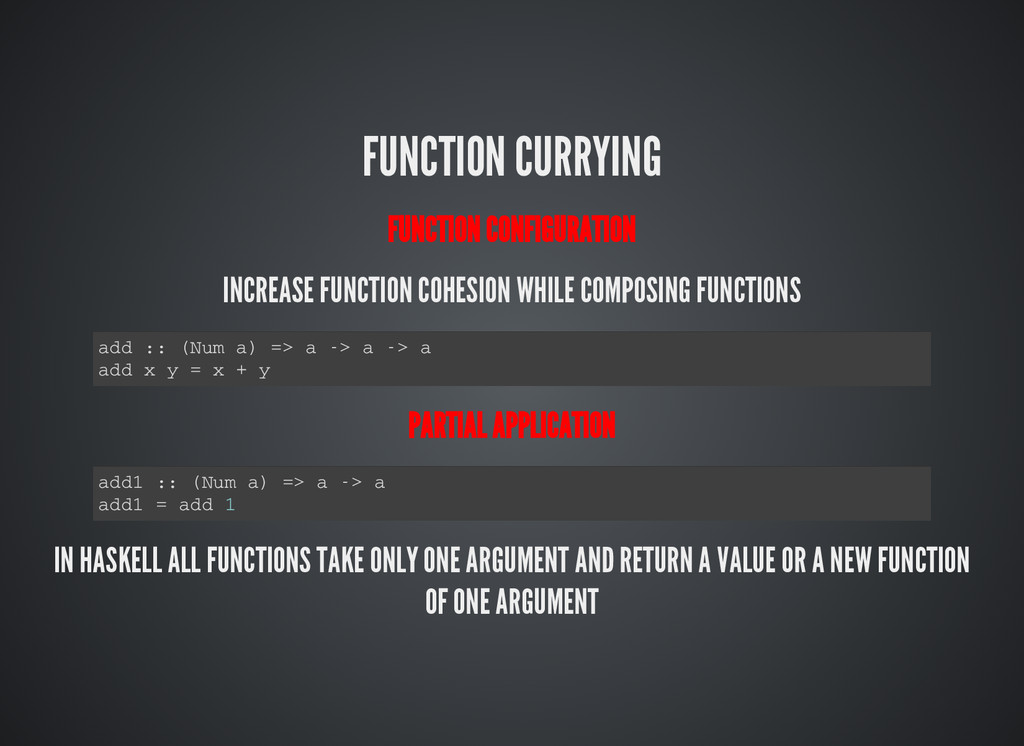
add :: (Num a) => a -> a -> a add x y = x + y PARTIAL APPLICATION IN HASKELL ALL FUNCTIONS TAKE ONLY ONE ARGUMENT AND RETURN A VALUE OR A NEW FUNCTION OF ONE ARGUMENT add1 :: (Num a) => a -> a add1 = add 1
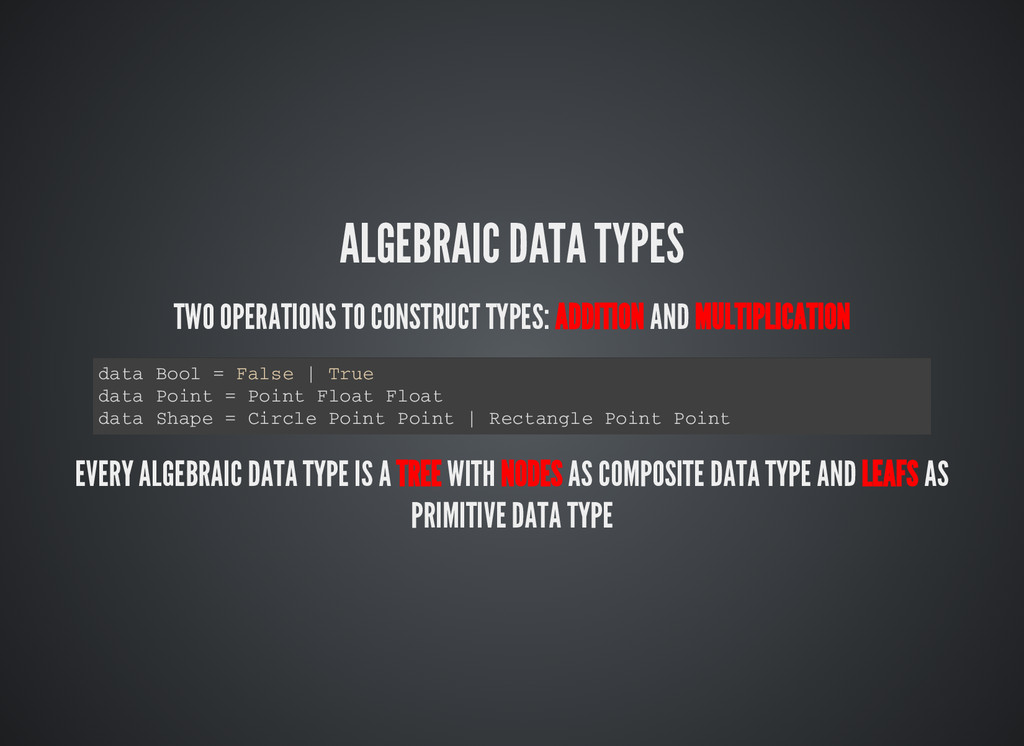
MULTIPLICATION data Bool = False | True data Point = Point Float Float data Shape = Circle Point Point | Rectangle Point Point EVERY ALGEBRAIC DATA TYPE IS A TREE WITH NODES AS COMPOSITE DATA TYPE AND LEAFS AS PRIMITIVE DATA TYPE
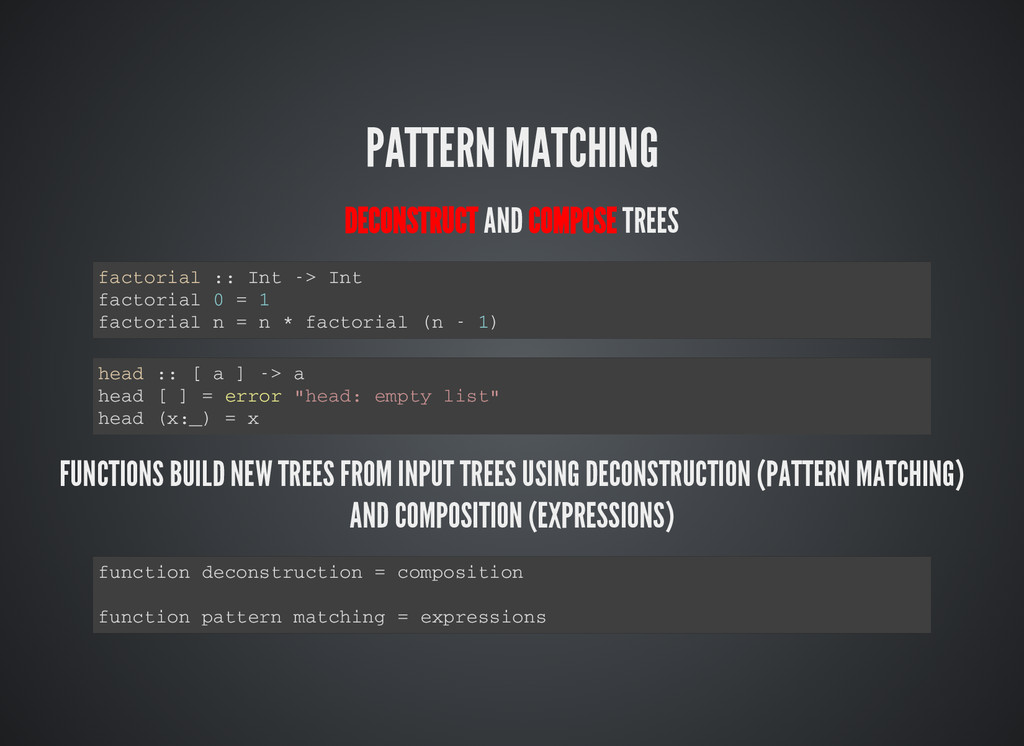
Int factorial 0 = 1 factorial n = n * factorial (n - 1) head :: [ a ] -> a head [ ] = error "head: empty list" head (x:_) = x FUNCTIONS BUILD NEW TREES FROM INPUT TREES USING DECONSTRUCTION (PATTERN MATCHING) AND COMPOSITION (EXPRESSIONS) function deconstruction = composition function pattern matching = expressions
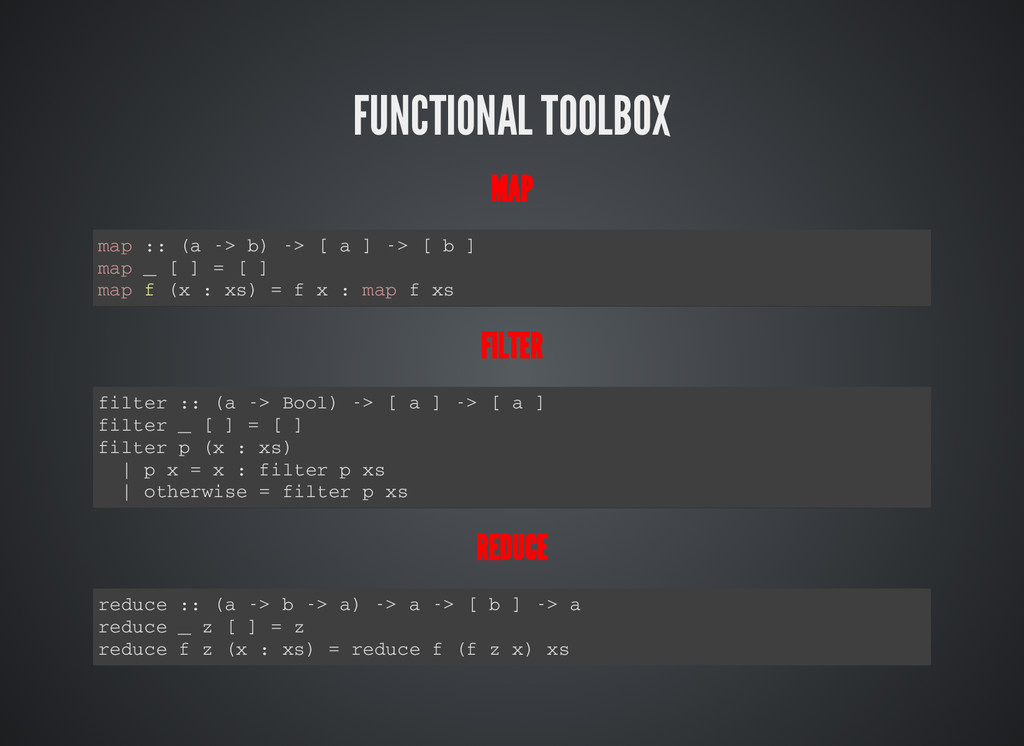
a ] -> [ b ] map _ [ ] = [ ] map f (x : xs) = f x : map f xs FILTER filter :: (a -> Bool) -> [ a ] -> [ a ] filter _ [ ] = [ ] filter p (x : xs) | p x = x : filter p xs | otherwise = filter p xs REDUCE reduce :: (a -> b -> a) -> a -> [ b ] -> a reduce _ z [ ] = z reduce f z (x : xs) = reduce f (f z x) xs
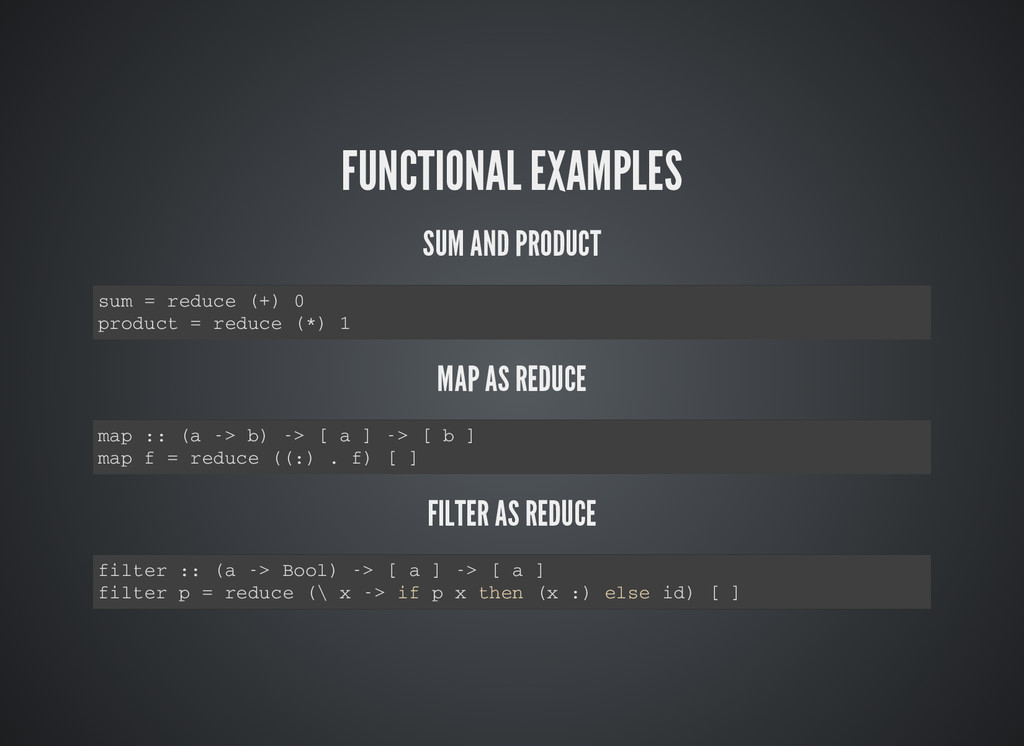
product = reduce (*) 1 MAP AS REDUCE map :: (a -> b) -> [ a ] -> [ b ] map f = reduce ((:) . f) [ ] FILTER AS REDUCE filter :: (a -> Bool) -> [ a ] -> [ a ] filter p = reduce (\ x -> if p x then (x :) else id) [ ]
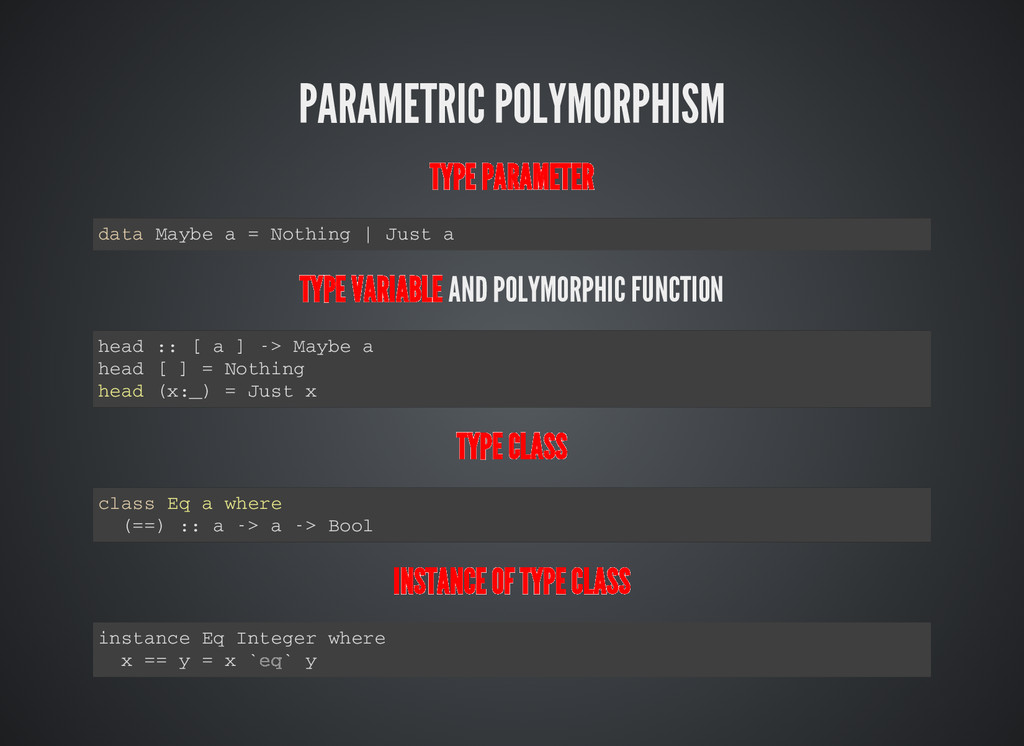
Just a TYPE VARIABLE AND POLYMORPHIC FUNCTION head :: [ a ] -> Maybe a head [ ] = Nothing head (x:_) = Just x TYPE CLASS class Eq a where (==) :: a -> a -> Bool INSTANCE OF TYPE CLASS instance Eq Integer where x == y = x ` ` y eq
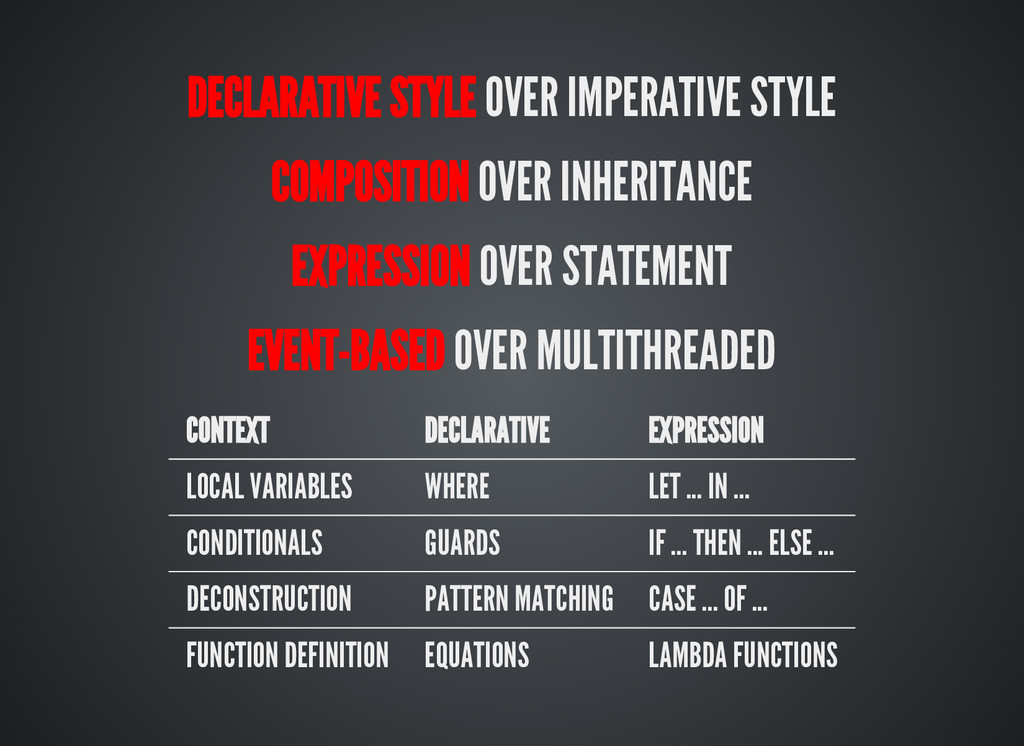
STATEMENT EVENT-BASED OVER MULTITHREADED CONTEXT DECLARATIVE EXPRESSION LOCAL VARIABLES WHERE LET ... IN ... CONDITIONALS GUARDS IF ... THEN ... ELSE ... DECONSTRUCTION PATTERN MATCHING CASE ... OF ... FUNCTION DEFINITION EQUATIONS LAMBDA FUNCTIONS


 volodymyrprokopyuk
 marcoroth
 steliosf
 kenjiyoneyama
 nokomoro3
 oniak3ibm
 iwatsukayura
 ryu1013
 optim
optim
 andpad
 mixplace
 teyamagu
 sonatard
 codingconduct
 techseoconnect
 aleyda
 khoart
 ammeep
 dugsong
 axbom
axbom
 rakko
rakko
 lfama
lfama
 bkeepers

![RECURSION LENGTH CONCATENATION length :: [ a ] -> Int](https://files.speakerdeck.com/presentations/a9a7cbe01f344d5e88892ca04c3b69be/slide_8.jpg)
![QUICKSORT HASKELL qsort :: (Ord a) => [ a ]](https://files.speakerdeck.com/presentations/a9a7cbe01f344d5e88892ca04c3b69be/slide_9.jpg)