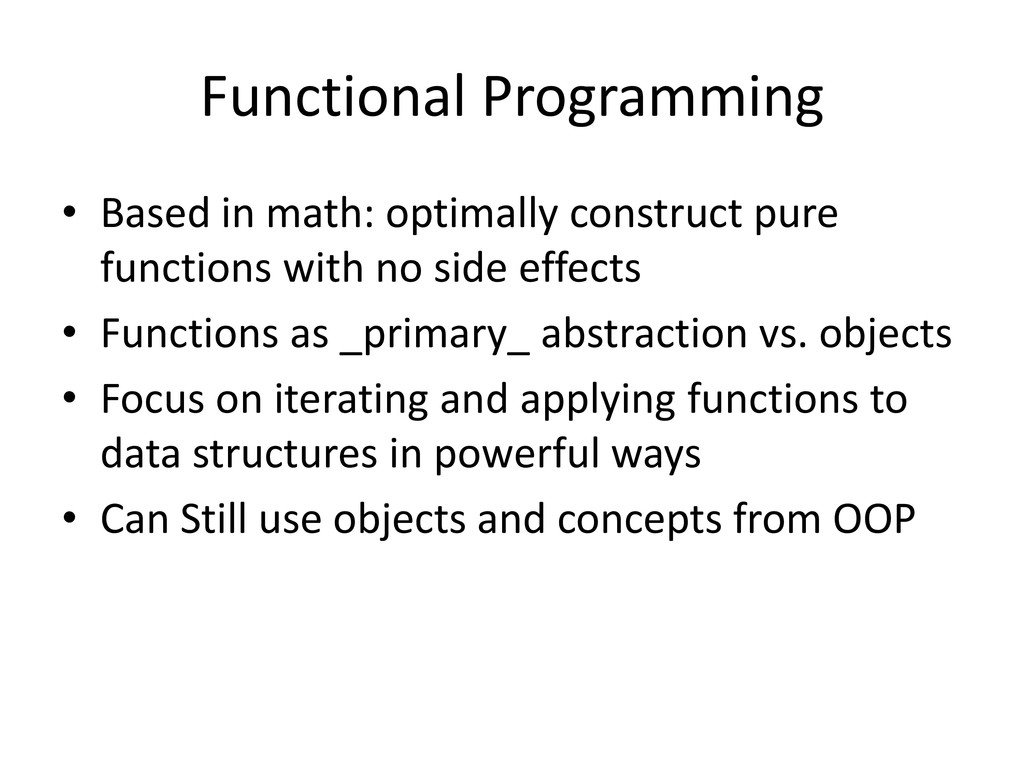
with no side effects • Functions as _primary_ abstraction vs. objects • Focus on iterating and applying functions to data structures in powerful ways • Can Still use objects and concepts from OOP
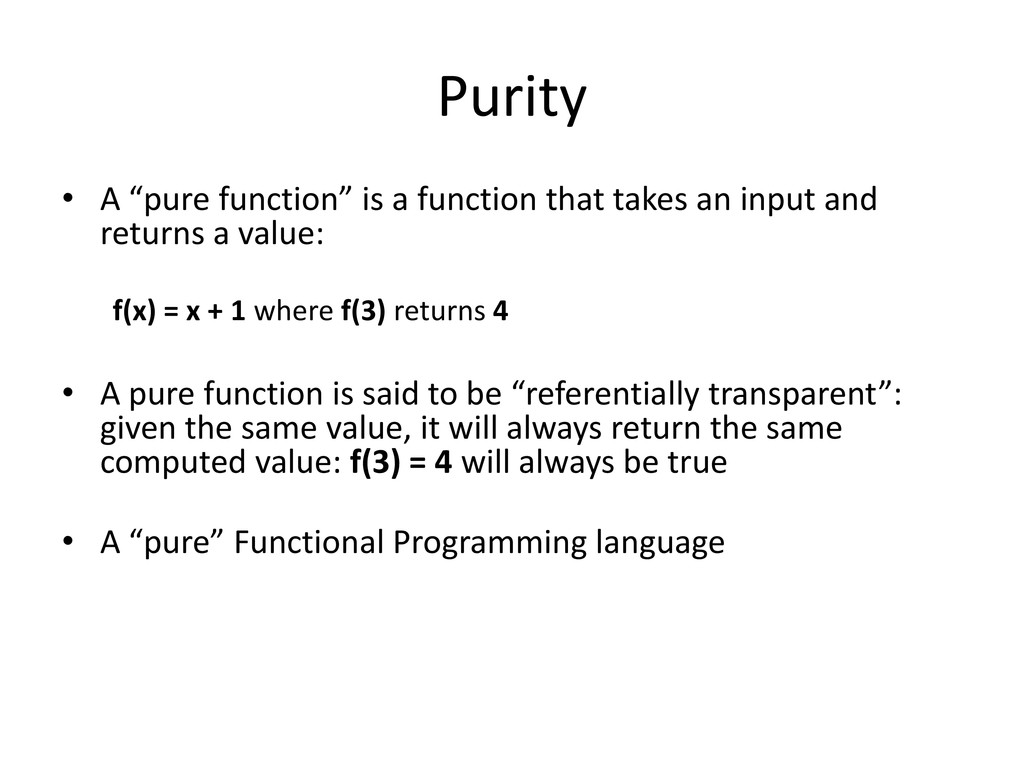
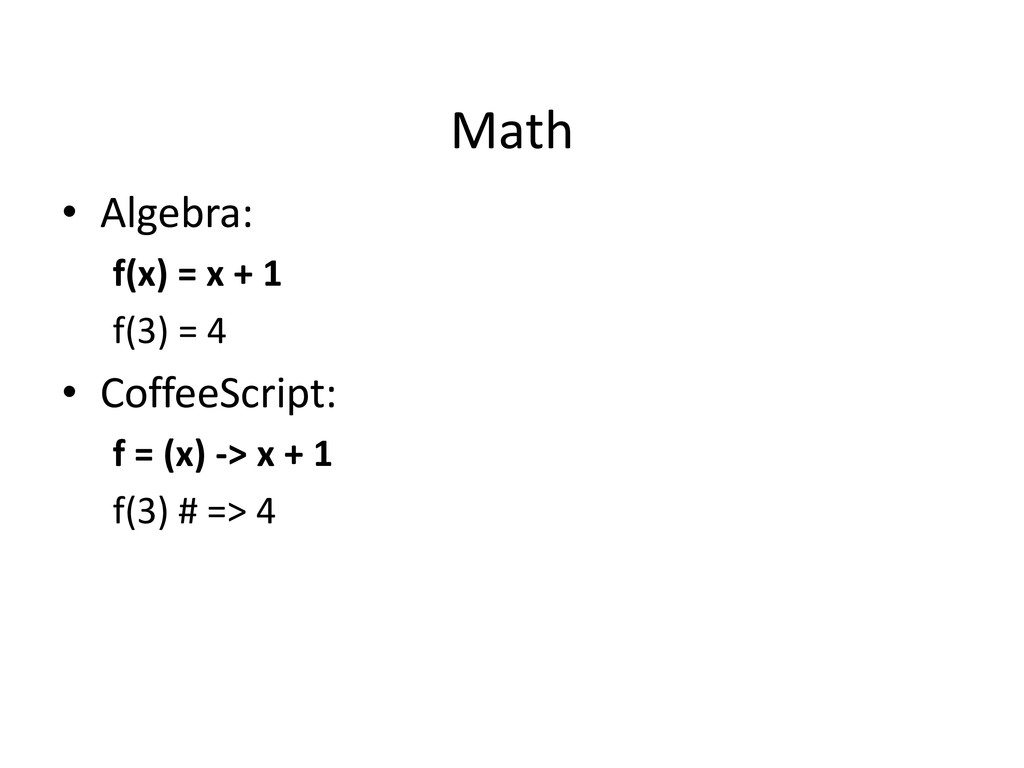
an input and returns a value: f(x) = x + 1 where f(3) returns 4 • A pure function is said to be “referentially transparent”: given the same value, it will always return the same computed value: f(3) = 4 will always be true • A “pure” Functional Programming language
define a function there is no notion of a persistent “world” outside of it • Whenever we modify program state or talk to something outside of a program this is called a Side Effect
them • Not as Easy, but it is Simpler • More appropriate resolution at which code is reusable (a function) • Functions and collections of functions are composable and chainable, like a circuit or protocol layer • Advanced data structures and iteration strategies • Map/Reduce type operations cover a wide range of use-cases


 wearefractal
 reverentgeek
 twada
twada
 cassininazir
 gurzu
gurzu
 marktimemedia
 smashingmag
 baasie
 brad_frost
 davidcarrasco
 elsirapls
 konakalab
 honnibal