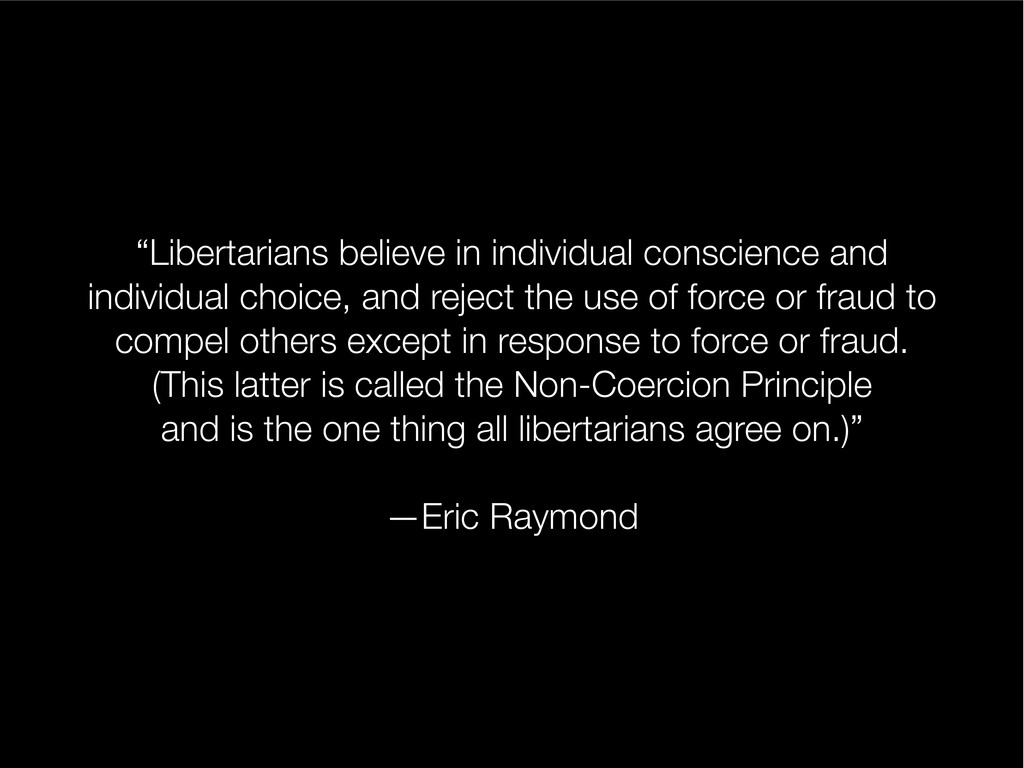
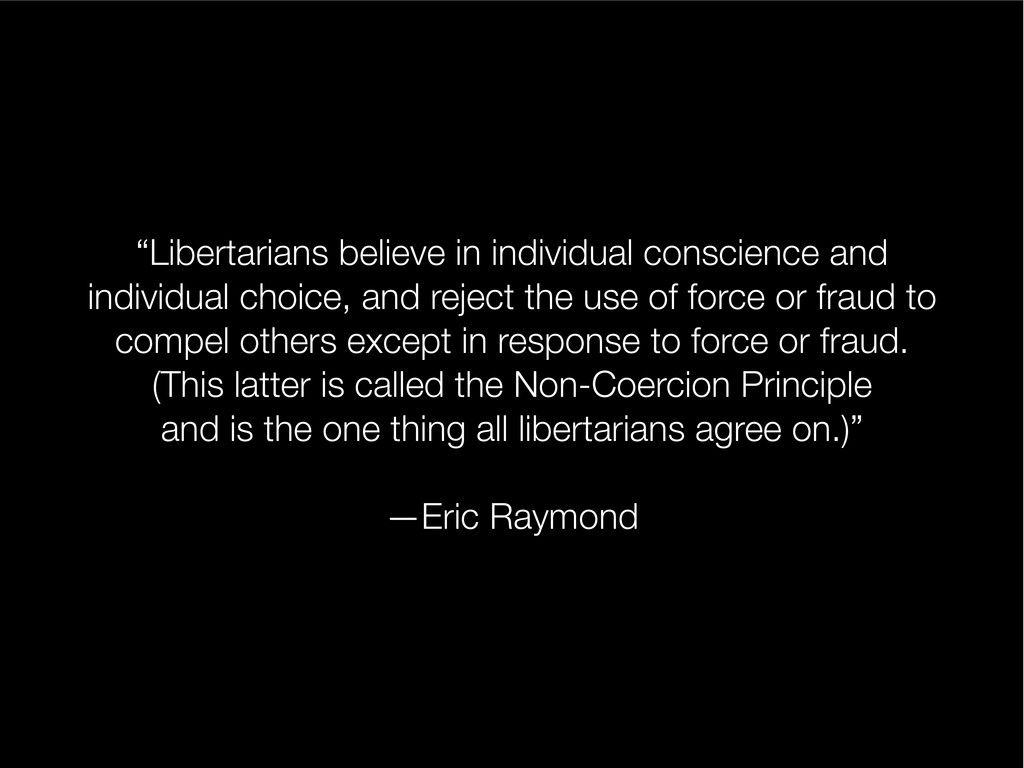
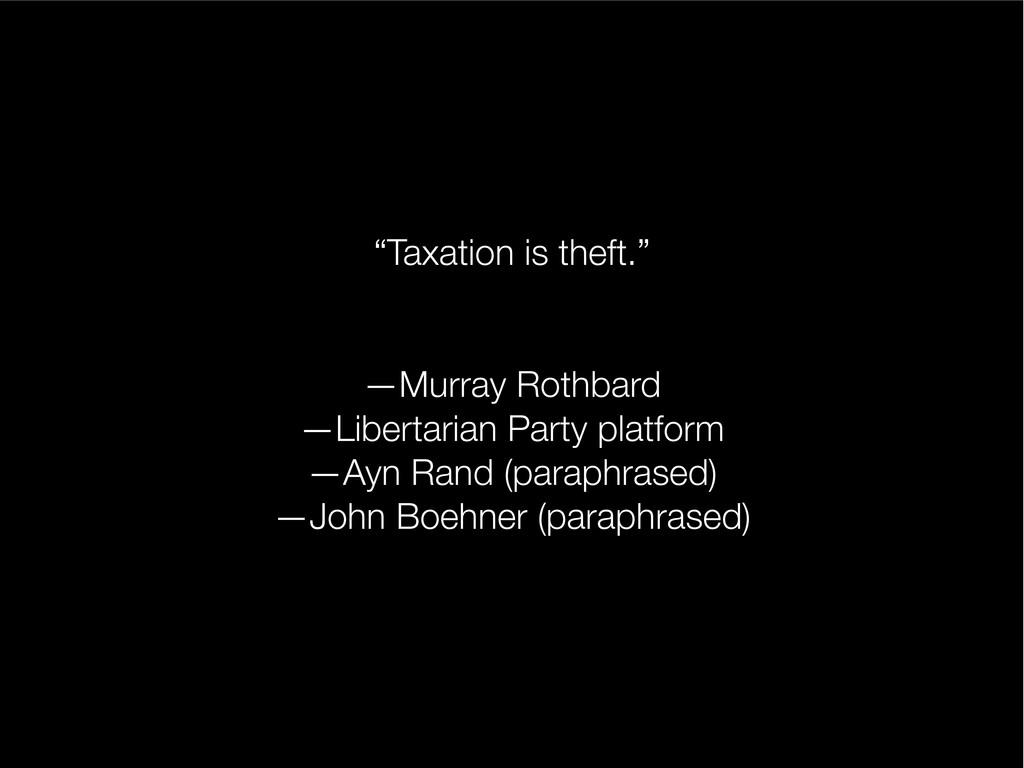
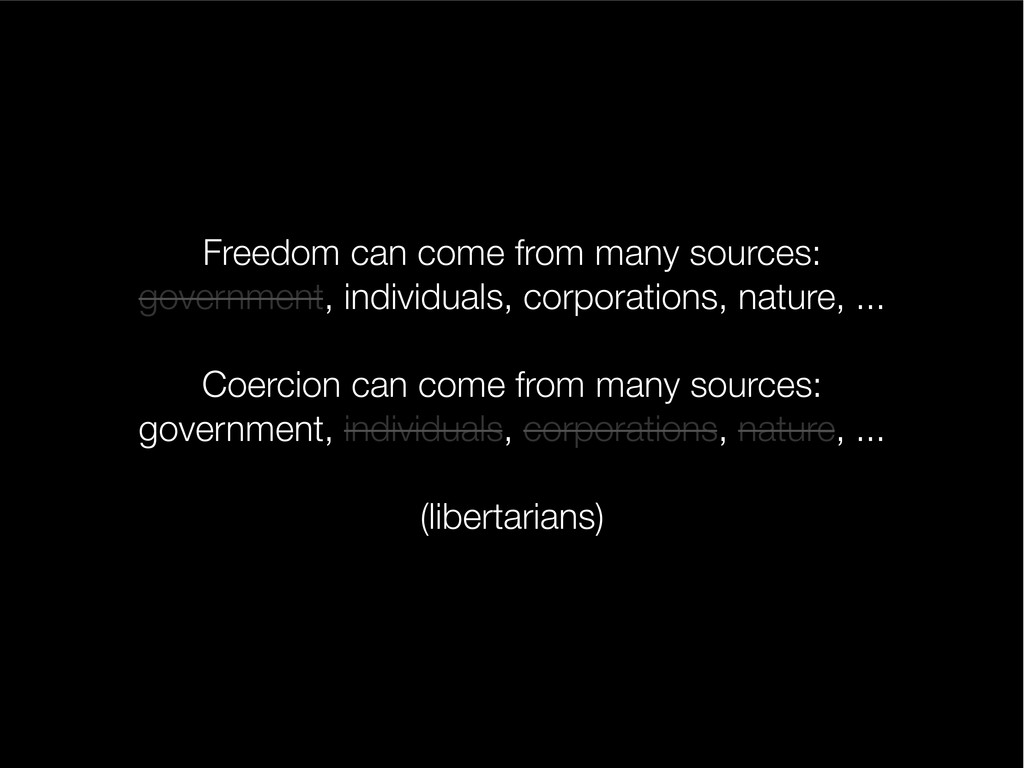
the use of force or fraud to compel others except in response to force or fraud. (This latter is called the Non-Coercion Principle and is the one thing all libertarians agree on.)” —Eric Raymond
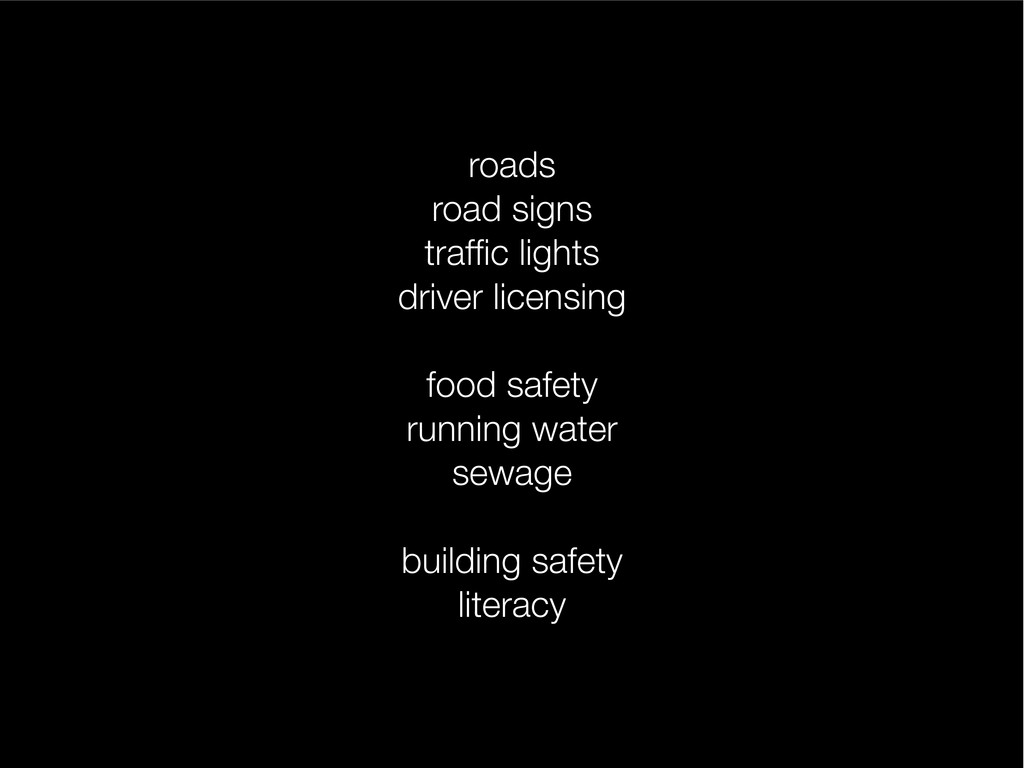
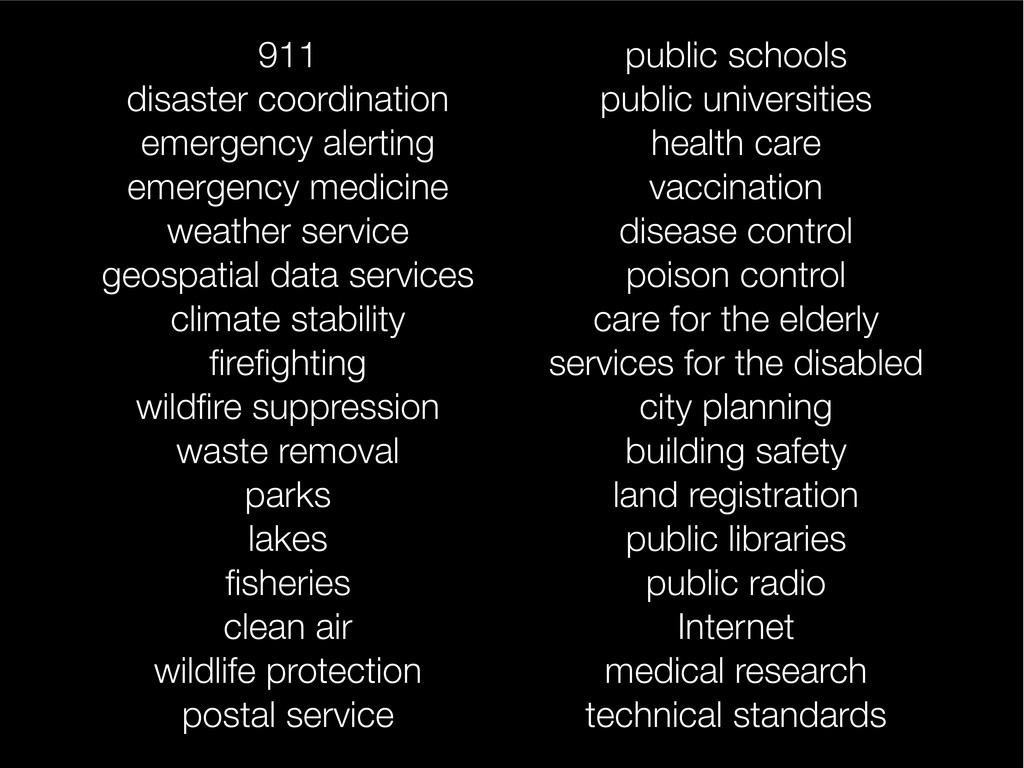
control care for the elderly services for the disabled city planning building safety land registration public libraries public radio Internet medical research technical standards 911 disaster coordination emergency alerting emergency medicine weather service geospatial data services climate stability firefighting wildfire suppression waste removal parks lakes fisheries clean air wildlife protection postal service
the use of force or fraud to compel others except in response to force or fraud. (This latter is called the Non-Coercion Principle and is the one thing all libertarians agree on.)” —Eric Raymond
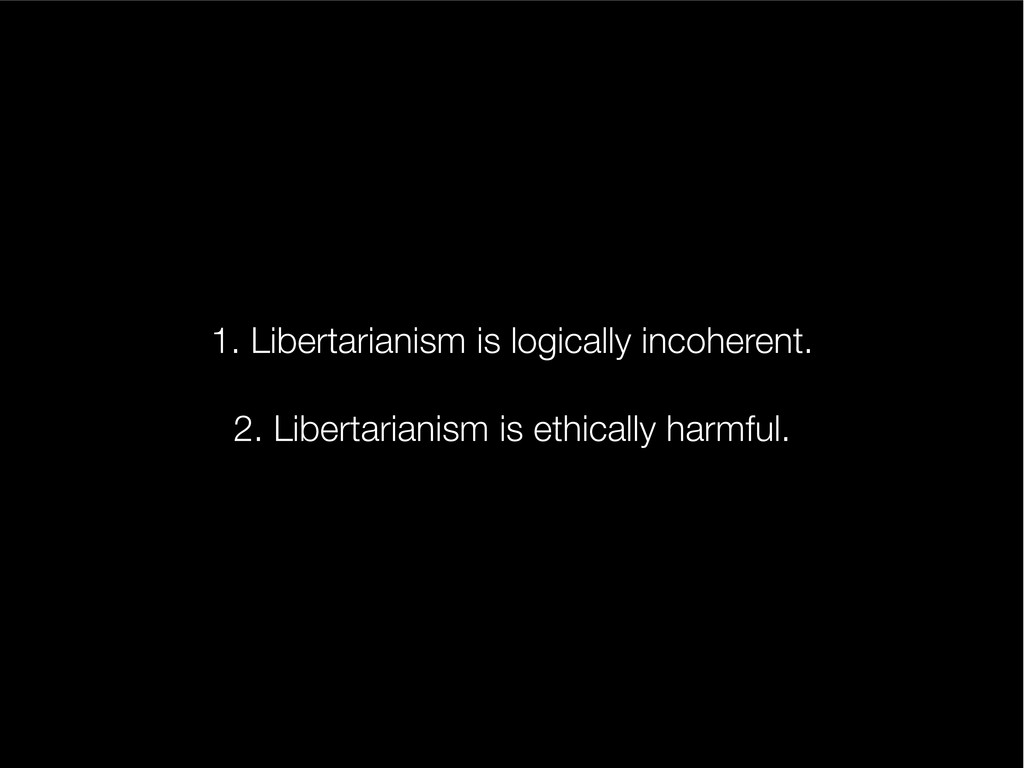
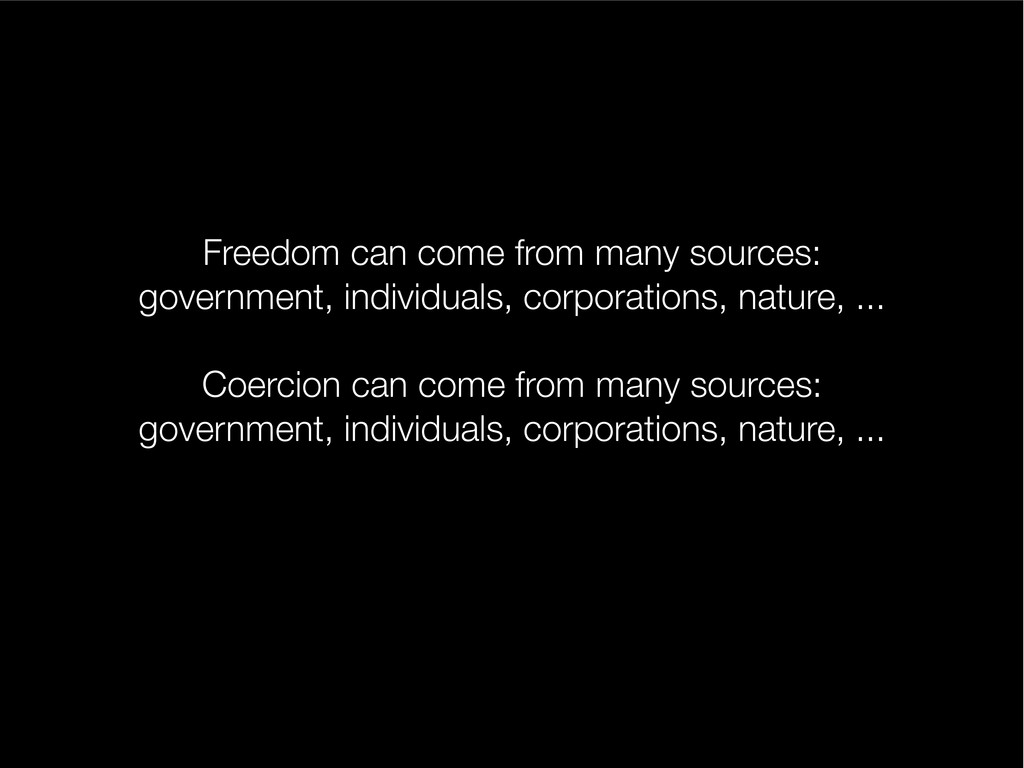
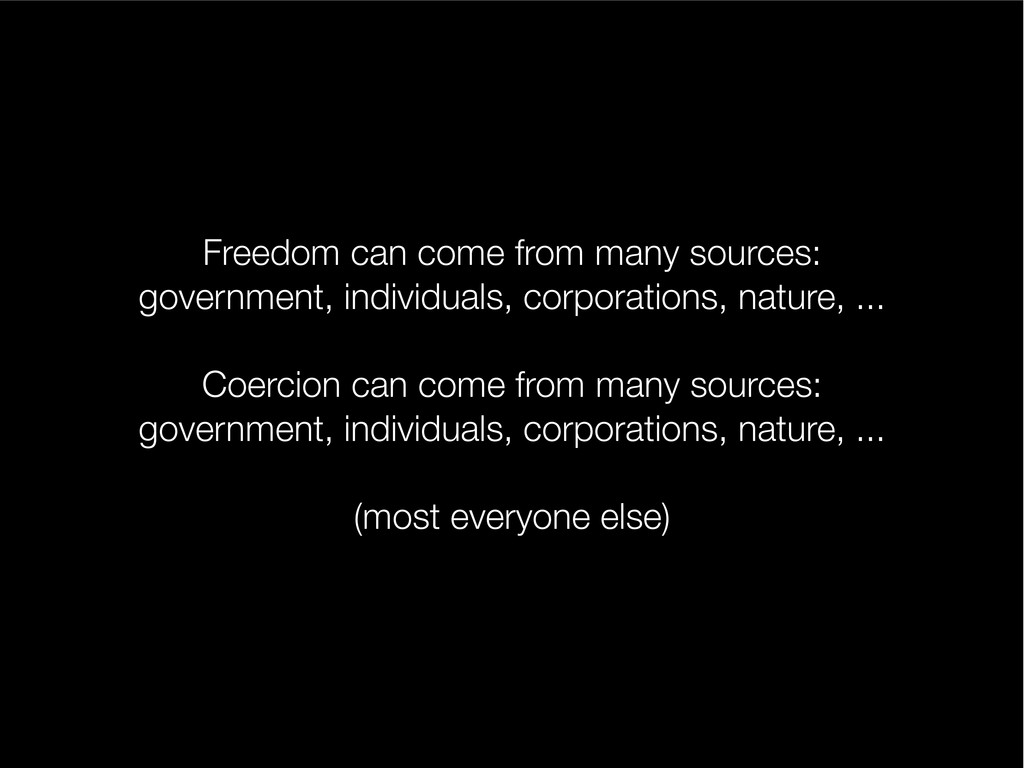
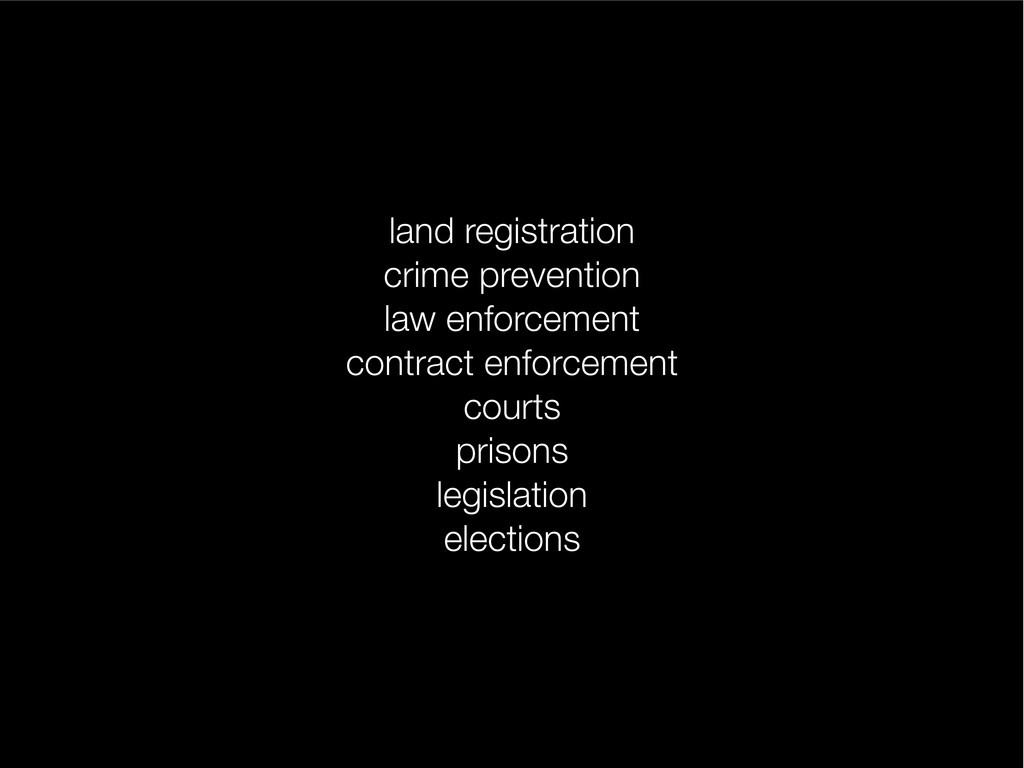
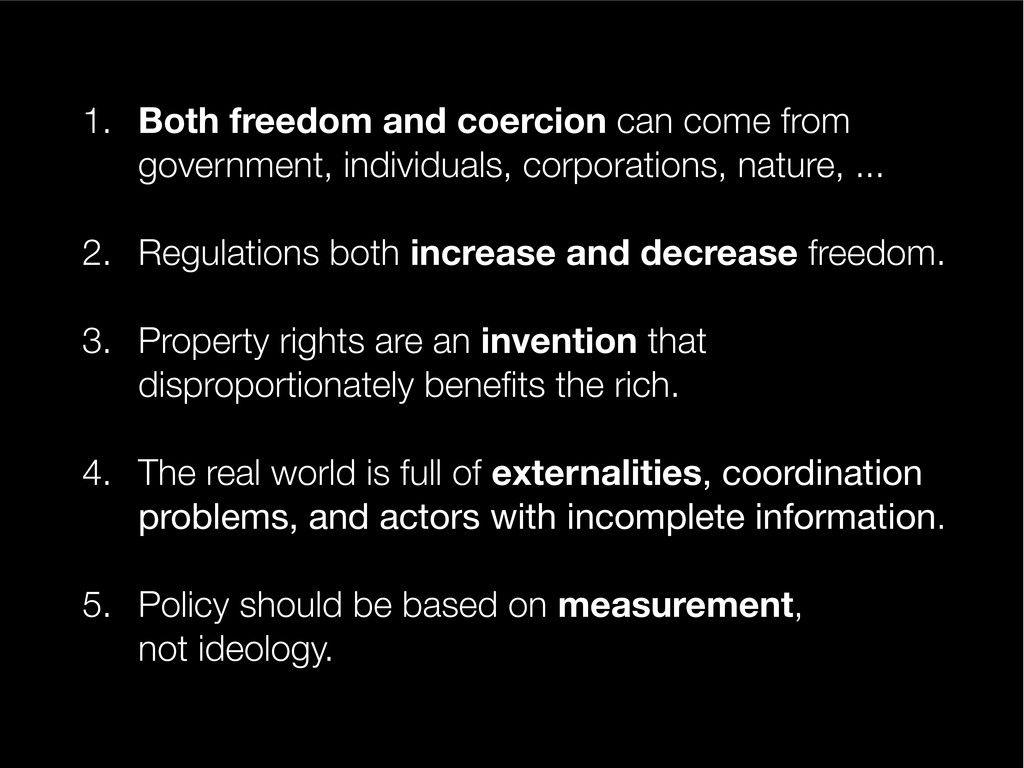
corporations, nature, ... 2. Regulations both increase and decrease freedom. 3. Property rights are an invention that disproportionately benefits the rich. 4. The real world is full of externalities, coordination problems, and actors with incomplete information. 5. Policy should be based on measurement, not ideology.


 axbom
 sonatard
 productmarketing
 bcantrill
 schlessera
 lemiorhan
 reverentgeek
 bkeepers
 addyosmani
 emna__ayadi
 geshan
 carmenintech