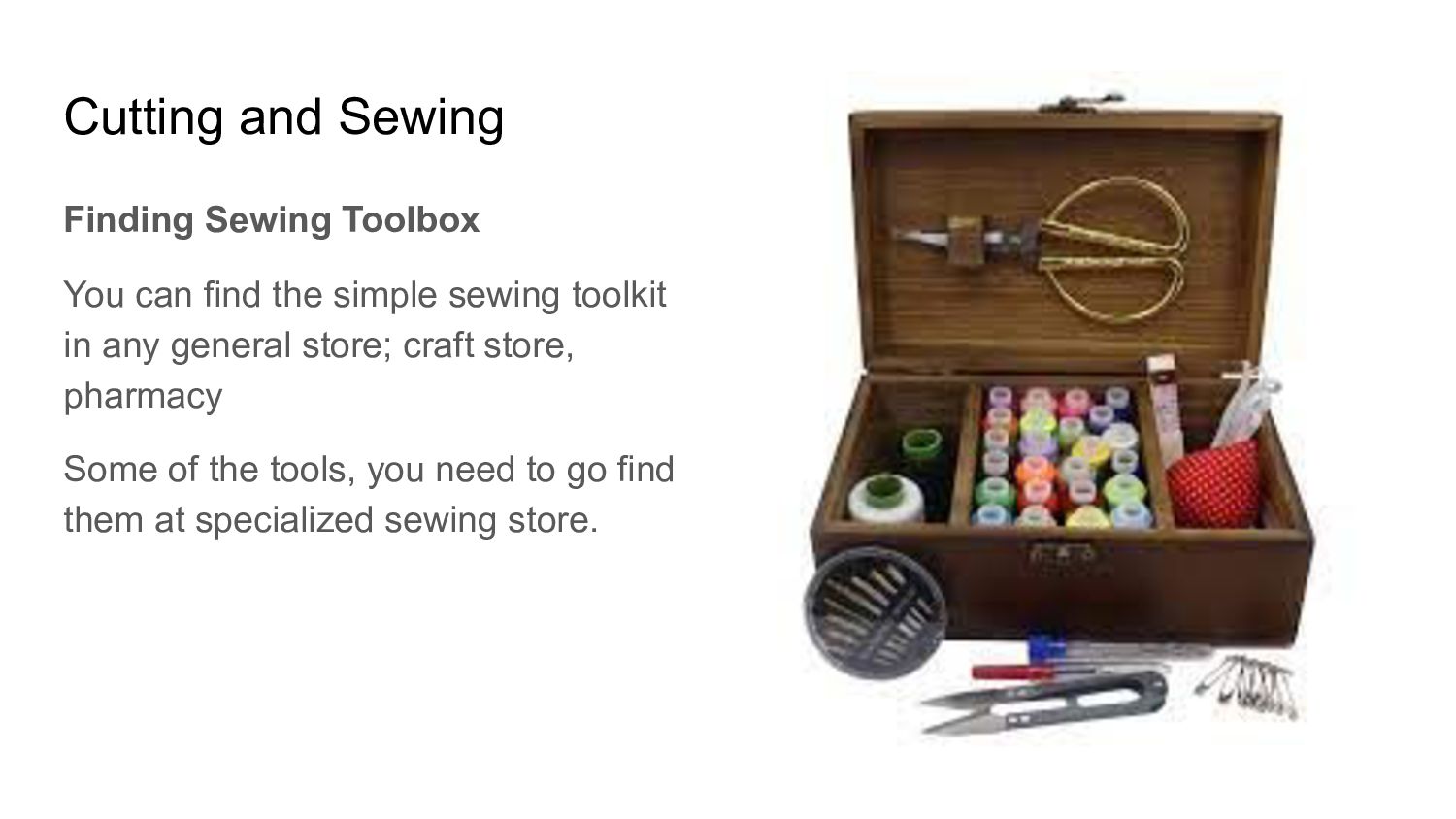
erase the line easily with brush or thin bar of soap when you are done cutting the fabric or sewing along with the line. They usually sold with a set of 3 colours to identify the lines and fit with the fabric. Tailor’s chalk is more compressed than the other drawing chalks. It is made out of clay wand wax so you can heat the fabric to make it hard to remove.
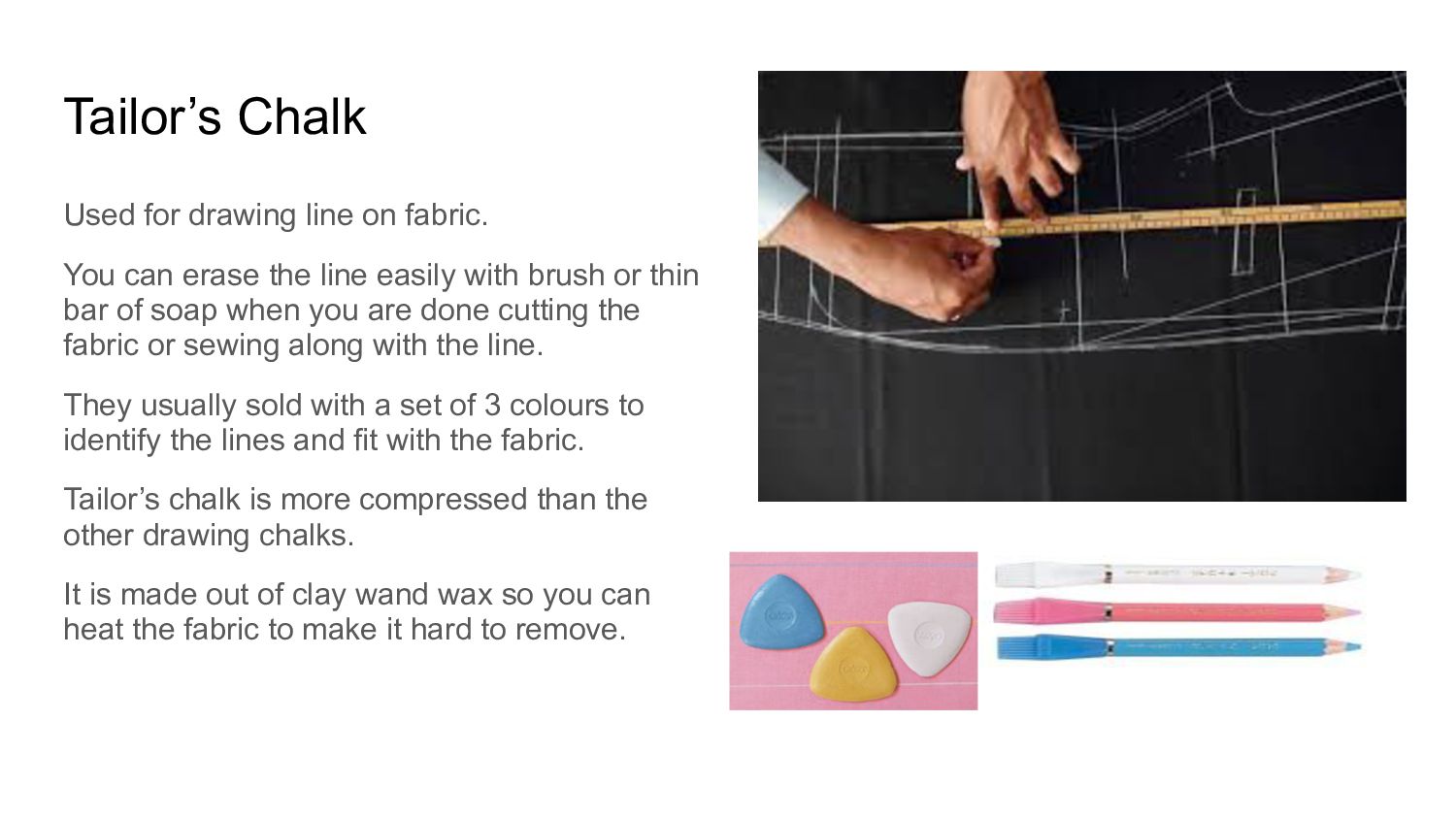
basic sewing kit. Usually used with the closest colour with the fabric. This has different thickness so you can choose one that matches to the fabric. For example you can use No.60 for a fabric like cotton and use No.11 needle. If the fabric is softer, the number is bigger like 90, if the fabric is thicker, the number is 30.
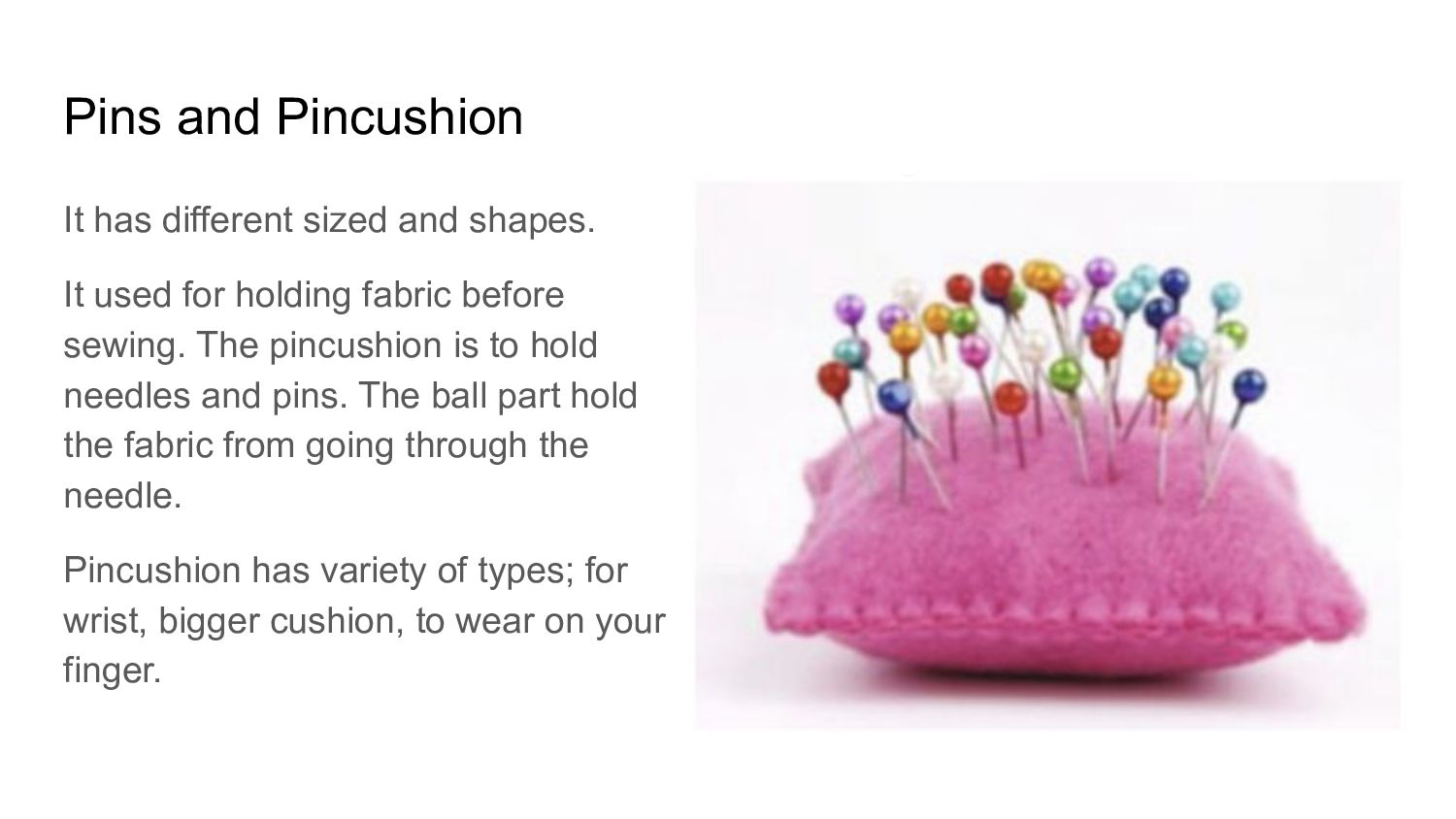
used for holding fabric before sewing. The pincushion is to hold needles and pins. The ball part hold the fabric from going through the needle. Pincushion has variety of types; for wrist, bigger cushion, to wear on your finger.
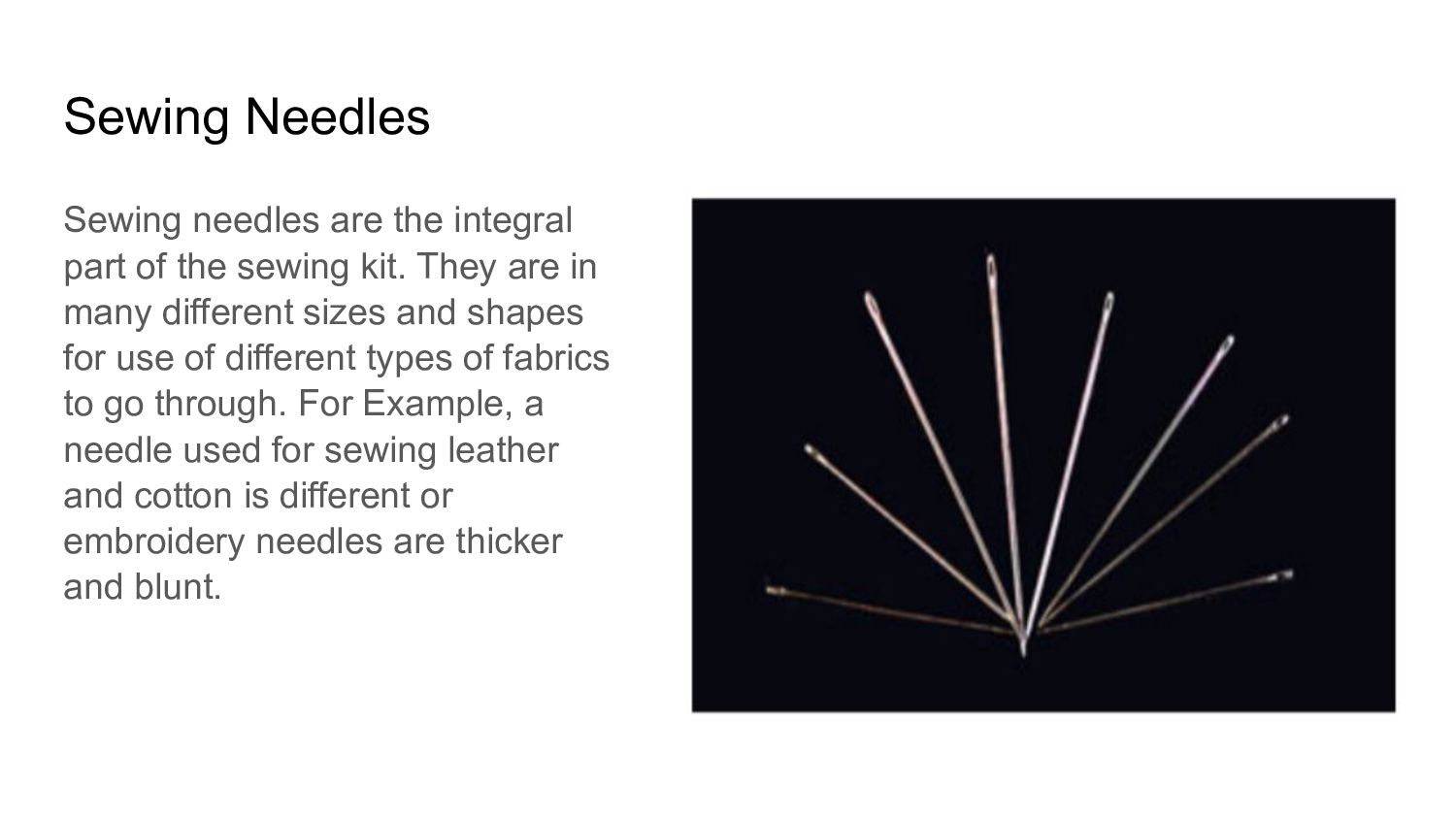
sewing kit. They are in many different sizes and shapes for use of different types of fabrics to go through. For Example, a needle used for sewing leather and cotton is different or embroidery needles are thicker and blunt.
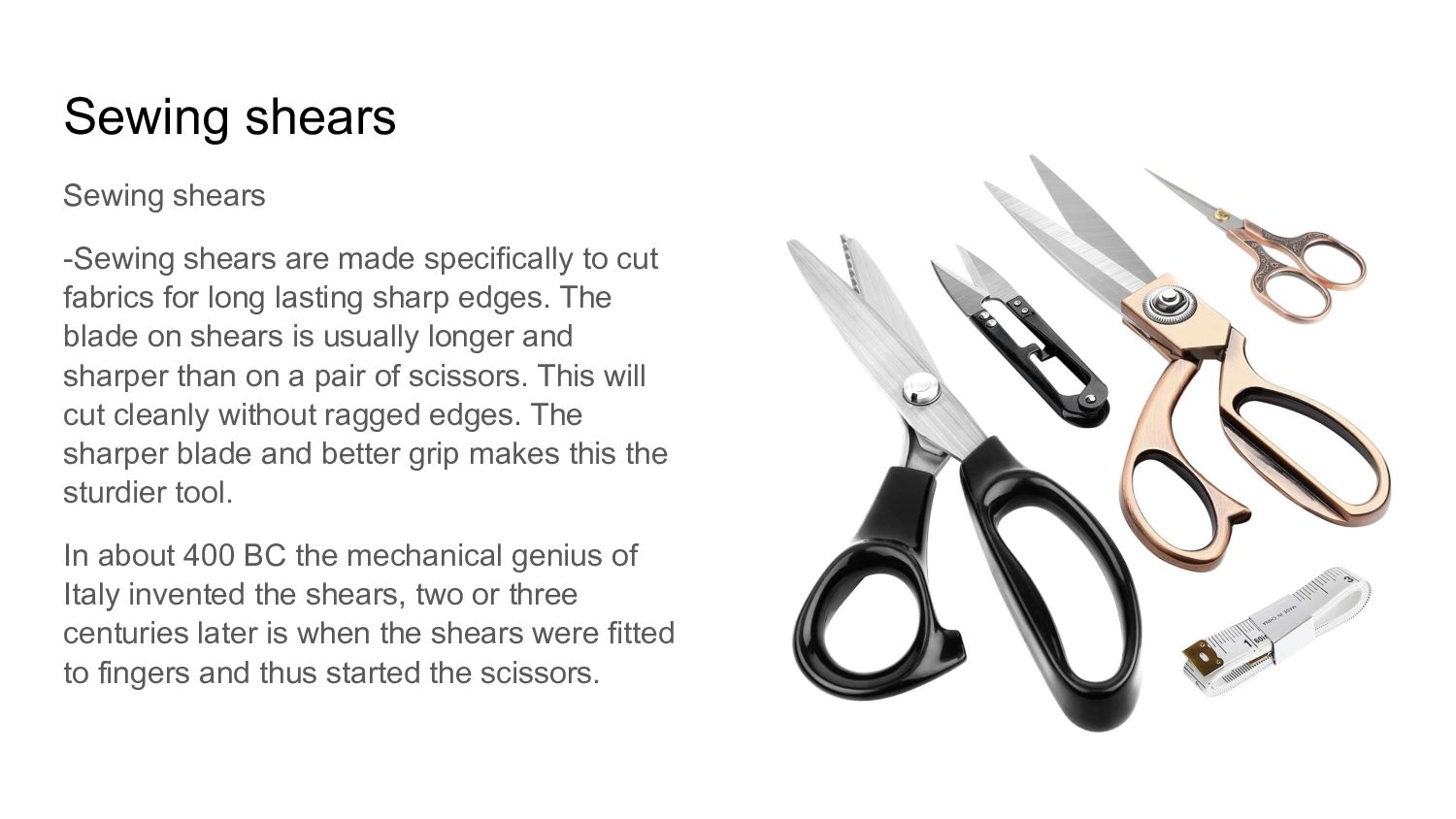
cut fabrics for long lasting sharp edges. The blade on shears is usually longer and sharper than on a pair of scissors. This will cut cleanly without ragged edges. The sharper blade and better grip makes this the sturdier tool. In about 400 BC the mechanical genius of Italy invented the shears, two or three centuries later is when the shears were fitted to fingers and thus started the scissors.
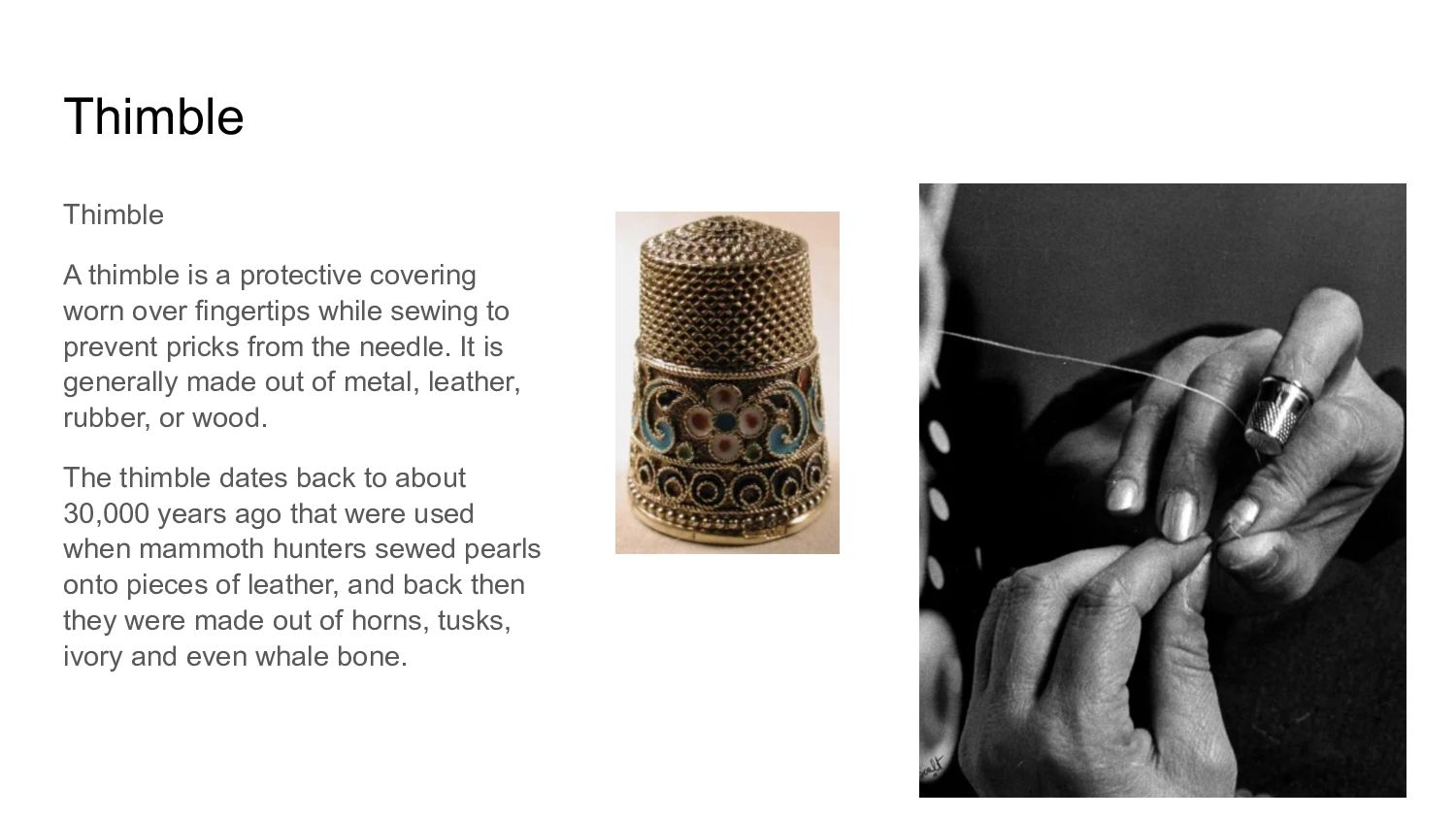
fingertips while sewing to prevent pricks from the needle. It is generally made out of metal, leather, rubber, or wood. The thimble dates back to about 30,000 years ago that were used when mammoth hunters sewed pearls onto pieces of leather, and back then they were made out of horns, tusks, ivory and even whale bone.
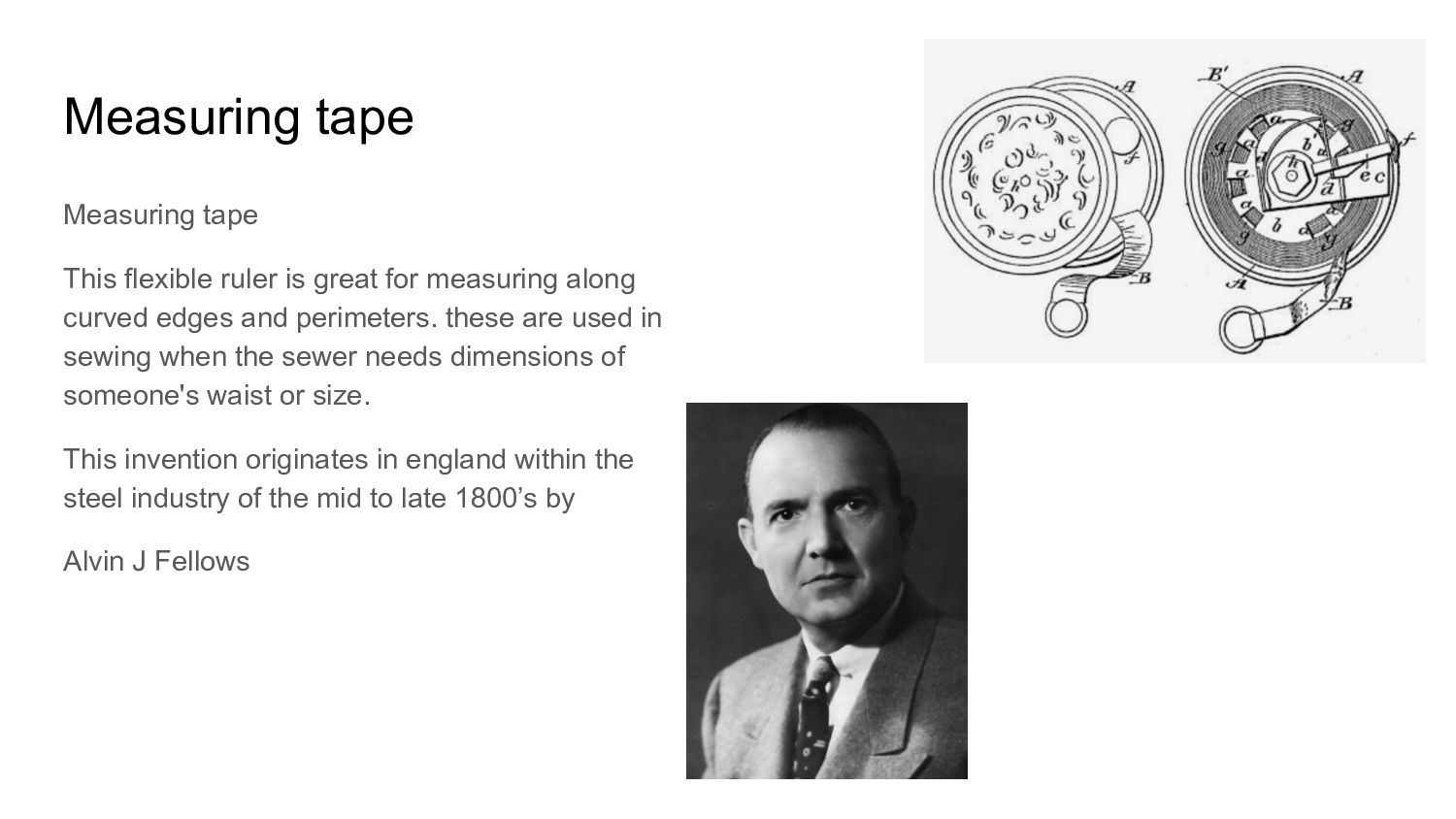
measuring along curved edges and perimeters. these are used in sewing when the sewer needs dimensions of someone's waist or size. This invention originates in england within the steel industry of the mid to late 1800’s by Alvin J Fellows
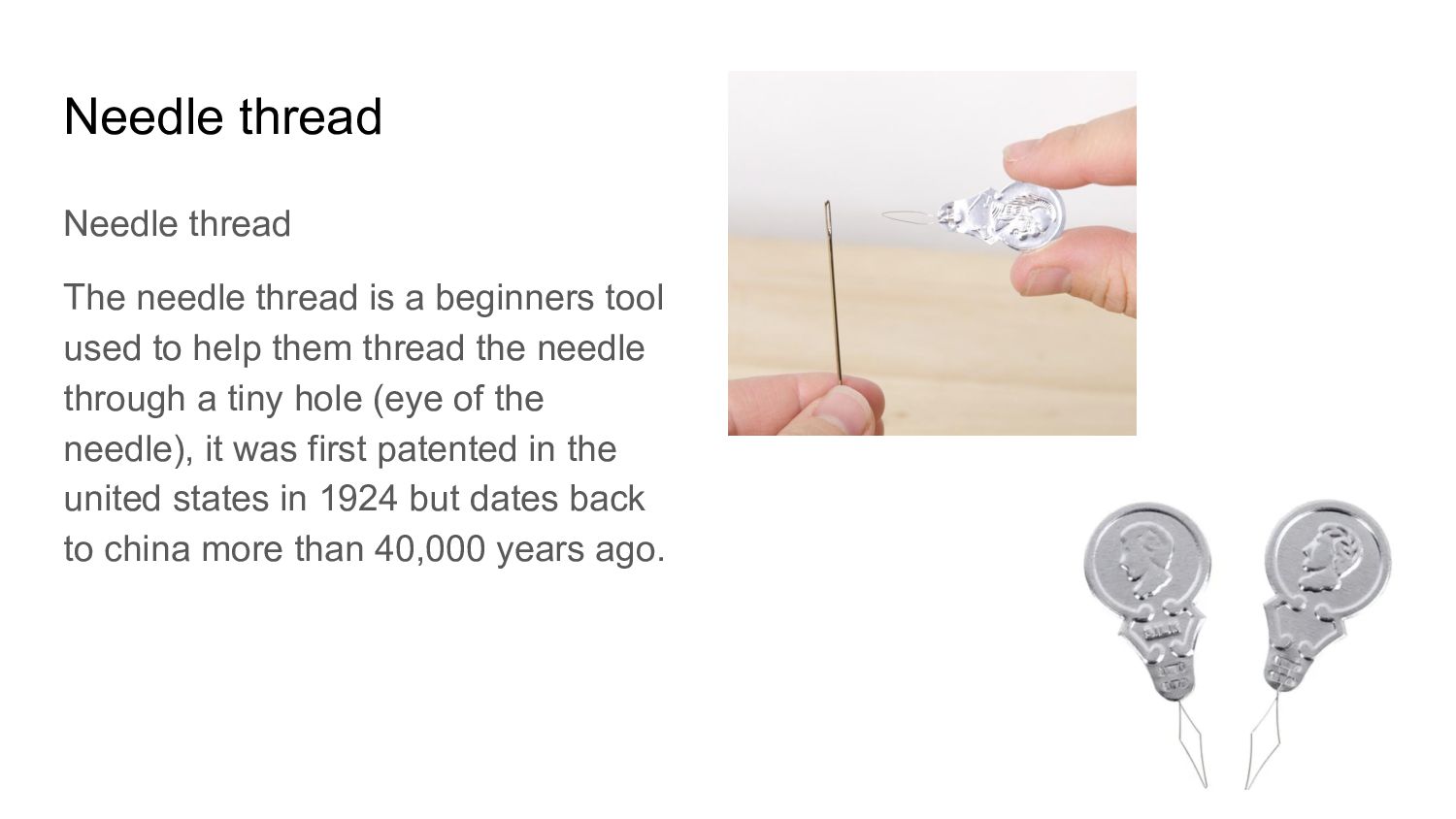
tool used to help them thread the needle through a tiny hole (eye of the needle), it was first patented in the united states in 1924 but dates back to china more than 40,000 years ago.
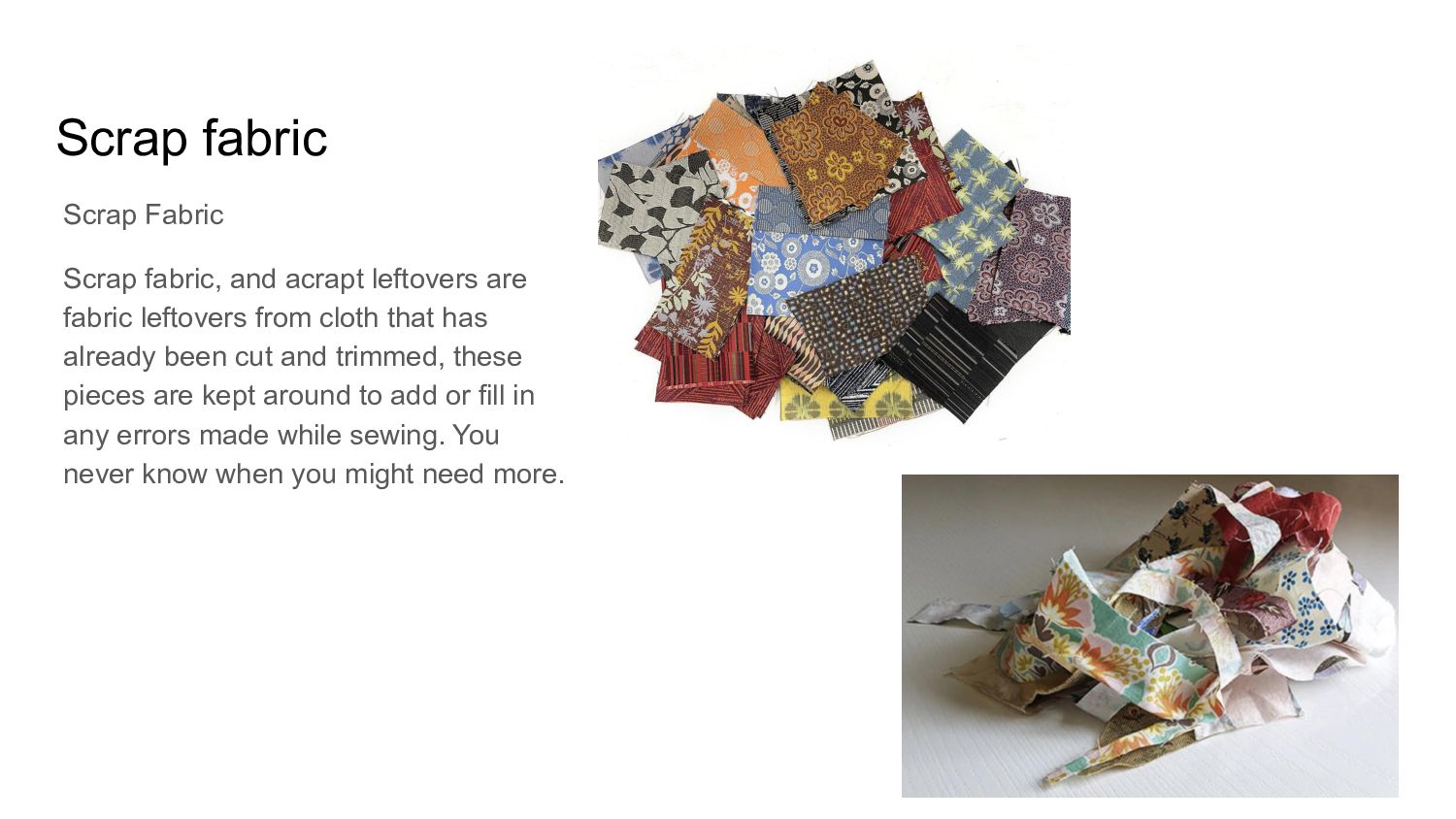
fabric leftovers from cloth that has already been cut and trimmed, these pieces are kept around to add or fill in any errors made while sewing. You never know when you might need more.
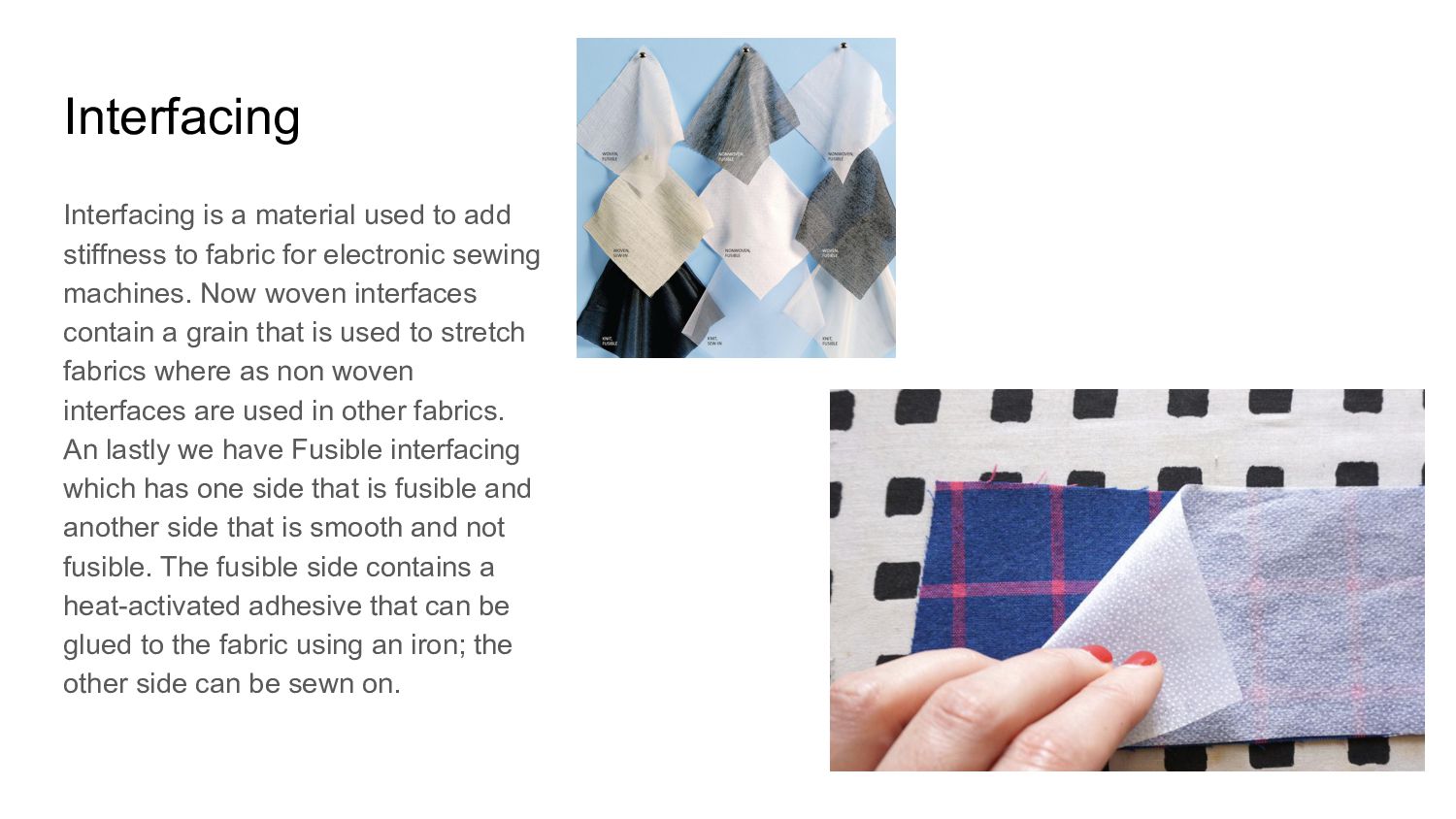
fabric for electronic sewing machines. Now woven interfaces contain a grain that is used to stretch fabrics where as non woven interfaces are used in other fabrics. An lastly we have Fusible interfacing which has one side that is fusible and another side that is smooth and not fusible. The fusible side contains a heat-activated adhesive that can be glued to the fabric using an iron; the other side can be sewn on.


 888mart
 elsirapls
 aleyda
 addyosmani
 baasie
 lindahogenes
 lara
lara
 axbom
axbom
 jeffersonlam
 bluesmoon
 tonyrice
 eitanlees
 letsgokoyo