UX CAMBRIDGE 2018 EDITION The Facilitation Kata PERSPECTIVES AND EXERCISES IN FACILITATING EVERYDAY DESIGN ACTIVITIES ABSTRACT The Japanese kata is a choreographed series of activities practised to train and enhance skills ranging from martial arts to puppetry. The kata is a learning style, a communication tool and a philosophy of practice. This keynote explores how one designer translates the principle of the kata into a practical approach to facilitating design projects. The presentation is a hybrid style. One half will summarise theories and current thinking, and the other half will include practical facilitation activities inspired by katas. Participants will have online access to works cited, as well as the facilitation activities. AUTHOR’S NOTES All efforts have been taken to ensure that the content in this presentation honours all usage policies. However, if you identify any occasions of misuse, please email [email protected] with details and the author will make every effort to correct the matter. All content in this presentation is the personal opinion of the author unless otherwise noted. Thank you
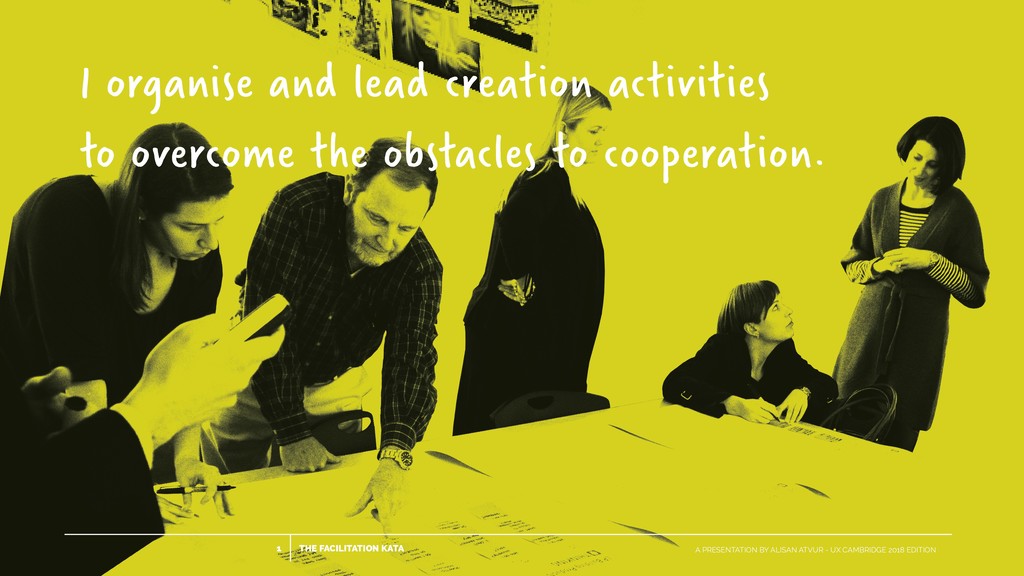
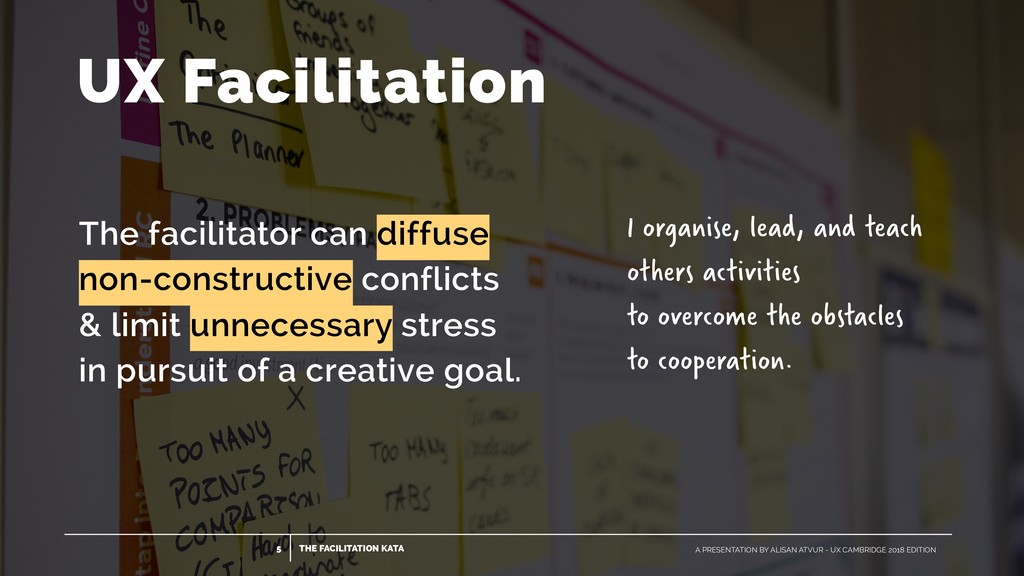
UX CAMBRIDGE 2018 EDITION UX Facilitation The facilitator can diffuse non-constructive conflicts & limit unnecessary stress in pursuit of a creative goal. I organise, lead, and teach others activities to overcome the obstacles to cooperation.
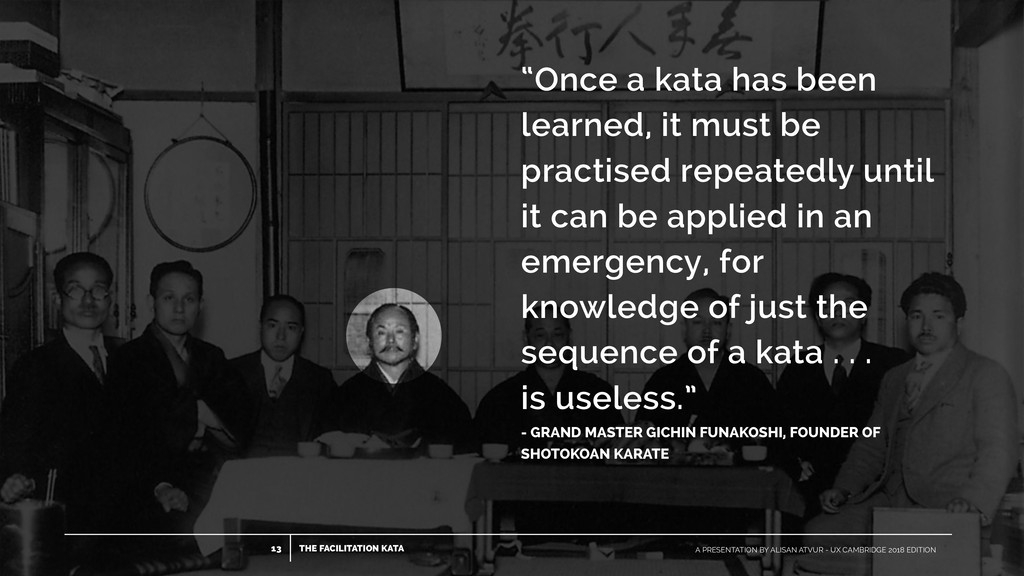
UX CAMBRIDGE 2018 EDITION “Once a kata has been learned, it must be practised repeatedly until it can be applied in an emergency, for knowledge of just the sequence of a kata . . . is useless.” - GRAND MASTER GICHIN FUNAKOSHI, FOUNDER OF SHOTOKOAN KARATE
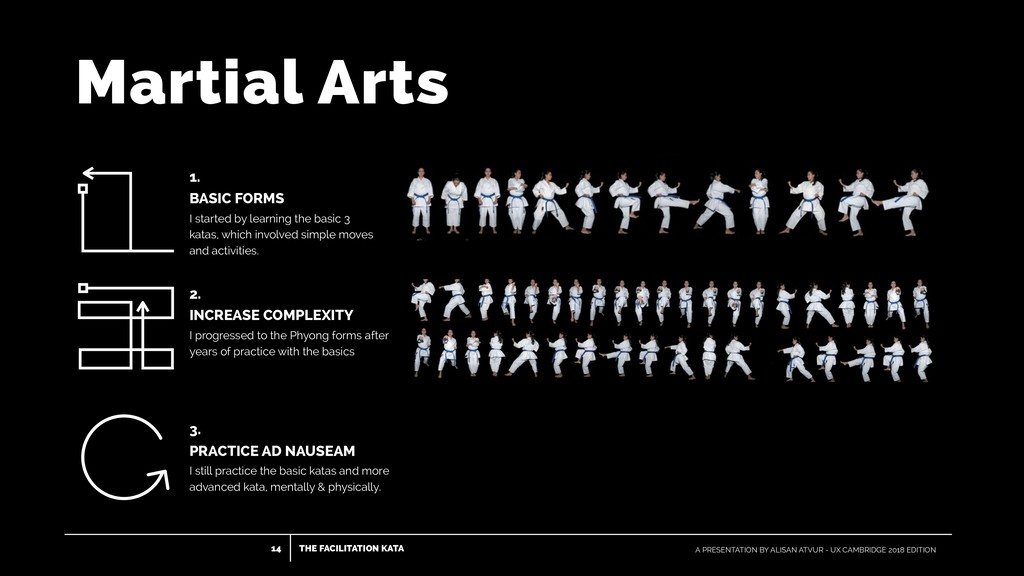
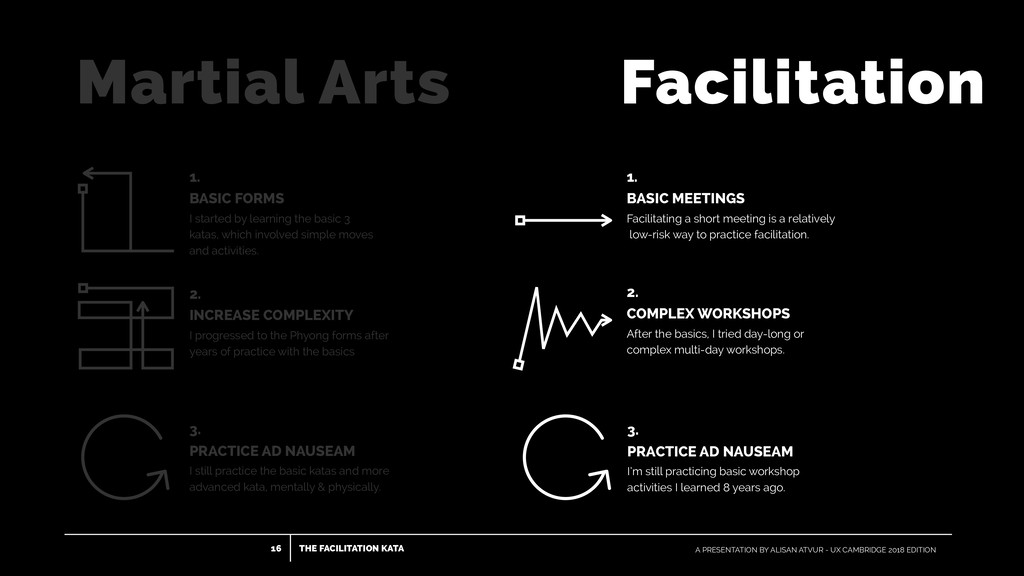
UX CAMBRIDGE 2018 EDITION Martial Arts 1. BASIC FORMS I started by learning the basic 3 katas, which involved simple moves and activities. 3. PRACTICE AD NAUSEAM I still practice the basic katas and more advanced kata, mentally & physically. 2. INCREASE COMPLEXITY I progressed to the Phyong forms after years of practice with the basics
UX CAMBRIDGE 2018 EDITION Martial Arts 1. BASIC MEETINGS Facilitating a short meeting is a relatively low-risk way to practice facilitation. 3. PRACTICE AD NAUSEAM I’m still practicing basic workshop activities I learned 8 years ago. 2. COMPLEX WORKSHOPS After the basics, I tried day-long or complex multi-day workshops. 1. BASIC FORMS I started by learning the basic 3 katas, which involved simple moves and activities. 3. PRACTICE AD NAUSEAM I still practice the basic katas and more advanced kata, mentally & physically. 2. INCREASE COMPLEXITY I progressed to the Phyong forms after years of practice with the basics Facilitation
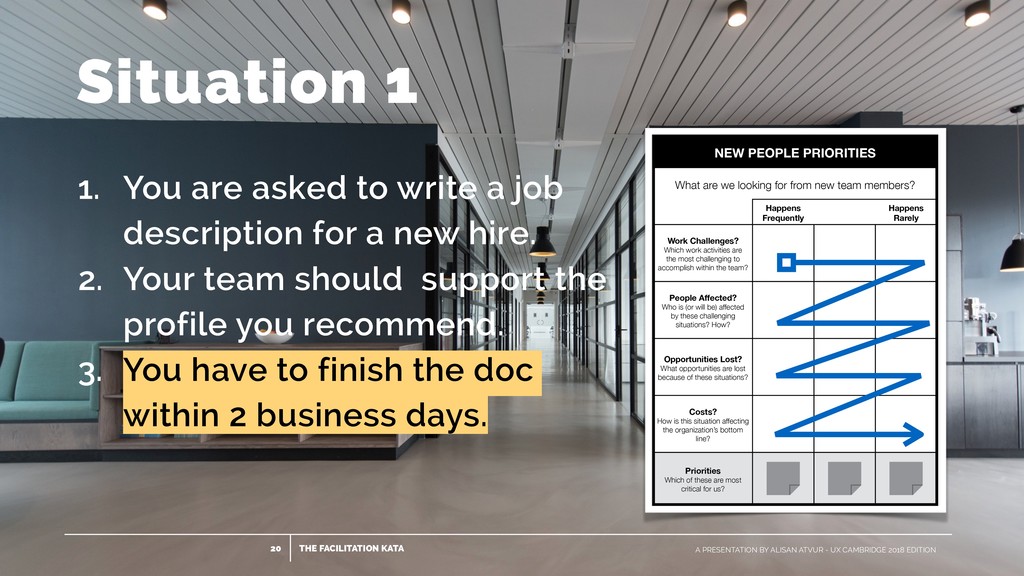
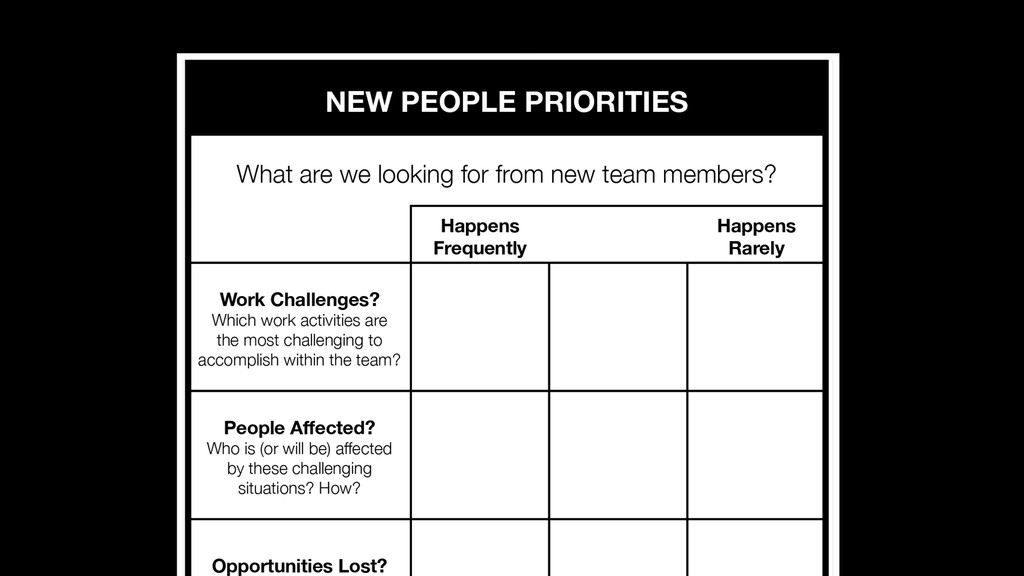
description for a new hire. 2. Your team should support the profile you recommend. 3. You have to finish the doc within 2 business days. THE FACILITATION KATA 20 A PRESENTATION BY ALISAN ATVUR - UX CAMBRIDGE 2018 EDITION
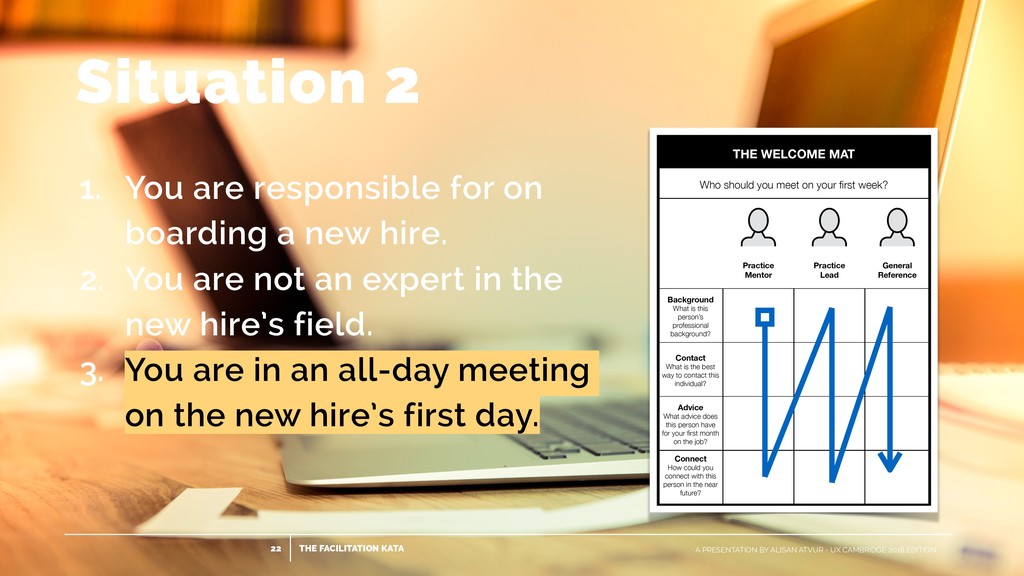
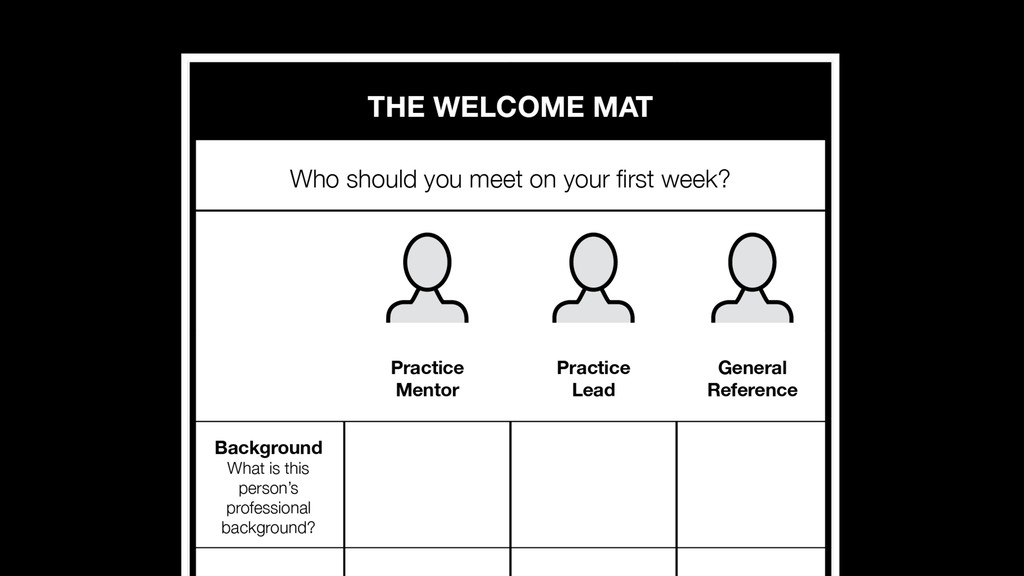
new hire. 2. You are not an expert in the new hire’s field. 3. You are in an all-day meeting on the new hire’s first day. THE FACILITATION KATA 22 A PRESENTATION BY ALISAN ATVUR - UX CAMBRIDGE 2018 EDITION
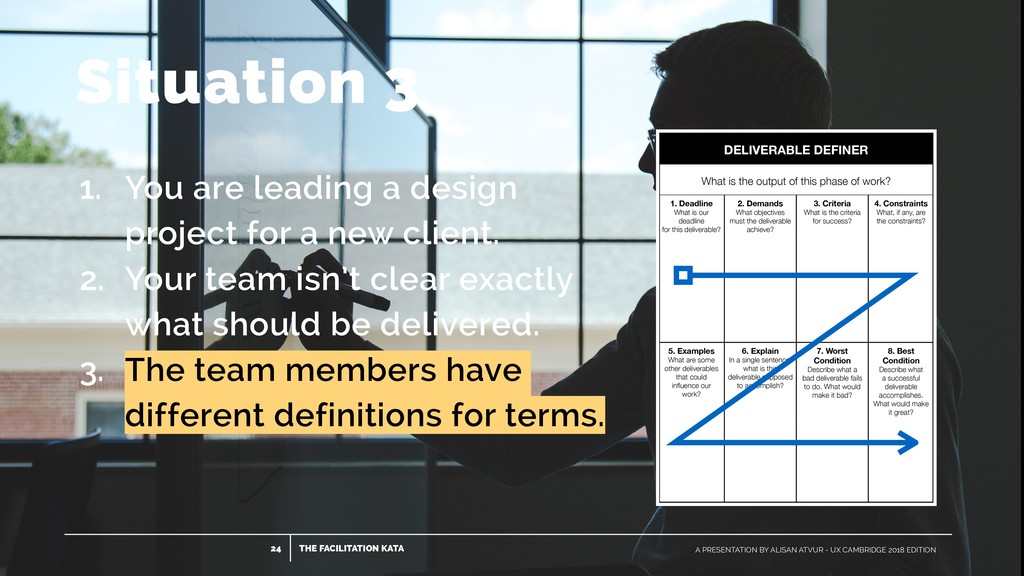
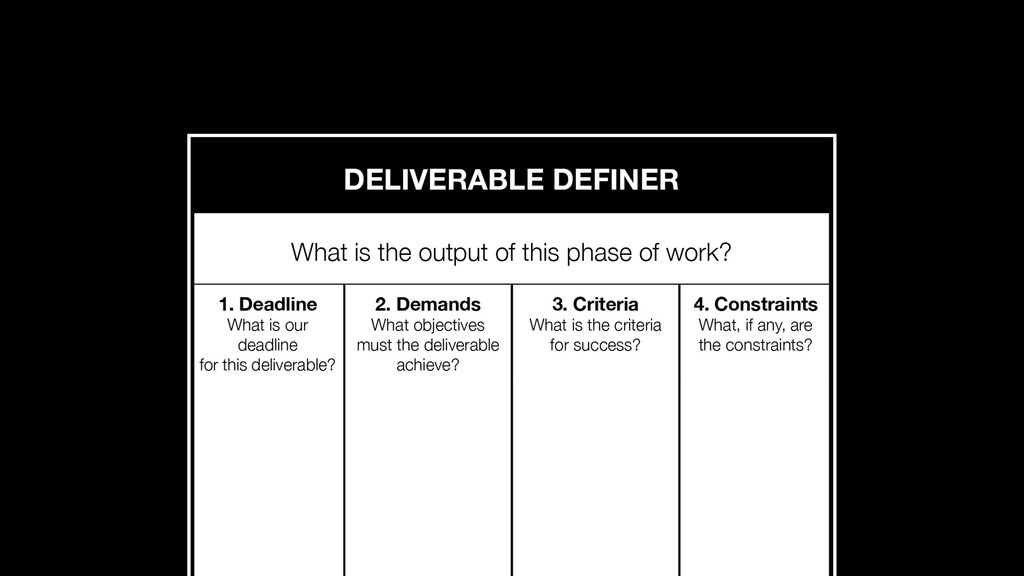
ATVUR - UX CAMBRIDGE 2018 EDITION 1. You are leading a design project for a new client. 2. Your team isn’t clear exactly what should be delivered. 3. The team members have different definitions for terms.
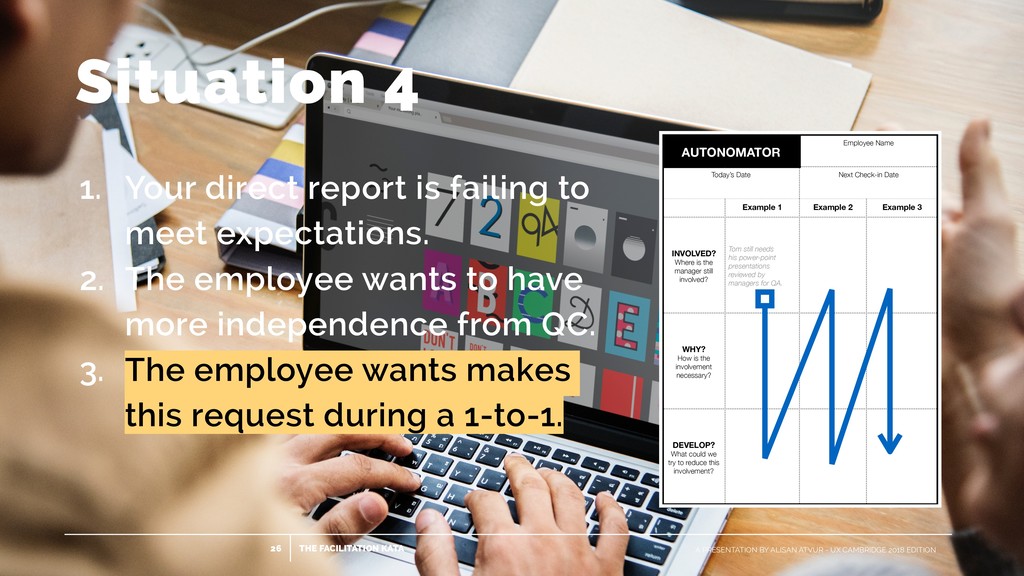
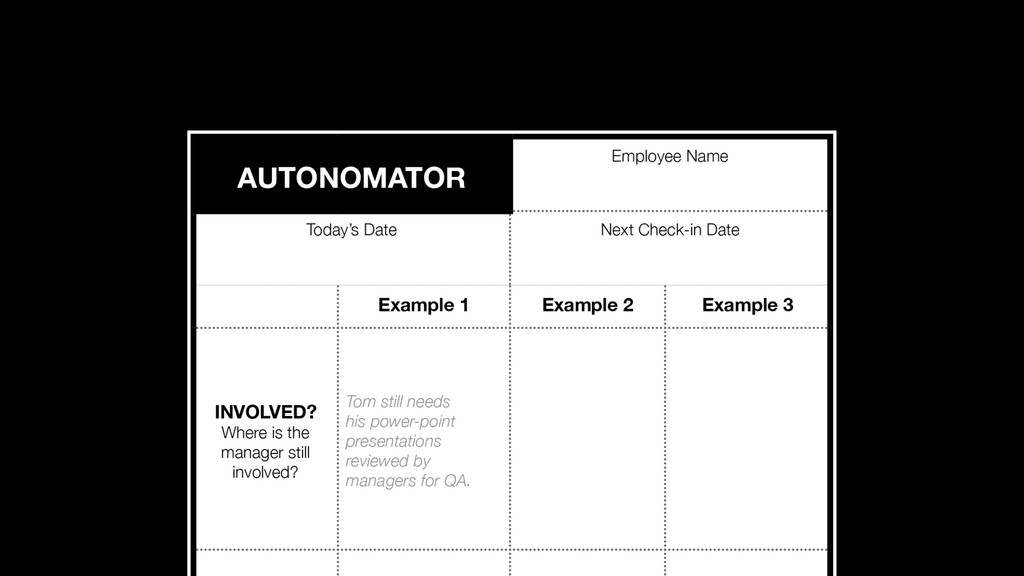
UX CAMBRIDGE 2018 EDITION Situation 4 1. Your direct report is failing to meet expectations. 2. The employee wants to have more independence from QC. 3. The employee wants makes this request during a 1-to-1.
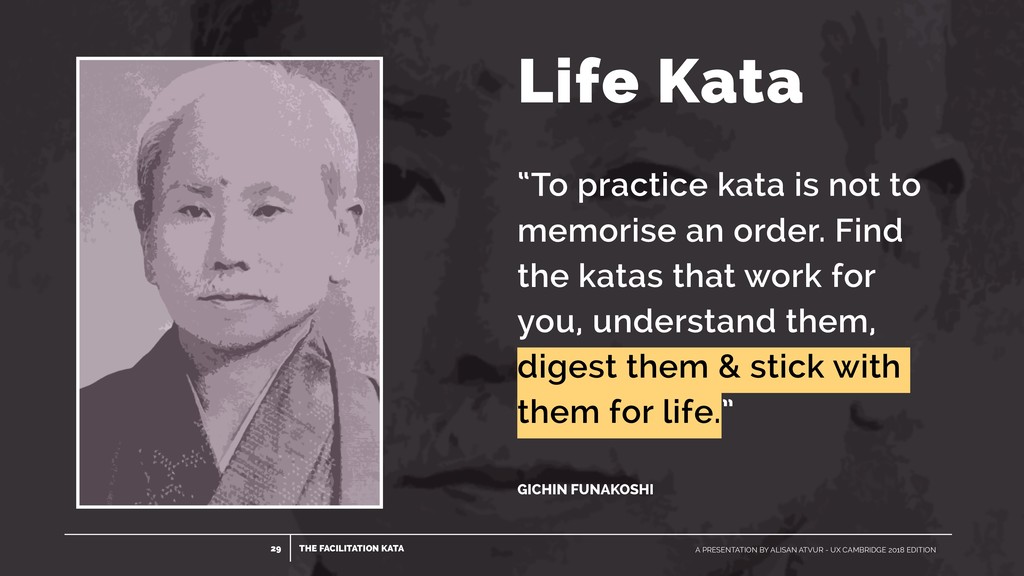
UX CAMBRIDGE 2018 EDITION “To practice kata is not to memorise an order. Find the katas that work for you, understand them, digest them & stick with them for life.” GICHIN FUNAKOSHI Life Kata


 sugiyama_sukedachi
 kgsi
kgsi
 shemeetscity
 kimichan
 kakukoki
 webnaut
 yuichi_hara7
 kotasaito_cnt
 cygames
 sugi2000
 akirafukuoka
 fumink7
 stuffmc
 trallard
 davetheseo
 akosma
 watany
 madoxten
 popppiees
 marketingsoph
 uxyall
 tenderlove
 jlugia
 kimpetersen