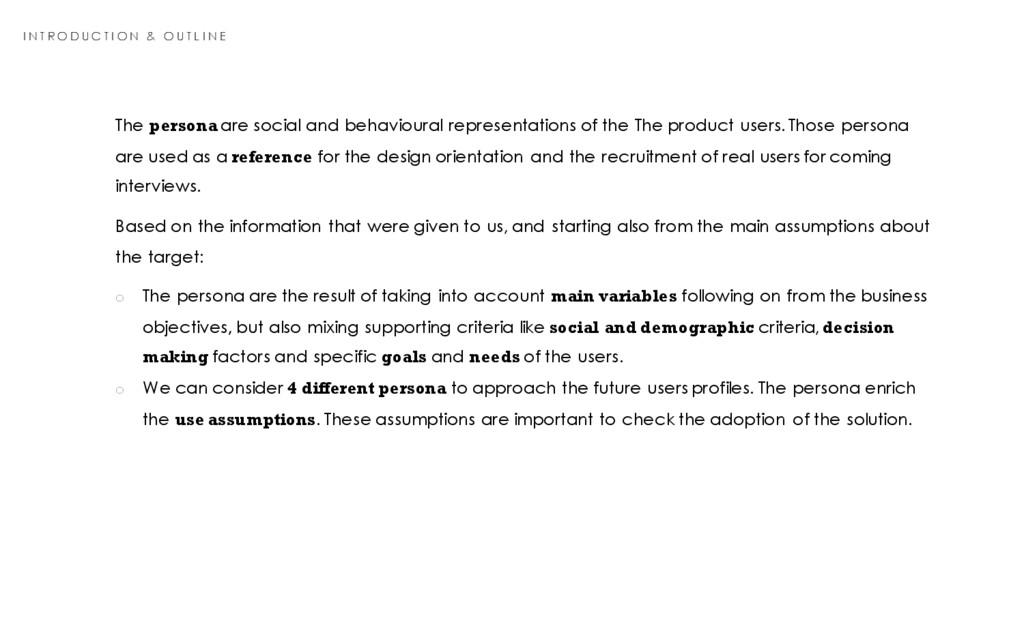
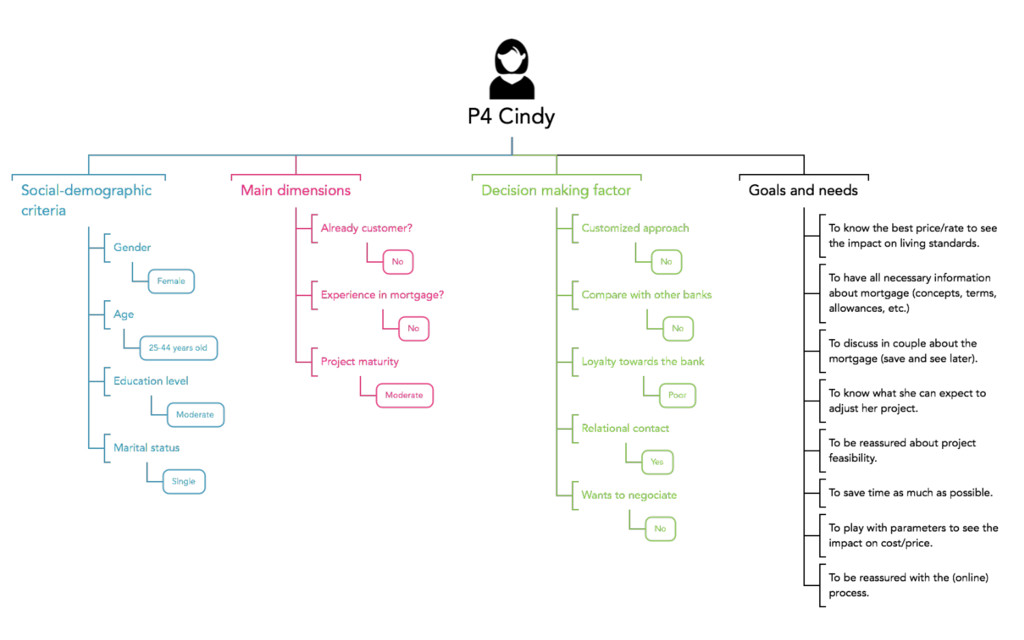
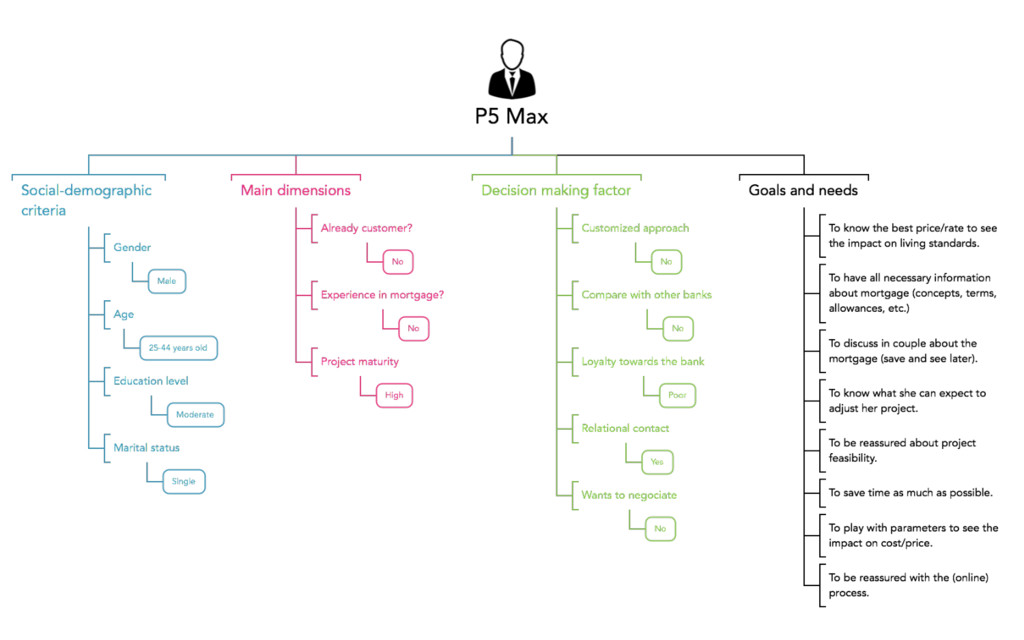
O N & O U T L I N E The persona are social and behavioural representations of the The product users. Those persona are used as a reference for the design orientation and the recruitment of real users for coming interviews. Based on the information that were given to us, and starting also from the main assumptions about the target: o The persona are the result of taking into account main variables following on from the business objectives, but also mixing supporting criteria like social and demographic criteria, decision making factors and specific goals and needs of the users. o We can consider 4 different persona to approach the future users profiles. The persona enrich the use assumptions. These assumptions are important to check the adoption of the solution.
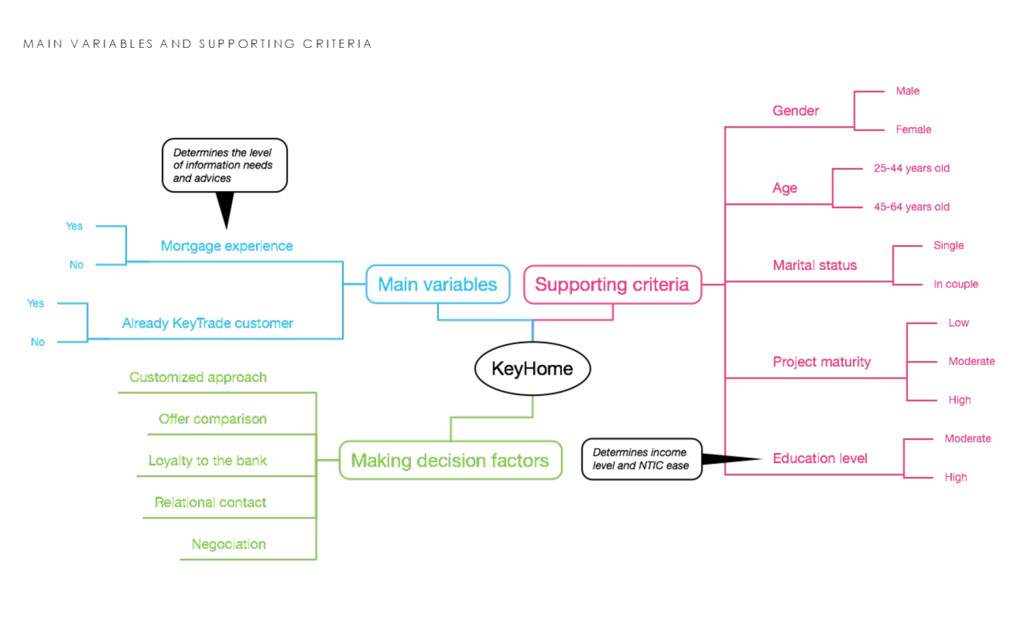
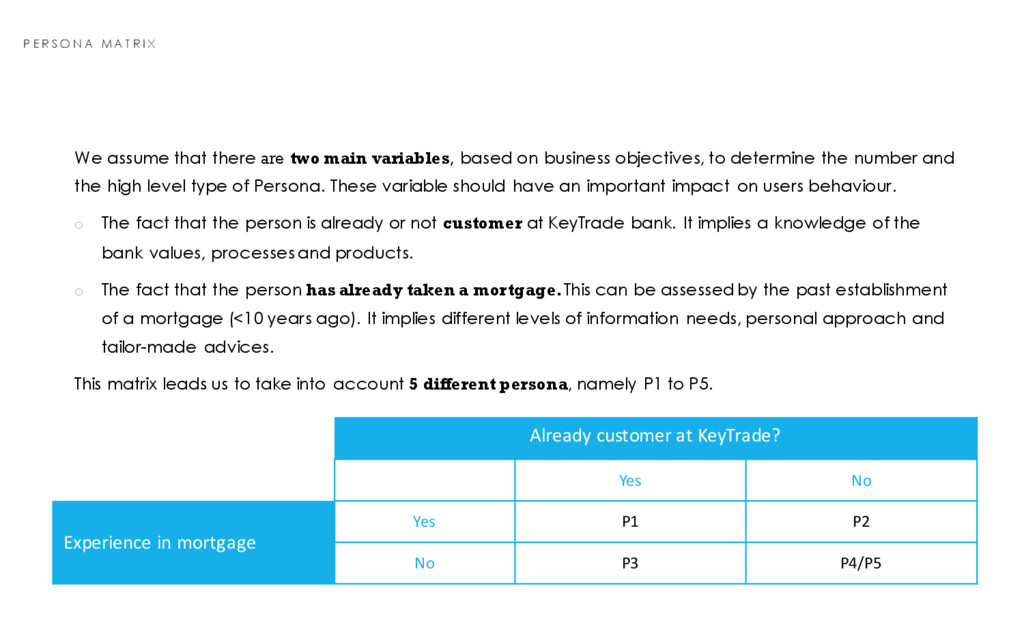
R I X Already customer at KeyTrade? Yes No Experience in mortgage Yes P1 P2 No P3 P4/P5 We assume that there are two main variables, based on business objectives, to determine the number and the high level type of Persona. These variable should have an important impact on users behaviour. o The fact that the person is already or not customer at KeyTrade bank. It implies a knowledge of the bank values, processes and products. o The fact that the person has already taken a mortgage. This can be assessed by the past establishment of a mortgage (<10 years ago). It implies different levels of information needs, personal approach and tailor-made advices. This matrix leads us to take into account 5 different persona, namely P1 to P5.
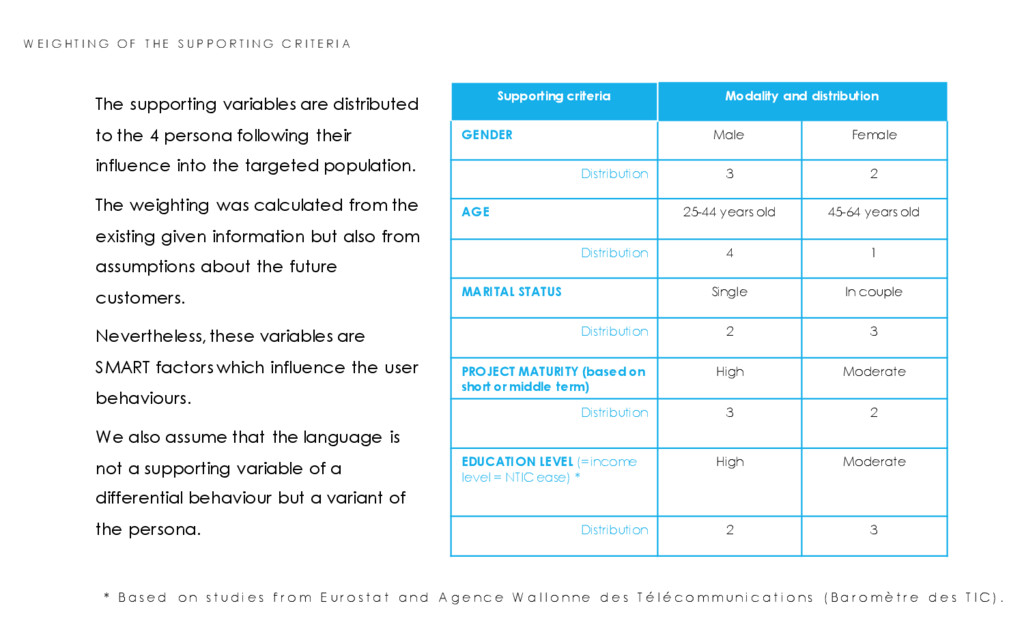
F T H E S U P P O R T I N G C R I T E R I A Supporting criteria Modality and distribution GENDER Male Female Distribution 3 2 AGE 25-44 years old 45-64 years old Distribution 4 1 MARITAL STATUS Single In couple Distribution 2 3 PROJECT MATURITY (based on short or middle term) High Moderate Distribution 3 2 EDUCATION LEVEL (= income level = NTIC ease) * High Moderate Distribution 2 3 The supporting variables are distributed to the 4 persona following their influence into the targeted population. The weighting was calculated from the existing given information but also from assumptions about the future customers. Nevertheless, these variables are SMART factors which influence the user behaviours. We also assume that the language is not a supporting variable of a differential behaviour but a variant of the persona. * B a s e d o n s t u d i e s f r o m E u r o s t a t a n d A g e n c e W a l l o n n e d e s T é l é c o m m u n i c a t i o n s ( B a r o m è t r e d e s T I C ) .
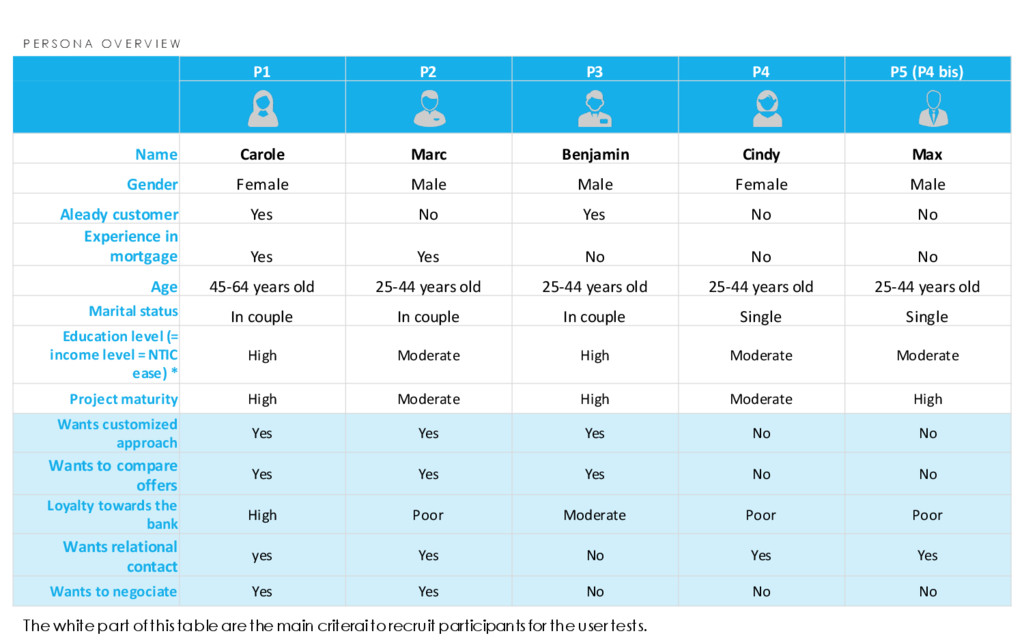
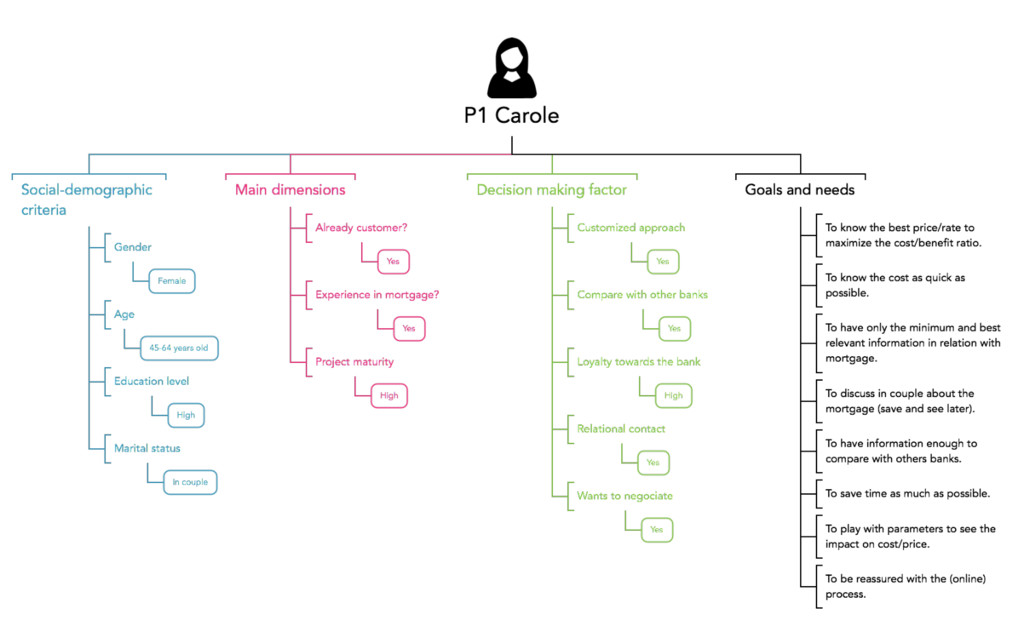
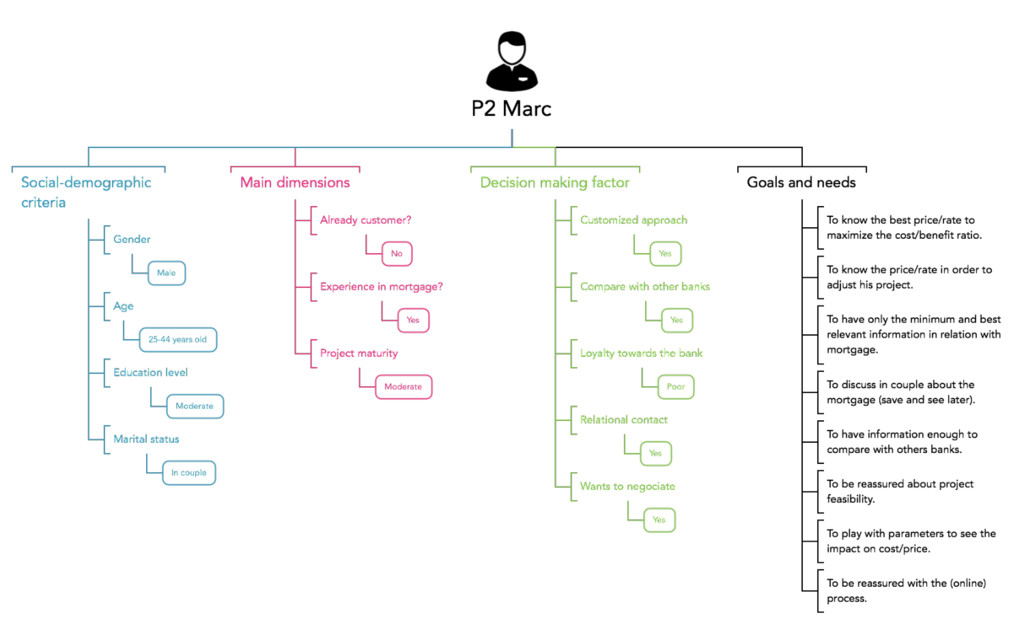
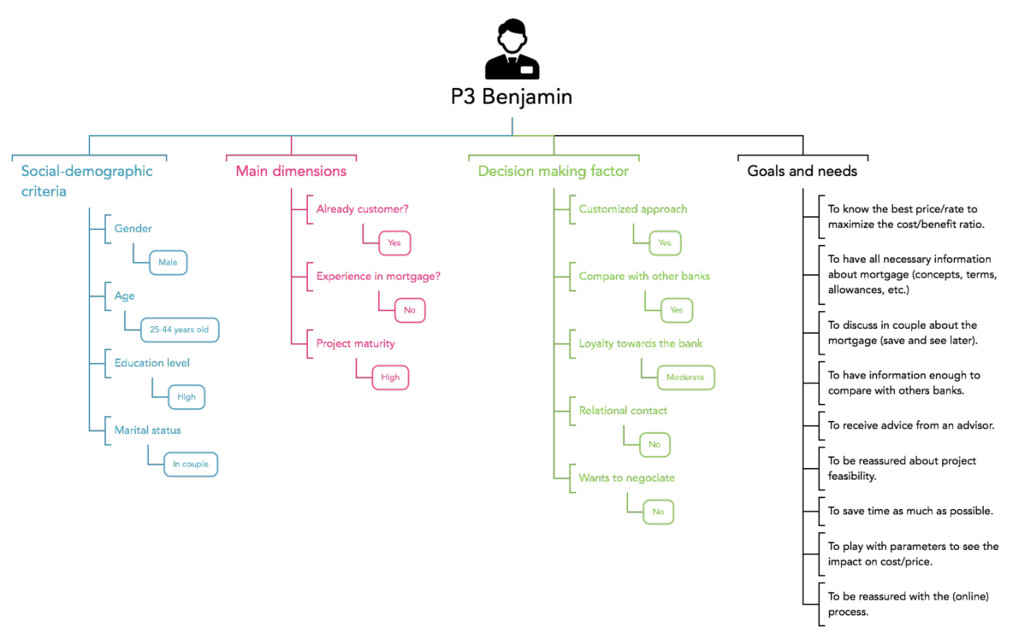
R V I E W P1 P2 P3 P4 P5 (P4 bis) Name Carole Marc Benjamin Cindy Max Gender Female Male Male Female Male Aleady customer Yes No Yes No No Experience in mortgage Yes Yes No No No Age 45-64 years old 25-44 years old 25-44 years old 25-44 years old 25-44 years old Marital status In couple In couple In couple Single Single Education level (= income level = NTIC ease) * High Moderate High Moderate Moderate Project maturity High Moderate High Moderate High Wants customized approach Yes Yes Yes No No Wants to compare offers Yes Yes Yes No No Loyalty towards the bank High Poor Moderate Poor Poor Wants relational contact yes Yes No Yes Yes Wants to negociate Yes Yes No No No The white part of this table are the main criterai to recruit participants for the user tests.
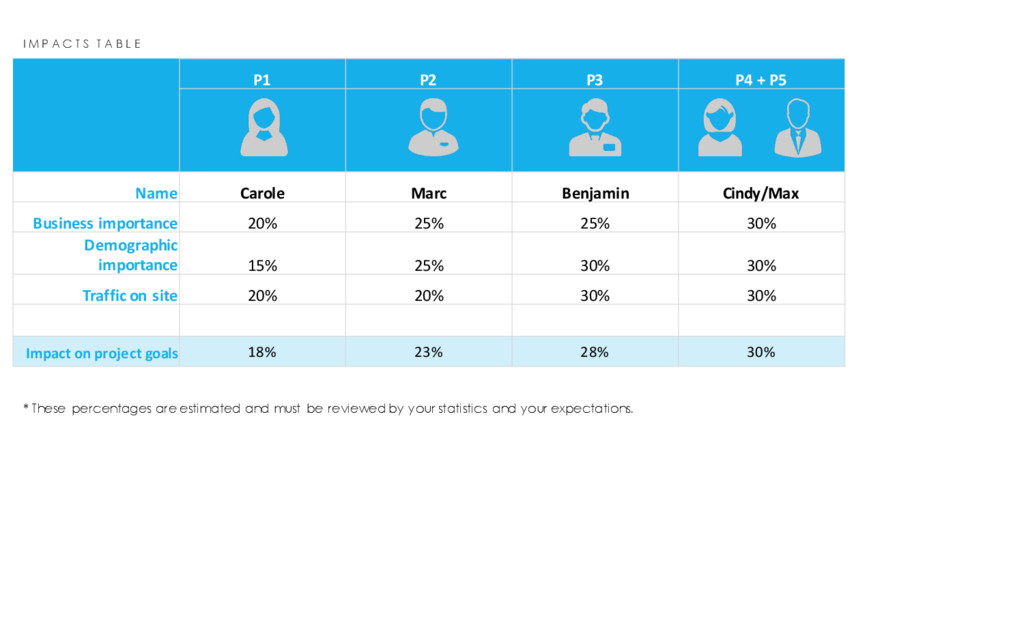
L E P1 P2 P3 P4 + P5 Name Carole Marc Benjamin Cindy/Max Business importance 20% 25% 25% 30% Demographic importance 15% 25% 30% 30% Traffic on site 20% 20% 30% 30% Impact on project goals 18% 23% 28% 30% * These percentages are estimated and must be reviewed by your statistics and your expectations.
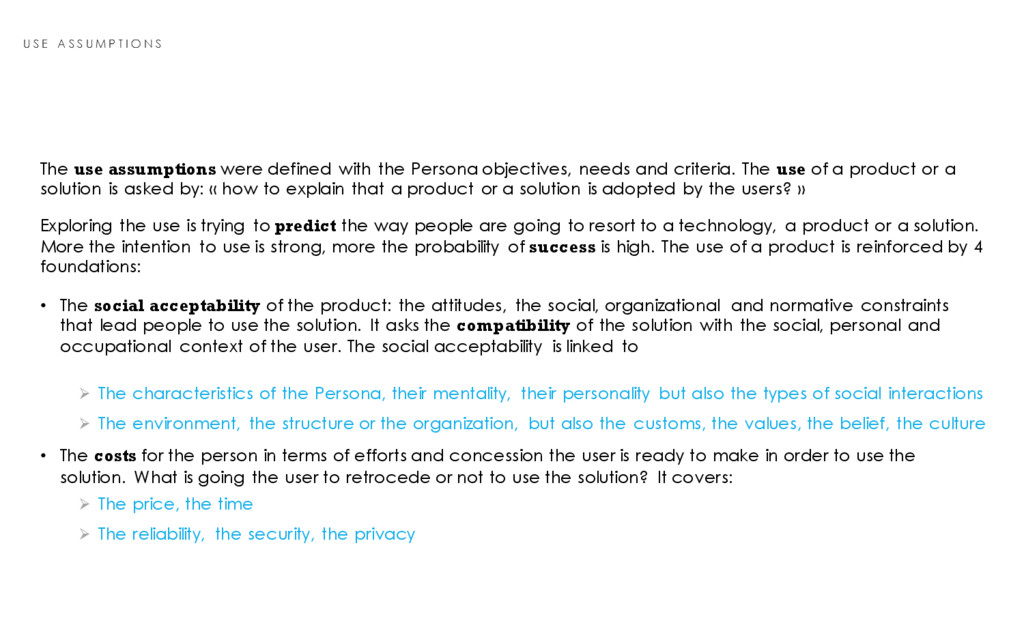
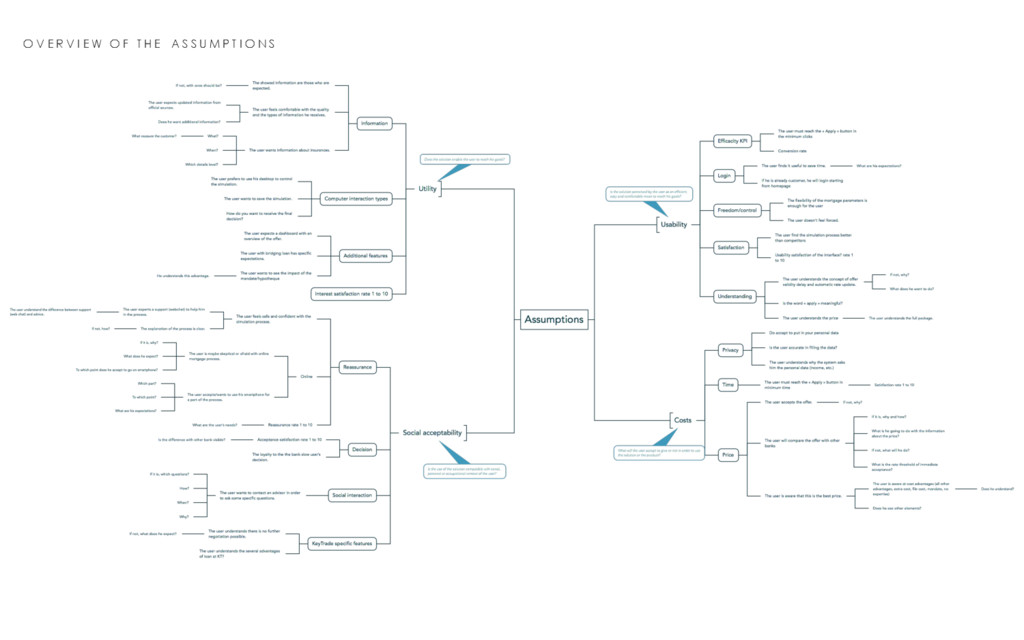
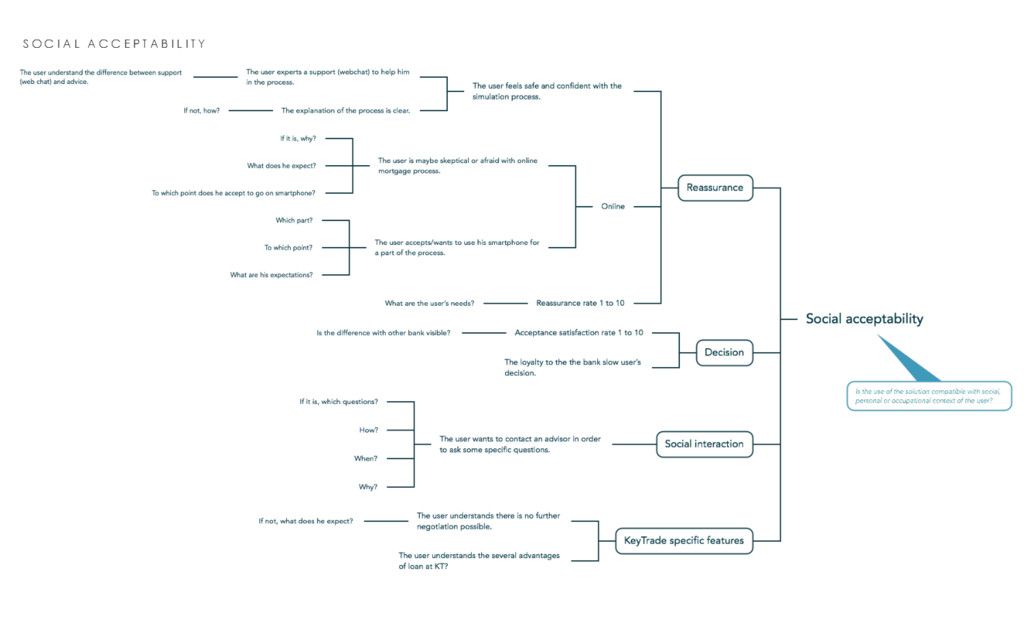
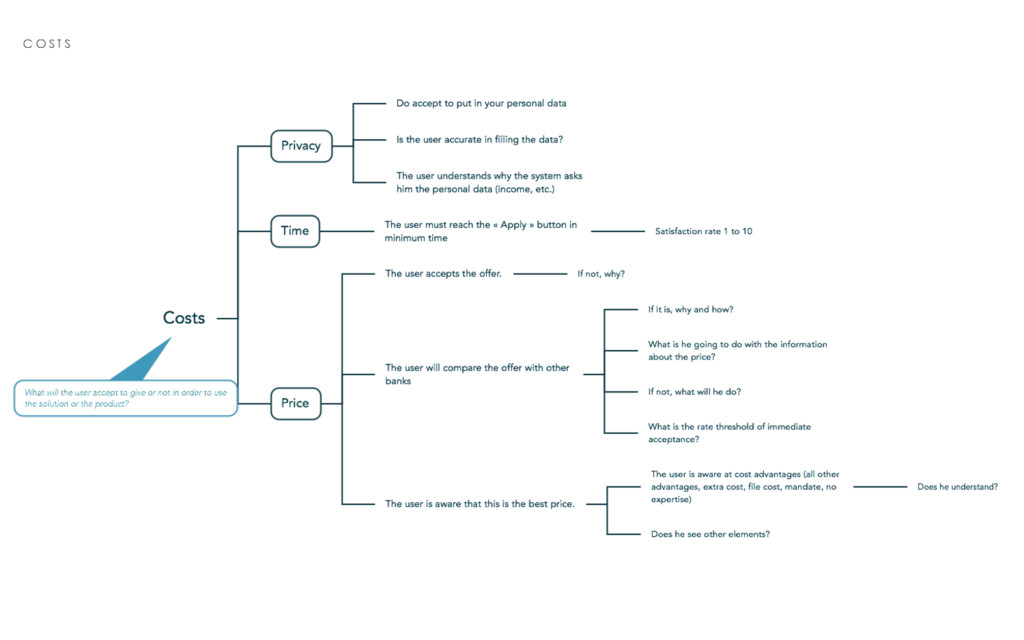
and criteria. The use of a product or a solution is asked by: « how to explain that a product or a solution is adopted by the users? » Exploring the use is trying to predict the way people are going to resort to a technology, a product or a solution. More the intention to use is strong, more the probability of success is high. The use of a product is reinforced by 4 foundations: • The social acceptability of the product: the attitudes, the social, organizational and normative constraints that lead people to use the solution. It asks the compatibility of the solution with the social, personal and occupational context of the user. The social acceptability is linked to Ø The characteristics of the Persona, their mentality, their personality but also the types of social interactions Ø The environment, the structure or the organization, but also the customs, the values, the belief, the culture • The costs for the person in terms of efforts and concession the user is ready to make in order to use the solution. What is going the user to retrocede or not to use the solution? It covers: Ø The price, the time Ø The reliability, the security, the privacy U S E A S S U M P T I O N S
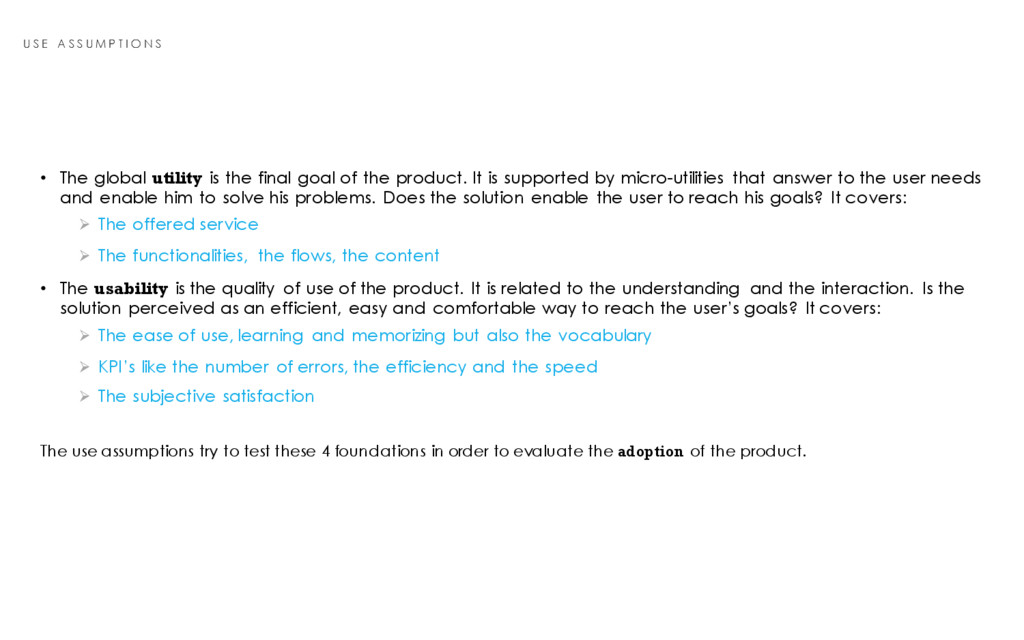
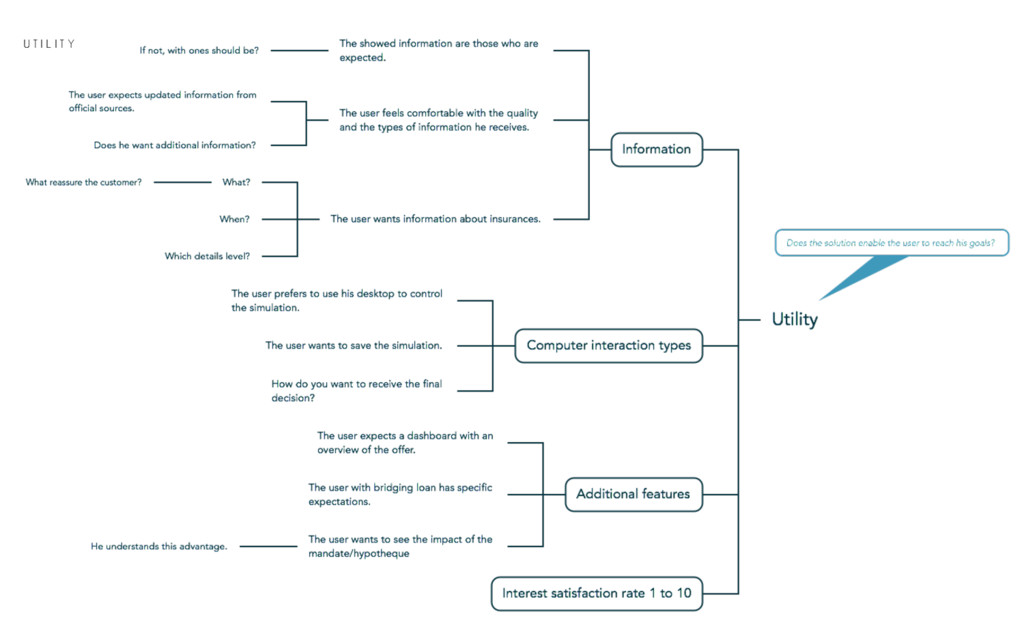
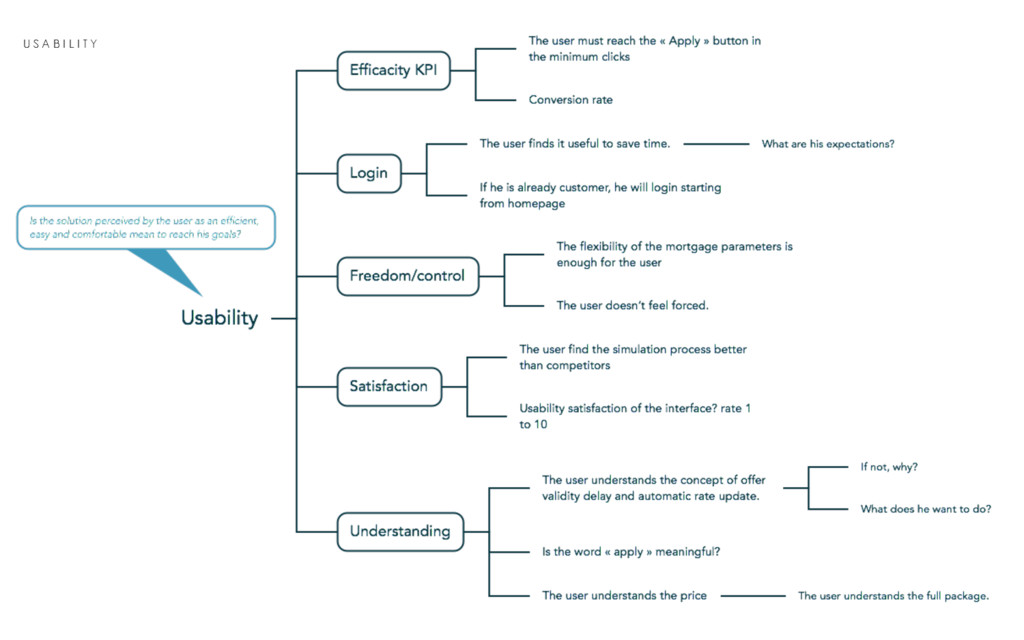
product. It is supported by micro-utilities that answer to the user needs and enable him to solve his problems. Does the solution enable the user to reach his goals? It covers: Ø The offered service Ø The functionalities, the flows, the content • The usability is the quality of use of the product. It is related to the understanding and the interaction. Is the solution perceived as an efficient, easy and comfortable way to reach the user’s goals? It covers: Ø The ease of use, learning and memorizing but also the vocabulary Ø KPI’s like the number of errors, the efficiency and the speed Ø The subjective satisfaction The use assumptions try to test these 4 foundations in order to evaluate the adoption of the product. U S E A S S U M P T I O N S


 jacobian
 garrettdimon
 tammyeverts
 vanstee
 mongodb
 shpigford
 mfonobong
 bryan
 honnibal
 brad_frost
 427marketing
 cassininazir