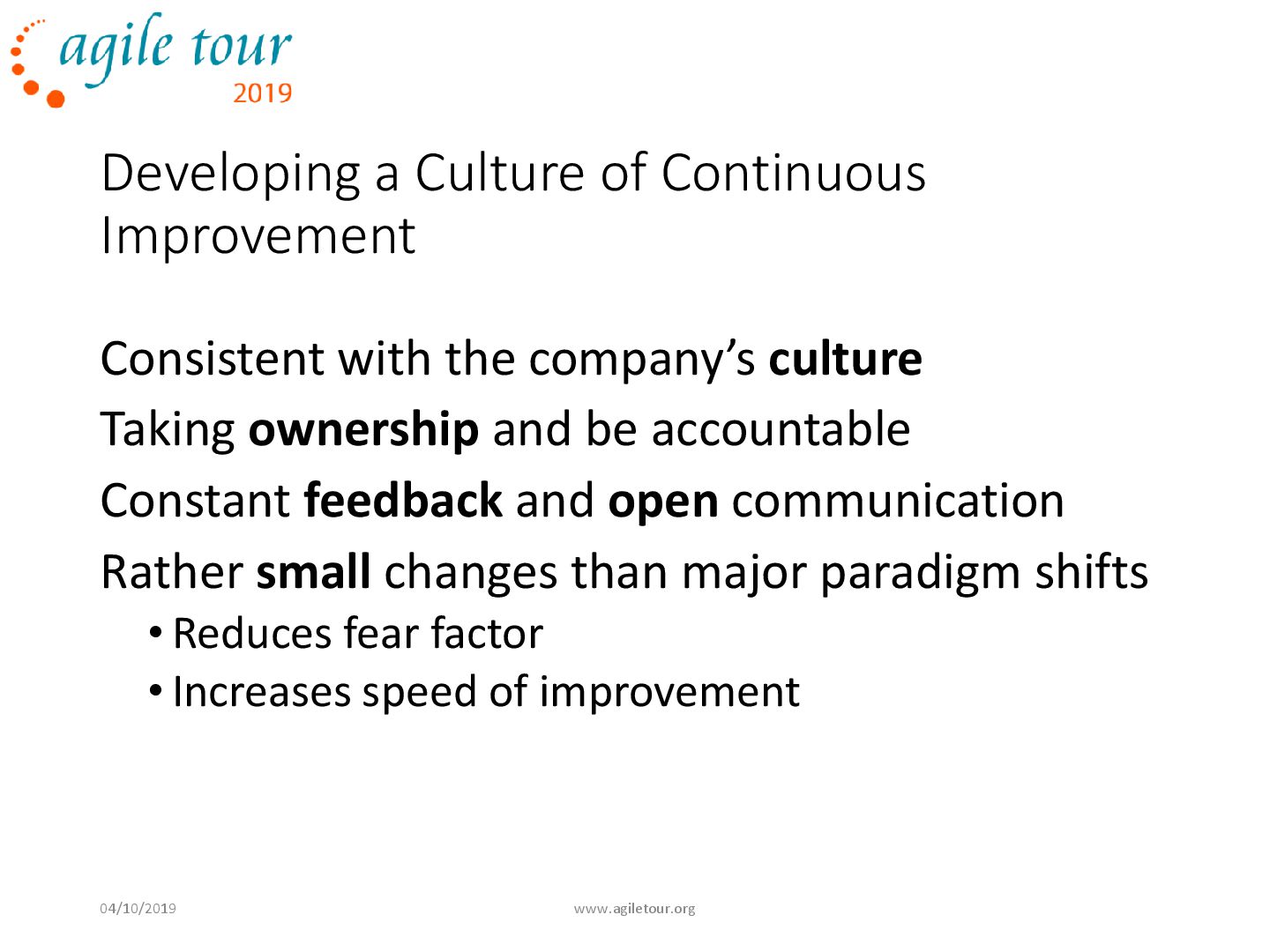
culture Taking ownership and be accountable Constant feedback and open communication Rather small changes than major paradigm shifts • Reduces fear factor • Increases speed of improvement 04/10/2019 www.agiletour.org
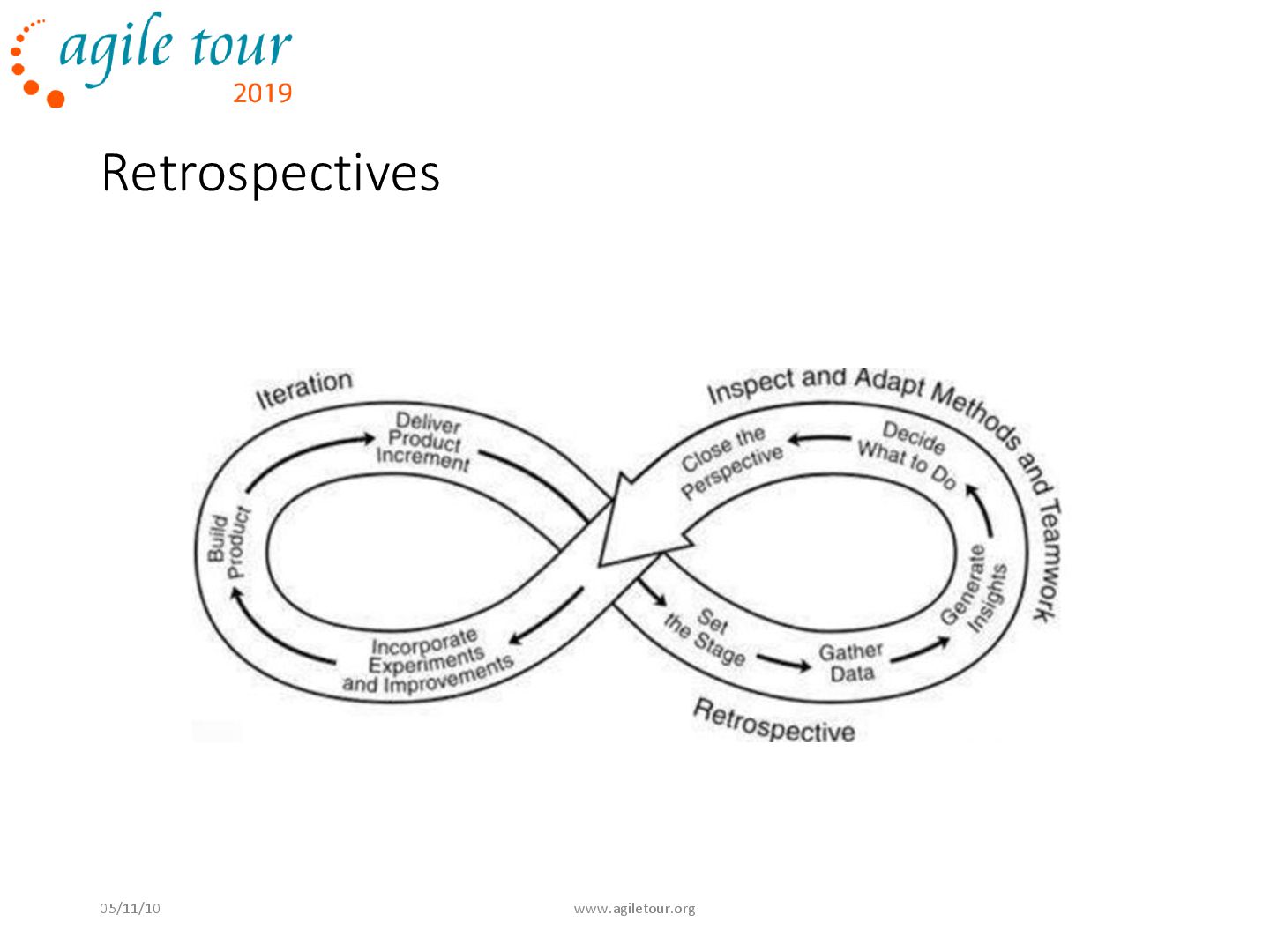
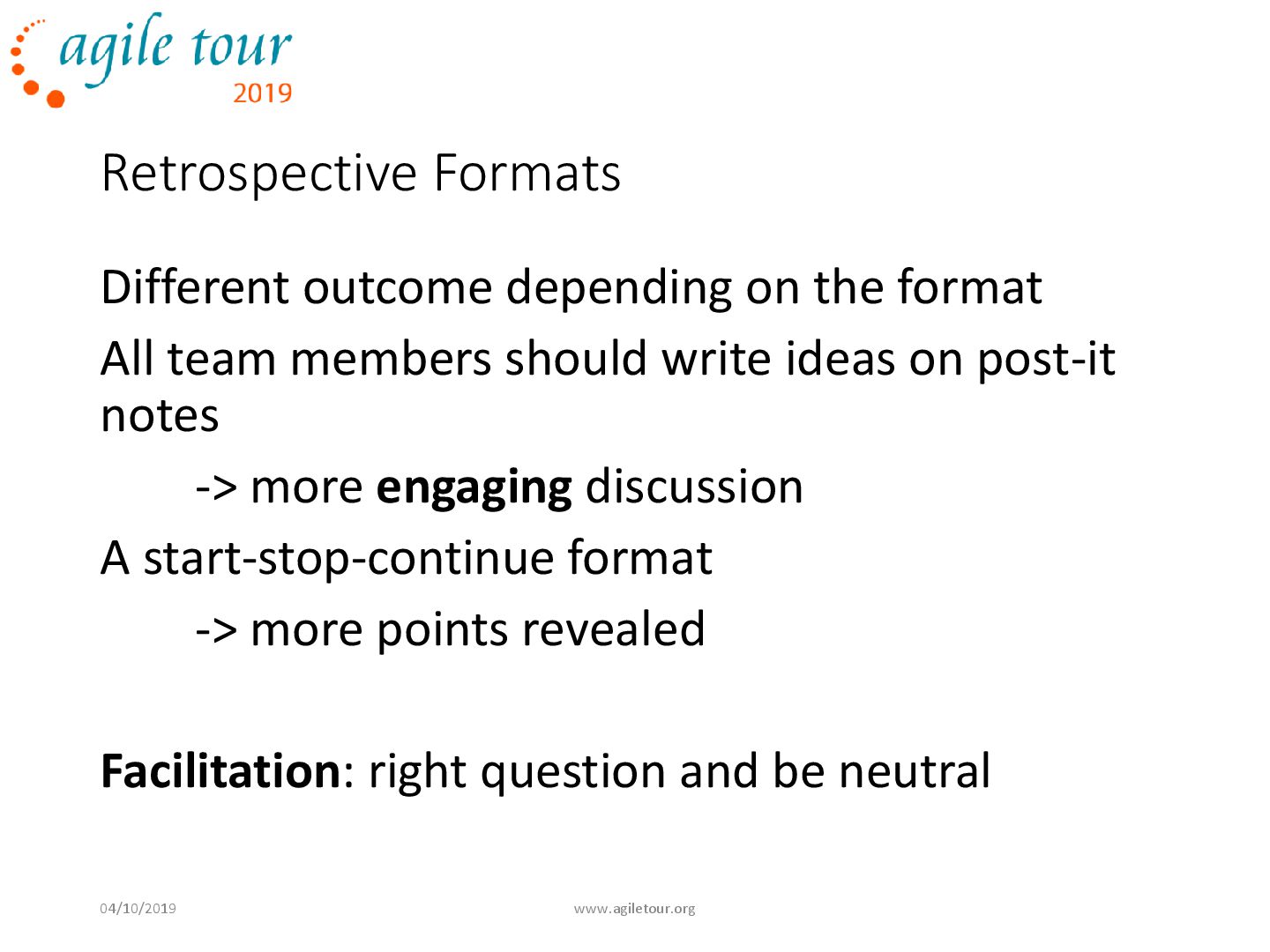
members should write ideas on post-it notes -> more engaging discussion A start-stop-continue format -> more points revealed Facilitation: right question and be neutral 04/10/2019 www.agiletour.org
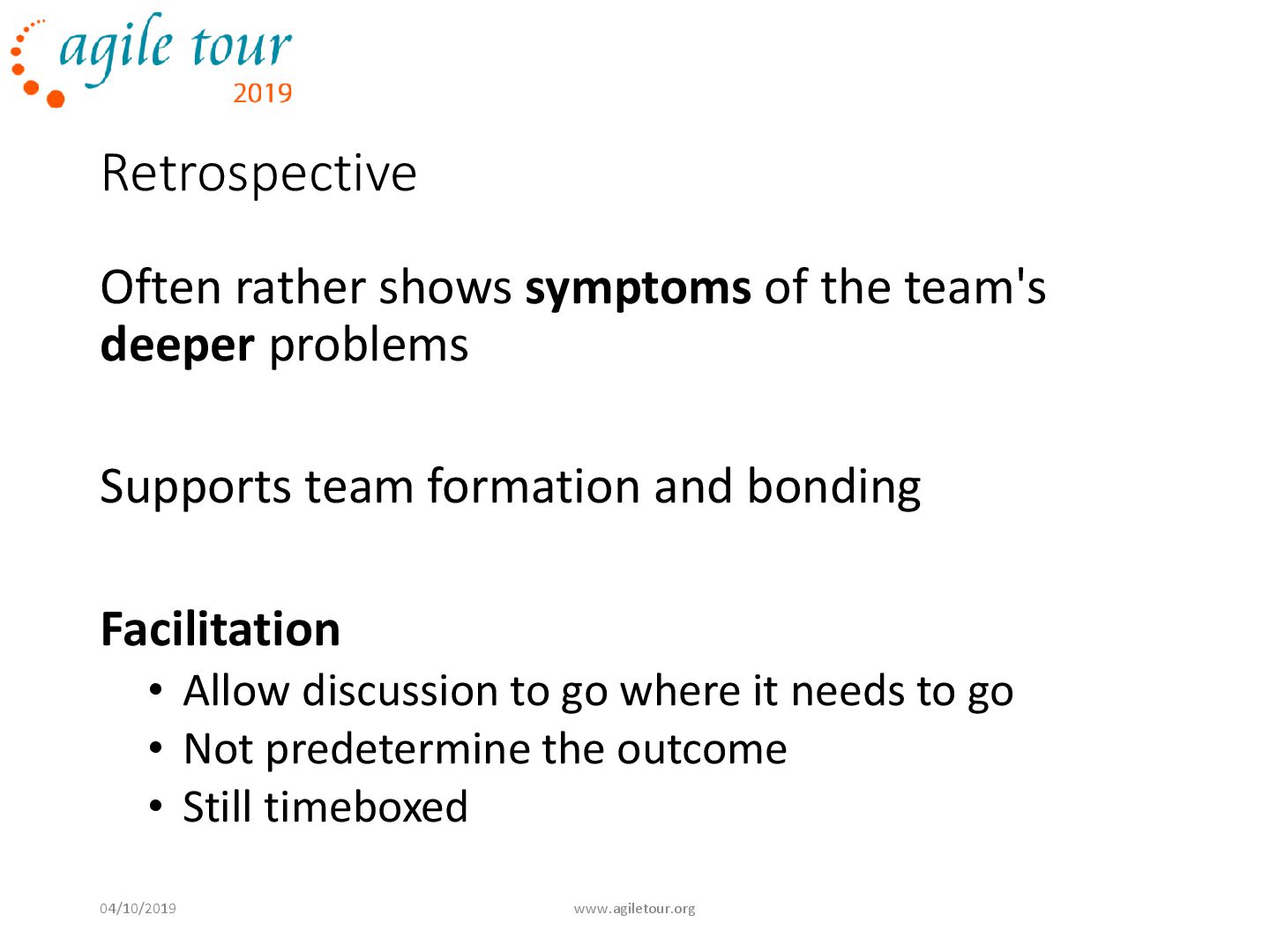
Supports team formation and bonding Facilitation • Allow discussion to go where it needs to go • Not predetermine the outcome • Still timeboxed 04/10/2019 www.agiletour.org
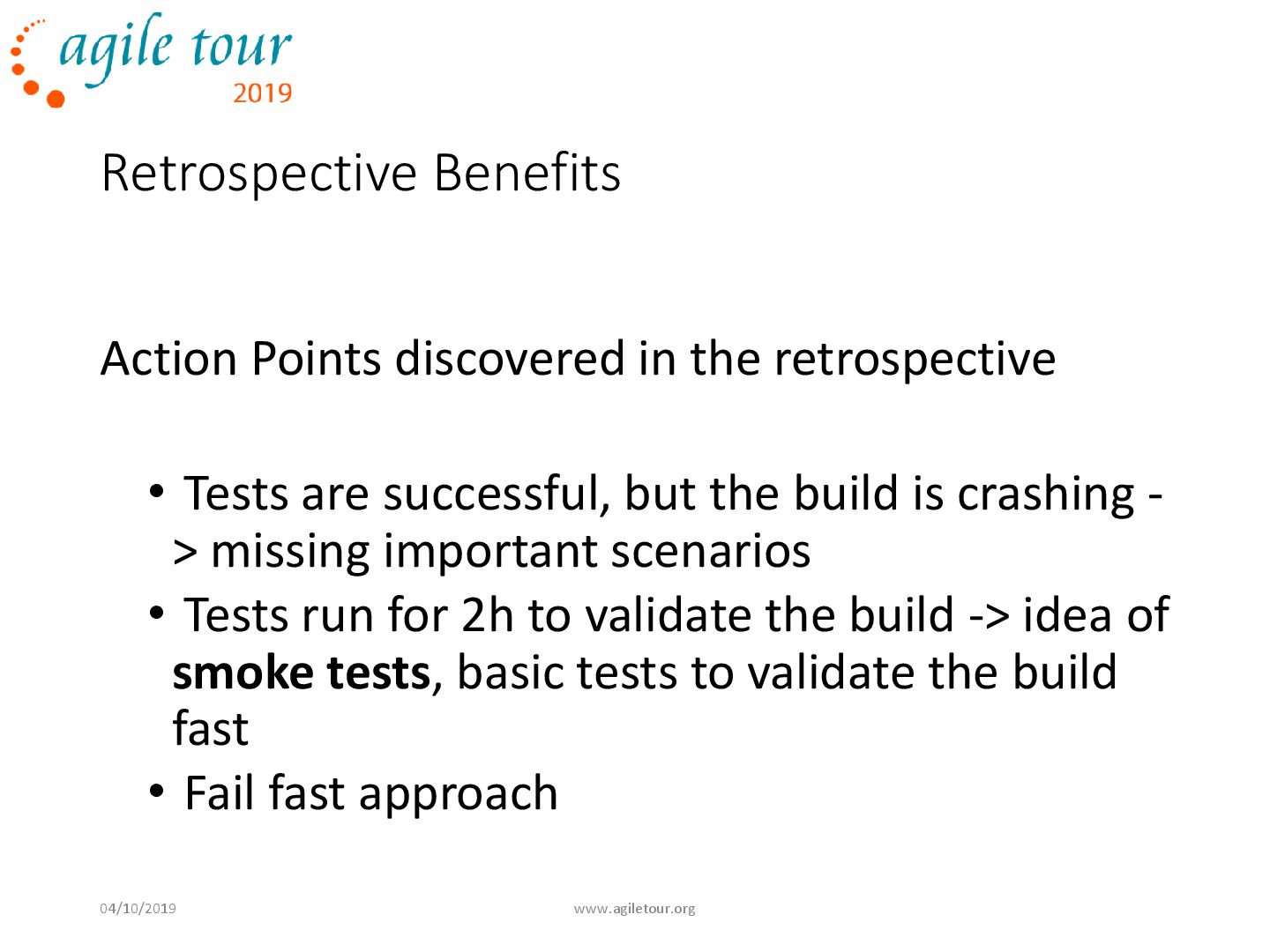
are successful, but the build is crashing - > missing important scenarios • Tests run for 2h to validate the build -> idea of smoke tests, basic tests to validate the build fast • Fail fast approach 04/10/2019 www.agiletour.org
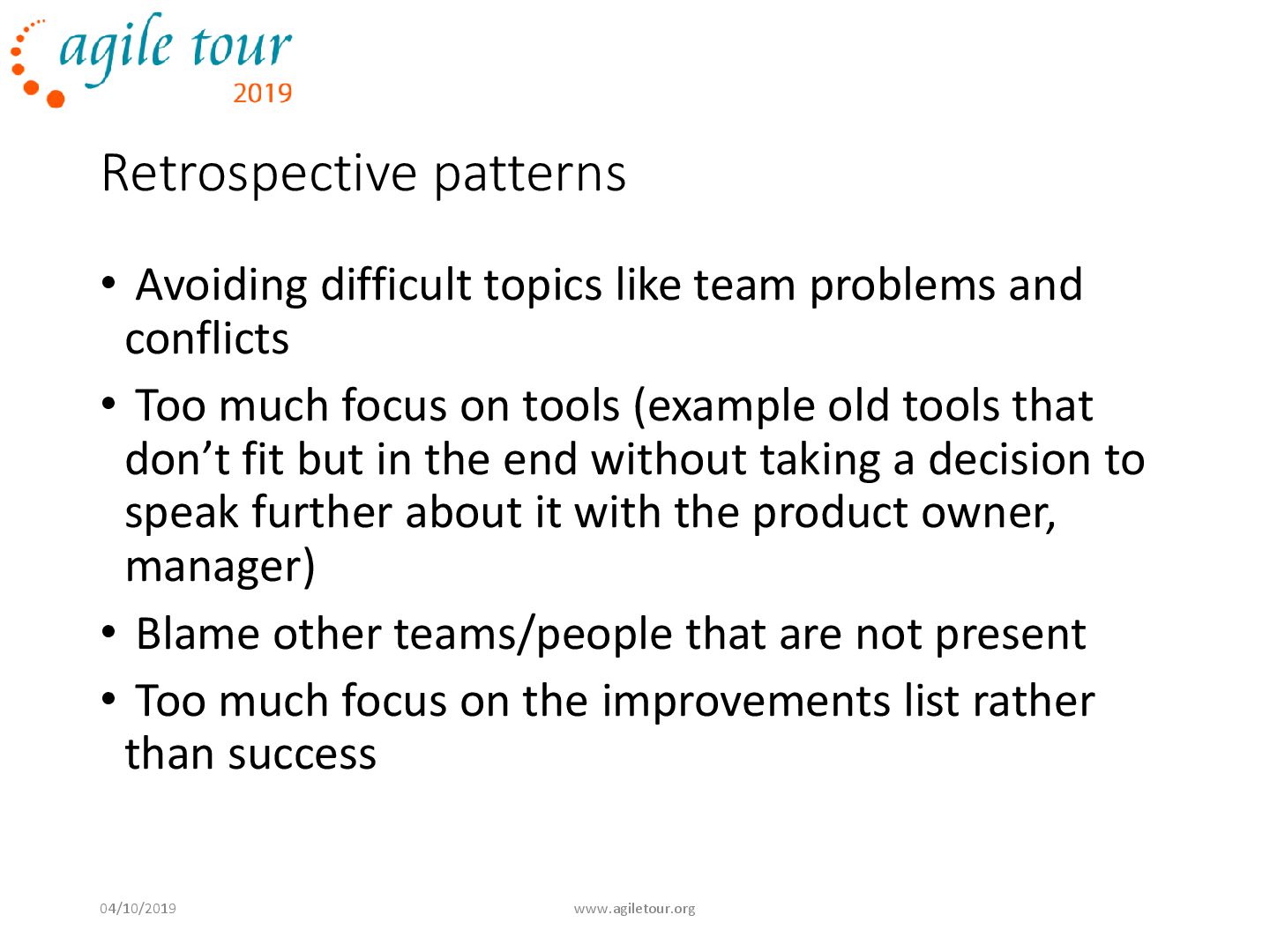
conflicts • Too much focus on tools (example old tools that don’t fit but in the end without taking a decision to speak further about it with the product owner, manager) • Blame other teams/people that are not present • Too much focus on the improvements list rather than success 04/10/2019 www.agiletour.org
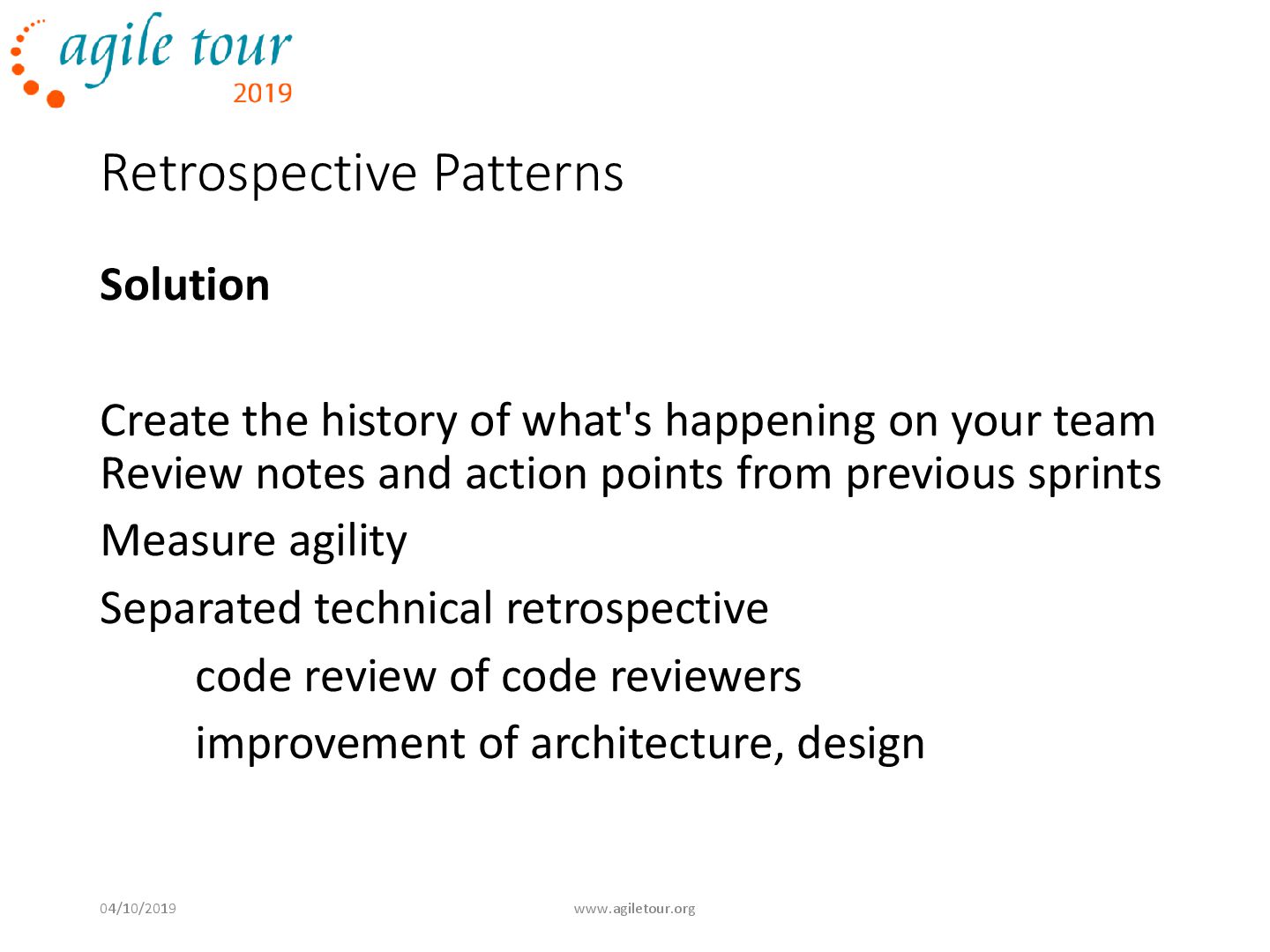
your team Review notes and action points from previous sprints Measure agility Separated technical retrospective code review of code reviewers improvement of architecture, design 04/10/2019 www.agiletour.org
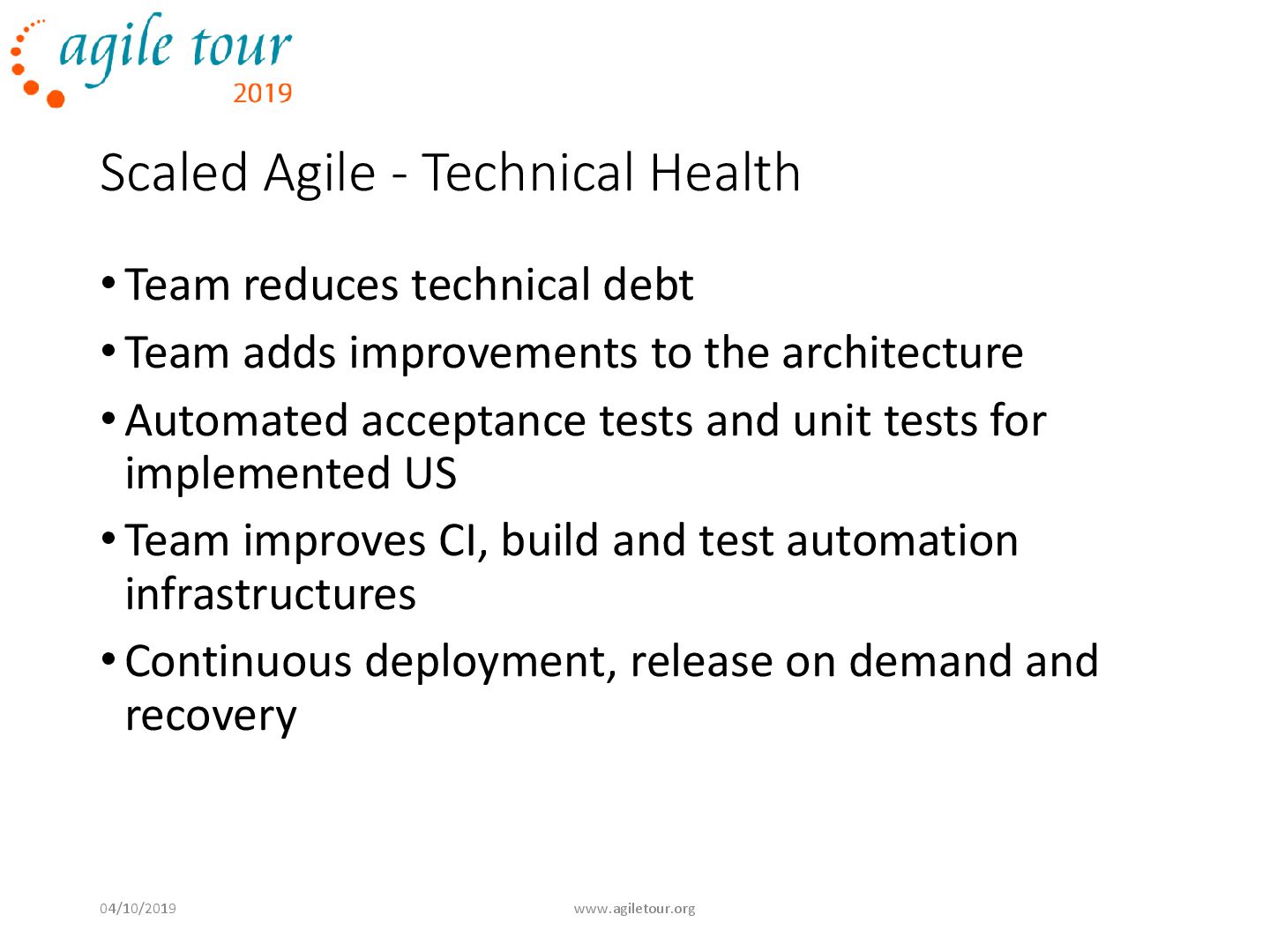
debt •Team adds improvements to the architecture •Automated acceptance tests and unit tests for implemented US •Team improves CI, build and test automation infrastructures •Continuous deployment, release on demand and recovery
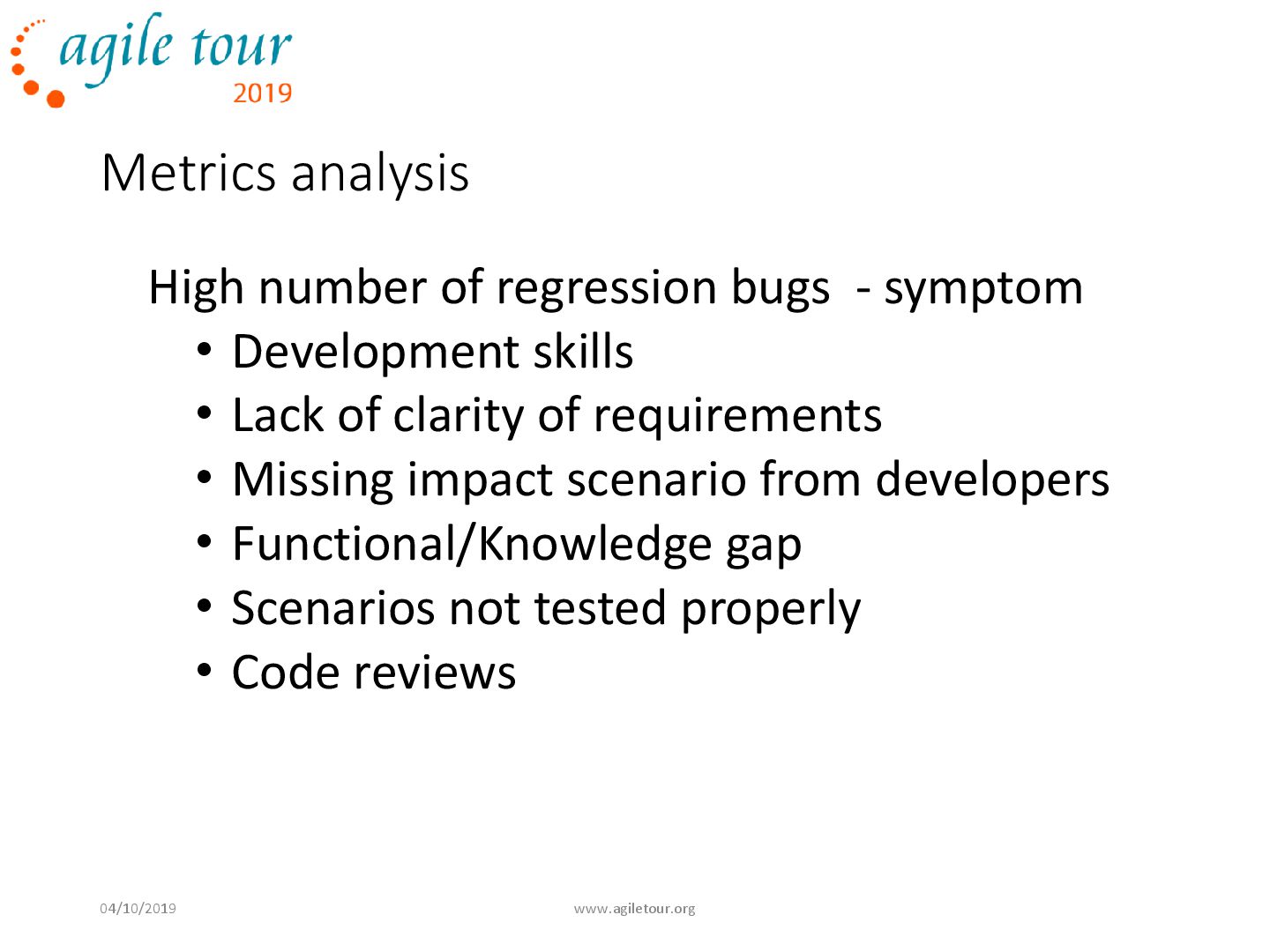
Development skills • Lack of clarity of requirements • Missing impact scenario from developers • Functional/Knowledge gap • Scenarios not tested properly • Code reviews 04/10/2019 www.agiletour.org
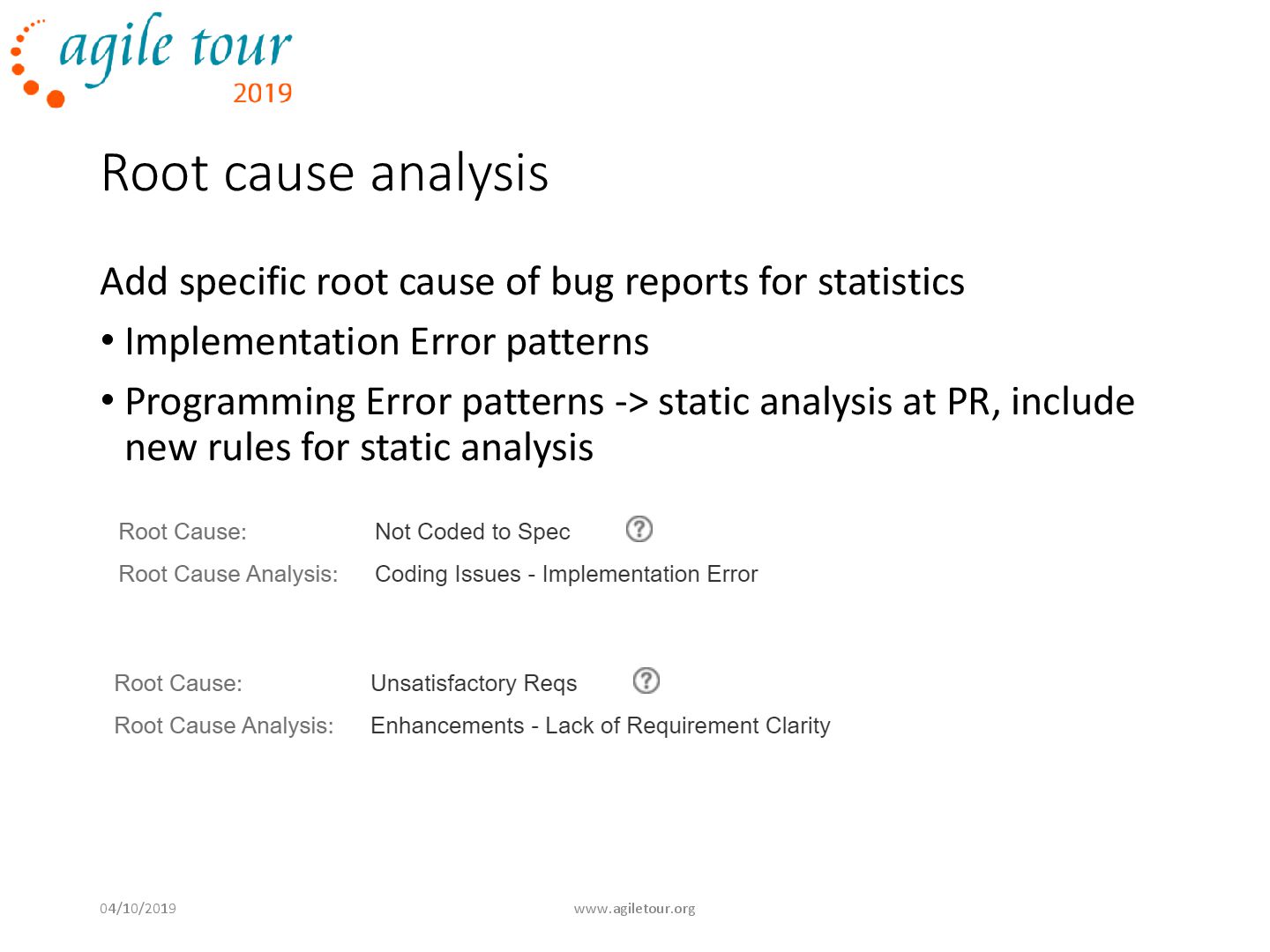
for statistics • Implementation Error patterns • Programming Error patterns -> static analysis at PR, include new rules for static analysis 04/10/2019 www.agiletour.org
similar scenarios Error logs meaningful for the user, in order to have a hint or take an action Several levels of logging: functional, error, warnings, trace (for dev & qa) Innovation sprint planning • Reduce technical debt • Features and tools that add value • Robust collection of tests • Tools that can improve the development process • Replicate environments 04/10/2019 www.agiletour.org
a crashing demo/release Relates this to other factors such as suspected risk Possible problems that may occur and issues at risk should be addressed as early as possible 04/10/2019 www.agiletour.org
need to integrate new features Communicate better the needs so as to solve the dependencies faster Prevents reworking Actual cost of reworking an item 04/10/2019 www.agiletour.org
except the client extension scenarios(the scope the requirement) •Implement missing part •Rework important parts in the core so as to fit the extension Several major enhancements in the business logic, needed to be done for client extension that were not predicted in the beginning. 04/10/2019 www.agiletour.org
is not delivered on time, is it possible to deliver only part of the core functionality for now? •When the client extension is ready would it the be possible to affect also the core functionality? •What is the customer impact with and without extension? 04/10/2019 www.agiletour.org
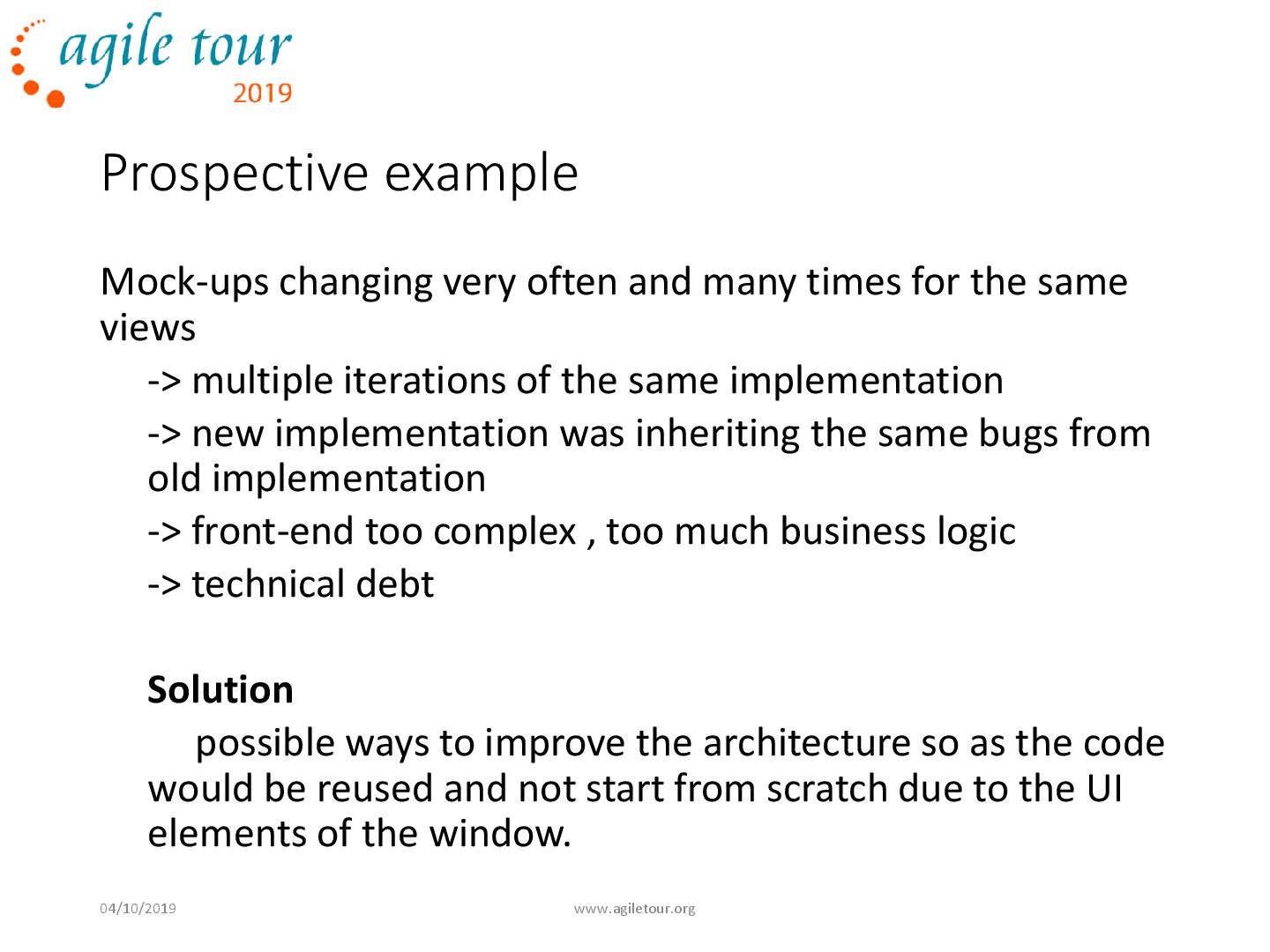
the same views -> multiple iterations of the same implementation -> new implementation was inheriting the same bugs from old implementation -> front-end too complex , too much business logic -> technical debt Solution possible ways to improve the architecture so as the code would be reused and not start from scratch due to the UI elements of the window. 04/10/2019 www.agiletour.org
its needs Improves the cross-team communication Better predictability of the delivery Run it often to inspect and adapt new points that might come up 04/10/2019 www.agiletour.org
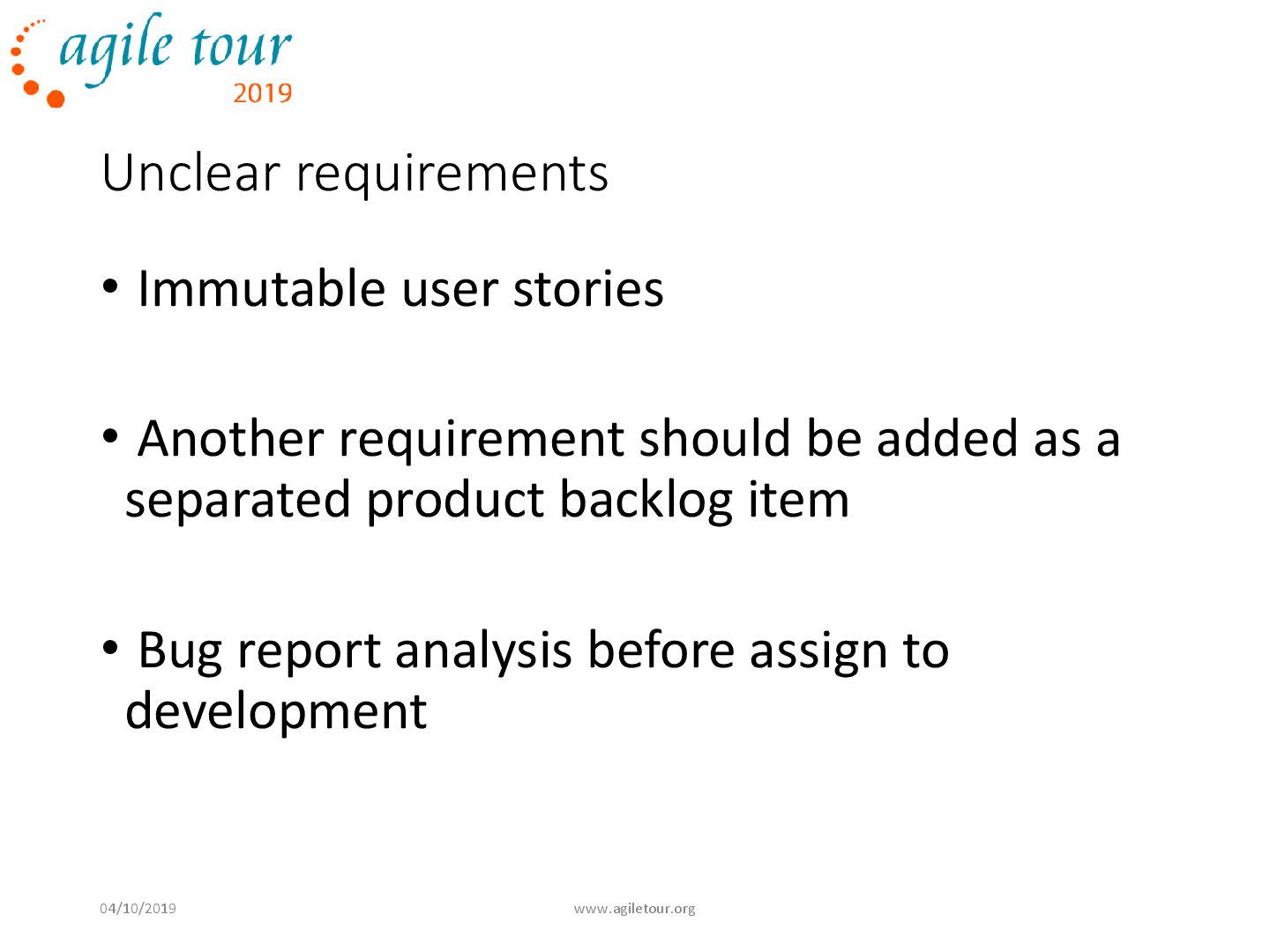
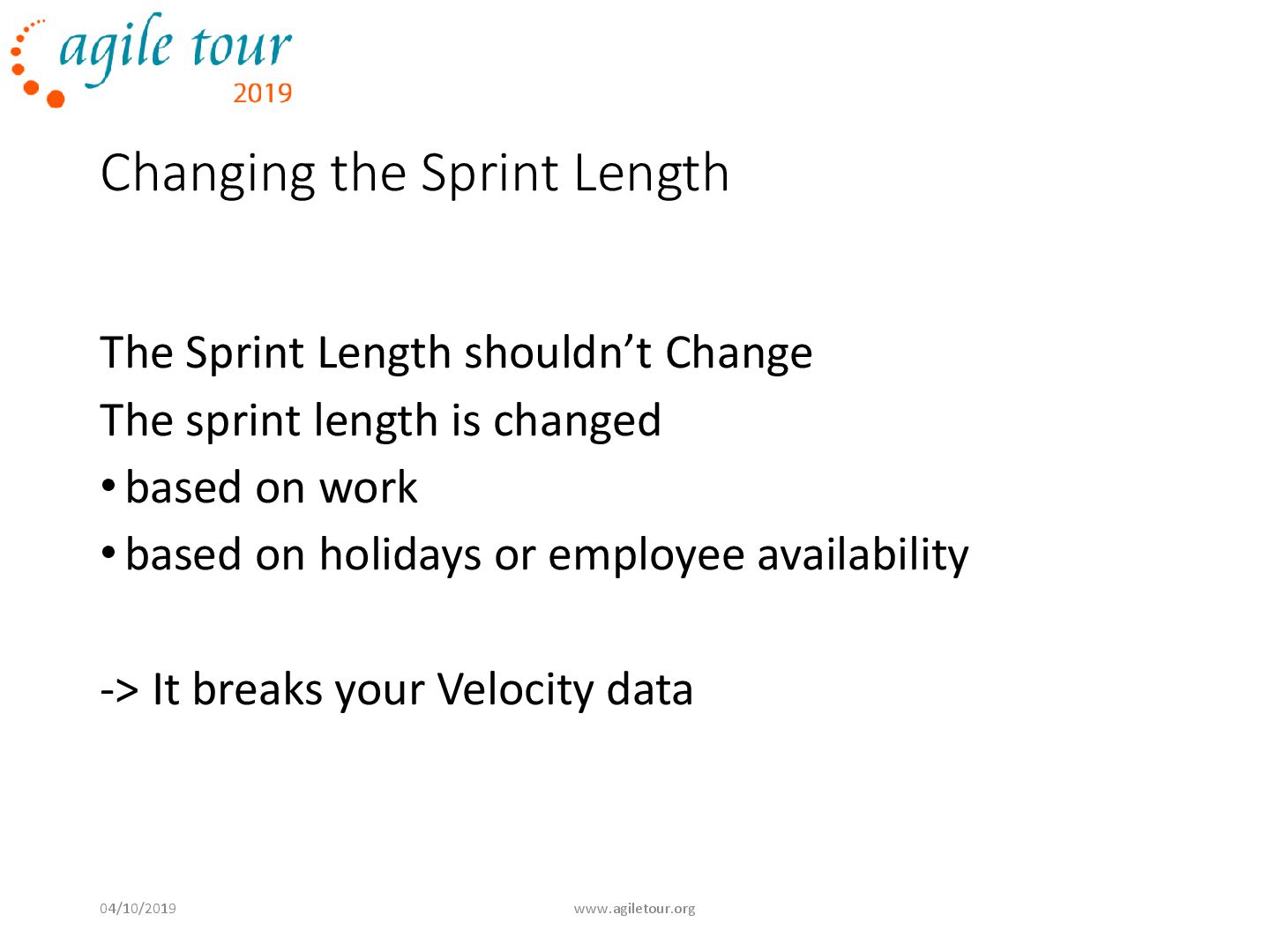
that hold back a successful Scrum Team. Spot them and get ahead of them. Product Owner Problems •Lack of engagement •Lack of clarity Scrum Master dysfunctions Hero Developer Disorder Changing Sprint Lengths 04/10/2019 www.agiletour.org
value delivered in the product • Provide the vision • Translate the needs of the business or Stakeholders into the Product Backlog • Prioritize 04/10/2019 www.agiletour.org
scope, functionality • Make the tough calls • The Product Owner should expect to spend approximately 20% of his/her time with the team. 04/10/2019 www.agiletour.org
• respond to the team's questions quickly • attend the required meetings • spend time for Product Backlog Refinement • Product Backlog ‘”ready” • 3-4 Sprints “Ready” • surprises during the Sprint Review 04/10/2019 www.agiletour.org
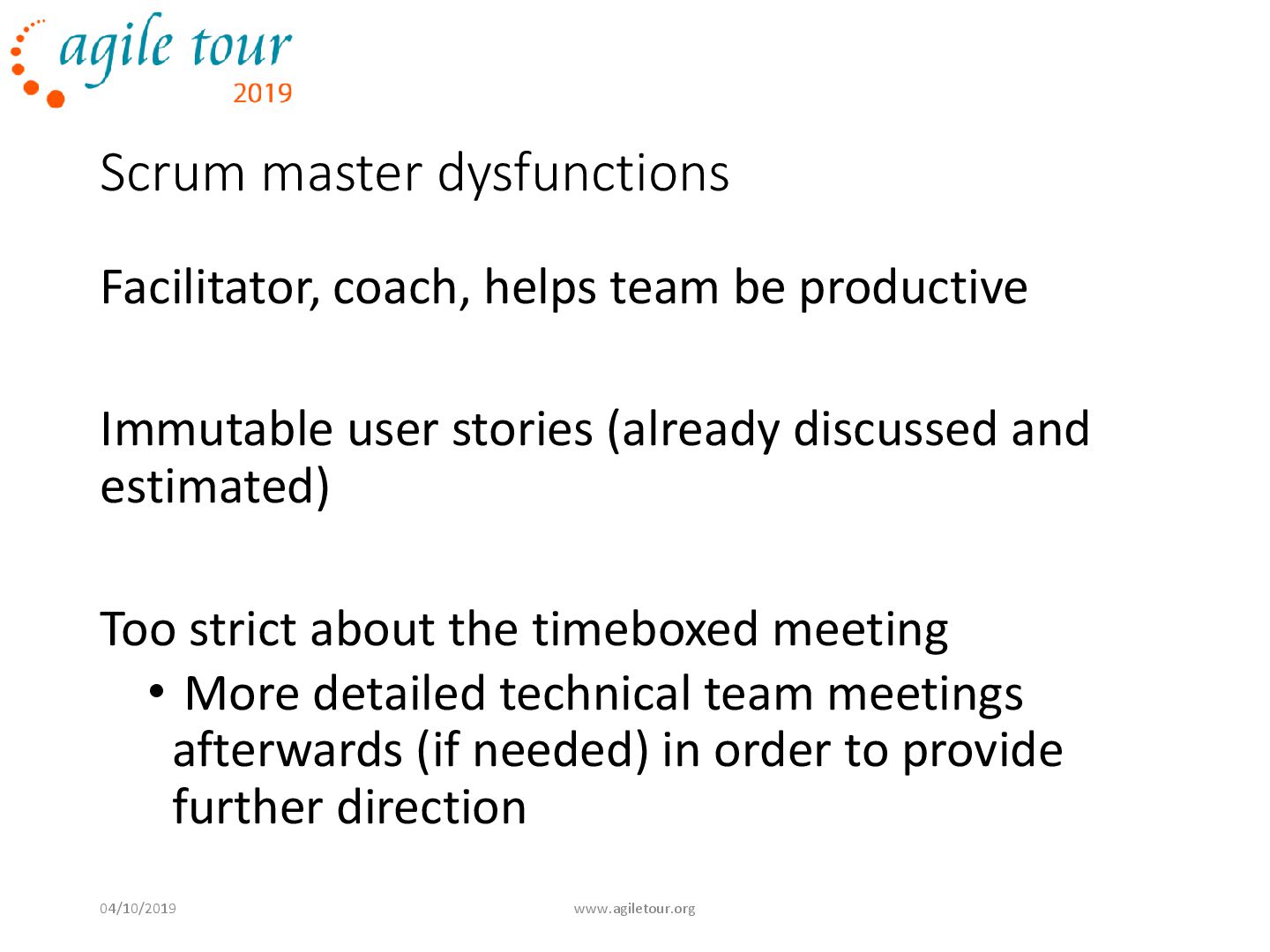
user stories (already discussed and estimated) Too strict about the timeboxed meeting • More detailed technical team meetings afterwards (if needed) in order to provide further direction 04/10/2019 www.agiletour.org
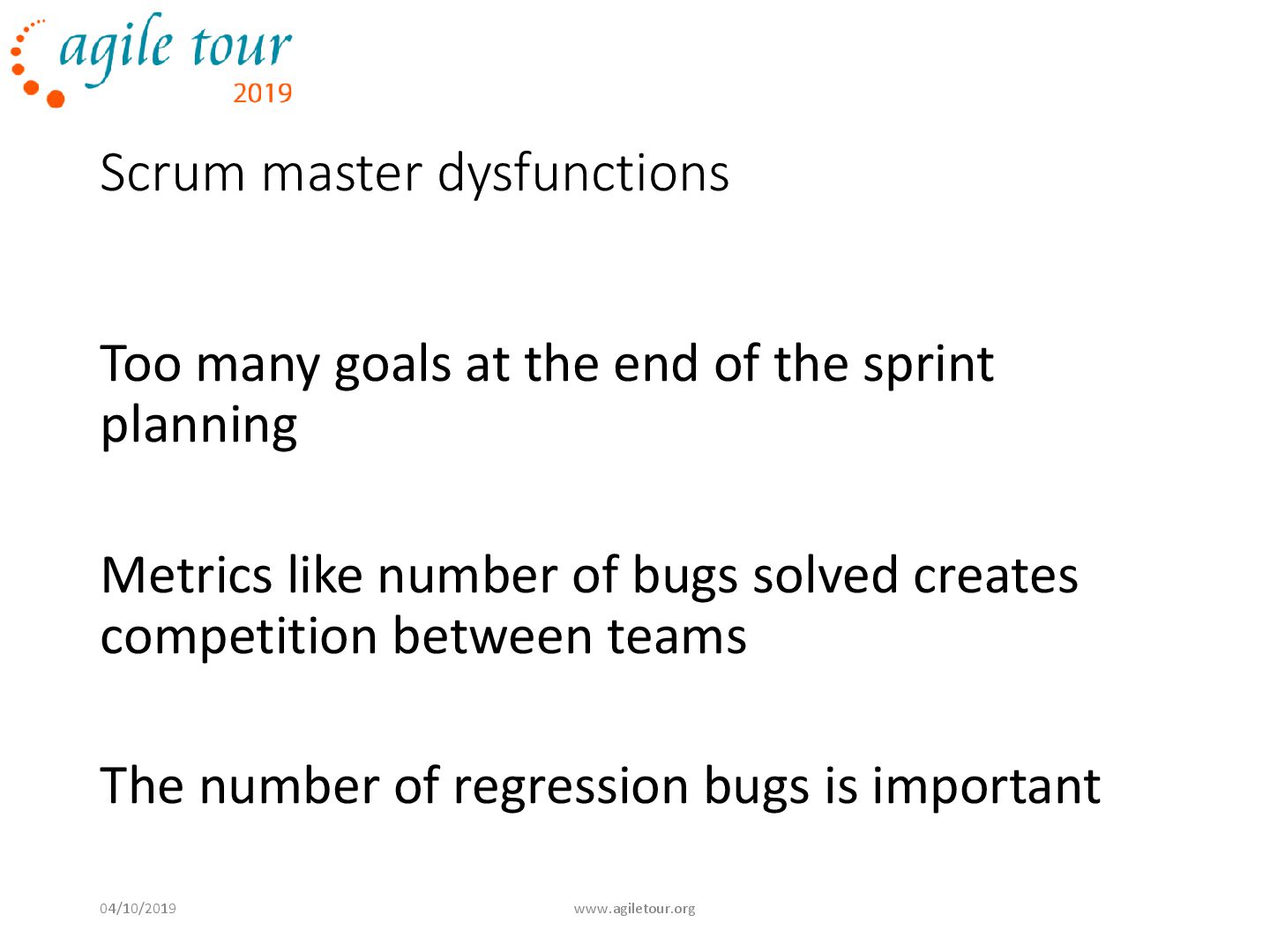
the sprint planning Metrics like number of bugs solved creates competition between teams The number of regression bugs is important 04/10/2019 www.agiletour.org
hold the team back from working on PBIs -> bottlenecks -> quality problems(DoD, shortcuts) Coach them to be more of a mentor 04/10/2019 www.agiletour.org
cross-team communication and coordination Keep statistics about the current situation • The number of bugs found in production and during testing • The number of regression bugs Re-iterate the process after bringing some possible improvements 04/10/2019 www.agiletour.org


 adelinast
 akademiya2063
 khoart
 moore
moore
 aleyda
 hatefulcrawdad
 mojombo
 reverentgeek
 palkan
 samlambert
 mkilby
 rakko
rakko
 afnizarnur
![Q&A Adelina Stanciu [email protected] https://www.linkedin.com/in/adelinastanciu 04/10/2019 www.agiletour.org](https://files.speakerdeck.com/presentations/83779d74d88e44548e3dca6e219fcd4f/slide_34.jpg)