Upgrade to Pro — share decks privately, control downloads, hide ads and more …

Actor Systems in Rust (Boston Rust Meetup Version)

Sponsored · Your Podcast. Everywhere. Effortlessly. Share. Educate. Inspire. Entertain. You do you. We'll handle the rest. →
Andrew J. Stone
March 15, 2018
99

Actor Systems in Rust (Boston Rust Meetup Version)

Andrew J. Stone

March 15, 2018

Transcript

41 slides
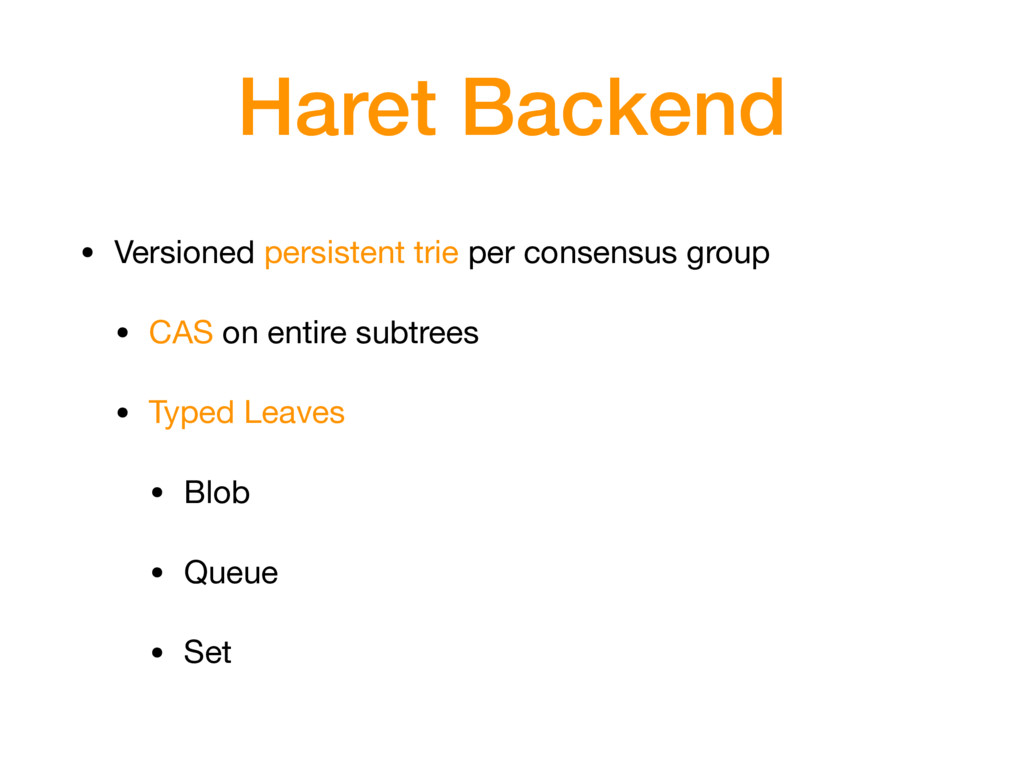
  1. Haret Backend • Versioned persistent trie per consensus group •

    CAS on entire subtrees • Typed Leaves • Blob • Queue • Set
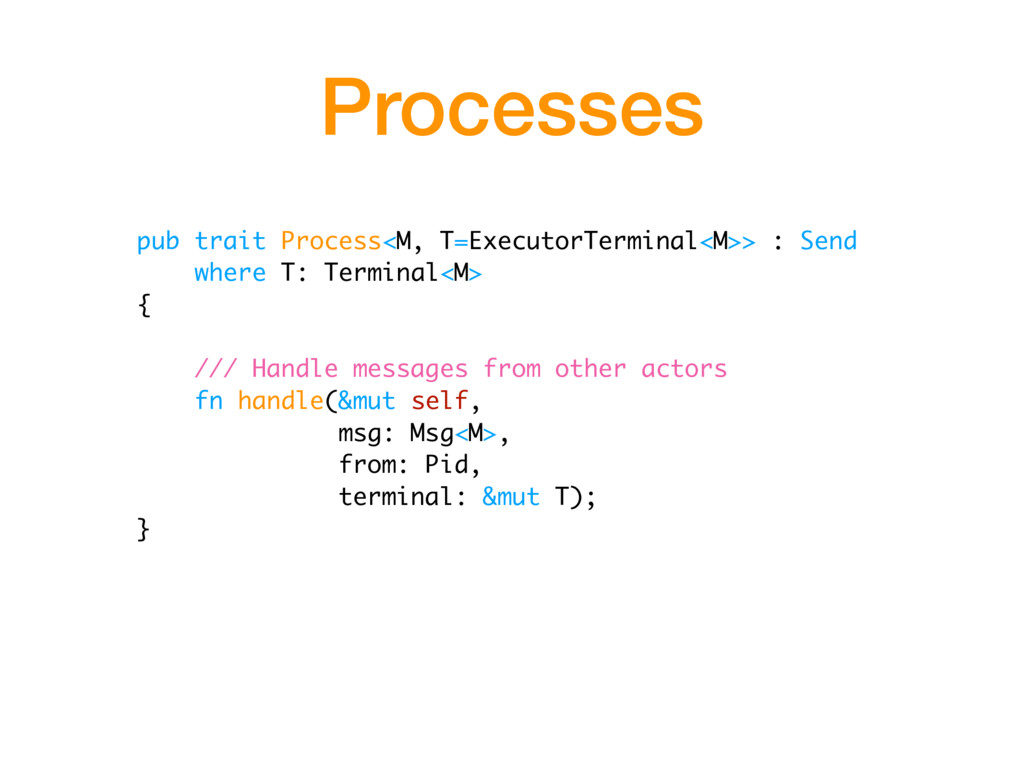
  2. pub trait Process<M, T=ExecutorTerminal<M>> : Send where T: Terminal<M> {

    /// Handle messages from other actors fn handle(&mut self, msg: Msg<M>, from: Pid, terminal: &mut T); } Processes
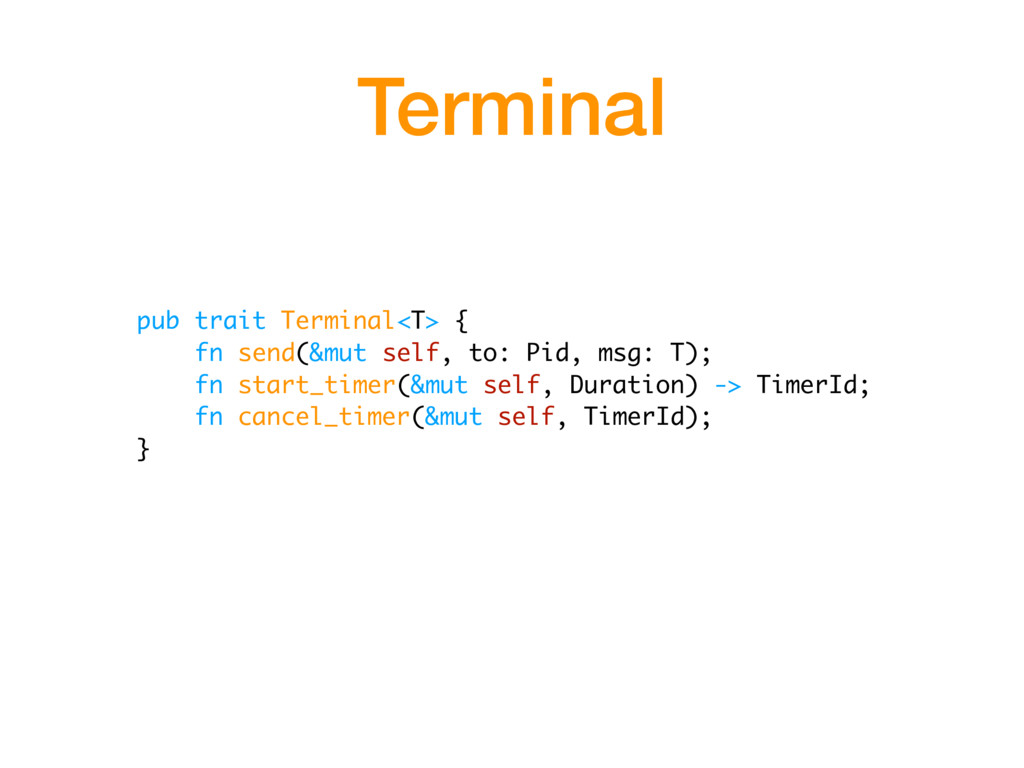
  3. Terminal pub trait Terminal<T> { fn send(&mut self, to: Pid,

    msg: T); fn start_timer(&mut self, Duration) -> TimerId; fn cancel_timer(&mut self, TimerId); }
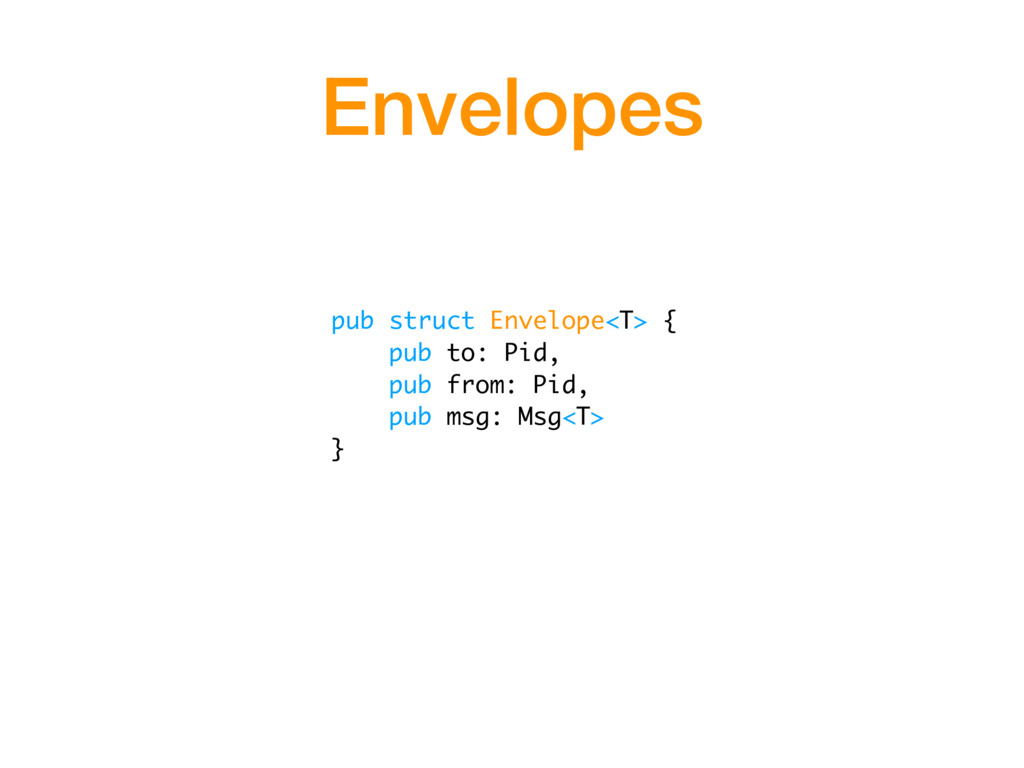
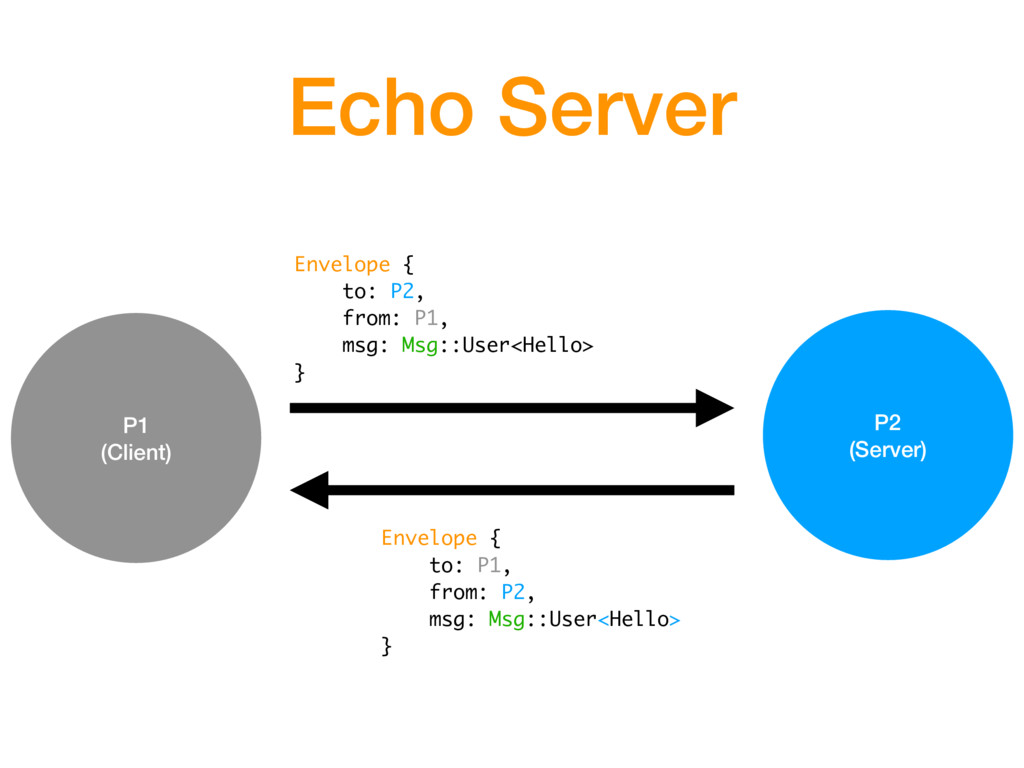
  4. Echo Server P1 (Client) Envelope { to: P2, from: P1,

    msg: Msg::User<Hello> } Envelope { to: P1, from: P2, msg: Msg::User<Hello> } P2 (Server)
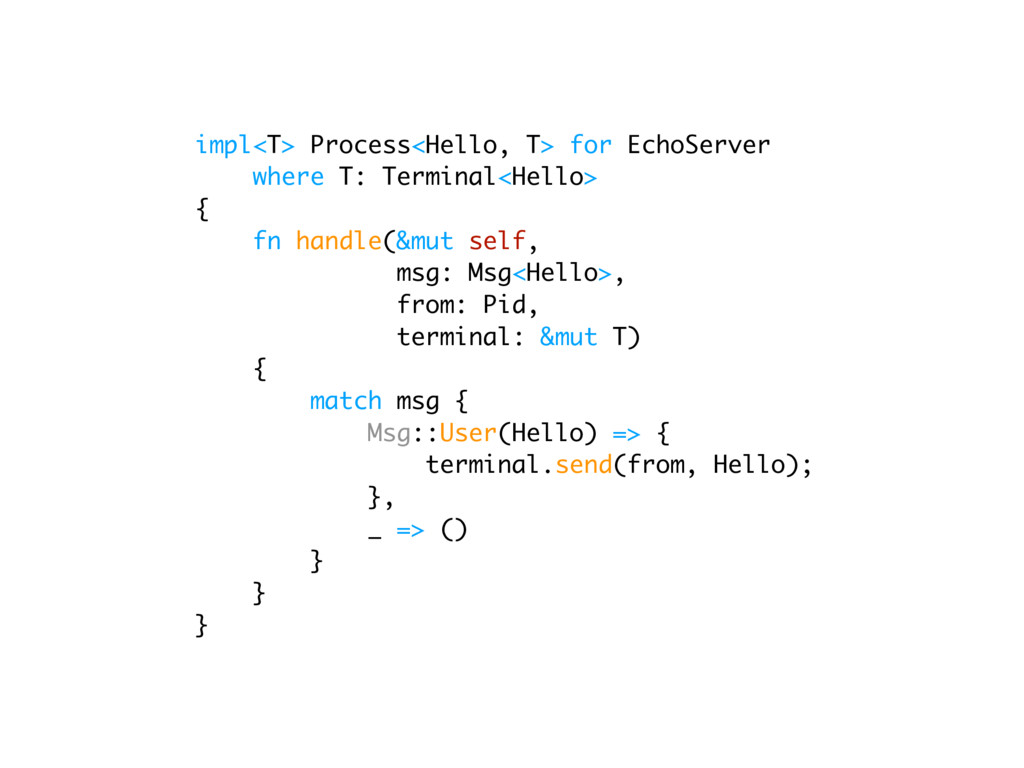
  5. impl<T> Process<Hello, T> for EchoServer where T: Terminal<Hello> { fn

    handle(&mut self, msg: Msg<Hello>, from: Pid, terminal: &mut T) { match msg { Msg::User(Hello) => { terminal.send(from, Hello); }, _ => () } } }
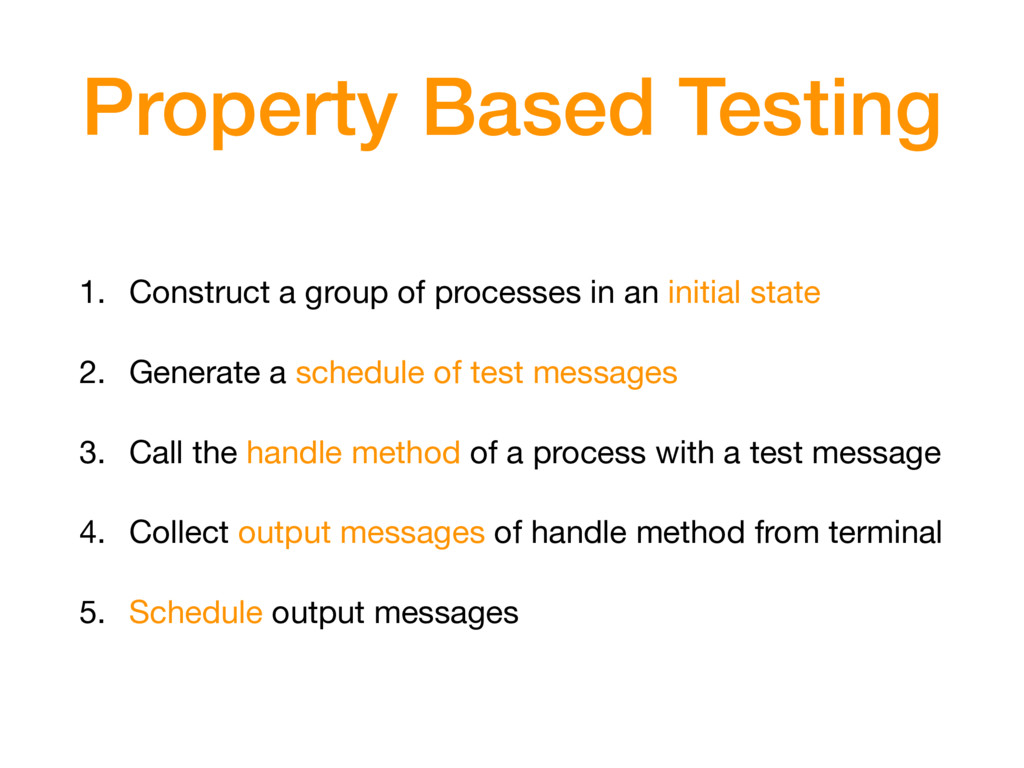
  6. Property Based Testing 1. Construct a group of processes in

    an initial state 2. Generate a schedule of test messages 3. Call the handle method of a process with a test message 4. Collect output messages of handle method from terminal 5. Schedule output messages
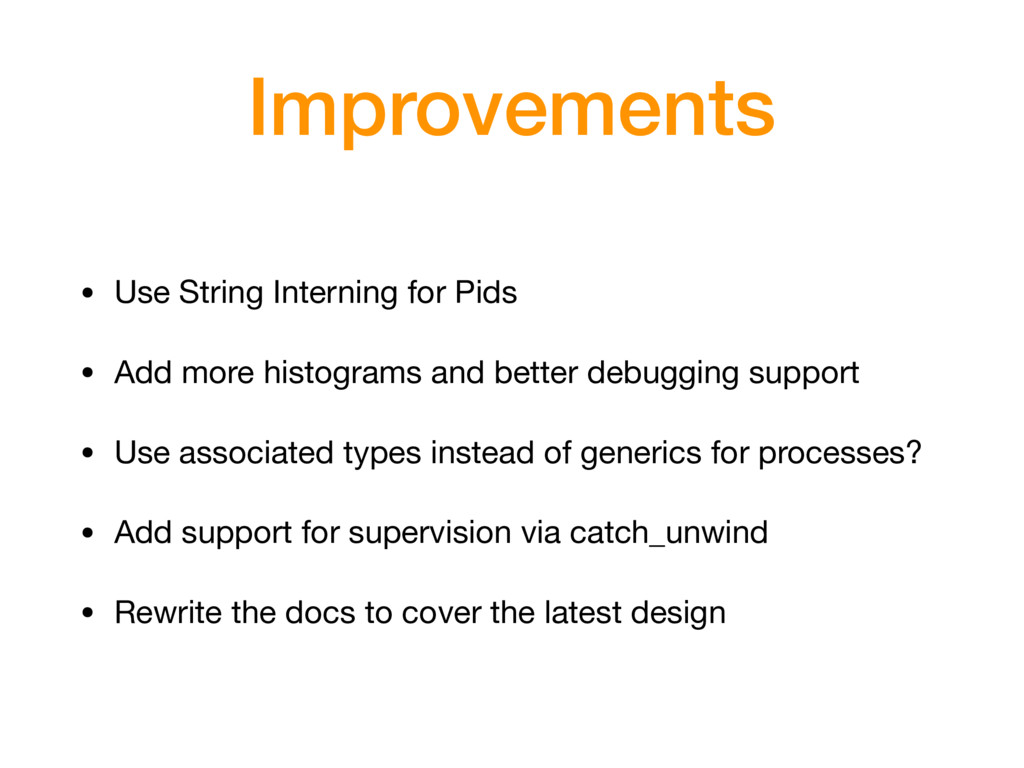
  7. Improvements • Use String Interning for Pids • Add more

    histograms and better debugging support • Use associated types instead of generics for processes? • Add support for supervision via catch_unwind • Rewrite the docs to cover the latest design