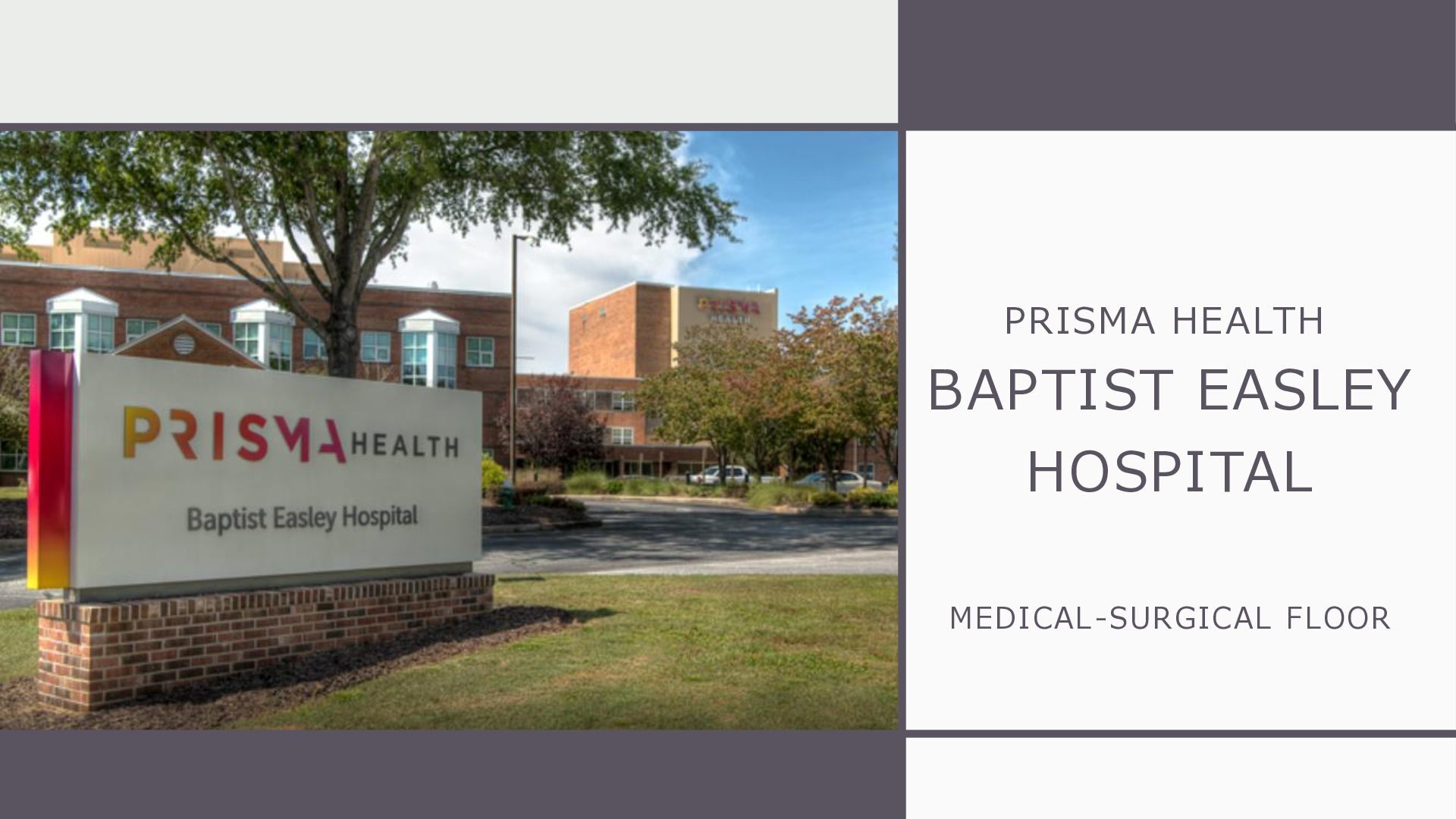
Hospital. The hospital offers the following services: allergy, immunology, ENT, heart care, emergency services, radiology, imaging, orthopedics, and wound care (Prisma Health, n.d.). I mainly worked on the Medical-Surgery floor. This floor provides inpatient care. Patients who need close monitoring and treatment, but do not require critical care, are treated on the Medical-Surgical unit. This unit is responsible for treating a spectrum of medical conditions, from pneumonia and infections to chronic illnesses and post-surgery recovery (Scientificall.blog, 2025). .
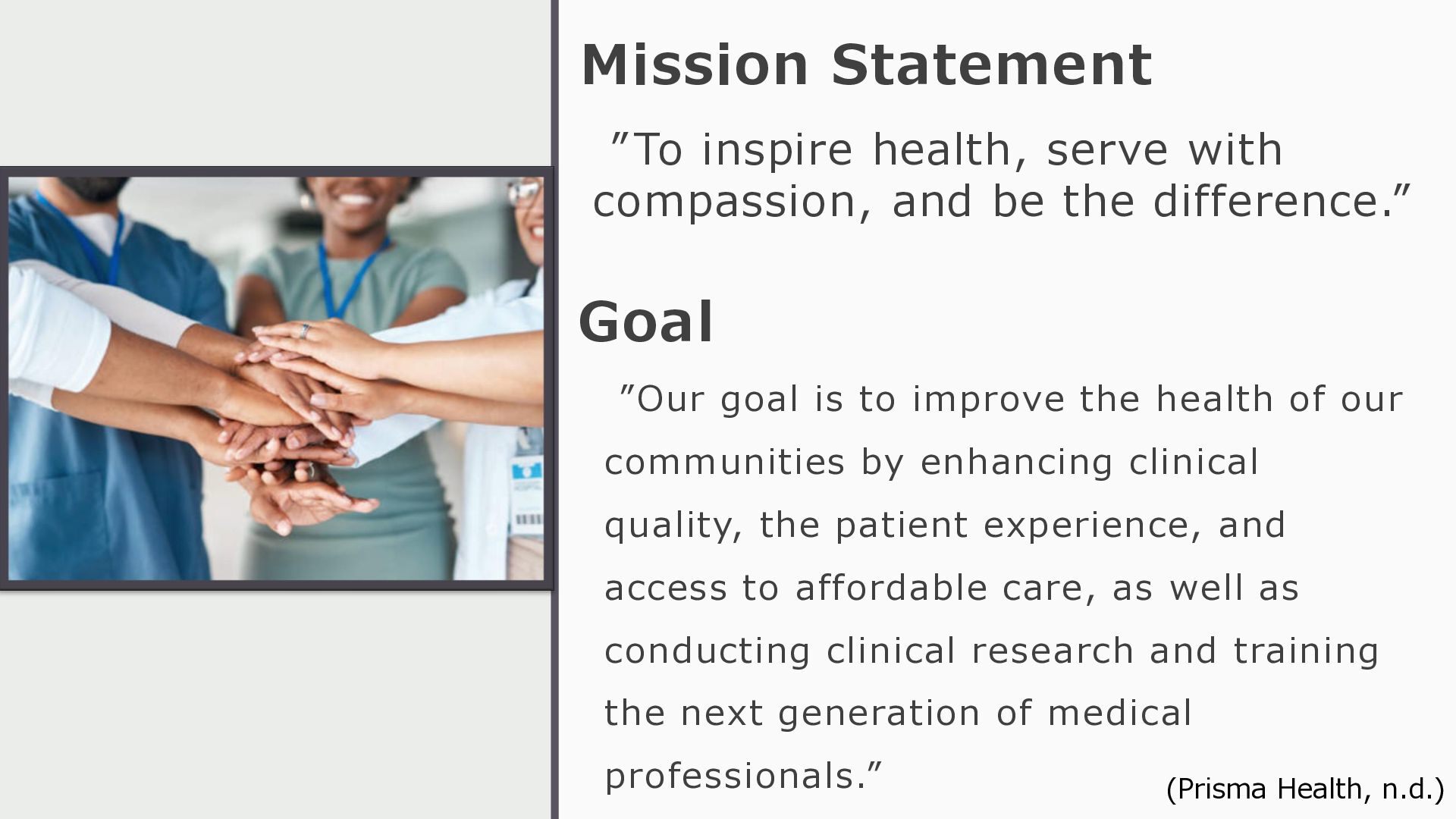
communities by enhancing clinical quality, the patient experience, and access to affordable care, as well as conducting clinical research and training the next generation of medical professionals.” Mission Statement ”To inspire health, serve with compassion, and be the difference.” (Prisma Health, n.d.)
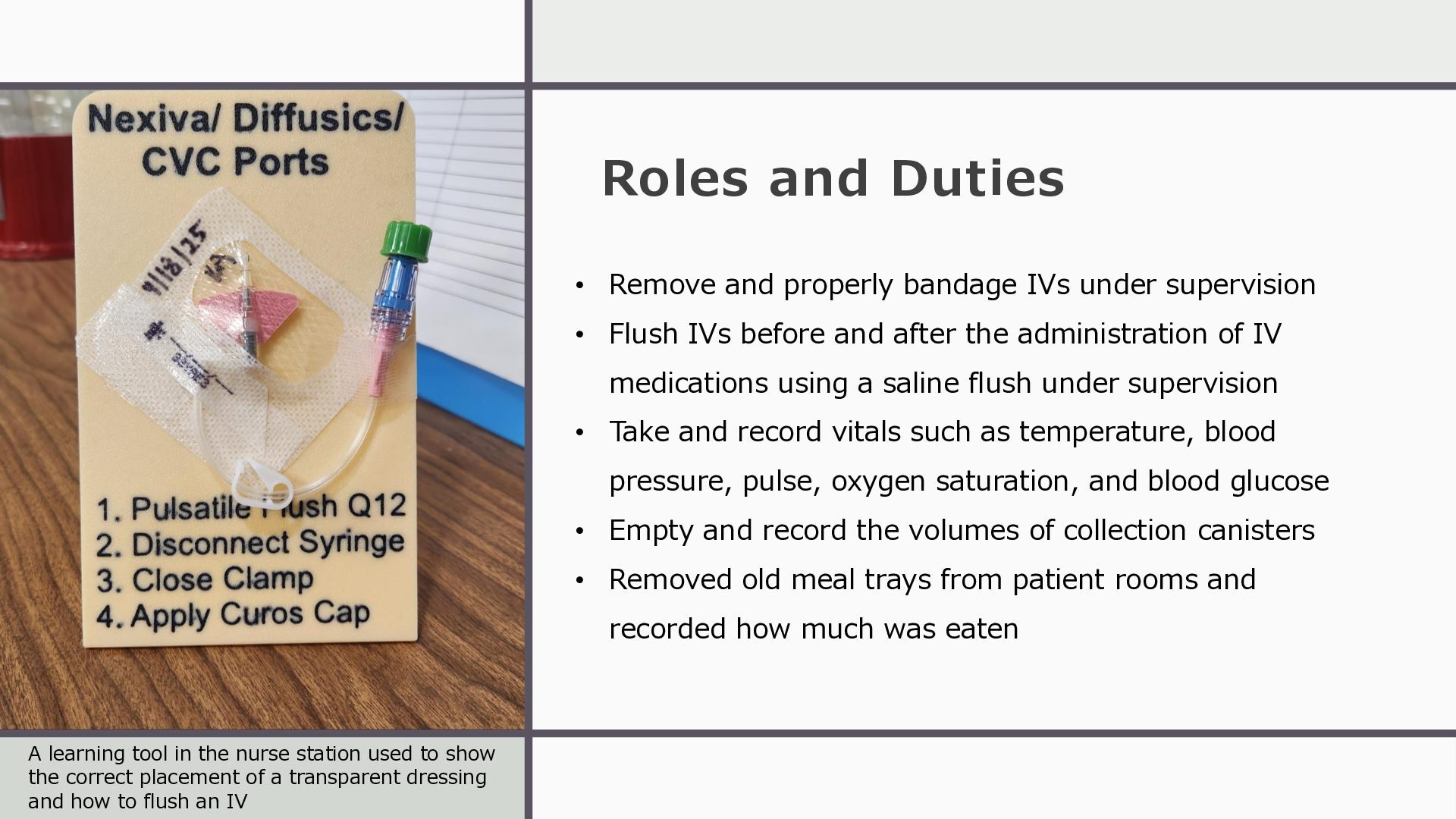
used to show the correct placement of a transparent dressing and how to flush an IV • Remove and properly bandage IVs under supervision • Flush IVs before and after the administration of IV medications using a saline flush under supervision • Take and record vitals such as temperature, blood pressure, pulse, oxygen saturation, and blood glucose • Empty and record the volumes of collection canisters • Removed old meal trays from patient rooms and recorded how much was eaten
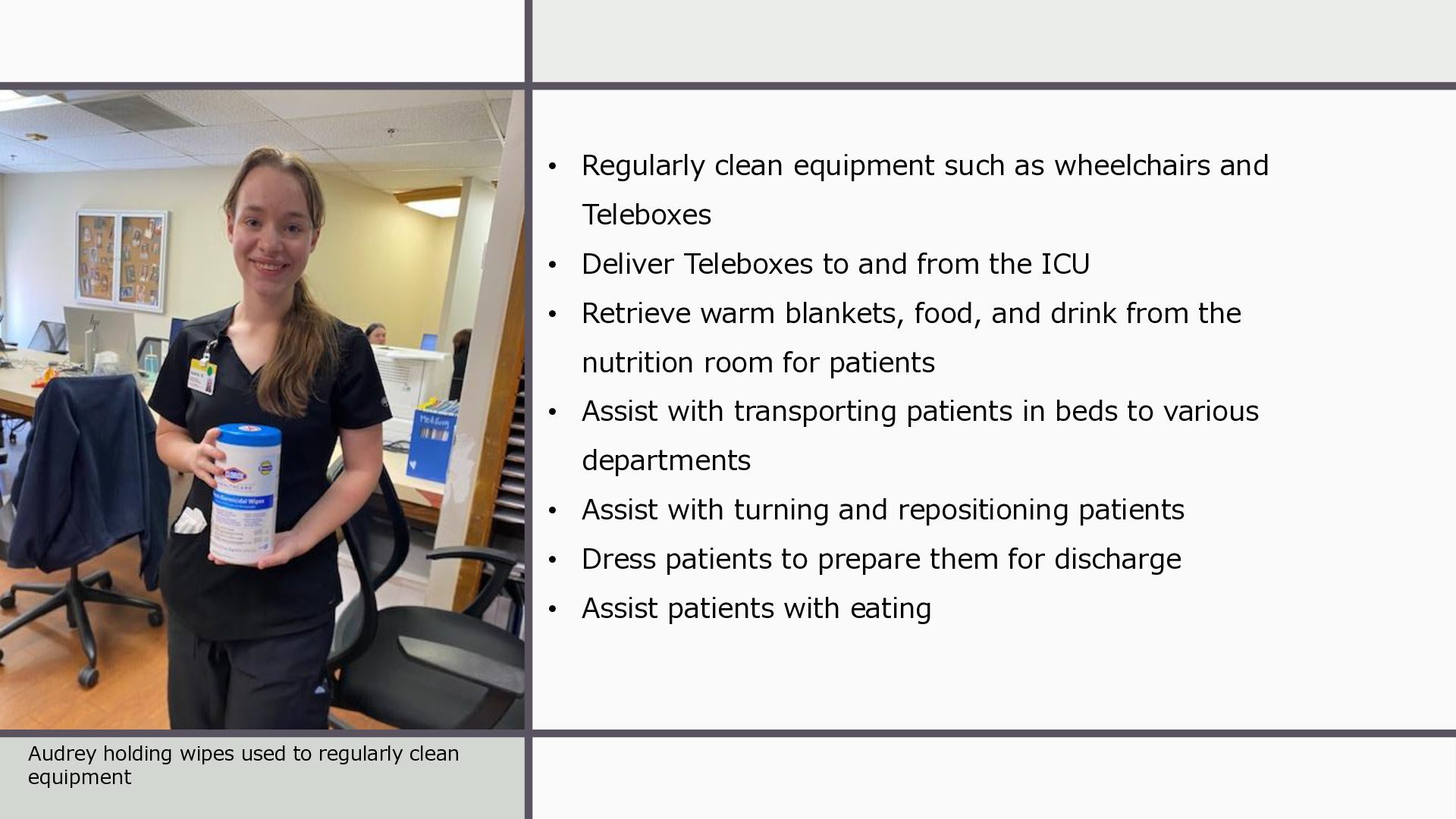
Deliver Teleboxes to and from the ICU • Retrieve warm blankets, food, and drink from the nutrition room for patients • Assist with transporting patients in beds to various departments • Assist with turning and repositioning patients • Dress patients to prepare them for discharge • Assist patients with eating Audrey holding wipes used to regularly clean equipment
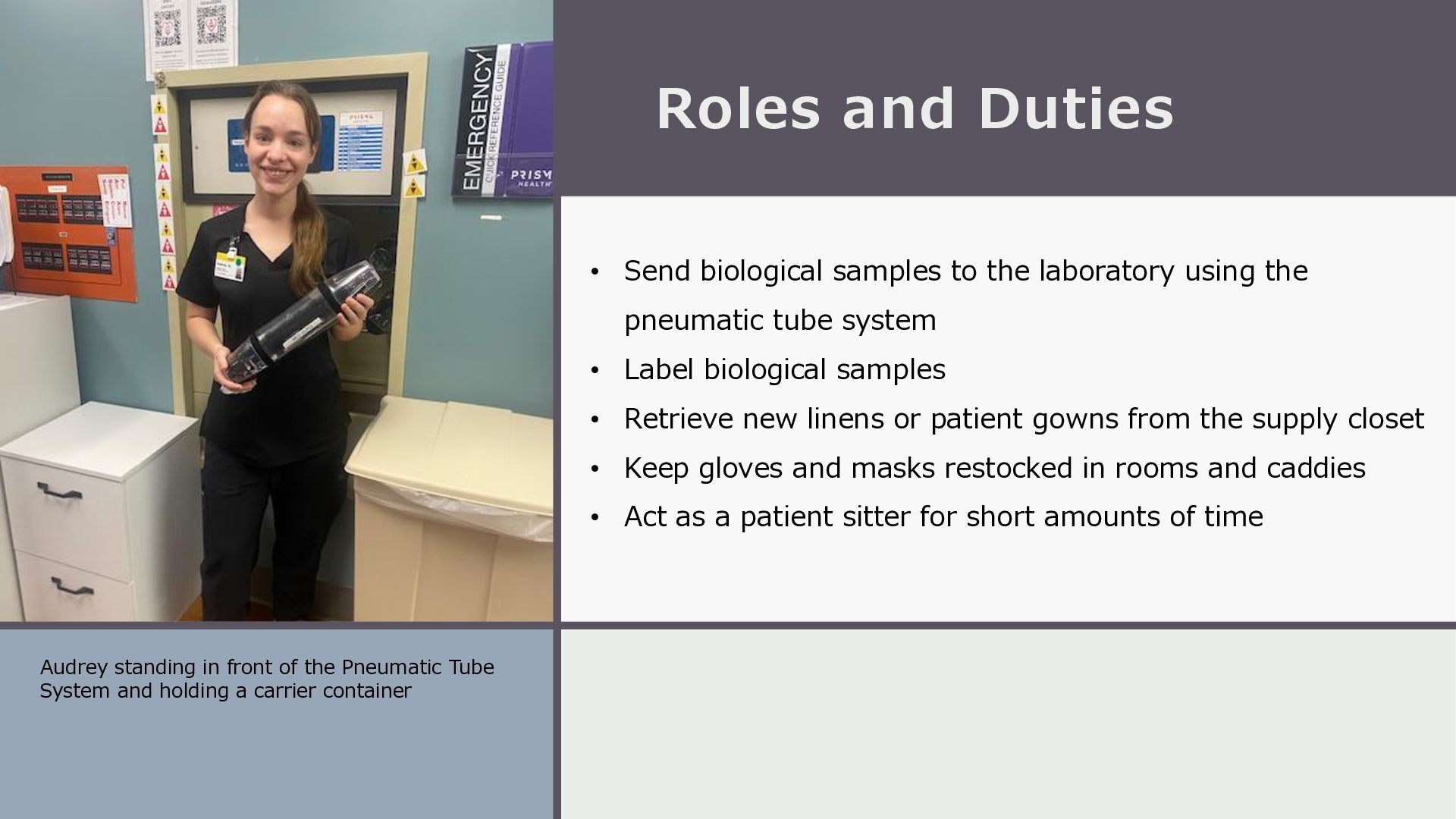
using the pneumatic tube system • Label biological samples • Retrieve new linens or patient gowns from the supply closet • Keep gloves and masks restocked in rooms and caddies • Act as a patient sitter for short amounts of time Audrey standing in front of the Pneumatic Tube System and holding a carrier container
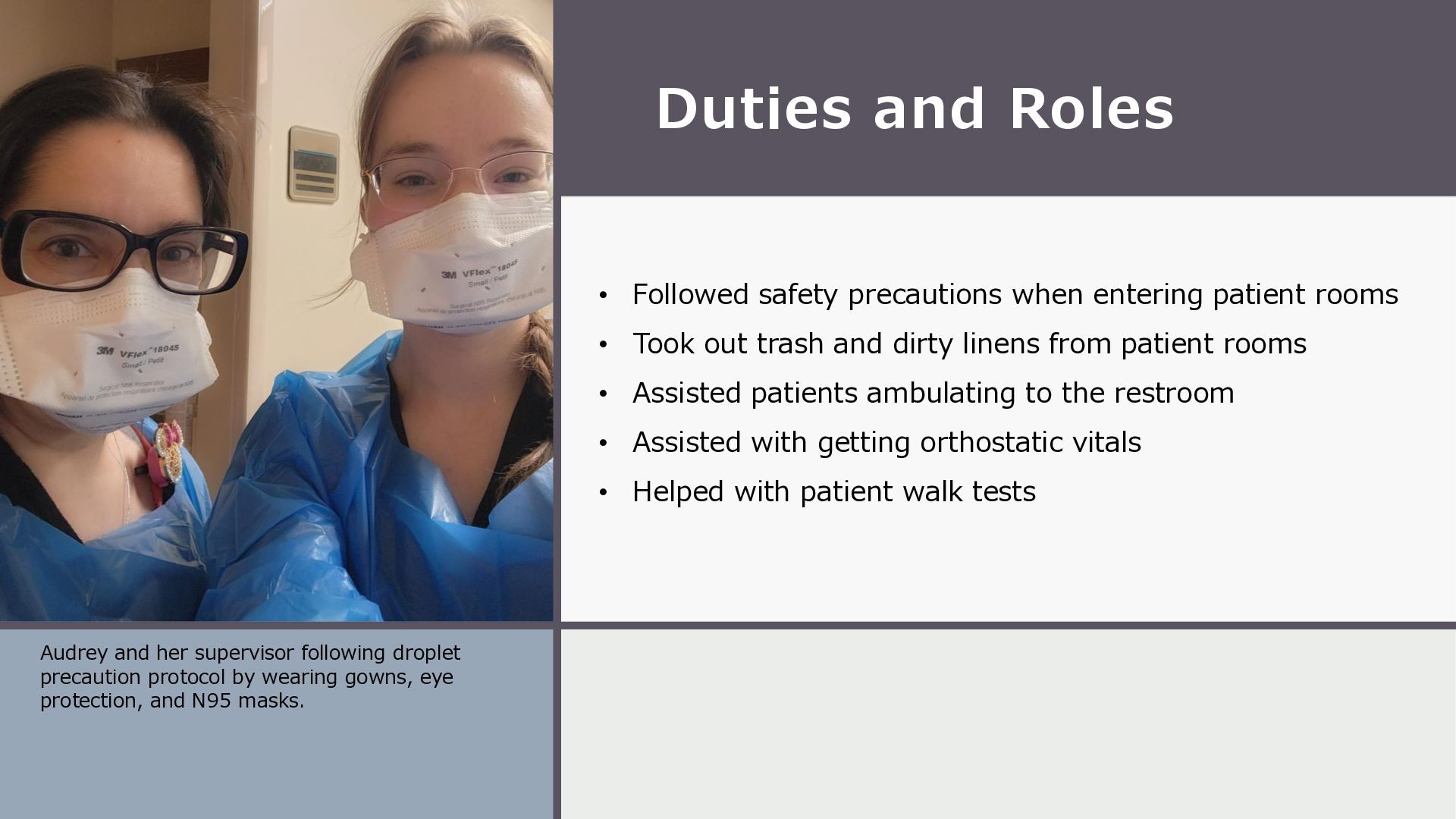
protocol by wearing gowns, eye protection, and N95 masks. • Followed safety precautions when entering patient rooms • Took out trash and dirty linens from patient rooms • Assisted patients ambulating to the restroom • Assisted with getting orthostatic vitals • Helped with patient walk tests
communicate with patients. Objectives: I will accomplish this by : 1. Observing what specific phrases my supervisor uses during certain procedures or stages of patient interactions and how did the patient respond to that phrase. 2. Writing down these phrases and exactly when to use them in the comprehensive word document. 3. Adopting that phrase or a modified version of it if I see a consistent positive reaction from patients. 4. Practicing adopted phrases during patient interactions and observing how the patient reacts to that phrase. 5. Identifying when one of my instructions is unclear and confusing for the patient 6. Documenting any of my unclear phrases and the situation or procedure it is used in the comprehensive document. 7. Research different phrases that provide the same instructions or thoughts as the unclear one and document them. 8. Experiment with different phrases to find the clearest one by using the phrase when interacting with patients and observin g the reaction. If the patient is confused, then the current phrase needs to be modified.
setting. I specifically learned and practiced effective greeting and goodbye phrases. I listened to phrases my supervisor and technicians would use in various situations and adopted whichever were both effective and aligned with my personality. I plan to continue growing in this area by discussing this topic with experienced health providers at my place of employment. Reflection
of the duties of certified nursing assistant with minimal supervision. This includes knowing how to solve problems related to those duties. Objectives: I will accomplish this by: 1. Creating a comprehensive list of all the duties and responsibilities a certified nursing assistant has. 2. Targeting one to three of those duties to practice every single shift. These duties can be skills I need to practice or si mply a duty that I need to be more aware that it is my responsibility such as taking out the trash in patients’ rooms or taking care of food trays. 3. Fulfilling previously targeted duties with minimal help while practicing newly targeted skills and duties 4. Communicating to my supervisor which duty or responsibility I am currently working on so she can find or create opportunities for me to refine my skills and give constructive feedback. 5. Writing down what have I learned in a word document after each shift to better remember it. I will continue to add to this word document for the duration of my internship. Any 6. Further researching any skills, procedures, or concepts I don’t completely understand. By recording skills, procedures, an d concepts in a word document, I can discover what I don’t fully understand. Additional information gained from research will also be added to the word document along with links to videos, articles, and educational diagrams or graphics. This word document will act as a comprehensive guide for all that I have learned. It will also highlight what skills I still need to re fine after my internship.
I initially thought. The duties and responsibilities of certified nursing technicians are vast. I was able to become proficient in many duties and skills, but I’m not sure I could competently perform 80% of a technician’s duties. Although I may not have reached my goal, it still served its purpose: preparing me to work as a certified nursing assistant.
conditions that I may encounter in the hospital, how to identify the illness, and what actions must be taken immediately after recognizing the condition. Objectives: I will accomplish this by: 1. Asking my nurse supervisor what three critical illnesses I should be able to spot. She has years of experience working in various departments in hospitals. 2. Asking my nurse supervisor, how I can spot these illnesses. 3. Writing about each disease in my comprehensive word document. This will include what the condition is, what is the patient outcome if the condition is not treated timely, how can I identify the condition, and what do I do once a suspect that a patient has that condition according to Prisma guidelines. 4. Asking my nurse supervisor to test me over these three conditions when we are not busy.
one of the three critical conditions I identified and studied. The third and fourth objectives were not met. Although I studied each critical condition, that information was not included in the comprehensive guide as the guide was already very long. The fourth objective was not met because my supervisor and I never had much free time.
to articulate how patient health progression is evaluated. Objectives: I will accomplish this by… 1. Observing what kind of data both nurses and nursing assistants record in patient charts. 2. Critically thinking about how that data may be an indicator of patient health. 3. Observing what data values cause alarm in nurses and subsequent action.
data my supervisor would record. This data included, but is not limited to, vital signs, urine output, last bowel movement, and food consumption. If I couldn’t identify how the data indicated health status, I would ask my supervisor.
the patient transfer processes. Objectives: I will accomplish this by… Asking my supervisor about the process of transferring patients to different departments of the hospital and to different facilities. Paying attention to what steps the nurses take to prepare for a patient to be transferred into and out of the Med Surg floor of Baptist Easley Hospital. Paying attention or asking about who is in charge of deciding what condition the patient must be in before going home or what resources the patient must have to go home safely.
steps are taken when a patient needs to be transferred. I recorded what information was communicated during shift changes. I asked questions about the process of patient transfers.
Scientifically.blog. (2025, Sept 16). The med-surg unit explained: what every patient must know. https://scientifically.blog/med-surg-unit-explained-patient-guide


 aleyda
 brad_frost
 helmedeiros
 mfonobong
 schroneko
 brettharned
 katarinadahlin
 morganepeng
 gr2m
 colly
 badams
 aki_iinuma