1: Introduction to Cancer Overview of Cancer: Define cancer as a group of diseases characterized by uncontrolled cell growth. Significance: Briefly explain why understanding cancer is essential for prevention, early diagnosis, and effective treatment. Impact: Mention global cancer statistics to emphasize its prevalence. What is Cancer? Definition of Cancer: Explain how cancer originates at the cellular level, with a breakdown in normal cell regulation. Cellular Changes: Describe how normal cells become cancerous due to genetic mutations. Types of Cancer: Introduce major types (carcinomas, sarcomas, leukemias, lymphomas, etc.).
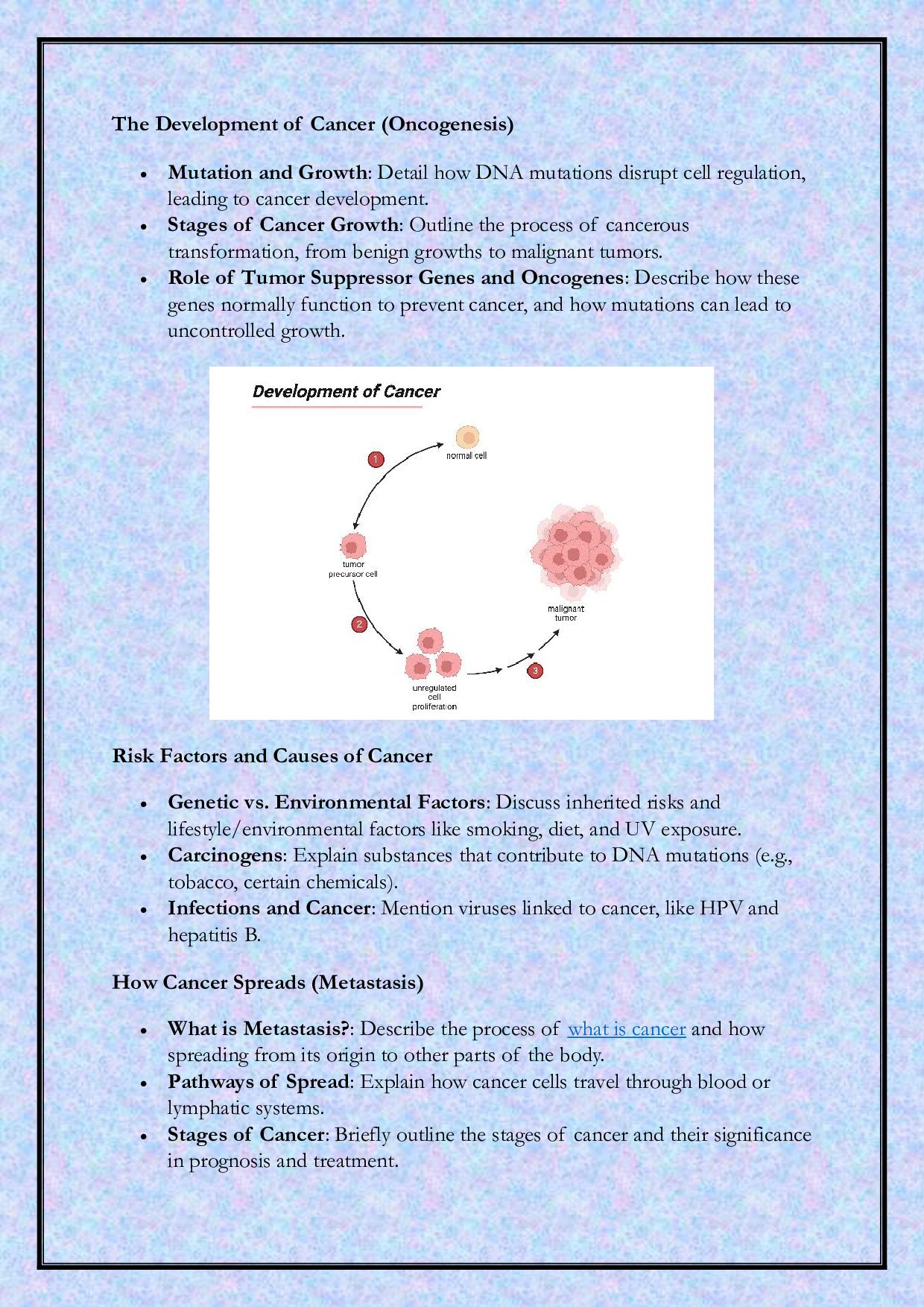
how DNA mutations disrupt cell regulation, leading to cancer development. Stages of Cancer Growth: Outline the process of cancerous transformation, from benign growths to malignant tumors. Role of Tumor Suppressor Genes and Oncogenes: Describe how these genes normally function to prevent cancer, and how mutations can lead to uncontrolled growth. Risk Factors and Causes of Cancer Genetic vs. Environmental Factors: Discuss inherited risks and lifestyle/environmental factors like smoking, diet, and UV exposure. Carcinogens: Explain substances that contribute to DNA mutations (e.g., tobacco, certain chemicals). Infections and Cancer: Mention viruses linked to cancer, like HPV and hepatitis B. How Cancer Spreads (Metastasis) What is Metastasis?: Describe the process of what is cancer and how spreading from its origin to other parts of the body. Pathways of Spread: Explain how cancer cells travel through blood or lymphatic systems. Stages of Cancer: Briefly outline the stages of cancer and their significance in prognosis and treatment.
symptoms of cancer (e.g., unexplained weight loss, persistent fatigue). Diagnostic Techniques: Describe imaging tests, biopsies, and blood tests used to diagnose cancer. Importance of Early Detection: Emphasize how early detection improves treatment outcomes. Current Treatment Options and Advances Standard Treatments: Cover main cancer treatments such as surgery, chemotherapy, radiation, and immunotherapy. Advances in Cancer Treatment: Introduce targeted therapies, precision medicine, and gene therapy. Future Directions in Cancer Research: Mention ongoing research and the hope for better treatments or a cure.


 addyosmani
 sstephenson
 jct
 techseoconnect
 bethany
 sergeychernyshev
 mraible
 emna__ayadi
 brad_frost
 lindahogenes
 wayneb77