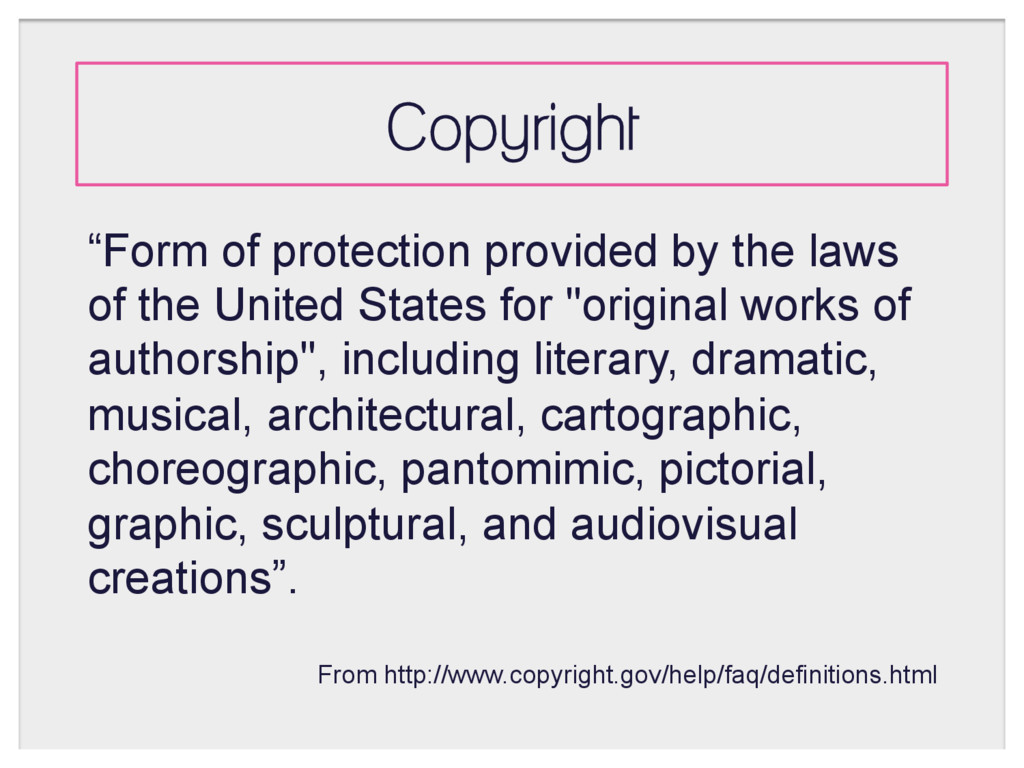
United States for "original works of authorship", including literary, dramatic, musical, architectural, cartographic, choreographic, pantomimic, pictorial, graphic, sculptural, and audiovisual creations”. From http://www.copyright.gov/help/faq/definitions.html
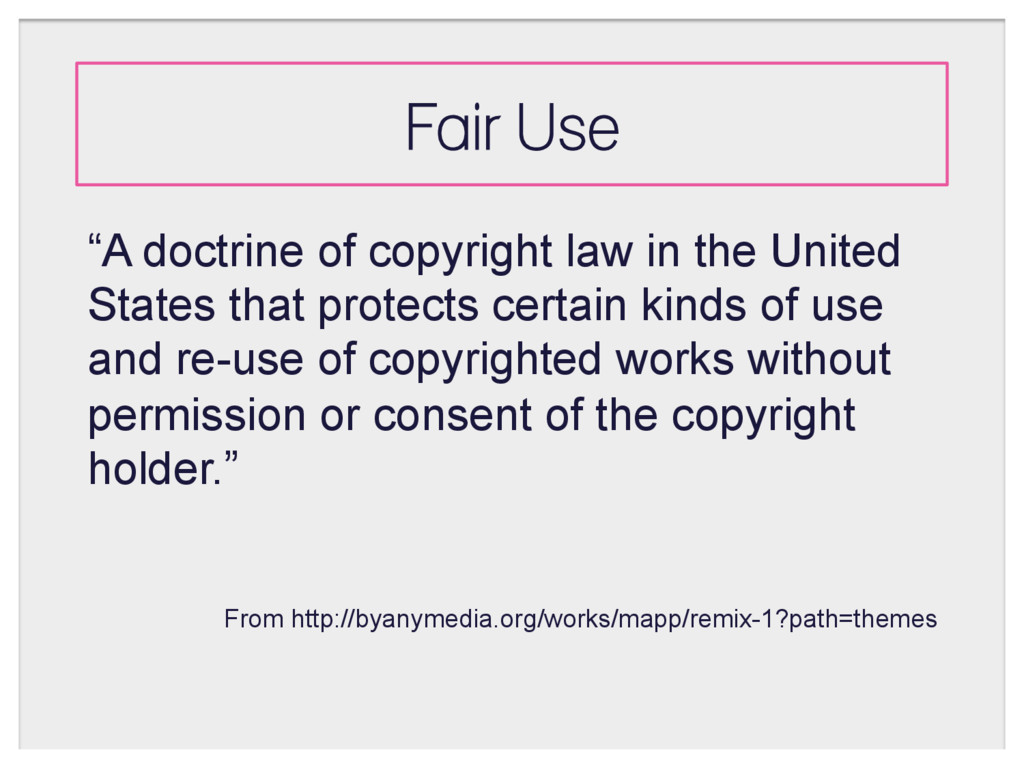
States that protects certain kinds of use and re-use of copyrighted works without permission or consent of the copyright holder.” From http://byanymedia.org/works/mapp/remix-1?path=themes
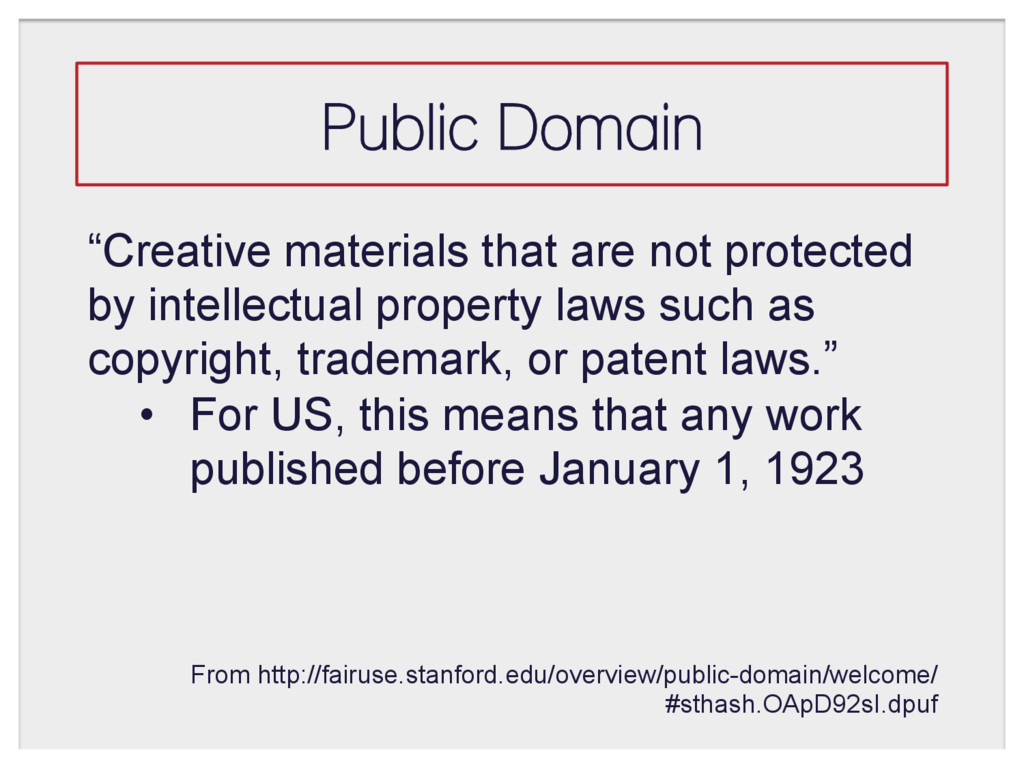
property laws such as copyright, trademark, or patent laws.” • For US, this means that any work published before January 1, 1923 From http://fairuse.stanford.edu/overview/public-domain/welcome/ #sthash.OApD92sI.dpuf
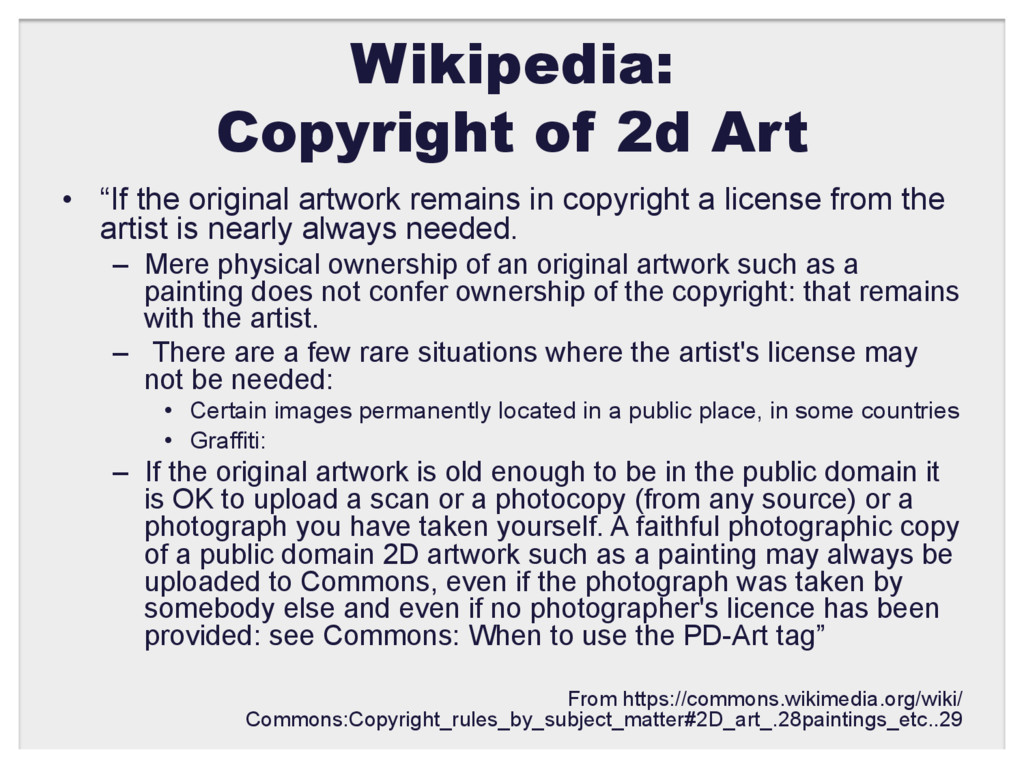
remains in copyright a license from the artist is nearly always needed. – Mere physical ownership of an original artwork such as a painting does not confer ownership of the copyright: that remains with the artist. – There are a few rare situations where the artist's license may not be needed: • Certain images permanently located in a public place, in some countries • Graffiti: – If the original artwork is old enough to be in the public domain it is OK to upload a scan or a photocopy (from any source) or a photograph you have taken yourself. A faithful photographic copy of a public domain 2D artwork such as a painting may always be uploaded to Commons, even if the photograph was taken by somebody else and even if no photographer's licence has been provided: see Commons: When to use the PD-Art tag” From https://commons.wikimedia.org/wiki/ Commons:Copyright_rules_by_subject_matter#2D_art_.28paintings_etc..29


 chriscoyier
 aleyda
 eileencodes
 palkan
 aarron
 katarinadahlin
 cassininazir
 codingconduct
 akosma
 greggifford
 kimpetersen
 inesmontani