Upgrade to Pro — share decks privately, control downloads, hide ads and more …

Effective Ways to Fix Gap Teeth Permanently

Avatar for nexa digihub nexa digihub
February 12, 2025
1

Effective Ways to Fix Gap Teeth Permanently

Gap teeth, or diastema, can occur due to genetics, missing teeth, or habits like thumb sucking. This guide explores how to fix gap teeth using orthodontic treatments like braces and aligners, cosmetic options such as bonding and veneers, and advanced solutions like implants and bridges. Discover the best methods to close gaps, improve oral health, and achieve a confident smile.

Avatar for nexa digihub

nexa digihub

February 12, 2025
Tweet

Transcript

  1. A C O M P R E H E N

    S I V E G U I D E T O C L O S I N G G A P S B E T W E E N T E E T H TEETH GAP HOW TO FIX
  2. INTRODUCTION The spaces in between teeth that are larger than

    one gap from two or more teeth are referred to as gap teeth, or diastema. The reasons for these gaps can range from gene inheritance to dental issues, oral habits, such as thumb sucking, or even an improper swallowing reflex. While some people may appreciate their dusk between teeth, some may look for cosmetic and functional solutions. How to fix gap teeth is often a question in the minds of people keen for an upgrade of their smile since closing these spaces enhances oral health and speech, besides self-confidence.
  3. TO FIX GAP TEETH? WHY DO PEOPLE WANT Some people

    choose to fix gap teeth because of the other benefits they will have in the long run. Cosmetic: helps with the inspired smile line, to boost someone's self-esteem and make their smile even. Functional: it helps improve Chewing efficiency and speech clarity as it may hinder proper pronunciation from having holes between the teeth. Also, while closing up gaps, those reasons also prevent several larger dental problems from happening; wide gaps between the teeth tend to trap food, thus leading to gum disease and long- term misalignment. Moreover, they help achieve a better oral state of health and a long-term stable dental condition.
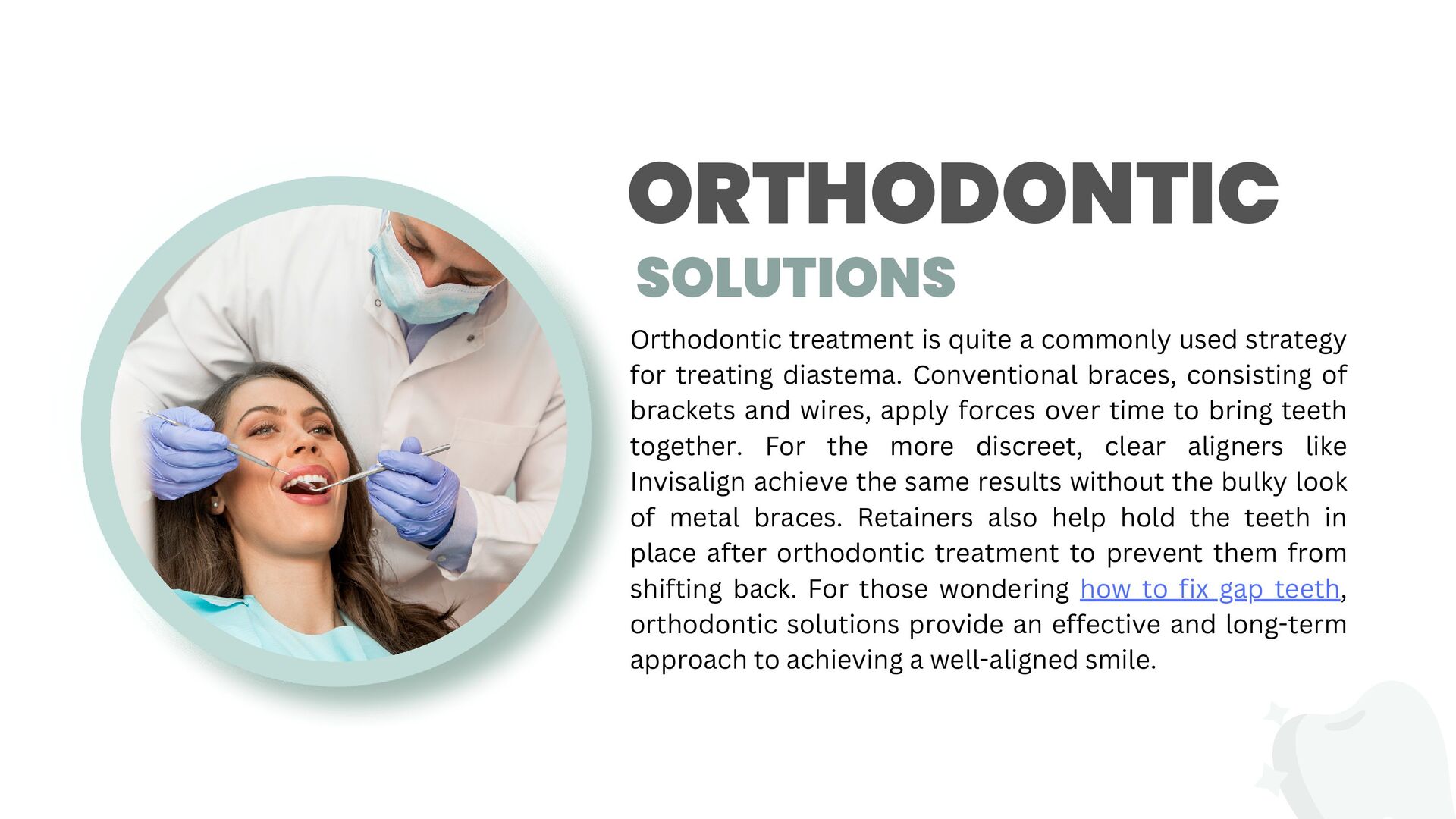
  4. SOLUTIONS ORTHODONTIC Orthodontic treatment is quite a commonly used strategy

    for treating diastema. Conventional braces, consisting of brackets and wires, apply forces over time to bring teeth together. For the more discreet, clear aligners like Invisalign achieve the same results without the bulky look of metal braces. Retainers also help hold the teeth in place after orthodontic treatment to prevent them from shifting back. For those wondering how to fix gap teeth, orthodontic solutions provide an effective and long-term approach to achieving a well-aligned smile.
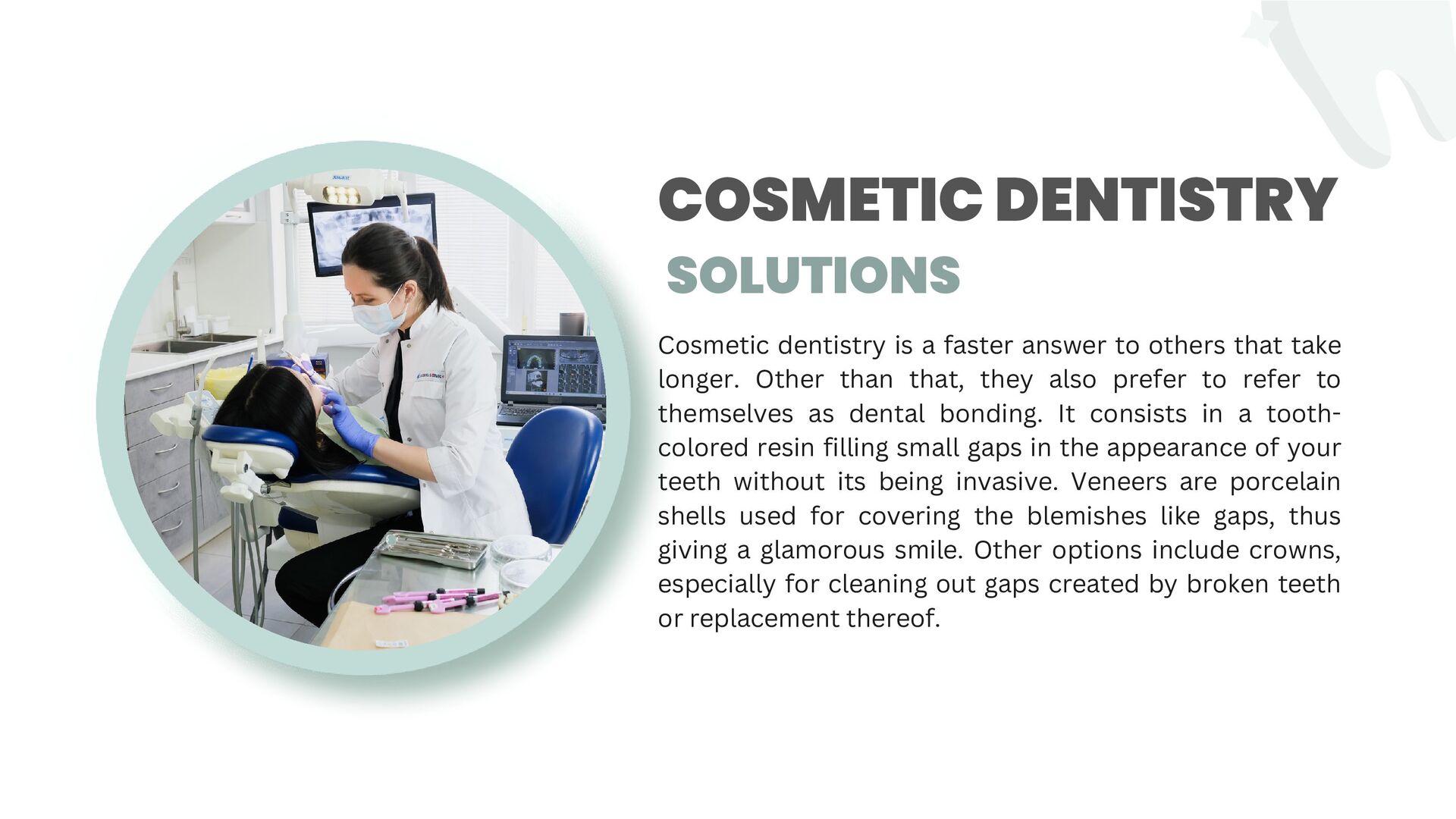
  5. SOLUTIONS COSMETIC DENTISTRY Cosmetic dentistry is a faster answer to

    others that take longer. Other than that, they also prefer to refer to themselves as dental bonding. It consists in a tooth- colored resin filling small gaps in the appearance of your teeth without its being invasive. Veneers are porcelain shells used for covering the blemishes like gaps, thus giving a glamorous smile. Other options include crowns, especially for cleaning out gaps created by broken teeth or replacement thereof.
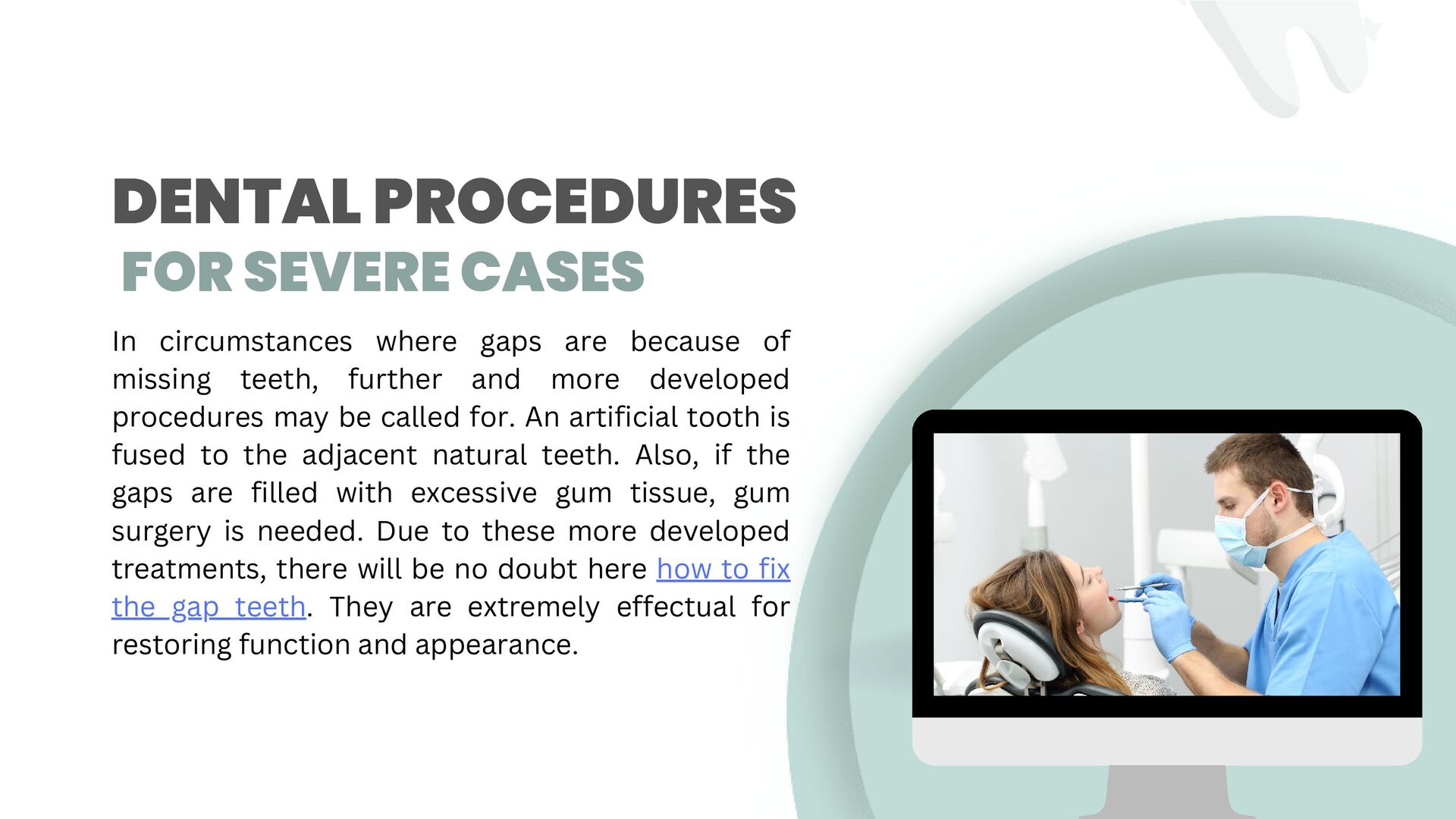
  6. FOR SEVERE CASES DENTAL PROCEDURES In circumstances where gaps are

    because of missing teeth, further and more developed procedures may be called for. An artificial tooth is fused to the adjacent natural teeth. Also, if the gaps are filled with excessive gum tissue, gum surgery is needed. Due to these more developed treatments, there will be no doubt here how to fix the gap teeth. They are extremely effectual for restoring function and appearance.
  7. AT-HOME REMEDIES NATURAL AND Some people try to close minor

    gaps at home with orthodontic bands, which gradually move teeth close together. While this might work for small gaps, it should be practiced only with caution and under professional guidance. While good oral hygiene and proper tongue posture may prevent gaps from worsening, they do not necessarily guarantee the closure of existing gaps.
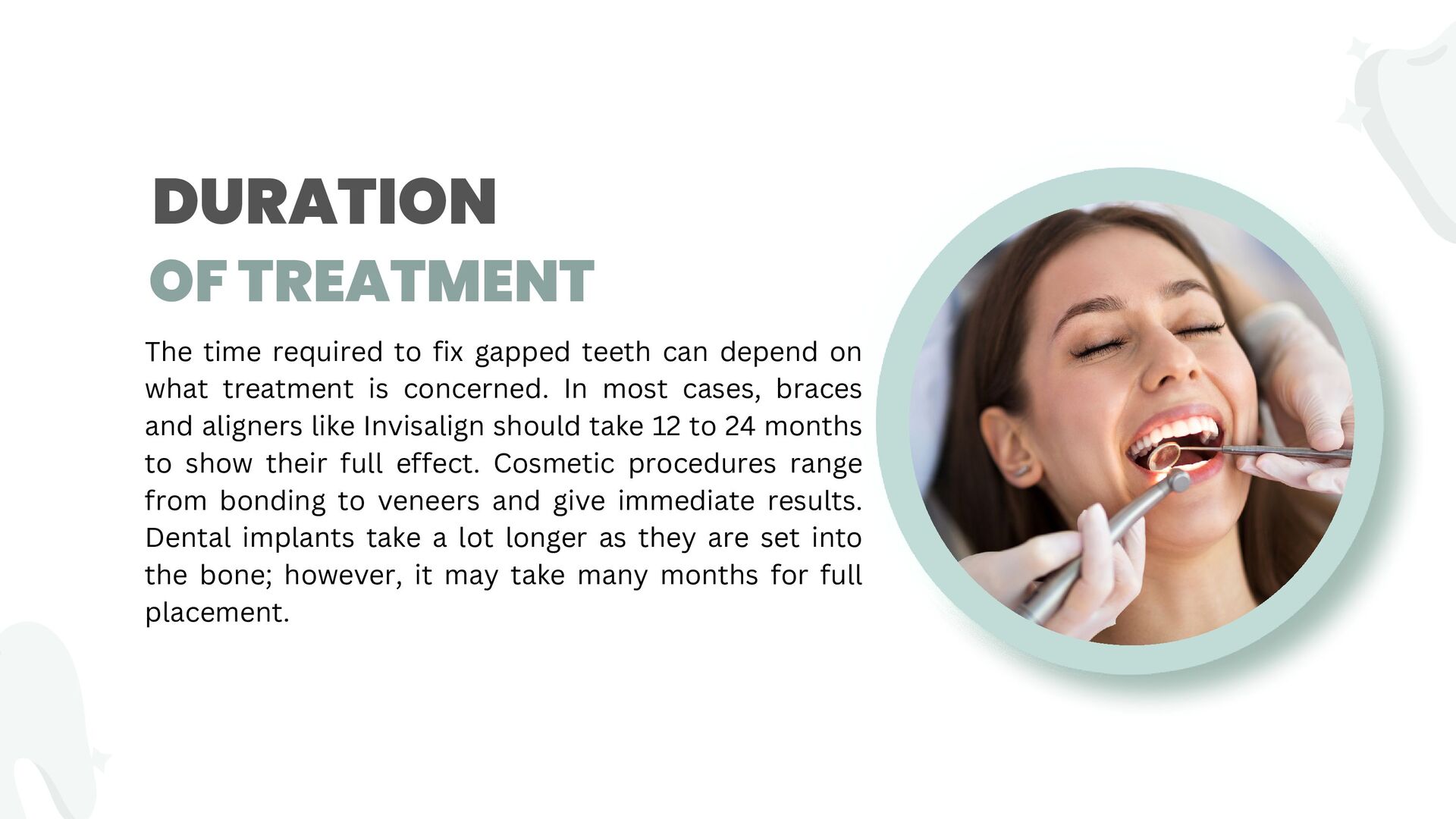
  8. OF TREATMENT DURATION The time required to fix gapped teeth

    can depend on what treatment is concerned. In most cases, braces and aligners like Invisalign should take 12 to 24 months to show their full effect. Cosmetic procedures range from bonding to veneers and give immediate results. Dental implants take a lot longer as they are set into the bone; however, it may take many months for full placement.
  9. CONSIDERATIONS RISKS AND While becoming gap-free is an enticing thought,

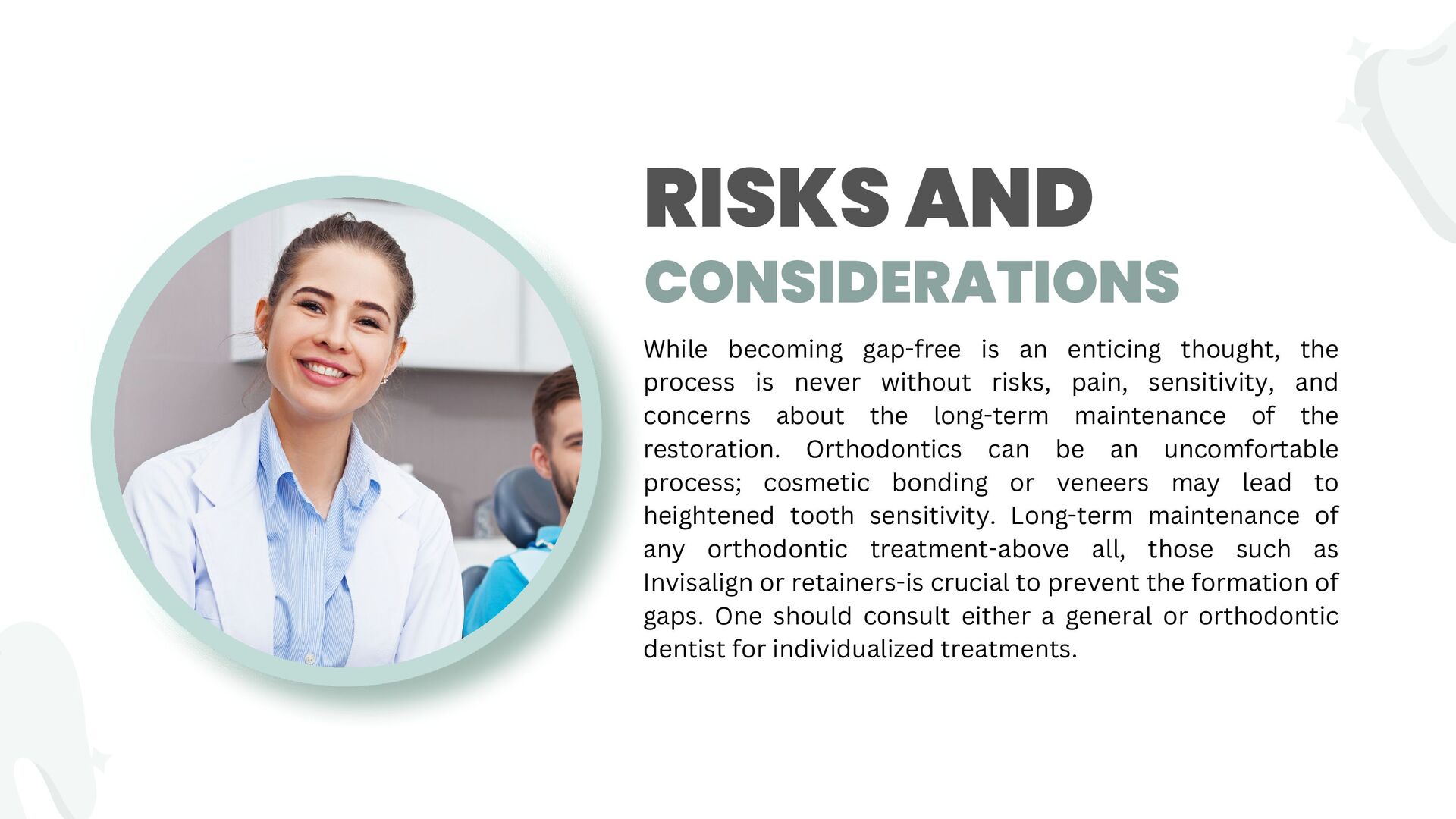
    the process is never without risks, pain, sensitivity, and concerns about the long-term maintenance of the restoration. Orthodontics can be an uncomfortable process; cosmetic bonding or veneers may lead to heightened tooth sensitivity. Long-term maintenance of any orthodontic treatment-above all, those such as Invisalign or retainers-is crucial to prevent the formation of gaps. One should consult either a general or orthodontic dentist for individualized treatments.
  10. CONCLUSION Shows that deciding to close the gaps between the

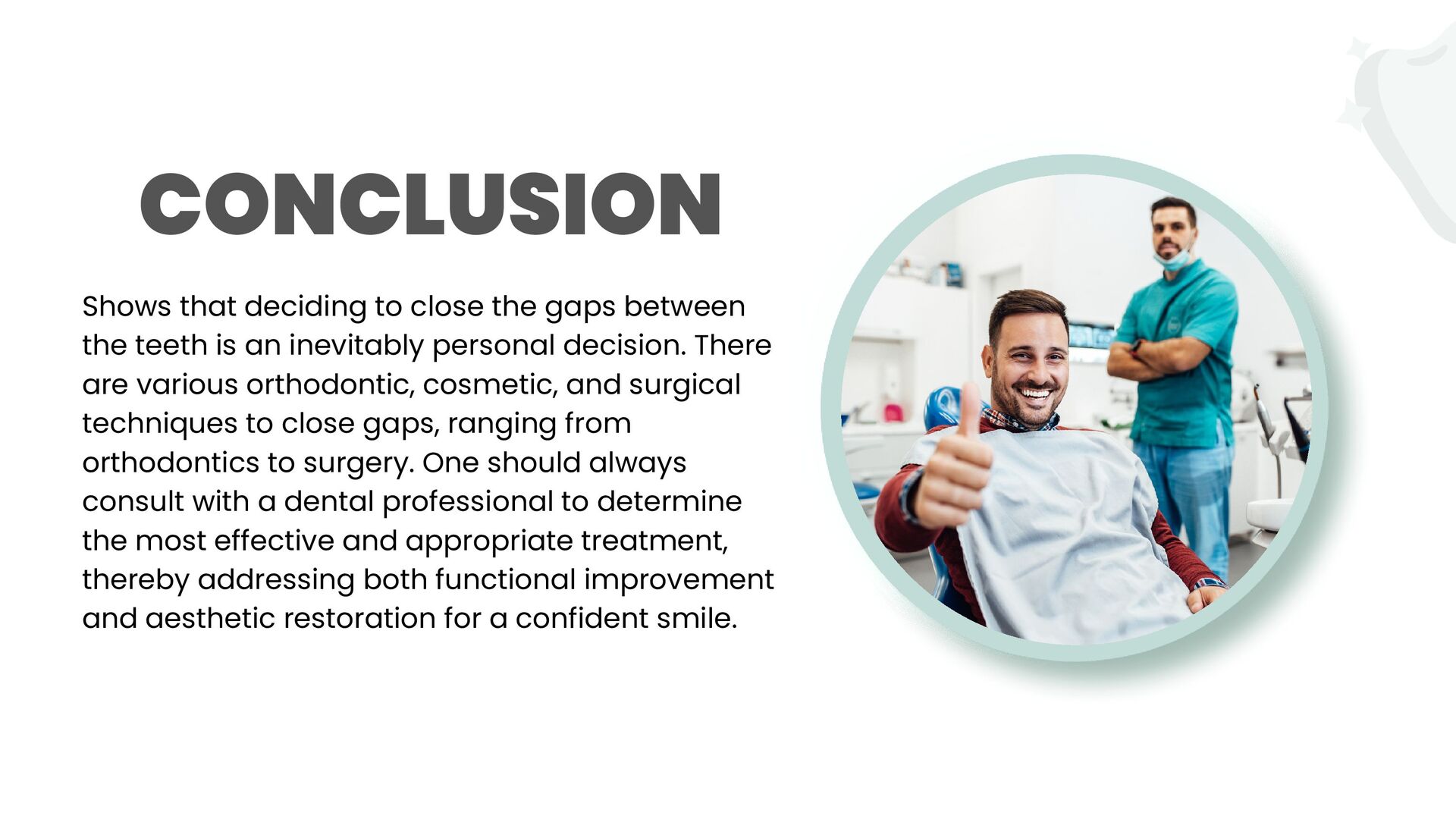
    teeth is an inevitably personal decision. There are various orthodontic, cosmetic, and surgical techniques to close gaps, ranging from orthodontics to surgery. One should always consult with a dental professional to determine the most effective and appropriate treatment, thereby addressing both functional improvement and aesthetic restoration for a confident smile.