Upgrade to Pro — share decks privately, control downloads, hide ads and more …

CSS for backend developers

CSS for backend developers

As backend developers we are often faced with the challenge of adjusting the front end look when we add extra features to a site and this is troublesome and feels fiddly. By using frameworks like TailwindCSS we can be faster at doing these changes and also be more confident in these changes.

Avatar for Blagojce Bill Kolicoski

Blagojce Bill Kolicoski

September 18, 2019

Other Decks in Programming

Transcript

  1. Who am I? - Blagojce Kolicoski - Senior PHP Developer

    and project lead @ BrightBox - Actively writing code since 2006 - Electronics enthusiast - Husband and father of two - Teacher/Content Creator/Motivator - https://www.tastethecode.com
  2. CSS Components approach - Predefined components - Rapid progress -

    Basic utility classes - Similar looking apps
  3. CSS Utility frameworks - Utility-first - Low level classes -

    No opinionated styles - Very customizable - PostCSS plugin
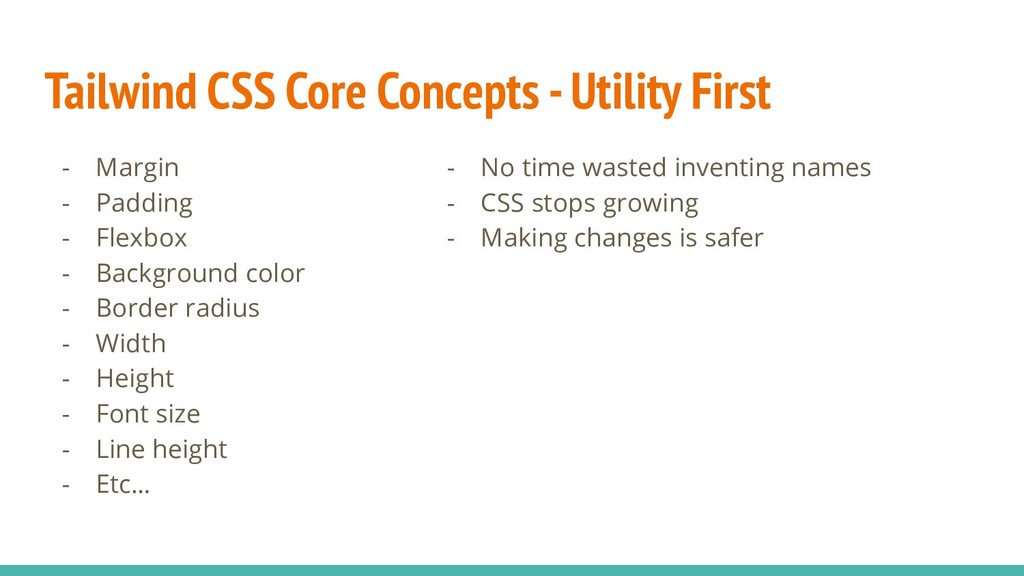
  4. Tailwind CSS Core Concepts - Utility First - Margin -

    Padding - Flexbox - Background color - Border radius - Width - Height - Font size - Line height - Etc… - No time wasted inventing names - CSS stops growing - Making changes is safer
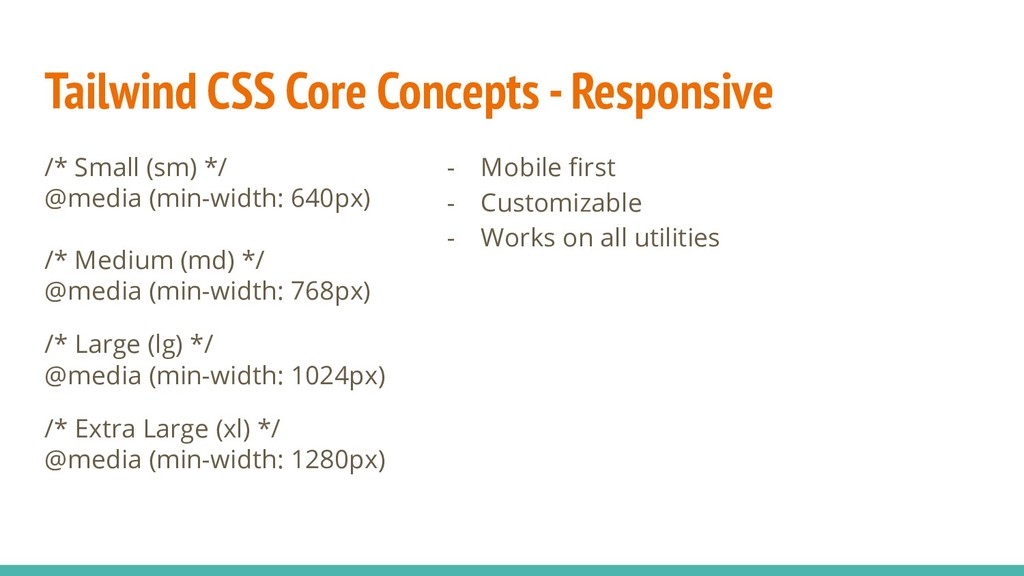
  5. Tailwind CSS Core Concepts - Responsive /* Small (sm) */

    @media (min-width: 640px) /* Medium (md) */ @media (min-width: 768px) /* Large (lg) */ @media (min-width: 1024px) /* Extra Large (xl) */ @media (min-width: 1280px) - Mobile first - Customizable - Works on all utilities
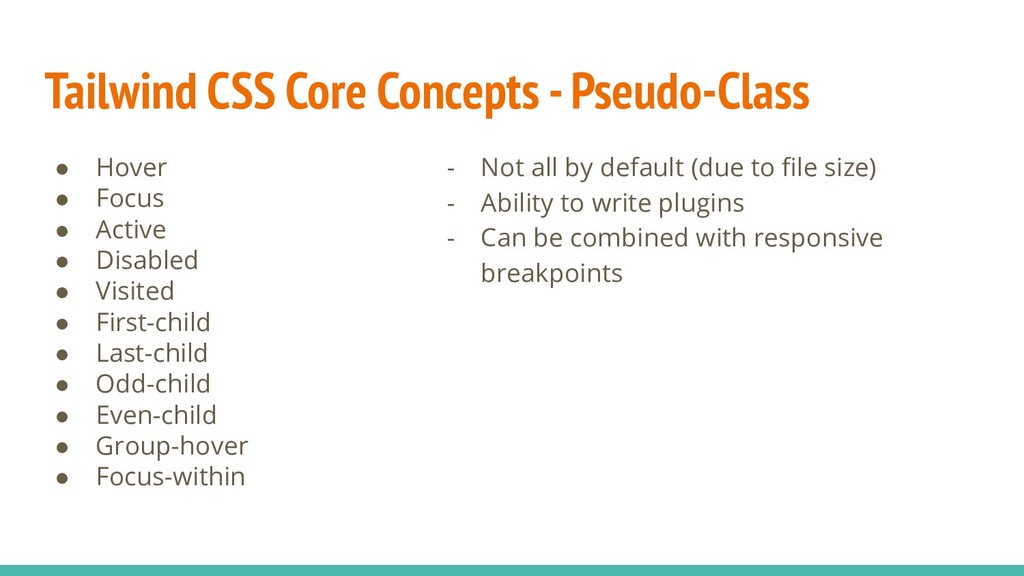
  6. Tailwind CSS Core Concepts - Pseudo-Class • Hover • Focus

    • Active • Disabled • Visited • First-child • Last-child • Odd-child • Even-child • Group-hover • Focus-within - Not all by default (due to file size) - Ability to write plugins - Can be combined with responsive breakpoints