Building an architecture to support the development of a platform, various products, and sustaining massive growth-fueled change while operating in an agile environment.
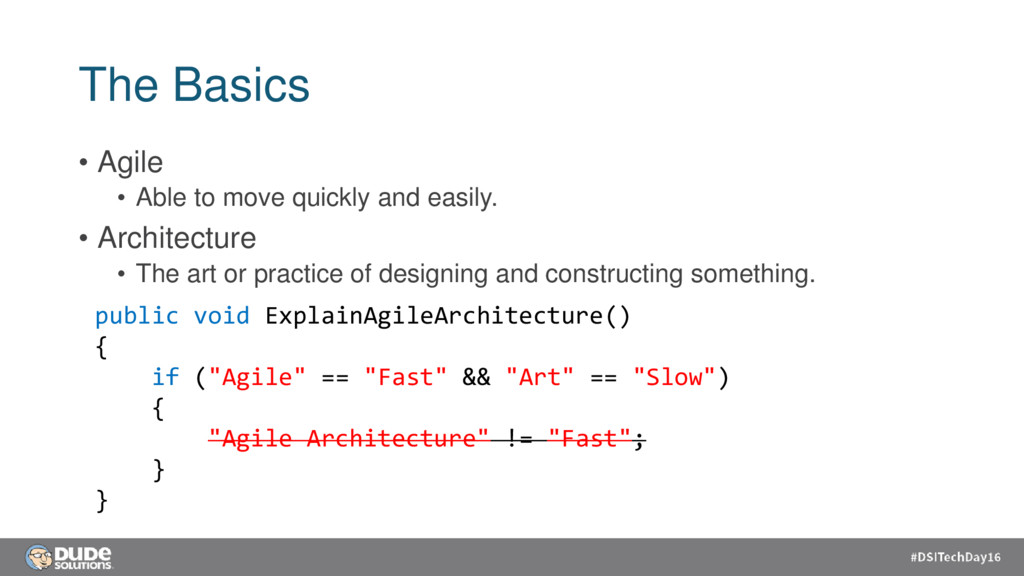
easily. • Architecture • The art or practice of designing and constructing something. public void ExplainAgileArchitecture() { if ("Agile" == "Fast" && "Art" == "Slow") { "Agile Architecture" != "Fast"; } }
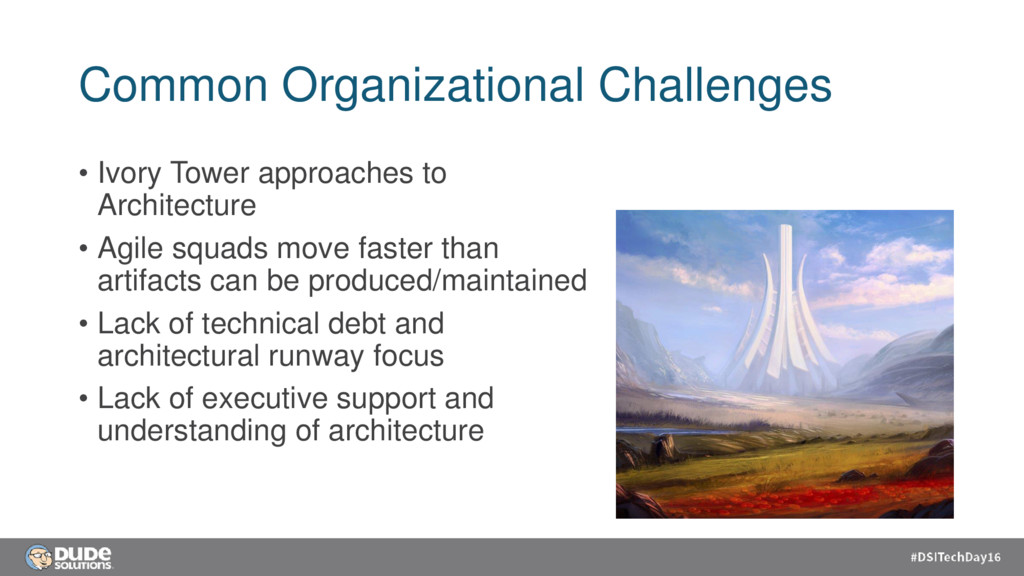
Agile squads move faster than artifacts can be produced/maintained • Lack of technical debt and architectural runway focus • Lack of executive support and understanding of architecture
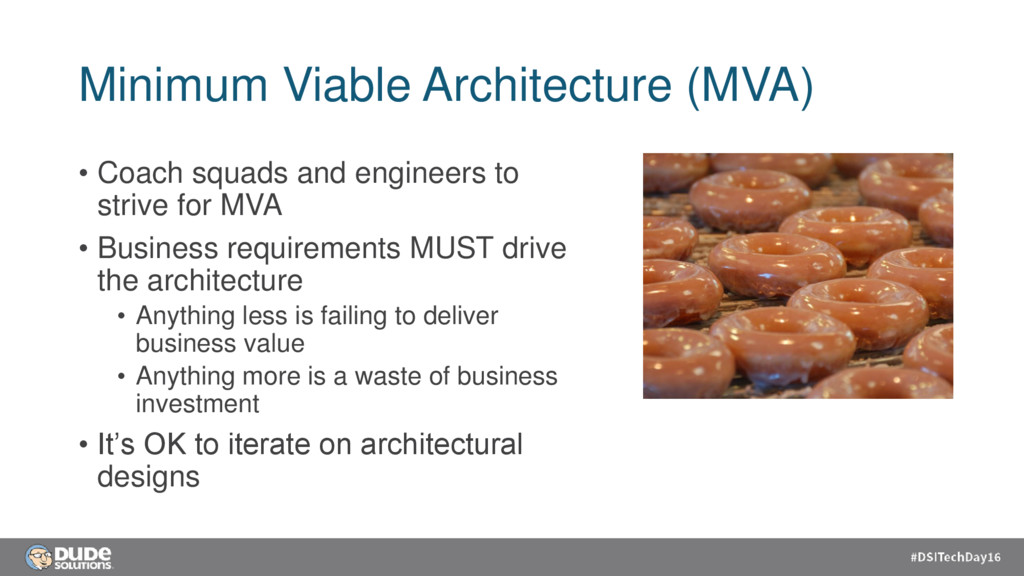
strive for MVA • Business requirements MUST drive the architecture • Anything less is failing to deliver business value • Anything more is a waste of business investment • It’s OK to iterate on architectural designs
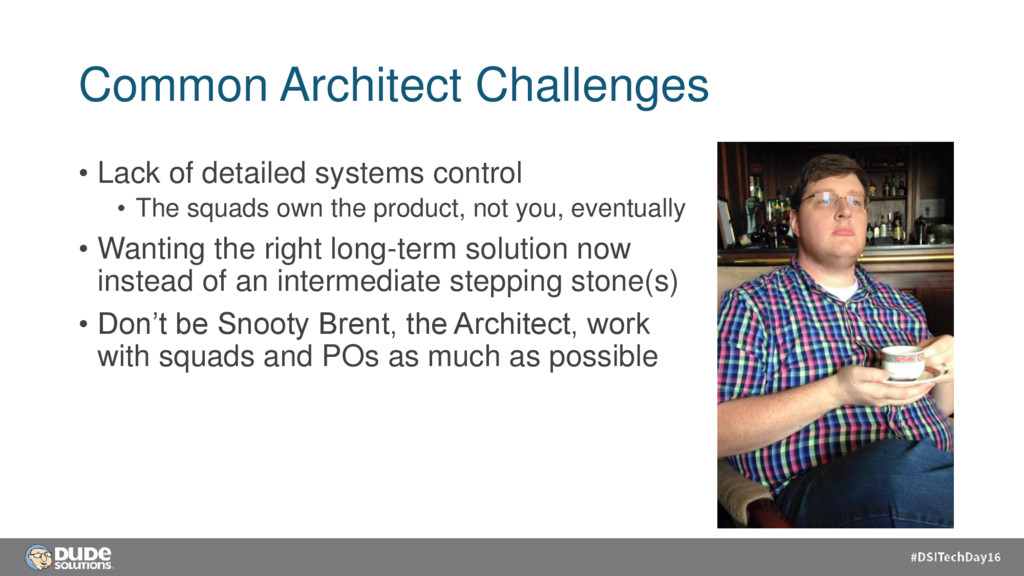
The squads own the product, not you, eventually • Wanting the right long-term solution now instead of an intermediate stepping stone(s) • Don’t be Snooty Brent, the Architect, work with squads and POs as much as possible
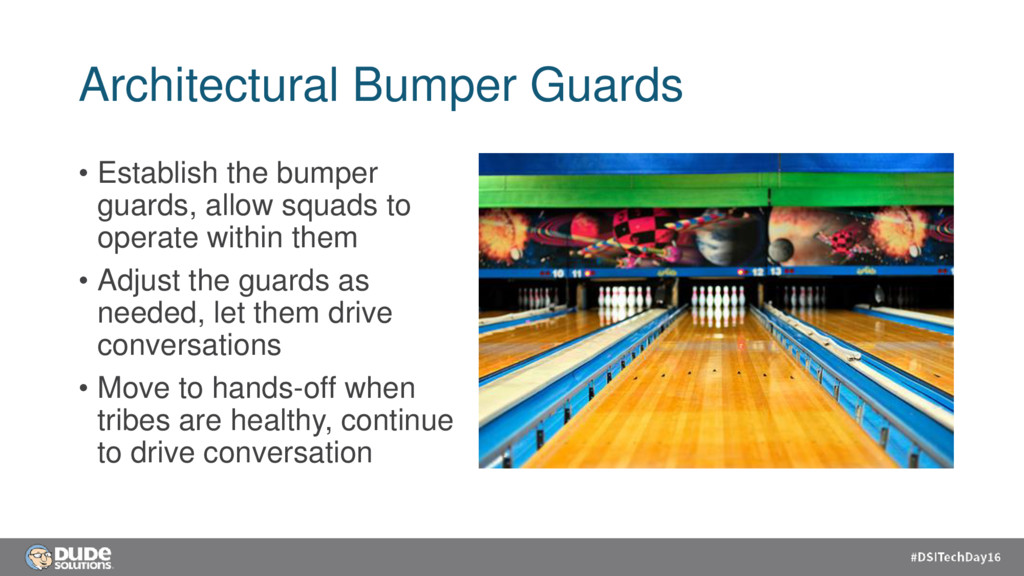
to operate within them • Adjust the guards as needed, let them drive conversations • Move to hands-off when tribes are healthy, continue to drive conversation
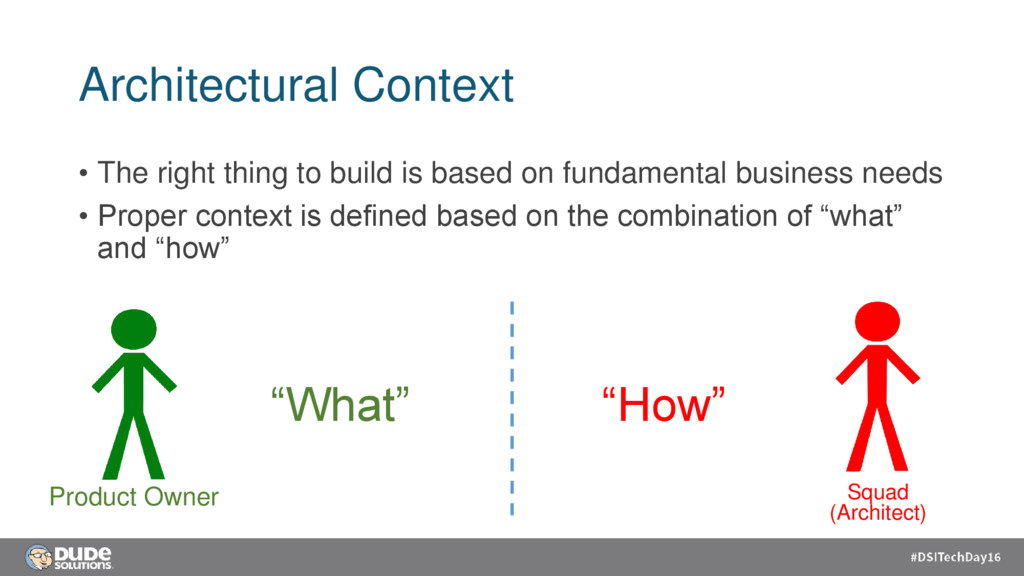
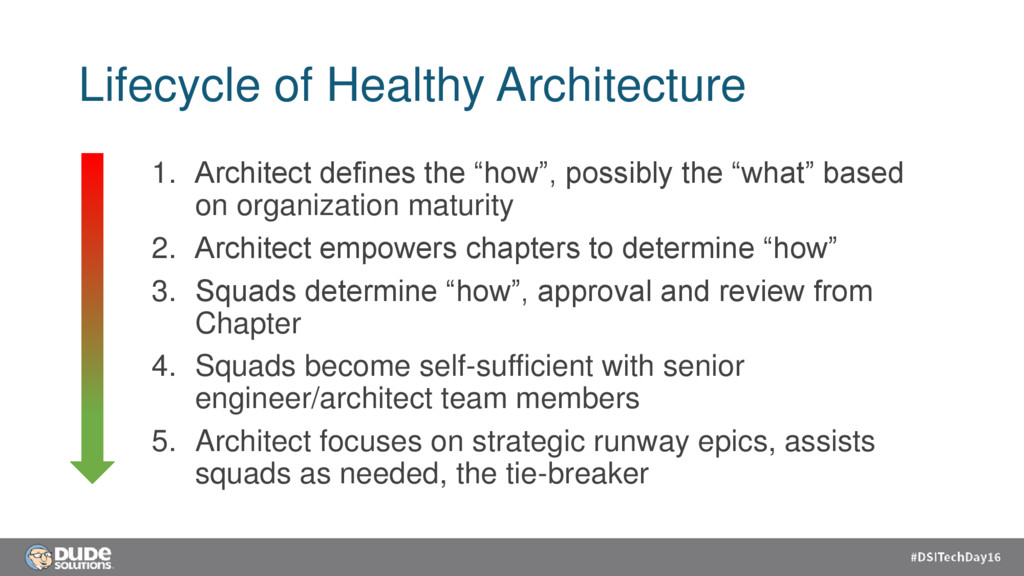
the “what” based on organization maturity 2. Architect empowers chapters to determine “how” 3. Squads determine “how”, approval and review from Chapter 4. Squads become self-sufficient with senior engineer/architect team members 5. Architect focuses on strategic runway epics, assists squads as needed, the tie-breaker
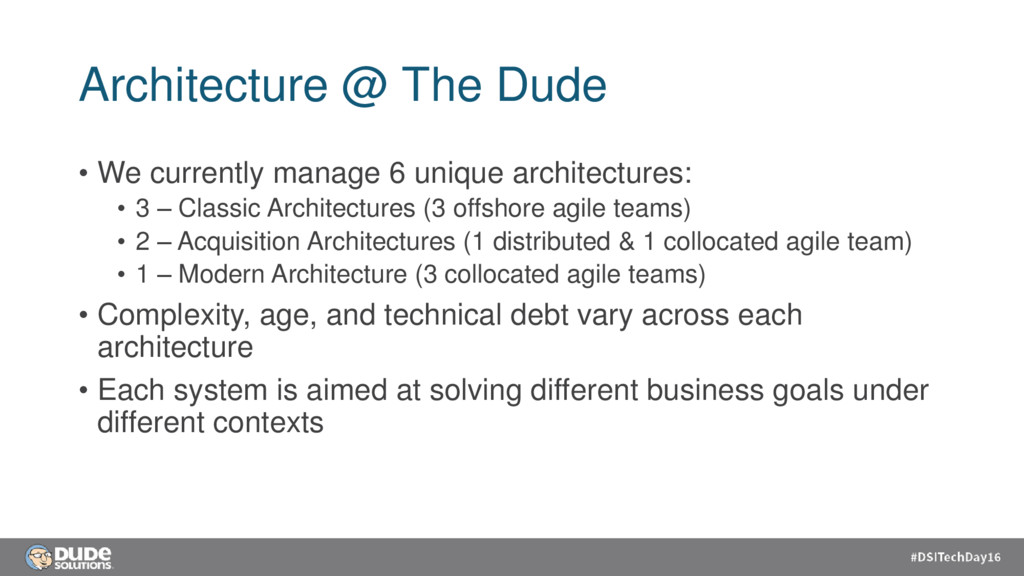
architectures: • 3 – Classic Architectures (3 offshore agile teams) • 2 – Acquisition Architectures (1 distributed & 1 collocated agile team) • 1 – Modern Architecture (3 collocated agile teams) • Complexity, age, and technical debt vary across each architecture • Each system is aimed at solving different business goals under different contexts
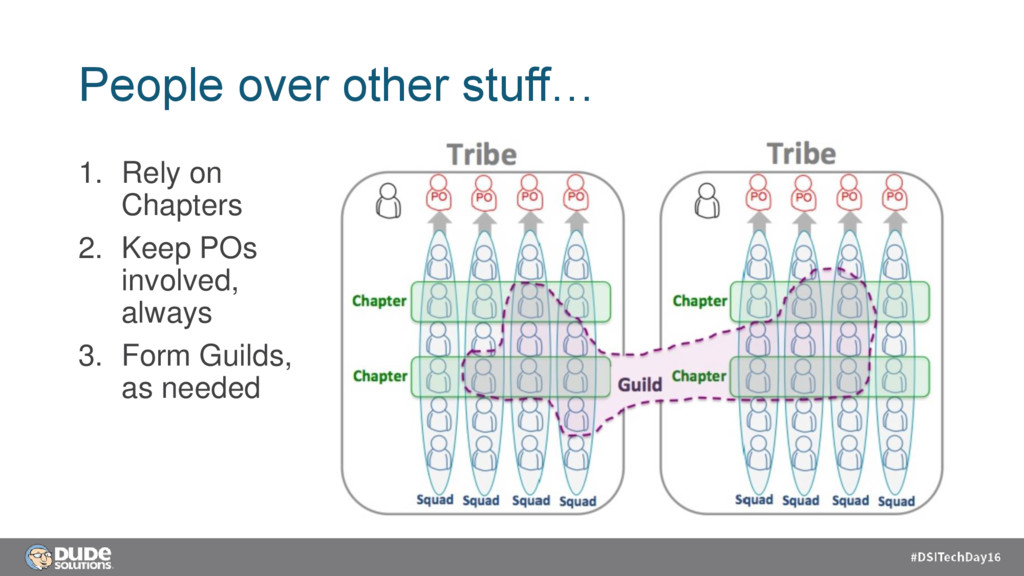
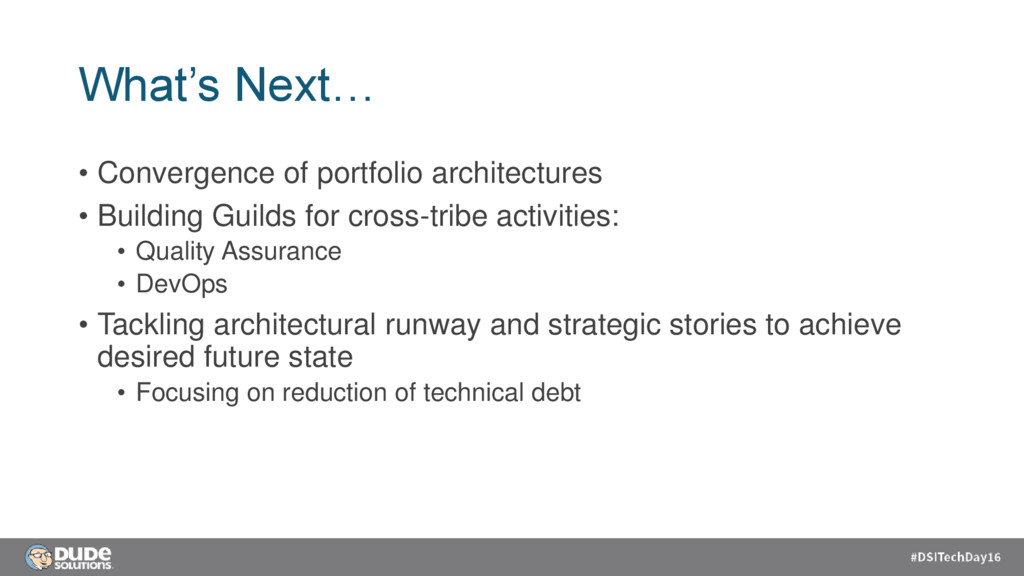
for cross-tribe activities: • Quality Assurance • DevOps • Tackling architectural runway and strategic stories to achieve desired future state • Focusing on reduction of technical debt


 brentpabst
 kenichiodo
 kairim0
 endonanana
 jyouryuusui
 yahonda
 yamanoku
 ivry_presentationmaterials
 yazm
 ezaki
 kentarofujii
 syuchimu
 terurou
 gr2m
 axbom
 madoxten
 maltzj
 szymonslowik
 uxyall
 marketingsoph
 cassininazir
 moore
 aemeredith
 cargoodrich
 samlambert