Upgrade to Pro
— share decks privately, control downloads, hide ads and more …
Speaker Deck
Sign up for free
Menu
Search
Features
All features
Private URLs
Password Protection
Custom URLS
Scheduled publishing
Remove Branding
Restrict embedding
Deck Collections
Notes
Features
All features
Private URLs
Password Protection
Custom URLS
Scheduled publishing
Remove Branding
Restrict embedding
Deck Collections
Notes
Explore
Featured decks
Featured speakers
Programming
Technology
Storyboards
Explore
Featured decks
Featured speakers
Programming
Technology
Storyboards
Pricing
Search
Sign in
Sign up for free
Introduction to Django
Search
Sponsored
·
SiteGround - Reliable hosting with speed, security, and support you can count on.
→
Bruno Renié
April 03, 2012
Programming
470
3
Share
Embed
Copy iframe code
Copy JS code
Copy link
Start on current slide
Introduction to Django
Bruno Renié
April 03, 2012
More Decks by Bruno Renié
See All by Bruno Renié
Visibility for web developers
brutasse
3
490
Decentralization & real-time with PubSubHubbub
brutasse
1
200
Deployability of Python Web Applications
brutasse
17
2.4k
Stop writing settings files
brutasse
21
2.7k
Class-based Views: patterns and anti-patterns
brutasse
9
1.7k
Packager son projet Django
brutasse
4
610
Staticfiles : tout ce qu'il faut savoir, rien que ce qu'il faut savoir
brutasse
4
600
Other Decks in Programming
See All in Programming
JIS keyboard support in Omarchy
lef237
0
150
ActionController meets Protocol Buffers
sorah
0
670
コーディング自動化の次へ。人の介入をゼロにするファクトリーとサポートAIによる実践
timakin
5
4.3k
Kotlinの15年とServer-Side Kotlin
n_takehata
1
160
コードレビューのボトルネックを"する側"と"される側"の両面から解消する
yub0n
2
1.6k
[2026-09-26]空論ジェネリックプロセス~テスト資産とAIで紡ぐ、再現可能なパフォーマンスチューニングの話~
tosite
0
270
あなたの await、OS まで届いてる? strace で覗く JavaScript の非同期
hasutosasaki
1
780
エージェントを使い続けるためのメタワーク / Meta-work for keeping using the agent
rkaga
6
1.6k
作れる、でも消せるか?──安全に「枯らして消す」機能削除術 / Drain, Then Delete
chobishiba
2
890
Long Living Tokens, Die, Die, Die! (or: The One Ring is Banned in Modern)
sylph01
0
350
Groovy as a human and AI friendly programming language
paulk
0
100
Atomic Design, Enforced: Scaling Mobile Design Systems (next.app devCon / droidCon Berlin 2026)
steliosf
PRO
0
180
Featured
See All Featured
Designing Experiences People Love
moore
143
24k
Why Mistakes Are the Best Teachers: Turning Failure into a Pathway for Growth
auna
0
330
Building Flexible Design Systems
yeseniaperezcruz
330
41k
Groundhog Day: Seeking Process in Gaming for Health
codingconduct
0
430
Winning Ecommerce Organic Search in an AI Era - #searchnstuff2025
aleyda
2
2.2k
Scaling GitHub
holman
464
140k
Building Applications with DynamoDB
mza
96
7.2k
It's Worth the Effort
3n
188
29k
GraphQLの誤解/rethinking-graphql
sonatard
75
12k
For a Future-Friendly Web
brad_frost
184
10k
Building a A Zero-Code AI SEO Workflow
portentint
PRO
0
790
Marketing to machines
jonoalderson
1
5.9k
Transcript
Django Webmardi - 03.04.2012 @brutasse
$ whoami
“Django is a high-level Python Web framework that encourages rapid
development and clean, pragmatic design”
None
None
Théorie
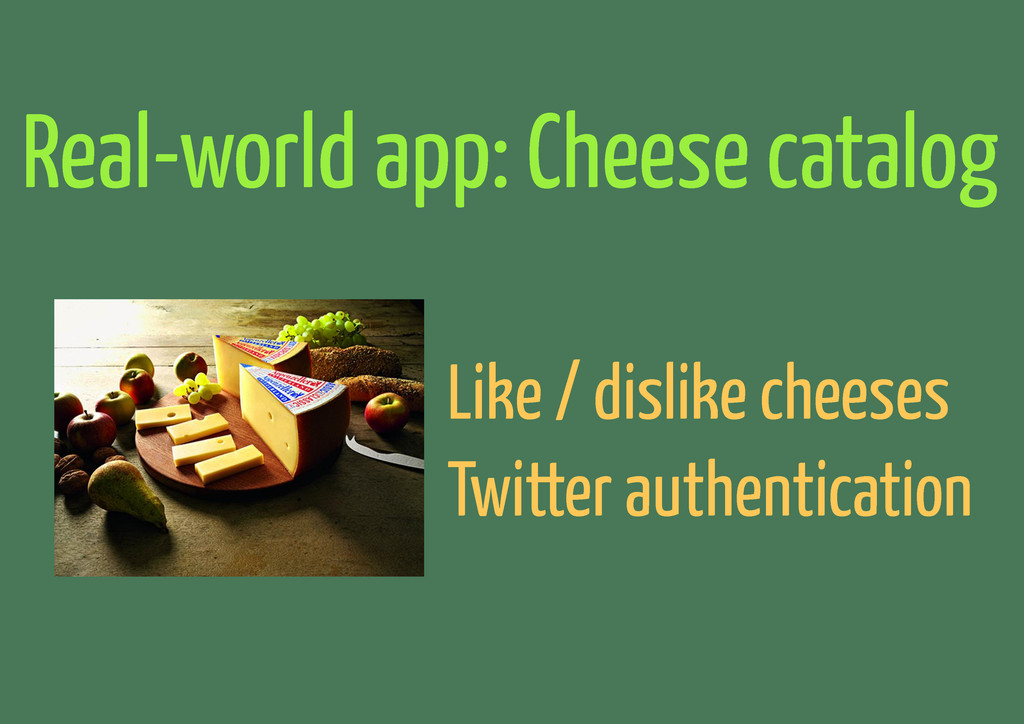
Real-world app: Cheese catalog Like / dislike cheeses Twitter authentication
$ pip install Django http://www.pip-installer.org
$ django-admin.py startproject webmardi webmardi/ ├── manage.py └── webmardi ├──
__init__.py ├── settings.py ├── urls.py └── wsgi.py
manage.py Project toolbox
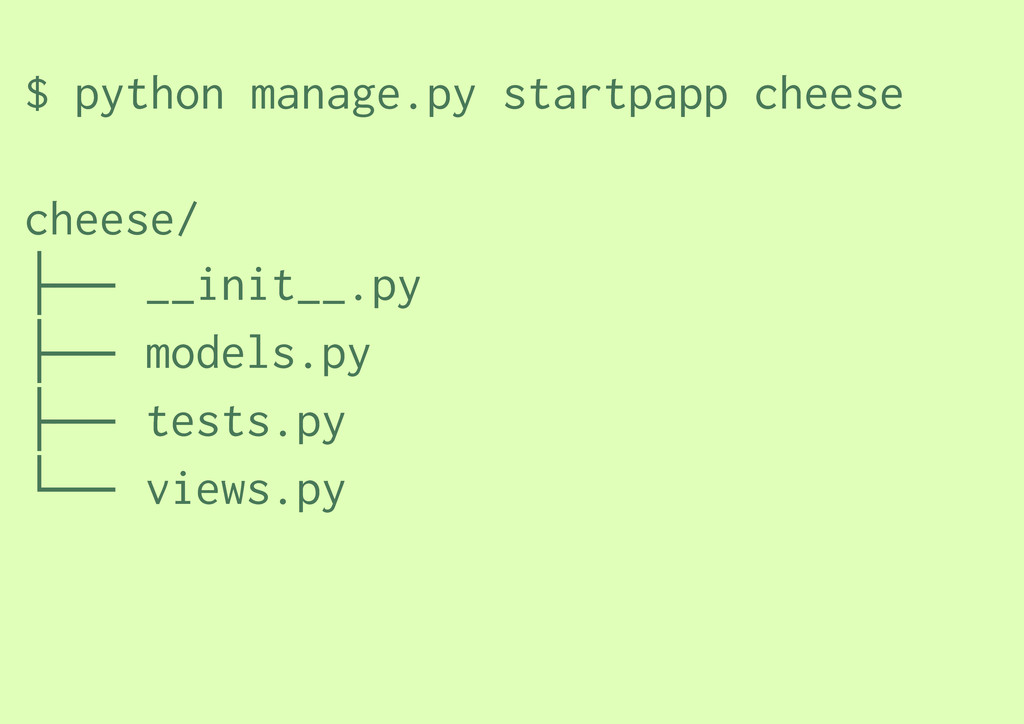
$ python manage.py startpapp cheese cheese/ ├── __init__.py ├── models.py
├── tests.py └── views.py
Models ORM
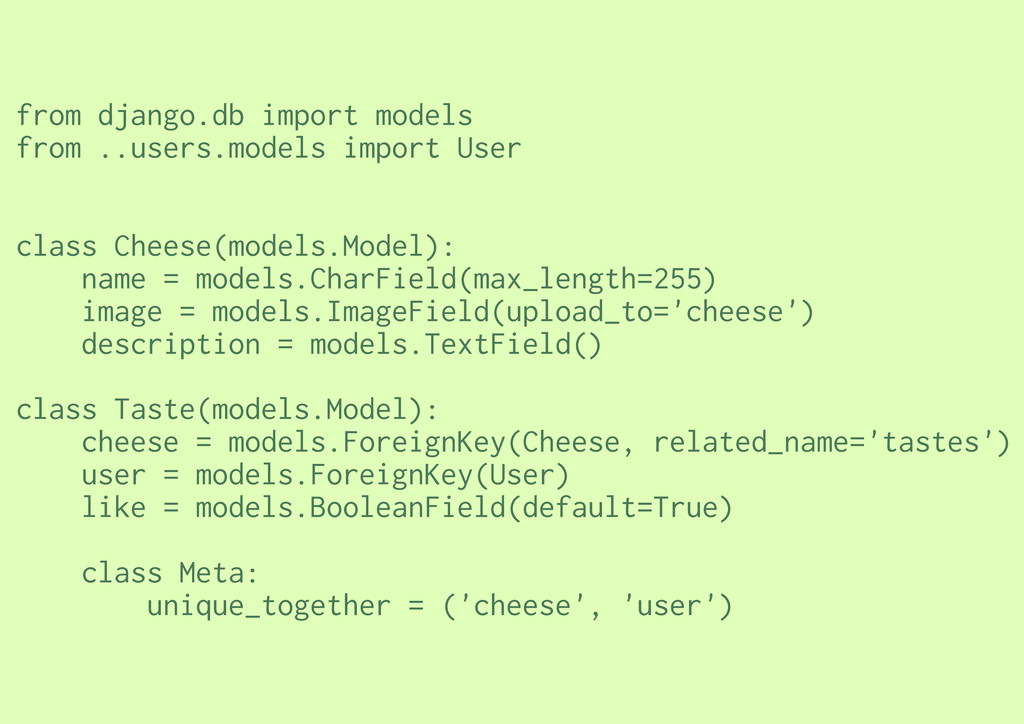
from django.db import models from ..users.models import User class Cheese(models.Model):
name = models.CharField(max_length=255) image = models.ImageField(upload_to='cheese') description = models.TextField() class Taste(models.Model): cheese = models.ForeignKey(Cheese, related_name='tastes') user = models.ForeignKey(User) like = models.BooleanField(default=True) class Meta: unique_together = ('cheese', 'user')
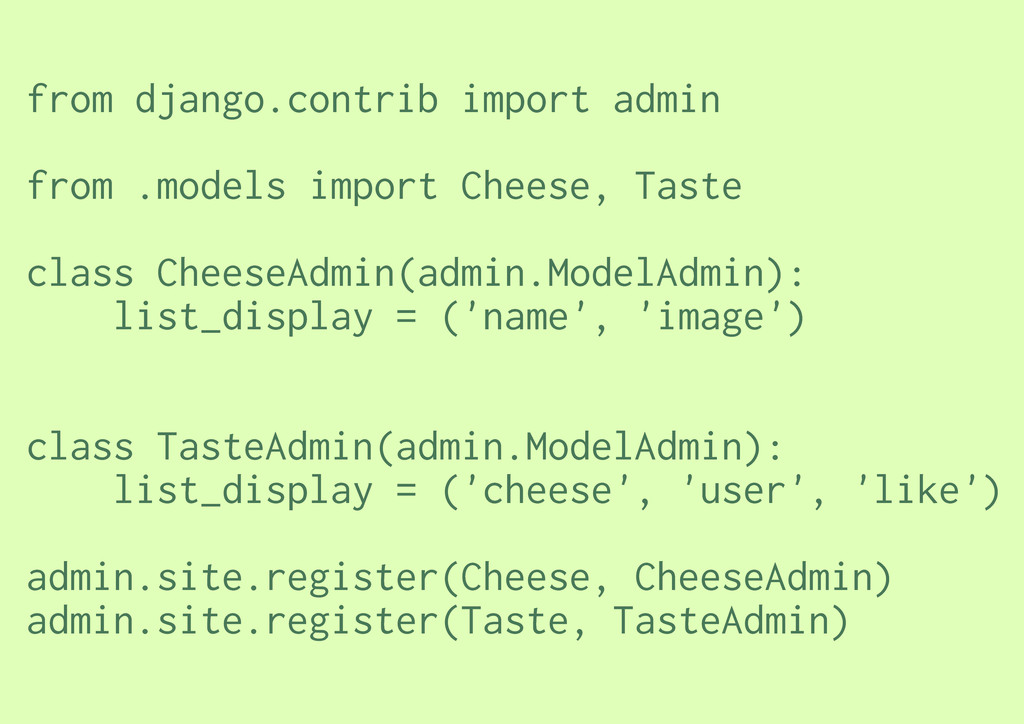
Admin Customizable edition interface
from django.contrib import admin from .models import Cheese, Taste class
CheeseAdmin(admin.ModelAdmin): list_display = ('name', 'image') class TasteAdmin(admin.ModelAdmin): list_display = ('cheese', 'user', 'like') admin.site.register(Cheese, CheeseAdmin) admin.site.register(Taste, TasteAdmin)
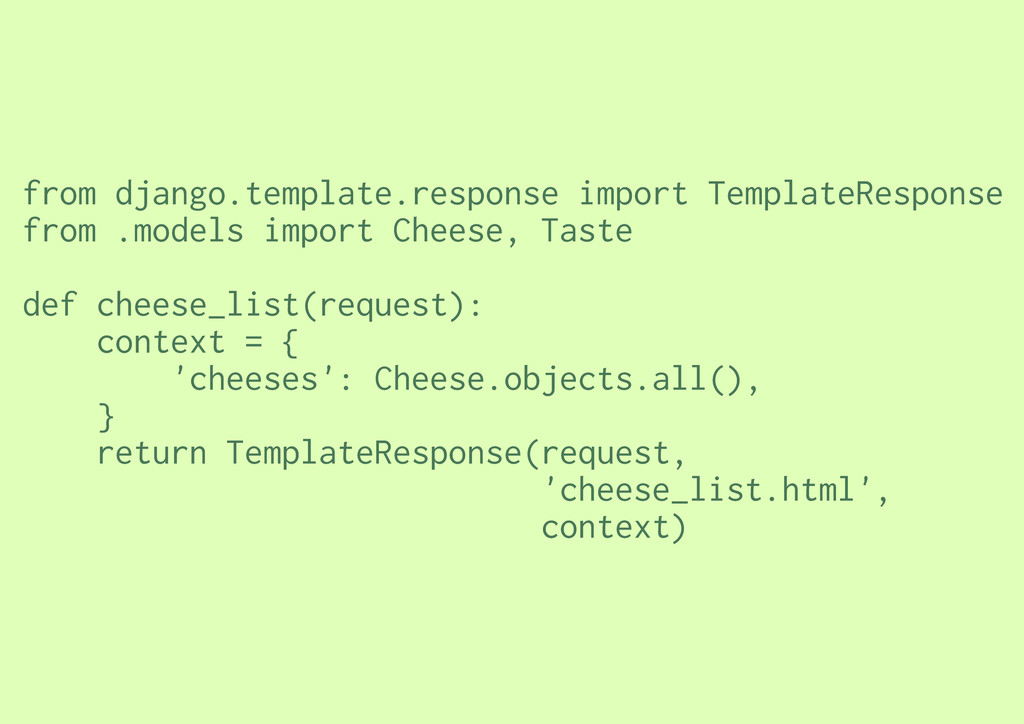
Views Request handling
from django.template.response import TemplateResponse from .models import Cheese, Taste def
cheese_list(request): context = { 'cheeses': Cheese.objects.all(), } return TemplateResponse(request, 'cheese_list.html', context)
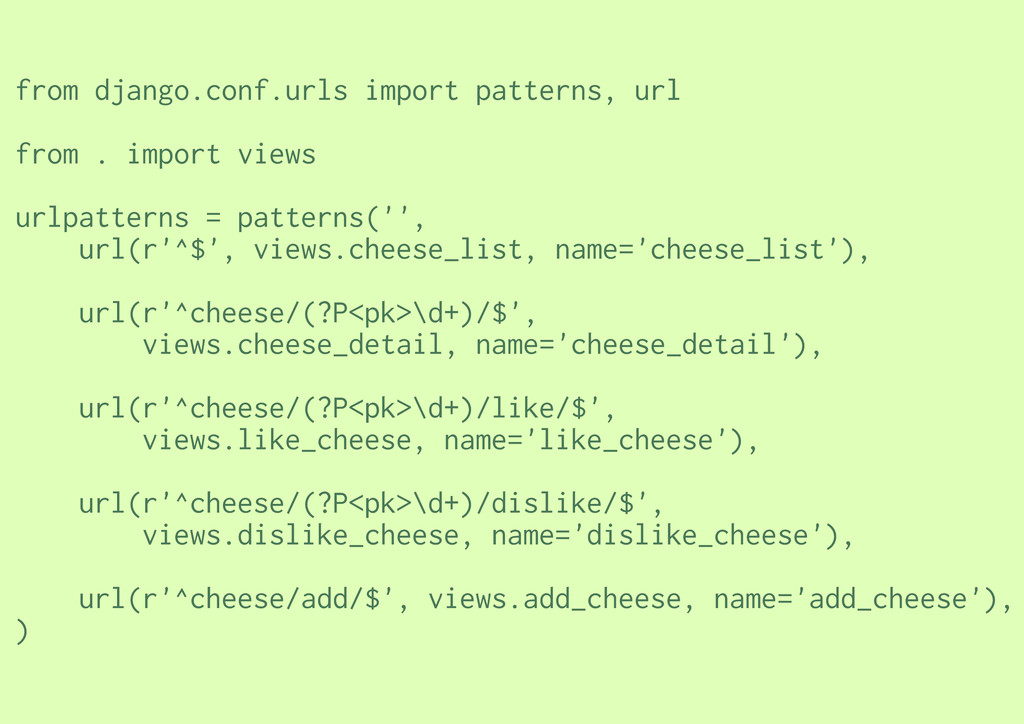
URLs HTTP routing
from django.conf.urls import patterns, url from . import views urlpatterns
= patterns('', url(r'^$', views.cheese_list, name='cheese_list'), url(r'^cheese/(?P<pk>\d+)/$', views.cheese_detail, name='cheese_detail'), url(r'^cheese/(?P<pk>\d+)/like/$', views.like_cheese, name='like_cheese'), url(r'^cheese/(?P<pk>\d+)/dislike/$', views.dislike_cheese, name='dislike_cheese'), url(r'^cheese/add/$', views.add_cheese, name='add_cheese'), )
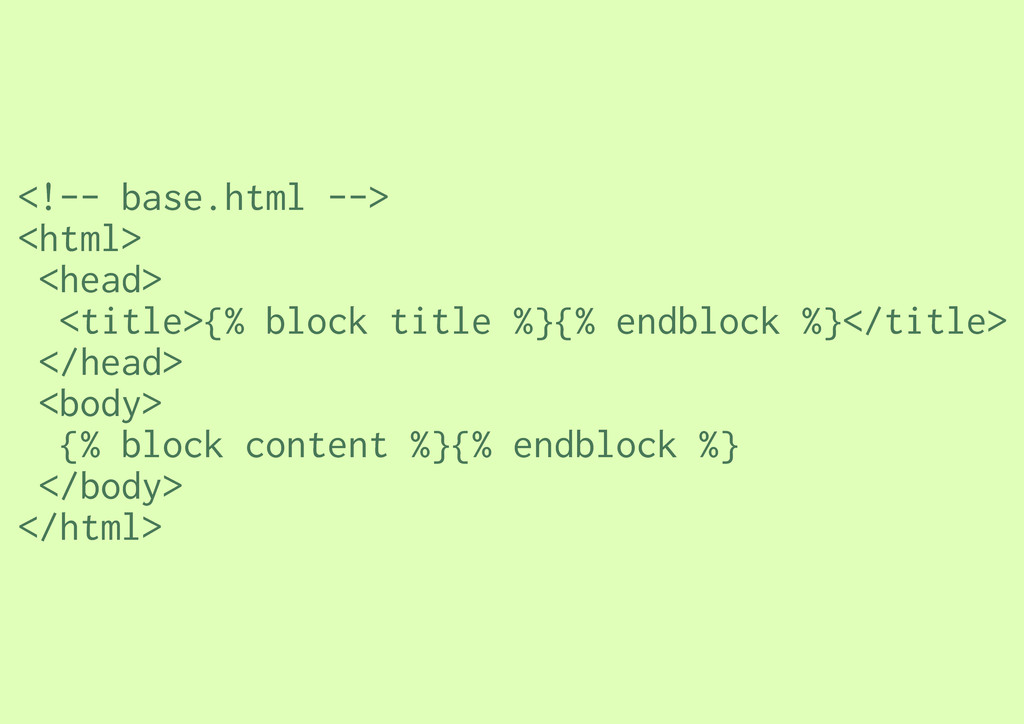
Templates
<!-- base.html --> <html> <head> <title>{% block title %}{% endblock
%}</title> </head> <body> {% block content %}{% endblock %} </body> </html>
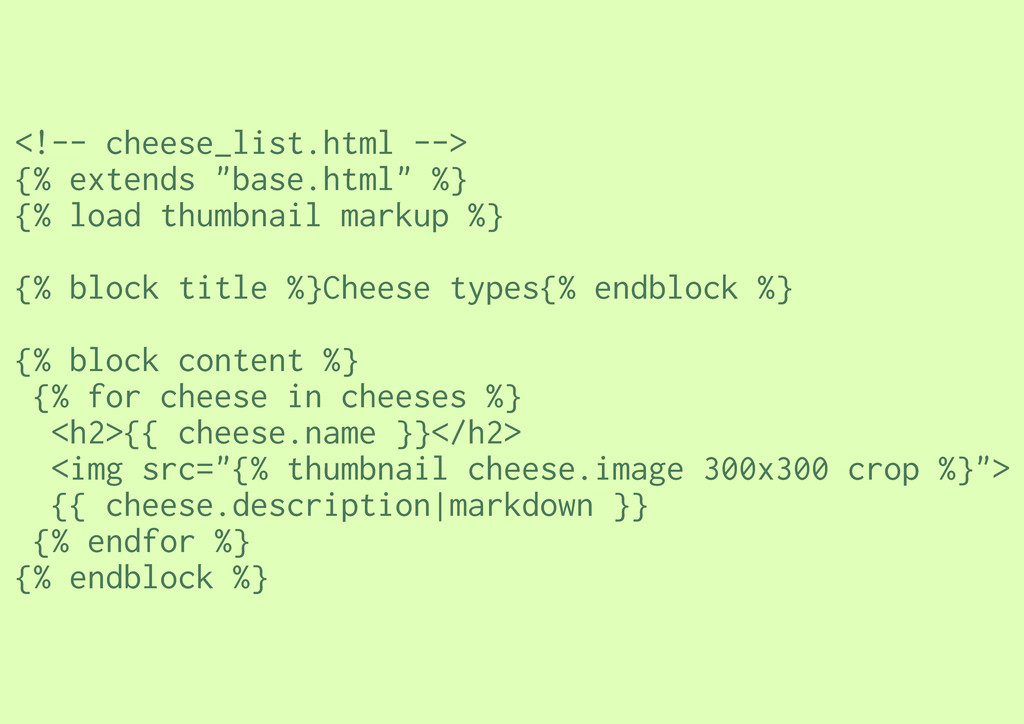
<!-- cheese_list.html --> {% extends "base.html" %} {% load thumbnail
markup %} {% block title %}Cheese types{% endblock %} {% block content %} {% for cheese in cheeses %} <h2>{{ cheese.name }}</h2> <img src="{% thumbnail cheese.image 300x300 crop %}"> {{ cheese.description|markdown }} {% endfor %} {% endblock %}
Tests Untested code is by definition broken
from django.core.urlresolvers import reverse from django.test import TestCase class CheeseTest(TestCase):
def test_home(self): url = reverse('cheese_list') response = self.client.get(url) self.assertContains(response, 'Cheese')
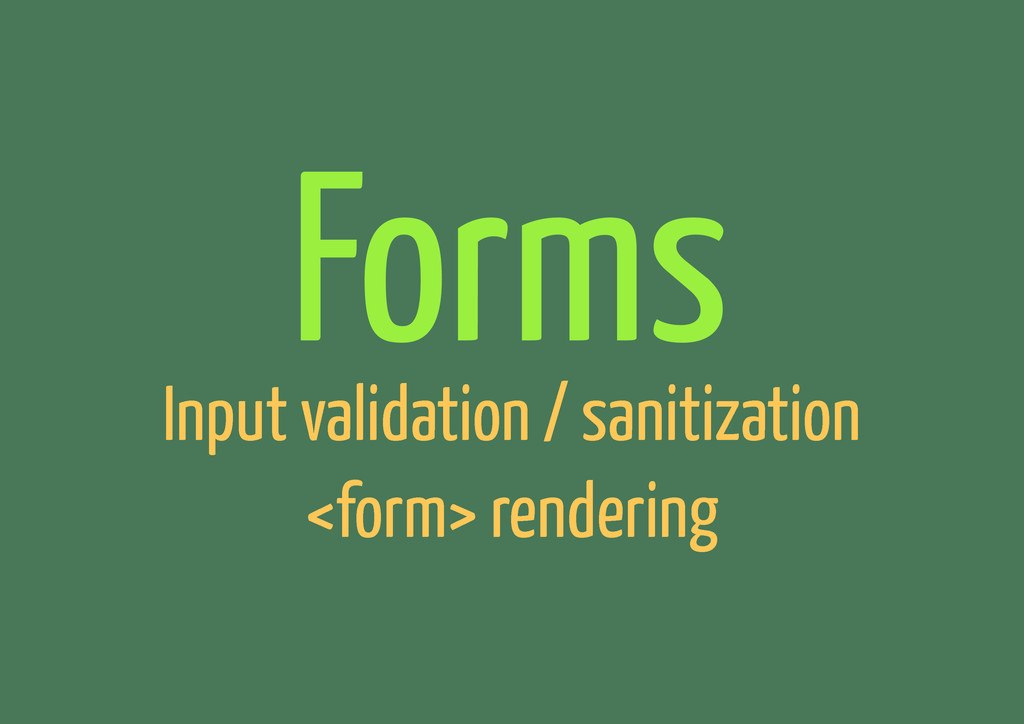
Forms Input validation / sanitization <form> rendering
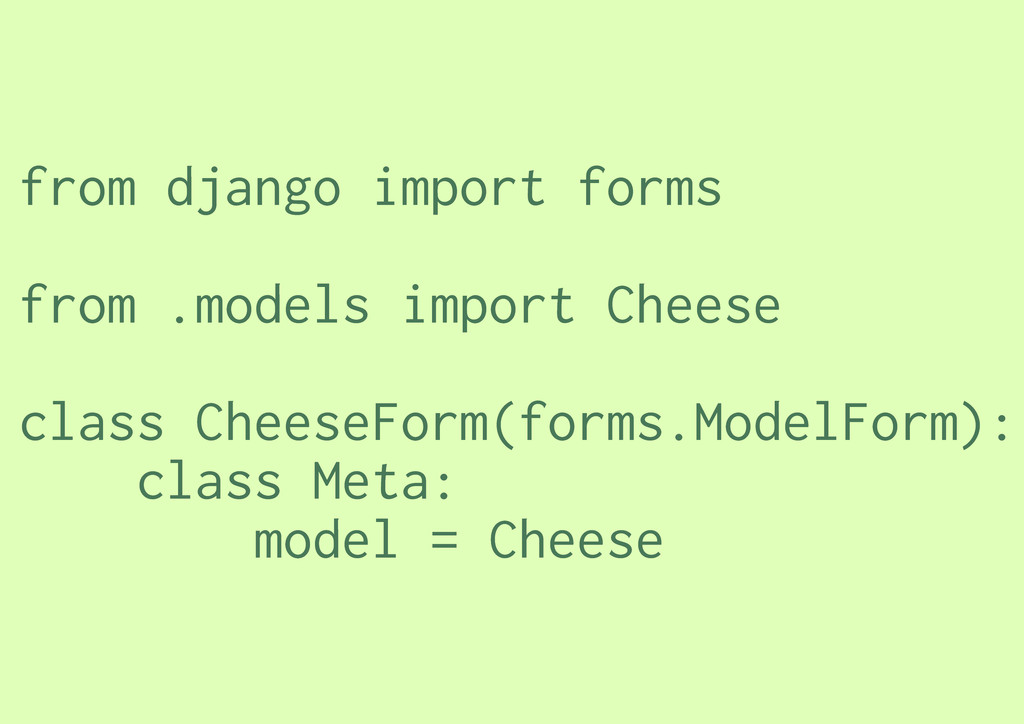
from django import forms from .models import Cheese class CheeseForm(forms.ModelForm):
class Meta: model = Cheese
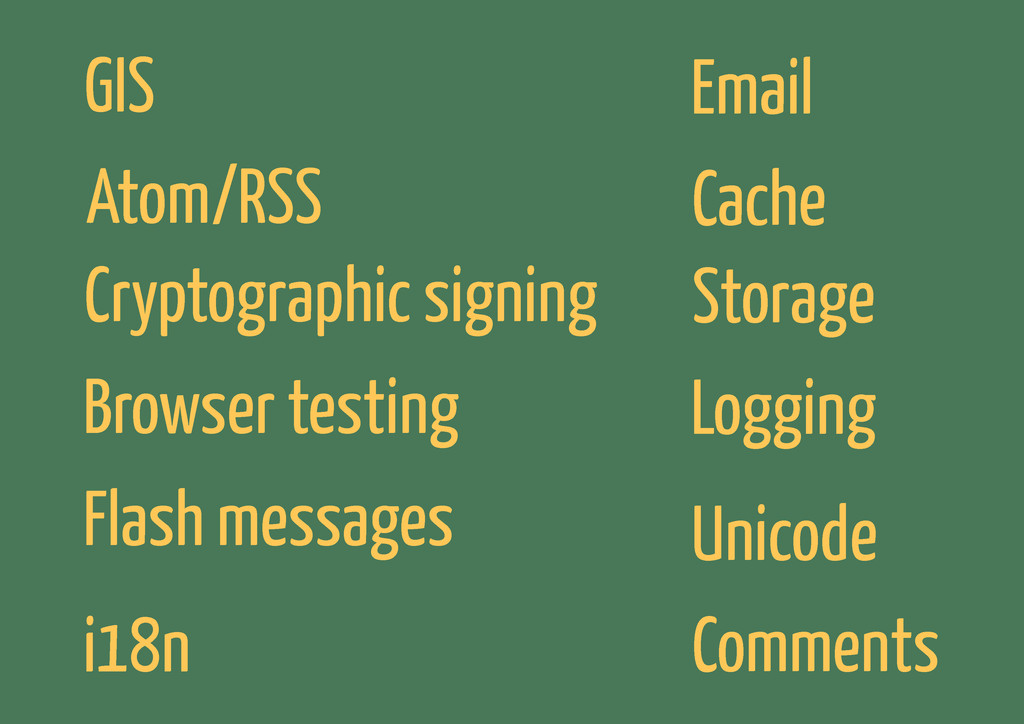
GIS Cryptographic signing Browser testing i18n Flash messages Atom/RSS Email
Cache Storage Logging Unicode Comments
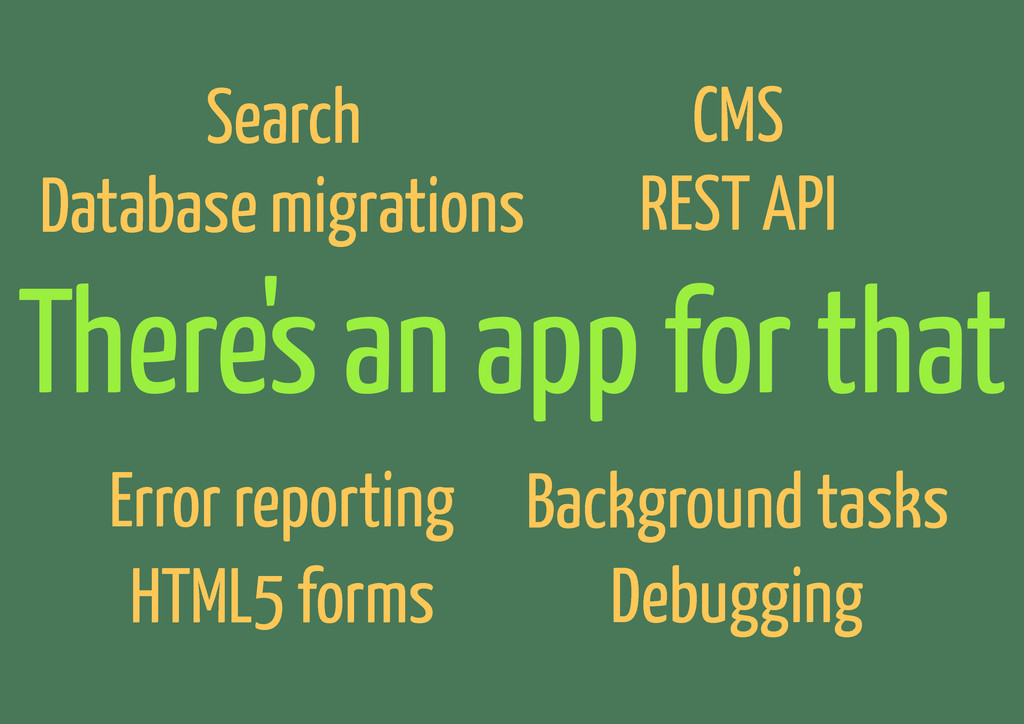
Search Error reporting HTML5 forms Database migrations CMS REST API
Background tasks Debugging There's an app for that
Questions‽ Thanks @liip Code: https://github.com/brutasse/webmardi Slides: http://speakerdeck.com/u/brutasse

 SiteGround - Reliable hosting with speed, security, and support you can count on.


 brutasse
 lef237
 sorah
sorah
 timakin
 n_takehata
 yub0n
yub0n
 tosite
 hasutosasaki
 rkaga
rkaga
 chobishiba
 sylph01
 paulk
paulk
 steliosf
 moore
moore
 auna
auna
 yeseniaperezcruz
 codingconduct
 aleyda
 holman
 mza
mza
 3n
3n
 sonatard
 brad_frost
 portentint
 jonoalderson