Upgrade to Pro — share decks privately, control downloads, hide ads and more …

Webpack, Dynamic Imports, and You: A Love Story

Sponsored · SiteGround - Reliable hosting with speed, security, and support you can count on.

Webpack, Dynamic Imports, and You: A Love Story

Avatar for Chris Freeman

Chris Freeman

November 29, 2018
Tweet

Other Decks in Programming

Transcript

  1. Oh hello I'm Chris. I work for Envoy. I'm going

    to tell you about a super cool JS feature called dynamic imports and how you can use them with Webpack.
  2. Real quick, what's webpack? Webpack is a module bundler. It

    deals in graphs of modules, not files. Webpack !== Broccoli Broccoli deals in graphs of files. Broccoli and Webpack can, and do, work together!
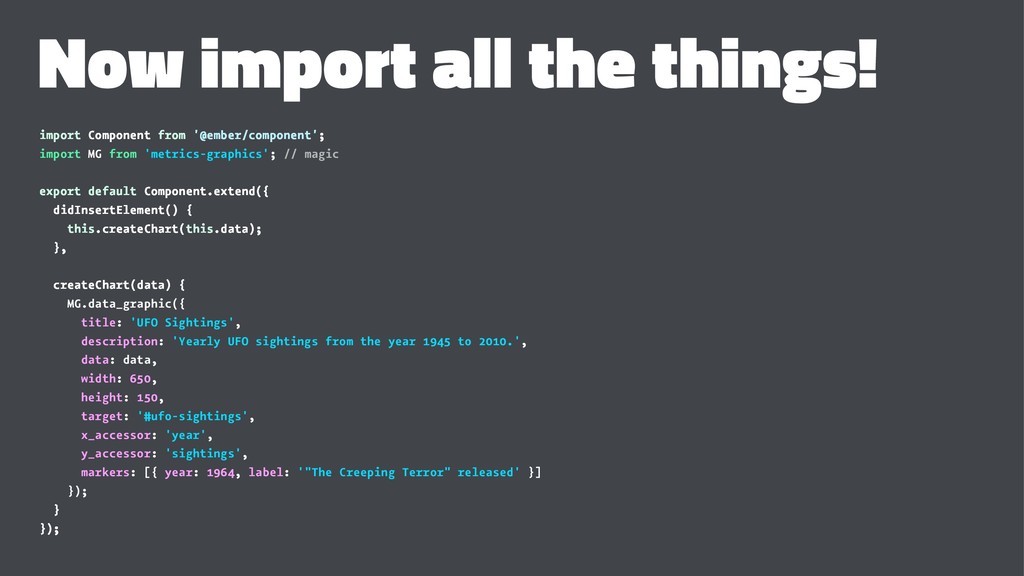
  3. Now import all the things! import Component from '@ember/component'; import

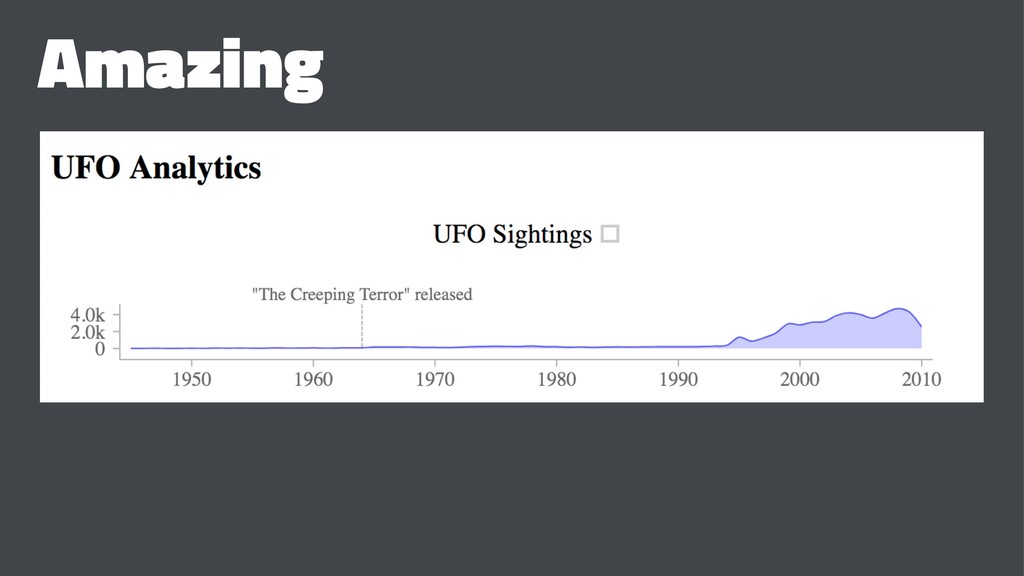
    MG from 'metrics-graphics'; // magic export default Component.extend({ didInsertElement() { this.createChart(this.data); }, createChart(data) { MG.data_graphic({ title: 'UFO Sightings', description: 'Yearly UFO sightings from the year 1945 to 2010.', data: data, width: 650, height: 150, target: '#ufo-sightings', x_accessor: 'year', y_accessor: 'sightings', markers: [{ year: 1964, label: '"The Creeping Terror" released' }] }); } });
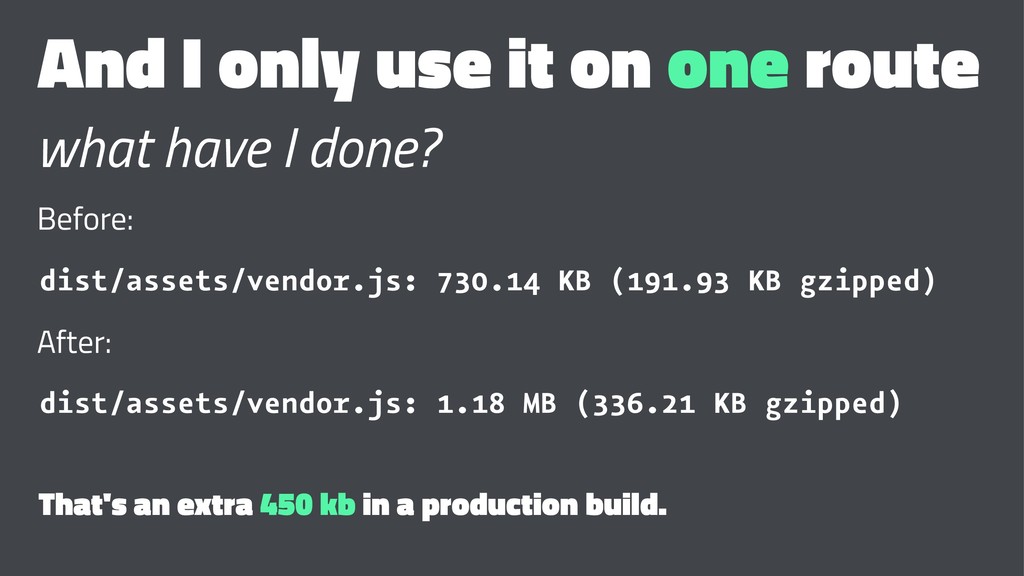
  4. And I only use it on one route what have

    I done? Before: dist/assets/vendor.js: 730.14 KB (191.93 KB gzipped) After: dist/assets/vendor.js: 1.18 MB (336.21 KB gzipped) That's an extra 450 kb in a production build.
  5. If you ship an extra 450 kb to production for

    a single chart on a single route Alex Russell will literally kill you.
  6. Dynamic imports! Dynamic imports... • let you import dependencies lazily,

    i.e. only when you need them. • return promises • might save you from Alex Russell
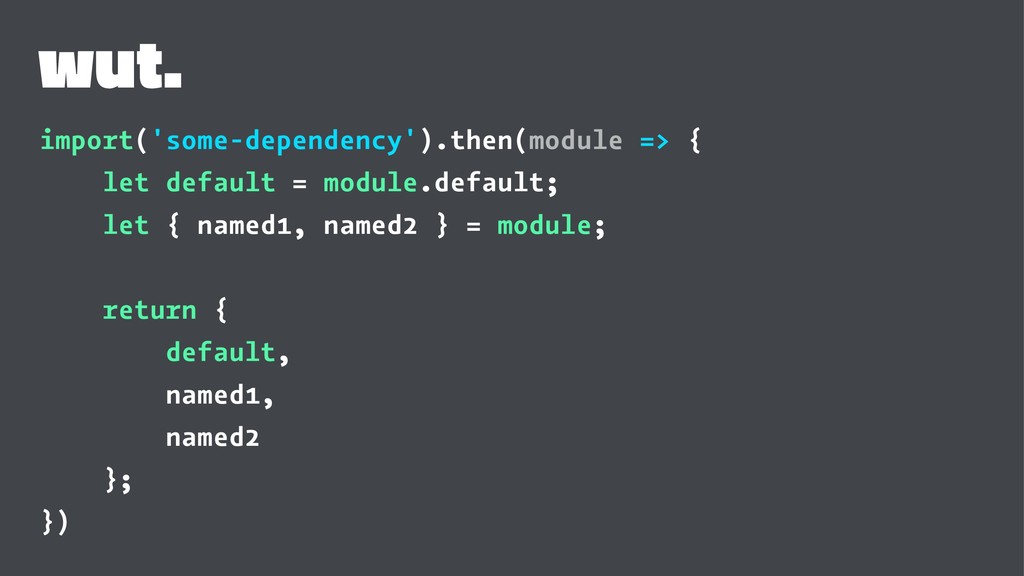
  7. wut. import('some-dependency').then(module => { let default = module.default; let {

    named1, named2 } = module; return { default, named1, named2 }; })
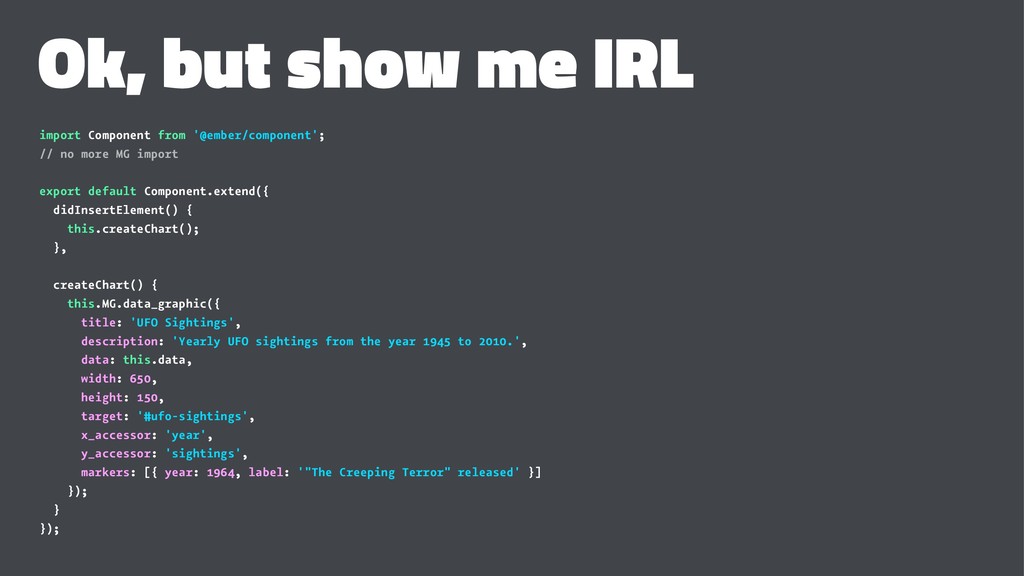
  8. Ok, but show me IRL import Component from '@ember/component'; //

    no more MG import export default Component.extend({ didInsertElement() { this.createChart(); }, createChart() { this.MG.data_graphic({ title: 'UFO Sightings', description: 'Yearly UFO sightings from the year 1945 to 2010.', data: this.data, width: 650, height: 150, target: '#ufo-sightings', x_accessor: 'year', y_accessor: 'sightings', markers: [{ year: 1964, label: '"The Creeping Terror" released' }] }); } });
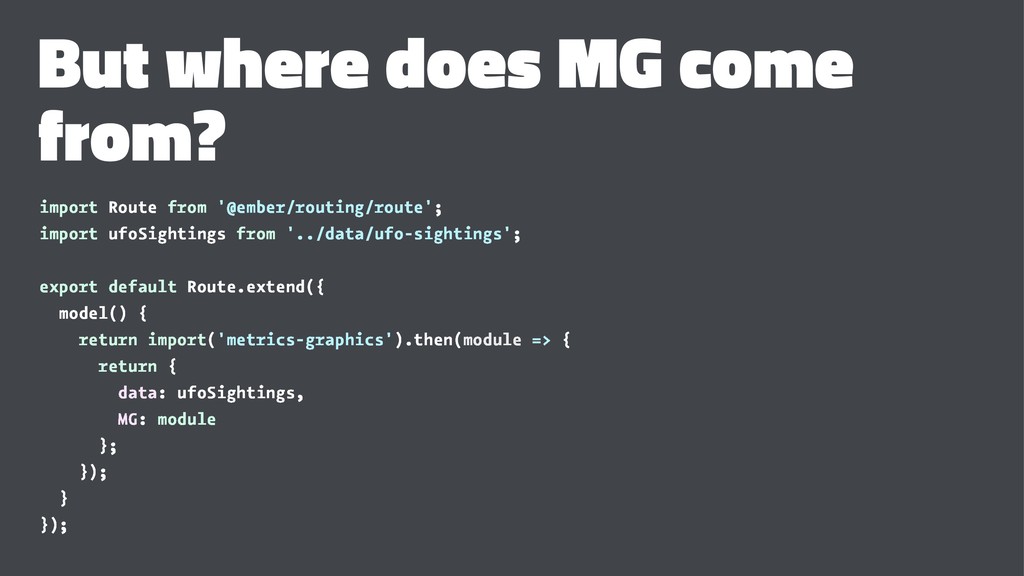
  9. But where does MG come from? import Route from '@ember/routing/route';

    import ufoSightings from '../data/ufo-sightings'; export default Route.extend({ model() { return import('metrics-graphics').then(module => { return { data: ufoSightings, MG: module }; }); } });
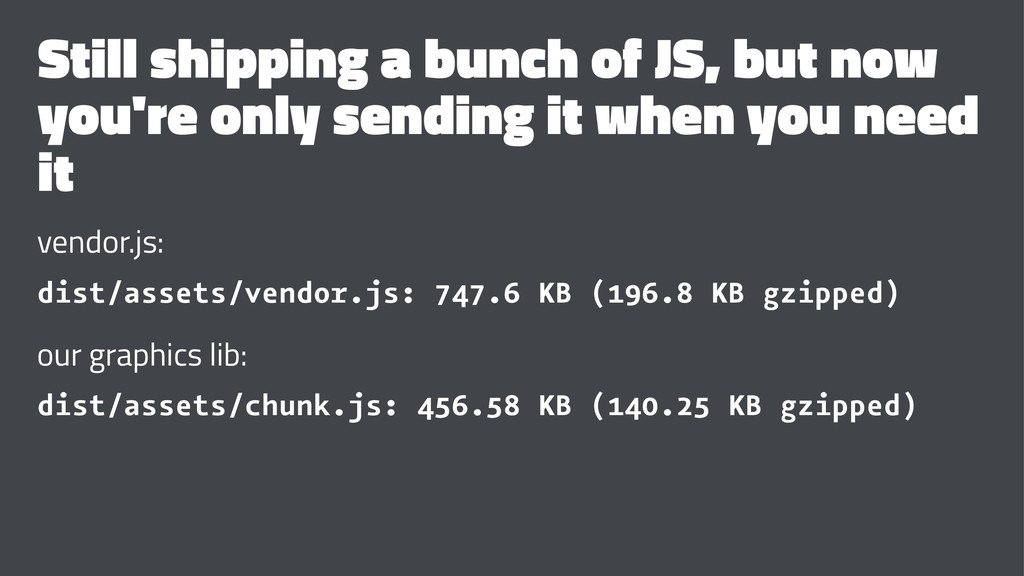
  10. Still shipping a bunch of JS, but now you're only

    sending it when you need it vendor.js: dist/assets/vendor.js: 747.6 KB (196.8 KB gzipped) our graphics lib: dist/assets/chunk.js: 456.58 KB (140.25 KB gzipped)
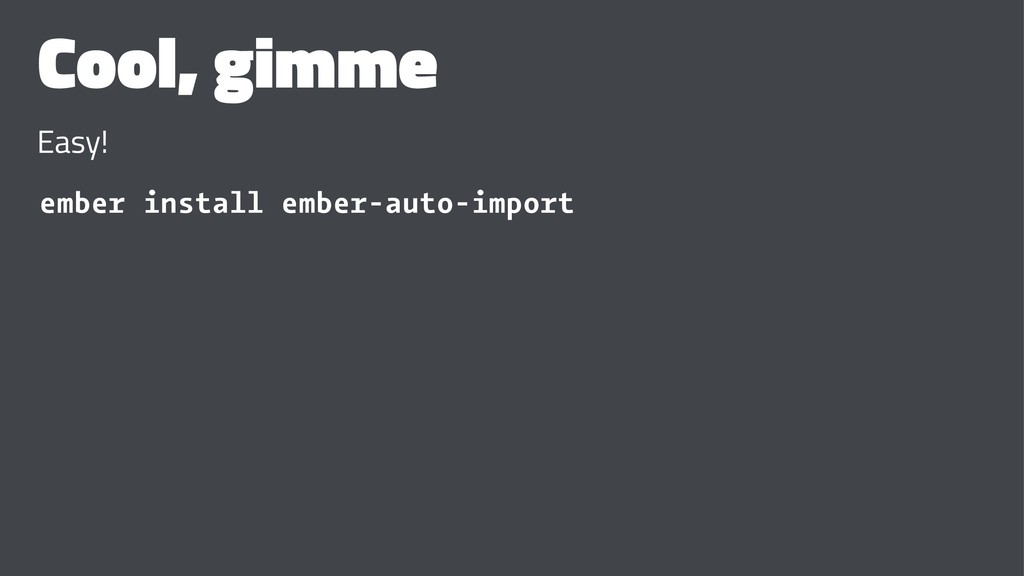
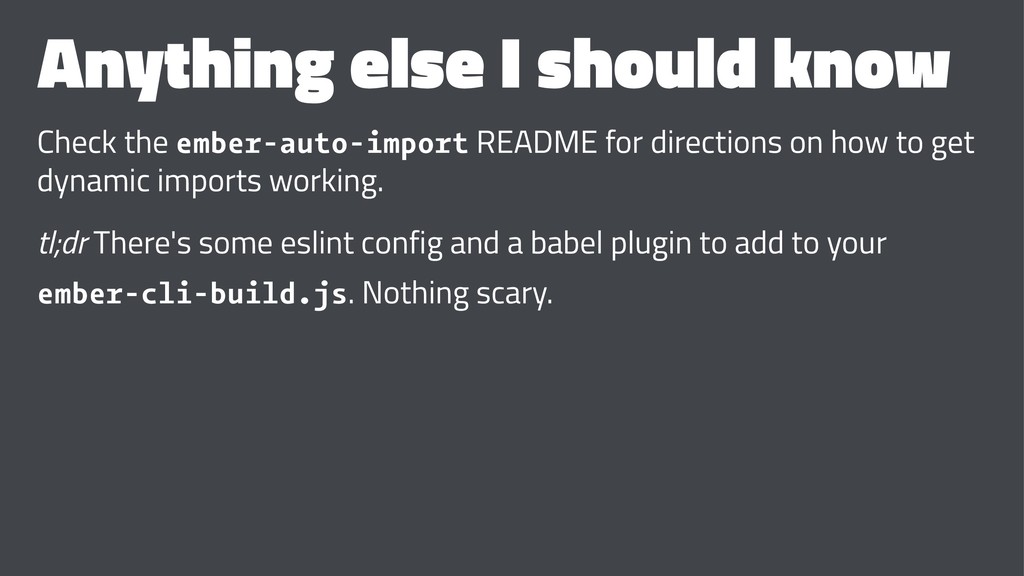
  11. Anything else I should know Check the ember-auto-import README for

    directions on how to get dynamic imports working. tl;dr There's some eslint config and a babel plugin to add to your ember-cli-build.js. Nothing scary.